

Lactobacillus plantarum MB452 enhances the function of the intestinal barrier by increasing the expression levels of genes involved in tight junction formation
Open accessThe DOI matches its Crossref record; 57 of the 57 references it cites were found in a registry or an index.
Abstract
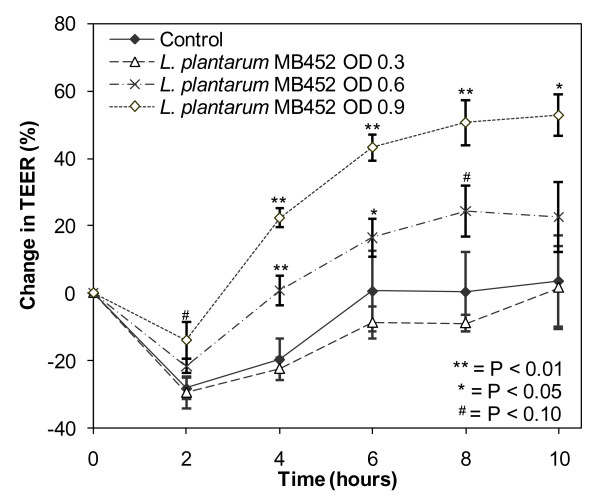
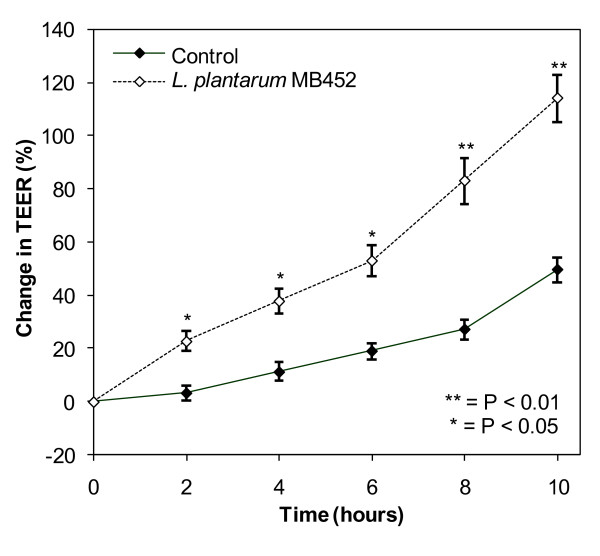
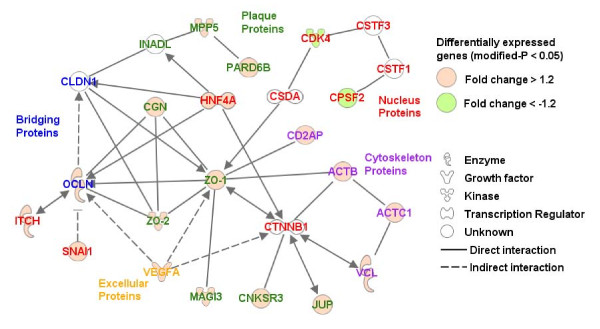
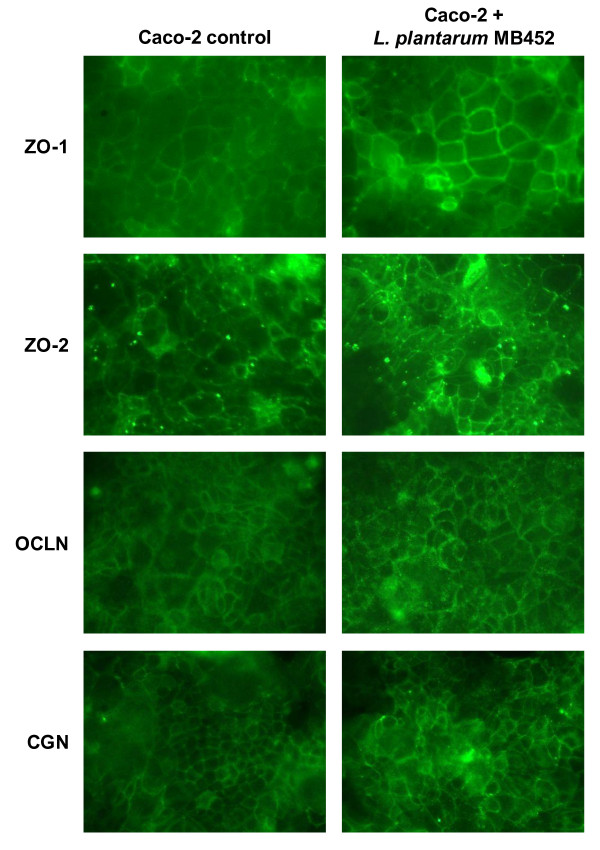
BACKGROUND: Intestinal barrier function is important for preserving health, as a compromised barrier allows antigen entry and can induce inflammatory diseases. Probiotic bacteria can play a role in enhancing intestinal barrier function; however, the mechanisms are not fully understood. Existing studies have focused on the ability of probiotics to prevent alterations to tight junctions in disease models, and have been restricted to a few tight junction bridging proteins. No studies have previously investigated the effect of probiotic bacteria on healthy intestinal epithelial cell genes involved in the whole tight junction signalling pathway, including those encoding for bridging, plaque and dual location tight junction proteins. Alteration of tight junction signalling in healthy humans is a potential mechanism that could lead to the strengthening of the intestinal barrier, resulting in limiting the ability of antigens to enter the body and potentially triggering undesirable immune responses. RESULTS: The effect of Lactobacillus plantarum MB452 on tight junction integrity was determined by measuring trans-epithelial electrical resistance (TEER) across Caco-2 cell layers. L. plantarum MB452 caused a dose-dependent TEER increase across Caco-2 cell monolayers compared to control medium. Gene expression was compared in Caco-2 cells untreated or treated with L. plantarum MB452 for 10 hours. Caco-2 cell RNA was hybridised to human oligonucleotide arrays. Data was analysed using linear models and differently expressed genes were examined using pathway analysis tools. Nineteen tight junction-related genes had altered expression levels in response to L. plantarum MB452 (modified-P < 0.05, fold-change > 1.2), including those encoding occludin and its associated plaque proteins that anchor it to the cytoskeleton. L. plantarum MB452 also caused changes in tubulin and proteasome gene expression levels which may be linked to intestinal barrier function. Caco-2 tight junctions were visualised by fluorescent microscopy of immuno-stained occludin, zona occludens (ZO)-1, ZO-2 and cingulin. Caco-2 cells treated with L. plantarum MB452 had higher intensity fluorescence of each of the four tight junction proteins compared to untreated controls. CONCLUSIONS: This research indicates that enhancing the expression of genes involved in tight junction signalling is a possible mechanism by which L. plantarum MB452 improves intestinal barrier function.
Overview
The claims and statistics of this paper haven’t been checked yet.
Free: it reads the open-access text and checks the first 5 claims that cite a source we can check. Create a free account to check every claim.
Integrity signals
Registry
Cites
Statistics
Figures
Verification
Claims the paper makes
The claims and statistics of this paper haven’t been checked yet.
Free: it reads the open-access text and checks the first 5 claims that cite a source we can check. Create a free account to check every claim.
Claims other papers make about this one
Each is checked against this paper’s own text: does it say what the citing paper says it does?
In the citing paper
“Microbes(Figure 3) can directly alter expression of tight junction proteins such as claudin-380 and zonula occludens-181 or enhance expression of genes involved in tight junction signaling82.”
From The gut Microbiome in adult and pediatric functional gastrointestinal disorders (2019) · cites this paper as [82]
In the citing paper
“enhancing epithelial barrier function (98,99)”
From Sex steroid deficiency-associated bone loss is microbiota dependent and prevented by probiotics (2016) · cites this paper as [98]
Self-check
Percentages, sums and reported differences re-computed from the paper’s own numbers.
The self-check needs the paper’s full text.
Citations
Cites
Vandesompele, J., De Preter, K., Pattyn, F., Poppe, B., Van Roy, N., De Paepe, A., & Speleman, F. (2002) · Genome Biology · doi:10.1186/gb-2002-3-7-research0034 · Cited by 20,038 · cited 1×
“The reference genes (GAPD, SDHA and YWHAZ) were chosen based on the findings of Vandesompele et al [52] and their log ratios in the microarray data (close to 1; not differentially expressed).”
MethodSelf-citationPfaffl, M. W. (2002) · Nucleic Acids Research · doi:10.1093/nar/30.9.e36 · Cited by 7,376 · cited 1×
“The analysis was carried out as described in Additional File 3 and the data was analysed using Relative Expression Software Tool 2008 (version 2.0.7) with efficiency correction [ 53 ].”
MethodInfluentiallimma: Linear Models for Microarray Data
Smyth, G. K. (2005) · Statistics for Biology and Health · doi:10.1007/0-387-29362-0_23 · Cited by 5,796 · cited 1×
“The Limma package in Bioconductor was used to analyse the microarray data [ 50 ].”
MethodJUNCTIONAL COMPLEXES IN VARIOUS EPITHELIA
Farquhar, M. G., & Palade, G. E. (1963) · The Journal of Cell Biology · doi:10.1083/jcb.17.2.375 · Cited by 3,635 · cited 1×
“These intercellular complexes consist of tight junctions, adherens junctions, desmosomes and gap junctions [11].”
BackgroundBioinformatics and Computational Biology Solutions Using R and Bioconductor
(2005) · Statistics for Biology and Health · doi:10.1007/0-387-29362-0 · Cited by 3,289
Ford Alexander, C., Paul, M., Hanauer Steven, B., 谭蓓, & Dong, W. Z. (2001) · Cited by 3,020
Identifying biological themes within lists of genes with EASE
Hosack, D. A., Dennis, G., Sherman, B. T., Lane, H. C., & Lempicki, R. A. (2003) · Genome Biology · doi:10.1186/gb-2003-4-10-r70 · Cited by 1,950 · cited 1×
“Differentially expressed genes were clustered into functional groups and pathways using Ingenuity Pathway Analysis (IPA version 7.1; Ingenuity Systems Inc., Redwood City, CA, USA), and Gene Ontology categories and KEGG pathways using EASE (version 2.0)[ 51 ].”
MethodInfluentialGionchetti, P., Rizzello, F., Venturi, A., Brigidi, P., Matteuzzi, D., Bazzocchi, G., Poggioli, G., Miglioli, M., & Campieri, M. (2000) · Gastroenterology · doi:10.1053/gast.2000.9370 · Cited by 1,486 · cited 1×
“VLS#3, which is a mixture of eight bacteria including L. plantarum MB452, has previously been reported to enhance tight junction integrity in vitro [18], reduce colitis in rodent models [19,20] and improve human intestinal health [ 21-23 ].”
BackgroundFanning, A. S., Jameson, B. J., Jesaitis, L. A., & Anderson, J. M. (1998) · Journal of Biological Chemistry · doi:10.1074/jbc.273.45.29745 · Cited by 1,432 · cited 1×
“The zonula occludens bind to the cytoplasmic end of occludin and form the scaffolding to link occludin to the actin cytoskeleton [26].”
BackgroundKelly, D., Campbell, J. I., King, T. P., Grant, G., Jansson, E. A., Coutts, A. G. P., Pettersson, S., & Conway, S. (2004) · Nature Immunology · doi:10.1038/ni1018 · Cited by 1,003 · cited 1×
“L. plantarum MB452 did not alter the expression levels of other genes and pathways that have been affected by some probiotic bacteria, such as the NF-B pathway [33], PPARg [ 40 ,41], innate immune response”
Background
Cited by
Intestinal permeability – a new target for disease prevention and therapy
Bischoff, S. C., Barbara, G., Buurman, W., Ockhuizen, T., Schulzke, J.-D., Serino, M., Tilg, H., Watson, A., & Wells, J. M. (2014) · BMC Gastroenterology · doi:10.1186/s12876-014-0189-7 · Cited by 1,755
“by improving barrier functions or by inhibition of pathogen adherence [115,117-120].”
BackgroundProbiotic Mechanisms of Action
Bermudez-Brito, M., Plaza-Díaz, J., Muñoz-Quezada, S., Gómez-Llorente, C., & Gil, A. (2012) · Annals of Nutrition and Metabolism · doi:10.1159/000342079 · Cited by 1,234
Regulation of Tight Junction Permeability by Intestinal Bacteria and Dietary Components1,2
Ulluwishewa, D., Anderson, R. C., McNabb, W. C., Moughan, P. J., Wells, J. M., & Roy, N. C. (2011) · The Journal of Nutrition · doi:10.3945/jn.110.135657 · Cited by 1,177
Self-citationKelly, J. R., Kennedy, P. J., Cryan, J. F., Dinan, T. G., Clarke, G., & Hyland, N. P. (2015) · Frontiers in Cellular Neuroscience · doi:10.3389/fncel.2015.00392 · Cited by 1,110
Intestinal barrier function in health and gastrointestinal disease
Camilleri, M., Madsen, K., Spiller, R., Van Meerveld, B. G., & Verne, G. N. (2012) · Neurogastroenterology & Motility · doi:10.1111/j.1365-2982.2012.01921.x · Cited by 908
Regulation of Intestinal Barrier Function by Microbial Metabolites
Ghosh, S., Whitley, C. S., Haribabu, B., & Jala, V. R. (2021) · Cellular and Molecular Gastroenterology and Hepatology · doi:10.1016/j.jcmgh.2021.02.007 · Cited by 835
High-Fat, Western-Style Diet, Systemic Inflammation, and Gut Microbiota: A Narrative Review
Malesza, I. J., Malesza, M., Walkowiak, J., Mussin, N., Walkowiak, D., Aringazina, R., Bartkowiak-Wieczorek, J., & Mądry, E. (2021) · Cells · doi:10.3390/cells10113164 · Cited by 782
Negative Effects of a High-Fat Diet on Intestinal Permeability: A Review
Rohr, M. W., Narasimhulu, C. A., Rudeski-Rohr, T. A., & Parthasarathy, S. (2020) · Advances in Nutrition · doi:10.1093/advances/nmz061 · Cited by 751
Emerging molecular insights into the interaction between probiotics and the host intestinal mucosa
Bron, P. A., van Baarlen, P., & Kleerebezem, M. (2012) · Nature Reviews Microbiology · doi:10.1038/nrmicro2690 · Cited by 690
Sex steroid deficiency-associated bone loss is microbiota dependent and prevented by probiotics
Li, J.-Y., Chassaing, B., Tyagi, A. M., Vaccaro, C., Luo, T., Adams, J., Darby, T. M., Weitzmann, M. N., Mulle, J. G., Gewirtz, A. T., et al. (2016) · Journal of Clinical Investigation · doi:10.1172/jci86062 · Cited by 643
“Probiotics have been shown to alter the composition or the metabolic activity of the gut microbiota (95), regulating the immune response of the host (96, 97) and enhancing epithelial barrier function (98, 99).”
Vieco-Saiz, N., Belguesmia, Y., Raspoet, R., Auclair, E., Gancel, F., Kempf, I., & Drider, D. (2019) · Frontiers in Microbiology · doi:10.3389/fmicb.2019.00057 · Cited by 603
Lam, Y. Y., Ha, C. W. Y., Campbell, C. R., Mitchell, A. J., Dinudom, A., Oscarsson, J., Cook, D. I., Hunt, N. H., Caterson, I. D., Holmes, A. J., et al. (2012) · PLoS ONE · doi:10.1371/journal.pone.0034233 · Cited by 604
“not entirely clear and appears to be strain-specific [47,48].”
BackgroundLactobacillus spp. for Gastrointestinal Health: Current and Future Perspectives
Dempsey, E., & Corr, S. C. (2022) · Frontiers in Immunology · doi:10.3389/fimmu.2022.840245 · Cited by 579
Intestinal Barrier in Human Health and Disease
Di Tommaso, N., Gasbarrini, A., & Ponziani, F. R. (2021) · International Journal of Environmental Research and Public Health · doi:10.3390/ijerph182312836 · Cited by 533
“For example, Lactobacillus plantarum MB452, can increase the expression of TJ genes in Caco-2 cells [201], while Lactobacillus rhamnosus GG (LGG) plays a central role in epithelial cell survival in response to pro-apoptotic signaling pathways through activation of Akt and inhibition of p38 [202].”
BackgroundLandy, J., Ronde, E., English, N., Clark, S. K., Hart, A. L., Knight, S. C., Ciclitira, P. J., & Al-Hassi, H. O. (2016) · World Journal of Gastroenterology · doi:10.3748/wjg.v22.i11.3117 · Cited by 507
Wang, J., Ji, H., Wang, S., Liu, H., Zhang, W., Zhang, D., & Wang, Y. (2018) · Frontiers in Microbiology · doi:10.3389/fmicb.2018.01953 · Cited by 456
“reuteri I5007 affect TER and epithelial permeability and modulate TJ protein expression and distribution (Anderson et al., 2010; Eun et al., 2011; Patel et al., 2012; Yang et al., 2015).”
BackgroundImmunomodulatory mechanisms of lactobacilli
Wells, J. M. (2011) · Microbial Cell Factories · doi:10.1186/1475-2859-10-s1-s17 · Cited by 427
“This could be due to inhibition of the pathogen or enhancement of the barrier function by modulating TJ composition [113-115].”
BackgroundProbiotics and the Gut Immune System: Indirect Regulation
La Fata, G., Weber, P., & Mohajeri, M. H. (2018) · Probiotics and Antimicrobial Proteins · doi:10.1007/s12602-017-9322-6 · Cited by 407
“plantarum showed increased gene and protein expression of occludin, ZO-1, ZO-2, cingulin, itchy homolog E3 ubiquitin protein ligase (ITCH), snail homolog 1 (SNAI1), and others (reference for complete list) ↑Occludin ↑ZO-1 ↑ZO-2 ↑Cingulin ↑ITCH ↑SNAI1 [1]”
BackgroundRamos, C. L., Thorsen, L., Schwan, R. F., & Jespersen, L. (2013) · Food Microbiology · doi:10.1016/j.fm.2013.03.010 · Cited by 360
“According to Anderson et al. (2010) induction of enhanced expression of genes involved in tight junction signalling is a possible mechanism by which L. plantarum MB452 improves intestinal barrier function.”
BackgroundMethodResultInfluentialRole of gut microbiota and Toll-like receptors in nonalcoholic fatty liver disease
Miura, K. (2014) · World Journal of Gastroenterology · doi:10.3748/wjg.v20.i23.7381 · Cited by 355
How do intestinal probiotics restore the intestinal barrier?
Gou, H.-Z., Zhang, Y.-L., Ren, L.-F., Li, Z.-J., & Zhang, L. (2022) · Frontiers in Microbiology · doi:10.3389/fmicb.2022.929346 · Cited by 305
The Role of Gut Microbiota in Intestinal Inflammation with Respect to Diet and Extrinsic Stressors
Lobionda, S., Sittipo, P., Kwon, H. Y., & Lee, Y. K. (2019) · Microorganisms · doi:10.3390/microorganisms7080271 · Cited by 317
“Lactobacillus has been reported to improve intestinal barrier function by modulating the expression of genes involved in tight junction signaling [65].”
BackgroundRole of the microbiota in inflammatory bowel diseases
Nagalingam, N. A., & Lynch, S. V. (2012) · Inflammatory Bowel Diseases · doi:10.1002/ibd.21866 · Cited by 315
Modulatory Effects of Probiotics During Pathogenic Infections With Emphasis on Immune Regulation
Raheem, A., Liang, L., Zhang, G., & Cui, S. (2021) · Frontiers in Immunology · doi:10.3389/fimmu.2021.616713 · Cited by 302
Qi, X., Zhang, Y., Zhang, Y., Luo, F., Song, K., Wang, G., & Ling, F. (2023) · Microbiome · doi:10.1186/s40168-023-01574-2 · Cited by 285
Intestinal barrier permeability: the influence of gut microbiota, nutrition, and exercise
Dmytriv, T. R., Storey, K. B., & Lushchak, V. I. (2024) · Frontiers in Physiology · doi:10.3389/fphys.2024.1380713 · Cited by 246
International Society of Sports Nutrition Position Stand: Probiotics
Jäger, R., Mohr, A. E., Carpenter, K. C., Kerksick, C. M., Purpura, M., Moussa, A., Townsend, J. R., Lamprecht, M., West, N. P., Black, K., et al. (2019) · Journal of the International Society of Sports Nutrition · doi:10.1186/s12970-019-0329-0 · Cited by 277
Protection and Restitution of Gut Barrier by Probiotics: Nutritional and Clinical Implications
Krishna Rao, R., & Samak, G. (2013) · Current Nutrition & Food Science · doi:10.2174/1573401311309020004 · Cited by 266
“plantarum MB452 treatment increased transcription of occludin and cingulin genes in Caco-2 cells, indicating a probiotic-induced gene expression in improving tight junction integrity [64, 93].”
BackgroundRose, E. C., Odle, J., Blikslager, A. T., & Ziegler, A. L. (2021) · International Journal of Molecular Sciences · doi:10.3390/ijms22136729 · Cited by 239
Strengthening of the intestinal epithelial tight junction by Bifidobacterium bifidum
Hsieh, C.-Y., Osaka, T., Moriyama, E., Date, Y., Kikuchi, J., & Tsuneda, S. (2015) · Physiological Reports · doi:10.14814/phy2.12327 · Cited by 241
“The intestinal epithelium is a single layer of columnar intestinal epithelial cells (IECs) that forms a physical and functional barrier preventing intestinal penetration of unwanted antigens.”
BackgroundInfluentialCândido, F. G., Valente, F. X., Grześkowiak, Ł. M., Moreira, A. P. B., Rocha, D. M. U. P., & Alfenas, R. D. C. G. (2018) · International Journal of Food Sciences and Nutrition · doi:10.1080/09637486.2017.1343286 · Cited by 239
“Although consumption of omega-3 PUFA could be beneficial because several lactobacilli enhance the function of the intestinal barrier (Anderson et al. 2010), Sim~oes and colleagues found no association between BMI, microbiota composition and fatty acid intake (Sim~oes et al. 2013).”
BackgroundChen, H., Mao, X., He, J., Yu, B., Huang, Z., Yu, J., Zheng, P., & Chen, D. (2013) · British Journal of Nutrition · doi:10.1017/s0007114513001293 · Cited by 235
“expression level of tight junction proteins((13)).”
BackgroundInfluentialGenomic and phenotypic evidence for probiotic influences of Lactobacillus gasseri on human health
Selle, K., & Klaenhammer, T. R. (2013) · FEMS Microbiology Reviews · doi:10.1111/1574-6976.12021 · Cited by 227
“Microorganism–host crosstalk by probiotic microorganisms is also implicated in contributing to epithelial barrier integrity by eliciting upregulation of tight junction proteins, increased defensin production by paneth cells, and increased mucin production by goblet cells (Mack et al., 2003; Schlee et al., 2007, 2008;…”
BackgroundTulstrup, M. V.-L., Christensen, E. G., Carvalho, V., Linninge, C., Ahrné, S., Højberg, O., Licht, T. R., & Bahl, M. I. (2015) · PLOS ONE · doi:10.1371/journal.pone.0144854 · Cited by 227
Plaza-Diaz, J. (2014) · World Journal of Gastroenterology · doi:10.3748/wjg.v20.i42.15632 · Cited by 218
Probiotics: How Effective Are They in the Fight against Obesity?
Mazloom, K., Siddiqi, I., & Covasa, M. (2019) · Nutrients · doi:10.3390/nu11020258 · Cited by 192
Intestinal microbiota: a potential target for the treatment of postmenopausal osteoporosis
Xu, X., Jia, X., Mo, L., Liu, C., Zheng, L., Yuan, Q., & Zhou, X. (2017) · Bone Research · doi:10.1038/boneres.2017.46 · Cited by 199
Dicks, L. M. T., Dreyer, L., Smith, C., & van Staden, A. D. (2018) · Frontiers in Microbiology · doi:10.3389/fmicb.2018.02297 · Cited by 189
“This is done by improving barrier functions or by inhibition of pathogen adherence (Resta-Lenert and Barrett, 2006; Moorthy et al., 2009; Qin et al., 2009; Anderson et al., 2010).”
BackgroundEthanol metabolism and its effects on the intestinal epithelial barrier
Elamin, E. E., Masclee, A. A., Dekker, J., & Jonkers, D. M. (2013) · Nutrition Reviews · doi:10.1111/nure.12027 · Cited by 186
Santos-Marcos, J. A., Mora-Ortiz, M., Tena-Sempere, M., Lopez-Miranda, J., & Camargo, A. (2023) · Biology of Sex Differences · doi:10.1186/s13293-023-00490-2 · Cited by 176
The role of diet and intestinal microbiota in the development of metabolic syndrome
Santos-Marcos, J. A., Perez-Jimenez, F., & Camargo, A. (2019) · The Journal of Nutritional Biochemistry · doi:10.1016/j.jnutbio.2019.03.017 · Cited by 180
Izuddin, W. I., Humam, A. M., Loh, T. C., Foo, H. L., & Samsudin, A. A. (2020) · Antioxidants · doi:10.3390/antiox9030250 · Cited by 174
“plantarum altered in expression of the network of genes related to the tight junction and higher intensity of immuno-stained occludin, ZO-1, ZO-2 and cingulin was visualized by fluorescent microscopy [58].”
BackgroundHuman gut microbiota: Does diet matter?
Maukonen, J., & Saarela, M. (2015) · Proceedings of The Nutrition Society · doi:10.1017/s0029665114000688 · Cited by 177
“The increase in n-3 PUFA is effective in supporting epithelial barrier integrity by improving transepithelial resistance and by reducing IL-4-mediated permeability((187)), and several lactobacilli enhance the function of the intestinal barrier((188,189)).”
The Gut Microbiome and Sex Hormone-Related Diseases
He, S., Li, H., Yu, Z., Zhang, F., Liang, S., Liu, H., Chen, H., & Lü, M. (2021) · Frontiers in Microbiology · doi:10.3389/fmicb.2021.711137 · Cited by 169
Probiotics or pro‐healers: the role of beneficial bacteria in tissue repair
Lukic, J., Chen, V., Strahinic, I., Begovic, J., Lev‐Tov, H., Davis, S. C., Tomic‐Canic, M., & Pastar, I. (2017) · Wound Repair and Regeneration · doi:10.1111/wrr.12607 · Cited by 174
“Probiotics have a welldescribed role in strengthening GI barrier by increasing expression and regulating localization of tight junction (TJ) proteins both in vitro (43) and in vivo (Fig 2A) (44).”
BackgroundBlackwood, B. P., Yuan, C. Y., Wood, D. R., Nicolas, J. D., Grothaus, J. S., & Hunter, C. J. (2017) · Journal of Probiotics & Health · doi:10.4172/2329-8901.1000159 · Cited by 174
“TER was monitored throughout pretreatment with the probiotics, and then again after the addition of the membrane-disrupting reagents [15].”
BackgroundMethodYeasts as probiotics: Mechanisms, outcomes, and future potential
Sen, S., & Mansell, T. J. (2020) · Fungal Genetics and Biology · doi:10.1016/j.fgb.2020.103333 · Cited by 160
Sultana, R., McBain, A. J., & O'Neill, C. A. (2013) · Applied and Environmental Microbiology · doi:10.1128/aem.00982-13 · Cited by 166
“However, evidence suggests that one mechanism may be via protection or augmentation of gut epithelial barrier function (3, 4, 5).”
BackgroundYuan, L., van der Mei, H. C., Busscher, H. J., & Peterson, B. W. (2020) · Frontiers in Microbiology · doi:10.3389/fmicb.2020.599555 · Cited by 165
The gut Microbiome in adult and pediatric functional gastrointestinal disorders
Shin, A., Preidis, G. A., Shulman, R., & Kashyap, P. C. (2019) · Clinical Gastroenterology and Hepatology · doi:10.1016/j.cgh.2018.08.054 · Cited by 163
Enteric glial cells and their role in the intestinal epithelial barrier
Yu, Y.-B. (2014) · World Journal of Gastroenterology · doi:10.3748/wjg.v20.i32.11273 · Cited by 155
Antivirulence Properties of Probiotics in Combating Microbial Pathogenesis
Nair, M. S., Amalaradjou, M. A. R., & Venkitanarayanan, K. (2017) · Advances in applied microbiology · doi:10.1016/bs.aambs.2016.12.001 · Cited by 195
New perspectives on probiotics in health and disease
Daliri, E. B.-M., & Lee, B. H. (2015) · Food Science and Human Wellness · doi:10.1016/j.fshw.2015.06.002 · Cited by 150
“been shown to alter expression levels of genes coding for occludin, tubulin, proteasome and certain cytoskeleton anchoring proteins [55].”
BackgroundHabitual Dietary Intake Is Associated with Stool Microbiota Composition in Monozygotic Twins
Simões, C., Maukonen, J., Kaprio, J. A., Rissanen, A., Pietiläinen, K. H., & Saarela, M. (2013) · Journal of Nutrition · doi:10.3945/jn.112.166322 · Cited by 163
“The increase in n3 PUFA has been reported to be effective in supporting epithelial barrier integrity by improving trans-epithelial resistance and by reducing IL-4–mediated permeability (39), and several lactobacilli have been shown to enhance the function of the intestinal barrier (40,41).”
BackgroundLactobacillus protects the integrity of intestinal epithelial barrier damaged by pathogenic bacteria
Yu, Q., Yuan, L., Deng, J., & Yang, Q. (2015) · Frontiers in Cellular and Infection Microbiology · doi:10.3389/fcimb.2015.00026 · Cited by 162
Chong, E. S. L. (2013) · World Journal of Microbiology and Biotechnology · doi:10.1007/s11274-013-1499-6 · Cited by 173
“plantarum MB452 was shown to enhance Caco-2 TJ integrity, possibly associated with a parallel upregulation of TJ-related genes expression, including those encoding occludin and scaffold protein zonula occludens (Anderson et al. 2010).”
BackgroundFeng, P., Ye, Z., Kakade, A., Virk, A. K., Li, X., & Liu, P. (2018) · Nutrients · doi:10.3390/nu11010022 · Cited by 144
The Gut Microbiota and Irritable Bowel Syndrome: Friend or Foe?
Ghoshal, U. C., Shukla, R., Ghoshal, U., Gwee, K.-A., Ng, S. C., & Quigley, E. M. M. (2012) · International Journal of Inflammation · doi:10.1155/2012/151085 · Cited by 144
How probiotics face food stress: They get by with a little help
Fiocco, D., Longo, A., Arena, M. P., Russo, P., Spano, G., & Capozzi, V. (2020) · Critical Reviews in Food Science and Nutrition · doi:10.1080/10408398.2019.1580673 · Cited by 143
“…(Kim et al. 2005; Yang et al. 2017), the synthesis of vitamins (Strozzi and Mogna 2008; LeBlanc et al. 2017), the reinforcement of the gut barrier (Anderson et al. 2010; Karczewski et al. 2010; Du et al. 2018), enhanced immune functions (Di Giacinto et al. 2005; Huebner et al. 2011), improved…”
BackgroundModulation of Intestinal Epithelial Defense Responses by Probiotic Bacteria
Wan, L., Chen, Z. J., Shah, N. P., & El-Nezami, H. S. (2015) · Critical Reviews in Food Science and Nutrition · doi:10.1080/10408398.2014.905450 · Cited by 153
Upadhaya, S. D., & Kim, I. H. (2021) · Animals · doi:10.3390/ani11082418 · Cited by 154
Mohammedsaeed, W., Cruickshank, S., McBain, A. J., & O’Neill, C. A. (2015) · Scientific Reports · doi:10.1038/srep16147 · Cited by 125
Probiotics: an Antibiotic Replacement Strategy for Healthy Broilers and Productive Rearing
Neveling, D. P., & Dicks, L. M. T. (2020) · Probiotics and Antimicrobial Proteins · doi:10.1007/s12602-020-09640-z · Cited by 141
Lee, N. Y., Yoon, S. J., Han, D. H., Gupta, H., Youn, G. S., Shin, M. J., Ham, Y. L., Kwak, M. J., Kim, B., Yu, J. S., et al. (2020) · Gut Microbes · doi:10.1080/19490976.2020.1712984 · Cited by 144
“Each insert was placed on top of a well in a 24-well plate with 1 ml in the bottom and 200 μl media in the top as described previously.(46) Caco-2 cells were grown for 5 days until confluence in Minimum Essential Medium Eagle with 20% fetal bovine serum without antibiotic-antimycotic (Gibco, Carlsbad, CA, USA) at 37°C…”
MethodLiu, Z., Liu, F., Wang, W., Sun, C., Gao, D. M., Ma, J., Hussain, M. A., Xu, C., Jiang, Z., & Hou, J. (2020) · Food & Function · doi:10.1039/c9fo02992c · Cited by 135
Pesticide exposure and the microbiota-gut-brain axis
Matsuzaki, R., Gunnigle, E., Geissen, V., Clarke, G. A., Nagpal, J. K., & Cryan, J. F. (2023) · The ISME Journal · doi:10.1038/s41396-023-01450-9 · Cited by 136
“Lactobacillus is a known beneficial bacterial genus with many members associated with functions such as enhancing intestinal barrier, for example, by increasing gene expression related to tight junction signalling [111].”
BackgroundVitamin D/VDR, Probiotics, and Gastrointestinal Diseases
Shang, M., & Sun, J. (2017) · Current Medicinal Chemistry · doi:10.2174/0929867323666161202150008 · Cited by 123
Yogurt inhibits intestinal barrier dysfunction in Caco-2 cells by increasing tight junctions
Putt, K. K., Pei, R., White, H. M., & Bolling, B. W. (2017) · Food & Function · doi:10.1039/c6fo01592a · Cited by 124
Exercise and intestinal permeability: another form of exercise-induced hormesis?
Keirns, B. H., Koemel, N. A., Sciarrillo, C. M., Anderson, K. L., & Emerson, S. R. (2020) · American Journal of Physiology-Gastrointestinal and Liver Physiology · doi:10.1152/ajpgi.00232.2020 · Cited by 138
Jiang, M. (2011) · International Journal of Molecular Medicine · doi:10.3892/ijmm.2011.839 · Cited by 116
da Silva, T. F., Glória, R. D. A., Americo, M. F., Freitas, A. D. S., de Jesus, L. C. L., Barroso, F. A. L., Laguna, J. G., Coelho-Rocha, N. D., Tavares, L. M., le Loir, Y., et al. (2024) · Probiotics and Antimicrobial Proteins · doi:10.1007/s12602-024-10247-x · Cited by 117
“…increased transcription of genes related to the disassembly of TJs and occludin degradation, the elevated occludin expression and apical localization might be a defensive response prompted by initial bacterial-induced degradation of the TJ structures, rather than a means of maintaining them [169].”
Su, W., Gong, T., Jiang, Z., Lu, Z., & Wang, Y. (2022) · Frontiers in Cellular and Infection Microbiology · doi:10.3389/fcimb.2022.883107 · Cited by 123
Four weeks of probiotic supplementation reduces GI symptoms during a marathon race
Pugh, J. N., Sparks, A. S., Doran, D. A., Fleming, S. C., Langan-Evans, C., Kirk, B., Fearn, R., Morton, J. P., & Close, G. L. (2019) · European Journal of Applied Physiology · doi:10.1007/s00421-019-04136-3 · Cited by 115
di Vito, R., Conte, C., & Traina, G. (2022) · Cells · doi:10.3390/cells11162617 · Cited by 120
“plantarum increased OCLN expression within in vivo and in vitro models, respectively [34,75].”
BackgroundIn Vitro Selection and Characterization of New Probiotic Candidates from Table Olive Microbiota
Botta, C., Langerholc, T., Cencič, A., & Cocolin, L. (2014) · PLoS ONE · doi:10.1371/journal.pone.0094457 · Cited by 114
“plantarum have been shown to regulate human epithelial TJ proteins in vivo [66] and in vitro [67].”
BackgroundJavanshir, N., Hosseini, G. N. G., Sadeghi, M., Esmaeili, R., Satarikia, F., Ahmadian, G., & Fard, N. A. (2021) · Biological Procedures Online · doi:10.1186/s12575-021-00160-w · Cited by 128
“The mechanisms of probiotics that enhance intestinal barrier function have not been thoroughly investigated, but it has been suggested that increased expression of genes contributing to cell signaling [8] is one of the potential mechanisms for increasing intestinal integrity.”
BackgroundOrlando, A., Linsalata, M., Notarnicola, M., Tutino, V., & Russo, F. (2014) · BMC Microbiology · doi:10.1186/1471-2180-14-19 · Cited by 107
“plantarum MB452 resulted in augmented transcription of Occludin and Cingulin genes, suggesting that bacteria-induced improvements to intestinal barrier integrity may also be regulated at the gene expression level [46].”
BackgroundIn vitro importance of probiotic Lactobacillus plantarum related to medical field
Arasu, M. V., Al-Dhabi, N. A., Soundharrajan, I., Choi, K. C., & Srigopalram, S. (2015) · Saudi Journal of Biological Sciences · doi:10.1016/j.sjbs.2015.09.022 · Cited by 129
Wang, X., Liu, Y., Dong, X., Duan, T., Wang, C., Wang, L., Yang, X., Tian, H., & Li, T. (2024) · Pharmacological Research · doi:10.1016/j.phrs.2024.107071 · Cited by 120
Probiotics in poultry: a comprehensive review
Halder, N., Sunder, J., De, A. K., Bhattacharya, D., & Joardar, S. N. (2024) · The Journal of Basic and Applied Zoology · doi:10.1186/s41936-024-00379-5 · Cited by 128
“Probiotics strains modulate the immune system of the host organism in different ways such as secretion of mucus and AMPs, elevated immune responses, variation in cytokine levels, and also safe-guarding the epithelial layer cells from pathogenic bacteria (Anderson et al., 2010; Madsen, 2012).”
BackgroundConn, K. A., Borsom, E. M., & Cope, E. K. (2024) · Gut Microbes · doi:10.1080/19490976.2024.2371950 · Cited by 113
“149 In particular, gene expression of occludin and occludin-associated plaque proteins, ZO-1, ZO-2, and cingulin were increased and this was associated with increased barrier integrity.”
BackgroundInfluentialCao, W., Wang, C., Chin, Y., Chen, X., Gao, Y., Yuan, S., Xue, C., Wang, Y., & Tang, Q. (2019) · Food & Function · doi:10.1039/c8fo01404c · Cited by 109
Gao, J., Yin, J., Xu, K., Li, T., & Yin, Y. (2019) · BioMed Research International · doi:10.1155/2019/6916189 · Cited by 118
“The effect of fibre on tight junction proteins is associated with the number of bifidobacteria and lactobacilli [93].”
BackgroundBone Remodeling and the Microbiome
Pacifici, R. (2018) · Cold Spring Harbor Perspectives in Medicine · doi:10.1101/cshperspect.a031203 · Cited by 101
“2007; Yan and Polk 2011), and enhance epithelial barrier function (Seth et al. 2008; Anderson et al. 2010).”
BackgroundCharacterization of the intestinal microbiota and its interaction with probiotics and health impacts
de Almada, C. N., de Almada, C. N., Martinez, R. C. R., & Sant’Ana, A. S. (2015) · Applied Microbiology and Biotechnology · doi:10.1007/s00253-015-6582-5 · Cited by 117
Li, H., Zhou, Y., Ling, H., Luo, L., Qi, D., & Feng, L. (2019) · PLoS ONE · doi:10.1371/journal.pone.0223428 · Cited by 107
“Tight junction proteins are critical for maintaining the intercellular structural integrity of the intestine in mice [37,38].”
BackgroundUtilizing Probiotics for the Prevention and Treatment of Gastrointestinal Diseases
Milner, E., Stevens, B. D., An, M., Lam, V., Ainsworth, M., Dihle, P. J., Stearns, J., Dombrowski, A., Rego, D. T., & Segars, K. (2021) · Frontiers in Microbiology · doi:10.3389/fmicb.2021.689958 · Cited by 103
Crosstalk between the gut microbiota and postmenopausal osteoporosis: Mechanisms and applications
Xu, Q., Li, D., Chen, J., Yang, J., Yan, J., Xia, Y., Zhang, F., Wang, X., & Cao, H. (2022) · International Immunopharmacology · doi:10.1016/j.intimp.2022.108998 · Cited by 106
Hu, J. P., Chen, J., Xu, X., Hou, Q., Ren, J., & Yan, X. (2023) · Microbiome · doi:10.1186/s40168-023-01551-9 · Cited by 114
Ringseis, R., & Eder, K. (2022) · Journal of Animal Science and Biotechnology/Journal of animal science and biotechnology · doi:10.1186/s40104-022-00783-3 · Cited by 114
“plantarum, which are frequently used as probiotics, results in increased occludin protein expression and apical relocalization of ZO1, thereby, improving barrier function [46, 47].”
BackgroundModulating gastrointestinal microbiota to alleviate diarrhea in calves
Du, W., Wang, X., Hu, M., Hou, J., Du, Y., Si, W., Yang, L., Xu, L., & Xu, Q. (2023) · Frontiers in Microbiology · doi:10.3389/fmicb.2023.1181545 · Cited by 114
Overview of the Importance of Biotics in Gut Barrier Integrity
Kocot, A. M., Jarocka‐Cyrta, E., & Drabińska, N. (2022) · International Journal of Molecular Sciences · doi:10.3390/ijms23052896 · Cited by 108
“[28] assessed the role of the Lactobacillus plantarum MB452 (according to new taxonomic classification [29,30]: Lactiplantibacillus plantarum) in the regulation of gene expression related to TJ formation.”
BackgroundProbiotics for the airways: Potential to improve epithelial and immune homeostasis
Martens, K., Pugin, B., Boeck, I. D., Spacova, I., Steelant, B., Seys, S., Lebeer, S., & Hellings, P. W. (2018) · Allergy · doi:10.1111/all.13495 · Cited by 105
“For instance, Lactobacillus plantarum MB452 has been shown to increase the expression levels of TJ-related genes in healthy intestinal epithelial cells (IECs) in vitro.(38) Similar positive effects on intestinal epithelial barrier integrity and TJ expression were observed with other probiotic strains such as Lactobaci…”
BackgroundThe gut-liver-kidney axis: Novel regulator of fatty liver associated chronic kidney disease
Raj, D., Tomar, B., Lahiri, A., & Mulay, S. R. (2019) · Pharmacological Research · doi:10.1016/j.phrs.2019.104617 · Cited by 104
Kang, E. A., Choi, H., Hong, S. W., Kang, S., Jegal, H.-Y., Choi, E. W., Park, B.-S., & Kim, J. S. (2020) · Biomedicines · doi:10.3390/biomedicines8110522 · Cited by 100
Garcia‐Carbonell, R., Yao, S.-J., Das, S., & Gumá, M. (2019) · Frontiers in Immunology · doi:10.3389/fimmu.2019.01094 · Cited by 106
Yoon, S. J., Yu, J. S., Min, B. H., Gupta, H., Won, S., Park, H., Han, S. H., Kim, B., Kim, K. H., Kim, B. K., et al. (2023) · Frontiers in Microbiology · doi:10.3389/fmicb.2023.1129904 · Cited by 100
“Each insert was placed on top of a well in a 24-well plate with 1 ml in the bottom and 200 μL media in the top as described previously (Anderson et al., 2010).”
MethodXiang, S., Ji, J.-L., Li, S., Cao, X.-P., Xu, W., Tan, L., & Tan, C.-C. (2022) · Frontiers in Aging Neuroscience · doi:10.3389/fnagi.2022.730036 · Cited by 89
“They also regulate the transcription of genes involved in tight junction, improve intestinal epithelial barrier function (Anderson et al., 2010), reduce blood sugar levels and improve insulin resistance (Tabuchi et al., 2003; Bagarolli et al., 2017).”
Background“ Candida Albicans Interactions With The Host: Crossing The Intestinal Epithelial Barrier”
Basmaciyan, L., Bon, F., Paradis, T., Lapaquette, P., & Dalle, F. (2019) · Tissue Barriers · doi:10.1080/21688370.2019.1612661 · Cited by 89
Lopez-Escalera, S., & Wellejus, A. (2022) · Biochemistry and Biophysics Reports · doi:10.1016/j.bbrep.2022.101314 · Cited by 120
Metadata
- Authors
- Anderson, R. C., Cookson, A. L., McNabb, W. C., Park, Z., McCann, M. J., Kelly, W. J., & Roy, N. C.
- Affiliations
- AgResearch (NZ)
- Corresponding author
- Anderson, Rachel C
- Venue
- BMC Microbiology
- Published
- 2010
- Volume
- 10
- Issue
- 1
- Pages
- 316
- ISSN
- 1471-2180 (ISSN-L)
- PMC
- PMC3004893
- OpenAlex
- W1972441174
- Cited by
- 510
- References
- 57
- Citations by year
- 2026: 33 · 2025: 42 · 2024: 54 · 2023: 56 · 2022: 45 · 2021: 44 · 2020: 36 · 2019: 45 · 2018: 26 · 2017: 21 · 2016: 15 · 2015: 22 · 2014: 22 · 2013: 21 · 2012: 17
- FWCI
- 24.02
- Type
- journal article
- Language
- en
- Open access
- gold
- doi.org
- Licence
- cc-by
- Locations
- BMC Microbiology (publishedVersion, cc-by)
- PubMed Central (publishedVersion, cc-by)
- PubMed (publishedVersion)
- DOAJ (DOAJ: Directory of Open Access Journals) (submittedVersion)
- Funders
- AgResearch
- Topics
- Life Sciences › Agricultural and Biological Sciences › Food Science › Probiotics and Fermented Foods
- Health Sciences › Medicine › Gastroenterology › Gastrointestinal motility and disorders
- Life Sciences › Biochemistry, Genetics and Molecular Biology › Molecular Biology › Gut microbiota and health
- Keywords
- probiotics, intestinal barrier function, tight junctions, tight junction gene expression, occludin, ZO-1, ZO-2, cingulin, transepithelial electrical resistance, Caco-2 cells, tubulin, proteasome
- MeSH terms
- Epithelial Cells, Humans, Intestines, Signal Transduction, Gene Expression, Electric Impedance, Caco-2 Cells, Tight Junctions, Lactiplantibacillus plantarum
About these checks
Registry, retraction, Cites and statistics results are computed, not judged, with one exception: a printed reference that no index lists is read once by a model before it counts as a citation error. Claims are extracted by a model and kept only when their quote appears verbatim in the text; each cited source is then checked, with a model’s help, for whether it says what the claim relies on. Those verdicts can be wrong — read the claim’s quote and the cited source before relying on one.
Statistics and arithmetic are recomputed, not judged.
Confidence bands are shown only for fields calibrated on our annotated test set. None is calibrated yet, so no band is shown.
What counts as a claim ›How we measure confidence ›How we check this ›
Are you an author, or do you see a problem with this page? Request a review
Data sources
Bibliographic data: Semantic Scholar, OpenAlex, Crossref.
Contains information from the Semantic Scholar Academic Graph Datasets, made available under the ODC Attribution License (ODC-BY 1.0).
Semantic Scholar’s data is described in: Kinney, R., et al. (2023). The Semantic Scholar Open Data Platform. arXiv:2301.10140.
