

Lactobacillus plantarum MB452 enhances the function of the intestinal barrier by increasing the expression levels of genes involved in tight junction formation
Open accessThe DOI matches its Crossref record; 57 of the 57 references it cites were found in a registry or an index.
Abstract
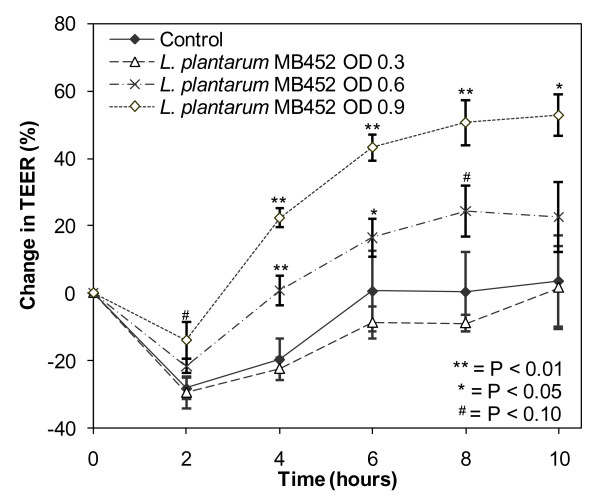
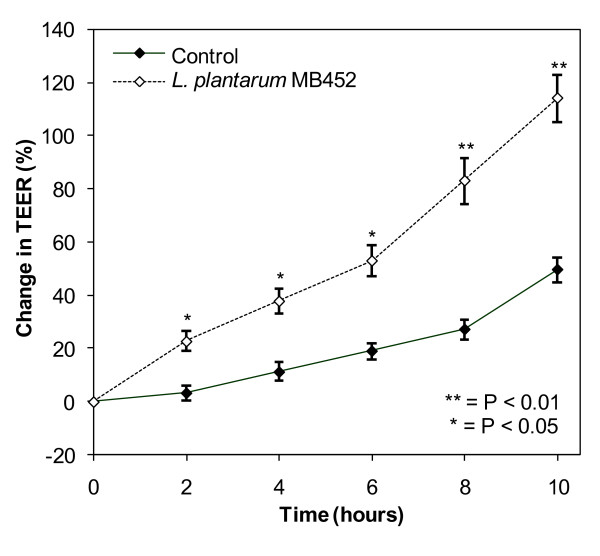
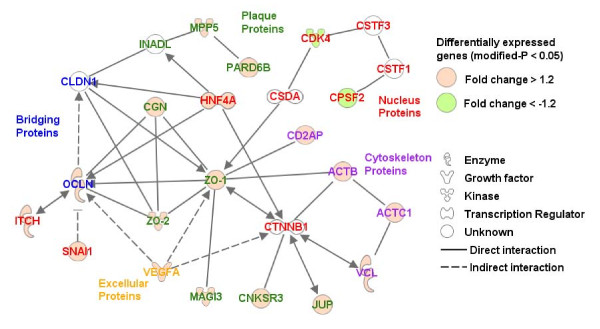
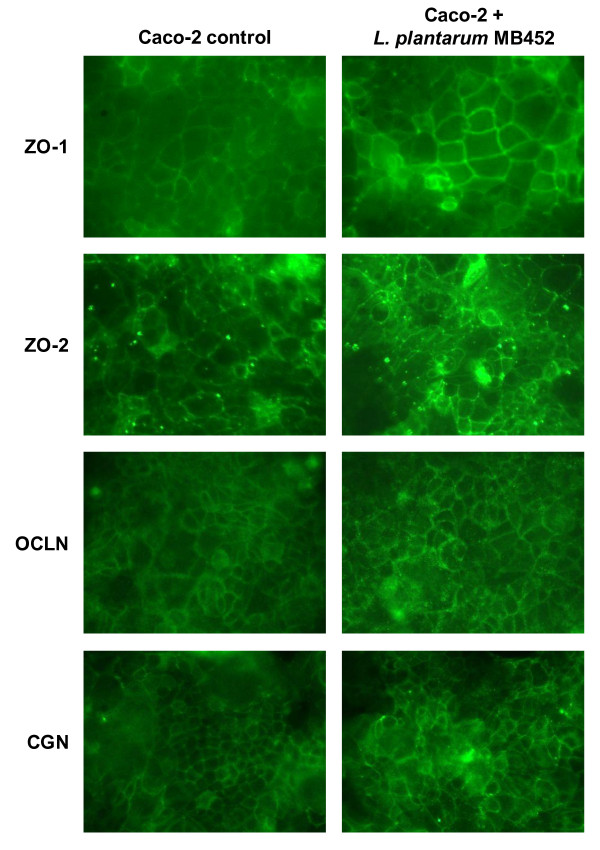
BACKGROUND: Intestinal barrier function is important for preserving health, as a compromised barrier allows antigen entry and can induce inflammatory diseases. Probiotic bacteria can play a role in enhancing intestinal barrier function; however, the mechanisms are not fully understood. Existing studies have focused on the ability of probiotics to prevent alterations to tight junctions in disease models, and have been restricted to a few tight junction bridging proteins. No studies have previously investigated the effect of probiotic bacteria on healthy intestinal epithelial cell genes involved in the whole tight junction signalling pathway, including those encoding for bridging, plaque and dual location tight junction proteins. Alteration of tight junction signalling in healthy humans is a potential mechanism that could lead to the strengthening of the intestinal barrier, resulting in limiting the ability of antigens to enter the body and potentially triggering undesirable immune responses. RESULTS: The effect of Lactobacillus plantarum MB452 on tight junction integrity was determined by measuring trans-epithelial electrical resistance (TEER) across Caco-2 cell layers. L. plantarum MB452 caused a dose-dependent TEER increase across Caco-2 cell monolayers compared to control medium. Gene expression was compared in Caco-2 cells untreated or treated with L. plantarum MB452 for 10 hours. Caco-2 cell RNA was hybridised to human oligonucleotide arrays. Data was analysed using linear models and differently expressed genes were examined using pathway analysis tools. Nineteen tight junction-related genes had altered expression levels in response to L. plantarum MB452 (modified-P < 0.05, fold-change > 1.2), including those encoding occludin and its associated plaque proteins that anchor it to the cytoskeleton. L. plantarum MB452 also caused changes in tubulin and proteasome gene expression levels which may be linked to intestinal barrier function. Caco-2 tight junctions were visualised by fluorescent microscopy of immuno-stained occludin, zona occludens (ZO)-1, ZO-2 and cingulin. Caco-2 cells treated with L. plantarum MB452 had higher intensity fluorescence of each of the four tight junction proteins compared to untreated controls. CONCLUSIONS: This research indicates that enhancing the expression of genes involved in tight junction signalling is a possible mechanism by which L. plantarum MB452 improves intestinal barrier function.
Overview
The claims and statistics of this paper haven’t been checked yet.
Free: it reads the open-access text and checks the first 5 claims that cite a source we can check. Create a free account to check every claim.
Integrity signals
Registry
Cites
Statistics
Figures
Verification
Claims the paper makes
The claims and statistics of this paper haven’t been checked yet.
Free: it reads the open-access text and checks the first 5 claims that cite a source we can check. Create a free account to check every claim.
Claims other papers make about this one
Each is checked against this paper’s own text: does it say what the citing paper says it does?
In the citing paper
“Microbes(Figure 3) can directly alter expression of tight junction proteins such as claudin-380 and zonula occludens-181 or enhance expression of genes involved in tight junction signaling82.”
From The gut Microbiome in adult and pediatric functional gastrointestinal disorders (2019) · cites this paper as [82]
In the citing paper
“enhancing epithelial barrier function (98,99)”
From Sex steroid deficiency-associated bone loss is microbiota dependent and prevented by probiotics (2016) · cites this paper as [98]
Self-check
Percentages, sums and reported differences re-computed from the paper’s own numbers.
The self-check needs the paper’s full text.
Citations
Cites
Vandesompele, J., De Preter, K., Pattyn, F., Poppe, B., Van Roy, N., De Paepe, A., & Speleman, F. (2002) · Genome Biology · doi:10.1186/gb-2002-3-7-research0034 · Cited by 20,038 · cited 1×
“The reference genes (GAPD, SDHA and YWHAZ) were chosen based on the findings of Vandesompele et al [52] and their log ratios in the microarray data (close to 1; not differentially expressed).”
MethodSelf-citationPfaffl, M. W. (2002) · Nucleic Acids Research · doi:10.1093/nar/30.9.e36 · Cited by 7,376 · cited 1×
“The analysis was carried out as described in Additional File 3 and the data was analysed using Relative Expression Software Tool 2008 (version 2.0.7) with efficiency correction [ 53 ].”
MethodInfluentiallimma: Linear Models for Microarray Data
Smyth, G. K. (2005) · Statistics for Biology and Health · doi:10.1007/0-387-29362-0_23 · Cited by 5,796 · cited 1×
“The Limma package in Bioconductor was used to analyse the microarray data [ 50 ].”
MethodJUNCTIONAL COMPLEXES IN VARIOUS EPITHELIA
Farquhar, M. G., & Palade, G. E. (1963) · The Journal of Cell Biology · doi:10.1083/jcb.17.2.375 · Cited by 3,635 · cited 1×
“These intercellular complexes consist of tight junctions, adherens junctions, desmosomes and gap junctions [11].”
BackgroundBioinformatics and Computational Biology Solutions Using R and Bioconductor
(2005) · Statistics for Biology and Health · doi:10.1007/0-387-29362-0 · Cited by 3,289
Ford Alexander, C., Paul, M., Hanauer Steven, B., 谭蓓, & Dong, W. Z. (2001) · Cited by 3,020
Identifying biological themes within lists of genes with EASE
Hosack, D. A., Dennis, G., Sherman, B. T., Lane, H. C., & Lempicki, R. A. (2003) · Genome Biology · doi:10.1186/gb-2003-4-10-r70 · Cited by 1,950 · cited 1×
“Differentially expressed genes were clustered into functional groups and pathways using Ingenuity Pathway Analysis (IPA version 7.1; Ingenuity Systems Inc., Redwood City, CA, USA), and Gene Ontology categories and KEGG pathways using EASE (version 2.0)[ 51 ].”
MethodInfluentialGionchetti, P., Rizzello, F., Venturi, A., Brigidi, P., Matteuzzi, D., Bazzocchi, G., Poggioli, G., Miglioli, M., & Campieri, M. (2000) · Gastroenterology · doi:10.1053/gast.2000.9370 · Cited by 1,486 · cited 1×
“VLS#3, which is a mixture of eight bacteria including L. plantarum MB452, has previously been reported to enhance tight junction integrity in vitro [18], reduce colitis in rodent models [19,20] and improve human intestinal health [ 21-23 ].”
BackgroundFanning, A. S., Jameson, B. J., Jesaitis, L. A., & Anderson, J. M. (1998) · Journal of Biological Chemistry · doi:10.1074/jbc.273.45.29745 · Cited by 1,432 · cited 1×
“The zonula occludens bind to the cytoplasmic end of occludin and form the scaffolding to link occludin to the actin cytoskeleton [26].”
BackgroundKelly, D., Campbell, J. I., King, T. P., Grant, G., Jansson, E. A., Coutts, A. G. P., Pettersson, S., & Conway, S. (2004) · Nature Immunology · doi:10.1038/ni1018 · Cited by 1,003 · cited 1×
“L. plantarum MB452 did not alter the expression levels of other genes and pathways that have been affected by some probiotic bacteria, such as the NF-B pathway [33], PPARg [ 40 ,41], innate immune response”
BackgroundBalda, M. S., Whitney, J. A., Flores, C., González, S., Cereijido, M., & Matter, K. (1996) · The Journal of cell biology · doi:10.1083/jcb.134.4.1031 · Cited by 875
VSL#3 Probiotic-Mixture Induces Remission in Patients with Active Ulcerative Colitis
Bibiloni, R., Fedorak, R. N., Tannock, G. W., Madsen, K. L., Gionchetti, P., Campieri, M., De Simone, C., & Sartor, R. B. (2005) · The American Journal of Gastroenterology · doi:10.1111/j.1572-0241.2005.41794.x · Cited by 744 · cited 1×
“plantarum MB452, has previously been reported to enhance tight junction integrity in vitro [18], reduce colitis in rodent models [19,20] and improve human intestinal health [21-23].”
BackgroundIkenouchi, J., Matsuda, M., Furuse, M., & Tsukita, S. (2003) · Journal of Cell Science · doi:10.1242/jcs.00389 · Cited by 678 · cited 1×
“plantarum MB452; however, the SNAI1 protein is known to bind to occludin and claudin genes promoters suppressing their expression [28].”
BackgroundSecreted bioactive factors from Bifidobacterium infantis enhance epithelial cell barrier function
Ewaschuk, J. B., Diaz, H., Meddings, L., Diederichs, B., Dmytrash, A., Backer, J., Looijer-van Langen, M., & Madsen, K. L. (2008) · American Journal of Physiology-Gastrointestinal and Liver Physiology · doi:10.1152/ajpgi.90227.2008 · Cited by 590 · cited 2×
“infantis was associated with the greatest increase in TEER across Caco-2 cells compared to untreated controls [15].”
BackgroundDi Giacinto, C., Marinaro, M., Sanchez, M., Strober, W., & Boirivant, M. (2005) · The Journal of Immunology · doi:10.4049/jimmunol.174.6.3237 · Cited by 524 · cited 1×
“plantarum MB452, has previously been reported to enhance tight junction integrity in vitro [18], reduce colitis in rodent models [19,20] and improve human intestinal health [21-23].”
BackgroundThe “Perfect Storm” for Type 1 Diabetes
Vaarala, O., Atkinson, M. A., & Neu, J. (2008) · Diabetes · doi:10.2337/db08-0331 · Cited by 497
Mennigen, R., Nolte, K., Rijcken, E., Utech, M., Loeffler, B., Senninger, N., & Bruewer, M. (2009) · American Journal of Physiology-Gastrointestinal and Liver Physiology · doi:10.1152/ajpgi.90534.2008 · Cited by 483 · cited 1×
“the effect of VSL#3 on dextran sodium sulphate-induced colitis in mice [16] and the effect of Lactobacillus plantarum CGMCC 1258 on Enteroinvasive E.”
BackgroundKim, H. J., Camilleri, M., Mckinzie, S., Lempke, M. B., Burton, D. D., Thomforde, G. M., & Zinsmeister, A. R. (2003) · Alimentary Pharmacology & Therapeutics · doi:10.1046/j.1365-2036.2003.01543.x · Cited by 468 · cited 1×
“plantarum MB452, has previously been reported to enhance tight junction integrity in vitro [18], reduce colitis in rodent models [19,20] and improve human intestinal health [21-23].”
BackgroundThe ZO-1–associated Y-box factor ZONAB regulates epithelial cell proliferation and cell density
Balda, M. S., Garrett, M. D., & Matter, K. (2003) · The Journal of Cell Biology · doi:10.1083/jcb.200210020 · Cited by 417 · cited 2×
“Therefore, an increase in ZO-1 gene expression may lead to a decrease in CDK4 gene expression as seen here (Figure 3), which highlights the link between the formation of tight junctions and a reduction in cell proliferation [37].”
BackgroundFunctional modulation of enterocytes by gram-positive and gram-negative microorganisms
Otte, J.-M., & Podolsky, D. K. (2004) · American Journal of Physiology-Gastrointestinal and Liver Physiology · doi:10.1152/ajpgi.00341.2003 · Cited by 403 · cited 1×
“VLS#3, which is a mixture of eight bacteria including L. plantarum MB452, has previously been reported to enhance tight junction integrity in vitro [ 18 ], reduce colitis in rodent models [19,20] and improve human intestinal health [21-23].”
Backgroundvan Baarlen, P., Troost, F. J., van Hemert, S., van der Meer, C., de Vos, W. M., de Groot, P. J., Hooiveld, G. J. E. J., Brummer, R.-J. M., & Kleerebezem, M. (2009) · Proceedings of the National Academy of Sciences · doi:10.1073/pnas.0809919106 · Cited by 385
Probiotic lactobacilli and VSL#3 induce enterocyte β-defensin 2
Schlee, M., Harder, J., Köten, B., Stange, E. F., Wehkamp, J., & Fellermann, K. (2008) · Clinical and Experimental Immunology · doi:10.1111/j.1365-2249.2007.03587.x · Cited by 359 · cited 1×
“pathway [42], or human b defensin-2 [43].”
Dallas, P. B., Gottardo, N. G., Firth, M. J., Beesley, A. H., Hoffmann, K., Terry, P. A., Freitas, J. R., Boag, J. M., Cummings, A. J., & Kees, U. R. (2005) · BMC Genomics · doi:10.1186/1471-2164-6-59 · Cited by 341
(2008) · PubMed · Cited by 325
DNA from probiotic bacteria modulates murine and human epithelial and immune function
Jijon, H., Backer, J., Diaz, H., Yeung, H., Thiel, D., McKaigney, C., De Simone, C., & Madsen, K. (2004) · Gastroenterology · doi:10.1053/j.gastro.2004.02.003 · Cited by 321 · cited 2×
“Other studies indicated that the anti-inflammatory effects of VSL#3 are, at least partially, due to VSL#3 bifidobacteria decreasing the abundance of the pro-inflammatory cytokine IL-8 [45] and L.”
BackgroundCosseau, C., Devine, D. A., Dullaghan, E., Gardy, J. L., Chikatamarla, A., Gellatly, S., Yu, L. L., Pistolic, J., Falsafi, R., Tagg, J., et al. (2008) · Infection and Immunity · doi:10.1128/iai.00188-08 · Cited by 293 · cited 1×
“pathway [42], or human b defensin-2 [43].”
Identifying biological themes within lists of genes with EASE
Hosack, D. A., Dennis, G., Sherman, B. T., Lane, H. C., & Lempicki, R. A. (2003) · Genome Biology · doi:10.1186/gb-2003-4-6-p4 · Cited by 272
Sherman, P. M., Johnson-Henry, K. C., Yeung, H. P., Ngo, P. S. C., Goulet, J., & Tompkins, T. A. (2005) · Infection and Immunity · doi:10.1128/iai.73.8.5183-5188.2005 · Cited by 246 · cited 1×
“Some probiotics have been shown to ameliorate intestinal permeability induced by pathogens in vitro [12,13]; whereas, others probiotic bacteria have been shown to enhance tight junction integrity between intestinal epithelial cells that are not weakened [13-15].”
BackgroundInflammatory Bowel Disease and the Apical Junctional Complex
BRUEWER, M., SAMARIN, S., & NUSRAT, A. (2006) · Annals of the New York Academy of Sciences · doi:10.1196/annals.1326.017 · Cited by 223 · cited 2×
“Probiotic-Mixture Induces Remission in Patients with Active Ulcerative Colitis.”
BackgroundTraweger, A., Fang, D., Liu, Y.-C., Stelzhammer, W., Krizbai, I. A., Fresser, F., Bauer, H.-C., & Bauer, H. (2002) · Journal of Biological Chemistry · doi:10.1074/jbc.m111384200 · Cited by 199 · cited 1×
“plantarum MB452; however, the ITCH protein is known to contribute to the degradation of occludin [27].”
BackgroundTight junctions, leaky intestines, and pediatric diseases
Liu, Z., Li, N., & Neu, J. (2005) · Acta Paediatrica · doi:10.1111/j.1651-2227.2005.tb01904.x · Cited by 189 · cited 1×
“In addition, increased intestinal permeability can also result in pathological changes in distant organs and tissues, which can lead to further complications in susceptible individuals such as asthma [6], chronic heart failure [7], type-1-diabetes [8], chronic fatigue syndrome [9] and depression [10].”
BackgroundQin, H., Zhang, Z., Hang, X., & Jiang, Y. (2009) · BMC Microbiology · doi:10.1186/1471-2180-9-63 · Cited by 175
Roles of ZO-1, occludin, and actin in oxidant-induced barrier disruption
Musch, M. W., Walsh-Reitz, M. M., & Chang, E. B. (2006) · American Journal of Physiology-Gastrointestinal and Liver Physiology · doi:10.1152/ajpgi.00301.2005 · Cited by 152 · cited 1×
“Another study showed that a decrease in TEER was associated with altered cellular localisation of claudin-1 and -5, but not altered abundance [30], so it is possible that L.”
BackgroundMechanisms of initiation and perpetuation of gut inflammation by stress
Hart, A., & Kamm, M. A. (2002) · Alimentary Pharmacology & Therapeutics · doi:10.1046/j.1365-2036.2002.01359.x · Cited by 138 · cited 1×
“times of stress [ 4 ] and it inevitably deteriorates with aging [5].”
BackgroundThe emerging role of the gut in chronic heart failure
Sandek, A., Rauchhaus, M., Anker, S. D., & von Haehling, S. (2008) · Current Opinion in Clinical Nutrition & Metabolic Care · doi:10.1097/mco.0b013e32830a4c6e · Cited by 135 · cited 1×
“In addition, increased intestinal permeability can also result in pathological changes in distant organs and tissues, which can lead to further complications in susceptible individuals such as asthma [6], chronic heart failure [7], type-1-diabetes [8], chronic fatigue syndrome [9] and depression [10].”
BackgroundVariable Response to Probiotics in Two Models of Experimental Colitis in Rats
Shibolet, O., Karmeli, F., Eliakim, R., Swennen, E., Brigidi, P., Gionchetti, P., Campieri, M., Morgenstern, S., & Rachmilewitz, D. (2002) · Inflammatory Bowel Diseases · doi:10.1097/00054725-200211000-00004 · Cited by 129 · cited 1×
“plantarum MB452, has previously been reported to enhance tight junction integrity in vitro [18], reduce colitis in rodent models [19,20] and improve human intestinal health [21-23].”
BackgroundPutaala, H., Salusjärvi, T., Nordström, M., Saarinen, M., Ouwehand, A. C., Hansen, E. B., & Rautonen, N. (2008) · Research in Microbiology · doi:10.1016/j.resmic.2008.08.002 · Cited by 127 · cited 1×
“Some probiotics have been shown to ameliorate intestinal permeability induced by pathogens in vitro [12,13]; whereas, others probiotic bacteria have been shown to enhance tight junction integrity between intestinal epithelial cells that are not weakened [13-15].”
BackgroundMeasuring the Quality of Endoscopy
Bjorkman, D. J., & Popp, J. W. (2006) · The American Journal of Gastroenterology · doi:10.1111/j.1572-0241.2006.00667.x · Cited by 123 · cited 1×
“The function of the intestinal barrier is compromised in human conditions such as Inflammatory Bowel Diseases (Crohn’s Disease and Ulcerative Colitis) [1], Irritable Bowel Syndrome [2] and some kinds of food-borne infections [3].”
BackgroundVoltan, S., Martines, D., Elli, M., Brun, P., Longo, S., Porzionato, A., Macchi, V., Renata D'Incà, Scarpa, M., Palù, G., et al. (2008) · Gastroenterology · doi:10.1053/j.gastro.2008.07.007 · Cited by 119 · cited 1×
“plantarum MB452 did not alter the expression levels of other genes and pathways that have been affected by some probiotic bacteria, such as the NF- B pathway [33], PPARg [40,41], innate immune response Anderson et al.”
BackgroundKlingberg, T. D., Pedersen, M. H., Cencic, A., & Budde, B. B. (2005) · Applied and Environmental Microbiology · doi:10.1128/aem.71.11.7528-7530.2005 · Cited by 118 · cited 1×
“Some probiotics have been shown to ameliorate intestinal permeability induced by pathogens in vitro [12,13]; whereas, others probiotic bacteria have been shown to enhance tight junction integrity between intestinal epithelial cells that are not weakened [13-15].”
BackgroundMaes, M. H. J., & Leunis, J. (2008) · PubMed · Cited by 118
Huang, W., Eum, S. Y., András, I. E., Hennig, B., & Toborek, M. (2009) · The FASEB Journal · doi:10.1096/fj.08-121624 · Cited by 108 · cited 1×
“Proteasomes, which are large protein complexes responsible for breaking down surplus or damaged proteins, have previously been linked to tight junction degradation, and proteasome inhibitors can prevent degradation of occludin [35] and ZO-2 [36].”
BackgroundGuttman, J. A., Samji, F. N., Li, Y., Vogl, A. W., & Finlay, B. B. (2006) · Infection and Immunity · doi:10.1128/iai.00721-06 · Cited by 103 · cited 1×
“The function of the intestinal barrier is compromised in human conditions such as Inflammatory Bowel Diseases (Crohn’s Disease and Ulcerative Colitis) [1], Irritable Bowel Syndrome [2] and some kinds of food-borne infections [3].”
BackgroundOxidative stress induces gastric epithelial permeability through claudin-3
Hashimoto, K., Oshima, T., Tomita, T., Kim, Y., Matsumoto, T., Joh, T., & Miwa, H. (2008) · Biochemical and Biophysical Research Communications · doi:10.1016/j.bbrc.2008.08.140 · Cited by 97 · cited 1×
“Decreases in the abundance of claudin-2, -3 and -4 proteins (measured using western blotting) have been associated with a decrease in TEER [ 29 ].”
MethodBrigidi, P., Swennen, E., Vitali, B., Rossi, M., & Matteuzzi, D. (2003) · International Journal of Food Microbiology · doi:10.1016/s0168-1605(02)00245-3 · Cited by 93 · cited 1×
“Lactobacillus plantarum MB452 [47] was isolated from VSL#3 (Orphan Australia Pty Ltd, Berwick, Australia).”
MethodTroost, F. J., Van Baarlen, P., Lindsey, P., Kodde, A., De Vos, W. M., Kleerebezem, M., & Brummer, R.-J. M. (2008) · BMC Genomics · doi:10.1186/1471-2164-9-374 · Cited by 83 · cited 1×
“plantarum WCFSI induces increased expression of genes involved in lipid metabolism and cellular growth and development in healthy human duodenum [32] and L.”
BackgroundHörmannsperger, G., Clavel, T., Hoffmann, M., Reiff, C., Kelly, D., Loh, G., Blaut, M., Hölzlwimmer, G., Laschinger, M., & Haller, D. (2009) · PLoS ONE · doi:10.1371/journal.pone.0004365 · Cited by 81
Kavanagh, E. L., Büchert, M., Tsapara, A., Choquet, A., Balda, M. S., Hollande, F., & Matter, K. (2006) · Journal of Cell Science · doi:10.1242/jcs.03297 · Cited by 72 · cited 1×
“plantarum MB452 reduced the expression of the CPSF2 gene, which encodes a protein which is part of the CSTF-CPSF-SYMPK complex, that regulates cell-cycle related gene expression and promotes cell proliferation [38].”
BackgroundLui, W., & Lee, W. M. (2004) · Journal of Cellular Physiology · doi:10.1002/jcp.20254 · Cited by 64 · cited 1×
“Proteasomes, which are large protein complexes responsible for breaking down surplus or damaged proteins, have previously been linked to tight junction degradation, and proteasome inhibitors can prevent degradation of occludin [35] and ZO-2 [36].”
BackgroundAge- and Diet-Related Increase in Transepithelial Colon Permeability of Fischer 344 Rats
Mullin, J. M., Valenzano, M. C., Verrecchio, J. J., & Kothari, R. (2002) · Digestive Diseases and Sciences · doi:10.1023/a:1020191412285 · Cited by 54 · cited 1×
“times of stress [4] and it inevitably deteriorates with aging [5].”
BackgroundYap, A. S., Stevenson, B. R., Abel, K. C., Cragoe, E. J., & Manley, S. W. (1995) · Experimental Cell Research · doi:10.1006/excr.1995.1189 · Cited by 51 · cited 1×
“A high turnover in tubulin synthesis has been linked to the disassembly of tight junctions [34]; thus, the reduced expression levels of these genes may account for the positive effect of L.”
BackgroundKnoch, B., Barnett, M. P. G., Zhu, S., Park, Z. A., Nones, K., Dommels, Y. E. M., Knowles, S. O., McNabb, W. C., & Roy, N. C. (2008) · Lifestyle Genomics · doi:10.1159/000134292 · Cited by 46
Self-citationMucosal Barrier Defects in Irritable Bowel Syndrome. Who Left the Door Open?
Barbara, G. (2006) · The American Journal of Gastroenterology · doi:10.1038/ajg2006242 · Cited by 41
Linsalata, M., Russo, F., Berloco, P. B., Valentini, A. M., Caruso, M. L., Simone, C. D., Barone, M., Polimeno, L., & Leo, A. D. (2005) · PubMed · Cited by 40
Panigrahi, P. (2007) · World Journal of Gastroenterology · doi:10.3748/wjg.v13.i47.6370 · Cited by 26 · cited 6×
“coli ATCC43893 (serotype O124:NM) did not report any changes in tight junction gene expression [31].”
BackgroundInfluentialChicault, C., Toutain, B., Monnier, A., Aubry, M., Fergelot, P., Treut, A. L., Galibert, M., & Mosser, J. (2006) · Physiological Genomics · doi:10.1152/physiolgenomics.00297.2005 · Cited by 15 · cited 1×
“A similar experimental design previously gave biologically relevant results [48,49].”
ResultRc, A., La, C., Al, C., Koulman, A., Hurst, R. D., Fraser, K. G., Wc, M., Ga, L., & Nc, R. (2006) · Proceedings of the New Zealand Society of Animal Production · Cited by 1
Cited by
Intestinal permeability – a new target for disease prevention and therapy
Bischoff, S. C., Barbara, G., Buurman, W., Ockhuizen, T., Schulzke, J.-D., Serino, M., Tilg, H., Watson, A., & Wells, J. M. (2014) · BMC Gastroenterology · doi:10.1186/s12876-014-0189-7 · Cited by 1,755
“by improving barrier functions or by inhibition of pathogen adherence [115,117-120].”
BackgroundProbiotic Mechanisms of Action
Bermudez-Brito, M., Plaza-Díaz, J., Muñoz-Quezada, S., Gómez-Llorente, C., & Gil, A. (2012) · Annals of Nutrition and Metabolism · doi:10.1159/000342079 · Cited by 1,234
Regulation of Tight Junction Permeability by Intestinal Bacteria and Dietary Components1,2
Ulluwishewa, D., Anderson, R. C., McNabb, W. C., Moughan, P. J., Wells, J. M., & Roy, N. C. (2011) · The Journal of Nutrition · doi:10.3945/jn.110.135657 · Cited by 1,177
Self-citationKelly, J. R., Kennedy, P. J., Cryan, J. F., Dinan, T. G., Clarke, G., & Hyland, N. P. (2015) · Frontiers in Cellular Neuroscience · doi:10.3389/fncel.2015.00392 · Cited by 1,110
Intestinal barrier function in health and gastrointestinal disease
Camilleri, M., Madsen, K., Spiller, R., Van Meerveld, B. G., & Verne, G. N. (2012) · Neurogastroenterology & Motility · doi:10.1111/j.1365-2982.2012.01921.x · Cited by 908
Metadata
- Authors
- Anderson, R. C., Cookson, A. L., McNabb, W. C., Park, Z., McCann, M. J., Kelly, W. J., & Roy, N. C.
- Affiliations
- AgResearch (NZ)
- Corresponding author
- Anderson, Rachel C
- Venue
- BMC Microbiology
- Published
- 2010
- Volume
- 10
- Issue
- 1
- Pages
- 316
- ISSN
- 1471-2180 (ISSN-L)
- PMC
- PMC3004893
- OpenAlex
- W1972441174
- Cited by
- 510
- References
- 57
- Citations by year
- 2026: 33 · 2025: 42 · 2024: 54 · 2023: 56 · 2022: 45 · 2021: 44 · 2020: 36 · 2019: 45 · 2018: 26 · 2017: 21 · 2016: 15 · 2015: 22 · 2014: 22 · 2013: 21 · 2012: 17
- FWCI
- 24.02
- Type
- journal article
- Language
- en
- Open access
- gold
- doi.org
- Licence
- cc-by
- Locations
- BMC Microbiology (publishedVersion, cc-by)
- PubMed Central (publishedVersion, cc-by)
- PubMed (publishedVersion)
- DOAJ (DOAJ: Directory of Open Access Journals) (submittedVersion)
- Funders
- AgResearch
- Topics
- Life Sciences › Agricultural and Biological Sciences › Food Science › Probiotics and Fermented Foods
- Health Sciences › Medicine › Gastroenterology › Gastrointestinal motility and disorders
- Life Sciences › Biochemistry, Genetics and Molecular Biology › Molecular Biology › Gut microbiota and health
- Keywords
- probiotics, intestinal barrier function, tight junctions, tight junction gene expression, occludin, ZO-1, ZO-2, cingulin, transepithelial electrical resistance, Caco-2 cells, tubulin, proteasome
- MeSH terms
- Epithelial Cells, Humans, Intestines, Signal Transduction, Gene Expression, Electric Impedance, Caco-2 Cells, Tight Junctions, Lactiplantibacillus plantarum
About these checks
Registry, retraction, Cites and statistics results are computed, not judged, with one exception: a printed reference that no index lists is read once by a model before it counts as a citation error. Claims are extracted by a model and kept only when their quote appears verbatim in the text; each cited source is then checked, with a model’s help, for whether it says what the claim relies on. Those verdicts can be wrong — read the claim’s quote and the cited source before relying on one.
Statistics and arithmetic are recomputed, not judged.
Confidence bands are shown only for fields calibrated on our annotated test set. None is calibrated yet, so no band is shown.
What counts as a claim ›How we measure confidence ›How we check this ›
Are you an author, or do you see a problem with this page? Request a review
Data sources
Bibliographic data: Semantic Scholar, OpenAlex, Crossref.
Contains information from the Semantic Scholar Academic Graph Datasets, made available under the ODC Attribution License (ODC-BY 1.0).
Semantic Scholar’s data is described in: Kinney, R., et al. (2023). The Semantic Scholar Open Data Platform. arXiv:2301.10140.
