

Lactobacillus plantarum MB452 enhances the function of the intestinal barrier by increasing the expression levels of genes involved in tight junction formation
Open accessThe DOI matches its Crossref record; 57 of the 57 references it cites were found in a registry or an index.
Abstract
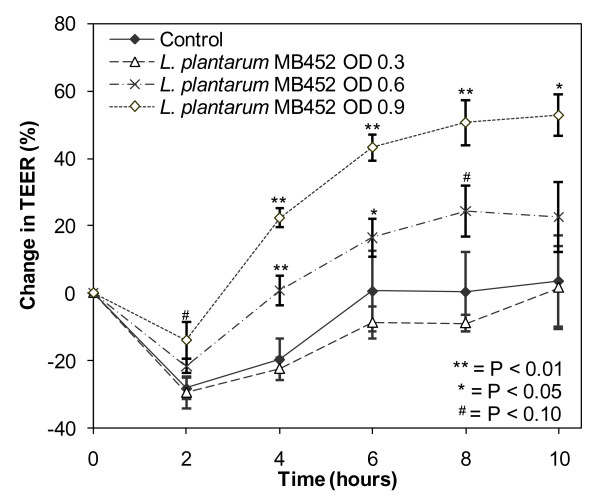
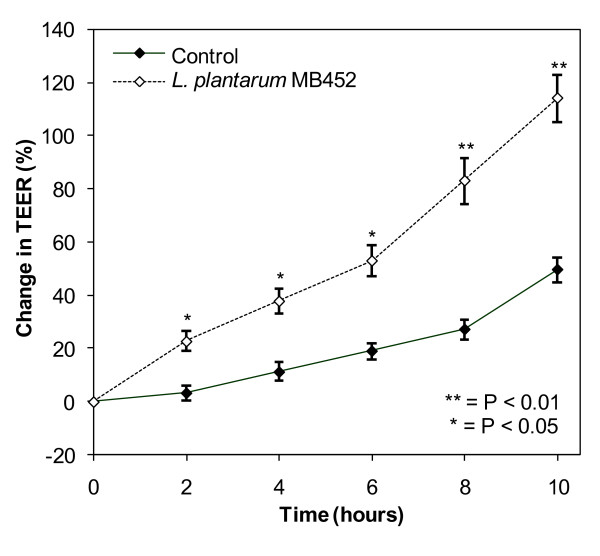
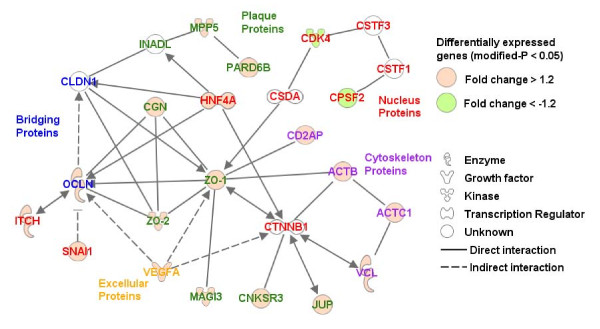
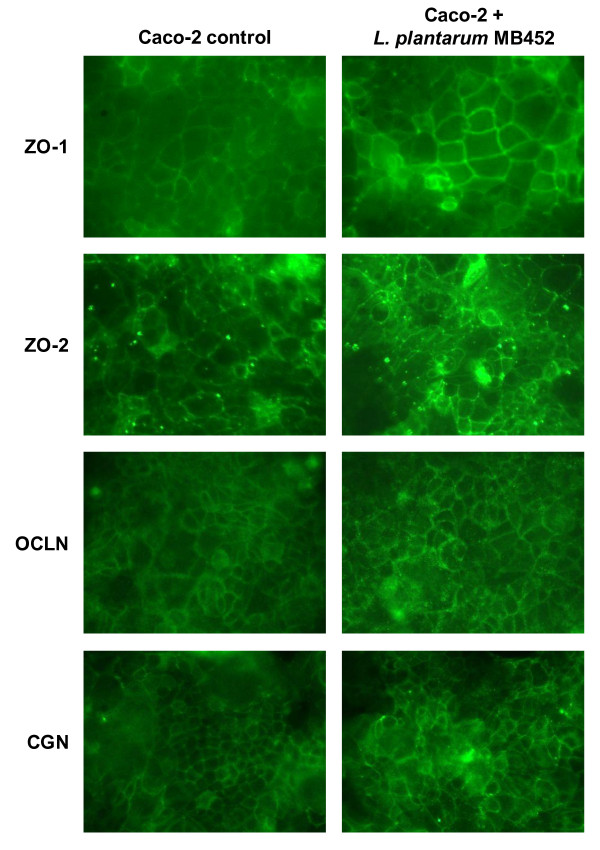
BACKGROUND: Intestinal barrier function is important for preserving health, as a compromised barrier allows antigen entry and can induce inflammatory diseases. Probiotic bacteria can play a role in enhancing intestinal barrier function; however, the mechanisms are not fully understood. Existing studies have focused on the ability of probiotics to prevent alterations to tight junctions in disease models, and have been restricted to a few tight junction bridging proteins. No studies have previously investigated the effect of probiotic bacteria on healthy intestinal epithelial cell genes involved in the whole tight junction signalling pathway, including those encoding for bridging, plaque and dual location tight junction proteins. Alteration of tight junction signalling in healthy humans is a potential mechanism that could lead to the strengthening of the intestinal barrier, resulting in limiting the ability of antigens to enter the body and potentially triggering undesirable immune responses. RESULTS: The effect of Lactobacillus plantarum MB452 on tight junction integrity was determined by measuring trans-epithelial electrical resistance (TEER) across Caco-2 cell layers. L. plantarum MB452 caused a dose-dependent TEER increase across Caco-2 cell monolayers compared to control medium. Gene expression was compared in Caco-2 cells untreated or treated with L. plantarum MB452 for 10 hours. Caco-2 cell RNA was hybridised to human oligonucleotide arrays. Data was analysed using linear models and differently expressed genes were examined using pathway analysis tools. Nineteen tight junction-related genes had altered expression levels in response to L. plantarum MB452 (modified-P < 0.05, fold-change > 1.2), including those encoding occludin and its associated plaque proteins that anchor it to the cytoskeleton. L. plantarum MB452 also caused changes in tubulin and proteasome gene expression levels which may be linked to intestinal barrier function. Caco-2 tight junctions were visualised by fluorescent microscopy of immuno-stained occludin, zona occludens (ZO)-1, ZO-2 and cingulin. Caco-2 cells treated with L. plantarum MB452 had higher intensity fluorescence of each of the four tight junction proteins compared to untreated controls. CONCLUSIONS: This research indicates that enhancing the expression of genes involved in tight junction signalling is a possible mechanism by which L. plantarum MB452 improves intestinal barrier function.
Overview
The claims and statistics of this paper haven’t been checked yet.
Free: it reads the open-access text and checks the first 5 claims that cite a source we can check. Create a free account to check every claim.
Integrity signals
Registry
Cites
Statistics
Figures
Verification
Claims the paper makes
The claims and statistics of this paper haven’t been checked yet.
Free: it reads the open-access text and checks the first 5 claims that cite a source we can check. Create a free account to check every claim.
Claims other papers make about this one
Each is checked against this paper’s own text: does it say what the citing paper says it does?
In the citing paper
“Microbes(Figure 3) can directly alter expression of tight junction proteins such as claudin-380 and zonula occludens-181 or enhance expression of genes involved in tight junction signaling82.”
From The gut Microbiome in adult and pediatric functional gastrointestinal disorders (2019) · cites this paper as [82]
In the citing paper
“enhancing epithelial barrier function (98,99)”
From Sex steroid deficiency-associated bone loss is microbiota dependent and prevented by probiotics (2016) · cites this paper as [98]
Self-check
Percentages, sums and reported differences re-computed from the paper’s own numbers.
The self-check needs the paper’s full text.
Citations
Cites
Vandesompele, J., De Preter, K., Pattyn, F., Poppe, B., Van Roy, N., De Paepe, A., & Speleman, F. (2002) · Genome Biology · doi:10.1186/gb-2002-3-7-research0034 · Cited by 20,038 · cited 1×
“The reference genes (GAPD, SDHA and YWHAZ) were chosen based on the findings of Vandesompele et al [52] and their log ratios in the microarray data (close to 1; not differentially expressed).”
MethodSelf-citationPfaffl, M. W. (2002) · Nucleic Acids Research · doi:10.1093/nar/30.9.e36 · Cited by 7,376 · cited 1×
“The analysis was carried out as described in Additional File 3 and the data was analysed using Relative Expression Software Tool 2008 (version 2.0.7) with efficiency correction [ 53 ].”
MethodInfluentiallimma: Linear Models for Microarray Data
Smyth, G. K. (2005) · Statistics for Biology and Health · doi:10.1007/0-387-29362-0_23 · Cited by 5,796 · cited 1×
“The Limma package in Bioconductor was used to analyse the microarray data [ 50 ].”
MethodJUNCTIONAL COMPLEXES IN VARIOUS EPITHELIA
Farquhar, M. G., & Palade, G. E. (1963) · The Journal of Cell Biology · doi:10.1083/jcb.17.2.375 · Cited by 3,635 · cited 1×
“These intercellular complexes consist of tight junctions, adherens junctions, desmosomes and gap junctions [11].”
BackgroundBioinformatics and Computational Biology Solutions Using R and Bioconductor
(2005) · Statistics for Biology and Health · doi:10.1007/0-387-29362-0 · Cited by 3,289
Ford Alexander, C., Paul, M., Hanauer Steven, B., 谭蓓, & Dong, W. Z. (2001) · Cited by 3,020
Identifying biological themes within lists of genes with EASE
Hosack, D. A., Dennis, G., Sherman, B. T., Lane, H. C., & Lempicki, R. A. (2003) · Genome Biology · doi:10.1186/gb-2003-4-10-r70 · Cited by 1,950 · cited 1×
“Differentially expressed genes were clustered into functional groups and pathways using Ingenuity Pathway Analysis (IPA version 7.1; Ingenuity Systems Inc., Redwood City, CA, USA), and Gene Ontology categories and KEGG pathways using EASE (version 2.0)[ 51 ].”
MethodInfluentialGionchetti, P., Rizzello, F., Venturi, A., Brigidi, P., Matteuzzi, D., Bazzocchi, G., Poggioli, G., Miglioli, M., & Campieri, M. (2000) · Gastroenterology · doi:10.1053/gast.2000.9370 · Cited by 1,486 · cited 1×
“VLS#3, which is a mixture of eight bacteria including L. plantarum MB452, has previously been reported to enhance tight junction integrity in vitro [18], reduce colitis in rodent models [19,20] and improve human intestinal health [ 21-23 ].”
BackgroundFanning, A. S., Jameson, B. J., Jesaitis, L. A., & Anderson, J. M. (1998) · Journal of Biological Chemistry · doi:10.1074/jbc.273.45.29745 · Cited by 1,432 · cited 1×
“The zonula occludens bind to the cytoplasmic end of occludin and form the scaffolding to link occludin to the actin cytoskeleton [26].”
BackgroundKelly, D., Campbell, J. I., King, T. P., Grant, G., Jansson, E. A., Coutts, A. G. P., Pettersson, S., & Conway, S. (2004) · Nature Immunology · doi:10.1038/ni1018 · Cited by 1,003 · cited 1×
“L. plantarum MB452 did not alter the expression levels of other genes and pathways that have been affected by some probiotic bacteria, such as the NF-B pathway [33], PPARg [ 40 ,41], innate immune response”
Background
Cited by
Items 101–200 of 512
Liu, L., Zeng, D., Yang, M., Wen, B., Lai, J., Zhou, Y., Sun, H., Xiong, L., Wang, J., Lin, Y., et al. (2018) · Probiotics and Antimicrobial Proteins · doi:10.1007/s12602-018-9476-x · Cited by 92
Gingival epithelial barrier: regulation by beneficial and harmful microbes
Takahashi, N., Sulijaya, B., Yamada‐Hara, M., Tsuzuno, T., Tabeta, K., & Yamazaki, K. (2019) · Tissue Barriers · doi:10.1080/21688370.2019.1651158 · Cited by 97
“In vitro studies using the intestinal epithelial cell line Caco-2 demonstrated that certain Lactobacillus species boosted tight junction formation-related genes (occludin, ZO-1, ZO-2, and cingulin) and inhibited TEER disturbance.(56,57)”
BackgroundHirao, L. A., Grishina, I., Bourry, O., Hu, W. K., Somrit, M., Sankaran‐Walters, S., Gaulke, C. A., Fenton, A. N., Li, J. A., Crawford, R. W., et al. (2014) · PLoS Pathogens · doi:10.1371/journal.ppat.1004311 · Cited by 83
Falcinelli, S., Rodiles, A., Hatef, A., Picchietti, S., Cossignani, L., Merrifield, D. L., Unniappan, S., & Carnevali, O. (2018) · Journal of Clinical Gastroenterology · doi:10.1097/mcg.0000000000001064 · Cited by 79
Cui, C., Du, M., Zhao, Y., Tang, J., Liu, M., Geng, M., Chen, R., Zhang, Q., Sun, Z., & Weng, H. (2024) · ACS Applied Materials & Interfaces · doi:10.1021/acsami.4c10562 · Cited by 86
Gut microbiota and associated metabolites: key players in high-fat diet-induced chronic diseases
Du, W., Zou, Z., Ye, B., & Zhou, Y. Q. (2025) · Gut Microbes · doi:10.1080/19490976.2025.2494703 · Cited by 91
“142–144 Similarly, Akkermansia muciniphila not only induces gene expression of Tjp1 and Ocln but also mitigates HFD-induced thinning of the small intestinal mucus layer (SUML), thereby effectively preventing enhanced permeability to intestinal substrates and pathogens.”
Baldwin, R. L., Wu, S., Li, W., Li, C., Bequette, B. J., & Li, R. W. (2012) · Gene Regulation and Systems Biology · doi:10.4137/grsb.s9687 · Cited by 91
Zhang, J.-C., Chen, P., Zhang, C., Khalil, M. M., Zhang, N., Qi, D., Wang, Y.-W., & Sun, L. (2020) · Poultry Science · doi:10.1016/j.psj.2019.11.017 · Cited by 80
“function by modulating goblet cells and increase the tight junction-related genes expression in intestine (Anderson et al., 2010); (2) decrease in Escherichia coli and Salmonella colonization in the intestine (Shanmugasundaram et al.”
BackgroundOsteomicrobiology: The influence of gut microbiota on bone in health and disease
Jones, R. M., Mullé, J. G., & Pacifici, R. (2017) · Bone · doi:10.1016/j.bone.2017.04.009 · Cited by 82
Probiotic Bacteria for Healthier Aging: Immunomodulation and Metabolism of Phytoestrogens
Landete, J. M., Gaya, P., Rodríguez, E., Langa, S., Peirotén, Á., Medina, M., & Arqués, J. L. (2017) · BioMed Research International · doi:10.1155/2017/5939818 · Cited by 76
Carvalho, R. D. D. O., Carmo, F. L. R. D., Oliveira, A., Langella, P., Chatel, J., Bermúdez‐Humarán, L. G., Azevedo, V., & de Azevedo, M. S. P. (2017) · Frontiers in Microbiology · doi:10.3389/fmicb.2017.00800 · Cited by 85
“Species such as B. infantis, L. plantarum, and L. casei have been shown to increase the expression of proteins involved in tight junction barrier function, such as occludins and zonula occludens-1 (ZO-1) (Ewaschuk et al., 2008; Anderson et al., 2010; Eun et al., 2011).”
BackgroundGut Microbiota Dysbiosis in Functional Dyspepsia
Tziatzios, G., Gkolfakis, P., Papanikolaou, I. S., Mathur, R., Pimentel, M., Giamarellos‐Bourboulis, E. J., & Τriantafyllou, Κ. (2020) · Microorganisms · doi:10.3390/microorganisms8050691 · Cited by 89
“Second, bacteria can even up-regulate the expression of genes involved in intestinal wall protein production; administration of probiotics resulted in altered expression levels of tight junction-related genes, including those producing occludin [27].”
BackgroundMultispecies probiotic protects gut barrier function in experimental models
Nébot-Vivinus, M. (2014) · World Journal of Gastroenterology · doi:10.3748/wjg.v20.i22.6832 · Cited by 70
Ganci, M., Suleyman, E., Butt, H., & Ball, M. (2019) · Brain and Behavior · doi:10.1002/brb3.1408 · Cited by 85
“Additionally, SCFAs (together with enzymes also produced by the GM) enhance intestinal bar‐ rier functioning through their regulation of tight junction (TJ) pro‐ teins (e.g., Anderson et al., 2010; Bischoff et al., 2014; Peng, Li, Green, Holzman, & Lin, 2009).”
BackgroundDisease managing capacities and mechanisms of host effects of lactic acid bacteria
Ren, C., Faas, M. M., & de Vos, P. (2020) · Critical Reviews in Food Science and Nutrition · doi:10.1080/10408398.2020.1758625 · Cited by 75
“…the expression and distribution of tight junctions (TJs)-associated proteins, (D) inhibiting epithelial cell apoptosis, and (E) modifying the immune signaling of intestinal epithelial cells. down-regulated the expression of cytoskeleton protein tubulin and proteasomes (Anderson et al. 2010).”
BackgroundProbiotics as regulators of inflammation: A review
Lescheid, D. W. (2014) · Functional Foods in Health and Disease · doi:10.31989/ffhd.v4i7.2 · Cited by 67
“, zonulin-1, occludin and cingulin) [16, 17].”
Gut Microbiota Regulation and Their Implication in the Development of Neurodegenerative Disease
Sun, P., Su, L., Zhu, H., Li, X., Guo, Y., Du, X., Zhang, L., & Qin, C. (2021) · Microorganisms · doi:10.3390/microorganisms9112281 · Cited by 69
“of tight junction signaling-related genes induced by certain bacteria types might be one of the proper explanations [47,48].”
BackgroundProbiotics, Nuclear Receptor Signaling, and Anti-Inflammatory Pathways
Yoon, S. S., & Sun, J. (2011) · Gastroenterology Research and Practice · doi:10.1155/2011/971938 · Cited by 66
“This paper discusses progress in understanding how probiotics contribute to intestinal mucosal function, particularly in relation to antiinflammatory signaling pathways.”
BackgroundEnhancement of Epithelial Barrier Function by Probiotics
L. Madsen, K. (2012) · Journal of Epithelial Biology and Pharmacology · doi:10.2174/1875044301205010055 · Cited by 66
Karimi, S., Jonsson, H., Lundh, T., & Roos, S. (2018) · Physiological Reports · doi:10.14814/phy2.13514 · Cited by 71
“In line with this, upregulation of TJ proteins ZO-1 (Karczewski et al. 2010) and E-cadherin in Caco-2 cells treated with L. plantarum has been reported previously (Anderson et al. 2010).”
BackgroundHe, B., Bai, Y., Jiang, L., Wang, W., Li, T., Liu, P., Tao, S., Zhao, J., Han, D., & Wang, J. (2018) · International Journal of Molecular Sciences · doi:10.3390/ijms19082407 · Cited by 67
“At the genus level, OTUs associated with Lactobacillus (18.1%), Prevotella (18.1%), and Streptococcus (8.4”
InfluentialKolli, U., Jalodia, R., Moidunny, S., Singh, P. K., Ban, Y. J., Tao, J., Cantu, G. N., Valdes, E., Ramakrishnan, S., & Roy, S. (2023) · Gut Microbes · doi:10.1080/19490976.2023.2246184 · Cited by 66
Probiotics and the intestinal tight junction barrier function
Ferris, M. M., Antonio, L. S., & Al–Sadi, R. (2025) · Frontiers in Cell and Developmental Biology · doi:10.3389/fcell.2025.1671152 · Cited by 77
Shi, Y., Zhao, X., Zhao, J., Zhang, H., Zhai, Q., Narbad, A., & Chen, W. (2018) · Journal of Applied Microbiology · doi:10.1111/jam.13687 · Cited by 61
“…The Society for Applied Microbiology 851 MB452 up-regulated the expression of four tight junction proteins (occludin, ZO-1, ZO-2 and cingulin) and some proteasome-associated genes in Caco-2 cells, which indicated protection of intestinal barrier function by this probiotic (Anderson et al. 2010).”
BackgroundXu, Y., Lahaye, L., He, Z., Zhang, J., Yang, C., & Piao, X. (2020) · Animal nutrition · doi:10.1016/j.aninu.2020.04.004 · Cited by 76
“, 2012), and has been reported to improve intestinal barrier function by modulating the tight junction signaling (Anderson et al., 2010).”
Backgroundvan Dorst, J. M., Tam, R. Y., & Ooi, C. Y. (2022) · Nutrients · doi:10.3390/nu14030480 · Cited by 68
Yin, Y., Liao, Y., Li, J., Pei, Z., Wang, L., Shi, Y., Peng, H., Tan, Y., Li, C., Bai, H., et al. (2023) · Frontiers in Immunology · doi:10.3389/fimmu.2023.1195382 · Cited by 61
“Lactobacillus acidophilus and Lactobacillus plantarum increase the expression of closure proteins in in vivo and in vitro models, respectively (37, 38).”
BackgroundCao, C., Yue, S., Lü, A., & Liang, C. (2024) · Pharmacological Research · doi:10.1016/j.phrs.2024.107321 · Cited by 67
Bhattarai, Y. (2018) · Neurogastroenterology & Motility · doi:10.1111/nmo.13366 · Cited by 59
Microbial Detoxification of Residual Pesticides in Fermented Foods: Current Status and Prospects
Armenova, N., Tsigoriyna, L., Arsov, A., Petrov, K. K., & Petrova, P. M. (2023) · Foods · doi:10.3390/foods12061163 · Cited by 58
Pre-, pro- and synbiotics in cancer prevention and treatment—a review of basic and clinical research
Scott, A. J., Merrifield, C. A., Younes, J. A., & Pekelharing, E. P. (2018) · ecancermedicalscience · doi:10.3332/ecancer.2018.869 · Cited by 62
Yoshikawa, K., Kurihara, C., Furuhashi, H., Takajo, T., Maruta, K., Yasutake, Y., Sato, H., Narimatsu, K., Okada, Y., Higashiyama, M., et al. (2016) · Journal of Gastroenterology · doi:10.1007/s00535-016-1205-1 · Cited by 67
Liu, T., Wu, Y., Wang, L., Pang, X., Zhao, L., Yuan, H., & Zhang, C. (2019) · mBio · doi:10.1128/mbio.02903-18 · Cited by 56
“plantarum MB452 strain can also enhance the intestinal barrier function via adjusting the tight junction-related genes (46).”
Gaudioso, G., Weil, T., Marzorati, G., Solovyev, P. A., Bontempo, L., Franciosi, E., Bertoldi, L., Pedrolli, C., Tuohy, K. M., & Fava, F. (2022) · Frontiers in Microbiology · doi:10.3389/fmicb.2022.929738 · Cited by 60
“The TEER was calculated using the following equation, as described in previous works (Coates et al., 2007; Anderson et al., 2010; Srinivasan et al., 2015):”
MethodAdhikari, B., & Kwon, Y. M. (2017) · Frontiers in Microbiology · doi:10.3389/fmicb.2017.01389 · Cited by 57
“Lactobacillus strains were found to enhance tight junctions, and thereby reducing intestinal permeability in both in vitro studies with Caco-2 cells (Anderson et al., 2010; Miyauchi et al., 2012) and in vivo study with mice (Xu et al.”
BackgroundProbiotics as potential detoxification tools for mitigation of pesticides: a mini review
Mohammadi, M., Shadnoush, M., Sohrabvandi, S., Yousefi, M., Khorshidian, N., & Mortazavian, A. M. (2020) · International Journal of Food Science & Technology · doi:10.1111/ijfs.14880 · Cited by 62
Mu, G., Li, H., Tuo, Y., Gao, Y., & Zhang, Y. (2019) · Journal of Dairy Science · doi:10.3168/jds.2019-16447 · Cited by 55
Adesulu-Dahunsi, A. T., Dahunsi, S. O., & Ajayeoba, T. A. (2022) · Frontiers in Microbiology · doi:10.3389/fmicb.2022.684730 · Cited by 70
Li, S.-A., Jiang, W., Feng, L., Liu, Y., Wu, P., Jiang, J., Kuang, S., Tang, L., Tang, W., Zhang, Y., et al. (2017) · Fish & Shellfish Immunology · doi:10.1016/j.fsi.2017.06.032 · Cited by 54
Darby, T. M., Owens, J. A., Saeedi, B. J., Luo, L., Matthews, J. D., Robinson, B. S., Naudin, C. R., & Jones, R. M. (2019) · iScience · doi:10.1016/j.isci.2019.01.030 · Cited by 66
The Role of Intestinal Barrier Function in Early Life in the Development of Colitis
Anderson, R. C., Dalziel, J. E., Gopal, P. K., Bassett, S. A., Ellis, A., & Roy, N. C. (2012) · InTech eBooks · doi:10.5772/25753 · Cited by 66
“Some evidence suggests that probiotics may improve intestinal barrier function (Anderson et al., 2010a; Anderson et al., 2010b).”
Self-citationTrinder, M., Bisanz, J. E., Burton, J. P., & Reid, G. (2015) · Beneficial Microbes · doi:10.3920/bm2015.0022 · Cited by 60
“For instance, Lactobacillus plantarum MB452 was found to enhance the expression of the tight junction proteins occludin, zona occluden-1 and -2, and cingulin in the Caco-2 intestinal cell-line (Anderson et al., 2010).”
BackgroundWan, J., Jiang, F., Xu, Q., Chen, D., & He, J. (2016) · RSC Advances · doi:10.1039/c6ra18135j · Cited by 54
Kemgang, T. S., Kapila, S., Shanmugam, V. P., Reddi, S., & Kapila, R. (2015) · The Journal of Nutritional Biochemistry · doi:10.1016/j.jnutbio.2015.11.018 · Cited by 61
“In addition, they increase mucosal IgA responses [39–41], enhance tight junction protein expression and/or localization [2,105], prevent epithelial cell apoptosis [45] and induce the production of cytoprotective molecules [90].”
BackgroundSharma, S., Singh, A., Sharma, S., Kant, A., Sevda, S., Taherzadeh, M. J., & Garlapati, V. K. (2021) · Bioengineered · doi:10.1080/21655979.2021.2005992 · Cited by 60
Lactic acid bacteria as probiotics for the nose?
Boeck, I. D., Spacova, I., Vanderveken, O. M., & Lebeer, S. (2021) · Microbial Biotechnology · doi:10.1111/1751-7915.13759 · Cited by 55
“For instance, Lactiplantibacillus plantarum MB452 has been shown to increase the expression of tight-junction genes in vitro in intestinal epithelial cells (Anderson et al., 2010).”
BackgroundKathiriya, M. R., Vekariya, Y. V., & Hati, S. (2023) · Probiotics and Antimicrobial Proteins · doi:10.1007/s12602-023-10104-3 · Cited by 50
Characterization and probiotic properties of Lactobacilli from human breast milk
Jamyuang, C., Phoonlapdacha, P., Chongviriyaphan, N., Chanput, W. P., Nitisinprasert, S., & Nakphaichit, M. (2019) · 3 Biotech · doi:10.1007/s13205-019-1926-y · Cited by 54
de Pace, F., Carvalho, B. M., Zanotto, T. M., Santos, A., Guadagnini, D., Silva, K. L. C., Mendes, M. C. S., Rocha, G. Z., Allegretti, S. M., dos Santos, G. A., et al. (2018) · Pharmacological Research · doi:10.1016/j.phrs.2018.04.008 · Cited by 53
Pu, J., Chen, D., Tian, G., He, J., Zheng, P., Mao, X., Yu, J., Huang, Z., Zhu, L., Luo, J., et al. (2018) · BioMed Research International · doi:10.1155/2018/1829632 · Cited by 60
Kaur, S., Sharma, P., Mayer, M. J., Neuert, S., Narbad, A., & Kaur, S. (2023) · Microbial Cell Factories · doi:10.1186/s12934-023-02264-2 · Cited by 51
“Similar results were demonstrated by another study, that showed that the addition of L. plantarum MB452 increased the mRNA levels of occludin by 1.36-fold [53].”
BackgroundResultInfluentialContribution of Non-immune Cells to Activation and Modulation of the Intestinal Inflammation
Curciarello, R., Canziani, K. E., Docena, G. H., & Muglia, C. I. (2019) · Frontiers in Immunology · doi:10.3389/fimmu.2019.00647 · Cited by 56
“plantarumMB452 increased the trans-epithelial electrical resistance of Caco-2 cells monolayer through the induction of tight junction proteins (112).”
BackgroundHan, H., You, Y., Cha, S., Kim, T., Sohn, M., & Park, J. (2023) · Microorganisms · doi:10.3390/microorganisms11030656 · Cited by 53
“utilized the living strain itself to study TJ function in a Caco-2 cell line, and the study showed higher trans-epithelial electrical resistance (TEER), which is a measurement of integrity of barrier function, with increased TJ-related protein levels by using Lactiplantibacillus plantarum (previously Lactobacillus pla…”
Armored probiotics for oral delivery
Yang, X., Wang, C., Wang, Q., Zhang, Z., Nie, W., & Shang, L. (2023) · Smart Medicine · doi:10.1002/smmd.20230019 · Cited by 51
Barnett, A. M., Roy, N. C., Cookson, A. L., & McNabb, W. C. (2018) · Nutrients · doi:10.3390/nu10070949 · Cited by 52
“Evidence indicates that particular Lactobacillus probiotic strains can strengthen and preserve the intestinal barrier in an in vitro model of necrotising enterocolitis [32], increase the expression of genes involved in TJ formation [33], and increase barrier integrity of intestinal epithelial cell (IEC) monolayers as…”
Self-citationGut dysbiosis during antileukemia chemotherapy versus allogeneic hematopoietic cell transplantation
Rashidi, A., Kaiser, T., Graiziger, C. T., Holtan, S. G., Rehman, T. U., Weisdorf, D. J., Dunny, G. M., Khoruts, A., & Staley, C. M. (2019) · Cancer · doi:10.1002/cncr.32641 · Cited by 51
“Age, median (range), y 53 (22-74) Age, median (range), y 50 (22-67)”
Mercado‐Monroy, J., Falfán‐Cortés, R. N., Muñoz‐Pérez, V. M., Gómez‐Aldapa, C. A., & Castro‐Rosas, J. (2025) · Journal of the Science of Food and Agriculture · doi:10.1002/jsfa.70168 · Cited by 70
Tang, W., Xing, Z., Hu, W., Li, C., Wang, J., & Wang, Y. (2016) · Applied Microbiology and Biotechnology · doi:10.1007/s00253-016-7581-x · Cited by 46
Postnatal Growth and Development of the Rumen: Integrating Physiological and Molecular Insights
Pokhrel, B., & Jiang, H. (2024) · Biology · doi:10.3390/biology13040269 · Cited by 56
“Probiotics such as Lactobacillus plantarum MB452 also enhance the barrier function of the rumen epithelium by increasing the expression of tight junction genes [68].”
BackgroundMârza, S. M., Munteanu, C., Papuc, I., Radu, L., & Purdoiu, R. C. (2025) · Animals · doi:10.3390/ani15202986 · Cited by 54
“One classical mechanism of action is competitive exclusion, where probiotics occupy ecological niches and compete for nutrients, thereby limiting pathogen colonization; in addition, several strains produce bacteriocins and organic acids that inhibit opportunistic microbes [65].”
An intimate tête-à-tête — How probiotic lactobacilli communicate with the host
Remus, D. M., Kleerebezem, M., & Bron, P. A. (2011) · European Journal of Pharmacology · doi:10.1016/j.ejphar.2011.07.012 · Cited by 56
Valero‐Cases, E., Roy, N. C., Fernández, M. J. F., & Anderson, R. C. (2017) · Journal of Agricultural and Food Chemistry · doi:10.1021/acs.jafc.7b01551 · Cited by 48
Self-citationProbiotic strains and mechanistic insights for the treatment of type 2 diabetes
Hampe, C. S., & Roth, C. L. (2017) · Endocrine · doi:10.1007/s12020-017-1433-z · Cited by 49
Xu, L., Sun, X., Wan, X., Li, K., Jian, F., Li, W., Jiang, R., Han, R., Li, H., Kang, X., et al. (2021) · Animal nutrition · doi:10.1016/j.aninu.2021.01.009 · Cited by 49
“Probiotics reportedly alleviate the downregulation of intestinal TJP caused by a variety of factors (Anderson et al., 2010; Chang et al., 2019; Song et al., 2014).”
BackgroundCellular and molecular mechanisms of probiotics effects on colorectal cancer
Faghfoori, Z., Pourghassem Gargari, B., Saber Gharamaleki, A., Bagherpour, H., & Yari Khosroushahi, A. (2015) · Journal of Functional Foods · doi:10.1016/j.jff.2015.08.013 · Cited by 43
Böhringer, M., Pohlers, S., Schulze, S., Albrecht-Eckardt, D., Piegsa, J., Weber, M., Martin, R., Hünniger, K., Linde, J., Guthke, R., et al. (2016) · Cellular Microbiology · doi:10.1111/cmi.12566 · Cited by 44
“, 2012) and probiotic microorganisms (Anderson et al., 2010), but not for filamentous fungi.”
BackgroundResultInfluentialSchiffman, S. S., Scholl, E. H., Furey, T. S., & Nagle, H. T. (2023) · Journal of Toxicology and Environmental Health Part B · doi:10.1080/10937404.2023.2213903 · Cited by 52
“Gut microbes and their metabolites were shown to modulate the expression of tight junction proteins in both in vivo and in vitro models (Anderson et al. 2010; Bansal et al. 2010; Ewaschuk et al. 2008; Ukena et al. 2007).”
BackgroundDowdell, P., Chankhamhaengdecha, S., Panbangred, W., Janvilisri, T., & Aroonnual, A. (2019) · Probiotics and Antimicrobial Proteins · doi:10.1007/s12602-019-09536-7 · Cited by 47
Scherf, K. A., Lindenau, A.-C., Valentini, L., Collado, M. C., García-Mantrana, I., Christensen, M., Tomsitz, D., Kugler, C., Biedermann, T., & Brockow, K. (2019) · Clinical and Translational Allergy · doi:10.1186/s13601-019-0260-0 · Cited by 42
“Moreover, some species of Lactobacillus and Bifidobacterium, also improve barrier function [43, 44].”
BackgroundBarroso, F. A. L., de Jesus, L. C. L., de Castro, C. P., Batista, V. L., Ferreira, E. F., Fernandes, R. S., de Barros, A. L. B., Leclercq, S. Y., Azevedo, V., Mancha-Agresti, P. D. C., et al. (2021) · Microorganisms · doi:10.3390/microorganisms9010107 · Cited by 46
Hasegawa, T., Mizugaki, A., Inoue, Y., Kato, H., & Murakami, H. (2021) · Amino Acids · doi:10.1007/s00726-021-03001-y · Cited by 47
Gut Microbial Changes and their Contribution to Post-Burn Pathology
Luck, M. E., Herrnreiter, C. J., & Choudhry, M. A. (2021) · Shock · doi:10.1097/shk.0000000000001736 · Cited by 44
Dong, Z., Wang, Y. W., Song, D., Hou, Y., Wang, W., Qi, W., Yun, T., & Li, A. K. (2015) · Animal Feed Science and Technology · doi:10.1016/j.anifeedsci.2015.11.014 · Cited by 46
Wan, J., Li, Y., Chen, D., Yu, B., Chen, G., Zheng, P., Mao, X., Yu, J., & He, J. (2015) · Animal Feed Science and Technology · doi:10.1016/j.anifeedsci.2015.12.003 · Cited by 43
Helmy, Y. A., Kassem, I. I., Kumar, A., & Rajashekara, G. (2017) · Frontiers in Microbiology · doi:10.3389/fmicb.2017.01588 · Cited by 45
“Notably, several probiotic strains appear to affect the expression of occludins and cingulin (Anderson et al., 2010; Miyauchi et al., 2012; Patel et al., 2012).”
BackgroundAntioxidative properties of paraoxonase 2 in intestinal epithelial cells
Précourt, L., Marcil, V., Ntimbane, T., Taha, R. A., Lavoie, J., DELVIN, E. E., Seidman, E. G., Beaulieu, J., & Levy, E. H. (2012) · American Journal of Physiology-Gastrointestinal and Liver Physiology · doi:10.1152/ajpgi.00039.2012 · Cited by 45
“These junctional complexes are well known to function not only as a control for the paracellular diffusion of ions and certain molecules, but also as vital structures able to control signal transduction and cell integrity (1).”
BackgroundBai, Y., Lyu, M., Fukunaga, M., Watanabe, S., Iwatani, S., Miyanaga, K., & Yamamoto, N. (2022) · Food & Function · doi:10.1039/d2fo00886f · Cited by 44
In vitro study on the cell adhesion ability of immobilized lactobacilli on natural supports
Sidira, M., Kourkoutas, Y., Kanellaki, M., & Charalampopoulos, D. (2015) · Food Research International · doi:10.1016/j.foodres.2015.07.036 · Cited by 47
“Similar results were also published previously reporting increases in 387 TEER by 20-158 % for L. plantarum (Anderson et al., 2010a, 2010b) and 6-87 % for 388 L. casei cells (Fang et al., 2010).”
MethodResultKumari, K., Kashyap, P., & Chakrabarti, P. (2023) · Food Science and Biotechnology · doi:10.1007/s10068-023-01401-2 · Cited by 45
Crucial functions of gut microbiota on gut–liver repair
Wang, Y., Yan, H., Zheng, Q., & Sun, X. (2025) · hLife · doi:10.1016/j.hlife.2025.01.001 · Cited by 42
“MB452 enhances the function of the intestinal barrier by increasing the expression levels of tubulin and proteasome genes involved in tight junction formation [53].”
Barnett, A. M., Roy, N. C., McNabb, W. C., & Cookson, A. L. (2016) · Nutrients · doi:10.3390/nu8050267 · Cited by 45
“The observed drop in TEER of control and CMOF-treated 100:0 mono-cultures between 0 and 3 h was likely due to the monolayers being disturbed by the change in media during the sample addition after the initial readings [46].”
BackgroundSelf-citationWu, H., Mu, C., Li, X., Fan, W., Shen, L., & Zhu, W. (2024) · Advanced Science · doi:10.1002/advs.202400058 · Cited by 50
Xu, S., Wang, D., Zhang, P., Lin, Y., Fang, Z., Che, L., & Wu, D. (2015) · Journal of Applied Microbiology · doi:10.1111/jam.12833 · Cited by 41
“Interestingly, it was found that the bacteria Lactobacillus affect intestinal barrier integrity by upregulating the gene expression levels of tight junction proteins, OCLN and cingulin (Anderson et al. 2010).”
BackgroundDairy Foods and Dairy Fats: New Perspectives on Pathways Implicated in Cardiometabolic Health
Hirahatake, K. M., Bruno, R. S., Bolling, B. W., Blesso, C. N., Alexander, L. M., & Adams, S. H. (2019) · Advances in Nutrition · doi:10.1093/advances/nmz105 · Cited by 43
Ho, S. W., El-Nezami, H. S., & Shah, N. P. (2020) · Scientific Reports · doi:10.1038/s41598-020-57478-w · Cited by 44
Liu, H., Zhao, J., Zhang, W., & Nie, C. (2023) · Frontiers in Microbiology · doi:10.3389/fmicb.2022.1041885 · Cited by 36
“Furthermore, certain Lactobacillus species contribute to the improvement of intestinal barrier function and the exclusion of pathogens by upregulating the expression of tight junction proteins (Anderson et al., 2010) and mucin (Mack et al.”
BackgroundThe gut microbiota in thrombosis
Khuu, M. P., Paeslack, N., Dremova, O., Benakis, C., Kiouptsi, K., & Reinhardt, C. (2024) · Nature Reviews Cardiology · doi:10.1038/s41569-024-01070-6 · Cited by 44
“One mode of action is strengthening of the intestinal barrier through increased expression of tight junction proteins 66,197,198 .”
Prospective Use of Probiotics to Maintain Astronaut Health during Spaceflight
Bharindwal, S., Goswami, N., Jha, P., Pandey, S., & Jobby, R. (2023) · Life · doi:10.3390/life13030727 · Cited by 44
Wang, M., Chen, Y., Wang, Y., Li, Y., Zheng, H., Ma, F., Ma, C., Zhang, X., Lu, B., Xie, Z., et al. (2018) · Food & Function · doi:10.1039/c7fo01507k · Cited by 39
Cai, Y., Wang, W., Liang, H., Sun, L., Teitelbaum, D. H., & Yang, H. (2012) · PLoS ONE · doi:10.1371/journal.pone.0044772 · Cited by 37
Reproductive Tract Infections in Dairy Cows: Can Probiotics Curb Down the Incidence Rate?
Rosales, E. B., & Ametaj, B. N. (2021) · Dairy · doi:10.3390/dairy2010004 · Cited by 42
“Probiotic bacteria are involved in enhancing epithelial barrier functions by increasing expression of genes involved in tight junction signaling [168].”
BackgroundThe Nasal Mutualist Dolosigranulum pigrum AMBR11 Supports Homeostasis via Multiple Mechanisms
Boeck, I. D., Wittouck, S., Martens, K., Spacova, I., Cauwenberghs, E., Allonsius, C. N., Jörissen, J., Wuyts, S., Beeck, W. V., Dillen, J., et al. (2021) · iScience · doi:10.1016/j.isci.2021.102978 · Cited by 38
“Barrier-enhancing effects in gut and skin epithelial cells are well documented for several LAB strains (Anderson et al., 2010; O’Neill et al., 2013; Orlando et al., 2014).”
BackgroundMitigation of antibiotic resistance using probiotics, prebiotics and synbiotics. A review
Elshaghabee, F. M. F., & Rokana, N. (2022) · Environmental Chemistry Letters · doi:10.1007/s10311-021-01382-w · Cited by 38
“Several reports have shown that probiotics can subvert the deleterious effect of pathogens by stimulation of transcription and activation of myosin light-chain kinase (MLCK), Rho GTPases signalling pathways and regulate the arrangement of actomyosin ring, transmembrane tight junction proteins and finally re-establish…”
BackgroundRole of Intestinal Microbes in Chronic Liver Diseases
Xu, M., Luo, K., Li, J., Li, Y., Zhang, Y., Yuan, Z., Xu, Q., & Wu, X. (2022) · International Journal of Molecular Sciences · doi:10.3390/ijms232012661 · Cited by 41
“Lactobacillus plantarum MB452 increases the expression of tight junction-related genes in the intestinal epithelium of human colorectal adenocarcinoma cells (Caco-2) [36].”
BackgroundZhong, Y., Huang, J., Tang, W., Chen, B., & Cai, W. (2012) · FEMS Immunology & Medical Microbiology · doi:10.1111/j.1574-695x.2012.00991.x · Cited by 36
“The effect on improving intestinal barrier function of living probiotics has been well demonstrated (Anderson et al., 2010; Huang et al., 2010).”
BackgroundZhang, X., Wu, Y., Ye, H., Feng, C., Han, D., Tao, S., Pi, Y., Zhao, J., Chen, L., & Wang, J. (2020) · RSC Advances · doi:10.1039/d0ra02618b · Cited by 37
Bifidobacterium lactis 420 and fish oil enhance intestinal epithelial integrity in Caco-2 cells
Mokkala, K., Laitinen, K., & Röytiö, H. (2015) · Nutrition Research · doi:10.1016/j.nutres.2015.11.014 · Cited by 37
Carbonne, C., Chadi, S., Kropp, C., Molimard, L., Chain, F., Langella, P., & Martín, R. (2023) · Frontiers in Microbiology · doi:10.3389/fmicb.2023.1270974 · Cited by 39
In Vitro Models for Investigating Intestinal Host–Pathogen Interactions
McCoy, R. S. A., Oldroyd, S., Yang, W., Wang, K., Hoven, D., Bulmer, D. C., Zilbauer, M., & Owens, R. M. (2023) · Advanced Science · doi:10.1002/advs.202306727 · Cited by 36
Xie, Z., Zhang, G., Liu, R., Wang, Y., Tsapieva, A., Zhang, L., & Han, J. (2023) · Nutrients · doi:10.3390/nu15071758 · Cited by 36
“Antibodies for β-actin (66009-1-lg), MyD88 (23230-1-AP), TLR4 (19811-1-AP), Claudin-1 (13050-1-AP), Occludin (27260-1-AP), ZO-1 (21773-1-AP), NF-κBp65 (10745-1-AP), MLCK (21642-1-AP), MLC (10906-1-AP), horseradish peroxidase (HRP)-conjugated Affinipre Goat Anti-Mouse IgG (SA00001-1), HRP-conjugated Affinipre Goat Anti…”
BackgroundInfluential
Metadata
- Authors
- Anderson, R. C., Cookson, A. L., McNabb, W. C., Park, Z., McCann, M. J., Kelly, W. J., & Roy, N. C.
- Affiliations
- AgResearch (NZ)
- Corresponding author
- Anderson, Rachel C
- Venue
- BMC Microbiology
- Published
- 2010
- Volume
- 10
- Issue
- 1
- Pages
- 316
- ISSN
- 1471-2180 (ISSN-L)
- PMC
- PMC3004893
- OpenAlex
- W1972441174
- Cited by
- 510
- References
- 57
- Citations by year
- 2026: 33 · 2025: 42 · 2024: 54 · 2023: 56 · 2022: 45 · 2021: 44 · 2020: 36 · 2019: 45 · 2018: 26 · 2017: 21 · 2016: 15 · 2015: 22 · 2014: 22 · 2013: 21 · 2012: 17
- FWCI
- 24.02
- Type
- journal article
- Language
- en
- Open access
- gold
- doi.org
- Licence
- cc-by
- Locations
- BMC Microbiology (publishedVersion, cc-by)
- PubMed Central (publishedVersion, cc-by)
- PubMed (publishedVersion)
- DOAJ (DOAJ: Directory of Open Access Journals) (submittedVersion)
- Funders
- AgResearch
- Topics
- Life Sciences › Agricultural and Biological Sciences › Food Science › Probiotics and Fermented Foods
- Health Sciences › Medicine › Gastroenterology › Gastrointestinal motility and disorders
- Life Sciences › Biochemistry, Genetics and Molecular Biology › Molecular Biology › Gut microbiota and health
- Keywords
- probiotics, intestinal barrier function, tight junctions, tight junction gene expression, occludin, ZO-1, ZO-2, cingulin, transepithelial electrical resistance, Caco-2 cells, tubulin, proteasome
- MeSH terms
- Epithelial Cells, Humans, Intestines, Signal Transduction, Gene Expression, Electric Impedance, Caco-2 Cells, Tight Junctions, Lactiplantibacillus plantarum
About these checks
Registry, retraction, Cites and statistics results are computed, not judged, with one exception: a printed reference that no index lists is read once by a model before it counts as a citation error. Claims are extracted by a model and kept only when their quote appears verbatim in the text; each cited source is then checked, with a model’s help, for whether it says what the claim relies on. Those verdicts can be wrong — read the claim’s quote and the cited source before relying on one.
Statistics and arithmetic are recomputed, not judged.
Confidence bands are shown only for fields calibrated on our annotated test set. None is calibrated yet, so no band is shown.
What counts as a claim ›How we measure confidence ›How we check this ›
Are you an author, or do you see a problem with this page? Request a review
Data sources
Bibliographic data: Semantic Scholar, OpenAlex, Crossref.
Contains information from the Semantic Scholar Academic Graph Datasets, made available under the ODC Attribution License (ODC-BY 1.0).
Semantic Scholar’s data is described in: Kinney, R., et al. (2023). The Semantic Scholar Open Data Platform. arXiv:2301.10140.
