

External validation of multivariable prediction models: a systematic review of methodological conduct and reporting
Open accessThe DOI matches its Crossref record; 70 of the 70 references it cites were found in a registry or an index.
Abstract
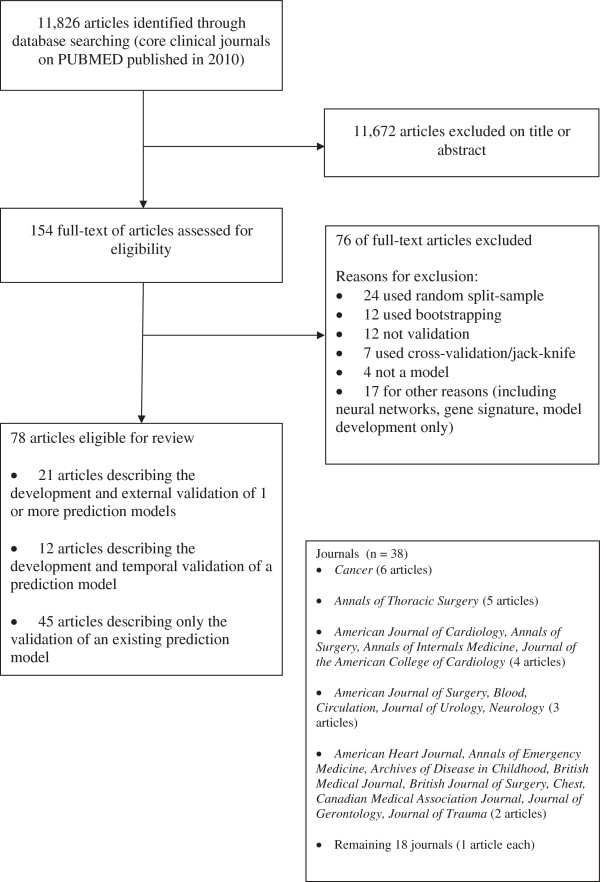
BACKGROUND: Before considering whether to use a multivariable (diagnostic or prognostic) prediction model, it is essential that its performance be evaluated in data that were not used to develop the model (referred to as external validation). We critically appraised the methodological conduct and reporting of external validation studies of multivariable prediction models. METHODS: We conducted a systematic review of articles describing some form of external validation of one or more multivariable prediction models indexed in PubMed core clinical journals published in 2010. Study data were extracted in duplicate on design, sample size, handling of missing data, reference to the original study developing the prediction models and predictive performance measures. RESULTS: 11,826 articles were identified and 78 were included for full review, which described the evaluation of 120 prediction models. in participant data that were not used to develop the model. Thirty-three articles described both the development of a prediction model and an evaluation of its performance on a separate dataset, and 45 articles described only the evaluation of an existing published prediction model on another dataset. Fifty-seven percent of the prediction models were presented and evaluated as simplified scoring systems. Sixteen percent of articles failed to report the number of outcome events in the validation datasets. Fifty-four percent of studies made no explicit mention of missing data. Sixty-seven percent did not report evaluating model calibration whilst most studies evaluated model discrimination. It was often unclear whether the reported performance measures were for the full regression model or for the simplified models. CONCLUSIONS: The vast majority of studies describing some form of external validation of a multivariable prediction model were poorly reported with key details frequently not presented. The validation studies were characterised by poor design, inappropriate handling and acknowledgement of missing data and one of the most key performance measures of prediction models i.e. calibration often omitted from the publication. It may therefore not be surprising that an overwhelming majority of developed prediction models are not used in practice, when there is a dearth of well-conducted and clearly reported (external validation) studies describing their performance on independent participant data.
Overview
The claims and statistics of this paper haven’t been checked yet.
Free: it reads the open-access text and checks the first 5 claims that cite a source we can check. Create a free account to check every claim.
Integrity signals
Registry
Cites
Statistics
Figures
Verification
Claims the paper makes
The claims and statistics of this paper haven’t been checked yet.
Free: it reads the open-access text and checks the first 5 claims that cite a source we can check. Create a free account to check every claim.
Claims other papers make about this one
Each is checked against this paper’s own text: does it say what the citing paper says it does?
The source backs part of the claim, not all of it — or backs it for a different population, condition or comparison.
In the citing paper
“For instance, validation studies rarely present information on the calibration intercept and slope, or different studies report estimates for different risk strata or time horizons.”
From A framework for meta-analysis of prediction model studies with binary and time-to-event outcomes (2019) · cites this paper as [11]
Experimental — accuracy not yet measuredThe cited source says what the claim attributes to it.
In the citing paper
“Furthermore, because validation studies are often conducted using small and local data sets,11 they rarely provide evidence about a model’s potential generalizability across different settings and populations.”
From A framework for meta-analysis of prediction model studies with binary and time-to-event outcomes (2019) · cites this paper as [11]
The cited source says what the claim attributes to it.
In the citing paper
“Unfortunately, extraction of calibration measures is often hampered by poor assessment and reporting.11,16”
From A framework for meta-analysis of prediction model studies with binary and time-to-event outcomes (2019) · cites this paper as [11]
The cited source says what the claim attributes to it.
In the citing paper
“Despite the significant potential demonstrated by extant studies in the application of machine learning for multidimensional data processing and risk prediction, the lack of external validation using completely independent datasets remains a major methodological issue in risk prediction model research (64, 65).”
From Machine learning-based risk predictive models for diabetic kidney disease in type 2 diabetes mellitus patients: a systematic review and meta-analysis (2025) · cites this paper as [64]
In the citing paper
“In a meta-analysis without access to individual participant data (IPD), we are reliant on extracting these performance measures from study publications. However, they are often poorly reported.”
From A framework for meta-analysis of prediction model studies with binary and time-to-event outcomes (2019) · cites this paper as [11]
Self-check
Percentages, sums and reported differences re-computed from the paper’s own numbers.
The self-check needs the paper’s full text.
Citations
Cites
Multiple imputation using chained equations: Issues and guidance for practice
White, I. R., Royston, P., & Wood, A. M. (2011) · Statistics in Medicine · doi:10.1002/sim.4067 · Cited by 9,792 · cited 1×
“If those with missing values were retained in the analyses, then it is important for the reader to know how they were handled in the analysis, including whether methods such as multiple imputation were used [31].”
MethodEuropean Guidelines on cardiovascular disease prevention in clinical practice (version 2012)
Authors/Task Force Members:, Perk, J., De Backer, G., Gohlke, H., Graham, I., Reiner, Ž., Verschuren, M., Albus, C., Benlian, P., Boysen, G., et al. (2012) · European Heart Journal · doi:10.1093/eurheartj/ehs092 · Cited by 8,490
Sterne, J. A. C., White, I. R., Carlin, J. B., Spratt, M., Royston, P., Kenward, M. G., Wood, A. M., & Carpenter, J. R. (2009) · BMJ · doi:10.1136/bmj.b2393 · Cited by 7,299 · cited 1×
“The majority (64%) of studies were assumed to have conducted complete-case analyses to handle missing values, despite methodological guidance to do the contrary [40-44].”
BackgroundDecision curve analysis: a novel method for evaluating prediction models
Vickers, A. J., & Elkin, E. B. (2006) · Medical Decision Making · doi:10.1177/0272989x06295361 · Cited by 6,341 · cited 2×
“New methods based on decision curve analysis (net benefit) [50] and relative utility [51] have recently been introduced.”
MethodAssessing the Performance of Prediction Models: A Framework for Traditional and Novel Measures
Steyerberg, E. W., Vickers, A. J., Cook, N. R., Gerds, T., Gonen, M., Obuchowski, N., Pencina, M. J., & Kattan, M. W. (2010) · Epidemiology · doi:10.1097/ede.0b013e3181c30fb2 · Cited by 5,170 · cited 3×
“Performance is typically characterised by evaluating a model’s calibration and discrimination [15].”
BackgroundClinician’s Guide to Prevention and Treatment of Osteoporosis
Cosman, F., de Beur, S. J., LeBoff, M. S., Lewiecki, E. M., Tanner, B., Randall, S., & Lindsay, R. (2014) · Osteoporosis International · doi:10.1007/s00198-014-2794-2 · Cited by 4,149
Authors/Task Force Members, Graham, I., Atar, D., Borch-Johnsen, K., Boysen, G., Burell, G., Cifkova, R., Dallongeville, J., De Backer, G., Ebrahim, S., et al. (2007) · European Heart Journal · doi:10.1093/eurheartj/ehm316 · Cited by 3,753
Clinical Prediction Models: A Practical Approach to Development, Validation, and Updating
Steyerberg, E. W. (2019) · Statistics for Biology and Health · doi:10.1007/978-3-030-16399-0 · Cited by 3,281
Internal validation of predictive models
Steyerberg, E. W., Harrell, F. E., Borsboom, G. J. J. M., Eijkemans, M. J. C., Vergouwe, Y., & Habbema, J. D. F. (2001) · Journal of Clinical Epidemiology · doi:10.1016/s0895-4356(01)00341-9 · Cited by 2,746
Avoidable waste in the production and reporting of research evidence
Chalmers, I., & Glasziou, P. (2009) · The Lancet · doi:10.1016/s0140-6736(09)60329-9 · Cited by 2,208
Cited by
Items 201–300 of 735
Artificial intelligence for automatic classification of needle EMG signals: A scoping review
de Jonge, S., Potters, W. V., & Verhamme, C. (2024) · Clinical Neurophysiology · doi:10.1016/j.clinph.2023.12.134 · Cited by 30
Quddusi, A. I., Eversdijk, H. A. J., Klukowska, A. M., de Wispelaere, M. P., Kernbach, J. M., Schröder, M. L., & Staartjes, V. E. (2019) · European Spine Journal · doi:10.1007/s00586-019-06189-6 · Cited by 29
“We compared the predicted probabilities generated by the SCOAP-CERTAIN model to the true 12-month pain and functional outcomes observed in our series to assess the model’s external validity [13, 14].”
BackgroundMethodNadarajah, R., Alsaeed, E. S., Hurdus, B., Aktaa, S., Hogg, D., Bates, M. G. D., Cowan, C., Wu, J., & Gale, C. P. (2021) · Heart · doi:10.1136/heartjnl-2021-320036 · Cited by 31
Staartjes, V. E., Stumpo, V., Ricciardi, L., Maldaner, N., Eversdijk, H. A. J., Vieli, M., Ciobanu-Caraus, O., Raco, A., Miscusi, M., Perna, A., et al. (2022) · European Spine Journal · doi:10.1007/s00586-022-07135-9 · Cited by 31
“Furthermore, the vast majority of published models have not undergone external validation and would very likely perform considerably worse in external validation studies [10, 13].”
BackgroundSoto‐Pedre, E., Piniés, J. A., & Hernáez-Ortega, M. C. (2015) · Journal of Diabetes and its Complications · doi:10.1016/j.jdiacomp.2014.12.020 · Cited by 28
Individualized outcome prognostication for patients with laryngeal cancer
Hoban, C. W., Beesley, L. J., Bellile, E. L., Sun, Y., Spector, M. E., Wolf, G. T., Taylor, J. M. G., & Shuman, A. G. (2017) · Cancer · doi:10.1002/cncr.31087 · Cited by 36
“To assess clinical prognostic tools, analyses that compare the calculators’ predictions with each other and with modern observed outcomes are imperative.(29) These validation studies are best performed on independent patient cohorts that encompass diverse geographic regions and patient demographics.”
Methodfor the IPPIC Collaborative Network, Snell, K. I. E., Allotey, J., Smuk, M., Hooper, R., Chan, C., Ahmed, A. S., Chappell, L. C., von Dadelszen, P., Green, M., et al. (2020) · BMC Medicine · doi:10.1186/s12916-020-01766-9 · Cited by 33
“This is known to be a general problem for the prediction model field in other disease areas [84].”
BackgroundSelf-citationHoogendam, L., Bakx, J. A. C., Souer, J. S., Slijper, H. P., Andrinopoulou, E.-R., & Selles, R. W. (2021) · Neurosurgery · doi:10.1227/neu.0000000000001749 · Cited by 30
Owen, R. K., Lyons, J., Akbari, A., Guthrie, B., Agrawal, U., Alexander, D. C., Azcoaga-Lorenzo, A., Brookes, A. J., Denaxas, S., Dezateux, C. A., et al. (2023) · The Lancet Public Health · doi:10.1016/s2468-2667(23)00098-1 · Cited by 33
“36 The use of multistate models offers a flexible framework in which to assess the effect of disease trajectories in multimorbidity, and thereby facilitate the identification of potential screening opportunities, therapeutic targets, and risk factors, together with associated implications for…”
BackgroundMachine Learning for the Prediction of Amyloid Positivity in Amnestic Mild Cognitive Impairment
Kang, S. H., Cheon, B. K., Kim, J., Jang, H., Kim, H. J., Park, K. W., Noh, Y., Lee, J. S., Ye, B. S., Na, D. L., et al. (2021) · Journal of Alzheimer s Disease · doi:10.3233/jad-201092 · Cited by 29
External validation of existing dementia prediction models on observational health data
John, L. H., Kors, J. A., Fridgeirsson, E. A., Reps, J., & Rijnbeek, P. R. (2022) · BMC Medical Research Methodology · doi:10.1186/s12874-022-01793-5 · Cited by 31
“concluded that also most external validation studies were characterized by poor design, inappropriate handling and acknowledgement of missing data, and calibration performance often being omitted from the publication [56].”
BackgroundGenetic Studies Investigating Susceptibility to Psoriatic Arthritis: A Narrative Review
Soomro, M., Hum, R. M., Barton, A. C., & Bowes, J. (2023) · Clinical Therapeutics · doi:10.1016/j.clinthera.2023.07.003 · Cited by 31
Harnessing data science to advance radiation oncology
Vogelius, I. R., Petersen, J., & Bentzen, S. M. (2020) · Molecular Oncology · doi:10.1002/1878-0261.12685 · Cited by 29
“There is a rich statistical literature on the validation of models (Collins et al. , 2014, 2015).”
BackgroundHuber, M., Schober, P. R., Petersen, S., & Luedi, M. M. (2023) · BMC Medical Informatics and Decision Making · doi:10.1186/s12911-023-02156-w · Cited by 31
“However, several issues in terms of building, evaluating and using such clinical prediction models and questions regarding the added benefit of advanced machine learning methods over traditional statistical methods have been noted recently: First and in terms of model evaluation, the important issue of calibration has…”
BackgroundEvaluation of Major Online Diabetes Risk Calculators and Computerized Predictive Models
Štiglic, G., & Pajnkihar, M. (2015) · PLoS ONE · doi:10.1371/journal.pone.0142827 · Cited by 27
“A recent study by Collins [3] points out that approximately 57% of the prediction models in the literature are presented and evaluated as simplified scoring systems.”
BackgroundSouwer, E. T. D., Bastiaannet, E., Steyerberg, E. W., Dekker, J. T., van den Bos, F., & Portielje, J. E. A. (2020) · Journal of Geriatric Oncology · doi:10.1016/j.jgo.2020.04.006 · Cited by 28
Systematic Review of Prognosis Models in Predicting Tooth Loss in Periodontitis
Chow, D. Y., Tay, J. R. H., & Nascimento, G. G. (2024) · Journal of Dental Research · doi:10.1177/00220345241237448 · Cited by 26
“For clinical use, external validation is crucial, ensuring that models perform well in data sets independent of those used for development, especially those in different geographic and care settings (Collins et al. 2014).”
MethodTaha‐Mehlitz, S., Wentzler, L., Angehrn, F., Hendie, A., Ochs, V., Wolleb, J., Staartjes, V. E., Enodien, B., Baltuonis, M., Vorburger, S. A., et al. (2024) · Surgical Endoscopy · doi:10.1007/s00464-024-10926-4 · Cited by 29
“%] and 101 female [51%]).”
MethodMizera, J., Pondel, M., Kepinská, M., Jerzak, P., & Banasik, M. (2025) · Journal of Clinical Medicine · doi:10.3390/jcm14030975 · Cited by 25
Breast Cancer Risk Assessment Tools for Stratifying Women into Risk Groups: A Systematic Review
Velentzis, L. S., Freeman, V., Campbell, D. J., Hughes, S., Luo, Q., Steinberg, J., Egger, S. J., Mann, G. B., & Nickson, C. (2023) · Cancers · doi:10.3390/cancers15041124 · Cited by 29
“The statement was created to increase the level of reporting standards as prior studies performing external validation of risk assessment tools were found to commonly lack clarity in reporting and tended not to present important details needed to understand how the tool might be applied or whether results reflected tr…”
BackgroundNeves, R. S., & Lopes, A. J. (2017) · Kinesiology · doi:10.26582/k.49.2.5 · Cited by 32
Rosinsky, P. J., Go, C. C., Shapira, J., Maldonado, D. R., Lall, A. C., & Domb, B. G. (2019) · The Journal of Arthroplasty · doi:10.1016/j.arth.2019.04.013 · Cited by 24
Alqahtani, M., Garfinkle, R., Zhao, K., Vasilevsky, C., Morin, N. A., Ghitulescu, G. A., Faria, J., & Boutros, M. (2019) · Surgical Endoscopy · doi:10.1007/s00464-019-07069-2 · Cited by 28
Personalized strategies in population screening for prostate cancer
Remmers, S., & Roobol, M. J. (2020) · International Journal of Cancer · doi:10.1002/ijc.33045 · Cited by 24
“This socalled external validation is often lacking.(34,36,37) Two well-validated risk calculators which are also being recommended by the EAU(38,39) are the Rotterdam Prostate Cancer Risk Calculator (RPCRC)(40,41) and the Prostate Cancer Prevention Trial Risk Calculator (PCPTRC) 2.”
Wen, Q., Qiu, L., Qiu, C., Che, K., Zeng, R., Wang, X., Cao, P., Xing, L., Yang, Z., & Yu, J. (2025) · Cancer Letters · doi:10.1016/j.canlet.2025.217881 · Cited by 25
Machine learning and statistical prediction of fastball velocity with biomechanical predictors
Nicholson, K. F., Collins, G. S., Waterman, B. R., & Bullock, G. S. (2022) · Journal of Biomechanics · doi:10.1016/j.jbiomech.2022.110999 · Cited by 28
Monlezun, D. J., Sinyavskiy, O., Peters, N., Steigner, L., Aksamit, T. R., Girault, M. I., Gómez, A. G., Gallagher, C. M., & Iliescu, C. (2022) · Medicina · doi:10.3390/medicina58081039 · Cited by 24
“Given the Hosmer–Lemeshow test’s strong sample size dependency and function simply as an overall calibration measure (without clear superiority to the calibration plot), it was not used as an additional measure of calibration [47].”
MethodAluvaala, J., Collins, G. S., Maina, M., Berkley, J. A., & English, M. (2017) · Systematic Reviews · doi:10.1186/s13643-017-0649-6 · Cited by 28
“Collins and colleagues recommend the latter approach before developing new models to avoid waste of resources [6, 7].”
BackgroundLi, Y., Jin, N., Zhan, Q., Huang, Y., Sun, A., Yin, F., Li, Z., Hu, J., & Liu, Z. (2025) · Frontiers in Endocrinology · doi:10.3389/fendo.2025.1495306 · Cited by 35
Clinical decision support for ExtraCorporeal Membrane Oxygenation: Will we fly by wire?
Pladet, L. C. A., Luijken, K., Fresiello, L., Miranda, D. D. R., Hermens, J. A. J. M., van Smeden, M., Cremer, O. L., Donker, D. W., & Meuwese, C. L. (2023) · Perfusion · doi:10.1177/02676591231163688 · Cited by 25
“In addition, measurement procedures of the outcome and predictors should correspond to the derivation data set, including the moment at which they are measured.(51,54,55) The statistical analysis plan should describe how missing data are handled (which requires different considerations in prediction research compared…”
MethodMeisner, A., Kerr, K. F., Thiessen‐Philbrook, H., Coca, S. G., & Parikh, C. R. (2015) · Kidney International · doi:10.1038/ki.2015.283 · Cited by 24
“However, we provide more extensive guidance on the design and analysis of biomarker combination studies in Table 4 ( 16 , 17 , 37 , 39 – 68 ) and an expanded discussion of sources of bias that can affect these studies in Supplementary Table 3 (16, 17, 37, 39–50, 52, 54–58, 60, 61, 63, 66).”
Validation of a Nomogram Predicting Survival After Trimodality Therapy for Esophageal Cancer
Goense, L., Merrell, K. W., Arnett, A. L. H., Hallemeier, C. L., Meijer, G. J., Ruurda, J. P. H., Hofstetter, W. L., van Hillegersberg, R., & Lin, S. H. (2018) · The Annals of Thoracic Surgery · doi:10.1016/j.athoracsur.2018.05.055 · Cited by 26
Mei, J., Hu, W., Chen, Q., Chang, L., Chen, Z., Fan, Y., Tian, S., Zhang, Z., Li, B., Ye, Q., et al. (2020) · BMJ Open · doi:10.1136/bmjopen-2020-044028 · Cited by 25
Bikia, V., Fong, T. S., Climie, R. E., Bruno, R. M., Hametner, B., Mayer, C. C., Terentes-Printzios, D. G., & Charlton, P. H. (2021) · European Heart Journal - Digital Health · doi:10.1093/ehjdh/ztab089 · Cited by 25
“53”
Wang, X., Claggett, B. L., Tian, L., Malachias, M. V. B., Pfeffer, M. A., & Wei, L. (2023) · JAMA Cardiology · doi:10.1001/jamacardio.2022.5279 · Cited by 23
Benndorf, M., Kotter, E., Langer, M., Herda, C. A., Wu, Y., & Burnside, E. S. (2015) · European Radiology · doi:10.1007/s00330-014-3570-6 · Cited by 22
“Our classifier is at a research stage; the logical next step is the conduction of an external validation study to establish stability of the classification algorithm, taking into consideration multiple datasets from a range of different practices [22].”
BackgroundMethodResultInfluentialStessel, B., Fiddelers, A. A. A., Marcus, M. A. E., van Kuijk, S. M. J., Joosten, E. A. J., Peters, M. L., Bühre, W., & Gramke, H. (2016) · Clinical Journal of Pain · doi:10.1097/ajp.0000000000000413 · Cited by 26
Treatment use in prognostic model research: a systematic review of cardiovascular prognostic studies
Pajouheshnia, R., Damen, J. A., Groenwold, R. H. H., Moons, K. G. M., & Peelen, L. M. (2017) · Diagnostic and Prognostic Research · doi:10.1186/s41512-017-0015-0 · Cited by 28
“While other studies have broadly addressed related methodological issues [14], or have focussed on a single aspect of CVD modelling, such as model development [6], we provide comprehensive coverage of CVD prediction model studies and support this with a conceptual framework describing when and how treatments can affec…”
BackgroundResultSelf-citationSouwer, E. T. D., Bastiaannet, E., Steyerberg, E. W., Dekker, J. W. T., Steup, W. H., Hamaker, M. E., Sonneveld, D. J. A., Burghgraef, T. A., van den Bos, F., & Portielje, J. E. A. (2021) · Cancers · doi:10.3390/cancers13133110 · Cited by 25
“When our GerCRC model is externally validated, more focus will be placed on the calibration of the different risk groups to judge the performance and clinical usefulness of this model [36].”
MethodPuntis, S., Oliver, D., & Fusar-Poli, P. (2021) · Schizophrenia Research · doi:10.1016/j.schres.2021.01.005 · Cited by 21
Artificial Intelligence on Diagnostic Aid of Leprosy: A Systematic Literature Review
Fernandes, J. R. N., Teles, A. S., Fernandes, T. R. S., Lima, L. D. B., Balhara, S., Gupta, N., & Teixeira, S. S. (2023) · Journal of Clinical Medicine · doi:10.3390/jcm13010180 · Cited by 26
Mandavia, R., Joshi, N., Hannink, G., Ahmed, M. N., Parmar, D., Di‐Bonaventura, S., Gomes, P., Iqbal, I., Lyles, J., Schilder, A. G., et al. (2024) · JAMA Otolaryngology–Head & Neck Surgery · doi:10.1001/jamaoto.2024.2598 · Cited by 27
Kundu, S., Mazumdar, M., & Ferket, B. S. (2017) · BMC Medical Research Methodology · doi:10.1186/s12874-017-0345-1 · Cited by 23
“Our findings suggest that even when the AUC in the derivation sample is not promising, the same risk model can have a higher AUC at external validation [9, 14].”
BackgroundWu, J., Fuchs, K., Lian, J., Haldimann, M. L., Schneider, T., Mayer, S., Byun, J., Gassmann, R., Brombach, C., & Fleisch, E. (2021) · Nutrients · doi:10.3390/nu14010159 · Cited by 26
“The discrimination capacity evaluates how well a model can perform in separating cases with and without certain outcomes [46,47].”
MethodLivingstone, S. J., Guthrie, B., Donnan, P. T., Thompson, A., & Morales, D. R. (2022) · BMC Medicine · doi:10.1186/s12916-022-02349-6 · Cited by 23
“Strengths of the study includes adherence to methodological recommendations for risk prediction studies [20, 21], use of large representative population data, and use of a clean validation set to make comparisons with QRISK3.”
MethodSchierenberg, A., Minnaard, M. C., Hopstaken, R., van de Pol, A. C., Broekhuizen, B. D., de Wit, N. J., Reitsma, J. B., van Vugt, S. F., Graffelman, A. W., Melbye, H., et al. (2016) · PLoS ONE · doi:10.1371/journal.pone.0149895 · Cited by 23
“Evaluation of clinical usefulness with regard to improving patients outcomes or changing GP behavior are not part of external validation [13].”
External validation of the breast reconstruction risk assessment calculator
Khavanin, N., Qiu, C. S., Mlodinow, A. S., Vu, M. M., Dorfman, R. G., Fine, N. A., & Kim, J. Y. S. (2017) · Journal of Plastic Reconstructive & Aesthetic Surgery · doi:10.1016/j.bjps.2017.04.010 · Cited by 23
Cooray, S. D., Wijeyaratne, L. A., Soldatos, G., Allotey, J., Boyle, J. A., & Teede, H. J. (2020) · International Journal of Environmental Research and Public Health · doi:10.3390/ijerph17093048 · Cited by 28
“Model evaluation addresses two questions pivotal for the application of prediction models into clinical practice: (1) how accurate are its predictions and (2) how generalisable is it [48].”
BackgroundHornung, R., Bernau, C., Truntzer, C., Wilson, R., Stadler, T., & Boulesteix, A. (2015) · BMC Medical Research Methodology · doi:10.1186/s12874-015-0088-9 · Cited by 26
“CV can be used in the process of obtaining an adequate prediction rule when no external data is available, but before ultimately applying a prediction rule in medical practice it must be externally validated [25, 26].”
MethodMeertens, L. J. E., Smits, L. J. M., van Kuijk, S. M. J., Aardenburg, R., van Dooren, I., Langenveld, J., Zwaan, I., Spaanderman, M. E. A., & Scheepers, H. C. J. (2019) · BJOG An International Journal of Obstetrics & Gynaecology · doi:10.1111/1471-0528.15516 · Cited by 25
Agius, R., Parviz, M., & Niemann, C. U. (2021) · Leukemia & lymphoma/Leukemia and lymphoma · doi:10.1080/10428194.2021.1973672 · Cited by 20
REcognizing DElirium in geriatric Emergency Medicine: The REDEEM risk stratification score
Silva, L. O. J. E., Stanich, J. A., Jeffery, M. M., Mullan, A. F., Bower, S. M., Campbell, R. L., Rabinstein, A. A., Pignolo, R. J., & Bellolio, F. (2021) · Academic Emergency Medicine · doi:10.1111/acem.14423 · Cited by 23
Dubois, C., Eigen, D., Delmas, E., Einfalt, M., Lemaçon, C., Berteloot, L., Bossuyt, P. M., Drummond, D., Scherdel, P., Simon, F., et al. (2024) · BMJ · doi:10.1136/bmj-2023-076703 · Cited by 23
Decruyenaere, A., Decruyenaere, P., Peeters, P. C., & Vermassen, F. E. G. (2015) · Annals of Transplantation · doi:10.12659/aot.894034 · Cited by 23
Sanders, S., Flaws, D., Than, M. P., Pickering, J. W., Doust, J. A., & Glasziou, P. (2015) · Journal of Clinical Epidemiology · doi:10.1016/j.jclinepi.2015.05.006 · Cited by 20
Collins, G. S., Reitsma, J. B., Altman, D. G., & Moons, K. G. M. (2015) · Diabetic Medicine · doi:10.1111/dme.12654 · Cited by 27
“Several reviews have evaluated the quality of published reports that describe the development or validation prediction models (23–28).”
Self-citationGranholm, A., Perner, A., Krag, M., Hjortrup, P. B., Haase, N., Holst, L. B., Marker, S., Collet, M. O., Jensen, A. K. G., & Møller, M. H. (2017) · BMJ Open · doi:10.1136/bmjopen-2016-015339 · Cited by 21
“relevant variables will be handled using multiple imputations, as recently recommended.(39) Multiple imputations with 10 imputed data sets and inclusion of the outcome”
Validation of a Scoring System to Distinguish Uncomplicated From Complicated Appendicitis
Geerdink, T. H., Augustinus, S., Atema, J. J., Jensch, S., Vrouenraets, B. C., & de Castro, S. M. M. (2020) · Journal of Surgical Research · doi:10.1016/j.jss.2020.08.050 · Cited by 20
Zhao, Y., Jia, L., Jia, R., Han, H., Feng, C., Li, X., Wei, Z., Wang, H., Zhang, H., Pan, S., et al. (2021) · Shock · doi:10.1097/shk.0000000000001842 · Cited by 25
Riley, S. M., Zhang, Q., Tse, W.-Y., Connor, A., & Wei, Y. (2022) · Transplant International · doi:10.3389/ti.2022.10397 · Cited by 20
Sobhani, N., D’Angelo, A., Pittacolo, M., Mondani, G., & Generali, D. (2024) · Cancers · doi:10.3390/cancers16173089 · Cited by 20
“In response, new methods have been deemed necessary to resolve the issue of incomplete reporting of models in prediction model studies [43,44].”
MethodWalsh, M. E., French, H., Wallace, E., Madden, S., King, P., Fahey, T. P., & Galvin, R. (2021) · Journal of Clinical Epidemiology · doi:10.1016/j.jclinepi.2021.02.005 · Cited by 24
Ban, J.-W., Emparanza, J. I., Urreta, I., & Burls, A. (2016) · PLOS ONE · doi:10.1371/journal.pone.0145779 · Cited by 18
Gross, D. P., Steenstra, I. A., Shaw, W. S., Yousefi, P., Bellinger, C., & Zai͏̈ane, O. R. (2019) · Journal of Occupational Rehabilitation · doi:10.1007/s10926-019-09843-4 · Cited by 19
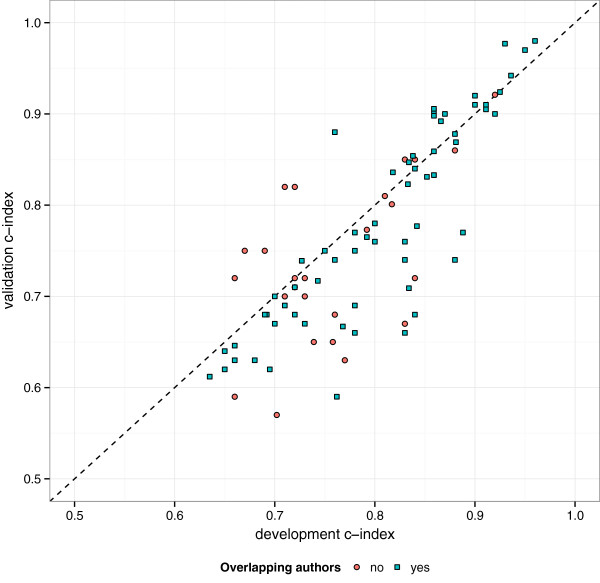
“Alternatively, it has been long recognized that statistical models perform better in development stages than when undergoing external validation, and this same problem likely holds for machine learning algorithms [19].”
BackgroundMethodAshburner, J. M., Wang, X., Li, X., Khurshid, S. S., Ko, D., Lipsanopoulos, A. T., Lee, P. R., Carmichael, T., Turner, A. C., Jackson, C. R., et al. (2021) · Journal of the American Heart Association · doi:10.1161/jaha.121.022363 · Cited by 18
Santomartino, S. M., Kung, J. E., & Yi, P. H. (2023) · Skeletal Radiology · doi:10.1007/s00256-023-04416-2 · Cited by 22
“External testing is a critical step in model development, as it assesses clinical generalizability [35, 36].”
Milders, J., Ramspek, C. L., Janse, R. J., Bos, W. J. W., Rotmans, J. I., Dekker, F. W., & van Diepen, M. (2023) · Journal of the American Society of Nephrology · doi:10.1681/asn.0000000000000285 · Cited by 23
“48,49 Not assessing and reporting measures of calibration imposes risks for clinical practice when a model is used for decision making because a poorly calibrated model can lead to misleading risk predictions and misclassi fi cation.”
BackgroundRellum, S. R., Noteboom, S. H., van der Ster, B. J. P., Schuurmans, J., Kho, E., Vlaar, A. P. J., Schenk, J., & Veelo, D. P. (2025) · European Journal of Anaesthesiology · doi:10.1097/eja.0000000000002150 · Cited by 22
Fazel, S., Wolf, A., Vazquez-Montes, M., & Fanshawe, T. R. (2019) · Scientific Reports · doi:10.1038/s41598-018-37539-x · Cited by 34
Mendoza, M., Tur, H., García‐Manau, P., Hurtado, I., Serrano, B., López, R. M., Castellote, L., Martínez-Sánchez, L. M., Bonacina, E., & Carreras, E. (2020) · Journal of Gynecology Obstetrics and Human Reproduction · doi:10.1016/j.jogoh.2020.101827 · Cited by 20
Rech, M. M., Filho, L. D. M., White, A. J., Perez‐Vega, C., Samson, S. L., Chaichana, K. L., Olomu, O. U., Quiñones‐Hinojosa, A., & Almeida, J. P. (2023) · Brain Sciences · doi:10.3390/brainsci13030495 · Cited by 23
“This is true for a wide range of factors, including changes in policies, practice and demographics [59,60].”
BackgroundMonjardin, C. E. F., Power, C., Senoro, D. B., & de Jesus, K. L. M. (2023) · Water · doi:10.3390/w15132318 · Cited by 17
“External validation is very important to ensure that the trained model will perform strongly in predicting data outside of the datasets used for training [55].”
Prognostic models for surgical-site infection in gastrointestinal surgery: systematic review
McLean, K. A., Goel, T., Lawday, S., Riad, A., Simoes, J. F. F., Knight, S. R., Ghosh, D., Glasbey, J. C., Bhangu, A. A., & Harrison, E. M. (2023) · British journal of surgery · doi:10.1093/bjs/znad187 · Cited by 20
Xu, M. K., Tam, B., Thabane, L., & Fox‐Robichaud, A. (2015) · BMJ Open · doi:10.1136/bmjopen-2015-008699 · Cited by 24
“In addition, robustness and accuracy must also be tested through the external validation of the model.(13) This can be achieved either through more patient data being collected or the process of bootstrapping, the former providing more data and the latter generating simulated data sets from the initial set of observat…”
BackgroundHaile, S. R., Guerra, B., Soriano, J. B., & Puhan, M. A. (2017) · BMC Medical Research Methodology · doi:10.1186/s12874-017-0433-2 · Cited by 19
“The external validation studies are often simply poorly designed or reported [15].”
BackgroundTao, H., Li, Q., Zhou, Q., Chen, J., Fu, B., Wang, J., Qin, W., Hou, J., Chen, J., & Dong, L. (2018) · BMC Surgery · doi:10.1186/s12893-018-0343-1 · Cited by 18
“Another important feature is the application of the internal and the external validation since that previous studies have proposed the internal validation may lead to optimism in prediction accuracy than external validation [20].”
BackgroundPrediction model and web-based risk calculator for postoperative ileus after loop ileostomy closure
Garfinkle, R., Filion, K. B., Bhatnagar, S., Sigler, G., Banks, A., Letarte, F., Liberman, S. A., Brown, C. J., & Boutros, M. (2019) · British journal of surgery · doi:10.1002/bjs.11235 · Cited by 18
Puntis, S., Whiting, D., Pappa, S., & Lennox, B. (2021) · Translational Psychiatry · doi:10.1038/s41398-020-01172-y · Cited by 19
Vonk, J. M. J., Greving, J. P., Gudnason, V. G., Launer, L. J., & Geerlings, M. I. (2021) · European Journal of Epidemiology · doi:10.1007/s10654-021-00785-x · Cited by 19
Helmrich, I. R., Mikolić, A., Kent, D. M., Lingsma, H. F., Wynants, L., Steyerberg, E. W., & Klaveren, D. V. (2022) · Diagnostic and Prognostic Research · doi:10.1186/s41512-022-00122-0 · Cited by 21
“Prior systematic reviews found that calibration, the agreement between observed and predicted outcomes, is described less often than discrimination [5, 26, 35].”
BackgroundResultSantomartino, S. M., Hafezi‐Nejad, N., Parekh, V. S., & Yi, P. H. (2023) · Radiology Artificial Intelligence · doi:10.1148/ryai.220062 · Cited by 19
Scanlan, A. B., Maia, C. M., Perez, A., Homko, C. J., & O’Brien, M. J. (2017) · Diabetes Spectrum · doi:10.2337/ds16-0051 · Cited by 20
“The discrepancy between our findings and those from a national sample echoes previous studies demonstrating divergent performance of the same diabetes risk assessment tools in different populations (11,28,29).”
ResultLancaster, T. S., Schill, M. R., Greenberg, J. W., Ruaengsri, C., Schuessler, R. B., Lawton, J. S., Maniar, H. S., Pasque, M. K., Moon, M. R., Damiano, R. J., et al. (2017) · The Annals of Thoracic Surgery · doi:10.1016/j.athoracsur.2017.11.045 · Cited by 18
“External validation refers to the evaluation of a prediction model in data sets distinct from those used to develop the model and is an important step in the introduction of such tools to widespread clinical use [12, 14].”
BackgroundMethodReview of non-clinical risk models to aid prevention of breast cancer
Al-Ajmi, K., Lophatananon, A., Yuille, M., Ollier, W., & Muir, K. R. (2018) · Cancer Causes & Control · doi:10.1007/s10552-018-1072-6 · Cited by 17
Mowbray, F., Jones, A., Schumacher, C., Hirdes, J. P., & Costa, A. P. (2020) · BMC Geriatrics · doi:10.1186/s12877-020-01816-0 · Cited by 16
Artificial intelligence guidance of advanced heart failure therapies: A systematic scoping review
Al‐Ani, M. A., Bai, C., Hashky, A., Parker, A. M., Vilaro, J. R., Aranda, J. M., Shickel, B., Rashidi, P., Bihorac, A., Ahmed, M. M., et al. (2023) · Frontiers in Cardiovascular Medicine · doi:10.3389/fcvm.2023.1127716 · Cited by 18
““Model waste” can occur where excellent AI models are not clinically applied due to lack of validation (55).”
BackgroundKaur, P., Kannapiran, P., Ng, S. H.-X., Chu, J., Low, Z. J., Ding, Y. Y., Tan, W. S., & Hum, A. Y. M. (2023) · BMC Geriatrics · doi:10.1186/s12877-023-03945-8 · Cited by 19
“A temporal validation approach was undertaken where a more recent cohort of AD patients were identified from the same hospital [33].”
MethodSauerbrei, W., Bland, M., Evans, S. J. W., Riley, R. D., Royston, P. J., Schumacher, M. C., & Collins, G. S. (2020) · Biometrical Journal · doi:10.1002/bimj.202000053 · Cited by 19
Puttkammer, N. H., Simoni, J. M., Sandifer, T. K., Chéry, J. M., Dervis, W., Balan, J. G., Dubé, J. G., Calixte, G., Robin, E. G., François, K., et al. (2020) · AIDS and Behavior · doi:10.1007/s10461-020-02945-8 · Cited by 20
“While there are classical examples of prediction rules that have remained in widespread use for decades, such as the Framingham risk score for coronary heart disease [35], the Apgar score (American Academy of Pediatrics) [36], and the Glasgow coma scale [37], many tools for clinical prediction have not penetrated into…”
BackgroundMarinho, C. D. L., Maioli, M. C. P., Soares, A. R., Bedirian, R., de Melo, P. L., Guimarães, F. S., Ferreira, A. D. S., & Lopes, A. J. (2016) · Journal of Bodywork and Movement Therapies · doi:10.1016/j.jbmt.2016.02.005 · Cited by 17
“The specific performance of the new prediction model was assessed by regression and calibration analyses as follows (Collins et al., 2014).”
Methodde Hoog, V. C., Lim, S. H., Bank, I. E. M., Gijsberts, C. M., Ibrahim, I., Kuan, W. S., Ooi, S. B. S., Chua, T. S. J., Tai, E. S., Gao, F., et al. (2017) · European Heart Journal Acute Cardiovascular Care · doi:10.1177/2048872617700870 · Cited by 20
Dietz, N. E., Sharma, M., Alhourani, A., Ugiliweneza, B., Wang, D., Nuno, M. A., Drazin, D. G., & Boakye, M. (2018) · Neurosurgical FOCUS · doi:10.3171/2018.8.focus18331 · Cited by 19
van Steenbeek, C. D., van Maaren, M. C., Siesling, S., Witteveen, A., Verbeek, X. A. A. M., & Koffijberg, H. (2019) · BMC Medical Research Methodology · doi:10.1186/s12874-019-0761-5 · Cited by 16
Bayesian versus Empirical Calibration of Microsimulation Models: A Comparative Analysis
Chrysanthopoulou, S. A., Rutter, C. M., & Gatsonis, C. (2021) · Medical Decision Making · doi:10.1177/0272989x211009161 · Cited by 20
Skalitzky, M. K., Gulbrandsen, T. R., Groot, O. Q., Karhade, A. V., Verlaan, J., Schwab, J. H., & Miller, B. J. (2021) · Journal of Surgical Oncology · doi:10.1002/jso.26708 · Cited by 19
“In accordance with the TRIPOD guidelines, external validation is “an invaluable and crucial step in the introduction of a new prediction model before it should be considered for routine clinical practice”.(11,16) Toward this end, the SORG ML algorithms were externally validated in an independent population, taking one…”
MethodAvoiding C-hacking when evaluating survival distribution predictions with discrimination measures
Sonabend, R., Bender, A., & Vollmer, S. J. (2022) · Bioinformatics · doi:10.1093/bioinformatics/btac451 · Cited by 22
“Less abstractly, consider the Cox Proportional Hazards (CPH) model (Cox, 1972): hðtÞ ¼ h0ðtÞ exp ðXbÞ where h0 is the ‘baseline’ hazard function, X are covariates, and b are coefficients to be estimated.”
BackgroundUbels, S., Klarenbeek, B. R., Verstegen, M. H. P., Bouwense, S. A. W., Griffiths, E. A., van Workum, F., Rosman, C., Hannink, G., & the TENTACLE—Esophagus Collaborative Group (2022) · Diseases of the Esophagus · doi:10.1093/dote/doac081 · Cited by 18
Veerbeek, J. M., Pohl, J., Held, J. P. O., & Luft, A. R. (2022) · Frontiers in Neurology · doi:10.3389/fneur.2022.797791 · Cited by 16
“With external validation, the reproducibility and generalizability of the model, in an independent patient sample with a different case-mix, are tested by determining the model’s level of overfitting and performance within this new sample (2, 8, 9).”
MethodUse of artificial intelligence in forecasting glaucoma progression
Thakur, S., Dinh, L. L., Lavanya, R., Quek, T. C., Liu, Y., & Cheng, C. (2023) · Taiwan Journal of Ophthalmology · doi:10.4103/tjo.tjo-d-23-00022 · Cited by 15
Multivariable prediction models of caries increment: a systematic review and critical appraisal
Havsed, K., Petersson, G. H., Isberg, P., Pigg, M., Svensäter, G., & Rohlin, M. (2023) · Systematic Reviews · doi:10.1186/s13643-023-02298-y · Cited by 20
“Prediction models are used to estimate the probability of the presence of a particular disease (diagnosis) or to estimate the probability of developing a particular outcome in the future (prognosis) [1].”
Background
Metadata
- Authors
- Collins, G. S., de Groot, J. A., Dutton, S., Omar, O., Shanyinde, M., Tajar, A., Voysey, M., Wharton, R., Yu, L.-M., Moons, K. G., & Altman, D. G.
- Affiliations
- University of Oxford (GB)
- University Medical Center Utrecht (NL)
- ORCID
- Venue
- BMC Medical Research Methodology
- Published
- 2014-03-19
- Volume
- 14
- Issue
- 1
- Pages
- 40-40
- ISSN
- 1471-2288 (ISSN-L)
- PMC
- PMC3999945
- OpenAlex
- W2084164487
- Cited by
- 729
- References
- 70
- Citations by year
- 2026: 61 · 2025: 61 · 2024: 75 · 2023: 86 · 2022: 88 · 2021: 80 · 2020: 68 · 2019: 40 · 2018: 41 · 2017: 47 · 2016: 34 · 2015: 41 · 2014: 7
- FWCI
- 5.44
- Type
- journal article
- Language
- en
- Open access
- gold
- doi.org
- Licence
- Locations
- BMC Medical Research Methodology (publishedVersion, cc-by)
- Europe PMC (PubMed Central) (publishedVersion, cc-by)
- PubMed Central (publishedVersion, cc-by)
- PubMed (publishedVersion)
- University of Birmingham Research Portal (University of Birmingham) (submittedVersion)
- Funders
- Cancer Research UK (16895)
- National Institute for Health and Care Research (NF-SI-0508-10259)
- Nederlandse Organisatie voor Wetenschappelijk Onderzoek (91208004, 918.10.615, project 9120.8004)
- Medical Research Council (MR/K006584/1, G1100513)
- Topics
- Physical Sciences › Mathematics › Statistics and Probability › Statistical Methods in Epidemiology
- Social Sciences › Decision Sciences › Statistics, Probability and Uncertainty › Meta-analysis and systematic reviews
- Health Sciences › Health Professions › Health Information Management › Artificial Intelligence in Healthcare
- Keywords
- external validation, multivariable prediction models, reporting quality, model calibration, model discrimination, missing data, simplified scoring system, prognostic model, diagnostic model
- MeSH terms
- Data Interpretation, Statistical, Humans, Prognosis, Reproducibility of Results, Outcome Assessment, Health Care, Validation Studies as Topic
About these checks
Registry, retraction, Cites and statistics results are computed, not judged, with one exception: a printed reference that no index lists is read once by a model before it counts as a citation error. Claims are extracted by a model and kept only when their quote appears verbatim in the text; each cited source is then checked, with a model’s help, for whether it says what the claim relies on. Those verdicts can be wrong — read the claim’s quote and the cited source before relying on one.
Statistics and arithmetic are recomputed, not judged.
Confidence bands are shown only for fields calibrated on our annotated test set. None is calibrated yet, so no band is shown.
What counts as a claim ›How we measure confidence ›How we check this ›
Are you an author, or do you see a problem with this page? Request a review
Data sources
Bibliographic data: Semantic Scholar, OpenAlex, Crossref.
Contains information from the Semantic Scholar Academic Graph Datasets, made available under the ODC Attribution License (ODC-BY 1.0).
Semantic Scholar’s data is described in: Kinney, R., et al. (2023). The Semantic Scholar Open Data Platform. arXiv:2301.10140.
