

Efficacy of an alcohol-focused intervention for improving adherence to antiretroviral therapy (ART) and HIV treatment outcomes – a randomised controlled trial protocol
Open accessThe DOI matches its Crossref record; 70 of the 70 references it cites were found in a registry or an index.
Abstract
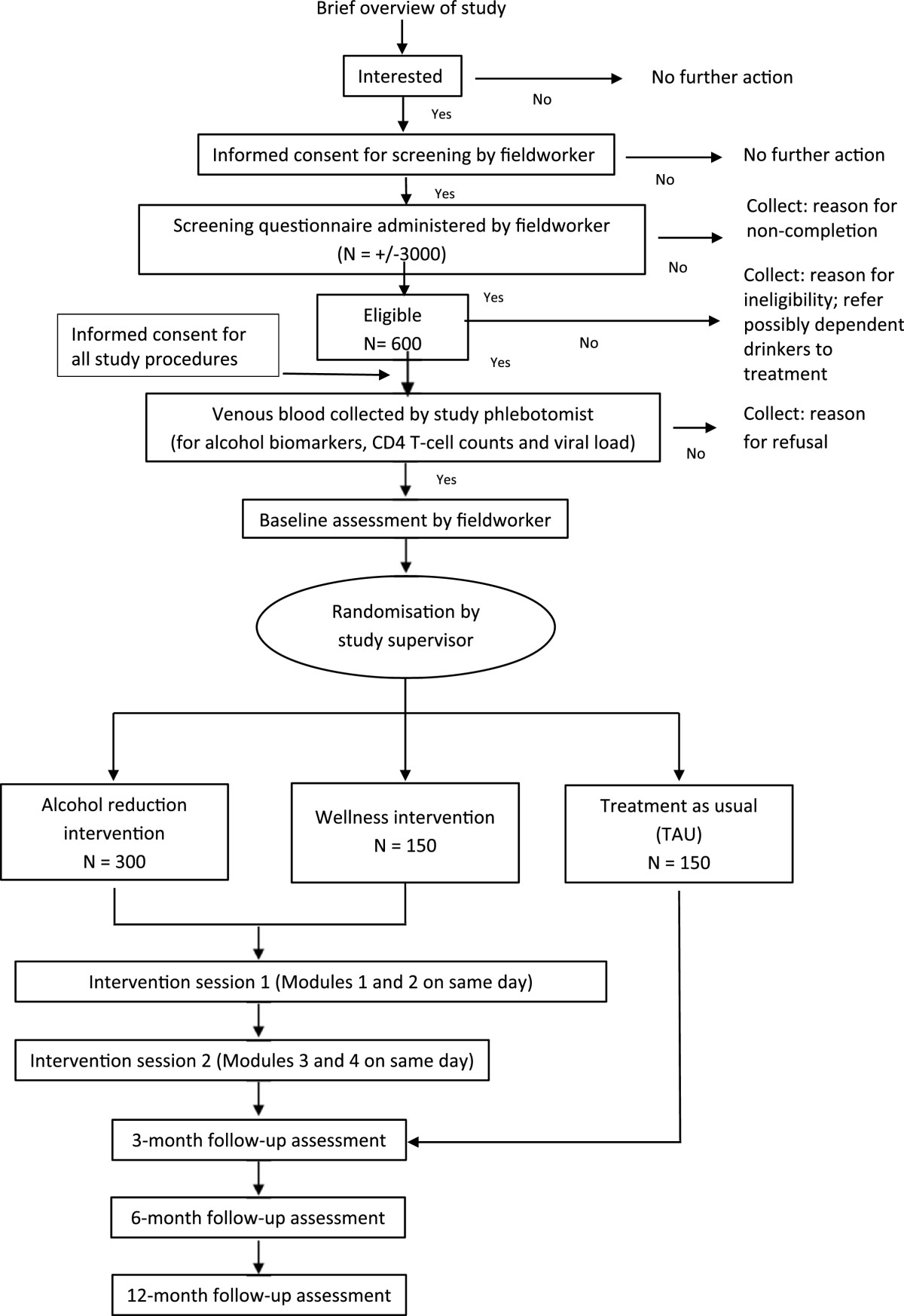
BACKGROUND: Little research has examined whether alcohol reduction interventions improve antiretroviral therapy (ART) adherence and HIV treatment outcomes. This study assesses the efficacy of an intervention for reducing alcohol use among HIV patients on ART who are hazardous/harmful drinkers. Specific aims include adapting a blended Motivational Interviewing (MI) and Problem Solving Therapy (PST) intervention for use with HIV patients; evaluating the efficacy of the intervention for reducing alcohol consumption; and assessing counsellors' and participants' perceptions of the intervention. METHODS/DESIGN: A randomised controlled trial will evaluate the intervention among ART patients in public hospital-based HIV clinics in Tshwane, South Africa. We will recruit patients who are HIV-positive, on ART for at least 3 months, and classified as harmful/hazardous drinkers using the AUDIT-3. Eligible patients will be randomly assigned to one of three conditions. Patients in the experimental group will receive the MI-PST intervention to reduce harmful/hazardous alcohol use. Patients in the equal-attention wellness intervention group will receive an intervention focused on addressing health risk behaviours. Patients in the control condition will receive treatment as usual. Participants will complete an interviewer-administered questionnaire at baseline and 3, 6 and 12 months post-randomisation to assess alcohol consumption, ART adherence, physical and mental health. We will also collect biological specimens to test for recent alcohol consumption, CD4 counts and HIV RNA viral loads. The primary outcome will be reduction in the volume of alcohol consumed. Secondary outcomes include reduction in harmful/hazardous use of alcohol, reduction in biological markers of drinking, increase in adherence rates, reductions in viral loads, and increases in CD4 T-cell counts. A process evaluation will ascertain counsellors' and participants' perceptions of the acceptability and effectiveness of the interventions. DISCUSSION: We have obtained ethical approval and approval from the study sites and regional and provincial health departments. The study has implications for clinicians, researchers and policy makers as it will provide efficacy data on how to reduce harmful/hazardous alcohol consumption among HIV patients and will shed light on whether reducing alcohol consumption impacts on HIV treatment adherence and other outcomes. TRIAL REGISTRATION: Pan African Clinical Trials Register Number: PACTR201405000815100.
Overview
The claims and statistics of this paper haven’t been checked yet.
Free: it reads the open-access text and checks the first 5 claims that cite a source we can check. Create a free account to check every claim.
Integrity signals
Registry
Cites
Statistics
Figures
Verification
Claims the paper makes
The claims and statistics of this paper haven’t been checked yet.
Free: it reads the open-access text and checks the first 5 claims that cite a source we can check. Create a free account to check every claim.
Claims other papers make about this one
Each is checked against this paper’s own text: does it say what the citing paper says it does?
The source backs part of the claim, not all of it — or backs it for a different population, condition or comparison.
In the citing paper
“We used the Center for Adherence Support Evaluation (CASE) adherence index [33, 34], a scale that has been widely used in sub-Saharan Africa to measure adherence to ART [34–36].”
From Associations Between Patterns of Alcohol Use and Viral Load Suppression Amongst Women Living with HIV in South Africa (2021) · cites this paper as [36]
Experimental — accuracy not yet measured
Self-check
Percentages, sums and reported differences re-computed from the paper’s own numbers.
The self-check needs the paper’s full text.
Citations
Cites
The Fagerstrom Test for Nicotine Dependence: a revision of the Fagerstrom Tolerance Questionnaire
HEATHERTON, T. F., KOZLOWSKI, L. T., FRECKER, R. C., & FAGERSTROM, K. (1991) · British Journal of Addiction · doi:10.1111/j.1360-0443.1991.tb01879.x · Cited by 10,738 · cited 2×
“Participants will also be assessed for tobacco use (including lifetime, current and regular cigarette smoking) and tobacco dependence using the Fagerstrom Test for Nicotine Dependence (FTND) [58].”
MethodKESSLER, R. C., ANDREWS, G., COLPE, L. J., HIRIPI, E., MROCZEK, D. K., NORMAND, S.-L. T., WALTERS, E. E., & ZASLAVSKY, A. M. (2002) · Psychological Medicine · doi:10.1017/s0033291702006074 · Cited by 10,327 · cited 1×
“The Kessler Psychological Distress Scale-10 [56] will be used to assess psychological distress.”
MethodSherbourne, C. D., & Stewart, A. L. (1991) · Social Science & Medicine · doi:10.1016/0277-9536(91)90150-b · Cited by 6,643 · cited 1×
“For example, HIV stigma will be measured with the Internalised AIDS-Related Stigma Scale [12], HIV disclosure will be assessed via a measure used in our prior studies [42,44], social support will be assessed by the MOS Social Support Survey [62], and adherence self-efficacy will be assessed by the HIV Treatment Adhere…”
Method(2001) · Cited by 5,455
Viral Load and Heterosexual Transmission of Human Immunodeficiency Virus Type 1
Quinn, T. C., Wawer, M. J., Sewankambo, N., Serwadda, D., Li, C., Wabwire-Mangen, F., Meehan, M. O., Lutalo, T., & Gray, R. H. (2000) · New England Journal of Medicine · doi:10.1056/nejm200003303421303 · Cited by 3,020
The clinical evaluation of chemotherapeutic agents in cancer
Karnofsky, D. A. (1949) · Medical Entomology and Zoology · Cited by 2,933
Effectiveness of brief alcohol interventions in primary care populations
Kaner, E. F., Beyer, F. R., Muirhead, C., Campbell, F., Pienaar, E. D., Bertholet, N., Daeppen, J. B., Saunders, J. B., & Burnand, B. (2018) · Cochrane Database of Systematic Reviews · doi:10.1002/14651858.cd004148.pub4 · Cited by 1,665
Chesney, M. A., Ickovics, J. R., Chambers, D. B., Gifford, A. L., Neidig, J., Zwickl, B., Wu, A. W., & PATIENT CARE COMMITTEE & ADHERENCE (2000) · AIDS Care · doi:10.1080/09540120050042891 · Cited by 1,428
Evaluation of Chemotherapeutic Agents.
(1950) · Archives of Internal Medicine · doi:10.1001/archinte.1950.00230180176018 · Cited by 1,133
Mor, V., Laliberte, L., Morris, J. N., & Wiemann, M. (1984) · Cancer · doi:10.1002/1097-0142(19840501)53:9<2002::aid-cncr2820530933>3.0.co;2-w · Cited by 1,067 · cited 1×
“Scores range from 0 to 100; the lower the score, the more compromised general well-being [64,65].”
BackgroundBerman, A. H., Bergman, H., Palmstierna, T., & Schlyter, F. (2005) · European Addiction Research · doi:10.1159/000081413 · Cited by 977 · cited 3×
“The Drug Use Disorders Identification Test (DUDIT) [57] is an 11-item self-report measure that will be used to assess concurrent substance use.”
MethodWare, J., Kosinski, M., Dewey, J., Gandek, B., Kisinski, M., Ware, J. E., & Dewey, J. M. (2001) · Cited by 824
ROLLNICK, S., HEATHER, N., GOLD, R., & HALL, W. (1992) · British Journal of Addiction · doi:10.1111/j.1360-0443.1992.tb02720.x · Cited by 818 · cited 1×
“The participants will be asked to respond to the 12-item Readiness to Change Questionnaire to determine their readiness to change their drinking behaviour [49].”
BackgroundMesa Grande: a methodological analysis of clinical trials of treatments for alcohol use disorders
Miller, W. R., & Wilbourne, P. L. (2002) · Addiction · doi:10.1046/j.1360-0443.2002.00019.x · Cited by 805
Effectiveness of brief alcohol interventions in primary care populations
Kaner, E. F. S., Dickinson, H. O., Beyer, F. R., Campbell, F., Schlesinger, C., Heather, N., Saunders, J. B., Burnand, B., & Pienaar, E. D. (2007) · Cochrane Database of Systematic Reviews · doi:10.1002/14651858.cd004148.pub3 · Cited by 746
Magill, M., & Ray, L. A. (2009) · Journal of Studies on Alcohol and Drugs · doi:10.15288/jsad.2009.70.516 · Cited by 694
Wu, A. W., Revicki, D. A., Jacobson, D., & Malitz, F. E. (1997) · Quality of Life Research · doi:10.1023/a:1018451930750 · Cited by 546 · cited 1×
“Evidence suggests that alcohol use may lead to an increase in HIV viral replication in those infected with HIV [19-23].”
BackgroundAlcohol Use and Antiretroviral Adherence: Review and Meta-Analysis
Hendershot, C. S., Stoner, S. A., Pantalone, D. W., & Simoni, J. M. (2009) · JAIDS Journal of Acquired Immune Deficiency Syndromes · doi:10.1097/qai.0b013e3181b18b6e · Cited by 492 · cited 1×
“’s meta-analysis found that drinkers were 50%-60% as likely to be adherent as non-drinkers [16].”
BackgroundImpact of Adherence and Highly Active Antiretroviral Therapy on Survival in HIV-Infected Patients
de Olalla, P. G., Knobel, H., Carmona, A., Guelar, A., López-Colomés, J. L., & Caylà, J. A. (2002) · JAIDS Journal of Acquired Immune Deficiency Syndromes · doi:10.1097/00042560-200205010-00014 · Cited by 430
Motivational interviewing for substance abuse
Smedslund, G., Berg, R. C., Hammerstrøm, K. T., Steiro, A., Leiknes, K. A., Dahl, H. M., & Karlsen, K. (2011) · Cochrane Database of Systematic Reviews · doi:10.1002/14651858.cd008063.pub2 · Cited by 408 · cited 1×
“Both of these modalities have proven efficacy for reducing alcohol consumption and problem drinking among a range of patient populations [34-38].”
BackgroundCorona, G., Vaccher, E., Cattarossi, G., Sartor, I., & Toffoli, G. (2005) · AIDS · doi:10.1097/01.aids.0000180790.77379.3a · Cited by 399 · cited 2×
“We will use the International HIV Dementia Scale (IHDS) [66] to screen for substantial cognitive impairment.”
MethodMalouff, J. M., Thorsteinsson, E. B., & Schutte, N. S. (2007) · Clinical Psychology Review · doi:10.1016/j.cpr.2005.12.005 · Cited by 368
Optimal recall period and response task for self-reported HIV medication adherence
Lu, M., Safren, S. A., Skolnik, P. R., Rogers, W. H., Coady, W., Hardy, H., & Wilson, I. B. (2008) · AIDS and Behavior · doi:10.1007/s10461-007-9261-4 · Cited by 361 · cited 3×
“For the ACTG and VAS, adherence levels will be examined in terms of both continuous and dichotomous measures (e.g. cut-offs of 90%, 95%, and 100% adherence rates); (3) The CASE Adherence Index [52]; and (4) The Self-Rating Scale Item (SRSI) [53,54].”
Johnson, M. O., Neilands, T. B., Dilworth, S. E., Morin, S. F., Remien, R. H., & Chesney, M. A. (2007) · Journal of Behavioral Medicine · doi:10.1007/s10865-007-9118-3 · Cited by 352 · cited 3×
“Johnson MO, Neilands TB, Dilworth S, Morin SF, Remien RH, Chesney MA: The role of self-efficacy in HIV treatment adherence: validation of the HIV treatment adherence self-efficacy scale (HIV-ASES).”
MethodMeasuring Adherence to Antiretroviral Therapy in a Diverse Population Using a Visual Analogue Scale
Giordano, T. P., Guzman, D., Clark, R., Charlebois, E. D., & Bangsberg, D. R. (2004) · HIV Clinical Trials · doi:10.1310/jfxh-g3x2-eym6-d6ug · Cited by 337 · cited 1×
“Four adherence measures will form the basis of the self-reported ART adherence outcomes: (1) The AIDS Clinical Trials Group (ACTG) adherence questionnaire; which assesses patients’ current ART medications, dosing schedule, and medication doses missed over the past four days [50]; (2) The Visual Analog Scale (VAS), whi…”
BackgroundHazardous Alcohol Use: A Risk Factor for Non-Adherence and Lack of Suppression in HIV Infection
Chander, G., Lau, B., & Moore, R. D. (2006) · JAIDS Journal of Acquired Immune Deficiency Syndromes · doi:10.1097/01.qai.0000243121.44659.a4 · Cited by 320 · cited 1×
“Evidence suggests that alcohol use may lead to an increase in HIV viral replication in those infected with HIV [19-23].”
BackgroundCausal Considerations on Alcohol and HIV/AIDS -- A Systematic Review
Shuper, P. A., Neuman, M., Kanteres, F., Baliunas, D., Joharchi, N., & Rehm, J. (2010) · Alcohol and Alcoholism · doi:10.1093/alcalc/agp091 · Cited by 306 · cited 1×
“Data suggests that hazardous alcohol use directly contributes to the acquisition and transmission of HIV as well as to antiretroviral therapy (ART) non-adherence, the worsening of HIV disease, progression to AIDS, and mortality [2-4].”
BackgroundSelf-citationVIRAL LOAD AND HETEROSEXUAL TRANSMISSION OF HUMAN IMMUNODEFICIENCY VIRUS TYPE 1
Uinn, T. H. C. Q., Awer, M. A. J. W., Ewankambo, N. E. S., Erwadda, D. A. S., Eehan, M. A. O. M., Utalo, T. H. L., Onald, R., Ray, H. G., Roject, A. P., & Roup, S. T. G. (2011) · Cited by 305
Lima, V. D., Harrigan, R., Bangsberg, D. R., Hogg, R. S., Gross, R., Yip, B., & Montaner, J. S. G. (2009) · JAIDS Journal of Acquired Immune Deficiency Syndromes · doi:10.1097/qai.0b013e31819675e9 · Cited by 304 · cited 1×
“Sub-optimal adherence to ART regimens can result in the development of resistance to ART, and ultimately poorer treatment outcomes, and mortality [7-10].”
BackgroundAlcohol Use Accelerates HIV Disease Progression
Baum, M. K., Rafie, C., Lai, S., Sales, S., Page, J. B., & Campa, A. (2010) · AIDS Research and Human Retroviruses · doi:10.1089/aid.2009.0211 · Cited by 273 · cited 1×
“Alcohol consumption may also impact CD4 cells, with research demonstrating lower CD4 counts among heavy alcohol users [24-26].”
BackgroundNachega, J. B., Hislop, M., Dowdy, D. W., Lo, M., Omer, S. B., Regensberg, L., Chaisson, R. E., & Maartens, G. (2006) · JAIDS Journal of Acquired Immune Deficiency Syndromes · doi:10.1097/01.qai.0000225015.43266.46 · Cited by 270 · cited 1×
“Sub-optimal adherence to ART regimens can result in the development of resistance to ART, and ultimately poorer treatment outcomes, and mortality [7-10].”
BackgroundViel, G., Boscolo-Berto, R., Cecchetto, G., Fais, P., Nalesso, A., & Ferrara, S. (2012) · International Journal of Molecular Sciences · doi:10.3390/ijms131114788 · Cited by 252 · cited 1×
“In addition to the use of selfreport measures of alcohol use, tests of the alcohol biomarker, Phosphatidylethanol (PEth) [59,60] will be conducted among all participants at each time point.”
MethodStructural barriers to ART adherence in Southern Africa: Challenges and potential ways forward
Kagee, A., Remien, R. H., Berkman, A., Hoffman, S., Campos, L., & Swartz, L. (2011) · Global Public Health · doi:10.1080/17441691003796387 · Cited by 235 · cited 1×
“Based on previous research with HIV clinic patients in South Africa [61].”
ResultParsons, J. T., Golub, S. A., Rosof, E., & Holder, C. (2007) · JAIDS Journal of Acquired Immune Deficiency Syndromes · doi:10.1097/qai.0b013e318158a461 · Cited by 233 · cited 1×
“Furthermore, when such interventions have been implemented, the results have been equivocal [27-30].”
Alcohol Consumption and HIV Disease Progression
Samet, J. H., Cheng, D. M., Libman, H., Nunes, D. P., Alperen, J. K., & Saitz, R. (2007) · JAIDS Journal of Acquired Immune Deficiency Syndromes · doi:10.1097/qai.0b013e318142aabb · Cited by 228 · cited 1×
“Alcohol consumption may also impact CD4 cells, with research demonstrating lower CD4 counts among heavy alcohol users [24-26].”
Backgroundthe MHaPP Research Programme Consortium, Lund, C., Kleintjes, S., Kakuma, R., & Flisher, A. J. (2010) · Social Psychiatry and Psychiatric Epidemiology · doi:10.1007/s00127-009-0078-5 · Cited by 224
Braithwaite, R. S., McGinnis, K. A., Conigliaro, J., Maisto, S. A., Crystal, S., Day, N., Cook, R. L., Gordon, A., Bridges, M. W., Seiler, J. F. S., et al. (2005) · Alcoholism: Clinical and Experimental Research · doi:10.1097/01.alc.0000171937.87731.28 · Cited by 221 · cited 1×
“In addition, missed ART doses occur primarily on drinking days [17].”
BackgroundAlcohol and HIV Disease Progression: Weighing the Evidence
Hahn, J. A., & Samet, J. H. (2010) · Current HIV/AIDS Reports · doi:10.1007/s11904-010-0060-6 · Cited by 181 · cited 1×
“Data suggests that hazardous alcohol use directly contributes to the acquisition and transmission of HIV as well as to antiretroviral therapy (ART) non-adherence, the worsening of HIV disease, progression to AIDS, and mortality [2-4].”
BackgroundSelf-citationThe CASE adherence index: A novel method for measuring adherence to antiretroviral therapy
Mannheimer, S. B., Mukherjee, R., Hirschhorn, L. R., Dougherty, J., Celano, S. A., Ciccarone, D., Graham, K. K., Mantell, J. E., Mundy, L. M., Eldred, L., et al. (2006) · AIDS Care · doi:10.1080/09540120500465160 · Cited by 166 · cited 2×
“For the ACTG and VAS, adherence levels will be examined in terms of both continuous and dichotomous measures (e.g. cut-offs of 90%, 95%, and 100% adherence rates); (3) The CASE Adherence Index [52]; and (4) The Self-Rating Scale Item (SRSI) [53,54].”
Lima, V. D., Harrigan, R., Murray, M., Moore, D. M., Wood, E., Hogg, R. S., & Montaner, J. S. (2008) · AIDS · doi:10.1097/qad.0b013e328315cdd3 · Cited by 166 · cited 1×
“Sub-optimal adherence to ART regimens can result in the development of resistance to ART, and ultimately poorer treatment outcomes, and mortality [7-10].”
BackgroundFeldman, B. J., Fredericksen, R. J., Crane, P. K., Safren, S. A., Mugavero, M. J., Willig, J. H., Simoni, J. M., Wilson, I. B., Saag, M. S., Kitahata, M. M., et al. (2013) · AIDS and Behavior · doi:10.1007/s10461-012-0326-7 · Cited by 159 · cited 3×
“For the ACTG and VAS, adherence levels will be examined in terms of both continuous and dichotomous measures (e.g. cut-offs of 90%, 95%, and 100% adherence rates); (3) The CASE Adherence Index [52]; and (4) The Self-Rating Scale Item (SRSI) [53,54].”
Adding Fuel to the Fire: Alcohol’s Effect on the HIV Epidemic in Sub-Saharan Africa
Hahn, J. A., Woolf‐King, S. E., & Muyindike, W. R. (2011) · Current HIV/AIDS Reports · doi:10.1007/s11904-011-0088-2 · Cited by 154 · cited 1×
“Background The consumption of alcohol has been closely investigated within the context of HIV [1].”
BackgroundSelf-citationEstimating the impact of alcohol consumption on survival for HIV+ individuals
Braithwaite, R. S., Conigliaro, J., Roberts, M. S., Shechter, S., Schaefer, A., McGinnis, K., Rodriguez, M. C., Rabeneck, L., Bryant, K., & Justice, A. C. (2007) · AIDS Care · doi:10.1080/09540120601095734 · Cited by 135 · cited 1×
“In keeping with these findings, the consumption of alcohol has been shown to be significantly associated with time to ART treatment failure as well as subsequent survival [18].”
BackgroundHahn, J. A., Dobkin, L. M., Mayanja, B., Emenyonu, N. I., Kigozi, I. M., Shiboski, S., Bangsberg, D. R., Gnann, H., Weinmann, W., & Wurst, F. M. (2012) · Alcoholism: Clinical and Experimental Research · doi:10.1111/j.1530-0277.2011.01669.x · Cited by 127 · cited 1×
“In addition to the use of selfreport measures of alcohol use, tests of the alcohol biomarker, Phosphatidylethanol (PEth) [59,60] will be conducted among all participants at each time point.”
MethodSelf-citationSamet, J. H., Horton, N. J., Meli, S., Dukes, K., Tripp, T., Sullivan, L., & Freedberg, K. A. (2005) · Antiviral Therapy · doi:10.1177/135965350501000106 · Cited by 125 · cited 1×
“Furthermore, when such interventions have been implemented, the results have been equivocal [27-30].”
Treating Alcohol and Drug Abuse: An Evidence Based Review
(2003) · Wiley eBooks · doi:10.1002/3527601465 · Cited by 117
Healthy Choices: Motivational Enhancement Therapy for Health Risk Behaviors In HIV-Positive Youth
Naar-King, S., Wright, K., Parsons, J. T., Frey, M., Templin, T., Lam, P., & Murphy, D. (2006) · AIDS Education and Prevention · doi:10.1521/aeap.2006.18.1.1 · Cited by 116 · cited 1×
“Furthermore, when such interventions have been implemented, the results have been equivocal [27-30].”
Hasin, D. S., Aharonovich, E., O'Leary, A., Greenstein, E., Pavlicova, M., Arunajadai, S., Waxman, R., Wainberg, M., Helzer, J., & Johnston, B. (2013) · Addiction · doi:10.1111/add.12127 · Cited by 114
Alcohol's role in HIV transmission and disease progression.
Pandrea, I., Happel, K. I., Amedee, A. M., Bagby, G. J., & Nelson, S. (2010) · PubMed Central · Cited by 110
Bagasra, O., Balla, A. K., Lischner, H. W., & Pomerantz, R. J. (1993) · Journal of Infectious Diseases · doi:10.1093/infdis/167.4.789 · Cited by 108 · cited 2×
“Evidence suggests that alcohol use may lead to an increase in HIV viral replication in those infected with HIV [19-23].”
BackgroundKalichman, S. C., Grebler, T., Amaral, C. M., McNerey, M., White, D., Kalichman, M. O., Cherry, C., & Eaton, L. A. (2012) · Journal of General Internal Medicine · doi:10.1007/s11606-012-2231-1 · Cited by 107 · cited 1×
“Furthermore, beliefs that ART medications should not be taken while consuming alcohol may cause drinkers to fail to adhere to treatment [12-15].”
BackgroundScreening for alcohol and drug use disorders among adults in primary care: a review
Wu, L.-T. (2012) · Substance Abuse and Rehabilitation · doi:10.2147/sar.s30057 · Cited by 101 · cited 1×
“There is considerable evidence from systematic reviews of RCTs that brief interventions (BI) are effective for reducing the volume of alcohol consumed and hazardous/harmful alcohol use among a range of patient populations, including those receiving primary health care [31-33].”
BackgroundMartin, G. W., & Rehm, J. (2012) · The Canadian Journal of Psychiatry · doi:10.1177/070674371205700604 · Cited by 92 · cited 1×
“Both of these modalities have proven efficacy for reducing alcohol consumption and problem drinking among a range of patient populations [34-38].”
BackgroundSelf-citationKalichman, S. C., Amaral, C. M., White, D., Swetsze, C., Pope, H., Kalichman, M. O., Cherry, C., & Eaton, L. (2009) · AIDS Patient Care and STDs · doi:10.1089/apc.2008.0184 · Cited by 90 · cited 2×
“For example, HIV stigma will be measured with the Internalised AIDS-Related Stigma Scale [12], HIV disclosure will be assessed via a measure used in our prior studies [42,44], social support will be assessed by the MOS Social Support Survey [62], and adherence self-efficacy will be assessed by the HIV Treatment Adhere…”
BackgroundMethodTreating Alcohol and Drug Abuse – An Evidence Based Review
Berglund, P. D. M., Thelander, S., & Jonsson, P. D. E. (2003) · Wiley eBooks · doi:10.1002/3527601465.contrib · Cited by 89
Bagasra, O., Bachman, S. E., Jew, L., Tawadros, R., Cater, J., Boden, G., Ryan, I., & Pomerantz, R. J. (1996) · Journal of Infectious Diseases · doi:10.1093/infdis/173.3.550 · Cited by 85
Parsons, J. T., Rosof, E., & Mustanski, B. (2008) · Health Psychology · doi:10.1037/a0012664 · Cited by 79 · cited 1×
“Alcohol consumption is a concern in relation to ART as alcohol may impact the cognitive processes necessary to maintain adequate adherence [11].”
BackgroundMorojele, N. K., Kekwaletswe, C. T., & Nkosi, S. (2013) · AIDS and Behavior · doi:10.1007/s10461-013-0583-0 · Cited by 69 · cited 2×
“Based on our prior data [44], we would estimate that about 40% of ART recipients will be alcohol drinkers.”
MethodSelf-citationKalichman, S. C., Amaral, C. M., White, D., Swetsze, C., Kalichman, M. O., Cherry, C., & Eaton, L. (2012) · Journal of the Association of Nurses in AIDS Care · doi:10.1016/j.jana.2011.11.005 · Cited by 68 · cited 1×
“Furthermore, beliefs that ART medications should not be taken while consuming alcohol may cause drinkers to fail to adhere to treatment [12-15].”
BackgroundMatovu, J. K. B. (2010) · Current HIV Research · doi:10.2174/157016210793499303 · Cited by 66
Lyimo, R. A., de Bruin, M., van den Boogaard, J., Hospers, H. J., van der Ven, A., & Mushi, D. (2012) · BMC Public Health · doi:10.1186/1471-2458-12-716 · Cited by 65 · cited 1×
“Furthermore, beliefs that ART medications should not be taken while consuming alcohol may cause drinkers to fail to adhere to treatment [12-15].”
BackgroundSorsdahl, K., Myers, B., Ward, C. L., Matzopoulos, R., Mtukushe, B., Nicol, A., Cuijpers, P., & Stein, D. J. (2015) · Psychotherapy Research · doi:10.1080/10503307.2014.897770 · Cited by 59 · cited 1×
“Similar to MI, there is a large body of evidence in support of the efficacy of CBT for reducing problem drinking [38-41].”
ResultSelf-citationImprovement of the CD4 cell count after alcohol withdrawal in HIV-positive alcoholic patients
Pol, S., Artru, P., Thépot, V., Berthelot, P., & Nalpas, B. (1996) · AIDS · doi:10.1097/00002030-199609000-00019 · Cited by 54
van't Hof, E., Stein, D. J., Marks, I., Tomlinson, M., & Cuijpers, P. (2011) · BMC Psychiatry · doi:10.1186/1471-244x-11-156 · Cited by 53 · cited 1×
“83 for this scale [48].”
Naar-King, S., Lam, P., Wang, B., Wright, K., Parsons, J. T., & Frey, M. A. (2007) · Journal of Pediatric Psychology · doi:10.1093/jpepsy/jsm087 · Cited by 52 · cited 1×
“Furthermore, when such interventions have been implemented, the results have been equivocal [27-30].”
Kekwaletswe, C., & Morojele, N. (2014) · Patient Preference and Adherence · doi:10.2147/ppa.s55547 · Cited by 47 · cited 2×
“For example, HIV stigma will be measured with the Internalised AIDS-Related Stigma Scale [12], HIV disclosure will be assessed via a measure used in our prior studies [42,44], social support will be assessed by the MOS Social Support Survey [62], and adherence self-efficacy will be assessed by the HIV Treatment Adhere…”
BackgroundMethodSelf-citationHIV-1 infection in peripheral blood lymphocytes (PBLs) exposed to alcohol
Liu, X., Zha, J., Nishitani, J., Chen, H., & Zack, J. A. (2003) · Virology · doi:10.1016/s0042-6822(02)00031-4 · Cited by 46 · cited 1×
“Evidence suggests that alcohol use may lead to an increase in HIV viral replication in those infected with HIV [19-23].”
BackgroundProblem solving styles among people who use alcohol and other drugs in South Africa
Sorsdahl, K. R., Stein, D. J., Carrara, H., & MYERS, B. J. (2013) · Addictive Behaviors · doi:10.1016/j.addbeh.2013.09.011 · Cited by 38
Self-citationAdapting problem-solving therapy for depressed older adults in methadone maintenance treatment
Rosen, D., Morse, J. Q., & Reynolds, C. F. (2010) · Journal of Substance Abuse Treatment · doi:10.1016/j.jsat.2010.09.003 · Cited by 27 · cited 1×
“Similar to MI, there is a large body of evidence in support of the efficacy of CBT for reducing problem drinking [38-41].”
Result
Research works printed but not linked: 5
- WHO Global Status Report on Alcohol and Health 20l4 2014 Geneva, Switzerland Author
- Sorsdahl K Myers B Ward C Matzopoulos R Mtukushe B Nicol A Cuijpers P Stein DJ Adapting a problem solving therapy intervention to address substance use: results of a feasibility study International Inj Control Saf Promot 2014
- D’Zurilla TJ Nezu AM Maydeu-Olivares A Manual for the Social Problem-Solving Inventory-revised (SPSI-R) 2002 North Tonawanda, NY Multi-Health Systems
- Sacktor NC Wong M Nakasujja N Skolasky RL Selnes OA Musisi S Robertson K McArthur J Allan R Katabira E The International HIV Dementia Scale: a new rapid screening test for HIV dementia AIDS 2005 19 1367 1374 16103767
- QSR International NVivo qualitative data analysis software (Version 10) 2012 Australia Doncaster, Victoria
Cited by
Williams, E. C., Hahn, J. A., Saitz, R., Bryant, K., Lira, M. C., & Samet, J. H. (2016) · Alcoholism: Clinical and Experimental Research · doi:10.1111/acer.13204 · Cited by 294
“…et al., 2015; Hasin et al., 2013; Samet and Walley, 2010; Chander et al., 2015; World Health Organization, 2011), and others have been piloted (Edelman et al., 2012) or are ongoing (Edelman et al., 2016; Satre, 2012; McCaul, 2016; Armstrong et al., 1998; Parry et al., 2014; Papas et al., 2010).”
BackgroundSelf-citationNadkarni, A., Garber, A., Costa, S., Wood, S., Kumar, S., MacKinnon, N., Ibrahim, M., Velleman, R. D. B., Bhatia, U., Fernandes, G., et al. (2019) · Drug and Alcohol Dependence · doi:10.1016/j.drugalcdep.2019.04.031 · Cited by 98
“…Pregnant women Primary care Cross- sectional Nothling (2013) South Africa 70 70 mother-child dyads infected with HIV; A 28.8 (range 16–64) years Primary care Cohort Parry (2014) South Africa 260 HIV positive patients on ART in ART clinics; hazardous/harmful drinkers Tertiary care RCT Simbayi…”
BackgroundInfluentialSatinsky, E. N., Doran, K., Felton, J. W., Kleinman, M. B., Dean, D., & Magidson, J. F. (2020) · PLoS ONE · doi:10.1371/journal.pone.0228084 · Cited by 55
Fuster, D., Sanvisens, A., Bolao, F., Rivas, I., Tor, J., & Muga, R. (2016) · World Journal of Hepatology · doi:10.4254/wjh.v8.i31.1295 · Cited by 49
Myers, B., Lombard, C., Joska, J. A., Abdullah, F., Naledi, T., Lund, C., Petersen Williams, P., Stein, D. J., & Sorsdahl, K. R. (2021) · AIDS and Behavior · doi:10.1007/s10461-021-03263-3 · Cited by 47
Self-citation
Metadata
- Authors
- Parry, C. D., Morojele, N. K., Myers, B. J., Kekwaletswe, C. T., Manda, S. O., Sorsdahl, K., Ramjee, G., Hahn, J. A., Rehm, J., & Shuper, P. A.
- Affiliations
- South African Medical Research Council (ZA)
- University of the Witwatersrand (ZA)
- University of Cape Town (ZA)
- University of California, San Francisco (US)
- Centre for Addiction and Mental Health (CA)
- Corresponding author
- Parry, Charles DH
- ORCID
- Venue
- BMC Infectious Diseases
- Published
- 2014-09-12
- Volume
- 14
- Issue
- 1
- Pages
- 500-500
- ISSN
- 1471-2334 (ISSN-L)
- PMC
- PMC4174635
- OpenAlex
- W2144199297
- Cited by
- 43
- References
- 70
- Citations by year
- 2023: 7 · 2022: 5 · 2021: 4 · 2020: 7 · 2019: 8 · 2018: 2 · 2017: 3 · 2016: 7
- FWCI
- 2.52
- Type
- journal article
- Language
- en
- Open access
- gold
- doi.org
- Licence
- Locations
- BMC Infectious Diseases (publishedVersion, cc-by)
- Europe PMC (PubMed Central) (publishedVersion, cc-by)
- PubMed Central (publishedVersion, cc-by)
- PubMed (publishedVersion)
- TSpace (University of Toronto) (submittedVersion)
- eScholarship (California Digital Library) (submittedVersion)
- eSpace (Curtin University) (submittedVersion, cc-by)
- Open University of Cape Town (University of Cape Town) (submittedVersion, cc-by)
- SUNScholar (Stellenbosch University) (submittedVersion)
- Funders
- World Health Organization
- South African Medical Research Council
- Coordenação de Aperfeiçoamento de Pessoal de Nível Superior
- Centers for Disease Control and Prevention
- Medical Research Council
- National Institute on Alcohol Abuse and Alcoholism (K24AA022586)
- Topics
- Health Sciences › Medicine › Epidemiology › Substance Abuse Treatment and Outcomes
- Health Sciences › Medicine › Infectious Diseases › HIV/AIDS Research and Interventions
- Health Sciences › Medicine › Epidemiology › HIV, Drug Use, Sexual Risk
- Keywords
- alcohol consumption reduction, antiretroviral therapy adherence, HIV, motivational interviewing, problem-solving therapy, blended intervention, hazardous drinking, viral load, CD4 count, health risk behaviors, treatment acceptability, counsellor perceptions
- MeSH terms
- Adult, Alcohol Drinking, Clinical Protocols, Female, Humans, Male, South Africa, HIV Infections, CD4 Lymphocyte Count, Anti-HIV Agents, Medication Adherence, Young Adult
About these checks
Registry, retraction, Cites and statistics results are computed, not judged, with one exception: a printed reference that no index lists is read once by a model before it counts as a citation error. Claims are extracted by a model and kept only when their quote appears verbatim in the text; each cited source is then checked, with a model’s help, for whether it says what the claim relies on. Those verdicts can be wrong — read the claim’s quote and the cited source before relying on one.
Statistics and arithmetic are recomputed, not judged.
Confidence bands are shown only for fields calibrated on our annotated test set. None is calibrated yet, so no band is shown.
What counts as a claim ›How we measure confidence ›How we check this ›
Are you an author, or do you see a problem with this page? Request a review
Data sources
Bibliographic data: Semantic Scholar, OpenAlex, Crossref.
Contains information from the Semantic Scholar Academic Graph Datasets, made available under the ODC Attribution License (ODC-BY 1.0).
Semantic Scholar’s data is described in: Kinney, R., et al. (2023). The Semantic Scholar Open Data Platform. arXiv:2301.10140.
