

Global report on preterm birth and stillbirth (1 of 7): definitions, description of the burden and opportunities to improve data
Open accessThe DOI matches its Crossref record; 101 of the 102 references it cites were found in a registry or an index.
Abstract
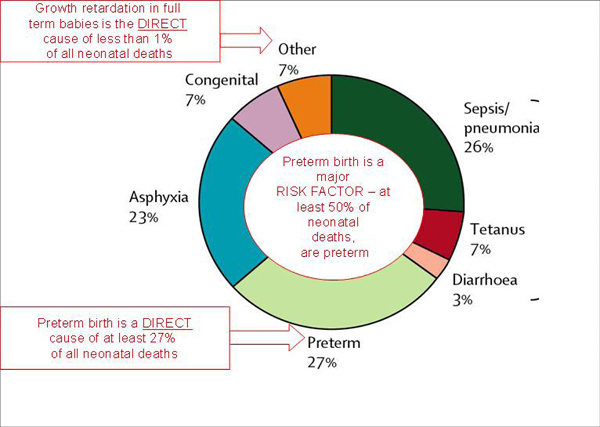
INTRODUCTION: This is the first of seven articles from a preterm birth and stillbirth report. Presented here is an overview of the burden, an assessment of the quality of current estimates, review of trends, and recommendations to improve data. PRETERM BIRTH: Few countries have reliable national preterm birth prevalence data. Globally, an estimated 13 million babies are born before 37 completed weeks of gestation annually. Rates are generally highest in low- and middle-income countries, and increasing in some middle- and high-income countries, particularly the Americas. Preterm birth is the leading direct cause of neonatal death (27%); more than one million preterm newborns die annually. Preterm birth is also the dominant risk factor for neonatal mortality, particularly for deaths due to infections. Long-term impairment is an increasing issue. STILLBIRTH: Stillbirths are currently not included in Millennium Development Goal tracking and remain invisible in global policies. For international comparisons, stillbirths include late fetal deaths weighing more than 1000g or occurring after 28 weeks gestation. Only about 2% of all stillbirths are counted through vital registration and global estimates are based on household surveys or modelling. Two global estimation exercises reached a similar estimate of around three million annually; 99% occur in low- and middle-income countries. One million stillbirths occur during birth. Global stillbirth cause-of-death estimates are impeded by multiple, complex classification systems. RECOMMENDATIONS TO IMPROVE DATA: (1) increase the capture and quality of pregnancy outcome data through household surveys, the main data source for countries with 75% of the global burden; (2) increase compliance with standard definitions of gestational age and stillbirth in routine data collection systems; (3) strengthen existing data collection mechanisms--especially vital registration and facility data--by instituting a standard death certificate for stillbirth and neonatal death linked to revised International Classification of Diseases coding; (4) validate a simple, standardized classification system for stillbirth cause-of-death; and (5) improve systems and tools to capture acute morbidity and long-term impairment outcomes following preterm birth. CONCLUSION: Lack of adequate data hampers visibility, effective policies, and research. Immediate opportunities exist to improve data tracking and reduce the burden of preterm birth and stillbirth.
Overview
The claims and statistics of this paper haven’t been checked yet.
Free: it reads the open-access text and checks the first 5 claims that cite a source we can check. Create a free account to check every claim.
Integrity signals
Registry
Cites
Statistics
Figures
Verification
Claims the paper makes
The claims and statistics of this paper haven’t been checked yet.
Free: it reads the open-access text and checks the first 5 claims that cite a source we can check. Create a free account to check every claim.
Claims other papers make about this one
Each is checked against this paper’s own text: does it say what the citing paper says it does?
The source backs part of the claim, not all of it — or backs it for a different population, condition or comparison.
In the citing paper
“The rate of preterm birth in Pakistan is 15·7% whereas it is 6·6% in Australia1 [4].”
From The association between parity, infant gender, higher level of paternal education and preterm birth in Pakistan: a cohort study (2011) · cites this paper as [4]
Experimental — accuracy not yet measuredIn the citing paper
“Complications related to PTB are the leading causes of death for children aged under 5, resulting in about a million deaths worldwide in 2015 [14,15].”
From A Comprehensive Review on Social Inequalities and Pregnancy Outcome—Identification of Relevant Pathways and Mechanisms (2022) · cites this paper as [15]
In the citing paper
“Moreover, adverse consequences related to LBW and PTB contribute very significantly to global health costs [15,16,17,18,19].”
From A Comprehensive Review on Social Inequalities and Pregnancy Outcome—Identification of Relevant Pathways and Mechanisms (2022) · cites this paper as [15]
Self-check
Percentages, sums and reported differences re-computed from the paper’s own numbers.
The self-check needs the paper’s full text.
Citations
Cites
Grading quality of evidence and strength of recommendations
(2004) · BMJ · doi:10.1136/bmj.328.7454.1490 · Cited by 8,477
Epidemiology and causes of preterm birth
Goldenberg, R. L., Culhane, J. F., Iams, J. D., & Romero, R. (2008) · The Lancet · doi:10.1016/s0140-6736(08)60074-4 · Cited by 7,801 · cited 9×
“Tomashek KM, Shapiro-Mendoza CK, Davidoff MJ, Petrini JR: Diff erences in mortality between late-preterm and term singleton infants in the United States, 1995-2002.”
BackgroundInfluential4 million neonatal deaths: When? Where? Why?
Lawn, J. E., Cousens, S., & Zupan, J. (2005) · The Lancet · doi:10.1016/s0140-6736(05)71048-5 · Cited by 3,670 · cited 10×
“Why?, 10, 2005, with permission from Elsevier.”
BackgroundInfluentialSelf-citationGlobal Burden of Disease and Risk Factors
(2006) · World Bank, Washington, DC eBooks · doi:10.1596/978-0-8213-6262-4 · Cited by 2,605
Grading quality of evidence and strength of recommendations for diagnostic tests and strategies
Schünemann, H. J., Oxman, A. D., Brozek, J., Glasziou, P., Jaeschke, R., Vist, G. E., Williams, J. W., Kunz, R., Craig, J., Montori, V. M., et al. (2008) · BMJ · doi:10.1136/bmj.39500.677199.ae · Cited by 1,782
Low birthweight: country regional and global estimates.
Wardlaw, T., Blanc, A. K., Zupan, J., & Åhman, A. (2004) · Cited by 1,773
Preterm Birth: Causes, Consequences, and Prevention
Outcomes, A. H., Behrman, R. E., & Butler, A. S. (2007) · Cited by 1,577
Evidence-based, cost-effective interventions: How many newborn babies can we save?
Darmstadt, G. L., Bhutta, Z. A., Cousens, S., Adam, T., Walker, N., & de Bernis, L. (2005) · The Lancet · doi:10.1016/s0140-6736(05)71088-6 · Cited by 1,541 · cited 2×
“on achieving high coverage of evidence-based interventions to prevent preterm delivery and to improve survival for preterm newborns [ 5 ].”
BackgroundThe Worldwide Incidence of Preterm Birth: A Systematic Review of Maternal Mortality and Morbidity
Beck, S., Wojdyla, D., Say, L., Pilar Bertran, A., Meraldi, M., Harris Requejo, J., Rubens, C., Menon, R., & Van Look, P. (2010) · Bulletin of the World Health Organization · doi:10.2471/blt.08.062554 · Cited by 1,523 · cited 2×
“Preterm birth prevalence rates A recent publication estimates about 13 million preterm babies are born each year worldwide [21].”
BackgroundSelf-citationNeurologic and Developmental Disability after Extremely Preterm Birth
Wood, N. S., Marlow, N., Costeloe, K., Gibson, A. T., & Wilkinson, A. R. (2000) · New England Journal of Medicine · doi:10.1056/nejm200008103430601 · Cited by 1,357
Research works printed but not linked: 9
- Lawn JZ J Begkoyian G Newborn Survival 2005 2 The World Bank and the National Institutes of Health
- WHO International Classification of Diseases and Related Health Problems, 10th Revision. Volume 2 1993
- WHO Perinatal and neonatal mortality for the year 2000: Country, regional and global estimates. 2006 World Health Organization
- Pattison R Saving Babies 2001: 2nd Perinatal Care Survey of South Africa. 2004
- Lawn JE MB Ross SR The Healthy Newborn: A reference guide for program managers. 2001
- Parker J Stanton C Lawn J A systematic review of methods for gestational age assessment. 2008
- International Centre for Diarrheal Disease Research B Registration of Health and Demographic Events 2000; Health and Demographic Surveillance System, Matlab. 2002 International Centre for Diarrheal Disease Research, Bangladesh
- Stanton C Perinatal mortality in the Philippines: an investigation into the use of demographic survey data for the study of perinatal mortality and its determinants. [A PhD Thesis]. The Johns Hopkins University School of Hygiene and Public Health 1996 Department of Population Dynamics
- Espeut D A validation of birth and pregnancy histories in Matlab, Bangladesh; Dissertation. Department of Population, Family and Reproductive Health Sciences 2002 The Johns Hopkins School of Hygiene and Public Health
Cited by
Items 601–700 of 808
Bayesian rank likelihood-based estimation: An application to low birth weight in Ethiopia
Bekalo, D. B., Wanjoya, A., & Mwalili, S. M. (2024) · PLoS ONE · doi:10.1371/journal.pone.0303637 · Cited by 2
Meher, A. P., & Kathaley, M. (2025) · Journal of Neonatal-Perinatal Medicine · doi:10.1177/19345798251380113 · Cited by 2
Gayatri, M., Kistiana, S., Puspitasari, M. D., & Nasution, S. L. (2026) · BMJ Open · doi:10.1136/bmjopen-2025-100978 · Cited by 2
Hahad, O., Kuntić, M., Al-Kindi, S. G., Lelieveld, J., Cheng, Y., Schmitt, V. H., Hobohm, L. H., Keller, K., Kerahrodi, J. G., Faridi, S., et al. (2026) · Journal of Environmental Health Science and Engineering · doi:10.1007/s40201-026-00990-4 · Cited by 2
“Similarly, pre - term birth subjects infants to physical and neurological dif - ficulties that may persist as lifelong disabilities [38], with preterm complications alone accounting for approximately 27% of neonatal deaths annually, totaling about four million worldwide [ 39 ].”
Weichert, A., von Schöning, D., Fischer, T., & Thomas, A. E. (2016) · Ultrasound International Open · doi:10.1055/s-0042-110317 · Cited by 2
Risks factors associated with intra-partum foetal mortality in pre-term infants
Zeballos-Sarrato, S., Castro, S. V., Navarro, C. R., Sarrato, G. Z., & Luna, M. S. (2017) · Anales de Pediatría (English Edition) · doi:10.1016/j.anpede.2016.04.007 · Cited by 2
Mane, D. A., Pujari, R. H., Salunkhe, J. A., & Alate, M. M. (2019) · Medical Research Journal · doi:10.5603/mrj.a2019.0019 · Cited by 2
Frequency of short interpregnancy interval in preterm birth.
Ara, J., Badshah, M. K., Israr, S., Gul, H., Fida, S., & Khan, M. K. (2021) · The Professional Medical Journal · doi:10.29309/tpmj/2021.28.04.4742 · Cited by 2
Karakteristik Partus Prematurus Imminens di Rspal Dr Ramelan Surabaya Periode Juni 2019 – Juni 2020
Widandi, M. N., Herdiyantini, M., & Sudiarta, K. E. (2022) · Hang Tuah Medical journal · doi:10.30649/htmj.v19i2.141 · Cited by 2
Keshtmandi, H., Mirmohammadkhani, M., & Rahmanian, M. (2023) · Reproductive Sciences · doi:10.1007/s43032-023-01249-1 · Cited by 2
“According to a populationbased study of neonatal deaths, PL is a leading cause of more than 27% of deaths annually [3].”
BackgroundBekele, D., & Kumie, T. (2023) · International Internal Medicine Journal · doi:10.33140/iimj.01.02.06 · Cited by 2
Kenyanya, J. O., Kikuvi, G. M., Wanzala, P., & Nyagero, J. M. (2023) · International Journal of Health Sciences · doi:10.47941/ijhs.1464 · Cited by 3
Pahadi, N. K., Chaudhary, R., Karn, B. K., & Yadav, U. (2024) · Journal of Karnali Academy of Health Sciences · doi:10.61814/jkahs.v7i2.878 · Cited by 2
“According to the definition of the World Health Organization (WHO), preterm period refers to a baby born before complete 37 weeks of pregnancy [1-2].”
BackgroundMethodCeresoli, M., Rigamonti, V., Famà, I., Braga, M., Corrao, G., Locatelli, A., & Cantarutti, A. (2024) · Archives of Gynecology and Obstetrics · doi:10.1007/s00404-024-07894-4 · Cited by 3
“Perinatal outcomes included preterm birth (less than 37 gestation weeks [15], (fetal growth restriction, FGR defined as intrauterine growth < 10° centile according to local ultrasound charts), low birth weight (less than 2500 g [16]), still-birth, and low Apgar score at 5 min (low: 0–4;…”
Maternal-child health: interdisciplinary aspects within the perspective of global health
Wydra, K. D., & Groß, U. (2013) · GRO · doi:10.17875/gup2013-389 · Cited by 4
King, M. L., Aden, A., Daya, S. T., Jumah, R., & Khan, S. (2014) · Worldviews on Evidence-Based Nursing · doi:10.1111/wvn.12048 · Cited by 2
Whiteman, V. E., August, E. M., Mogos, M. F., Naik, E., Garba, M., Sánchez, E., Weldeselasse, H. E., & Salihu, H. M. (2014) · Journal of Obstetrics and Gynaecology · doi:10.3109/01443615.2014.937328 · Cited by 3
“Th e global proportion of child deaths that occurs during the neonatal period is increasing (Lawn et al. 2005; Lawn et al. 2010; Lawn et al. 2009).”
BackgroundInfluentialA study of infant deaths in tribal area of Andhra Pradesh, India
Garikipati, U., Babu, G. R., Pant, H. B., & Murthy, G. (2013) · DOAJ (DOAJ: Directory of Open Access Journals) · Cited by 4
Missing stillbirth data: a hospital based study
Kusre, G., & Baruah, J. (2016) · International Journal of Community Medicine and Public Health · doi:10.18203/2394-6040.ijcmph20163389 · Cited by 2
Melle, L., Ray, C. L., Delorme, P., Anselem, O., Goffinet, F., & Marcellin, L. (2016) · Gynécologie Obstétrique & Fertilité · doi:10.1016/j.gyobfe.2016.09.010 · Cited by 2
Sobky, A. E., Fahmy, M., Salam, S. S. A. E., & Emarah, M. (2016) · Menoufia Medical Journal · doi:10.4103/1110-2098.198789 · Cited by 2
Patel, A., Lothe, A., Belekar, N., & Thakur, H. K. (2014) · Indian Journal of Child Health · doi:10.32677/ijch.2018.v05.i01.004 · Cited by 2
Pregnancy Outcomes at Kasungu Maternity Ward in Central Malawi—A Review of Maternity Ward Register
Park, J.-H., Song, J. S., Kim, J. G., Han, C., Moon, D. J., Kim, B., Kachingwe, J., & Talama, G. C. (2019) · Advances in Reproductive Sciences · doi:10.4236/arsci.2019.73007 · Cited by 2
Threatened Preterm Labor: Which are become Preterm Labor?
Yeni, C. M., Tambunan, R., & Hasanuddin, H. (2020) · Indonesian Journal of Obstetrics and Gynecology · doi:10.32771/inajog.v8i4.1299 · Cited by 4
The low birth weights of newborns conceived using assisted reproduction technology
Waldaufová, E., Šťastná, A., & Fait, T. (2024) · Bratislavské lekárske listy/Bratislava medical journal · doi:10.4149/bll_2024_023 · Cited by 2
Delnord, M. (2017) · theses.fr (ABES) · doi:10.70675/50a5b621za57fz425azba5fzd3595a6aa807 · Cited by 2
McCaw‐Binns, A., & Mullings, J. (2014) · Oxford University Press eBooks · doi:10.1093/obo/9780199756797-0095 · Cited by 2
Cheer, K. (2019) · ResearchOnline at James Cook University (James Cook University) · doi:10.25903/5d4a750c7d880 · Cited by 4
MiGHT, & Premji, S. (2014) · Maternal and Child Health Journal · doi:10.1007/s10995-014-1539-3 · Cited by 2
Hathi, P. (2022) · SocArXiv (OSF Preprints) · doi:10.31235/osf.io/sz8n9 · Cited by 3
Prediction and Diagnosis of Preterm Delivery: Review
Çetinkaya, S., Biberoglu, E. H., Kırbaş, A., & Danışman, N. (2017) · Turkiye Klinikleri Journal of Gynecology and Obstetrics · doi:10.5336/gynobstet.2015-45039 · Cited by 1
Gulamani, S. S., Tharani, A. J., Sharifa, L., & Kiran, S. (2017) · i-manager’s Journal on Nursing · doi:10.26634/jnur.6.4.10339 · Cited by 1
Determinantes da prematuridade
Leone, C. R. (2015) · BIS Boletim do Instituto de Saúde · doi:10.52753/bis.v16i1.37377 · Cited by 1
HCV INDUCED COMPLICATIONS DURING PREGNANCY AND NEONATAL RISKS
Nawaz, R., Naz, Z., IQBAL, B., AHMAD, M., RAZA, M., RAZA, M., WASEEM, M., Ahad, A., & Shahzadi, K. (2024) · Biological and Clinical Sciences Research Journal · doi:10.54112/bcsrj.v2024i1.863 · Cited by 1
Teshale, G., Dellie, E., Aschalew, A. Y., Tsehay, C. T., Worku, N., Tafere, T. Z., Baykemagn, N. D., & Hagos, A. (2025) · BMC Pregnancy and Childbirth · doi:10.1186/s12884-025-07574-4 · Cited by 4
“Adverse birth outcome is defined as a low birth weight (LBW) (birth weight < 2500gram), macrosomia (birth weight > 4000 gram), stillbirth (fetal death at or after 7 months of gestation and before second stage of labor), and preterm birth (less than 37 weeks at birth) [1, 2].”
The role of housing instability in the association between ambient temperature and preterm birth
Park, J., Kim, H., & Lee, H. (2026) · Environmental Health · doi:10.1186/s12940-026-01268-w · Cited by 1
“PTB poses a major public health challenge, increasing the healthcare budget burden and endangering maternal and newborn health, such as death before five years and admission to the neonatal intensive care unit [3–5].”
Hedawy, S., Aldalahmeh, S., Labeeb, E. E., Khattab, A. A. A., Khalid, E., Hassan, A., & Menshawy, A. (2026) · BMC Pregnancy and Childbirth · doi:10.1186/s12884-026-08747-5 · Cited by 1
“A population-based analysis of infant deaths indicates that PTL accounts for almost 27% of annual fatalities [4].”
Rodamo, K. M., Bosha, T., & Tamiru, D. (2026) · Scientific Reports · doi:10.1038/s41598-026-44534-0 · Cited by 1
“Preterm birth occurred in 23.58% of births (95% CI: 19.8–27.6), a rate higher than the 12.3% and 11.5% reported in the Global Action Report for Sub-Saharan African countries and a 2016 study in Brazil, respectively 43,44 .”
InfluentialAndrade‐Rivas, F., Spiegel, J., Delgado‐Ron, J. A., van den Bosch, M. A., Parrott, L., & Henderson, S. B. (2026) · Environmental Pollution · doi:10.1016/j.envpol.2026.128090 · Cited by 1
PROFILE OF STILLBIRTHS IN A REFERRAL HOSPITAL FROM NORTHEAST INDIA- A RECORD BASED STUDY
Baruah, J., Kusre, G., & Hazarika, S. (2017) · Journal of Evolution of Medical and Dental Sciences · doi:10.14260/jemds/2017/370 · Cited by 1
Training of Ultrasound in Neonatology: Global or Local?
(2013) · Donald School Journal of Ultrasound in Obstetrics & Gynecology · doi:10.5005/jp-journals-10009-1303 · Cited by 1
Ending preventable stillbirths 5 Stillbirths: ending preventable deaths by 2030
de Bernis, L., Kinney, M. V., Stones, W. R., Vivio, D., Leisher, S. H., Gülmezoglu, M., Mathai, M., Franco, L. M., McDougall, L., Zeitlin, J. A., et al. (2016) · Cited by 1
Influence of Nutrition on Neonatal Respiratory Outcomes
Navarrete, C. T., & Sosenko, I. R. S. (2012) · Elsevier eBooks · doi:10.1016/b978-1-4377-2682-4.00007-x · Cited by 2
Stillbirths: An Underestimated and Neglected Reality
Modelli, M. E. S., Souza, A. B. P., & Costa, M. K. R. (2016) · Journal of Forensic Medicine and Legal Affairs · doi:10.19104/jfml.2016.109 · Cited by 1
Joshi, P., oshi, E., hukra, N., & Deorari, S. (2017) · Indian Journal of Child Health · doi:10.32677/ijch.2017.v04.i04.020 · Cited by 1
Conception delay and spontaneous and indicated preterm birth among primiparous women in Japan
Konishi, S., Sakata, S., Watanabe, C., & Ng, C. F. S. (2018) · Japanese Journal of Health and Human Ecology · doi:10.3861/kenko.84.4_117 · Cited by 2
“” There were three answer choices: (1) I became pregnant despite using contraceptive methods, (2) I became pregnant as a result of discontinuing contraception, or (3) I had never used any contraceptive methods since I started dating my current partner.”
BackgroundIntrauterine Fetal Deaths: A Study in Tertiary Care Center
(2018) · ARC Journal of Gynecology and Obstetrics · doi:10.20431/2456-0561.0301002 · Cited by 1
Gambaran kematian perinatal di RSUP Prof. Dr. R. D. Kandou Manado tahun 2015
Simamora, W. R., Tendean, H. M. M., & Mamengko, L. M. (2016) · e-CliniC · doi:10.35790/ecl.4.2.2016.14472 · Cited by 1
Сокова, Е. А., Chilova, R., Демидова, О. А., & Олегович, А. К. (2019) · The Bulletin of the Scientific Centre for Expert Evaluation of Medicinal Products Regulatory Research and Medicine Evaluation · doi:10.30895/1991-2919-2019-9-3-162-166 · Cited by 1
Reyes, S. P. M., Bolaños, P. A. C., Mosquera, F. E. C., Munévar, Á. M. C., & Pérez, V. H. E. (2019) · Revista Colombiana de Obstetricia y Ginecología · doi:10.18597/rcog.3261 · Cited by 2
Li, L., Cui, W., Zhang, Y., & Wang, Y. (2017) · PubMed · Cited by 1
Zhang, H., Ma, H., Ye, J., Zhong, X.-Y., & Jorch, G. (2020) · Current Medical Science · doi:10.1007/s11596-020-2273-2 · Cited by 1
Ali, A. E.-N. A. E.-G., Abdallah, K. M., & Abdelhamid, A. S. (2018) · Obstetrics Gynecology and Reproductive Sciences · doi:10.31579/2578-8965/009 · Cited by 1
Early Vascular Aging in Pediatric Hypertension Patients
Litwin, M. (2023) · Springer eBooks · doi:10.1007/978-3-031-06231-5_59 · Cited by 1
The Association of Serum Lead Concentration in Pregnant Women and Risk for Preterm Delivery
Salehi, Z. (2021) · Journal of Gynecology and Womens Health · doi:10.19080/jgwh.2021.22.556093 · Cited by 1
Ogein, O., Okunowo, A. A., Olorunfemi, G., Osunwusi, B. O., & Adegbola, O. (2023) · Archives of Obstetrics and Gynaecology · doi:10.33696/gynaecology.4.040 · Cited by 1
Risk Factors for Retinopathy of Prematurity in Preterm Infants in Kerman, Iran
Daneshtalab, A., Shadravan, M., Mahani, A. M., Dehghani, A., & Kermani, M. S. (2024) · Journal of Ophthalmic and Vision Research · doi:10.18502/jovr.v19i1.15437 · Cited by 1
Elmoussaoui, S., Kaoutar, K., Chetoui, A., Kardoudi, A. E., Chigr, F., Borrous, M., & Najimi, M. (2024) · African Health Sciences · doi:10.4314/ahs.v24i2.32 · Cited by 1
Barriers and enablers of kangaroo mother care in South Wollo public hospitals, Northeast Ethiopia
Mihret, S. T., Mekonen, A. M., Tadesse, A. W., & Biset, G. (2024) · Journal of Neonatal Nursing · doi:10.1016/j.jnn.2024.08.006 · Cited by 1
Kodama, T., Kakizaki, I., Tanaka, K., Tanaka, S., Ito-Fukuyama, A., Suto, S., Kurotaki, S., Tsushima, R., Sato, M., Takahashi, R., et al. (2025) · Hypertension Research in Pregnancy · doi:10.14390/jsshp.hrp2024-016 · Cited by 1
Trends in the causes of stillbirths over 20 years in Southern Japan
Kino, E., Maki, Y., Yamada, N., Kodama, Y., Katsuragi, S., Sameshima, H., & Ikenoue, T. (2025) · BMC Pregnancy and Childbirth · doi:10.1186/s12884-025-07794-8 · Cited by 1
“Furthermore, understanding the temporal changes underlying the causes of stillbirth is necessary to develop regional strategies for the prevention of stillbirth, neonatal death, and neurological damage as a sequential chain of poor perinatal outcomes [1–3].”
Bah, I. K., Diallo, B. A., Baldé, O., Barry, A., Balde, A. I., Baldé, I., Diallo, A., & Sy, T. (2025) · Open Journal of Obstetrics and Gynecology · doi:10.4236/ojog.2025.159124 · Cited by 1
The Contribution of the Matlab Safe Motherhood Programme to Perinatal Mortality in Bangladesh
Roy, S. (2015) · LSHTM Research Online (London School of Hygiene and Tropical Medicine) · doi:10.17037/pubs.02267959 · Cited by 1
Nalwadda, C. K. (2014) · Figshare · Cited by 2
Superproteção parental e problemas emocionais e de comportamento em crianças nascidas prematuras
Magalhães, C. T. L. (2019) · Portuguese National Funding Agency for Science, Research and Technology (RCAAP Project by FCT) · Cited by 1
Lino, A. D. A. (2022) · Digital Library of Theses and Dissertations (Universidade de São Paulo) · doi:10.11606/t.22.2022.tde-18082022-095340 · Cited by 1
Lopes, R. S. (2015) · Americanae (AECID Library) · Cited by 2
Çelen, Ş., Şimşek, Y., Erol, N., Şengezer, O., Taşın, C., & Büyükkağnıcı, Ü. (2011) · Annals of Medical Research
Verli, J. (2013) · SZTE Repository of Dissertations (University of Szeged) · doi:10.14232/phd.1672
Parga-Belinkie, J., Udofia, E. A., & Punguyire, D. (2011) · African Journal of Reproductive Health
Salinas‐Miranda, A. (2013) · Digital Commons - University of South Florida (University of South Florida)
Encina, F. C., & Molina, S. F. P. (2010) · Dialnet (Universidad de la Rioja)
Description of fetal heart rate patterns at 20 to 24 weeks gestation
Hofmeyr, F. (2012) · SUNScholar (Stellenbosch University)
Siebritz, M. (2012) · SUNScholar (Stellenbosch University)
Group B streptococcal disease in infants
Edmond, K. M. (2012)
Bora, S. (2012) · UC Research Repository (University of Canterbury) · doi:10.26021/7369
Perinatal outcomes in Agincourt: 1995-2000
Duworko, J. T. (2014) · University of the Witwatersrand, Johannesburg Institutional Repository on DSpace (University of the Witwatersrand, Johannesburg)
Mabe, B. (2016) · NC Digital Online Collection of Knowledge and Scholarship (The University of North Carolina at Greensboro)
Obstetric History and Maternal Complications related to Preterm Birth
Teixeira, G. A., de Carvalho, J. B. L., Lopes, T. R. G., da Silva, F. C. B., Pereira, S. A., Torres, L. M., & Bezerra, J. D. A. L. (2016) · International Archives of Medicine · doi:10.3823/2092
Dev, A. (2016) · CUNY Academic Works (City University of New York)
Yeoh, P. L. (2016) · University of Malaya Students Repository
Pattern of Early Neonatal Morbidities in Moderate and Late Pre-terms
Kumari, K., Rao, K. A., & Vijayalakshmi, B. (2016) · Pediatric Review International Journal of Pediatric Research · doi:10.17511/ijpr.2016.i07.10 · Cited by 1
An evaluation of stillbirths in İstanbul by examining death certificates
Yetim, A., Buzcu, A. F., Devecioğlu, E., Gökçay, G., & İnce, Z. (2017) · Türk Pediatri Arşivi · doi:10.5152/turkpediatriars.2017.4963
Liu, W.-K., Feng, M.-M., Li, X., Yu, M., Zhuang, S., & Li, Y. (2017) · Biomedical Research-tokyo
Mechanisms of Group B Streptococcus Colonization and Ascending Infection
Vornhagen, J. (2017) · ResearchWorks at the University of Washington (University of Washington)
Rajewska, A., Celewicz, Z., & Torbè, A. (2017) · Pomeranian Journal of Life Sciences · doi:10.21164/pomjlifesci.280
“In this group of women the occurrence of premature labour is as high as 19–45% [1, 2, 3, 4, 5].”
BackgroundMcMahon, C., & Denaxas, S. (2017) · Informatics for Health and Social Care · doi:10.1080/17538157.2017.1364251 · Cited by 1
RETINOPATHY OF PREMATURITY. PATHOGENESIS. MECHANISMS OF DEVELOPMENT. PART1. RISK FACTORS.
Penishkevich, Y. I., Hodovanets, Y., & Кошурба, І. В. (2017) · Neonatology surgery and perinatal medicine · doi:10.24061/2413-4260.vii.3.25.2017.12
CONGENITAL MALFORMATION IN STILLBIRTHS- A HOSPITAL BASED STUDY
Hazarika, S., & Kusre, G. (2017) · Journal of Evolution of Medical and Dental Sciences · doi:10.14260/jemds/2017/1327
Gorzó, I., Novák, T., Orvos, H., Kovács, M., Bóka, B., & Kele, B. (2015) · International Journal of Experimental Dental Science · doi:10.5005/jp-journals-10029-1107
Abdallah, B. (2018) · Discovery Research Portal (University of Dundee) · Cited by 2
Seepana, S. R., & Guna Sekhar Raju, S. (2019) · Journal of Evolution of Medical and Dental Sciences · doi:10.14260/jemds/2019/499
Karkani, A. (2019) · theses.fr (ABES) · doi:10.70675/50bc69c8ze221z49d2z8803zd7d15edcccc5 · Cited by 2
LOW BIRTH WEIGHT INFANTS OUTCOME IN A GOVERNMENT GENERAL HOSPITAL OF SOUTH INDIA
Seepana, S. R., & Sampathirao, G. R. (2019) · Indian Journal of Child Health · doi:10.32677/ijch.2019.v06.i10.001
Low Birth Weight Infants Outcome In Single Tertiary Referral Hospital
Putra, D. A., Cininta, N. I., Wardhana, M. P., Aryananda, R. A., E, G. K., I, A. M., Wicaksono, B. A., Ernawati, E., Sulistyono, A., ADITIAWARMAN, A., et al. (2019) · International Islamic Medical Journal · doi:10.33086/iimj.v1i1.1386
Management of pregnancy with recurrent preterm deliveries
Sharma, S. (2020) · CRC Press eBooks · doi:10.1201/9780429435027-4
Metadata
- Authors
- the GAPPS Review Group, Lawn, J. E., Gravett, M. G., Nunes, T. M., Rubens, C. E., & Stanton, C.
- Affiliations
- Save the Children (US)
- University of Washington (US)
- Johns Hopkins University (US)
- Corresponding author
- Stanton, Cynthia
- Venue
- BMC Pregnancy and Childbirth
- Published
- 2010-02
- Volume
- 10
- Issue
- S1
- Pages
- S1-S1
- ISSN
- 1471-2393 (ISSN-L)
- PMC
- PMC2841772
- OpenAlex
- W2133911610
- Semantic Scholar
- 56d2c7a022b4dc8f68991bdf3437c881a360240b
- Cited by
- 784
- References
- 102
- Citations by year
- 2026: 15 · 2025: 20 · 2024: 27 · 2023: 45 · 2022: 43 · 2021: 92 · 2020: 50 · 2019: 52 · 2018: 49 · 2017: 57 · 2016: 69 · 2015: 63 · 2014: 60 · 2013: 49 · 2012: 45
- Type
- book review
- Language
- en
- Open access
- gold
- doi.org
- Licence
- cc-by
- creativecommons.org/licenses/by/2.0 (tdm)
- Locations
- BMC Pregnancy and Childbirth (publishedVersion, cc-by)
- PubMed Central (publishedVersion, cc-by)
- PubMed (publishedVersion)
- LSHTM Research Online (London School of Hygiene and Tropical Medicine) (acceptedVersion)
- DOAJ (DOAJ: Directory of Open Access Journals) (submittedVersion)
- Funders
- Bill and Melinda Gates Foundation
- Eunice Kennedy Shriver National Institute of Child Health and Human Development (R24HD042854)
- Topics
- Health Sciences › Medicine › Pediatrics, Perinatology and Child Health › Global Maternal and Child Health
- Health Sciences › Medicine › Pediatrics, Perinatology and Child Health › Maternal and Neonatal Healthcare
- Health Sciences › Medicine › Pediatrics, Perinatology and Child Health › Infant Development and Preterm Care
- Keywords
- preterm birth, stillbirth, neonatal mortality, global burden of disease, preterm birth prevalence, civil registration, household surveys, International Classification of Diseases, data quality, low- and middle-income countries, long-term impairment
- MeSH terms
- Cause of Death, Data Collection, Female, Fetal Death, Humans, Infant Mortality, Infant, Newborn, Pregnancy, Global Health, Prevalence, Premature Birth, Stillbirth
About these checks
Registry, retraction, Cites and statistics results are computed, not judged, with one exception: a printed reference that no index lists is read once by a model before it counts as a citation error. Claims are extracted by a model and kept only when their quote appears verbatim in the text; each cited source is then checked, with a model’s help, for whether it says what the claim relies on. Those verdicts can be wrong — read the claim’s quote and the cited source before relying on one.
Statistics and arithmetic are recomputed, not judged.
Confidence bands are shown only for fields calibrated on our annotated test set. None is calibrated yet, so no band is shown.
What counts as a claim ›How we measure confidence ›How we check this ›
Are you an author, or do you see a problem with this page? Request a review
Data sources
Bibliographic data: Semantic Scholar, OpenAlex, Crossref.
Contains information from the Semantic Scholar Academic Graph Datasets, made available under the ODC Attribution License (ODC-BY 1.0).
Semantic Scholar’s data is described in: Kinney, R., et al. (2023). The Semantic Scholar Open Data Platform. arXiv:2301.10140.
