

Global report on preterm birth and stillbirth (1 of 7): definitions, description of the burden and opportunities to improve data
Open accessThe DOI matches its Crossref record; 101 of the 102 references it cites were found in a registry or an index.
Abstract
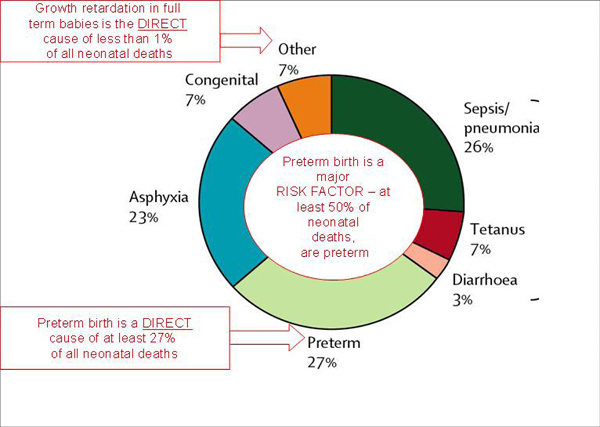
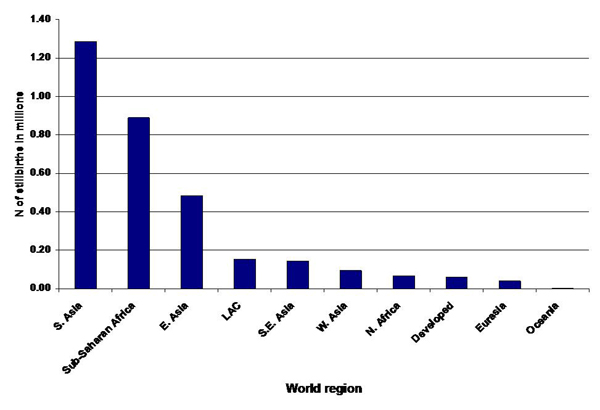
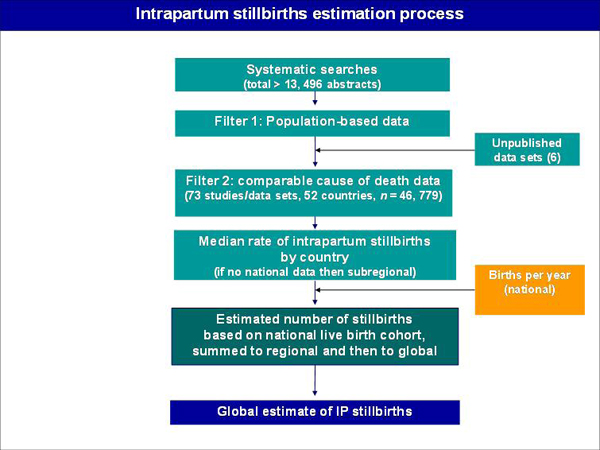
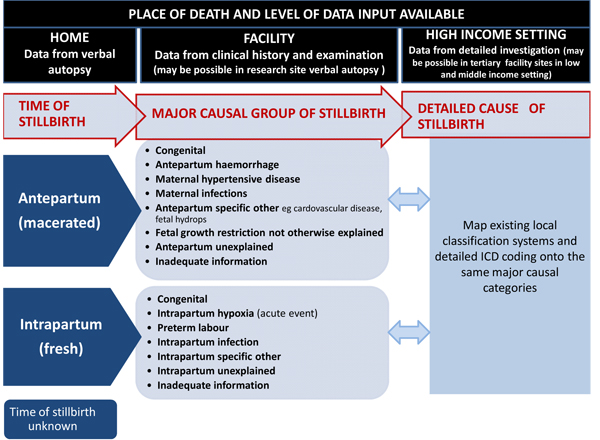
INTRODUCTION: This is the first of seven articles from a preterm birth and stillbirth report. Presented here is an overview of the burden, an assessment of the quality of current estimates, review of trends, and recommendations to improve data. PRETERM BIRTH: Few countries have reliable national preterm birth prevalence data. Globally, an estimated 13 million babies are born before 37 completed weeks of gestation annually. Rates are generally highest in low- and middle-income countries, and increasing in some middle- and high-income countries, particularly the Americas. Preterm birth is the leading direct cause of neonatal death (27%); more than one million preterm newborns die annually. Preterm birth is also the dominant risk factor for neonatal mortality, particularly for deaths due to infections. Long-term impairment is an increasing issue. STILLBIRTH: Stillbirths are currently not included in Millennium Development Goal tracking and remain invisible in global policies. For international comparisons, stillbirths include late fetal deaths weighing more than 1000g or occurring after 28 weeks gestation. Only about 2% of all stillbirths are counted through vital registration and global estimates are based on household surveys or modelling. Two global estimation exercises reached a similar estimate of around three million annually; 99% occur in low- and middle-income countries. One million stillbirths occur during birth. Global stillbirth cause-of-death estimates are impeded by multiple, complex classification systems. RECOMMENDATIONS TO IMPROVE DATA: (1) increase the capture and quality of pregnancy outcome data through household surveys, the main data source for countries with 75% of the global burden; (2) increase compliance with standard definitions of gestational age and stillbirth in routine data collection systems; (3) strengthen existing data collection mechanisms--especially vital registration and facility data--by instituting a standard death certificate for stillbirth and neonatal death linked to revised International Classification of Diseases coding; (4) validate a simple, standardized classification system for stillbirth cause-of-death; and (5) improve systems and tools to capture acute morbidity and long-term impairment outcomes following preterm birth. CONCLUSION: Lack of adequate data hampers visibility, effective policies, and research. Immediate opportunities exist to improve data tracking and reduce the burden of preterm birth and stillbirth.
Overview
The claims and statistics of this paper haven’t been checked yet.
Free: it reads the open-access text and checks the first 5 claims that cite a source we can check. Create a free account to check every claim.
Integrity signals
Registry
Cites
Statistics
Figures
Verification
Claims the paper makes
The claims and statistics of this paper haven’t been checked yet.
Free: it reads the open-access text and checks the first 5 claims that cite a source we can check. Create a free account to check every claim.
Claims other papers make about this one
Each is checked against this paper’s own text: does it say what the citing paper says it does?
The source backs part of the claim, not all of it — or backs it for a different population, condition or comparison.
In the citing paper
“The rate of preterm birth in Pakistan is 15·7% whereas it is 6·6% in Australia1 [4].”
From The association between parity, infant gender, higher level of paternal education and preterm birth in Pakistan: a cohort study (2011) · cites this paper as [4]
Experimental — accuracy not yet measuredIn the citing paper
“Complications related to PTB are the leading causes of death for children aged under 5, resulting in about a million deaths worldwide in 2015 [14,15].”
From A Comprehensive Review on Social Inequalities and Pregnancy Outcome—Identification of Relevant Pathways and Mechanisms (2022) · cites this paper as [15]
In the citing paper
“Moreover, adverse consequences related to LBW and PTB contribute very significantly to global health costs [15,16,17,18,19].”
From A Comprehensive Review on Social Inequalities and Pregnancy Outcome—Identification of Relevant Pathways and Mechanisms (2022) · cites this paper as [15]
Self-check
Percentages, sums and reported differences re-computed from the paper’s own numbers.
The self-check needs the paper’s full text.
Citations
Cites
Grading quality of evidence and strength of recommendations
(2004) · BMJ · doi:10.1136/bmj.328.7454.1490 · Cited by 8,477
Epidemiology and causes of preterm birth
Goldenberg, R. L., Culhane, J. F., Iams, J. D., & Romero, R. (2008) · The Lancet · doi:10.1016/s0140-6736(08)60074-4 · Cited by 7,801 · cited 9×
“Tomashek KM, Shapiro-Mendoza CK, Davidoff MJ, Petrini JR: Diff erences in mortality between late-preterm and term singleton infants in the United States, 1995-2002.”
BackgroundInfluential4 million neonatal deaths: When? Where? Why?
Lawn, J. E., Cousens, S., & Zupan, J. (2005) · The Lancet · doi:10.1016/s0140-6736(05)71048-5 · Cited by 3,670 · cited 10×
“Why?, 10, 2005, with permission from Elsevier.”
BackgroundInfluentialSelf-citationGlobal Burden of Disease and Risk Factors
(2006) · World Bank, Washington, DC eBooks · doi:10.1596/978-0-8213-6262-4 · Cited by 2,605
Grading quality of evidence and strength of recommendations for diagnostic tests and strategies
Schünemann, H. J., Oxman, A. D., Brozek, J., Glasziou, P., Jaeschke, R., Vist, G. E., Williams, J. W., Kunz, R., Craig, J., Montori, V. M., et al. (2008) · BMJ · doi:10.1136/bmj.39500.677199.ae · Cited by 1,782
Low birthweight: country regional and global estimates.
Wardlaw, T., Blanc, A. K., Zupan, J., & Åhman, A. (2004) · Cited by 1,773
Preterm Birth: Causes, Consequences, and Prevention
Outcomes, A. H., Behrman, R. E., & Butler, A. S. (2007) · Cited by 1,577
Evidence-based, cost-effective interventions: How many newborn babies can we save?
Darmstadt, G. L., Bhutta, Z. A., Cousens, S., Adam, T., Walker, N., & de Bernis, L. (2005) · The Lancet · doi:10.1016/s0140-6736(05)71088-6 · Cited by 1,541 · cited 2×
“on achieving high coverage of evidence-based interventions to prevent preterm delivery and to improve survival for preterm newborns [ 5 ].”
BackgroundThe Worldwide Incidence of Preterm Birth: A Systematic Review of Maternal Mortality and Morbidity
Beck, S., Wojdyla, D., Say, L., Pilar Bertran, A., Meraldi, M., Harris Requejo, J., Rubens, C., Menon, R., & Van Look, P. (2010) · Bulletin of the World Health Organization · doi:10.2471/blt.08.062554 · Cited by 1,523 · cited 2×
“Preterm birth prevalence rates A recent publication estimates about 13 million preterm babies are born each year worldwide [21].”
BackgroundSelf-citationNeurologic and Developmental Disability after Extremely Preterm Birth
Wood, N. S., Marlow, N., Costeloe, K., Gibson, A. T., & Wilkinson, A. R. (2000) · New England Journal of Medicine · doi:10.1056/nejm200008103430601 · Cited by 1,357
Research works printed but not linked: 9
- Lawn JZ J Begkoyian G Newborn Survival 2005 2 The World Bank and the National Institutes of Health
- WHO International Classification of Diseases and Related Health Problems, 10th Revision. Volume 2 1993
- WHO Perinatal and neonatal mortality for the year 2000: Country, regional and global estimates. 2006 World Health Organization
- Pattison R Saving Babies 2001: 2nd Perinatal Care Survey of South Africa. 2004
- Lawn JE MB Ross SR The Healthy Newborn: A reference guide for program managers. 2001
- Parker J Stanton C Lawn J A systematic review of methods for gestational age assessment. 2008
- International Centre for Diarrheal Disease Research B Registration of Health and Demographic Events 2000; Health and Demographic Surveillance System, Matlab. 2002 International Centre for Diarrheal Disease Research, Bangladesh
- Stanton C Perinatal mortality in the Philippines: an investigation into the use of demographic survey data for the study of perinatal mortality and its determinants. [A PhD Thesis]. The Johns Hopkins University School of Hygiene and Public Health 1996 Department of Population Dynamics
- Espeut D A validation of birth and pregnancy histories in Matlab, Bangladesh; Dissertation. Department of Population, Family and Reproductive Health Sciences 2002 The Johns Hopkins School of Hygiene and Public Health
Cited by
Items 701–800 of 808
Microbiota, probióticos y morbilidad en recién nacidos de muy bajo peso
Escribano, E. (2019) · LA Referencia (Red Federada de Repositorios Institucionales de Publicaciones Científicas)
Pharmacokinetics of melatonin as a neuroprotectant In preterm infants
Merchant, N. M. (2013) · Spiral (Imperial College London)
Christou, A. (2018) · The Sydney eScholarship Repository (The University of Sydney) · Cited by 1
Estrategia para la disminución de la mortalidad perinatal en el Departamento del Cauca, 2010-2018.
Zúñiga, Q., & Alexandra, Y. (2020) · LA Referencia (Red Federada de Repositorios Institucionales de Publicaciones Científicas)
Fetal Fibronectin Test Performance in Patients at Low Risk for Preterm Delivery
Jeganathan, S., Shilkrut, A. G., Fuks, A. M., & Kaminsky, S. (2018) · International Journal of Women s Health and Reproduction Sciences · doi:10.15296/ijwhr.2020.56
The magic baby: an extremely preterm baby case from Syria
Doya, L. J. (2020) · MOJ Clinical & Medical Case Reports · doi:10.15406/mojcr.2020.10.00360
Kabra, M., Dixit, M., Verma, A., Hirani, J., & Mathur, M. (2021) · International Journal of Community Medicine and Public Health · doi:10.18203/2394-6040.ijcmph20210243
Chanda, K., Shanzi, A., & Vwalika, B. (2020) · University of Zambia Journal of Agricultural and Biomedical Sciences · doi:10.53974/unza.jabs.4.2.390
Baker, S. (2021) · ResearchOnline - JCU (James Cook University) · doi:10.25903/tp26-k856
Nomogram of Cervical Length at Mid-trimester in Normal Thai Pregnant Women
Kovavisarach, E., & Sukontaman, W. (2018) · Journal of the Medical Association of Thailand
Epidemiology and Prevalence of Preterm Births: A Systematic Review
Sultan, Z., Tufail, Z., & Siddiqa, M. (2021) · Journal of Pharmaceutical Research International · doi:10.9734/jpri/2021/v33i45b32825
“All births within 21 days before and 14 days after 40 weeks are defined as “term” births and have the best short and long-term health outcomes and as opposed to term birth, preterm birth (PTB) defined as childbirth occurring at less than 37 completed weeks or 259 days of gestation [1].”
BackgroundSpectrum of Preterm Birth in Tertiary Care Hospital in Shimla District of Himachal Pradesh
Azad, K., Sharma, D. K., & Sood, A. (2022) · International Journal of Research and Review · doi:10.52403/ijrr.20220216
Early Vascular Aging in Pediatric Hypertension Patients
Litwin, M. (2022) · Springer eBooks · doi:10.1007/978-3-319-31420-4_59-1 · Cited by 1
Pancieri, L. (2019) · Digital Library of Theses and Dissertations (Universidade de São Paulo) · doi:10.11606/t.22.2019.tde-24032022-104345 · Cited by 4
Sandberg, E. M., Einarsson, J. I., & McElrath, T. F. (2014) · Springer eBooks · doi:10.1007/978-3-662-44059-9_15
FOETO-MATERNAL OUTCOME IN PRETERM PREMATURE RUPTURE OF MEMBRANES
Lagoo, A., Jacob, S., & Paprikar, S. (2021) · Indian Journal Of Applied Research · doi:10.36106/ijar/2603713
Eley, B. (2018) · Faculty Opinions – Post-Publication Peer Review of the Biomedical Literature · doi:10.3410/f.733013019.793545106
Lawn, J. E., McClure, E. M., & Blencowe, H. K. (2013) · Elsevier eBooks · doi:10.1016/b978-1-4557-0658-7.00023-2
Self-citationAtmaja, N. M. I. D., Utomo, M. T., & Ernawati, E. (2022) · International Journal Of Scientific Advances · doi:10.51542/ijscia.v3i2.25
“[2] Eighty-five percent of these cases occurred in African and Asian countries.[3,4]”
BackgroundEarly colonization of the human gut
Gómez, J. M. R. (2022) · Elsevier eBooks · doi:10.1016/b978-0-323-91313-3.00010-6 · Cited by 1
ASPECTOS NUTRICIONAIS NA PREMATURIDADE
Korkes, H. A., Pimentel, C., & Fernandes, I. (2022) · doi:10.22533/at.ed.81822100824
VITALIDADE FETAL NA PREMATURIDADE
Rodrigues, T. C. G. F., Coutinho, C. M., & Cavalli, R. D. C. (2022) · doi:10.22533/at.ed.81822100813
PREMATURIDADE E TRIAGEM NEONATAL
Fonseca, A. A., Micheletti, C., & Fonseca, J. H. R. (2022) · doi:10.22533/at.ed.81822100825
ASPECTOS NEUROLÓGICOS E ORTOPÉDICOS NO DESENVOLVIMENTO DO PREMATURO
dos Santos, M. L. L., & Abreu, F. P. (2022) · doi:10.22533/at.ed.81822100819
O PAPEL DAS ORGANIZAÇÕES NÃO GOVERNAMENTAIS (ONGS) NO CONTEXTO DA PREMATURIDADE
Hennemann, A. C., neris, D. S., & Suguitani, D. (2022) · doi:10.22533/at.ed.81822100823
CUSTOS DA ASSISTÊNCIA A PREMATURIDADE
de Mello, F. B., & Goulart, A. L. (2022) · doi:10.22533/at.ed.81822100826
Biomarkers for Preterm Delivery
Bıyık, İ., & Albayrak, M. (2022) · BENTHAM SCIENCE PUBLISHERS eBooks · doi:10.2174/9789815040463122010025
STUDY OF CONGENITAL ANOMALIES IN STILLBORN FETUSES THROUGH AUTOPSY
Vinutha, S. P., Mobin, N., & Hemamalini, H. (2022) · INTERNATIONAL JOURNAL OF SCIENTIFIC RESEARCH · doi:10.36106/ijsr/5205190
Hartono, I. K., Suwiyoga, K., Negara, I. K. S., Putra, I. G. M., Aryana, M. B. D., Winata, I. G. S., & Megadhana, I. W. (2022) · Intisari Sains Medis · doi:10.15562/ism.v13i1.1220
“IMT (kg/m2), Rerata (± SD) 26,36 (4,26) 26,18 (3,78) 0,819”
The Advance in the Associations between Hemoglobin and Preterm Delivery during Pregnancy
张, 絮. (2022) · Hans Journal of Food and Nutrition Science · doi:10.12677/hjfns.2022.114031
Aldersi, A. B., Shaheen, A., Alferjani, M. M., & Alzehawi, S. M. M. (2023) · SAS Journal of Medicine · doi:10.36347/sasjm.2023.v09i02.005
Brobbey, R. A., Kwawukume, M. A., Twum, P., Agyei‐Baffour, P., Opoku, D., Antwi-Berko, N. K. B., Vetsi, O., Apara, J., & Mensah, K. A. (2023) · World Journal of Advanced Research and Reviews · doi:10.30574/wjarr.2023.17.3.0368
“This is a critical time for newborns as they adjust to the outside world and are particularly vulnerable to illness and complications [1], [2].”
Moges, W. K., Tegegne, A. S., Mitiku, A. A., Zewotir, T. T., Hailemeskel, S., & Tesfahun, E. (2023) · Research Square · doi:10.21203/rs.3.rs-2890142/v1
Marhoon, A. A. A.-H., Hadi, S., & ALjebore, H. K. (2023) · Journal of Scientific Research in Medical and Biological Sciences · doi:10.47631/jsrmbs.v4i3.643
Tolesa, R., Lema, M., Wodajo, S., Merdassa, E., Raga, I., Garuma, W., Fayera, H., Gemechu, G., & Beyene, M. D. (2023) · Research Square · doi:10.21203/rs.3.rs-3307139/v1
The association between preterm births and assisted reproductive technologies
Šťastná, A., Waldaufová, E., & Fait, T. (2023) · Biomedical Papers · doi:10.5507/bp.2023.039 · Cited by 1
Association of Serum Magnesium with Preterm Labor
Joy, S. B., Zeba, D., Pervin, S., Alam, S., Zesmin, F., Biswas, A. K., & Sharifa, J. (2023) · Bangabandhu Sheikh Mujib Medical College Journal · doi:10.3329/bsmmcj.v2i1.69598
The Determinants of Survival Time of Premature Neonates at Shambu General Hospital
Debelo, O. (2023) · Advances in Public Health · doi:10.1155/2023/7257849
The ethical conundrums of antenatal corticosteroid therapy
Markram, J., & Outhoff, K. (2024) · South African General Practitioner · doi:10.36303/sagp.0277
Sethi, H. K., Kumar, A., Thomas, M., & Mandrelle, K. (2024) · CHRISMED Journal of Health and Research · doi:10.4103/cjhr.cjhr_49_23
Pregestational Diabetes and Adverse Pregnancy Results: A Mendelian Randomization Study
Hantoushzadeh, S., Zaki‐Dizaji, M., Habibi, D., Sahebi, L., Saeidian, A. H., Dashtkoohi, M., Saeedinia, M., Mirtavoos‐Mahyari, H., & Heidary, Z. (2025) · Archives of Iranian Medicine · doi:10.34172/aim.33461
Rai, P., Ackerman, I. N., O’Connor, D. A., Dangal, G., & Buchbinder, R. (2025) · Journal of Nepal Medical Association · doi:10.31729/jnma.8916
“29,30 This study reports the most comprehensive estimates of the burden of maternal and neonatal disorders and their subcategories in Nepal.”
Pooled estimates of stillbirth in Ethiopia: systematic review and meta-analysis, 2013–2024
Ahmed, A. T., Abdilahi, M. A., Abas, A. H., & Ali, H. B. (2025) · Journal of Health Population and Nutrition · doi:10.1186/s41043-025-00877-4
“Stillbirth is defined by the World Health Organization (WHO) as a baby that is born with no signs of life at or after 28 weeks of gestation or weighing more than 1000 g [1].”
Association of sleep duration in pregnancy with preterm birth in China: a cross-sectional survey
Jiang, H., Yu, B., Liu, Y., Gao, H., Song, R., Tan, S., Han, S., & Zuo, H. (2025) · Frontiers in Pediatrics · doi:10.3389/fped.2025.1493248
A scoping review of adverse birth outcomes in women from rural and urban areas
Felipe‐Dimog, E. B., Liang, F., Saragih, I. D., & Reyes, C. S. D. L. (2025) · Hypertension Research in Pregnancy · doi:10.14390/jsshp.hrp2025-008
Sakane, N., Suganuma, A., Domichi, M., & Hayashi, I. (2025) · Nutrition and Health · doi:10.1177/02601060251383015
“Preterm birth was de fi ned as birth before 37 weeks of gestation (Lawn et al., 2010).”
Unclean cooking fuel use and stillbirth in Ghana: evidence from the 2022 DHS
West, K. P., Sznajder, K. K., Hwang, G. W., Sauve, H. E., Roba, K. T., Baatiema, L., Kenu, E., Noora, C. L., Gizaw, A. T., & Yilma, A. N. (2025) · Frontiers in Global Women s Health · doi:10.3389/fgwh.2025.1636924 · Cited by 2
Kabiri, D., Amsalem, H., Kees, S., Ofir, K., Tsur, A., Schiff, E., Shmueli, S. A., & Shashar, D. (2025) · BMC Pregnancy and Childbirth · doi:10.1186/s12884-025-08267-8
Dr. Rhona madhan, D. K. S. (2025) · Vascular and Endovascular Review · doi:10.64149/j.ver.8.18s.328-341
Genet, G. B., Molla, Y. D., Limenih, M. A., & Alemu, D. S. (2025) · Sage Open Pediatrics · doi:10.1177/30502225251401655
Additional file 7 of Birthweight: EN-BIRTH multi-country validation study
Kong, S., Day, L. T., Zaman, S. B., Peven, K., Salim, N., Sunny, A. K., Shamba, D., Rahman, Q. S.-U., K.C., A., Ruysen, H., et al. (2021) · Figshare · doi:10.6084/m9.figshare.14314532
Self-citationHaider, M. M., Mahmud, K., Blencowe, H., Ahmed, T., Akuze, J., Cousens, S., Delwar, N., Fisker, A. B., Hardy, V. P., Hasan, S. M. T., et al. (2021) · Figshare · doi:10.6084/m9.figshare.13787188
Self-citationHaider, M. M., Mahmud, K., Blencowe, H., Ahmed, T., Akuze, J., Cousens, S., Delwar, N., Fisker, A. B., Hardy, V. P., Hasan, S. M. T., et al. (2021) · Figshare · doi:10.6084/m9.figshare.13787182
Self-citationAdditional file 17 of Birthweight: EN-BIRTH multi-country validation study
Kong, S., Day, L. T., Zaman, S. B., Peven, K., Salim, N., Sunny, A. K., Shamba, D., Rahman, Q. S.-U., K.C., A., Ruysen, H., et al. (2021) · Figshare · doi:10.6084/m9.figshare.14314496
Self-citationHaider, M. M., Mahmud, K., Blencowe, H., Ahmed, T., Akuze, J., Cousens, S., Delwar, N., Fisker, A. B., Hardy, V. P., Hasan, S. M. T., et al. (2021) · Figshare · doi:10.6084/m9.figshare.13787206
Self-citationAdditional file 2 of Birthweight: EN-BIRTH multi-country validation study
Kong, S., Day, L. T., Zaman, S. B., Peven, K., Salim, N., Sunny, A. K., Shamba, D., Rahman, Q. S.-U., K.C., A., Ruysen, H., et al. (2021) · Figshare · doi:10.6084/m9.figshare.14314517
Self-citationHaider, M. M., Mahmud, K., Blencowe, H., Ahmed, T., Akuze, J., Cousens, S., Delwar, N., Fisker, A. B., Hardy, V. P., Hasan, S. M. T., et al. (2021) · Figshare · doi:10.6084/m9.figshare.13787191
Self-citationWalther, F., Küster, D., Bieber, A., Malzahn, J., Rüdiger, M., & Schmitt, J. (2021) · Figshare · doi:10.6084/m9.figshare.15063499
Stefano, L. M. D., Bottecchia, M., Yargawa, J., Akuze, J., Haider, M. M., Galiwango, E., Dzabeng, F., Fisker, A. B., Geremew, B. M., Cousens, S., et al. (2021) · Figshare · doi:10.6084/m9.figshare.13787769
Self-citationThe effect of uterine septum resection on fertility and live birth rates
Splinter, K. L. (2023) · Memorial University Research Repository (Memorial University) · doi:10.48336/ff1j-sr16
Stefano, L. M. D., Bottecchia, M., Yargawa, J., Akuze, J., Haider, M. M., Galiwango, E., Dzabeng, F., Fisker, A. B., Geremew, B. M., Cousens, S., et al. (2021) · Figshare · doi:10.6084/m9.figshare.13787757
Self-citationAdditional file 11 of Birthweight: EN-BIRTH multi-country validation study
Kong, S., Day, L. T., Zaman, S. B., Peven, K., Salim, N., Sunny, A. K., Shamba, D., Rahman, Q. S.-U., K.C., A., Ruysen, H., et al. (2021) · Figshare · doi:10.6084/m9.figshare.14314478
Self-citationHaider, M. M., Mahmud, K., Blencowe, H., Ahmed, T., Akuze, J., Cousens, S., Delwar, N., Fisker, A. B., Hardy, V. P., Hasan, S. M. T., et al. (2021) · Figshare · doi:10.6084/m9.figshare.13787209
Self-citationStefano, L. M. D., Bottecchia, M., Yargawa, J., Akuze, J., Haider, M. M., Galiwango, E., Dzabeng, F., Fisker, A. B., Geremew, B. M., Cousens, S., et al. (2021) · Figshare · doi:10.6084/m9.figshare.13787754
Self-citationHaider, M. M., Mahmud, K., Blencowe, H., Ahmed, T., Akuze, J., Cousens, S., Delwar, N., Fisker, A. B., Hardy, V. P., Hasan, S. M. T., et al. (2021) · Figshare · doi:10.6084/m9.figshare.13787176
Self-citationAdditional file 3 of Birthweight: EN-BIRTH multi-country validation study
Kong, S., Day, L. T., Zaman, S. B., Peven, K., Salim, N., Sunny, A. K., Shamba, D., Rahman, Q. S.-U., K.C., A., Ruysen, H., et al. (2021) · Figshare · doi:10.6084/m9.figshare.14314520
Self-citationAdditional file 1 of Birthweight: EN-BIRTH multi-country validation study
Kong, S., Day, L. T., Zaman, S. B., Peven, K., Salim, N., Sunny, A. K., Shamba, D., Rahman, Q. S.-U., K.C., A., Ruysen, H., et al. (2021) · Figshare · doi:10.6084/m9.figshare.14314505
Self-citationde Andrade, L., Kozhumam, A. S., Rocha, T. A. H., de Almeida, D. G., da Silva, N. C., de Souza Queiroz, R. C., Massago, M., Rent, S. M., Facchini, L. A., da Silva, A. A. M., et al. (2022) · Figshare · doi:10.6084/m9.figshare.21622815
Haider, M. M., Mahmud, K., Blencowe, H., Ahmed, T., Akuze, J., Cousens, S., Delwar, N., Fisker, A. B., Hardy, V. P., Hasan, S. M. T., et al. (2021) · Figshare · doi:10.6084/m9.figshare.13787212
Self-citationAdditional file 18 of Birthweight: EN-BIRTH multi-country validation study
Kong, S., Day, L. T., Zaman, S. B., Peven, K., Salim, N., Sunny, A. K., Shamba, D., Rahman, Q. S.-U., K.C., A., Ruysen, H., et al. (2021) · Figshare · doi:10.6084/m9.figshare.14314499
Self-citationWalther, F., Küster, D., Bieber, A., Malzahn, J., Rüdiger, M., & Schmitt, J. (2021) · Figshare · doi:10.6084/m9.figshare.15063478
Additional file 4 of Birthweight: EN-BIRTH multi-country validation study
Kong, S., Day, L. T., Zaman, S. B., Peven, K., Salim, N., Sunny, A. K., Shamba, D., Rahman, Q. S.-U., K.C., A., Ruysen, H., et al. (2021) · Figshare · doi:10.6084/m9.figshare.14314523
Self-citationAdditional file 14 of Birthweight: EN-BIRTH multi-country validation study
Kong, S., Day, L. T., Zaman, S. B., Peven, K., Salim, N., Sunny, A. K., Shamba, D., Rahman, Q. S.-U., K.C., A., Ruysen, H., et al. (2021) · Figshare · doi:10.6084/m9.figshare.14314487
Self-citationAdditional file 16 of Birthweight: EN-BIRTH multi-country validation study
Kong, S., Day, L. T., Zaman, S. B., Peven, K., Salim, N., Sunny, A. K., Shamba, D., Rahman, Q. S.-U., K.C., A., Ruysen, H., et al. (2021) · Figshare · doi:10.6084/m9.figshare.14314493
Self-citationDase, E., Wariri, O., Egwu, O., Alhassan, J. A. K., Jalo, I., Muhajarine, N., Okomo, U. A., & El-Nafaty, A. U. (2020) · Figshare · doi:10.6084/m9.figshare.12599368
Haider, M. M., Mahmud, K., Blencowe, H., Ahmed, T., Akuze, J., Cousens, S., Delwar, N., Fisker, A. B., Hardy, V. P., Hasan, S. M. T., et al. (2021) · Figshare · doi:10.6084/m9.figshare.13787197
Self-citationAndrade Rivas, F. (2023) · cIRcle (University of British Columbia) · doi:10.14288/1.0434620 · Cited by 1
Stefano, L. M. D., Bottecchia, M., Yargawa, J., Akuze, J., Haider, M. M., Galiwango, E., Dzabeng, F., Fisker, A. B., Geremew, B. M., Cousens, S., et al. (2021) · Figshare · doi:10.6084/m9.figshare.13787760
Self-citationWalther, F., Küster, D., Bieber, A., Malzahn, J., Rüdiger, M., & Schmitt, J. (2021) · Figshare · doi:10.6084/m9.figshare.15063481
Walther, F., Küster, D., Bieber, A., Malzahn, J., Rüdiger, M., & Schmitt, J. (2021) · Figshare · doi:10.6084/m9.figshare.15063487
Haider, M. M., Mahmud, K., Blencowe, H., Ahmed, T., Akuze, J., Cousens, S., Delwar, N., Fisker, A. B., Hardy, V. P., Hasan, S. M. T., et al. (2021) · Figshare · doi:10.6084/m9.figshare.13787185
Self-citationAdditional file 15 of Birthweight: EN-BIRTH multi-country validation study
Kong, S., Day, L. T., Zaman, S. B., Peven, K., Salim, N., Sunny, A. K., Shamba, D., Rahman, Q. S.-U., K.C., A., Ruysen, H., et al. (2021) · Figshare · doi:10.6084/m9.figshare.14314490
Self-citationWalther, F., Küster, D., Bieber, A., Malzahn, J., Rüdiger, M., & Schmitt, J. (2021) · Figshare · doi:10.6084/m9.figshare.15063493
Additional file 9 of Birthweight: EN-BIRTH multi-country validation study
Kong, S., Day, L. T., Zaman, S. B., Peven, K., Salim, N., Sunny, A. K., Shamba, D., Rahman, Q. S.-U., K.C., A., Ruysen, H., et al. (2021) · Figshare · doi:10.6084/m9.figshare.14314538
Self-citationStefano, L. M. D., Bottecchia, M., Yargawa, J., Akuze, J., Haider, M. M., Galiwango, E., Dzabeng, F., Fisker, A. B., Geremew, B. M., Cousens, S., et al. (2021) · Figshare · doi:10.6084/m9.figshare.13787766
Self-citationFyrirburar og þarfir foreldra þeirra
Valgeirsdóttir, D. L. (2023) · Skemman
Leal Olvera, K. M. (2019) · El Repositorio Academico Digital de la UANL (Universidad Autónoma de Nuevo León)
Singh, S., Agarwal, M., & Sabherwal, S. (2026) · Indian Journal of Ophthalmology · doi:10.4103/ijo.ijo_1637_25
“[1] India accounted for nearly 10% of the worldwide estimate of blindness and visual impairment due to ROP in 2010.”
Quispe, G. A., & Araujo, J. M. S. (2025) · Revista Médica Basadrina · doi:10.33326/26176068.2025.2.2412
Network analysis of genomic regulators of labour using in silico techniques
Lui, S. (2016) · Research Explorer (The University of Manchester)
Pedrosa, B. V. (2025) · Portuguese National Funding Agency for Science, Research and Technology (RCAAP Project by FCT) · Cited by 1
Betancourt-Villalobos, J. G., Rodríguez‐López, M., Bejarano-Oliveros, M. C., Reyes-Cardona, M. J., Soto, V., Sepúlveda-Martínez, Á., & Escobar, M. F. (2026) · BMC Public Health · doi:10.1186/s12889-026-26646-4
“Cases with missing data on gestational age but with registered birthweight ≥ 1000 g were included as having 28 weeks or more for LB and SB cases [46].”
The Effect of Human Papillomavirus Infection on Pregnancy Outcomes: A Scoping Review
Sehnal, B., Zapletal, J., Hruda, M., Drochýtek, V., Maxová, K., Halaška, M. J., Rob, L., & Tachezy, R. (2026) · Diagnostics · doi:10.3390/diagnostics16040629 · Cited by 1
Boatemaa, A., & Forkuo, G. O. (2026) · SSRN Electronic Journal · doi:10.21203/rs.3.rs-9017125/v1
Understanding preterm birth: The role of infection and inflammation
Waldorf, K. A., & Coler, C. (2026) · Elsevier eBooks · doi:10.1016/b978-0-443-21564-3.00007-6
小玉, 都. (2025) · Institutional Repositories DataBase (IRDB)
Caractérisation du transporteur de zinc Adc/Lmb de Streptococcus agalactiae
Moulin, P. (2017) · theses.fr (ABES) · doi:10.70675/b5ebcf8eze867z4711z9aafz9b34ca537712
GÜLER, T. T., & Fisunoğlu, M. (2026) · Current Nutrition Reports · doi:10.1007/s13668-026-00758-0
Metadata
- Authors
- the GAPPS Review Group, Lawn, J. E., Gravett, M. G., Nunes, T. M., Rubens, C. E., & Stanton, C.
- Affiliations
- Save the Children (US)
- University of Washington (US)
- Johns Hopkins University (US)
- Corresponding author
- Stanton, Cynthia
- Venue
- BMC Pregnancy and Childbirth
- Published
- 2010-02
- Volume
- 10
- Issue
- S1
- Pages
- S1-S1
- ISSN
- 1471-2393 (ISSN-L)
- PMC
- PMC2841772
- OpenAlex
- W2133911610
- Semantic Scholar
- 56d2c7a022b4dc8f68991bdf3437c881a360240b
- Cited by
- 784
- References
- 102
- Citations by year
- 2026: 15 · 2025: 20 · 2024: 27 · 2023: 45 · 2022: 43 · 2021: 92 · 2020: 50 · 2019: 52 · 2018: 49 · 2017: 57 · 2016: 69 · 2015: 63 · 2014: 60 · 2013: 49 · 2012: 45
- Type
- book review
- Language
- en
- Open access
- gold
- doi.org
- Licence
- cc-by
- creativecommons.org/licenses/by/2.0 (tdm)
- Locations
- BMC Pregnancy and Childbirth (publishedVersion, cc-by)
- PubMed Central (publishedVersion, cc-by)
- PubMed (publishedVersion)
- LSHTM Research Online (London School of Hygiene and Tropical Medicine) (acceptedVersion)
- DOAJ (DOAJ: Directory of Open Access Journals) (submittedVersion)
- Funders
- Bill and Melinda Gates Foundation
- Eunice Kennedy Shriver National Institute of Child Health and Human Development (R24HD042854)
- Topics
- Health Sciences › Medicine › Pediatrics, Perinatology and Child Health › Global Maternal and Child Health
- Health Sciences › Medicine › Pediatrics, Perinatology and Child Health › Maternal and Neonatal Healthcare
- Health Sciences › Medicine › Pediatrics, Perinatology and Child Health › Infant Development and Preterm Care
- Keywords
- preterm birth, stillbirth, neonatal mortality, global burden of disease, preterm birth prevalence, civil registration, household surveys, International Classification of Diseases, data quality, low- and middle-income countries, long-term impairment
- MeSH terms
- Cause of Death, Data Collection, Female, Fetal Death, Humans, Infant Mortality, Infant, Newborn, Pregnancy, Global Health, Prevalence, Premature Birth, Stillbirth
About these checks
Registry, retraction, Cites and statistics results are computed, not judged, with one exception: a printed reference that no index lists is read once by a model before it counts as a citation error. Claims are extracted by a model and kept only when their quote appears verbatim in the text; each cited source is then checked, with a model’s help, for whether it says what the claim relies on. Those verdicts can be wrong — read the claim’s quote and the cited source before relying on one.
Statistics and arithmetic are recomputed, not judged.
Confidence bands are shown only for fields calibrated on our annotated test set. None is calibrated yet, so no band is shown.
What counts as a claim ›How we measure confidence ›How we check this ›
Are you an author, or do you see a problem with this page? Request a review
Data sources
Bibliographic data: Semantic Scholar, OpenAlex, Crossref.
Contains information from the Semantic Scholar Academic Graph Datasets, made available under the ODC Attribution License (ODC-BY 1.0).
Semantic Scholar’s data is described in: Kinney, R., et al. (2023). The Semantic Scholar Open Data Platform. arXiv:2301.10140.
