

Post traumatic stress symptoms and heart rate variability in Bihar flood survivors following yoga: a randomized controlled study
Open accessThe DOI matches its Crossref record; 48 of the 48 references it cites were found in a registry or an index.
Abstract
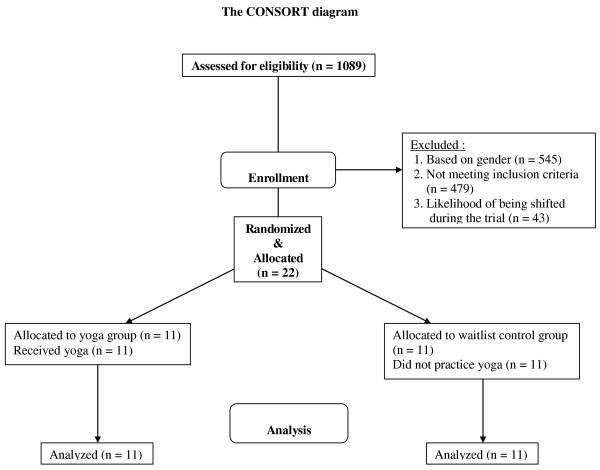
BACKGROUND: An earlier study showed that a week of yoga practice was useful in stress management after a natural calamity. Due to heavy rain and a rift on the banks of the Kosi river, in the state of Bihar in north India, there were floods with loss of life and property. A week of yoga practice was given to the survivors a month after the event and the effect was assessed. METHODS: Twenty-two volunteers (group average age +/- S.D, 31.5 +/- 7.5 years; all of them were males) were randomly assigned to two groups, yoga and a non-yoga wait-list control group. The yoga group practiced yoga for an hour daily while the control group continued with their routine activities. Both groups' heart rate variability, breath rate, and four symptoms of emotional distress using visual analog scales, were assessed on the first and eighth day of the program. RESULTS: There was a significant decrease in sadness in the yoga group (p < 0.05, paired t-test, post data compared to pre) and an increase in anxiety in the control group (p < 0.05, paired t-test, post data compared to pre). CONCLUSIONS: A week of yoga can reduce feelings of sadness and possibly prevent an increase in anxiety in flood survivors a month after the calamity. TRIAL REGISTRATION: Clinical Trials Registry of India: CTRI/2009/091/000285.
Overview
The claims and statistics of this paper haven’t been checked yet.
Free: it reads the open-access text and checks the first 5 claims that cite a source we can check. Create a free account to check every claim.
Integrity signals
Registry
Cites
Statistics
Figures
Verification
Claims the paper makes
The claims and statistics of this paper haven’t been checked yet.
Free: it reads the open-access text and checks the first 5 claims that cite a source we can check. Create a free account to check every claim.
Claims other papers make about this one
Each is checked against this paper’s own text: does it say what the citing paper says it does?
The source backs part of the claim, not all of it — or backs it for a different population, condition or comparison.
In the citing paper
“other yoga interventions for PTSD have employed rapid breathing and hyperventilation, but those interventions failed to elicit an increase in parasympathetic tone (Telles et al., 2010).”
From Maladaptive autonomic regulation in PTSD accelerates physiological aging (2015) · cites this paper as Telles et al., 2010
Experimental — accuracy not yet measuredIn the citing paper
“Yoga practices also decreased symptoms in PSTD after natural disasters (183, 184).”
From Vagus Nerve as Modulator of the Brain–Gut Axis in Psychiatric and Inflammatory Disorders (2018) · cites this paper as [184]
Self-check
Percentages, sums and reported differences re-computed from the paper’s own numbers.
The self-check needs the paper’s full text.
Citations
Cites
Baltosser, W. H., & Zar, J. H. (1996) · Ecology · doi:10.2307/2265725 · Cited by 35,166
Heart Rate Variability: Standards of Measurement, Physiological Interpretation, and Clinical Use
Electrophysiology, T. F. O. T. E. S. O. C. T. N. A. (1996) · Circulation · doi:10.1161/01.cir.93.5.1043 · Cited by 17,159
Heart rate variability: Standards of measurement, physiological interpretation, and clinical use
Malik, M., Bigger, J. T., Camm, A. J., Kleiger, R. E., Malliani, A., Moss, A. J., & Schwartz, P. J. (1996) · European Heart Journal · doi:10.1093/oxfordjournals.eurheartj.a014868 · Cited by 15,289
Mitchell, M. L., & Jolley, J. M. (1987) · Cited by 909
Software for advanced HRV analysis
Niskanen, J.-P., Tarvainen, M. P., Ranta-aho, P. O., & Karjalainen, P. A. (2004) · Computer Methods and Programs in Biomedicine · doi:10.1016/j.cmpb.2004.03.004 · Cited by 743 · cited 1×
“The data were analyzed using software developed by the Biomedical Signal Analysis Group, University of Kuopio, Finland [ 14 ].”
MethodLehrer, P. M., Vaschillo, E., & Vaschillo, B. (2000) · Applied Psychophysiology and Biofeedback · doi:10.1023/a:1009554825745 · Cited by 626 · cited 1×
“It was earlier shown that biofeedback training increased the amplitude of heart rate oscillations at approximately 0.1 Hz [ 40 ].”
BackgroundInfluentialHeart Rate Variability Biofeedback Increases Baroreflex Gain and Peak Expiratory Flow
Lehrer, P. M., Vaschillo, E., Vaschillo, B., Lu, S.-E., Eckberg, D. L., Edelberg, R., Shih, W. J., Lin, Y., Kuusela, T. A., Tahvanainen, K. U. O., et al. (2003) · Psychosomatic Medicine · doi:10.1097/01.psy.0000089200.81962.19 · Cited by 497 · cited 1×
“This is supported by acute increases in low frequency and total spectrum HRV and in vagal baroreflex gain, which is corrected by slow breathing periods with biofeedback [39].”
BackgroundMayou, R. A., Ehlers, A., & Hobbs, M. (2000) · British Journal of Psychiatry · doi:10.1192/bjp.176.6.589 · Cited by 475
Shalev, A. Y., Sahar, T., Freedman, S., Peri, T., Glick, N., Brandes, D., Orr, S. P., & Pitman, R. K. (1998) · Archives of General Psychiatry · doi:10.1001/archpsyc.55.6.553 · Cited by 429 · cited 1×
“This is particularly the case as previous studies have not demonstrated an increase in anxiety in untreated trauma survivors [25], or have shown an actual reduction in those treated with antianxiety medication [26] or group debriefing as an immediate effect of the session [27].”
ResultJanakiramaiah, N., Gangadhar, B. N., Naga Venkatesha Murthy, P. J., Harish, M. G., Subbakrishna, D. K., & Vedamurthachar, A. (2000) · Journal of Affective Disorders · doi:10.1016/s0165-0327(99)00079-8 · Cited by 384 · cited 1×
“Among yoga practices, Sudarshan Kriya yoga (SKY) is a technique which involves rhythmic hyperventilation at different rates of breathing [5].”
Method
Research works printed but not linked: 1
- Taimini IK The science of yoga 1986 Madras: The Theosophical Publishing House
Cited by
Vagus Nerve as Modulator of the Brain–Gut Axis in Psychiatric and Inflammatory Disorders
Breit, S., Kupferberg, A., Rogler, G., & Hasler, G. (2018) · Frontiers in Psychiatry · doi:10.3389/fpsyt.2018.00044 · Cited by 1,189
“Yoga practices also decreased symptoms in PSTD after natural disasters (183, 184).”
BackgroundStreeter, C. C., Gerbarg, P. L., Saper, R. B., Ciraulo, D. A., & Brown, R. P. (2012) · Medical Hypotheses · doi:10.1016/j.mehy.2012.01.021 · Cited by 694
“Controlled studies have demonstrated that yoga practices decreased symptoms in PSTD, Obsessive Compulsive Disorder, Generalized Anxiety Disorder, Panic Disorder, and anxiety after natural disasters [29,30,98–100].”
BackgroundYoga as an Adjunctive Treatment for Posttraumatic Stress Disorder: A Randomized Controlled Trial
van der Kolk, B. A., Stone, L., West, J., Rhodes, A., Emerson, D., Suvak, M., & Spinazzola, J. (2014) · The Journal of Clinical Psychiatry · doi:10.4088/jcp.13m08561 · Cited by 389
A systematic review of randomised control trials on the effects of yoga on stress measures and mood
Pascoe, M. C., & Bauer, I. E. (2015) · Journal of Psychiatric Research · doi:10.1016/j.jpsychires.2015.07.013 · Cited by 366
Cheema, B. S., Houridis, A., Busch, L., Raschke-Cheema, V., Melville, G. W., Marshall, P. W., Chang, D., Machliss, B., Lonsdale, C., Bowman, J., et al. (2013) · BMC Complementary and Alternative Medicine · doi:10.1186/1472-6882-13-82 · Cited by 281
“[29] investigated the effect of a hatha”
Yoga and heart rate variability: a comprehensive review of the literature
Cohen, M., & Tyagi, A. (2016) · International Journal of Yoga · doi:10.4103/0973-6131.183712 · Cited by 269
“[21,43] Improvements in high frontal coherence with TM[44] and improvements in quality of life,[87] flexibility,[88] and mood[86] with various”
BackgroundMethodBreathing Practices for Treatment of Psychiatric and Stress-Related Medical Conditions
Brown, R. P., Gerbarg, P. L., & Muench, F. (2013) · Psychiatric Clinics of North America · doi:10.1016/j.psc.2013.01.001 · Cited by 196
The Safety of Yoga: A Systematic Review and Meta-Analysis of Randomized Controlled Trials
Cramer, H., Ward, L., Saper, R., Fishbein, D., Dobos, G., & Lauche, R. (2015) · American Journal of Epidemiology · doi:10.1093/aje/kwv071 · Cited by 207
A Pilot Study of a Randomized Controlled Trial of Yoga as an Intervention for PTSD Symptoms in Women
Mitchell, K. S., Dick, A. M., DiMartino, D. M., Smith, B. N., Niles, B., Koenen, K. C., & Street, A. (2014) · Journal of Traumatic Stress · doi:10.1002/jts.21903 · Cited by 168
“patterns when the yoga and control groups were analyzed separately (Telles et al., 2010).”
ResultCharacteristics of randomized controlled trials of yoga: A bibliometric analysis
Cramer, H., Lauche, R., & Dobos, G. (2014) · BMC Complementary and Alternative Medicine · doi:10.1186/1472-6882-14-328 · Cited by 176
“The final analysis was conducted on 366 fulltext articles [135-500] reporting 312 RCTS with a total of 22,548 participants (Figure 1).”
BackgroundYoga for prenatal depression: a systematic review and meta-analysis
Gong, H., Ni, C., Shen, X., Wu, T., & Jiang, C. (2015) · BMC Psychiatry · doi:10.1186/s12888-015-0393-1 · Cited by 150
“Yoga intervention also plays a vital role in preventing mental disorders such as refractory epilepsy [28], schizophrenia [29], feelings of sadness [30], depression and anxiety disorders [23].”
BackgroundMind-Body Practices for Posttraumatic Stress Disorder
Kim, S. H., Schneider, S. M., Kravitz, L., Mermier, C., & Burge, M. R. (2013) · Journal of Investigative Medicine · doi:10.2310/jim.0b013e3182906862 · Cited by 152
“Heart rate variability is the cyclic beat-to-beat variation in heart rate generated by the interplay between sympathetic and parasympathetic neural activity at the sinus node of the heart.4 It is used as an index to measure changes in the ANS,29 and is a reliable marker of vagal (parasympathetic) activity of the heart…”
BackgroundMethodInfluentialCramer, H., Lauche, R., Langhorst, J., & Dobos, G. J. (2016) · Complementary Therapies in Medicine · doi:10.1016/j.ctim.2016.02.015 · Cited by 194
Managing Mental Health Disorders Resulting from Trauma through Yoga: A Review
Telles, S., Singh, N., & Balkrishna, A. (2012) · Depression Research and Treatment · doi:10.1155/2012/401513 · Cited by 111
“From the larger sample of 1289 persons, a small sample of 22 persons (with an age range of 20 to 40 years) were selected based on their willingness to participate in the trial and randomized as two groups, a yoga group and a control group who continued with their regular activities [18].”
BackgroundSelf-citationFerreira-Vorkapic, C., Feitoza, J. M., Marchioro, M., Simões, J., Kozasa, E., & Telles, S. (2015) · Evidence-Based Complementary and Alternative Medicine · doi:10.1155/2015/345835 · Cited by 101
“These techniques seem to have specific influences on one’s psychological state [2, 3] and the research on the psychophysiological benefits of yoga and meditation on adults has demonstrated improvements in emotional selfregulation with consequent reductions in depression, stress, anxiety levels [2–11] and posttraumatic…”
BackgroundSelf-citationMaladaptive autonomic regulation in PTSD accelerates physiological aging
Williamson, J. B., Porges, E. C., Lamb, D. G., & Porges, S. W. (2015) · Frontiers in Psychology · doi:10.3389/fpsyg.2014.01571 · Cited by 116
“In a recent laboratory sleep study, 13 veterans www.frontiersin.org January 2015 | Volume 5 | Article 1571 | 5 with PTSD were compared to 17 trauma-exposed controls and 15 healthy controls (van Liempt et al., 2013).”
BackgroundMethodDick, A. M., Niles, B. L., Street, A. E., DiMartino, D. M., & Mitchell, K. S. (2014) · Journal of Clinical Psychology · doi:10.1002/jclp.22104 · Cited by 112
“…an intervention for PTSD or other psychological disorders have focused on possible biological mechanisms through which it may exert its effect (Streeter et al., 2012; Telles et al., 2010; van der Kolk, 2006); only one investigation measured the effects of yoga on mindfulness (Shelov et al., 2009).”
BackgroundBangpan, M., Felix, L., & Dickson, K. (2019) · BMJ Global Health · doi:10.1136/bmjgh-2019-001484 · Cited by 108
“47 Two of the three studies showed a non-significant unintended impact of yoga 55 and counselling interventions on emotional problems when compared with the control groups 49 (figure 6).”
Profile of mood states and stress-related biochemical indices in long-term yoga practitioners
Yoshihara, K., Hiramoto, T., Sudo, N., & Kubo, C. (2011) · BioPsychoSocial Medicine · doi:10.1186/1751-0759-5-6 · Cited by 114
“In addition, a week of yoga practice prevented an increase in anxiety among flood survivors [37].”
BackgroundYoshihara, K., Hiramoto, T., Oka, T., Kubo, C., & Sudo, N. (2014) · BioPsychoSocial Medicine · doi:10.1186/1751-0759-8-1 · Cited by 85
“Yoga has been reported to be effective with respect to negative psychological symptoms, such as anxiety [3,27-29], anger/hostility [29], and depression [29-31].”
BackgroundYoga Training Improves Metabolic Parameters in Obese Boys
Seo, D. Y., Lee, S., Figueroa, A., Kim, H. K., Baek, Y. H., Kwak, Y. S., Kim, N., Choi, T. H., Rhee, B. D., Ko, K. S., et al. (2012) · The Korean Journal of Physiology & Pharmacology · doi:10.4196/kjpp.2012.16.3.175 · Cited by 90
“The physiological effects of yoga training that have been previously reported include the inhibition of body weight gain, reductions in cholesterol levels, and blood pressure, and improvement in immune function as well as beneficial psychological effects [34-39].”
BackgroundClark, C. J., Lewis-Dmello, A., Anders, D., Parsons, A., Nguyen-Feng, V., Henn, L., & Emerson, D. (2014) · Complementary Therapies in Clinical Practice · doi:10.1016/j.ctcp.2014.04.003 · Cited by 85
Tosh, G., Soares-Weiser, K., & Adams, C. E. (2011) · Dialogues in Clinical Neuroscience · doi:10.31887/dcns.2011.13.2/gtosh · Cited by 84
“We searched the Cochrane Schizophrenia Group Trials Register and Medline (November 2010) for references of RCT protocols and chose a random sample of 10 protocols dealing with schizophrenia, depression, post-traumatic stress disorders, and psychiatric rehabilitation.(11-19) C l i n i c a l r e s e a r c h”
Complementary and alternative medicine approaches in the treatment of PTSD
Wynn, G. H. (2015) · Current Psychiatry Reports · doi:10.1007/s11920-015-0600-2 · Cited by 71
Gilmoor, A. R., Adithy, A., & Regeer, B. J. (2019) · Frontiers in Psychiatry · doi:10.3389/fpsyt.2019.00439 · Cited by 78
“(60) use the symptoms anxiety, fear, disturbed sleep, and sadness as indicators for PTSD (60).”
BackgroundMethodInfluentialClaiming peaceful embodiment through yoga in the aftermath of trauma
Rhodes, A. M. (2015) · Complementary Therapies in Clinical Practice · doi:10.1016/j.ctcp.2015.09.004 · Cited by 74
Comparison groups in yoga research: A systematic review and critical evaluation of the literature
Park, C. L., Groessl, E., Maiya, M., Sarkin, A., Eisen, S. V., Riley, K., & Elwy, A. R. (2014) · Complementary Therapies in Medicine · doi:10.1016/j.ctim.2014.08.008 · Cited by 58
Post-Traumatic Stress Disorder among the Flood Affected Population in Indian Subcontinent
Asim, M., Mekkodathil, A. A., Sathian, B., Elayedath, R., Rajeev Kumar, N., Simkhada, P. P., & van Teijlingen, E. (2019) · Nepal Journal of Epidemiology · doi:10.3126/nje.v9i1.24003 · Cited by 62
“A randomized controlled trial (RCT) was conducted by the Telles and others [19] investigated the effects of yoga among the survivors of flood in Bihar one month after the event.”
BackgroundNguyen‐Feng, V. N., Clark, C. J., & Butler, M. E. (2019) · Psychological Services · doi:10.1037/ser0000191 · Cited by 63
Yoga for Heart Rate Variability: A Systematic Review and Meta-analysis of Randomized Clinical Trials
Posadzki, P., Kużdżał, A., Lee, M. S., & Ernst, E. (2015) · Applied Psychophysiology and Biofeedback · doi:10.1007/s10484-015-9291-z · Cited by 66
“4 %) reported the incidence rates of adverse effects (AEs); all of themmentioned that noAEs had occurred (Cheema et al. 2013; Kanojia et al. 2013; Telles et al. 2010).”
BackgroundInfluentialYoga Meets Intelligent Internet of Things: Recent Challenges and Future Directions
Pal, R., Adhikari, D., Heyat, M. B. B., Ullah, I., & You, Z. (2023) · Bioengineering · doi:10.3390/bioengineering10040459 · Cited by 62
“[41] found that pranayama and yoga were effective in managing mental health disorders resulting from trauma.”
BackgroundMukdarut, B., Chiumento, A., Dickson, K., & Felix, L. (2017) · doi:10.21201/2017.8937 · Cited by 40
Vorkapic, C. F., & Rangé, B. (2014) · Frontiers in Psychiatry · doi:10.3389/fpsyt.2014.00177 · Cited by 57
“Such improvements in mood, anxiety, quality of life, and mental health in general after the practice of contemplative techniques were also observed in many studies and are well established in the literature (8, 22, 25, 34, 37, 39, 40, 42, 45, 55).”
BackgroundResultSharma, M., & Haider, T. (2013) · Journal of Evidence-Based Complementary & Alternative Medicine · doi:10.1177/2156587212460046 · Cited by 40
Integrating Yoga with Psychotherapy: A Complementary Treatment for Anxiety and Depression.
Forfylow, A. L. (2011) · Canadian Journal of Counselling and Psychotherapy · Cited by 44
Yoga for COVID-19 and natural disaster related mental health issues: Challenges and perspectives
Ransing, R. S., da Costa, M. P., Adiukwu, F. N., Grandinetti, P., Teixeira, A. L. S., Kılıç, Ö., Soler‐Vidal, J., & Ramalho, R. (2020) · Asian Journal of Psychiatry · doi:10.1016/j.ajp.2020.102386 · Cited by 42
Þórðardóttir, K., Guðmundsdóttir, R., Zoëga, H., Valdimarsdóttir, U. A., & Guðmundsdóttir, B. (2014) · Complementary Therapies in Medicine · doi:10.1016/j.ctim.2014.01.008 · Cited by 41
Performance in a Substitution Task and State Anxiety following Yoga in Army Recruits
Telles, S., Bhardwaj, A. K., Kumar, S., Kumar, N., & Balkrishna, A. (2012) · Psychological Reports · doi:10.2466/13.02.16.20.pr0.110.3.963-976 · Cited by 36
Self-citationPriyanka, & Rasania, S. K. (2021) · Journal of Family Medicine and Primary Care · doi:10.4103/jfmpc.jfmpc_2367_20 · Cited by 36
Variabilité de la fréquence cardiaque : un marqueur de risque cardiométabolique en santé publique
Marsac, J. (2013) · Bulletin de l Académie Nationale de Médecine · doi:10.1016/s0001-4079(19)31635-8 · Cited by 46
Effect of Yoga on obesity, hypertension and lipid profile
Gadham, J., Sajja, S., & Rooha, V. (2015) · International Journal of Research in Medical Sciences · doi:10.5455/2320-6012.ijrms20150506 · Cited by 33
Oxygen Consumption Changes With Yoga Practices: A Systematic Review
Tyagi, A., & Cohen, M. M. (2013) · Journal of Evidence-Based Complementary & Alternative Medicine · doi:10.1177/2156587213492770 · Cited by 38
“Yoga practices have also been reported to improve many clinical conditions such as anxiety,(51-53) depression,(53,54) negative mood states,(55-58) and posttraumatic stress disorder (PTSD) symptoms in war veteran,(59-61) tsunami survivors,(62,63) hurricane refugees,(64) and flood survivors.(65) Furthermore, 2 reviews,…”
BackgroundRole of Ayurveda and Yoga-Based lifestyle in the COVID-19 pandemic – A narrative review
Chikkanna, U., Ramakrishna, K. K., Jasti, N., Bhargav, H., & Varambally, S. S. (2021) · Journal of Ayurveda and Integrative Medicine · doi:10.1016/j.jaim.2021.07.009 · Cited by 40
“There are evidences on the efficacy of Yoga in previous similar natural disasters [76,77].”
BackgroundQuestioning Psychosocial Resilience After Flooding and the Consequences for Disaster Risk Reduction
Crabtree, A. (2013) · Social Indicators Research · doi:10.1007/s11205-013-0297-8 · Cited by 31
“This included singing songs to Goddess Kosi, and yoga lessons by one of India’s most famous yoga gurus Baba Ramdev who came by fleetingly and, later, his followers (see also Telles et al. 2010 on the positive effects of yoga and psychosocial interventions following the Kosi flood).”
BackgroundShreevastav, B. B., Tiwari, K. R., Mandal, R. A., & Nepal, A. (2021) · Progress in Disaster Science · doi:10.1016/j.pdisas.2021.100199 · Cited by 29
Rand, S. E., Fishman, L. M., Halstead-Kenny, J., & Wainapel, S. F. (2015) · International Journal of General Medicine · doi:10.2147/ijgm.s66290 · Cited by 36
“Here, too, yoga’s action is partly mediated by the vagus nerve.(44)”
BackgroundNejadghaderi, S. A., Mousavi, S. E., Fazlollahi, A., Asghari, K. M., & Garfin, D. R. (2024) · Psychiatry Research · doi:10.1016/j.psychres.2024.116098 · Cited by 37
“S.A. Nejadghaderi et al. Psychiatry Research 340 (2024) 116098 2012; Telles et al., 2010), two were not designed as RCTs (Lang et al., 2021b; Thordardottir et al., 2014), and one study used treatment strategies other than yoga (Polusny et al., 2015).”
Yoga in the management of anxiety disorders
Joshi, A. M., & Sousa, A. D. (2012) · Sri Lanka Journal of Psychiatry · doi:10.4038/sljpsyc.v3i1.4452 · Cited by 26
“A study has also concluded that yoga prevented an increase in anxiety among flood survivors with just a week of yoga practice (52).”
BackgroundKelly, U. A., Evans, D. D., Baker, H., & Taylor, J. N. (2017) · Biological Research For Nursing · doi:10.1177/1099800417739152 · Cited by 28
Sleep management in posttraumatic stress disorder: a systematic review and meta-analysis
Maher, A. R., Apaydin, E. A., Hilton, L. G., Chen, C., Troxel, W., Hall, O., Azhar, G. S., Larkin, J., Motala, A., & Hempel, S. (2021) · Sleep Medicine · doi:10.1016/j.sleep.2021.08.016 · Cited by 25
Brown, J. L. C., Eubanks, C., & Keating, A. (2016) · Social Work in Mental Health · doi:10.1080/15332985.2016.1220441 · Cited by 22
Mass Disasters and Mind-Body Solutions: Evidence and Field Insights
Gerbarg, P. L., Wallace, G., & Brown, R. (2011) · International Journal of Yoga Therapy · doi:10.17761/ijyt.21.1.gn36102834522n07 · Cited by 25
Jones, S. M. W., Guthrie, K. A., Reed, S. D., Landis, C. A., Sternfeld, B., LaCroix, A. Z., Dunn, A. L., Burr, R. L., & Newton, K. M. (2016) · Complementary Therapies in Medicine · doi:10.1016/j.ctim.2016.03.001 · Cited by 31
Semerci, M., & Uzun, S. (2023) · Asian Journal of Psychiatry · doi:10.1016/j.ajp.2023.103615 · Cited by 23
The effects of fast and slow yoga breathing on cerebral and central hemodynamics
Bellissimo, G. F., Zuhl, M., Leslie, E., & Maestas, V. (2020) · International Journal of Yoga · doi:10.4103/ijoy.ijoy_98_19 · Cited by 20
Lin, X., Zheng, J., Zhang, Q., & Li, Y. (2024) · Mental health and physical activity · doi:10.1016/j.mhpa.2024.100587 · Cited by 22
Pragmatic design in randomized controlled trials
Purgato, M., Barbui, C., Stroup, S., & Adams, C. (2015) · Psychological Medicine · doi:10.1017/s0033291714001275 · Cited by 19
“Scoring trial protocols estimating degrees of pragmatisma Study acronym Reference Score ACHIEVE Casagrande et al. (2010) 16 Explanatory Pragmatic ERP Lobban et al. (2007) 18 DYD Murray et al. (2007) 19 PTSD –Yoga Telles et al. (2010) 22 CATIE Stroup et al. (2003) 25 FIAT Priebe et al. (2009) 42 TREC-SAVE Huf et al. (2…”
Majumder, J., Saha, I., Bagepally, B. S., Kalita, M., Munikrishnappa, D., Ray, S., Saha, A., & Chakrabarti, A. (2024) · Indian Journal of Psychiatry · doi:10.4103/indianjpsychiatry.indianjpsychiatry_348_24 · Cited by 19
“Among seven flood studies, [43,64,75,83,106,150,153] one study from Bihar, India, [43] reported that 100% participants saw loss of their kins.”
Sornborger, J., Fann, A. V., Serpa, J. G., Ventrelle, J., n, M. S.-R., Foynes, M. M., Carleton, M. E., Sherrill, A. M., Kao, L., Jakubovic, R. J., et al. (2017) · FOCUS The Journal of Lifelong Learning in Psychiatry · doi:10.1176/appi.focus.20170026 · Cited by 19
Davis, A. A., Zachry, C. E., & Berke, D. S. (2021) · Mental health and physical activity · doi:10.1016/j.mhpa.2021.100401 · Cited by 19
Thapa, S., Giri, S., & Ross, A. G. (2025) · Communications Medicine · doi:10.1038/s43856-025-01089-x · Cited by 17
Yoga, Sexual Violation and Discourse: Reconfigured Hegemonies and Feminist Voices
Black, S. (2020) · Australian Feminist Studies · doi:10.1080/08164649.2020.1775067 · Cited by 14
Durrani, S., Contreras, J., Mallaiah, S., Cohen, L. G., & Milbury, K. (2019) · Integrative Cancer Therapies · doi:10.1177/1534735419866923 · Cited by 14
“While natural disasters including hurricanes tend to be an overwhelming if not traumatic experience, previous research suggests that yoga interventions reduce acute stress symptoms in individuals who experienced floods and earthquakes.(40-42) Building on this research, we were interested in the experiences of a small,…”
BackgroundYoga as an intervention for PTSD: a theoretical rationale and review of the literature
Wells, S. Y., Lang, A. J., Schmalzl, L., Groessl, E. J., & Strauss, J. L. (2016) · Current Treatment Options in Psychiatry · doi:10.1007/s40501-016-0068-7 · Cited by 13
The Role of Alternate Nostril Breathing (Anuloma Viloma) Technique in Regulation of Blood Pressure
Kanorewala, B., & Suryawanshi, Y. C. (2022) · Asian Pacific Journal of Health Sciences · doi:10.21276/apjhs.2022.9.2.12 · Cited by 17
Is yoga a suitable treatment for rheumatoid arthritis: current opinion
Telles, S., & Singh, N. (2012) · Open Access Journal of Sports Medicine · doi:10.2147/oajsm.s25707 · Cited by 15
Self-citationGroll, D., Charbonneau, D., Bélanger, S. A. H., & Senyshyn, S. (2016) · Journal of Military Veteran and Family Health · doi:10.3138/jmvfh.3541 · Cited by 11
Yoga at Primary Health Centers – A Pathway to Holistic Health: Narrative Review
Gupta, P. (2024) · International Journal of Yoga · doi:10.4103/ijoy.ijoy_106_24 · Cited by 15
“[12,18] It has also been shown to aid in the restoration of psychological function and mental equilibrium in patients suffering from posttraumatic stress disorder, [61] as well as some psychotic illnesses.”
BackgroundAcute Effects of Yin Yoga and Aerobic Exercise on Anxiety
Winroth, D., Hassmén, P., & Christopher, J. (2019) · Cross Connect (Southern Cross University) · Cited by 20
Breath-focused mind-body therapy for global mental health: war and other mass disasters
Gerbarg, P. L., & Brown, R. P. (2024) · Academia Mental Health and Well-Being · doi:10.20935/mhealthwellb6198 · Cited by 10
Posttraumatic Stress Disorder (PTSD)
Kearney, D. J., Martinez, M. E., & Simpson, T. L. (2017) · Elsevier eBooks · doi:10.1016/b978-0-323-35868-2.00010-4 · Cited by 11
Health interventions implemented in post-disaster South Asia: A scoping review
Masood, Z., Moise, I. K., Spika, V., & Ramaprasad, J. (2021) · International Journal of Disaster Risk Reduction · doi:10.1016/j.ijdrr.2021.102419 · Cited by 9
Self-Care Mindfulness Approaches for Refractory Posttraumatic Stress Disorder
Khusid, M. A. (2013) · Psychiatric Annals · doi:10.3928/00485713-20130703-11 · Cited by 9
Understanding Depression as It Occurs in the Context of Post-Traumatic Stress Disorder
Yehuda, R., Vermetten, E. H. G. J. M., & McFARLANE, A. C. (2012) · Depression Research and Treatment · doi:10.1155/2012/178261 · Cited by 10
“[18] D.”
BackgroundAlternative Medicine: New Ways to Treat Diseases and Therapies
RAO, M. T., YAMINI, M., PHANINDRA, C., & RAO, Y. S. (2021) · Indian Journal of Pharmaceutical Sciences · doi:10.36468/pharmaceutical-sciences.744 · Cited by 8
“Sudarshankriya yoga helps in rhythmic breathing techniques performed within sitting posture eyes and mouth kept closed[45].”
BackgroundScoping Review of PTSD Treatments for Natural Disaster Survivors
Nanduri, A., Vasquez, M., Veluri, S. C., & Ranjbar, N. E. (2023) · Health Psychology Research · doi:10.52965/001c.89642 · Cited by 11
Role of yoga therapy on lipid profile in patients of hypertension and prehypertension
Mahesh, N. K., Kumar, A., Bhat, K. G., & Verma, N. (2018) · International Journal of Advances in Medicine · doi:10.18203/2349-3933.ijam20180945 · Cited by 8
Beranbaum, S., & D'Andrea, W. M. (2023) · Violence Against Women · doi:10.1177/10778012231203002 · Cited by 8
Pradhan, B., & Kumar, N. (2017) · International Journal of Yoga - Philosophy Psychology and Parapsychology · doi:10.4103/ijny.ijoyppp_9_16 · Cited by 9
Yoga and Rehabilitation: Physical, Psychological, and Social
Telles, S., Kozasa, E. H., Bernardi, L., & Cohen, M. M. (2013) · Evidence-based Complementary and Alternative Medicine · doi:10.1155/2013/624758 · Cited by 11
“With regard to psychological rehabilitation, yoga practice has helped restore the psychological function and mental equilibrium in persons with posttraumatic stress disorder [11] and even certain psychotic conditions [12].”
BackgroundSelf-citationNutrition crisis management after floods: A multisectoral perspective
Rakha, A., Jabbar, A., Rasheed, H., Tul‐Muntaha, S., Munir, A., Fatima, A., Anwar, R., Sohail, M., & Aadil, R. M. (2024) · International Journal of Disaster Risk Reduction · doi:10.1016/j.ijdrr.2024.105141 · Cited by 7
Szaszkó, B., Tschenett, H., Ansorge, U., & Nater, U. M. (2024) · Psychoneuroendocrinology · doi:10.1016/j.psyneuen.2024.107191 · Cited by 6
“Both of the aforementioned studies targeted specific populations, and several other studies (e.g., Banerjee et al., 2007; Telles et al., 2010) focused on clinical populations.”
Garfin, D. R., Cipres, A. L., & Reyes, R. M. (2021) · doi:10.15406/ijcam.2021.14.00534 · Cited by 6
Study on Yoga Practices and Biochemical, Physical and Physiological Alterations
Kumar, P., Agrawal, R., Bhagat, R., Yadav, M., Agrawaal, A., & Sharma, P. (2021) · Journal of Datta Meghe Institute of Medical Sciences University · doi:10.4103/jdmimsu.jdmimsu_395_21 · Cited by 5
Menezes, C. B., Bizarro, L., & Telles, S. (2013) · Temas em Psicologia · doi:10.9788/tp2013.2-09 · Cited by 5
Self-citationYoga for Preventive, Curative, and Promotive Health and Performance
Saha, M., Halder, K., Tomar, O. S., Pathak, A., & Pal, R. (2014) · Springer eBooks · doi:10.1007/978-81-322-1928-6_14 · Cited by 6
Gerbarg, P. L., Brown, R. P., Mansur, S., & Steidle, G. K. (2021) · Springer eBooks · doi:10.1007/978-3-030-57296-9_130 · Cited by 6
Mutual learning and research messages: India, UK, and Europe
Bhugra, D., & Kalra, G. (2010) · Indian Journal of Psychiatry · doi:10.4103/0019-5545.69211 · Cited by 6
“[48] Recent research has highlighted the effects of yoga in chronic pain, [49] low back pain, [50,51] enhancing brain function, [52] resiliency to stress, [53,54] and the overall well-being and optimism in healthy populations, [55,56] improving sleep in the institutionalized elderly, [57]…”
Exploring the pharmacological and pharmacotherapeutic effects of yoga
Parasuraman, S., Wen, L. E., Zhen, K. M., Hean, C. K., & Sam, A. T. (2015) · Pharmacology Toxicology and Biomedical Reports · doi:10.5530/ptb.2016.1.2 · Cited by 4
Rhythms of Recovery: Integrative Medicine for PTSD and Complex Trauma
Korn, L. E. (2023) · Routledge eBooks · doi:10.4324/9781003231455 · Cited by 4
Bhagat, A., Srivastav, S., Malhotra, A. S., Rohilla, R., Sidana, A. K., & Deepak, K. K. (2023) · Annals of Neurosciences · doi:10.1177/09727531231169629 · Cited by 3
Pascoe, M. C., & Parker, A. G. (2022) · Elsevier eBooks · doi:10.1016/b978-0-323-89843-0.00022-2 · Cited by 4
Yoga therapy and the health of refugees
Gopalkrishnan, N. (2012) · ResearchOnline at James Cook University (James Cook University) · Cited by 6
Explorations of Wellness and Resilience: A Yoga Intervention for Post-traumatic Stress
Jindani, F. (2014) · TSpace (University of Toronto) · Cited by 5
Bonano-Broussard, D., Simmons, R., & Ager, R. D. (2023) · Social Work in Mental Health · doi:10.1080/15332985.2023.2201366 · Cited by 2
“…Segell, & Higgins, 2021; Mitchell et al., 2014), natural disaster survivors (Descilo et al., 2010; Dick, Niles, Street, DiMartino, & Mitchell, 2014; Telles, Singh, Joshi, & Balkrishna, 2010), and for stress related to the COVID-19 pandemic (Davis et al., 2020; Umesh, Ramakrishna, Jasti, Bhargav, &…”
Mental Health Consequences of Disasters and Their Management: Current Status in India
Kar, N. (2026) · Springer eBooks · doi:10.1007/978-981-95-3690-0_5 · Cited by 2
Ranjbar, M., Abdolalipour, S., Payne, E., Hassanzadeh, R., Maghalian, M., & Mirghafourvand, M. (2026) · Best Practice & Research Clinical Obstetrics & Gynaecology · doi:10.1016/j.bpobgyn.2026.102730 · Cited by 4
Steele, S., Williamson-Reisdorph, C. M., Dybdal, L., & Quindry, J. C. (2021) · Journal of Human Sport and Exercise · doi:10.14198/jhse.2022.173.10 · Cited by 3
“In this regard, some, but not all, studies with a small sample size (n = < 40) also report a less consistent change in HRV measures (Bidwell, Yazel, Davin, Fairchild, & Kanaley, 2012; Bowman et al., 1997; Cheema et al., 2013; Telles et al., 2010).”
Resultde Carvalho, M. L. N., & Rossi, F. (2021) · Debates em educação · doi:10.28998/2175-6600.2021v13n31p323-340 · Cited by 2
Metadata
- Authors
- Telles, S., Singh, N., Joshi, M., & Balkrishna, A.
- Corresponding author
- Telles, Shirley
- Venue
- BMC Psychiatry
- Published
- 2010-03-02
- Volume
- 10
- Issue
- 1
- Pages
- 18-18
- ISSN
- 1471-244X (ISSN-L)
- PMC
- PMC2836997
- OpenAlex
- W1981998085
- Cited by
- 131
- References
- 47
- Citations by year
- 2026: 5 · 2025: 5 · 2024: 8 · 2023: 8 · 2022: 5 · 2021: 14 · 2020: 6 · 2019: 8 · 2018: 6 · 2017: 7 · 2016: 7 · 2015: 13 · 2014: 14 · 2013: 9 · 2012: 10
- FWCI
- 8.76
- Type
- journal article
- Language
- en
- Open access
- gold
- doi.org
- Licence
- cc-by
- creativecommons.org/licenses/by/2.0 (tdm)
- Locations
- BMC Psychiatry (publishedVersion, cc-by)
- PubMed Central (publishedVersion, cc-by)
- PubMed (publishedVersion)
- DOAJ (DOAJ: Directory of Open Access Journals) (submittedVersion, cc-by-sa)
- Topics
- Social Sciences › Psychology › Clinical Psychology › Posttraumatic Stress Disorder Research
- Social Sciences › Psychology › Clinical Psychology › Mindfulness and Compassion Interventions
- Health Sciences › Medicine › Cardiology and Cardiovascular Medicine › Heart Rate Variability and Autonomic Control
- Keywords
- yoga, posttraumatic stress symptoms, heart rate variability, flood survivors, natural disasters, anxiety, sadness, emotional distress, Bihar
- MeSH terms
- Adult, Heart Rate, Humans, India, Male, Pain Measurement, Research Design, Stress Disorders, Post-Traumatic, Stress, Psychological, Waiting Lists, Yoga, Treatment Outcome, Survivors, Floods, Respiratory Rate
About these checks
Registry, retraction, Cites and statistics results are computed, not judged, with one exception: a printed reference that no index lists is read once by a model before it counts as a citation error. Claims are extracted by a model and kept only when their quote appears verbatim in the text; each cited source is then checked, with a model’s help, for whether it says what the claim relies on. Those verdicts can be wrong — read the claim’s quote and the cited source before relying on one.
Statistics and arithmetic are recomputed, not judged.
Confidence bands are shown only for fields calibrated on our annotated test set. None is calibrated yet, so no band is shown.
What counts as a claim ›How we measure confidence ›How we check this ›
Are you an author, or do you see a problem with this page? Request a review
Data sources
Bibliographic data: Semantic Scholar, OpenAlex, Crossref.
Contains information from the Semantic Scholar Academic Graph Datasets, made available under the ODC Attribution License (ODC-BY 1.0).
Semantic Scholar’s data is described in: Kinney, R., et al. (2023). The Semantic Scholar Open Data Platform. arXiv:2301.10140.
