

The global distribution of fatal pesticide self-poisoning: Systematic review
Open accessThe DOI matches its Crossref record; 100 of the 102 references it cites were found in a registry or an index.
Abstract
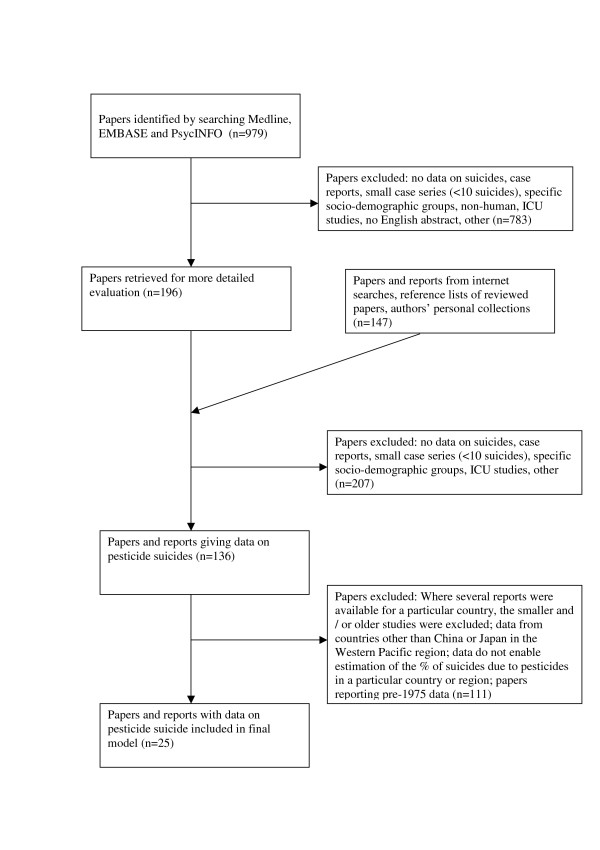
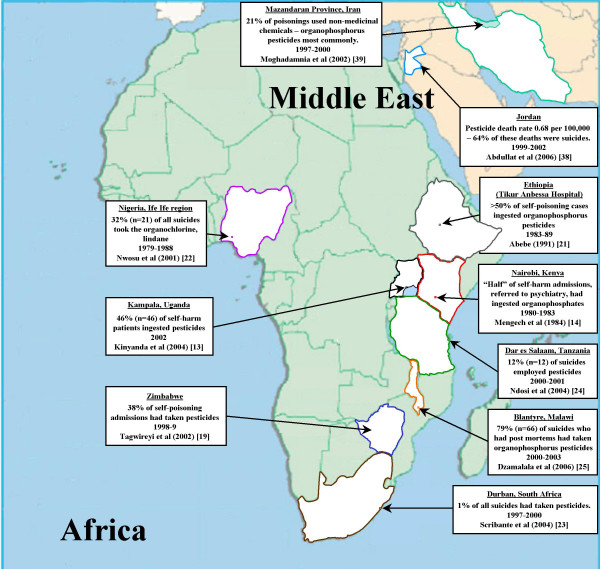
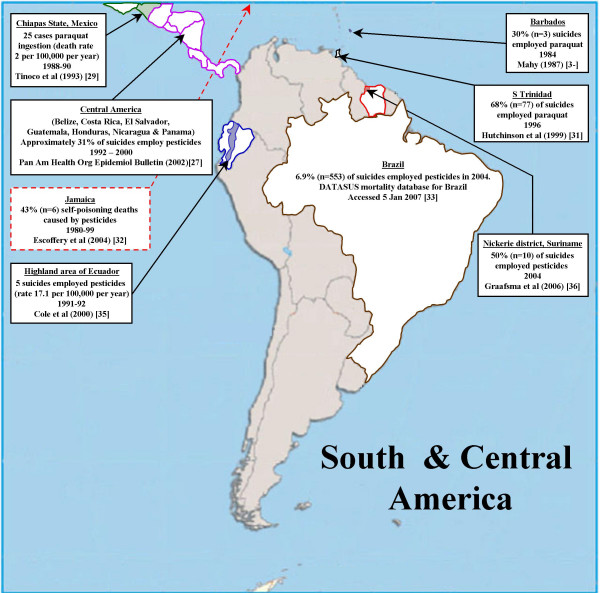
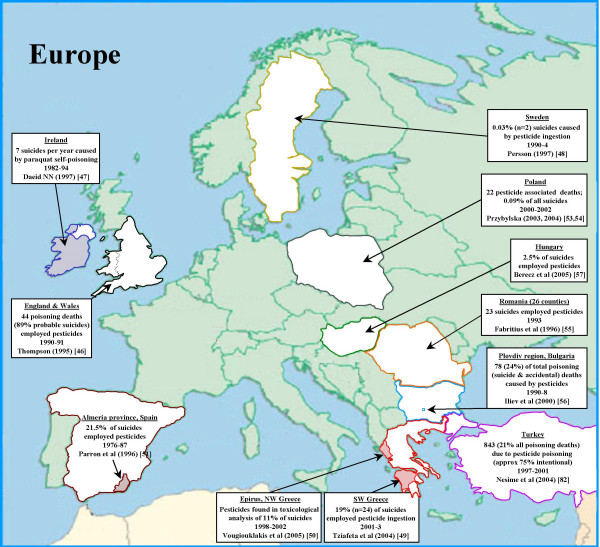
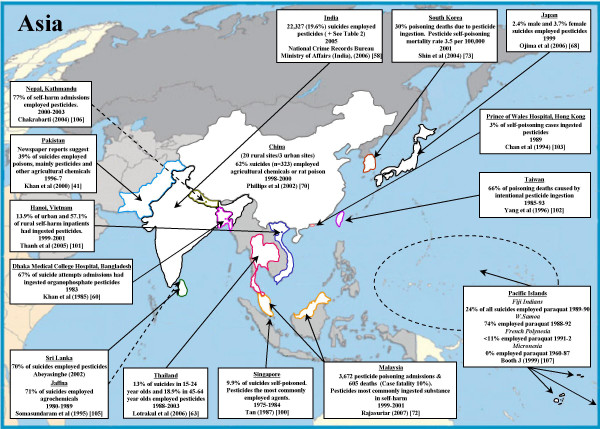
Background: Evidence is accumulating that pesticide self-poisoning is one of the most commonly used methods of suicide worldwide, but the magnitude of the problem and the global distribution of these deaths is unknown. Methods: We have systematically reviewed the worldwide literature to estimate the number of pesticide suicides in each of the World Health Organisation's six regions and the global burden of fatal self-poisoning with pesticides. We used the following data sources: Medline, EMBASE and psycINFO (1990–2007), papers cited in publications retrieved, the worldwide web (using Google) and our personal collections of papers and books. Our aim was to identify papers enabling us to estimate the proportion of a country's suicides due to pesticide self-poisoning. Results: We conservatively estimate that there are 258,234 (plausible range 233,997 to 325,907) deaths from pesticide self-poisoning worldwide each year, accounting for 30% (range 27% to 37%) of suicides globally. Official data from India probably underestimate the incidence of suicides; applying evidence-based corrections to India's official data, our estimate for world suicides using pesticides increases to 371,594 (range 347,357 to 439,267). The proportion of all suicides using pesticides varies from 4% in the European Region to over 50% in the Western Pacific Region but this proportion is not concordant with the volume of pesticides sold in each region; it is the pattern of pesticide use and the toxicity of the products, not the quantity used, that influences the likelihood they will be used in acts of fatal self-harm. Conclusion: Pesticide self-poisoning accounts for about one-third of the world's suicides. Epidemiological and toxicological data suggest that many of these deaths might be prevented if (a) the use of pesticides most toxic to humans was restricted, (b) pesticides could be safely stored in rural communities, and (c) the accessibility and quality of care for poisoning could be improved.
Overview
The claims and statistics of this paper haven’t been checked yet.
Free: it reads the open-access text and checks the first 5 claims that cite a source we can check. Create a free account to check every claim.
Integrity signals
Registry
Cites
Statistics
Figures
Verification
Claims the paper makes
The claims and statistics of this paper haven’t been checked yet.
Free: it reads the open-access text and checks the first 5 claims that cite a source we can check. Create a free account to check every claim.
Claims other papers make about this one
Each is checked against this paper’s own text: does it say what the citing paper says it does?
The source backs part of the claim, not all of it — or backs it for a different population, condition or comparison.
In the citing paper
“Pesticide ingestion was employed in approximately one-third of suicides worldwide, mostly in rural Asia and Latin America.(138)”
From Improving Suicide Prevention Through Evidence-Based Strategies: A Systematic Review (2021) · cites this paper as [138]
Experimental — accuracy not yet measuredThe source backs part of the claim, not all of it — or backs it for a different population, condition or comparison.
In the citing paper
“Pesticides are highly lethal, the leading suicide method worldwide, and the decline in suicide deaths worldwide is largely due to restricting access to pesticides where those deaths happen, namely in rural China,(138, 158) India(129) and Sri Lanka.(159)”
From Improving Suicide Prevention Through Evidence-Based Strategies: A Systematic Review (2021) · cites this paper as [138]
Experimental — accuracy not yet measured
Self-check
Percentages, sums and reported differences re-computed from the paper’s own numbers.
The self-check needs the paper’s full text.
Citations
Cites
Risk factors for suicide in China: a national case-control psychological autopsy study
Phillips, M. R., Yang, G., Zhang, Y., Wang, L., Ji, H., & Zhou, M. (2002) · The Lancet · doi:10.1016/s0140-6736(02)11681-3 · Cited by 928 · cited 2×
“7%) 47,720 to 82,680 Western Pacific A 155 35,000 1,050 (3%) 1,050 to 1,050 [68] B 1,562 296,000 183,520 (62%) 171,680 to 195,360 [70] Sub-total (W Pacific) 331,000 184,570 (55.”
Self-citationPatterns and problems of deliberate self-poisoning in the developing world
Eddleston, M. (2000) · QJM · doi:10.1093/qjmed/93.11.715 · Cited by 828 · cited 1×
“OP insecticides appear to be the most commonly ingested pesticides in rural Asia, accounting for around two thirds of cases[77].”
Self-citationSuicide rates in China, 1995–99
Phillips, M. R., Li, X., & Zhang, Y. (2002) · The Lancet · doi:10.1016/s0140-6736(02)07954-0 · Cited by 800 · cited 10×
“In our internet searches we particularly focused on identifying data for those countries in each of the six WHO regions that are likely to make the greatest contribution to the world burden of pesticide suicides because of their large populations: Nigeria and Ethiopia (Africa); United States of America, Brazil and Mex…”
InfluentialSelf-citationSuicide by intentional ingestion of pesticides: a continuing tragedy in developing countries
Gunnell, D., & Eddleston, M. (2003) · International Journal of Epidemiology · doi:10.1093/ije/dyg307 · Cited by 643 · cited 3×
“Recent extrapolations of data from a few countries in Asia suggest that there may be 300,000 suicides by deliberate ingestion of pesticides annually in this region alone[6,7].”
Self-citationPhillips, M. R., Li, X., Zhang, Y., & Eddleston, M. (2002) · The Lancet · doi:10.1016/s0140-6736(02)09269-3 · Cited by 382 · cited 1×
“Recent detailed studies of rural India suggest that the true number of suicides may be 2–3 fold higher than official estimates and concentrated in rural areas where pesticide poisoning is common[67,64] a pattern that is also found in China [ 74 ].”
BackgroundSelf-citationRUBENSTEIN, R. (1958) · Archives of Neurology And Psychiatry · doi:10.1001/archneurpsyc.1958.02340010121011 · Cited by 382
Eddleston, M., Eyer, P., Worek, F., Mohamed, F., Senarathna, L., von Meyer, L., Juszczak, E., Hittarage, A., Azhar, S., Dissanayake, W., et al. (2005) · The Lancet · doi:10.1016/s0140-6736(05)67598-8 · Cited by 369 · cited 1×
“Paraquat and aluminium phosphide self-poisoning have case-fatality in excess of 70%[10] [11] whereas case fatality for the organophosphorus (OP) insecticides dimethoate and chlorpyrifos are 23% and 8% respectively.[76] Based on the crude assumption that overall case fatality following pesticide self-poisoning worldwid…”
Self-citationKonradsen, F., van der Hoek, W., Cole, D. C., Hutchinson, G., Daisley, H., Singh, S., & Eddleston, M. (2003) · Toxicology · doi:10.1016/s0300-483x(03)00339-1 · Cited by 322 · cited 1×
“Restricting access to the most toxic pesticides is of paramount importance to reduce the number of severe selfpoisoning episodes[86].”
Self-citationSuicides in young people in rural southern India
Aaron, R., Joseph, A., Abraham, S., Muliyil, J., George, K., Prasad, J., Minz, S., Abraham, V. J., & Bose, A. (2004) · The Lancet · doi:10.1016/s0140-6736(04)15896-0 · Cited by 298 · cited 1×
“40% of the suicides in 15–19 year olds used pesticides in 1992–2001 [93] Lalwani et al.”
Pesticide poisoning in south India: opportunities for prevention and improved medical management
Srinivas Rao, C., Venkateswarlu, V., Surender, T., Eddleston, M., & Buckley, N. A. (2005) · Tropical Medicine & International Health · doi:10.1111/j.1365-3156.2005.01412.x · Cited by 228 · cited 1×
“Depending on the particular OP ingested, around 20–30% of patients require intubation [78,79].”
Self-citation
Research works printed but not linked: 6
- Obembe A Ilechukwu STC Tunwashe OL Odukoya O Self poisoning as seen in Lagos University Teaching Hospital: A Four Year Review The Nigerian Medical Practitioner 1986 11 49 53
- WHO Mental Health and Substance Abuse Facts and Figures Suicide Prevention: Emerging from Darkness 2007 South East Asia: WHO
- Khan N Poisoning in a medical unit of Dhaka Medical College Hospital in 1983 Bangladesh Medical Journal 1985 14 9 12
- Heijnen H WHO Bangladesh: International Programme OnChemical Safety 2001
- World Health Organization and IASP International Association for Suicide Prevention Safer Access to Pesticides: Community Interventions 2006 Geneva: Management of Mental and Brain Disorders, Department of Mental Health and Substance Abuse World Health Organization
- Kumar P Sharma SL Suicides in rural Punjab 2006 Punjab: Institute for Development and Communication (IDC)
Cited by
Items 101–200 of 974
Central respiratory failure during acute organophosphate poisoning
Carey, J., Dunn, C., & Gaspari, R. (2013) · Respiratory Physiology & Neurobiology · doi:10.1016/j.resp.2013.07.022 · Cited by 93
Lee, Y. Y., Chisholm, D., Eddleston, M., Gunnell, D., Fleischmann, A., Konradsen, F., Bertram, M. Y., Mihalopoulos, C., Brown, R., Santomauro, D. F., et al. (2021) · The Lancet Global Health · doi:10.1016/s2214-109x(20)30493-9 · Cited by 75
Self-citationAurbek, N., Thiermann, H., Eyer, F., Eyer, P., & Worek, F. (2009) · Toxicology · doi:10.1016/j.tox.2009.02.014 · Cited by 78
Mental Illness and the Criminal Justice System
Hiday, V. A., & Burns, P. J. (2009) · Cambridge University Press eBooks · doi:10.1017/cbo9780511984945.029 · Cited by 91
Changing epidemiologic patterns of deliberate self poisoning in a rural district of Sri Lanka
Senarathna, L., Jayamanna, S. F., Kelly, P. J., Buckley, N. A., Dibley, M. J., & Dawson, A. H. (2012) · BMC Public Health · doi:10.1186/1471-2458-12-593 · Cited by 87
“Most of the global death toll from pesticides is in the Asian region, where many people have ready access to pesticides [13].”
BackgroundA Handbook for the Study of Mental Health: Psychological Approaches to Mental Illness
Peterson, C. (2009) · Cambridge University Press eBooks · doi:10.1017/cbo9780511984945.008 · Cited by 56
Suicide Prevention in the Southeast Asia Region
Vijayakumar, L., Daly, C., Arafat, S. M. Y., & Arensman, E. (2020) · Crisis · doi:10.1027/0227-5910/a000666 · Cited by 76
Singh, O., Javeri, Y., Juneja, D., Gupta, M., Singh, G., & Dang, R. (2011) · Indian Journal of Anaesthesia · doi:10.4103/0019-5049.84860 · Cited by 87
“Pesticide self-poisoning accounts for about one-third of the world’s suicides, with developing countries like India accounting for a major portion of it.[18] Understandably, due to their easy availability, pesticides have been reported as the most common agent for acute poisoning from the Indian subcontinent and drugs…”
BackgroundSimultaneous degradation of organophosphorus and organochlorine pesticides by bacterial consortium
Abraham, J., Silambarasan, S., & Logeswari, P. (2014) · Journal of the Taiwan Institute of Chemical Engineers · doi:10.1016/j.jtice.2014.06.014 · Cited by 73
Neupane, D., Jørs, E., & Brandt, L. P. A. (2014) · Environmental Health · doi:10.1186/1476-069x-13-98 · Cited by 73
“Many studies have shown that easy access to pesticides is directly linked to suicides [31].”
BackgroundPesticide Poisonings in Low- and Middle-Income Countries
Jørs, E., Neupane, D., & London, L. (2018) · Environmental Health Insights · doi:10.1177/1178630217750876 · Cited by 84
Pesticide poisoning in Chitwan, Nepal: a descriptive epidemiological study
Gyenwali, D., Vaidya, A., Tiwari, S., Khatiwada, P., Lamsal, D. R., & Giri, S. (2017) · BMC Public Health · doi:10.1186/s12889-017-4542-y · Cited by 86
“Therefore, pesticides poisoning is becoming a major public health problem worldwide [8, 10, 11].”
BackgroundClinico-epidemiological characteristics of patients presenting with organophosphorus poisoning
Banerjee, I., Tripathi, S., & Roy, A. (2012) · North American Journal of Medical Sciences · doi:10.4103/1947-2714.93884 · Cited by 71
“[1] India is a predominantly agrarian country where pesticides are routinely used for farming.”
Song, X., Li, F., Yan, T., Tian, F., Ren, L., Jiang, C., Wang, Q., & Zhang, S. (2022) · Process Safety and Environmental Protection · doi:10.1016/j.psep.2022.07.047 · Cited by 72
Poisoning with the S-Alkyl organophosphorus insecticides profenofos and prothiofos
Eddleston, M., Worek, F., Eyer, P., Thiermann, H., Meyer, L. V., Jeganathan, K., Sheriff, M. H. R., Dawson, A. H., & Buckley, N. A. (2009) · QJM · doi:10.1093/qjmed/hcp119 · Cited by 75
“Pesticide self-poisoning is a major global health problem, killing 250–350 000 people each year.(1,2) Organophosphorus (OP) insecticide poisoning is a particularly severe problem, accounting for around 2/3 of deaths.”
BackgroundSelf-citationFleischmann, A., Arensman, E., Berman, A., Carli, V., De Leo, D., Hadlaczky, G., Howlader, S., Vijayakumar, L., Wasserman, D., & Saxena, S. (2016) · Global Mental Health · doi:10.1017/gmh.2015.27 · Cited by 68
“…remove locally problematic pesticides from agricultural practice; enforcing regulations on the sale of pesticides; reducing access to pesticides through safer storage and disposal by individuals or communities; and reducing the toxicity of pesticides (Gunnell et al. 2007b; Vijayakumar et al. 2013).”
BackgroundMotivational interviewing for means restriction counseling with patients at risk for suicide
Britton, P. C., Bryan, C. J., & Valenstein, M. (2016) · Cognitive and Behavioral Practice · doi:10.1016/j.cbpra.2014.09.004 · Cited by 68
Marital Status and Mental Health
Williams, K., Frech, A., & Carlson, D. L. (2009) · Cambridge University Press eBooks · doi:10.1017/cbo9780511984945.020 · Cited by 101
Enzymatic detoxification of organophosphorus pesticides and related toxicants
Alejo-González, K., Hanson-Viana, E., & Vázquez-Duhalt, R. (2018) · Journal of Pesticide Science · doi:10.1584/jpestics.d17-078 · Cited by 72
Study on the Trend and Disease Burden of Injury Deaths in Chinese Population, 2004–2010
Zhang, L., Li, Z., Li, X., Zhang, J., Zheng, L., Jiang, C., & Li, J. (2014) · PLoS ONE · doi:10.1371/journal.pone.0085319 · Cited by 68
“Young women in rural areas in both countries are at especially high risk of dying by committing suicide, accounting for about a third of all mortality cases of the age group; and the common methods of suicide is self poisoning with pesticides [30].”
BackgroundRoberts, D. M., Wilks, M. F., Roberts, M. S., Swaminathan, R., Mohamed, F., Dawson, A. H., & Buckley, N. A. (2011) · Toxicology Letters · doi:10.1016/j.toxlet.2011.01.024 · Cited by 67
Aging Mechanism of Soman Inhibited Acetylcholinesterase
Sirin, G. S., Zhou, Y., Lior-Hoffmann, L., Wang, S., & Zhang, Y. (2012) · The Journal of Physical Chemistry B · doi:10.1021/jp307790v · Cited by 75
Knowledge and Practices of In-Home Pesticide Use: A Community Survey in Uganda
Nalwanga, E., & Ssempebwa, J. C. (2011) · Journal of Environmental and Public Health · doi:10.1155/2011/230894 · Cited by 75
“Poor use and storage of pesticides especially in poor urban settings has contributed to the health burden in these settings [12].”
BackgroundA central storage facility to reduce pesticide suicides - a feasibility study from India
Vijayakumar, L., Jeyaseelan, L., Kumar, S., Mohanraj, R., Devika, S., & Manikandan, S. (2013) · BMC Public Health · doi:10.1186/1471-2458-13-850 · Cited by 64
“[2] surmised that at least 233,997 to 325,907 suicides per year are by pesticide poisoning.”
BackgroundParvaz, S., Taheri-Ledari, R., Esmaeili, M. S., Rabbani, M., & Maleki, A. (2020) · Life Sciences · doi:10.1016/j.lfs.2019.117099 · Cited by 63
Characteristics of non-fatal self-poisoning in Sri Lanka: a systematic review
Rajapakse, T. N., Griffiths, K. M., & Christensen, H. M. (2013) · BMC Public Health · doi:10.1186/1471-2458-13-331 · Cited by 65
“Pesticide poisoning, estimated to account for up to one-third of the world’s suicides [4], is the most common method of”
MethodBolognesi, C., & Holland, N. (2016) · Mutation Research/Reviews in Mutation Research · doi:10.1016/j.mrrev.2016.04.006 · Cited by 67
“Each year, at least 300 million people worldwide are estimated to suffer from acute pesticide poisoning [5,6].”
BackgroundGawarammana, I., Buckley, N. A., Mohamed, F., Naser, K., Jeganathan, K., Ariyananada, P. L., Wunnapuk, K., Dobbins, T., Tomenson, J. A., Wilks, M. F., et al. (2017) · Clinical Toxicology · doi:10.1080/15563650.2017.1394465 · Cited by 68
“(39), GCS< 8 (2), pregnancy [3], age less than 14 (3), other”
Self-citationEffect of prohibiting the use of Paraquat on pesticide-associated mortality
Kim, J., Shin, S. D., Jeong, S., Suh, G. J., & Kwak, Y. H. (2017) · BMC Public Health · doi:10.1186/s12889-017-4832-4 · Cited by 60
“Case fatalities from acute paraquat poisoning exceed 70% [1], and according to Statistics Korea, paraquat resulted in 3206 deaths in 2010.”
BackgroundJung, H., Park, H., & Song, T. M. (2017) · Journal of Medical Internet Research · doi:10.2196/jmir.7452 · Cited by 74
“• Access to pesticides Pesticides account for an estimated one third of the world's suicides (8) .”
BackgroundWell-Being across the Life Course
Mirowsky, J., & Ross, C. E. (2009) · A Handbook for the Study of Mental Health · doi:10.1017/cbo9780511984945.023 · Cited by 61
Worek, F., Seeger, T., Goldsmith, M., Ashani, Y., Leader, H., Sussman, J. L., Tawfik, D. S., Thiermann, H., & Wille, T. (2014) · Archives of Toxicology · doi:10.1007/s00204-014-1204-z · Cited by 59
“The high human toxicity of a class of organophosphorus (OP) compounds developed for use as chemical warfare nerve agents calls for the development of effective antidotes (Marrs 2007; gunnell et al. 2007).”
BackgroundAdolescent suicide as a global public health issue
Abraham, Z. K., & Sher, L. (2019) · International Journal of Adolescent Medicine and Health · doi:10.1515/ijamh-2017-0036 · Cited by 58
Developments in alternative treatments for organophosphate poisoning
Iyer, R., Iken, B., & Leon, A. (2015) · Toxicology Letters · doi:10.1016/j.toxlet.2015.01.007 · Cited by 66
Chang, S.-S., Lu, T.-H., Sterne, J. A., Eddleston, M., Lin, J.-J., & Gunnell, D. (2012) · BMC Public Health · doi:10.1186/1471-2458-12-260 · Cited by 57
“Pesticide self-poisoning is one of the most commonly used suicide methods worldwide, accounting for 250 000-370 000 deaths every year - around one third of the world’s suicides [1].”
BackgroundSelf-citationEyer, F., Roberts, D. M., Buckley, N. A., Eddleston, M., Thiermann, H., Worek, F., & Eyer, P. (2009) · Biochemical Pharmacology · doi:10.1016/j.bcp.2009.05.004 · Cited by 64
Self-citationNangare, S., Patil, S., Patil, A., Khan, Z. G., Deshmukh, P. K., Tade, R. S., Mahajan, M. R., Bari, S. B., & Patil, P. O. (2021) · Journal of nanostructure in chemistry · doi:10.1007/s40097-021-00449-y · Cited by 57
“The World Health Organization (WHO) reports that 1 million unintentional poisonings exist per year with 2 million more patients in the hospital for pesticide suicide attempts [10].”
BackgroundA conceptual model of suicide in rural areas
Stark, C., Riordan, V., & O'Connor, R. (2011) · Rural and Remote Health · doi:10.22605/rrh1622 · Cited by 55
Mohan, B., Singh, B., Gupta, V., Ralhan, S. K., Gupta, D., Puri, S., Goyal, A., Aslam, N., Tandon, R., & Wander, G. S. (2016) · Indian Heart Journal · doi:10.1016/j.ihj.2016.03.024 · Cited by 57
Restriction of access to means used for suicide
Hawton, K. E., Knipe, D. W., & Pirkis, J. (2024) · The Lancet Public Health · doi:10.1016/s2468-2667(24)00157-9 · Cited by 69
Interactions of cyclodextrins and their derivatives with toxic organophosphorus compounds
Letort, S., Balieu, S., Erb, W., Gouhier, G., & Estour, F. (2016) · Beilstein Journal of Organic Chemistry · doi:10.3762/bjoc.12.23 · Cited by 56
Counting Suicides and Making Suicide Count as a Public Health Problem
Rockett, I. R. H. (2010) · Crisis · doi:10.1027/0227-5910/a000071 · Cited by 61
Human Exposures to Pesticides in the United States
Langley, R. L., & Mort, S. A. (2012) · Journal of Agromedicine · doi:10.1080/1059924x.2012.688467 · Cited by 61
Kamaruzaman, N. A., Leong, Y., Jaafar, M. H., Khan, H. R. M., Rani, N. A. A., Razali, M. F., & Majid, M. I. A. (2020) · BMJ Open · doi:10.1136/bmjopen-2019-036048 · Cited by 67
Pattern of pesticide storage before pesticide self-poisoning in rural Sri Lanka
Mohamed, F., Manuweera, G., Gunnell, D., Azher, S., Eddleston, M., Dawson, A., & Konradsen, F. (2009) · BMC Public Health · doi:10.1186/1471-2458-9-405 · Cited by 53
“In countries such as China, Malaysia and Sri Lanka, 60% to 90% of all suicides are due to pesticide self-poisoning and it is estimated that there are between 250,000 to 370,000 suicides from pesticide poisoning worldwide every year [3].”
BackgroundSelf-citationWickramasinghe, K. (2009) · Bulletin of the World Health Organization · doi:10.2471/blt.08.051920 · Cited by 54
Pham, X., Hahm, E., Huynh, K.-H., Son, B. S., Kim, H., Jeong, D. H., & Jun, B. (2019) · International Journal of Molecular Sciences · doi:10.3390/ijms20194841 · Cited by 54
“Although pesticides have diverse benefits, they are also a threat to consumer health because they are toxic to humans and other species [5,6].”
BackgroundPlanetary Health: Safeguarding Human Health and the Environment in the Anthropocene
Haines, A., & Frumkin, H. (2021) · Cambridge University Press eBooks · doi:10.1017/9781108698054 · Cited by 65
Liu, Q., Zhou, L., Zheng, N., Zhuo, L., Liu, Y., & Liu, L. (2009) · Forensic Science International · doi:10.1016/j.forsciint.2009.09.013 · Cited by 53
“7% in South East Asia [26].”
Suicide in rural Haiti: Clinical and community perceptions of prevalence, etiology, and prevention
Hagaman, A. K., Wagenaar, B. H., McLean, K. E., Kaiser, B. N., Winskell, K., & Kohrt, B. A. (2013) · Social Science & Medicine · doi:10.1016/j.socscimed.2013.01.032 · Cited by 63
Renal biomarkers predict nephrotoxicity after paraquat
Wunnapuk, K., Liu, X., Peake, P. W., Gobe, G. C., Endre, Z. H., Grice, J. E., Roberts, M. S., & Buckley, N. A. (2013) · Toxicology Letters · doi:10.1016/j.toxlet.2013.08.003 · Cited by 53
From pesticides to medicinal drugs: time series analyses of methods of self-harm in Sri Lanka
de Silva, V. A., Senanayake, S., Dias, P., & Hanwella, R. (2012) · Bulletin of the World Health Organization · doi:10.2471/blt.11.091785 · Cited by 53
Self‐harm and self‐poisoning in southern India: choice of poisoning agents and treatment
Bose, A., Sejbæk, C. S., Suganthy, P., Mohan, V. R., Alex, R., Muliyil, J., & Konradsen, F. (2009) · Tropical Medicine & International Health · doi:10.1111/j.1365-3156.2009.02293.x · Cited by 52
“It is now estimated that, death by selfpoisoning, especially with pesticides, accounts for 30% of all suicides globally (Gunnell et al. 2007).”
BackgroundSelf-citationHawton, K., Ratnayeke, L., Simkin, S., Harriss, L., & Scott, V. (2009) · BMC Public Health · doi:10.1186/1471-2458-9-69 · Cited by 51
“It has been estimated that in excess of 250,000 – 300,000 deaths per year worldwide are due to pesticide poisoning [4-6], most of which result from intentional self-poisoning.”
BackgroundZhou, Z., Zhang, C., Zhou, W., Li, W., Chu, L., Yan, J., & Li, H. (2013) · Journal of Plant Interactions · doi:10.1080/17429145.2013.873959 · Cited by 53
“To improve the production of flowers, various fertilizers were used in floriculture in the past decades, which created a series of environmental problems (Casey et al. 2007; Gunnell et al. 2007; Leach & Mumford 2008).”
MethodFeatures and Prognostic Factors for Elderly With Acute Poisoning in the Emergency Department
Hu, Y.-H., Chou, H.-L., Lu, W.-H., Huang, H., Yang, C.-C., Yen, D. H.-T., Kao, W., Deng, J.-F., & Huang, C. (2010) · Journal of the Chinese Medical Association · doi:10.1016/s1726-4901(10)70006-x · Cited by 61
Soares, S., Rosado, T., Barroso, M., Vieira, D. N., & Gallardo, E. (2019) · International Journal of Legal Medicine · doi:10.1007/s00414-019-02119-9 · Cited by 52
Chang, S., Lu, T., Eddleston, M., Konradsen, F., Sterne, J. A. C., Lin, J., & Gunnell, D. (2012) · Clinical Toxicology · doi:10.3109/15563650.2012.688835 · Cited by 53
Self-citationGolden Hours in Severe Paraquat Poisoning-The Role of Early Haemoperfusion Therapy
Rao, R. (2017) · JOURNAL OF CLINICAL AND DIAGNOSTIC RESEARCH · doi:10.7860/jcdr/2017/24764.9166 · Cited by 51
Health Risks Associated with Pesticides in Soils
Nieder, R., Benbi, D. K., & Reichl, F. (2018) · Springer eBooks · doi:10.1007/978-94-024-1222-2_10 · Cited by 59
Hagaman, A. K., Khadka, S., Lohani, S., & Kohrt, B. A. (2017) · Social Psychiatry and Psychiatric Epidemiology · doi:10.1007/s00127-017-1433-6 · Cited by 60
“This highly lethal method is also common in lowincome settings due to accessibility and little regulation [27].”
Impacts of Synthetic Pesticides on Soil Health and Non-targeted Flora and Fauna
Ankit, Saha, L., Kishor, V., & Bauddh, K. (2020) · Springer eBooks · doi:10.1007/978-981-15-3372-3_4 · Cited by 63
Ramadori, G. P. (2023) · International Journal of Molecular Sciences · doi:10.3390/ijms24076658 · Cited by 63
Benito, S. (2019) · Fermentation · doi:10.3390/fermentation5020033 · Cited by 51
Prognostic value of long QT interval in acute and severe organophosphate poisoning
Shadnia, S., Okazi, A., Akhlaghi, N., Sasanian, G., & Abdollahi, M. R. (2009) · Journal of Medical Toxicology · doi:10.1007/bf03178266 · Cited by 47
“It is estimated that there are 34,000 suicides annually in the Middle East region, and 20% of suicides in the Middle East region are the result of pesticide ingestion [1].”
BackgroundEpidemiological survey of intentional poisoning suicide during 1993-2013 in Ilam Province, Iran
Azizpour, Y., Asadollahi, K., Sayehmiri, K., Kaikhavani, S., & Abangah, G. (2016) · BMC Public Health · doi:10.1186/s12889-016-3585-9 · Cited by 50
“Worldwide, 30 % of suicides are committed by pesticides and the use of this method; however, varies markedly from 4 % in Europe to more than 50 % in the Pacific region [20].”
BackgroundWork and Unemployment as Stressors
Lennon, M. C., & Limonic, L. (2009) · Cambridge University Press eBooks · doi:10.1017/cbo9780511984945.015 · Cited by 55
Jain, N., Gutch, M., Robo, R., Consil, S., & Kumar, S. (2014) · Indian Journal of Critical Care Medicine · doi:10.4103/0972-5229.142176 · Cited by 45
“[2] Aluminum phosphide (ALP) is a solid fumigant pesticide extensively used for household storage of grains.”
InfluentialChildhood pesticide poisoning in Zhejiang, China: a retrospective analysis from 2006 to 2015
Yimaer, A., Chen, G., Zhang, M., Zhou, L., Fang, X., & Jiang, W. (2017) · BMC Public Health · doi:10.1186/s12889-017-4505-3 · Cited by 50
“Such exposures are an important social problem among adolescents in some Asian countries, including China [40].”
BackgroundRespiratory Failure Following Organophosphate Poisoning: A Literature Review
Giyanwani, P. R., Zubair, U., Salam, O., & Zubair, Z. (2017) · Cureus · doi:10.7759/cureus.1651 · Cited by 45
Promotion of phosphoester hydrolysis by the ZrIV-based metal-organic framework UiO-67
Nunes, P., Gomes, A. C., Pillinger, M., Gonçalves, I. S., & Abrantes, M. (2015) · Microporous and Mesoporous Materials · doi:10.1016/j.micromeso.2015.01.016 · Cited by 44
Zhang, M., Fang, X., Zhou, L., Su, L., Zheng, J., Jin, M., Zou, H., & Chen, G. (2013) · BMJ Open · doi:10.1136/bmjopen-2013-003510 · Cited by 44
Goldsmith, M., Eckstein, S., Ashani, Y., Greisen, P. J., Leader, H., Sussman, J. L., Aggarwal, N., Ovchinnikov, S., Tawfik, D. S., Baker, D. A., et al. (2015) · Archives of Toxicology · doi:10.1007/s00204-015-1626-2 · Cited by 48
“The appalling number of annual poisonings by OP pesticides with estimated up to 300,000 death per year (Gunnell et al. 2007) prompted us to investigate the ability of the PTE variants to detoxify selected pesticides.”
BackgroundPoisoning deaths in China, 2006–2016
Wang, L., Wu, Y., Yin, P., Cheng, P., Liu, Y., Schwebel, D. C., Qi, J., Ning, P., Liu, J., Cheng, X., et al. (2018) · Bulletin of the World Health Organization · doi:10.2471/blt.17.203943 · Cited by 50
Impact of acute alcohol consumption on lethality of suicide methods
Park, C. H. K., Yoo, S. H., Lee, J., Cho, S. J., Shin, M., Kim, E. Y., Kim, S. H., Ham, K., & Ahn, Y. M. (2017) · Comprehensive Psychiatry · doi:10.1016/j.comppsych.2017.02.012 · Cited by 46
Current approaches to enhancing oxime reactivator delivery into the brain
Kobrlová, T., Korábečný, J., & Soukup, O. (2019) · Toxicology · doi:10.1016/j.tox.2019.05.006 · Cited by 44
Fayed, M. M., & Sharif, A. F. (2021) · Prehospital and Disaster Medicine · doi:10.1017/s1049023x20001533 · Cited by 47
Life Cycle and Suicidal Behavior among Women
Méndez-Bustos, P., López‐Castromán, J., Baca‐García, E., & Ceverino, A. (2013) · The Scientific World JOURNAL · doi:10.1155/2013/485851 · Cited by 58
“In addition, suicide among Indian and Chinese women may be favored by the use of lethal methods such as self-burning in India and pesticides in China [17–19].”
BackgroundElsinghorst, P. W., Worek, F., & Koller, M. (2015) · Toxicology Letters · doi:10.1016/j.toxlet.2014.12.004 · Cited by 41
Shin, Y., Lee, J., Park, E., Lee, J., Lee, H. S., & Kim, J. (2019) · Molecules · doi:10.3390/molecules24071330 · Cited by 41
“Gunnell and coworkers investigated the global distribution of suicide by pesticide and estimated that there are 258234 (plausible range from 233997 to 325907) suicides from pesticide poisoning each year, representing 30% (27% to 37%) of all suicides worldwide [2].”
BackgroundPaidi, M. K., Satapute, P., Haider, M. S., Udikeri, S. S., Lakshmikantha, R. Y., Vo, D. N., Govarthanan, M., & Jogaiah, S. (2021) · Environmental Research · doi:10.1016/j.envres.2021.111368 · Cited by 45
Mohan, B., Gupta, V., Ralhan, S. K., Gupta, D., Puri, S., Wander, G. S., & Singh, B. (2015) · Journal of Emergency Medicine · doi:10.1016/j.jemermed.2015.06.071 · Cited by 41
Cohort-specific risk of suicide for different mental disorders in China
Tong, Y., & Phillips, M. R. (2010) · British Journal of Psychiatry · doi:10.1192/bjp.bp.109.070409 · Cited by 40
Self-citationFormulation changes and time trends in outcome following paraquat ingestion in Sri Lanka
Wilks, M. F., Tomenson, J. A., Fernando, R., Ariyananda, P. L., Berry, D. J., Buckley, N. A., Gawarammana, I., Jayamanne, S. F., Gunnell, D., & Dawson, A. H. (2011) · Clinical Toxicology · doi:10.3109/15563650.2010.544658 · Cited by 43
“Deliberate self-harm with pesticides is a significant public health problem in rural Asia and is estimated to account for up to one third of all suicides worldwide.(1,2) Organophosphorus insecticides are most widely used but other pesticides are important in certain countries.”
BackgroundSelf-citationReifels, L., Mishara, B. L., Dargis, L., Vijayakumar, L., Phillips, M. R., & Pirkis, J. (2018) · Suicide and Life-Threatening Behavior · doi:10.1111/sltb.12503 · Cited by 43
“Ideally, these studies should be conducted in communities in regions where the burden of pesticide suicide is particularly high (Gunnell et al., 2007).”
BackgroundSelf-citationJørs, E., Konradsen, F., Huici, O., Morant, R. C., Volk, J., & Lander, F. (2016) · Journal of Agromedicine · doi:10.1080/1059924x.2016.1143428 · Cited by 40
“There are 234,000 to 326,000 instances of suicide by pesticide intake every year.(13) Frequent acute poisonings can lead to chronic poisonings causing neurotoxic, reprotoxic, fetotoxic, and carcinogenic effects.”
BackgroundSelf-citationWorek, F., Schilha, M., Neumaier, K., Aurbek, N., Wille, T., Thiermann, H., & Kehe, K. (2016) · Toxicology Letters · doi:10.1016/j.toxlet.2016.03.007 · Cited by 40
Knipe, D. W., Padmanathan, P., Muthuwatta, L., Metcalfe, C., & Gunnell, D. (2017) · BMC Public Health · doi:10.1186/s12889-016-3961-5 · Cited by 44
“Globally, at least one third of suicides are attributable to pesticide self-poisoning; this proportion is higher in many parts of Asia [2].”
BackgroundInfluentialSelf-citationNeuroinflammation in organophosphate-induced neurotoxicity
Guignet, M. A., & Lein, P. J. (2018) · Advances in neurotoxicology · doi:10.1016/bs.ant.2018.10.003 · Cited by 54
Lorke, D. E., & Petroianu, G. A. (2009) · Journal of Applied Toxicology · doi:10.1002/jat.1457 · Cited by 39
“Pesticides are amongst the most frequent causes of suicidal and accidental intoxications, with a reported number of deaths per year as high as 500,000 (Bertolote et al., 2006; Gunnell et al., 2007; Eddleston et al., 2008).”
Horwitz, A. V. (2009) · Cambridge University Press eBooks · doi:10.1017/cbo9780511984945.004 · Cited by 65
Overview of Pesticide Poisoning in South Korea
Lee, W. J., & Cha, E. S. (2009) · Journal of Rural Medicine · doi:10.2185/jrm.4.53 · Cited by 38
Krishnan, J. K. S., Arun, P., Appu, A. P., Vijayakumar, N., Figueiredo, T. H., Braga, M. F. M., Baskota, S., Olsen, C. H., Farkas, N., Dagata, J. A., et al. (2016) · NeuroToxicology · doi:10.1016/j.neuro.2015.12.020 · Cited by 44
“Organophosphate poisoning is a significant world health problem, claiming thousands of lives per year through intentional and unintentional pesticide exposure (Gunnell et al., 2007).”
BackgroundEarly Clinical Outcome of Acute Poisoning Cases Treated in Intensive Care Unit
Sulaj, Z., Prifti, E., Demiraj, A., & Strakosha, A. (2015) · Medical Archives · doi:10.5455/medarh.2015.69.400-404 · Cited by 43
Lee, C., Su, H., Chen, P., Lin, S., Shiea, J., Shin, S., & Chen, B. (2016) · Journal of Mass Spectrometry · doi:10.1002/jms.3719 · Cited by 38
A Handbook for the Study of Mental Health: Social Contexts, Theories, and Systems
Scheid, T. L., & Wright, E. R. (2017) · Cambridge University Press eBooks · doi:10.1017/9781316471289 · Cited by 60
Does ‘No Pesticide’ Reduce Suicides?
Vijayakumar, L., & Satheesh-Babu, R. (2009) · International Journal of Social Psychiatry · doi:10.1177/0020764008095340 · Cited by 37
“Gunnel et al. (2007) have shown that in Sri Lanka restriction of WHO Class I pesticides in 1995 and endosulphon in 1998 coincided with a reduction in suicides in both men and women of all ages, where as unemployment, alcohol misuse, divorce and years of confl ict did not appear to be associated…”
BackgroundMohamed, F., Endre, Z. H., & Buckley, N. A. (2015) · British Journal of Clinical Pharmacology · doi:10.1111/bcp.12601 · Cited by 42
Bennion, B. J., Essiz, S. G., Lau, E. Y., Fattebert, J., Emigh, A. M., & Lightstone, F. C. (2015) · PLoS ONE · doi:10.1371/journal.pone.0121092 · Cited by 37
“In addition, agricultural pesticides that target insect AChE for inhibition also pose a health risk for workers and consumers [3, 4].”
BackgroundFatal aluminum phosphide poisonings in Tirana (Albania), 2009 – 2013
Sulaj, Z., Drishti, A., Çeko, I., Gashi, A., & Vyshka, G. (2015) · DARU Journal of Pharmaceutical Sciences · doi:10.1186/s40199-015-0090-0 · Cited by 38
“Acute pesticide poisonings of a deliberate or accidental nature are a major public health issue in almost every country [1-3].”
Background
Metadata
- Authors
- Gunnell, D., Eddleston, M., Phillips, M. R., & Konradsen, F.
- Affiliations
- University of Bristol (GB)
- South Asian Clinical Toxicology Research Collaboration (LK)
- Beijing HuiLongGuan Hospital (CN)
- University of Copenhagen (DK)
- Corresponding author
- Gunnell, David
- Venue
- BMC Public Health
- Published
- 2007-12
- Volume
- 7
- Issue
- 1
- Pages
- 357-357
- ISSN
- 1471-2458 (ISSN-L)
- PMC
- PMC2262093
- OpenAlex
- W2149111967
- Cited by
- 969
- References
- 102
- Citations by year
- 2026: 32 · 2025: 41 · 2024: 36 · 2023: 54 · 2022: 63 · 2021: 65 · 2020: 72 · 2019: 66 · 2018: 57 · 2017: 118 · 2016: 60 · 2015: 55 · 2014: 49 · 2013: 50 · 2012: 35
- FWCI
- 4.43
- Type
- journal article
- Language
- en
- Open access
- gold
- doi.org
- Licence
- cc-by
- creativecommons.org/licenses/by/2.0 (tdm)
- creativecommons.org/licenses/by/2.0 (vor, 20 d)
- Locations
- BMC Public Health (publishedVersion, cc-by)
- PubMed Central (publishedVersion, cc-by)
- PubMed (publishedVersion)
- DOAJ (DOAJ: Directory of Open Access Journals) (submittedVersion)
- Research at the University of Copenhagen (University of Copenhagen) (submittedVersion)
- Bristol Research (University of Bristol) (submittedVersion)
- Topics
- Social Sciences › Psychology › Clinical Psychology › Suicide and Self-Harm Studies
- Life Sciences › Pharmacology, Toxicology and Pharmaceutics › Toxicology › Pesticide Exposure and Toxicity
- Social Sciences › Sociology and Political Science › Homicide, Infanticide, and Child Abuse
- Keywords
- pesticide self-poisoning, pesticide suicide, suicide, global burden of disease, WHO regions, pesticide toxicity, pesticide storage
- MeSH terms
- Suicide Prevention, Humans, Pesticides, Poisoning, Safety, Suicide, Global Health, Incidence
About these checks
Registry, retraction, Cites and statistics results are computed, not judged, with one exception: a printed reference that no index lists is read once by a model before it counts as a citation error. Claims are extracted by a model and kept only when their quote appears verbatim in the text; each cited source is then checked, with a model’s help, for whether it says what the claim relies on. Those verdicts can be wrong — read the claim’s quote and the cited source before relying on one.
Statistics and arithmetic are recomputed, not judged.
Confidence bands are shown only for fields calibrated on our annotated test set. None is calibrated yet, so no band is shown.
What counts as a claim ›How we measure confidence ›How we check this ›
Are you an author, or do you see a problem with this page? Request a review
Data sources
Bibliographic data: Semantic Scholar, OpenAlex, Crossref.
Contains information from the Semantic Scholar Academic Graph Datasets, made available under the ODC Attribution License (ODC-BY 1.0).
Semantic Scholar’s data is described in: Kinney, R., et al. (2023). The Semantic Scholar Open Data Platform. arXiv:2301.10140.
