

The global distribution of fatal pesticide self-poisoning: Systematic review
Open accessThe DOI matches its Crossref record; 100 of the 102 references it cites were found in a registry or an index.
Abstract
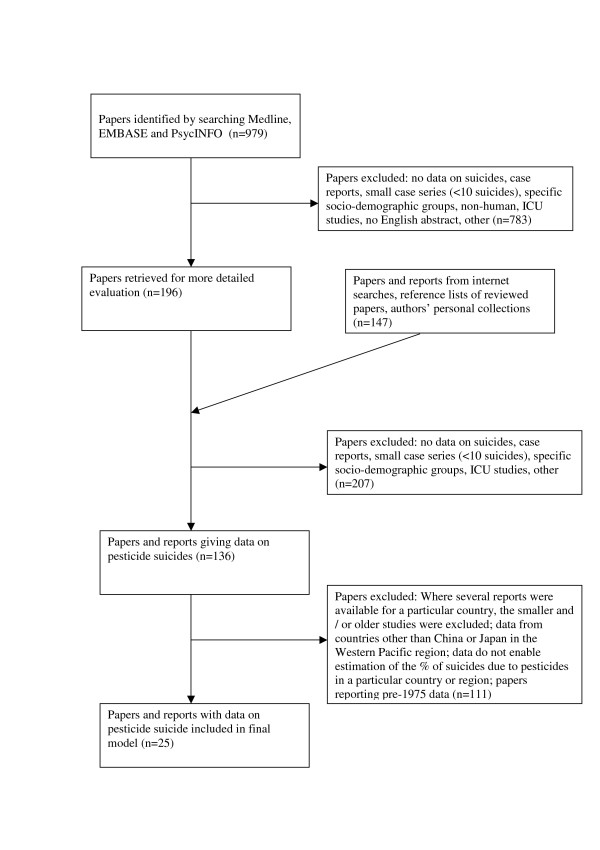
Background: Evidence is accumulating that pesticide self-poisoning is one of the most commonly used methods of suicide worldwide, but the magnitude of the problem and the global distribution of these deaths is unknown. Methods: We have systematically reviewed the worldwide literature to estimate the number of pesticide suicides in each of the World Health Organisation's six regions and the global burden of fatal self-poisoning with pesticides. We used the following data sources: Medline, EMBASE and psycINFO (1990–2007), papers cited in publications retrieved, the worldwide web (using Google) and our personal collections of papers and books. Our aim was to identify papers enabling us to estimate the proportion of a country's suicides due to pesticide self-poisoning. Results: We conservatively estimate that there are 258,234 (plausible range 233,997 to 325,907) deaths from pesticide self-poisoning worldwide each year, accounting for 30% (range 27% to 37%) of suicides globally. Official data from India probably underestimate the incidence of suicides; applying evidence-based corrections to India's official data, our estimate for world suicides using pesticides increases to 371,594 (range 347,357 to 439,267). The proportion of all suicides using pesticides varies from 4% in the European Region to over 50% in the Western Pacific Region but this proportion is not concordant with the volume of pesticides sold in each region; it is the pattern of pesticide use and the toxicity of the products, not the quantity used, that influences the likelihood they will be used in acts of fatal self-harm. Conclusion: Pesticide self-poisoning accounts for about one-third of the world's suicides. Epidemiological and toxicological data suggest that many of these deaths might be prevented if (a) the use of pesticides most toxic to humans was restricted, (b) pesticides could be safely stored in rural communities, and (c) the accessibility and quality of care for poisoning could be improved.
Overview
The claims and statistics of this paper haven’t been checked yet.
Free: it reads the open-access text and checks the first 5 claims that cite a source we can check. Create a free account to check every claim.
Integrity signals
Registry
Cites
Statistics
Figures
Verification
Claims the paper makes
The claims and statistics of this paper haven’t been checked yet.
Free: it reads the open-access text and checks the first 5 claims that cite a source we can check. Create a free account to check every claim.
Claims other papers make about this one
Each is checked against this paper’s own text: does it say what the citing paper says it does?
The source backs part of the claim, not all of it — or backs it for a different population, condition or comparison.
In the citing paper
“Pesticide ingestion was employed in approximately one-third of suicides worldwide, mostly in rural Asia and Latin America.(138)”
From Improving Suicide Prevention Through Evidence-Based Strategies: A Systematic Review (2021) · cites this paper as [138]
Experimental — accuracy not yet measuredThe source backs part of the claim, not all of it — or backs it for a different population, condition or comparison.
In the citing paper
“Pesticides are highly lethal, the leading suicide method worldwide, and the decline in suicide deaths worldwide is largely due to restricting access to pesticides where those deaths happen, namely in rural China,(138, 158) India(129) and Sri Lanka.(159)”
From Improving Suicide Prevention Through Evidence-Based Strategies: A Systematic Review (2021) · cites this paper as [138]
Experimental — accuracy not yet measured
Self-check
Percentages, sums and reported differences re-computed from the paper’s own numbers.
The self-check needs the paper’s full text.
Citations
Cites
Risk factors for suicide in China: a national case-control psychological autopsy study
Phillips, M. R., Yang, G., Zhang, Y., Wang, L., Ji, H., & Zhou, M. (2002) · The Lancet · doi:10.1016/s0140-6736(02)11681-3 · Cited by 928 · cited 2×
“7%) 47,720 to 82,680 Western Pacific A 155 35,000 1,050 (3%) 1,050 to 1,050 [68] B 1,562 296,000 183,520 (62%) 171,680 to 195,360 [70] Sub-total (W Pacific) 331,000 184,570 (55.”
Self-citationPatterns and problems of deliberate self-poisoning in the developing world
Eddleston, M. (2000) · QJM · doi:10.1093/qjmed/93.11.715 · Cited by 828 · cited 1×
“OP insecticides appear to be the most commonly ingested pesticides in rural Asia, accounting for around two thirds of cases[77].”
Self-citationSuicide rates in China, 1995–99
Phillips, M. R., Li, X., & Zhang, Y. (2002) · The Lancet · doi:10.1016/s0140-6736(02)07954-0 · Cited by 800 · cited 10×
“In our internet searches we particularly focused on identifying data for those countries in each of the six WHO regions that are likely to make the greatest contribution to the world burden of pesticide suicides because of their large populations: Nigeria and Ethiopia (Africa); United States of America, Brazil and Mex…”
InfluentialSelf-citationSuicide by intentional ingestion of pesticides: a continuing tragedy in developing countries
Gunnell, D., & Eddleston, M. (2003) · International Journal of Epidemiology · doi:10.1093/ije/dyg307 · Cited by 643 · cited 3×
“Recent extrapolations of data from a few countries in Asia suggest that there may be 300,000 suicides by deliberate ingestion of pesticides annually in this region alone[6,7].”
Self-citationPhillips, M. R., Li, X., Zhang, Y., & Eddleston, M. (2002) · The Lancet · doi:10.1016/s0140-6736(02)09269-3 · Cited by 382 · cited 1×
“Recent detailed studies of rural India suggest that the true number of suicides may be 2–3 fold higher than official estimates and concentrated in rural areas where pesticide poisoning is common[67,64] a pattern that is also found in China [ 74 ].”
BackgroundSelf-citationRUBENSTEIN, R. (1958) · Archives of Neurology And Psychiatry · doi:10.1001/archneurpsyc.1958.02340010121011 · Cited by 382
Eddleston, M., Eyer, P., Worek, F., Mohamed, F., Senarathna, L., von Meyer, L., Juszczak, E., Hittarage, A., Azhar, S., Dissanayake, W., et al. (2005) · The Lancet · doi:10.1016/s0140-6736(05)67598-8 · Cited by 369 · cited 1×
“Paraquat and aluminium phosphide self-poisoning have case-fatality in excess of 70%[10] [11] whereas case fatality for the organophosphorus (OP) insecticides dimethoate and chlorpyrifos are 23% and 8% respectively.[76] Based on the crude assumption that overall case fatality following pesticide self-poisoning worldwid…”
Self-citationKonradsen, F., van der Hoek, W., Cole, D. C., Hutchinson, G., Daisley, H., Singh, S., & Eddleston, M. (2003) · Toxicology · doi:10.1016/s0300-483x(03)00339-1 · Cited by 322 · cited 1×
“Restricting access to the most toxic pesticides is of paramount importance to reduce the number of severe selfpoisoning episodes[86].”
Self-citationSuicides in young people in rural southern India
Aaron, R., Joseph, A., Abraham, S., Muliyil, J., George, K., Prasad, J., Minz, S., Abraham, V. J., & Bose, A. (2004) · The Lancet · doi:10.1016/s0140-6736(04)15896-0 · Cited by 298 · cited 1×
“40% of the suicides in 15–19 year olds used pesticides in 1992–2001 [93] Lalwani et al.”
Pesticide poisoning in south India: opportunities for prevention and improved medical management
Srinivas Rao, C., Venkateswarlu, V., Surender, T., Eddleston, M., & Buckley, N. A. (2005) · Tropical Medicine & International Health · doi:10.1111/j.1365-3156.2005.01412.x · Cited by 228 · cited 1×
“Depending on the particular OP ingested, around 20–30% of patients require intubation [78,79].”
Self-citation
Research works printed but not linked: 6
- Obembe A Ilechukwu STC Tunwashe OL Odukoya O Self poisoning as seen in Lagos University Teaching Hospital: A Four Year Review The Nigerian Medical Practitioner 1986 11 49 53
- WHO Mental Health and Substance Abuse Facts and Figures Suicide Prevention: Emerging from Darkness 2007 South East Asia: WHO
- Khan N Poisoning in a medical unit of Dhaka Medical College Hospital in 1983 Bangladesh Medical Journal 1985 14 9 12
- Heijnen H WHO Bangladesh: International Programme OnChemical Safety 2001
- World Health Organization and IASP International Association for Suicide Prevention Safer Access to Pesticides: Community Interventions 2006 Geneva: Management of Mental and Brain Disorders, Department of Mental Health and Substance Abuse World Health Organization
- Kumar P Sharma SL Suicides in rural Punjab 2006 Punjab: Institute for Development and Communication (IDC)
Cited by
Items 201–300 of 974
Drug development for the management of organophosphorus poisoning
Elsinghorst, P. W., Worek, F., Thiermann, H., & Wille, T. (2013) · Expert Opinion on Drug Discovery · doi:10.1517/17460441.2013.847920 · Cited by 37
“Epidemiological studies estimate up to 300,000 fatal cases by intentional pesticide poisonings and expect a worldwide number of OP poisonings several folds higher [2].”
BackgroundMittal, N., Shafiq, N., Bhalla, A., Pandhi, P., & Malhotra, S. (2013) · SAGE Open Medicine · doi:10.1177/2050312113504213 · Cited by 37
“Benzodiazepines (6), acetaminophen (4), opioids (2) and antiepileptics (2) comprised major drug overdoses.”
BackgroundChen, F., Ye, Y., Jin, B., Yi, B., Wei, Q., & Liao, L. (2018) · Journal of Forensic Sciences · doi:10.1111/1556-4029.13945 · Cited by 37
Epidemiological characteristics of pesticide poisoning in Jiangsu Province, China, from 2007 to 2016
Wang, N., Jiang, Q., Han, L., Zhang, H., Zhu, B., & Liu, X. (2019) · Scientific Reports · doi:10.1038/s41598-019-44986-7 · Cited by 45
Factors associated with outcomes in organophosphate and carbamate poisoning: a retrospective study
Reddy, B. S., Skaria, T. G., Polepalli, S., Vidyasagar, S., Rao, M., Kunhikatta, V., Nair, S., & Thunga, G. (2020) · Toxicological Research · doi:10.1007/s43188-019-00029-x · Cited by 37
Characteristics of Patients Who Visit the Emergency Department with Self-Inflicted Injury
Lee, C. A., Choi, S.-C., Jung, K. Y., Cho, S. H., Lim, K. Y., Pai, K. S., & Cho, J. P. (2012) · Journal of Korean Medical Science · doi:10.3346/jkms.2012.27.3.307 · Cited by 40
“In the rural areas of many developing countries, the ingestion of pesticides is the principal method of committing suicide, and the prevalence of this method is believed to be an easy access to pesticides in developing countries (16).”
BackgroundEddleston, M., Gunnell, D., Meyer, L. V., & Eyer, P. (2009) · British Journal of Clinical Pharmacology · doi:10.1111/j.1365-2125.2009.03533.x · Cited by 43
Self-citationPearson, M., Konradsen, F., Gunnell, D., Dawson, A. H., Pieris, R., Weerasinghe, M., Knipe, D. W., Jayamanne, S., Metcalfe, C., Hawton, K., et al. (2011) · BMC Public Health · doi:10.1186/1471-2458-11-879 · Cited by 37
“In a recent systematic review the global estimate of deaths due to pesticide self-poisoning was between 250-370,000 each year [3].”
BackgroundMethodSelf-citationOrganophosphorus poisoning in animals and enzymatic antidotes
Poirier, L., Jacquet, P., Plener, L., Masson, P., Daudé, D., & Chabrière, É. (2018) · Environmental Science and Pollution Research · doi:10.1007/s11356-018-2465-5 · Cited by 40
“OPs are involved in millions of intoxications and hundreds of thousands selfharming and their use has been proven or suspected in recent armed conflicts (Gunnell et al. 2007; Eddleston et al. 2008; Patel et al. 2012; Jacquet et al. 2016).”
Analysis of Recent Situation of Pesticide Poisoning in Bangladesh: Is There a Proper Estimate?
Dewan, G. (2014) · DOAJ (DOAJ: Directory of Open Access Journals) · Cited by 36
Kranawetvogl, A., Siegert, M., Eyer, F., Thiermann, H., & John, H. (2018) · Toxicology Letters · doi:10.1016/j.toxlet.2018.08.013 · Cited by 40
Lumley, L. A., Niquet, J., Marrero-Rosado, B. M., Schultz, M. K., Rossetti, F., Furtado, M. D. A., & Wasterlain, C. G. (2021) · Neuropharmacology · doi:10.1016/j.neuropharm.2020.108444 · Cited by 38
“, 1996), as well as for organophosphate insecticide poisoning from agricultural exposures or self-poisoning, a worldwide clinical issue with approximately 200,000 deaths annually (Eddleston, 2000; Gunnell et al., 2007).”
Hobson, B. A., Sisó, S., Rowland, D. J., Harvey, D. J., Bruun, D. A., Garbow, J. R., & Lein, P. J. (2017) · Toxicological Sciences · doi:10.1093/toxsci/kfx049 · Cited by 36
“Acute intoxication with organophosphate (OP) cholinesterase inhibitors, which include pesticides and nerve agents, is estimated to cause 300 000 deaths and 1 million life-threatening intoxications each year (Gunnell et al., 2007; Pereira et al., 2014).”
Characteristics of Pesticide Poisoning in Rural and Urban Settings in Uganda
Pedersen, B., Ssemugabo, C., Nabankema, V., & Jørs, E. (2017) · Environmental Health Insights · doi:10.1177/1178630217713015 · Cited by 40
“3,17,18 Men were more numerous both among self-harm and unintentional cases of poisoning.”
BackgroundLorke, D. E., Nurulain, S. M., Hasan, M. Y., Kuča, K., Musílek, K., & Petroianu, G. A. (2008) · Journal of Applied Toxicology · doi:10.1002/jat.1359 · Cited by 35
“…as chemical warfare agents and as terrorist weapons (see Gupta, 2006, for review), account for several hundreds of thousands of deaths worldwide per year and an even greater number of casualties (Eyer, 2003; Worek et al., 2004; Buckley et al., 2005a; Eddleston et al., 2008; Gunnell et al., 2007).”
BackgroundKangavari, M., Sarvi, M., Afshari, M., & Maleki, S. (2024) · PLoS ONE · doi:10.1371/journal.pone.0298450 · Cited by 45
Assessing Diet as a Modifiable Risk Factor for Pesticide Exposure
Oates, L., & Cohen, M. M. (2011) · International Journal of Environmental Research and Public Health · doi:10.3390/ijerph8061792 · Cited by 39
“Globally around three million accidental or intentional pesticide poisonings occur each year resulting in around 260,000 deaths [4].”
BackgroundPetrescu‐Mag, R. M., Bănățean-Dunea, I., Vesa, Ș. C., Copacinschi, S., & Petrescu, D. C. (2019) · Sustainability · doi:10.3390/su11133628 · Cited by 35
Organophosphate induced delayed neuropathy after an acute cholinergic crisis in self-poisoning
Pannu, A. K., Bhalla, A., Vishnu, R. I., Dhibar, D. P., Sharma, N., & Vijayvergiya, R. (2020) · Clinical Toxicology · doi:10.1080/15563650.2020.1832233 · Cited by 34
Rebelo, F. M., Caldas, E. D., Heliodoro, V. O., & Rebelo, R. M. (2011) · Ciência & Saúde Coletiva · doi:10.1590/s1413-81232011000900017 · Cited by 65
He, F., Wang, J., Liu, Y. Z., Wang, X., Cai, N., Wu, C., & Gao, Q. (2018) · Biomedicine & Pharmacotherapy · doi:10.1016/j.biopha.2018.07.111 · Cited by 34
Toll-like receptor 4 is involved in myocardial damage following paraquat poisoning in mice
Dong, X., Xu, X., Sun, Y.-Q., WeiLiu, Jiang, Z.-H., & Liu, Z. (2013) · Toxicology · doi:10.1016/j.tox.2013.08.009 · Cited by 33
Pesticide Use and Self-Reported Health Symptoms Among Rice Farmers in Zanzibar
da Silva, M., Stadlinger, N., Mmochi, A. J., Lundborg, C. S., & Marrone, G. (2016) · Journal of Agromedicine · doi:10.1080/1059924x.2016.1211572 · Cited by 33
“Pesticides are globally estimated to cause over 300,000 deaths per year, most of this mortality is due to self-poisoning with pesticides.(5) The chronic and acute adverse health effects are of particular concern for low- and middle-income countries with an increased intensification of agriculture and use of pesticides…”
BackgroundCardiac injury in organophosphate poisoning after acute ingestion
Pannu, A. K., Bhalla, A., Vishnu, R. I., Garg, S., Dhibar, D. P., Sharma, N., & Vijayvergiya, R. (2021) · Toxicology Research · doi:10.1093/toxres/tfab036 · Cited by 33
Salimi, A., Jamali, Z., & Shabani, M. (2021) · Frontiers in Pharmacology · doi:10.3389/fphar.2021.719081 · Cited by 35
“Pesticide poisoning is a global public health problem, and onethird of the suicides in the world is due to self-poisoning (Gunnell et al., 2007).”
BackgroundImproving Suicide Prevention Through Evidence-Based Strategies: A Systematic Review
Mann, J. J., Michel, C. A., & Auerbach, R. P. (2023) · FOCUS The Journal of Lifelong Learning in Psychiatry · doi:10.1176/appi.focus.23021004 · Cited by 39
“Pesticides are highly lethal and are the leading suicide method worldwide, and the decline in suicide deaths worldwide is largely due to Am J Psychiatry 00:0, nn 2021 ajp.psychiatryonline.org 9 restriction of access to pesticides where those deaths occur most, namely, in rural China (138, 158), India (129), and Sri La…”
Acute poisoning in southern part of Bangladesh – The case load is decreasing
Chowdhury, F. R., Rahman, M. A., Mohammed, F., Chowdhury, A., Ahasan, H. A. M. N., & Bakar, M. (1970) · Bangladesh Medical Research Council Bulletin · doi:10.3329/bmrcb.v37i2.8436 · Cited by 33
Mohan, B., Gupta, V., Ralhan, S. K., Gupta, D., Puri, S., Mahajan, R., Goyal, A., Chhabra, S. T., Tandon, R., Aslam, N., et al. (2019) · Clinical Toxicology · doi:10.1080/15563650.2019.1584297 · Cited by 32
A Critical Review of the Status of Pesticide Exposure Management in Malawi
Kosamu, I. B. M., Kaonga, C. C., & Utembe, W. (2020) · International Journal of Environmental Research and Public Health · doi:10.3390/ijerph17186727 · Cited by 37
Tufail, M. A., Touceda-González, M., Pertot, I., & Ehlers, R. (2021) · Microorganisms · doi:10.3390/microorganisms9040870 · Cited by 37
“, improper use of chemical fertilizers can contribute to greenhouse gas emissions and cause various environmental problems [13,14].”
BackgroundShilaluke, K. C., & Moteetee, A. N. (2022) · Plants · doi:10.3390/plants11223046 · Cited by 41
“The use of synthetic pesticides also raises several environmental concerns because over 5% of the sprayed synthetic pesticides do not reach their target insect pests; instead, they can be found in air, soil, and water streams [7].”
BackgroundLock, E. A., & Wilks, M. F. (2009) · Elsevier eBooks · doi:10.1016/b978-0-12-374367-1.00083-5 · Cited by 34
Imarhiagbe, O., Okafor, A. C., Ikponmwosa, B. O., & Ogwu, M. C. (2023) · Sustainable development and biodiversity · doi:10.1007/978-981-99-3439-3_23 · Cited by 34
Acute fatal poisoning with Tolfenpyrad
Hikiji, W., Yamaguchi, K., Saka, K., Hayashida, M., Ohno, Y., & Fukunaga, T. (2013) · Journal of Forensic and Legal Medicine · doi:10.1016/j.jflm.2013.08.012 · Cited by 31
Perry, L., Adams, R. D., Bennett, A. R., Lupton, D. J., Jackson, G., Good, A. M., Thomas, S. H. L., Vale, A., Thompson, J. P., Bateman, D. N., et al. (2014) · Clinical Toxicology · doi:10.3109/15563650.2014.908203 · Cited by 37
Self-citationNeutrophil-Lymphocyte Ratio in Patients with Pesticide Poisoning
Dündar, Z. D., Ergın, M., Köylü, R., Ozer, R. S., Cander, B., & Günaydın, Y. K. (2014) · Journal of Emergency Medicine · doi:10.1016/j.jemermed.2014.01.034 · Cited by 31
Lorke, D. E., Hasan, M. Y., Nurulain, S. M., Shafiullah, M., Kuča, K., & Petroianu, G. A. (2010) · Journal of Applied Toxicology · doi:10.1002/jat.1589 · Cited by 35
“Organophosphorus compounds (OPCs), used in agriculture as pesticides, insecticides and acaricides and in industry as softening agents, hydraulic liquids, additives to lubricants and antioxidants (see Gupta, 2006 for review), are amongst the most frequent causes of suicidal or accidental intoxications (Buckley et al.,…”
BackgroundAcute phosphine poisoning on board a bulk carrier: analysis of factors leading to a fatal case
Loddé, B., Lucas, D., Letort, J.-M., Jégaden, D., Pougnet, R., & Dewitte, J. (2015) · Journal of Occupational Medicine and Toxicology · doi:10.1186/s12995-015-0050-0 · Cited by 31
Karasová, J. Ž., Maderycova, Z., Tumova, M., Jun, D., Řeháček, V., Kuča, K., & Misík, J. (2017) · Toxicology Letters · doi:10.1016/j.toxlet.2017.04.017 · Cited by 31
Burden of paraquat poisoning in the department of Antioquia, Colombia
Buendía, J. A., Chavarriaga, G. J. R., & Zuluaga, A. F. (2019) · BMC Pharmacology and Toxicology · doi:10.1186/s40360-019-0291-0 · Cited by 36
Trends in pesticide suicide in South Korea, 1983–2014
Cha, E. S., Chang, S., Choi, Y., & Lee, W. J. (2019) · Epidemiology and Psychiatric Sciences · doi:10.1017/s2045796019000118 · Cited by 34
“Self-poisoning with pesticides was the causal method in approximately 30% and 14% of the world’s suicides from 1990 to 2007 (Gunnell et al., 2007) and from 2010 to 2014 (Mew et al., 2017), respectively.”
MethodEffectiveness of a substituted β-cyclodextrin to prevent cyclosarin toxicity in vivo
Worek, F., Seeger, T., Zengerle, M., Kubik, S. W., Thiermann, H., & Wille, T. (2014) · Toxicology Letters · doi:10.1016/j.toxlet.2014.02.010 · Cited by 30
Profile of acute poisoning cases and their outcome in a teaching hospital of north India
Jamshed, N., Mathew, R., Aggarwal, P., Patel, S., & Pandey, R. (2019) · Journal of Family Medicine and Primary Care · doi:10.4103/jfmpc.jfmpc_832_19 · Cited by 30
“6; although it was used by less number of people in our study, still the outcome was in sync with the previous studies.[8,19] Table 3: Logistic regression analysis of poisoned patients for outcomes”
ResultBai, W., Qin, G., Wang, J., Li, L., & Ni, Y. (2021) · Dyes and Pigments · doi:10.1016/j.dyepig.2021.109473 · Cited by 32
Mani, V. M., Asha, S., & Sadiq, A. M. M. (2014) · Biomedicine & Aging Pathology · doi:10.1016/j.biomag.2013.11.001 · Cited by 34
“[6] Gunnell D, Eddleston M, Phillips MR, Konradsen F.”
BackgroundA magnetic resonance imaging study of early brain injury in a rat model of acute DFP intoxication
Hobson, B. A., Rowland, D. J., Supasai, S., Harvey, D. J., Lein, P. J., & Garbow, J. R. (2017) · NeuroToxicology · doi:10.1016/j.neuro.2017.11.009 · Cited by 32
Iyer, R., Iken, B., Damania, A. V., & Krieger, J. (2018) · Environmental Science and Pollution Research · doi:10.1007/s11356-018-1435-2 · Cited by 29
“Occupational exposure as well as intentional self-poisoning in these countries is believed to substantially contribute to the millions of annual OP poisonings worldwide (Gunnell et al. 2007).”
BackgroundLeong, Y., Ariff, A. M., Khan, H. R. M., Rani, N. A. A., & Majid, M. I. A. (2018) · Journal of Forensic and Legal Medicine · doi:10.1016/j.jflm.2018.03.007 · Cited by 31
Jales, J. T., Barbosa, T. M., dos Santos, L. C., Soares-Rachetti, V. D. P., & Gama, R. A. (2020) · Acta Tropica · doi:10.1016/j.actatropica.2020.105652 · Cited by 29
Terekhov, S. S., Smirnov, I. V., Bobik, T. V., Shamborant, O. G., Аркадьевна, З. М., Chernolovskaya, E. L., Gladkikh, D. V., Мурашев, А. Н., Dyachenko, I. A., Паликов, В. А., et al. (2015) · Biochimie · doi:10.1016/j.biochi.2015.07.028 · Cited by 30
Nurses attitudes and beliefs to attempted suicide in Southern India
Jones, S., Krishna, M., Rajendra, R., & Keenan, P. (2015) · Journal of Mental Health · doi:10.3109/09638237.2015.1019051 · Cited by 54
“…but there are significant obstructions to effective intervention, including difficulties in following western models to understand these behaviours and some unfavourable attitudes of health care professionals towards those who self-harm (Aaron et al., 2004; Bose et al., 2006; Gunnell et al., 2007).”
BackgroundInfluentialSuicide by hanging : a study of 334 cases
Ali, E., Maksud, M., Zubyra, S., Hossain, M. S., Debnath, P. R., Alam, A. S. M. M., & Chakrabarty, P. (2014) · Bangladesh Medical Journal · doi:10.3329/bmj.v43i2.21390 · Cited by 39
Brandhuber, F., Zengerle, M., Porwol, L., Tenberken, O., Thiermann, H., Worek, F., Kubik, S. W., & Reiter, G. (2012) · Toxicology · doi:10.1016/j.tox.2012.08.013 · Cited by 29
Gawarammana, I., & Dawson, A. H. (2010) · Clinical Toxicology · doi:10.3109/15563651003641794 · Cited by 32
“It is estimated that globally 250,000–370,000 people die from pesticide poisoning each year.(2) Sri Lanka has a major problem with intentional self-poisoning with high total and youth suicide rates.”
BackgroundThe possible role of intravenous lipid emulsion in the treatment of chemical warfare agent poisoning
Eisenkraft, A., & Falk, A. (2016) · Toxicology Reports · doi:10.1016/j.toxrep.2015.12.007 · Cited by 30
“Exposure to OPs, whether intentional or accidental, leads to the eath of several hundreds of thousand people every year [43,55].”
BackgroundPattern of suicide by self-poisoning in Northern Tunisia: An eleven-year study (2005–2015)
Gharbaoui, M., Ben Khelil, M., Harzallah, H., Benzarti, A., Zhioua, M., & Hamdoun, M. (2019) · Journal of Forensic and Legal Medicine · doi:10.1016/j.jflm.2018.10.004 · Cited by 29
Hobson, B. A., Rowland, D. J., Sisó, S., Guignet, M. A., Harmany, Z. T., Bandara, S. B., Saito, N. H., Harvey, D. J., Bruun, D. A., Garbow, J. R., et al. (2019) · Toxicological Sciences · doi:10.1093/toxsci/kfz096 · Cited by 33
“Acute poisoning with cholinesterase-inhibiting organophosphorus (OPs) pesticides and nerve agents is a serious public health problem, with the worldwide incidence estimated at 1 million intoxications and 200,000 deaths annually (Gunnell et al., 2007; Mew et al., 2017).”
BackgroundSaghir, S. A., Husain, K. M., & Ansari, R. A. (2023) · Wiley eBooks · doi:10.1002/0471125474.tox095.pub3 · Cited by 30
Mortality of intentional and unintentional pesticide poisonings in Germany from 1980 to 2010
Moebus, S., & Bödeker, W. (2015) · Journal of Public Health Policy · doi:10.1057/jphp.2014.56 · Cited by 29
Body mass index as a prognostic factor in organophosphate-poisoned patients
Lee, D. H., Jung, K. Y., Choi, Y. H., & Cheon, Y. J. (2014) · The American Journal of Emergency Medicine · doi:10.1016/j.ajem.2014.04.030 · Cited by 39
“An estimated 3000 to 6000 ventilators are required in Asia alone to provide mechanical ventilation for organophosphatepoisoned patients [5].”
BackgroundSinha, S. N., Kumpati, R. K., Ramavath, P. N., Sangaraju, R., Gouda, B., & Chougule, P. (2022) · Scientific Reports · doi:10.1038/s41598-022-21054-1 · Cited by 32
Rupp, W.-R., Thierauf, A., Nadjem, H., & Vogt, S. (2013) · Forensic Science International · doi:10.1016/j.forsciint.2013.05.013 · Cited by 31
“In agricultural regions (especially in developing countries), this kind of suicide is frequently committed with pesticides [2,3].”
BackgroundTreatment of Paraquat-Induced Lung Injury With an Anti-C5a Antibody: Potential Clinical Application*
Sun, S., Jiang, Y., Wang, R., Liu, C., Liu, X., Song, N., Guo, Y., Guo, R., Du, L., Jiang, S., et al. (2017) · Critical Care Medicine · doi:10.1097/ccm.0000000000002950 · Cited by 29
Pesticide poisonings in South Korea: Findings from the National Hospital Discharge Survey 2004–2006
Kim, H., Cha, E., Ko, Y., Kim, J., Kim, S. D., & Lee, W. J. (2012) · Human & Experimental Toxicology · doi:10.1177/0960327111431709 · Cited by 27
“The problem is particularly acute in Asia, such as in China, Sri Lanka, Bangladesh, and Nepal, where pesticide poisoning is the common cause of suicides.(2) A previous study in South Korea also showed that the majority of pesticide poisoning deaths were from intentional ingestion for the purpose of suicide.”
BackgroundChoudhary, A. (2014) · Asian journal of biomedical and pharmaceutical sciences · doi:10.15272/ajbps.v4i35.565 · Cited by 27
Agroecology and Health: Lessons from Indigenous Populations
Suárez-Torres, J., Suarez-Lopez, J. R., López-Paredes, D., Morocho, H., Cachiguango-Cachiguango, L. E., & Dellai, W. (2017) · Current Environmental Health Reports · doi:10.1007/s40572-017-0146-z · Cited by 31
Deshpande, L. S., & DeLorenzo, R. J. (2019) · Neurobiology of Disease · doi:10.1016/j.nbd.2019.03.006 · Cited by 31
Synthetic Chemical Insecticides: Environmental and Agro Contaminants
Khan, M. A., & Ahmad, W. (2019) · Sustainability in plant and crop protection · doi:10.1007/978-3-030-23045-6_1 · Cited by 30
Akyıl, D., & Konuk, M. (2014) · Environmental Toxicology · doi:10.1002/tox.21968 · Cited by 27
“DOI: 10.1002/tox.21968 VC 2014 Wiley Periodicals, Inc. 937 of acute poisoning have been reported from pesticide exposure, resulting in the deaths of 250–370,000 people every year (Gunnell et al., 2007; Marrs, 1993).”
BackgroundInfluentialLamb, T. W., Selvarajah, L. R., Mohamed, F., Jayamanne, S. F., Gawarammana, I., Mostafa, A., Buckley, N. A., Roberts, M. S., & Eddleston, M. (2016) · Clinical Toxicology · doi:10.1080/15563650.2016.1187735 · Cited by 28
“deaths each year.[3] OP insecticides have long been responsible for the majority of these deaths but the most toxic OP compounds are now slowly being removed from agricultural practice.”
BackgroundSelf-citationBiologic activity of cyclic and caged phosphates: a review
Lorke, D. E., Stegmeier‐Petroianu, A., & Petroianu, G. A. (2016) · Journal of Applied Toxicology · doi:10.1002/jat.3369 · Cited by 31
“Their AChE inhibitory activity makes organophosphates suitable agents as pesticides, insecticides and acaricides (Gupta, 2006), but due to their toxicity, they are also amongst the most frequent causes of suicidal or accidental intoxications (Gunnell et al., 2007).”
BackgroundTsai, C., Wu, J. C. C., Fang, C., & Chang, A. Y. (2017) · Neuropharmacology · doi:10.1016/j.neuropharm.2017.06.007 · Cited by 28
“As the most widely used pesticide in the world, organophosphate poisoning reportedly accounts for approximately one-third of global suicides (Gunnell et al., 2007).”
BackgroundRestaino, O. F., Borzacchiello, M. G., Scognamiglio, I., Fedele, L., Alfano, A., Porzio, E., Manco, G., ROSA, M. D., & Schiraldi, C. (2018) · BMC Biotechnology · doi:10.1186/s12896-018-0427-0 · Cited by 27
John, H., Siegert, M., Eyer, F., Worek, F., Thiermann, H., & Kranawetvogl, A. (2018) · Toxicology Letters · doi:10.1016/j.toxlet.2018.05.023 · Cited by 29
Sulaiman, S. K. B., Ibrahim, Y., & Jeffree, M. S. (2019) · Interdisciplinary Toxicology · doi:10.2478/intox-2019-0003 · Cited by 32
“Approximately 200,000–300,000 people die worldwide from pesticide poisoning every year with the majority of deaths occurring in developing countries (Gunnell et al., 2007).”
BackgroundCompleted suicide in adults of rural Kerala: rates and determinants.
Sauvaget, C., Ramadas, K., Fayette, J.-M., Thomas, G., Thara, S., & Sankaranarayanan, R. (2009) · PubMed · Cited by 31
Qiao, D., Luo, L., Chen, C., Qiu, L., & Fu, X. (2023) · Journal of Cleaner Production · doi:10.1016/j.jclepro.2023.139722 · Cited by 30
Brain delivery of antidotes by polymeric nanoparticles
Manek, E., & Petroianu, G. A. (2020) · Journal of Applied Toxicology · doi:10.1002/jat.4029 · Cited by 26
Yadav, G., & Ahmaruzzaman, M. (2021) · Journal of Nanoparticle Research · doi:10.1007/s11051-021-05290-6 · Cited by 28
Pakravan, N., Shokrzadeh, M., Bari, M. K., & Shadboorestan, A. (2015) · Human & Experimental Toxicology · doi:10.1177/0960327115584990 · Cited by 26
“This figure includes 30% of the total number of intentional poisoning leading to deaths.(1) Ninety five percentage of all fatal poisoning occurs in the developing countries.”
BackgroundChapman, K. L., Creton, S. K., Kupferschmidt, H., Bond, G. R., Wilks, M. F., & Robinson, S. (2010) · Regulatory Toxicology and Pharmacology · doi:10.1016/j.yrtph.2010.07.003 · Cited by 26
Perera, P. M., Jayamanna, S. F., Hettiarachchi, R., Abeysinghe, C., Karunatilake, H., Dawson, A. H., & Buckley, N. A. (2009) · Trials · doi:10.1186/1745-6215-10-73 · Cited by 28
“Background Each year at least 300,000 thousand people die from deliberate ingestion of pesticides [1].”
BackgroundPharmacokinetics of obidoxime in patients poisoned with organophosphorus compounds
Thiermann, H., Eyer, F., Felgenhauer, N., Pfab, R., Zilker, T. R., Eyer, P., & Worek, F. (2010) · Toxicology Letters · doi:10.1016/j.toxlet.2010.06.005 · Cited by 26
Suicide attempt in a rural area of Vietnam: Incidence, methods used and access to mental health care
Nguyên, V. T., Dalman, C., Le, T. C., Nguyen, T. V., Tran, N. V., & Allebeck, P. (2010) · International Journal of Mental Health Systems · doi:10.1186/1752-4458-4-3 · Cited by 27
“WHO: Conclusion of the meeting on suicide prevention of the WHO Western Pacific Region.”
BackgroundSsemugabo, C., Halage, A. A., Mubeezi, R., Nabankema, V., Kasule, M. M., Ssekimpi, D. K., & Jørs, E. (2017) · Environmental Health Insights · doi:10.1177/1178630217728924 · Cited by 35
Wang, R., Sun, D., Song, C., Xu, Y., Liu, W., Liu, Z., & Dong, X. (2017) · Toxicology in Vitro · doi:10.1016/j.tiv.2017.10.006 · Cited by 27
Kaur, T., Khanna, K., Sharma, S., & Manhas, R. K. (2023) · Journal of Basic Microbiology · doi:10.1002/jobm.202300027 · Cited by 28
“However, excessive and indiscriminate use of agrochem-icals has resulted in long list of detrimental effects on environment and human health [2 – 4], and led to considerable changes in consumer's attitude toward the approach of using various agrochemicals in agriculture.”
BackgroundLin, C., Yen, T., Juang, Y., Lin, J., & Lee, S. (2014) · PLoS ONE · doi:10.1371/journal.pone.0112160 · Cited by 28
“Pesticide ingestion is a highly lethal method of suicide, especially in rural areas [1], and may account for up to one third of overall suicide deaths around the globe [2,3].”
BackgroundSuicide by pesticide ingestion in Nepal and the impact of pesticide regulation
Utyasheva, L., Sharma, D. R., Ghimire, R., Karunarathne, A. S., Robertson, G., & Eddleston, M. (2021) · BMC Public Health · doi:10.1186/s12889-021-11155-3 · Cited by 32
Self-citationImpact of regional bans of highly hazardous pesticides on agricultural yields: the case of Kerala
Sethi, A., Lin, C., Madhavan, I., Davis, M. L., Alexander, P., Eddleston, M., & Chang, S. (2022) · Agriculture & Food Security · doi:10.1186/s40066-021-00348-z · Cited by 27
Self-citationParadox findings may challenge orthodox reasoning in acute organophosphate poisoning
Eyer, P., Worek, F., Thiermann, H., & Eddleston, M. (2009) · Chemico-Biological Interactions · doi:10.1016/j.cbi.2009.10.014 · Cited by 25
“The case-fatality rate is particuarly high in suicidal attempts, which constitutes the vast majority f severe poisonings [2].”
BackgroundSelf-citationRajapakse, B. N., Neeman, T. M., & Dawson, A. H. (2013) · PLoS ONE · doi:10.1371/journal.pone.0079491 · Cited by 27
“Our study has direct relevance to rural Asia where there is a high incidence of respiratory failure from pesticide poisoning and snake bite envenomation [4,5,10,11], in addition to the standard range of primary cardiorespiratory pathology seen throughout the world.”
BackgroundPseudocholinesterase as a predictor of mortality and morbidity in organophosphorus poisoning
Rao, K., Rangappa, P., Jacob, I., & Hiremath, P. (2016) · Indian Journal of Critical Care Medicine · doi:10.4103/0972-5229.192052 · Cited by 25
“The World Health Organization estimates that one million serious unintentional poisonings occur every year in addition to two million cases of suicide attempts, with pesticides.[1] India is a predominantly agrarian country where pesticides are routinely used for farming.”
BackgroundLi, H., Wen, K., Dong, B., Zhang, J., Bai, Y., Liu, M., Li, P., Mari, G. M., Yu, X., Yu, W., et al. (2019) · Sensors and Actuators B Chemical · doi:10.1016/j.snb.2019.126787 · Cited by 25
González, E. A., Rindy, A., Guignet, M. A., Calsbeek, J. J., Bruun, D. A., Dhir, A., Andrew, P. M., Saito, N. H., Rowland, D. J., Harvey, D. J., et al. (2020) · Archives of Toxicology · doi:10.1007/s00204-020-02747-w · Cited by 25
Jayasinghe, N., & Foster, J. (2011) · Archives of Suicide Research · doi:10.1080/13811118.2011.589705 · Cited by 29
Lee, S. K., Rhee, J., & Yum, H.-S. (2012) · Toxicological Research · doi:10.5487/tr.2012.28.3.195 · Cited by 24
“Several researches reported on the cases of deaths by pesticides in China, Malaysia, Sri Lanka, and Trinidad-Tobago, and estimated that 330,000 people died by intentional intake of pesticides [4-7].”
BackgroundWeerasinghe, M., Pearson, M., Peiris, R., Dawson, A. H., Eddleston, M., Jayamanne, S. F., Agampodi, S. B., & Konradsen, F. (2013) · Injury Prevention · doi:10.1136/injuryprev-2012-040748 · Cited by 29
Self-citationMagni, P. A., Pazzi, M., Vincenti, M., Converso, V., & Dadour, I. R. (2017) · Journal of Medical Entomology · doi:10.1093/jme/tjx177 · Cited by 24
Chen, J., Zhang, Y., Chai, Y., Meng, Z., Zhang, Y., Chen, L., Quan, D., Wang, Y., Meng, Q., & Li, C. (2021) · Chemical Science · doi:10.1039/d1sc00426c · Cited by 24
Metadata
- Authors
- Gunnell, D., Eddleston, M., Phillips, M. R., & Konradsen, F.
- Affiliations
- University of Bristol (GB)
- South Asian Clinical Toxicology Research Collaboration (LK)
- Beijing HuiLongGuan Hospital (CN)
- University of Copenhagen (DK)
- Corresponding author
- Gunnell, David
- Venue
- BMC Public Health
- Published
- 2007-12
- Volume
- 7
- Issue
- 1
- Pages
- 357-357
- ISSN
- 1471-2458 (ISSN-L)
- PMC
- PMC2262093
- OpenAlex
- W2149111967
- Cited by
- 969
- References
- 102
- Citations by year
- 2026: 32 · 2025: 41 · 2024: 36 · 2023: 54 · 2022: 63 · 2021: 65 · 2020: 72 · 2019: 66 · 2018: 57 · 2017: 118 · 2016: 60 · 2015: 55 · 2014: 49 · 2013: 50 · 2012: 35
- FWCI
- 4.43
- Type
- journal article
- Language
- en
- Open access
- gold
- doi.org
- Licence
- cc-by
- creativecommons.org/licenses/by/2.0 (tdm)
- creativecommons.org/licenses/by/2.0 (vor, 20 d)
- Locations
- BMC Public Health (publishedVersion, cc-by)
- PubMed Central (publishedVersion, cc-by)
- PubMed (publishedVersion)
- DOAJ (DOAJ: Directory of Open Access Journals) (submittedVersion)
- Research at the University of Copenhagen (University of Copenhagen) (submittedVersion)
- Bristol Research (University of Bristol) (submittedVersion)
- Topics
- Social Sciences › Psychology › Clinical Psychology › Suicide and Self-Harm Studies
- Life Sciences › Pharmacology, Toxicology and Pharmaceutics › Toxicology › Pesticide Exposure and Toxicity
- Social Sciences › Sociology and Political Science › Homicide, Infanticide, and Child Abuse
- Keywords
- pesticide self-poisoning, pesticide suicide, suicide, global burden of disease, WHO regions, pesticide toxicity, pesticide storage
- MeSH terms
- Suicide Prevention, Humans, Pesticides, Poisoning, Safety, Suicide, Global Health, Incidence
About these checks
Registry, retraction, Cites and statistics results are computed, not judged, with one exception: a printed reference that no index lists is read once by a model before it counts as a citation error. Claims are extracted by a model and kept only when their quote appears verbatim in the text; each cited source is then checked, with a model’s help, for whether it says what the claim relies on. Those verdicts can be wrong — read the claim’s quote and the cited source before relying on one.
Statistics and arithmetic are recomputed, not judged.
Confidence bands are shown only for fields calibrated on our annotated test set. None is calibrated yet, so no band is shown.
What counts as a claim ›How we measure confidence ›How we check this ›
Are you an author, or do you see a problem with this page? Request a review
Data sources
Bibliographic data: Semantic Scholar, OpenAlex, Crossref.
Contains information from the Semantic Scholar Academic Graph Datasets, made available under the ODC Attribution License (ODC-BY 1.0).
Semantic Scholar’s data is described in: Kinney, R., et al. (2023). The Semantic Scholar Open Data Platform. arXiv:2301.10140.
