

The global distribution of fatal pesticide self-poisoning: Systematic review
Open accessThe DOI matches its Crossref record; 100 of the 102 references it cites were found in a registry or an index.
Abstract
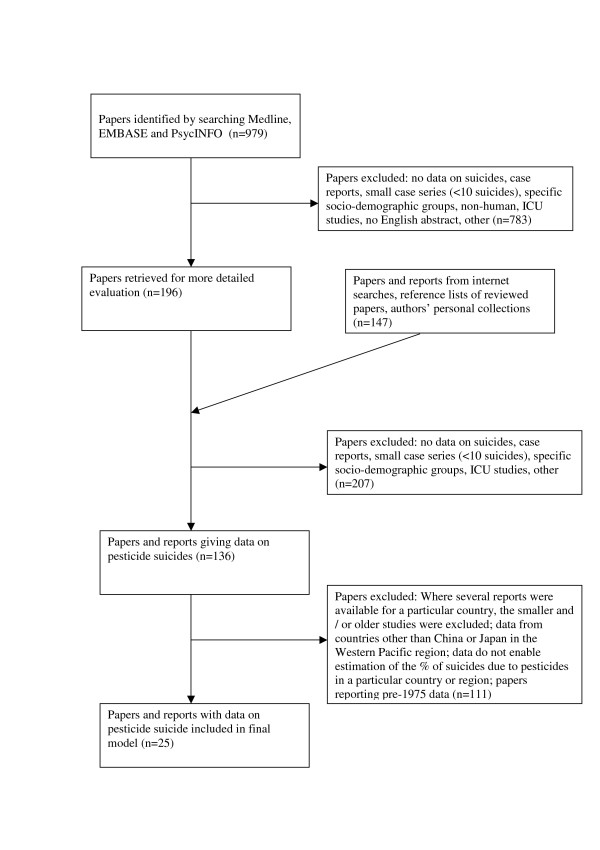
Background: Evidence is accumulating that pesticide self-poisoning is one of the most commonly used methods of suicide worldwide, but the magnitude of the problem and the global distribution of these deaths is unknown. Methods: We have systematically reviewed the worldwide literature to estimate the number of pesticide suicides in each of the World Health Organisation's six regions and the global burden of fatal self-poisoning with pesticides. We used the following data sources: Medline, EMBASE and psycINFO (1990–2007), papers cited in publications retrieved, the worldwide web (using Google) and our personal collections of papers and books. Our aim was to identify papers enabling us to estimate the proportion of a country's suicides due to pesticide self-poisoning. Results: We conservatively estimate that there are 258,234 (plausible range 233,997 to 325,907) deaths from pesticide self-poisoning worldwide each year, accounting for 30% (range 27% to 37%) of suicides globally. Official data from India probably underestimate the incidence of suicides; applying evidence-based corrections to India's official data, our estimate for world suicides using pesticides increases to 371,594 (range 347,357 to 439,267). The proportion of all suicides using pesticides varies from 4% in the European Region to over 50% in the Western Pacific Region but this proportion is not concordant with the volume of pesticides sold in each region; it is the pattern of pesticide use and the toxicity of the products, not the quantity used, that influences the likelihood they will be used in acts of fatal self-harm. Conclusion: Pesticide self-poisoning accounts for about one-third of the world's suicides. Epidemiological and toxicological data suggest that many of these deaths might be prevented if (a) the use of pesticides most toxic to humans was restricted, (b) pesticides could be safely stored in rural communities, and (c) the accessibility and quality of care for poisoning could be improved.
Overview
The claims and statistics of this paper haven’t been checked yet.
Free: it reads the open-access text and checks the first 5 claims that cite a source we can check. Create a free account to check every claim.
Integrity signals
Registry
Cites
Statistics
Figures
Verification
Claims the paper makes
The claims and statistics of this paper haven’t been checked yet.
Free: it reads the open-access text and checks the first 5 claims that cite a source we can check. Create a free account to check every claim.
Claims other papers make about this one
Each is checked against this paper’s own text: does it say what the citing paper says it does?
The source backs part of the claim, not all of it — or backs it for a different population, condition or comparison.
In the citing paper
“Pesticide ingestion was employed in approximately one-third of suicides worldwide, mostly in rural Asia and Latin America.(138)”
From Improving Suicide Prevention Through Evidence-Based Strategies: A Systematic Review (2021) · cites this paper as [138]
Experimental — accuracy not yet measuredThe source backs part of the claim, not all of it — or backs it for a different population, condition or comparison.
In the citing paper
“Pesticides are highly lethal, the leading suicide method worldwide, and the decline in suicide deaths worldwide is largely due to restricting access to pesticides where those deaths happen, namely in rural China,(138, 158) India(129) and Sri Lanka.(159)”
From Improving Suicide Prevention Through Evidence-Based Strategies: A Systematic Review (2021) · cites this paper as [138]
Experimental — accuracy not yet measured
Self-check
Percentages, sums and reported differences re-computed from the paper’s own numbers.
The self-check needs the paper’s full text.
Citations
Cites
Risk factors for suicide in China: a national case-control psychological autopsy study
Phillips, M. R., Yang, G., Zhang, Y., Wang, L., Ji, H., & Zhou, M. (2002) · The Lancet · doi:10.1016/s0140-6736(02)11681-3 · Cited by 928 · cited 2×
“7%) 47,720 to 82,680 Western Pacific A 155 35,000 1,050 (3%) 1,050 to 1,050 [68] B 1,562 296,000 183,520 (62%) 171,680 to 195,360 [70] Sub-total (W Pacific) 331,000 184,570 (55.”
Self-citationPatterns and problems of deliberate self-poisoning in the developing world
Eddleston, M. (2000) · QJM · doi:10.1093/qjmed/93.11.715 · Cited by 828 · cited 1×
“OP insecticides appear to be the most commonly ingested pesticides in rural Asia, accounting for around two thirds of cases[77].”
Self-citationSuicide rates in China, 1995–99
Phillips, M. R., Li, X., & Zhang, Y. (2002) · The Lancet · doi:10.1016/s0140-6736(02)07954-0 · Cited by 800 · cited 10×
“In our internet searches we particularly focused on identifying data for those countries in each of the six WHO regions that are likely to make the greatest contribution to the world burden of pesticide suicides because of their large populations: Nigeria and Ethiopia (Africa); United States of America, Brazil and Mex…”
InfluentialSelf-citationSuicide by intentional ingestion of pesticides: a continuing tragedy in developing countries
Gunnell, D., & Eddleston, M. (2003) · International Journal of Epidemiology · doi:10.1093/ije/dyg307 · Cited by 643 · cited 3×
“Recent extrapolations of data from a few countries in Asia suggest that there may be 300,000 suicides by deliberate ingestion of pesticides annually in this region alone[6,7].”
Self-citationPhillips, M. R., Li, X., Zhang, Y., & Eddleston, M. (2002) · The Lancet · doi:10.1016/s0140-6736(02)09269-3 · Cited by 382 · cited 1×
“Recent detailed studies of rural India suggest that the true number of suicides may be 2–3 fold higher than official estimates and concentrated in rural areas where pesticide poisoning is common[67,64] a pattern that is also found in China [ 74 ].”
BackgroundSelf-citationRUBENSTEIN, R. (1958) · Archives of Neurology And Psychiatry · doi:10.1001/archneurpsyc.1958.02340010121011 · Cited by 382
Eddleston, M., Eyer, P., Worek, F., Mohamed, F., Senarathna, L., von Meyer, L., Juszczak, E., Hittarage, A., Azhar, S., Dissanayake, W., et al. (2005) · The Lancet · doi:10.1016/s0140-6736(05)67598-8 · Cited by 369 · cited 1×
“Paraquat and aluminium phosphide self-poisoning have case-fatality in excess of 70%[10] [11] whereas case fatality for the organophosphorus (OP) insecticides dimethoate and chlorpyrifos are 23% and 8% respectively.[76] Based on the crude assumption that overall case fatality following pesticide self-poisoning worldwid…”
Self-citationKonradsen, F., van der Hoek, W., Cole, D. C., Hutchinson, G., Daisley, H., Singh, S., & Eddleston, M. (2003) · Toxicology · doi:10.1016/s0300-483x(03)00339-1 · Cited by 322 · cited 1×
“Restricting access to the most toxic pesticides is of paramount importance to reduce the number of severe selfpoisoning episodes[86].”
Self-citationSuicides in young people in rural southern India
Aaron, R., Joseph, A., Abraham, S., Muliyil, J., George, K., Prasad, J., Minz, S., Abraham, V. J., & Bose, A. (2004) · The Lancet · doi:10.1016/s0140-6736(04)15896-0 · Cited by 298 · cited 1×
“40% of the suicides in 15–19 year olds used pesticides in 1992–2001 [93] Lalwani et al.”
Pesticide poisoning in south India: opportunities for prevention and improved medical management
Srinivas Rao, C., Venkateswarlu, V., Surender, T., Eddleston, M., & Buckley, N. A. (2005) · Tropical Medicine & International Health · doi:10.1111/j.1365-3156.2005.01412.x · Cited by 228 · cited 1×
“Depending on the particular OP ingested, around 20–30% of patients require intubation [78,79].”
Self-citation
Research works printed but not linked: 6
- Obembe A Ilechukwu STC Tunwashe OL Odukoya O Self poisoning as seen in Lagos University Teaching Hospital: A Four Year Review The Nigerian Medical Practitioner 1986 11 49 53
- WHO Mental Health and Substance Abuse Facts and Figures Suicide Prevention: Emerging from Darkness 2007 South East Asia: WHO
- Khan N Poisoning in a medical unit of Dhaka Medical College Hospital in 1983 Bangladesh Medical Journal 1985 14 9 12
- Heijnen H WHO Bangladesh: International Programme OnChemical Safety 2001
- World Health Organization and IASP International Association for Suicide Prevention Safer Access to Pesticides: Community Interventions 2006 Geneva: Management of Mental and Brain Disorders, Department of Mental Health and Substance Abuse World Health Organization
- Kumar P Sharma SL Suicides in rural Punjab 2006 Punjab: Institute for Development and Communication (IDC)
Cited by
Items 501–600 of 974
Mohammadi, M., Zare, Z., Allahmoradi, E., Vaezi, N., Valadan, R., & Tehrani, M. (2016) · NeuroToxicology · doi:10.1016/j.neuro.2016.10.009 · Cited by 10
Epidemiology of coronial deaths from pesticide ingestion in Australia
Osborne, N. J., Cairns, R. F., Dawson, A. H., Chitty, K. M., & Buckley, N. A. (2017) · International Journal of Hygiene and Environmental Health · doi:10.1016/j.ijheh.2017.01.009 · Cited by 10
“Pesticide self-poisonings account for 30% of suicides globally, around 4% in the European Region to over 50% in the Western Pacific Region (Gunnell et al., 2007) and approximately 0.7% (141/21,000) in Australia in the years 2005–2013 (Australian Bureau of Statistics, 2015a).”
BackgroundInfluentialMundhe, S., Birajdar, S., & Chavan, S. S. (2017) · International Journal of Advances in Medicine · doi:10.18203/2349-3933.ijam20172277 · Cited by 10
“Worldwide, approximately 230,000350,000 people die of suicidal OP poisoning with another 20,000 deaths due to its accidental exposures.(3)”
BackgroundVanderGiessen, M., de Jager, C., Leighton, J., Xie, H., Theus, M. H., Johnson, E. A., & Kehn‐Hall, K. (2024) · Frontiers in Neuroscience · doi:10.3389/fnins.2024.1514940 · Cited by 10
Rappenglück, S., Sichler, S., Höfner, G. C., Wein, T., Niessen, K. V., Seeger, T., Paintner, F. F., Worek, F., Thiermann, H., & Wanner, K. T. (2018) · ChemMedChem · doi:10.1002/cmdc.201800539 · Cited by 9
Dhanarisi, J., Perera, S., Wijerathna, T. M., Gawarammana, I., Shihana, F., Pathiraja, V., Eddleston, M., & Mohamed, F. (2022) · Alcohol and Alcoholism · doi:10.1093/alcalc/agac045 · Cited by 10
Self-citationThe role of polyplexes in developing a green sustainable approach in agriculture
Das, P. K., Panda, G. P., Patra, K., Jena, N., & Dash, M. (2022) · RSC Advances · doi:10.1039/d2ra06541j · Cited by 9
Rosenberg, Y. J., Garcia, K., Diener, J. M., Sullivan, D., Donahue, S., Mao, L., Lees, J. P., Jiang, X., Urban, L. A., Momper, J. D., et al. (2023) · Journal of Neurochemistry · doi:10.1111/jnc.15777 · Cited by 10
Izquierdo, P. G., Charvet, C., Neveu, C., Green, A. C., Tattersall, J. E. H., Holden-Dye, L. M., & O'Connor, V. M. (2023) · PLoS ONE · doi:10.1371/journal.pone.0284786 · Cited by 13
“Organophosphates are environmental biohazards that cause at least two million of poisoning cases and lead to an estimated 200,000 deaths annually [11, 12, 56].”
BackgroundJayaraj, J., Shibila, S., Mathan Kumar, S., Mariselvam, R., Alahmadi, T. A., Alharbi, S. A., Mideen, P. K., Sakthiganesh, K., & Sivagnanam, A. (2023) · Environmental Research Communications · doi:10.1088/2515-7620/ace68b · Cited by 9
“Furthermore, excessive levels of accidental, intentional, or occupational pesticide exposure can result in hospitalisation and even fatalities (Gunnell et al 2007).”
BackgroundKao, S.-H., Shofer, F. S., Greenwood, J. C., Alomaja, O., Ranganathan, A., Piel, S., Mesaros, C., Shin, S. S., Ehinger, J. K., Kilbaugh, T. J., et al. (2023) · Journal of Medical Toxicology · doi:10.1007/s13181-023-00956-0 · Cited by 9
“OPs are a diverse group of chemicals that are used as pesticides found in the occupational and farming setting [3].”
BackgroundMohan, M. K., Thorat, K., Puthiyapurayil, T. P., Sunnapu, O., Chandrashekharappa, S., Ravula, V., Khader, R., Sankaranarayanan, A., Muhammad, H., & Vemula, P. K. (2024) · Nature Communications · doi:10.1038/s41467-024-49167-3 · Cited by 10
Lee, Y. H., Oh, Y. T., Lee, W. W., Ahn, H. C., Sohn, Y. D., Ahn, J. Y., Min, Y. H., Kim, H., Lim, S. W., Lee, K. J., et al. (2016) · Internal and Emergency Medicine · doi:10.1007/s11739-016-1484-9 · Cited by 9
“Unfortunately,[873,000 people die every year due to OP poisoning, with a worldwide overall mortality rate of 15–30 % [2, 3], Therefore, it is important to identify the factors that are related to the deaths of these individuals.”
BackgroundBuendía, J. A., Castro, J. A. J., Tapia, L., Sinisterra, D., Villamil, J. P. S., & Zuluaga, A. F. (2019) · BMC Research Notes · doi:10.1186/s13104-019-4598-0 · Cited by 10
Jończyk, J., Kukułowicz, J., Łątka, K., Malawska, B., Jung, Y., Musílek, K., & Bajda, M. (2021) · Biomolecules · doi:10.3390/biom11020169 · Cited by 9
Link, B. G., & Phelan, J. C. (2017) · Cambridge University Press eBooks · doi:10.1017/9781316471289.024 · Cited by 13
Electrocardiographical Manifestations of Acute Organophosphate Poisoning
Balouch, G. H., Yousfani, A. H., Jaffery, M. H., Shah, S. Z. A., Ali, Z., & Baloch, Q. (2012) · Cited by 9
Salbutamol in acute organophosphorus insecticide poisoning – a pilotdose-response phase II study
Chowdhury, F. R., Rahman, M. M., Ullah, P., Ru‐Han, A., Bari, M. S., Alam, M. M. J., Uddin, M. M., Maruf, S., Patwary, M. I., & Eddleston, M. (2018) · Clinical Toxicology · doi:10.1080/15563650.2018.1440587 · Cited by 9
Self-citationKamali, F. S., Shahrooz, R., Najafi, G., & Razi, M. (2019) · International Journal of Reproductive BioMedicine (IJRM) · doi:10.18502/ijrm.v17i10.5490 · Cited by 9
“It is available in rural areas of countries then and is a common case for intentional self-poisoning (3).”
BackgroundSîrcu, R., Țurcanu, G., Nicolae, O., Pînzaru, I., Manceva, T., & Scurtu, R. (2019) · Chemistry Journal of Moldova · doi:10.19261/cjm.2019.584 · Cited by 9
“The numerous adverse health effects in humans that have been associated with chemical pesticides include dermatological, gastrointestinal, respiratory, neurological, carcinogenic, reproductive and endocrine problems [1-13].”
BackgroundEffect of Pesticides on Fish Fauna: Threats, Challenges, and Possible Remedies
Ali, S., Wali, A. F., Yatoo, A. M., Majid, S., Rasool, S., Khan, R., Ali, M. N., Wani, J. A., Farooq, S., Rasool, S., et al. (2020) · Springer eBooks · doi:10.1007/978-3-030-35691-0_2 · Cited by 9
Enzymatic decontamination of paraoxon-ethyl limits long-term effects in planarians
Poirier, L., Plener, L., Daudé, D., & Chabrière, É. (2020) · Scientific Reports · doi:10.1038/s41598-020-60846-1 · Cited by 13
Rosenfield, S., Kato, K., & Smith, D. T. (2017) · Cambridge University Press eBooks · doi:10.1017/9781316471289.017 · Cited by 10
Cavalcante, K. D. S., Peniche, T., Façanha, B. L. B., Araújo, C. M. C. V., Lobato, T. A. S., & Souto, R. N. P. (2023) · International Journal of Legal Medicine · doi:10.1007/s00414-023-02989-0 · Cited by 8
“The most likely explanation for the high number of suicides caused by pesticide intake in developing countries is the high lethality associated with pesticide ingestion [21].”
BackgroundBarma, A., Poudel, A., Rawal, G., Karn, M., Unika, K. C., Ojha, L., Bajgai, D., & Mandal, M. (2025) · Annals of Medicine and Surgery · doi:10.1097/ms9.0000000000003103 · Cited by 9
“It has a high-fatality rate of approximately 50–70% and has no known antidote [ 2 , 3 ] .”
Suicide and Suicidal Behavior in Women
Vijayakumar, L., & Lamech, N. (2019) · Mental health and illness worldwide · doi:10.1007/978-981-10-0371-4_3-1 · Cited by 8
Pesticide exposure and acute health problems among pesticide processing industry workers in Ethiopia
Hailu, A., Tucho, G. T., Gure, A., & Mekonen, S. (2025) · Toxicology Reports · doi:10.1016/j.toxrep.2025.101997 · Cited by 10
“The number of suicides committed using pesticides in developing countries is much higher than in developed countries [9].”
Restaino, O. F., Borzacchiello, M. G., Scognamiglio, I., Porzio, E., Manco, G., Fedele, L., Donatiello, C., ROSA, M. D., & Schiraldi, C. (2017) · Journal of Industrial Microbiology & Biotechnology · doi:10.1007/s10295-016-1892-x · Cited by 8
“Parathion, paraoxon, chlorpyrifos and their derivates are the mostly diffused OPs [14] and their employment is estimated to cause 3 million intoxications yearly [8, 40].”
BackgroundMariño, D., & Reyes, N. P. (2020) · Journal of Analytical Toxicology · doi:10.1093/jat/bkaa182 · Cited by 8
Özkale, M., Özkale, Y., & Kozanoğlu, İ. (2022) · Journal of Clinical Apheresis · doi:10.1002/jca.21966 · Cited by 8
“Each year around 300 000 deaths occur world-wide due to pesticides poisoning.(1) The most common etiologies of pesticide poisoning in children are exposure to organophosphates, organochlorines and aluminum phosphide(1) (AIP).”
BackgroundBrassell, M., Karunarathne, A. S., Utyasheva, L., Eddleston, M., Konradsen, F., & Rother, H. (2022) · BMJ Open · doi:10.1136/bmjopen-2021-055923 · Cited by 8
Self-citationMohindroo, P., Varma, K. S., Bhagat, J., Zala, Y., Kadam, S., & Sarvaiya, J. (2023) · Food and Humanity · doi:10.1016/j.foohum.2023.05.014 · Cited by 8
Kinetics of pesticide degradation by human fresh frozen plasma (FFP) in vitro
von der Wellen, J., Bierwisch, A., Worek, F., Thiermann, H., & Wille, T. (2015) · Toxicology Letters · doi:10.1016/j.toxlet.2015.07.014 · Cited by 8
Chemistry and Classification of OP Compounds
Balali-Mood, B. (2013) · Springer eBooks · doi:10.1007/978-1-4471-5625-3_1 · Cited by 8
Dialysis catheter-related pulmonary embolism in a patient with paraquat intoxication
Chao, L.-K., & Fang, T. (2015) · Tzu Chi Medical Journal · doi:10.1016/j.tcmj.2015.05.005 · Cited by 8
“Paraquat (1,10-dimethyl-4,40-bipyridinium dichloride) is a rapidly acting, nonselective herbicide, which is widely used because it is relatively inexpensive [1].”
BackgroundIntegrating Service Delivery Systems for Persons with a Severe Mental Illness
Cuddeback, G. S., & MORRISSEY, J. P. (2009) · Cambridge University Press eBooks · doi:10.1017/cbo9780511984945.031 · Cited by 9
Drexler, B., Antkowiak, B., Thiermann, H., Seeger, T., & Grasshoff, C. (2010) · Toxicology Letters · doi:10.1016/j.toxlet.2010.07.016 · Cited by 9
Kim, K., Kwon, I. H., Lee, J. Y., Yeo, W. H., Park, H. Y., Park, K. H., Cho, J., Kim, H., Kim, G. B., Park, D. H., et al. (2013) · Healthcare Informatics Research · doi:10.4258/hir.2013.19.4.278 · Cited by 8
“As many as 3 million cases of organophosphate and carbamate intoxication occur around the globe each year [6,7], and the problem is particularly prevalent in agricultural countries and developing countries [8,9].”
BackgroundEffectiveness and profitability of insecticide formulations used for managing snap bean pests
Otim, M., Kasina, M., Nderitu, J. H., Katafiire, M., Mcharo, M., Kaburu, M. D., Bwire, G., Bwire, J., Chemining'wa, G. N., Olubayo, F. M., et al. (2017) · Uganda Journal of Agricultural Sciences · doi:10.4314/ujas.v17i1.10 · Cited by 8
Rapid quantification of two chemical nerve agent metabolites in serum
Kammer, M. N., Kussrow, A. K., Carter, M. D., Isenberg, S. L., Johnson, R. C., Batchelor, R. H., Jackson, G. W., & Bornhop, D. J. (2019) · Biosensors and Bioelectronics · doi:10.1016/j.bios.2019.01.056 · Cited by 8
“In fact, OP poisoning kills about 200,000 people annually worldwide (Gunnell et al. 2007).”
BackgroundFrequency and trends of hospital treated pesticide poisonings in Germany 2000–2014
Moebus, S., & Bödeker, W. (2017) · PubMed Central · doi:10.3205/000254 · Cited by 8
“More recent figures are available for self-poisoning by pesticides which in a systematic review is estimated to amount to 260,000–370,000 deaths per year mostly occurring in rural agricultural areas in low- and middle-income countries [4].”
BackgroundWell-Being across the Life Course
Mirowsky, J., & Ross, C. E. (2017) · Cambridge University Press eBooks · doi:10.1017/9781316471289.021 · Cited by 9
Horwitz, A. V. (2017) · Cambridge University Press eBooks · doi:10.1017/9781316471289.004 · Cited by 11
Keith, V. M., & Brown, D. R. (2017) · Cambridge University Press eBooks · doi:10.1017/9781316471289.019 · Cited by 12
Clinical Management of Acute OP Pesticide Poisoning
Roberts, D. M., & Brett, J. (2013) · Springer eBooks · doi:10.1007/978-1-4471-5625-3_6 · Cited by 11
Organophosphorus and Carbamate Insecticides
Vale, J. A., & Bradberry, S. (2016) · Springer eBooks · doi:10.1007/978-3-319-20790-2_52-1 · Cited by 10
Gender Characteristics in Methods of Chinese Rural Young Suicides
Xu, X., Zhang, J., Zhou, Q., & Sun, L. (2019) · International Journal of Mental Health and Addiction · doi:10.1007/s11469-019-00078-1 · Cited by 9
Cardioprotective Effects of Atorvastatin Are Mediated Through PPARγ in Paraquat-Exposed Rats
Malekinejad, M., Verki, M. M., Khoramjouy, M., Alenabi, A., Salahipour, M. H., & Malekinejad, H. (2019) · Journal of Cardiovascular Pharmacology · doi:10.1097/fjc.0000000000000731 · Cited by 8
Marcotte, D. E., & Zejcirovic, D. (2020) · Springer eBooks · doi:10.1007/978-3-319-57365-6_132-1 · Cited by 10
Intoxications mortelles aux pesticides au Maroc (2000–2005)
Cadi, M. A. E., Mezzane, A., Meddah, B., Khabbal, Y., & Idrissi, L. (2009) · Revue d Épidémiologie et de Santé Publique · doi:10.1016/j.respe.2009.02.019 · Cited by 8
“They are used in most countries around the world to protect agriculture and horticultural corps against damage; they are also used as domestic insecticides [2].”
BackgroundMartinez, M. G. V., Parato, N., Schobesberger, S., Selinger, F., Reihs, E. I., Spitz, S., Frauenlob, M., Ertl, P., Resch, C., Bauer, G., et al. (2024) · Sensors and Actuators B Chemical · doi:10.1016/j.snb.2024.135568 · Cited by 7
Fibrosis pulmonar aguda asociada a intoxicación por Paraquat: caso clínico
Cartagena, S., Díaz, I. A., Gutierrez, C. J., Dreyse, J., FLORENZANO, M., V, Palavecino, M., & Regueira, T. (2018) · Revista médica de Chile · doi:10.4067/s0034-98872018000700938 · Cited by 7
Superwarfarin poisoning: challenges still remain
Gil, A. D. G., Suárez, G. M. G., Puig, C. M., & Ganoza, A. H. (2022) · BMJ Case Reports · doi:10.1136/bcr-2021-248385 · Cited by 7
Boldrini, M., & Mann, J. J. (2022) · Elsevier eBooks · doi:10.1016/b978-0-323-85654-6.00039-3 · Cited by 9
Dawson, A. H., & Buckley, N. A. (2011) · Clinical Toxicology · doi:10.3109/15563650.2011.554420 · Cited by 8
von der Wellen, J., Worek, F., Thiermann, H., & Wille, T. (2013) · Clinical Toxicology · doi:10.3109/15563650.2013.857025 · Cited by 7
Lung injury caused by aspiration of organophosphorus insecticide and gastric contents in pigs
Hulse, E. J., Clutton, R. E., Drummond, G. B., Thompson, A. P., van Beek, E. J. R., Smith, S. H., & Eddleston, M. (2022) · Clinical Toxicology · doi:10.1080/15563650.2022.2028803 · Cited by 7
Self-citationTilley, D., Christopher, L. D., Farrar, T., & Naidoo, N. (2023) · Psychology Health & Medicine · doi:10.1080/13548506.2023.2214867 · Cited by 7
“…showed similar values to studies done in rural areas of Uganda, Zimbabwe, Sri Lanka, Kenya, Nigeria and Ethiopia where poisoning (pesticide) was a common DSP agent (Gunnell et al., 2007; Karunarathne et al., 2019; Malangu, 2008; Senarathna et al., 2008; World Health Organization, 2014).”
ResultArulmurugan, C., Ahmed, S., & Gani, M. A. (2015) · International Journal of Research in Medical Sciences · doi:10.18203/2320-6012.ijrms20150808 · Cited by 7
Characterization and comparison of putativeStenotrophomonas maltophiliamethyl parathion hydrolases
Iyer, R., Iken, B., & Leon, A. (2016) · Bioremediation Journal · doi:10.1080/10889868.2015.1114462 · Cited by 7
“…purposeful exposure to these compounds likely continues to lead to several million cases of organophosphate (OP) poisoning and potentially hundreds of thousands of deaths every year (Gunnell and Eddleston 2003; Eddleston et al. 2005; Gunnell et al. 2007; Aardama et al. 2008; King and Aaron 2015).”
BackgroundNeumaier, K., Worek, F., Thiermann, H., & Wille, T. (2016) · Toxicology in Vitro · doi:10.1016/j.tiv.2016.05.005 · Cited by 7
HIV and paraquat poisoning: fighting fire with fire?
Lu, Y. (2018) · Journal of Zhejiang University SCIENCE B · doi:10.1631/jzus.b1700567 · Cited by 7
Organophosphate poisoning at Chris Hani Baragwanath Academic Hospital 2012 - 2015
Bruins, J., Menezes, C. N., & Wong, M. (2019) · African Journal of Thoracic and Critical Care Medicine · doi:10.7196/sarj.2019.v25i3.001 · Cited by 9
Human Rights Perspective on Pesticide Exposure and Poisoning in Children: A Case Study of India.
Utyasheva, L., & Bhullar, L. (2021) · PubMed Central · Cited by 15
Gesese, A. A., & Ochan, O. O. (2022) · BMC Psychiatry · doi:10.1186/s12888-022-03971-7 · Cited by 7
“” In contrast to the present study, firearm was found the most commonly used method of suicide, followed by hanging or suffocation and poison in America, [22, 23], injury and poisoning [20, 21, 27] in Ethiopia, in other African countries, poisoning was the most commonly used means for people to end their life in rural…”
BackgroundResultPanda, M., Hutin, Y. J., Ramachandran, V., & Murhekar, M. V. (2009) · Journal of Toxicology · doi:10.1155/2009/692496 · Cited by 8
New Perspectives on Dietary-derived Treatments and Food Safety—Antinomy in a New Era
Pan, S.-Y., Gao, S., Lin, R., Zhou, S.-F., Dong, H.-G., Tang, M., Yu, Z., & Ko, K. (2013) · Critical Reviews in Food Science and Nutrition · doi:10.1080/10408398.2011.654286 · Cited by 7
“It has been estimated that 3.7% of suicides employed pesticides in Europe, 4.9% in America, 16.5% in Eastern Mediterranean, 22.9% in Africa, 20.7% in South East Asia, and 55.8% in Western Pacific (Gunnell et al., 2007).”
BackgroundInfluentialBanerjee, S., & Chowdhury, A. N. (2017) · Palgrave Macmillan UK eBooks · doi:10.1057/978-1-137-39510-8_32 · Cited by 8
Emam, N., Shaaban, S., & Ahmed, D. A. M. (2020) · Egyptian Society of Clinical Toxicology Journal · doi:10.21608/esctj.2020.40167.1000 · Cited by 7
“All the cases manner of poisoning was suicidal with average time lag between ingestion and medical attention about 1h. Gunnell et al., 2007 reported that most of the cases were suicidal manner of poisoning and few cases were inadvertently exposed to ALP.”
BackgroundDefining Mental Disorders: Sociological Investigations into the Classification of Mental Disorders
Whooley, O. (2017) · Cambridge University Press eBooks · doi:10.1017/9781316471289.006 · Cited by 8
Dissanayake, K. N., Chou, R. C.-C., Thompson, A. P., Margetiny, F., Davie, C., McKinnon, S., Patel, V., Sultatos, L. G., McArdle, J. J., Clutton, R. E., et al. (2021) · Clinical Toxicology · doi:10.1080/15563650.2021.1916519 · Cited by 8
Self-citationThe Measurement of Mental Disorder
Wakefield, J. C., & Schmitz, M. F. (2017) · Cambridge University Press eBooks · doi:10.1017/9781316471289.005 · Cited by 9
Vijayakumar, L., Phillips, M. R., Silverman, M. M., Gunnell, D., & Carli, V. (2016) · World Bank, Washington, DC eBooks · doi:10.1596/978-1-4648-0426-7_ch9 · Cited by 11
Self-citationRestrictions of access to pesticides in suicide prevention
Phillips, M. R., & Gunnell, D. (2009) · doi:10.1093/med/9780198570059.003.0078 · Cited by 8
Self-citationEpidemiological Studies of Anticholinesterase Pesticide Poisoning: Global Impact
Colosio, C., Vellere, F., & Moretto, A. (2011) · Wiley eBooks · doi:10.1002/9780470640500.ch24 · Cited by 8
Caldas, E. D. (2011) · Elsevier eBooks · doi:10.1016/b978-0-444-52272-6.00590-0 · Cited by 8
Tan, Y., Dong, J., Wang, L., Li, W., Bao, J., & Jiang, H. (2024) · Comparative Biochemistry and Physiology Part C Toxicology & Pharmacology · doi:10.1016/j.cbpc.2024.110111 · Cited by 6
Effects of succinylcholine in an organotypic spinal cord-skeletal muscle coculture of embryonic mice
Drexler, B., Thiermann, H., Antkowiak, B., & Grasshoff, C. (2013) · Chemico-Biological Interactions · doi:10.1016/j.cbi.2013.06.021 · Cited by 6
“Pesticide poisoning is an important clinical problem in rural regions of the developing world, killing at least 250–370,000 people every year [1].”
BackgroundTherapeutic effects of smecta or smectite powder on rats with paraquat toxication
Jiang, Y.-S., Yu-ying, M., Wang, Z., & Li, G.-J. (2013) · World Journal of Emergency Medicine · doi:10.5847/wjem.j.issn.1920-8642.2013.02.011 · Cited by 6
Murakami, T., Iwamuro, Y., Chinaka, S., Takayama, N., & Komatsu, T. (2015) · Analytical Sciences · doi:10.2116/analsci.31.1325 · Cited by 6
The first reported mortality from aluminum phosphide poisoning in Lebanon: a case report
Edde, P., Kortbawi, A. E., Halabi, Z., Sakr, N., Barakat, A., & Zahran, T. E. (2024) · International Journal of Emergency Medicine · doi:10.1186/s12245-024-00591-8 · Cited by 7
“It has been declared the most common suicide method by the World Health Organization (WHO) due to its high case fatality rate, which can exceed 70% [4].”
BackgroundMethodBuckley, N. A., Jayawardane, P., Weerasinghe, V. S., Dawson, A. H., & Dassanayake, T. L. (2024) · Clinical Toxicology · doi:10.1080/15563650.2024.2343744 · Cited by 6
Xue Ming, T. A. N. G., Wang, R., Xie, H., Hu, J., & Zhao, W. (2013) · The American Journal of Emergency Medicine · doi:10.1016/j.ajem.2013.03.012 · Cited by 6
“Organophosphorus pesticide poisoning causes approximately 200 000 deaths each year worldwide [1].”
BackgroundFrancis, M. R., Inbaraj, L. R., Inbarani, E., Regi, H., Nicolas, J., Paul, N., Thomas, R., Earnest, P., Kiran, R., War, S. S., et al. (2014) · NEW SOLUTIONS A Journal of Environmental and Occupational Health Policy · doi:10.2190/ns.23.4.f · Cited by 6
“It is estimated that nearly 200,000 deaths occur globally each year from acute poisoning due to organophosphate pesticide poisoning; the majority of these deaths happen in rural parts of developing countries [12].”
BackgroundAhmed, M. B., Haile, M., & Tegene, E. (2018) · Journal of Clinical Toxicology · doi:10.4172/2161-0495.1000372 · Cited by 6
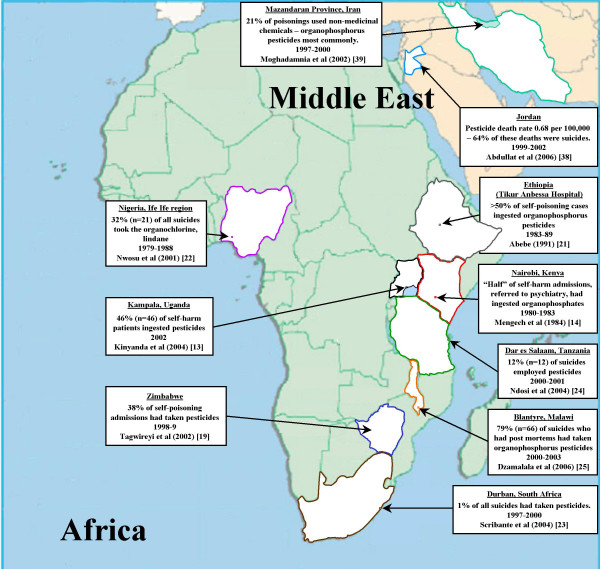
“Data on hospital admissions (fatal and non-fatal) for self-poisoning indicates that pesticides were used in 46% of episodes in Kampala (Uganda) in 2002, about 50% in Nairobi (Kenya 1980), 3-30% in Nigeria in the 1970-80, about 40% in the major hospitals in Zimbabwe in the 1980s and 90s and in about 50% in Ethiopia in…”
BackgroundRawat, S., Joshi, P. C., Khan, M. A., & Saraswathy, K. N. (2018) · Egyptian Journal of Forensic Sciences · doi:10.1186/s41935-018-0041-2 · Cited by 10
“Pesticide self Poisoning accounts for 30% suicide globally and 20% Suicides in Southeast Asia (Gunnell et al., 2007) to which WHO launched has Global Pesticide and Health Initiative recommending new pesticide policy, conducting epidemiological surveillance, developing programs to minimize pesticide poisoning and medic…”
BackgroundLo, J., & Poon, L. Y.-C. (2019) · Ocular Immunology and Inflammation · doi:10.1080/09273948.2019.1640882 · Cited by 6
Compaoré, H., Ilboudo, S., Nati, A. D. B., & Balima, M. (2019) · African Crop Science Journal · doi:10.4314/acsj.v27i4.2 · Cited by 6
Farrar, R. A., Justus, A. B., Masurkar, V. A., & Garrett, P. (2021) · Anaesthesia and Intensive Care · doi:10.1177/0310057x211047603 · Cited by 6
Regional Suicide Mortality Rate in Korea
Park, S.-H., Kim, Y., & Lim, D. (2013) · The Korean Journal of Health Service Management · doi:10.12811/kshsm.2013.7.3.287 · Cited by 6
“Gunnell 등[19]은 체계적 분석(1990-2007) 결과 전 세계 자살의 약 30%는 살충제에 의하며 유럽은 4%, 서태평양지역 은 50%인 것으로 보고하였다.”
Rajendra, R., Nagaraj, M. K. T., Majgi, S. M., Heggere, N., Robinson, C., & Poole, R. (2015) · Research Explorer (The University of Manchester) · Cited by 6
Review of a Case of Paraquat Poisoning in a Tertiary Care Rural-based ICU
Sharma, D. S., Prajapati, A. M., & Shah, D. M. (2019) · Indian Journal of Critical Care Medicine · doi:10.5005/jp-journals-10071-23182 · Cited by 6
Use of low-molecular-weight heparin in severe paraquat poisoning: a case report
Montoya-Giraldo, M. A., Díaz, L. F., Calzada, U. E. G., Quintero, J., & Zuluaga, A. F. (2020) · Journal of Medical Case Reports · doi:10.1186/s13256-020-02565-9 · Cited by 6
Agrochemical Concentration Level in Zaria Dam Reservoir and Ground Waters in the Environs
Tanko, J. A., Oluwadamisi, E. A., & Abubakar, I. (2012) · Journal of Environmental Protection · doi:10.4236/jep.2012.32028 · Cited by 7
Eco‐Friendly and Economical Method for Detoxification of Pesticides by Microbes
Upadhyay, A. K., Mojumdar, A., Raina, V., & Ray, L. (2019) · Wiley eBooks · doi:10.1002/9781119592129.ch6 · Cited by 6
Role of Pesticide Applications in Sustainable Agriculture
Anani, O. A., & Adetunji, C. O. (2021) · Wiley eBooks · doi:10.1002/9781119711520.ch13 · Cited by 7
Organophosphate and Carbamate Toxicity: Understanding, Diagnosing and Treating Poisoning
Jali, A. M. (2024) · Journal of Pioneering Medical Science · doi:10.47310/jpms2024130714 · Cited by 14
“Effective pesticide regulation, such as restricting access to highly toxic chemicals, has been shown to reduce suicide rates in these settings [75].”
Neeraj, G. P. P., Philip, A. J., Prakash, G., Praneeth, C. S., Chandiraseharan, V. K., Zachariah, A., Rajan, S. J., Nellickal, A. J., Iyyadurai, R., Pichamuthu, K. K., et al. (2026) · Indian Journal of Critical Care Medicine · doi:10.5005/jp-journals-10071-25131 · Cited by 5
Intoxications aiguës graves chez l’adulte en réanimation médicale
Charra, B., Hachimi, A., Benslama, A., & Motaouakkil, S. (2013) · Annales de Toxicologie Analytique · doi:10.1051/ata/2013030 · Cited by 7
“Les pesticides ont représenté les produits les plus incriminés dans les intoxications aiguës graves dans les pays en voie de développement (y compris notre travail) du fait de la disponibilité de ces produits, à l’opposition des pays développés où les médicaments sont plus fréquemment utilisés [18–21].”
BackgroundPredictors of mortality in emergency centre patients with acute pesticide poisoning in Uganda
Odakha, J. A., Harborne, D., & Chen, H. (2022) · African Journal of Emergency Medicine · doi:10.1016/j.afjem.2022.05.005 · Cited by 5
“hese deaths are disproportionately higher in low income countries LIC) and lower middle income countries (LMIC), which lack rigorous esticide regulatory and safety measures [2] .”
Background
Metadata
- Authors
- Gunnell, D., Eddleston, M., Phillips, M. R., & Konradsen, F.
- Affiliations
- University of Bristol (GB)
- South Asian Clinical Toxicology Research Collaboration (LK)
- Beijing HuiLongGuan Hospital (CN)
- University of Copenhagen (DK)
- Corresponding author
- Gunnell, David
- Venue
- BMC Public Health
- Published
- 2007-12
- Volume
- 7
- Issue
- 1
- Pages
- 357-357
- ISSN
- 1471-2458 (ISSN-L)
- PMC
- PMC2262093
- OpenAlex
- W2149111967
- Cited by
- 969
- References
- 102
- Citations by year
- 2026: 32 · 2025: 41 · 2024: 36 · 2023: 54 · 2022: 63 · 2021: 65 · 2020: 72 · 2019: 66 · 2018: 57 · 2017: 118 · 2016: 60 · 2015: 55 · 2014: 49 · 2013: 50 · 2012: 35
- FWCI
- 4.43
- Type
- journal article
- Language
- en
- Open access
- gold
- doi.org
- Licence
- cc-by
- creativecommons.org/licenses/by/2.0 (tdm)
- creativecommons.org/licenses/by/2.0 (vor, 20 d)
- Locations
- BMC Public Health (publishedVersion, cc-by)
- PubMed Central (publishedVersion, cc-by)
- PubMed (publishedVersion)
- DOAJ (DOAJ: Directory of Open Access Journals) (submittedVersion)
- Research at the University of Copenhagen (University of Copenhagen) (submittedVersion)
- Bristol Research (University of Bristol) (submittedVersion)
- Topics
- Social Sciences › Psychology › Clinical Psychology › Suicide and Self-Harm Studies
- Life Sciences › Pharmacology, Toxicology and Pharmaceutics › Toxicology › Pesticide Exposure and Toxicity
- Social Sciences › Sociology and Political Science › Homicide, Infanticide, and Child Abuse
- Keywords
- pesticide self-poisoning, pesticide suicide, suicide, global burden of disease, WHO regions, pesticide toxicity, pesticide storage
- MeSH terms
- Suicide Prevention, Humans, Pesticides, Poisoning, Safety, Suicide, Global Health, Incidence
About these checks
Registry, retraction, Cites and statistics results are computed, not judged, with one exception: a printed reference that no index lists is read once by a model before it counts as a citation error. Claims are extracted by a model and kept only when their quote appears verbatim in the text; each cited source is then checked, with a model’s help, for whether it says what the claim relies on. Those verdicts can be wrong — read the claim’s quote and the cited source before relying on one.
Statistics and arithmetic are recomputed, not judged.
Confidence bands are shown only for fields calibrated on our annotated test set. None is calibrated yet, so no band is shown.
What counts as a claim ›How we measure confidence ›How we check this ›
Are you an author, or do you see a problem with this page? Request a review
Data sources
Bibliographic data: Semantic Scholar, OpenAlex, Crossref.
Contains information from the Semantic Scholar Academic Graph Datasets, made available under the ODC Attribution License (ODC-BY 1.0).
Semantic Scholar’s data is described in: Kinney, R., et al. (2023). The Semantic Scholar Open Data Platform. arXiv:2301.10140.
