

The global distribution of fatal pesticide self-poisoning: Systematic review
Open accessThe DOI matches its Crossref record; 100 of the 102 references it cites were found in a registry or an index.
Abstract
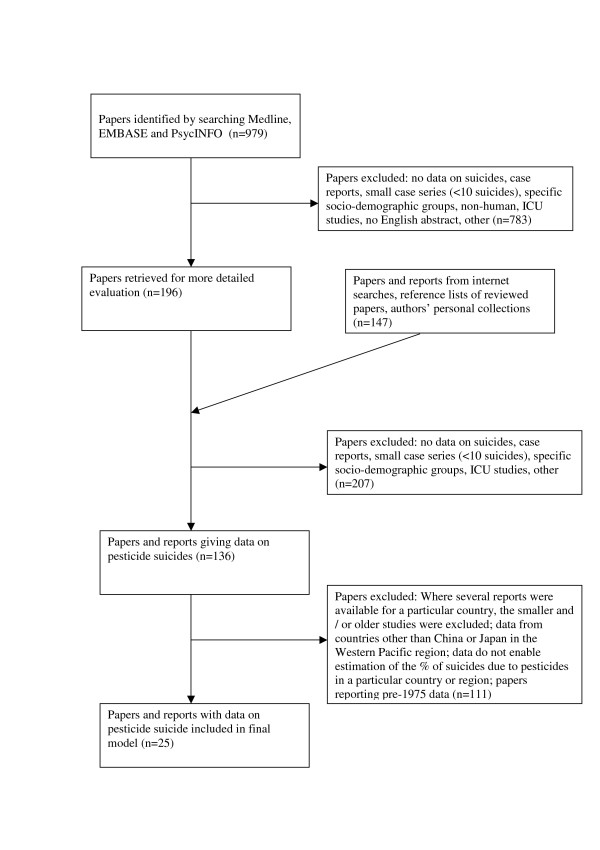
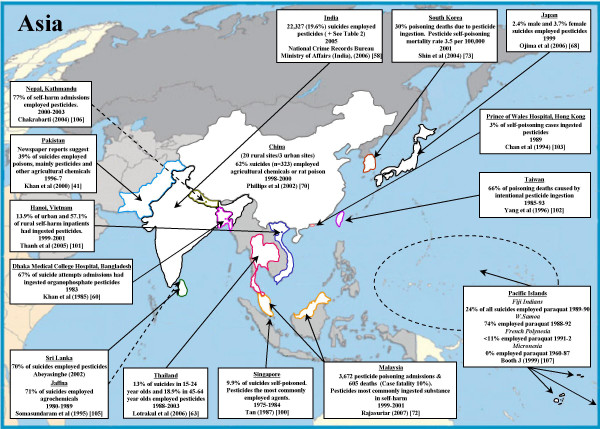
Background: Evidence is accumulating that pesticide self-poisoning is one of the most commonly used methods of suicide worldwide, but the magnitude of the problem and the global distribution of these deaths is unknown. Methods: We have systematically reviewed the worldwide literature to estimate the number of pesticide suicides in each of the World Health Organisation's six regions and the global burden of fatal self-poisoning with pesticides. We used the following data sources: Medline, EMBASE and psycINFO (1990–2007), papers cited in publications retrieved, the worldwide web (using Google) and our personal collections of papers and books. Our aim was to identify papers enabling us to estimate the proportion of a country's suicides due to pesticide self-poisoning. Results: We conservatively estimate that there are 258,234 (plausible range 233,997 to 325,907) deaths from pesticide self-poisoning worldwide each year, accounting for 30% (range 27% to 37%) of suicides globally. Official data from India probably underestimate the incidence of suicides; applying evidence-based corrections to India's official data, our estimate for world suicides using pesticides increases to 371,594 (range 347,357 to 439,267). The proportion of all suicides using pesticides varies from 4% in the European Region to over 50% in the Western Pacific Region but this proportion is not concordant with the volume of pesticides sold in each region; it is the pattern of pesticide use and the toxicity of the products, not the quantity used, that influences the likelihood they will be used in acts of fatal self-harm. Conclusion: Pesticide self-poisoning accounts for about one-third of the world's suicides. Epidemiological and toxicological data suggest that many of these deaths might be prevented if (a) the use of pesticides most toxic to humans was restricted, (b) pesticides could be safely stored in rural communities, and (c) the accessibility and quality of care for poisoning could be improved.
Overview
The claims and statistics of this paper haven’t been checked yet.
Free: it reads the open-access text and checks the first 5 claims that cite a source we can check. Create a free account to check every claim.
Integrity signals
Registry
Cites
Statistics
Figures
Verification
Claims the paper makes
The claims and statistics of this paper haven’t been checked yet.
Free: it reads the open-access text and checks the first 5 claims that cite a source we can check. Create a free account to check every claim.
Claims other papers make about this one
Each is checked against this paper’s own text: does it say what the citing paper says it does?
The source backs part of the claim, not all of it — or backs it for a different population, condition or comparison.
In the citing paper
“Pesticide ingestion was employed in approximately one-third of suicides worldwide, mostly in rural Asia and Latin America.(138)”
From Improving Suicide Prevention Through Evidence-Based Strategies: A Systematic Review (2021) · cites this paper as [138]
Experimental — accuracy not yet measuredThe source backs part of the claim, not all of it — or backs it for a different population, condition or comparison.
In the citing paper
“Pesticides are highly lethal, the leading suicide method worldwide, and the decline in suicide deaths worldwide is largely due to restricting access to pesticides where those deaths happen, namely in rural China,(138, 158) India(129) and Sri Lanka.(159)”
From Improving Suicide Prevention Through Evidence-Based Strategies: A Systematic Review (2021) · cites this paper as [138]
Experimental — accuracy not yet measured
Self-check
Percentages, sums and reported differences re-computed from the paper’s own numbers.
The self-check needs the paper’s full text.
Citations
Cites
Risk factors for suicide in China: a national case-control psychological autopsy study
Phillips, M. R., Yang, G., Zhang, Y., Wang, L., Ji, H., & Zhou, M. (2002) · The Lancet · doi:10.1016/s0140-6736(02)11681-3 · Cited by 928 · cited 2×
“7%) 47,720 to 82,680 Western Pacific A 155 35,000 1,050 (3%) 1,050 to 1,050 [68] B 1,562 296,000 183,520 (62%) 171,680 to 195,360 [70] Sub-total (W Pacific) 331,000 184,570 (55.”
Self-citationPatterns and problems of deliberate self-poisoning in the developing world
Eddleston, M. (2000) · QJM · doi:10.1093/qjmed/93.11.715 · Cited by 828 · cited 1×
“OP insecticides appear to be the most commonly ingested pesticides in rural Asia, accounting for around two thirds of cases[77].”
Self-citationSuicide rates in China, 1995–99
Phillips, M. R., Li, X., & Zhang, Y. (2002) · The Lancet · doi:10.1016/s0140-6736(02)07954-0 · Cited by 800 · cited 10×
“In our internet searches we particularly focused on identifying data for those countries in each of the six WHO regions that are likely to make the greatest contribution to the world burden of pesticide suicides because of their large populations: Nigeria and Ethiopia (Africa); United States of America, Brazil and Mex…”
InfluentialSelf-citationSuicide by intentional ingestion of pesticides: a continuing tragedy in developing countries
Gunnell, D., & Eddleston, M. (2003) · International Journal of Epidemiology · doi:10.1093/ije/dyg307 · Cited by 643 · cited 3×
“Recent extrapolations of data from a few countries in Asia suggest that there may be 300,000 suicides by deliberate ingestion of pesticides annually in this region alone[6,7].”
Self-citationPhillips, M. R., Li, X., Zhang, Y., & Eddleston, M. (2002) · The Lancet · doi:10.1016/s0140-6736(02)09269-3 · Cited by 382 · cited 1×
“Recent detailed studies of rural India suggest that the true number of suicides may be 2–3 fold higher than official estimates and concentrated in rural areas where pesticide poisoning is common[67,64] a pattern that is also found in China [ 74 ].”
BackgroundSelf-citationRUBENSTEIN, R. (1958) · Archives of Neurology And Psychiatry · doi:10.1001/archneurpsyc.1958.02340010121011 · Cited by 382
Eddleston, M., Eyer, P., Worek, F., Mohamed, F., Senarathna, L., von Meyer, L., Juszczak, E., Hittarage, A., Azhar, S., Dissanayake, W., et al. (2005) · The Lancet · doi:10.1016/s0140-6736(05)67598-8 · Cited by 369 · cited 1×
“Paraquat and aluminium phosphide self-poisoning have case-fatality in excess of 70%[10] [11] whereas case fatality for the organophosphorus (OP) insecticides dimethoate and chlorpyrifos are 23% and 8% respectively.[76] Based on the crude assumption that overall case fatality following pesticide self-poisoning worldwid…”
Self-citationKonradsen, F., van der Hoek, W., Cole, D. C., Hutchinson, G., Daisley, H., Singh, S., & Eddleston, M. (2003) · Toxicology · doi:10.1016/s0300-483x(03)00339-1 · Cited by 322 · cited 1×
“Restricting access to the most toxic pesticides is of paramount importance to reduce the number of severe selfpoisoning episodes[86].”
Self-citationSuicides in young people in rural southern India
Aaron, R., Joseph, A., Abraham, S., Muliyil, J., George, K., Prasad, J., Minz, S., Abraham, V. J., & Bose, A. (2004) · The Lancet · doi:10.1016/s0140-6736(04)15896-0 · Cited by 298 · cited 1×
“40% of the suicides in 15–19 year olds used pesticides in 1992–2001 [93] Lalwani et al.”
Pesticide poisoning in south India: opportunities for prevention and improved medical management
Srinivas Rao, C., Venkateswarlu, V., Surender, T., Eddleston, M., & Buckley, N. A. (2005) · Tropical Medicine & International Health · doi:10.1111/j.1365-3156.2005.01412.x · Cited by 228 · cited 1×
“Depending on the particular OP ingested, around 20–30% of patients require intubation [78,79].”
Self-citation
Research works printed but not linked: 6
- Obembe A Ilechukwu STC Tunwashe OL Odukoya O Self poisoning as seen in Lagos University Teaching Hospital: A Four Year Review The Nigerian Medical Practitioner 1986 11 49 53
- WHO Mental Health and Substance Abuse Facts and Figures Suicide Prevention: Emerging from Darkness 2007 South East Asia: WHO
- Khan N Poisoning in a medical unit of Dhaka Medical College Hospital in 1983 Bangladesh Medical Journal 1985 14 9 12
- Heijnen H WHO Bangladesh: International Programme OnChemical Safety 2001
- World Health Organization and IASP International Association for Suicide Prevention Safer Access to Pesticides: Community Interventions 2006 Geneva: Management of Mental and Brain Disorders, Department of Mental Health and Substance Abuse World Health Organization
- Kumar P Sharma SL Suicides in rural Punjab 2006 Punjab: Institute for Development and Communication (IDC)
Cited by
Items 701–800 of 974
Epilogue: The Three Solitudes of the Sociology of Mental Health
Avison, W. R. (2017) · Cambridge University Press eBooks · doi:10.1017/9781316471289.034 · Cited by 2
A STUDY OF HYPOKALEMIA IN ORGANOPHOSPHORUS POISONING IN DAHOD GUJARAT
Desai, M., & Kumar, B. (2021) · PARIPEX-INDIAN JOURNAL OF RESEARCH · doi:10.36106/paripex/6001242 · Cited by 2
Partnerships to Address School Safety through a Student Support Lens
Woodside, S. G., Savage, T. E., Stargell, N. A., Hardy, V. L., Akers, W. P., Chae, K. B., Locklear, C. E., Jones, S. J., Peele, J. A., & Pryor, S. D. (2022) · International Journal of School Social Work · doi:10.4148/2161-4148.1086 · Cited by 3
“The benefit of restricting lethal means from individuals who might be suicidal has been demonstrated in various studies (Gunnell et al., 2007; Lubin et al., 2010; Mann et al., 2005).”
BackgroundMengesha, G. G., Salo, K. S., Cheleko, D. C., Shago, T. S., Betire, M. G., Arato, A. A., Fentahun, Z., Borano, B. B., Ersulo, D., & Anijulo, A. D. (2022) · Archives of Agriculture and Environmental Science · doi:10.26832/24566632.2022.0702011 · Cited by 2
“…the unwise use of agrochemicals had led to the development of resistance by the pest population, eliminations of non-target organisms, pollution of the environment, poisoning of millions of agricultural workers, and about 300,000 deaths each year globally (Green et al., 1990; Gunnell et al., 2007).”
BackgroundMycorrhizal fungi isolated from Chilean orchids as biocontrollers of the pathogen Rhizoctonia solani
Pereira, G., Roa, N., Castillo‐Novales, D., Arriagada, C., Herrera, H., Molina‐Montenegro, M. A., & Atala, C. (2021) · Gayana. Botánica · doi:10.4067/s0717-66432021000200113 · Cited by 2
Almeida, A. J. D., Hobson, B. A., Saito, N. H., Bruun, D. A., Porter, V. A., Harvey, D. J., Garbow, J. R., Chaudhari, A. J., & Lein, P. J. (2024) · Neuropharmacology · doi:10.1016/j.neuropharm.2024.109895 · Cited by 3
“…Voorhees et al., 2017; Kumar et al., 2018), and self-poisoning with OP pesticides is one of the most prevalent means of suicide in low-and middle-income countries, with an estimated hundreds of thousands of deaths globally per year between 2010 and 2014 (Gunnell et al., 2007; Mew et al., 2017).”
Clinical Correlates Associated with Suicide Attempters at a Tertiary Care Centre of Eastern Nepal
Pandey, A. K., Shakya, D. R., Sapkota, N., & Nevedita (2015) · Cited by 3
Zanaty, A. (2017) · Ain Shams Journal of Forensic Medicine and Clinical Toxicology · doi:10.21608/ajfm.2017.18209 · Cited by 2
“Developing countries such as Bangladesh, India and Sri Lanka have reported increasing rates of poisoning and deaths due to pesticides (Gunnell et al., 2007; Dewan, 2014).”
BackgroundUtilization of Boxes for Pesticide Storage in Sri Lanka
Pieris, R., Weerasinghe, M., Abeywickrama, T., Manuweera, G. K., Eddleston, M., Dawson, A. H., & Konradsen, F. (2017) · Journal of Agromedicine · doi:10.1080/1059924x.2017.1283280 · Cited by 2
Self-citationAnalisis Propoxur pada Sampel Darah Postmortem Tikus Galur Wistar
Wijayati, A. (2017) · Jurnal Biosains Pascasarjana · doi:10.20473/jbp.v19i1.2017.27-40 · Cited by 3
Study of Leukocytes level as a prognostic marker in patients with organophosphate poisoning
Sapkota, S., Khanal, A., Maskey, A., Paudel, N., & Paudel, R. (2018) · Journal of Advances in Internal Medicine · doi:10.3126/jaim.v7i1.19576 · Cited by 2
Lin, C., Yen, T., Juang, Y., Lee, C., & Lee, S. (2018) · Psychology Research and Behavior Management · doi:10.2147/prbm.s167621 · Cited by 2
“suicide, suicide by poisoning is perhaps the most widely used method because pesticide ingestion alone has resulted in 30% of all suicide deaths worldwide.(4) However, suicide”
Pesticide poisoning: A response to Eddleston
London, L., Jørs, E., & Neupane, D. (2019) · Environmental Health Insights · doi:10.1177/1178630218825243 · Cited by 2
Haroun, M. R., Ahmed, M. K., Rezk, A. Y., Metwally, E. S., & Elregal, E. S. E. (2016) · The Egyptian Journal of Forensic Sciences and Applied Toxicology · doi:10.21608/ejfsat.2016.41007 · Cited by 2
Prevalence and Mortality Incidence of Poisoning Cases in Serdang Hospital
Leng, T. H. (2020) · ASM Science Journal · doi:10.32802/asmscj.2020.403 · Cited by 2
Velásquez, I. M., Castelpietra, G., Higuera, G., Castro, F., Gómez, B., Motta, J. A., & Goti, R. (2020) · Social Psychiatry and Psychiatric Epidemiology · doi:10.1007/s00127-020-01895-9 · Cited by 3
Graphene-Metal Modified Electrochemical Sensors for Toxic Chemicals
Vinodha, S. (2020) · Materials research foundations · doi:10.21741/9781644900956-4 · Cited by 2
“The most commonly worldwide used organo-phosphorus pesticides are used as insecticides to protect crops, but are equally unsafe to public health due to their high neurotoxicity [95].”
BackgroundKentrop, J., Savransky, V., Klaassen, S. D., van Groningen, T., Bohnert, S., Cornelissen, A. S., Cochrane, L., Barry, J., & Joosen, M. J. A. (2020) · Regulatory Toxicology and Pharmacology · doi:10.1016/j.yrtph.2020.104823 · Cited by 2
The HIV-Mental Health Challenge
Walkup, J. T., & Crystal, S. (2017) · Cambridge University Press eBooks · doi:10.1017/9781316471289.032 · Cited by 2
Paudyal, N., & Sapkota, K. (2020) · Kathmandu University Medical Journal · doi:10.3126/kumj.v18i1.33361 · Cited by 2
PESTICIDES; A NECESSARY EVIL IN THE AGRICULTURAL VALUE CHAIN- A REVIEW
Asiamah, J. Y., Tachie-Menson, J. W., Agyirifo, D. S., Agbeko, R., & Essem, F. (2020) · STED JOURNAL · doi:10.7251/sted2002053y · Cited by 2
Single-Center Experience With Paraquat Exposure in Nine Patients
McKinzie, B. P., Powell, B. D., Sljivic, S., Hollowell, J. L., Maxwell, E., Nizamani, R., King, B. T., & Williams, F. N. (2021) · Journal of Burn Care & Research · doi:10.1093/jbcr/irab242 · Cited by 2
Koziołek, W., Komisarz-Calik, M. A., Szypuła, G., Szczepaniak, P., Konopka, T., Kanclerz, G., & Hapkiewicz, K. (2021) · Kwartalnik Historii Nauki i Techniki · doi:10.4467/0023589xkhnt.21.035.14799 · Cited by 2
Mahadik, K. R., Raut, A., Chowdhury, M., Asad, A. H., & More, S. (2022) · Indian Journal of Community and Family Medicine · doi:10.4103/ijcfm.ijcfm_52_21 · Cited by 2
Paraquat ingestion in an adult with cystic fibrosis (CF): Diagnostic and management dilemmas
Evans, I., Kumar, S., France, M. W., Smith, D. B., Masel, P. J., Tay, G., Henderson, D., Bell, S. C., & Reid, D. W. (2023) · Respirology Case Reports · doi:10.1002/rcr2.1235 · Cited by 2
Choi, J., Lim, H. K., Lee, K. I., & Hwang, I. T. (2016) · Journal of Food Processing and Preservation · doi:10.1111/jfpp.12864 · Cited by 2
Lenina, O. A., Masson, P., & Petrov, K. A. (2018) · BioNanoScience · doi:10.1007/s12668-018-0572-x · Cited by 2
“Because of lacking safety precautions, poisoning by pesticides leads annually to the death of several hundred thousand people [1, 2].”
BackgroundGuerra-Rodríguez, N., Ramírez, É. S., Jiménez-León, J., & Ospina, F. L. R. (2020) · Universidad y Salud · doi:10.22267/rus.202203.194 · Cited by 3
“hospitalarios, se ha relacionado fuertemente con la intención suicida(13-15), y ha sido evidenciado en estudios epidemiológicos, tanto nacionales(16-20) como internacionales(21-24).”
BackgroundEngdahl, C. (2017) · DiVA at Umeå University (Umeå University) · Cited by 2
신용호 (2018) · Seoul National University Open Repository (Seoul National University) · Cited by 2
Costa, L. G. (2020) · Wiley eBooks · doi:10.1002/9781119438922.ch22 · Cited by 2
Graphene‐based Nanoelectronic Biosensors
Aamir, M., Ashraf, S., Shuja, A., & Akhtar, J. (2022) · Wiley eBooks · doi:10.1002/9783527824229.ch2 · Cited by 2
Abdelhamid, W. G., Mansour, W., & Nafea, O. E. (2021) · Drug and Chemical Toxicology · doi:10.1080/01480545.2020.1870487 · Cited by 1
Nano-Engineered Gold Particles for Pesticide Mineralization in Contaminated Water
Goel, P., & Arora, M. (2022) · Water science and technology library · doi:10.1007/978-3-031-00812-2_10 · Cited by 1
Hexaconazole poisoning - An uncommon poisoning incidence in rural tertiary care and our experience
Shetti, A. N., Patel, D. D., & Singla, B. (2022) · International Journal of Pharmaceutical Chemistry and Analysis · doi:10.18231/j.ijpca.2022.018 · Cited by 1
Ahmad, S., Shazmin, Rafique, M., Ali, F., Munis, M. F. H., Hassan, S. W., Sultan, T., Javed, T., & Chaudhary, H. J. (2022) · Emerging contaminants and associated treatment technologies · doi:10.1007/978-3-030-96523-5_8 · Cited by 1
Intoxicación fatal con paraquat por vía dérmica. Reporte de caso
Lanza, S. S. (2023) · Revista de Ciencias Forenses de Honduras · doi:10.5377/rcfh.v9i1.16175 · Cited by 1
Bharali, B., Kumaran, N., Meena, D. S., & Garg, M. K. (2023) · Cureus · doi:10.7759/cureus.48527 · Cited by 1
“Organophosphorus (OP) poisoning continues to be the most frequent cause of self-poisoning, especially in the developing world [1].”
BackgroundAkamo, A. J., Olagunju, B. A., Eteng, O. E., Kehinde, I. A., Ojelabi, A. O., Akinsanya, M. A., Adebisi, A. A., Adekunbi, T. S., Adenowo, A. F., Anifowose, F., et al. (2025) · Pharmacological Research - Reports · doi:10.1016/j.prerep.2025.100029 · Cited by 2
Dhanarisi, J., Eddleston, M., Wunnapuk, K., Gawarammana, I., & Mohamed, F. (2025) · Clinical Toxicology · doi:10.1080/15563650.2024.2437119 · Cited by 1
“…insecticide self-poisoning is an important clinical problem in rural regions of the developing world, with an estimated 100,000 deaths every year [1,7]. according to hospital admissions data from sri lanka between 2004 and 2010, organo-phosphorus and carbamate insecticide poisoning accounted for…”
Self-citationPasha, S. A., & Babu, B. (2024) · Indian Journal of Critical Care Medicine · doi:10.5005/jaypee-journals-10071-24667.204 · Cited by 1
A Case Report of Acute Paraquat Poisoning
Thakare, S., Mali, M., & Vijay, A. (2025) · Indian Journal of Critical Care Medicine · doi:10.5005/jaypee-journals-10071-24933.30 · Cited by 1
Suicidal Human Poisoning With Fungicide: A Rare Case From Rural India
Sivasankary, R., Muthunagai, R., & Tyagi, A. (2025) · Cureus · doi:10.7759/cureus.86943 · Cited by 2
“In records, most common pesticide-related deaths are due to ingestion of organophosphorus insecticides [10-13].”
Yellapu, V., Pathi, D., Rao, B. R. P., Mohanty, L., Suna, S. P., Srinivas, M. S., Goyal, D., & Shivam, S. (2025) · Cureus · doi:10.7759/cureus.88332 · Cited by 1
“Gunnell et al. estimated that there were 258,234 deaths annually from OP poisoning worldwide, accounting for about 30% of suicidal cases [4].”
Challenges of Emerging Pollutants for the Ecological Receptors in the Twenty-First Century
Das, C. (2025) · Springer eBooks · doi:10.1007/978-981-96-8260-7_3 · Cited by 2
Zheng, W., Lu, X., Gao, L., Feng, M., Tian, F., Lei, M., Jiang, Y., Huang, S., & Peng, X. (2025) · Journal of Affective Disorders · doi:10.1016/j.jad.2025.120609 · Cited by 1
IoT Enabled Pest Detection and Disease Management System for Agriculture 4.0
ISLAM, M. N., Rifat, R. I., Sharmin, S., Karim, M., Islam, M. T., Khan, Z., Turjo, K. I. H., & Sohan, M. F. A. A. (2025) · Communications in computer and information science · doi:10.1007/978-3-032-11355-9_10 · Cited by 1
Clinical Outcomes in Paraquat Poisoning: A Retrospective Study from Eastern India
Pandey, A., Mishra, S., Subhankar, S., & Behera, D. (2026) · Journal of Association of Pulmonologist of Tamil Nadu · doi:10.4103/japt.japt_35_25 · Cited by 1
Mwezi, R. J., Bukalasa, J., Otieno, F., Kombo, R., Ochola, G., Muro, F. J., Anicetus, H., Urasa, S., Davis, M., Eddleston, M., et al. (2026) · Frontiers in Toxicology · doi:10.3389/ftox.2026.1882231 · Cited by 2
“Globally, millions of pesticide poisoning cases occur annually, resulting in substantial morbidity and mortality among farming communities and rural populations (Gunnell et al., 2007).”
Self-citationBurge, S. (2020) · European Respiratory Society eBooks · doi:10.1183/2312508x.10034319 · Cited by 4
Severe Accidental Organophosphorus Poisoning in Two Children
Aminisefat, A., Saravani, K., & Saravani, M. (2020) · International Journal of Medical Toxicology and Forensic Medicine · doi:10.32598/ijmtfm.v10i4.30128 · Cited by 1
Hydrogen cyanamide poisoning; rare but serious, case report
radwan, R. E., & Ramadan, N. (2021) · The Egyptian Journal of Forensic Sciences and Applied Toxicology · doi:10.21608/ejfsat.2021.51810.1179 · Cited by 1
Begum, R. A., Saha, A. K., & Haque, D. M. J. (2023) · International Journal of Medical Science and Clinical Research Studies · doi:10.47191/ijmscrs/v3-i7-42 · Cited by 1
Acute paraquat poisoning in an adolescent with compromised outcome: A case report
Yadav, M., Shah, N. A., Ghimire, R., Lamichhane, S., Yadav, S., Yadav, D., & Jha, S. K. (2024) · SAGE Open Medical Case Reports · doi:10.1177/2050313x241240098 · Cited by 1
Continuous Flow Synthesis of the Nerve Agent Antidote Pralidoxime (2‐PAM) Iodide
Gomez, M. R. B. P., da Rocha, V. C. V., Chaves, L. S., Gotardo, L. E., Leão, R. A. C., Kitagawa, D. A. S., Cavalcante, S. F. D. A., & de Souza, R. O. M. A. (2024) · ChemistrySelect · doi:10.1002/slct.202402498 · Cited by 1
Alfaifi, M. S., Alasmari, A., Assiri, A. M., Alyahya, B., Abdulalem, N. A., Albogami, H. A., Alrougi, H. M., Altowairqi, A., Saqah, R., Hamoud, M. A., et al. (2025) · Journal of Taibah University Medical Sciences · doi:10.1016/j.jtumed.2024.12.012 · Cited by 1
Shrestha, A. P., Shrestha, R., Risal, A., Shakya, R., Sigdel, K., Bajracharya, R., Paudel, P., Gumudavelly, D., Egger, E. E., Zhuang, S. T., et al. (2025) · Implementation Research and Practice · doi:10.1177/26334895251343644 · Cited by 1
“Most suicide attempts and deaths occur in low-and middle-income countries (LMICs) (Gunnell et al., 2007).”
Current pesticide suicide surveillance methods used across the African continent: a scoping review
Jonker, M. A. T., Karunarathne, A. S., Utyasheva, L., Eddleston, M., Konradsen, F., & Rother, H. (2025) · BMJ Open · doi:10.1136/bmjopen-2025-103770 · Cited by 1
“The highest number of pesticide suicides reported was taken from studies that used multiple sources for surveillance (ie, they used health facility records and forensic/mortuary data as their sources) (n=487).”
Self-citationDeciphering Persistent D‐Dimer Elevation in Paraquat Poisoning: A Mortality Assessment Case Study
Domeneh, B. H., Parouhan, A., Mohammadi, K., Amiri, M., & Shafiei, S. (2025) · Clinical Case Reports · doi:10.1002/ccr3.71677 · Cited by 1
“Despite concentration gradients, PQ easily infiltrates lung tissue, inducing lung fibrosis and pneumonitis [4, 5].”
Paraquat Poisoning from a Tertiary Care Center in Northern India: A Case Series
Nair, A., Mylapalli, J. L., Jameel, A., Jamshed, N., & Sreejith, M. K. (2026) · Wilderness and Environmental Medicine · doi:10.1177/10806032261436381 · Cited by 1
Kolić, D., Divjak, T., Šinko, G., Spahić, Z., Ramić, A., Lulić, A.-M., Katalinić, M., Hrvat, N. M., Primožič, I., & Kovarik, Z. (2026) · European Journal of Medicinal Chemistry · doi:10.1016/j.ejmech.2026.118895 · Cited by 1
Kayani, H. A., Zafar, K., Gilani, A., Gilani, H., Naz, S., Ahmed, S., & Farid, N. (2026) · Discover Plants. · doi:10.1007/s44372-026-00619-8 · Cited by 1
“Global estimated deaths due to chemical pesticide poisoning is around 300,000 per year [6].”
Cultivating Compliance: The Legal Architecture of Sustainable Pesticide Management in India
John, S. (2026) · International Journal of Judicial Science Research Studies (IJJSRS) · doi:10.63090/ijjsrs/3049.0618.0043 · Cited by 1
Hemoadsorption in Poisoning and Intoxication
Omar, S., & Brown, J. M. (2026) · Journal of Translational Critical Care Medicine · doi:10.14218/jtccm.2025.00020 · Cited by 1
Hospital-based Survey of Clinical Cases of Pesticide Poisoning in Japan 2007-2009
NAGAMI, H., SHIIGAI, T., Maejima, F., 良夫, 西., & NATSUKAWA, S. (2012) · JOURNAL OF THE JAPANESE ASSOCIATION OF RURAL MEDICINE · doi:10.2185/jjrm.61.32 · Cited by 1
Trends in the Exposures to Pesticides in Central Europe
Pelclová, D., Navrátil, T., Mrázová, K., Rakovcová, H., & Fenclov, Z. (2011) · InTech eBooks · doi:10.5772/18473 · Cited by 1
“Globally, agricultural pesticides account for at least 250,000 suicide deaths each year, making pesticides the single most common means of suicide worldwide (Gunnell et al., 2007, Nguyen et al., 2010, Lin et al. 2010, Roberts et al., 2010).”
BackgroundComparative determination of the efficacy of bispyridinium oximes in paraoxon poisoning
Vrdoljak, A. L., Berend, S., Radic, B., & Kuča, K. (2010) · Toxicology Letters · doi:10.1016/j.toxlet.2010.03.1000 · Cited by 1
Capacity building in environmental and occupational health in Sri Lanka
Wickremasinghe, A. R., Peiris-John, R. J., Nandasena, S., Delzell, E., Tipre, M., & Sathiakumar, N. (2011) · American Journal of Industrial Medicine · doi:10.1002/ajim.21999 · Cited by 1
Avaliação das intoxicações por paraquato em portugal no período de 2004 a 2006
de Almeida, M. I. M. F., Rato, F., Dias, M. J., & Carvalho, M. C. (2009) · Portuguese National Funding Agency for Science, Research and Technology (RCAAP Project by FCT) · Cited by 1
Profile of Acute Poisoning at Moodabidri, Karnataka (South India): Retrospective Survey
Naik, B. S., Alva, M. J., & Shetty, D. (2011) · Journal of Indian Society of Toxicology · Cited by 1
Suicide by self-poisoning with pesticides: the need for action
Bertolote, J. M., & Fleischmann, A. (2015) · Suicidologi/Nytt i suicidologi · doi:10.5617/suicidologi.1930 · Cited by 1
Effective Factors in Recurrent Deliberate Self-Poisoning Attempts
Moradinazar, M., Najafi, F., Baneshi, M. R., & Haghdoost, A. A. (2017) · Iranian Journal of Psychiatry and Behavioral Sciences · doi:10.5812/ijpbs.3252 · Cited by 1
“The methods of SA are associated with social-cultural factors and availability of drugs to the people of some areas (6).”
MethodRegulatory control of highly hazardous pesticides to prevent self-poisoning
Wu, K. C., & Chen, Y. (2017) · The Lancet Global Health · doi:10.1016/s2214-109x(17)30320-0 · Cited by 1
Chemical suicides: Hazards and how to manage them
Logan, M. B., & Baxter, C. M. (2017) · ACS Chemical Health & Safety · doi:10.1016/j.jchas.2017.08.001 · Cited by 1
Lethal Means Restriction: Historical, International, and Professional Considerations
Bongar, B. M., Lockwood, D., Spangler, D. A., & Cowell, W. (2017) · Springer eBooks · doi:10.1007/978-981-10-4816-6_11 · Cited by 2
Abass, M. A., Arafa, M. H., elfakharany, Y., & Atteia, H. H. (2019) · The Egyptian Journal of Forensic Sciences and Applied Toxicology · doi:10.21608/ejfsat.2016.41637 · Cited by 1
“DISCUSSION Poisoning with organophosphates (OP) is a global problem (Gunnell et al., 2007).”
BackgroundInfluentialHow much self-poisoning attempts are visible in Iran?
Moradinazar, M., Najafi, F., Baneshi, M. R., & Haghdoost, A. A. (2017) · Journal of Injury and Violence Research · doi:10.5249/jivr.v10i2.914 · Cited by 2
Study of the pattern, intent behind and outcome of acute poisoning in a tertiary care centre
Srinivas, G., Aashik, Y. S., & Muthalik, M. (2020) · International Journal of Advances in Medicine · doi:10.18203/2349-3933.ijam20205472 · Cited by 1
“Patients admitted within 2 hours of ingestion had the least mortality.(10) Median hospital stay was 4 days.”
BackgroundPescosolido, B. A., & Boyer, C. A. (2017) · Cambridge University Press eBooks · doi:10.1017/9781316471289.025 · Cited by 2
Отравления веществами антихолинэстеразного действия
Afandiyev, I. N. (2021) · EURASIAN JOURNAL OF CLINICAL SCIENCES · doi:10.28942/ejcs.v3i1.98 · Cited by 1
Carvalho, K. P., Corassa, R. B., Cattafesta, M., Petarli, G. B., Zandonade, E., & Salaroli, L. B. (2022) · Brazilian Journal of Health Review · doi:10.34119/bjhrv5n2-083 · Cited by 2
Chiesa, M., Ronzitti, S., Ornaghi, A., Romanato, S., Giampieri, E., & Clerici, M. (2013) · Springer eBooks · doi:10.1007/978-88-470-2715-2_26 · Cited by 1
Igbinosa, I. H., Igharo, O. G., & Okoh, A. I. (2022) · University of Lagos Journal of Basic Medical Sciences · doi:10.52968/23682720 · Cited by 1
Status and trends of medical expenditures for poisoning patients
Kim, E. N., Jeon, S., Lee, H. S., & Chung, S. P. (2023) · Journal of the Korean society of clinical toxicology · doi:10.22537/jksct.2022.00017 · Cited by 1
The agricultural extensification on polluted lands
Pandey, V. C., Gajić, G., Lebrun, M., & Mahajan, P. (2023) · Elsevier eBooks · doi:10.1016/b978-0-323-95618-5.00004-x · Cited by 1
Opiro, K., Amone, D., Wokorach, A., Sikoti, M., & Bongomin, F. (2024) · East African Journal of Health and Science · doi:10.37284/eajhs.7.1.1711 · Cited by 3
“Acute envenomation (injection of poisonous substances by stings, bites, or other similar means) and toxicological emergencies resulting from accidental or intentional ingestion of poisonous substances or drug overdose are significant causes of morbidity and mortality worldwide (3).”
BackgroundAssessment of farmers’ knowledge and practices adopted for the safe use of pesticides in Jammu
Abrol, P., Choudhary, P., Kumar, P., & Gupta, R. (2023) · Journal of Community Mobilization and Sustainable Development · doi:10.5958/2231-6736.2023.00095.9 · Cited by 1
Outcome of paraquat poisoning patients admitted in a tertiary hospital in Bangladesh
Khan, F. B. S., Rahman, A. S. M. M., Haque, M. Z., & Rahman, M. K. (2023) · TAJ Journal of Teachers Association · doi:10.3329/taj.v36i2.71301 · Cited by 1
Nanocontainer for Binding and Neutralization of Paraquat
Ziganshinа, A. Y., Shutova, A. V., Mansurova, E. E., Maslennikov, A. A., Fazleeva, R. R., Yanilkin, V. V., Lyubina, A. P., Voloshina, A. D., Nizameev, I. R., Kadirov, M. K., et al. (2024) · Russian Journal of General Chemistry · doi:10.1134/s1070363224090123 · Cited by 1
Juby, S., Soumya, P., Jayachandran, K., & Radhakrishnan, E. K. (2025) · Microbiology · doi:10.1134/s0026261724605001 · Cited by 1
“To achieve this, various strategies are being implemented to strengthen the ability of plants to withstand drought while simultaneously boosting their yield (Gunnell et al., 2007; Pretty and Bharucha, 2014).”
Factors Related to Blood Cholinesterase Levels in Shallot Farmers in Enrekang Indonesia
Ikhtiar, M., Syam, N., Sulaiman, U., Puspitasari, A. A., & Amir, H. (2025) · Universal Journal of Public Health · doi:10.13189/ujph.2025.130313 · Cited by 1
dos Santos, M. E., dos Santos, H. C., & Dantas, H. J. (2012) · VII CONNEPI - Congresso Norte Nordeste de Pesquisa e Inovação · Cited by 1
Intoxicación letal con Aldicarb: Análisis de sangre postmortem mediante LC-ESI-MS/MS
Gaviria, D. J. M., & Reyes, N. P. (2015) · Revista de la Facultad de Medicina · doi:10.15446/revfacmed.v63n3.49744 · Cited by 1
“Gunnell D, Eddleston M. Suicide by intentional ingestion of pesticides: a continuing tragedy in developing countries.”
BackgroundLiu, Y., Liu, B., Zhou, H. H., & Wei, L. (2012) · The American Journal of the Medical Sciences · doi:10.1097/maj.0b013e318254490d · Cited by 1
“Approximately 200,000 people die of OP poisoning worldwide each year.(1) Respiratory failure is the leading cause of death after OP poisoning.”
BackgroundToxicology from across the pond
Hoffman, R. S. (2010) · The Journal of the Royal College of Physicians of Edinburgh · doi:10.4997/jrcpe.2010.212 · Cited by 1
Kuča, K. (2013) · Journal of Enviromental Immunology and Toxicology · doi:10.7178/jeit.16 · Cited by 1
Ibeneme, S. C., Egbosionu, V., Ibeneme, G. C., Ezuma, A. D., Ettu, T. U., Nwankwo, J. M., Limaye, D., & Nna, E. O. (2016) · BioMed Research International · doi:10.1155/2016/1081258 · Cited by 1
“Potential health hazards include pesticide self-poisoning [10], which is a major public health problem resulting in 3 million cases of acute poisoning, and 250 to 370,000 deaths, annually [11, 12].”
BackgroundAtypical Presentation of an Organophosphorus Poisoning
Bosse, A. I. G. (2015) · Journal of Clinical Toxicology · doi:10.4172/2161-0495.1000259 · Cited by 1
“With over 100 insecticides in existence, OP self-poisonings account for roughly 30% of suicides around the world annually [1,2].”
BackgroundApache II Scoring as an Index of Severity in Organophosphorus Poisoning
Jamal, Q., Rahman, A. S., Siddiqui, M. A., Riaz, M., Ansari, M., & Saleemullah (2017) · Journal of Clinical Toxicology · doi:10.4172/2161-0495.1000354 · Cited by 5
“It is estimated that there are 34,000 suicides annually in the Middle East region and 20% of suicides in the Middle East region are the result of pesticide ingestion [11,12].”
Background
Metadata
- Authors
- Gunnell, D., Eddleston, M., Phillips, M. R., & Konradsen, F.
- Affiliations
- University of Bristol (GB)
- South Asian Clinical Toxicology Research Collaboration (LK)
- Beijing HuiLongGuan Hospital (CN)
- University of Copenhagen (DK)
- Corresponding author
- Gunnell, David
- Venue
- BMC Public Health
- Published
- 2007-12
- Volume
- 7
- Issue
- 1
- Pages
- 357-357
- ISSN
- 1471-2458 (ISSN-L)
- PMC
- PMC2262093
- OpenAlex
- W2149111967
- Cited by
- 969
- References
- 102
- Citations by year
- 2026: 32 · 2025: 41 · 2024: 36 · 2023: 54 · 2022: 63 · 2021: 65 · 2020: 72 · 2019: 66 · 2018: 57 · 2017: 118 · 2016: 60 · 2015: 55 · 2014: 49 · 2013: 50 · 2012: 35
- FWCI
- 4.43
- Type
- journal article
- Language
- en
- Open access
- gold
- doi.org
- Licence
- cc-by
- creativecommons.org/licenses/by/2.0 (tdm)
- creativecommons.org/licenses/by/2.0 (vor, 20 d)
- Locations
- BMC Public Health (publishedVersion, cc-by)
- PubMed Central (publishedVersion, cc-by)
- PubMed (publishedVersion)
- DOAJ (DOAJ: Directory of Open Access Journals) (submittedVersion)
- Research at the University of Copenhagen (University of Copenhagen) (submittedVersion)
- Bristol Research (University of Bristol) (submittedVersion)
- Topics
- Social Sciences › Psychology › Clinical Psychology › Suicide and Self-Harm Studies
- Life Sciences › Pharmacology, Toxicology and Pharmaceutics › Toxicology › Pesticide Exposure and Toxicity
- Social Sciences › Sociology and Political Science › Homicide, Infanticide, and Child Abuse
- Keywords
- pesticide self-poisoning, pesticide suicide, suicide, global burden of disease, WHO regions, pesticide toxicity, pesticide storage
- MeSH terms
- Suicide Prevention, Humans, Pesticides, Poisoning, Safety, Suicide, Global Health, Incidence
About these checks
Registry, retraction, Cites and statistics results are computed, not judged, with one exception: a printed reference that no index lists is read once by a model before it counts as a citation error. Claims are extracted by a model and kept only when their quote appears verbatim in the text; each cited source is then checked, with a model’s help, for whether it says what the claim relies on. Those verdicts can be wrong — read the claim’s quote and the cited source before relying on one.
Statistics and arithmetic are recomputed, not judged.
Confidence bands are shown only for fields calibrated on our annotated test set. None is calibrated yet, so no band is shown.
What counts as a claim ›How we measure confidence ›How we check this ›
Are you an author, or do you see a problem with this page? Request a review
Data sources
Bibliographic data: Semantic Scholar, OpenAlex, Crossref.
Contains information from the Semantic Scholar Academic Graph Datasets, made available under the ODC Attribution License (ODC-BY 1.0).
Semantic Scholar’s data is described in: Kinney, R., et al. (2023). The Semantic Scholar Open Data Platform. arXiv:2301.10140.
