

The global distribution of fatal pesticide self-poisoning: Systematic review
Open accessThe DOI matches its Crossref record; 100 of the 102 references it cites were found in a registry or an index.
Abstract
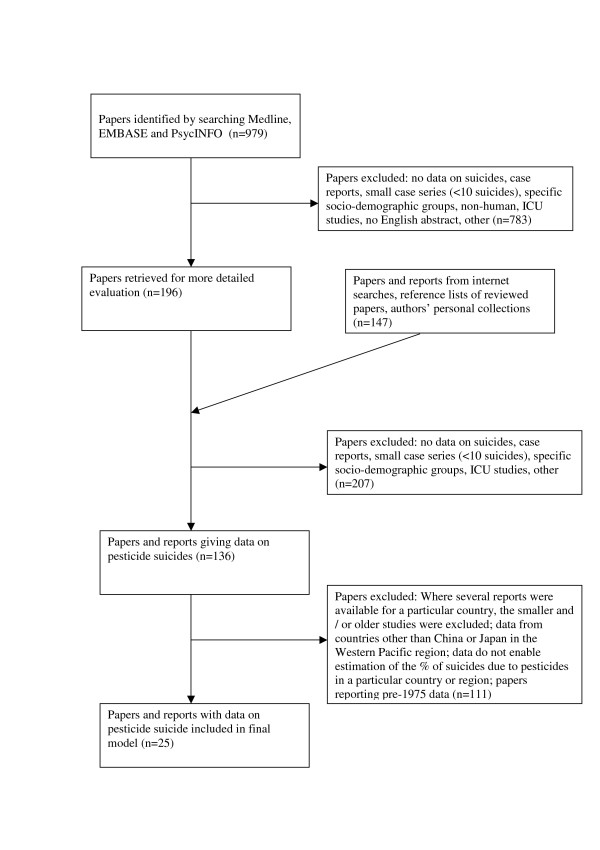
Background: Evidence is accumulating that pesticide self-poisoning is one of the most commonly used methods of suicide worldwide, but the magnitude of the problem and the global distribution of these deaths is unknown. Methods: We have systematically reviewed the worldwide literature to estimate the number of pesticide suicides in each of the World Health Organisation's six regions and the global burden of fatal self-poisoning with pesticides. We used the following data sources: Medline, EMBASE and psycINFO (1990–2007), papers cited in publications retrieved, the worldwide web (using Google) and our personal collections of papers and books. Our aim was to identify papers enabling us to estimate the proportion of a country's suicides due to pesticide self-poisoning. Results: We conservatively estimate that there are 258,234 (plausible range 233,997 to 325,907) deaths from pesticide self-poisoning worldwide each year, accounting for 30% (range 27% to 37%) of suicides globally. Official data from India probably underestimate the incidence of suicides; applying evidence-based corrections to India's official data, our estimate for world suicides using pesticides increases to 371,594 (range 347,357 to 439,267). The proportion of all suicides using pesticides varies from 4% in the European Region to over 50% in the Western Pacific Region but this proportion is not concordant with the volume of pesticides sold in each region; it is the pattern of pesticide use and the toxicity of the products, not the quantity used, that influences the likelihood they will be used in acts of fatal self-harm. Conclusion: Pesticide self-poisoning accounts for about one-third of the world's suicides. Epidemiological and toxicological data suggest that many of these deaths might be prevented if (a) the use of pesticides most toxic to humans was restricted, (b) pesticides could be safely stored in rural communities, and (c) the accessibility and quality of care for poisoning could be improved.
Overview
The claims and statistics of this paper haven’t been checked yet.
Free: it reads the open-access text and checks the first 5 claims that cite a source we can check. Create a free account to check every claim.
Integrity signals
Registry
Cites
Statistics
Figures
Verification
Claims the paper makes
The claims and statistics of this paper haven’t been checked yet.
Free: it reads the open-access text and checks the first 5 claims that cite a source we can check. Create a free account to check every claim.
Claims other papers make about this one
Each is checked against this paper’s own text: does it say what the citing paper says it does?
The source backs part of the claim, not all of it — or backs it for a different population, condition or comparison.
In the citing paper
“Pesticide ingestion was employed in approximately one-third of suicides worldwide, mostly in rural Asia and Latin America.(138)”
From Improving Suicide Prevention Through Evidence-Based Strategies: A Systematic Review (2021) · cites this paper as [138]
Experimental — accuracy not yet measuredThe source backs part of the claim, not all of it — or backs it for a different population, condition or comparison.
In the citing paper
“Pesticides are highly lethal, the leading suicide method worldwide, and the decline in suicide deaths worldwide is largely due to restricting access to pesticides where those deaths happen, namely in rural China,(138, 158) India(129) and Sri Lanka.(159)”
From Improving Suicide Prevention Through Evidence-Based Strategies: A Systematic Review (2021) · cites this paper as [138]
Experimental — accuracy not yet measured
Self-check
Percentages, sums and reported differences re-computed from the paper’s own numbers.
The self-check needs the paper’s full text.
Citations
Cites
Risk factors for suicide in China: a national case-control psychological autopsy study
Phillips, M. R., Yang, G., Zhang, Y., Wang, L., Ji, H., & Zhou, M. (2002) · The Lancet · doi:10.1016/s0140-6736(02)11681-3 · Cited by 928 · cited 2×
“7%) 47,720 to 82,680 Western Pacific A 155 35,000 1,050 (3%) 1,050 to 1,050 [68] B 1,562 296,000 183,520 (62%) 171,680 to 195,360 [70] Sub-total (W Pacific) 331,000 184,570 (55.”
Self-citationPatterns and problems of deliberate self-poisoning in the developing world
Eddleston, M. (2000) · QJM · doi:10.1093/qjmed/93.11.715 · Cited by 828 · cited 1×
“OP insecticides appear to be the most commonly ingested pesticides in rural Asia, accounting for around two thirds of cases[77].”
Self-citationSuicide rates in China, 1995–99
Phillips, M. R., Li, X., & Zhang, Y. (2002) · The Lancet · doi:10.1016/s0140-6736(02)07954-0 · Cited by 800 · cited 10×
“In our internet searches we particularly focused on identifying data for those countries in each of the six WHO regions that are likely to make the greatest contribution to the world burden of pesticide suicides because of their large populations: Nigeria and Ethiopia (Africa); United States of America, Brazil and Mex…”
InfluentialSelf-citationSuicide by intentional ingestion of pesticides: a continuing tragedy in developing countries
Gunnell, D., & Eddleston, M. (2003) · International Journal of Epidemiology · doi:10.1093/ije/dyg307 · Cited by 643 · cited 3×
“Recent extrapolations of data from a few countries in Asia suggest that there may be 300,000 suicides by deliberate ingestion of pesticides annually in this region alone[6,7].”
Self-citationPhillips, M. R., Li, X., Zhang, Y., & Eddleston, M. (2002) · The Lancet · doi:10.1016/s0140-6736(02)09269-3 · Cited by 382 · cited 1×
“Recent detailed studies of rural India suggest that the true number of suicides may be 2–3 fold higher than official estimates and concentrated in rural areas where pesticide poisoning is common[67,64] a pattern that is also found in China [ 74 ].”
BackgroundSelf-citationRUBENSTEIN, R. (1958) · Archives of Neurology And Psychiatry · doi:10.1001/archneurpsyc.1958.02340010121011 · Cited by 382
Eddleston, M., Eyer, P., Worek, F., Mohamed, F., Senarathna, L., von Meyer, L., Juszczak, E., Hittarage, A., Azhar, S., Dissanayake, W., et al. (2005) · The Lancet · doi:10.1016/s0140-6736(05)67598-8 · Cited by 369 · cited 1×
“Paraquat and aluminium phosphide self-poisoning have case-fatality in excess of 70%[10] [11] whereas case fatality for the organophosphorus (OP) insecticides dimethoate and chlorpyrifos are 23% and 8% respectively.[76] Based on the crude assumption that overall case fatality following pesticide self-poisoning worldwid…”
Self-citationKonradsen, F., van der Hoek, W., Cole, D. C., Hutchinson, G., Daisley, H., Singh, S., & Eddleston, M. (2003) · Toxicology · doi:10.1016/s0300-483x(03)00339-1 · Cited by 322 · cited 1×
“Restricting access to the most toxic pesticides is of paramount importance to reduce the number of severe selfpoisoning episodes[86].”
Self-citationSuicides in young people in rural southern India
Aaron, R., Joseph, A., Abraham, S., Muliyil, J., George, K., Prasad, J., Minz, S., Abraham, V. J., & Bose, A. (2004) · The Lancet · doi:10.1016/s0140-6736(04)15896-0 · Cited by 298 · cited 1×
“40% of the suicides in 15–19 year olds used pesticides in 1992–2001 [93] Lalwani et al.”
Pesticide poisoning in south India: opportunities for prevention and improved medical management
Srinivas Rao, C., Venkateswarlu, V., Surender, T., Eddleston, M., & Buckley, N. A. (2005) · Tropical Medicine & International Health · doi:10.1111/j.1365-3156.2005.01412.x · Cited by 228 · cited 1×
“Depending on the particular OP ingested, around 20–30% of patients require intubation [78,79].”
Self-citation
Research works printed but not linked: 6
- Obembe A Ilechukwu STC Tunwashe OL Odukoya O Self poisoning as seen in Lagos University Teaching Hospital: A Four Year Review The Nigerian Medical Practitioner 1986 11 49 53
- WHO Mental Health and Substance Abuse Facts and Figures Suicide Prevention: Emerging from Darkness 2007 South East Asia: WHO
- Khan N Poisoning in a medical unit of Dhaka Medical College Hospital in 1983 Bangladesh Medical Journal 1985 14 9 12
- Heijnen H WHO Bangladesh: International Programme OnChemical Safety 2001
- World Health Organization and IASP International Association for Suicide Prevention Safer Access to Pesticides: Community Interventions 2006 Geneva: Management of Mental and Brain Disorders, Department of Mental Health and Substance Abuse World Health Organization
- Kumar P Sharma SL Suicides in rural Punjab 2006 Punjab: Institute for Development and Communication (IDC)
Cited by
Items 301–400 of 974
Deliberate self‐harm and suicide by pesticide ingestion in the Sundarban region, India
Banerjee, S., Chowdhury, A. N., Schelling, E., Brahma, A., Biswas, M. K., & Weiss, M. G. (2009) · Tropical Medicine & International Health · doi:10.1111/j.1365-3156.2008.02199.x · Cited by 27
“…with pesticides are serious global health problems in many low- and middle-income countries (Gunnell & Eddleston 2003; Eddleston & Phillips 2004; Gunnell et al. 2007), including India (Bose et al. 1999; Gautami et al. 2001; Mohanty et al. 2004; Srinivas et al. 2005; Fleischmann et al. 2005).”
BackgroundGunnell, D. (2015) · Crisis · doi:10.1027/0227-5910/a000317 · Cited by 28
Self-citationBasu, N., Ayelo, P. A., Djogbénou, L., Kêdoté, M. N., Lawin, H., Tohon, H., Oloruntoba, E. O., Adebisi, N. A., Cazabon, D., Fobil, J. N., et al. (2016) · NEW SOLUTIONS A Journal of Environmental and Occupational Health Policy · doi:10.1177/1048291116651726 · Cited by 24
“Nigeria is no exception, as they feature prominently in a study concerning the global distribution of fatal pesticide poisoning.(25) To increase understanding of pesticide use practices in Nigeria, this case study used a community-based cross-sectional design.”
BackgroundDirect Plant Growth-Promoting Ability of Actinobacteria in Grain Legumes
Salam, N., Devi, A. M., & Li, W. (2016) · Springer eBooks · doi:10.1007/978-981-10-0707-1_1 · Cited by 26
Photocatalytic Decomposition of Paraquat Under Visible Light by Carbon Nitride and Hydrogen Peroxide
Desipio, M. M., Thorpe, R., & Saha, D. (2018) · Optik · doi:10.1016/j.ijleo.2018.07.124 · Cited by 24
Oxime K203: a drug candidate for the treatment of tabun intoxication
Górecki, L., Soukup, O., Kucera, T., Maliňák, D., Jun, D., Kuča, K., Musílek, K., & Korábečný, J. (2018) · Archives of Toxicology · doi:10.1007/s00204-018-2377-7 · Cited by 24
Tong, Y., Phillips, M. R., Yin, Y., & Lan, Z. (2018) · Epidemiology and Psychiatric Sciences · doi:10.1017/s2045796020000244 · Cited by 25
“, 2017), pesticide ingestion remains the dominant method of suicide and attempted suicide in rural China and a common method of suicide in rural parts of many other LMICs (Gunnell et al., 2007; Mew et al., 2017; Page et al., 2017).”
InfluentialSelf-citationEnhancing organophosphate hydrolase efficacy via protein engineering and immobilization strategies
Katyal, P., Chu, S., & Montclare, J. K. (2020) · Annals of the New York Academy of Sciences · doi:10.1111/nyas.14451 · Cited by 24
Studying Stress in the Twenty-First-Century: An Update of Stress Concepts and Research
Wheaton, B., & Montazer, S. (2017) · Cambridge University Press eBooks · doi:10.1017/9781316471289.013 · Cited by 18
Acute poisoning in the Rift Valley Provincial General Hospital, Nakuru, Kenya: January to June 2012
Bundotich, J. K., & Gichuhi, M. (2015) · South African Family Practice · doi:10.1080/20786190.2014.975448 · Cited by 28
Matsuyama, T., Kitamura, T., Kiyohara, K., Hayashida, S., Kawamura, T., Iwami, T., & Ohta, B. (2016) · Scandinavian Journal of Trauma Resuscitation and Emergency Medicine · doi:10.1186/s13049-016-0261-0 · Cited by 25
“For example, firearms are most frequently used in the United States, as are pesticides in rural areas of developing countries [19, 20].”
BackgroundReducing Suicide Without Affecting Underlying Mental Health
Azrael, D. R., & Miller, M. J. (2016) · Wiley eBooks · doi:10.1002/9781118903223.ch36 · Cited by 26
Cha, E. S., Chang, S., & Lee, W. J. (2015) · Injury Prevention · doi:10.1136/injuryprev-2015-041781 · Cited by 24
Rhalem, N., Khattabi, A., Achour, S., Soulaymani, A., & Bencheikh, R. S. (2009) · Annales de Toxicologie Analytique · doi:10.1051/ata/2009039 · Cited by 35
“constatent que 46 % des tentatives de suicides en afrique avaient recours aux pesticides [18].”
BackgroundJørs, E., Aramayo, A., Huici, O., Konradsen, F., & Guliš, G. (2017) · Environmental Health Insights · doi:10.1177/1178630217703390 · Cited by 23
“Each focus group (FG) was told to come up with 1 joint rating on each of the themes discussed, choosing between the following: (1) as advantageous in itself or compared with traditional practices (recorded as “higher,” “high,” or “easy”); (2) equal to traditional practices (recorded as “equal”); (3) less advantageous…”
MethodResultSelf-citationPrecision cut lung slices as test system for candidate therapeutics in organophosphate poisoning
Herbert, J. J., Thiermann, H., Worek, F., & Wille, T. (2017) · Toxicology · doi:10.1016/j.tox.2017.07.011 · Cited by 23
Yeum, T.-S., Kim, B., Kim, E. Y., Kim, S. H., Ha, K., & Ahn, Y. M. (2017) · The Journal of Nervous and Mental Disease · doi:10.1097/nmd.0000000000000735 · Cited by 23
Tendencia de la mortalidad por suicidio en las áreas urbanas y rurales de Colombia, 1979-2014
Chaparro, P., Díaz-Jiménez, D., & Castañeda-Orjuela, C. A. (2019) · Biomédica · doi:10.7705/biomedica.v39i3.4427 · Cited by 29
“Uno de los principales métodos empleado en las áreas rurales ha sido la intoxicación con plaguicidas (26,27), mientras que en las urbanas, se recurre al salto desde un lugar elevado y a la inhalación de monóxido de carbono (28).”
BackgroundAhmad, G., Nishat, Y., Haris, M., Danish, M., & Hussain, T. (2019) · Springer eBooks · doi:10.1007/978-3-030-19831-2_15 · Cited by 26
Lee, W. J. (2011) · Korean Journal of Environmental Health Sciences · doi:10.5668/jehs.2011.37.2.081 · Cited by 23
Emergency department visits due to pesticide poisoning in South Korea, 2006–2009
Ko, Y., Kim, H. J., Cha, E. S., Kim, J.-Y., & Lee, W. J. (2012) · Clinical Toxicology · doi:10.3109/15563650.2012.655281 · Cited by 23
Poisonings with pesticides in the Federal District of Brazil
Caldas, E. D., Rebelo, F. M., Heliodoro, V. O., Magalhães, A. F. A., & Rebelo, R. M. (2008) · Clinical Toxicology · doi:10.1080/15563650802530443 · Cited by 29
“Poisoning severity score Group (0) Minor (1) Moderate (2) Severe (3) Fatal (4) Carbamate/OPa 11 124 69 62 14 Coumarin 77 5 0 0 0 Pyrethroids 22 90 12 15 1 Others 9 25 7 10 1 Ignored 43 98 9 3 2 Total (”
BackgroundInfluentialA pulverização aérea de agrotóxicos no Brasil: cenário atual e desafios
Ferreira, M. L. (2015) · Revista de Direito Sanitário · doi:10.11606/issn.2316-9044.v15i3p18-45 · Cited by 23
Storm, J. E. (2012) · Wiley eBooks · doi:10.1002/0471435139.tox095.pub2 · Cited by 23
Pesticide Poisoning in Brazil☆
Caldas, E. D. (2016) · Elsevier eBooks · doi:10.1016/b978-0-12-409548-9.10282-9 · Cited by 23
Konickx, L. A., Worek, F., Jayamanne, S. F., Thiermann, H., Buckley, N. A., & Eddleston, M. (2013) · Toxicological Sciences · doi:10.1093/toxsci/kft217 · Cited by 24
“, 2006; Jeyaratnam, 1990), with hundreds of thousands of deaths each year in rural regions of the developing world (Eddleston, 2000; Gunnell et al., 2007).”
BackgroundSelf-citationAzrael, D. R., Mukamal, A., Cohen, A., Gunnell, D., Barber, C. W., & Miller, M. (2016) · American Journal of Preventive Medicine · doi:10.1016/j.amepre.2016.08.006 · Cited by 23
Self-citationKim, H., Kwon, S. W., Ahn, Y. M., Jeon, H. J., Park, S., & Hong, J. P. (2018) · Journal of Public Health Policy · doi:10.1057/s41271-018-0152-x · Cited by 24
Singh, S., & Balodi, R. (2021) · Biological Control · doi:10.1016/j.biocontrol.2021.104569 · Cited by 22
Plant Oil Nano-Emulsions as a Potential Solution for Pest Control in Sustainable Agriculture
Abd-Elnabi, A. D., El-sawy, E. A. F., & Badawy, M. E. I. (2025) · Neotropical Entomology · doi:10.1007/s13744-024-01243-5 · Cited by 24
Žunec, S., Radić, B., Kuča, K., Musílek, K., & Vrdoljak, A. L. (2015) · Archives of Industrial Hygiene and Toxicology · doi:10.1515/aiht-2015-66-2623 · Cited by 21
“The introduction of synthetic OP compounds half a century ago has resulted in the repeated misuse of nerve agents during military conflicts and terrorist attacks as well as 3 million cases of poisoning by pesticides, all leading to nearly 260,000 human fatalities per year (2-4).”
BackgroundDoes Hemoperfusion Increase Survival in Acute Paraquat Poisoning? A Retrospective Multicenter Study
Yeh, Y., Chen, C.-K., Lin, C., Chang, C., Lan, K.-P., How, C., Yen, H.-T., & Chen, Y.-C. (2020) · Toxics · doi:10.3390/toxics8040084 · Cited by 21
“Because PQ is highly poisonous, PQ poisoning is associated with a high mortality rate (50–90%) and is a serious public health problem, especially in Asian countries [2,3].”
BackgroundPesticides Occurrence in Water Sources and Decontamination Techniques
Pradhan, S. S., Gowda, G. B., Adak, T., Govindharaj, G., Patil, N. B., Annamalai, M., & Rath, P. C. (2022) · IntechOpen eBooks · doi:10.5772/intechopen.103812 · Cited by 31
Innovations in the synthesis of graphene nanostructures for bio and gas sensors
Ikram, M., Bari, M. A., Bilal, M., Jamal, F., Nabgan, W., Haider, J., Haider, A., Nazir, G., Khan, A. D., Khan, K., et al. (2022) · Biomaterials Advances · doi:10.1016/j.bioadv.2022.213234 · Cited by 24
Pesticide residues and their detection techniques in foods using sensors- a review
Bashir, K., Shikha, S., Rattu, G., Jan, K., Krishna, P. M., & Pattanayek, S. K. (2024) · Journal of Food Science and Technology · doi:10.1007/s13197-024-06116-8 · Cited by 24
Nerve Agent Hydrolysis Activity Designed into a Human Drug Metabolism Enzyme
Hemmert, A., Otto, T. C., Chica, R. A., Wierdl, M., Edwards, J. S., Lewis, S. L., Edwards, C. C., Tsurkan, L. G., Cadieux, C. L., Kasten, S. A., et al. (2011) · PLoS ONE · doi:10.1371/journal.pone.0017441 · Cited by 22
“In addition, there are an estimated 250,000 deaths worldwide each year associated with OP pesticides [4].”
BackgroundTsatsakis, A. M., Tutudaki, M., Tzatzarakis, M. N., Dawson, A. H., Mohamed, F., Christaki, M., & Alegakis, A. K. (2011) · Human & Experimental Toxicology · doi:10.1177/0960327111403171 · Cited by 22
“These people suffer acute exposure usually to a substantial dose and the outcome, which is a multifactor event, is based mainly on the ingested pesticide, the dose and the time interval between the suicide attempt and hospitalization.(2,3) Many different strategies are followed for the biomonitoring of exposure to the…”
BackgroundFrança, J. D. A., Brandão, M., Sodré, F. F., & Caldas, E. D. (2014) · Forensic Toxicology · doi:10.1007/s11419-014-0255-4 · Cited by 21
“Worldwide, about 30 % of all suicide attempts involve pesticides, ranging from 4 % in Europe to over 50 % in the Western Pacific region [6].”
BackgroundCalas, A.-G., Perche, O., Richard, O., Perche, A., Pâris, A., Lauga, F., Herzine, A., Palomo, J., Ardourel, M., Menuet, A., et al. (2016) · Neuroreport · doi:10.1097/wnr.0000000000000578 · Cited by 22
Costa, L. G., & Aschner, M. (2014) · Elsevier eBooks · doi:10.1016/b978-0-12-801238-3.00208-7 · Cited by 30
Goldsmith, M., Ashani, Y., Margalit, R., Nyska, A., Mirelman, D., & Tawfik, D. S. (2016) · Chemico-Biological Interactions · doi:10.1016/j.cbi.2016.05.034 · Cited by 21
Patterns of acute poisoning with pesticides in the paediatric age group
Dayasiri, K. C., Jayamanne, S. F., & Jayasinghe, C. Y. (2017) · International Journal of Emergency Medicine · doi:10.1186/s12245-017-0148-5 · Cited by 25
“Easy accessibility and popularity were the two key determinants in intentional pesticide poisoning among adults in rural community of Sri Lanka [11].”
BackgroundThe Burden of Acute Pesticide Poisoning and Pesticide Regulation in Korea
Ko, S., Cha, E. S., Choi, Y., Kim, J.-Y., Kim, J., & Lee, W. J. (2018) · Journal of Korean Medical Science · doi:10.3346/jkms.2018.33.e208 · Cited by 25
The Dual Continua Model: The Foundation of the Sociology of Mental Health and Mental Illness
Keyes, C. L. M. (2017) · Cambridge University Press eBooks · doi:10.1017/9781316471289.007 · Cited by 30
Carroll, R., Metcalfe, C., Gunnell, D., Mohamed, F., & Eddleston, M. (2012) · International Journal of Epidemiology · doi:10.1093/ije/dys191 · Cited by 25
Self-citationvon der Wellen, J., Winterhalter, P., Siegert, M., Eyer, F., Thiermann, H., & John, H. (2018) · Toxicology Letters · doi:10.1016/j.toxlet.2018.04.025 · Cited by 22
Robotic QM/MM-driven maturation of antibody combining sites
Smirnov, I. V., Golovin, A. V., Chatziefthimiou, S. D., Stepanova, A. V., Peng, Y., Zolotareva, O. I., Belogurov, A. A., Kurkova, I. N., Ponomarenko, N., Wilmanns, M., et al. (2016) · Science Advances · doi:10.1126/sciadv.1501695 · Cited by 20
Moebus, S., & Bödeker, W. (2021) · International Journal of Environmental Research and Public Health · doi:10.3390/ijerph18168307 · Cited by 24
Maksimović, Ž., Jović-Stošić, J., Vučinić, S., Perković‐Vukčević, N., Vuković-Ercegović, G., Škrbić, R., & Stojiljković, M. P. (2021) · Drug and Chemical Toxicology · doi:10.1080/01480545.2021.2012481 · Cited by 23
“Basic supportive measures and symptomatic therapy are crucial for patient survival as well as adequate education of healthcare workers, especially in rural areas where pesticide poisonings most often occur (Gunnell et al. 2007).”
BackgroundIn vitro kinetics of nerve agent degradation by fresh frozen plasma (FFP)
Wille, T., Thiermann, H., & Worek, F. (2013) · Archives of Toxicology · doi:10.1007/s00204-013-1130-5 · Cited by 20
“The high human toxicity of organophosphorus compounds (OP) was developed for use as chemical warfare nerve agents, and the appalling number of approximately 300,000 fatal human poisonings by OP pesticides worldwide each year calls for the development of effective medical countermeasures (Gunnell et al. 2007; Marrs 200…”
BackgroundEddleston, M. (2013) · British Journal of Clinical Pharmacology · doi:10.1111/j.1365-2125.2012.04449.x · Cited by 24
Self-citationThe Measurement of Mental Disorder
Wakefield, J. C., & Schmitz, M. F. (2009) · Cambridge University Press eBooks · doi:10.1017/cbo9780511984945.005 · Cited by 21
Lethal means reduction: what have we learned?
Johnson, R. M., & Coyne-Beasley, T. D. (2009) · Current Opinion in Pediatrics · doi:10.1097/mop.0b013e32833057d0 · Cited by 23
Suicide Prevention in Low‐ and Middle‐Income Countries
Vijayakumar, L., & Phillips, M. R. (2016) · Wiley eBooks · doi:10.1002/9781118903223.ch29 · Cited by 26
Self-citationRosen, M. R., Michael, K. D., & Jameson, J. P. (2020) · Journal of American College Health · doi:10.1080/07448481.2020.1756825 · Cited by 22
Davies, B., Hlela, M. B. K. M., & Rother, H. (2023) · BMC Public Health · doi:10.1186/s12889-023-15652-5 · Cited by 29
“In terms of pesticide suicides, estimates range from 300,000 deaths [3, 4] to more recent conservative estimates of 110,000 deaths (13.”
BackgroundKumari, R., Patel, D. K., Panchal, S., Jha, R. R., Satyanarayana, G. N. V., Asati, A., Ansari, N. G., Pathak, M. K., Kesavachandran, C. N., & Murthy, R. C. (2014) · Journal of Chromatography A · doi:10.1016/j.chroma.2014.12.006 · Cited by 20
Pesticide poisoning cases in Ankara and nearby cities in Turkey: An 11-year retrospective analysis
Kır, M. Z., Öztürk, G., Gürler, M., Karaarslan, B., Erden, G., Karapirli, M., & Akyol, Ö. (2012) · Journal of Forensic and Legal Medicine · doi:10.1016/j.jflm.2012.10.003 · Cited by 19
Chen, F., Wang, M., Zheng, Y., Shu-ju, L., Wang, H., Han, D., & Guo, S. (2013) · Current Microbiology · doi:10.1007/s00284-013-0347-0 · Cited by 19
Trend of fatal poisoning at national and provincial levels in Iran from 1990 to 2015
Ghodsi, Z., Moghaddam, S. S., Saadat, S., Yoosefi, M., Rezaei, N., Ostadrahimi, H., Mehdipour, P., Khalafi, B., Sobhani, S., Haghshenas, R., et al. (2019) · Public Health · doi:10.1016/j.puhe.2019.02.025 · Cited by 21
Jeong, D., Kang, J. S., Kim, K. M., Baek, S., Choe, S., & Pyo, J. S. (2019) · Forensic Science International · doi:10.1016/j.forsciint.2019.06.004 · Cited by 19
Nascimento, F. D. A., Alves, A. A., Nunes, H. F., Miziara, F., Parise, M. R., & Silva, D. D. M. E. (2020) · Environmental Science and Pollution Research · doi:10.1007/s11356-020-09988-3 · Cited by 23
“Gunnell et al. (2007) also demonstrated that 1/3 of total suicides are from poisoning and that this could be avoided if products with higher toxicities were more restricted to use, if the storage of these substances were safe, and if access and handling of these products were more restricted.”
BackgroundGerlits, O. O., Fajer, M., Cheng, X., Blumenthal, D., Radić, Z., & Kovalevsky, A. Y. (2022) · Structure · doi:10.1016/j.str.2022.09.006 · Cited by 20
Mohanraj, R., Kumar, S., Manikandan, S., Kannaiyan, V., & Vijayakumar, L. (2014) · International Review of Psychiatry · doi:10.3109/09540261.2014.924094 · Cited by 19
Khokhar, J. Y., & Tyndale, R. F. (2014) · Toxicological Sciences · doi:10.1093/toxsci/kfu075 · Cited by 19
Global epidemiology of acute Poisoning with an Emphasis to Ethiopia: Systematic Review
Gebremariam, E. T. (2016) · International Journal of Pharma Sciences and Scientific Research · doi:10.25141/2471-6782-2016-4.0161 · Cited by 29
“For example Reports from England and Sri Lanka have shown that legislative measures that restricted access to toxic agents resulted in a decrease in mortality associated with the targeted agents (51).”
BackgroundSuicidal behaviour and ideation in Guyana: A systematic literature review
Shaw, C., Stuart, J., Thomas, T. D., & Kõlves, K. (2022) · The Lancet Regional Health - Americas · doi:10.1016/j.lana.2022.100253 · Cited by 24
“52 Pesticide regulation and management was acknowledged in the NSPP as a key focus area 10 and this prompted the distribution of 300 pesticide storage cabinets to farmers between 2014 − 2016.”
Martinek, R., Lózsa, R., Póti, Á., Németh, E., Várady, G., Szabó, P. T., & Szüts, D. (2024) · Chemosphere · doi:10.1016/j.chemosphere.2024.142700 · Cited by 21
Fatalities and hospitalisations due to acute poisoning among N ew Z ealand adults
Peiris-John, R. J., Kool, B., & Ameratunga, S. N. (2013) · Internal Medicine Journal · doi:10.1111/imj.12364 · Cited by 19
Eddleston, M., & Bateman, D. N. (2010) · Social Science & Medicine · doi:10.1016/j.socscimed.2010.10.013 · Cited by 21
Self-citationDong, X., Hu, X., Liu, W., Sun, Y.-Q., & Liu, Z. (2012) · Experimental Biology and Medicine · doi:10.1258/ebm.2011.011280 · Cited by 20
Novel approaches in prophylaxis/pretreatment and treatment of organophosphorus poisoning
Masson, P. (2016) · Phosphorus, sulfur, and silicon and the related elements · doi:10.1080/10426507.2016.1211652 · Cited by 18
Epidemiology of Pesticides in Developing Countries
Abdou, K. A. H. (2018) · Advances in Clinical Toxicology · doi:10.23880/act-16000128 · Cited by 18
“[20] stated approximate estimates for percentages of suicidal attempts due to pesticide toxicity in six WHO regions around the world including developing countries: In Africa, Data on the African continent suicide due to pesticides, estimated the proportion and number of suicides about 22.”
Izquierdo, P. G., O'Connor, V. M., Green, A. C., Holden-Dye, L. M., & Tattersall, J. E. H. (2020) · NeuroToxicology · doi:10.1016/j.neuro.2020.11.001 · Cited by 19
Lin, X., Pan, H.-Y., Cheng, F., Huang, K., Li, C.-J., Chen, C.-C., & Chuang, P. (2021) · PLoS ONE · doi:10.1371/journal.pone.0245363 · Cited by 18
“Paraquat (N, N’-dimethyl-4, 4’-bipyridinium dichloride; PQ) intoxication is a common cause of lethal poisoning in many parts of Asia, Oceania, and the Americas [1, 2].”
BackgroundThe efficacy of hemodialysis on paraquat poisoning mortality: A systematic review and meta-analysis
Eizadi‐Mood, N., Jaberi, D., Barouti, Z., Rahimi, A., Mansourian, M., Dorooshi, G., Sabzghabaee, A. M., & Alfred, S. (2022) · Journal of Research in Medical Sciences · doi:10.4103/jrms.jrms_235_21 · Cited by 19
“Decreased absorption by gastric lavage and oral activated charcoal; elimination through different techniques (conventional hemodialysis [HD], hemoperfusion [HP], continuous venovenous hemofiltration [CVVH], and continuous renal INTRODUCTION Paraquat (PQ) is an effective herbicide with a high mortality rate in acute po…”
Liu, H.-X., Liu, C.-F., & Yang, W. (2015) · Journal of the Chinese Medical Association · doi:10.1016/j.jcma.2015.08.006 · Cited by 18
“Acute organophosphorus insecticide poisoning (AOPP) is a major cause of self-poisoning in developing countries, responsible for the deaths of an estimated 200,000 people each year.(1) It is a common emergency accident in China with an average mortality rate of 10%.”
BackgroundValidity of referral hospitals for the toxicovigilance of acute poisoning in Sri Lanka
Senarathna, L., Buckley, N., Jayamanna, S. F., Kelly, P. T., Dibley, M. J., & Dawson, A. H. (2012) · Bulletin of the World Health Organization · doi:10.2471/blt.11.092114 · Cited by 18
Zdravković, M., Antović, A., Veselinović, J. B., Sokolovic, D. T., & Veselinović, A. M. (2017) · Talanta · doi:10.1016/j.talanta.2017.09.064 · Cited by 18
A social change perspective on injury prevention in China
Ozanne‐Smith, J., & Li, Q. (2018) · Injury Prevention · doi:10.1136/injuryprev-2017-042712 · Cited by 21
Marques, G. L. M., Siqueira, A. A., Minassa, V. S., Peres, M. D., Pelição, F. S., & Sampaio, K. N. (2018) · Journal of Chromatography B · doi:10.1016/j.jchromb.2018.09.006 · Cited by 18
Socioeconomic Stratification and Mental Disorder
Eaton, W. W., & Muntaner, C. (2017) · Cambridge University Press eBooks · doi:10.1017/9781316471289.016 · Cited by 21
Tattersall, J. E. H. (2018) · Current Opinion in Physiology · doi:10.1016/j.cophys.2018.05.005 · Cited by 18
Konickx, L. A., Bingham, K., & Eddleston, M. (2014) · Clinical Toxicology · doi:10.3109/15563650.2014.915411 · Cited by 26
Self-citationWorek, F., Aurbek, N., Herkert, N. M., John, H., Eddleston, M., Eyer, P., & Thiermann, H. (2009) · Chemico-Biological Interactions · doi:10.1016/j.cbi.2009.11.009 · Cited by 18
Self-citationJohnson, R. J., & Hobfoll, S. E. (2009) · Cambridge University Press eBooks · doi:10.1017/cbo9780511984945.024 · Cited by 19
International Laws and Food-Borne Illness
Bhalla, T. C., Monika, Sheetal, S., & Savitri (2019) · Elsevier eBooks · doi:10.1016/b978-0-12-816333-7.00012-6 · Cited by 21
“According to a study, about 250,000À370,000 people die every year due to ingestion of pesticides (Gunnell and Eddleston, 2003; Gunnell et al., 2007) .”
BackgroundDevelopment of versatile and potent monoquaternary reactivators of acetylcholinesterase
Górecki, L., Hepnarová, V., Karasová, J. Ž., Hrabinová, M., Courageux, C., Dias, J., Kucera, T., Kobrlová, T., Múčková, Ľ., Prchal, L., et al. (2021) · Archives of Toxicology · doi:10.1007/s00204-021-02981-w · Cited by 20
An Overview of the Biochemical and Histopathological Effects of Insecticides
Deveci, H. A., Nur, G., Deveci, A., Kaya, İ., Kaya, M. M., Kükürt, A., Gelen, V., Başer, Ö. F., & Karapehlivan, M. (2021) · IntechOpen eBooks · doi:10.5772/intechopen.100401 · Cited by 17
Suicide prevention: reflections on progress over the past decade
Hawton, K. E., & Pirkis, J. (2024) · The Lancet Psychiatry · doi:10.1016/s2215-0366(24)00105-6 · Cited by 22
Veríssimo, G., Bast, A., & Weseler, A. R. (2017) · Toxicology Research · doi:10.1039/c6tx00406g · Cited by 17
Assessment of pattern and outcomes of pesticides poisoning in a tertiary care hospital
Prashar, A., & Ramesh, M. (2018) · Tropical Medicine & International Health · doi:10.1111/tmi.13156 · Cited by 24
“A study from 1990 to 2007 revealed that self-poisoning with pesticides accounts for approximately 2 60 000 deaths per year [2].”
BackgroundAgricultural Pesticide Use in Malawi
Soko, J. J. (2018) · Journal of Health and Pollution · doi:10.5696/2156-9614-8.20.181201 · Cited by 17
Olibamoyo, O., Ola, B. A., Coker, O., Adewuya, A. O., & Onabola, A. (2021) · South African Journal of Psychiatry · doi:10.4102/sajpsychiatry.v27i0.1572 · Cited by 24
Bizri, M., Zeinoun, L., Mihailescu, A. M., Daher, M., Atoui, M., Chammay, R. E., & Nahas, Z. H. (2021) · Asian Journal of Psychiatry · doi:10.1016/j.ajp.2021.102635 · Cited by 21
Broad host range bacteriophages found in rhizosphere soil of a healthy tomato plant in Bulgaria
Kizheva, Y. K., Eftimova, M., Rangelov, R., Micheva, N., Urshev, Z. L., Rasheva, I. K., & Hristova, P. (2021) · Heliyon · doi:10.1016/j.heliyon.2021.e07084 · Cited by 17
“, 2007; WHO, 1990) and even death (Gunnell et al., 2007).”
Lorke, D. E., Nurulain, S. M., Hasan, M. Y., Kuča, K., & Petroianu, G. A. (2013) · Journal of Applied Toxicology · doi:10.1002/jat.2939 · Cited by 18
“Their extensive use in agriculture as pesticides, insecticides and acaricides results in several hundred thousands of fatalities every year, mainly in developing countries (Gunnell et al., 2007).”
BackgroundDelayed Polyneuropathy in Farm Sprayers Due to Chronic Low Dose Pesticide Exposure
Boostani, R., Mellat, A., Afshari, R., Derakhshan, S., Saeedi, M., Rafeemanesh, E., & Mellat, M. (2014) · Iranian Red Crescent Medical Journal · doi:10.5812/ircmj.5072 · Cited by 17
“Acute OPs poisoning causes a wide range of morbidity and mortality (2) and is more frequent in developing countries, where almost all deaths due to pesticide poisoning happens (3).”
BackgroundSuicide by Pesticide Poisoning: Findings from the Island of Crete, Greece
Kastanaki, A. E., Kraniotis, C. F., Kranioti, E. F., Nathena, D., Theodorakis, P. N., & Michalodimitrakis, M. (2010) · Crisis · doi:10.1027/0227-5910/a000042 · Cited by 17
Anion gap and base deficit are predictors of mortality in acute pesticide poisoning
Lee, S., Kim, D., Kim, T., Lee, S. H., Jeong, J. H., kim, S., Park, Y., Lim, D. H., & Kang, C. (2018) · Human & Experimental Toxicology · doi:10.1177/0960327118788146 · Cited by 19
Metadata
- Authors
- Gunnell, D., Eddleston, M., Phillips, M. R., & Konradsen, F.
- Affiliations
- University of Bristol (GB)
- South Asian Clinical Toxicology Research Collaboration (LK)
- Beijing HuiLongGuan Hospital (CN)
- University of Copenhagen (DK)
- Corresponding author
- Gunnell, David
- Venue
- BMC Public Health
- Published
- 2007-12
- Volume
- 7
- Issue
- 1
- Pages
- 357-357
- ISSN
- 1471-2458 (ISSN-L)
- PMC
- PMC2262093
- OpenAlex
- W2149111967
- Cited by
- 969
- References
- 102
- Citations by year
- 2026: 32 · 2025: 41 · 2024: 36 · 2023: 54 · 2022: 63 · 2021: 65 · 2020: 72 · 2019: 66 · 2018: 57 · 2017: 118 · 2016: 60 · 2015: 55 · 2014: 49 · 2013: 50 · 2012: 35
- FWCI
- 4.43
- Type
- journal article
- Language
- en
- Open access
- gold
- doi.org
- Licence
- cc-by
- creativecommons.org/licenses/by/2.0 (tdm)
- creativecommons.org/licenses/by/2.0 (vor, 20 d)
- Locations
- BMC Public Health (publishedVersion, cc-by)
- PubMed Central (publishedVersion, cc-by)
- PubMed (publishedVersion)
- DOAJ (DOAJ: Directory of Open Access Journals) (submittedVersion)
- Research at the University of Copenhagen (University of Copenhagen) (submittedVersion)
- Bristol Research (University of Bristol) (submittedVersion)
- Topics
- Social Sciences › Psychology › Clinical Psychology › Suicide and Self-Harm Studies
- Life Sciences › Pharmacology, Toxicology and Pharmaceutics › Toxicology › Pesticide Exposure and Toxicity
- Social Sciences › Sociology and Political Science › Homicide, Infanticide, and Child Abuse
- Keywords
- pesticide self-poisoning, pesticide suicide, suicide, global burden of disease, WHO regions, pesticide toxicity, pesticide storage
- MeSH terms
- Suicide Prevention, Humans, Pesticides, Poisoning, Safety, Suicide, Global Health, Incidence
About these checks
Registry, retraction, Cites and statistics results are computed, not judged, with one exception: a printed reference that no index lists is read once by a model before it counts as a citation error. Claims are extracted by a model and kept only when their quote appears verbatim in the text; each cited source is then checked, with a model’s help, for whether it says what the claim relies on. Those verdicts can be wrong — read the claim’s quote and the cited source before relying on one.
Statistics and arithmetic are recomputed, not judged.
Confidence bands are shown only for fields calibrated on our annotated test set. None is calibrated yet, so no band is shown.
What counts as a claim ›How we measure confidence ›How we check this ›
Are you an author, or do you see a problem with this page? Request a review
Data sources
Bibliographic data: Semantic Scholar, OpenAlex, Crossref.
Contains information from the Semantic Scholar Academic Graph Datasets, made available under the ODC Attribution License (ODC-BY 1.0).
Semantic Scholar’s data is described in: Kinney, R., et al. (2023). The Semantic Scholar Open Data Platform. arXiv:2301.10140.
