

The global distribution of fatal pesticide self-poisoning: Systematic review
Open accessThe DOI matches its Crossref record; 100 of the 102 references it cites were found in a registry or an index.
Abstract
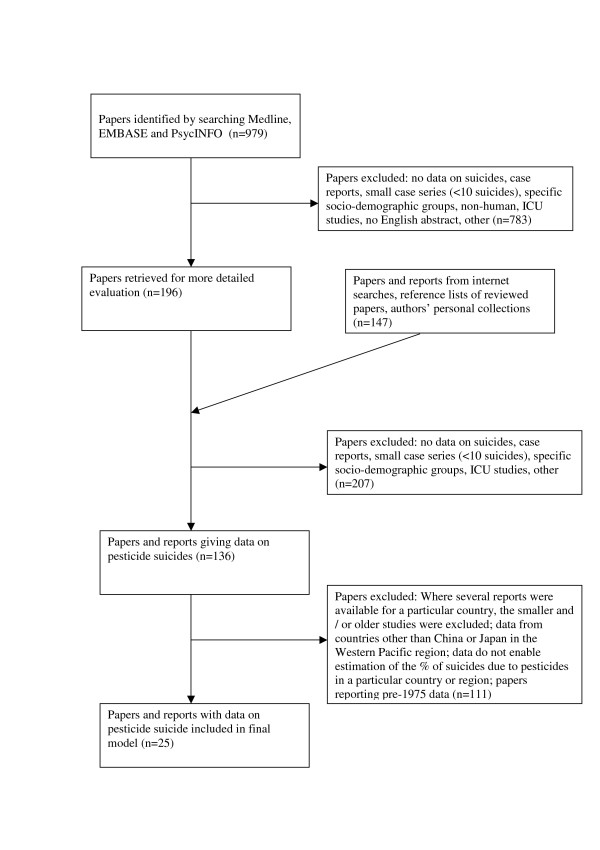
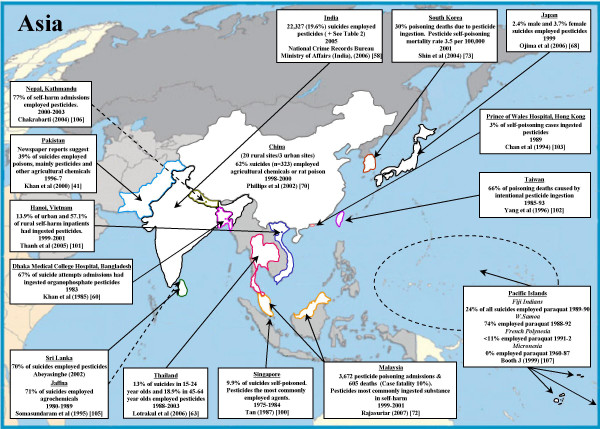
Background: Evidence is accumulating that pesticide self-poisoning is one of the most commonly used methods of suicide worldwide, but the magnitude of the problem and the global distribution of these deaths is unknown. Methods: We have systematically reviewed the worldwide literature to estimate the number of pesticide suicides in each of the World Health Organisation's six regions and the global burden of fatal self-poisoning with pesticides. We used the following data sources: Medline, EMBASE and psycINFO (1990–2007), papers cited in publications retrieved, the worldwide web (using Google) and our personal collections of papers and books. Our aim was to identify papers enabling us to estimate the proportion of a country's suicides due to pesticide self-poisoning. Results: We conservatively estimate that there are 258,234 (plausible range 233,997 to 325,907) deaths from pesticide self-poisoning worldwide each year, accounting for 30% (range 27% to 37%) of suicides globally. Official data from India probably underestimate the incidence of suicides; applying evidence-based corrections to India's official data, our estimate for world suicides using pesticides increases to 371,594 (range 347,357 to 439,267). The proportion of all suicides using pesticides varies from 4% in the European Region to over 50% in the Western Pacific Region but this proportion is not concordant with the volume of pesticides sold in each region; it is the pattern of pesticide use and the toxicity of the products, not the quantity used, that influences the likelihood they will be used in acts of fatal self-harm. Conclusion: Pesticide self-poisoning accounts for about one-third of the world's suicides. Epidemiological and toxicological data suggest that many of these deaths might be prevented if (a) the use of pesticides most toxic to humans was restricted, (b) pesticides could be safely stored in rural communities, and (c) the accessibility and quality of care for poisoning could be improved.
Overview
The claims and statistics of this paper haven’t been checked yet.
Free: it reads the open-access text and checks the first 5 claims that cite a source we can check. Create a free account to check every claim.
Integrity signals
Registry
Cites
Statistics
Figures
Verification
Claims the paper makes
The claims and statistics of this paper haven’t been checked yet.
Free: it reads the open-access text and checks the first 5 claims that cite a source we can check. Create a free account to check every claim.
Claims other papers make about this one
Each is checked against this paper’s own text: does it say what the citing paper says it does?
The source backs part of the claim, not all of it — or backs it for a different population, condition or comparison.
In the citing paper
“Pesticide ingestion was employed in approximately one-third of suicides worldwide, mostly in rural Asia and Latin America.(138)”
From Improving Suicide Prevention Through Evidence-Based Strategies: A Systematic Review (2021) · cites this paper as [138]
Experimental — accuracy not yet measuredThe source backs part of the claim, not all of it — or backs it for a different population, condition or comparison.
In the citing paper
“Pesticides are highly lethal, the leading suicide method worldwide, and the decline in suicide deaths worldwide is largely due to restricting access to pesticides where those deaths happen, namely in rural China,(138, 158) India(129) and Sri Lanka.(159)”
From Improving Suicide Prevention Through Evidence-Based Strategies: A Systematic Review (2021) · cites this paper as [138]
Experimental — accuracy not yet measured
Self-check
Percentages, sums and reported differences re-computed from the paper’s own numbers.
The self-check needs the paper’s full text.
Citations
Cites
Risk factors for suicide in China: a national case-control psychological autopsy study
Phillips, M. R., Yang, G., Zhang, Y., Wang, L., Ji, H., & Zhou, M. (2002) · The Lancet · doi:10.1016/s0140-6736(02)11681-3 · Cited by 928 · cited 2×
“7%) 47,720 to 82,680 Western Pacific A 155 35,000 1,050 (3%) 1,050 to 1,050 [68] B 1,562 296,000 183,520 (62%) 171,680 to 195,360 [70] Sub-total (W Pacific) 331,000 184,570 (55.”
Self-citationPatterns and problems of deliberate self-poisoning in the developing world
Eddleston, M. (2000) · QJM · doi:10.1093/qjmed/93.11.715 · Cited by 828 · cited 1×
“OP insecticides appear to be the most commonly ingested pesticides in rural Asia, accounting for around two thirds of cases[77].”
Self-citationSuicide rates in China, 1995–99
Phillips, M. R., Li, X., & Zhang, Y. (2002) · The Lancet · doi:10.1016/s0140-6736(02)07954-0 · Cited by 800 · cited 10×
“In our internet searches we particularly focused on identifying data for those countries in each of the six WHO regions that are likely to make the greatest contribution to the world burden of pesticide suicides because of their large populations: Nigeria and Ethiopia (Africa); United States of America, Brazil and Mex…”
InfluentialSelf-citationSuicide by intentional ingestion of pesticides: a continuing tragedy in developing countries
Gunnell, D., & Eddleston, M. (2003) · International Journal of Epidemiology · doi:10.1093/ije/dyg307 · Cited by 643 · cited 3×
“Recent extrapolations of data from a few countries in Asia suggest that there may be 300,000 suicides by deliberate ingestion of pesticides annually in this region alone[6,7].”
Self-citationPhillips, M. R., Li, X., Zhang, Y., & Eddleston, M. (2002) · The Lancet · doi:10.1016/s0140-6736(02)09269-3 · Cited by 382 · cited 1×
“Recent detailed studies of rural India suggest that the true number of suicides may be 2–3 fold higher than official estimates and concentrated in rural areas where pesticide poisoning is common[67,64] a pattern that is also found in China [ 74 ].”
BackgroundSelf-citationRUBENSTEIN, R. (1958) · Archives of Neurology And Psychiatry · doi:10.1001/archneurpsyc.1958.02340010121011 · Cited by 382
Eddleston, M., Eyer, P., Worek, F., Mohamed, F., Senarathna, L., von Meyer, L., Juszczak, E., Hittarage, A., Azhar, S., Dissanayake, W., et al. (2005) · The Lancet · doi:10.1016/s0140-6736(05)67598-8 · Cited by 369 · cited 1×
“Paraquat and aluminium phosphide self-poisoning have case-fatality in excess of 70%[10] [11] whereas case fatality for the organophosphorus (OP) insecticides dimethoate and chlorpyrifos are 23% and 8% respectively.[76] Based on the crude assumption that overall case fatality following pesticide self-poisoning worldwid…”
Self-citationKonradsen, F., van der Hoek, W., Cole, D. C., Hutchinson, G., Daisley, H., Singh, S., & Eddleston, M. (2003) · Toxicology · doi:10.1016/s0300-483x(03)00339-1 · Cited by 322 · cited 1×
“Restricting access to the most toxic pesticides is of paramount importance to reduce the number of severe selfpoisoning episodes[86].”
Self-citationSuicides in young people in rural southern India
Aaron, R., Joseph, A., Abraham, S., Muliyil, J., George, K., Prasad, J., Minz, S., Abraham, V. J., & Bose, A. (2004) · The Lancet · doi:10.1016/s0140-6736(04)15896-0 · Cited by 298 · cited 1×
“40% of the suicides in 15–19 year olds used pesticides in 1992–2001 [93] Lalwani et al.”
Pesticide poisoning in south India: opportunities for prevention and improved medical management
Srinivas Rao, C., Venkateswarlu, V., Surender, T., Eddleston, M., & Buckley, N. A. (2005) · Tropical Medicine & International Health · doi:10.1111/j.1365-3156.2005.01412.x · Cited by 228 · cited 1×
“Depending on the particular OP ingested, around 20–30% of patients require intubation [78,79].”
Self-citation
Research works printed but not linked: 6
- Obembe A Ilechukwu STC Tunwashe OL Odukoya O Self poisoning as seen in Lagos University Teaching Hospital: A Four Year Review The Nigerian Medical Practitioner 1986 11 49 53
- WHO Mental Health and Substance Abuse Facts and Figures Suicide Prevention: Emerging from Darkness 2007 South East Asia: WHO
- Khan N Poisoning in a medical unit of Dhaka Medical College Hospital in 1983 Bangladesh Medical Journal 1985 14 9 12
- Heijnen H WHO Bangladesh: International Programme OnChemical Safety 2001
- World Health Organization and IASP International Association for Suicide Prevention Safer Access to Pesticides: Community Interventions 2006 Geneva: Management of Mental and Brain Disorders, Department of Mental Health and Substance Abuse World Health Organization
- Kumar P Sharma SL Suicides in rural Punjab 2006 Punjab: Institute for Development and Communication (IDC)
Cited by
Items 401–500 of 974
DORMEX ® -hydrogen cyanamide poisoning
Kempegowda, P., Sheshadri, S., Sudhir, U., & Kumar, S. (2011) · Journal of Emergencies Trauma and Shock · doi:10.4103/0974-2700.83894 · Cited by 17
“His central venous pressure (CVP) was 7 cm H 2 O. 1] were essentially within normal limits.”
International Perspectives on the Epidemiology and Etiology of Suicide and Self‐Harm
Windfuhr, K. L., Steeg, S., Hunt, I. M., & Kapur, N. (2016) · Wiley eBooks · doi:10.1002/9781118903223.ch2 · Cited by 19
Managing risk and self-harm: Keeping young people safe
Westers, N. J., & Plener, P. L. (2020) · Clinical Child Psychology and Psychiatry · doi:10.1177/1359104519895064 · Cited by 16
“For instance, a 2007 systematic review noted that fatal self-poisoning with pesticides accounted for 30% of suicides globally, most often occurring in rural areas of low- and middleincome countries (Gunnell et al., 2007).”
BackgroundEddleston, M., Clutton, R. E., Taylor, M. C., Thompson, A. P., Worek, F., John, H., Thiermann, H., & Scott, C. S. (2019) · Clinical Toxicology · doi:10.1080/15563650.2019.1655149 · Cited by 16
“Organophosphorus (OP) insecticide poisoning kills over 200,000 people each year, mostly following self-harm, in rural Asia [1,2].”
BackgroundInfluentialSelf-citationAlahakoon, C., Dassanayake, T. L., Gawarammana, I., Weerasinghe, V. S., & Buckley, N. A. (2019) · Clinical Toxicology · doi:10.1080/15563650.2019.1660782 · Cited by 17
Pesticides and human health implications
Jayanthi, P., Dhananjayan, V., Elango, D., & Beerappa, R. (2022) · Elsevier eBooks · doi:10.1016/b978-0-323-90893-1.00001-5 · Cited by 18
Keith, V. M., & Brown, D. R. (2009) · Cambridge University Press eBooks · doi:10.1017/cbo9780511984945.019 · Cited by 24
Kumar, N., Rajendra, R., Majgi, S. M., Krishna, M., Keenan, P., & Jones, S. (2016) · Indian Journal of Psychological Medicine · doi:10.4103/0253-7176.194920 · Cited by 21
“[16‐18] DSH has been recognized as a major public health problem in India for some time, with significant obstructions, including difficulties in establishing local models to understand these behaviors and associated unfavorable attitudes of health care professionals toward those who self‐harm.[2,18,19]”
BackgroundToxicity of Organophosphate Pesticide on Soil Microorganism: Risk Assessments Strategies
Jaiswal, D. K., Krishna, R., Singh, S., Belwal, T., Verma, J. P., & Yadav, J. S. (2020) · Springer eBooks · doi:10.1007/978-981-15-6275-4_12 · Cited by 16
Food crisis in the Asia-Pacific region.
Weinberger, K., Easdown, W. J., Yang, R.-Y., & Keatinge, J. D. H. (2009) · PubMed · Cited by 22
Pesticide exposures in a malarious and predominantly farming area in Central Ghana
Kenneth, A. A. N., Patrick, L. K., Kwaku, P. A., Jack, D. W., Boamah-Kaali, E. A., Robin, W., Mujtaba, M. N., Manu, A. A., Owusu‐Agyei, S., & Blair, J. W. (2015) · African Journal of Environmental Science and Technology · doi:10.5897/ajest2015.1912 · Cited by 15
“The consequent increased exposure to these chemicals (Soni et al., 2011) may contribute to poor health outcomes such as abnormal neurodevelopment, male infertility, or cancers, (Koureas et al., 2012; PANAP A Factsheet Series, 2014; Gunnell et al., 2007; Horton et al., 2011).”
BackgroundTerekhov, S. S., Smirnov, I. V., Shamborant, O. G., Bobik, T. V., Ilyushin, D. G., Мурашев, А. Н., Dyachenko, I. A., Паликов, В. А., Knorre, V. D., Belogurov, A. A., et al. (2015) · Acta Naturae · doi:10.32607/20758251-2015-7-4-136-141 · Cited by 15
Akyıl, D., Konuk, M., Eren, Y., Liman, R., & Sağlam, E. (2017) · Cytotechnology · doi:10.1007/s10616-017-0099-y · Cited by 15
“In addition, pesticide self-poisoning is an important public health problem (Jeyaratnam 1990; Eddleston and Phillips 2004), and is killing at least 250,000–370,000 people every year (Gunnell et al. 2007).”
BackgroundKovarik, Z., & Hrvat, N. M. (2020) · Neuropharmacology · doi:10.1016/j.neuropharm.2020.108111 · Cited by 16
Utyasheva, L., & Eddleston, M. (2021) · Journal of Human Rights · doi:10.1080/14754835.2020.1850241 · Cited by 20
Self-citationCommunity suicide rates and related factors within a surveillance platform in Western Kenya
Ongeri, L., Larsen, D. A., Jenkins, R., Shaw, A., Connolly, H., Lyon, J. F., Kariuki, S. M., Penninx, B. W. J. H., Newton, C. R. J. C., Sifuna, P., et al. (2022) · BMC Psychiatry · doi:10.1186/s12888-021-03649-6 · Cited by 20
“Suicide by poisoning is reported to be especially common in the rural areas of LMICs similar to our study setting, and this has been attributed to the availability of toxic agricultural pesticides [38].”
BackgroundWilson, C. J. (2014) · Wiley Interdisciplinary Reviews Nanomedicine and Nanobiotechnology · doi:10.1002/wnan.1310 · Cited by 24
Letort, S., Bosco, M., Cornelio, B., Brégier, F., Daulon, S., Gouhier, G., & Estour, F. (2017) · Beilstein Journal of Organic Chemistry · doi:10.3762/bjoc.13.45 · Cited by 15
Understanding the Connection between Social Support and Mental Health
Brown, R. L., & Ciciurkaite, G. (2017) · Cambridge University Press eBooks · doi:10.1017/9781316471289.014 · Cited by 21
A cross-ethnic comparison on incidence of suicide
Liu, I. C., Liao, S., Lee, W., Kao, C. Y., Jenkins, R., & Cheng, A. T. A. (2010) · Psychological Medicine · doi:10.1017/s0033291710001807 · Cited by 17
Hoppin, J. A., & LePrevost, C. E. (2017) · Wiley eBooks · doi:10.1002/9781119255574.ch11 · Cited by 16
A 9-year retrospective study of poisoning-related deaths in Southwest China (Sichuan)
Xiao, L., Ye, Y., Wang, Y., Dai, X., Fang, S., Wei, Y., Zheng, Y., Wu, H., Fu, Y., & Liao, L. (2021) · Forensic Science International · doi:10.1016/j.forsciint.2020.110558 · Cited by 14
Sherzad, Z., Nawakht, N. A., & Sherzad, F. (2025) · Discover Applied Sciences · doi:10.1007/s42452-025-07123-w · Cited by 15
“These consequences include soil degradation, water pollution, loss of biodiversity, and increased greenhouse gas emissions, all of which contribute to environmental deterioration [21, 22].”
Biocontrol: A Sustainable Agricultural Solution for Management of Plant Diseases
Walia, A., Putatunda, C., Sharma, R., Sharma, S., & Thakur, A. (2021) · Springer eBooks · doi:10.1007/978-981-16-0049-4_1 · Cited by 18
Wang, Y., Liu, S., Hu, Y. J., Fu, C., & Chen, W. (2023) · The Analyst · doi:10.1039/d3an00821e · Cited by 14
Risk Factors for Attempted Suicide and Suicide Death Among South-East Asian Women: A Scoping Review
Fastenau, A., Willis, M. D., Penna, S., Yaddanapudi, L., Balaji, M., Shidhaye, R. R., & Pilot, E. (2024) · International Journal of Environmental Research and Public Health · doi:10.3390/ijerph21121658 · Cited by 15
Tsai, C., Chen, C.-H., Chang, A. Y., Chan, J. Y. H., & Chan, S. H. H. (2014) · Biochemical Pharmacology · doi:10.1016/j.bcp.2014.10.018 · Cited by 14
Dhanarisi, J., Shihana, F., Harju, K., Mohamed, F., Verma, V. R., Shahmy, S., Vanninen, P. S., Kostiainen, O., Gawarammana, I., & Eddleston, M. (2019) · Clinical Toxicology · doi:10.1080/15563650.2019.1643467 · Cited by 17
Self-citationDetection of Chlorpyrifos Using Bio-Inspired Silver Nanograss
Park, H., Park, J., 裕子, 岡., 浩, 宇., & 龍生, 坂. (2022) · Materials · doi:10.3390/ma15103454 · Cited by 14
Homicidal paraquat poisoning: Poisoned while drinking
Liu, Z., Huang, F., Zhao, S., Ma, L., Shi, Q., & Zhou, Y. (2022) · Journal of Forensic Sciences · doi:10.1111/1556-4029.14968 · Cited by 14
“Pesticide poisoning accounts for about onethird of overall suicides around the globe [3, 4], and PQ has a higher case fatality ratio than other commonly ingested pesticides [5].”
BackgroundDeleterious Effects of Banned Chemical Pesticides on Human Health in Developing Countries
Bayoumi, A. E. (2022) · IntechOpen eBooks · doi:10.5772/intechopen.104571 · Cited by 16
Predictors of suicide in adolescents and adults with mood and common comorbid disorders
Barzilay, S., & Apter, A. S. (2014) · Neuropsychiatry · doi:10.2217/npy.13.86 · Cited by 22
Predictors of Poor Prognosis in Aluminum Phosphide Intoxication
Taghaddosinejad, F., Mohammadi, A. B., Behnoush, B., Kazemifar, A. M., Nahandi, M. Z., Dabiran, S., Jamalian, M., & sheikholeslami, A. B. (2012) · DOAJ (DOAJ: Directory of Open Access Journals) · Cited by 17
Effect of acute paraquat poisoning on CYP450 isoforms activity in rats by cocktail method.
Wang, S., Wang, Z., Chen, D., Chen, M., Lin, Y., Liu, Z., Zhang, L., Wen, C., Wang, X., & Ma, J. (2015) · PubMed Central · Cited by 14
Organophosphate and Carbamate Insecticide
Vale, J. A., & Bradberry, S. (2017) · Springer eBooks · doi:10.1007/978-3-319-17900-1_52 · Cited by 18
Epidemiology of Animal Poisonings in Asia
Gupta, P. K. (2018) · Elsevier eBooks · doi:10.1016/b978-0-12-811410-0.00004-0 · Cited by 16
Benjamin, R. N., David, T., Iyadurai, R., & Jacob, K. (2018) · Indian Journal of Psychological Medicine · doi:10.4103/ijpsym.ijpsym_223_17 · Cited by 14
“The West, despite having higher volume of pesticide sales, had several-fold lower pesticide mortality rates than in the developing world,([18]) suggesting unsafe usage, and increased toxicity of the agents employed in the developing world.”
BackgroundSami, S. A., Akter, B., Nirob, M. N. H., Jahan, I., Lokman, M., Khatun, H., Hossain, M. K., & Barmon, J. (2025) · Ecotoxicology and Environmental Safety · doi:10.1016/j.ecoenv.2025.119484 · Cited by 21
Redman, R. R., Mackenzie, H., Dissanayake, K. N., Eddleston, M., & Ribchester, R. R. (2022) · British Journal of Pharmacology · doi:10.1111/bph.15940 · Cited by 16
Self-citationSchölin, L., Knipe, D. W., Bandara, P., Eddleston, M., & Sethi, A. (2023) · BMC Public Health · doi:10.1186/s12889-023-17071-y · Cited by 15
“In LMICs, many small holder farmers have direct access to high concentration pesticide formulations, in contrast to HICs where only a small number of individuals work on the land and have access to pesticides [24].”
BackgroundSelf-citationTrends in solids/liquids poisoning suicide rates in Taiwan: a test of the substitution hypothesis
Lin, J., & Lu, T. (2011) · BMC Public Health · doi:10.1186/1471-2458-11-712 · Cited by 14
“As Gunnell et al estimated that pesticide self-poisoning accounted for about one-third of the world’s suicides and suggested that we might prevent many of these deaths by restricting the access to pesticides [22].”
BackgroundThe Scenario of Acute Poisoning in Jashore, Bangladesh
Acherjya, G. K., Ali, M., Alam, A. B. M. S., Rahman, M., & Mowla, S. G. M. (2020) · Journal of Toxicology · doi:10.1155/2020/2109673 · Cited by 18
“(is is due to easy availability of OPC in our society of agriculture-based country; even WHO has reported previously that use of pesticides is the most popular way of deliberating selfpoisoning worldwide, and it is estimated about one-third of the global suicides is resulting from the pesticides selfpoisoning [15].”
BackgroundThermal desorption ambient ionization mass spectrometry for emergency toxicology
Su, H., Huang, M., Shiea, J., & Lee, C. (2022) · Mass Spectrometry Reviews · doi:10.1002/mas.21784 · Cited by 15
Allard, J. L., Shields, K. A., Munro, T. P., & Lua, L. H. L. (2022) · Chemico-Biological Interactions · doi:10.1016/j.cbi.2022.109996 · Cited by 14
Intoxicação aguda por agrotóxicos anticolinesterásicos na cidade do Recife, Pernambuco, 2007-2010
Medeiros, M. N. C., Medeiros, M. C., & Silva, M. B. A. (2014) · Epidemiologia e Serviços de Saúde · doi:10.5123/s1679-49742014000300013 · Cited by 13
Jørs, E., Christoffersen, M., Veirum, N. H., Condarco, G., Morant, R. C., & Konradsen, F. (2013) · International Journal of Adolescent Medicine and Health · doi:10.1515/ijamh-2013-0309 · Cited by 18
Self-citationJames, T., & Countryman, J. (2012) · Europe PMC (PubMed Central) · Cited by 16
Risk Factors and Outcomes of Food Poisoning in Africa
Malangu, N. (2016) · InTech eBooks · doi:10.5772/62274 · Cited by 17
Huang, Y., Wu, X., Zhang, P., Duan, Z., Zhou, X. J., Chen, M., Farooq, A., Liang, S., & Liu, Z. (2016) · Toxicon · doi:10.1016/j.toxicon.2016.11.252 · Cited by 13
“The control of agricultural and pathogenic insect pests is an important public issue in the world, which is critical for optimizing crop production as well as control of insect pests and human disease propagation (Gunnell et al., 2007; Oerke and Dehne, 2004; Pimentel, 2009).”
BackgroundEffectiveness of heparin eye drops in paraquat-induced ocular injury
Liu, J., Li, X., & Deng, A. (2017) · Cutaneous and Ocular Toxicology · doi:10.1080/15569527.2017.1303706 · Cited by 13
La décontamination des organophosphorés : vers de nouvelles alternatives
Poirier, L., Jacquet, P., Elias, M. H., Daudé, D., & Chabrière, É. (2017) · Annales Pharmaceutiques Françaises · doi:10.1016/j.pharma.2017.01.004 · Cited by 15
Experience of Indian emergency physicians in management of acute poisonings
Blanchard, J., Feltes, M., Kim, J. Y., Pousson, A. Y., & Douglass, K. A. (2019) · Toxicology Communications · doi:10.1080/24734306.2019.1635725 · Cited by 13
“According to the National Crime Records Bureau of India, there were 27,657 deaths and suicides by poisoning in 2015 [2, 3].”
BackgroundMadsen, L. B., Eddleston, M., Hansen, K. S., Pearson, M., Agampodi, S. B., Jayamanne, S. F., & Konradsen, F. (2015) · BMJ Open · doi:10.1136/bmjopen-2014-007333 · Cited by 15
“In a systematic review from 2007, it was estimated that pesticide self-poisoning was responsible for as much as one-third of all suicides globally.(4) In China, it is estimated that as much as 58% of all suicides are due to deliberate pesticide ingestion,(5) while Patel et al(6) recently found that the method was empl…”
BackgroundInfluentialSelf-citationAcute Pesticide Poisoning in Jiangsu Province, China, from 2006 to 2015.
Wang, B., Chen, L., Li, X. T., Xu, M. J., Zhu, B. L., & Zhang, J. (2017) · PubMed · doi:10.3967/bes2017.094 · Cited by 13
Huang, W., Zhang, Z., & Lu, Y. (2023) · PLoS ONE · doi:10.1371/journal.pone.0281897 · Cited by 12
Shabani, M., Khezri, S., & Salimi, A. (2024) · Cardiovascular Toxicology · doi:10.1007/s12012-024-09896-9 · Cited by 12
“Studies are accumulating that self-poisoning is one of the most commonly used methods for suicide in worldwide and estimates one-third of the world’s suicide rate [36].”
Liu, H., Hanchenlaksh, C., Povey, A. C., & de Vocht, F. (2014) · Environmental Science & Technology · doi:10.1021/es503875t · Cited by 15
Advanced Treatment Technologies
Rani, M., & Shanker, U. (2018) · Springer eBooks · doi:10.1007/978-3-319-58538-3_33-1 · Cited by 12
Combined Pre- and Posttreatment of Paraoxon Exposure
Lorke, D. E., Nurulain, S. M., Hasan, M. Y., Kuča, K., & Petroianu, G. A. (2020) · Molecules · doi:10.3390/molecules25071521 · Cited by 12
“It is estimated that approximately 200,000 people die every year due to OPC pesticide intoxications [2,3].”
BackgroundPesticides: Pollution, risks, and abatement measures
Asem, D., Kumari, M., Singh, L. R., & Bhushan, M. (2023) · Elsevier eBooks · doi:10.1016/b978-0-323-96002-1.00014-6 · Cited by 14
Xu, N., Tang, Z., Jiang, Y., Fang, J., Zhang, L., Lai, X., Sun, Q., Fan, J., Tang, X., Liu, Q., et al. (2023) · Journal of environmental chemical engineering · doi:10.1016/j.jece.2023.109736 · Cited by 12
Economic burden of acute pesticide poisoning in South Korea
Choi, Y., Kim, Y., Ko, Y., Eun, S., Kim, J.-Y., & Lee, W. J. (2012) · Tropical Medicine & International Health · doi:10.1111/j.1365-3156.2012.03096.x · Cited by 12
“Although there is a paucity of information on its incidence and mortality, it is estimated that global annual number of self-inflicted deaths from pesticide has reached a quarter million (Gunnell et al. 2007).”
BackgroundJiang, S.-Z., Ma, B.-E., Liu, C., & Wang, R. (2019) · Saudi Journal of Biological Sciences · doi:10.1016/j.sjbs.2019.08.010 · Cited by 12
“HP is a kind of blood purification technique that can eliminate the toxins inside the body using surface adsorbent, and literatures have reported that it can improve the success rate of treatment for organophosphorus poisoning (Gunnell et al., 2007; Li and Lu, 2011).”
BackgroundHulse, E. J., Smith, S. H., Wallace, W. A., Dorward, D. A., Simpson, A. J., Drummond, G. B., Clutton, R. E., & Eddleston, M. (2020) · PLoS ONE · doi:10.1371/journal.pone.0240563 · Cited by 13
“Two thirds of deaths follow self-poisoning with OP compounds [4], which primarily act by inhibiting the enzyme acetylcholinesterase (AChE) in the central and autonomic nervous systems, neuromuscular junctions, red cell membranes and lungs [5,6].”
BackgroundSelf-citationAn Urgent Need to Restrict Access to Pesticides Based on Human Lethality
Miller, M., & Bhalla, K. S. (2010) · PLoS Medicine · doi:10.1371/journal.pmed.1000358 · Cited by 12
“Agricultural pesticides account for at least 250,000 suicide deaths each year, making pesticides the single most common means of suicide worldwide [1,2].”
BackgroundGeneral Management of Poisoned Patients
(2012) · Springer eBooks · doi:10.1007/springerreference_301337 · Cited by 12
Rappenglück, S., Sichler, S., Höfner, G. C., Wein, T., Niessen, K. V., Seeger, T., Paintner, F. F., Worek, F., Thiermann, H., & Wanner, K. T. (2018) · ChemMedChem · doi:10.1002/cmdc.201800325 · Cited by 11
Epidemiology of Self-poisoning with Drug in the Central Anatolian Region in Turkey
Karaca, O., & Ertaşkın, A. (2020) · Cureus · doi:10.7759/cureus.6962 · Cited by 15
Salam, L. B. (2022) · Folia Microbiologica · doi:10.1007/s12223-022-00970-9 · Cited by 12
“1 3 dermatological, carcinogenic, reproductive, respiratory, and endocrine effects in humans (WHO 1990; Gunnell et al. 2007; Nicolopoulou-Stamati et al. 2016).”
Alshahrani, M. M., Albogami, H. A., Asiri, A. A., haydhah, K. S. A., Aldeailej, I. M., Aldehaim, M. A., Lubbad, M. Y., Alalyan, L. A., Alasmari, A. F., salem, I. Y. A., et al. (2023) · Children · doi:10.3390/children10020295 · Cited by 12
“If higher estimates of suicides in India are included in the model, the total annual number of global suicides rises from 873,000 to 1,181,200, the estimated number of pesticide-related suicides rises from 371,594 (347,357 to 439,267), and the proportion of global suicides due to pesticide ingestion rises from 29% to…”
BackgroundLondon, L. (2009) · NeuroToxicology · doi:10.1016/j.neuro.2009.01.007 · Cited by 16
Sharma, R., Gupta, B., Acharya, J., Kaushik, M. P., & Ghosh, K. K. (2013) · Toxicology · doi:10.1016/j.tox.2013.11.011 · Cited by 11
“Misuse f these compounds with suicidal intentions makes them lifehreatening agents as well (Kwong, 2002; Gunnell et al., 2007). uring and post World War II more potent and acutely toxic OPs uch as sarin (GB), soman (GD), VX or tabun (GA) were produced nd stored as chemical warfare agents (nerve…”
BackgroundBenedict, M. A., van Loggerenberg, C., & Steinberg, W. J. (2018) · South African Family Practice · doi:10.1080/20786190.2018.1527133 · Cited by 14
“In rural Sri Lanka, DSP is one of the leading causes of hospital deaths.9 A study done in Uganda on acute poisoning showed an equal prevalence of DSP among males and females.10 Another study showed a significant use of pesticide for DSP in Uganda, Kenya, Nigeria, Zimbabwe and Ethiopia.11 The choice of drugs or poison…”
BackgroundA study on clinical profile of paraquat poisoning in a tertiary care hospital
Jagadeesan, M., Nithyananthan, P., Banupriya, M., Mahendrakumar, K., Prasanna Karthik, S., & Kannan, R. (2017) · International Journal of Advances in Medicine · doi:10.18203/2349-3933.ijam20173237 · Cited by 11
“ingestion is a major cause of fatal poisoning in many parts of Asia and Pacific nations.(1) Commercial preparations of paraquat are normally sold in the form of liquid concentrate with a concentration ranging from 20% to 42%.”
BackgroundSTUDY OF CHRONIC TOXIC EFFECT OF DELTAMETHRIN AND DIMETHOATE ON BRAIN OF ADULT MALE ALBINO RATS
Ali, M., Gomaa, M., shalby, S., & Mohammed, Z. A. (2017) · Zagazig Journal of Forensic Medicine · doi:10.21608/zjfm.2017.4774 · Cited by 12
“All the parameters of both control negative & positive (I &II) were within normal and there were no statistically significant differences (p 0.05) between them (Table 1) Zagazig J. Forensic Med.”
BackgroundMethodInfluentialResveratrol: a panacea compound for diazinon-induced renal toxicity
Esfahani, M., Rahbar, A. H., Asl, S. S., & Mehri, F. (2021) · Toxin Reviews · doi:10.1080/15569543.2021.2008452 · Cited by 11
Silva, H. K. T. D. A., Barbosa, T. M., Santos, M. C. D., Jales, J. T., de Araújo, A. M. U., Morais, C. L. M., de Lima, L. A. S., Bicudo, T. C., Gama, R. A., Marinho, P. A., et al. (2022) · Acta Tropica · doi:10.1016/j.actatropica.2022.106779 · Cited by 11
Características de los suicidios de áreas rurales y urbanas de Antioquia, Colombia*
Valencia, J. G., Montoya, G., Jaramillo, C. A. L., Tobón, M. C. L., Guerra, P. M., Viana, J. C. A., & Acosta, C. A. P. (2011) · Revista Colombiana de Psiquiatría · doi:10.1016/s0034-7450(14)60118-9 · Cited by 11
Tuan, N. V., Dalman, C., Thiem, N. V., Nghi, T. V., & Allebeck, P. (2009) · Archives of Suicide Research · doi:10.1080/13811110903266657 · Cited by 14
“Much has been written about the role of pesticides in suicide and suicide attempt in developing countries (Gunnell, Eddleston, Phillips et al, 2007 ).”
BackgroundA profile of acute poisonings: A retrospective study
Celine, T., & Antony, J. (2015) · Journal of the Scientific Society · doi:10.4103/0974-5009.165547 · Cited by 13
Cao, X., Hogan, A. M., & Moore, E. (2018) · Journal of Forensic Sciences · doi:10.1111/1556-4029.13963 · Cited by 11
Stark, C. R., & Riordan, D. V. (2011) · Wiley eBooks · doi:10.1002/9781119998556.ch15 · Cited by 11
Chaudhari, V. A., Das, S., Sahu, S. K., Devnath, G. P., & Chandra, A. (2022) · Journal of Family Medicine and Primary Care · doi:10.4103/jfmpc.jfmpc_1171_21 · Cited by 10
“[4] Gunnell et al.[5] observed that 258,234 deaths from suicidal pesticide poisoning worldwide each year contributed to 30% of global suicides.”
BackgroundSenarathna, L., Buckley, N. A., Dibley, M. J., Kelly, P. J., Jayamanna, S. F., Gawarammana, I., & Dawson, A. H. (2013) · PLoS ONE · doi:10.1371/journal.pone.0071787 · Cited by 10
“Poisoning in Sri Lanka is predominately in the context of deliberate self - harm and is a highly emotive clinical condition involving many staff members , the patient , and their family .”
InfluentialMethamidophos, an Organophosphorus Insecticide, Induces Pro-aggressive Behaviour in Mice
do Nascimento, C. P., Maretto, G. X., Marques, G. L. M., Passamani, L. M., Abdala, A. P., Schenberg, L. C., Beijamini, V., & Sampaio, K. N. (2017) · Neurotoxicity Research · doi:10.1007/s12640-017-9750-9 · Cited by 11
“Worldwide around 350,000 cases of self-poisoning with pesticides are recorded per year, and it is estimated that nearly 30% of global suicides are due to pesticide self-poisoning, with most cases recorded in low and middle income countries (Gunnell et al., 2007; Hulse et al., 2014).”
BackgroundRavula, A. R., & Yenugu, S. (2020) · Journal of Biochemical and Molecular Toxicology · doi:10.1002/jbt.22654 · Cited by 10
Persistence of pesticides and their impacts on human health and environment
Singh, P., Singh, G., Singh, A., & Mishra, V. K. (2022) · Elsevier eBooks · doi:10.1016/b978-0-323-90489-6.00006-9 · Cited by 10
Zheng, W., Limei, H., Fan, Y., Yi, M., Lu, X., Yang, J., Peng, X., & Yang, Y. (2023) · BMC Psychiatry · doi:10.1186/s12888-023-04779-9 · Cited by 10
“Based on epidemiological and toxicological data, it was determined that national restrictions on harmful pesticides were an effective strategy for preventing suicide by pesticides intake [5, 6].”
BackgroundIntoxication aux organophosphorés : vers des traitements enzymatiques
Jacquet, P., Poirier, L., Daudé, D., & Chabrière, É. (2019) · Annales Pharmaceutiques Françaises · doi:10.1016/j.pharma.2019.06.002 · Cited by 17
PROFILE OF POISONING CASES IN A TERTIARY CARE HOSPITAL, TAMILNADU
Karikalan, T., & Murugan, M. (2014) · Journal of Evolution of Medical and Dental Sciences · doi:10.14260/jemds/2014/3692 · Cited by 10
“J Indian Acad Forensic Med 2011; 33 (4): 296-300.”
BackgroundInfluentialAhrensberg, H., Madsen, L. B., Pearson, M., Weerasinghe, M., Eddleston, M., Jayamanne, S. F., Hansen, K. S., Ariyarathna, V., Rajapaksha, S., & Konradsen, F. (2019) · Global Health Action · doi:10.1080/16549716.2019.1692616 · Cited by 11
Self-citationCorrected QT Interval as a Predictor of Outcomes in Acute Organophosphate Poisoning Cases
Hodeib, A. A. E., & Khalifa, H. (2020) · Ain Shams Journal of Forensic Medicine and Clinical Toxicology · doi:10.21608/ajfm.2020.68125 · Cited by 10
Kranawetvogl, T., Steinritz, D., Thiermann, H., & John, H. (2020) · Drug Testing and Analysis · doi:10.1002/dta.2800 · Cited by 10
Public Perception of Gun Violence-Related Headline Accuracy and the Credibility of Media Sources
Bandel, S. L., Bond, A. E., Bryan, C. J., & Anestis, M. D. (2022) · Health Communication · doi:10.1080/10410236.2022.2037199 · Cited by 10
“Notably, means safety has been shown to be effective in a variety of cultural contexts and for a variety of suicide attempt methods, including for pesticide poisoning in Sri Lanka and firearms within the Israel Defense Force (Gunnell et al., 2007; Shelef et al., 2016).”
BackgroundСуицидальные прыжки с высоты. Часть I: Распространённость, факторы риска и классификация
Zotov, P. B., Любов, Е. Б., Скрябин, Е. Г., Akselrov, M. A., & Бухна, А. Г. (2021) · Суицидология · doi:10.32878/suiciderus.21-12-02(43)-59-90 · Cited by 11
Profile of adult acute cholinesterase inhibitors substances poisoning – a 30 years analysis
Gazzi, E. N., Șorodoc, V., Jaba, I. M., Lionte, C., Bologa, C., Lupușoru, C. E., Lupușoru, R. V., Șorodoc, L., & Petriș, O. R. (2015) · Open Medicine · doi:10.1515/med-2015-0041 · Cited by 10
“An article which has systematically reviewed the worldwide literature to estimate the number of pesticide suicides in each of the World Health Organisation’s six regions concluded that pesticide self-poisoning is one of the most commonly used methods of suicide worldwide, and it accounts for about one-third of the wor…”
Zawahir, S., Roberts, D. M., Palangasinghe, C., Mohamed, F., Eddleston, M., Dawson, A. H., Buckley, N. A., Ren, L., Medley, G., & Gawarammana, I. (2009) · Clinical Toxicology · doi:10.1080/15563650903174810 · Cited by 10
“It is estimated that globally 250-370,000 people die from pesticide poisoning each year[2].”
BackgroundSelf-citationHulse, E. J., Clutton, R. E., Drummond, G. B., & Eddleston, M. (2013) · Journal of the Royal Army Medical Corps · doi:10.1136/jramc-2013-000207 · Cited by 10
Self-citationSuicide at a distance: The paradox of knowing self-destruction
Balayannis, A., & Cook, B. R. (2015) · Progress in Human Geography · doi:10.1177/0309132515587469 · Cited by 15
“To introduce our case, the ingestion of pesticide is said to account for approximately 30 percent of the world’s total suicides, most of which occur in the Global South (Gunnell et al., 2007).”
BackgroundResultInfluentialThe Effect of Parathion on Red Blood Cell Acetylcholinesterase in the Wistar Rat
Bunya, N., Sawamoto, K., Benoit, H., & Bird, S. B. (2016) · Journal of Toxicology · doi:10.1155/2016/4576952 · Cited by 10
“These numbers do not take into account estimates that self-poisoning with pesticides accounts for more than 250,000 deaths per year worldwide, accounting for about one-third of the world’s suicides [7].”
Background
Metadata
- Authors
- Gunnell, D., Eddleston, M., Phillips, M. R., & Konradsen, F.
- Affiliations
- University of Bristol (GB)
- South Asian Clinical Toxicology Research Collaboration (LK)
- Beijing HuiLongGuan Hospital (CN)
- University of Copenhagen (DK)
- Corresponding author
- Gunnell, David
- Venue
- BMC Public Health
- Published
- 2007-12
- Volume
- 7
- Issue
- 1
- Pages
- 357-357
- ISSN
- 1471-2458 (ISSN-L)
- PMC
- PMC2262093
- OpenAlex
- W2149111967
- Cited by
- 969
- References
- 102
- Citations by year
- 2026: 32 · 2025: 41 · 2024: 36 · 2023: 54 · 2022: 63 · 2021: 65 · 2020: 72 · 2019: 66 · 2018: 57 · 2017: 118 · 2016: 60 · 2015: 55 · 2014: 49 · 2013: 50 · 2012: 35
- FWCI
- 4.43
- Type
- journal article
- Language
- en
- Open access
- gold
- doi.org
- Licence
- cc-by
- creativecommons.org/licenses/by/2.0 (tdm)
- creativecommons.org/licenses/by/2.0 (vor, 20 d)
- Locations
- BMC Public Health (publishedVersion, cc-by)
- PubMed Central (publishedVersion, cc-by)
- PubMed (publishedVersion)
- DOAJ (DOAJ: Directory of Open Access Journals) (submittedVersion)
- Research at the University of Copenhagen (University of Copenhagen) (submittedVersion)
- Bristol Research (University of Bristol) (submittedVersion)
- Topics
- Social Sciences › Psychology › Clinical Psychology › Suicide and Self-Harm Studies
- Life Sciences › Pharmacology, Toxicology and Pharmaceutics › Toxicology › Pesticide Exposure and Toxicity
- Social Sciences › Sociology and Political Science › Homicide, Infanticide, and Child Abuse
- Keywords
- pesticide self-poisoning, pesticide suicide, suicide, global burden of disease, WHO regions, pesticide toxicity, pesticide storage
- MeSH terms
- Suicide Prevention, Humans, Pesticides, Poisoning, Safety, Suicide, Global Health, Incidence
About these checks
Registry, retraction, Cites and statistics results are computed, not judged, with one exception: a printed reference that no index lists is read once by a model before it counts as a citation error. Claims are extracted by a model and kept only when their quote appears verbatim in the text; each cited source is then checked, with a model’s help, for whether it says what the claim relies on. Those verdicts can be wrong — read the claim’s quote and the cited source before relying on one.
Statistics and arithmetic are recomputed, not judged.
Confidence bands are shown only for fields calibrated on our annotated test set. None is calibrated yet, so no band is shown.
What counts as a claim ›How we measure confidence ›How we check this ›
Are you an author, or do you see a problem with this page? Request a review
Data sources
Bibliographic data: Semantic Scholar, OpenAlex, Crossref.
Contains information from the Semantic Scholar Academic Graph Datasets, made available under the ODC Attribution License (ODC-BY 1.0).
Semantic Scholar’s data is described in: Kinney, R., et al. (2023). The Semantic Scholar Open Data Platform. arXiv:2301.10140.
