

The DOI matches its Crossref record; 104 of the 104 references it cites were found in a registry or an index.
A comparison of temporal trends in United States autism prevalence to trends in suspected environmental factors
Open accessAbstract
BACKGROUND: The prevalence of diagnosed autism has increased rapidly over the last several decades among U.S. children. Environmental factors are thought to be driving this increase and a list of the top ten suspected environmental toxins was published recently. METHODS: Temporal trends in autism for birth years 1970-2005 were derived from a combination of data from the California Department of Developmental Services (CDDS) and the United States Individuals with Disabilities Education Act (IDEA). Temporal trends in suspected toxins were derived from data compiled during an extensive literature survey. Toxin and autism trends were compared by visual inspection and computed correlation coefficients. Using IDEA data, autism prevalence vs. birth year trends were calculated independently from snapshots of data from the most recent annual report, and by tracking prevalence at a constant age over many years of reports. The ratio of the snapshot:tracking trend slopes was used to estimate the "real" fraction of the increase in autism. RESULTS: The CDDS and IDEA data sets are qualitatively consistent in suggesting a strong increase in autism prevalence over recent decades. The quantitative comparison of IDEA snapshot and constant-age tracking trend slopes suggests that ~75-80% of the tracked increase in autism since 1988 is due to an actual increase in the disorder rather than to changing diagnostic criteria. Most of the suspected environmental toxins examined have flat or decreasing temporal trends that correlate poorly to the rise in autism. Some, including lead, organochlorine pesticides and vehicular emissions, have strongly decreasing trends. Among the suspected toxins surveyed, polybrominated diphenyl ethers, aluminum adjuvants, and the herbicide glyphosate have increasing trends that correlate positively to the rise in autism. CONCLUSIONS: Diagnosed autism prevalence has risen dramatically in the U.S over the last several decades and continued to trend upward as of birth year 2005. The increase is mainly real and has occurred mostly since the late 1980s. In contrast, children's exposure to most of the top ten toxic compounds has remained flat or decreased over this same time frame. Environmental factors with increasing temporal trends can help suggest hypotheses for drivers of autism that merit further investigation.
Overview
The claims and statistics of this paper haven’t been checked yet.
Run the check — free, no account needed. It reads the open-access text and checks the sources it cites.
Integrity signals
Registry
Cites
Statistics
Figures
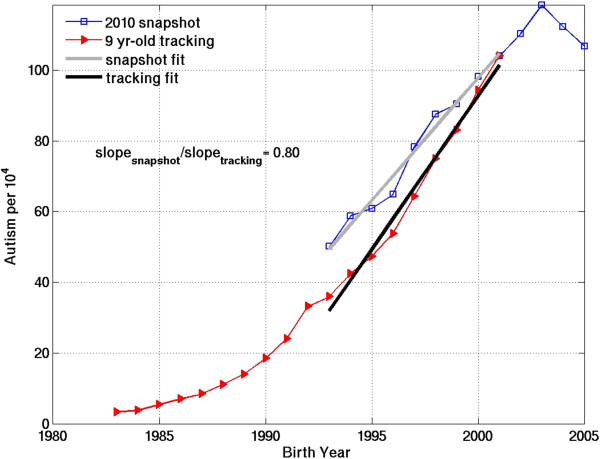
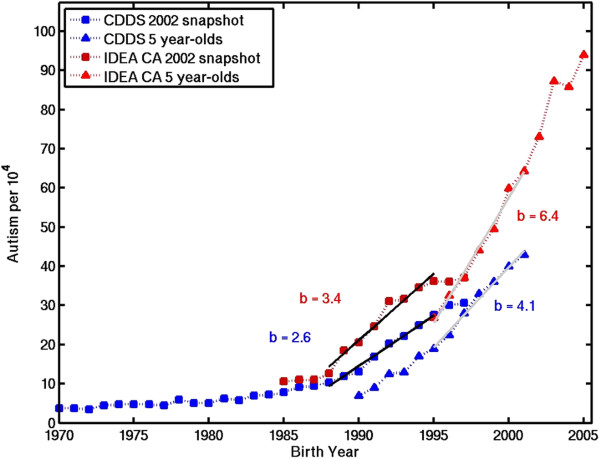
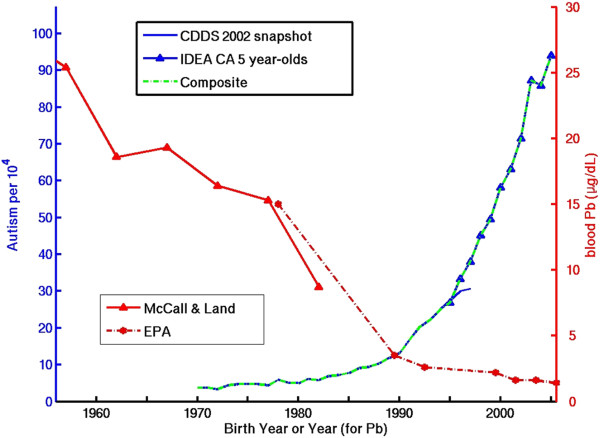
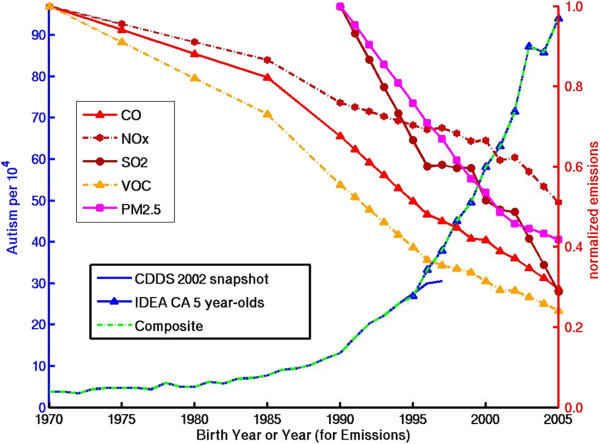
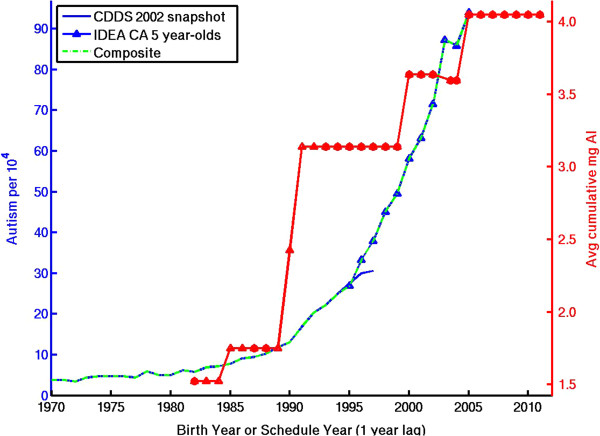
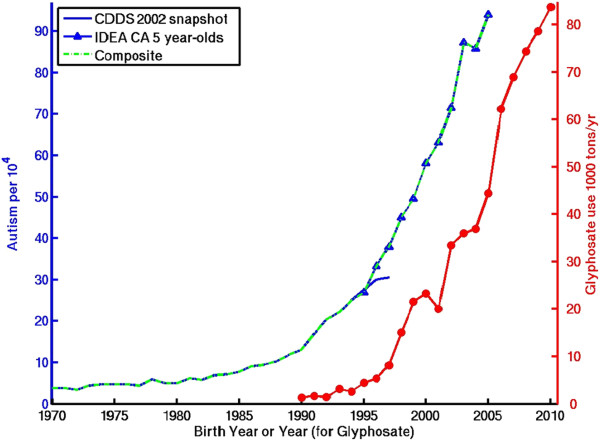
Verification
Claims the paper makes
The claims and statistics of this paper haven’t been checked yet.
Run the check — free, no account needed. It reads the open-access text and checks the sources it cites.
Claims other papers make about this one
Each is checked against this paper’s own text: does it say what the citing paper says it does?
The source backs part of the claim, not all of it — or backs it for a different population, condition or comparison.
In the citing paper
“To date, there is weak or conflicting evidence for the hypothesis that geographic variation or time trends in prevalence may reflect differences in exposure to environmental risk factors (Nevison, 2014) or increased patterns of migration (Keen et al., 2010).”
From Global prevalence of autism: A systematic review update (2022) · cites this paper as Nevison, 2014
Experimental — accuracy not yet measuredIn the citing paper
“Further, ASD risk associated with environmental exposures has been stable for air pollutants and pesticides, with lifestyle risk factors such as smoking and alcohol consumption and other potential hazards related to nutrition and medication in decline [264].”
From The contribution of environmental exposure to the etiology of autism spectrum disorder (2019) · cites this paper as [264]
In the citing paper
“Further, ASD risk associated with environmental exposures has been stable for air pollutants and pesticides, with lifestyle risk factors such as smoking and alcohol consumption and other potential hazards related to nutrition and medication in decline [264].”
From The contribution of environmental exposure to the etiology of autism spectrum disorder (2019) · cites this paper as [264]
Self-check
Percentages, sums and reported differences re-computed from the paper’s own numbers.
The self-check needs the paper’s full text.
Citations
Cites
1 retracted
Hepatitis B vaccination of male neonates and autism diagnosis, NHIS 1997–2002.
Gallagher, C. M., & Goodman, M. S. (2010) · Journal of Toxicology and Environmental Health, Part A · doi:10.1080/15287394.2010.519317 · Cited by 72
Retracted(1943) · The Nervous child · Cited by 8,870
Bulletin of the World Health Organization
van der Sande, M. A. B., Walraven, G. E. L., Milligan, P. J., BANYA, W. A. S., CEESAY, S. M., Nyan, O. A., & McAdam, K. P. W. J. (2001) · Bulletin of the World Health Organization · Cited by 7,097
Metabolic Endotoxemia Initiates Obesity and Insulin Resistance
Cani, P. D., Amar, J., Iglesias, M. A., Poggi, M., Knauf, C., Bastelica, D., Neyrinck, A. M., Fava, F., Tuohy, K. M., Chabo, C., et al. (2007) · Diabetes · doi:10.2337/db06-1491 · Cited by 6,638
Baio, J., Wiggins, L., Christensen, D. L., Maenner, M. J., Daniels, J., Warren, Z., Kurzius-Spencer, M., Zahorodny, W., Robinson, C., Rosenberg, et al. (2018) · MMWR. Surveillance Summaries · doi:10.15585/mmwr.ss6706a1 · Cited by 6,078
Autistic disturbances of affective contact.
Kanner, L. (1968) · PubMed · Cited by 2,282
Genetic Heritability and Shared Environmental Factors Among Twin Pairs With Autism
Hallmayer, J. (2011) · Archives of General Psychiatry · doi:10.1001/archgenpsychiatry.2011.76 · Cited by 1,970
Environmental Health Perspectives
Goehl, T. (2002) · Environmental Health Perspectives · doi:10.1289/ehp.110-1240809 · Cited by 1,944
Bulletin of the World Health Organization
Rennie, S., & Behets, F. (2006) · Bulletin of the World Health Organization · doi:10.2471/blt.00.00000 · Cited by 1,602
Naarden Braun, K. V., Lopez, M., White, T., et al. (2023) · Carolina Digital Repository (University of North Carolina at Chapel Hill) · doi:10.17615/y3kk-5x30 · Cited by 1,381
Reduced incidence of Prevotella and other fermenters in intestinal microflora of autistic children
Kang, D.-W., Park, J. G., Ilhan, Z. E., Wallstrom, G., LaBaer, J., Adams, J. B., & Krajmalnik-Brown, R. (2013) · PLoS ONE · doi:10.1371/journal.pone.0068322 · Cited by 976
James, S. J., Cutler, P., Melnyk, S., Jernigan, S., Janak, L., Gaylor, D. W., & Neubrander, J. A. (2004) · The American Journal of Clinical Nutrition · doi:10.1093/ajcn/80.6.1611 · Cited by 955
Study of ultrafine particles near a major highway with heavy-duty diesel traffic
Zhu, Y., Hinds, W. C., Kim, S., Shen, S., & Sioutas, C. (2002) · Atmospheric Environment · doi:10.1016/s1352-2310(02)00354-0 · Cited by 919
Transportation Energy Data Book: Edition 16
Davis, S. C., McFarlin, D. N., & Laboratory, O. R. N. (2010) · ROSA P · doi:10.21949/1404021 · Cited by 852
Trends in Exposure to Polyfluoroalkyl Chemicals in the U.S. Population: 1999−2008
Kato, K., Wong, L.-Y., Jia, L. T., Kuklenyik, Z., & Calafat, A. M. (2011) · Environmental Science & Technology · doi:10.1021/es1043613 · Cited by 777
Trends in Childhood Asthma: Prevalence, Health Care Utilization, and Mortality
Akinbami, L. J., & Schoendorf, K. C. (2002) · PEDIATRICS · doi:10.1542/peds.110.2.315 · Cited by 760
Organophosphate Pesticide Exposure and Neurodevelopment in Young Mexican-American Children
Eskenazi, B., Marks, A. R., Bradman, A., Harley, K. G., Barr, D. B., Johnson, C. B., Morga, N., & Jewell, N. P. (2007) · Environmental Health Perspectives · doi:10.1289/ehp.9828 · Cited by 716
Maternal metabolic conditions and risk for autism and other neurodevelopmental disorders
Krakowiak, P., Walker, C. K., Bremer, A. A., Baker, A. S., Ozonoff, S., Hansen, R. L., & Hertz-Picciotto, I. (2012) · PEDIATRICS · doi:10.1542/peds.2011-2583 · Cited by 675
Shelton, J. F., Geraghty, E. M., Tancredi, D. J., Delwiche, L. D., Schmidt, R. J., Ritz, B., Hansen, R. L., & Hertz-Picciotto, I. (2014) · Environmental Health Perspectives · doi:10.1289/ehp.1307044 · Cited by 536
Gastrointestinal Problems in Children with Autism, Developmental Delays or Typical Development
Chaidez, V., Hansen, R. L., & Hertz-Picciotto, I. (2014) · Journal of Autism and Developmental Disorders · doi:10.1007/s10803-013-1973-x · Cited by 528
The Rise in Autism and the Role of Age at Diagnosis
Hertz-Picciotto, I., & Delwiche, L. (2009) · Epidemiology · doi:10.1097/ede.0b013e3181902d15 · Cited by 522
Enduring consequences of maternal obesity for brain inflammation and behavior of offspring
Bilbo, S. D., & Tsang, V. (2010) · The FASEB Journal · doi:10.1096/fj.09-144014 · Cited by 489
Immunity, neuroglia and neuroinflammation in autism
Pardo, C. A., Vargas, D. L., & Zimmerman, A. W. (2005) · International Review of Psychiatry · doi:10.1080/02646830500381930 · Cited by 469
Nanoparticle emissions on Minnesota highways
Kittelson, D. B., Watts, W. F., & Johnson, J. P. (2003) · Atmospheric Environment · doi:10.1016/j.atmosenv.2003.09.037 · Cited by 449
Windham, G. C., Zhang, L., Gunier, R., Croen, L. A., & Grether, J. K. (2006) · Environmental Health Perspectives · doi:10.1289/ehp.9120 · Cited by 424
Proof of Concept Trial of Dronabinol in Obstructive Sleep Apnea
Prasad, B., Radulovacki, M. G., & Carley, D. W. (2013) · Frontiers in Psychiatry · doi:10.3389/fpsyt.2013.00001 · Cited by 424
Endocrine disruptors and childhood social impairment
Miodovnik, A., Engel, S. M., Zhu, C., Ye, X., Soorya, L. V., Silva, M. J., Calafat, A. M., & Wolff, M. S. (2011) · NeuroToxicology · doi:10.1016/j.neuro.2010.12.009 · Cited by 423
Aluminum salts in vaccines—US perspective
Baylor, N. W., Egan, W., & Richman, P. G. (2002) · Vaccine · doi:10.1016/s0264-410x(02)00166-4 · Cited by 369
Ambient Air Pollution and Autism in Los Angeles County, California
Becerra, T. A., Wilhelm, M., Olsen, J., Cockburn, M., & Ritz, B. (2013) · Environmental Health Perspectives · doi:10.1289/ehp.1205827 · Cited by 355
Autism: a novel form of mercury poisoning
Bernard, S., Enayati, A., Redwood, L., Roger, H., & Binstock, T. (2001) · Medical Hypotheses · doi:10.1054/mehy.2000.1281 · Cited by 350
Residential Proximity to Freeways and Autism in the CHARGE Study
Volk, H. E., Hertz-Picciotto, I., Delwiche, L., Lurmann, F., & McConnell, R. (2011) · Environmental Health Perspectives · doi:10.1289/ehp.1002835 · Cited by 347
Selin, N. E., Jacob, D. J., Yantosca, R. M., Strode, S. A., Jaeglé, L., & Sunderland, E. M. (2008) · Global Biogeochemical Cycles · doi:10.1029/2007gb003040 · Cited by 330
How environmental and genetic factors combine to cause autism: A redox/methylation hypothesis
Deth, R., Muratore, C., Benzecry, J., Power-Charnitsky, V.-A., & Waly, M. (2008) · NeuroToxicology · doi:10.1016/j.neuro.2007.09.010 · Cited by 325
Long‐term ozone trends at rural ozone monitoring sites across the United States, 1990–2010
Cooper, O. R., Gao, R. S., Tarasick, D. W., Leblanc, T., & Sweeney, C. (2012) · Journal of Geophysical Research Atmospheres · doi:10.1029/2012jd018261 · Cited by 315
Cytokine dysregulation in autism spectrum disorders (ASD): Possible role of the environment
Goines, P. E., & Ashwood, P. (2013) · Neurotoxicology and Teratology · doi:10.1016/j.ntt.2012.07.006 · Cited by 314
Samsel, A., & Seneff, S. (2013) · Entropy · doi:10.3390/e15041416 · Cited by 307
Roberts, A. L., Lyall, K., Hart, J. E., Laden, F., Just, A. C., Bobb, J. F., Koenen, K. C., Ascherio, A., & Weisskopf, M. G. (2013) · Environmental Health Perspectives · doi:10.1289/ehp.1206187 · Cited by 306
Mahaffey, K. R., Clickner, R. P., & Jeffries, R. A. (2008) · Environmental Health Perspectives · doi:10.1289/ehp.11674 · Cited by 290
Internal phthalate exposure over the last two decades – A retrospective human biomonitoring study
Wittassek, M., Wiesmüller, G. A., Koch, H. M., Eckard, R., Dobler, L., Müller, J., Angerer, J., & Schlüter, C. (2007) · International Journal of Hygiene and Environmental Health · doi:10.1016/j.ijheh.2007.01.037 · Cited by 287
Environmental Factors in Autism
Grabrucker, A. M. (2013) · Frontiers in Psychiatry · doi:10.3389/fpsyt.2012.00118 · Cited by 254
Exposure to Ultrafine Particles from Ambient Air and Oxidative Stress–Induced DNA Damage
Bräuner, E. V., Forchhammer, L., Möller, P., Simonsen, J., Glasius, M., Wåhlin, P., Raaschou‐Nielsen, O., & Loft, S. H. (2007) · Environmental Health Perspectives · doi:10.1289/ehp.9984 · Cited by 252
Verstraeten, T., Davis, R. L., Destefano, F. R., Lieu, T. A., Rhodes, P., BLACK, S. B., Shinefield, H. R., Chen, R. T., & for the Vaccine Safety Datalink Team (2003) · PEDIATRICS · doi:10.1542/peds.112.5.1039 · Cited by 251
Selin, N. E., Jacob, D. J., Yantosca, R. M., Strode, S. A., Jaeglé, L., & Sunderland, E. M. (2008) · Global Biogeochemical Cycles · doi:10.1029/2008gb003282 · Cited by 250
Kumar, V. J., & Gill, K. D. (2014) · NeuroToxicology · doi:10.1016/j.neuro.2014.02.004 · Cited by 245
Unstrange Minds: Remapping the World of Autism
GRINKER, R. R. (2007) · Cited by 239
Landrigan, P. J., Lambertini, L., & Birnbaum, L. S. (2012) · Environmental Health Perspectives · doi:10.1289/ehp.1104285 · Cited by 230
Increasing incidence of type 1 diabetes in 0- to 17-year-old Colorado youth
Vehik, K., Hamman, R. F., Lezotte, D., Norris, J. M., Klingensmith, G., Bloch, C., Rewers, M., & Dabelea, D. (2007) · Diabetes Care · doi:10.2337/dc06-1837 · Cited by 226
James, S. J., Rose, S., Melnyk, S., Jernigan, S., Blossom, S. J., Pavliv, O., & Gaylor, D. W. (2009) · The FASEB Journal · doi:10.1096/fj.08-128926 · Cited by 223
Worldwide trends in DDT levels in human breast milk
Smith, D. (1999) · International Journal of Epidemiology · doi:10.1093/ije/28.2.179 · Cited by 213
Association or causation: evaluating links between "environment and disease".
Lucas, R. M., & McMichael, A. J. (2005) · Europe PMC (PubMed Central) · Cited by 208
Prenatal and infant exposure to thimerosal from vaccines and immunoglobulins and risk of autism
Price, C. S., Thompson, W. W., Goodson, B., Weintraub, E. S., Croen, L. A., Hinrichsen, V. L., Marcy, M., Robertson, A., Eriksen, E., Lewis, E., et al. (2010) · Pediatrics · doi:10.1542/peds.2010-0309 · Cited by 191
Worldwide trend of atmospheric mercury since 1995
Slemr, F., Brunke, E.-G., Ebinghaus, R., & Kuss, J. (2011) · Atmospheric chemistry and physics · doi:10.5194/acp-11-4779-2011 · Cited by 179
Unstrange Minds: Remapping the World of Autism
Folstein, S. E. (2008) · The Journal of Nervous and Mental Disease · doi:10.1097/nmd.0b013e3181636fd4 · Cited by 172
Continuing Increases in Autism Reported to California's Developmental Services System
Schechter, R., & Grether, J. K. (2008) · Archives of General Psychiatry · doi:10.1001/archgenpsychiatry.2007.1 · Cited by 167
Lee, J., Lee, C. K., Moon, C., Choi, I. J., Lee, K. J., Yi, S., Jang, B.-K., Yoon, B. J., Kim, D. S., Peak, D., et al. (2012) · International Journal of Hygiene and Environmental Health · doi:10.1016/j.ijheh.2012.01.002 · Cited by 163
Developmental Regression and Mitochondrial Dysfunction in a Child With Autism
Poling, J. S., Frye, R. E., Shoffner, J. M., & Zimmerman, A. W. (2006) · Journal of Child Neurology · doi:10.1177/08830738060210021401 · Cited by 155
Pollack, I. B., Ryerson, T. B., Trainer, M., Neuman, J. A., Roberts, J. M., & Parrish, D. D. (2013) · Journal of Geophysical Research Atmospheres · doi:10.1002/jgrd.50472 · Cited by 154
Sundström, M., Ehresman, D. J., Bignert, A., Butenhoff, J. L., Olsen, G. W., Chang, S., & Bergman, Å. (2010) · Environment International · doi:10.1016/j.envint.2010.08.014 · Cited by 152
Early medical history of children with autism spectrum disorders
NIEHUS, R., & LORD, C. (2006) · Journal of Developmental & Behavioral Pediatrics · doi:10.1097/00004703-200604002-00010 · Cited by 152
Transportation Energy Data Book: Edition 26
Davis, S. C., & Diegel, S. W. (2007) · doi:10.2172/930942 · Cited by 151
Proximity to point sources of environmental mercury release as a predictor of autism prevalence
Palmer, R. F., Stephen Blanchard, B., & Wood, R. G. (2008) · Health & Place · doi:10.1016/j.healthplace.2008.02.001 · Cited by 149
Trends in Hospitalization Rates for Inflammatory Bowel Disease in the United States
Bewtra, M., Su, C. G., & Lewis, J. D. (2007) · Clinical Gastroenterology and Hepatology · doi:10.1016/j.cgh.2007.01.015 · Cited by 148
Dallmann, T. R., DeMartini, S. J., Kirchstetter, T. W., Herndon, S. C., Onasch, T. B., Wood, E. C., & Harley, R. A. (2012) · Environmental Science & Technology · doi:10.1021/es301936c · Cited by 145
Verstraeten, T., Jumaan, A. O., Mullooly, J. P., Seward, J. F., Izurieta, H. S., Destefano, F. R., BLACK, S. B., & Chen, R. T. (2003) · PEDIATRICS · doi:10.1542/peds.112.2.e98 · Cited by 144
Mahaffey, K. R., Clickner, R. P., & Jeffries, R. A. (2007) · Environmental Research · doi:10.1016/j.envres.2007.09.011 · Cited by 142
Environmental surveys, specimen bank and health related environmental monitoring in Germany
Kolossa‐Gehring, M., Becker, K., Conrad, A., Schröter‐Kermani, C., Schulz, C., & Seiwert, M. (2011) · International Journal of Hygiene and Environmental Health · doi:10.1016/j.ijheh.2011.10.013 · Cited by 135
Lastra, O. L. V., Medina, G., Cruz-Domínguez, M. P., Jara, L. J., & Shoenfeld, Y. (2013) · Expert Review of Clinical Immunology · doi:10.1586/eci.13.2 · Cited by 124
Aylward, L. L., & Hays, S. M. (2002) · Journal of Exposure Science & Environmental Epidemiology · doi:10.1038/sj.jea.7500233 · Cited by 117
Do aluminum vaccine adjuvants contribute to the rising prevalence of autism?
Tomljenovic, L., & Shaw, C. A. (2011) · Journal of Inorganic Biochemistry · doi:10.1016/j.jinorgbio.2011.08.008 · Cited by 115
Larsen, K., Najle, R., Lifschitz, A., & Virkel, G. (2012) · Environmental Toxicology and Pharmacology · doi:10.1016/j.etap.2012.09.005 · Cited by 107
Metabolic Pathology of Autism in Relation to Redox Metabolism
Frye, R. E., & James, S. J. (2014) · Biomarkers in Medicine · doi:10.2217/bmm.13.158 · Cited by 107
Evidence of parallels between mercury intoxication and the brain pathology in autism
Kern, J. K., Geier, D. A., AUDHYA, T. K., King, P. G., Sykes, L. K., & Geier, M. R. (2012) · Acta Neurobiologiae Experimentalis · doi:10.55782/ane-2012-1887 · Cited by 103
Ljungvall, Å., & Zimmerman, F. J. (2012) · Social Science & Medicine · doi:10.1016/j.socscimed.2012.03.003 · Cited by 100
Sakamoto, M., Kaneoka, T., Murata, K., Nakai, K., Satoh, H., & Akagi, H. (2006) · Environmental Research · doi:10.1016/j.envres.2006.03.004 · Cited by 96
Genome-wide expression studies in Autism spectrum disorder, Rett syndrome, and Down syndrome
Lintas, C., Sacco, R., & Persico, A. M. (2012) · Neurobiology of Disease · doi:10.1016/j.nbd.2010.11.010 · Cited by 96
Mercury exposure, nutritional deficiencies and metabolic disruptions may affect learning in children
Dufault, R., Schnoll, R., Lukiw, W. J., LeBlanc, B. W., Cornett, C., Patrick, L., Wallinga, D. B., Gilbert, S. G., & Crider, R. A. (2009) · Behavioral and Brain Functions · doi:10.1186/1744-9081-5-44 · Cited by 93
Time trends in burdens of cadmium, lead, and mercury in the population of northern Sweden
Wennberg, M., Lundh, T., Bergdahl, I. A., Hallmans, G., Jansson, J., Stegmayr, B., Custodio, H. M., & Skerfving, S. (2005) · Environmental Research · doi:10.1016/j.envres.2005.08.013 · Cited by 91
Total blood mercury concentrations in the U.S. population: 1999-2006
Caldwell, K. L., Mortensen, M. E., Jones, R. L., Caudill, S. P., & Osterloh, J. (2009) · International Journal of Hygiene and Environmental Health · doi:10.1016/j.ijheh.2009.04.004 · Cited by 91
Risch, M. R., Gay, D. A., Fowler, K. K., Keeler, G., Backus, S. M., Blanchard, P., Barres, J. A., & Dvonch, J. T. (2011) · Environmental Pollution · doi:10.1016/j.envpol.2011.05.030 · Cited by 79
MacFarlane, J. R., & Kanaya, T. (2009) · Journal of Child and Family Studies · doi:10.1007/s10826-009-9268-8 · Cited by 76
Phenotypic expression of Autoimmune Autistic Disorder (Aad): A Major subset of Autism
Singh, V. K. (2009) · Annals of Clinical Psychiatry · doi:10.1177/104012370902100303 · Cited by 73
Timing of Increased Autistic Disorder Cumulative Incidence
McDonald, M. E., & Paul, J. F. (2010) · Environmental Science & Technology · doi:10.1021/es902057k · Cited by 72
Mercury and heavy metal profiles of maternal and umbilical cord RBCs in Japanese population
Sakamoto, M., Murata, K., Kubota, M., Nakai, K., & Satoh, H. (2009) · Ecotoxicology and Environmental Safety · doi:10.1016/j.ecoenv.2009.09.010 · Cited by 70
Patterns of Mercury Deposition and Concentration in Northeastern North America (1996?2002)
VanArsdale, A., Weiss, J., Keeler, G. J., Miller, E. C., Boulet, G., Brulotte, R., & Poissant, L. (2005) · Ecotoxicology · doi:10.1007/s10646-004-6258-x · Cited by 61
Dufault, R., Lukiw, W. J., Crider, R. A., Schnoll, R., Wallinga, D. B., & Deth, R. C. (2012) · Clinical Epigenetics · doi:10.1186/1868-7083-4-6 · Cited by 61
Allen, J. L., Liu, X., Weston, D., Conrad, K., Oberdörster, G., & Cory‐Slechta, D. A. (2014) · NeuroToxicology · doi:10.1016/j.neuro.2014.01.004 · Cited by 57
Corrigendum to “Aluminum salts in vaccines—US perspective” [Vaccine 20 (Suppl. 2) (2002) S18–S23]
Baylor, N. W., Egan, W., & Richman, P. G. (2002) · Vaccine · doi:10.1016/s0264-410x(02)00307-9 · Cited by 55
The plausibility of a role for mercury in the etiology of autism: a cellular perspective
Garrecht, M., & Austin, D. (2011) · Toxicological & Environmental Chemistry Reviews · doi:10.1080/02772248.2011.580588 · Cited by 51
Empirical Data Confirm Autism Symptoms Related to Aluminum and Acetaminophen Exposure
Seneff, S., Davidson, R. M., & Liu, J. (2012) · Entropy · doi:10.3390/e14112227 · Cited by 51
Croen, L., Matevia, M. L., Yoshida, C. K., & Grether, J. K. (2008) · American Journal of Obstetrics and Gynecology · doi:10.1016/j.ajog.2008.04.044 · Cited by 47
Checconi, P., Sgarbanti, R., Celestino, I., Limongi, D., Amatore, D., Iuvara, A., Alimonti, A., Garaci, E., Palamara, A. T., & Nencioni, L. (2013) · International Journal of Molecular Sciences · doi:10.3390/ijms14024148 · Cited by 39
Phillips, P. J. J., Ator, S. W., & Nystrom, E. A. (2007) · Environmental Science & Technology · doi:10.1021/es070301+ · Cited by 33
Methylglyoxal, advanced glycation end products and autism: Is there a connection?
Maher, P. A. (2012) · Medical Hypotheses · doi:10.1016/j.mehy.2012.01.032 · Cited by 32
McCall, P. L., & Land, K. C. (2003) · Social Science Research · doi:10.1016/j.ssresearch.2003.06.002 · Cited by 31
Air pollution, inflammation and preterm birth in Mexico City: Study design and methods
́Neill, M. S. O., Osornio-Vargas, Á. R., Buxton, M. A., Sánchez, B. N., Rojas‐Bracho, L., Castillo‐Castrejón, M., Mordhukovich, I. B., Brown, D. G., & Vadillo‐Ortega, F. (2012) · The Science of The Total Environment · doi:10.1016/j.scitotenv.2012.10.079 · Cited by 28
Maternal transfer of mercury to the developing embryo/fetus: is there a safe level?
Brown, I., & Austin, D. (2012) · Toxicological & Environmental Chemistry Reviews · doi:10.1080/02772248.2012.724574 · Cited by 28
The environment and disease: association or causation?
Ab, H. (2005) · Bulletin of the World Health Organization · Cited by 28
Bilbo, S. D., Jones, J. P., & Parker, W. (2012) · Autism Research and Treatment · doi:10.1155/2012/910946 · Cited by 23
Beyea, J., Stellman, S. D., HATCH, M. C., & Gammon, M. D. (2008) · Environmental Science & Technology · doi:10.1021/es8000773 · Cited by 22
Urban Ecosystem Health Assessment and Its Application in Management: A Multi-Scale Perspective
Su, M., Yang, Z., Чэн, Б., Liu, G., Zhang, Y., Zhang, L., Xu, L., & Zhao, Y. (2012) · Entropy · doi:10.3390/e15010001 · Cited by 22
Shaw, W. (2013) · Journal of Restorative Medicine · doi:10.14200/jrm.2013.2.0101 · Cited by 15
Can Awareness of Medical Pathophysiology in Autism Lead to Primary Care Autism Prevention Strategies
Mumper, E. A. (2013) · North American Journal of Medicine and Science · Cited by 7
Brown, I. (2012) · Toxicological & Environmental Chemistry Reviews · doi:10.1080/02772248.2012.737566 · Cited by 1
Research works printed but not linked: 7
- California Health and Human Services Agency, Dept. of Developmental Services: Autistic Spectrum Disorders. Changes in California Caseload. An Update: 1999 Through 2002. 2003, Sacramento, CA: California Health and Human Services Agency, Dept. of Developmental Services
- USEPA (United States Environmental Protection Agency): America’s Children and the Environment, Volume 13. 2013, 504-3
- Davis SC, Diegel SW, Boundy RG: Transportation Energy Data Book. 2010, Oak Ridge, TN: Center for Transportation Analysis, Oak Ridge National Laboratory, 29
- USEPA (United States Environmental Protection Agency): National Emissions Inventory (NEI) Air Pollutant Emissions Trends Data. 2012
- Institute of Medicine (IOM): Immunization Safety Review: Vaccines and Autism. 2004, Washington, D.C, 214-
- Osteen C, Livingston M: Pest Management Practices. In: Agricultural Resources and Environmental Indicators 2006 Edition, Chapter 4.3: In (Wiebe K, Gollehon N, Eds) EIB-16. 2006, Washington, DC: USDA
- Grube Donaldson D, Kiely T, Wu LA: Pesticides Industry Sales and Usage, 2006 and 2007 Market Estimates, US EPA. 2011
Cited by
Sorted by citations
Global prevalence of autism: A systematic review update
Zeidan, J., Fombonne, E., Scorah, J., Ibrahim, A., Durkin, M. S., Saxena, S., Yusuf, A., Shih, A., & Elsabbagh, M. (2022) · Autism Research · doi:10.1002/aur.2696 · Cited by 3,117
Lactoferrin: Structure, function, denaturation and digestion
Wang, B., Timilsena, Y. P., Blanch, E. W., & Adhikari, B. (2017) · Critical Reviews in Food Science and Nutrition · doi:10.1080/10408398.2017.1381583 · Cited by 525
The contribution of environmental exposure to the etiology of autism spectrum disorder
Bölte, S., Girdler, S., & Marschik, P. B. (2019) · Cellular and Molecular Life Sciences · doi:10.1007/s00018-018-2988-4 · Cited by 509
Autism spectrum disorders and neuropathology of the cerebellum
Hampson, D. R., & Blatt, G. J. (2015) · Frontiers in Neuroscience · doi:10.3389/fnins.2015.00420 · Cited by 263
Kubsad, D., Nilsson, E. E., King, S. E., Sadler‐Riggleman, I., Beck, D., & Skinner, M. K. (2019) · Scientific Reports · doi:10.1038/s41598-019-42860-0 · Cited by 234
Metadata
- Authors
- Nevison, C. D.
- Affiliations
- Institute of Arctic and Alpine Research (US)
- Corresponding author
- Nevison, Cynthia D
- ORCID
- Nevison, Cynthia D
- Venue
- Environmental Health
- Published
- 2014-09-05
- Volume
- 13
- Issue
- 1
- Pages
- 73-73
- ISSN
- 1476-069X (ISSN-L)
- PMC
- PMC4177682
- OpenAlex
- W2105742120
- Cited by
- 111
- References
- 103
- Citations by year
- 2026: 7 · 2025: 3 · 2024: 5 · 2023: 5 · 2022: 10 · 2021: 12 · 2020: 11 · 2019: 5 · 2018: 9 · 2017: 21 · 2016: 9 · 2015: 14
- FWCI
- 8.11
- Type
- journal article
- Language
- en
- Open access
- gold
- doi.org
- Licence
- Locations
- Environmental Health (publishedVersion, cc-by)
- Europe PMC (PubMed Central) (publishedVersion, cc-by)
- PubMed Central (publishedVersion, cc-by)
- PubMed (publishedVersion)
- Topics
- Life Sciences › Neuroscience › Cognitive Neuroscience › Autism Spectrum Disorder Research
- Health Sciences › Medicine › Psychiatry and Mental health › Child Nutrition and Feeding Issues
- Life Sciences › Biochemistry, Genetics and Molecular Biology › Genetics › Genetics and Neurodevelopmental Disorders
- Keywords
- autism prevalence, temporal trends, environmental toxins, autism risk factors, lead exposure, organochlorine pesticides, vehicle emissions, polybrominated diphenyl ethers, alum adjuvant, glyphosate, diagnostic criteria revision, Individuals with Disabilities Education Act, children's environmental exposure
- MeSH terms
- Adolescent, Autistic Disorder, Child, Child, Preschool, Environmental Pollutants, Female, Humans, Male, United States, Prevalence
About these checks
Registry, retraction, Cites and statistics results are computed, not judged, with one exception: a printed reference that no index lists is read once by a model before it counts as a citation error. Claims are extracted by a model and kept only when their quote appears verbatim in the text; each cited source is then checked, with a model’s help, for whether it says what the claim relies on. Those verdicts can be wrong — read the claim’s quote and the cited source before relying on one.
Statistics and arithmetic are recomputed, not judged.
Confidence bands are shown only for fields calibrated on our annotated test set. None is calibrated yet, so no band is shown.
What counts as a claim ›How we measure confidence ›How we check this ›
Are you an author, or do you see a problem with this page? Request a review
