

A methodological review of resilience measurement scales
Open accessThe DOI matches its Crossref record; 57 of the 59 references it cites were found in a registry or an index.
Abstract
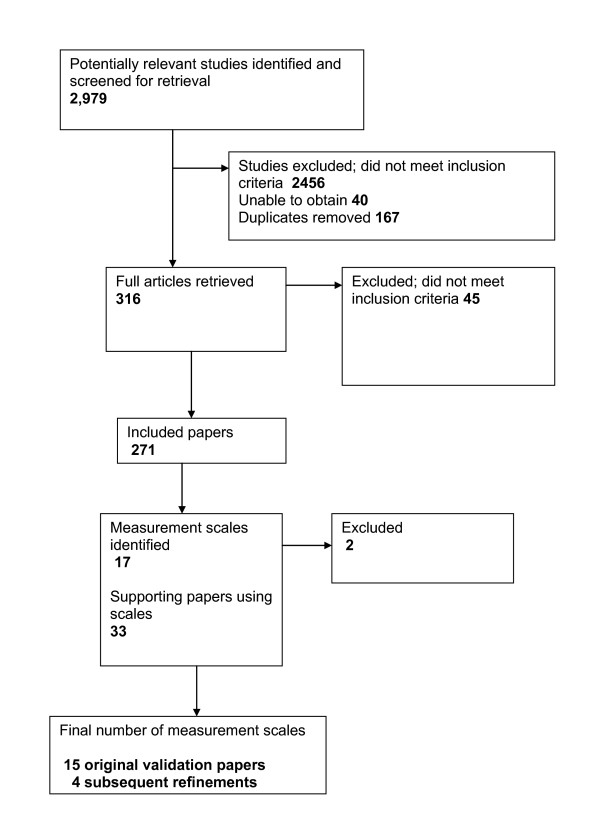
BACKGROUND: The evaluation of interventions and policies designed to promote resilience, and research to understand the determinants and associations, require reliable and valid measures to ensure data quality. This paper systematically reviews the psychometric rigour of resilience measurement scales developed for use in general and clinical populations. METHODS: Eight electronic abstract databases and the internet were searched and reference lists of all identified papers were hand searched. The focus was to identify peer reviewed journal articles where resilience was a key focus and/or is assessed. Two authors independently extracted data and performed a quality assessment of the scale psychometric properties. RESULTS: Nineteen resilience measures were reviewed; four of these were refinements of the original measure. All the measures had some missing information regarding the psychometric properties. Overall, the Connor-Davidson Resilience Scale, the Resilience Scale for Adults and the Brief Resilience Scale received the best psychometric ratings. The conceptual and theoretical adequacy of a number of the scales was questionable. CONCLUSION: We found no current 'gold standard' amongst 15 measures of resilience. A number of the scales are in the early stages of development, and all require further validation work. Given increasing interest in resilience from major international funders, key policy makers and practice, researchers are urged to report relevant validation statistics when using the measures.
Overview
The claims and statistics of this paper haven’t been checked yet.
Free: it reads the open-access text and checks the first 5 claims that cite a source we can check. Create a free account to check every claim.
Integrity signals
Registry
Cites
Statistics
Figures
Verification
Claims the paper makes
The claims and statistics of this paper haven’t been checked yet.
Free: it reads the open-access text and checks the first 5 claims that cite a source we can check. Create a free account to check every claim.
Claims other papers make about this one
Each is checked against this paper’s own text: does it say what the citing paper says it does?
The cited source says what the claim attributes to it.
In the citing paper
“A number of self-report scales of perceived resilience, broadly construed, have been developed 225 , and parallel those recommended for use in the clinical management of depression.”
From The clinical characterization of the adult patient with an anxiety or related disorder aimed at personalization of management (2021) · cites this paper as [225]
The cited source says what the claim attributes to it.
In the citing paper
“It also obtained the highest rating in a methodological review of resilience measures [16].”
Self-check
Percentages, sums and reported differences re-computed from the paper’s own numbers.
The self-check needs the paper’s full text.
Citations
Cites
Development of a new resilience scale: The Connor-Davidson Resilience Scale (CD-RISC)
Connor, K. M., & Davidson, J. R. T. (2003) · Depression and Anxiety · doi:10.1002/da.10113 · Cited by 11,793
Quality criteria were proposed for measurement properties of health status questionnaires
Terwee, C. B., Bot, S. D. M., de Boer, M. R., van der Windt, D. A. W. M., Knol, D. L., Dekker, J., Bouter, L. M., & de Vet, H. C. W. (2007) · Journal of Clinical Epidemiology · doi:10.1016/j.jclinepi.2006.03.012 · Cited by 10,764 · cited 3×
“Fundamental to the robustness of a methodological review are the quality criteria used to distinguish the measurement properties of a scale to enable a meaningful comparison [15].”
BackgroundMethodHealth Measurement Scales: A Practical Guide to Their Development and Use
Streiner, D. L., Norman, G. R., & Cairney, J. (1989) · Cited by 9,595
The Construct of Resilience: A Critical Evaluation and Guidelines for Future Work
Luthar, S. S., Cicchetti, D., & Becker, B. (2000) · Child Development · doi:10.1111/1467-8624.00164 · Cited by 9,381 · cited 3×
“A common strategy is to use task measures which reflect developmental stages [ 6 ].”
BackgroundMethodInfluentialThe brief resilience scale: Assessing the ability to bounce back
Smith, B. W., Dalen, J., Wiggins, K., Tooley, E., Christopher, P., & Bernard, J. (2008) · International Journal of Behavioral Medicine · doi:10.1080/10705500802222972 · Cited by 6,439 · cited 2×
“[14,17,23-42].”
BackgroundDevelopment and psychometric evaluation of the Resilience Scale.
Wagnild, G. M., & Young, H. M. (1993) · PubMed · Cited by 5,728
Campbell‐Sills, L., & Stein, M. B. (2007) · Journal of Traumatic Stress · doi:10.1002/jts.20271 · Cited by 3,575 · cited 1×
“[14,17,23-42].”
Systematic reviews: CRD's guidance for undertaking reviews in health care
Tacconelli, E. (2010) · The Lancet Infectious Diseases · doi:10.1016/s1473-3099(10)70065-7 · Cited by 3,245
ADOLESCENT RESILIENCE: A Framework for Understanding Healthy Development in the Face of Risk
Fergus, S., & Zimmerman, M. A. (2005) · Annual Review of Public Health · doi:10.1146/annurev.publhealth.26.021304.144357 · Cited by 2,915 · cited 1×
“[2].”
Streiner, D. L., & Norman, G. R. (2008) · doi:10.1093/acprof:oso/9780199231881.001.0001 · Cited by 2,631
Cited by
Items 301–400 of 1,004
Sánchez, J., Estrada‐Hernández, N., Booth, J., & Pan, D. (2021) · Psychology and Psychotherapy Theory Research and Practice · doi:10.1111/papt.12336 · Cited by 74
Hiebel, N., Kriegsmann-Rabe, M., Maus, K., Peusquens, F., Radbruch, L., & Geiser, F. (2021) · Frontiers in Psychology · doi:10.3389/fpsyg.2021.659395 · Cited by 97
“For instance, Windle (2011) published a concept analysis of how resilience could be defined.”
BackgroundInfluentialTerrana, A., & Al‐Delaimy, W. K. (2023) · Transcultural Psychiatry · doi:10.1177/13634615231167661 · Cited by 80
Souček, R., Ziegler, M., Schlett, C., & Pauls, N. (2016) · Gruppe Interaktion Organisation Zeitschrift für Angewandte Organisationspsychologie (GIO) · doi:10.1007/s11612-016-0314-x · Cited by 71
Social interaction reward: A resilience approach to overcome vulnerability to drugs of abuse
Rawas, R. E., Amaral, I. M., & Hofer, A. (2020) · European Neuropsychopharmacology · doi:10.1016/j.euroneuro.2020.06.008 · Cited by 63
Bittmann, F. (2021) · SN Social Sciences · doi:10.1007/s43545-021-00060-6 · Cited by 87
Calo, M., Judd, B. K., & Peiris, C. L. (2024) · Medical Education · doi:10.1111/medu.15391 · Cited by 77
“19 Without knowing if measures can accurately detect a change in resilience, it is inherently difficult to establish if an intervention can change resilience.”
Resilience to affective disorders: A comparative validation of two resilience scales
Leontjevas, R., de Beek, W. O., Lataster, J., & Jacobs, N. (2014) · Journal of Affective Disorders · doi:10.1016/j.jad.2014.07.010 · Cited by 65
Drost, L. M., van der Krieke, L., Sytema, S., & Schippers, G. M. (2015) · International Journal of Mental Health Nursing · doi:10.1111/inm.12176 · Cited by 67
Sanders, J., Munford, R., Thimasarn‐Anwar, T., & Liebenberg, L. (2015) · Research on Social Work Practice · doi:10.1177/1049731515614102 · Cited by 65
“Hypothesis 5: That fewer than 15% (Terwee et al., 2007; Windle et al., 2011) of the study group sample would return highest (i.e., a score of 140) and lowest (i.e., a score of 28) possible scores.”
BackgroundInfluentialStudies of resilience among youth experiencing homelessness: A systematic review
Cronley, C. C., & Evans, R. (2017) · Journal of Human Behavior in the Social Environment · doi:10.1080/10911359.2017.1282912 · Cited by 70
Franco, M., Haase, H., & António, D. (2020) · International journal of organizational analysis · doi:10.1108/ijoa-07-2019-1829 · Cited by 84
Nishi, D., Uehara, R., Yoshikawa, E., Sato, G., Ito, M., & Matsuoka, Y. (2013) · Psychiatry and Clinical Neurosciences · doi:10.1111/pcn.12028 · Cited by 53
“Although one scale called the Adolescent Resilience Scale was developed in Japan,(12) a recent review pointed out that unfortunately no clinical applications of that scale have yet been reported.(13) Thus, the aim of this study was to develop a concise measure of resilience for the Japanese, and compare its validity t…”
BackgroundResultVictorson, D. E., Tulsky, D. S., Kisala, P. A., Kalpakjian, C. Z., Weiland, B., & Choi, S. W. (2015) · Journal of Spinal Cord Medicine · doi:10.1179/2045772315y.0000000016 · Cited by 62
Resilience in the General Population: Standardization of the Resilience Scale (RS-11)
Kocalevent, R., Zenger, M., Heinen, I., Dwinger, S., Decker, O., & Brähler, E. (2015) · PLoS ONE · doi:10.1371/journal.pone.0140322 · Cited by 63
“Further contributions to the construct validity of the resilience scale yielded negative associations with depression, anxiety, and stress and positive correlations with physical health, life satisfaction, and health promoting activities [39,42,43].”
BackgroundAssessing the strengths of mental health consumers: A systematic review.
Bird, V. J., Le Boutillier, C., Leamy, M., Larsen, J., Oades, L. G., Williams, J., & Slade, M. (2012) · Psychological Assessment · doi:10.1037/a0028983 · Cited by 51
Gyawali, P., Chow, W. Z., Hinwood, M., Kluge, M. G., English, C., Ong, L. K., Nilsson, M., & Walker, F. R. (2020) · Frontiers in Neurology · doi:10.3389/fneur.2020.00230 · Cited by 55
“Interestingly, several studies have shown that the BRS and CD-RISC share only a moderate cross-correlation indicating that they likely capture different phenomena (13, 24, 25).”
BackgroundInfluentialTherapists’ resilience and posttraumatic growth during the COVID-19 pandemic.
Doorn, K. A., Békés, V., Luo, X., Prout, T. A., & Hoffman, L. (2022) · Psychological Trauma Theory Research Practice and Policy · doi:10.1037/tra0001097 · Cited by 66
Jovanović (2014) · doi:10.1007/s10902-013-9432-0 · Cited by 50
“The scale showed good psychometric properties in previous research (Windle et al. 2011).”
Mental health in adolescents with Type 1 diabetes: results from a large population-based study
Sivertsen, B., Petrie, K. J., Wilhelmsen-Langeland, A., & Hysing, M. (2014) · BMC Endocrine Disorders · doi:10.1186/1472-6823-14-83 · Cited by 50
“The READ has shown adequate psychometric properties [20].”
MethodDevelopment and Validation of the Five-by-Five Resilience Scale
DeSimone, J. A., Harms, P. D., Vanhove, A. J., & Herian, M. N. (2016) · Assessment · doi:10.1177/1073191115625803 · Cited by 62
“…has largely been unable to replicate this five-factor structure (Burns & Antsey, 2010; Campbell-Sills & Stein, 2007; Green et al., 2014; Karairmak, 2010; ManzanoGarcia & Calvo, 2013), the CD-RISC remains one of the most common measures of adult resilience in the literature (Windle et al., 2011).”
BackgroundInfluentialKidnapping and Mental Health in Iraqi Refugees: The Role of Resilience
Wright, A. M., Talia, Y. R., Aldhalimi, A., Broadbridge, C. L., Jamil, H., Lumley, M. A., Pole, N., Arnetz, B. B., & Arnetz, J. E. (2017) · Journal of Immigrant and Minority Health · doi:10.1007/s10903-015-0340-8 · Cited by 50
“Additionally, The Resilience Scale ranks among the highest in content validity and construct validity when compared to 18 competing resilience scales [37].”
Resilience Training in a Population of Deployed Personnel
Carr, W., Bradley, D., Ogle, A. D., Eonta, S. E., Pyle, B. L., & Santiago, P. (2013) · Military Psychology · doi:10.1037/h0094956 · Cited by 50
Grevenstein, D., Aguilar‐Raab, C., Schweitzer, J., & Bluemke, M. (2016) · Personality and Individual Differences · doi:10.1016/j.paid.2016.04.001 · Cited by 69
Gu, D., & Feng, Q. (2016) · The Journals of Gerontology Series B · doi:10.1093/geronb/gbw071 · Cited by 56
Identifying Mobile Sensing Indicators of Stress-Resilience
Adler, D. A., Tseng, V. W.-S., Qi, G., Scarpa, J. R., Sen, S., & Choudhury, T. (2021) · Proceedings of the ACM on Interactive Mobile Wearable and Ubiquitous Technologies · doi:10.1145/3463528 · Cited by 67
“However, reliability between major trait resilience scales is low [104].”
BackgroundDoody, C. B., Robertson, L., Cox, K. M., Bogue, J., Egan, J., & Sarma, K. M. (2021) · Cochrane Database of Systematic Reviews · doi:10.1002/14651858.cd013242.pub2 · Cited by 85
Hope and resilience as protective factors linked to lower burnout among child welfare workers
Pharris, A. B., Muñoz, R. T., & Hellman, C. M. (2022) · Children and Youth Services Review · doi:10.1016/j.childyouth.2022.106424 · Cited by 72
Beames, J. R., Li, S., Newby, J. M., Maston, K., Christensen, H. M., & Werner‐Seidler, A. (2021) · Child and Adolescent Psychiatry and Mental Health · doi:10.1186/s13034-021-00432-z · Cited by 63
“There are no “gold standard” measures of resilience, with all requiring additional validation work [58].”
BackgroundValidity of the Connor Davidson Resilience scale (CD-RISC) in people from 60-to-75 years old
Parra, M. D. S., Garrido, M., Notario‐Pacheco, B., Gutiérrez, R. B., Solera-Martínez, M., & Martínez‐Vizcaíno, V. (2012) · International journal of psychological research · doi:10.21500/20112084.736 · Cited by 55
Resilience in lesbians and gay men: A review and key findings from a nationwide Australian survey
Lyons, A. (2015) · International Review of Psychiatry · doi:10.3109/09540261.2015.1051517 · Cited by 55
“More commonly, resilience is measured using scales in which participants provide self-reported information on how well they have generally adapted to or bounced back from past adverse events (Windle et al., 2011).”
BackgroundDisentangling Sense of Coherence and Resilience in case of multiple traumas
Fossion, P., Leys, C., Kempenaers, C., Braun, S., Verbanck, P., & Linkowski, P. (2014) · Journal of Affective Disorders · doi:10.1016/j.jad.2014.02.029 · Cited by 59
Jain, S., & Cohen, A. K. (2013) · Health Education & Behavior · doi:10.1177/1090198113492761 · Cited by 74
“Resilience has been operationalized in a variety of psychopathology diagnoses and psychometric instruments, but there is no consensus in measurement strategy (Waaktaar & Torgersen, 2010; Windle et al., 2011).”
BackgroundClinic and park partnerships for childhood resilience: A prospective study of park prescriptions
Razani, N., Niknam, K. R., Wells, N. M., Thompson, D., Hills, N. K., Kennedy, G., Gilgoff, R., & Rutherford, G. W. (2019) · Health & Place · doi:10.1016/j.healthplace.2019.04.008 · Cited by 60
The state of the science on trauma inquiry
Lewis-O’Connor, A., Warren, A., Lee, J. V., Levy‐Carrick, N. C., Grossman, S., Chadwick, M., Stoklosa, H., & Rittenberg, E. (2019) · Women s Health · doi:10.1177/1745506519861234 · Cited by 63
von Eisenhart Rothe, A., Zenger, M., Lacruz, M. E., Emeny, R., Baumert, J., Haefner, S., & Ladwig, K.-H. (2013) · BMC Psychology · doi:10.1186/2050-7283-1-25 · Cited by 48
“Indeed, a recent review has questioned the methodology behind these dimensions (Windle et al. 2011).”
BackgroundSiriwardhana, C., Abas, M., Siribaddana, S., Sumathipala, A., & Stewart, R. J. (2015) · BMJ Open · doi:10.1136/bmjopen-2014-006000 · Cited by 58
Nindl, B. C., Jaffin, D. P., Dretsch, M. N., Cheuvront, S. N., Wesensten, N. J., Kent, M. L., Grunberg, N. E., Pierce, J. R., Barry, E. S., Scott, J. M., et al. (2015) · The Journal of Strength and Conditioning Research · doi:10.1519/jsc.0000000000001114 · Cited by 63
“Defense and Veterans Pain Rating Scale (DVPRS) (19) In process On study at present (Ongoing) F, C, L U, R, C Free Multidimensional and functional focus Limited validity at present Penetration into VA/DoD Brief Pain Inventory (32) High High C, L R, C Medium Very well validated Time Logistics of administration Connor-Da…”
BackgroundGrandparent Caregivers’ Resilience: Stress, Support, and Coping Predict Life Satisfaction
Mendoza, N., Fruhauf, C. A., & MacPhee, D. (2019) · The International Journal of Aging and Human Development · doi:10.1177/0091415019843459 · Cited by 60
“Specifically, it assesses the “personal competence and acceptance of self and life;” that is, it is “a positive personality characteristic that enhances individual adaptation” and as such taps into a range of protective mechanisms (Windle et al., 2011, p. 11).”
BackgroundMethodBreslin, G., Haughey, T., O’Brien, W., Caulfield, L., Robertson, A., & Lawlor, M. (2018) · Journal of Clinical Sport Psychology · doi:10.1123/jcsp.2016-0039 · Cited by 47
Elliott, T. R., Hsiao, Y.-Y., Kimbrel, N. A., Meyer, E., DeBeer, B. B., Gulliver, S. B., Kwok, O.-M., & Morissette, S. B. (2017) · Journal of Clinical Psychology · doi:10.1002/jclp.22414 · Cited by 47
The Status of Family Resilience: Effects of Sustainable Livelihoods in Rural China
Yang, B., Feldman, M. W., & Li, S. (2020) · Social Indicators Research · doi:10.1007/s11205-020-02518-1 · Cited by 64
McKeering, P., Hwang, Y., & Ng, C. (2021) · Journal of Research in International Education · doi:10.1177/14752409211006650 · Cited by 62
Graham, D. P., Helmer, D. A., Harding, M. J., Kosten, T. R., Petersen, N. J., & Nielsen, D. A. (2013) · Journal of Psychiatric Research · doi:10.1016/j.jpsychires.2013.02.006 · Cited by 47
Yendork, J. S., & Somhlaba, N. Z. (2015) · Child Care in Practice · doi:10.1080/13575279.2014.985286 · Cited by 71
Massey, E. K., Timmerman, L., Ismail, S. Y., Duerinckx, N., Lopes, A., Maple, H., Mega, I., Papachristou, C., Dobbels, F., & the ELPAT Psychosocial Care for Living Donors and Recipients Working Group (2017) · Transplant International · doi:10.1111/tri.13041 · Cited by 58
“The Brief Resilience Scale (BRS) [52] was included for its strong psychometric properties and because it is the shortest of the three resilience scales recommended by these authors [47].”
BackgroundMethodKaye‐Kauderer, H., Levine, J., Takeguchi, Y., Machida, M., Sekine, H., Taku, K., Yanagisawa, R. T., & Katz, C. L. (2019) · Psychiatric Quarterly · doi:10.1007/s11126-019-09646-z · Cited by 51
Elliott, T. R., Hsiao, Y.-Y., Kimbrel, N. A., DeBeer, B. B., Gulliver, S. B., Kwok, O.-M., Morissette, S. B., & Meyer, E. C. (2019) · Rehabilitation Psychology · doi:10.1037/rep0000282 · Cited by 47
Kasser, S. L., & Zia, A. (2020) · Archives of Physical Medicine and Rehabilitation · doi:10.1016/j.apmr.2020.02.010 · Cited by 53
Examining nursing students’ wellness and resilience: An exploratory study
Spurr, S., Walker, K. D., Squires, V., & Redl, N. (2021) · Nurse Education in Practice · doi:10.1016/j.nepr.2021.102978 · Cited by 65
La résilience : évolution des conceptions théoriques et des applications cliniques
Anaut, M. (2015) · Recherche en soins infirmiers · doi:10.3917/rsi.121.0028 · Cited by 77
“A l’heure actuelle, il existe plusieurs dizaines d’échelles de résilience (40) qui se réfèrent à des critères pluriels.”
Resilience is associated with low psychological distress in renal transplant recipients
Tian, X., Gao, Q., Li, G., Zou, G., Liu, C., Kong, L., & Li, P. (2015) · General Hospital Psychiatry · doi:10.1016/j.genhosppsych.2015.12.004 · Cited by 51
Coronado, R. A., Robinette, P. E., Henry, A. L., Pennings, J. S., Haug, C. M., Skolasky, R. L., Riley, L. H., Neuman, B. J., Cheng, J. S., Aaronson, O. S., et al. (2020) · The Spine Journal · doi:10.1016/j.spinee.2020.07.013 · Cited by 50
Beckner, M. E., Conkright, W. R., Eagle, S. R., Martin, B. J., Sinnott, A. M., LaGoy, A. D., Proessl, F., Lovalekar, M. T., Jabloner, L. R., Roma, P. G., et al. (2021) · Physiology & Behavior · doi:10.1016/j.physbeh.2021.113413 · Cited by 54
Brief Resilience Scale (BRS) Portuguese Version: validity and metrics for the older adult population
da Silva‐Sauer, L., de la Torre‐Luque, A., Smith, B. W., Lins, M. C. M. C., Andrade, S. M., & Fernández‐Calvo, B. (2020) · Aging & Mental Health · doi:10.1080/13607863.2020.1753015 · Cited by 53
“According to scientific literature, population under study should be considered when constructing a measurement instrument and should be involved in item selection processes (Terwee et al., 2007; Windle et al., 2011).”
BackgroundMethodPsychological resilience in healthcare workers: A review of strategies and intervention
Chidi, R., Adeniyi, A. O., Okolo, C. A., Babawarun, O., & Arowoogun, J. O. (2024) · World Journal of Biology Pharmacy and Health Sciences · doi:10.30574/wjbphs.2024.17.2.0088 · Cited by 66
Çelik, D. A., Çetin, F., & Tutkun, E. (2014) · Current Psychology · doi:10.1007/s12144-014-9260-3 · Cited by 63
Distelberg, B. J., Martin, A. S., Borieux, M., & Oloo, W. A. (2015) · Journal of Human Behavior in the Social Environment · doi:10.1080/10911359.2014.988320 · Cited by 51
“…a more robust look at any one dimension (for example, cohesion and adaptability specifically) we suggest that one of the other noted measures (e.g., FACE IV) or those noted in Leykin, Lahad, Cohen, Goldberg, and Aharonson-Daniel (2013) or Windle et al. (2011) be used in addition to the IFCR.”
The adolescent emotional coping after an earthquake: A risk factor for suicidal ideation
Stratta, P., Capanna, C., Carmassi, C., Patriarca, S., Emidio, G. D., Riccardi, I., Collazzoni, A., Dell’Osso, L., & Rossi, A. (2014) · Journal of Adolescence · doi:10.1016/j.adolescence.2014.03.015 · Cited by 57
Ying, L.-H., Lin, C.-D., Wu, X.-C., Chen, C., Greenberger, E., & An, Y.-Y. (2014) · Psychological Trauma: Theory, Research, Practice, and Policy · doi:10.1037/a0031964 · Cited by 45
“Although subsequent studies were not able to replicate the 5factors structure originally reported [45–47], the CD-RISC is still regarded as one of the resilience measures having the best psychometric properties in a meta-analysis [48].”
ResultPsychometric properties of the Family Resilience Assessment Scale: A Singaporean perspective
Chew, J., & Haase, A. M. (2016) · Epilepsy & Behavior · doi:10.1016/j.yebeh.2016.05.015 · Cited by 53
IJntema, R. C., Burger, Y. D., & Schaufeli, W. B. (2019) · Consulting psychology journal · doi:10.1037/cpb0000147 · Cited by 64
“…(2018) Windle (2011) Measurement of resilience Cosco et al. (2017) Pangallo, Zibarras, Lewis, and Flaxman (2015) Smith-Osborne and Bolton (2013) Windle, Bennett, and Noyes (2011) Enhancement of resilience Chmitorz et al. (2018) Joyce et al. (2018) Leppin et al. (2014) Macedo et al. (2014)…”
BackgroundReframing Resilience Concept: Insights from a Meta-synthesis of 21 Resilience Scales
Wadi, M., Nordin, N. I., Roslan, N. S., Tan, C., & Yusoff, M. S. B. (2020) · Education in Medicine Journal · doi:10.21315/eimj2020.12.2.2 · Cited by 60
The Child and Youth Resilience Measure (CYRM)
Version, Y. (2013) · Cited by 46
Individual differences in resilience to stress are associated with affective flexibility
Rademacher, L., Kraft, D., Eckart, C., & Fiebach, C. J. (2022) · Psychological Research · doi:10.1007/s00426-022-01779-4 · Cited by 72
“The three questionnaire measures of resilience studied here have been identified as having the best psychometric properties in a comparative review (Windle et al. 2011).”
BackgroundSchäfer, S. K., Fritz, J., Sopp, M. R., Kunzler, A. M., von Boros, L., Tüscher, O., Göritz, A. S., Lieb, K., & Michael, T. (2023) · Translational Psychiatry · doi:10.1038/s41398-023-02603-2 · Cited by 60
Suzuki, K., Kobayashi, T., Moriyama, K., Kaga, M., Hiratani, M., Watanabe, K., Yamashita, Y., & Inagaki, M. (2015) · PLoS ONE · doi:10.1371/journal.pone.0143946 · Cited by 63
“Some questionnaires measuring resiliency have been developed for the general population [15].”
BackgroundPsychometric validation of the French version of the Connor-Davidson Resilience Scale
Guihard, G., Deumier, L., Alliot‐Licht, B., Bouton-Kelly, L., Michaut, C., & Quilliot, F. (2017) · L Encéphale · doi:10.1016/j.encep.2017.06.002 · Cited by 54
Stresses, Strengths and Resilience in Adolescents: A Qualitative Study
Phillips, S. P., Reipas, K. M., & Zelek, B. (2019) · The Journal of Primary Prevention · doi:10.1007/s10935-019-00570-3 · Cited by 59
Reyes, A. T., Bhatta, T. R., Muthukumar, V., & Gangozo, W. J. (2020) · Archives of Psychiatric Nursing · doi:10.1016/j.apnu.2020.02.004 · Cited by 44
Riello, M., Purgato, M., Bove, C., Tedeschi, F., MacTaggart, D., Barbui, C., & Rusconi, E. (2021) · Royal Society Open Science · doi:10.1098/rsos.210219 · Cited by 42
“It has sound psychometric properties, high test– retest reliability and is one of the best available resilience scales for both the general population and clinical populations [48,49].”
BackgroundPsychometric Properties of the French Brief Resilience Scale
Jacobs, I., & Horsch, A. (2019) · European Journal of Health Psychology · doi:10.1027/2512-8442/a000022 · Cited by 55
“In a recent review on resilience inventories (Windle et al, 2011), the BRS was the only scale that asked directly for one’s ability to recover from stress and it belonged to the three scales that received the highest psychometric ratings.”
BackgroundThe Role of Chinese Language Learners' Academic Resilience and Mindfulness in Their Engagement
Liu, W., Gao, Y., Gan, L., & Wu, J. (2022) · Frontiers in Psychology · doi:10.3389/fpsyg.2022.916306 · Cited by 57
“In spite of the definitional and conceptual inconsistencies, most meanings are founded revolving around the two main notions of difficulty and constructive adjustment (Windle et al., 2011).”
BackgroundHunsu, N. J., Oje, A. V., Tanner‐Smith, E. E., & Adesope, O. (2023) · Educational Research Review · doi:10.1016/j.edurev.2023.100548 · Cited by 73
Resilience in individuals at clinical high risk for psychosis
Marulanda, S., & Addington, J. (2016) · Early Intervention in Psychiatry · doi:10.1111/eip.12174 · Cited by 42
“Several scales exist to measure resilience but all have some shortcomings in terms of their psychometric properties.(25) Based on this review, we used two measures to assess resilience: the Connor– Davidson Resilience Scale (CD-RISC),(26) and the Child and Youth Resilience Measure (CYRM).”
BackgroundMethodVeterinary Students' Perspectives on Resilience and Resilience-Building Strategies
Moffett, J., & Bartram, D. J. (2017) · Journal of Veterinary Medical Education · doi:10.3138/jvme.0216-046r1 · Cited by 55
Hébert, M., Parent, N., Simard, C., & Laverdière, A. (2018) · Canadian Journal of Behavioural Science/Revue canadienne des sciences du comportement · doi:10.1037/cbs0000092 · Cited by 59
“…of now, no psychometrically sound measure by itself, is designed to evaluate both adversity and competence in addition to all the different levels of factors (individual, familial, community, cultural, spiritual) associated with resilience (Ahern, Kiehl, Sole, & Byers, 2006; Windle et al., 2011).”
BackgroundMethodInfluentialWister, A., Lear, S. A., Schuurman, N., Mackey, D. C., Mitchell, B. A., Cosco, T. D., & Fyffe, I. (2018) · BMC Geriatrics · doi:10.1186/s12877-018-0851-y · Cited by 46
Assessing the Climate Resilience of Sub-Saharan Africa (SSA): A Metric-Based Approach
Sono, D., Wei, Y., & Jin, Y. (2021) · Land · doi:10.3390/land10111205 · Cited by 60
“Hence, resilience scales are argued to be inherently intertwined as the resilience of an individual level is influenced by the resilience of the community extensively, which in turn influenced my national level; nevertheless, features of resilience manifest differently at each level [22].”
BackgroundResilience in language learners and the relationship to storytelling
Nguyen, K., Stanley, N. V., Stanley, L., & Wang, Y. (2015) · Cogent Education · doi:10.1080/2331186x.2014.991160 · Cited by 42
Resilience among Employed Physicians and Mid‐Level Practitioners in Upstate New York
Waddimba, A. C., Scribani, M., Hasbrouck, M. A., Krupa, N. L., Jenkins, P., & May, J. J. (2016) · Health Services Research · doi:10.1111/1475-6773.12499 · Cited by 52
“One review concluded that the BRS was among three most valid measures (Windle, Bennett, and Noyes 2011).”
BackgroundTrauma and Resilience Among Deaf Individuals
Johnson, P., Cawthon, S. W., Fink, B., Wendel, E. M., & Schoffstall, S. (2018) · The Journal of Deaf Studies and Deaf Education · doi:10.1093/deafed/eny024 · Cited by 53
Shi, M., Liu, L., Sun, X., & Wang, L. (2018) · BMC Medical Education · doi:10.1186/s12909-018-1261-8 · Cited by 51
Shin, G.-S., Choi, K., Jeong, K. S., Min, Y., Ahn, Y., & Kim, M. (2018) · Annals of Occupational and Environmental Medicine · doi:10.1186/s40557-018-0265-5 · Cited by 51
Gottert, A., Friedland, B., Geibel, S., Nyblade, L. C., Baral, S., Kentutsi, S., Mallouris, C., Sprague, L., Hows, J., Anam, F. R., et al. (2019) · AIDS and Behavior · doi:10.1007/s10461-019-02594-6 · Cited by 49
Hall, A., Perez, A., West, X., Brown, M., Kim, E., Salih, Z., & Aronoff, S. C. (2021) · Global Pediatric Health · doi:10.1177/2333794x20982433 · Cited by 58
Human Brain Resilience: A Call to Action
Pascual‐Leone, Á., & Bartrés‐Faz, D. (2021) · Annals of Neurology · doi:10.1002/ana.26157 · Cited by 53
“23) and have limited utility to detect clinically meaningful changes over time.(24) We believe the assessment of resilience should be approximated from the stress-response paradigm and the homeostasis framework (see Table and Fig 2).”
MethodLohner, M. S., & Aprea, C. (2021) · Frontiers in Psychology · doi:10.3389/fpsyg.2021.702683 · Cited by 64
Lee, M., & Kim, B. (2023) · Administrative Sciences · doi:10.3390/admsci13050133 · Cited by 120
“Resilience refers to an individual’s capacity to adapt dynamically and overcome stress, challenging situations, and adversity while maintaining an appropriate level of self-control (Windle et al. 2011).”
BackgroundParker, C. H., Naliboff, B. D., Shih, W., Presson, A. P., Kilpatrick, L. A., Gupta, A., Liu, C., Keefer, L., Sauk, J. S., Hirten, R. P., et al. (2020) · Clinical Gastroenterology and Hepatology · doi:10.1016/j.cgh.2020.08.043 · Cited by 46
Does Resilience Help in Reducing Burnout Symptoms Among Chinese Students? A Meta-Analysis
Gong, Z., Li, C., Jiao, X., & Qun-zhen, Q. (2021) · Frontiers in Psychology · doi:10.3389/fpsyg.2021.707792 · Cited by 55
“Therefore, there has been no uniform method for measuring resilience, and the focus of measurement has varied due to the different definitions and types of resilience (Windle et al., 2011; Liu et al., 2017).”
MethodResilience and Emotional Intelligence of Staff Nurses during the COVID-19 Pandemic
Aljarboa, B. E., an, E. P., Dator, W. L., Alshammari, S. A., Mostoles, R., Uy, M. M., Alrashidi, N. A., Alreshidi, M. S., Mina, E., & Gonzales, A. (2022) · Healthcare · doi:10.3390/healthcare10112120 · Cited by 53
“When an individual views resilience as a beneficial trait rather than a stress reaction, the result is positive adaptation [10].”
BackgroundChen, X., Wang, Y., & Yan, Y. (2015) · Stress and Health · doi:10.1002/smi.2659 · Cited by 51
“In addition, there is a lack of basic information for several published instruments, including the definition of resilience and basic psychometric measures, such as reliability and validity (Windle et al., 2011).”
BackgroundVillasana, M., Alonso‐Tapia, J., & Ruiz, M. Á. (2016) · Personality and Individual Differences · doi:10.1016/j.paid.2016.04.053 · Cited by 58
Richardson, J. C., & Chew-Graham, C. A. (2016) · Springer eBooks · doi:10.1007/978-3-319-29492-6_2 · Cited by 45
“found no current ‘gold standard’ amongst 15 measures of resilience [ 30 ].”
BackgroundEntrepreneurial Resilience: Locus of Control and Well-being of Entrepreneurs
Bulmash, B. (2016) · Journal of Entrepreneurship & Organization Management · doi:10.4172/2169-026x.1000171 · Cited by 57
“adaptation process that allows entrepreneurs to look forward into the future despite harsh financial setbacks [23].”
BackgroundPsychological resilience in people experiencing schizophrenia and suicidal thoughts and behaviours
Gooding, P. A., Littlewood, D. L., Owen, R., Johnson, J., & Tarrier, N. (2017) · Journal of Mental Health · doi:10.1080/09638237.2017.1294742 · Cited by 45
“Existing definitions of resilience highlight the active and midpoints of this continuum, reflecting dynamic resistance to stressors (Rutter, 1999) and bouncing back from adversity (Windle et al., 2011).”
BackgroundUsing the CYRM-28 With South African Young People: A Factor Structure Analysis
van Rensburg, A., Theron, L. C., & Ungar, M. T. (2017) · Research on Social Work Practice · doi:10.1177/1049731517710326 · Cited by 50
Mizuno, Y., Hofer, A., Frajo-Apor, B., Wartelsteiner, F., Kemmler, G., Pardeller, S., Suzuki, T., Mimura, M., Fleischhacker, W. W., & Uchida, H. (2017) · Acta Psychiatrica Scandinavica · doi:10.1111/acps.12838 · Cited by 94
Caycho‐Rodríguez, T., Ventura‐León, J., Cadena, C. H. G., Tomás, J. M., Domínguez-Vergara, J., Daniel, L., & Gallegos, W. L. A. (2018) · Psychosocial Intervention · doi:10.5093/pi2018a6 · Cited by 58
Metadata
- Authors
- Windle, G., Bennett, K. M., & Noyes, J.
- Affiliations
- Bangor University (GB)
- University of Liverpool (GB)
- Corresponding author
- Windle, Gill
- Venue
- Health and Quality of Life Outcomes
- Published
- 2011
- Volume
- 9
- Issue
- 1
- Pages
- 8
- ISSN
- 1477-7525 (ISSN-L)
- PMC
- PMC3042897
- OpenAlex
- W2097669248
- Cited by
- 2,079
- References
- 59
- Citations by year
- 2026: 86 · 2025: 145 · 2024: 160 · 2023: 170 · 2022: 200 · 2021: 233 · 2020: 258 · 2019: 168 · 2018: 133 · 2017: 118 · 2016: 133 · 2015: 112 · 2014: 75 · 2013: 54 · 2012: 23
- FWCI
- 54.07
- Type
- journal article
- Language
- en
- Open access
- gold
- doi.org
- Licence
- cc-by
- Locations
- Health and Quality of Life Outcomes (publishedVersion, cc-by)
- PubMed Central (publishedVersion, cc-by)
- PubMed (publishedVersion)
- DOAJ (DOAJ: Directory of Open Access Journals) (acceptedVersion)
- Funders
- Office of Research and Development
- Scottish Government
- National Institute for Health and Care Research
- Public Health Agency
- Bangor University
- Directorate for Biological Sciences
- Chief Scientist Office, Scottish Government Health and Social Care Directorate
- Medical Research Council
- Engineering and Physical Sciences Research Council
- Biotechnology and Biological Sciences Research Council
- Economic and Social Research Council
- Topics
- Social Sciences › Psychology › Clinical Psychology › Resilience and Mental Health
- Social Sciences › Decision Sciences › Management Science and Operations Research › Psychometric Methodologies and Testing
- Health Sciences › Nursing › Research and Theory › Health Education and Validation
- Keywords
- resilience, psychometric properties, scale validation, Connor-Davidson Resilience Scale, Resilience Scale for Adults, Brief Resilience Scale, reliability and validity, clinical populations, general population
- MeSH terms
- Adaptation, Psychological, Adult, Age Factors, Humans, Personal Satisfaction, Psychometrics, Quality of Life
About these checks
Registry, retraction, Cites and statistics results are computed, not judged, with one exception: a printed reference that no index lists is read once by a model before it counts as a citation error. Claims are extracted by a model and kept only when their quote appears verbatim in the text; each cited source is then checked, with a model’s help, for whether it says what the claim relies on. Those verdicts can be wrong — read the claim’s quote and the cited source before relying on one.
Statistics and arithmetic are recomputed, not judged.
Confidence bands are shown only for fields calibrated on our annotated test set. None is calibrated yet, so no band is shown.
What counts as a claim ›How we measure confidence ›How we check this ›
Are you an author, or do you see a problem with this page? Request a review
Data sources
Bibliographic data: Semantic Scholar, OpenAlex, Crossref.
Contains information from the Semantic Scholar Academic Graph Datasets, made available under the ODC Attribution License (ODC-BY 1.0).
Semantic Scholar’s data is described in: Kinney, R., et al. (2023). The Semantic Scholar Open Data Platform. arXiv:2301.10140.
