

A methodological review of resilience measurement scales
Open accessThe DOI matches its Crossref record; 57 of the 59 references it cites were found in a registry or an index.
Abstract
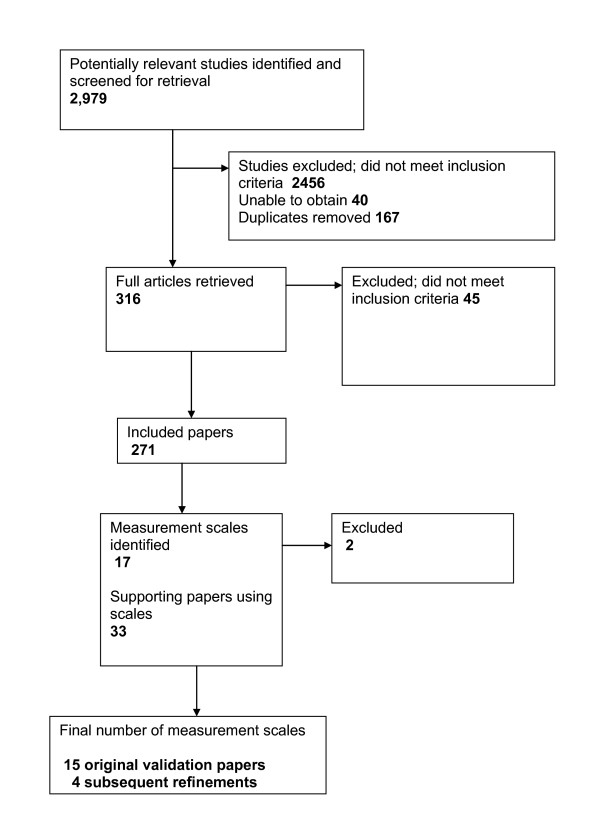
BACKGROUND: The evaluation of interventions and policies designed to promote resilience, and research to understand the determinants and associations, require reliable and valid measures to ensure data quality. This paper systematically reviews the psychometric rigour of resilience measurement scales developed for use in general and clinical populations. METHODS: Eight electronic abstract databases and the internet were searched and reference lists of all identified papers were hand searched. The focus was to identify peer reviewed journal articles where resilience was a key focus and/or is assessed. Two authors independently extracted data and performed a quality assessment of the scale psychometric properties. RESULTS: Nineteen resilience measures were reviewed; four of these were refinements of the original measure. All the measures had some missing information regarding the psychometric properties. Overall, the Connor-Davidson Resilience Scale, the Resilience Scale for Adults and the Brief Resilience Scale received the best psychometric ratings. The conceptual and theoretical adequacy of a number of the scales was questionable. CONCLUSION: We found no current 'gold standard' amongst 15 measures of resilience. A number of the scales are in the early stages of development, and all require further validation work. Given increasing interest in resilience from major international funders, key policy makers and practice, researchers are urged to report relevant validation statistics when using the measures.
Overview
The claims and statistics of this paper haven’t been checked yet.
Free: it reads the open-access text and checks the first 5 claims that cite a source we can check. Create a free account to check every claim.
Integrity signals
Registry
Cites
Statistics
Figures
Verification
Claims the paper makes
The claims and statistics of this paper haven’t been checked yet.
Free: it reads the open-access text and checks the first 5 claims that cite a source we can check. Create a free account to check every claim.
Claims other papers make about this one
Each is checked against this paper’s own text: does it say what the citing paper says it does?
The cited source says what the claim attributes to it.
In the citing paper
“A number of self-report scales of perceived resilience, broadly construed, have been developed 225 , and parallel those recommended for use in the clinical management of depression.”
From The clinical characterization of the adult patient with an anxiety or related disorder aimed at personalization of management (2021) · cites this paper as [225]
The cited source says what the claim attributes to it.
In the citing paper
“It also obtained the highest rating in a methodological review of resilience measures [16].”
Self-check
Percentages, sums and reported differences re-computed from the paper’s own numbers.
The self-check needs the paper’s full text.
Citations
Cites
Development of a new resilience scale: The Connor-Davidson Resilience Scale (CD-RISC)
Connor, K. M., & Davidson, J. R. T. (2003) · Depression and Anxiety · doi:10.1002/da.10113 · Cited by 11,793
Quality criteria were proposed for measurement properties of health status questionnaires
Terwee, C. B., Bot, S. D. M., de Boer, M. R., van der Windt, D. A. W. M., Knol, D. L., Dekker, J., Bouter, L. M., & de Vet, H. C. W. (2007) · Journal of Clinical Epidemiology · doi:10.1016/j.jclinepi.2006.03.012 · Cited by 10,764 · cited 3×
“Fundamental to the robustness of a methodological review are the quality criteria used to distinguish the measurement properties of a scale to enable a meaningful comparison [15].”
BackgroundMethodHealth Measurement Scales: A Practical Guide to Their Development and Use
Streiner, D. L., Norman, G. R., & Cairney, J. (1989) · Cited by 9,595
The Construct of Resilience: A Critical Evaluation and Guidelines for Future Work
Luthar, S. S., Cicchetti, D., & Becker, B. (2000) · Child Development · doi:10.1111/1467-8624.00164 · Cited by 9,381 · cited 3×
“A common strategy is to use task measures which reflect developmental stages [ 6 ].”
BackgroundMethodInfluentialThe brief resilience scale: Assessing the ability to bounce back
Smith, B. W., Dalen, J., Wiggins, K., Tooley, E., Christopher, P., & Bernard, J. (2008) · International Journal of Behavioral Medicine · doi:10.1080/10705500802222972 · Cited by 6,439 · cited 2×
“[14,17,23-42].”
BackgroundDevelopment and psychometric evaluation of the Resilience Scale.
Wagnild, G. M., & Young, H. M. (1993) · PubMed · Cited by 5,728
Campbell‐Sills, L., & Stein, M. B. (2007) · Journal of Traumatic Stress · doi:10.1002/jts.20271 · Cited by 3,575 · cited 1×
“[14,17,23-42].”
Systematic reviews: CRD's guidance for undertaking reviews in health care
Tacconelli, E. (2010) · The Lancet Infectious Diseases · doi:10.1016/s1473-3099(10)70065-7 · Cited by 3,245
ADOLESCENT RESILIENCE: A Framework for Understanding Healthy Development in the Face of Risk
Fergus, S., & Zimmerman, M. A. (2005) · Annual Review of Public Health · doi:10.1146/annurev.publhealth.26.021304.144357 · Cited by 2,915 · cited 1×
“[2].”
Streiner, D. L., & Norman, G. R. (2008) · doi:10.1093/acprof:oso/9780199231881.001.0001 · Cited by 2,631
Cited by
Items 501–600 of 1,004
Dray, J. (2021) · International Journal of Environmental Research and Public Health · doi:10.3390/ijerph18147315 · Cited by 54
“Six of fifteen scales were developed for use with children and adolescents, and received low ratings for psychometric quality [84].”
BackgroundInfluentialDoes Resilience Mediate Carer Distress After Head and Neck Cancer?
Simpson, G. K., Dall’Armi, L., Roydhouse, J. K., Forstner, D. F., Daher, M., Simpson, T., & White, K. J. (2015) · Cancer Nursing · doi:10.1097/ncc.0000000000000229 · Cited by 36
“There is an untold story of carer resilience, which is only starting to receive research attention.(17) Resilience can be defined as ‘‘a dynamic process encompassing positive adaptation within the context of significant adversity.”
BackgroundPerera, H. N., & Ganguly, R. (2016) · Assessment · doi:10.1177/1073191116646444 · Cited by 39
“In addition, the instrument has been shown to produce internally consistent scores, and discriminant and convergent validity evidence has been obtained (Pangallo, Zibarras, Lewis, & Flaxman, 2015; Windle et al., 2011).”
BackgroundMethodInfluentialResilience in Patients With Recent Diagnosis of a Schizophrenia Spectrum Disorder
Bozikas, V. P., Parlapani, E., Holeva, V., Skemperi, E., Bargiota, S. I., Kirla, D., Rera, E., & Garyfallos, G. (2016) · Journal of Nervous & Mental Disease · doi:10.1097/nmd.0000000000000541 · Cited by 32
“Personal resilience strengths, characteristics, and competencies constitute the so-called “phenomenological resilience,” the one that can be observed (Benard, 2004) and measured by diverse resilience scales (Windle et al., 2011).”
BackgroundInstruments for Measuring the Resilience of Indigenous Adolescents: An Exploratory Review
Jongen, C. S., Langham, E., Bainbridge, R. G., & McCalman, J. (2019) · Frontiers in Public Health · doi:10.3389/fpubh.2019.00194 · Cited by 36
“This lack of clarity and consistency is reflected in resilience measurement instruments, many of which assess resilience enhancing assets pertaining to individuals, yet do not assess factors in one’s environment that help to support and build resilience (30, 37).”
BackgroundInfluentialChua, J. H., Cheng, C. K. T., Cheng, L. J., Ang, W. H. D., & Lau, Y. (2022) · Current Psychology · doi:10.1007/s12144-022-03366-7 · Cited by 48
“The findings from a review suggest that psychological resilience is the most widely used validated measure of resilience (Windle et al., 2011).”
BackgroundInfluentialDown, M. J. A., Picknoll, D., Edwards, T., FARRINGDON, F. H., Hoyne, G. F., Piggott, B., & Murphy, M. (2024) · Journal of Adventure Education & Outdoor Learning · doi:10.1080/14729679.2024.2386350 · Cited by 49
“The Resilience Scale is a validated (Cronbach’s α = 0.89) and reliable (test-retest reliability r = 0.69) (Windle et al., 2011) tool to assess resilience.”
InfluentialKilpatrick, L. A., Istrin, J. J., Gupta, A., Naliboff, B. D., Tillisch, K., Labus, J. S., & Mayer, E. A. (2015) · Biological Psychology · doi:10.1016/j.biopsycho.2015.09.010 · Cited by 36
“Thus, different approaches to quantify resilience have been proposed (8).”
BackgroundMeasuring Subjective Resilience despite Adversity due to Family, Peers and Teachers
Alonso‐Tapia, J., Nieto, C., & Ruiz, M. Á. (2013) · The Spanish Journal of Psychology · doi:10.1017/sjp.2013.33 · Cited by 37
“Windle et al. (2011), on their side, examined the quality of nineteen resilience measures from a conceptual and methodological point of view.”
BackgroundHair cortisol as a biomarker of stress and resilience in South African mixed ancestry females
van den Heuvel, L. L., Acker, D., du Plessis, S., Stalder, T., Suliman, S., Thorne, M., Kirschbaum, C., & Seedat, S. (2019) · Psychoneuroendocrinology · doi:10.1016/j.psyneuen.2019.104543 · Cited by 38
Kennett, D. J., Quinn‐Nilas, C., & Carty, T. (2020) · Studies in Higher Education · doi:10.1080/03075079.2020.1723532 · Cited by 40
Centenarians as Models of Resistance and Resilience to Alzheimer’s Disease and Related Dementias
Andersen, S. L. (2020) · Advances in Geriatric Medicine and Research · doi:10.20900/agmr20200018 · Cited by 43
“The concept of resilience has been broadly defined as the ability to effectively adapt to significant sources of stress and avoid an adverse outcome [46].”
BackgroundTehranineshat, B., Mohammadi, F., Tazangi, R. M., Sohrabpour, M., Parviniannasab, A. M., & Bijani, M. (2020) · Patient Preference and Adherence · doi:10.2147/ppa.s262571 · Cited by 42
Sen, M. K., & Dutta, S. (2020) · ASCE-ASME Journal of Risk and Uncertainty in Engineering Systems Part A Civil Engineering · doi:10.1061/ajrua6.0001088 · Cited by 36
Baum, M. K., Tamargo, J. A., Diaz‐Martinez, J., Delgado‐Enciso, I., Meade, C. S., Kirk, G. D., Mehta, S. H., Moore, R. D., Kipke, M. D., SHOPTAW, S. J., et al. (2021) · Drug and Alcohol Dependence · doi:10.1016/j.drugalcdep.2021.109230 · Cited by 35
Development and Validation of an Improved Hardiness Measure: The Hardiness Resilience Gauge
Bartone, P. T., McDonald, K., Hansma, B. J., Stermac-Stein, J., Escobar, E. M. R., Stein, S. J., & Ryznar, R. J. (2022) · European Journal of Psychological Assessment · doi:10.1027/1015-5759/a000709 · Cited by 52
McAllister, M. (2013) · PROFESSIONI INFERMIERISTICHE · doi:10.7429/pi.2013.661055 · Cited by 41
A VALIDATION STUDY OF THE ITALIAN VERSION OF THE RESILIENCE SCALE FOR ADOLESCENTS (READ)
Stratta, P., Riccardi, I., Cosimo, A. D., Cavicchio, A., Struglia, F., Daneluzzo, E., Capanna, C., & Rossi, A. (2012) · Journal of Community Psychology · doi:10.1002/jcop.20518 · Cited by 34
The Role of Resilience and Age on Quality of life in Patients with Pain Disorders.
Yazdi‐Ravandi, S., Taslimi, Z., Saberi, H., Shams, J., Osanlo, S., Nori, G., & Haghparast, A. (2013) · PubMed Central · Cited by 46
Thompson, S., & Dobbins, S. K. (2017) · Journal of the American Psychiatric Nurses Association · doi:10.1177/1078390317739957 · Cited by 32
Getnet, B., & Alem, A. (2019) · Conflict and Health · doi:10.1186/s13031-019-0185-1 · Cited by 38
Huisman, M. A., Klokgieters, S. S., & Beekman, A. T. F. (2017) · Epidemiology and Psychiatric Sciences · doi:10.1017/s2045796017000348 · Cited by 41
“In Windle et al. (2011) performed a review study on 15 resilience metrics published in peer-reviewed journals and criticised the lack of attention that was paid to family and community resources.”
BackgroundWang, Z., Lohrmann, D. K., Buu, A., & Lin, H. (2021) · Substance Use & Misuse · doi:10.1080/10826084.2021.1879148 · Cited by 31
“I’m Still Here”: Resilience Among Older Survivors of Breast Cancer
Pieters, H. C. (2015) · Cancer Nursing · doi:10.1097/ncc.0000000000000248 · Cited by 42
“The psychometric properties, including conceptual adequacy, of measurement scales are incomplete.(19) Despite controversy about the mechanisms of resilience, agreement exists as to its outcomes.”
BackgroundTran, U. S., Glück, T. M., & Lueger‐Schuster, B. (2013) · BMC Psychiatry · doi:10.1186/1471-244x-13-47 · Cited by 34
“[23] identified 15 scales that may measure each as “an entirely different experience” (p.”
BackgroundMethodA review of quantitative studies of South African youth resilience: Some gaps
van Rensburg, A., Theron, L. C., & Rothmann, S. (2015) · South African Journal of Science · doi:10.17159/sajs.2015/20140164 · Cited by 40
Measures of visual hallucinations: Review and recommendations
Aynsworth, C., Collerton, D., & Dudley, R. E. J. (2017) · Clinical Psychology Review · doi:10.1016/j.cpr.2017.05.001 · Cited by 38
Mongan, D., Shannon, C., Hanna, D., Boyd, A., & Mulholland, C. C. (2017) · Early Intervention in Psychiatry · doi:10.1111/eip.12478 · Cited by 35
The protective factors for resilience scale (PFRS): Development of the scale
Harms, C. A., Pooley, J. A., & Cohen, L. (2017) · Cogent Psychology · doi:10.1080/23311908.2017.1400415 · Cited by 44
“Windle, Bennett, and Noyes (2011) reviewed 15 measures and 13 scales were reviewed by Pangallo, Zibarras, Lewis, and Flaxman (2015).”
BackgroundMethodResultInfluentialEffects of Mental Strength Training for Police Officers: a Three-Wave Quasi-experimental Study
van der Meulen, E., Bosmans, M. W. G., Lens, K. M. E., Lahlah, E., & van der Velden, P. G. (2017) · Journal of Police and Criminal Psychology · doi:10.1007/s11896-017-9247-8 · Cited by 49
“There is a wide variety of measurements of psychological resilience available tapping into psychological resilience with distinct nuances (Windle et al. 2011).”
BackgroundSmith, B. W., Guzman, A., & Erickson, K. S. (2018) · Mindfulness · doi:10.1007/s12671-018-0912-5 · Cited by 34
Understanding How Resilience is Measured in the Organizational Sciences
Cheng, S. K., King, D. D., & Oswald, F. L. (2020) · Human Performance · doi:10.1080/08959285.2020.1744151 · Cited by 44
“We also examined the measures included in previous review articles (e.g., Harms et al., 2018; Hartmann et al., 2019; Windle et al., 2011).”
BackgroundMethodRenbarger, R., Padgett, R. N., Cowden, R. G., Govender, K., Yilmaz, M., Scott, L. M., Makhnach, A. V., Novotný, J., Nugent, G., Rosenbaum, L., et al. (2020) · Journal of Research on Adolescence · doi:10.1111/jora.12569 · Cited by 38
Enrique Roig, A., Mooney, O., Salamanca-Sanabria, A., Lee, C. T., Farrell, S., & Richards, D. (2020) · JMIR Formative Research · doi:10.2196/20167 · Cited by 29
“Notably, effects for resilience tended to be larger on the BRS (which measures a resilient outcome) in the human support group and larger on the CD-RISC (which measures the assets and resources that lead to a resilient outcome) in the automated support group [66].”
(2020) · University of Southern Denmark Research Portal (University of Southern Denmark) · Cited by 30
Torres, M. C. G., & Garde, R. A. (2017) · Electronic Journal of Research in Educational Psychology · doi:10.25115/ejrep.34.14032 · Cited by 58
Guilera, G., Pereda, N., Paños, A., & Abad, J. (2015) · Health and Quality of Life Outcomes · doi:10.1186/s12955-015-0259-8 · Cited by 39
“measure of resilience that might serve as a gold standard, since it does not exist [12].”
BackgroundLauridsen, L. S., Willert, M. V., Eskildsen, A., & Christiansen, D. H. (2017) · Scandinavian Journal of Public Health · doi:10.1177/1403494817721056 · Cited by 41
“Furthermore, studies indicate that the scale is based on a theoretically robust framework [4,8].”
BackgroundJones, K. F., Simpson, G. K., Briggs, L., Dorsett, P., & Anderson, M. I. (2019) · Clinical Rehabilitation · doi:10.1177/0269215519845034 · Cited by 32
Jefferies, P., Vanstone, R., & Ungar, M. T. (2021) · Applied Research in Quality of Life · doi:10.1007/s11482-021-09953-3 · Cited by 36
“It is focused solely on internal factors and has been the subject of several critiques, including its generalizability to other populations (Windle et al., 2011).”
BackgroundMethodInfluentialSrivastava, A., Brown, R., Newport, D. J., Rousseau, J. F., Wagner, K. D., Guzick, A. G., Devargas, C., Claassen, C. A., Ugalde, I. T., Garrett, A. S., et al. (2024) · Psychiatry Research · doi:10.1016/j.psychres.2024.115772 · Cited by 36
Ajele, K. W., Idemudia, E. S., & Ugwu, L. E. (2024) · PLoS ONE · doi:10.1371/journal.pone.0297913 · Cited by 41
“Respondents rate items on a 5-point Likert scale from “not true at all” (0) to “true nearly all of the time” [9], with higher scores indicating greater resilience.”
Khawaja, N. G., Moisuc, O., & Ramirez, E. (2014) · Australian Psychologist · doi:10.1111/ap.12052 · Cited by 35
Lyons, A., Heywood, W., & Rozbroj, T. (2016) · AIDS and Behavior · doi:10.1007/s10461-016-1338-5 · Cited by 30
“, groups with medical problems and groups with specific psychiatric problems [27]), and has been shown to have high internal consistency and construct validity as a measure of resilience [4, 26, 28].”
BackgroundHendrickson, Z. M., Kim, J., Tol, W. A., Shrestha, A., Kafle, H. M., Luitel, N. P., Thapa, L., & Surkan, P. J. (2017) · Qualitative Health Research · doi:10.1177/1049732317739265 · Cited by 42
Role of Stress and Psychosocial Determinants on Women's Cardiovascular Risk and Disease Development
Medina‐Inojosa, J. R., Vinnakota, S., Garcia, M. C., Calle, M. C. A., Mulvagh, S. L., López-Jiménez, F. A., & Bhagra, A. (2019) · Journal of Women s Health · doi:10.1089/jwh.2018.7035 · Cited by 31
“56 Some of the measurement tools with the best psychometric ratings include the Perceived Stress Scale, 57 the Brief Resi-lience Scale, 58 the Resilience Scale for Adults, 59 and the Connor Davidson Scale.”
Joyce, S., Tan, L., Shand, F., Bryant, R. A., & Harvey, S. B. (2018) · Journal of Occupational and Environmental Medicine · doi:10.1097/jom.0000000000001526 · Cited by 39
First, J. M., Yu, M., & Houston, J. B. (2021) · Disasters · doi:10.1111/disa.12452 · Cited by 40
Measuring School Climate: A Systematic Review of Initial Development and Validation Studies
Lenz, A. S., Rocha, L., & Aras, Y. (2020) · International Journal for the Advancement of Counselling · doi:10.1007/s10447-020-09415-9 · Cited by 40
Creativity and Resilience as Predictors of Career Success
Fernández-Díaz, J. R., Gutiérrez‐Ortega, M., Salguero, F. L., & Mayo, I. C. (2021) · Sustainability · doi:10.3390/su13084489 · Cited by 40
“Along these lines, but highlighting the importance of the resources and tools human beings use to overcome adverse and stressful situations, numerous studies highlight the dynamism and adaptability of the construct of resilience [48–58].”
BackgroundKoivunen, K., Portegijs, E., Sillanpää, E., Eronen, J., Kokko, K., & Rantanen, T. (2021) · Quality of Life Research · doi:10.1007/s11136-021-03002-0 · Cited by 37
Dial, L. A., DeNardo, F. A., Fevrier, B., Morgan, A. L., Du, C., Tucker, R. M., Hsiao, P. Y., & Ludy, M. (2021) · Journal of American College Health · doi:10.1080/07448481.2021.1996372 · Cited by 35
“Previous research demonstrates good psychometric properties of the BRS. 42,43 Repetitive negative thinking Repetitive negative thinking was evaluated using the 27-item subscale of the validated Repetitive Thinking Questionnaire (RTQ).”
MethodUgarte, A. D. B., garcia, M. G., Campos, N. M., Madrid, M. O., & Segovia, J. L. (2022) · Ciencias Psicológicas · doi:10.22235/cp.v16i1.2545 · Cited by 55
“Ahern et al. (2006) y Windle et al. (2011) realizaron revisiones sobre los instrumentos más relevantes, siendo estos la Escala de Resiliencia (ER) de Wagnild y Young (1993); la Escala de Baruth Protective Factors Inventory (BPFI), propuesta por Baruth y Caroll (2002); la Escala de Resiliencia para…”
BackgroundLoiselle, M., Brown, C. L., Travis, F. T., Gruener, G., Rainforth, M. V., & Nidich, S. I. (2023) · Journal of Continuing Education in the Health Professions · doi:10.1097/ceh.0000000000000472 · Cited by 33
“BriefResilience Scale assessesone’s ability to recover fromstress and is reliable inmeasuring resilience.(30) Cronbach alpha = 0.”
BackgroundResilience in the context of Erikson’s theory of human development
Svetina, M. (2014) · Current Psychology · doi:10.1007/s12144-014-9218-5 · Cited by 35
Resiliencia en adultos: una revisión teórica
de Araújo, L. F., & Bermúdez, M. P. (2015) · Terapia psicológica · doi:10.4067/s0718-48082015000300009 · Cited by 94
The role of resilience in the recovery of the burn-injured patient: an integrative review
Kornhaber, R. A., Bridgman, H., McLean, L., & Vandervord, J. G. (2016) · Chronic Wound Care Management and Research · doi:10.2147/cwcmr.s94618 · Cited by 33
“In a recent review of resilience measures, the CD-RISC was rated as one of the top 3 of 15 resilience scales for psychometric ratings.(40) However, despite significant increasing interest from a policy and procedures standpoint, there is no current gold standard measure of resilience available.”
BackgroundMethodKitamura, H., Shindo, M., Tachibana, A., Honma, H., & Someya, T. (2013) · Journal of Occupational Health · doi:10.1539/joh.12-0095-br · Cited by 36
Rakap, S., & Batık, M. V. (2023) · Journal of Applied Research in Intellectual Disabilities · doi:10.1111/jar.13179 · Cited by 45
Connor-Davidson Resilience Scale: a systematic review psychometrics properties using the COSMIN
Nia, H. S., Sánchez‐Teruel, D., Froelicher, E. S., Hejazi, S. S., Hosseini, L., Fomani, F. K., Moshtagh, M., Mollaei, F., Goudarzian, A. H., & Babaei, A. (2024) · Annals of Medicine and Surgery · doi:10.1097/ms9.0000000000001968 · Cited by 41
“This indicated that both healthy and ill people, whether children or elderly, need resilience to improve their resistance to the challenges of life [106] .”
Psychological Trait Resilience Within Ecological Systems Theory: The Resilient Systems Scales
Maltby, J., Day, L., Flowe, H. D., Vostanis, P., & Chivers, S. (2017) · Journal of Personality Assessment · doi:10.1080/00223891.2017.1344985 · Cited by 41
“This is important for the measurement and examination of trait resilience, not least because the conceptual and measurement understanding of trait resilience has previously been somewhat ambiguous (Pangallo et al., 2015; Windle et al., 2011).”
BackgroundStoner, C. R., Stansfeld, J. L., Orrell, M. W., & Spector, A. E. (2017) · Dementia · doi:10.1177/1471301217740288 · Cited by 31
Challenged but not threatened: Managing health in advanced age
Wiles, J. L., Miskelly, P., Stewart, O., Kerse, N. M., Rolleston, A. K., & Gott, M. (2018) · Social Science & Medicine · doi:10.1016/j.socscimed.2018.06.018 · Cited by 34
Effects of age on trait resilience in a population-based cohort and two patient cohorts
Linnemann, P., Wellmann, J., Berger, K., & Teismann, H. (2020) · Journal of Psychosomatic Research · doi:10.1016/j.jpsychores.2020.110170 · Cited by 33
Building Personal Resilience in Primary Care Paramedic Students, and Subsequent Skill Decay
Vaughan, A. D., Stoliker, B. E., & Andérson, G. S. (2020) · Australasian Journal of Paramedicine · doi:10.33151/ajp.17.803 · Cited by 35
Mohlin, Å., Axelsson, U., Bendahl, P., Borrebaeck, C. A. K., Hegardt, C., Johnsson, P., Hallberg, I. R., & Rydén, L. (2020) · Cancer Management and Research · doi:10.2147/cmar.s268774 · Cited by 37
Martinez, S., Jones, J. D., Brandt, L., Hien, D. A., Campbell, A. N. C., Batchelder, S. T., & Comer, S. D. (2021) · Drug and Alcohol Dependence · doi:10.1016/j.drugalcdep.2021.108632 · Cited by 32
“One of the most frequently used measures of resilience is the Connor-Davidson Resilience Scale 25 (CD-RISC-25; Windle et al., 2011).”
BackgroundMethodImpact of patient resilience on early recovery from rotator cuff repair
Wilson, C. D., Welling, B. D., Hammonds, K. A. P., & Robin, B. N. (2021) · Shoulder & Elbow · doi:10.1177/17585732211003556 · Cited by 29
“While a number of resilience measures exist, we elected to use the Brief Resilience Scale (BRS), as it is among the most valid and consistent assessments of resilience.(23) The primary aim of this study was to evaluate the correlation between preoperative resilience, as defined by the BRS, and postoperative pain and f…”
BackgroundMethodInfluentialHanna, K. L., Giebel, C. M., Butchard, S., Tetlow, H., Ward, K., Shenton, J., Cannon, J., Komuravelli, A., Gaughan, A., Eley, R., et al. (2021) · Dementia · doi:10.1177/14713012211036601 · Cited by 30
“However, coping refers to one’s response to aversive situations (Wechsler, 1995), whereas resilience has been used to explain how one copes and ‘bounces back’ following challenging circumstances (Windle et al., 2011).”
Psychometric evaluation of the Connor-Davidson Resilience Scale among Iranian population
Nia, H. S., She, L., Froelicher, E. S., Marôco, J. P., Moshtagh, M., & Hejazi, S. S. (2023) · BMC Psychiatry · doi:10.1186/s12888-023-04580-8 · Cited by 44
“The Brief Resilience Scale was designed to assess the ability to recover from stress but the CD-RISC was designed to assess the ability to cope with stress [3].”
BackgroundMethodInfluentialTai, A. P.-L., Leung, M.-K., Geng, X., & Lau, W. K. (2023) · Frontiers in Behavioral Neuroscience · doi:10.3389/fnbeh.2023.1175064 · Cited by 38
Kelly, Y., Fitzgerald, A., & Dooley, B. (2017) · International Journal of Methods in Psychiatric Research · doi:10.1002/mpr.1506 · Cited by 28
“Researchers have been urged to report relevant validation statistics when using measures of resilience (Windle et al., 2011).”
BackgroundDuong, C., & Hurst, C. P. (2016) · BMC Research Notes · doi:10.1186/s13104-016-2099-y · Cited by 30
“Windle G.”
BackgroundMethodInfluentialPositive Psychological Assessment and Early-Stage Dementia
McGee, J. S., Zhao, H. C., Myers, D. R., & Kim, S. (2017) · Clinical Gerontologist · doi:10.1080/07317115.2017.1305032 · Cited by 35
Windle, G., Bennett, K. M., MacLeod, C., & The CFAS WALES research team (2020) · Frontiers in Medicine · doi:10.3389/fmed.2020.502314 · Cited by 27
“A number of resilience measurement scales exist, although most measure factors that facilitate a resilient outcome, focusing mainly on psychological aspects (12).”
BackgroundSelf-citationNoncognitive Amplifiers of Human Performance: Unpacking the 25/75 Rule
Matthews, M. D., Lerner, R. M., & Annen, H. (2019) · Oxford University Press eBooks · doi:10.1093/oso/9780190455132.003.0016 · Cited by 29
Foster, K., Steele, M. C., Metcalfe, J., Toomey, N., & Alexander, L. (2023) · International Journal of Mental Health Nursing · doi:10.1111/inm.13246 · Cited by 36
“Resilience was measured with the Brief Resilience Scale (BRS), a valid and reliable measure (Cronbach's alpha 0.70–0.95; Windle et al., 2011) that averages the score on 6 items using a Likert scale from 1 (strongly disagree) to 5 (strongly agree), where higher scores indicate greater levels of…”
MethodInfluentialSchellekens, M. P. J., Zwanenburg, L. C., & van der Lee, M. L. (2024) · Current Oncology · doi:10.3390/curroncol31070297 · Cited by 33
“More specifically, resilience is often still operationalized as a score on one of the many available resilience questionnaires [37].”
BackgroundSidheek, K. P. F., Satyanarayana, V. A., Sowmya, H. R., & Chandra, P. S. (2017) · Asian Journal of Psychiatry · doi:10.1016/j.ajp.2017.10.015 · Cited by 31
Resilience and return-to-work pain interventions: systematic review
Wainwright, E. M., Wainwright, D. W., Coghill, N. F., Walsh, J., & Perry, R. E. (2019) · Occupational Medicine · doi:10.1093/occmed/kqz012 · Cited by 35
Blower, S. L., Gridley, N., Dunn, A., Bywater, T. J., Hindson, Z., & Bryant, M. (2019) · Clinical Child and Family Psychology Review · doi:10.1007/s10567-019-00276-2 · Cited by 32
“Without quality evidence to inform measure choice, researchers and practitioners may make arbitrary, or potentially inappropriate, selections (Windle et al. 2011).”
BackgroundLlistosella, M., Rosado, T. G., Rodríguez‐Rey, R., Liebenberg, L., Bejarano, Á., Gómez‐Benito, J., & Limonero, J. T. (2019) · Frontiers in Psychology · doi:10.3389/fpsyg.2019.01410 · Cited by 35
Buttell, F., Cannon, C. E. B., Rose, K., & Ferreira, R. J. (2021) · Traumatology An International Journal · doi:10.1037/trm0000296 · Cited by 33
Elgendi, M. M., Stewart, S. H., MacKay, E., & Deacon, S. H. (2021) · Annals of Dyslexia · doi:10.1007/s11881-021-00223-3 · Cited by 42
Rogers, M., Lamarche, K., Miller, M. K., Moore, K. S., Spies, L. A., Taylor, J., & Staempfli, S. (2022) · Journal of Advanced Nursing · doi:10.1111/jan.15161 · Cited by 36
McFarland, D. C., Holland, J. C., & Holcombe, R. F. (2015) · Journal of Oncology Practice · doi:10.1200/jop.2015.003798 · Cited by 29
“Resilience was measured using the CD-RISC.23,24 The CDRISC distinguishes between those with greater or lesser resiliency25,26 and has been validated in multiple settings.27-29 It is composed of 25 questions, with no subscales.”
MethodCognitive and Behavioral Resilience Among Young Gay and Bisexual Men Living with HIV
Hussen, S. A., Harper, G. W., Rodgers, C. R. R., van den Berg, J. J., Dowshen, N., Hightow‐Weidman, L., & on behalf of the Adolescent Medicine Trials Network for HIV/AIDS Interventions (ATN) (2017) · LGBT Health · doi:10.1089/lgbt.2016.0135 · Cited by 30
Sanders, J., Munford, R., & Boden, J. M. (2017) · Children and Youth Services Review · doi:10.1016/j.childyouth.2017.07.007 · Cited by 40
Schwerdtfeger, A. R., & Dick, K. (2018) · The Journal of Positive Psychology · doi:10.1080/17439760.2018.1497689 · Cited by 35
Lightfoot, E., Lesen, A. E., & Ferreira, R. J. (2020) · International Journal of Disaster Risk Reduction · doi:10.1016/j.ijdrr.2020.101716 · Cited by 35
Celbis, O., van de Laar, M., & Volante, L. (2024) · International Journal of Educational Research Open · doi:10.1016/j.ijedro.2024.100392 · Cited by 43
Wadley, A. L., Mitchell, D., & Kamerman, P. R. (2016) · PeerJ · doi:10.7717/peerj.2464 · Cited by 28
Dahn, H., McGibbon, A., & Bowes, D. (2018) · Practical Radiation Oncology · doi:10.1016/j.prro.2018.08.001 · Cited by 28
Ishibashi, R., Nouchi, R., Honda, A., Abe, T., & Sugiura, M. (2019) · Geosciences · doi:10.3390/geosciences9090366 · Cited by 27
“Although this concept has been well established and is widely utilized in psychological investigations (reviewed in [16]), the focus in relation to this term has not been specifically on ‘survival’ in extreme situations.”
BackgroundDeveloping a model of resilience in older adulthood: a qualitative meta-synthesis
Wilson, C. A., Walker, D. L., & Saklofske, D. H. (2020) · Ageing and Society · doi:10.1017/s0144686x20000112 · Cited by 33
COVID-19: Assessing the impact of lockdown on recreational athletes
Martin, A. M., Champ, F. M., & Franklin, Z. C. (2021) · Psychology of sport and exercise · doi:10.1016/j.psychsport.2021.101978 · Cited by 32
Analysing the individual entrepreneurial resilience of rural women
Badzaban, F., Rezaei‐Moghaddam, K., & Fatemi, M. (2021) · Journal of global entrepreneurship research · doi:10.1007/s40497-021-00290-1 · Cited by 32
Resilience and recovery from sports related concussion in adolescents and young adults
Bunt, S. C., Meredith-Duliba, T., Didehbani, N., Hynan, L. S., LoBue, C., Stokes, M. A., Miller, S. M., Bell, K. R., Batjer, H. H., & Cullum, C. M. (2021) · Journal of Clinical and Experimental Neuropsychology · doi:10.1080/13803395.2021.1990214 · Cited by 36
“The BRS is a six-item instrument developed to quantify the degree of resilience perceived by an individual and has been shown to be valid and reliable in a variety of populations (Rodríguez-Rey et al., 2016; Smith et al., 2008; Windle et al., 2011).”
MethodPeel, E., Rivers, I., Tyler, A., Nodin, N., & Perez-Acevedo, C. (2022) · Psychology and Sexuality · doi:10.1080/19419899.2022.2063754 · Cited by 44
“While there are general psychometric instruments that purport to measure resilience objectively (see, Windle et al., 2011) resilience is highly contextual and ‘universal’ themes in the general resilience literature are highly dependent on context (Wilson & Wilson, 2019).”
BackgroundBlanke, E. S., Schmiedek, F., Siebert, S., Richter, D., & Brose, A. (2022) · Stress and Health · doi:10.1002/smi.3164 · Cited by 42
Metadata
- Authors
- Windle, G., Bennett, K. M., & Noyes, J.
- Affiliations
- Bangor University (GB)
- University of Liverpool (GB)
- Corresponding author
- Windle, Gill
- Venue
- Health and Quality of Life Outcomes
- Published
- 2011
- Volume
- 9
- Issue
- 1
- Pages
- 8
- ISSN
- 1477-7525 (ISSN-L)
- PMC
- PMC3042897
- OpenAlex
- W2097669248
- Cited by
- 2,079
- References
- 59
- Citations by year
- 2026: 86 · 2025: 145 · 2024: 160 · 2023: 170 · 2022: 200 · 2021: 233 · 2020: 258 · 2019: 168 · 2018: 133 · 2017: 118 · 2016: 133 · 2015: 112 · 2014: 75 · 2013: 54 · 2012: 23
- FWCI
- 54.07
- Type
- journal article
- Language
- en
- Open access
- gold
- doi.org
- Licence
- cc-by
- Locations
- Health and Quality of Life Outcomes (publishedVersion, cc-by)
- PubMed Central (publishedVersion, cc-by)
- PubMed (publishedVersion)
- DOAJ (DOAJ: Directory of Open Access Journals) (acceptedVersion)
- Funders
- Office of Research and Development
- Scottish Government
- National Institute for Health and Care Research
- Public Health Agency
- Bangor University
- Directorate for Biological Sciences
- Chief Scientist Office, Scottish Government Health and Social Care Directorate
- Medical Research Council
- Engineering and Physical Sciences Research Council
- Biotechnology and Biological Sciences Research Council
- Economic and Social Research Council
- Topics
- Social Sciences › Psychology › Clinical Psychology › Resilience and Mental Health
- Social Sciences › Decision Sciences › Management Science and Operations Research › Psychometric Methodologies and Testing
- Health Sciences › Nursing › Research and Theory › Health Education and Validation
- Keywords
- resilience, psychometric properties, scale validation, Connor-Davidson Resilience Scale, Resilience Scale for Adults, Brief Resilience Scale, reliability and validity, clinical populations, general population
- MeSH terms
- Adaptation, Psychological, Adult, Age Factors, Humans, Personal Satisfaction, Psychometrics, Quality of Life
About these checks
Registry, retraction, Cites and statistics results are computed, not judged, with one exception: a printed reference that no index lists is read once by a model before it counts as a citation error. Claims are extracted by a model and kept only when their quote appears verbatim in the text; each cited source is then checked, with a model’s help, for whether it says what the claim relies on. Those verdicts can be wrong — read the claim’s quote and the cited source before relying on one.
Statistics and arithmetic are recomputed, not judged.
Confidence bands are shown only for fields calibrated on our annotated test set. None is calibrated yet, so no band is shown.
What counts as a claim ›How we measure confidence ›How we check this ›
Are you an author, or do you see a problem with this page? Request a review
Data sources
Bibliographic data: Semantic Scholar, OpenAlex, Crossref.
Contains information from the Semantic Scholar Academic Graph Datasets, made available under the ODC Attribution License (ODC-BY 1.0).
Semantic Scholar’s data is described in: Kinney, R., et al. (2023). The Semantic Scholar Open Data Platform. arXiv:2301.10140.
