

A methodological review of resilience measurement scales
Open accessThe DOI matches its Crossref record; 57 of the 59 references it cites were found in a registry or an index.
Abstract
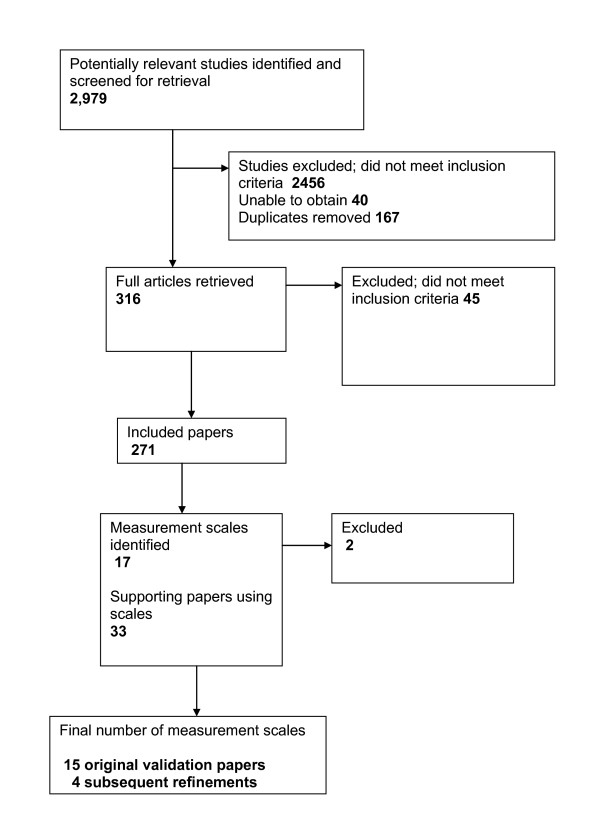
BACKGROUND: The evaluation of interventions and policies designed to promote resilience, and research to understand the determinants and associations, require reliable and valid measures to ensure data quality. This paper systematically reviews the psychometric rigour of resilience measurement scales developed for use in general and clinical populations. METHODS: Eight electronic abstract databases and the internet were searched and reference lists of all identified papers were hand searched. The focus was to identify peer reviewed journal articles where resilience was a key focus and/or is assessed. Two authors independently extracted data and performed a quality assessment of the scale psychometric properties. RESULTS: Nineteen resilience measures were reviewed; four of these were refinements of the original measure. All the measures had some missing information regarding the psychometric properties. Overall, the Connor-Davidson Resilience Scale, the Resilience Scale for Adults and the Brief Resilience Scale received the best psychometric ratings. The conceptual and theoretical adequacy of a number of the scales was questionable. CONCLUSION: We found no current 'gold standard' amongst 15 measures of resilience. A number of the scales are in the early stages of development, and all require further validation work. Given increasing interest in resilience from major international funders, key policy makers and practice, researchers are urged to report relevant validation statistics when using the measures.
Overview
The claims and statistics of this paper haven’t been checked yet.
Free: it reads the open-access text and checks the first 5 claims that cite a source we can check. Create a free account to check every claim.
Integrity signals
Registry
Cites
Statistics
Figures
Verification
Claims the paper makes
The claims and statistics of this paper haven’t been checked yet.
Free: it reads the open-access text and checks the first 5 claims that cite a source we can check. Create a free account to check every claim.
Claims other papers make about this one
Each is checked against this paper’s own text: does it say what the citing paper says it does?
The cited source says what the claim attributes to it.
In the citing paper
“A number of self-report scales of perceived resilience, broadly construed, have been developed 225 , and parallel those recommended for use in the clinical management of depression.”
From The clinical characterization of the adult patient with an anxiety or related disorder aimed at personalization of management (2021) · cites this paper as [225]
The cited source says what the claim attributes to it.
In the citing paper
“It also obtained the highest rating in a methodological review of resilience measures [16].”
Self-check
Percentages, sums and reported differences re-computed from the paper’s own numbers.
The self-check needs the paper’s full text.
Citations
Cites
Development of a new resilience scale: The Connor-Davidson Resilience Scale (CD-RISC)
Connor, K. M., & Davidson, J. R. T. (2003) · Depression and Anxiety · doi:10.1002/da.10113 · Cited by 11,793
Quality criteria were proposed for measurement properties of health status questionnaires
Terwee, C. B., Bot, S. D. M., de Boer, M. R., van der Windt, D. A. W. M., Knol, D. L., Dekker, J., Bouter, L. M., & de Vet, H. C. W. (2007) · Journal of Clinical Epidemiology · doi:10.1016/j.jclinepi.2006.03.012 · Cited by 10,764 · cited 3×
“Fundamental to the robustness of a methodological review are the quality criteria used to distinguish the measurement properties of a scale to enable a meaningful comparison [15].”
BackgroundMethodHealth Measurement Scales: A Practical Guide to Their Development and Use
Streiner, D. L., Norman, G. R., & Cairney, J. (1989) · Cited by 9,595
The Construct of Resilience: A Critical Evaluation and Guidelines for Future Work
Luthar, S. S., Cicchetti, D., & Becker, B. (2000) · Child Development · doi:10.1111/1467-8624.00164 · Cited by 9,381 · cited 3×
“A common strategy is to use task measures which reflect developmental stages [ 6 ].”
BackgroundMethodInfluentialThe brief resilience scale: Assessing the ability to bounce back
Smith, B. W., Dalen, J., Wiggins, K., Tooley, E., Christopher, P., & Bernard, J. (2008) · International Journal of Behavioral Medicine · doi:10.1080/10705500802222972 · Cited by 6,439 · cited 2×
“[14,17,23-42].”
BackgroundDevelopment and psychometric evaluation of the Resilience Scale.
Wagnild, G. M., & Young, H. M. (1993) · PubMed · Cited by 5,728
Campbell‐Sills, L., & Stein, M. B. (2007) · Journal of Traumatic Stress · doi:10.1002/jts.20271 · Cited by 3,575 · cited 1×
“[14,17,23-42].”
Systematic reviews: CRD's guidance for undertaking reviews in health care
Tacconelli, E. (2010) · The Lancet Infectious Diseases · doi:10.1016/s1473-3099(10)70065-7 · Cited by 3,245
ADOLESCENT RESILIENCE: A Framework for Understanding Healthy Development in the Face of Risk
Fergus, S., & Zimmerman, M. A. (2005) · Annual Review of Public Health · doi:10.1146/annurev.publhealth.26.021304.144357 · Cited by 2,915 · cited 1×
“[2].”
Streiner, D. L., & Norman, G. R. (2008) · doi:10.1093/acprof:oso/9780199231881.001.0001 · Cited by 2,631
Cited by
Items 401–500 of 1,004
Valiente, C., Vázquez, C., Contreras, A., Peinado, V., & Trucharte, A. (2021) · European Journal of Psychotraumatology · doi:10.1080/20008198.2020.1871555 · Cited by 50
“Despite the popularity of self-report questionnaires of resilience (Windle et al., 2011), their predictive value seems very small at best as has been cogently argued by Bonanno (2012).”
BackgroundMethodDiaz‐Martinez, J., Tamargo, J. A., Delgado‐Enciso, I., Liu, Q., Acuña, L., Laverde, E. E., Barbieri, M. A., Trepka, M. J., Campa, A. L., Siminski, S. M., et al. (2021) · AIDS and Behavior · doi:10.1007/s10461-021-03292-y · Cited by 49
“The Brief Resilience Scale (BRS) was used to assess resilience [25, 26].”
MethodThe Identity Resilience Index: Development and Validation in Two UK Samples
Breakwell, G. M., Fino, E., & Jaspal, R. (2021) · Identity · doi:10.1080/15283488.2021.1957895 · Cited by 67
“Identity resilience: its conceptual distinctiveness There are many existing measures of general resilience, which have been reviewed elsewhere (Windle et al., 2011).”
BackgroundMethodGiovannetti, A. M., Solari, A., & Pakenham, K. I. (2022) · Disability and Rehabilitation · doi:10.1080/09638288.2021.1960441 · Cited by 38
Mao, Y., Xie, M., Li, M., Gu, C., Chen, Y., Zhang, Z., & Peng, C. (2022) · Educational Psychology · doi:10.1080/01443410.2022.2138830 · Cited by 54
“…phenomenon (Waugh & Koster, 2015), and a variety of components are thought to be involved in psychological resilience, such as optimism, self-esteem, personal/social competence, problem-solving skills, social resources, independence, control, and family cohesion (Windle et al., 2011).”
BackgroundMampane, M. R. (2014) · South African Journal of Education · doi:10.15700/201412052114 · Cited by 64
Ruiz-Párraga, G. T., López-Martínez, A. E., & Gómez‐Pérez, L. (2012) · Journal of Pain · doi:10.1016/j.jpain.2012.08.005 · Cited by 49
“The ER-89 was developed to measure ego-resiliency as a stable personality characteristic, but because it does not depend on risk or adversity, it has been argued that itwouldbe incorrect touse itasan indicatorof resilience.(49) The CD-RISC was developed as a measure of the ability to cope with stress.”
BackgroundPesantes, M. A., Lazo-Porras, M., Dabrh, A. M. A., Ávila-Ramírez, J. R., Torres, M. D. C. C., Villamonte, G., Sánchez-Perez, G. P., Málaga, G., Bernabé‐Ortiz, A., & Miranda, J. J. (2015) · Canadian Journal of Cardiology · doi:10.1016/j.cjca.2015.06.003 · Cited by 51
Measuring what matters to patients: Using goal content to inform measure choice and development
Jacob, J., Edbrooke-Childs, J. H., Law, D., & Wolpert, M. (2015) · Clinical Child Psychology and Psychiatry · doi:10.1177/1359104515615642 · Cited by 44
Stajduhar, K., Sawatzky, R. G., Cohen, S. R., Heyland, D. K., Allan, D. E., Bidgood, D., Norgrove, L., & Gadermann, A. (2017) · BMC Palliative Care · doi:10.1186/s12904-017-0237-5 · Cited by 50
“This measure has been widely used to identify the degree of individual resilience (personal competence and acceptance of self and life) in multiple groups (adolescents, younger and older adults) [48].”
MethodMoving forward on the journey: Spirituality and family resilience after spinal cord injury.
Jones, K. F., Dorsett, P., Simpson, G. K., & Briggs, L. (2018) · Rehabilitation Psychology · doi:10.1037/rep0000229 · Cited by 47
Bagusat, C., Kunzler, A. M., Schlecht, J., Franke, A. G., Chmitorz, A., & Lieb, K. (2018) · Substance Abuse Treatment Prevention and Policy · doi:10.1186/s13011-018-0174-1 · Cited by 49
Connor-Davidson Resilience Scale: validation study in a Portuguese sample
Faria, J., Heitor, M. J., Ribeiro, M. T., & Moreira, S. (2019) · BMJ Open · doi:10.1136/bmjopen-2018-026836 · Cited by 44
“In a quantitative methodological review for searching, screening and appraising resilience scales quality, the Connor-Davidson Resilience Scale (CD-RISC), the Resilience Scale for Adults and the Brief Resilience Scale received the best psychometric ratings.(3) Based on the perspective that resilience is a personal qua…”
MethodFirouzian, S., Osborne, N. R., Cheng, J. C., Kim, J. A., Bosma, R. L., Hemington, K. S., Rogachov, A., & Davis, K. D. (2020) · Pain · doi:10.1097/j.pain.0000000000001863 · Cited by 55
Wambua, G. N., Kilian, S., Ntlantsana, V., & Chiliza, B. (2020) · Psychiatry Research · doi:10.1016/j.psychres.2020.113374 · Cited by 51
Mohlin, Å., Bendahl, P., Hegardt, C., Richter, C., Hallberg, I. R., & Rydén, L. (2021) · Cancers · doi:10.3390/cancers13092233 · Cited by 47
First, J. M., & Houston, J. B. (2022) · Clinical Social Work Journal · doi:10.1007/s10615-021-00830-y · Cited by 51
Fernandez, A. C., Fehon, D. C., Treloar, H., Ng, R., & Sledge, W. H. (2015) · Journal of Personality Assessment · doi:10.1080/00223891.2015.1029620 · Cited by 39
“Although the CD–RISC is one of the most widely cited resilience measures in the literature, it has been criticized for its atheoretical factor structure, which combines conceptually dissimilar items within the same subscale (Windle et al., 2011).”
BackgroundMethodKovacs, A. H., Bandyopadhyay, M., Grace, S. L., Kentner, A. C., Nolan, R. P., Silversides, C. K., & Irvine, M. J. (2015) · Contemporary Clinical Trials · doi:10.1016/j.cct.2015.11.002 · Cited by 39
“Emerging evidence also suggests that interventions can improve resilience [22–25], which has been defined as the ability to successfully cope with change or misfortune [22,26,27] and ‘bounce back’ or recover from stress [28,29].”
BackgroundMethodLydon, S., Greally, C., Tujjar, O., Reddy, K., Lambe, K., Madden, C., Walsh, C., Fox, S., & O'Connor, P. E. (2019) · Journal of Hospital Infection · doi:10.1016/j.jhin.2019.02.003 · Cited by 46
Dossett, M. L., Needles, E. W., Nittoli, C. E., & Mehta, D. H. (2020) · Journal of Occupational and Environmental Medicine · doi:10.1097/jom.0000000000002071 · Cited by 52
“We also did not include a formal resiliency measure as there is considerable disagreement in the literature about what resiliency is and how to measure it.(26,27) Nonetheless, our quantitative and qualitative data supports that participants not only experienced reduced stress and improved mental health as a result of…”
ResultResilience in the Orthopaedic Patient
Otlans, P. T., Szukics, P. F., Bryan, S. T., Tjoumakaris, F. P., & Freedman, K. B. (2021) · Journal of Bone and Joint Surgery · doi:10.2106/jbjs.20.00676 · Cited by 39
Engert, V., Blasberg, J. U., Köhne, S., Strauss, B. M., & Rosendahl, J. (2021) · Translational Psychiatry · doi:10.1038/s41398-021-01569-3 · Cited by 52
“Next to resources within the individual, life and environmental features contribute to this capacity to “bounce back” in the face of adversity [18].”
BackgroundKumar, S., Lee, N. K., Pinkerton, E., Wroblewski, K. E., Lengyel, E., & Tobin, M. (2022) · Archives of Women's Mental Health · doi:10.1007/s00737-021-01184-7 · Cited by 38
Resilience Training Programs in Organizational Contexts: A Scoping Review
Scheuch, I., Peters, N., Lohner, M. S., Muss, C., Aprea, C., & Fürstenau, B. (2021) · Frontiers in Psychology · doi:10.3389/fpsyg.2021.733036 · Cited by 56
“This underlines the observations by Windle et al. (2011) that there is no “gold standard” in resilience measurements and shows that this observation can be confirmed for the studies included in this review.”
Waddimba, A. C., Baker, B. M., Pogue, J. R., McAuliffe, M. P., Bennett, M., Baxter, R. D., Mohr, D. C., & Warren, A. M. (2022) · Quality of Life Research · doi:10.1007/s11136-022-03125-y · Cited by 41
“There is no “gold standard” measure of individual resilience [19].”
BackgroundHiyoshi, A., Udumyan, R., Osika, W., Bihagen, E., Fall, K., & Montgomery, S. (2015) · Social Science & Medicine · doi:10.1016/j.socscimed.2015.03.057 · Cited by 42
Tlapek, S. M., Auslander, W., Edmond, T. E., Gerke, D. R., Schrag, R. V., & Threlfall, J. M. (2016) · Children and Youth Services Review · doi:10.1016/j.childyouth.2016.11.026 · Cited by 46
McInnis-Bowers, C., Parris, D. L., & Galperin, B. L. (2017) · Journal of Enterprising Communities People and Places in the Global Economy · doi:10.1108/jec-01-2015-0014 · Cited by 46
Meintjes, A., & Hofmeyr, K. B. (2018) · SA Journal of Human Resource Management · doi:10.4102/sajhrm.v16i0.953 · Cited by 73
“The challenges of developing an operational definition of resilience have led to different approaches to measuring the construct (Windle et al., 2011).”
BackgroundMorote, R., Hjemdal, O., Krysinska, K. E., Martínez, P., & Corveleyn, J. M. T. (2017) · BMC Psychology · doi:10.1186/s40359-017-0205-0 · Cited by 48
“[66], the Resilience Scale for Adults is the only multidimensional psychometric tool (i.”
Aktuelle Konzepte der Resilienzforschung
Kunzler, A. M., Gilan, D., Kalisch, R., Tüscher, O., & Lieb, K. (2018) · Der Nervenarzt · doi:10.1007/s00115-018-0529-x · Cited by 49
Miroševič, Š., Klemenc–Ketiš, Z., & Selič, P. (2018) · Family Practice · doi:10.1093/fampra/cmy081 · Cited by 44
Goff, D. C., Buxton, D. B., Pearson, G. D., Wei, G. S., Gosselin, T. E., Addou, E., Stoney, C. M., Desvigne-Nickens, P. M., Srinivas, P. R., Galis, Z. S., et al. (2019) · Circulation Research · doi:10.1161/circresaha.118.314338 · Cited by 36
“Assets and resources within the individual, their life and environment facilitate this capacity for adaptation and bouncing back in the face of adversity.(15) Although much of the scientific research landscape has focused on the treatment and modification of symptoms,(16) enhancing resilience may be key to achieving o…”
BackgroundItem and domain network structures of the Resilience Scale for Adults in 675 university students
Briganti, G., & Linkowski, P. (2019) · Epidemiology and Psychiatric Sciences · doi:10.1017/s2045796019000222 · Cited by 41
Predictors of Substance Use in Registered Nurses: The Role of Psychological Trauma
Foli, K. J., Zhang, L., & Reddick, B. (2021) · Western Journal of Nursing Research · doi:10.1177/0193945920987123 · Cited by 45
“This scale was found to have strong validity and reliability when compared with other resiliency scales (Windle et al., 2011).”
ResultThe Interplay Between Quality of Life and Resilience Factors in Later Life: A Network Analysis
Brinkhof, L. P., Huth, K. B. S., Murre, J. M. J., de Wit, S., Krugers, H. J., & Ridderinkhof, K. R. (2021) · Frontiers in Psychology · doi:10.3389/fpsyg.2021.752564 · Cited by 48
“While resilience has often been measured as a personality characteristic or trait (Windle et al., 2011), it has increasingly been evaluated in terms of potential health outcomes as well (e.g., QoL or well-being; Netuveli et al., 2008; Hildon et al., 2010; Chmitorz et al., 2018; Kalisch et al.,…”
BackgroundChen, S.-S., He, Y., Xie, G.-D., Chen, L.-R., Zhang, T., Yuan, M., Li, Y., Chang, J.-J., & Su, P. (2021) · Preventive Medicine · doi:10.1016/j.ypmed.2021.106902 · Cited by 46
Gafter, L., Tchetchik, A., & Shilo, S. (2022) · Cities · doi:10.1016/j.cities.2022.103636 · Cited by 41
“, 1990); Self-resilience the ability of the individual to ‘bounce back from stress’, as measured using the abridged version of the CD-RISC scale (Connor & Davidson, 2003; Windle et al., 2011); Push and pull factors- the individual’s willingness to introduce into the city's economy more diverse economic sectors (e.”
MethodPsychological resilience and mood disorders: a systematic review and meta-analysis
Imran, A., Tariq, S., Kapczinski, F. P., & Cardoso, T. D. A. (2022) · Trends in Psychiatry and Psychotherapy · doi:10.47626/2237-6089-2022-0524 · Cited by 73
“However, Windle et al. 35 systematically reviewed the psychometric rigor of resilience measurement scales developed for use in general and clinical populations.”
BackgroundAssociations between postpartum pain, mood, and maternal–infant attachment and parenting outcomes
Makeen, M., Farrell, L. M., LaSorda, K. R., Deng, Y., Altamirano, V., Jarvis, O., Kenkre, T. S., & Lim, G. (2022) · Scientific Reports · doi:10.1038/s41598-022-21793-1 · Cited by 53
Translation and population-based validation of the Arabic version of the brief resilience scale
Baattaiah, B. A., Alharbi, M. D., Khan, F. R., & Aldhahi, M. I. (2023) · Annals of Medicine · doi:10.1080/07853890.2023.2230887 · Cited by 47
Stress in novice nurses in new work environments: a systematic review
Narbona-Gálvez, Á., García‐Iglesias, J. J., Ayuso-Murillo, D., Fontán-Vinagre, G., Gómez-Salgado, J. C., Allande‐Cussó, R., Fagundo-Rivera, J., Macías-Toronjo, I., & Ruíz-Frutos, C. (2024) · Frontiers in Public Health · doi:10.3389/fpubh.2024.1463751 · Cited by 60
Leiva, L., Pineda, M., & Encina, Y. (2013) · Revista de psicología · doi:10.5354/0719-0581.2013.30859 · Cited by 77
Clarkson, M., Heads, G., Hodgson, D., & Probst, H. (2018) · Radiography · doi:10.1016/j.radi.2018.08.003 · Cited by 44
Nuttman‐Shwartz, O. (2018) · The Journal of Early Adolescence · doi:10.1177/0272431618812719 · Cited by 46
The Role of Patient and Parental Resilience in Adolescents with Chronic Musculoskeletal Pain
Gmuca, S., Xiao, R., Urquhart, A., Weiss, P. F., Gillham, J. E., Ginsburg, K. R., Sherry, D. D., & Gerber, J. S. (2019) · The Journal of Pediatrics · doi:10.1016/j.jpeds.2019.03.006 · Cited by 42
Development and validation of the medical professionals resilience scale
Rahman, M. A., Yusoff, M. S. B., Roslan, N. S., Mohammad, J. A.-M., & Ahmad, A. (2021) · BMC Health Services Research · doi:10.1186/s12913-021-06542-w · Cited by 51
“(2011), in which 15 resilience scales were evaluated against strong quality criteria to assess validity and reliability, however, the conceptual domains of resilience were not adequately addressed (19).”
BackgroundMethodInfluentialLangran, C., Mantzourani, E., Hughes, L., Hall, K., & Willis, S. C. (2022) · Exploratory Research in Clinical and Social Pharmacy · doi:10.1016/j.rcsop.2022.100104 · Cited by 45
Cheng, C. K. T., Chua, J. H., Cheng, L. J., Ang, W. H. D., & Lau, Y. (2022) · Journal of Nursing Management · doi:10.1111/jonm.13558 · Cited by 47
Salam, H. A., Dumit, N. Y., Clinton, M. E., & Mahfoud, Z. R. (2023) · BMC Nursing · doi:10.1186/s12912-023-01192-1 · Cited by 52
“The scale achieved the highest score for validity and interpretability of the resilience measures [38].”
BackgroundRing, A., Jacoby, A., Baker, G. A., Marson, A. G., & Whitehead, M. M. (2016) · Epilepsy & Behavior · doi:10.1016/j.yebeh.2016.01.002 · Cited by 47
Design My Future: An Instrument to Assess Future Orientation and Resilience
Santilli, S., Ginevra, M. C., Sgaramella, T. M., Nota, L., Ferrari, L., & Soresi, S. (2015) · Journal of Career Assessment · doi:10.1177/1069072715621524 · Cited by 65
“…developed assess the ability to recover and cope with current difficulties and reflect a sense of personal agency in adolescents and adults so that Windle, Bennett, and Noyes (2011) highlight the absence of a conceptually sound and psychometrically robust measure of resilience for children and…”
BackgroundWaterschoot, J., van der Kaap-Deeder, J., & Vansteenkiste, M. (2020) · Motivation and Emotion · doi:10.1007/s11031-019-09776-8 · Cited by 36
Bonde, E. H., Fjorback, L. O., Frydenberg, M., & Juul, L. (2022) · European Journal of Public Health · doi:10.1093/eurpub/ckab223 · Cited by 57
Nederhand, J., Avelino, F., Awad, I., Jong, P. D., Duijn, M., Edelenbos, J., Engelbert, J., Fransen, J., Schiller, M., & van Stapele, N. (2023) · Cities · doi:10.1016/j.cities.2023.104257 · Cited by 43
Naderpajouh, N., Matinheikki, J., Keeys, L. A., Aldrich, D. P., & Linkov, I. (2023) · International Journal of Project Management · doi:10.1016/j.ijproman.2023.102544 · Cited by 43
Fekih‐Romdhane, F., Fawaz, M. A., Hallit, R. R., Sawma, T., Obeïd, S., & Hallit, S. R. (2024) · PLoS ONE · doi:10.1371/journal.pone.0293079 · Cited by 44
The Connor-Davidson Resilience Scale (CD-RISC) amongst Young Spanish Adults
Pérez, M. E. G., Font‐Mayolas, S., Bagué, A. B., Patiño‐Masó, J., Sullman, M. J. M., & Planes, M. (2019) · Clínica y Salud · doi:10.5093/clysa2019a11 · Cited by 52
“Windle, Bennett, and Noyes (2011) performed a systematic review of nineteen resilience scales and concluded that the scales with best psychometric properties were the ConnorDavidson Resilience Scale (Connor & Davidson, 2003), the resilience scale for adults (Friborg, Hjemdal, Rosenvinge, &…”
BackgroundEncounters with adversity: A framework for understanding resilience in later life
Manning, L. K., & Bouchard, L. (2019) · Aging & Mental Health · doi:10.1080/13607863.2019.1594162 · Cited by 47
Anderson, M. I., Daher, M., & Simpson, G. K. (2019) · Neuropsychological Rehabilitation · doi:10.1080/09602011.2019.1620787 · Cited by 45
van Agteren, J. E., Woodyatt, L., Iasiello, M. P., Rayner, J., & Kyrios, M. (2019) · Student Success · doi:10.5204/ssj.v10i3.1411 · Cited by 50
Özcan, B., & Buluş, M. (2022) · Current Psychology · doi:10.1007/s12144-022-02944-z · Cited by 54
“Resilience covers successful adaptation to circumstances despite the hazards that create a deficit or adversity (Windle et al., 2011).”
BackgroundYu, M., Wen, J., Smith, S., & Stokes, P. J. (2022) · Leadership & Organization Development Journal · doi:10.1108/lodj-09-2021-0437 · Cited by 71
Mental Health and Substance Use of Farmers in Canada during COVID-19
Thompson, R., Hagen, B. N. M., Lumley, M. N., Winder, C. B., Gohar, B., & Jones-Bitton, A. (2022) · International Journal of Environmental Research and Public Health · doi:10.3390/ijerph192013566 · Cited by 36
“Though there is no gold standard measure of resilience [49], the CD-RISC is one of the most widely used resilience measures [50] and has been validated in the general population in both English and French [51].”
Jovanović, V. (2013) · Child Indicators Research · doi:10.1007/s12187-013-9195-5 · Cited by 40
“Psychometric evaluations of the CD-RISC-10 revealed adequate reliability and validity (Windle et al. 2011).”
MethodPOSITIVE LEADERSHIP: ITS NATURE , ANTECEDENTS AND CONSEQUENCES
Zbierowski, P., & Góra, K. (2014) · Journal of Positive Management · doi:10.12775/jpm.2014.008 · Cited by 50
“However, the construct itself is very complex (Windle et al., 2011).”
BackgroundA systematic review of digital citizenship empirical studies for practitioners
Shi, G., Chan, K. K., & Lin, X. (2022) · Education and Information Technologies · doi:10.1007/s10639-022-11383-z · Cited by 51
“However, they did not review important information like scale population, scale reliability and validity as recommended in the previous systematic review of instruments (Windle et al., 2011).”
BackgroundMethodInfluentialDegering, M., Linz, R., Puhlmann, L. M. C., Singer, T., & Engert, V. (2023) · Brain Behavior & Immunity - Health · doi:10.1016/j.bbih.2023.100598 · Cited by 49
Measuring Community Integration in Persons With Limb Trauma and Amputation: A Systematic Review
Resnik, L. J., Borgia, M. L., & Silver, B. C. (2016) · Archives of Physical Medicine and Rehabilitation · doi:10.1016/j.apmr.2016.08.463 · Cited by 40
The Youth Ecological-Resilience Scale: A Partial Validation
van Breda, A. D. P. (2016) · Research on Social Work Practice · doi:10.1177/1049731516651731 · Cited by 50
van der Kleij, R., & Leukfeldt, R. (2019) · Advances in intelligent systems and computing · doi:10.1007/978-3-030-20488-4_2 · Cited by 48
Simpson, G. K., Anderson, M. I., Jones, K. F., Genders, M., & Gopinath, B. (2020) · Neurorehabilitation · doi:10.3233/nre-192945 · Cited by 40
“The scale has good internal consistency, test-retest reliability, and divergent validity (Connor & Davidson, 2003; Windle, Bennett, & Noyes, 2011).”
Chuang, S., Ou, J., Hollnagel, E., & Hou, S. (2020) · PLoS ONE · doi:10.1371/journal.pone.0239472 · Cited by 38
Hines, A. C., Pill, S. G., Boes, N., Reuschel, B., Lutz, A. D., Thigpen, C. A., Shanley, E., & Kissenberth, M. J. (2022) · Journal of Shoulder and Elbow Surgery · doi:10.1016/j.jse.2022.02.005 · Cited by 35
A Unified Model of Resilience and Aging: Applications to COVID-19
Wister, A., Klasa, K., & Linkov, I. (2022) · Frontiers in Public Health · doi:10.3389/fpubh.2022.865459 · Cited by 44
“conceptual frames, including psychological, emotional, spiritual, physical/functional, economic, cultural, social and ecological resilience (4, 28, 41, 49, 75, 105, 106).”
BackgroundMethodInfluentialTrajectories of Psychological Adaptation to Marital Breakup after a Long-Term Marriage
Knöpfli, B., Morselli, D., & Perrig‐Chiello, P. (2016) · Gerontology · doi:10.1159/000445056 · Cited by 35
Validation of the Chinese Version of the 12-Item Child and Youth Resilience Measure
Mu, G. M., & Hu, Y. (2016) · Children and Youth Services Review · doi:10.1016/j.childyouth.2016.09.037 · Cited by 45
Williams, J. L., Hadjistavropoulos, T., Ghandehari, O. O., Malloy, D. C., Hunter, P. V., & Martin, R. R. (2015) · Journal of Nursing Management · doi:10.1111/jonm.12311 · Cited by 44
Linking workplace burnout theories to the project management discipline
Jugdev, K., Mathur, G., & Cook, C. L. (2018) · International Journal of Managing Projects in Business · doi:10.1108/ijmpb-02-2017-0020 · Cited by 60
Foster, B. A., & Weinstein, K. (2018) · Academic Pediatrics · doi:10.1016/j.acap.2018.08.012 · Cited by 45
Toledano-Toledano, F., Moral de la Rubia, J., Broche-Pérez, Y., Domínguez-Guedea, M. T., & Granados-García, V. (2019) · BMC Public Health · doi:10.1186/s12889-019-7512-8 · Cited by 34
“Empirical findings have been reported based on assessment instruments created mainly in Europe and the United States, but extrapolating the results of their implementation to other contexts and cultures is challenging [10].”
BackgroundMethodAssociation Between Resilience and Psychological Morbidity in Parents of Critically Ill Children*
Rothschild, C. B., Rychlik, K. L., Goodman, D. M., Charleston, E., Brown, M. L., Michelson, K. N., & for the Navigate Study Investigators (2020) · Pediatric Critical Care Medicine · doi:10.1097/pcc.0000000000002237 · Cited by 39
Measurement properties of family resilience assessment questionnaires: a systematic review
Zhou, J., He, B., He, Y., Huang, W. W., Zhu, H., Zhang, M., & Wang, Y. (2020) · Family Practice · doi:10.1093/fampra/cmaa027 · Cited by 38
Stressors and resilience are associated with well-being in young adult college students
Hartson, K. R., Hall, L. A., & Choate, S. A. (2021) · Journal of American College Health · doi:10.1080/07448481.2021.1908309 · Cited by 44
Psychosocial Factors Associated With Resilience Among Iranian Nurses During COVID-19 Outbreak
Afshari, D., Nourollahi‐Darabad, M., & Chinisaz, N. (2021) · Frontiers in Public Health · doi:10.3389/fpubh.2021.714971 · Cited by 47
Resilience does matter: evidence from a 10-year cohort record linkage study
Elliott, A. M., Burton, C. D., & Hannaford, P. C. (2014) · BMJ Open · doi:10.1136/bmjopen-2013-003917 · Cited by 34
Kim, E. Y., Park, J., & Kim, B. (2016) · BMC Psychiatry · doi:10.1186/s12888-016-1001-8 · Cited by 56
“Resilience may be viewed as a measure of the ability to cope with stress [38]; it may be further defined as a method for overcoming negative circumstances or adapting effectively to traumatic encounters, and evading the negative consequences associated with risk [39].”
BackgroundMcFarland, D. C., & Roth, A. J. L. (2016) · Psycho-Oncology · doi:10.1002/pon.4165 · Cited by 34
Improving the wellbeing and resilience of health services staff via psychological skills training
van Agteren, J. E., Iasiello, M. P., & Lo, L. (2018) · BMC Research Notes · doi:10.1186/s13104-018-4034-x · Cited by 44
Resilience in Koreans With Cancer: Scoping Review
Lee, S., Lee, H., Fawcett, J., & Park, J. H. (2019) · Journal of Hospice and Palliative Nursing · doi:10.1097/njh.0000000000000543 · Cited by 37
“Most of the resilience scales, including the CDRISC, the short version of the 10-item CD-RISC, RS, the short version of RS-14, and the original version of RQT, were initially developed and evaluated largely with whites in the United States.10,39,41,44,45,49 The number of items in these resilience scales ranges from 10…”
MethodSelf-Disclosure and Psychological Resilience: The Mediating Roles of Self-Esteem and Self-Compassion
Harvey, J., & Boynton, K. (2021) · Interpersona An International Journal on Personal Relationships · doi:10.5964/ijpr.4533 · Cited by 57
“Specifically, Windle, Bennett, and Noyes (2011) conducted a review of 19 existing measures and noted that the BRS (among two others) had the best psychometric ratings.”
BackgroundDenovan, A., Dagnall, N., & Drinkwater, K. G. (2022) · Current Psychology · doi:10.1007/s12144-022-03314-5 · Cited by 53
Experiencing and Coping with Sexually Objectifying Treatment: Internalization and Resilience
Szymanski, D. M., & Feltman, C. E. (2014) · Sex Roles · doi:10.1007/s11199-014-0392-6 · Cited by 45
Developing the resilient project professional: examining the student experience
Turner, M., Scott‐Young, C. M., & Holdsworth, S. (2018) · International Journal of Managing Projects in Business · doi:10.1108/ijmpb-01-2018-0001 · Cited by 42
Luo, S., Hu, J., Zhang, J., Mei, Z., Tang, Z., & Luo, S. (2025) · Frontiers in Psychiatry · doi:10.3389/fpsyt.2025.1536553 · Cited by 56
Rodríguez‐Rey, R., & Alonso‐Tapia, J. (2018) · Journal of Clinical Psychology in Medical Settings · doi:10.1007/s10880-018-9594-3 · Cited by 38
Nevill, R. E. A., & Havercamp, S. M. (2019) · Journal of Intellectual Disability Research · doi:10.1111/jir.12594 · Cited by 50
“A recent review on available resilience measures recommended the BRS compared with other existing resilience measures on the basis of its psychometric properties (Windle et al. 2011).”
BackgroundAn analysis of resilience in dental students using the Resilience Scale for Adults
Smith, C. S., Carrico, C. K., Goolsby, S. P., & Hampton, A. C. (2020) · Journal of Dental Education · doi:10.1002/jdd.12041 · Cited by 36
Perinatal Resilience for the First 1,000 Days of Life. Concept Analysis and Delphi Survey
Haeken, S. V., Braeken, M. A. K. A., Nuyts, T., Franck, E., Timmermans, O., & Bogaerts, A. (2020) · Frontiers in Psychology · doi:10.3389/fpsyg.2020.563432 · Cited by 51
“A review of Windle et al. (2011) of 19 resilience scales noted that the Connor-Davidson Resilience Scale, the Resilience Scale for Adults and the Brief Resilience Scale possess the best psychometric ratings.”
Background
Metadata
- Authors
- Windle, G., Bennett, K. M., & Noyes, J.
- Affiliations
- Bangor University (GB)
- University of Liverpool (GB)
- Corresponding author
- Windle, Gill
- Venue
- Health and Quality of Life Outcomes
- Published
- 2011
- Volume
- 9
- Issue
- 1
- Pages
- 8
- ISSN
- 1477-7525 (ISSN-L)
- PMC
- PMC3042897
- OpenAlex
- W2097669248
- Cited by
- 2,079
- References
- 59
- Citations by year
- 2026: 86 · 2025: 145 · 2024: 160 · 2023: 170 · 2022: 200 · 2021: 233 · 2020: 258 · 2019: 168 · 2018: 133 · 2017: 118 · 2016: 133 · 2015: 112 · 2014: 75 · 2013: 54 · 2012: 23
- FWCI
- 54.07
- Type
- journal article
- Language
- en
- Open access
- gold
- doi.org
- Licence
- cc-by
- Locations
- Health and Quality of Life Outcomes (publishedVersion, cc-by)
- PubMed Central (publishedVersion, cc-by)
- PubMed (publishedVersion)
- DOAJ (DOAJ: Directory of Open Access Journals) (acceptedVersion)
- Funders
- Office of Research and Development
- Scottish Government
- National Institute for Health and Care Research
- Public Health Agency
- Bangor University
- Directorate for Biological Sciences
- Chief Scientist Office, Scottish Government Health and Social Care Directorate
- Medical Research Council
- Engineering and Physical Sciences Research Council
- Biotechnology and Biological Sciences Research Council
- Economic and Social Research Council
- Topics
- Social Sciences › Psychology › Clinical Psychology › Resilience and Mental Health
- Social Sciences › Decision Sciences › Management Science and Operations Research › Psychometric Methodologies and Testing
- Health Sciences › Nursing › Research and Theory › Health Education and Validation
- Keywords
- resilience, psychometric properties, scale validation, Connor-Davidson Resilience Scale, Resilience Scale for Adults, Brief Resilience Scale, reliability and validity, clinical populations, general population
- MeSH terms
- Adaptation, Psychological, Adult, Age Factors, Humans, Personal Satisfaction, Psychometrics, Quality of Life
About these checks
Registry, retraction, Cites and statistics results are computed, not judged, with one exception: a printed reference that no index lists is read once by a model before it counts as a citation error. Claims are extracted by a model and kept only when their quote appears verbatim in the text; each cited source is then checked, with a model’s help, for whether it says what the claim relies on. Those verdicts can be wrong — read the claim’s quote and the cited source before relying on one.
Statistics and arithmetic are recomputed, not judged.
Confidence bands are shown only for fields calibrated on our annotated test set. None is calibrated yet, so no band is shown.
What counts as a claim ›How we measure confidence ›How we check this ›
Are you an author, or do you see a problem with this page? Request a review
Data sources
Bibliographic data: Semantic Scholar, OpenAlex, Crossref.
Contains information from the Semantic Scholar Academic Graph Datasets, made available under the ODC Attribution License (ODC-BY 1.0).
Semantic Scholar’s data is described in: Kinney, R., et al. (2023). The Semantic Scholar Open Data Platform. arXiv:2301.10140.
