

International regulatory landscape and integration of corrective genome editing into in vitro fertilization
Open accessThe DOI matches its Crossref record; 82 of the 82 references it cites were found in a registry or an index.
Abstract
Genome editing technology, including zinc finger nucleases (ZFNs), transcription activator-like effector nucleases (TALENs), and clustered regularly interspaced short palindromic repeat (CRISPR)/Cas, has enabled far more efficient genetic engineering even in non-human primates. This biotechnology is more likely to develop into medicine for preventing a genetic disease if corrective genome editing is integrated into assisted reproductive technology, represented by in vitro fertilization. Although rapid advances in genome editing are expected to make germline gene correction feasible in a clinical setting, there are many issues that still need to be addressed before this could occur. We herein examine current status of genome editing in mammalian embryonic stem cells and zygotes and discuss potential issues in the international regulatory landscape regarding human germline gene modification. Moreover, we address some ethical and social issues that would be raised when each country considers whether genome editing-mediated germline gene correction for preventive medicine should be permitted.
Overview
The claims and statistics of this paper haven’t been checked yet.
Free: it reads the open-access text and checks the first 5 claims that cite a source we can check. Create a free account to check every claim.
Integrity signals
Registry
Cites
Statistics
Figures
Verification
Claims the paper makes
The claims and statistics of this paper haven’t been checked yet.
Free: it reads the open-access text and checks the first 5 claims that cite a source we can check. Create a free account to check every claim.
Claims other papers make about this one
Each is checked against this paper’s own text: does it say what the citing paper says it does?
The source backs part of the claim, not all of it — or backs it for a different population, condition or comparison.
In the citing paper
“About 30 nations currently have legislation that directly or indirectly bars all clinical uses of germline editing 1 , and they might choose to continue the morato rium indefinitely or implement a permanent ban.”
From Adopt a moratorium on heritable genome editing (2019) · cites this paper as [1]
Experimental — accuracy not yet measuredThe cited source says what the claim attributes to it.
In the citing paper
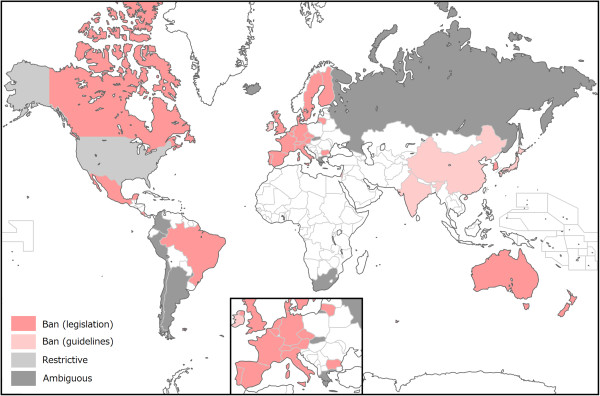
“Their review of 39 countries identified 29 that banned heritable human genome modification (by legisla-tion or guidelines), and one country-the United Statesas having restrictive guidelines.Nine countries were said to have policies that were ambiguous.”
From Human Germline and Heritable Genome Editing: The Global Policy Landscape (2020) · cites this paper as [16]
Self-check
Percentages, sums and reported differences re-computed from the paper’s own numbers.
The self-check needs the paper’s full text.
Citations
Cites
ZFN, TALEN, and CRISPR/Cas-based methods for genome engineering
Gaj, T., Gersbach, C. A., & Barbas, C. F. (2013) · Trends in Biotechnology · doi:10.1016/j.tibtech.2013.04.004 · Cited by 3,820
Wang, H., Yang, H., Shivalila, C. S., Dawlaty, M. M., Cheng, A. W., Zhang, F., & Jaenisch, R. (2013) · Cell · doi:10.1016/j.cell.2013.04.025 · Cited by 3,495
Double nicking by RNA-guided CRISPR Cas9 for enhanced genome editing specificity
Ran, F. A., Hsu, P. D., Lin, C.-Y., Gootenberg, J. S., Konermann, S., Trevino, A. E., Scott, D. A., Inoue, A., Matoba, S., Zhang, Y., et al. (2013) · Cell · doi:10.1016/j.cell.2013.08.021 · Cited by 3,299 · cited 27×
“Most notably, two reports emerged in 2014, demonstrating that the microinjection of Cas9 or TALENs into one-cell-stage embryos led to efficient generation of targeted gene-modified non-human primates (NHPs) [33,34].”
BackgroundInfluentialCRISPR-Cas systems for editing, regulating and targeting genomes
Sander, J. D., & Joung, J. K. (2014) · Nature Biotechnology · doi:10.1038/nbt.2842 · Cited by 3,153 · cited 1×
“Present-day genome editing technology, such as zinc finger nucleases (ZFNs), transcription activator-like effector nucleases (TALENs), and clustered regularly interspaced short palindromic repeat (CRISPR)/Cas system, have achieved far more efficient genetic engineering in higher organisms than the older techniques [20…”
BackgroundGenome editing with engineered zinc finger nucleases
Urnov, F. D., Rebar, E. J., Holmes, M. C., Zhang, H. S., & Gregory, P. D. (2010) · Nature Reviews Genetics · doi:10.1038/nrg2842 · Cited by 2,285 · cited 1×
“Present-day genome editing technology, such as zinc finger nucleases (ZFNs), transcription activator-like effector nucleases (TALENs), and clustered regularly interspaced short palindromic repeat (CRISPR)/Cas system, have achieved far more efficient genetic engineering in higher organisms than the older techniques [20…”
BackgroundImproving CRISPR-Cas nuclease specificity using truncated guide RNAs
Fu, Y., Sander, J. D., Reyon, D., Cascio, V. M., & Joung, J. K. (2014) · Nature Biotechnology · doi:10.1038/nbt.2808 · Cited by 1,993 · cited 1×
“However, Cas9 has been rapidly improved, demonstrating that the combination of a Cas9 nickase mutant and paired gRNAs, the truncation of gRNAs, or the fusion of inactive Cas9 to Fok I nuclease can improve the specificity of targeted gene modification [42,77,78].”
BackgroundTALENs: A widely applicable technology for targeted genome editing
Joung, J. K., & Sander, J. D. (2013) · Nature Reviews Molecular Cell Biology · doi:10.1038/nrm3486 · Cited by 1,650 · cited 1×
“Present-day genome editing technology, such as zinc finger nucleases (ZFNs), transcription activator-like effector nucleases (TALENs), and clustered regularly interspaced short palindromic repeat (CRISPR)/Cas system, have achieved far more efficient genetic engineering in higher organisms than the older techniques [20…”
BackgroundHighly efficient endogenous human gene correction using designed zinc-finger nucleases
Urnov, F. D., Miller, J. C., Lee, Y.-L., Beausejour, C. M., Rock, J. M., Augustus, S., Jamieson, A. C., Porteus, M. H., Gregory, P. D., & Holmes, M. C. (2005) · Nature · doi:10.1038/nature03556 · Cited by 1,641 · cited 1×
“ZFN-mediated homologydirected repair has achieved correction of the mutations associated with X-linked severe combined immune deficiency (SCID) and haemostasis in somatic cells [25,26].”
BackgroundYang, H., Wang, H., Shivalila, C. S., Cheng, A. W., Shi, L., & Jaenisch, R. (2013) · Cell · doi:10.1016/j.cell.2013.08.022 · Cited by 1,596
Schwank, G., Koo, B.-K., Sasselli, V., Dekkers, J. F., Heo, I., Demircan, T., Sasaki, N., Boymans, S., Cuppen, E., van der Ent, C. K., et al. (2013) · Cell Stem Cell · doi:10.1016/j.stem.2013.11.002 · Cited by 1,424 · cited 1×
“With regard to CRISPR/Cas9, it was demonstrated that those engineered nucleases can correct a mutation in intestinal stem cells derived from patients with cystic fibrosis [31].”
BackgroundGene Editing of CCR5 in Autologous CD4 T Cells of Persons Infected with HIV
Tebas, P., Stein, D., Tang, W. W., Frank, I., Wang, S. Q., Lee, G., Spratt, S. K., Surosky, R. T., Giedlin, M. A., Nichol, G., et al. (2014) · New England Journal of Medicine · doi:10.1056/nejmoa1300662 · Cited by 1,357 · cited 1×
“Of genome editing technologies, the application of ZFNs has already reached to a clinical stage in AIDS therapy that is based on the administration of human chemokine receptor 5 (CCR5)-modified T cells [24].”
MethodGenetic engineering of human pluripotent cells using TALE nucleases
Hockemeyer, D., Wang, H., Kiani, S., Lai, C. S., Gao, Q., Cassady, J. P., Cost, G. J., Zhang, L., Santiago, Y., Miller, J. C., et al. (2011) · Nature Biotechnology · doi:10.1038/nbt.1927 · Cited by 1,135
Hockemeyer, D., Soldner, F., Beard, C., Gao, Q., Mitalipova, M., DeKelver, R. C., Katibah, G. E., Amora, R., Boydston, E. A., Zeitler, B., et al. (2009) · Nature Biotechnology · doi:10.1038/nbt.1562 · Cited by 1,056 · cited 5×
“(OCT4, No (AAVS1, OCT4), Yes (PITX3) ZFNs Plasmid [50]”
BackgroundInfluentialNiu, Y., Shen, B., Cui, Y., Chen, Y., Wang, J., Wang, L., Kang, Y., Zhao, X., Si, W., Li, W., et al. (2014) · Cell · doi:10.1016/j.cell.2014.01.027 · Cited by 1,033 · cited 11×
“Most notably, two reports emerged in 2014, demonstrating that the microinjection of Cas9 or TALENs into one-cell-stage embryos led to efficient generation of targeted gene-modified non-human primates (NHPs) [33,34].”
BackgroundInfluentialSunkara, S. K., Rittenberg, V., Raine-Fenning, N., Bhattacharya, S., Zamora, J., & Coomarasamy, A. (2011) · Human Reproduction · doi:10.1093/humrep/der106 · Cited by 924 · cited 1×
“If more efficient gene correction is attained by improved genome editing, and if 13 to 15 oocytes, which is optimum number of oocytes for a successful first IVF cycle [75,76], can be retrieved from female patients, zygote approach is more likely to be feasible in a clinical setting.”
BackgroundLaurent, L. C., Ulitsky, I., Slavin, I., Tran, H., Schork, A., Morey, R., Lynch, C., Harness, J. V., Lee, S., Barrero, M. J., et al. (2011) · Cell stem cell · doi:10.1016/j.stem.2010.12.003 · Cited by 890 · cited 1×
“Human ESCs have a progressive tendency to acquire genetic changes in the nucleus and/or mitochondria during prolonged culture [65-68].”
BackgroundLombardo, A., Genovese, P., Beausejour, C. M., Colleoni, S., Lee, Y.-L., Kim, K. A., Ando, D., Urnov, F. D., Galli, C., Gregory, P. D., et al. (2007) · Nature Biotechnology · doi:10.1038/nbt1353 · Cited by 845 · cited 16×
“Human ESCs have a progressive tendency to acquire genetic changes in the nucleus and/or mitochondria during prolonged culture [65-68].”
BackgroundInfluentialGuilinger, J. P., Thompson, D. B., & Liu, D. R. (2014) · Nature Biotechnology · doi:10.1038/nbt.2909 · Cited by 836 · cited 1×
“However, Cas9 has been rapidly improved, demonstrating that the combination of a Cas9 nickase mutant and paired gRNAs, the truncation of gRNAs, or the fusion of inactive Cas9 to Fok I nuclease can improve the specificity of targeted gene modification [42,77,78].”
BackgroundHuman Embryonic Stem Cells Derived by Somatic Cell Nuclear Transfer
Tachibana, M., Amato, P., Sparman, M., Gutierrez, N. M., Tippner-Hedges, R., Ma, H., Kang, E., Fulati, A., Lee, H.-S., Sritanaudomchai, H., et al. (2013) · Cell · doi:10.1016/j.cell.2013.05.006 · Cited by 769 · cited 1×
“Additionally, human somatic cell nuclear transfer (SCNT)-derived blastocysts have been recently produced by at least three independent groups [62-64].”
BackgroundSoldner, F., Laganière, J., Cheng, A. W., Hockemeyer, D., Gao, Q., Alagappan, R., Khurana, V., Golbe, L. I., Myers, R. H., Lindquist, S., et al. (2011) · Cell · doi:10.1016/j.cell.2011.06.019 · Cited by 728
Targeted gene correction of α1-antitrypsin deficiency in induced pluripotent stem cells
Yusa, K., Rashid, S. T., Strick-Marchand, H., Varela, I., Liu, P.-Q., Paschon, D. E., Miranda, E., Ordóñez, A., Hannan, N. R. F., Rouhani, F. J., et al. (2011) · Nature · doi:10.1038/nature10424 · Cited by 639 · cited 1×
“Moreover, gene corrections by ZFNs have been reported regarding induced pluripotent stem cells derived somatic cells biopsied from patients with sickle cell disease, alpha1-antitrypsin deficiency, and Parkinson’s disease [27-30].”
BackgroundCorrection of a genetic disease in mouse via use of CRISPR-Cas9
Wu, Y., Liang, D., Wang, Y., Bai, M., Tang, W., Bao, S., Yan, Z., Li, D., & Li, J. (2013) · Cell stem cell · doi:10.1016/j.stem.2013.10.016 · Cited by 614 · cited 14×
“Genome editing technology is more likely to develop into medicine for preventing a genetic disease if corrective genome editing is integrated into assisted reproductive technology (ART), including IVF and ICSI.”
BackgroundInfluentialKnockout rats generated by embryo microinjection of TALENs
Tesson, L., Usal, C., Ménoret, S., Leung, E., Niles, B. J., Remy, S., Santiago, Y., Vincent, A. I., Meng, X., Zhang, L., et al. (2011) · Nature Biotechnology · doi:10.1038/nbt.1940 · Cited by 585 · cited 9×
“Genome editing technology is more likely to develop into medicine for preventing a genetic disease if corrective genome editing is integrated into assisted reproductive technology (ART), including IVF and ICSI.”
BackgroundInfluentialEfficient TALEN-mediated gene knockout in livestock
Carlson, D. F., Tan, W., Lillico, S. G., Stverakova, D., Proudfoot, C., Christian, M., Voytas, D. F., Long, C. R., Whitelaw, C. B. A., & Fahrenkrug, S. C. (2012) · Proceedings of the National Academy of Sciences · doi:10.1073/pnas.1211446109 · Cited by 580 · cited 8×
“Genome editing technology is more likely to develop into medicine for preventing a genetic disease if corrective genome editing is integrated into assisted reproductive technology (ART), including IVF and ICSI.”
BackgroundInfluentialInitiative, T. I. S. C. (2011) · Nature Biotechnology · doi:10.1038/nbt.2051 · Cited by 577 · cited 1×
“Human ESCs have a progressive tendency to acquire genetic changes in the nucleus and/or mitochondria during prolonged culture [65-68].”
BackgroundScott, R. T., Upham, K. M., Forman, E. J., Zhao, T., & Treff, N. R. (2013) · Fertility and Sterility · doi:10.1016/j.fertnstert.2013.04.039 · Cited by 574 · cited 1×
“Although mosaicism remains at the blastocyst stage [70-72], the result of a recent randomized clinical trial supports that a single cell biopsy at the cleavage-stage is more significantly damaging to the embryo than biopsy at the blastocyst stage, and resulted in poorer clinical outcomes [73].”
ResultIn vivo genome editing restores haemostasis in a mouse model of haemophilia
Li, H., Haurigot, V., Doyon, Y., Li, T., Wong, S. Y., Bhagwat, A. S., Malani, N., Anguela, X. M., Sharma, R., Ivanciu, L., et al. (2011) · Nature · doi:10.1038/nature10177 · Cited by 548
Gene Targeting of a Disease-Related Gene in Human Induced Pluripotent Stem and Embryonic Stem Cells
Zou, J., Maeder, M. L., Mali, P., Pruett-Miller, S. M., Thibodeau-Beganny, S., Chou, B.-K., Chen, G., Ye, Z., Park, I.-H., Daley, G. Q., et al. (2009) · Cell Stem Cell · doi:10.1016/j.stem.2009.05.023 · Cited by 509 · cited 5×
“Human ESCs have a progressive tendency to acquire genetic changes in the nucleus and/or mitochondria during prolonged culture [65-68].”
BackgroundInfluentialPronuclear transfer in human embryos to prevent transmission of mitochondrial DNA disease
Craven, L., Tuppen, H. A., Greggains, G. D., Harbottle, S. J., Murphy, J. L., Cree, L. M., Murdoch, A. P., Chinnery, P. F., Taylor, R. W., Lightowlers, R. N., et al. (2010) · Nature · doi:10.1038/nature08958 · Cited by 480 · cited 1×
“More recently, mitochondrial replacement, including pronuclear transfer between embryos [14] and maternal spindle transfer between oocytes [15,16], has been developed and is proposed as novel medicine in order to prevent maternal transmission of serious mitochondrial diseases that result from aberrant mitochondrial DN…”
BackgroundSpecific elimination of mutant mitochondrial genomes in patient-derived cells by mitoTALENs
Bacman, S. R., Williams, S. L., Pinto, M., Peralta, S., & Moraes, C. T. (2013) · Nature Medicine · doi:10.1038/nm.3261 · Cited by 432 · cited 1×
“Specific elimination of mutant mitochondrial genomes in patient-derived cells was attained by a new form of TALENs that can localize to mitochondria and cleave different classes of pathogenic mtDNA mutations [32].”
BackgroundTowards germline gene therapy of inherited mitochondrial diseases
Tachibana, M., Amato, P., Sparman, M., Woodward, J., Sanchis, D. M., Ma, H., Gutierrez, N. M., Tippner-Hedges, R., Kang, E., Lee, H.-S., et al. (2013) · Nature · doi:10.1038/nature11647 · Cited by 426 · cited 1×
“More recently, mitochondrial replacement, including pronuclear transfer between embryos [14] and maternal spindle transfer between oocytes [15,16], has been developed and is proposed as novel medicine in order to prevent maternal transmission of serious mitochondrial diseases that result from aberrant mitochondrial DN…”
BackgroundLi, W., Teng, F., Li, T., & Zhou, Q. (2013) · Nature Biotechnology · doi:10.1038/nbt.2652 · Cited by 425 · cited 10×
“Furthermore, the microinjection of the nuclease mRNAs into zygotes may induce not only germline modifications but also mosaic modifications in which wild-type cells, including germline cells, and genetically modified cells coexist in the resultant animals [41,47].”
BackgroundInfluentialBirth of infant after transfer of anucleate donor oocyte cytoplasm into recipient eggs
Cohen, J., Scott, R., Schimmel, T., Levron, J., & Willadsen, S. (1997) · The Lancet · doi:10.1016/s0140-6736(05)62353-7 · Cited by 411 · cited 5×
“When the safety of genome editing-mediated germline gene correction is enhanced, the four countries mentioned above and the USA might permit it.”
BackgroundInfluential(2017) · Macat Library eBooks · doi:10.4324/9781912281947 · Cited by 390
Sandel, M. J. (2020) · The Ethics of Sports Technologies and Human Enhancement · doi:10.4324/9781003075004-28 · Cited by 380
Efficient generation of a biallelic knockout in pigs using zinc-finger nucleases
Hauschild, J., Petersen, B., Santiago, Y., Queisser, A.-L., Carnwath, J. W., Lucas-Hahn, A., Zhang, L., Meng, X., Gregory, P. D., Schwinzer, R., et al. (2011) · Proceedings of the National Academy of Sciences · doi:10.1073/pnas.1106422108 · Cited by 366 · cited 1×
“The step is also considered to be potentially feasible in human because a similar approach with somatic cells modified by ZFNs has already been used for the generation of a biallelic knockout in pigs [61].”
BackgroundBielanska, M. (2002) · Human Reproduction · doi:10.1093/humrep/17.2.413 · Cited by 364 · cited 2×
“However, mosaicism which affects 15-80% of embryos may impact the interpretation of PGD results [70-72].”
BackgroundResultInternational disparities in access to infertility services
Nachtigall, R. D. (2006) · Fertility and Sterility · doi:10.1016/j.fertnstert.2005.08.066 · Cited by 347 · cited 1×
“ART is generally expensive and creates disparities in access to this infertility services even in a country or a state with insurance coverage [84,85].”
BackgroundKaryotypic abnormalities in human induced pluripotent stem cells and embryonic stem cells
Taapken, S. M., Nisler, B. S., Newton, M. A., Sampsell-Barron, T. L., Leonhard, K. A., McIntire, E. M., & Montgomery, K. D. (2011) · Nature Biotechnology · doi:10.1038/nbt.1835 · Cited by 327
What sort of people should there be
Glover, J. (1984) · Cited by 321
Mitochondria in human offspring derived from ooplasmic transplantation: Brief communication
Barritt, J. A., Brenner, C. A., Malter, H. E., & Cohen, J. (2001) · Human Reproduction · doi:10.1093/humrep/16.3.513 · Cited by 319 · cited 1×
“heteroplasmy in the resulting oocyte [11,12].”
Chromosomal mosaicism in human preimplantation embryos: a systematic review
van Echten-Arends, J., Mastenbroek, S., Sikkema-Raddatz, B., Korevaar, J. C., Heineman, M. J., van der Veen, F., & Repping, S. (2011) · Human Reproduction Update · doi:10.1093/humupd/dmr014 · Cited by 311 · cited 2×
“However, mosaicism which affects 15-80% of embryos may impact the interpretation of PGD results [70-72].”
BackgroundResultSebastiano, V., Maeder, M. L., Angstman, J. F., Haddad, B., Khayter, C., Yeo, D. T., Goodwin, M. J., Hawkins, J. S., Ramirez, C. L., Batista, L. F. Z., et al. (2011) · Stem Cells · doi:10.1002/stem.718 · Cited by 307
Targeted gene knockout by direct delivery of zinc-finger nuclease proteins
Gaj, T., Guo, J., Kato, Y., Sirk, S. J., & Barbas, C. F. (2012) · Nature Methods · doi:10.1038/nmeth.2030 · Cited by 306
Zou, J., Mali, P., Huang, X., Dowey, S. N., & Cheng, L. (2011) · Blood · doi:10.1182/blood-2011-02-335554 · Cited by 295 · cited 1×
“Moreover, gene corrections by ZFNs have been reported regarding induced pluripotent stem cells derived somatic cells biopsied from patients with sickle cell disease, alpha1-antitrypsin deficiency, and Parkinson’s disease [27-30].”
BackgroundNuclear genome transfer in human oocytes eliminates mitochondrial DNA variants
Paull, D., Emmanuele, V., Weiss, K. A., Treff, N., Stewart, L., Hua, H., Zimmer, M., Kahler, D. J., Goland, R. S., Noggle, S. A., et al. (2013) · Nature · doi:10.1038/nature11800 · Cited by 260 · cited 1×
“More recently, mitochondrial replacement, including pronuclear transfer between embryos [14] and maternal spindle transfer between oocytes [15,16], has been developed and is proposed as novel medicine in order to prevent maternal transmission of serious mitochondrial diseases that result from aberrant mitochondrial DN…”
BackgroundOptimum number of oocytes for a successful first IVF treatment cycle
van der Gaast, M., Eijkemans, M., van der Net, J., de Boer, E., Burger, C., van Leeuwen, F., Fauser, B., & Macklon, N. (2006) · Reproductive BioMedicine Online · doi:10.1016/s1472-6483(10)60633-5 · Cited by 229 · cited 1×
“If more efficient gene correction is attained by improved genome editing, and if 13 to 15 oocytes, which is optimum number of oocytes for a successful first IVF cycle [75,76], can be retrieved from female patients, zygote approach is more likely to be feasible in a clinical setting.”
BackgroundDisparities in access to infertility services in a state with mandated insurance coverage
Jain, T., & Hornstein, M. D. (2005) · Fertility and Sterility · doi:10.1016/j.fertnstert.2005.01.118 · Cited by 210 · cited 1×
“ART is generally expensive and creates disparities in access to this infertility services even in a country or a state with insurance coverage [84,85].”
BackgroundThe Case against Perfection: Ethics in the Age of Genetic Engineering
Sandel, M. J. (2009) · Harvard University Press eBooks · doi:10.2307/j.ctvjz80mc · Cited by 208
Homozygosity for CAG mutation in Huntington disease is associated with a more severe clinical course
Squitieri, F. (2003) · Brain · doi:10.1093/brain/awg077 · Cited by 203 · cited 1×
“Huntington’s disease [58], familial adenomatous polyposis [59]) is likely to be considered.”
BackgroundTALEN-Mediated Gene Mutagenesis in Rhesus and Cynomolgus Monkeys
Liu, H., Chen, Y., Niu, Y., Zhang, K., Kang, Y., Ge, W., Liu, X., Zhao, E., Wang, C., Lin, S., et al. (2014) · Cell Stem Cell · doi:10.1016/j.stem.2014.01.018 · Cited by 200
Fabricated Man: The Ethics of Genetic Control
Ramsey, P. (1970) · DigitalGeorgetown (Georgetown University Library) · Cited by 198
Human oocytes reprogram adult somatic nuclei of a type 1 diabetic to diploid pluripotent stem cells
Yamada, M., Johannesson, B., Sagi, I., Burnett, L. C., Kort, D. H., Prosser, R. W., Paull, D., Nestor, M. W., Freeby, M., Greenberg, E., et al. (2014) · Nature · doi:10.1038/nature13287 · Cited by 187 · cited 1×
“Additionally, human somatic cell nuclear transfer (SCNT)-derived blastocysts have been recently produced by at least three independent groups [62-64].”
BackgroundMitochondrial DNA heteroplasmy after human ooplasmic transplantation
Brenner, C. A., Barritt, J. A., Willadsen, S., & Cohen, J. (2000) · Fertility and Sterility · doi:10.1016/s0015-0282(00)00681-6 · Cited by 184 · cited 1×
“heteroplasmy in the resulting oocyte [11,12].”
Human Somatic Cell Nuclear Transfer Using Adult Cells
Chung, Y. G., Eum, J. H., Lee, J. E., Shim, S. H., Sepilian, V., Hong, S. W., Lee, Y., Treff, N. R., Choi, Y. H., Kimbrel, E. A., et al. (2014) · Cell Stem Cell · doi:10.1016/j.stem.2014.03.015 · Cited by 171
Mitochondrial Replacement, Evolution, and the Clinic
Reinhardt, K., Dowling, D. K., & Morrow, E. H. (2013) · Science · doi:10.1126/science.1237146 · Cited by 154
High rate of mixoploidy among human blastocysts cultured in vitro
Bielanska, M. M., Tan, S. L., & Ao, A. (2002) · Fertility and Sterility · doi:10.1016/s0015-0282(02)04393-5 · Cited by 136 · cited 2×
“However, mosaicism which affects 15-80% of embryos may impact the interpretation of PGD results [70-72].”
BackgroundResultBENN, P. A. (2014) · Journal of Clinical Medicine · doi:10.3390/jcm3020537 · Cited by 123 · cited 18×
“Paull D, Emmanuele V, Weiss KA, Treff N, Stewart L, Hua H, Zimmer M, Kahler DJ, Goland RS, Noggle SA, Prosser R, Hirano M, Sauer MV, Egli D: Nuclear genome transfer in human oocytes eliminates mitochondrial DNA variants.”
MethodInfluentialGenetic Modification and Screening in Rat Using Haploid Embryonic Stem Cells
Li, W., Li, X., Li, T., Jiang, M., Wan, H., Luo, G., Feng, C., Cui, X., Teng, F., Yuan, Y., et al. (2013) · Cell stem cell · doi:10.1016/j.stem.2013.11.016 · Cited by 110 · cited 1×
“Mammalian embryonic stem cells (ESCs), including human ESCs, have also been more efficiently modified by genome editing [35,42,43,49-53].”
BackgroundEfficient gene targeting by TAL effector nucleases coinjected with exonucleases in zygotes
Mashimo, T., Kaneko, T., Sakuma, T., Kobayashi, J., Kunihiro, Y., Voigt, B., Yamamoto, T., & Serikawa, T. (2013) · Scientific Reports · doi:10.1038/srep01253 · Cited by 77 · cited 8×
“Genome editing technology is more likely to develop into medicine for preventing a genetic disease if corrective genome editing is integrated into assisted reproductive technology (ART), including IVF and ICSI.”
BackgroundInfluentialIshii, T. (2014) · Reproductive BioMedicine Online · doi:10.1016/j.rbmo.2014.04.001 · Cited by 73 · cited 6×
“We recently surveyed fourteen countries which are permissive to human ESC research, with regard to whether these countries permit human germline gene modification [9].”
BackgroundInfluentialSelf-citationScience: Endless Horizons or Golden Age?
Glass, B. (1971) · Science · doi:10.1126/science.171.3966.23 · Cited by 70 · cited 1×
“If corrective genome editing is integrated into ART, represented by IVF and ICSI, the major medical implications of the germline gene correction are preventive medicine rather than therapy, because this type of medical procedure aims at not the treatment of existing patients, but the prevention of transmission of a ge…”
BackgroundPreimplantation Genetic Diagnosis: Prenatal Testing for Embryos Finally Achieving Its Potential
Stern, H. J. (2014) · Journal of Clinical Medicine · doi:10.3390/jcm3010280 · Cited by 66 · cited 10×
“Although no mutations were detected in the predefined potential off-target sites in the NHPs in previous studies [33,34], careful prior investigation is needed to assess whether PGD can definitely confirm genetic conditions in modified embryos.”
BackgroundMethodInfluentialLi, F., Cowley, D. O., Banner, D., Holle, E., Zhang, L., & Su, L. (2014) · Scientific Reports · doi:10.1038/srep05290 · Cited by 61 · cited 11×
“Genome editing technology is more likely to develop into medicine for preventing a genetic disease if corrective genome editing is integrated into assisted reproductive technology (ART), including IVF and ICSI.”
BackgroundInfluentialYasue, A., Mitsui, S. N., Watanabe, T., Sakuma, T., Oyadomari, S., Yamamoto, T., Noji, S., Mito, T., & Tanaka, E. (2014) · Scientific Reports · doi:10.1038/srep05705 · Cited by 60 · cited 10×
“Genome editing technology is more likely to develop into medicine for preventing a genetic disease if corrective genome editing is integrated into assisted reproductive technology (ART), including IVF and ICSI.”
InfluentialGeneration of a monkey with MECP2 mutations by TALEN-based gene targeting
Liu, Z., Zhou, X., Zhu, Y. J., Chen, Z., Yu, B., Wang, Y., Zhang, C., Nie, Y., Sang, X., Cai, Y., et al. (2014) · Neuroscience Bulletin · doi:10.1007/s12264-014-1434-8 · Cited by 57 · cited 10×
“Furthermore, the microinjection of the nuclease mRNAs into zygotes may induce not only germline modifications but also mosaic modifications in which wild-type cells, including germline cells, and genetically modified cells coexist in the resultant animals [41,47].”
BackgroundInfluentialIshii, T., Pera, R. A. R., & Greely, H. T. (2013) · Cell stem cell · doi:10.1016/j.stem.2013.07.005 · Cited by 55 · cited 2×
“However, for ethical reasons, many countries or states have strict regulations regarding the creation of human embryos for research [79].”
BackgroundSelf-citationCaution required for handling genome editing technology
Araki, M., Nojima, K., & Ishii, T. (2014) · Trends in biotechnology · doi:10.1016/j.tibtech.2014.03.005 · Cited by 53 · cited 1×
“We recently argued that there are indistinct regulatory boundaries regarding genome editing technology created in the regulations that govern genetically modified organisms (GMOs) [81].”
BackgroundSelf-citationOvarian hyperstimulation syndrome- an optimal solution for an unresolved enigma
Orvieto, R. (2013) · Journal of Ovarian Research · doi:10.1186/1757-2215-6-77 · Cited by 49 · cited 1×
“For instance, a board member might ask whether a female parent can safely undergo oocyte retrieval which encompasses the need of medication, a hormone injection, and transvaginal retrieval with a potential risk of ovarian hyperstimulation syndrome [82], in addition to pregnancy and delivery.”
BackgroundGrošelj, U., Tanšek, M. Ž., Kovač, J., Hovnik, T., Podkrajšek, K. T., & Battelino, T. (2012) · Molecular Genetics and Metabolism · doi:10.1016/j.ymgme.2012.03.015 · Cited by 42 · cited 1×
“cystic fibrosis [56], phenylketonuria [57]) or an autosomal dominant disease where at least one parent is homozygous (e.”
BackgroundSoldner, F., Laganière, J., Cheng, A. W., Hockemeyer, D. F., Gao, Q., Alagappan, R. K., Khurana, V., Golbe, L. I., Myers, R. H., Lindquist, S. L., et al. (2011) · Cell · doi:10.1016/j.cell.2011.07.035 · Cited by 40
Lombardo, A., Genovese, P., Beausejour, C. M., Colleoni, S., Lee, Y.-L., Kim, K. A., Ando, D. G., Urnov, F. D., Galli, C., Gregory, P. D., et al. (2008) · Blood Cells Molecules and Diseases · doi:10.1016/j.bcmd.2007.10.064 · Cited by 33
Human embryonic stem cells commonly display large mitochondrial DNA deletions
Haute, L. V., Spits, C., Geens, M., Seneca, S., & Sermon, K. (2013) · Nature Biotechnology · doi:10.1038/nbt.2473 · Cited by 28
Human germline gene modification: a dissent
Billings, P. R., Hubbard, R., & Newman, S. A. (1999) · The Lancet · doi:10.1016/s0140-6736(99)01173-3 · Cited by 28 · cited 1×
“However, there has emerged a global consensus that such gene modifications should be forbidden owing to safety concerns [1-4], unprecedented informed consent [1,2], challenges to human dignity [5], and the potential for permanent negative impact on future generations, including its abuse for eugenics or enhancement (t…”
BackgroundTranslating the Genomic Revolution — Targeted Genome Editing in Primates
Cathomen, T., & Ehl, S. R. (2014) · New England Journal of Medicine · doi:10.1056/nejmcibr1403629 · Cited by 20 · cited 1×
“Thereafter, some experts, including a Nobel laureate, suggest increasing feasibility of human germline gene modification mediated by genome editing [36-38].”
BackgroundGerm-Line Therapy: Evolutionary and Moral Considerations
Davis, B. D. (1992) · Human Gene Therapy · doi:10.1089/hum.1992.3.4-361 · Cited by 19 · cited 1×
“However, there has emerged a global consensus that such gene modifications should be forbidden owing to safety concerns [1-4], unprecedented informed consent [1,2], challenges to human dignity [5], and the potential for permanent negative impact on future generations, including its abuse for eugenics or enhancement (t…”
BackgroundGerm-Line Gene Therapy: Another View
Neel, J. V. (1993) · Human Gene Therapy · doi:10.1089/hum.1993.4.2-127 · Cited by 18 · cited 1×
“However, there has emerged a global consensus that such gene modifications should be forbidden owing to safety concerns [1-4], unprecedented informed consent [1,2], challenges to human dignity [5], and the potential for permanent negative impact on future generations, including its abuse for eugenics or enhancement (t…”
BackgroundCorrecting genetic defects with CRISPR–Cas9
Lokody, I. B. (2013) · Nature Reviews Genetics · doi:10.1038/nrg3656 · Cited by 16
Apparent Homozygosity of p.Phe508del inCFTRdue to a Large Gene Deletion of Exons 4–11
Neocleous, V., Yiallouros, P. K., Tanteles, G. A., Costi, C., Moutafi, M., Ioannou, P., Patsalis, P. C., Sismani, C., & Phylactou, L. A. (2014) · Case Reports in Genetics · doi:10.1155/2014/613863 · Cited by 9 · cited 1×
“cystic fibrosis [56], phenylketonuria [57]) or an autosomal dominant disease where at least one parent is homozygous (e.”
BackgroundTherapy for mitochondrial genetic disease: are we at the thin end of the wedge?
Wong, C. C., & Johnson, M. H. (2014) · Reproductive BioMedicine Online · doi:10.1016/j.rbmo.2014.06.003 · Cited by 8 · cited 1×
“However, carefully taking into consideration that there is no legal ban on research on the human germline gene modification as long as the Human Fertilisation and Embryology Authority (HFEA) licenses such research in the UK, the legalization of medical use of mitochondrial replacement is likely to lead to legal permis…”
BackgroundCruz-Correa, M. R., Díaz-Algorri, Y., Méndez, V., Vazquez, P. J., Lozada, M. E., Freyre, K., Lathroum, L., González‐Pons, M., Hernández, J., Giardiello, F. M., et al. (2013) · Familial Cancer · doi:10.1007/s10689-013-9617-z · Cited by 8 · cited 1×
“Huntington’s disease [58], familial adenomatous polyposis [59]) is likely to be considered.”
BackgroundZhang, L., Banner, D., Cowley, D. O., et al. (2020) · Carolina Digital Repository (University of North Carolina at Chapel Hill) · doi:10.17615/vssc-sx27 · Cited by 2
Research works printed but not linked: 1
- Lokody I: Genetic therapies: Correcting genetic defects with CRISPRCas9. Nat Rev Genet 2013, 15:63-63.
Cited by
Adopt a moratorium on heritable genome editing
Lander, E. S., Baylis, F., Zhang, F., Charpentier, E., Berg, P., Bourgain, C., Friedrich, B., Joung, J. K., Li, J., Liu, D., et al. (2019) · Nature · doi:10.1038/d41586-019-00726-5 · Cited by 512
Ormond, K. E., Mortlock, D. P., Scholes, D. T., Bombard, Y., Brody, L. C., Faucett, W. A., Garrison, N. A., Hercher, L., Isasi, R., Middleton, A., et al. (2017) · The American Journal of Human Genetics · doi:10.1016/j.ajhg.2017.06.012 · Cited by 252
Rasul, M. F., Hussen, B. M., Salihi, A., Ismael, B. S., Jalal, P. J., Zanichelli, A., Jamali, E., Baniahmad, A., Ghafouri-Fard, S., Basiri, A., et al. (2022) · Molecular Cancer · doi:10.1186/s12943-021-01487-4 · Cited by 171
“When germline editing research is applied in a clinical setting to avoid the inheritance of a specific genetic condition, it may alleviate the sorrow and anxiety that parents encounter in the life of the possibility that their child may be born with that genetic disease [214, 223].”
MethodHuman Germline and Heritable Genome Editing: The Global Policy Landscape
Baylis, F., Darnovsky, M., Hasson, K., & Krahn, T. M. (2020) · The CRISPR Journal · doi:10.1089/crispr.2020.0082 · Cited by 155
“This omission is particularly striking in the articles by Araki and Ishii (2014) and Ishii (2015 and 2017), which conclude that 29 countries prohibit heritable human genome editing.”
Therapeutic gene editing: delivery and regulatory perspectives
Shim, G., Kim, D., Park, G. T., Jin, H., Suh, S.-K., & Oh, Y.-K. (2017) · Acta Pharmacologica Sinica · doi:10.1038/aps.2017.2 · Cited by 121
Metadata
- Authors
- Araki, M., & Ishii, T.
- Affiliations
- Hokkaido University (JP)
- Corresponding author
- Ishii, Tetsuya
- ORCID
- Ishii, Tetsuya
- Venue
- Reproductive Biology and Endocrinology
- Published
- 2014
- Volume
- 12
- Issue
- 1
- Pages
- 108
- ISSN
- 1477-7827 (ISSN-L)
- PMC
- PMC4251934
- OpenAlex
- W2160704433
- Cited by
- 150
- References
- 82
- Citations by year
- 2026: 3 · 2025: 11 · 2024: 2 · 2023: 7 · 2022: 16 · 2021: 13 · 2020: 23 · 2019: 22 · 2018: 17 · 2017: 15 · 2016: 13 · 2015: 8
- FWCI
- 1.13
- Type
- journal article
- Language
- en
- Open access
- gold
- doi.org
- Licence
- cc-by
- Locations
- Reproductive Biology and Endocrinology (publishedVersion, cc-by)
- PubMed Central (publishedVersion, cc-by)
- PubMed (publishedVersion)
- Institutional Repositories DataBase (IRDB) (submittedVersion, cc-by)
- Hokkaido University Collection of Scholarly and Academic Papers (Hokkaido University) (submittedVersion, cc-by)
- Funders
- Japan Society for the Promotion of Science (26460586)
- Topics
- Life Sciences › Biochemistry, Genetics and Molecular Biology › Molecular Biology › CRISPR and Genetic Engineering
- Health Sciences › Nursing › Issues, ethics and legal aspects › Biomedical Ethics and Regulation
- Life Sciences › Biochemistry, Genetics and Molecular Biology › Genetics › Animal Genetics and Reproduction
- Keywords
- genome editing, in vitro fertilization, assisted reproduction, CRISPR-Cas, zinc finger nucleases, TALEN, zygote, genetic disease prevention, social problems
- MeSH terms
- Animals, Fertilization in Vitro, Genetic Engineering, Health Policy, Humans, Global Health, Genome, Human, Genomics, Genetic Diseases, Inborn, Targeted Gene Repair, Translational Research, Biomedical, Stem Cell Research
About these checks
Registry, retraction, Cites and statistics results are computed, not judged, with one exception: a printed reference that no index lists is read once by a model before it counts as a citation error. Claims are extracted by a model and kept only when their quote appears verbatim in the text; each cited source is then checked, with a model’s help, for whether it says what the claim relies on. Those verdicts can be wrong — read the claim’s quote and the cited source before relying on one.
Statistics and arithmetic are recomputed, not judged.
Confidence bands are shown only for fields calibrated on our annotated test set. None is calibrated yet, so no band is shown.
What counts as a claim ›How we measure confidence ›How we check this ›
Are you an author, or do you see a problem with this page? Request a review
Data sources
Bibliographic data: Semantic Scholar, OpenAlex, Crossref.
Contains information from the Semantic Scholar Academic Graph Datasets, made available under the ODC Attribution License (ODC-BY 1.0).
Semantic Scholar’s data is described in: Kinney, R., et al. (2023). The Semantic Scholar Open Data Platform. arXiv:2301.10140.
