

Fecal microbial determinants of fecal and systemic estrogens and estrogen metabolites: a cross-sectional study
Open accessThe DOI matches its Crossref record; 42 of the 43 references it cites were found in a registry or an index.
Abstract
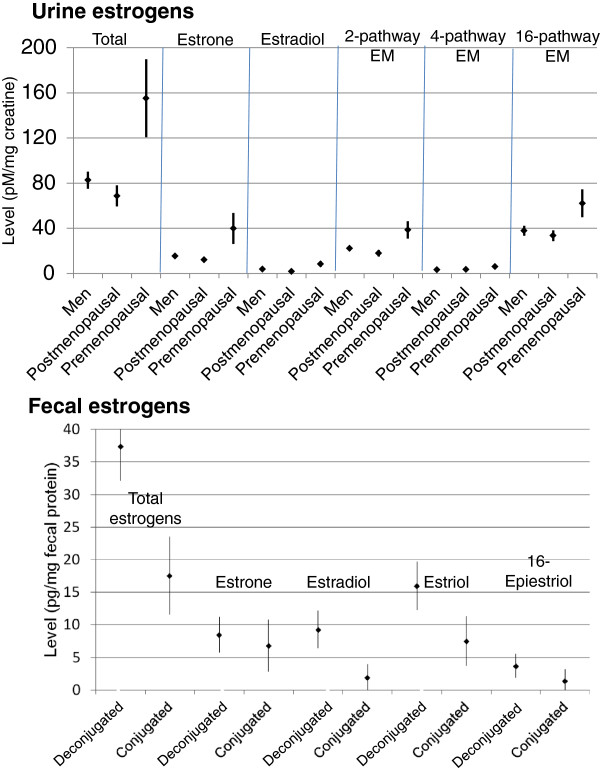
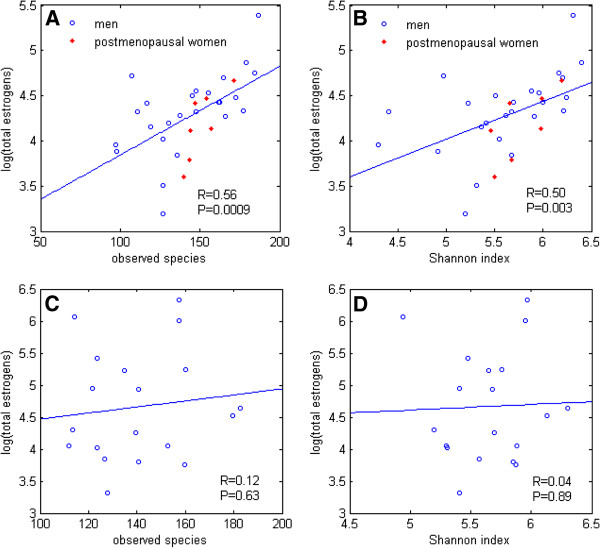
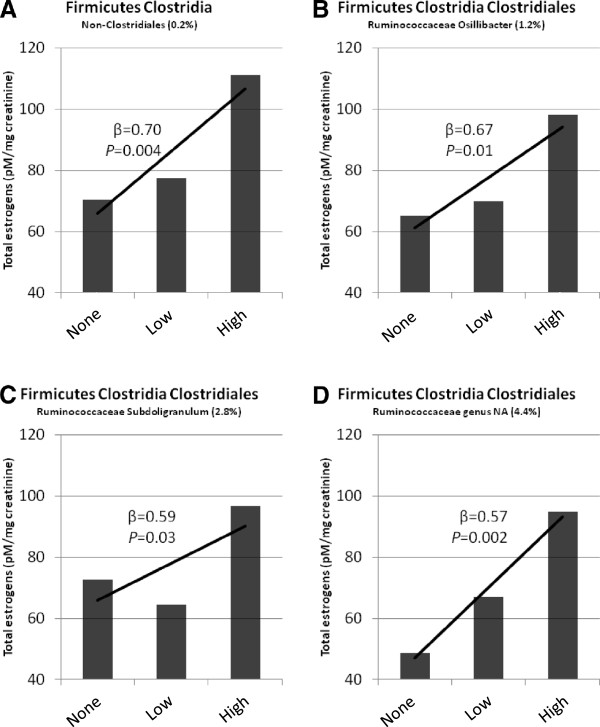
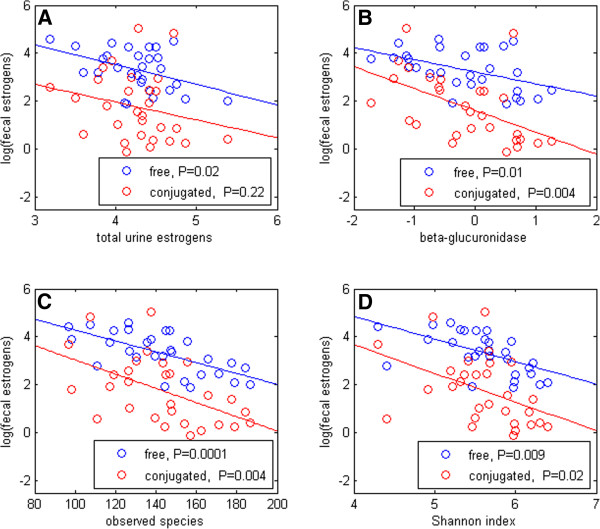
Background: High systemic estrogen levels contribute to breast cancer risk for postmenopausal women, whereas low levels contribute to osteoporosis risk. Except for obesity, determinants of non-ovarian systemic estrogen levels are undefined. We sought to identify members and functions of the intestinal microbial community associated with estrogen levels via enterohepatic recirculation. Methods: Fifty-one epidemiologists at the National Institutes of Health, including 25 men, 7 postmenopausal women, and 19 premenopausal women, provided urine and aliquots of feces, using methods proven to yield accurate and reproducible results. Estradiol, estrone, 13 estrogen metabolites (EM), and their sum (total estrogens) were quantified in urine and feces by liquid chromatography/tandem mass spectrometry. In feces, β-glucuronidase and β-glucosidase activities were determined by realtime kinetics, and microbiome diversity and taxonomy were estimated by pyrosequencing 16S rRNA amplicons. Pearson correlations were computed for each log e estrogen level, log e enzymatic activity level, and microbiome alpha diversity estimate. For the 55 taxa with mean relative abundance of at least 0.1%, ordinal levels were created [zero, low (below median of detected sequences), high] and compared to log e estrogens, β-glucuronidase and β-glucosidase enzymatic activity levels by linear regression. Significance was based on two-sided tests with α=0.05. Results: In men and postmenopausal women, levels of total urinary estrogens (as well as most individual EM) were very strongly and directly associated with all measures of fecal microbiome richness and alpha diversity (R≥0.50, P ≤0.003). These non-ovarian systemic estrogens also were strongly and significantly associated with fecal Clostridia taxa, including non- Clostridiales and three genera in the Ruminococcaceae family (R=0.57−0.70, P =0.03−0.002). Estrone, but not other EM, in urine correlated significantly with functional activity of fecal β-glucuronidase (R=0.36, P =0.04). In contrast, fecal β-glucuronidase correlated inversely with fecal total estrogens, both conjugated and deconjugated (R≤-0.47, P ≤0.01). Premenopausal female estrogen levels, which were collected across menstrual cycles and thus highly variable, were completely unrelated to fecal microbiome and enzyme parameters ( P ≥0.6). Conclusions: Intestinal microbial richness and functions, including but not limited to β-glucuronidase, influence levels of non-ovarian estrogens via enterohepatic circulation. Thus, the gut microbial community likely affects the risk for estrogen-related conditions in older adults. Understanding how Clostridia taxa relate to systemic estrogens may identify targets for interventions. Trial registration: Not applicable.
Overview
The claims and statistics of this paper haven’t been checked yet.
Free: it reads the open-access text and checks the first 5 claims that cite a source we can check. Create a free account to check every claim.
Integrity signals
Registry
Cites
Statistics
Figures
Verification
Claims the paper makes
The claims and statistics of this paper haven’t been checked yet.
Free: it reads the open-access text and checks the first 5 claims that cite a source we can check. Create a free account to check every claim.
Claims other papers make about this one
Each is checked against this paper’s own text: does it say what the citing paper says it does?
The check wasn’t confident either way, so it gives no verdict — never disputed.
In the citing paper
“However, the study reported a statistically significant association between levels of total estrogens and PD index in control women, which was not observed in women with breast cancer.”
From Association Between Sex Hormone Levels and Gut Microbiota Composition and Diversity—A Systematic Review (2022) · cites this paper as [21]
Experimental — accuracy not yet measuredIn the citing paper
“Two studies utilised the same cohort of participants and thus only the cohort from one of the two studies was included for these calculations (see Table 1).(21, 22)”
From Association Between Sex Hormone Levels and Gut Microbiota Composition and Diversity—A Systematic Review (2022) · cites this paper as [21]
In the citing paper
“In addition, the study by Goedert et al.(21) did not find an association between EM:parent estrogen and diversity in healthy women or women with breast cancer.”
From Association Between Sex Hormone Levels and Gut Microbiota Composition and Diversity—A Systematic Review (2022) · cites this paper as [21]
Self-check
Percentages, sums and reported differences re-computed from the paper’s own numbers.
The self-check needs the paper’s full text.
Citations
Cites
QIIME allows analysis of high-throughput community sequencing data
Caporaso, J. G., Kuczynski, J., Stombaugh, J., Bittinger, K., Bushman, F. D., Costello, E. K., Fierer, N., Peña, A. G., Goodrich, J. K., Gordon, J. I., et al. (2010) · Nature Methods · doi:10.1038/nmeth.f.303 · Cited by 34,887 · cited 7×
“Relative abundance of each OTU, alpha diversity, and beta diversity were computed using QIIME [25] for each DNA sample and then averaged on four replicates for each study participant.”
MethodInfluentialUCHIME improves sensitivity and speed of chimera detection
Edgar, R. C., Haas, B. J., Clemente, J. C., Quince, C., & Knight, R. (2011) · Bioinformatics · doi:10.1093/bioinformatics/btr381 · Cited by 15,114
A core gut microbiome in obese and lean twins
Turnbaugh, P. J., Hamady, M., Yatsunenko, T., Cantarel, B. L., Duncan, A., Ley, R. E., Sogin, M. L., Jones, W. J., Roe, B. A., Affourtit, J. P., et al. (2009) · Nature · doi:10.1038/nature07540 · Cited by 7,823 · cited 2×
“Because use of medications, including non-antibiotics [16], and elevated BMI [15,16] are inversely associated with gut microbiome alpha diversity, adjustment for these likely would have strengthened the direct associations that we found herein between alpha diversity and systemic estrogen levels.”
BackgroundThe Ribosomal Database Project: improved alignments and new tools for rRNA analysis
Cole, J. R., Wang, Q., Cardenas, E., Fish, J., Chai, B., Farris, R. J., Kulam-Syed-Mohideen, A. S., McGarrell, D. M., Marsh, T., Garrity, G. M., et al. (2009) · Nucleic Acids Research · doi:10.1093/nar/gkn879 · Cited by 4,762 · cited 2×
“Operational taxonomic units (OTUs) were defined using QIIME as sequences with at least 97% identity, and sequences were classified at the genus level using the Ribosomal Database Project (RDP) naïve Bayesian classifier [27].”
MethodThe NIH Human Microbiome Project
The NIH HMP Working Group, Peterson, J., Garges, S., Giovanni, M., McInnes, P., Wang, L., Schloss, J. A., Bonazzi, V., McEwen, J. E., Wetterstrand, K. A., et al. (2009) · Genome Research · doi:10.1101/gr.096651.109 · Cited by 2,066 · cited 2×
“Classification of operational taxonomic units Sequence read quality used the Institute of Genome Sciences bioinformatics pipeline that complies with standard operating procedures of the National Institutes of Health Human Microbiome Project [24].”
MethodHamady, M., Lozupone, C., & Knight, R. (2010) · The ISME Journal · doi:10.1038/ismej.2009.97 · Cited by 1,099
Alleviating Cancer Drug Toxicity by Inhibiting a Bacterial Enzyme
Wallace, B. D., Wang, H., Lane, K. T., Scott, J. E., Orans, J., Koo, J. S., Venkatesh, M., Jobin, C., Yeh, L.-A., Mani, S., et al. (2010) · Science · doi:10.1126/science.1191175 · Cited by 1,080 · cited 1×
“For example, inhibition of fecal microbial β-glucuronidases may be possible [37], although the relatively weak associations that we found between fecal β-glucuronidase activity and urinary estrogens suggest that enzyme inhibition would not markedly reduce systemic estrogen levels.”
BackgroundPlottel, C. S., & Blaser, M. J. (2011) · Cell Host & Microbe · doi:10.1016/j.chom.2011.10.003 · Cited by 743 · cited 4×
“As postulated and summarized by others [11], our results support the hypothesis that breast cancer risk in postmenopausal women and hip fracture risk in both postmenopausal women and elderly men is modulated by decades-long differences in systemic estrogens attributable to differences in the intestinal microbiota.”
BackgroundResultInfluentialObesity and Breast Cancer: The Estrogen Connection
Cleary, M. P., & Grossmann, M. E. (2009) · Endocrinology · doi:10.1210/en.2009-0070 · Cited by 504 · cited 2×
“Background Breast cancer risk is increased among postmenopausal women who have high levels of endogenous estrogens [1-3].”
BackgroundEstrogen excretion patterns and plasma levels in vegetarian and omnivorous women
Goldin, B. R., Adlercreutz, H., Gorbach, S. L., Warram, J. H., Dwyer, J. T., Swenson, L., & Woods, M. N. (1982) · New England Journal of Medicine · doi:10.1056/nejm198212163072502 · Cited by 474 · cited 1×
“A working hypothesis is that this enterohepatic recirculation affects the half-life and systemic levels of estrogens in men and postmenopausal women, and perhaps during the luteal phase in premenopausal women [9-11].”
Background
Research works printed but not linked: 1
- Raftogianis R, Creveling C, Weinshilboum R, Weisz J: Estrogen metabolism by conjugation. J Natl Cancer Inst Monogr. 2000, 113-124.
Cited by
Items 201–300 of 663
More than a gut feeling: What is the role of the gastrointestinal tract in female athlete health?
Pugh, J. N., Lydon, K. M., O'Donovan, C. M., O'Sullivan, O., & Madigan, S. M. (2022) · European Journal of Sport Science · doi:10.1080/17461391.2021.1921853 · Cited by 40
“Oestrogen concentrations are associated with gut microbiome alpha diversity and fecal Clostrdia taxa (Flores et al., 2012).”
BackgroundWu, Y., Huang, R., Wang, M., Bernstein, L., Bethea, T. N., Chen, C., Chen, Y., Eliassen, A. H., Freedman, N. D., Gaudet, M. M., et al. (2021) · American Journal of Clinical Nutrition · doi:10.1093/ajcn/nqab097 · Cited by 45
Intestinal Microbiota in Postmenopausal Breast Cancer Patients and Controls
Aarnoutse, R., Hillege, L. E., Ziemons, J., de Vos‐Geelen, J., de Boer, M., Aerts, E. M. E. R., Vriens, B. E. P. J., van Riet, Y., Vincent, J., van de Wouw, A. J., et al. (2021) · Cancers · doi:10.3390/cancers13246200 · Cited by 45
“A relationship between intestinal microbiota-related oestrogen metabolism and systemic oestrogen levels has already been demonstrated in small groups [11,33,34].”
BackgroundEstrogen Action and Gut Microbiome Metabolism in Dermal Health
Lephart, E. D., & Naftolin, F. N. (2022) · Dermatology and Therapy · doi:10.1007/s13555-022-00759-1 · Cited by 47
“As well, phytoestrogen consumption to modify the gut microbiome may provide an alternative to current estrogen-deficient conditions [22, 28, 82, 83].”
BackgroundGut microbiome causal impacts on the prognosis of breast cancer: a Mendelian randomization study
Hong, W., Huang, G., Wang, D., Xu, Y., Qiu, J., Pei, B., Qian, D., & Meng, X. (2023) · BMC Genomics · doi:10.1186/s12864-023-09608-7 · Cited by 44
“A collection of bacteria within the gastrointestinal tract, referred to as the oes-trobolome [31], was proven to be involved in production of beta-glucuronidase enzymes and to affect modulation of oestrogen metabolism, circulation, and excretion [48].”
BackgroundYu, G., Hu, N., Wang, L., Wang, C., Han, X., Humphry, M. S., Ravel, J., Abnet, C. C., Taylor, P. R., & Goldstein, A. M. (2017) · International Journal of Cancer · doi:10.1002/ijc.30700 · Cited by 44
Self-citationGut microbiota interact with breast cancer therapeutics to modulate efficacy
Arnone, A. A., Ansley, K. C., Heeke, A. L., Howard-McNatt, M. M., & Cook, K. L. (2025) · EMBO Molecular Medicine · doi:10.1038/s44321-024-00185-0 · Cited by 44
“Studies also indicate that lower bacterial biodiversity in stool samples is linked to increased estrogen excretion and a higher risk of breast cancer (Flores et al, 2012).”
Shi, J., Geng, C., Sang, M., Gao, W., Li, S., Yang, S., & Zheng, L. (2019) · Oncology Letters · doi:10.3892/ol.2019.10187 · Cited by 44
“Among the gastrointestinal microbiome, barnesiae and coprophilus belong to the genus Bacteroides that can modulate estrogen metabolism and function as a risk factor for BC (40-43); in this study, higher abundance of barnesiae was associated with the low expression of TILs.”
BackgroundSelf-citationHuman microbiome and prostate cancer development: current insights into the prevention and treatment
Moghadam, S. O., & Momeni, S. A. (2020) · Frontiers of Medicine · doi:10.1007/s11684-019-0731-7 · Cited by 43
Elmassry, M. M., Kim, S., & Busby, B. (2021) · PLoS ONE · doi:10.1371/journal.pone.0244876 · Cited by 44
Gut and Endometrial Microbiome Dysbiosis: A New Emergent Risk Factor for Endometrial Cancer
Boutriq, S., González-González, A., Plaza-Andrades, I. J., Laborda-Illanes, A., Sánchez‐Alcoholado, L., Peralta-Linero, J., Domínguez-Recio, M. E., Bermejo-Pérez, M. J., Lavado-Valenzuela, R., Alba, E., et al. (2021) · Journal of Personalized Medicine · doi:10.3390/jpm11070659 · Cited by 44
“It has been established that the intestinal microbi ta is involved in the reactivation of estrogens and, therefore, in the regulation of estrogen levels [46].”
BackgroundInfluentialZhang, J., Liu, M., Ke, S., Huang, X., Fang, S., He, M., Fu, H., Chen, C., & Huang, L. (2021) · Frontiers in Microbiology · doi:10.3389/fmicb.2021.690091 · Cited by 43
Alghetaa, H., Mohammed, A. K., Singh, N. P., Bloomquist, R. F., Chatzistamou, I., Nagarkatti, M., & Nagarkatti, P. S. (2023) · Frontiers in Endocrinology · doi:10.3389/fendo.2023.1261781 · Cited by 43
How gut microbiota may impact ocular surface homeostasis and related disorders
Labétoulle, M., Baudouin, C., del Castillo, J. M. B., Rolando, M., Rescigno, M., Messmer, E. M., & Aragona, P. (2024) · Progress in Retinal and Eye Research · doi:10.1016/j.preteyeres.2024.101250 · Cited by 44
“During the post-menopausal stage, the diversity of gut microbiota is correlated with the level of estrogens and metabolites (Flores et al., 2012; Fuhrman et al., 2014).”
BackgroundGut microbiome-driven regulation of sex hormone homeostasis: a potential neuroendocrine connection
Organski, A. C., Rajwa, B. P., Reddivari, A., Jorgensen, J. S., & Cross, T.-W. (2025) · Gut Microbes · doi:10.1080/19490976.2025.2476562 · Cited by 43
“31,32 To determine whether this deconjugation was involved and contributed to the phenotypes observed, GUS enzyme activity was measured in the cecal content of FMT recipients.”
Patel, J. K., Chaudhary, H., Rajput, K. N., Parekh, B., & Joshi, R. G. (2023) · Scientific Reports · doi:10.1038/s41598-023-39168-5 · Cited by 41
“Protein extraction and enzymatic activities were carried out as described by (11) Flores R et al.”
MethodThe effect of testosterone on the gut microbiome in mice
Moadi, L., Turjeman, S., Asulin, N., & Koren, O. (2024) · Communications Biology · doi:10.1038/s42003-024-06470-5 · Cited by 41
“…beetle Agabus af fi nis carried out 17b-reduction of androstenedione followed by D4(5)-reduction of testosterone by its functional characteristics of 14-hydroxylation, introducing ketonic function at C-6 and hydrogenation of Δ 4-double bonds which were operative in the fermentation of both…”
BackgroundPotential biomarkers of infertility associated with microbiome imbalances
Azpiroz, M. A., Orguilia, L., Palacio, M. I., Malpartida, A., Mayol, S., Gil, M., & Gutiérrez, G. (2021) · American Journal of Reproductive Immunology · doi:10.1111/aji.13438 · Cited by 41
The influence of the commensal microbiota on distal tumor-promoting inflammation
Rosean, C. M. B., & Rutkowski, M. R. (2017) · Seminars in Immunology · doi:10.1016/j.smim.2017.06.002 · Cited by 41
Mousa, S., Sarfraz, M., & Mousa, W. K. (2023) · Metabolites · doi:10.3390/metabo13050674 · Cited by 41
Mani, S. (2017) · Progress in molecular biology and translational science · doi:10.1016/bs.pmbts.2017.07.004 · Cited by 40
Wang, M., Zhang, Y., Miller, D., Rehman, N., Cheng, X., Yeo, J., Joe, B., & Hill, J. W. (2020) · Endocrinology · doi:10.1210/endocr/bqz041 · Cited by 40
Hadžega, D., Minárik, G., Karaba, M., Kaľavská, K., Benca, J., Čierniková, S., Sedláčková, T., Nemcova, P., Boháč, M., Pinďák, D., et al. (2021) · International Journal of Molecular Sciences · doi:10.3390/ijms22169058 · Cited by 40
“The influence of microbiota on oestrogen levels (associated with breast cancer risk) as a way of affecting oncogenesis is also discussed [19] and connection with Streptococcus was reported [20,21].”
BackgroundToribio-Mateas, M. A. (2018) · Microorganisms · doi:10.3390/microorganisms6020035 · Cited by 41
“Therefore, this enzyme has the ability to influence non-ovarian oestrogen levels via enterohepatic circulation [206].”
BackgroundCosta, C. F. F. A., Correia-de-Sá, T., Araújo, R., Barbosa, F., Burnet, P. W. J., Ferreira‐Gomes, J., & Sampaio‐Maia, B. (2024) · Frontiers in Microbiology · doi:10.3389/fmicb.2024.1475159 · Cited by 39
He, Y., Wang, Q., Xiu, L., Wang, G., Zhao, J., Zhang, H., & Chen, W. (2021) · Food & Function · doi:10.1039/d1fo90033a · Cited by 39
Cao, Y., Jiang, C., Jia, Y., Xu, D., & Yu, Y. (2020) · Evidence-based Complementary and Alternative Medicine · doi:10.1155/2020/3687498 · Cited by 38
Microbial dysbiosis and epigenetics modulation in cancer development – A chemopreventive approach
Haque, S., Raina, R., Afroze, N., Hussain, A., Alsulimani, A., Singh, V., Mishra, B. N., Kaul, S., & Kharwar, R. N. (2021) · Seminars in Cancer Biology · doi:10.1016/j.semcancer.2021.06.024 · Cited by 38
Choi, Y., Choi, S. I., Kim, N., Nam, R. H., Jang, J. Y., Na, H. Y., Shin, C. M., Lee, D. H., Min, H., Kim, Y.-R., et al. (2023) · Digestive Diseases and Sciences · doi:10.1007/s10620-023-07835-2 · Cited by 37
“1 3 36], that suggests non-ovarian estrogen is associated with gut microbiota and β-glucuronidase [36].”
BackgroundThe role of gut microbiota in the pathogenesis and treatment of postpartum depression
Zhang, S., Lu, B., & Wang, G. (2023) · Annals of General Psychiatry · doi:10.1186/s12991-023-00469-8 · Cited by 38
“However, in human PPD patients, changes in certain gut microbiota have been linearly related to age, weight, body mass index, and sex hormones [55].”
BackgroundEnteric Microbiota–Gut–Brain Axis from the Perspective of Nuclear Receptors
Duszka, K., & Wahli, W. (2018) · International Journal of Molecular Sciences · doi:10.3390/ijms19082210 · Cited by 39
“In men and postmenopausal women, levels of total urinary estrogens correlate to richness and α diversity of fecal microbiota [531,532].”
BackgroundThe gut microbiota: emerging biomarkers and potential treatments for infertility-related diseases
Wang, M., Zheng, L., Ma, S., Zhao, D.-H., & Xu, Y. D. (2024) · Frontiers in Cellular and Infection Microbiology · doi:10.3389/fcimb.2024.1450310 · Cited by 36
Pafčo, B., Sharma, A. K., Petrželková, K. J., Vlčková, K., Todd, A. F., Yeoman, C. J., Wilson, B. A., Stumpf, R. M., White, B. A., Nelson, K. E., et al. (2019) · American Journal of Physical Anthropology · doi:10.1002/ajpa.23842 · Cited by 36
“These sex differences observed in human gut microbiomes have been correlated with sex steroid hormone levels (Flores et al., 2012).”
BackgroundMetabolomics-Microbiome Crosstalk in the Breast Cancer Microenvironment
Al‐Ansari, M. M., AlMalki, R. H., Dahabiyeh, L. A., & Rahman, A. M. A. (2021) · Metabolites · doi:10.3390/metabo11110758 · Cited by 36
“Moreover, dysbiosis of the gut microbiome leads to elevated activities of β-glucuronidase, which is responsible for estrogen reactivation through the deconjugation of conjugated estrogens, and hence, an increased risk of estrogen-related conditions such as breast cancer [81,82].”
BackgroundDietary factors and luteal phase deficiency in healthy eumenorrheic women
Andrews, M. A., Schliep, K. C., Wactawski‐Wende, J., Stanford, J. B., Zarek, S. M., Radin, R. G., Sjaarda, L. A., Perkins, N. J., Kalwerisky, R. A., Hammoud, A. O., et al. (2015) · Human Reproduction · doi:10.1093/humrep/dev133 · Cited by 37
“…decreased levels of b-glucuronidase activity in vegetarians with high fiber intake (Goldin et al., 1982), which may decrease the deconjugation and reabsorption of reproductive hormones in the colon (Flores et al., 2012) and thereby decrease serum levels of progesterone and increase the risk of LPD.”
BackgroundThe associations of gut microbiota, endocrine system and bone metabolism
Tu, Y., Kuang, X., Zhang, L., & Xu, X. (2023) · Frontiers in Microbiology · doi:10.3389/fmicb.2023.1124945 · Cited by 35
“Approaches that influence gut environment, including probiotics administration and fecal microbiota transplanting, can regulate testosterone level (Flores et al., 2012; Markle et al., 2013), and concurrently alter bone structure (Ai et al.”
BackgroundSelf-citationMicrobiota Transplant and Gynecological Disorders: The Bridge between Present and Future Treatments
Martinelli, S., Nannini, G., Cianchi, F., Staderini, F., Coratti, F., & Amedei, A. (2023) · Microorganisms · doi:10.3390/microorganisms11102407 · Cited by 35
“These deconjugated and unbound “active” estrogens enter the bloodstream and subsequently act on estrogen receptor alpha (ER α ) and estrogen receptor beta (ER β ), eliciting down-stream activation of intracellular signaling cascades, gene transcription, and epigenetic effects [29,32].”
BackgroundCui, Z., Liu, T., Wen, Y., Li, W., Xu, J., Chen, Y., Chen, D., & Zhu, Y. (2024) · Food & Function · doi:10.1039/d4fo03468f · Cited by 35
Metformin as a Potential Treatment Option for Endometriosis
Kimber-Trojnar, Ż., Dłuski, D. F., Wierzchowska-Opoka, M., Ruszała, M., & Leszczyńska‐Gorzelak, B. (2022) · Cancers · doi:10.3390/cancers14030577 · Cited by 35
A Reciprocal Link Between Gut Microbiota, Inflammation and Depression: A Place for Probiotics?
Eltokhi, A., & Sommer, I. E. (2022) · Frontiers in Neuroscience · doi:10.3389/fnins.2022.852506 · Cited by 36
Impact of intestinal dysbiosis on breast cancer metastasis and progression
Zhang, J., Xie, Q., Huo, X., Liu, Z., Da, M., Yuan, M., Zhao, Y. D., & Shen, G. (2022) · Frontiers in Oncology · doi:10.3389/fonc.2022.1037831 · Cited by 35
“In addition, urinary estrogen levels in men and postmenopausal women were strongly correlated with all indicators of microbiota richness and diversity in faeces, with non-ovarian-acting systemic estrogens significantly associated with fecal Clostridium perfringens (including non-clostridial and three genera of the fam…”
BackgroundConnecting the mechanisms of tumor sex differences with cancer therapy
Li, H., Jiang, W., Liu, S., Yang, M., Chen, S., Pan, Y., & Cui, M. (2023) · Molecular and Cellular Biochemistry · doi:10.1007/s11010-023-04723-1 · Cited by 36
“Flores et al. showed that the gut microbiota metabolizes estrogen by secreting β-glucuronidase, leading to estrogen activation and its translocation into the blood to reach distal sites [16].”
Microbiota as the unifying factor behind the hallmarks of cancer
Benešová, I., Křížová, Ľ., & Kverka, M. (2023) · Journal of Cancer Research and Clinical Oncology · doi:10.1007/s00432-023-05244-6 · Cited by 35
“Dysbiosis contributes to obesity, leading to abnormal sex hormone production, and also contributes to hormone reabsorption from the gut by releasing them from their glucuronide bonds (Flores et al. 2012).”
BackgroundThe murine female intestinal microbiota does not shift throughout the estrous cycle
Wallace, J. G., Potts, R., Szamosi, J. C., Surette, M. G., & Sloboda, D. M. (2018) · PLoS ONE · doi:10.1371/journal.pone.0200729 · Cited by 36
Tang, L., Xie, P., Wang, H., Hong, X., Gong, Z., Zhao, G., & Yue, M. (2025) · Clinical Microbiology Reviews · doi:10.1128/cmr.00236-25 · Cited by 34
“Progesterone is subsequently metabolized by (Continued on next page) across diverse cohorts; comparisons between luteal-phase and postmenopausal states further implicate hormone concentration-dependent dynamics (40, 41, 47).”
Jiang, P., Yu, X., Yu, L., Tian, F., Zhao, J.-X., Zhang, H., Chen, W., & Zhai, Q. (2021) · Food Research International · doi:10.1016/j.foodres.2021.110331 · Cited by 34
Wang, Y., Zhang, Z., Li, B., He, B., Li, L., Nice, E. C., Zhang, W., & Xu, J. F. (2022) · Antioxidants · doi:10.3390/antiox11112287 · Cited by 34
The role of the sex hormone-gut microbiome axis in tumor immunotherapy
Wang, L., Tang, L., Zhai, D., Song, M., Li, W., Xu, S., Jiang, S., Meng, H., Liang, J., Wang, Y., et al. (2023) · Gut Microbes · doi:10.1080/19490976.2023.2185035 · Cited by 34
Immune Cells, Gut Microbiota, and Vaccines: A Gender Perspective
Rio, P., Caldarelli, M., Chiantore, M., Ocarino, F., Candelli, M., Gasbarrini, A., Gambassi, G., & Cianci, R. (2024) · Cells · doi:10.3390/cells13060526 · Cited by 34
“Flores et al. revealed a positive correlation between the levels of urinary estrogens and the richness of the GM in both men and postmenopausal women [104].”
BackgroundAcupuncture influences multiple diseases by regulating gut microbiota
Xu, H., Luo, Y., Li, Q., & Zhu, H. (2024) · Frontiers in Cellular and Infection Microbiology · doi:10.3389/fcimb.2024.1371543 · Cited by 34
The gut microbiota in menopause: Is there a role for prebiotic and probiotic solutions?
Liaquat, M., Minihane, A. M., Vauzour, D., & Pontifex, M. G. (2025) · Post Reproductive Health · doi:10.1177/20533691251340491 · Cited by 34
Diet and gut microbiome interactions in gynecologic cancer
AlHilli, M. M., & Bae-Jump, V. L. (2020) · Gynecologic Oncology · doi:10.1016/j.ygyno.2020.08.027 · Cited by 34
Decoding the Gut Microbiome in Companion Animals: Impacts and Innovations
Shah, H., Trivedi, M. H., Gurjar, T., Sahoo, D. K., Jergens, A. E., Yadav, V. K., Patel, A., & Pandya, P. (2024) · Microorganisms · doi:10.3390/microorganisms12091831 · Cited by 32
“There was a direct correlation between the level of non-ovarian systemic estrogens and the abundance of faecal Clostridia, which included non-Clostridiales and three genera in the Ruminococcaceae family [74].”
BackgroundToumazi, D., Daccache, S. E., & Constantinou, C. (2021) · Oncology Reports · doi:10.3892/or.2021.8031 · Cited by 32
Impact of the Cancer Cell Secretome in Driving Breast Cancer Progression
Zahari, S., Syafruddin, S. E., & Mohtar, M. A. (2023) · Cancers · doi:10.3390/cancers15092653 · Cited by 33
Maeng, L. Y., & Beumer, A. (2023) · International Journal of Psychophysiology · doi:10.1016/j.ijpsycho.2023.05.350 · Cited by 32
Unraveling the Contribution of Estrobolome Alterations to Endometriosis Pathogenesis
Nannini, G., Cei, F., & Amedei, A. (2025) · Current Issues in Molecular Biology · doi:10.3390/cimb47070502 · Cited by 31
Gut dysbiosis in cancer immunotherapy: microbiota-mediated resistance and emerging treatments
Eiman, L., Moazzam, K., Anjum, S., Kausar, H., Sharif, E. A. M., & Ibrahim, W. N. (2025) · Frontiers in Immunology · doi:10.3389/fimmu.2025.1575452 · Cited by 32
Endocrine Disruptors in Food, Estrobolome and Breast Cancer
Filippone, A., Rossi, C., Rossi, M. M., Micco, A. D., Maggiore, C., Forcina, L., Natale, M. E., Costantini, L., Merendino, N., Leone, A. D., et al. (2023) · Journal of Clinical Medicine · doi:10.3390/jcm12093158 · Cited by 31
Carter, S. J., Hunter, G. R., Blackston, J. W., Liu, N., Lefkowitz, E. J., Pol, W. J. V. D., Morrow, C. D., Paulsen, J. A., & Rogers, L. Q. (2019) · Experimental Physiology · doi:10.1113/ep087404 · Cited by 31
Gut and oral microbiota in gynecological cancers: interaction, mechanism, and therapeutic value
Wu, J., Li, J., Yan, M., & Xiang, Z. (2024) · npj Biofilms and Microbiomes · doi:10.1038/s41522-024-00577-7 · Cited by 30
“…levels are directly related to the α -diversity of the gut microbiome, which is signi fi cantly associated with three genera of the Ruminococcaceae family, and the gut microbiome can also participate in the reactivation of estrogen 118 . β -glucuronidase regulates endogenous estrogen metabolism.”
BackgroundLin, J., Nie, X., Xiong, Y., Gong, Z., Chen, J., Chen, C., Huang, Y., & Liu, T. (2020) · PubMed Central · Cited by 30
Correlation analysis between gut microbiota characteristics and melasma
Liu, C., He, D., Yu, A., Deng, Y., Wang, L., & Song, Z. (2022) · Frontiers in Microbiology · doi:10.3389/fmicb.2022.1051653 · Cited by 30
Caleça, T., Ribeiro, P., Vitorino, M. M., Menezes, M., Sampaio-Alves, M., Mendes, A. D., Vicente, R. S., Negreiros, I., Faria, A., & Costa, D. A. (2023) · Cancers · doi:10.3390/cancers15030594 · Cited by 30
“In particular, in several studies, the abundance of BGUS-producing bacterial species was increased in BC patients, including Clostridium species, compared to healthy controls [27,28,52].”
BackgroundUddandrao, V. V. S., Naidu, P. B., Chandrasekaran, P., & Saravanan, G. (2023) · International Journal of Obesity · doi:10.1038/s41366-023-01411-4 · Cited by 31
“In addition, the gut microbiome is known to in fl uence hormone levels in the host, including estrogen levels in women [88].”
Quantification of Human Microbiome Stability Over 6 Months: Implications for Epidemiologic Studies
Sinha, R., Goedert, J. J., Vogtmann, E., Hua, X., Porras, C., Hayes, R. B., Safaeian, M., Yu, G., Sampson, J. N., Ahn, J., et al. (2018) · American Journal of Epidemiology · doi:10.1093/aje/kwy064 · Cited by 30
Self-citationPrecision medicine in perinatal depression in light of the human microbiome
Bernabé, B. P., Maki, P. M., Dowty, S. M., Salas, M. L. C., Cralle, L. E., Shah, Z., & Gilbert, J. A. (2020) · Psychopharmacology · doi:10.1007/s00213-019-05436-4 · Cited by 31
“…(Baker et al. 2017). βglucuronidase can unconjugate the inactive form of estrogen, present in bile acid produced by the liver, so that the free estrogen can bind to the estrogen receptor, preventing its excretion through urine (Baker et al. 2017; Flores et al. 2012; Kwa et al. 2016).”
BackgroundWang, W., Li, Y., Wu, Q., Pan, X., He, X., & Ma, X. (2020) · BMC Microbiology · doi:10.1186/s12866-020-01779-7 · Cited by 29
Ai, T., Hao, L., Shang, L., Wang, L., Li, B., & Li, J. (2021) · Journal of Agricultural and Food Chemistry · doi:10.1021/acs.jafc.0c07839 · Cited by 30
Gut feelings: the microbiota-gut-brain axis on steroids
So, S. Y., & Savidge, T. (2021) · American Journal of Physiology-Gastrointestinal and Liver Physiology · doi:10.1152/ajpgi.00294.2021 · Cited by 29
Qin, W., Wang, S., Min, Y., Liu, X., Fang, J., Lang, J., & Chen, M. (2025) · BMC Women s Health · doi:10.1186/s12905-025-03599-1 · Cited by 30
Lim, E. Y., Lee, S., Shin, H. S., Lee, J., Nam, Y., Lee, D. O., Lee, J. Y., Yeon, S. H., Son, R. H., Park, C. L., et al. (2020) · Journal of Clinical Medicine · doi:10.3390/jcm9072173 · Cited by 28
Gut Microbes in Gynecologic Cancers: Causes or Biomarkers and Therapeutic Potential
Han, M., Wang, N., Han, W., Ban, M., Sun, T., & Xu, J. (2022) · Frontiers in Oncology · doi:10.3389/fonc.2022.902695 · Cited by 28
Muccee, F., Ghazanfar, S., Ajmal, W., & Al-Zahrani, M. (2022) · Genes · doi:10.3390/genes13091545 · Cited by 28
“The activated estrogen is absorbed in mucosa and re-enters blood circulation via a portal vein thus contributing to breast cancer (Figure 1) [32].”
BackgroundInfluentialChang, L., Qiu, L., Lei, N., Zhou, J., Guo, R., Gao, F., Dong, S., Chen, M., Wu, F., & Qin, B. (2023) · Frontiers in Cellular and Infection Microbiology · doi:10.3389/fcimb.2023.1145950 · Cited by 28
“In some cases, the secretion and metabolism of estrogen are greatly affected by gut microbial functions (Plottel and Blaser, 2011; Flores et al., 2012).”
BackgroundThe microbiome and gynecologic cancer: cellular mechanisms and clinical applications
Chalif, J., Wang, H., Spakowicz, D. J., Quick, A. M., Arthur, E. K., O’Malley, D. M., & Chambers, L. (2023) · International Journal of Gynecological Cancer · doi:10.1136/ijgc-2023-004894 · Cited by 28
Mini-Review: Gut-Microbiota and the Sex-Bias in Autoimmunity – Lessons Learnt From Animal Models
Rosser, E. C., de Gruijter, N. M., & Matei, D. E. (2022) · Frontiers in Medicine · doi:10.3389/fmed.2022.910561 · Cited by 27
Trifanescu, O. G., Trifanescu, R. A., Mitrica, R. I., Bran, D. M., Serbanescu, L. G., Valcauan, L., Marinescu, Ș. A., Gales, L. N., Tănase, B. C., & Anghel, R. M. (2023) · Diagnostics · doi:10.3390/diagnostics13050877 · Cited by 28
“Thus, the gut microbiota’s composition directly impacts circulating estrogen levels [12,13].”
BackgroundWu, Z., Pfeiffer, R. M., Byrd, D. A., Wan, Y., Ansong, D., Clegg‐Lamptey, J., Wiafe‐Addai, B., Edusei, L., Adjei, E. K., Titiloye, N. A., et al. (2023) · Microbiology Spectrum · doi:10.1128/spectrum.01572-23 · Cited by 27
“This study also found no association of estrogens and fecal microbial beta-diversity (11).”
BackgroundShen, W., Zhao, M., Xu, W., Shi, X., Ren, F., Tu, P., Gao, N., Shan, J., & Gao, B. (2024) · Metabolites · doi:10.3390/metabo14040189 · Cited by 26
“Richness and functions of the gut microbiota influence the level of non-ovarian estrogens through enterohepatic circulation [19].”
BackgroundA gender perspective on diet, microbiome, and sex hormone interplay in cardiovascular disease
Jovanović, N. D., Zach, V., Crocini, C., Bahr, L. S., Forslund, S. K., & Franz, K. (2024) · Acta Physiologica · doi:10.1111/apha.14228 · Cited by 26
“105 In addition, the gut of postmenopausal women exhibits higher bacterial genetic potential for the sulfate transport system pathway, alongside lower potential for the pathogenic bacterial secretion system and the β - glucuronidase pathways.”
Rani, K., Kaur, G., & Ali, S. A. (2023) · PharmaNutrition · doi:10.1016/j.phanu.2023.100342 · Cited by 25
The Impact of Microbiota–Immunity–Hormone Interactions on Autoimmune Diseases and Infection
Martinelli, S., Nannini, G., Cianchi, F., Coratti, F., & Amedei, A. (2024) · Biomedicines · doi:10.3390/biomedicines12030616 · Cited by 25
“It is now clearly recognized that GM is active and functional, exerting effects locally and over long distances with the ability to modulate metabolic and immunological messengers as well as hormone circulating levels, particularly E2 in women [208,209].”
Zhao, H., Zhang, L., Du, D., Mai, L., Liu, Y., Morigen, M., & Fan, L. (2024) · International Immunopharmacology · doi:10.1016/j.intimp.2024.113195 · Cited by 25
Jia, T., Zhao, S., Knott, K. K., Li, X., Liu, Y., Li, Y., Chen, Y., Yang, M., Lu, Y., Wu, J., et al. (2018) · Scientific Reports · doi:10.1038/s41598-018-21117-2 · Cited by 25
Carducci, B., Chen, Z. H., Campisi, S. C., & Miliku, K. (2025) · npj Metabolic Health and Disease · doi:10.1038/s44324-025-00082-1 · Cited by 30
“This opens doors for exploring novel DOHaD therapeutic targets 75,76 .”
Aldriwesh, M. G., Alotibi, R. S., Alqurainy, N., Alrabiah, S., Arafah, A. M., Alghoribi, M. F., & Ajina, R. (2025) · Gut Microbes · doi:10.1080/19490976.2025.2607076 · Cited by 24
Obesity and breast cancer: Preventive and therapeutic possibilities for bariatric surgery
Crafts, T. D., Tonneson, J. E., Wolfe, B. M., & Stroud, A. (2022) · Obesity · doi:10.1002/oby.23369 · Cited by 24
“found that fecal microbiome richness was strongly correlated with systemic estrogens and that it could be attributed to specific microbial taxa (89).”
BackgroundSex differences associate with late microbiome alterations after murine surgical sepsis
Efron, P. A., Darden, D. B., Li, E. C., Munley, J., Kelly, L., Fenner, B., Nacionales, D. C., Ungaro, R. F., Dirain, M. L., Rincon, J., et al. (2022) · The Journal of Trauma: Injury, Infection, and Critical Care · doi:10.1097/ta.0000000000003599 · Cited by 24
“On one end, estrogen is positively correlated with gut microbiota species richness and α diversity in both males and females.(35) This relationship is supported by a reduction of diversity under estrogen deprivation states such as menopause.”
BackgroundReshaping the Gut Microbiota Through Lifestyle Interventions in Women with PCOS: A Review
Ramadurai, S., & Balasundaram, U. (2022) · Indian Journal of Microbiology · doi:10.1007/s12088-022-01019-8 · Cited by 24
“Furthermore, estrogen in male and postmenopausal women are directly associated with the richness and diversity of the microflora [14].”
BackgroundBurkett, W. C., Clontz, A. D., Keku, T. O., & Bae-Jump, V. L. (2023) · Biochimica et Biophysica Acta (BBA) - Reviews on Cancer · doi:10.1016/j.bbcan.2023.189000 · Cited by 24
Gut microbiota homeostasis restoration may become a novel therapy for breast cancer
Feng, Z., Xin, H.-Y., Zhang, Z., Liu, C., Yang, Z., You, H., & Xin, H.-W. (2021) · Investigational New Drugs · doi:10.1007/s10637-021-01063-z · Cited by 23
“Flores [26] Human Pyrosequencing 16S rRNA amplicons Fecal Clostridia taxa, including non-Clostridiales and three genera in the Ruminococcaceae family.”
BackgroundPlotnikoff, G. A. (2014) · Global Advances in Health and Medicine · doi:10.7453/gahmj.2014.021 · Cited by 23
Dietary synbiotic alters plasma biochemical parameters and fecal microbiota and metabolites in sows
Ma, C., Zhang, W., Gao, Q., Zhu, Q., Song, M., Ding, H., Yin, Y., & Kong, X. (2020) · Journal of Functional Foods · doi:10.1016/j.jff.2020.104221 · Cited by 23
Menopause, the gut microbiome, and weight gain: correlation or causation?
Becker, S., & Manson, J. E. (2020) · Menopause The Journal of The North American Menopause Society · doi:10.1097/gme.0000000000001702 · Cited by 23
Papageorgiou, M., & Biver, E. (2021) · Therapeutic Advances in Musculoskeletal Disease · doi:10.1177/1759720x211009018 · Cited by 23
Wu, D., Wang, C., Simujide, H., Liu, B., Chen, Z., Zhao, P., Huangfu, M., Liu, J., Gao, X., Wu, Y., et al. (2022) · Animals · doi:10.3390/ani12141751 · Cited by 23
“In humans, the levels of total urinary estrogen are very strongly and directly associated with intestinal microbiota alpha diversity (Sobs and Shannon indices) [33].”
BackgroundKwa, M. J., Hussey, G. A., Novik, Y., Franke, A. A., Volkova, A., Flores, K., Blaser, M. J., Speyer, J. L., Oratz, R., Meyers, M. I., et al. (2025) · Journal of Cancer Research and Clinical Oncology · doi:10.1007/s00432-025-06338-z · Cited by 23
“Modulation of estrogen homeostasis through the enterohepatic circula - tion by the gut microbiome can differ amongst individuals (Adlercreutz et al. 1984 ; Goldin et al. 1982 ; Flores et al. 2012 ).”
The intestine and the microbiota in maternal glucose homeostasis during pregnancy
Yeo, E., Brubaker, P. L., & Sloboda, D. M. (2022) · Journal of Endocrinology · doi:10.1530/joe-21-0354 · Cited by 22
“This host endocrinemicrobe relationship may also be bidirectional; inactive estrogen metabolites that are excreted in the bile can be reactivated by gut bacteria, which can then be reabsorbed into circulation, affecting their bioavailability (Flores et al. 2012).”
BackgroundDrug Metabolism for the Identification of Clinical Biomarkers in Breast Cancer
Costa, B., & Vale, N. (2022) · International Journal of Molecular Sciences · doi:10.3390/ijms23063181 · Cited by 22
“Estrogen reactivation allows them to be reabsorbed and increase serum estrogen levels, and estrogen-induced changes in mitochondrial gene expression have been linked to estrogen-induced carcinogenesis [100].”
Background
Metadata
- Authors
- Flores, R., Shi, J., Fuhrman, B., Xu, X., Veenstra, T. D., Gail, M. H., Gajer, P., Ravel, J., & Goedert, J. J.
- Affiliations
- National Cancer Institute (US)
- Science Applications International Corporation (United States) (US)
- University of Maryland, Baltimore (US)
- Corresponding author
- Goedert, James J
- ORCID
- Venue
- Journal of Translational Medicine
- Published
- 2012-12
- Volume
- 10
- Issue
- 1
- Pages
- 253-253
- ISSN
- 1479-5876 (ISSN-L)
- PMC
- PMC3552825
- OpenAlex
- W2157570303
- Cited by
- 615
- References
- 43
- Citations by year
- 2026: 57 · 2025: 79 · 2024: 89 · 2023: 80 · 2022: 68 · 2021: 78 · 2020: 61 · 2019: 34 · 2018: 19 · 2017: 22 · 2016: 12 · 2015: 8 · 2014: 5 · 2013: 2
- FWCI
- 1.93
- Type
- journal article
- Language
- en
- Open access
- gold
- doi.org
- Licence
- cc-by
- Locations
- Journal of Translational Medicine (publishedVersion, cc-by)
- Europe PMC (PubMed Central) (publishedVersion, cc-by)
- PubMed Central (publishedVersion, cc-by)
- PubMed (publishedVersion)
- DOAJ (DOAJ: Directory of Open Access Journals) (submittedVersion, cc-by-sa)
- Funders
- RTI International
- National Institutes of Health
- NIH Clinical Center
- Topics
- Life Sciences › Biochemistry, Genetics and Molecular Biology › Molecular Biology › Gut microbiota and health
- Life Sciences › Biochemistry, Genetics and Molecular Biology › Endocrinology › Estrogen and related hormone effects
- Health Sciences › Nursing › Nutrition and Dietetics › Phytoestrogen effects and research
- Keywords
- fecal microbiota, estrogen metabolites, enterohepatic circulation, beta-glucuronidase, β-glucosidase, Clostridia, Ruminococcaceae, estrone, estradiol, urinary estrogens, fecal estrogen, microbiome diversity, postmenopausal women, breast cancer risk, osteoporosis
- MeSH terms
- Adolescent, Adult, Aged, Bacteria, Cross-Sectional Studies, Estrogens, Feces, Female, Humans, Male, Menopause, Middle Aged, Genetic Variation, Biodiversity, Metagenome, Young Adult
About these checks
Registry, retraction, Cites and statistics results are computed, not judged, with one exception: a printed reference that no index lists is read once by a model before it counts as a citation error. Claims are extracted by a model and kept only when their quote appears verbatim in the text; each cited source is then checked, with a model’s help, for whether it says what the claim relies on. Those verdicts can be wrong — read the claim’s quote and the cited source before relying on one.
Statistics and arithmetic are recomputed, not judged.
Confidence bands are shown only for fields calibrated on our annotated test set. None is calibrated yet, so no band is shown.
What counts as a claim ›How we measure confidence ›How we check this ›
Are you an author, or do you see a problem with this page? Request a review
Data sources
Bibliographic data: Semantic Scholar, OpenAlex, Crossref.
Contains information from the Semantic Scholar Academic Graph Datasets, made available under the ODC Attribution License (ODC-BY 1.0).
Semantic Scholar’s data is described in: Kinney, R., et al. (2023). The Semantic Scholar Open Data Platform. arXiv:2301.10140.
