

Fecal microbial determinants of fecal and systemic estrogens and estrogen metabolites: a cross-sectional study
Open accessThe DOI matches its Crossref record; 42 of the 43 references it cites were found in a registry or an index.
Abstract
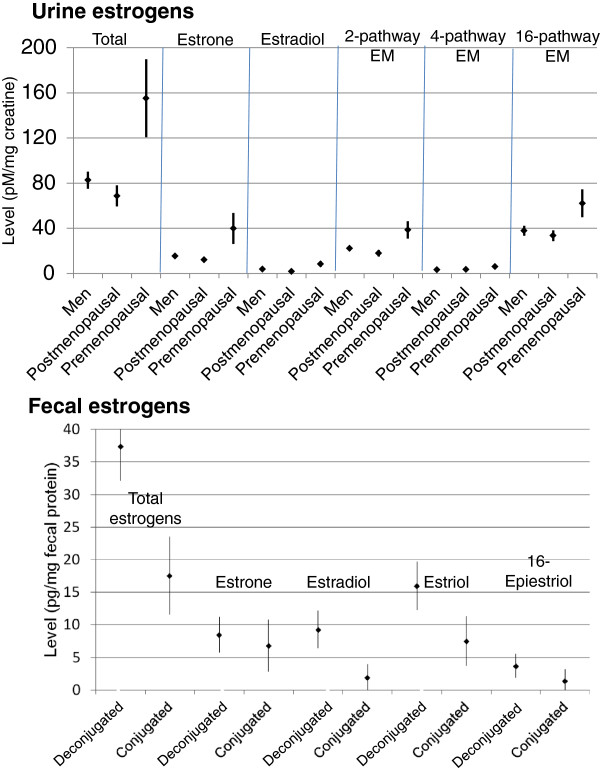
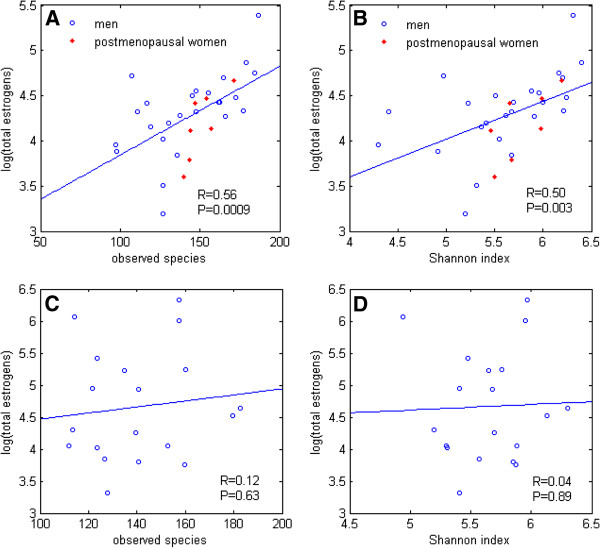
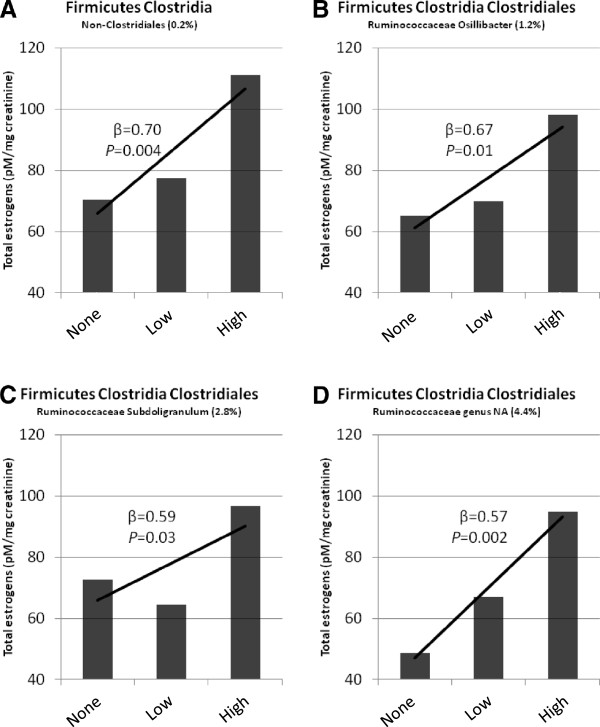
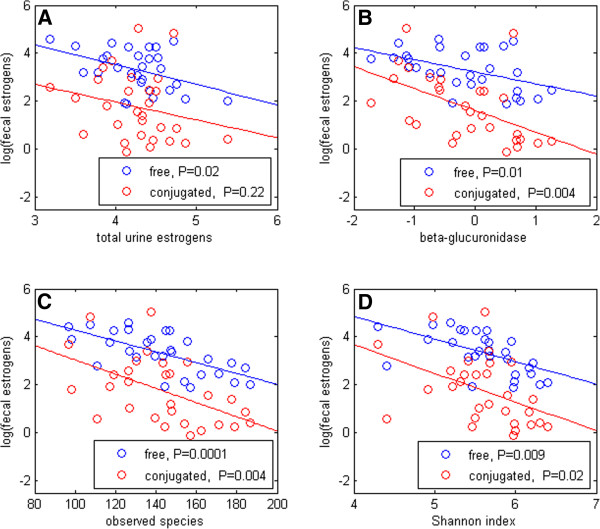
Background: High systemic estrogen levels contribute to breast cancer risk for postmenopausal women, whereas low levels contribute to osteoporosis risk. Except for obesity, determinants of non-ovarian systemic estrogen levels are undefined. We sought to identify members and functions of the intestinal microbial community associated with estrogen levels via enterohepatic recirculation. Methods: Fifty-one epidemiologists at the National Institutes of Health, including 25 men, 7 postmenopausal women, and 19 premenopausal women, provided urine and aliquots of feces, using methods proven to yield accurate and reproducible results. Estradiol, estrone, 13 estrogen metabolites (EM), and their sum (total estrogens) were quantified in urine and feces by liquid chromatography/tandem mass spectrometry. In feces, β-glucuronidase and β-glucosidase activities were determined by realtime kinetics, and microbiome diversity and taxonomy were estimated by pyrosequencing 16S rRNA amplicons. Pearson correlations were computed for each log e estrogen level, log e enzymatic activity level, and microbiome alpha diversity estimate. For the 55 taxa with mean relative abundance of at least 0.1%, ordinal levels were created [zero, low (below median of detected sequences), high] and compared to log e estrogens, β-glucuronidase and β-glucosidase enzymatic activity levels by linear regression. Significance was based on two-sided tests with α=0.05. Results: In men and postmenopausal women, levels of total urinary estrogens (as well as most individual EM) were very strongly and directly associated with all measures of fecal microbiome richness and alpha diversity (R≥0.50, P ≤0.003). These non-ovarian systemic estrogens also were strongly and significantly associated with fecal Clostridia taxa, including non- Clostridiales and three genera in the Ruminococcaceae family (R=0.57−0.70, P =0.03−0.002). Estrone, but not other EM, in urine correlated significantly with functional activity of fecal β-glucuronidase (R=0.36, P =0.04). In contrast, fecal β-glucuronidase correlated inversely with fecal total estrogens, both conjugated and deconjugated (R≤-0.47, P ≤0.01). Premenopausal female estrogen levels, which were collected across menstrual cycles and thus highly variable, were completely unrelated to fecal microbiome and enzyme parameters ( P ≥0.6). Conclusions: Intestinal microbial richness and functions, including but not limited to β-glucuronidase, influence levels of non-ovarian estrogens via enterohepatic circulation. Thus, the gut microbial community likely affects the risk for estrogen-related conditions in older adults. Understanding how Clostridia taxa relate to systemic estrogens may identify targets for interventions. Trial registration: Not applicable.
Overview
The claims and statistics of this paper haven’t been checked yet.
Free: it reads the open-access text and checks the first 5 claims that cite a source we can check. Create a free account to check every claim.
Integrity signals
Registry
Cites
Statistics
Figures
Verification
Claims the paper makes
The claims and statistics of this paper haven’t been checked yet.
Free: it reads the open-access text and checks the first 5 claims that cite a source we can check. Create a free account to check every claim.
Claims other papers make about this one
Each is checked against this paper’s own text: does it say what the citing paper says it does?
The check wasn’t confident either way, so it gives no verdict — never disputed.
In the citing paper
“However, the study reported a statistically significant association between levels of total estrogens and PD index in control women, which was not observed in women with breast cancer.”
From Association Between Sex Hormone Levels and Gut Microbiota Composition and Diversity—A Systematic Review (2022) · cites this paper as [21]
Experimental — accuracy not yet measuredIn the citing paper
“Two studies utilised the same cohort of participants and thus only the cohort from one of the two studies was included for these calculations (see Table 1).(21, 22)”
From Association Between Sex Hormone Levels and Gut Microbiota Composition and Diversity—A Systematic Review (2022) · cites this paper as [21]
In the citing paper
“In addition, the study by Goedert et al.(21) did not find an association between EM:parent estrogen and diversity in healthy women or women with breast cancer.”
From Association Between Sex Hormone Levels and Gut Microbiota Composition and Diversity—A Systematic Review (2022) · cites this paper as [21]
Self-check
Percentages, sums and reported differences re-computed from the paper’s own numbers.
The self-check needs the paper’s full text.
Citations
Cites
QIIME allows analysis of high-throughput community sequencing data
Caporaso, J. G., Kuczynski, J., Stombaugh, J., Bittinger, K., Bushman, F. D., Costello, E. K., Fierer, N., Peña, A. G., Goodrich, J. K., Gordon, J. I., et al. (2010) · Nature Methods · doi:10.1038/nmeth.f.303 · Cited by 34,887 · cited 7×
“Relative abundance of each OTU, alpha diversity, and beta diversity were computed using QIIME [25] for each DNA sample and then averaged on four replicates for each study participant.”
MethodInfluentialUCHIME improves sensitivity and speed of chimera detection
Edgar, R. C., Haas, B. J., Clemente, J. C., Quince, C., & Knight, R. (2011) · Bioinformatics · doi:10.1093/bioinformatics/btr381 · Cited by 15,114
A core gut microbiome in obese and lean twins
Turnbaugh, P. J., Hamady, M., Yatsunenko, T., Cantarel, B. L., Duncan, A., Ley, R. E., Sogin, M. L., Jones, W. J., Roe, B. A., Affourtit, J. P., et al. (2009) · Nature · doi:10.1038/nature07540 · Cited by 7,823 · cited 2×
“Because use of medications, including non-antibiotics [16], and elevated BMI [15,16] are inversely associated with gut microbiome alpha diversity, adjustment for these likely would have strengthened the direct associations that we found herein between alpha diversity and systemic estrogen levels.”
BackgroundThe Ribosomal Database Project: improved alignments and new tools for rRNA analysis
Cole, J. R., Wang, Q., Cardenas, E., Fish, J., Chai, B., Farris, R. J., Kulam-Syed-Mohideen, A. S., McGarrell, D. M., Marsh, T., Garrity, G. M., et al. (2009) · Nucleic Acids Research · doi:10.1093/nar/gkn879 · Cited by 4,762 · cited 2×
“Operational taxonomic units (OTUs) were defined using QIIME as sequences with at least 97% identity, and sequences were classified at the genus level using the Ribosomal Database Project (RDP) naïve Bayesian classifier [27].”
MethodThe NIH Human Microbiome Project
The NIH HMP Working Group, Peterson, J., Garges, S., Giovanni, M., McInnes, P., Wang, L., Schloss, J. A., Bonazzi, V., McEwen, J. E., Wetterstrand, K. A., et al. (2009) · Genome Research · doi:10.1101/gr.096651.109 · Cited by 2,066 · cited 2×
“Classification of operational taxonomic units Sequence read quality used the Institute of Genome Sciences bioinformatics pipeline that complies with standard operating procedures of the National Institutes of Health Human Microbiome Project [24].”
MethodHamady, M., Lozupone, C., & Knight, R. (2010) · The ISME Journal · doi:10.1038/ismej.2009.97 · Cited by 1,099
Alleviating Cancer Drug Toxicity by Inhibiting a Bacterial Enzyme
Wallace, B. D., Wang, H., Lane, K. T., Scott, J. E., Orans, J., Koo, J. S., Venkatesh, M., Jobin, C., Yeh, L.-A., Mani, S., et al. (2010) · Science · doi:10.1126/science.1191175 · Cited by 1,080 · cited 1×
“For example, inhibition of fecal microbial β-glucuronidases may be possible [37], although the relatively weak associations that we found between fecal β-glucuronidase activity and urinary estrogens suggest that enzyme inhibition would not markedly reduce systemic estrogen levels.”
BackgroundPlottel, C. S., & Blaser, M. J. (2011) · Cell Host & Microbe · doi:10.1016/j.chom.2011.10.003 · Cited by 743 · cited 4×
“As postulated and summarized by others [11], our results support the hypothesis that breast cancer risk in postmenopausal women and hip fracture risk in both postmenopausal women and elderly men is modulated by decades-long differences in systemic estrogens attributable to differences in the intestinal microbiota.”
BackgroundResultInfluentialObesity and Breast Cancer: The Estrogen Connection
Cleary, M. P., & Grossmann, M. E. (2009) · Endocrinology · doi:10.1210/en.2009-0070 · Cited by 504 · cited 2×
“Background Breast cancer risk is increased among postmenopausal women who have high levels of endogenous estrogens [1-3].”
BackgroundEstrogen excretion patterns and plasma levels in vegetarian and omnivorous women
Goldin, B. R., Adlercreutz, H., Gorbach, S. L., Warram, J. H., Dwyer, J. T., Swenson, L., & Woods, M. N. (1982) · New England Journal of Medicine · doi:10.1056/nejm198212163072502 · Cited by 474 · cited 1×
“A working hypothesis is that this enterohepatic recirculation affects the half-life and systemic levels of estrogens in men and postmenopausal women, and perhaps during the luteal phase in premenopausal women [9-11].”
Background
Research works printed but not linked: 1
- Raftogianis R, Creveling C, Weinshilboum R, Weisz J: Estrogen metabolism by conjugation. J Natl Cancer Inst Monogr. 2000, 113-124.
Cited by
Items 501–600 of 663
Shah, H., Salleh, N., Hamdan, M., & Giribabu, N. (2026) · Journal of Reproductive Immunology · doi:10.1016/j.jri.2026.104868 · Cited by 2
Zeng, Y., Tan, X., Wu, H., Wang, R., Liu, Y., Wang, X., & Duan, J. (2026) · BMC Endocrine Disorders · doi:10.1186/s12902-026-02197-y · Cited by 2
“Other studies have also indicated that the gut-brain axis and gut microbiome-associated β-glucuronidase play a crucial role in mediating the microbiome’s impact on estrogen levels [35, 36].”
Chowdhary, R., Goyal, M. K., Arora, K., Sehgal, T., Dawer, P., Anirudh, Berinstein, J. A., Bishu, S., & Matt-Amaral, L. B. (2026) · JGH Open · doi:10.1002/jgh3.70409 · Cited by 2
“Conversely, low-fiber or processed food diets can impair immune responses, and obesity is linked to systemic inflammation, altered microbiota, and reduced treatment efficacy [121, 122].”
Maternal and infant gut microbiome
Wang, H., Tin, F., Chen, H., Jiao, F., Wu, M., Sun, S., Lin, L., Li, D., Zheng, H., Niu, Z., et al. (2026) · iMeta · doi:10.1002/imt2.70151 · Cited by 3
Breakdown and clearance of steroids
Honour, J. W. (2023) · Elsevier eBooks · doi:10.1016/b978-0-12-818124-9.00001-2 · Cited by 2
Microbiome and Reproductive Health
Ijaz, M. U., Hayat, M. F., & Ashraf, A. (2024) · Springer eBooks · doi:10.1007/978-981-97-3790-1_8 · Cited by 2
The microbiome and host behaviour
Lizé, A., & Lewis, Z. (2020) · Cambridge University Press eBooks · doi:10.1017/9781108654418.006 · Cited by 2
Mikrobiyotanın Kadın ve Çocuk Sağlığına Etkisi
Durğut, S., & Yağmur, Y. (2020) · Ege Üniversitesi Hemşirelik Fakültesi Dergisi · Cited by 2
Kingsley, M. J., & Moshiree, B. (2019) · Elsevier eBooks · doi:10.1016/b978-0-12-813037-7.00030-3 · Cited by 2
Probiotics: Emerging functional ingredients for healthy aging and age-related diseases
Tan, P. L., & Kim, S. H. (2021) · Elsevier eBooks · doi:10.1016/b978-0-12-818588-9.00002-4 · Cited by 2
Characterizing alterations in the gut microbiota following postpartum weight change
Chalifour, B., Trifonova, D. I., Holzhausen, E. A., Bailey, M. J., Schmidt, K. A., Babaei, M., Mokhtari, P., Goran, M. I., & Alderete, T. L. (2023) · mSystems · doi:10.1128/msystems.00808-23 · Cited by 2
Causal effects between gut microbiota and endometriosis: a two-sample Mendelian randomisation study
Cao, T., Wang, Y., & Shen, H. (2024) · Journal of Obstetrics and Gynaecology · doi:10.1080/01443615.2024.2362415 · Cited by 2
“…the GM-oestrogen axis may exist in reproductive diseases, and GM can influence estrogen secretion and synthesis through β-glucuronidase (gmGUS) (Flores et al. 2012, Baker et al. 2017, Wei et al. 2023). a published study presented that compounds produced by cyanobacteria were estrogenic…”
Gut microbiota - A key player in breast cancer initiation and progression: A narrative review
Mohamed, N., Madyan, E. F., Yasser, A., Attia, M. G., Abdel-Ghany, S. E., & Sabit, H. (2024) · Cancer Research Statistics and Treatment · doi:10.4103/crst.crst_325_23 · Cited by 2
Hartsgrove, C. E., Walker, G.-M. S., Silva, K., Nunez, K., Alejos, K., Joseph, M., Wright, J., McMullen, B. N., Lamendella, R., & Maeng, L. Y. (2025) · Biological Psychiatry Global Open Science · doi:10.1016/j.bpsgos.2025.100620 · Cited by 2
The role of intestinal and vaginal dysbiosis in endometrial cancer: an integrative review
Sbragi, P. A. D. O. F. (2022) · International Journal of Nutrology · doi:10.54448/ijn22305 · Cited by 2
“Intestinal dysbiosis is characterized by a decrease in the diversity and stability of the microbial community, with potential overgrowth of opportunistic pathogenic bacteria, and it is now well known that this condition is related to various inflammatory and metabolic diseases, including inflammatory bowel diseases, d…”
BackgroundCorrelation analysis of breast fibroadenoma and the intestinal flora based on 16S rRNA sequencing*
Wang, B., Liu, X., Bian, Y., Sun, G., Wang, H., Zhang, J., Zhang, Z., & Zou, X. (2021) · Oncology and Translational Medicine · doi:10.1007/s10330-021-0509-9 · Cited by 2
Effect of Acupoint Catgut Embedding on Intestinal Flora in Rats with Ovariectomized Osteoporosis
Shi, N., Zhang, C., Han, L., & Ouyang, G. (2021) · Acupuncture & Electro-Therapeutics Research · doi:10.3727/036012921x16281724938230 · Cited by 2
“Studies con�rm that decreased estrogen can also reduce the diversity of intestinal �ora [12–13] , and Intestinal �ora can affect bone metabolism by releasing small molecules, such as estrogen analogs and serotonin, to participate in immune regulation and affect the absorption and metabolism of…”
BackgroundMetabolism of Plant Lignans by Human Intestinal Bacteria
Yoder, S. C. (2013) · ResearchWorks at the University of Washington (University of Washington) · Cited by 2
Structure and function of the fecal-associated microbiome in qi stagnation constitution
Zhao, L., Zhao, P., Zhen, J., Huang, G., Li, Y., & Xu, A. (2021) · Journal of Traditional Chinese Medical Sciences · doi:10.1016/j.jtcms.2021.04.001 · Cited by 1
Zhou, M., He, X., Xue, Q., Naveed, M., Rui, B., Ye, W., Liu, Y., & Ming, L. (2025) · Food Science and Human Wellness · doi:10.26599/fshw.2024.9250431 · Cited by 1
Understanding oncobiosis in ovarian cancer: Emerging concepts in tumor progression
Sharma, P., Das, S., Rituraj, R., & Bhagyashree, B. (2025) · Pathology - Research and Practice · doi:10.1016/j.prp.2025.156026 · Cited by 1
Atighetchi, S., Pilgrim, T., Yilmaz, B., Suc, G., Ureña, M., Döring, Y., & Chong-Nguyen, C. (2026) · Biology of Sex Differences · doi:10.1186/s13293-026-00932-7 · Cited by 1
“The microbiota affects the host through several interconnected mechanisms, including production of bioactive metabolites, modulation of epithelial permeability, regulation of immune homeostasis, and crosstalk with sex hormone metabolism [34, 41, 43, 49, 51, 124].”
Sample, J. W., Johnson, S., Hoskin, T. L., Redaelli, M., Walther-Antonio, M. R. S., Chen, J., Degnim, A. C., & Hieken, T. J. (2026) · Breast Cancer Research and Treatment · doi:10.1007/s10549-026-08065-6 · Cited by 1
Liu, T. (2016) · Illinois Digital Environment for Access to Learning and Scholarship (University of Illinois at Urbana-Champaign) · Cited by 1
Guers, J. J., Heffernan, K. S., & Campbell, S. C. (2025) · Reviews in Cardiovascular Medicine · doi:10.31083/rcm26430 · Cited by 1
“Additionally, there was no correlation between the microbiota compared to estrogen levels throughout the menstrual cycle of 17 females [57].”
Caldeira, S. D. O., Romano, M. J. E., Varaschim, M. A., do Reis, H. C. C., Borella, L. M., Ribeiro, H. J. A., Macedo, I. W., Dias, R. G. D. C. L., Moraes, W. M., Silva, J. D. J., et al. (2025) · Brazilian Journal of Health Review · doi:10.34119/bjhrv8n3-250 · Cited by 1
Interrelationships between gut microbiome and serum medium mass molecules in menopausal women
Garashchenko, N. E., Semenova, N. V., Belkova, N. L., Nikitina, O. A., Novikova, E. A., Евгеньевна, С. Н., Станиславовна, К. Е., Kolesnikov, S. I., Lesnaya, A. S., & Kolesnikova, L. I. (2025) · Сибирский научный медицинский журнал · doi:10.18699/ssmj20250515 · Cited by 1
Parent, M., Bone, C., Huber, L., & Squires, E. J. (2026) · Journal of Animal Science · doi:10.1093/jas/skaf463 · Cited by 1
Maternal Microbiota and Its Potential Implications for Mammalian Reproduction Health
Lei, X., Zheng, Y., Chen, Y., Jiang, J., CHEN, G., & Ye, Q. (2026) · Journal of Nutrition · doi:10.1016/j.tjnut.2026.101366 · Cited by 1
Dmowska, D., Zdebski, P., Rymska, K., Gloc, E., Ejsner, R., Kaczmarek, M., Mierniczek, M., Mierniczek, M., Załęski, D., Lewandowski, M., et al. (2026) · Quality in Sport · doi:10.12775/qs.2026.51.68190 · Cited by 1
Rosas-Sánchez, G. U., Germán-Ponciano, L. J., Rodríguez‐Landa, J. F., Jaime, H. B., Limón‐Morales, O., Muñoz‐Carrillo, J. L., Pérez-Vega, M. I., & Soria-Fregozo, C. (2026) · Nutrients · doi:10.3390/nu18050713 · Cited by 1
“…β -independent mechanisms, including alterations in gut microbiota composition that could counteract probiotic colonization or metabolic activity [50,51], the modulation of the HPA axis and inflammatory pathways through non-genomic mechanisms [52], and interactions with neurotransmitter systems…”
Al‐Ansari, M. M., Mahmood, S. M., & Al-Alwan, M. M. (2026) · International Journal of Molecular Sciences · doi:10.3390/ijms27114723 · Cited by 2
“Higher baseline estrogen levels have been associated with shifts in microbial composition, supporting the proliferation of beneficial bacteria (e.g., Lactobacillus and Bifidobacterium ) and modulating host antimicrobial peptides, such as β -defensins [85,86].”
Hormonal Imbalance and Gut Dysbiosis: Emerging Perspectives in Women’s Health
De, R., Chakrabortty, S., Das, J., Chaudhary, P., Patra, R., Sardar, K., Nath, R., Pal, R., Debnath, B., & Ashique, S. (2026) · Probiotics and Antimicrobial Proteins · doi:10.1007/s12602-026-11089-5 · Cited by 1
Su, X., Xiang, Y., Zhao, H., Li, O., Zhang, L., & Guo, B. (2026) · Frontiers in Microbiology · doi:10.3389/fmicb.2026.1839030 · Cited by 1
“During dysbiosis, aberrant GUS activity may increase circulating free estrogen, a pathway that has been associated with tumorigenesis in preclinical settings (Flores et al., 2012; Chen and Madak-Erdogan, 2016).”
Menopausia y microbiota intestinal: cambios y perspectivas terapéuticas
Vega, L. Á. P., Omaña-Covarrubias, A., Castro, A. T. N., Araujo, M. M., & Gurrola, M. D. R. A. (2026) · Con-Ciencia Boletín Científico de la Escuela Preparatoria No 3 · doi:10.29057/prepa3.v13i25.16162 · Cited by 1
Singh Ashok, K. (2016) · Journal of Agricultural Studies · doi:10.5296/jas.v4i2.9298 · Cited by 1
“…et al 2012) associated with (i) deconjugation of estrogens resulting in an increase in biologically active free hormones (Kumar et al 2012, Flores et al 2012), (ii) hydrolysis of free estrogens and (iii) inter-conversion between estrogens (Mansell et al 2011, Ying et al 2002), resulting…”
BackgroundMedsebojni vpliv estrogenov in mikrobioma prebavil in rodil
Troha, N., & Rižner, T. L. (2023) · Slovenian Medical Journal · doi:10.6016/zdravvestn.3382 · Cited by 1
“Višje koncentracije krožečih estrogenov so lahko povezane s spremenjeno sestavo mikrobioma GIT, kar vidimo pri endometriozi (25).”
BackgroundGbonon, V., Gnahoré, F. D., Kouamé, K., ASSOHOUN, E. S., Safiatou, C., Bernadette, D. T. F., Mamadou, S. Y., Osseni, A., Arlette, A. S., Jean-David, N., et al. (2024) · Advances in Microbiology · doi:10.4236/aim.2024.149029 · Cited by 1
Estrogen-gut microbiota interactions and irritable bowel syndrome
Jiang, F.-R., Hang, L., Zhou, Y., Feng, Y., & Yuan, J. (2022) · World Chinese Journal of Digestology · doi:10.11569/wcjd.v30.i12.511 · Cited by 1
Microbiome as Cancer Biomarkers
Bakadia, B. M., Manan, S., Ul‐Islam, M., Mukole, B. M., Shahzad, A., Abdalla, A. M. E., Ullah, M. W., & Yang, G. (2022) · Springer eBooks · doi:10.1007/978-981-16-5759-7_5 · Cited by 1
Kim, N. (2022) · Springer eBooks · doi:10.1007/978-981-19-0120-1_21 · Cited by 1
Huang, C. X. (2023) · Healthy ageing and longevity · doi:10.1007/978-3-031-14023-5_19 · Cited by 1
Song, C., Ming, W., Chune, L., Zhang, J., & Xi-ping, L. (2023) · World Journal of Public Health · doi:10.11648/j.wjph.20230802.11 · Cited by 1
DIVERSITY OF β-GLUCURONIDASE AMONG THE MICROBIOME OF HEALTHY INDIVIDUALS AND PCOS PATIENTS
Muccee, F., Razzaq, F., IQBAL, R., RAFIQUE, F., Amjad, A., & NASIR, Q. (2023) · Biological and Clinical Sciences Research Journal · doi:10.54112/bcsrj.v2023i1.568 · Cited by 1
The Microbiome: A New Frontier in Overcoming Drug Resistance in Breast Cancer
Luvhengo, T. E., Miya, T. V., Basera, A., Fadebi, O. O., Mehrotra, R., & Dlamini, Z. (2024) · Springer eBooks · doi:10.1007/978-3-031-52860-6_11 · Cited by 1
Interplay Between Gut-microbiota and Neurodegeneration
Ashique, S., Pal, R., Kumar, S., Verma, B., Kumar, N., Kahwa, I., Farid, A., Mishra, N., Kumar, P., & Taghizadeh‐Hesary, F. (2024) · BENTHAM SCIENCE PUBLISHERS eBooks · doi:10.2174/9789815238754124010009 · Cited by 1
Cetera, G. E., Punzi, M. C., Merli, C. E. M., & Vercellini, P. (2025) · Women s Health · doi:10.1177/17455057241305072 · Cited by 1
“4,5 Microbes may modulate immune responses, 6 influence estrogen metabolism, 7 affect circulating estrogen concentrations, 8 and induce phenotypic changes in endometrial cells.”
Masset, M. E. G., Canto, F. B., & Monteiro, A. C. (2025) · IntechOpen eBooks · doi:10.5772/intechopen.1010215 · Cited by 1
The gut microbiota pattern predictive for development of Metabolic Syndrome and dietary modulation
Fernández-Pacheco, S. G.-C. (2017) · LA Referencia (Red Federada de Repositorios Institucionales de Publicaciones Científicas) · Cited by 1
Short-hairpin RNA-guided single gene knockdown reverses triple-negative breast cancerPreprint
Chen, D., Shi, Z., Tan, L.-L., Chen, Y., Li, C., Wang, Q., Li, H., Zhang, M.-L., Song, J., Xu, Q. L., et al. (2018) · bioRxiv (Cold Spring Harbor Laboratory) · doi:10.1101/418764 · Cited by 1
“Intestinal microbial richness and enzymatic activity, including but not limited to GUS, have been shown to influence the levels of non-ovarian oestrogens through the enterohepatic circulation [10].”
BackgroundUnderstanding biological factors associated with pelvic organ prolapse in late gestation sows
Kiefer, Z. E. (2021) · Iowa State University Digital Repository (Iowa State University) · doi:10.31274/etd-20210609-87 · Cited by 1
Argentina: licencias de Uso No Propietarias: Software Libre y Software de Código Abierto
Iglesias, G. (2008) · AR: Revista de Derecho Informático · Cited by 1
Harder, J. W. (2021) · ThinkIR: The University of Louisville's Institutional Repository (University of Louisville) · doi:10.18297/etd/3585 · Cited by 1
Andrews, R., Lacey, A., Roach, H., Tomlinson, R., Kidd, E. J., & Bache, K. (2023) · OSF Preprints (OSF Preprints) · doi:10.31219/osf.io/a7hky · Cited by 1
Kittson, M. A., Tanprasertsuk, J., Burnham, C. M., Honaker, R. W., Jones, R. B., Trivedi, S., Strong, S. J., & Heugten, K. A. (2023) · Research Square · doi:10.21203/rs.3.rs-3478102/v1 · Cited by 1
Gut Microbiota Shifts with Lifetime Duration of Oral Contraception UsePreprint
Paul, G., York, S., & Alcazar, R. (2025) · bioRxiv (Cold Spring Harbor Laboratory) · doi:10.1101/2025.09.09.675238 · Cited by 1
Zwinsova, B., Hofman, J., Tomik, O., Brenerová, P., Holochová, P., Mekiňová, L., Ješeta, M., Růžička, F., & Linhartová, P. B. (2026) · Research Square · doi:10.21203/rs.3.rs-9050950/v1 · Cited by 1
Ovarian Cancer: The Interplay of Lifestyle and Genes
Braem, M. G. M. (2014) · Utrecht University Repository (Utrecht University)
Dietary polyphenols: modulators of energy and substrate metabolism in obese humans
Most, J. (2016) · Research Publications (Maastricht University) · doi:10.26481/dis.20160115jm
Geyer, C. (2017) · American Journal of Lifestyle Medicine · doi:10.1177/1559827617713170
Estradiol alters the gut microbiota response to high-fat diet
Nagyal, M. K. (2017) · Wellesley College Digital RepositoryWellesley (Wellesley College)
Salmonella and Multidirectional Communication in the Gut
Gart, E. V. (2017) · OakTrust (Texas A&M University Libraries)
The effects of novel and synthetic estrogens on liver health and microbiome crosstalk
Chen, K. L. A. (2017) · Illinois Digital Environment for Access to Learning and Scholarship (University of Illinois at Urbana-Champaign)
Cadaverine and lithocholic acid, metabolites of the microbiome reduce breast cancer aggressiveness
Kovàcs, T. (2019) · University of Debrecen Electronic Archive (University of Debrecen)
Hormon-Mikrobiota-Wechselwirkungen in der Menopause
Verhasselt, H. L. (2019) · gynäkologie + geburtshilfe · doi:10.1007/s15013-019-1846-2
Cesur, B., & Dora, D. D. (2020) · European Journal of Therapeutics · doi:10.5152/eurjther.2020.19098
The Important Role of Breast Microbiota in Breast CancerPreprint
Su, K.-Y., Lee, W.-L., & Balasubramaniam, V. R. M. T. (2020) · Preprints.org · doi:10.20944/preprints202010.0437.v1
Intestinal Microbiota and Osteoporosis
Xu, X., Jia, X., Mo, L., Liu, C., Zheng, L., Yuan, Q., & Zhou, X. (2020) · Springer eBooks · doi:10.1007/978-981-15-7899-1_10
Self-citationThe Microbiome in Precision Medicine: A New Approach to Cancer Treatment
Shirvani-Rad, S., Nikkhah, A., Orvatinia, M. M., Ejtahed, H., Sarhangi, N., Meybodi, H. R. A., & Hasanzad, M. (2021) · DOAJ (DOAJ: Directory of Open Access Journals)
Endometriosis and Microbiota: Is there a Relationship with the Perinatal Period?
Bardi, M. (2020) · Global Journal of Reproductive Medicine · doi:10.19080/gjorm.2019.07.555713
“Prior research has shown that dysbiosis leads to increased oestrogen levels in the circulation [17].”
BackgroundAarnoutse, R. (2021) · Research Publications (Maastricht University) · doi:10.26481/dis.20211203ra
Endometrial Cancer and Precancer in Polycystic Ovary Syndrome
Marcus, E. A., Haines, K. E., & Gressel, G. M. (2022) · Springer eBooks · doi:10.1007/978-3-030-92589-5_21
Ferrucci, L. M., & Irwin, M. L. (2020) · Springer eBooks · doi:10.1007/978-3-030-42011-6_15
Influence of gut-microbiota on breast cancer development and management
Bhaskar, P., Attri, S., Sharma, A., & Bisht, S. (2022) · Scaffold Press Books · doi:10.52679/978-81-952885-6-4_6
Systemic Onco-Sphere: Host Microbiome and Cancer
Saw, P. E., & Song, E. (2023) · Springer eBooks · doi:10.1007/978-981-99-1183-7_25
Sex Differences in the Indole-3-propionic Acid Responses to Laparoscopic Roux-en-Y gastric BypassPreprint
Pihlajamäki, J., Silva, T., Sehgal, R., Spritzer, P. M., Kårlund, A., Tuomainen, M. H., Männistö, V., Karhunen, L. J., Hanhineva, K., Lehtonen, M., et al. (2023) · Research Square · doi:10.21203/rs.3.rs-3168593/v1
Regulation of steroid production
Honour, J. W. (2023) · Elsevier eBooks · doi:10.1016/b978-0-12-818124-9.00017-6
Hong, W., Huang, G., Wang, D., Xu, Y., Qiu, J., Pei, B., Qian, D., & Meng, X. (2023) · Figshare · doi:10.6084/m9.figshare.24054367
Hong, W., Huang, G., Wang, D., Xu, Y., Qiu, J., Pei, B., Qian, D., & Meng, X. (2023) · Figshare · doi:10.6084/m9.figshare.24054361
Hong, W., Huang, G., Wang, D., Xu, Y., Qiu, J., Pei, B., Qian, D., & Meng, X. (2023) · Figshare · doi:10.6084/m9.figshare.24054364
Hong, W., Huang, G., Wang, D., Xu, Y., Qiu, J., Pei, B., Qian, D., & Meng, X. (2023) · Figshare · doi:10.6084/m9.figshare.24054355
The Emerging Role of the Microbiome in Carcinogenesis
Gates, T. J., Dietz, M. A., Martell, M., Balbo, S., Subramanian, S., & Staley, C. M. (2024) · Elsevier eBooks · doi:10.1016/b978-0-323-95488-4.00093-0
Carson, T. L., Rivers, D. A., Doerr, V., Haver, M. K., & Byrd, D. A. (2024) · Current Epidemiology Reports · doi:10.1007/s40471-024-00351-5
“Accumulating evi - dence supports the role of the gut microbiome in regulating endogenous estrogens [34, 37 ] and systemic inflammation and immunity [38, 39].”
Belchenko, U. D., Yakubova, E. E., Popovich, T. S., Agaeva, E. L., Kayalieva, E. Z., Khudaiberdiev, E.-S. S., Li, Y. R., Gasanov, S. R., Perederenko, N. I., Kadyrov, E. S., et al. (2024) · Obstetrics Gynecology and Reproduction · doi:10.17749/2313-7347/ob.gyn.rep.2024.534
Gut Microbiota and Estrogen Levels in Women Breast Cancer in Côte d'Ivoire
Gnahoré, F. D., Gbonon, V., Mamadou, S. Y., ASSOHOUN, E. S., Aristide, A. A. B., Bernadette, D. T. F., Safiatou, C., Osseni, A., Arlette, A. S., David, N. J., et al. (2024) · Microbiology Research Journal International · doi:10.9734/mrji/2024/v34i81465
Zhou, Y., Wang, Y., Feng, Y., Sun, T., & Xu, J. (2024) · Research Square · doi:10.21203/rs.3.rs-4812423/v1
Sajjad, J., Morael, J., Melo, T. G., Foley, T., Murphy, A., Keane, J., Popov, J., Stanton, C., Dinan, T. G., Clarke, G. A., et al. (2024) · Neuroscience Letters · doi:10.1016/j.neulet.2024.138096
Özışık, D., & Akın, N. (2025) · Food and Health · doi:10.3153/fh25007
Sex hormones, microbiota, and metabolic diseases
Roggiani, S., Bernardi, A., & Brigidi, P. (2024) · Cardiologia Ambulatoriale · doi:10.17473/1971-6818-2024-4-9
Jha, A., Krishnamoorthy, G., & Narayana, A. I. (2025) · F1000Research · doi:10.12688/f1000research.169788.1
Moderne Mayr-Medizin in der gynäkologischen Praxis: Prinzipien und physiologische Hintergründe
Hohmann, C. (2025) · Journal für Gynäkologische Endokrinologie/Schweiz · doi:10.1007/s41975-025-00426-6
Liwinski, T., Auer, M. K., Schröder, J., Pieknik, I., Casar, C., Schwinge, D., Henze, L., Stalla, G. K., Lang, U. E., von Klitzing, A., et al. (2024) · Figshare · doi:10.6084/m9.figshare.26944695
Xu, B., Qin, W., Yan, Y., Tang, Y., Zhou, S., Huang, J., Xie, C., Ma, L., & Yan, X. (2021) · Figshare · doi:10.6084/m9.figshare.14538830
Kirchhoff, F. P. (2025) · Gutenberg Open Science · doi:10.25358/openscience-11029
Mayneris‐Perxachs, J., Arnoriaga‐Rodríguez, M., Luque-Córdoba, D., Priego‐Capote, F., Pérez-Brocal, V., Moya, A., Burokas, A., Maldonado, R. J., & Fernández-Real, J.-M. (2020) · Figshare · doi:10.6084/m9.figshare.12981212
Liwinski, T., Auer, M. K., Schröder, J., Pieknik, I., Casar, C., Schwinge, D., Henze, L., Stalla, G. K., Lang, U. E., von Klitzing, A., et al. (2024) · Figshare · doi:10.6084/m9.figshare.26944692
Mayneris‐Perxachs, J., Arnoriaga‐Rodríguez, M., Luque-Córdoba, D., Priego‐Capote, F., Pérez-Brocal, V., Moya, A., Burokas, A., Maldonado, R. J., & Fernández-Real, J.-M. (2020) · Figshare · doi:10.6084/m9.figshare.12981224
Su, C., Wan, S., Ding, J., 倪观太, & Ding, H. (2024) · Figshare · doi:10.6084/m9.figshare.25621904
Metadata
- Authors
- Flores, R., Shi, J., Fuhrman, B., Xu, X., Veenstra, T. D., Gail, M. H., Gajer, P., Ravel, J., & Goedert, J. J.
- Affiliations
- National Cancer Institute (US)
- Science Applications International Corporation (United States) (US)
- University of Maryland, Baltimore (US)
- Corresponding author
- Goedert, James J
- ORCID
- Venue
- Journal of Translational Medicine
- Published
- 2012-12
- Volume
- 10
- Issue
- 1
- Pages
- 253-253
- ISSN
- 1479-5876 (ISSN-L)
- PMC
- PMC3552825
- OpenAlex
- W2157570303
- Cited by
- 615
- References
- 43
- Citations by year
- 2026: 57 · 2025: 79 · 2024: 89 · 2023: 80 · 2022: 68 · 2021: 78 · 2020: 61 · 2019: 34 · 2018: 19 · 2017: 22 · 2016: 12 · 2015: 8 · 2014: 5 · 2013: 2
- FWCI
- 1.93
- Type
- journal article
- Language
- en
- Open access
- gold
- doi.org
- Licence
- cc-by
- Locations
- Journal of Translational Medicine (publishedVersion, cc-by)
- Europe PMC (PubMed Central) (publishedVersion, cc-by)
- PubMed Central (publishedVersion, cc-by)
- PubMed (publishedVersion)
- DOAJ (DOAJ: Directory of Open Access Journals) (submittedVersion, cc-by-sa)
- Funders
- RTI International
- National Institutes of Health
- NIH Clinical Center
- Topics
- Life Sciences › Biochemistry, Genetics and Molecular Biology › Molecular Biology › Gut microbiota and health
- Life Sciences › Biochemistry, Genetics and Molecular Biology › Endocrinology › Estrogen and related hormone effects
- Health Sciences › Nursing › Nutrition and Dietetics › Phytoestrogen effects and research
- Keywords
- fecal microbiota, estrogen metabolites, enterohepatic circulation, beta-glucuronidase, β-glucosidase, Clostridia, Ruminococcaceae, estrone, estradiol, urinary estrogens, fecal estrogen, microbiome diversity, postmenopausal women, breast cancer risk, osteoporosis
- MeSH terms
- Adolescent, Adult, Aged, Bacteria, Cross-Sectional Studies, Estrogens, Feces, Female, Humans, Male, Menopause, Middle Aged, Genetic Variation, Biodiversity, Metagenome, Young Adult
About these checks
Registry, retraction, Cites and statistics results are computed, not judged, with one exception: a printed reference that no index lists is read once by a model before it counts as a citation error. Claims are extracted by a model and kept only when their quote appears verbatim in the text; each cited source is then checked, with a model’s help, for whether it says what the claim relies on. Those verdicts can be wrong — read the claim’s quote and the cited source before relying on one.
Statistics and arithmetic are recomputed, not judged.
Confidence bands are shown only for fields calibrated on our annotated test set. None is calibrated yet, so no band is shown.
What counts as a claim ›How we measure confidence ›How we check this ›
Are you an author, or do you see a problem with this page? Request a review
Data sources
Bibliographic data: Semantic Scholar, OpenAlex, Crossref.
Contains information from the Semantic Scholar Academic Graph Datasets, made available under the ODC Attribution License (ODC-BY 1.0).
Semantic Scholar’s data is described in: Kinney, R., et al. (2023). The Semantic Scholar Open Data Platform. arXiv:2301.10140.
