

Fecal microbial determinants of fecal and systemic estrogens and estrogen metabolites: a cross-sectional study
Open accessThe DOI matches its Crossref record; 42 of the 43 references it cites were found in a registry or an index.
Abstract
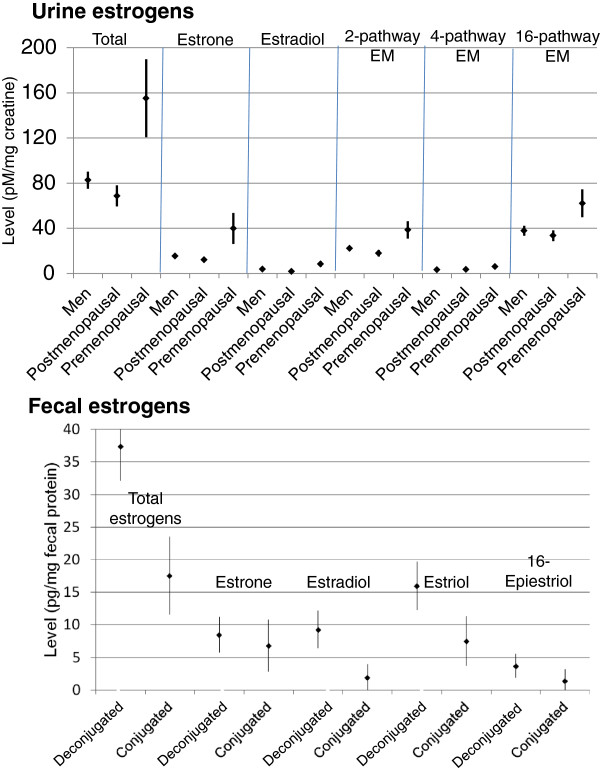
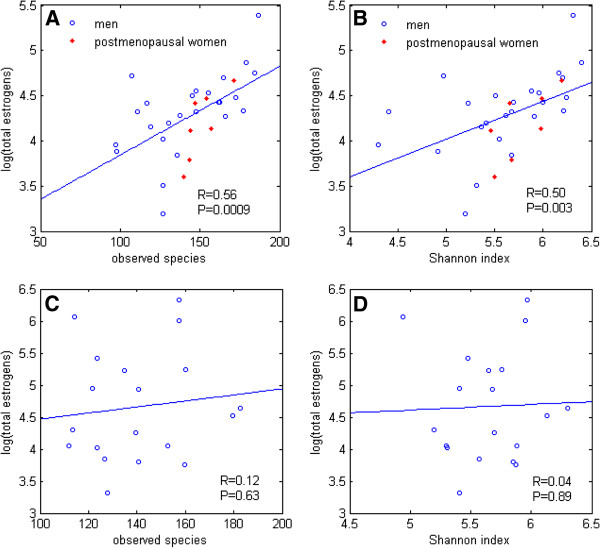
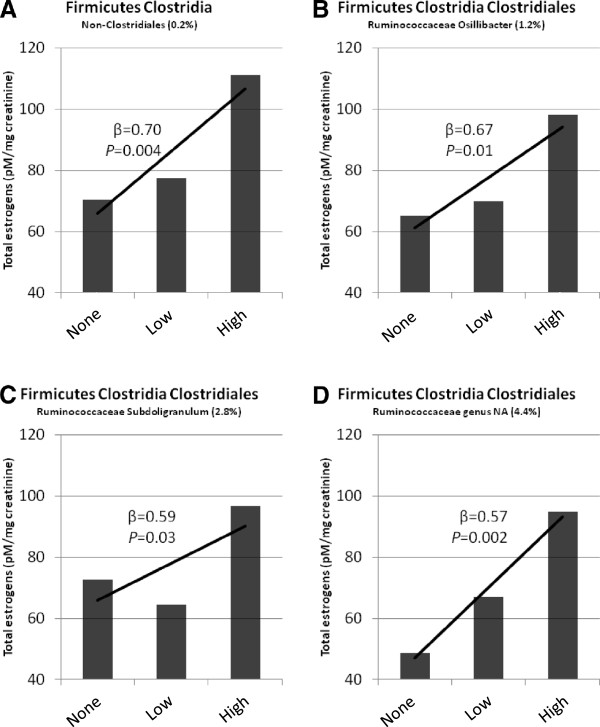
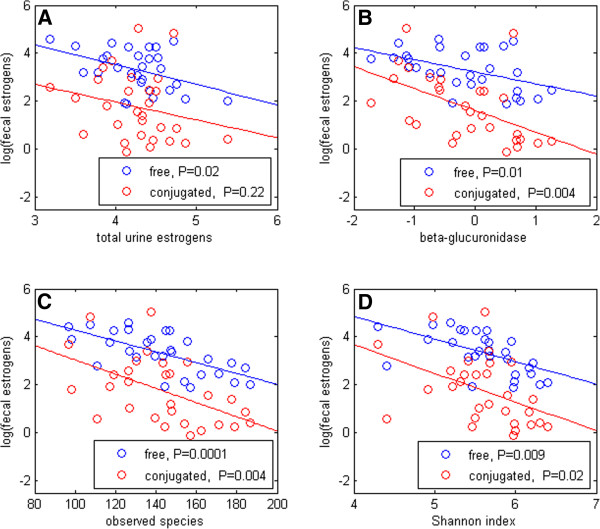
Background: High systemic estrogen levels contribute to breast cancer risk for postmenopausal women, whereas low levels contribute to osteoporosis risk. Except for obesity, determinants of non-ovarian systemic estrogen levels are undefined. We sought to identify members and functions of the intestinal microbial community associated with estrogen levels via enterohepatic recirculation. Methods: Fifty-one epidemiologists at the National Institutes of Health, including 25 men, 7 postmenopausal women, and 19 premenopausal women, provided urine and aliquots of feces, using methods proven to yield accurate and reproducible results. Estradiol, estrone, 13 estrogen metabolites (EM), and their sum (total estrogens) were quantified in urine and feces by liquid chromatography/tandem mass spectrometry. In feces, β-glucuronidase and β-glucosidase activities were determined by realtime kinetics, and microbiome diversity and taxonomy were estimated by pyrosequencing 16S rRNA amplicons. Pearson correlations were computed for each log e estrogen level, log e enzymatic activity level, and microbiome alpha diversity estimate. For the 55 taxa with mean relative abundance of at least 0.1%, ordinal levels were created [zero, low (below median of detected sequences), high] and compared to log e estrogens, β-glucuronidase and β-glucosidase enzymatic activity levels by linear regression. Significance was based on two-sided tests with α=0.05. Results: In men and postmenopausal women, levels of total urinary estrogens (as well as most individual EM) were very strongly and directly associated with all measures of fecal microbiome richness and alpha diversity (R≥0.50, P ≤0.003). These non-ovarian systemic estrogens also were strongly and significantly associated with fecal Clostridia taxa, including non- Clostridiales and three genera in the Ruminococcaceae family (R=0.57−0.70, P =0.03−0.002). Estrone, but not other EM, in urine correlated significantly with functional activity of fecal β-glucuronidase (R=0.36, P =0.04). In contrast, fecal β-glucuronidase correlated inversely with fecal total estrogens, both conjugated and deconjugated (R≤-0.47, P ≤0.01). Premenopausal female estrogen levels, which were collected across menstrual cycles and thus highly variable, were completely unrelated to fecal microbiome and enzyme parameters ( P ≥0.6). Conclusions: Intestinal microbial richness and functions, including but not limited to β-glucuronidase, influence levels of non-ovarian estrogens via enterohepatic circulation. Thus, the gut microbial community likely affects the risk for estrogen-related conditions in older adults. Understanding how Clostridia taxa relate to systemic estrogens may identify targets for interventions. Trial registration: Not applicable.
Overview
The claims and statistics of this paper haven’t been checked yet.
Free: it reads the open-access text and checks the first 5 claims that cite a source we can check. Create a free account to check every claim.
Integrity signals
Registry
Cites
Statistics
Figures
Verification
Claims the paper makes
The claims and statistics of this paper haven’t been checked yet.
Free: it reads the open-access text and checks the first 5 claims that cite a source we can check. Create a free account to check every claim.
Claims other papers make about this one
Each is checked against this paper’s own text: does it say what the citing paper says it does?
The check wasn’t confident either way, so it gives no verdict — never disputed.
In the citing paper
“However, the study reported a statistically significant association between levels of total estrogens and PD index in control women, which was not observed in women with breast cancer.”
From Association Between Sex Hormone Levels and Gut Microbiota Composition and Diversity—A Systematic Review (2022) · cites this paper as [21]
Experimental — accuracy not yet measuredIn the citing paper
“Two studies utilised the same cohort of participants and thus only the cohort from one of the two studies was included for these calculations (see Table 1).(21, 22)”
From Association Between Sex Hormone Levels and Gut Microbiota Composition and Diversity—A Systematic Review (2022) · cites this paper as [21]
In the citing paper
“In addition, the study by Goedert et al.(21) did not find an association between EM:parent estrogen and diversity in healthy women or women with breast cancer.”
From Association Between Sex Hormone Levels and Gut Microbiota Composition and Diversity—A Systematic Review (2022) · cites this paper as [21]
Self-check
Percentages, sums and reported differences re-computed from the paper’s own numbers.
The self-check needs the paper’s full text.
Citations
Cites
QIIME allows analysis of high-throughput community sequencing data
Caporaso, J. G., Kuczynski, J., Stombaugh, J., Bittinger, K., Bushman, F. D., Costello, E. K., Fierer, N., Peña, A. G., Goodrich, J. K., Gordon, J. I., et al. (2010) · Nature Methods · doi:10.1038/nmeth.f.303 · Cited by 34,887 · cited 7×
“Relative abundance of each OTU, alpha diversity, and beta diversity were computed using QIIME [25] for each DNA sample and then averaged on four replicates for each study participant.”
MethodInfluentialUCHIME improves sensitivity and speed of chimera detection
Edgar, R. C., Haas, B. J., Clemente, J. C., Quince, C., & Knight, R. (2011) · Bioinformatics · doi:10.1093/bioinformatics/btr381 · Cited by 15,114
A core gut microbiome in obese and lean twins
Turnbaugh, P. J., Hamady, M., Yatsunenko, T., Cantarel, B. L., Duncan, A., Ley, R. E., Sogin, M. L., Jones, W. J., Roe, B. A., Affourtit, J. P., et al. (2009) · Nature · doi:10.1038/nature07540 · Cited by 7,823 · cited 2×
“Because use of medications, including non-antibiotics [16], and elevated BMI [15,16] are inversely associated with gut microbiome alpha diversity, adjustment for these likely would have strengthened the direct associations that we found herein between alpha diversity and systemic estrogen levels.”
BackgroundThe Ribosomal Database Project: improved alignments and new tools for rRNA analysis
Cole, J. R., Wang, Q., Cardenas, E., Fish, J., Chai, B., Farris, R. J., Kulam-Syed-Mohideen, A. S., McGarrell, D. M., Marsh, T., Garrity, G. M., et al. (2009) · Nucleic Acids Research · doi:10.1093/nar/gkn879 · Cited by 4,762 · cited 2×
“Operational taxonomic units (OTUs) were defined using QIIME as sequences with at least 97% identity, and sequences were classified at the genus level using the Ribosomal Database Project (RDP) naïve Bayesian classifier [27].”
MethodThe NIH Human Microbiome Project
The NIH HMP Working Group, Peterson, J., Garges, S., Giovanni, M., McInnes, P., Wang, L., Schloss, J. A., Bonazzi, V., McEwen, J. E., Wetterstrand, K. A., et al. (2009) · Genome Research · doi:10.1101/gr.096651.109 · Cited by 2,066 · cited 2×
“Classification of operational taxonomic units Sequence read quality used the Institute of Genome Sciences bioinformatics pipeline that complies with standard operating procedures of the National Institutes of Health Human Microbiome Project [24].”
MethodHamady, M., Lozupone, C., & Knight, R. (2010) · The ISME Journal · doi:10.1038/ismej.2009.97 · Cited by 1,099
Alleviating Cancer Drug Toxicity by Inhibiting a Bacterial Enzyme
Wallace, B. D., Wang, H., Lane, K. T., Scott, J. E., Orans, J., Koo, J. S., Venkatesh, M., Jobin, C., Yeh, L.-A., Mani, S., et al. (2010) · Science · doi:10.1126/science.1191175 · Cited by 1,080 · cited 1×
“For example, inhibition of fecal microbial β-glucuronidases may be possible [37], although the relatively weak associations that we found between fecal β-glucuronidase activity and urinary estrogens suggest that enzyme inhibition would not markedly reduce systemic estrogen levels.”
BackgroundPlottel, C. S., & Blaser, M. J. (2011) · Cell Host & Microbe · doi:10.1016/j.chom.2011.10.003 · Cited by 743 · cited 4×
“As postulated and summarized by others [11], our results support the hypothesis that breast cancer risk in postmenopausal women and hip fracture risk in both postmenopausal women and elderly men is modulated by decades-long differences in systemic estrogens attributable to differences in the intestinal microbiota.”
BackgroundResultInfluentialObesity and Breast Cancer: The Estrogen Connection
Cleary, M. P., & Grossmann, M. E. (2009) · Endocrinology · doi:10.1210/en.2009-0070 · Cited by 504 · cited 2×
“Background Breast cancer risk is increased among postmenopausal women who have high levels of endogenous estrogens [1-3].”
BackgroundEstrogen excretion patterns and plasma levels in vegetarian and omnivorous women
Goldin, B. R., Adlercreutz, H., Gorbach, S. L., Warram, J. H., Dwyer, J. T., Swenson, L., & Woods, M. N. (1982) · New England Journal of Medicine · doi:10.1056/nejm198212163072502 · Cited by 474 · cited 1×
“A working hypothesis is that this enterohepatic recirculation affects the half-life and systemic levels of estrogens in men and postmenopausal women, and perhaps during the luteal phase in premenopausal women [9-11].”
Background
Research works printed but not linked: 1
- Raftogianis R, Creveling C, Weinshilboum R, Weisz J: Estrogen metabolism by conjugation. J Natl Cancer Inst Monogr. 2000, 113-124.
Cited by
Items 601–663 of 663
Liwinski, T., Auer, M. K., Schröder, J., Pieknik, I., Casar, C., Schwinge, D., Henze, L., Stalla, G. K., Lang, U. E., von Klitzing, A., et al. (2024) · Figshare · doi:10.6084/m9.figshare.26944701
Liwinski, T., Auer, M. K., Schröder, J., Pieknik, I., Casar, C., Schwinge, D., Henze, L., Stalla, G. K., Lang, U. E., von Klitzing, A., et al. (2024) · Figshare · doi:10.6084/m9.figshare.26944698
Little, M. S. (2018) · Carolina Digital Repository (University of North Carolina at Chapel Hill)
Brain Insulin-Like Growth Factor 1 Receptor and Insulin Receptor in Metabolism and Reproduction
Wang, M. (2019) · OhioLink ETD Center (Ohio Library and Information Network)
Mediterranean lifestyle, gut microbiota, and cardiovascular risk: Match made in heaven
Muralidharan, J. (2021) · Rovira & Virgili repository
Biomarkers and gastrointestinal symptoms in endometriosis
Petersson, A. (2025) · Lund University Publications (Lund University)
Lee, S. (2024) · DSpace repository (University of Tartu)
The effect of exercise and nutrition on the gut microbiome of peri- and postmenopausal women
Somers, P. R., & Somers, P. R. (2025) · University of Thessaly Institutional Repository (University of Thessaly)
Sun, B., Hu, C., Wang, Q., Zhou, X., Ruan, Y., Xie, N., Zhang, W., Zhou, B., Chen, L., & Shi, J. (2026) · Environmental Science & Technology · doi:10.1021/acs.est.5c14637
Self-citationThe role of gut microbiota and its metabolites in preventing oncogenesis
Li, Z., Yan, J., Zeng, Z., & Zhao, L. (2026) · Frontiers in Cell and Developmental Biology · doi:10.3389/fcell.2026.1790063
“Specifically, clinical studies in postmenopausal women have shown that lower microbial diversity correlates with elevated systemic estrogen levels, suggesting that reduced gut microbial diversity may contribute to an increased risk of breast cancer (Wu et al., 2023; Flores et al., 2012).”
Ku, M. (2020) · TSpace (University of Toronto)
Effects of estrus mode on intestinal microbiota of sowsPreprint
Fang, L., Liu, Q., Li, Q., Cheng, W. T. K., Yi, L., Zhang, W., Zhu, J., & Zhao, S. (2026) · SSRN Electronic Journal · doi:10.2139/ssrn.6469936
Microbiote intestinal, cancer du sein et métabolisme lipidique
Luu, T. H. (2018) · theses.fr (ABES) · doi:10.70675/5a95efcbzc6e9z41b8z84a5z058eda043638
THE ROLE OF GUT MICROBIOTA IN THE PATHOGENESIS OF POLYCYSTIC OVARY SYNDROME
Stępień, A., Podleśna, M., Bączek, K., Chromiak, K., Curzytek, K., Bluczak, K., Czechowicz, K., Radziwiłko, J. M., Pastuszak, A., & Kozińska, A. (2026) · International Journal of Innovative Technologies in Social Science · doi:10.31435/ijitss.1(49).2026.4524
The Gut–Adipose–Tumor Axis in Obesity-Related Cancer
Feng, J., Huang, Y., Lai, S., Zhao, T., Xie, Y. Q., Zhu, X., Liu, L., Tang, D., & Yan, A. (2026) · Nutrients · doi:10.3390/nu18081230
“Gut dysbiosis in obese women alters circulating estrogen levels through β -glucuronidases that deconjugate estrogen metabolites, allowing their reabsorption and recirculation [50].”
Endokrin Sisteme Multidisipliner Yaklaşım
Gülaç, M., Bacak, İ., Metin, S., METİN, F. Ş., Nahsan, K. A. Y. A., Özdemir, M., Çelik, B., DEĞİRMEN, N., Çeliközlü, S., Altındağ, S. D., et al. (2025) · Akademisyen Kitabevi eBooks · doi:10.37609/akya.3743
Liu, J., Liu, M., Xu, Y., Wang, Z., Zhou, X. Y., & Sun, Q. (2026) · Clinics · doi:10.1016/j.clinsp.2026.100961
“18,51,52 The present study initially identified several such taxa with nominal associations, but the lack of significance after FDR correction underscores the challenge of identifying robust effects in microbe-wide association studies and the importance of stringent statistical correction.”
Alake, S. E., Ice, J. A., Orphan, J., Adedigba, P. A., Islam, P., Hatter, B., Lu, P., Perez, L., Olawale, F., Butcher, J. T., et al. (2026) · Nutrition Research · doi:10.1016/j.nutres.2026.05.001
Endobiota–Estrobolome Profiles in Reproductive‐Aged Women With Ovarian Endometriosis
Hu, C., Pai, A. H.-Y., Wang, Y., Lu, P., Wu, H., & Huang, H.-Y. (2026) · Reproductive Medicine and Biology · doi:10.1002/rmb2.70061
“Given evidence that enterohepatic recirculation influences systemic estrogen levels and reproductive health [24, 60–62], we analyzed parent estrogens and multiple estrogen metabolites across fecal, urinary, and vaginal samples.”
Cederberg, R. A. (2026) · DigitalCommons@UNMC
Childs, H., Frankenfeld, C. L., Dailey, A., Couch, R. D., & Slavin, M. (2026) · BMC Cardiovascular Disorders · doi:10.1186/s12872-026-06007-0
“Findings demonstrate higher estrogen levels associated with higher gut microbiome diversity [37] as well as higher abundance of Bacteroidetes and lower abundance of Firmicutes and Ruminococcaceae [38].”
Olawale, F., Alake, S. E., Chandrashekar, R., Islam, P., Sutton, B., Argeta, Y., Lightfoot, S. A., Chowanadisai, W., Knotts, T. A., Smith, B. J., et al. (2026) · Current Developments in Nutrition · doi:10.1016/j.cdnut.2026.109406
“Fecal β -glucuronidase activity was assessed following established protocols with minor modifications [45,46].”
Yang, X., Liang, S., Wang, P., Huang, W., Song, K., Yu, M., & Gong, Z. (2026) · Discover Oncology · doi:10.1007/s12672-026-05442-x
Estrogen receptors and the NRF2 pathway: bridging hormonal regulation and stress response in the gut
Kopacz, A., Tomaszewska, Z., & Piechota-Polańczyk, A. (2026) · Frontiers in Endocrinology · doi:10.3389/fendo.2026.1861565
The role of microbiome–mucosal barrier interactions in neoplastic diseases
Toth, E., Sipos, A., Mikó, E., Nyerges, P., & Bai, P. (2026) · Elsevier eBooks · doi:10.1016/b978-0-443-40306-4.00007-7
Females Adapt to Dietary Protein Restriction on Enhanced Gut-Brain Axis during AgingPreprint
Vaddi, P., Godoy-Lugo, J. A., Young, K. E., Batamack, Y., Donkor, M., Artison, A., Christensen, A., Pike, C. J., & Hill, C. M. (2026) · bioRxiv (Cold Spring Harbor Laboratory) · doi:10.64898/2026.06.29.735363
Ma, J. (2025) · ThinkIR: The University of Louisville's Institutional Repository (University of Louisville) · doi:10.18297/etd/4617
Effects of tempe smoothie on fecal scfas in perimenopausal women: A quasi-experimental pilot study
Kridawati, A., Adawiyah, A. R., Indrawati, L., & Hadisaputra, S. (2026) · BIO Web of Conferences · doi:10.1051/bioconf/202624301002
Gouveia, L., Serpa, J., & Mendes, C. (2026) · Advances in experimental medicine and biology · doi:10.1007/978-3-032-12166-0_3
Świderska, M., Papińska, J., Buziak, J., Lengier, M., Małyszek, P., Pastuszak, F. C., Świstak, S., Powęska, N., Zych, S., & Pielacha, J. (2026) · International Journal of Innovative Technologies in Social Science · doi:10.31435/ijitss.3(51).2026.6234
Effects of tempe smoothie on fecal scfas in perimenopausal women: A quasi-experimental pilot study
Kridawati, A., Adawiyah, A. R., Indrawati, L., & Hadisaputra, S. (2026) · Springer Link (Chiba Institute of Technology) · doi:10.1051/bioconf/202624301002/pdf
Shen, Q., Ma, Y., Zhang, C., Guo, Y., & Qin, X. (2026) · Biomolecules · doi:10.3390/biom16081095
“Gut bacteria that exhibit β -glucosidase activity can catalyze the deconjugation of estrogens, thereby generating forms with increased bioactivity, and the overall diversity of the intestinal microbiota has been shown to correlate with the levels of estrogen-derived metabolites [14].”
Yang, H., Feng, Q., Tang, Y., Wang, L., Xia, S., Wu, Z., Quintana, M., Wang, B., & Zhang, Y. (2026) · The Innovation Water · doi:10.59717/j.tiw.2026.100015
CVD Emerging Risk Factors: Gut Microbiota
Abais‐Battad, J. M. (2026) · Physiology in health and disease · doi:10.1007/978-3-032-26472-5_16
Gut-reproduction axis: a new perspective on understanding pelvic inflammatory disease
Ma, S., Wang, M., Tan, X., Shen, C., Tao, X., Sheng, M., Zhang, X., Xu, Y., & Zheng, L. (2026) · Frontiers in Microbiology · doi:10.3389/fmicb.2026.1822640
“Research has found that GM regulates estrogen levels, with Clostridia spp. having the greatest impact on estrogen metabolism (Flores et al., 2012).”
Estrobolome in the Gut–Vagina Axis: A Microbial Endocrinology Perspective
Agoni, L., Martinelli, C. V., Candiani, M., & Seta, F. D. (2026) · Reproductive Medicine · doi:10.3390/reprodmed7030040
Exploring the Possible Role of Endometriosis-Associated Dysbiosis in Endometrial Carcinogenesis
Anastasiu, C. V., Dimienescu, O. G., Dinuță-Smeu, M. A., Moga, M., Grigorescu, D. O., Gugiu, G., & Bisoc, A. (2026) · Medicina · doi:10.3390/medicina62081577
“Based on this, the gut microbiota is now recognised as a crucial interface that connects metabolism, digestion, systemic inflammation, and epithelial defence [71,74].”
Rodrigues, R. S., Rocha, J., Fontenele, P., & Setti, A. S. (2026) · European Journal of Obstetrics & Gynecology and Reproductive Biology · doi:10.1016/j.ejogrb.2026.115393
Lozano-Herrera, S. J., López, T. A., Sancén, N. A. C., García-Gutiérrez, N., Vergara‐Castañeda, H. A., & Hernandez, D. I. M. (2026) · Menopause Review/Przegląd Menopauzalny · doi:10.5114/pm.2026.164129
Kheloui, S. (2026) · uO Research (University of Ottawa) · doi:10.20381/ruor-32194
Kim, K., Farooq, M., Jin, D. Y., Kim, W., Shin, J., Park, S., Ko, G., Park, S., Kim, G., Na, S., et al. (2026) · Frontiers in Microbiology · doi:10.3389/fmicb.2026.1923235
“This enzymatic activity may partially counteract hepatic phase II glucuronidation, a primary estrogen detoxification pathway, and can substantially elevate circulating estradiol and estrone concentrations (Plottel and Blaser, 2011; Flores et al., 2012).”
Biotics in Menopausal Health: A Two-Decade Bibliometric Analysis and Narrative Review
Olawale, F., Alake, S. E., Chandrashekar, R., Kim, Y., Chowanadisai, W., (6622952), E. A. M., Smith, B. J., & Lucas, E. A. (2026) · Current Nutrition Reports · doi:10.1007/s13668-026-00798-6
“However, menopause is often associated with reduced microbial diversity and altered bacterial composition, which can impair gmGUS activity [43].”
Why probiotics fail: gut niche tension as the missing variable?
Печникова, Н. А., Zoikidou, O., Робертовна, Д. А., Choli‐Papadopoulou, T., Aggeli, A., & Yaremenko, A. V. (2026) · Gut Microbes · doi:10.1080/19490976.2026.2728333
Guo, Q., Liang, F., Chen, P., Zhang, Y., Xie, M., Wan, X., Mao, J., Chen, H., Wu, W., Jiang, D., et al. (2026) · International Journal of Women s Health · doi:10.2147/ijwh.s631942
The cervicovaginal gut microbiota axis as a key determinant of systemic physiology
Rosenn, E. H., Zuniga, M., Lipshitz, M., Fox, E., Engel, M., & Pasinetti, G. M. (2026) · Gut Microbes · doi:10.1080/19490976.2026.2726648 · Cited by 1
“29,408 This coherence across compartments is consistent with a systems-based framework for gut and cervicovaginal interactions during pregnancy and sets the stage for the clinical questions considered next.”
Microbiome signatures linked to cancer and treatment adverse events in a real-world cohort
Yang, L., Singh, V., Gawey, B. J., Sinnwell, J. P., Johnson, S., Billings, E. C., Gorp, T. M. V., Harrington, J. J., Slama, M. Q., Till, L. M., et al. (2026) · Cell · doi:10.1016/j.cell.2026.09.009
Naveed, M., Yang, T., Togliatti, O., Joe, B., & Hill, J. W. (2026) · Reviews in Endocrine and Metabolic Disorders · doi:10.1007/s11154-026-10085-y
Gut Microbiota in Breast Cancer
T., Y. N., Rahmatovna, F. Z., & S., O. M. (2023) · International Journal of Studies in Natural and Medical Sciences
Gutiérrez, G., Azpiroz, M. A., Mayol, S., Orguilia, L., Guerrero, M. J., Malpartida, A., & Cerimedo, F. (2023) · Revista Sociedad Argentina de Endocrinología Ginecológica y Reproductiva
Pătru, O., Luca, S. A., Păunescu, A., Enache, B., Văcărescu, C., Cozma, D. C., Crișan, S., & Bena, A. (2026) · Nutrients · doi:10.3390/nu18203330
“…human data support a relationship between gut microbial composition, β -glucuronidase activity, and systemic estrogen metabolites, although the quantitative contribution of this pathway to circulating estrogen concentrations in postmenopausal women remains incompletely defined [25,27].”
Gut Microbiome Across Menopausal Transition and its Impact on Symptoms and Quality of Life
Ilhan, Z. E., Bagnall, O., Chambers, L. M., Ghelfenstein-Ferreira, T., & Herbst‐Kralovetz, M. M. (2026) · Current Obstetrics and Gynecology Reports · doi:10.1007/s13669-026-00496-8
“Supporting this mechanism, a cross-sectional study found that fecal microbiome diversity and richness in post-menopausal women were positively correlated with urinary estrogens, while GUS activity was positively correlated with urinary estrone and negatively correlated with fecal estrogens [ 31 ].”
The Childhood Estrobolome: A Missing Link in Early Puberty Onset
Zeyaullah, M., & Ahmad, M. F. (2026) · Endocrine Practice · doi:10.1016/j.eprac.2026.10.008
Sun, H., Liu, Y., Zeng, T., Li, G., Tao, Z., Zhou, X., Wen, J., Chen, X., Xu, W., Lu, L., et al. (2022) · doi:10.3389/fvets.2022.813800.s001
Chang, L., Qiu, L., Lei, N., Zhou, J., Guo, R., Gao, F., Dong, S., Chen, M., Wu, F., & Qin, B. (2023) · doi:10.3389/fcimb.2023.1145950.s001
Yao, Y., Hu, H., Chen, L., & Zheng, H. (2024) · doi:10.3389/fmicb.2024.1321268.s003
Wenhui, Y., Zhongyu, X., Kai, C., Zhaopeng, C., Jinteng, L., Mengjun, M., Zepeng, S., Yunshu, C., Peng, W., Yanfeng, W., et al. (2022) · doi:10.3389/fmicb.2022.894283.s002
Gao, H., Chi, X., Song, P., Gu, H., Xu, B., Cai, Z., Jiang, F., Li, B., & Zhang, T. (2024) · doi:10.3389/fmicb.2024.1357415.s001
Sui, K., Tveter, K. M., Bawagan, F. G., Buckendahl, P., Martinez, S. A., Jaffri, Z. H., MacDonell, A. T., Wu, Y., Duran, R. M., Shapses, S. A., et al. (2022) · doi:10.3389/fphar.2022.900667.s001
Kamal, A. K. S., & Talib, W. H. (2023) · doi:10.3897/pharmacia.70.e111822.figure5
Thu, M. S., Chotirosniramit, K., Nopsopon, T., Hirankarn, N., & Pongpirul, K. (2023) · doi:10.3389/fonc.2023.1144021.s001
Metadata
- Authors
- Flores, R., Shi, J., Fuhrman, B., Xu, X., Veenstra, T. D., Gail, M. H., Gajer, P., Ravel, J., & Goedert, J. J.
- Affiliations
- National Cancer Institute (US)
- Science Applications International Corporation (United States) (US)
- University of Maryland, Baltimore (US)
- Corresponding author
- Goedert, James J
- ORCID
- Venue
- Journal of Translational Medicine
- Published
- 2012-12
- Volume
- 10
- Issue
- 1
- Pages
- 253-253
- ISSN
- 1479-5876 (ISSN-L)
- PMC
- PMC3552825
- OpenAlex
- W2157570303
- Cited by
- 615
- References
- 43
- Citations by year
- 2026: 57 · 2025: 79 · 2024: 89 · 2023: 80 · 2022: 68 · 2021: 78 · 2020: 61 · 2019: 34 · 2018: 19 · 2017: 22 · 2016: 12 · 2015: 8 · 2014: 5 · 2013: 2
- FWCI
- 1.93
- Type
- journal article
- Language
- en
- Open access
- gold
- doi.org
- Licence
- cc-by
- Locations
- Journal of Translational Medicine (publishedVersion, cc-by)
- Europe PMC (PubMed Central) (publishedVersion, cc-by)
- PubMed Central (publishedVersion, cc-by)
- PubMed (publishedVersion)
- DOAJ (DOAJ: Directory of Open Access Journals) (submittedVersion, cc-by-sa)
- Funders
- RTI International
- National Institutes of Health
- NIH Clinical Center
- Topics
- Life Sciences › Biochemistry, Genetics and Molecular Biology › Molecular Biology › Gut microbiota and health
- Life Sciences › Biochemistry, Genetics and Molecular Biology › Endocrinology › Estrogen and related hormone effects
- Health Sciences › Nursing › Nutrition and Dietetics › Phytoestrogen effects and research
- Keywords
- fecal microbiota, estrogen metabolites, enterohepatic circulation, beta-glucuronidase, β-glucosidase, Clostridia, Ruminococcaceae, estrone, estradiol, urinary estrogens, fecal estrogen, microbiome diversity, postmenopausal women, breast cancer risk, osteoporosis
- MeSH terms
- Adolescent, Adult, Aged, Bacteria, Cross-Sectional Studies, Estrogens, Feces, Female, Humans, Male, Menopause, Middle Aged, Genetic Variation, Biodiversity, Metagenome, Young Adult
About these checks
Registry, retraction, Cites and statistics results are computed, not judged, with one exception: a printed reference that no index lists is read once by a model before it counts as a citation error. Claims are extracted by a model and kept only when their quote appears verbatim in the text; each cited source is then checked, with a model’s help, for whether it says what the claim relies on. Those verdicts can be wrong — read the claim’s quote and the cited source before relying on one.
Statistics and arithmetic are recomputed, not judged.
Confidence bands are shown only for fields calibrated on our annotated test set. None is calibrated yet, so no band is shown.
What counts as a claim ›How we measure confidence ›How we check this ›
Are you an author, or do you see a problem with this page? Request a review
Data sources
Bibliographic data: Semantic Scholar, OpenAlex, Crossref.
Contains information from the Semantic Scholar Academic Graph Datasets, made available under the ODC Attribution License (ODC-BY 1.0).
Semantic Scholar’s data is described in: Kinney, R., et al. (2023). The Semantic Scholar Open Data Platform. arXiv:2301.10140.
