

Fecal microbial determinants of fecal and systemic estrogens and estrogen metabolites: a cross-sectional study
Open accessThe DOI matches its Crossref record; 42 of the 43 references it cites were found in a registry or an index.
Abstract
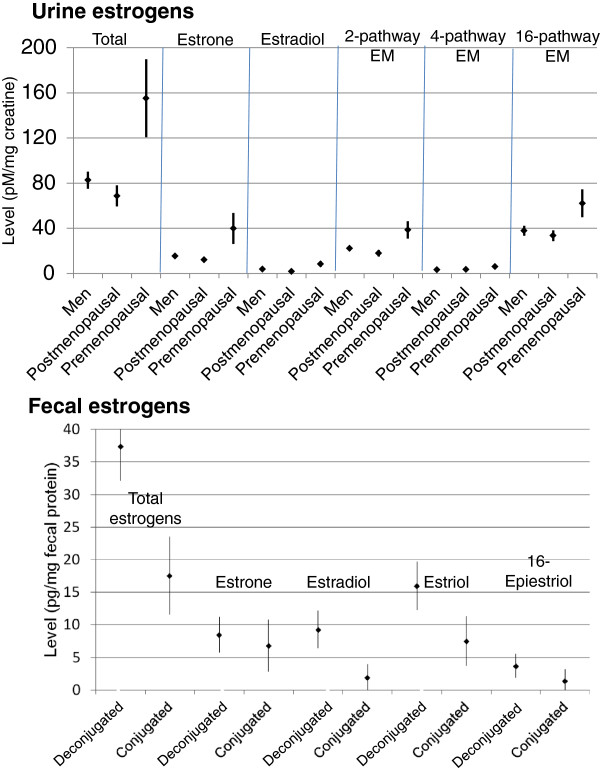
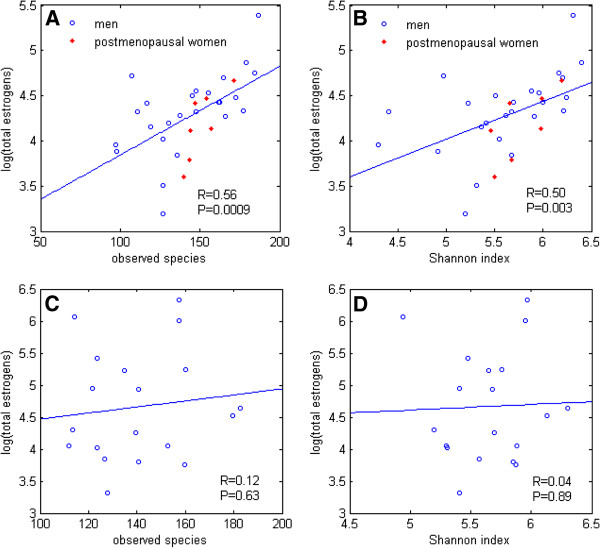
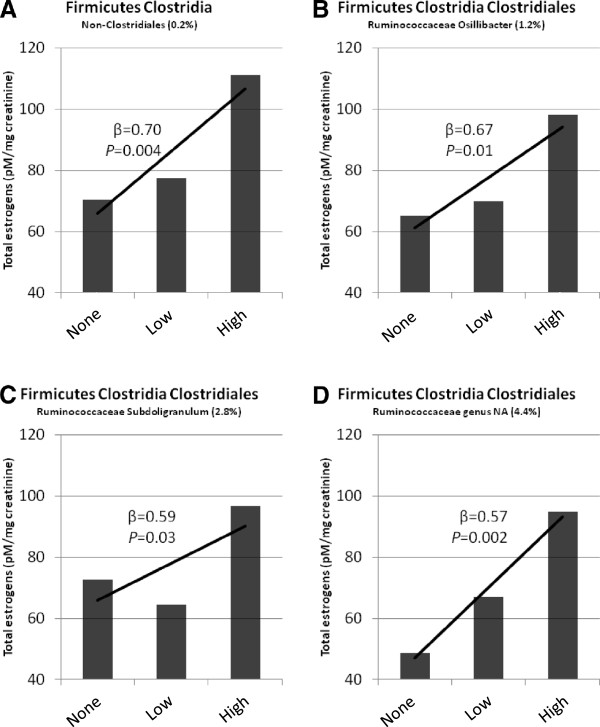
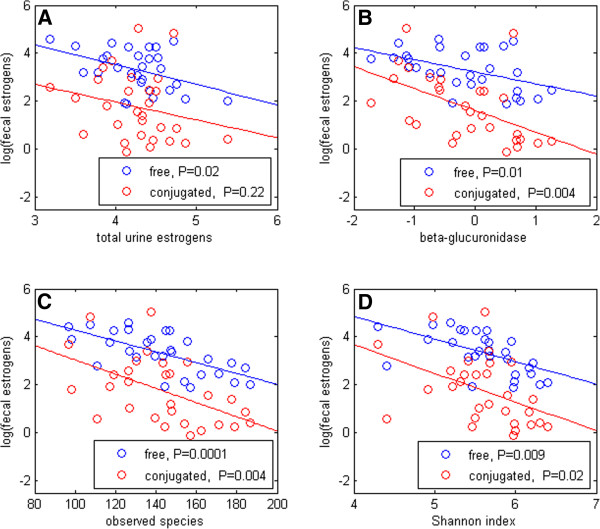
Background: High systemic estrogen levels contribute to breast cancer risk for postmenopausal women, whereas low levels contribute to osteoporosis risk. Except for obesity, determinants of non-ovarian systemic estrogen levels are undefined. We sought to identify members and functions of the intestinal microbial community associated with estrogen levels via enterohepatic recirculation. Methods: Fifty-one epidemiologists at the National Institutes of Health, including 25 men, 7 postmenopausal women, and 19 premenopausal women, provided urine and aliquots of feces, using methods proven to yield accurate and reproducible results. Estradiol, estrone, 13 estrogen metabolites (EM), and their sum (total estrogens) were quantified in urine and feces by liquid chromatography/tandem mass spectrometry. In feces, β-glucuronidase and β-glucosidase activities were determined by realtime kinetics, and microbiome diversity and taxonomy were estimated by pyrosequencing 16S rRNA amplicons. Pearson correlations were computed for each log e estrogen level, log e enzymatic activity level, and microbiome alpha diversity estimate. For the 55 taxa with mean relative abundance of at least 0.1%, ordinal levels were created [zero, low (below median of detected sequences), high] and compared to log e estrogens, β-glucuronidase and β-glucosidase enzymatic activity levels by linear regression. Significance was based on two-sided tests with α=0.05. Results: In men and postmenopausal women, levels of total urinary estrogens (as well as most individual EM) were very strongly and directly associated with all measures of fecal microbiome richness and alpha diversity (R≥0.50, P ≤0.003). These non-ovarian systemic estrogens also were strongly and significantly associated with fecal Clostridia taxa, including non- Clostridiales and three genera in the Ruminococcaceae family (R=0.57−0.70, P =0.03−0.002). Estrone, but not other EM, in urine correlated significantly with functional activity of fecal β-glucuronidase (R=0.36, P =0.04). In contrast, fecal β-glucuronidase correlated inversely with fecal total estrogens, both conjugated and deconjugated (R≤-0.47, P ≤0.01). Premenopausal female estrogen levels, which were collected across menstrual cycles and thus highly variable, were completely unrelated to fecal microbiome and enzyme parameters ( P ≥0.6). Conclusions: Intestinal microbial richness and functions, including but not limited to β-glucuronidase, influence levels of non-ovarian estrogens via enterohepatic circulation. Thus, the gut microbial community likely affects the risk for estrogen-related conditions in older adults. Understanding how Clostridia taxa relate to systemic estrogens may identify targets for interventions. Trial registration: Not applicable.
Overview
The claims and statistics of this paper haven’t been checked yet.
Free: it reads the open-access text and checks the first 5 claims that cite a source we can check. Create a free account to check every claim.
Integrity signals
Registry
Cites
Statistics
Figures
Verification
Claims the paper makes
The claims and statistics of this paper haven’t been checked yet.
Free: it reads the open-access text and checks the first 5 claims that cite a source we can check. Create a free account to check every claim.
Claims other papers make about this one
Each is checked against this paper’s own text: does it say what the citing paper says it does?
The check wasn’t confident either way, so it gives no verdict — never disputed.
In the citing paper
“However, the study reported a statistically significant association between levels of total estrogens and PD index in control women, which was not observed in women with breast cancer.”
From Association Between Sex Hormone Levels and Gut Microbiota Composition and Diversity—A Systematic Review (2022) · cites this paper as [21]
Experimental — accuracy not yet measuredIn the citing paper
“Two studies utilised the same cohort of participants and thus only the cohort from one of the two studies was included for these calculations (see Table 1).(21, 22)”
From Association Between Sex Hormone Levels and Gut Microbiota Composition and Diversity—A Systematic Review (2022) · cites this paper as [21]
In the citing paper
“In addition, the study by Goedert et al.(21) did not find an association between EM:parent estrogen and diversity in healthy women or women with breast cancer.”
From Association Between Sex Hormone Levels and Gut Microbiota Composition and Diversity—A Systematic Review (2022) · cites this paper as [21]
Self-check
Percentages, sums and reported differences re-computed from the paper’s own numbers.
The self-check needs the paper’s full text.
Citations
Cites
QIIME allows analysis of high-throughput community sequencing data
Caporaso, J. G., Kuczynski, J., Stombaugh, J., Bittinger, K., Bushman, F. D., Costello, E. K., Fierer, N., Peña, A. G., Goodrich, J. K., Gordon, J. I., et al. (2010) · Nature Methods · doi:10.1038/nmeth.f.303 · Cited by 34,887 · cited 7×
“Relative abundance of each OTU, alpha diversity, and beta diversity were computed using QIIME [25] for each DNA sample and then averaged on four replicates for each study participant.”
MethodInfluentialUCHIME improves sensitivity and speed of chimera detection
Edgar, R. C., Haas, B. J., Clemente, J. C., Quince, C., & Knight, R. (2011) · Bioinformatics · doi:10.1093/bioinformatics/btr381 · Cited by 15,114
A core gut microbiome in obese and lean twins
Turnbaugh, P. J., Hamady, M., Yatsunenko, T., Cantarel, B. L., Duncan, A., Ley, R. E., Sogin, M. L., Jones, W. J., Roe, B. A., Affourtit, J. P., et al. (2009) · Nature · doi:10.1038/nature07540 · Cited by 7,823 · cited 2×
“Because use of medications, including non-antibiotics [16], and elevated BMI [15,16] are inversely associated with gut microbiome alpha diversity, adjustment for these likely would have strengthened the direct associations that we found herein between alpha diversity and systemic estrogen levels.”
BackgroundThe Ribosomal Database Project: improved alignments and new tools for rRNA analysis
Cole, J. R., Wang, Q., Cardenas, E., Fish, J., Chai, B., Farris, R. J., Kulam-Syed-Mohideen, A. S., McGarrell, D. M., Marsh, T., Garrity, G. M., et al. (2009) · Nucleic Acids Research · doi:10.1093/nar/gkn879 · Cited by 4,762 · cited 2×
“Operational taxonomic units (OTUs) were defined using QIIME as sequences with at least 97% identity, and sequences were classified at the genus level using the Ribosomal Database Project (RDP) naïve Bayesian classifier [27].”
MethodThe NIH Human Microbiome Project
The NIH HMP Working Group, Peterson, J., Garges, S., Giovanni, M., McInnes, P., Wang, L., Schloss, J. A., Bonazzi, V., McEwen, J. E., Wetterstrand, K. A., et al. (2009) · Genome Research · doi:10.1101/gr.096651.109 · Cited by 2,066 · cited 2×
“Classification of operational taxonomic units Sequence read quality used the Institute of Genome Sciences bioinformatics pipeline that complies with standard operating procedures of the National Institutes of Health Human Microbiome Project [24].”
MethodHamady, M., Lozupone, C., & Knight, R. (2010) · The ISME Journal · doi:10.1038/ismej.2009.97 · Cited by 1,099
Alleviating Cancer Drug Toxicity by Inhibiting a Bacterial Enzyme
Wallace, B. D., Wang, H., Lane, K. T., Scott, J. E., Orans, J., Koo, J. S., Venkatesh, M., Jobin, C., Yeh, L.-A., Mani, S., et al. (2010) · Science · doi:10.1126/science.1191175 · Cited by 1,080 · cited 1×
“For example, inhibition of fecal microbial β-glucuronidases may be possible [37], although the relatively weak associations that we found between fecal β-glucuronidase activity and urinary estrogens suggest that enzyme inhibition would not markedly reduce systemic estrogen levels.”
BackgroundPlottel, C. S., & Blaser, M. J. (2011) · Cell Host & Microbe · doi:10.1016/j.chom.2011.10.003 · Cited by 743 · cited 4×
“As postulated and summarized by others [11], our results support the hypothesis that breast cancer risk in postmenopausal women and hip fracture risk in both postmenopausal women and elderly men is modulated by decades-long differences in systemic estrogens attributable to differences in the intestinal microbiota.”
BackgroundResultInfluentialObesity and Breast Cancer: The Estrogen Connection
Cleary, M. P., & Grossmann, M. E. (2009) · Endocrinology · doi:10.1210/en.2009-0070 · Cited by 504 · cited 2×
“Background Breast cancer risk is increased among postmenopausal women who have high levels of endogenous estrogens [1-3].”
BackgroundEstrogen excretion patterns and plasma levels in vegetarian and omnivorous women
Goldin, B. R., Adlercreutz, H., Gorbach, S. L., Warram, J. H., Dwyer, J. T., Swenson, L., & Woods, M. N. (1982) · New England Journal of Medicine · doi:10.1056/nejm198212163072502 · Cited by 474 · cited 1×
“A working hypothesis is that this enterohepatic recirculation affects the half-life and systemic levels of estrogens in men and postmenopausal women, and perhaps during the luteal phase in premenopausal women [9-11].”
Background
Research works printed but not linked: 1
- Raftogianis R, Creveling C, Weinshilboum R, Weisz J: Estrogen metabolism by conjugation. J Natl Cancer Inst Monogr. 2000, 113-124.
Cited by
Items 401–500 of 663
From gut to gamete: how the microbiome influences fertility and preconception health
Munyoki, S. K., Vukmer, N. A., Rios, J. M., Kallen, A. N., & Jašarević, E. (2025) · Microbiome · doi:10.1186/s40168-025-02230-7 · Cited by 11
“Specific bacterial species, such as Bacteroides thetaiotaomicron , Phocaeicola vulgatus , and Clostridium perfringens , produce β-glucuronidase enzymes that deconjugate estrogens in the gut, allowing for their reabsorption and subsequent return to the systemic circulation [154, 155].”
O impacto da disbiose na progressão do câncer de mama
de Castro, L. R. M., Silveira, G. F., Fraga, I. A. C., Santos, L. P. L., Ferreira, P. A., & Castro, A. M. D. (2021) · Revista Eletrônica Acervo Saúde · doi:10.25248/reas.e6645.2021 · Cited by 10
Actis, S., Cazzaniga, M., Bounous, V. E., D’Alonzo, M., Rosso, R., Accomasso, F., Minella, C., & Biglia, N. (2023) · Carcinogenesis · doi:10.1093/carcin/bgad071 · Cited by 11
Danger-associated metabolites trigger metaflammation: A crowbar in cardiometabolic diseases
Wang, A., Guan, B., Zhang, H., & Xu, H. (2023) · Pharmacological Research · doi:10.1016/j.phrs.2023.106983 · Cited by 11
Wang, Y., Sharma, A., Weber, K. M., Topper, E., Appleton, A. A., Gustafson, D., Clish, C. B., Kaplan, R. C., Burk, R. D., Qi, Q., et al. (2023) · Menopause The Journal of The North American Menopause Society · doi:10.1097/gme.0000000000002287 · Cited by 11
Tian, Y., Xie, Y., Hong, X., Guo, Z., & Yu, Q. (2024) · Heliyon · doi:10.1016/j.heliyon.2024.e29013 · Cited by 12
“Data from human volunteers indicated that the gut microbiota affects systemic estrogen levels [48].”
Characterization of the vaginal microbiota in Italian women with endometriosis: preliminary study
Sessa, R., Filardo, S., Viscardi, M. F., Brandolino, G., Muzii, L., Pietro, M. D., & Porpora, M. G. (2024) · Archives of Gynecology and Obstetrics · doi:10.1007/s00404-024-07631-x · Cited by 11
Role of a Whole Plant Foods Diet in Breast Cancer Prevention and Survival
Jiménez, M. D. C. F.-F. (2025) · Journal of the American Nutrition Association · doi:10.1080/27697061.2024.2442631 · Cited by 10
Dietary Fiber Is Inversely Associated With Depressive Symptoms in Premenopausal Women
Li, D., Tong, Y., & Li, Y. (2020) · Frontiers in Neuroscience · doi:10.3389/fnins.2020.00373 · Cited by 10
“, convert estrogens from inactive forms into their active forms by deconjugation (Flores et al., 2012; McIntosh et al., 2012; Kwa et al., 2016).”
BackgroundMicrobial Metabolites in Cancer Promotion or Prevention
Cox‐York, K. A., Stoecker, E., Hamm, A. K., & Weir, T. L. (2019) · Current cancer research · doi:10.1007/978-3-030-04155-7_15 · Cited by 10
Ovariectomy-Induced Dysbiosis May Have a Minor Effect on Bone in Mice
Kosaka, S., Nadatani, Y., Higashimori, A., Otani, K., Fujimoto, K., Nagata, Y., Ominami, M., Fukunaga, S., Hosomi, S., Kamata, N., et al. (2021) · Microorganisms · doi:10.3390/microorganisms9122563 · Cited by 10
“Additionally, it has been suggested that the gut microbiota regulate estrogens via enterohepatic recirculation [20].”
BackgroundGut microbiota: emerging biomarkers and potential therapeutics for premature ovarian failure
Liu, Z., Wang, M., Lei, Y., Xu, K., & Fan, L. (2025) · Frontiers in Microbiology · doi:10.3389/fmicb.2025.1606001 · Cited by 9
Abolhassani, A., Esmaili, H., Rahati, S., & Jafarnejad, S. (2025) · Probiotics and Antimicrobial Proteins · doi:10.1007/s12602-025-10741-w · Cited by 9
“A further study shows that an elevated probability of BC and higher levels of estrogen excretion are associated with decreased bacterial biodiversity in stool samples [75].”
Zhou, Y., Jiang, M., Shen, K., He, T., Zhou, S., Shao, A., Li, X., Wang, J., Wu, R., Singla, R. K., et al. (2025) · npj Biofilms and Microbiomes · doi:10.1038/s41522-025-00825-4 · Cited by 10
“It regulates systemic estrogen levels via β -glucuronidase (BGUS)-mediated reactivationofconjugated estrogens(e.g.,oestroneand estradiol),whichare inactivated in the liver and reabsorbed after microbial deconjugation in the gut(Fig.2) 56,58,59 .”
Maintaining the native gut microbiota of bharal (Pseudois nayaur) is crucial in ex situ conservation
Gao, H., Chi, X., Song, P., Gu, H., Xu, B., Cai, Z., Jiang, F., Li, B., & Zhang, T. (2024) · Frontiers in Microbiology · doi:10.3389/fmicb.2024.1357415 · Cited by 9
“We attribute these differences to variations in the physiological structure and sex steroid hormones such as estradiol and testosterone (Flores et al., 2012; Kaliannan et al., 2018).”
BackgroundEstrogens and the Schrödinger’s Cat in the Ovarian Tumor Microenvironment
Gjorgoska, M., & Rižner, T. L. (2021) · Cancers · doi:10.3390/cancers13195011 · Cited by 9
“The diversity of the microbiome affects estrogen metabolism and correlates positively with conjugation and urinary excretion of estrogen metabolites in healthy postmenopausal women [15,76].”
BackgroundChoi, J. Y., Shim, B., Park, Y., & Kang, Y. A. (2023) · The Korean Journal of Internal Medicine · doi:10.3904/kjim.2023.097 · Cited by 9
“Flores et al. [38] suggested that the gut microbial community likely affects the risk for estrogen-related conditions in the elderly and that intestinal microbial richness and functions influence systemic estrogen levels via enterohepatic circulation and are associated with fecal Clostridia taxa.”
Epigallocatechin‐3‐O‐gallate modulates the diversity of gut microbiota in ovariectomized rats
Zhang, B., Wang, J., Wei, Q., Liu, Y., Zhang, H., Chen, X., & Xu, K. (2020) · Food Science & Nutrition · doi:10.1002/fsn3.1419 · Cited by 9
“It is reported that the gut microbiota modulates estrogen homeostasis via enterohepatic circulation (Flores et al., 2012).”
BackgroundBernhardt, S., Dasari, P., Walsh, D., Townsend, A. R., Price, T. J., & Ingman, W. V. (2020) · Oncology Letters · doi:10.3892/ol.2020.11771 · Cited by 9
Kilpatrick, L. A., Church, A., Meriwether, D., Mahurkar‐Joshi, S., Li, V. W., Sohn, J., Reist, J., Labus, J. S., Dong, T. S., Jacobs, J. P., et al. (2025) · Biology of Sex Differences · doi:10.1186/s13293-025-00709-4 · Cited by 8
“Both sample preparation and LC–MS/MS methods followed previously published methods [38–40], with minor modifications.”
Microbiome dynamics in breast cancer: Mechanisms, therapeutic impacts and research gaps
Effiong, M. E., Ikeji, N. C., Bella-Omunagbe, M., Afolabi, I. S., & Chinedu, S. N. (2025) · Critical Reviews in Oncology/Hematology · doi:10.1016/j.critrevonc.2025.104879 · Cited by 8
JIANG, H.-B., Zhang, J.-Q., Liang, H., Sun, L.-Y., Deng, C., & Yang, S. (2026) · Frontiers in Microbiology · doi:10.3389/fmicb.2026.1729870 · Cited by 8
“(2012) reported that GM dysbiosis reduces the abundance of beneficial bacteria, thereby influencing the function of the estrobolome and β -glucuronidase activity, which disrupts estrogen metabolism and enterohepatic circulation, ultimately leading to decreased circulating estrogen levels.”
Gut microbiota and carcinogenesis in various human organs
Kostin, R. K., Malyugin, D. A., Геннадьевна, С. Л., & Kulaeva, E. D. (2023) · Journal of microbiology epidemiology immunobiology · doi:10.36233/0372-9311-310 · Cited by 8
The dynamic relationship of gut microbiota with sex hormones in systemic lupus erythematosus
Katrib, M., Haddad, R., Hamdan, Z., & Rida, M. A. (2023) · Reumatologia/Rheumatology · doi:10.5114/reum/163091 · Cited by 8
“Reumatologia 2023; 61/2 Moreover, there is a link between GM diversity and estrogen levels [20], with a strong association between alpha diversity and total estrogens in healthy men, but not in premenopausal women [18].”
BackgroundFernanda, T., Kelley, S. T., DeMasi, T., Giltvedt, K., Tsang, M., Nannini, K., Kern, M., & Hooshmand, S. (2025) · Journal of Medical Microbiology · doi:10.1099/jmm.0.001987 · Cited by 8
“For instance, Flores et al . showed that species richness and diversity might impact systemic oestrogen levels, with pronounced associations in men and postmenopausal women [14].”
The Role and Mechanism of Estrogen in Perimenopausal Depression
Liu, Y., Fu, X., Guan, B., Cui, R., & Yang, W. (2025) · Current Neuropharmacology · doi:10.2174/011570159x371863250327073835 · Cited by 10
“Although estrogen influences the gut microbiome, the microbiome also substantially affects estrogen levels [181, 188].”
Hu, B., He, X., Tan, J., Ma, Y., Wang, G., Liu, S., Li, M., Guo, Y., Sun, R., Sun, M., et al. (2022) · Frontiers in Veterinary Science · doi:10.3389/fvets.2022.957053 · Cited by 8
“Sex hormones are associated with the composition of human gut microbes (5).”
BackgroundEarly-life and concurrent predictors of the healthy adolescent microbiome in a cohort study
Laue, H. E., Willis, A. D., Wang, F., MacDougall, M. C., Xu, Y. Y., Karagas, M. R., Madan, J. C., Fleisch, A. F., Lanphear, B. P., Cecil, K. M., et al. (2025) · Genome Medicine · doi:10.1186/s13073-025-01481-1 · Cited by 7
“Participants had a median (IQR) Healthy Eating Index 2010 (HEI) score of 44 [38, 53], indicating poor adherence to the Dietary Guidelines for Americans (Additional file 1: Fig.”
Gut dysbiosis impacts estrogen levels in APP/PS1 transgenic female mice
Romero-Flores, I. S., García-Mena, J., & Perez‐Cruz, C. (2025) · Gut Microbes · doi:10.1080/19490976.2025.2599525 · Cited by 7
“16,40 Thus, we determined the levels of free and estradiol 17-β-D-glucuronide (conjugated estradiol) in the plasma, brain, and feces, as well as the activity of β-glucuronidase in fecal samples from all the animals.”
Fo, X., Pei, M., Liu, P.-J., Zhu, F., Zhang, Y., & Mu, X. (2024) · Scientific Reports · doi:10.1038/s41598-024-65869-6 · Cited by 7
Influence of Early Life Factors on the Breast Milk and Fecal Microbiota of Mother–Newborn Dyads
Cervantes-Monroy, E., Zarzoza-Mendoza, I. C., Canizales‐Quinteros, S., Morán‐Ramos, S., Villa-Morales, J., López-Contreras, B. E., Carmona-Sierra, F. V., & Rodríguez‐Cruz, M. (2024) · Microorganisms · doi:10.3390/microorganisms12112142 · Cited by 7
“…a higher abundance of Stenotrophomonas , an efficient estrogen degrader, and Pladulicolla , a genus belonging to the Ruminoccoccacea family, positively associated with systemic nonovarian estrogen, and related to the ability to metabolize steroids [91,92], in samples from women who had females.”
Chen, J., Li, H., Long, X., Tong, H., Xin, X., Zhang, H., Li, Y., Liu, P., He, X., & Chen, Z. (2025) · BMC Women s Health · doi:10.1186/s12905-025-03789-x · Cited by 7
Ingestive Behavior and Precision Nutrition: Part of the Puzzle
Biruete, A., Buobu, P. S., Considine, R. V., Hoxha, E. M., Eicher‐Miller, H. A., Kinzig, K. P., Panjwani, A. A., Running, C. A., Rutigliani, G., Savaiano, D. A., et al. (2025) · Advances in Nutrition · doi:10.1016/j.advnut.2025.100531 · Cited by 7
“Consistent with this, urinary estrogen metabolites have been observed to be associated with fecal unclassified Rumino-coccacae in two studies including Ruminococcus , Oscillibacter, and Subdoligranulum [381,382] .”
Hilakivi-Clarke, L. A., Verma, V., McDermott, M., Koak, P., & Andrade, F. D. O. (2022) · Frontiers in Microbiomes · doi:10.3389/frmbi.2022.1049688 · Cited by 7
“Results from studies done in men and postmenopausal women indicated that circulating estrogen levels, which originate from aromatization of androgens in various non-ovarian tissues and are relatively low, correlated with increased alpha-diversity (Flores et al., 2012).”
BackgroundKamal, A., & Talib, W. H. (2023) · Pharmacia · doi:10.3897/pharmacia.70.e111822 · Cited by 7
“It has been proven that a subgroup of bacteria inside the gastrointestinal system regulates estrogen metabolism and the balance of circulating and excreted hormone levels (Flores et al. 2012; Kwa et al. 2016).”
BackgroundKhan, K. N., de Ziegler, D., & Guo, S. (2024) · Human Reproduction · doi:10.1093/humrep/deae006 · Cited by 7
Discovering a new paradigm: Gut microbiota as a central modulator of sexual health
Marano, G., Anesini, M. B., Milintenda, M., Acanfora, M., d’Abate, C., Lisci, F. M., Pirona, I., Traversi, G., Pola, R., Gaetani, E., et al. (2025) · World Journal of Gastrointestinal Pathophysiology · doi:10.4291/wjgp.v16.i3.107823 · Cited by 7
“For example, decreased ratios of estrogen metabolites to parent compounds, along with reduced fecal microbiota diversity, have been linked to an increased risk of breast cancer in postmenopausal women[87].”
Contribution of the Gut and Vaginal Microbiomes to Gynecological Cancers
Jayshree, R. S., & Kumar, R. V. (2019) · Springer eBooks · doi:10.1007/978-981-13-3438-2_31 · Cited by 7
Liu, L., Zhuo, Y., Zhang, H., Li, J., Jiang, X., Han, X., Chao, J., Feng, B., Che, L., Xu, S., et al. (2023) · Journal of Nutrition · doi:10.1016/j.tjnut.2023.04.012 · Cited by 7
Clinicopathological Differences between Right and Left Colorectal Cancer by Sex
Ra, H., Jeong, S., Lee, H., Chung, J., Kim, K. O., Lee, W., Kim, J., Kwon, K. A., & Kim, J. H. (2024) · Journal of Clinical Medicine · doi:10.3390/jcm13102810 · Cited by 7
“As ovarian function declines, an increase in the incidence of RCC and the abundance of gut microbial β -glucuronidase has been observed [28,29].”
BackgroundAdvances in the Correlation between Intestinal Microbiota and Breast Cancer Development
Jiang, Y., Chen, X., & Fu, S. (2020) · Journal of Cancer Therapy · doi:10.4236/jct.2020.1112066 · Cited by 7
Zhang, C., Sui, C., Ma, X., Ma, C., Sun, X., Zhai, C., Cao, P., Zhang, Y., Cheng, J., Li, T., et al. (2024) · Frontiers in Pharmacology · doi:10.3389/fphar.2024.1402448 · Cited by 6
Olawale, F., Alake, S. E., Chandrashekar, R., Islam, P., Sutton, B., Chaffin, N., Ugo, C. H., Jin, J. B., Lightfoot, S. A., Debédat, J., et al. (2025) · Journal of Nutrition · doi:10.1016/j.tjnut.2025.07.008 · Cited by 6
“The onset of menopause in females begins with the menopausal transition, during which the decline in the female sex hormone estrogen emerges as a key factor driving these observed changes in the gut microbiota [8,9].”
In vitro modeling of the female gut microbiome: effects of sex hormones and psychotropic drugs
Leão, L. L., Esmail, G. A., Miri, S., Mottawea, W., & Hammami, R. (2025) · Microbiology Spectrum · doi:10.1128/spectrum.02350-25 · Cited by 6
“Additionally, the lack of association between estrogen and diversity in premenopausal women, as observed by Flores et al. (39), may help explain the variability in findings across studies (39).”
The gut microbiome modulates the susceptibility to traumatic stress in a sex‐dependent manner
Shen, D., Chang, L., Su, F., Huang, S., Xu, H., Si, Y., Wang, F., & Xue, Y.-X. (2024) · Journal of Neuroscience Research · doi:10.1002/jnr.25315 · Cited by 6
“A substantial body of research has evidenced a close relationship between gut microbiota components and sex hormones, suggesting bidirectional interactions (Flores et al., 2012; Kim et al., 2020; Shobeiri et al., 2022).”
BackgroundTrace antibiotic exposure affects murine gut microbiota and metabolism
Wang, C., Zhao, L., Xu, J. Z., Li, X., Liu, S., Du, J., Jia, X., Wang, Z., Ge, L., Yan, Z., et al. (2024) · The Science of The Total Environment · doi:10.1016/j.scitotenv.2024.177033 · Cited by 6
Zheng, L., Zhang, J., Yang, J., Wang, Y., Zhang, Y., Fang, K., Wu, J., & Zheng, M. (2025) · Nutrition Journal · doi:10.1186/s12937-025-01104-w · Cited by 6
“The exact mechanism for this is still unclear, but mounting evidence suggests that estrogens may affect the gut microbiota, which further or synergistically significantly improves many health outcomes, especially for metabolic diseases [38, 39].”
Analysis of Gut Microbiota and Metabolites in Diannan Small Ear Sows at Diestrus and Metestrus
Guan, X., Zhu, J., Sun, H., Zhao, X., Yang, M., Huang, Y., Pan, H., Zhao, Y., & Zhao, S. (2022) · Frontiers in Microbiology · doi:10.3389/fmicb.2022.826881 · Cited by 6
“…butyrate, and sucrose content at metestrus Diannan small ear sows’ feces was significantly higher than at diestrus, these metabolites are involved in carbohydrate digestion and absorption pathway, which is consistent with the previous study results (Sankar and Archunan, 2008; Flores et al., 2012).”
ResultMicrobial Diversity and Their Role in Human Health and Diseases
Bhat, M. H., Hajam, Y. A., Neelam, N., Kumar, R., & Diksha, D. (2023) · Springer eBooks · doi:10.1007/978-981-99-3126-2_1 · Cited by 7
Microbiome in gynecologic malignancies: a bibliometric analysis from 2012 to 2022
Lin, X., Zheng, W., Zhao, X., Zeng, M., Li, S., Peng, S., Song, T., & Sun, Y. (2024) · Translational Cancer Research · doi:10.21037/tcr-23-1769 · Cited by 7
“Gut microbiota that metabolizes estrogen (e.g., Escherichia coli , Bacteroides fragilis , and Streptococcus agalactiae ) secrete β -glucuronidase, enabling the deconjugation of estrogen and its reabsorption into the bloodstream (71,72).”
InfluentialZhang, M., Tang, M., Yan, K., Zhang, Y., Li, Y., Tang, J. T., Xu, S., Yan, X., Hu, J., & Wang, Y. (2024) · Journal of Fish Biology · doi:10.1111/jfb.15926 · Cited by 6
da Silva, T. C. A., de Oliveira, J. A., de Moraes, L. Â. G., Rosse, I. C., Goés‐Neto, A., Azevedo, V., & Guerra‐Sá, R. (2025) · PLoS ONE · doi:10.1371/journal.pone.0324712 · Cited by 5
“In addition to these changes, aging leads to an adaptive change in the intestinal Microbiota [44,45], which, added to the decline in estrogen, can lead to a lower diversity of species and also changes in hormone reabsorption by the bacterial stro-bile [39,40].”
Gut Microbial Composition on Dienogest Therapy in Patients with Endometriosis
Алексеевна, П. В., Denisov, P., Muravieva, V. V., Skorobogatiy, A., Zhigalova, K., Евгеньевна, Ч. Г., Sukhikh, G. T., & Priputnevich, T. V. (2025) · Microbiology Research · doi:10.3390/microbiolres16080169 · Cited by 6
Comprehensive Analysis of Vaginal and Gut Microbiome Alterations in Endometriosis Patients
Zhao, Y., Hu, X., Li, C., Huang, J., Guo, K., Pan, Q., & Yu, Z. P. (2025) · International Journal of Women s Health · doi:10.2147/ijwh.s561386 · Cited by 5
“17 Increased estrogen exposure can stimulate the growth of ectopic endometriotic foci and enhance their inflammatory activity.”
Sandeep, G., Pahari, S., Nayak, V., Gundamaraju, R., Mishra, P., & Misra, A. (2026) · Technology in Cancer Research & Treatment · doi:10.1177/15330338261424322 · Cited by 5
Sun, B., Hu, C., Li, J., Yang, Z., & Chen, L. (2024) · Environment International · doi:10.1016/j.envint.2024.109133 · Cited by 5
Sex- and Gender-related Issues of Gut Microbiota in Gastrointestinal Tract Diseases
Kim, N. (2021) · Korean Journal of Gastroenterology · doi:10.4166/kjg.2021.409 · Cited by 5
Arvelo, F. A., Sojo, F. J., & Cotte, C. (2021) · Investigación Clínica · doi:10.22209/ic.v62n4a09 · Cited by 5
Compositional Analysis of the Human Microbiome in Cancer Research
Morales, E., Chen, J., & Greathouse, K. L. (2019) · Methods in molecular biology · doi:10.1007/978-1-4939-9027-6_16 · Cited by 5
Colorectal Diseases and Gut Microbiome
Kim, N. (2024) · Springer eBooks · doi:10.1007/978-981-97-0130-8_6 · Cited by 4
Tao, M., Wu, T., Zhou, X., Li, F., Chen, Y., Ling, K., & Liang, Z. (2025) · BMC Microbiology · doi:10.1186/s12866-025-04190-2 · Cited by 4
“Although gut microbiota is influenced by estrogen, the gut microbiota itself can also significantly affect estrogen levels [47].”
Firmicutes in gut microbiota: hormonal influence on breast cancer in obese individuals
Chen, J., Zhang, Z., Ma, M., Huang, Q., Ling, Z., Liu, Y., Gao, Z., Wang, S., Zhu, Y., Zhang, L., et al. (2025) · Discover Oncology · doi:10.1007/s12672-025-03562-4 · Cited by 4
“Dysbiosis of the microbiota can also lead to obesity [77], abnormal production of sex hormone [78, 79], and also increased reabsorption of hormones in the gut by breaking their bonds with glucuronide [80].”
Spatial heterogeneity determines the gastrointestinal microbiome signatures in Pekin ducks
Zhao, H., Hu, Z., Ru, J., Wang, Z., Wei, J., Zhou, W., Hou, S., Zhang, Y., & Wang, X. (2025) · Poultry Science · doi:10.1016/j.psj.2025.105994 · Cited by 4
“…(Insenser et al., 2018; Liang et al., 2020; Zhou et al., 2020), while the microbiota may influence sex hormone levels conversely, for instance, affecting non-ovarian estrogen levels in men and postmenopausal women through the enterohepatic circulation (Dominianni et al., 2015; Flores et al., 2012).”
Gut-brain communication in menopause: insights into neuroendocrine and microbiome interactions
Cuozzo, M., O’Connor, C., Power, E. M., Gleeson, E. M., & O’Mahony, S. M. (2026) · Proceedings of The Nutrition Society · doi:10.1017/s0029665126102201 · Cited by 5
“These microbial enzymatic pathways decline during menopause due to changes in gut microbiota diversity and marked loss of sex hormones oestrogen and progesterone (41 – 43) .”
Chavan, M., Tabassum, S., Joshi, D. D., Boppana, K., Banu, N., Kayarkar, R., Chauhan, K., Yerrapragada, G., Elangovan, P., Shariff, M. N., et al. (2026) · Reproductive Medicine · doi:10.3390/reprodmed7010009 · Cited by 4
“Certain microbial taxa express β -glucuronidase enzymes capable of deconjugating estrogens, thereby modifying circulating sex-hormone levels and potentially influencing pubertal progression [20].”
Zhu, Y., & Lǐ, Y. (2026) · Frontiers in Endocrinology · doi:10.3389/fendo.2026.1815352 · Cited by 4
Evaluation of fecal microbiota of late gestation sows in relation to pelvic organ prolapse risk
Kiefer, Z. E., Koester, L. R., Studer, J. M., Schmitz‐Esser, S., & Ross, J. W. (2024) · Frontiers in Microbiology · doi:10.3389/fmicb.2024.1384583 · Cited by 4
Su, T., Liu, R., Long, Y., Quan, S., Lai, S., Wang, L., Si, J., & Chen, S. (2018) · Current Microbiology · doi:10.1007/s00284-017-1378-8 · Cited by 4
Thu, M. S., Pongpirul, K., Vongsaisuwon, M., Vinayanuwattikun, C., Banchuen, K., Ondee, T., Payungporn, S., Phutrakool, P., Nootim, P., Chariyavilaskul, P., et al. (2024) · BMC Complementary Medicine and Therapies · doi:10.1186/s12906-024-04426-0 · Cited by 4
“stimulation of different enzymes, such as hydroxysteroid dehydrogenase (12, 13).”
López‐García, E., Benítez‐Cabello, A., Larriva, A. P. A.-D., Gutierrez-Mariscal, F. M., Pérez-Martínez, P., Yubero‐Serrano, E. M., Arroyo‐López, F. N., & Garrido-Fernández, A. (2023) · Biomedicines · doi:10.3390/biomedicines11082134 · Cited by 4
“Hormone levels have been associated with specific compositions of gut bacterial microbiota, as evidenced by various studies conducted on healthy women and men [24,25,37].”
BackgroundMicrobiota and Estrogen Metabolism
Chen, J. H., Douglass, J., & Habibi, M. (2021) · Elsevier eBooks · doi:10.1016/b978-0-12-819265-8.00069-3 · Cited by 4
Vaginal Microbiome and Its Role in HPV Induced Cervical Carcinogenesis
Kúdela, E., Holubeková, V., Kolková, Z., Kašubová, I., Samec, M., Mazuráková, A., & Koklesová, L. (2023) · Advances in predictive, preventive and personalised medicine · doi:10.1007/978-3-031-19564-8_3 · Cited by 4
Caracterização da microbiota vaginal, intestinal e oral durante o período gestacional
Sparvoli, L. G. (2019) · Digital Library of Theses and Dissertations (Universidade de São Paulo) · doi:10.11606/d.9.2019.tde-31072019-114756 · Cited by 4
Beck, A. P., Li, H., Ervin, S. M., Redinbo, M. R., & Mani, S. (2019) · bioRxiv (Cold Spring Harbor Laboratory) · doi:10.1101/746602 · Cited by 4
“The evidence supporting this concept is demonstrated by human studies whereby the intestinal microbiome composition affects the levels of systemic estrogen[7-10].”
BackgroundGut microbiome and tumor immunotherapy
Vig, M., & Dubey, S. (2025) · International review of cytology · doi:10.1016/bs.ircmb.2024.12.014 · Cited by 3
Vaginal microbiota and HPV-associated cervical diseases: Established relationship
Мирзоевна, Н. Н., Аkopian, A. S., Priputnevich, T. V., Muravieva, V. V., & Pavlovich, S. V. (2025) · Meditsinskiy sovet = Medical Council · doi:10.21518/ms2025-084 · Cited by 3
Li, W.-F., Zhao, A., Chen, Y., Yin, Z.-Y., Mao, Y., Qu, Z., Zhang, S., & Huang, H. (2025) · Biology · doi:10.3390/biology14091209 · Cited by 3
“Specifically, in males and postmenopausal females, but not in premenopausal females, there is a significant association between total urinary estrogen levels and the richness and alpha diversity of intestinal microbiota [37–39].”
Jendraszak, M., & Andrusiewicz, M. (2025) · Critical Reviews in Clinical Laboratory Sciences · doi:10.1080/10408363.2025.2562894 · Cited by 3
Estrogenic Effect of Probiotics on Anxiety and Depression: A Narrative Review
Rosas-Sánchez, G. U., Germán-Ponciano, L. J., Rodríguez‐Landa, J. F., Bonilla‐Jaime, H., Limón‐Morales, O., García-Ríos, R. I., Muñoz‐Carrillo, J. L., Gutiérrez-Coronado, O., Villalobos‐Gutiérrez, P. T., & Soria-Fregozo, C. (2025) · International Journal of Molecular Sciences · doi:10.3390/ijms26209948 · Cited by 4
“Enzymes such as β -glucuronidase are involved in this mechanism, which facilitates the deconjuga-tion and reabsorption of estrogens, thereby increasing systemic estrogen activity [13,14].”
Unraveling the microbiome’s role in breast cancer progression and treatment response
Taki, A. G., Shareef, A., Arora, V., Oweis, R. J., Jyothi, S. R., Singh, U., Sahoo, S., Chauhan, A. S., Alimova, F., Sameer, H. N., et al. (2025) · Current Problems in Cancer · doi:10.1016/j.currproblcancer.2025.101264 · Cited by 3
Stapleton, H. M., Borges, D. D. S., Trindade, E. B. S. D. M., & Yuan, Q. (2026) · Biology of Sex Differences · doi:10.1186/s13293-026-00834-8 · Cited by 3
Fang, J., He, X., & Zhou, J. (2026) · Frontiers in Microbiology · doi:10.3389/fmicb.2026.1702700 · Cited by 3
“Postmenopausal GM restructuring features remodeled community composition, commonly characterized by diminished phylogenetic diversity and enrichment of taxa linked to metabolic dysregulation in several studies (Huang et al., 2017; Flores et al., 2012; Parida and Sharma, 2019; Kwa et al., 2016).”
Microbiota–metabolite axis in endometriosis: Pathogenic mechanisms and clinical implications
Li, M., Yue, A., Gu, L., Li, F., Ye, N., Xu, S., Gong, Z., Li, D., & Xu, P. (2026) · Journal of Biomedical Research · doi:10.7555/jbr.39.20250566 · Cited by 3
Shi, Y., & Ma, Q. (2026) · Frontiers in Immunology · doi:10.3389/fimmu.2026.1821502 · Cited by 3
Preetam, S., Bora, J., Dutta, S. P., Talukdar, N., Rustagi, S., Thapliyal, S., Malik, S., Choudhary, N., Kumar, D., & Kondaveeti, S. B. (2026) · Infectious Agents and Cancer · doi:10.1186/s13027-026-00767-2 · Cited by 3
“Intra-tumoral bacteria can induce DNA damage and suppress local immunity, thereby mimicking the effects observed in the gut [60–62].”
Alake, S. E., Ice, J., Robinson, K., Price, P., Hatter, B., Wozniak, K. L., Lin, D., Chowanadisai, W., Smith, B. J., & Lucas, E. A. (2024) · Physiological Reports · doi:10.14814/phy2.15914 · Cited by 3
“Bacterial β - glucuronidase activity in cecal content was assessed with slight modifications to previous protocols (Flores et al., 2012; Walsh et al., 2020).”
MethodSex differences in opioid response: a role for the gut microbiome?
Han, C., Manners, M. T., & Robinson, S. A. (2024) · Frontiers in Pharmacology · doi:10.3389/fphar.2024.1455416 · Cited by 3
“Post-menopausal women exhibit alterations in the diversity of β GLU producing bacteria (Flores et al., 2012; Silva et al., 2022; Hu et al., 2023), although an increased abundance of the Ruminococcus genus is positively correlated with estrogen metabolites among this population (Fuhrman et al.,…”
BackgroundWang, X., Gao, H., Zeng, Y., & Chen, J. (2024) · Frontiers in Medicine · doi:10.3389/fmed.2024.1450298 · Cited by 3
“Gut” to grips with the science of the microbiome – a symposium report
Finnegan, Y. E., Neill, H. R., Prpa, E. J., & Pot, B. (2024) · Gut Microbiome · doi:10.1017/gmb.2024.8 · Cited by 3
The Effect of Gender on the Intestinal Flora of Colorectal Cancer Under Different Stages
He, F., Huang, X., Wang, Z., Qin, M., Chen, C., Huang, Z., Wu, Y., Huang, Y., Tang, B., Long, C., et al. (2024) · Molecular Carcinogenesis · doi:10.1002/mc.23863 · Cited by 3
Gut microbiota-estrogen axis: Its influence on female health outcomes – A narrative review
Manar, A., & Padma, K. (2025) · Acta bio-medica dell'Ateneo parmense/Acta biomedica · doi:10.23750/abm.v96i1.15980 · Cited by 3
Rolle des Mikrobioms und der Darm-Gehirn-Interaktion bei Anorexia nervosa
Trinh, S., Herpertz‐Dahlmann, B., & Seitz, J. (2020) · Nervenheilkunde · doi:10.1055/a-1037-2119 · Cited by 3
“Des Weiteren wurde gezeigt, dass Östrogen die bakterielle Virulenz verringert und Wachstumsraten von bestimmten Bakterien in Kultur [29] erhöht und der Serumspiegel mit der bakteriellen Vielfalt korreliert [30].”
BackgroundROSENBERG, E. B. (2021) · The microbiomes of humans, animals, plants, and the environment · doi:10.1007/978-3-030-65317-0_3 · Cited by 3
Pavanello, A., Martins, I. P., Tófolo, L. P., Previate, C., Matiusso, C. C. I., Francisco, F. A., Prates, K. V., Alves, V. S., Almeida, D. L., Ribeiro, T. A., et al. (2022) · Archives of Medical Research · doi:10.1016/j.arcmed.2022.06.007 · Cited by 3
May the SSRIs play a role in the onset of peri- and post-menopausal cervical cancer?
Isacco, C. G., Prete, R. D., Distratis, P., Lazzaro, R., Nguyen, K. C. D., Inchingolo, F., Pham, V. H., Tran, C. T., Santacroce, L., & Balzanelli, M. G. (2024) · Discover Applied Sciences · doi:10.1007/s42452-024-06030-w · Cited by 3
Regulation of Host Chromatin by Bacterial Metabolites
Mani, S. (2016) · Elsevier eBooks · doi:10.1016/b978-0-12-802389-1.00023-x · Cited by 3
Schlamp, F., Zhang, D. Y., Beltrán, J. F., Cosgrove, E. J., Šimeček, P., Edwards, M. M., Goodrich, J. K., Ley, R. E., Pack, A. I., Churchill, G. A., et al. (2019) · bioRxiv (Cold Spring Harbor Laboratory) · doi:10.1101/722744 · Cited by 3
“Indeed, the gut microbiome can influence estrogen metabolism through enterohepatic circulation [Adlercreutz et al. 1984, Flores et al. 2012], and thus could be implicated in breast cancer by interacting with estrogen metabolism [Minelli et al. 1990, Goedert et al. 2015].”
BackgroundParent, M., Bone, C., Huber, L., & Squires, E. J. (2025) · Biomolecules · doi:10.3390/biom15091257 · Cited by 2
“Gut microbes can act to deconjugate the compounds, returning them to their active form that can be reabsorbed into the systemic circulation and transported back to the liver via the hepatic portal vein [6].”
Mammary Gland Microbiota in Benign Breast Diseases
Ukraincev, N. I., Kashutina, M. I., Касаткина, Л. И., Бахтиерович, А. А., & Zhernov, Y. V. (2025) · International Journal of Molecular Sciences · doi:10.3390/ijms26209951 · Cited by 2
“The collection of microorganisms influencing systemic levels of estrogen and its metabolites constitutes the concept of the estrobolome [68,69].”
Taipale, R. S., McClung, H. L., Giersch, G. E. W., Cutsem, J. V., Wright, H., O’Leary, T. J., & Greeves, J. P. (2026) · Sports Medicine - Open · doi:10.1186/s40798-025-00963-1 · Cited by 2
“Gut microbiome has been shown to affect systemic estrogens concentrations [149] and gut microbial diversity positively correlated with metabolites of estrogens [150].”
Metadata
- Authors
- Flores, R., Shi, J., Fuhrman, B., Xu, X., Veenstra, T. D., Gail, M. H., Gajer, P., Ravel, J., & Goedert, J. J.
- Affiliations
- National Cancer Institute (US)
- Science Applications International Corporation (United States) (US)
- University of Maryland, Baltimore (US)
- Corresponding author
- Goedert, James J
- ORCID
- Venue
- Journal of Translational Medicine
- Published
- 2012-12
- Volume
- 10
- Issue
- 1
- Pages
- 253-253
- ISSN
- 1479-5876 (ISSN-L)
- PMC
- PMC3552825
- OpenAlex
- W2157570303
- Cited by
- 615
- References
- 43
- Citations by year
- 2026: 57 · 2025: 79 · 2024: 89 · 2023: 80 · 2022: 68 · 2021: 78 · 2020: 61 · 2019: 34 · 2018: 19 · 2017: 22 · 2016: 12 · 2015: 8 · 2014: 5 · 2013: 2
- FWCI
- 1.93
- Type
- journal article
- Language
- en
- Open access
- gold
- doi.org
- Licence
- cc-by
- Locations
- Journal of Translational Medicine (publishedVersion, cc-by)
- Europe PMC (PubMed Central) (publishedVersion, cc-by)
- PubMed Central (publishedVersion, cc-by)
- PubMed (publishedVersion)
- DOAJ (DOAJ: Directory of Open Access Journals) (submittedVersion, cc-by-sa)
- Funders
- RTI International
- National Institutes of Health
- NIH Clinical Center
- Topics
- Life Sciences › Biochemistry, Genetics and Molecular Biology › Molecular Biology › Gut microbiota and health
- Life Sciences › Biochemistry, Genetics and Molecular Biology › Endocrinology › Estrogen and related hormone effects
- Health Sciences › Nursing › Nutrition and Dietetics › Phytoestrogen effects and research
- Keywords
- fecal microbiota, estrogen metabolites, enterohepatic circulation, beta-glucuronidase, β-glucosidase, Clostridia, Ruminococcaceae, estrone, estradiol, urinary estrogens, fecal estrogen, microbiome diversity, postmenopausal women, breast cancer risk, osteoporosis
- MeSH terms
- Adolescent, Adult, Aged, Bacteria, Cross-Sectional Studies, Estrogens, Feces, Female, Humans, Male, Menopause, Middle Aged, Genetic Variation, Biodiversity, Metagenome, Young Adult
About these checks
Registry, retraction, Cites and statistics results are computed, not judged, with one exception: a printed reference that no index lists is read once by a model before it counts as a citation error. Claims are extracted by a model and kept only when their quote appears verbatim in the text; each cited source is then checked, with a model’s help, for whether it says what the claim relies on. Those verdicts can be wrong — read the claim’s quote and the cited source before relying on one.
Statistics and arithmetic are recomputed, not judged.
Confidence bands are shown only for fields calibrated on our annotated test set. None is calibrated yet, so no band is shown.
What counts as a claim ›How we measure confidence ›How we check this ›
Are you an author, or do you see a problem with this page? Request a review
Data sources
Bibliographic data: Semantic Scholar, OpenAlex, Crossref.
Contains information from the Semantic Scholar Academic Graph Datasets, made available under the ODC Attribution License (ODC-BY 1.0).
Semantic Scholar’s data is described in: Kinney, R., et al. (2023). The Semantic Scholar Open Data Platform. arXiv:2301.10140.
