

Exercise-induced muscle damage is reduced in resistance-trained males by branched chain amino acids: a randomized, double-blind, placebo controlled study
Open accessThe DOI matches its Crossref record; 41 of the 41 references it cites were found in a registry or an index.
Abstract
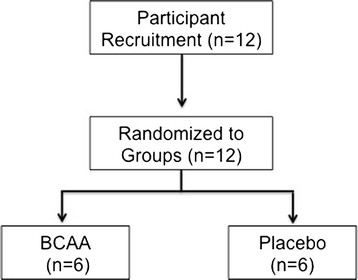
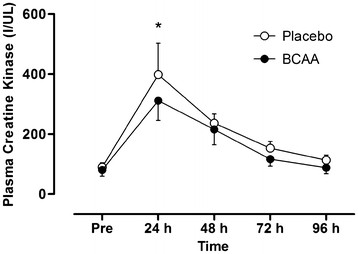
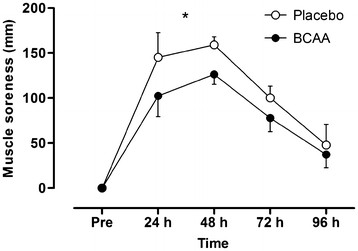
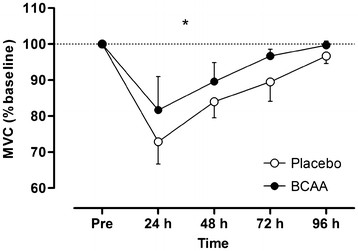
BACKGROUND: It is well documented that exercise-induced muscle damage (EIMD) decreases muscle function and causes soreness and discomfort. Branched-chain amino acid (BCAA) supplementation has been shown to increase protein synthesis and decrease muscle protein breakdown, however, the effects of BCAAs on recovery from damaging resistance training are unclear. Therefore, the aim of this study was to examine the effects of a BCAA supplementation on markers of muscle damage elicited via a sport specific bout of damaging exercise in trained volunteers. METHODS: Twelve males (mean ± SD age, 23 ± 2 y; stature, 178.3 ± 3.6 cm and body mass, 79.6 ± 8.4 kg) were randomly assigned to a supplement (n = 6) or placebo (n = 6) group. The damaging exercise consisted of 100 consecutive drop-jumps. Creatine kinase (CK), maximal voluntary contraction (MVC), muscle soreness (DOMS), vertical jump (VJ), thigh circumference (TC) and calf circumference (CC) were measured as markers of muscle damage. All variables were measured immediately before the damaging exercise and at 24, 48, 72 and 96 h post-exercise. RESULTS: A significant time effect was seen for all variables. There were significant group effects showing a reduction in CK efflux and muscle soreness in the BCAA group compared to the placebo (P<0.05). Furthermore, the recovery of MVC was greater in the BCAA group (P<0.05). The VJ, TC and CC were not different between groups. CONCLUSION: The present study has shown that BCAA administered before and following damaging resistance exercise reduces indices of muscle damage and accelerates recovery in resistance-trained males. It seems likely that BCAA provided greater bioavailablity of substrate to improve protein synthesis and thereby the extent of secondary muscle damage associated with strenuous resistance exercise. CLINICAL TRIAL REGISTRATION NUMBER: NCT01529281.
Overview
The claims and statistics of this paper haven’t been checked yet.
Free: it reads the open-access text and checks the first 5 claims that cite a source we can check. Create a free account to check every claim.
Integrity signals
Registry
Cites
Statistics
Figures
Verification
Claims the paper makes
The claims and statistics of this paper haven’t been checked yet.
Free: it reads the open-access text and checks the first 5 claims that cite a source we can check. Create a free account to check every claim.
Claims other papers make about this one
Each is checked against this paper’s own text: does it say what the citing paper says it does?
The source backs part of the claim, not all of it — or backs it for a different population, condition or comparison.
In the citing paper
“Some researchers have found that BCAA supplementation post-exercise attenuated the decline in myofibrillar protein synthesis, which is vital in preserving lean mass during weight loss [8, 26].”
From In a single-blind, matched group design: Branched-chain amino acid supplementation and resistance training maintains lean body mass during a caloric restricted diet (2016) · cites this paper as [8]
Experimental — accuracy not yet measuredThe cited source says what the claim attributes to it.
In the citing paper
“more recent studies support their ability to favorably promote responses to damaging eccentric muscle contractions [249, 250].”
From ISSN exercise & sports nutrition review update: research & recommendations (2018) · cites this paper as [250]
The cited source says what the claim attributes to it.
In the citing paper
“In this respect, multiple studies have investigated and offered support for BCAA’s ability to promote recovery, mitigate soreness and attenuate losses in force production [249, 250, 537, 538].”
From ISSN exercise & sports nutrition review update: research & recommendations (2018) · cites this paper as [250]
In the citing paper
“However, maintaining an energy deficient diet during a period of intense or unaccustomed resistance training may lead to significant losses in lean mass and decrease work output, thus hindering athletic performance, as well as increasing the risk for acute illness and training-related injury [5, 7, 8].”
In the citing paper
“Resistance training, provision of adequate amounts of dietary protein, and essential amino acids have all been shown to increase muscle protein synthesis in healthy adults [8]”
Self-check
Percentages, sums and reported differences re-computed from the paper’s own numbers.
The self-check needs the paper’s full text.
Citations
Cites
Proske, U., & Morgan, D. L. (2001) · The Journal of Physiology · doi:10.1111/j.1469-7793.2001.00333.x · Cited by 1,399 · cited 1×
“Although the mechanism surrounding muscle soreness following a damaging bout of exercise is not well understood, it seems likely to be related to inflammation, particularly to the connective tissue elements [35] that sensitise nociceptors in muscle and hence increase sensations of pain [36].”
BackgroundJournal of Sports Science and Medicine
Stewart, M. (2014) · Wilderness & Environmental Medicine · doi:10.1016/j.wem.2014.06.007 · Cited by 1,227
McHugh, M. P. (2003) · Scandinavian Journal of Medicine & Science in Sports · doi:10.1034/j.1600-0838.2003.02477.x · Cited by 628 · cited 2×
“The greater conditioning of these participants has almost certainly led to a repeated bout effect [31], whereby, a conditioning bout of exercise (in this case prior training) leads to a decrease in damage indices on subsequent bouts [4,31,32].”
BackgroundThe Prevention and Treatment of Exercise-Induced Muscle Damage
Howatson, G., & van Someren, K. A. (2008) · Sports Medicine · doi:10.2165/00007256-200838060-00004 · Cited by 530 · cited 6×
“The RBE refers to a protective effect or attenuation of damage indices when the exercise is repeated [4,31,32].”
BackgroundInfluentialSelf-citationHigbie, E. J., Cureton, K. J., Warren, G. L., & Prior, B. M. (1996) · Journal of Applied Physiology · doi:10.1152/jappl.1996.81.5.2173 · Cited by 481 · cited 1×
“Although many resistance exercises require both shortening and lengthening contractions, it has been well documented that exercise biased by lengthening contractions are a more powerful stimulus for neuromuscular adaptation compared to shortening contractions [1-3].”
BackgroundAdaptive responses to muscle lengthening and shortening in humans
Hortobagyi, T., Hill, J. P., Houmard, J. A., Fraser, D. D., Lambert, N. J., & Israel, R. G. (1996) · Journal of Applied Physiology · doi:10.1152/jappl.1996.80.3.765 · Cited by 440 · cited 1×
“Although many resistance exercises require both shortening and lengthening contractions, it has been well documented that exercise biased by lengthening contractions are a more powerful stimulus for neuromuscular adaptation compared to shortening contractions [1-3].”
BackgroundHowatson, G., McHugh, M. P., Hill, J. A., Brouner, J., Jewell, A. P., Van Someren, K. A., Shave, R. E., & Howatson, S. A. (2010) · Scandinavian Journal of Medicine & Science in Sports · doi:10.1111/j.1600-0838.2009.01005.x · Cited by 394 · cited 3×
“Although we attempted to control this by asking participants to record food intake during the loading phase and replicate this following the damaging exercise, an approach that has been previous used [11,21], there was no specific control between groups.”
BackgroundResultSelf-citationCold water immersion and recovery from strenuous exercise: a meta-analysis
Leeder, J., Gissane, C., van Someren, K., Gregson, W., & Howatson, G. (2012) · British Journal of Sports Medicine · doi:10.1136/bjsports-2011-090061 · Cited by 321 · cited 1×
“In an attempt to reduce the negative effects of EIMD a number of interventions have been explored; these include cold water immersions [7], antioxidant supplementation [8,9], ergogenic aids [5], non-steroidal anti-inflammatory drugs [10] and nutritional interventions [11].”
BackgroundSelf-citationHow long does the protective effect on eccentric exercise-induced muscle damage last?
NOSAKA, K., SAKAMOTO, K., NEWTON, M., & SACCO, P. (2001) · Medicine & Science in Sports & Exercise · doi:10.1097/00005768-200109000-00011 · Cited by 312 · cited 1×
“Although up to 11 weeks was given between damaging bouts, the RBE has been previously shown to accelerate the recovery of muscle function for between 6 and 9 months following the initial damaging bout [38].”
BackgroundNutraceutical Effects of Branched-Chain Amino Acids on Skeletal Muscle
Shimomura, Y., Yamamoto, Y., Bajotto, G., Sato, J., Murakami, T., Shimomura, N., Kobayashi, H., & Mawatari, K. (2006) · The Journal of Nutrition · doi:10.1093/jn/136.2.529s · Cited by 288 · cited 2×
“Historically, previous literature [21,34] examining”
Result
Cited by
Items 101–200 of 237
Tsunekawa, K., Matsumoto, R., Ushiki, K., Martha, L., Shoho, Y., Yanagawa, Y., Ishigaki, H., Yoshida, A., Araki, O., Nakajima, K., et al. (2021) · BMC Sports Science Medicine and Rehabilitation · doi:10.1186/s13102-020-00229-1 · Cited by 13
Acute Impacts of Different Types of Exercise on Circulating α-Klotho Protein Levels
Iturriaga, T., Yvert, T. P., Sanchez-Lorente, I. M., Díez-Vega, I., Fernández-Elías, V. E., Sánchez, L. M. M., Domínguez-Balmaseda, D., Larrosa, M., Pérez, M., & Santiago, C. (2021) · Frontiers in Physiology · doi:10.3389/fphys.2021.716473 · Cited by 15
Vayghan, H. J., Moludi, J., Saleh‐Ghadimi, S., Enamzadeh, E., Seyed-Mohammadzad, M., & Alizadeh, M. (2019) · American Journal of Lifestyle Medicine · doi:10.1177/1559827619874044 · Cited by 13
Martin-Arrowsmith, P. W., Lov, J., Dai, J., Morais, J. A., & Churchward‐Venne, T. A. (2020) · Frontiers in Nutrition · doi:10.3389/fnut.2020.607299 · Cited by 14
Hillman, A. R., Gerchman, A., & O’Hora, E. (2021) · Journal of Dietary Supplements · doi:10.1080/19390211.2021.1875101 · Cited by 15
“However, we did not find any difference in limb circumferences, indicating no significant edema occurred in our participants, which is a common finding within the literature (Goodall and Howatson 2008; Howatson et al. 2012; Heiss et al. 2018).”
ResultArroyo-Cerezo, A., Cerrillo, I., Ortega, Á., & Fernández‐Pachón, M. (2021) · The Journal of Sports Medicine and Physical Fitness · doi:10.23736/s0022-4707.21.11843-2 · Cited by 16
Khemtong, C., Tessitore, A., Jaime, S. J., Gobbi, G., Jensen, J., Yang, A., Kuo, C., & Condello, G. (2022) · Nutrients · doi:10.3390/nu14204331 · Cited by 12
Mor, A., Acar, K., Yılmaz, A. K., & Arslanoğlu, E. (2021) · Journal of Men s Health · doi:10.31083/jomh.2021.058 · Cited by 14
“Considering these studies performed by various supplementation methods, it is evident that BCAA and creatine consumptions were directly associated with health and sportive performance indicators such as body composition [7, 20], muscle strength and damage [9, 14], DOMS [10], high-intensity sprint performance [11], ana…”
BackgroundMethodMarcon, M., & Zanella, P. B. (2022) · Science & Sports · doi:10.1016/j.scispo.2021.05.006 · Cited by 15
Ayubi, N., Kusnanik, N. W., Herawati, L., Muhammad, H. N., Komaini, A., Naharudin, M. N., Kusuma, D. A., Kartiko, D. C., Siantoro, G., & Firmansyah, A. (2023) · Retos · doi:10.47197/retos.v49.98671 · Cited by 11
Chrismas, B. C. R., Taylor, L. K., Smith, A., Pemberton, P. W., Siegler, J. C., & Midgley, A. W. (2017) · Measurement in Physical Education and Exercise Science · doi:10.1080/1091367x.2017.1412317 · Cited by 16
“The Reflotron was used due to ecological validity as several studies employ this measurement tool (Coelho et al., 2011; Howatson, Goodall, & Van Someren, 2009; Howatson et al., 2012; McLellan, Lovell, & Gass, 2010; Owen et al., 2015).”
BackgroundMethodInfluentialKoonthongkaew, J., Toyokawa, Y., Ohashi, M., Large, C. R. L., Dunham, M. J., & Takagi, H. (2020) · Applied Microbiology and Biotechnology · doi:10.1007/s00253-020-10800-y · Cited by 11
Dorrell, H. F., & Gee, T. (2016) · Sports Nutrition and Therapy · doi:10.4172/2473-6449.1000115 · Cited by 12
To, C. Y., Freeman, M., & Winkle, L. J. V. (2020) · International Journal of Environmental Research and Public Health · doi:10.3390/ijerph17072445 · Cited by 11
“Excess consumption of BCAAs reduces muscle soreness from exercise [1–3], counters fatigue during exercise [4], and alleviates exercise-induced skeletal muscle damage [1,3,5].”
BackgroundDeveloping food products for consumers concerned with physical activity, sports, and fitness
Harrison, L., & Smith, R. (2016) · Elsevier eBooks · doi:10.1016/b978-0-08-100329-9.00011-6 · Cited by 11
Lim, I. (2020) · Physical Activity and Nutrition · doi:10.20463/pan.2020.0025 · Cited by 11
García-Vicencio, S., Ratel, S., Gryson, C., Masgrau, A., Piponnier, E., Brasy, J., Ruyet, P. L., Bucas, M., Barachon, N., Visseaux, V., et al. (2018) · Frontiers in Physiology · doi:10.3389/fphys.2018.01312 · Cited by 11
“Although some studies demonstrated reduced CK after a damaging exercise in groups supplemented with proteins (Jackman et al., 2010; Howatson et al., 2012), most of the reports available in the literature show no difference between placebo-and protein-fed groups after exercise (Eddens et al., 2017;…”
ResultClifford, T. (2019) · Journal of Aging and Physical Activity · doi:10.1123/japa.2018-0351 · Cited by 11
Estoche, J. M., Jacinto, J. L., Roveratti, M. C., Gabardo, J. M., Buzzachera, C. F., de Oliveira, E. P., Ribeiro, A. S., da Silva, R. A., & Aguiar, A. F. (2019) · Amino Acids · doi:10.1007/s00726-019-02776-5 · Cited by 11
Robbins, R. N., O’Connor, J. C., CORTES, T. M., & Serra, M. C. (2025) · Dietetics · doi:10.3390/dietetics4030032 · Cited by 10
“Several studies have explored BCAA supplementation for its potential to enhance exercise performance, reduce muscle soreness, and accelerate post-exercise recovery [22,28,29].”
Chrismas, B. C. R., Taylor, L. K., Siegler, J. C., & Midgley, A. W. (2016) · Research in Sports Medicine · doi:10.1080/15438627.2016.1258641 · Cited by 11
“exercise programmes characterized by eccentric contractions may be performed by individuals (Gee et al., 2011; Howatson et al., 2012) in close proximity to laboratory testing (i.”
BackgroundCalleja-González, J., Martín‐Martínez, J. P., Adsuar, J. C., Gómez-Pomares, S., Carlos‐Vivas, J., & Pérez‐Gómez, J. (2020) · Nutrición Hospitalaria · doi:10.20960/nh.03032 · Cited by 9
“Another study administrated a higher amount of BCAAs, 20 g per day, with no positive effect on vertical jump performance in the next four days (21).”
BackgroundResultInfluentialShenoy, S., Dhawan, M., & Sandhu, J. S. (2017) · Journal of Sports Science · doi:10.17265/2332-7839/2017.05.005 · Cited by 10
“This protocol has been previously shown to cause significant elevations in muscle damage indices [16, 21, 25].”
BackgroundMethodResultInfluentialWaldron, M., Ralph, C., Jeffries, O., Tallent, J., Theis, N., & Patterson, S. D. (2018) · Amino Acids · doi:10.1007/s00726-018-2565-z · Cited by 9
“Whilst there are putative roles for all BCAAs in muscle protein synthesis (Blomstrand et al., 2006), leucine is known to confer the most potent anabolic signalling effects, whereas isoleucine and valine have negligible contributions (Atherton et al., 2010).”
BackgroundMethodResultInfluentialSelf-citationDu, H., Liu, S., Li, M., Zhao, K., Jiang, W., You, T., Wang, Z., Zou, D., Shu, J., & Liu, C. (2025) · Nutrients · doi:10.3390/nu17233702 · Cited by 8
“Short-term supplementation cannot affect the effect of vertical jump; one study has found that one-week high-dose protocols (20 g · day − 1 ) have failed to improve subsequent jump performance [83].”
Tsuchiya, Y., Yanagimoto, K., Sunagawa, N., Ueda, H., Tsuji, K., & Ochi, E. (2022) · Journal of the International Society of Sports Nutrition · doi:10.1080/15502783.2022.2117994 · Cited by 8
“Many studies have reported that BCAA supplementation attenuated increased serum CK after performing ECCs [7,16,23,31].”
BackgroundTringali, C., Scala, L., Silvestri, I., Vitale, J. A., Scurati, R., Michielon, G., Alberti, G., & Venerando, B. (2013) · Journal of Sports Sciences · doi:10.1080/02640414.2013.830190 · Cited by 8
“The supplementation with nutrients able to reduce pro-inflammatory cytokine expression and accelerate the recovery process, as monounsaturated fatty acids, omega-3 polyunsaturated fatty acids, antioxidants and branched-chain aminoacids (BCAAs) (Grimble, 1998; Hao et al., 2010; Howatson et al., 2012), could be consider…”
BackgroundJauhari, M., Sulaeman, A., Riyadi, H., & Ekayant, I. (2013) · Pakistan Journal of Nutrition · doi:10.3923/pjn.2013.924.928 · Cited by 12
Schön, C., Reule, C., Knaub, K., Micka, A., Wilhelm, M. G., Alt, W., & Menzel, D. (2021) · Sports Medicine - Open · doi:10.1186/s40798-021-00317-7 · Cited by 7
Tsunekawa, K., Matsumoto, R., Ushiki, K., Martha, L., Shoho, Y., Yanagawa, Y., Ishigaki, H., Yoshida, A., Araki, O., Nakajima, K., et al. (2020) · Research Square · doi:10.21203/rs.3.rs-23408/v1 · Cited by 7
Manso, M., Ibarruri, J., de Marañón, Í. M., & Cebrían, M. (2024) · Innovative Food Science & Emerging Technologies · doi:10.1016/j.ifset.2024.103906 · Cited by 6
Bensaid, S., Fabre, C., Rajaei, A. Y., Claeyssen, C., Daussin, F., & Cieniewski‐Bernard, C. (2025) · American Journal of Physiology-Cell Physiology · doi:10.1152/ajpcell.00851.2024 · Cited by 7
Save, R. (2013) · Medical Science Monitor · doi:10.12659/msm.889278 · Cited by 6
“Treatment with vitamin D in asymptomatic controls has been shown to reduce free radicals in the blood as measured by TBARS [59].”
MethodNegro, M., Segreto, V., Barbero, M., Cescon, C., Castelli, L., Calanni, L., & D’Antona, G. (2018) · Frontiers in Physiology · doi:10.3389/fphys.2018.01140 · Cited by 6
Boyd, G. W., Drew, M., Ward, S., Baird, M., Connaboy, C., & Graham, S. M. (2018) · Applied Physiology, Nutrition, and Metabolism · doi:10.1139/apnm-2018-0449 · Cited by 6
“The branched chain amino acids; L-leucine, L-isoleucine and L-valine are popular supplements reputed to stimulate MPS (Jackman et al. 2017), preserve lean muscle mass during weight loss strategies (Dudgeon et al. 2016), and to augment recovery after resistance training (Howatson et al. 2012).”
BackgroundLin, Y., Chiu, M.-S., & Chang, C. (2017) · Science & Sports · doi:10.1016/j.scispo.2017.06.004 · Cited by 6
A review of the effects of nutritional supplements on muscle strength and endurance in athletes
Ihsan, F., & Nasrulloh, A. (2023) · doi:10.56984/8zg0df3b8 · Cited by 5
Is There an Optimal Time for Warfighters to Supplement with Protein?
Atherton, P. J. (2013) · Journal of Nutrition · doi:10.3945/jn.113.175984 · Cited by 7
Jin, S. W., Lee, G. H., Kim, J. Y., Kim, C. Y., Choo, Y. M., Cho, W., Choi, J. H., Han, E. H., Hwang, Y. P., & Jeong, H. G. (2021) · Applied Sciences · doi:10.3390/app12010017 · Cited by 6
Cheshier, B. C., & Jacobson, B. H. (2021) · AUC KINANTHROPOLOGICA · doi:10.14712/23366052.2021.4 · Cited by 6
Effects of kinesiology taping on delayed onset muscle soreness: a randomized controlled pilot study
Hazar, Z., & Kafa, N. (2016) · Journal of Exercise Therapy and Rehabilitation · Cited by 5
Eccentric Exercise and Muscle Damage: An Introductory Guide
Paschalis, V., Margaritelis, N. V., Chatzinikolaou, P. N., Theodorou, A. A., & Nikolaidis, M. G. (2026) · Journal of Functional Morphology and Kinesiology · doi:10.3390/jfmk11020139 · Cited by 4
Hasegawa, Y., Mekata, Y., Sunami, A., Yokoyama, Y., Yoshizaki, T., Hagiwara, M., Yanagisawa, K., Usuda, M., Masuda, Y., & Kawano, Y. (2014) · DOAJ (DOAJ: Directory of Open Access Journals) · Cited by 5
Wang, S. (2024) · Brazilian Archives of Biology and Technology · doi:10.1590/1678-4324-2024220879 · Cited by 4
“The main results of the paper are based on only three studies [23,37,38], and further research with larger sample sizes is needed to obtain more statistically robust results.”
Immune Function, Nutrition, and Exercise
Aoi, W., Naito, Y., & Yoshikawa, T. (2013) · Elsevier eBooks · doi:10.1016/b978-0-12-396454-0.00008-4 · Cited by 4
The Effect of Hot Water Extract of Tilapia on Exercise Capacity in Mice
Tsai, H., Yang, J.-F., Chen, H.-H., You, F.-N., Zhao, Y.-J., Lin, Y., Hsu, J., Chang, C., & Chen, Y. (2022) · Applied Sciences · doi:10.3390/app12052601 · Cited by 5
Serum Amino Acid Profile Changes After Repetitive Breath-Hold Dives: A Preliminary Study
Cialoni, D., Brizzolari, A., Sponsiello, N., Lancellotti, V., Bosco, G., Marroni, A., & Barassi, A. (2022) · Sports Medicine - Open · doi:10.1186/s40798-022-00474-3 · Cited by 4
“BCAA may protect from protein degradation and muscle enzyme release [19] reducing skeletal muscle damage during prolonged physical effort [20], mitigating central fatigue [21] and promoting recovery of muscle function [22].”
BackgroundBEHAVIOR OF CORTISOL, CK AND LACTATE IN A SESSION OF VARIABLE RESISTANCE
Ojeda, Á. H., Ríos, L. J. C., Barrilao, R. G., & Ojeda, X. H. (2018) · Revista Brasileira de Medicina do Esporte · doi:10.1590/1517-869220182404150764 · Cited by 4
Suriya, K., & Jomduang, S. (2019) · ETP International Journal of Food Engineering · doi:10.18178/ijfe.5.4.256-261 · Cited by 3
“BCAA could support muscle building and exercised muscle damage reduction [14], [15].”
BackgroundTrehan, A., Verma, M. K., Maheshwari, S., Khanna, T., Kumari, P., & Singh, H. (2020) · Journal of Food Processing & Technology · doi:10.35248/2157-7110.20.11.820 · Cited by 6
“Resistance exercise frequently leads to skeletal muscle injury and generates inflammatory markers [33].”
BackgroundBarenie, M. J., Escalera, A., Carter, S. J., Grange, H. E., Paris, H. L. R., Krinsky, D., Sogard, A. S., Schlader, Z. J., Fly, A. D., & Mickleborough, T. D. (2023) · Journal of Dietary Supplements · doi:10.1080/19390211.2023.2282470 · Cited by 4
“When using a non-energetic placebo against protein supplementation, benefits are found on muscle recovery post exercise (Cockburn et al. 2010; Howatson et al. 2012).”
MethodQuantifying Muscle Recovery: A Scoping Review of Existing Markers and Measurement Approaches
Kumar, P., Rathee, R., Nara, K., Sirotariya, A. K., & Sangwan, N. (2025) · Polish Journal of Sport and Tourism · doi:10.2478/pjst-2025-0007 · Cited by 3
Teixeira‐Lemos, E., de Oliveira, J. B. F., Teixeira-Lemos, L. P., Lima, M. J., & Pinheiro, J. P. (2016) · Elsevier eBooks · doi:10.1016/b978-0-12-804305-9.00017-8 · Cited by 3
Ojeda, Á. H., Ríos, L. J. C., Barrilao, R. G., Ríos, I. J. C., & Serrano, P. C. (2016) · Journal of Physical Therapy Science · doi:10.1589/jpts.28.1487 · Cited by 3
Vasenina, E., Fukuda, D. H., Livingston, J. J., Antonio, B. B., Herda, A. A., Mangum, L. C., & Stout, J. R. (2025) · The Journal of Strength and Conditioning Research · doi:10.1519/jsc.0000000000005319 · Cited by 2
Ortiz-Rodríguez, B., Legleu, C. E. C., Fierro, L. G. D. L., Candia-Sosa, K. F., Luján, R. C., & Longoria, R. J. N. (2019) · Retos · doi:10.47197/retos.v0i35.61908 · Cited by 9
“…antes Jackman et al. 2010 Aminoácidos 24 hombres 12 X 20 EXC rodilla 3.5 g leucina, 2.1 g isoleucina y 1.7 g valina Función muscular, CK y Mb 30 min antes Howatson et al., 2012 Aminoácidos 12 hombres 100 saltos 10 g/día FM, Circ Extremidad y CK 12 días antes Stock et al. 2010 Leucina 3 mujeres…”
BackgroundInfluentialLee, C. (2021) · Scholarship@Western (Western University) · Cited by 2
Tambalis, K. D., & Arnaoutis, G. (2022) · Journal of Sports Science and Nutrition · doi:10.33545/27077012.2022.v3.i1a.57 · Cited by 3
The Effect of Branched Chain Amino Acids and Vitamin E on Muscle Damage
Rostami, A., Damirchi, A., & Ebrahimi, M. (2022) · Complementary Medicine Journal · doi:10.32598/cmja.12.2.1143.1 · Cited by 2
BCAAs as Ergogenic Aids: Exploring Their Impact on Exercise-Induced Muscle Damage
Bryan, R., & Myles, A. (2024) · Studies in Sports Science and Physical Education · doi:10.56397/ssspe.2024.03.01 · Cited by 2
Thar, P. P., Likitwattanasade, T., & Srikuea, R. (2025) · Sports Medicine and Health Science · doi:10.1016/j.smhs.2025.02.005 · Cited by 2
Pereira, M. (2012) · LA Referencia (Red Federada de Repositorios Institucionales de Publicaciones Científicas) · Cited by 5
Tsunekawa, K., Matsumoto, R., Ushiki, K., Martha, L., Shoho, Y., Yanagawa, Y., Ishigaki, H., Yoshida, A., Araki, O., Nakajima, K., et al. (2020) · Research Square · doi:10.21203/rs.3.rs-20621/v1 · Cited by 2
Kephart, W. C., Wachs, T. D., Thompson, R. M., Mobley, C. B., Fox, C. D., McDonald, J. R., Ferguson, B. S., Young, K. C., Nie, B., Martin, J. S., et al. (2018) · Amino Acids · doi:10.1007/s00726-018-2632-5 · Cited by 2
Osmond, A. (2017) · California State University ScholarWorks (system-wide DSpace) · Cited by 3
Morgans, R., SCHOLTEN, J. S., Rhodes, D., Ceylan, H. İ., Ryan, B., Oliveira, R. F. S., & Clifford, T. (2024) · The Journal of Sports Medicine and Physical Fitness · doi:10.23736/s0022-4707.24.15832-x · Cited by 2
Attenuation of Delayed Onset Muscle Soreness with Acute Consumption of Essential Amino Acids
Szych, K., Gomez, A., & Barlow, M. A. (2024) · Journal of Exercise and Nutrition · doi:10.53520/jen2024.103172 · Cited by 1
Korchowiec, M., Bialic, Ł., Mądrzak, L., Krzyżanowska, K., Chrzanowski, W., Kwiecińska, J., Hryniuk, W., Sitkiewicz, J., Toczyłowska, A., & Muras, M. (2025) · International Journal of Innovative Technologies in Social Science · doi:10.31435/ijitss.3(47).2025.3442 · Cited by 1
Inflammatory Response to Different Types of Exercise
Παπανικολάου, Κ., Draganidis, D., Fatouros, I. G., & Jamurtas, A. Z. (2025) · Springer eBooks · doi:10.1007/978-3-031-44270-4_9 · Cited by 1
Noh, K.-W., & Park, S. (2025) · Physical Activity and Nutrition · doi:10.20463/pan.2025.0026 · Cited by 1
“Howatson et al. (2012) demonstrated that 7 days of BCAA supplementation (20 g/day) before and after RT significantly reduced markers of muscle damage (creatine kinase), attenuated delayed-onset muscle soreness (DOMS), and preserved maximal voluntary contraction in RT men compared with placebo 26 .”
Rogers, L. M., Korzepa, M., Belfield, A., Quinlan, J. I., Wallis, G. A., & Breen, L. (2026) · Journal of Nutrition · doi:10.1016/j.tjnut.2025.101321 · Cited by 1
Li, T., Xu, W., Chen, J., Kan, Z., Sui, X., Zhao, Z., & Wang, Q. (2026) · Metabolites · doi:10.3390/metabo16020094 · Cited by 1
“This finding is similar to the results of Howatson et al. [36], who reported that daily supplementation with 20 g of LEU-rich BCAA in facilitated recovery of lower limb strength in the participants, although there was no significant change in vertical jump height.”
Rossi, C., Lafontant, K., Vasenina, E., Stout, J. R., & Fukuda, D. H. (2026) · Applied Physiology, Nutrition, and Metabolism · doi:10.1139/apnm-2026-0022 · Cited by 1
Effects of a Nighttime Multi-Ingredient Supplement on Recovery from a Damaging Exercise Protocol
Hyde, P. N., Fairman, C. M., Coker, N. A., Kiely, K., Yarbrough, M. B., Purser, C., & Kendall, K. L. (2016) · International journal of exercise science · doi:10.70252/bflc6485 · Cited by 2
“The seven day “loading” phase was utilized as a result of previous research demonstrating the efficacy of BCAA containing supplements after only a week of ingestion (11).”
BackgroundMethodResultInfluentialProteins and Amino Acids and Physical Exercise
Patterson, S. D., Waldron, M., & Jeffries, O. (2018) · Elsevier eBooks · doi:10.1016/b978-0-12-810422-4.00013-0 · Cited by 2
Effects of stretching before intense exercise training on hematologic and cellular injury indices
Lotfi, N., Mohamadi, S., & Mirzaei, M. (2018) · Pedagogics psychology medical-biological problems of physical training and sports · doi:10.15561/18189172.2018.0604 · Cited by 1
“After exercise, those athletes who have more CK in their circulation, experience greater muscle pain [9, 12].”
BackgroundFőbb aminosavak szerepe a sporttáplálkozásban
Fritz, P., Ignits, D., & Katona, S. (2018) · Recreation · doi:10.21486/recreation.2018.8.1.1 · Cited by 2
Walters, J. (2019) · Digital Commons - East Tennessee State University (East Tennessee State University) · Cited by 1
Hill, H. (2018) · Open University of Cape Town (University of Cape Town) · Cited by 1
Cárdenas, L. H. (2019) · Cited by 1
Srinivasan, R. (2023) · American Journal of Sports Science · doi:10.11648/j.ajss.20231101.12 · Cited by 1
Chapman, S., Roberts, J., Roberts, A. J., Ogden, H. B., Izard, R. M., Smith, L., Chichger, H., Struszczak, L., & Rawcliffe, A. J. (2023) · Frontiers in Nutrition · doi:10.3389/fnut.2023.1264042 · Cited by 2
Kazeminasab, F., Soltani, S., Alahyari, E., Behzadnejad, N., & Pourvaghar, M. J. (2024) · Sālnāmah va āmār. · doi:10.61186/jbums.31.4.261 · Cited by 1
ACUTE Glutamine Supplementation Does not Affect Muscle Damage Profile after Resistance Training
Ramallo, B. T., Charro, M. A., Foschini, D., Prestes, J., Pithon‐Curi, T. C., Evangelista, A. L., Lopes, C. R., & Galatti, L. R. (2013) · International Journal of Sports Science · Cited by 1
Disruption of Branched-Chain Amino Acid Catabolism Impairs Rat Myoblast Survival and Differentiation
Dhanani, Z. (2016) · YorkSpace (York University) · Cited by 2
Exercise on cytokine responses in males and females: Effect of leucine, HMB and BCAAPreprint
Brown, A. D., Γραμμένου, Μ., Tee, C. C. L., Chong, M. C., & Stewart, C. E. (2023) · bioRxiv (Cold Spring Harbor Laboratory) · doi:10.1101/2023.07.11.548561 · Cited by 1
“All three supplements are reported to reduce indices of muscle damage (Wilson et al. 2009; Howatson et al. 2012; Kirby et al. 2012) and promote muscle adaptation (Panton et al. 2000; Karlsson et al. 2004; Koopman et al. 2005).”
BackgroundMethodInfluentialImpact of Positive and Negative Health Behaviors on Female Mice and/or their Offspring
Platt, K. M. (2014) · UKnowledge (University of Kentucky)
Dano muscular no voleibol: estratégias de prevenção e recuperação
de Lima, A. R., de Lima, L. C. R., Assumpção, C. D. O., & Evangelista, A. L. (2014) · RBPFEX - Revista Brasileira de Prescrição e Fisiologia do Exercício · Cited by 1
Gee, T., & Deniel, S. (2014) · Lincoln Repository (University of Lincoln)
The effects of exercise-induced muscle damage on endurance performance
Burt, D. (2013) · ChesterRep (University of Chester)
Building muscle : a translation of training adaptation
Boman, N. (2016)
Efeito da suplementação de aminoácidos de cadeia ramificada no desempenho físico humano
Pereira, M. (2016) · LA Referencia (Red Federada de Repositorios Institucionales de Publicaciones Científicas) · Cited by 1
VanDusseldorp, T. A. (2016) · UNM’s Digital Repository (University of New Mexico) · Cited by 1
The Influence of Cold-Water Immersion on Limb Blood Flow and Thermoregulatory Responses to Exercise
Mawhinney, C. (2016) · Liverpool John Moores University · doi:10.24377/ljmu.t.00004709
Watanabe, S. C. (2017) · Digital Library of Theses and Dissertations (Universidade de São Paulo) · doi:10.11606/d.89.2017.tde-02062017-144307 · Cited by 2
Estratégias nutricionais para minimizar o dano muscular induzido pelo exercício de força
Barbosa, W. P. (2018) · Digital Library of Theses and Dissertations (Universidade de São Paulo) · doi:10.11606/d.100.2018.tde-27042018-212606
Perez-Turpin, J. A., Gomis-Gomis, M. J., Elvira-Aranda, C., & Pérez-Suárez, P. (2018) · Journal of Human Sport and Exercise · doi:10.14198/jhse.2018.132.19
“Another study kept in mind was the one by Howatson et al. (2012) when we determined that amino acids provided before physical exercise diminish the muscular damage and accelerate recovering in endurance exercises.”
ResultHone, M. (2018) · Dublin City University Open Access Institutional Repository (Dublin City University)
Whiton, T. K. (2019) · Digital Commons - East Tennessee State University (East Tennessee State University)
Metadata
- Authors
- Howatson, G., Hoad, M., Goodall, S., Tallent, J., Bell, P. G., & French, D. N.
- Affiliations
- North-West University (ZA)
- St Mary's University Twickenham London (GB)
- Northumbria University (GB)
- Corresponding author
- Howatson, Glyn
- Venue
- Journal of the International Society of Sports Nutrition
- Publisher
- Informa UK Limited
- Published
- 2012-02-06
- Volume
- 9
- Issue
- 1
- Pages
- 20-20
- ISSN
- 1550-2783 (ISSN-L)
- PMC
- PMC3395580
- OpenAlex
- W2150419981
- Cited by
- 220
- References
- 41
- Citations by year
- 2026: 9 · 2025: 12 · 2024: 12 · 2023: 14 · 2022: 19 · 2021: 22 · 2020: 19 · 2019: 14 · 2018: 25 · 2017: 18 · 2016: 21 · 2015: 14 · 2014: 9 · 2013: 11 · 2012: 1
- FWCI
- 11.85
- Type
- journal article
- Language
- en
- Open access
- gold
- doi.org
- Licence
- Locations
- Journal of the International Society of Sports Nutrition (publishedVersion, cc-by)
- Europe PMC (PubMed Central) (publishedVersion, cc-by)
- PubMed Central (publishedVersion, cc-by)
- PubMed (publishedVersion)
- Northumbria Research Link (Northumbria University) (acceptedVersion)
- DOAJ (DOAJ: Directory of Open Access Journals) (submittedVersion, cc-by-sa)
- Nottingham Trent University's Institutional Repository (Nottingham Trent Repository) (submittedVersion)
- Topics
- Health Sciences › Medicine › Physiology (medical) › Exercise and Physiological Responses
- Health Sciences › Nursing › Nutrition and Dietetics › Muscle metabolism and nutrition
- Health Sciences › Medicine › Orthopedics and Sports Medicine › Sports Performance and Training
- Keywords
- exercise-induced muscle damage, branched-chain amino acids, amino acid supplementation, resistance training, creatine kinase, delayed onset muscle soreness, muscle recovery, maximal voluntary contraction, drop jump, resistance-trained men
About these checks
Registry, retraction, Cites and statistics results are computed, not judged, with one exception: a printed reference that no index lists is read once by a model before it counts as a citation error. Claims are extracted by a model and kept only when their quote appears verbatim in the text; each cited source is then checked, with a model’s help, for whether it says what the claim relies on. Those verdicts can be wrong — read the claim’s quote and the cited source before relying on one.
Statistics and arithmetic are recomputed, not judged.
Confidence bands are shown only for fields calibrated on our annotated test set. None is calibrated yet, so no band is shown.
What counts as a claim ›How we measure confidence ›How we check this ›
Are you an author, or do you see a problem with this page? Request a review
Data sources
Bibliographic data: Semantic Scholar, OpenAlex, Crossref.
Contains information from the Semantic Scholar Academic Graph Datasets, made available under the ODC Attribution License (ODC-BY 1.0).
Semantic Scholar’s data is described in: Kinney, R., et al. (2023). The Semantic Scholar Open Data Platform. arXiv:2301.10140.
