

Exercise-induced muscle damage is reduced in resistance-trained males by branched chain amino acids: a randomized, double-blind, placebo controlled study
Open accessThe DOI matches its Crossref record; 41 of the 41 references it cites were found in a registry or an index.
Abstract
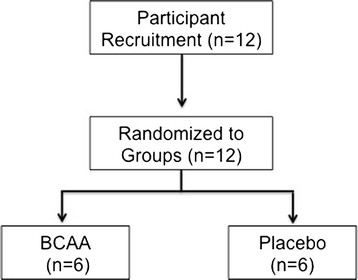
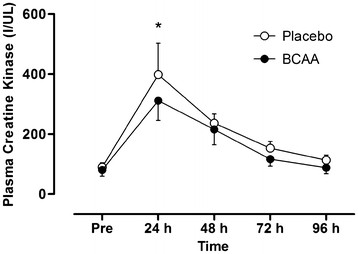
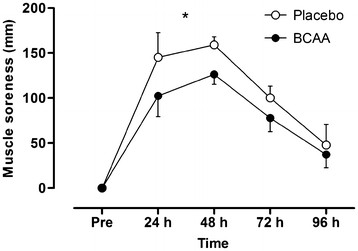
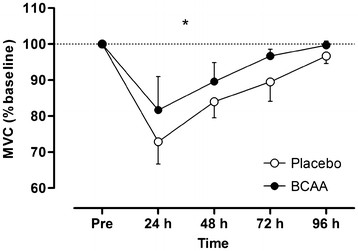
BACKGROUND: It is well documented that exercise-induced muscle damage (EIMD) decreases muscle function and causes soreness and discomfort. Branched-chain amino acid (BCAA) supplementation has been shown to increase protein synthesis and decrease muscle protein breakdown, however, the effects of BCAAs on recovery from damaging resistance training are unclear. Therefore, the aim of this study was to examine the effects of a BCAA supplementation on markers of muscle damage elicited via a sport specific bout of damaging exercise in trained volunteers. METHODS: Twelve males (mean ± SD age, 23 ± 2 y; stature, 178.3 ± 3.6 cm and body mass, 79.6 ± 8.4 kg) were randomly assigned to a supplement (n = 6) or placebo (n = 6) group. The damaging exercise consisted of 100 consecutive drop-jumps. Creatine kinase (CK), maximal voluntary contraction (MVC), muscle soreness (DOMS), vertical jump (VJ), thigh circumference (TC) and calf circumference (CC) were measured as markers of muscle damage. All variables were measured immediately before the damaging exercise and at 24, 48, 72 and 96 h post-exercise. RESULTS: A significant time effect was seen for all variables. There were significant group effects showing a reduction in CK efflux and muscle soreness in the BCAA group compared to the placebo (P<0.05). Furthermore, the recovery of MVC was greater in the BCAA group (P<0.05). The VJ, TC and CC were not different between groups. CONCLUSION: The present study has shown that BCAA administered before and following damaging resistance exercise reduces indices of muscle damage and accelerates recovery in resistance-trained males. It seems likely that BCAA provided greater bioavailablity of substrate to improve protein synthesis and thereby the extent of secondary muscle damage associated with strenuous resistance exercise. CLINICAL TRIAL REGISTRATION NUMBER: NCT01529281.
Overview
The claims and statistics of this paper haven’t been checked yet.
Free: it reads the open-access text and checks the first 5 claims that cite a source we can check. Create a free account to check every claim.
Integrity signals
Registry
Cites
Statistics
Figures
Verification
Claims the paper makes
The claims and statistics of this paper haven’t been checked yet.
Free: it reads the open-access text and checks the first 5 claims that cite a source we can check. Create a free account to check every claim.
Claims other papers make about this one
Each is checked against this paper’s own text: does it say what the citing paper says it does?
The source backs part of the claim, not all of it — or backs it for a different population, condition or comparison.
In the citing paper
“Some researchers have found that BCAA supplementation post-exercise attenuated the decline in myofibrillar protein synthesis, which is vital in preserving lean mass during weight loss [8, 26].”
From In a single-blind, matched group design: Branched-chain amino acid supplementation and resistance training maintains lean body mass during a caloric restricted diet (2016) · cites this paper as [8]
Experimental — accuracy not yet measuredThe cited source says what the claim attributes to it.
In the citing paper
“more recent studies support their ability to favorably promote responses to damaging eccentric muscle contractions [249, 250].”
From ISSN exercise & sports nutrition review update: research & recommendations (2018) · cites this paper as [250]
The cited source says what the claim attributes to it.
In the citing paper
“In this respect, multiple studies have investigated and offered support for BCAA’s ability to promote recovery, mitigate soreness and attenuate losses in force production [249, 250, 537, 538].”
From ISSN exercise & sports nutrition review update: research & recommendations (2018) · cites this paper as [250]
In the citing paper
“However, maintaining an energy deficient diet during a period of intense or unaccustomed resistance training may lead to significant losses in lean mass and decrease work output, thus hindering athletic performance, as well as increasing the risk for acute illness and training-related injury [5, 7, 8].”
In the citing paper
“Resistance training, provision of adequate amounts of dietary protein, and essential amino acids have all been shown to increase muscle protein synthesis in healthy adults [8]”
Self-check
Percentages, sums and reported differences re-computed from the paper’s own numbers.
The self-check needs the paper’s full text.
Citations
Cites
Proske, U., & Morgan, D. L. (2001) · The Journal of Physiology · doi:10.1111/j.1469-7793.2001.00333.x · Cited by 1,399 · cited 1×
“Although the mechanism surrounding muscle soreness following a damaging bout of exercise is not well understood, it seems likely to be related to inflammation, particularly to the connective tissue elements [35] that sensitise nociceptors in muscle and hence increase sensations of pain [36].”
BackgroundJournal of Sports Science and Medicine
Stewart, M. (2014) · Wilderness & Environmental Medicine · doi:10.1016/j.wem.2014.06.007 · Cited by 1,227
McHugh, M. P. (2003) · Scandinavian Journal of Medicine & Science in Sports · doi:10.1034/j.1600-0838.2003.02477.x · Cited by 628 · cited 2×
“The greater conditioning of these participants has almost certainly led to a repeated bout effect [31], whereby, a conditioning bout of exercise (in this case prior training) leads to a decrease in damage indices on subsequent bouts [4,31,32].”
BackgroundThe Prevention and Treatment of Exercise-Induced Muscle Damage
Howatson, G., & van Someren, K. A. (2008) · Sports Medicine · doi:10.2165/00007256-200838060-00004 · Cited by 530 · cited 6×
“The RBE refers to a protective effect or attenuation of damage indices when the exercise is repeated [4,31,32].”
BackgroundInfluentialSelf-citationHigbie, E. J., Cureton, K. J., Warren, G. L., & Prior, B. M. (1996) · Journal of Applied Physiology · doi:10.1152/jappl.1996.81.5.2173 · Cited by 481 · cited 1×
“Although many resistance exercises require both shortening and lengthening contractions, it has been well documented that exercise biased by lengthening contractions are a more powerful stimulus for neuromuscular adaptation compared to shortening contractions [1-3].”
BackgroundAdaptive responses to muscle lengthening and shortening in humans
Hortobagyi, T., Hill, J. P., Houmard, J. A., Fraser, D. D., Lambert, N. J., & Israel, R. G. (1996) · Journal of Applied Physiology · doi:10.1152/jappl.1996.80.3.765 · Cited by 440 · cited 1×
“Although many resistance exercises require both shortening and lengthening contractions, it has been well documented that exercise biased by lengthening contractions are a more powerful stimulus for neuromuscular adaptation compared to shortening contractions [1-3].”
BackgroundHowatson, G., McHugh, M. P., Hill, J. A., Brouner, J., Jewell, A. P., Van Someren, K. A., Shave, R. E., & Howatson, S. A. (2010) · Scandinavian Journal of Medicine & Science in Sports · doi:10.1111/j.1600-0838.2009.01005.x · Cited by 394 · cited 3×
“Although we attempted to control this by asking participants to record food intake during the loading phase and replicate this following the damaging exercise, an approach that has been previous used [11,21], there was no specific control between groups.”
BackgroundResultSelf-citationCold water immersion and recovery from strenuous exercise: a meta-analysis
Leeder, J., Gissane, C., van Someren, K., Gregson, W., & Howatson, G. (2012) · British Journal of Sports Medicine · doi:10.1136/bjsports-2011-090061 · Cited by 321 · cited 1×
“In an attempt to reduce the negative effects of EIMD a number of interventions have been explored; these include cold water immersions [7], antioxidant supplementation [8,9], ergogenic aids [5], non-steroidal anti-inflammatory drugs [10] and nutritional interventions [11].”
BackgroundSelf-citationHow long does the protective effect on eccentric exercise-induced muscle damage last?
NOSAKA, K., SAKAMOTO, K., NEWTON, M., & SACCO, P. (2001) · Medicine & Science in Sports & Exercise · doi:10.1097/00005768-200109000-00011 · Cited by 312 · cited 1×
“Although up to 11 weeks was given between damaging bouts, the RBE has been previously shown to accelerate the recovery of muscle function for between 6 and 9 months following the initial damaging bout [38].”
BackgroundNutraceutical Effects of Branched-Chain Amino Acids on Skeletal Muscle
Shimomura, Y., Yamamoto, Y., Bajotto, G., Sato, J., Murakami, T., Shimomura, N., Kobayashi, H., & Mawatari, K. (2006) · The Journal of Nutrition · doi:10.1093/jn/136.2.529s · Cited by 288 · cited 2×
“Historically, previous literature [21,34] examining”
Result
Cited by
ISSN exercise & sports nutrition review update: research & recommendations
Kerksick, C. M., Wilborn, C. D., Roberts, M. D., Smith-Ryan, A., Kleiner, S. M., Jäger, R., Collins, R., Cooke, M., Davis, J. N., Galvan, E., et al. (2018) · Journal of the International Society of Sports Nutrition · doi:10.1186/s12970-018-0242-y · Cited by 945
Ahnan‐Winarno, A. D., Cordeiro, L., Winarno, F. G., Gibbons, J., & Xiao, H. (2021) · Comprehensive Reviews in Food Science and Food Safety · doi:10.1111/1541-4337.12710 · Cited by 269
International Society of Sports Nutrition Position Stand: beta-hydroxy-beta-methylbutyrate (HMB)
Wilson, J. M., Fitschen, P. J., Campbell, B., Wilson, G. J., Zanchi, N., Taylor, L., Wilborn, C., Kalman, D. S., Stout, J. R., Hoffman, J. R., et al. (2013) · Journal of the International Society of Sports Nutrition · doi:10.1186/1550-2783-10-6 · Cited by 196
Functional food relevance of whey protein: A review of recent findings and scopes ahead
Patel, S. (2015) · Journal of Functional Foods · doi:10.1016/j.jff.2015.09.040 · Cited by 169
Heaton, L. E., Davis, J. K., Rawson, E. S., Nuccio, R. P., Witard, O. C., Stein, K. W., Baar, K., Carter, J. M., & Baker, L. B. (2017) · Sports Medicine · doi:10.1007/s40279-017-0759-2 · Cited by 158
Fatouros, I., & Jamurtas, A. (2016) · Journal of Inflammation Research · doi:10.2147/jir.s114635 · Cited by 135
“It has been shown, for example, that protein supplementation, mainly through the ingestion of amino acids, has a positive effect in reducing muscle soreness following an exercise bout and accelerating functional recovery.(86) Furthermore, subjects receiving food supplements such as cherry or pomegranate juice had a fa…”
Nutritional Support for Exercise-Induced Injuries
Tipton, K. D. (2015) · Sports Medicine · doi:10.1007/s40279-015-0398-4 · Cited by 147
“Any positive impact on recovery may be due to the branched-chain amino acid content of the protein [127, 128].”
BackgroundKirschen, G. W., Jones, J. J., & Hale, L. E. (2018) · Clinical Journal of Sport Medicine · doi:10.1097/jsm.0000000000000622 · Cited by 141
Clifford, T., Bell, O., West, D. J., Howatson, G., & Stevenson, E. J. (2016) · European Journal of Applied Physiology · doi:10.1007/s00421-015-3290-x · Cited by 117
“We chose this exercise protocol based on previous research that has reported significant force loss, muscle soreness (Howatson et al. 2009, 2012; Kirby et al. 2012) and inflammation in the days following an acute bout of high intensity plyometric exercise (Dousset et al. 2007; Chatzinikolaou et al.…”
BackgroundMethodSelf-citationFouré, A., & Bendahan, D. (2017) · Nutrients · doi:10.3390/nu9101047 · Cited by 116
“(2012) [35] 12 healthy males age: 23 ± 2 years training status: trained in collective sports (twice per week) RCT, DB CG (n = 6) Drop jumps (5 × 20, height: 60 cm) 12 days of supplementation (7 days before and 4 days after exercise).”
BackgroundWest, D., Abou Sawan, S., Mazzulla, M., Williamson, E., & Moore, D. (2017) · Nutrients · doi:10.3390/nu9070735 · Cited by 112
“However, some evidence suggests that essential amino acids may attenuate inflammation/muscle soreness [62,63] and muscle damage [64] after exercise; if this were to be the case in the present study, then it could have positively impacted all performance tests, including the CMJ movement strategy (pre-load velocity was…”
Bongiovanni, T., Genovesi, F., Nemmer, M., Carling, C., Alberti, G., & Howatson, G. (2020) · European Journal of Applied Physiology · doi:10.1007/s00421-020-04432-3 · Cited by 113
Self-citationDietary strategies to recover from exercise-induced muscle damage
Sousa, M., Teixeira, V. H., & Soares, J. (2014) · International Journal of Food Sciences and Nutrition · doi:10.3109/09637486.2013.849662 · Cited by 89
“amino acids seem to be able to reduce muscle damage – measured by creatine kinase (CK) (Howatson et al., 2012; Matsumoto et al., 2009; Nosaka et al., 2006), aldolase (Nosaka et al.”
BackgroundZanella, P. B., & Macedo, R. C. O. (2020) · Critical Reviews in Food Science and Nutrition · doi:10.1080/10408398.2020.1756216 · Cited by 89
“…and fatigue score Fatigue score: significantly lower in BCAA group Glucose, insulin testosteroneto-cortisol ratio: significantly higher in the BCAA group Howatson et al. (2012) RCT with rugby and football male competitors (N¼ 12) BCAA (20 g/day) or PL (aspartame based artificial sweetener)…”
BackgroundRahimi, M. H., Shab-Bidar, S., Mollahosseini, M., & Djafarian, K. (2017) · Nutrition · doi:10.1016/j.nut.2017.05.005 · Cited by 81
Poulios, A., Fatouros, I. G., Mohr, M., Draganidis, D., Deli, C. K., Papanikolaou, K., Sovatzidis, A., Nakopoulou, T., Ermidis, G., Tzatzakis, T., et al. (2018) · Nutrients · doi:10.3390/nu10040494 · Cited by 63
Effect of Branched-Chain Amino Acid Supplementation on Recovery Following Acute Eccentric Exercise
VanDusseldorp, T. A., Escobar, K. A., Johnson, K. E., Stratton, M. T., Moriarty, T., Cole, N., McCormick, J. J., Kerksick, C. M., Vaughan, R. A., Dokladny, K., et al. (2018) · Nutrients · doi:10.3390/nu10101389 · Cited by 78
“It is evident from the significant time effects [10,32,33] and magnitude of response for each of these indices that muscle damage was inflicted [34], thus allowing us to sufficiently study recovery up to 72 hr post-exercise.”
BackgroundResultInfluentialChronic activation of mTOR complex 1 by branched chain amino acids and organ hypertrophy
Neishabouri, S. H., Hutson, S. M., & Davoodi, J. (2015) · Amino Acids · doi:10.1007/s00726-015-1944-y · Cited by 82
“…is shown to prevent hepatocarcinogenesis, prolong survival of patients with cirrhosis (Kawaguchi et al. 2013), be beneficial for glycemic control in chronic hepatitis C patients with insulin resistance (Takeshita et al. 2012), and reduce exercise-induced muscle damage (Howatson et al. 2012).”
BackgroundNutritional Compounds to Improve Post-Exercise Recovery
O’Connor, E. B., Mündel, T., & Barnes, M. J. (2022) · Nutrients · doi:10.3390/nu14235069 · Cited by 85
Trautman, M. E., Richardson, N. E., & Lamming, D. W. (2022) · Aging Cell · doi:10.1111/acel.13626 · Cited by 72
“…has been extensively studied as a way for athletes and the elderly to build or preserve muscle mass. BCAA supplementation before and after exercise promotes muscle protein synthesis and decreases exercise- induced muscle damage in humans (Howatson et al., 2012; Shimomura et al., 2004).”
BackgroundFrom Food Supplements to Functional Foods: Emerging Perspectives on Post-Exercise Recovery Nutrition
Wang, L., Meng, Q., & Su, C.-H. (2024) · Nutrients · doi:10.3390/nu16234081 · Cited by 76
Nieman, D. C., Zwetsloot, K. A., Simonson, A. J., Hoyle, A. T., Wang, X., Nelson, H. K., Lefranc‐Millot, C., & Guérin‐Deremaux, L. (2020) · Nutrients · doi:10.3390/nu12082382 · Cited by 71
“Interpretation has been hampered by weaknesses in study designs [27-32,36,41-45].”
Brown, M. A., Stevenson, E. J., & Howatson, G. (2018) · Applied Physiology, Nutrition, and Metabolism · doi:10.1139/apnm-2017-0412 · Cited by 54
Self-citationMuscle Damage Response in Female Collegiate Athletes After Repeated Sprint Activity
Keane, K. M., Salicki, R., Goodall, S., Thomas, K., & Howatson, G. (2015) · Journal of Strength and Conditioning Research · doi:10.1519/jsc.0000000000000961 · Cited by 55
“First, lower peak CK values were observed in this study (307 6 92 IU$L21) in comparison with previous research using 100 drop jumps (16) and the Loughborough Intermittent Shuttle Test (28), which showed peak values in excess on 1,000 IU$L21; and an identical repeated sprint protocol (17) using the same CK analyzer met…”
ResultSelf-citationKephart, W. C., Wachs, T. D., Mac Thompson, R., Brooks Mobley, C., Fox, C. D., McDonald, J. R., Ferguson, B. S., Young, K. C., Nie, B., Martin, J. S., et al. (2016) · Amino Acids · doi:10.1007/s00726-015-2125-8 · Cited by 62
“Howatson et al. (2012) also reported that maximal voluntary contraction (MVC) was dampened after a muscle damaging exercise 50 4751 55 0 20 40 60 80 Pre Post N eu tro ph ils (% W B C s) ** † 39 41 36 33 0 10 20 30 40 50 Pre PostL ym ph oc yt es (% W B C s) 7.3 8.3 9.1 8.3 0.0 5.0 10.0 15.0 Pre…”
InfluentialDraganidis, D., Chondrogianni, N., Chatzinikolaou, A., Terzis, G., Karagounis, L. G., Sovatzidis, A., Avloniti, A., Lefaki, M., Protopapa, M., Deli, C. K., et al. (2017) · British Journal of Nutrition · doi:10.1017/s0007114517001829 · Cited by 50
“Likewise, a 200-km run, another form of excessive exercise resulting in EIMD, induced a marked increase in metallothionein 1F, metalothionein 1H and NADPH oxidase by approximately 519, 666 and 162%, respectively (54) .”
BackgroundInfluentialDudgeon, W. D., Kelley, E. P., & Scheett, T. P. (2016) · Journal of the International Society of Sports Nutrition · doi:10.1186/s12970-015-0112-9 · Cited by 57
Carey, C. C., Lucey, A. J., & Doyle, L. (2021) · Sports Medicine · doi:10.1007/s40279-021-01440-x · Cited by 62
Salem, A., Maaoui, K. B., Jahrami, H., AlMarzooqi, M. A., Boukhris, O. F., Messai, B., Clark, C. C. T., Glenn, J. M., Ghazzaoui, H. A., Bragazzi, N. L., et al. (2024) · Sports Medicine - Open · doi:10.1186/s40798-024-00686-9 · Cited by 62
“…to trim and a “true ES” of 0.57, 3 studies at 24 h to trim and a “true Ra et al. [61] VanDusseldorp et al. [62] Ra et al. [61] Howatson et al. [71] Waldron et al. [75] VanDusseldorp et al. [62] Shimomura et al. [67] Shenoy et al. [74] Ra et al. [61] Howatson et al. [71] Greer et al. [64]…”
BackgroundMethodResultInfluentialPage, W., Swan, R., & Patterson, S. D. (2017) · Journal of science and medicine in sport · doi:10.1016/j.jsams.2016.11.015 · Cited by 56
Ra, S., Miyazaki, T., Kojima, R., Komine, S., Ishikura, K., Kawanaka, K., Honda, A., Matsuzaki, Y., & Ohmori, H. (2018) · The Journal of Sports Medicine and Physical Fitness · doi:10.23736/s0022-4707.17.07638-1 · Cited by 64
Waskiw-Ford, M., Hannaian, S., Duncan, J., Kato, H., Abou Sawan, S., Locke, M., Kumbhare, D., & Moore, D. (2020) · Nutrients · doi:10.3390/nu12041061 · Cited by 49
“Previous authors have suggested that the greater bioavailability of amino acids, particularly the BCAAs, may reduce the extent of myofibrillar breakdown following eccentric exercise and thus preserve muscle function [66,67].”
BackgroundShenoy, S., Dhawan, M., & Sandhu, J. S. (2016) · Asian Journal of Sports Medicine · doi:10.5812/asjsm.33528 · Cited by 53
“Supplementation Protocol Participants ingested 25 grams of ISP twice daily (26) or placebo (aspartame based artificial sweetener) mixed with ~ 300 mL of water (21) for 4 weeks.”
BackgroundMethodInfluentialThe effect of milk on the attenuation of exercise-induced muscle damage in males and females
Rankin, P., Stevenson, E., & Cockburn, E. (2015) · European Journal of Applied Physiology · doi:10.1007/s00421-015-3121-0 · Cited by 63
Hormoznejad, R., Zare Javid, A., & Mansoori, A. (2019) · Sport Sciences for Health · doi:10.1007/s11332-019-00542-4 · Cited by 49
Loturco, I., Abad, C. C. C., Nakamura, F. Y., Ramos, S. D. P., Kobal, R., Gil, S. D. S., Pereira, L. A., Burini, F., Roschel, H., Ugrinowitsch, C., et al. (2016) · Biology of Sport · doi:10.5604/20831862.1208479 · Cited by 58
“It should be mentioned that according to previous investigations [7,30,35], the exercise protocol adopted in our study, consist - ing of 100 vertical drop-jumps, is capable of inducing muscle damage and DOMS even in subjects familiarized with high-intensity activities, including eccentric…”
MethodResultInfluentialInfluence of cold‐water immersion on limb blood flow after resistance exercise
Mawhinney, C., Jones, H., Low, D. A., GREEN, D. J., Howatson, G., & Gregson, W. A. (2017) · European Journal of Sport Science · doi:10.1080/17461391.2017.1279222 · Cited by 58
“Moreover, resistance exercise stimulates greater muscle damage compared with other modes of exercise, such as cycling and running (Dolezal, Potteiger, Jacobsen, & Benedict, 2000; Howatson et al., 2012).”
BackgroundSelf-citationLegault, Z., Bagnall, N., & Kimmerly, D. S. (2015) · International Journal of Sport Nutrition and Exercise Metabolism · doi:10.1123/ijsnem.2014-0209 · Cited by 48
“…acid supplementation before exercise attenuates the breakdown of muscle proteins during exercise (Matsumoto et al., 2009; Shimomura et al., 2004; Howatson et al., 2012) and may promote protein synthesis (MacLean et al., 1994; Matsumoto et al., 2007) in skeletal muscle, suggesting that an…”
BackgroundKhemtong, C., Kuo, C., Chen, C., Jaime, S. J., & Condello, G. (2021) · Nutrients · doi:10.3390/nu13061880 · Cited by 50
Waldron, M., Whelan, K., Jeffries, O., Burt, D., Howe, L., & Patterson, S. D. (2017) · Applied Physiology Nutrition and Metabolism · doi:10.1139/apnm-2016-0569 · Cited by 43
“The differences between groups were predominantly noted at the 24-48-h period, whereby the BCAA group showed differences (small to large) in strength, CMJ and DOMS compared to placebo (Figures 1-4), indicating faster recovery towards baseline values.”
BackgroundResultInfluentialAreces, F., Salinero, J. J., Abian-Vicen, J., González-Millán, C., Gallo-Salazar, C., Ruiz-Vicente, D., Lara, B., & Del Coso, J. (2014) · Amino Acids · doi:10.1007/s00726-014-1677-3 · Cited by 42
“…has proven to be effective for reducing exercise-induced muscle damage although most investigations were focused on the recovery period subsequent to exercise (Nosaka et al. 2006; Shimomura et al. 2006; Howatson et al. 2012; Greer et al. 2007; Coombes and McNaughton 2000).”
InfluentialSchön, C., Knaub, K., Alt, W., Durkee, S., Saiyed, Z. M., & Juturu, V. (2022) · Journal of Integrative and Complementary Medicine · doi:10.1089/jicm.2021.0365 · Cited by 43
“The SLSD test was further used to select subjects at the screening visit.(11,12) Only subjects who experienced a pain level of five on an 11-point Likert scale while performing between 30 and 150 steps during the SLSD test were eligible to participate.”
Fouré, A., Nosaka, K., Gastaldi, M., Mattei, J.-P., Boudinet, H., Guye, M., Vilmen, C., Le Fur, Y., Bendahan, D., & Gondin, J. (2016) · Clinical Nutrition · doi:10.1016/j.clnu.2015.03.014 · Cited by 35
Buchwald‐Werner, S., Naka, I., Wilhelm, M. G., Schütz, E., Schön, C., & Reule, C. (2018) · Journal of the International Society of Sports Nutrition · doi:10.1186/s12970-018-0208-0 · Cited by 44
Changes in Serum Free Amino Acids and Muscle Fatigue Experienced during a Half-Ironman Triathlon
Areces, F., Gonzalez-Millán, C., Salinero, J. J., Abián‐Vicén, J., Lara, B., Gallo–Salazar, C., Ruiz-Vicente, D., & Coso, J. D. (2015) · PLoS ONE · doi:10.1371/journal.pone.0138376 · Cited by 41
Kirk, B., Mitchell, J., Jackson, M. J., Amirabdollahian, F., Alizadehkhaiyat, O., & Clifford, T. (2017) · Nutrients · doi:10.3390/nu9020094 · Cited by 41
“Although milk treatments did not significantly attenuate losses of MVIC, there was a slight reduction at 48 h which supports existing data [22].”
BackgroundResultInfluentialA Cluster of Exertional Rhabdomyolysis Affecting a Division I Football Team
Smoot, M. K., Amendola, A., Cramer, E., Doyle, C., Kregel, K. C., Chiang, H., Cavanaugh, J. E., & Herwaldt, L. A. (2013) · Clinical Journal of Sport Medicine · doi:10.1097/jsm.0b013e3182914fe2 · Cited by 40
Weber, M. G., Dias, S. S., de Angelis, T. R., Fernandes, E. V., Bernardes, A. G., Milanez, V. F., Jussiani, E. I., & Ramos, S. D. P. (2021) · Amino Acids · doi:10.1007/s00726-021-03089-2 · Cited by 43
Ikeda, T., Aizawa, J., Nagasawa, H., Gomi, I., Kugota, H., Nanjo, K., Jinno, T., Masuda, T., & Morita, S. (2016) · Applied Physiology, Nutrition, and Metabolism · doi:10.1139/apnm-2015-0436 · Cited by 39
“Branched-chain amino acids (BCAAs) are known to prevent intramuscular lactic acid accumulation or muscle injury with preexercise consumption (Shimomura et al. 2006; Howatson et al. 2012), and they are reported to affect protein anabolism (Howatson et al.”
BackgroundProtein-Based Supplementation to Enhance Recovery in Team Sports: What is the Evidence?
Poulios, A., Georgakouli, K., Draganidis, D., Deli, C. K., Tsimeas, P. D., Chatzinikolaou, A., Παπανικολάου, Κ., Batrakoulis, A., Mohr, M., Jamurtas, A. Z., et al. (2019) · University of Southern Denmark Research Portal (University of Southern Denmark) · Cited by 56
Zhang, Y., Guo, Y., & Xinhua, S. (2023) · Journal of the Science of Food and Agriculture · doi:10.1002/jsfa.12638 · Cited by 36
Kephart, W. C., Mumford, P. W., McCloskey, A. E., Holland, A. M., Shake, J. J., Mobley, C. B., Jagodinsky, A. E., Weimar, W. H., Oliver, G. D., Young, K. C., et al. (2016) · Journal of the International Society of Sports Nutrition · doi:10.1186/s12970-016-0142-y · Cited by 28
Doma, K., Singh, U., Boullosa, D., & Connor, J. D. (2021) · Applied Physiology Nutrition and Metabolism · doi:10.1139/apnm-2021-0110 · Cited by 34
“…et al., 2012, 73 Matsumoto et al., 2009, Osmond et al., 2019, Ra et al., 2013a, Sharp and Pearson, 2010, 74 Shimomura et al., 2010) and DOMS (Howatson et al., 2012, Jackman et al., 2010, Leahy and 75 Pintauro, 2013, Matsumoto et al., 2009, Ra et al., 2013a, Reule et al., 2016, Shimomura et…”
BackgroundInfluentialPerformance Enhancing Diets and the PRISE Protocol to Optimize Athletic Performance
Arciero, P. J., Miller, V. J., & Ward, E. G. (2015) · Journal of Nutrition and Metabolism · doi:10.1155/2015/715859 · Cited by 36
“However, the inclusion of additional BCAAs prevented this outcome, possibly due to increased competition for absorption [24].”
BackgroundInfluentialEfficacy of amino acids in sports nutrition- review of clinical evidences
Duttagupta, S., Roy, N. K., & Dey, G. (2024) · Food Research International · doi:10.1016/j.foodres.2024.114311 · Cited by 31
Outlaw, J. J., Wilborn, C. D., Smith-Ryan, A. E., Hayward, S. E., Urbina, S. L., Taylor, L. W., & Foster, C. A. (2014) · Journal of the International Society of Sports Nutrition · doi:10.1186/s12970-014-0040-0 · Cited by 29
Toyokawa, Y., Koonthongkaew, J., & Takagi, H. (2021) · Applied Microbiology and Biotechnology · doi:10.1007/s00253-021-11612-4 · Cited by 34
Kanık, Z. H., Çıtaker, S., Demirtas, C. Y., Bukan, N. C., Çelik, B., & Günaydın, G. (2018) · Journal of Sport Rehabilitation · doi:10.1123/jsr.2018-0040 · Cited by 30
Boivin, G. P., Platt, K. M., Corbett, J., Reeves, J., Hardy, A. L., Elenes, E. Y., Charnigo, R. J., Hunter, S. A., & Pearson, K. J. (2013) · Bone and Joint Research · doi:10.1302/2046-3758.29.2000196 · Cited by 28
The efficacy of protein supplementation during recovery from muscle-damaging concurrent exercise
Eddens, L., Browne, S., Stevenson, E., Sanderson, B., van Someren, K. A., & Howatson, G. (2017) · Applied Physiology, Nutrition, and Metabolism · doi:10.1139/apnm-2016-0626 · Cited by 30
“Much of the research relating to EIMD suffers from a limitation, which is often acknowledged, in that there is a lack of control concerning habitual diet (Cockburn et al. 2008; Howatson et al. 2012; White et al. 2008).”
BackgroundMethodInfluentialSelf-citationMilk: An Effective Recovery Drink for Female Athletes
Rankin, P., Landy, A., Stevenson, E., & Cockburn, E. (2018) · Nutrients · doi:10.3390/nu10020228 · Cited by 29
“This has been addressed in investigations employing sprinting, [11], jumping [12] and drop-jumping damage protocols [13], which reported reductions in isometric strength, CMJ and squat jump performance, along with increased CK and muscle soreness.”
BackgroundHu, J., Zhong, X., Liu, Y., Yan, J., Zhou, D., Qin, D., Xiao, X., Zheng, Y., Wen, L., Tan, R., et al. (2022) · BMC Nephrology · doi:10.1186/s12882-022-02762-2 · Cited by 28
Osmond, A. D., Directo, D. J., Elam, M. L., Juache, G., Kreipke, V. C., Saralegui, D. E., Wildman, R. E. C., Wong, M. W. H., & Jo, E. (2019) · International Journal of Sports Physiology and Performance · doi:10.1123/ijspp.2018-0579 · Cited by 27
de Carvalho, F. G., Fisher, M. G., Thornley, T. T., Roemer, K., PRITCHETT, R. C., de Freitas, E. C., & Pritchett, K. L. (2018) · Nutrition · doi:10.1016/j.nut.2018.10.035 · Cited by 25
Acupuncture can be beneficial for exercise-induced muscle soreness: A randomised controlled trial
Cardoso, R., Lumini-Oliveira, J. A., Santos, M. J., Ramos, B., Matos, L. C., Machado, J., Greten, H. J., & Franconi, G. (2020) · Journal of Bodywork and Movement Therapies · doi:10.1016/j.jbmt.2019.03.015 · Cited by 19
Methenitis, S. K., Stergiou, I. Ε., Antonopoulou, S., & Nomikos, T. (2021) · Biomedicines · doi:10.3390/biomedicines9010036 · Cited by 26
CAMERA, D. M. (2021) · Sports Medicine · doi:10.1007/s40279-021-01585-9 · Cited by 24
Effect of hot water immersion on acute physiological responses following resistance exercise
Jackman, J. S., Bell, P. G., van Someren, K. A., Gondek, M. B., Hills, F. A., Wilson, L. J., & Cockburn, E. (2023) · Frontiers in Physiology · doi:10.3389/fphys.2023.1213733 · Cited by 26
“Previous research has demonstrated that consuming protein (in the form of branched chain amino acids) can attenuate reductions in muscle function in the post-exercise period in resistance trained individuals (Howatson et al., 2012).”
BackgroundSelf-citationA mitofusin 2/HIF1α axis sets a maturation checkpoint in regenerating skeletal muscle
Wang, X., Jia, Y., Zhao, J., Lesner, N. P., Menezes, C. J., Shelton, S. D., Venigalla, S. S. K., Xu, J., Cai, C., & Mishra, P. (2022) · Journal of Clinical Investigation · doi:10.1172/jci161638 · Cited by 21
Rabassa-Blanco, J., & Linares, I. P. (2017) · Revista Española de Nutrición Humana y Dietética · doi:10.14306/renhyd.21.1.220 · Cited by 34
Macgregor, L. J., & Hunter, A. M. (2018) · PLoS ONE · doi:10.1371/journal.pone.0195051 · Cited by 22
Jin, S. W., Lee, G. H., Kim, J. Y., Kim, C. Y., Choo, Y. M., Cho, W., Han, E. H., Hwang, Y. P., Kim, Y.-A., & Jeong, H. G. (2022) · International Journal of Molecular Sciences · doi:10.3390/ijms23031229 · Cited by 21
Immune Function, Nutrition, and Exercise
Aoi, W., & Naito, Y. (2018) · Elsevier eBooks · doi:10.1016/b978-0-12-813922-6.00007-2 · Cited by 22
Hillman, A. R., Taylor, B. C. R., & Thompkins, D. M. (2016) · Journal of Functional Foods · doi:10.1016/j.jff.2016.12.026 · Cited by 20
“ROM was also not significantly different 257 between groups, which is supported by previous findings (Howatson et al., 2012).”
ResultCountermovement Jump Recovery in Professional Soccer Players Using an Inertial Sensor
McHugh, M. P., Clifford, T., Abbott, W., Kwiecien, S. Y., Kremenic, I. J., DeVita, J. J., & Howatson, G. (2018) · International Journal of Sports Physiology and Performance · doi:10.1123/ijspp.2018-0131 · Cited by 24
“With respect to the specific goals of the study: (1) the inertial sensor was sufficiently sensitive to detect decrements in jump height on the days following a professional soccer match; (2) the inertial sensor data correlated strongly with the optoelectric data but recorded significantly lower flight heights; (3) the…”
BackgroundMethodResultSelf-citationSalem, A., Trabelsi, K., Jahrami, H., Al-Rasheed, M. M., Boukhris, O. F., Puce, L., Bragazzi, N. L., Ammar, A., Glenn, J. M., & Chtourou, H. (2024) · Journal of the American Nutrition Association · doi:10.1080/27697061.2023.2297899 · Cited by 24
A multi-ingredient, pre-workout supplement is apparently safe in healthy males and females
Joy, J. M., Lowery, R. P., Falcone, P. H., Vogel, R. M., Mosman, M. M., Tai, C.-Y., Carson, L. R., Kimber, D., Choate, D., Kim, M. P., et al. (2015) · Food & Nutrition Research · doi:10.3402/fnr.v59.27470 · Cited by 21
“The BCAAs, particularly leucine, have been known to increase muscle protein synthesis (13), and as a product, they enhance recovery and reduce muscle soreness (14).”
BackgroundLonger application of kinesio taping would be beneficial for exercise-induced muscle damage
Kim, J., Kim, S. H., & Lee, J. (2016) · Journal of Exercise Rehabilitation · doi:10.12965/jer.1632702.351 · Cited by 19
“32628CTL, Lafayette Instrument Co., Lafayette, IN, USA) attached to a modified preacher curl machine (Clarkson et al., 2005).”
MethodChanges in Fatigue Recovery and Muscle Damage Enzymes after Deep-Sea Water Thalassotherapy
Kim, N.-I., Kim, S.-J., Jang, J.-H., Shin, W., Eum, H.-J., Kim, B., Choi, A., & Lee, S.-S. (2020) · Applied Sciences · doi:10.3390/app10238383 · Cited by 20
Internal Training Load Affects Day-After-Pretraining Perceived Fatigue in Female Volleyball Players
Ungureanu, A. N., Lupo, C., Boccia, G., & Brustio, P. R. (2021) · International Journal of Sports Physiology and Performance · doi:10.1123/ijspp.2020-0829 · Cited by 20
Exercise-induced muscle damage following dance and sprint specific exercise in females
Brown, M. A., Howatson, G., Keane, K. M., & Stevenson, E. (2016) · PubMed · doi:10.25405/ncl.34279602 · Cited by 18
Self-citationCOLD WATER IMMERSION AND INFLAMMATORY RESPONSE AFTER RESISTANCE EXERCISES
Missáu, E., Teixeira, A. D. O., Franco, O. S., Martins, C. N., Paulitsch, F. D. S., Peres, W., da Silva, A. M. V., & Signori, L. U. (2018) · Revista Brasileira de Medicina do Esporte · doi:10.1590/1517-869220182405182913 · Cited by 21
Waldman, H. S., Bryant, A. R., Parten, A. L., Grozier, C. D., & McAllister, M. J. (2023) · The Journal of Strength and Conditioning Research · doi:10.1519/jsc.0000000000004408 · Cited by 18
“A power analysis was not conducted due to the limited data on AX and this particular study design, and therefore, the present sample size was determined a priori based on previous investigations examining similar supplements and dependent bloodmarkers after an EIMD protocol (5,6,19).”
MethodCaldo‐Silva, A., Furtado, G. E., Chupel, M. U., Letieri, R. V., Neves, R. S., Direto, F., Barros, M. P., Bachi, A. L. L., Matheu, A., Martins, F. S. B., et al. (2023) · Frontiers in Sports and Active Living · doi:10.3389/fspor.2023.1171220 · Cited by 18
Reule, C., Scholz, C., Schön, C., Brown, N., Siepelmeyer, A., & Alt, W. (2017) · BMJ Open Sport & Exercise Medicine · doi:10.1136/bmjsem-2016-000156 · Cited by 19
“This is in conflict with previously published data, where BCAA supplementation including leucine showed effectiveness for muscle strength, muscle soreness and CK levels.(16) However, in that study, the acute reactions were not measured.”
ResultInfluentialPlatt, K. M., Charnigo, R. J., Shertzer, H. G., & Pearson, K. J. (2015) · Journal of Dietary Supplements · doi:10.3109/19390211.2015.1112866 · Cited by 18
“The BCAAs are touted for preventing muscle breakdown (Howatson et al., 2012).”
BackgroundHall, E. C. R., Semenova, E. A., Bondareva, E. A., Andryushchenko, L. B., Larin, A. K., Cięszczyk, P., Generozov, E. V., & Ahmetov, I. I. (2022) · Genes · doi:10.3390/genes13030397 · Cited by 16
“Coupled with the ability of skeletal muscle to oxidise BCAAs for energy provision, many athletes view BCAA ingestion as an important strategy to augment post-exercise recovery [5] and delay perceived fatigue onset [6].”
BackgroundTakata, M., Amiya, E., Watanabe, M., Hosoya, Y., Nakayama, A., Fujiwara, T., Taya, M., Oguri, G., Hyodo, K., Takayama, N., et al. (2017) · BMC Cardiovascular Disorders · doi:10.1186/s12872-017-0639-6 · Cited by 16
Alcohol After Resistance Exercise Does Not Affect Muscle Power Recovery
Levitt, D. E., Idemudia, N. O., Cregar, C. M., Duplanty, A. A., Hill, D. W., & Vingren, J. L. (2018) · The Journal of Strength and Conditioning Research · doi:10.1519/jsc.0000000000002455 · Cited by 18
“For example, 24 hours after resistance-trained men performed muscle-damaging drop jumps, VJ height was reduced by approximately 8% (14), and 24 hours after untrained men and women performed muscle-damaging squats, VJ height was reduced by approximately 10% (6).”
MethodOrmsbee, M. J., Ward, E. G., Bach, C. W., Arciero, P. J., McKune, A. J., & Panton, L. B. (2015) · Journal of the International Society of Sports Nutrition · doi:10.1186/s12970-014-0063-6 · Cited by 16
Dominguez-Balmaseda, D., Diez-Vega, I., Larrosa, M., San Juan, A. F., Issaly, N., Moreno-Pérez, D., Burgos, S., Sillero-Quintana, M., Gonzalez, C., Bas, A., et al. (2020) · Frontiers in Physiology · doi:10.3389/fphys.2020.00826 · Cited by 15
Gee, T., Woolrich, T. J., & Smith, M. F. (2019) · Journal of Human Kinetics · doi:10.2478/hukin-2019-0066 · Cited by 16
“Experimental test battery Rating of perceived soreness (SORENESS) A 200-mm visual analogue scale, used previously (Howatson et al., 2012) was applied to assess SORENESS.”
MethodWhey protein supplementation does not accelerate recovery from a single bout of eccentric exercise
Hilkens, L., Bock, J. D., Kretzers, J., Kardinaal, A. F. M., Vollenbroek, E. G. M., Scholtens, P. A. M. J., Horstman, A. M. H., van Loon, L. J. C., & van Dijk, J. (2020) · Journal of Sports Sciences · doi:10.1080/02640414.2020.1820184 · Cited by 18
Prowting, J. L., Bemben, D. A., Black, C. D., Day, E. A., & Campbell, J. A. (2020) · International Journal of Sport Nutrition and Exercise Metabolism · doi:10.1123/ijsnem.2020-0149 · Cited by 19
Shi, T. X., & Li, Y. (2021) · Quality Assurance and Safety of Crops & Foods · doi:10.15586/qas.v13i1.808 · Cited by 16
Kériven, H., Sánchez‐Sierra, A., Miñambres-Martín, D., González-de-la-Flor, Á., García-Pérez-de-Sevilla, G., & Domínguez-Balmaseda, D. (2023) · Frontiers in Physiology · doi:10.3389/fphys.2023.1206293 · Cited by 15
Exercise-Induced Muscle Damage and Protein Intake: A Bibliometric and Visual Analysis
Xu, F., Zeng, J., Liu, X., Lai, J., & Xu, J. (2022) · Nutrients · doi:10.3390/nu14204288 · Cited by 14
Xiong, K., Liu, J., Wang, X., Sun, B., Zhang, Y., Zhao, Z., Pei, P., & Li, X. (2021) · Journal of Biotechnology · doi:10.1016/j.jbiotec.2021.02.015 · Cited by 14
Hayward, S. E., Wilborn, C., Taylor, L. W., Urbina, S. L., Outlaw, J. J., Foster, C. A., & Roberts, M. D. (2016) · Europe PMC (PubMed Central) · Cited by 24
Factors Influencing Creatine Kinase Response in Youth National Team Soccer Players
Schuth, G., Szigeti, G., Dobreff, G., Revisnyei, P., Pašíć, A., Toka, L., Gabbett, T. J., & Pavlik, G. (2021) · Sports Health A Multidisciplinary Approach · doi:10.1177/1941738121999387 · Cited by 16
Metadata
- Authors
- Howatson, G., Hoad, M., Goodall, S., Tallent, J., Bell, P. G., & French, D. N.
- Affiliations
- North-West University (ZA)
- St Mary's University Twickenham London (GB)
- Northumbria University (GB)
- Corresponding author
- Howatson, Glyn
- Venue
- Journal of the International Society of Sports Nutrition
- Publisher
- Informa UK Limited
- Published
- 2012-02-06
- Volume
- 9
- Issue
- 1
- Pages
- 20-20
- ISSN
- 1550-2783 (ISSN-L)
- PMC
- PMC3395580
- OpenAlex
- W2150419981
- Cited by
- 220
- References
- 41
- Citations by year
- 2026: 9 · 2025: 12 · 2024: 12 · 2023: 14 · 2022: 19 · 2021: 22 · 2020: 19 · 2019: 14 · 2018: 25 · 2017: 18 · 2016: 21 · 2015: 14 · 2014: 9 · 2013: 11 · 2012: 1
- FWCI
- 11.85
- Type
- journal article
- Language
- en
- Open access
- gold
- doi.org
- Licence
- Locations
- Journal of the International Society of Sports Nutrition (publishedVersion, cc-by)
- Europe PMC (PubMed Central) (publishedVersion, cc-by)
- PubMed Central (publishedVersion, cc-by)
- PubMed (publishedVersion)
- Northumbria Research Link (Northumbria University) (acceptedVersion)
- DOAJ (DOAJ: Directory of Open Access Journals) (submittedVersion, cc-by-sa)
- Nottingham Trent University's Institutional Repository (Nottingham Trent Repository) (submittedVersion)
- Topics
- Health Sciences › Medicine › Physiology (medical) › Exercise and Physiological Responses
- Health Sciences › Nursing › Nutrition and Dietetics › Muscle metabolism and nutrition
- Health Sciences › Medicine › Orthopedics and Sports Medicine › Sports Performance and Training
- Keywords
- exercise-induced muscle damage, branched-chain amino acids, amino acid supplementation, resistance training, creatine kinase, delayed onset muscle soreness, muscle recovery, maximal voluntary contraction, drop jump, resistance-trained men
About these checks
Registry, retraction, Cites and statistics results are computed, not judged, with one exception: a printed reference that no index lists is read once by a model before it counts as a citation error. Claims are extracted by a model and kept only when their quote appears verbatim in the text; each cited source is then checked, with a model’s help, for whether it says what the claim relies on. Those verdicts can be wrong — read the claim’s quote and the cited source before relying on one.
Statistics and arithmetic are recomputed, not judged.
Confidence bands are shown only for fields calibrated on our annotated test set. None is calibrated yet, so no band is shown.
What counts as a claim ›How we measure confidence ›How we check this ›
Are you an author, or do you see a problem with this page? Request a review
Data sources
Bibliographic data: Semantic Scholar, OpenAlex, Crossref.
Contains information from the Semantic Scholar Academic Graph Datasets, made available under the ODC Attribution License (ODC-BY 1.0).
Semantic Scholar’s data is described in: Kinney, R., et al. (2023). The Semantic Scholar Open Data Platform. arXiv:2301.10140.
