

A systematic review and analysis of long-term outcomes in attention deficit hyperactivity disorder: effects of treatment and non-treatment
Open accessThe DOI matches its Crossref record; 68 of the 69 references it cites were found in a registry or an index.
Abstract
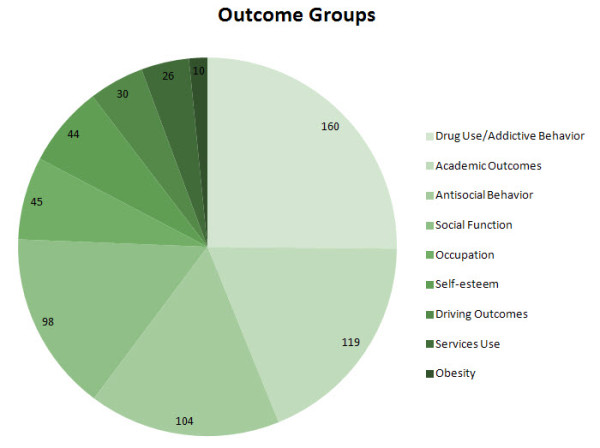
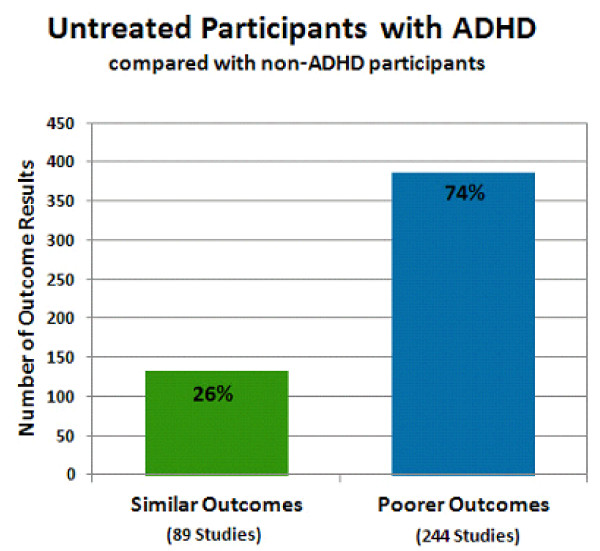
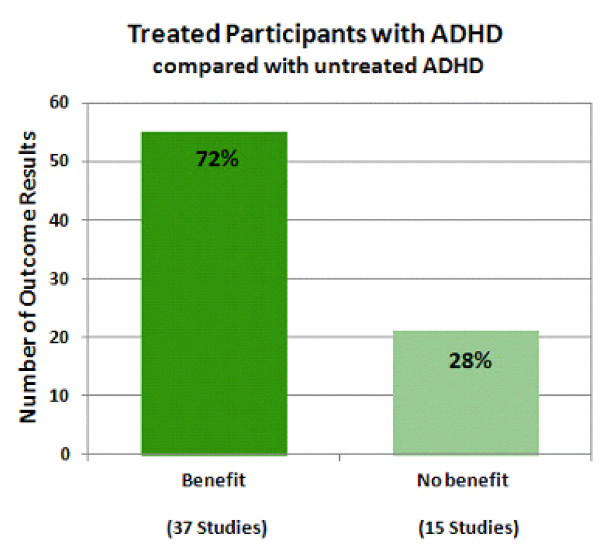
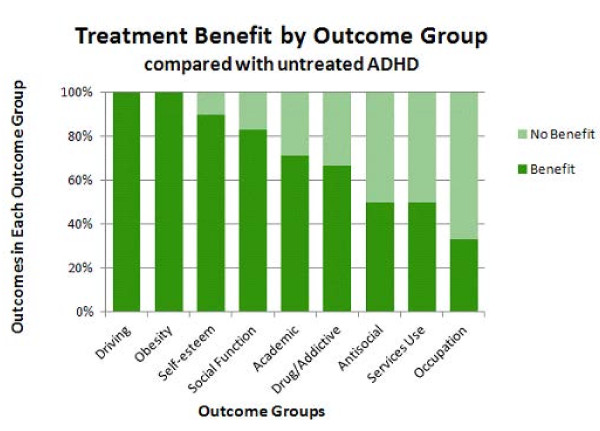
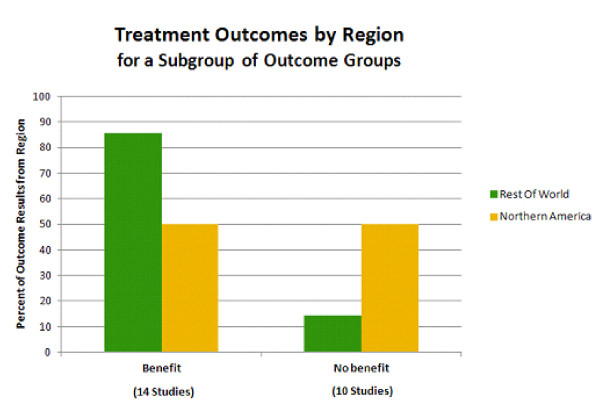
Background: In childhood, attention deficit/hyperactivity disorder (ADHD) is characterized by age-inappropriate levels of inattentiveness/disorganization, hyperactivity/impulsiveness, or a combination thereof. Although the criteria for ADHD are well defined, the long-term consequences in adults and children need to be more comprehensively understood and quantified. We conducted a systematic review evaluating the long-term outcomes (defined as 2 years or more) of ADHD with the goal of identifying long-term outcomes and the impact that any treatment (pharmacological, non-pharmacological, or multimodal) has on ADHD long-term outcomes. Methods: Studies were identified using predefined search criteria and 12 databases. Studies included were peer-reviewed, primary studies of ADHD long-term outcomes published between January 1980 to December 2010. Inclusion was agreed on by two independent researchers on review of abstracts or full text. Published statistical comparison of outcome results were summarized as poorer than, similar to, or improved versus comparators, and quantified as percentage comparisons of these categories. Results: Outcomes from 351 studies were grouped into 9 major categories: academic, antisocial behavior, driving, non-medicinal drug use/addictive behavior, obesity, occupation, services use, self-esteem, and social function outcomes. The following broad trends emerged: (1) without treatment, people with ADHD had poorer long-term outcomes in all categories compared with people without ADHD, and (2) treatment for ADHD improved long-term outcomes compared with untreated ADHD, although not usually to normal levels. Only English-language papers were searched and databases may have omitted relevant studies. Conclusions: This systematic review provides a synthesis of studies of ADHD long-term outcomes. Current treatments may reduce the negative impact that untreated ADHD has on life functioning, but does not usually 'normalize' the recipients.
Overview
The claims and statistics of this paper haven’t been checked yet.
Free: it reads the open-access text and checks the first 5 claims that cite a source we can check. Create a free account to check every claim.
Integrity signals
Registry
Cites
Statistics
Figures
Verification
Claims the paper makes
The claims and statistics of this paper haven’t been checked yet.
Free: it reads the open-access text and checks the first 5 claims that cite a source we can check. Create a free account to check every claim.
Claims other papers make about this one
Each is checked against this paper’s own text: does it say what the citing paper says it does?
The source backs part of the claim, not all of it — or backs it for a different population, condition or comparison.
In the citing paper
“ADHD improved long-term outcomes but generally not to normal levels 147 .”
From Attention-deficit/hyperactivity disorder (2015) · cites this paper as [147]
Experimental — accuracy not yet measured
Self-check
Percentages, sums and reported differences re-computed from the paper’s own numbers.
The self-check needs the paper’s full text.
Citations
Cites
Diagnostic and Statistical Manual of Mental Disorders
Williams, J. B. W., & First, M. (2013) · Encyclopedia of Social Work · doi:10.1093/acrefore/9780199975839.013.104 · Cited by 109,519
Diagnostic and Statistical Manual of Mental Disorders.
Widiger, T. A. (2000) · Encyclopedia of Psychology, Vol. 3. · doi:10.1037/10518-009 · Cited by 19,744
The worldwide prevalence of ADHD: a systematic review and metaregression analysis
Polanczyk, G., de Lima, M. S., Horta, B. L., Biederman, J., & Rohde, L. A. (2007) · American Journal of Psychiatry · doi:10.1176/ajp.2007.164.6.942 · Cited by 5,346 · cited 2×
“29% [3,4] with approximately 4% prevalence in adults [5,6].”
BackgroundKessler, R. C., Adler, L., Barkley, R., Biederman, J., Conners, C. K., Demler, O., Faraone, S. V., Greenhill, L. L., Howes, M. J., Secnik, K., et al. (2006) · American Journal of Psychiatry · doi:10.1176/ajp.2006.163.4.716 · Cited by 3,886 · cited 1×
“29% [3,4] with approximately 4% prevalence in adults [5,6].”
Background(1999) · Archives of General Psychiatry · doi:10.1001/archpsyc.56.12.1073 · Cited by 3,372
International Classification of Diseases
Jones, F. A. (1978) · Gut · doi:10.1136/gut.19.12.1175 · Cited by 2,911
FARAONE, S. V., BIEDERMAN, J., & MICK, E. (2006) · Psychological Medicine · doi:10.1017/s003329170500471x · Cited by 2,267 · cited 1×
“According to one meta-analysis, ADHD persists in about 65% of adults diagnosed as children if ADHD in partial remission is included [7], and in about 50% of * Correspondence: phodgkins@shire.”
MethodPliszka, S. (2007) · Journal of the American Academy of Child & Adolescent Psychiatry · doi:10.1097/chi.0b013e318054e724 · Cited by 1,765 · cited 1×
“ADHD treatment guidelines as well as conclusions drawn by health technology assessment agencies recognize that ADHD is potentially a lifelong condition with a profound effect on quality-of-life [22,25-32].”
BackgroundMannuzza, S. (1993) · Archives of General Psychiatry · doi:10.1001/archpsyc.1993.01820190067007 · Cited by 1,368 · cited 1×
“Persistence of ADHD may be related to ADHD symptom severity, number of symptoms, ADHD symptom subtype, ADHD in relatives, psychosocial adversity, psychiatric comorbidities, and/or parental psychopathology [8-15].”
BackgroundCross-national prevalence and correlates of adult attention-deficit hyperactivity disorder
Fayyad, J., De Graaf, R., Kessler, R., Alonso, J., Angermeyer, M., Demyttenaere, K., De Girolamo, G., Haro, J. M., Karam, E. G., Lara, C., et al. (2007) · British Journal of Psychiatry · doi:10.1192/bjp.bp.106.034389 · Cited by 1,321 · cited 1×
“29% [3,4] with approximately 4% prevalence in adults [5,6].”
Background
Research works printed but not linked: 7
- National Institute for Health and Clinical Excellence: Attention deficit hyperactivity disorder: the NICE guideline on diagnosis and management of adhd in children, young people and adults. 2009, Leicester, UK: The British Psychological Society and The Royal College of Psychiatrists
- Canadian Attention Deficit Hyperactivity Disorder Resource Alliance: Canadian ADHD Practice Guidelines (CAP-Guidelines). 2011, Toronto, Canada: Canadian Attention Deficit Hyperactivity Disorder Resource Alliance (CADDRA)
- National Health and Medical Research Council: Australian Guidelines on Attention Deficit Hyperactivity Disorder (ADHD). 2009, Sydney, Australia: The Royal Australasian College of Physicians
- Scottish Intercollegiate Guidelines Network: Management of attention deficit and hyperkinetic disorders in children and young people: a national clinical guideline. 2009, Edinburgh, UK: Scottish Intercollegiate Guidelines Network
- Canadian Agency for Drugs and Technologies in Health: Quality Assessment of the Canadian Attention Deficit Hyperactivity Disorder Resource Alliance ADHD Practice Guidelines in Adults with ADHD. 2011, Toronto, Canada: Canadian Agency for Drugs and Technologies in Health
- McDonagh M, Christensen V, Peterson K, Thakurta S: Pharmacologic treatments for attention deficit hyperactivity disorder. Drug class review. 2009, Portland, OR: Oregon Health & Science University
- DuPaul GJ, Power TJ, Anastopoulos AD, Reid R: ADHD rating scale-IV: checklists norms and interpretations. 1998, New York, NY: The Guilford Press
Cited by
Items 501–600 of 757
Dernbach, M. R., Gray, K. M., Borich, A., Seery, E., Russo, S. B., Lewis, E. T., & Gwynette, M. F. (2023) · Journal of the American Academy of Child & Adolescent Psychiatry · doi:10.1016/j.jaac.2022.11.014 · Cited by 3
Attention Deficit Hyperactivity Disorder in Adults: From Research to Clinical Practice
Asherson, P. J., Balázs, J., Bitter, I., Carpentier, P. J., Jaeschke, R., Mohr, P., Ramos‐Quiroga, J. A., Rossi, P. D., Semerci, B., & Kooij, J. J. S. (2024) · Cambridge University Press eBooks · doi:10.1017/9781009067287.010 · Cited by 4
Placebo-related improvement with methylphenidate treatment in children with ADHD
Vertessen, K., Oosterlaan, J., Bet, P. M., Bottelier, M. A., Stoffelsen, R., Swanson, J. M., Wisse, A., Twisk, J. W. R., & Luman, M. (2024) · European Child & Adolescent Psychiatry · doi:10.1007/s00787-024-02550-3 · Cited by 5
“Attention-deficit/hyperactivity disorder (ADHD) is one of the most frequently diagnosed childhood-onset psychiatric disorders [1] and is associated with significant impairments in several functional domains and reduced quality of life [2, 3].”
Azmeraw, M., Temesgen, D., Kassaw, A., Zemariam, A. B., Kerebeh, G., Abebe, G. K., Alamaw, A. W., & Abate, B. B. (2024) · Frontiers in Child and Adolescent Psychiatry · doi:10.3389/frcha.2024.1425841 · Cited by 5
Murray, E. R., Schutte, G., Crawford, T. P., Moody, S. S., Nadler, C. B., Chacko, A., Staggs, V. S., & Allan, C. C. (2024) · Evidence-Based Practice in Child and Adolescent Mental Health · doi:10.1080/23794925.2024.2392231 · Cited by 3
“Attention-deficit/hyperactivity disorder (ADHD) is a high prevalence condition (American Psychiatric Association, 2013), and youth with ADHD face wide ranging psychosocial and health consequences without adequate treatment (Shaw et al., 2012).”
Woo, H., Lee, S.-U., Yun, D., Jeong, S., Cho, H., & Kim, Y.-S. (2025) · European Journal of Pediatrics · doi:10.1007/s00431-025-06285-4 · Cited by 4
“In addition to inattention and hyperactivity, ADHD may lead to complications such as poor academic performance, antisocial behavior, obesity, or impaired social functions [9, 10].”
Torgersen, T., Krokstad, S., & Vaaler, A. E. (2014) · ADHD Attention Deficit and Hyperactivity Disorders · doi:10.1007/s12402-014-0135-0 · Cited by 5
“A systematic review of long-term outcomes in ADHD found that among nine outcome categories, ‘‘occupation’’ exhibited the least effect of treatment (Shaw et al. 2012).”
BackgroundTout ce que vous devez connaître sur le méthylphénidate (sans oser le demander…)
Zimmer, L., & Fourneret, P. (2018) · Archives de Pédiatrie · doi:10.1016/j.arcped.2018.01.002 · Cited by 6
Reduced Attention in Former Smokers with and without COPD
Croghan, A. E., Brunette, A. M., Holm, K. E., Kozora, E., Moser, D. J., Wamboldt, F. S., Meschede, K., Make, B. J., Crapo, J. D., Weinberger, H. D., et al. (2019) · International Journal of Behavioral Medicine · doi:10.1007/s12529-019-09826-y · Cited by 3
Huang, J. V., Tan, A. P., Law, E. C., Godfrey, K. M., Qiu, A., Daniel, L. M., Fortier, M. V., Tan, K. H., Chan, J. K. Y., Cameron‐Smith, D., et al. (2023) · Translational Psychiatry · doi:10.1038/s41398-023-02332-6 · Cited by 3
“Child and adolescent behavioural problems have far-reaching impacts on adult life, including poorer academic outcomes, work incapacity, drug use, and other addictive behaviours [2, 5].”
BackgroundAsian Indian American Parental Help-Seeking Intentions for ADHD
Jhawar, N., & Antshel, K. M. (2023) · Research on Child and Adolescent Psychopathology · doi:10.1007/s10802-023-01108-2 · Cited by 3
Lillis, S. (2023) · Journal of Primary Health Care · doi:10.1071/hc23126 · Cited by 6
Sun, Y., Miao, L., Chen, S., Piao, Z., & Tong, C. (2024) · Journal of Attention Disorders · doi:10.1177/10870547241233729 · Cited by 3
“A review of three decades of research shows that, over the life course, people with untreated ADHD experience deficits in social functioning, selfesteem, and occupation (Shaw et al., 2012).”
BackgroundSuehs, B. T., Sikirica, V., Mudumby, P., Dufour, R., & Patel, N. C. (2015) · Journal of Managed Care & Specialty Pharmacy · doi:10.18553/jmcp.2015.21.9.793 · Cited by 4
“In the context of children and adolescents with ADHD, lack of treatment can have significant consequences, manifesting in school-related difficulties and psychosocial impairment.(21) Furthermore, only 50% of members who were denied coverage for GXR received any alpha agonist treatment (primarily GIR) during the post-i…”
BackgroundLennox, C., Hall, C. L., Carter, L., Beresford, B., Young, S., Kraam, A., Brown, N., Wilkinson-Cunningham, L., Reeves, M., & Chitsabesan, P. (2020) · BMJ Open · doi:10.1136/bmjopen-2019-035519 · Cited by 3
Self-citationJoseph, A., Cloutier, M., Guérin, A., Nitulescu, R., & Sikirica, V. (2016) · Patient Preference and Adherence · doi:10.2147/ppa.s98498 · Cited by 5
Reliability and validity of a Chinese language universal behavioral screener
Yeung, T. S., Volpe, R. J., & Briesch, A. M. (2019) · International Journal of School & Educational Psychology · doi:10.1080/21683603.2018.1561343 · Cited by 3
Pharmacotherapy of ADHD in Adults
Rösler, M., Retz, W., & Turner, D. (2022) · Springer eBooks · doi:10.1007/978-3-030-62059-2_254 · Cited by 4
A Nationwide Study of ADHD Drug Use among Adults in Iceland 2003-2012
Geirs, D. P. (2014) · Skemman · Cited by 3
Lin, C.-C., Chung, C.-H., Chien, W.-C., & Tzeng, N.-S. (2023) · Journal of Child and Adolescent Psychopharmacology · doi:10.1089/cap.2023.0003 · Cited by 2
“For school-aged children, untreated ADHD may lead to diffi-culty in schooling (Shaw et al., 2012), since they could not stay focused in class and often failed to comply with instructions from teachers or parents due to distractibility and forgetfulness.”
Executive Functions and Emotional Lability in Adults with ADHD
Amador, J. A., & Krieger, V. (2023) · Autism and child psychopathology series · doi:10.1007/978-3-031-41709-2_5 · Cited by 3
Sheehan, R., Leng, J., Woods, H., & Baksh, R. A. (2024) · Psychological Medicine · doi:10.1017/s0033291724001338 · Cited by 4
van der Pal, Z., Geurts, H. M., Haslbeck, J. M. B., van Keeken, A. E., Bruijn, A. M., Douw, L., van Rooij, D., Franke, B., Buitelaar, J. K., Rommelse, N. N. J., et al. (2024) · European Child & Adolescent Psychiatry · doi:10.1007/s00787-024-02610-8 · Cited by 2
Ercan, E. S., Bilgiç, A., Tufan, A. E., Akça, Ö. F., Yazıcı, İ. P., Bılaç, Ö., Tahıllıoğlu, A., Ünsel‐Bolat, G., Gökten, E. S., Açıkel, S. B., et al. (2025) · Psychiatry Research · doi:10.1016/j.psychres.2025.116588 · Cited by 3
Findling, R. L., Katic, A., Liebowitz, M. R., Waxmonsky, J. G., Fry, N., Qin, P., Yarullina, I., Maldonado-Cruz, Z., Lieberman, V. R., & Rubin, J. S. (2025) · CNS Drugs · doi:10.1007/s40263-025-01209-0 · Cited by 3
“Despite the long-term, multi-year length of the trial, the incidence of each of these AEs was lower during this open-label trial, including for the subset of participants previously treated with placebo during double-blind treatment (except for fatigue [7.5%]).”
InfluentialSolouki, L., Shahsavari, S., Sharini, H., Hashemian, A. H., Mohammadian, Y., Mohammadi, H., & Mahaki, B. (2025) · Journal of Research in Medical Sciences · doi:10.4103/jrms.jrms_406_24 · Cited by 2
“[5] This disorder is characterized by symptoms related to inattention, hyperactivity, and impulsivity, as well as cognitive deficits in executive function, reaction time, and alertness, which can vary from mild to severe.”
Classification, diagnosis and therapy of attention deficit hyperactivity disorder
Петрович, З. В., Борисовна, К. И., Новикова, Е. Б., & Ayvazyan, S. O. (2025) · S S Korsakov Journal of Neurology and Psychiatry · doi:10.17116/jnevro202512511162 · Cited by 3
Peter, S., Bednarz, J., Sommer, P., & Taubner, S. (2026) · Frontiers in Psychology · doi:10.3389/fpsyg.2025.1658196 · Cited by 2
A multi-cohort assessment of the polygenic prediction in ADHD treatment response
Rovaris, D. L., Grevet, E. H., Høberg, A., da Cunha, P. F., Llonga, N., Carabí‐Gassol, P., Oliveira, E. P., Bandeira, C. E., Tavares, M. E., Artigas, M. S., et al. (2026) · Psychiatry Research · doi:10.1016/j.psychres.2026.116988 · Cited by 2
“ADHD imposes substantial functional impairments across personal, social, academic, and professional domains, significantly reducing quality of life (Da Silva et al., 2023; Shaw et al., 2012).”
Jun, I. C. J., Salmon, C., Vinnicombe, J., Bowen, J., McNicholas, F., Adamis, D., Jayasooriya, T., Das, S., & Johnson, K. (2026) · Irish Journal of Psychological Medicine · doi:10.1017/ipm.2026.10175 · Cited by 4
“Adverse outcomes are higher in untreated cohorts (Shaw et al. 2012).”
Zakani, Z., Moradi, H., Ghasemzadeh, S., Riazi, M., & Mortazavi, F. (2026) · Multimedia Tools and Applications · doi:10.1007/s11042-026-21195-9 · Cited by 2
Neurodiversity and workplace relationships: The impact of ADHD on social network ties
Marineau, J. E. (2026) · Acta Psychologica · doi:10.1016/j.actpsy.2026.106591 · Cited by 2
Mohan, A., Iacono, W. G., McGue, M. K., Nelson, K. M., Roisman, G. I., Santos, J., Wilson, S., & Schaefer, J. D. (2026) · Journal of the American Academy of Child & Adolescent Psychiatry · doi:10.1016/j.jaac.2026.03.012 · Cited by 3
Age at First Attention-Deficit/Hyperactivity Disorder Diagnosis and Educational Outcomes
Volotinen, L., Remes, H. M., Martikainen, P., & Metsä‐Simola, N. (2026) · JAMA Psychiatry · doi:10.1001/jamapsychiatry.2026.0181 · Cited by 4
The role of denial on emotional correlates of childhood trauma in a non-clinical population
Krvavac, S., & Jansson, B. (2022) · Archives of Psychiatry and Mental Health · doi:10.29328/journal.apmh.1001043 · Cited by 2
Redmond, S. M., Ash, A. C., & Zhang, Y. (2023) · Clinical Linguistics & Phonetics · doi:10.1080/02699206.2023.2273750 · Cited by 2
Ward, J. H., Becker, K., Smith, J. R., Price, A., & Newlove‐Delgado, T. (2024) · BMC Health Services Research · doi:10.1186/s12913-024-11188-5 · Cited by 4
“People with ADHD are thought to experience a range of poorer socio-economic, physical, and mental health outcomes in later life, with an estimated average 15-year reduction in life expectancy from predictive modelling [2–4].”
BackgroundCompulsive Biting and Chewing with Mixed Amphetamine Salts: A Case Report.
Free, M., Choi, H., & Baweja, R. (2024) · PubMed Central · Cited by 2
Mental Health Access for Young Children
Dopp, R. R., Tengelitsch, E., Patel, P. D., Marcus, S. M., & Quigley, J. M. (2024) · Child and Adolescent Psychiatric Clinics of North America · doi:10.1016/j.chc.2024.07.008 · Cited by 2
Outcomes of untreated attention deficit hyperactivity disorder and the mental health nurse
Nicholson, T. (2018) · British Journal of Mental Health Nursing · doi:10.12968/bjmh.2018.7.3.113 · Cited by 3
Attention-Deficit Hyperactivity Disorder
Swanson, J. M., Rommelse, N. N. J., Cotton, J., Sonuga-Barke, E. J. S., Jensen, P. S., & Castellanos, F. X. (2022) · Springer eBooks · doi:10.1007/978-3-030-88832-9_169 · Cited by 2
Protective, Compensatory, and Benevolent Experiences for Building Resilience
Brewer‐Smyth, K. (2022) · Springer eBooks · doi:10.1007/978-3-031-08801-8_8 · Cited by 2
Lorenzo, N. E., Bui, H. N. T., Degnan, K. A., McDermott, J. M., Henderson, H. A., Fox, N. A., & Chronis-Tuscano, A. M. (2023) · Research on Child and Adolescent Psychopathology · doi:10.1007/s10802-023-01140-2 · Cited by 4
“…associated with ADHD include, but are not limited to, poor educational attainment, anxiety and mood disorders, substance use, and suicide (Chronis-Tuscano et al., 2010; Erskine et al., 2016; Shaw et al., 2012), further reinforcing the potential impact of elucidating early risk factors for ADHD.”
Continuation of Treatment in Children With ADHD: A Multicenter Turkish Sample Study
Baykal, S., Osmanlı, C. Ç., Bozkurt, A., Önal, B. S., Şahin, B., Karaçizmeli, M., Gazi, A. Ö., & Karabekiroğlu, K. (2024) · Journal of Attention Disorders · doi:10.1177/10870547231222021 · Cited by 2
“…and particularly stimulant therapies, have been found to be effective in social functions and the academic sphere in addition to the core symptoms of ADHD in the long and short term, studies have noted low rates of drug therapy compliance and continuation (Rashid et al., 2018; Shaw et al., 2012).”
Koyuncu, Z., Khalil, K. A., Kilimci, Ö. S., Arslan, B., Aydın, E. T., Yücel, E., Arvas, Y. U., Aksu, N. E., Poyraz, C. A., Demirel, Ö. F., et al. (2025) · PLoS ONE · doi:10.1371/journal.pone.0321767 · Cited by 2
“Despite this, prior literature suggests that even small but significant moderation effects can yield meaningful insights into complex psychological relationships, particularly in applied research settings [30].”
InfluentialAdderall XR and peripheral arterial vasculopathy: A case report and a review of the literature
Hritani, A., Minocha, V., Patel, A. M., & Antoun, P. S. (2015) · Reviews in vascular medicine · doi:10.1016/j.rvm.2015.03.001 · Cited by 2
Life Persistence of Attention-Deficit/Hyperactivity Disorder
Min, A., & Ahn, D. H. (2016) · Hanyang Medical Reviews · doi:10.7599/hmr.2016.36.1.38 · Cited by 2
Amihăesei, I. C., & Zamfir, C. L. (2016) · The Medical-Surgical Journal · Cited by 2
Co-investigators Astrid Janssens, Ani, C. C., Asherson, P. J., Sayal, K. S., Paul, M., Hollis, C. P., Beresford, B., Young, S., Newlove‐Delgado, T., Logan, S., et al. (2015) · Cited by 2
Self-citationSandoval-Rodríguez, K. (2017) · ReiDoCrea Revista electrónica de investigación Docencia Creativa · doi:10.30827/digibug.48555 · Cited by 2
“Lo anterior se encuentra avalado por los estudios de Shaw et al. (2012) quienes concluyen a partir de una revisión sistemática de investigaciones de tratamientos para el TDAH entre los años 1980 al 2010, que quienes reciben tratamientos e intervenciones, ya sea farmacológicas, combinadas o de otro…”
BackgroundEl trastorno por déficit de atención e hiperactividad a lo largo de la vida
Quintero, J., Morales, I., Rodríguez-Quiroga, A., & Soto, M. Á.-M. (2021) · Medicine - Programa de Formación Médica Continuada Acreditado · doi:10.1016/j.med.2021.12.004 · Cited by 9
Sanguineti, C., Nisticò, V., Folatti, I., Santangelo, G., Faggioli, R., Bertani, A., Gambini, O., & Demartini, B. (2023) · Journal of Attention Disorders · doi:10.1177/10870547231201954 · Cited by 3
“…adolescence, a significative proportion of patients might develop disruptive symptoms, such as drug use or addiction and/or antisocial behaviors (Shaw et al., 2012); finally, with respect to adult age, symptoms of motor hyperactivity tend to subside, while restless-ness, inattentiveness, poor…”
BackgroundInfluentialBaggio, S., Billieux, J., Dirkzwager, A., Iglesias, K., Moschetti, K., Perroud, N. A., Schneider, M. P., Vernaz, N., Wolff, H. J., & Heller, P. (2024) · Trials · doi:10.1186/s13063-023-07827-7 · Cited by 2
“There is growing evidence that adult ADHD is associated with a wide range of adverse outcomes and is therefore an important public health problem [3, 4].”
BackgroundKarpuz, D., Hallıoğlu, O., Toros, F., & Taşdelen, B. (2017) · Cukurova Medical Journal (Çukurova Üniversitesi Tıp Fakültesi Dergisi) · doi:10.17826/cutf.322894 · Cited by 2
Attention Deficit Hyperactivity Disorder
Efron, D. (2019) · Elsevier eBooks · doi:10.1016/b978-0-12-814180-9.00001-6 · Cited by 4
Children and young people with attention deficit hyperactivity disorder: The nurse's role
Ryan, N., & McDougall, T. (2018) · Nurse Prescribing · doi:10.12968/npre.2018.16.8.373 · Cited by 2
Singh, M. K. (2015) · Journal of the American Academy of Child & Adolescent Psychiatry · doi:10.1016/j.jaac.2015.02.014 · Cited by 3
Brikell, I. (2018) · Figshare · Cited by 2
Martin, J. L., Rouquette, O. Y., Langley, K., Cooper, M., Sayal, K. S., Ford, T. J., John, A. M., & Thapar, A. (2025) · medRxiv · doi:10.1101/2025.07.07.25330613 · Cited by 3
“Timely recognition is important because ADHD treatment improves long-term social, educational and occupational outcomes, and reduces the risks of depression, suicide, substance abuse, accidents, and criminality 19–21 .”
ADHD and stress : Diurnal cortisol levels, early psychosocial adversity and perceived stress
Isaksson, J. (2014) · Uppsala University Publications (Uppsala University) · Cited by 4
Kim, D., & Lim, J. H. (2022) · Frontiers in Psychiatry · doi:10.3389/fpsyt.2022.796928 · Cited by 1
Durand, V. M. (2014) · Oxford University Press eBooks · doi:10.1093/oxfordhb/9780199328710.013.014 · Cited by 1
Srinivasan, R., Marathe, A., Mukhija, M. K., & de Souza, N. (2023) · International Journal of Contemporary Pediatrics · doi:10.18203/2349-3291.ijcp20231146 · Cited by 1
Review of Clinical Considerations in the Management of Adolescents with ADHD During Ramadan
Khan, F., & Mohiuddin, S. S. (2024) · Adolescent Psychiatry · doi:10.2174/0122106766298494240510052101 · Cited by 1
Lee, Y.-S., Sprong, M. E., Shrestha, J., Smeltzer, M. P., & Hollender, H. L. (2024) · Clinical Practice and Epidemiology in Mental Health · doi:10.2174/0117450179298863240516070510 · Cited by 2
Diagnosis and Management of Comorbid ADHD in Patients with Substance Use Disorders
Busch, B. (2024) · Springer eBooks · doi:10.1007/978-3-031-72219-6_50 · Cited by 1
Alotaibi, M. M., Alrashdi, N. Z., Alzubaidi, B. Y., ALMUTAIRI, M. K., Alanazi, S. A., Almutairi, A. B., & Alqahtani, M. Μ. (2025) · Frontiers in Psychiatry · doi:10.3389/fpsyt.2025.1624590 · Cited by 1
Creedon, T. B., Wen, H., Ali, M. M., & Haffajee, R. L. (2025) · Health Affairs · doi:10.1377/hlthaff.2024.01659 · Cited by 1
Sim, F., Dalgarno, L., McIntosh, E., Haig, C. E., Duklas, P., McConnachie, A., Gillberg, C., Minnis, H., & Thompson, L. C. (2025) · PLoS ONE · doi:10.1371/journal.pone.0323959 · Cited by 2
Sithisarn, T., Bann, C., Lester, B. M., Shankaran, S., Whitaker, T. M., Higgins, R. D., & Bada, H. S. (2025) · Children · doi:10.3390/children12111570 · Cited by 1
“With treatment, however, favorable outcomes were reported as compared to those with no treatment or as improvement or stabilization from pretreatment baseline [52].”
Min, Y., Chen, Y., & Liu, J. (2025) · European Child & Adolescent Psychiatry · doi:10.1007/s00787-025-02904-5 · Cited by 1
“Developmentally, IC is fundamental to brain maturation and cognitive growth during childhood and adolescence, reflecting protracted development of the prefrontal cortex often persist into adulthood and have a consistent, negative impact on academic achievement and social interaction [ 9 ].”
Irritability in children and adolescents: Contemporary perspectives and clinical implications
Stevanović, D., & Stevanović, T. (2024) · Engrami · doi:10.5937/engrami46-52625 · Cited by 1
Zhang, T., Ikegaya, Y., & Uehara, I. (2025) · Scientific Reports · doi:10.1038/s41598-025-30163-6 · Cited by 1
Chakraborty, A., Patil, K., Srinath, T., & Rallabhandi, I. (2026) · The Design Journal · doi:10.1080/14606925.2025.2603603 · Cited by 1
“Moreover, stringent deadlines and high-quality work demands induce significant stress and anxiety, further hindering their progress (Advokat, Lane, and Luo 2011; Shaw et al. 2012).”
Ameri, A., Yazdani, M., Jahani, Y., & Khajouei, R. (2026) · Child & Family Behavior Therapy · doi:10.1080/07317107.2026.2627555 · Cited by 1
“These symptoms not only disrupt academic performance and social relationships but also increase the risk of engaging in risky behaviors and developing comorbid psychiatric disorders, including anxiety and depression (Harpin et al., 2016; Shaw et al., 2012).”
Hou, W., Zhu, D., Sahakian, B. J., Cortese, S., Langley, C., Luo, L., Li, Q., Gu, Z., Cao, L., Barker, G. J., et al. (2026) · Nature Mental Health · doi:10.1038/s44220-025-00578-1 · Cited by 2
“Current ADHD medications are efficient in managing symptoms 16 .”
Fletcher, M. A., Pan, W., Dew, R. E., Duquette, P. J., & Reuter‐Rice, K. (2026) · BJPsych Open · doi:10.1192/bjo.2026.10994 · Cited by 1
“24 This approach does not consider the influence of differing patterns of medication use over time, including age at initiation, type of medication and consistency of use, which, despite the idea that earlier diagnosis and treatment of ADHD should lead to fewer adverse outcomes, have seldom been…”
Liu, Y. C., Yan, Q., Zhao, S., Ng, S., Wang, X., & Ning, Z. (2026) · Frontiers in Psychology · doi:10.3389/fpsyg.2026.1711994 · Cited by 1
Lewis, N., Levenstein, J. M., & Villani, A. M. (2026) · Nutritional Psychiatry · doi:10.1016/j.nupsyc.2026.100017 · Cited by 2
Hill, E. D., Loh, D. R., Davis, N. O., Goldstein, B. A., Dawson, G., & Engelhard, M. (2026) · Nature Mental Health · doi:10.1038/s44220-026-00628-2 · Cited by 1
“Without services and support, individuals with ADHD tend to have worse social, medical and academic outcomes 3 .”
Park, J., Murray, R., Duffy, R. D., & Zhou, Z. E. (2026) · Child Psychiatry & Human Development · doi:10.1007/s10578-026-02036-0 · Cited by 1
Batty, G. D., Gissler, M., Mousavi, S. E., Warrier, V., Ford, T. J., & Keski‐Säntti, M. (2026) · Molecular Psychiatry · doi:10.1038/s41380-026-03700-6 · Cited by 1
“Consistent with other studies, we found a higher occurrence of mood disorders (depression) [15, 16], anxiety (neurotic) disorders [17], and substance abuse [18] in people with ADHD relative to their unaffected peers.”
Sahakian, B. J., & Langley, C. (2026) · Journal of Psychopharmacology · doi:10.1177/02698811261466620 · Cited by 1
Diener, T.-S. L., Jackson, M., Lee, M. A., Grové, C., & Nguyen, V. (2026) · Journal of Attention Disorders · doi:10.1177/10870547261468111 · Cited by 1
Effects of atomoxetine and methylphenidate on quality of life and self-esteem in adults with ADHD
Lorenzo, R. D., Bonisoli, J., Gualtieri, F., Latella, E., Riguzzi, I., Ferri, P., & Rovesti, S. (2026) · Frontiers in Psychiatry · doi:10.3389/fpsyt.2026.1866964 · Cited by 1
Assessment of adult attention-deficit/hyperactivity disorder
Bhat, V., & Paris, J. (2014) · Journal of Psychiatry and Neuroscience · doi:10.1503/jpn.130170 · Cited by 3
Attention deficit hyperactivity disorder
Cunill, R., & Cervelló, X. C. (2015) · Medicina Clínica (English Edition) · doi:10.1016/j.medcle.2014.02.007 · Cited by 5
A network perspective on abnormal child behavior in primary school students
Till, A. C., Florquin, R., Delhaye, M., Kornreich, C., Williams, D. R., & Briganti, G. (2022) · Psychological Reports · doi:10.1177/00332941221077907 · Cited by 2
“Because of these consequences, early diagnosis and treatment is essential to prevent such complications (Shaw et al., 2012).”
BackgroundChauhan, N., Shah, R., Padhy, S. K., Malhotra, S., & Kohli, A. (2022) · Indian Journal of Psychiatry · doi:10.4103/indianjpsychiatry.indianjpsychiatry_399_21 · Cited by 1
“[5,6] Despite being a common disorder and associated with significant morbidity and co-morbidities, [7,8] its exact cause is not known.”
Kulikova, A. A., Евгеньевна, И. А., Орел, Е. А., & Petrakova, A. V. (2023) · International perspectives on early childhood education and development · doi:10.1007/978-3-031-28589-9_20 · Cited by 1
Murat, D., & Tekin, U. (2023) · Turkish Journal of Science and Technology · doi:10.55525/tjst.1344278 · Cited by 1
McCarthy, D. M., Spencer, T. J., & Bhide, P. G. (2023) · Journal of Attention Disorders · doi:10.1177/10870547231215286 · Cited by 1
“These structural changes are consistent with structural changes reported in the brains of treatment naïve ADHD subjects (Makris et al., 2009, 2015; Seidman et al., 2006, 2011; P. Shaw et al., 2006; M. Shaw et al., 2012).”
ResultZafar, M., Alhelali, A. Y. S., Alfuwis, M. S. M., & Alshammari, W. Z. A.-L. (2023) · Journal of Education and Health Promotion · doi:10.4103/jehp.jehp_334_23 · Cited by 3
“[34] Most likely, patients with ADHD indulge in substance use, which also leads to depression and anxiety.”
BackgroundPrediction of Attention-Deficit and Hyperactivity Disorder in Online Learning
Patil, P. Y., Sarode, B. S., Chavan, P. V., Goje, N. S., & Williams, I. (2024) · Advances in medical technologies and clinical practice book series · doi:10.4018/979-8-3693-1090-8.ch007 · Cited by 1
Golparvar, A., Nafeh, O., Alzamani, M., Singh, V., & Jennings, M. (2024) · Cureus · doi:10.7759/cureus.61078 · Cited by 1
“Early intervention is paramount when dealing with severe ADHD, but a systematic review conducted in 2012 indicated that substance use and antisocial behavior were the least responsive to treatment; individuals with untreated symptoms experienced notably poorer outcomes [12].”
BackgroundYıldız, R., Özden, A. V., Nişancı, O. S., & Demirkıran, B. C. (2024) · Biomedical Science and Clinical Research · doi:10.33140/bscr.03.02.08 · Cited by 2
Li, Y., Xian, H., Arnold, L. D., & Chang, J. J. (2024) · Journal of Attention Disorders · doi:10.1177/10870547241306570 · Cited by 3
“ADHD is not only associated with impaired functioning and development in childhood but can lead to educational underachievement and comorbid psychiatric disorders (Dalsgaard et al., 2015; Di Lorenzo et al., 2021; Shaw et al., 2012).”
Self-citationArnold, L. E., Bozzolo, H., Crowl, L., Yao, M., Reno, A. J., Dudipala, N., Amato, A., Hechtman, L. T., & Newcorn, J. H. (2025) · Journal of Child and Adolescent Psychopharmacology · doi:10.1177/10445463251360685 · Cited by 1
“Shaw et al. (2012) demonstrated that a moderate-to-large pre – post effect should be expected with treatment or nontreatment, illustrating the placebo effect.”
Self-citationSociomoral Reasoning in Adults with ADHD: A Pilot Study
Thomason, K. E., 1 Cardiff and Vale UHB, W., Gudjonsson, G. H., German, E., Morris, R. G., & Young, S. (2014) · AIMS Public Health · doi:10.3934/publichealth.2014.3.147 · Cited by 1
“Children with ADHD are at increased risk for a number of negative outcomes in later adulthood with approximately one third developing significant antisocial behaviour characteristics [11–14].”
Self-citation
Metadata
- Authors
- Shaw, M., Hodgkins, P., Caci, H., Young, S., Kahle, J., Woods, A. G., & Arnold, L. E.
- Affiliations
- Shire (United Kingdom) (GB)
- Centre Hospitalier Universitaire de Nice (FR)
- King's College London (GB)
- Clarkson University (US)
- The Ohio State University (US)
- Corresponding author
- Hodgkins, Paul
- Venue
- BMC Medicine
- Published
- 2012-09-04
- Volume
- 10
- Issue
- 1
- Pages
- 99-99
- ISSN
- 1741-7015 (ISSN-L)
- PMC
- PMC3520745
- OpenAlex
- W2058562698
- Cited by
- 759
- References
- 69
- Citations by year
- 2026: 71 · 2025: 64 · 2024: 72 · 2023: 72 · 2022: 67 · 2021: 57 · 2020: 49 · 2019: 47 · 2018: 50 · 2017: 35 · 2016: 53 · 2015: 54 · 2014: 39 · 2013: 27 · 2012: 1
- FWCI
- 5.20
- Type
- journal article
- Language
- en
- Open access
- gold
- doi.org
- Licence
- Locations
- BMC Medicine (publishedVersion, cc-by)
- Europe PMC (PubMed Central) (publishedVersion, cc-by)
- PubMed Central (publishedVersion, cc-by)
- PubMed (publishedVersion)
- DOAJ (DOAJ: Directory of Open Access Journals) (submittedVersion, cc-by-sa)
- Research Portal (King's College London) (submittedVersion)
- Topics
- Health Sciences › Medicine › Psychiatry and Mental health › Attention Deficit Hyperactivity Disorder
- Health Sciences › Medicine › Epidemiology › Substance Abuse Treatment and Outcomes
- Social Sciences › Psychology › Developmental and Educational Psychology › Behavioral and Psychological Studies
- Keywords
- attention deficit hyperactivity disorder, long-term outcomes, ADHD treatment, untreated ADHD, educational outcomes, antisocial behavior, driving, substance use, obesity, occupation, health care utilization, self-esteem, social functioning, pharmacotherapy, non-pharmacological treatment
- MeSH terms
- Adolescent, Adult, Aged, Aged, 80 and over, Attention Deficit Disorder with Hyperactivity, Child, Humans, Middle Aged, Social Behavior, Treatment Outcome, Young Adult
About these checks
Registry, retraction, Cites and statistics results are computed, not judged, with one exception: a printed reference that no index lists is read once by a model before it counts as a citation error. Claims are extracted by a model and kept only when their quote appears verbatim in the text; each cited source is then checked, with a model’s help, for whether it says what the claim relies on. Those verdicts can be wrong — read the claim’s quote and the cited source before relying on one.
Statistics and arithmetic are recomputed, not judged.
Confidence bands are shown only for fields calibrated on our annotated test set. None is calibrated yet, so no band is shown.
What counts as a claim ›How we measure confidence ›How we check this ›
Are you an author, or do you see a problem with this page? Request a review
Data sources
Bibliographic data: Semantic Scholar, OpenAlex, Crossref.
Contains information from the Semantic Scholar Academic Graph Datasets, made available under the ODC Attribution License (ODC-BY 1.0).
Semantic Scholar’s data is described in: Kinney, R., et al. (2023). The Semantic Scholar Open Data Platform. arXiv:2301.10140.
