

A systematic review and analysis of long-term outcomes in attention deficit hyperactivity disorder: effects of treatment and non-treatment
Open accessThe DOI matches its Crossref record; 68 of the 69 references it cites were found in a registry or an index.
Abstract
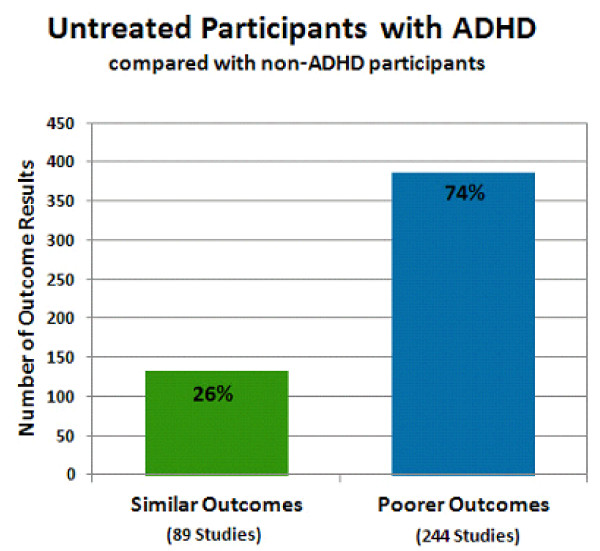
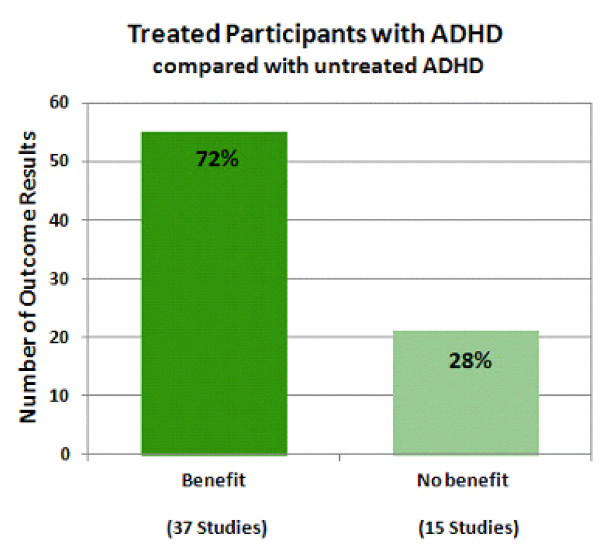
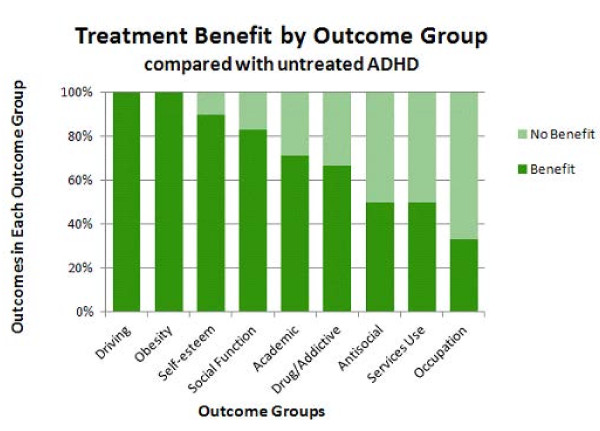
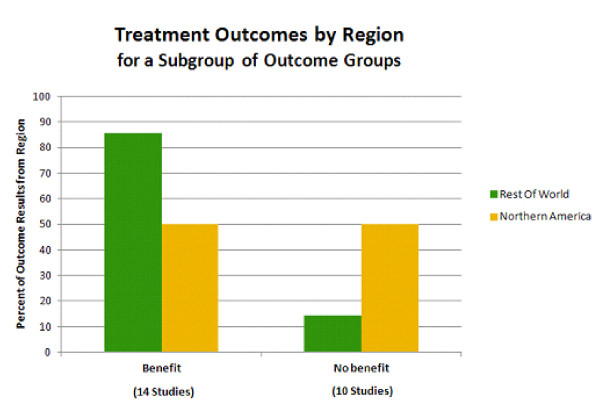
Background: In childhood, attention deficit/hyperactivity disorder (ADHD) is characterized by age-inappropriate levels of inattentiveness/disorganization, hyperactivity/impulsiveness, or a combination thereof. Although the criteria for ADHD are well defined, the long-term consequences in adults and children need to be more comprehensively understood and quantified. We conducted a systematic review evaluating the long-term outcomes (defined as 2 years or more) of ADHD with the goal of identifying long-term outcomes and the impact that any treatment (pharmacological, non-pharmacological, or multimodal) has on ADHD long-term outcomes. Methods: Studies were identified using predefined search criteria and 12 databases. Studies included were peer-reviewed, primary studies of ADHD long-term outcomes published between January 1980 to December 2010. Inclusion was agreed on by two independent researchers on review of abstracts or full text. Published statistical comparison of outcome results were summarized as poorer than, similar to, or improved versus comparators, and quantified as percentage comparisons of these categories. Results: Outcomes from 351 studies were grouped into 9 major categories: academic, antisocial behavior, driving, non-medicinal drug use/addictive behavior, obesity, occupation, services use, self-esteem, and social function outcomes. The following broad trends emerged: (1) without treatment, people with ADHD had poorer long-term outcomes in all categories compared with people without ADHD, and (2) treatment for ADHD improved long-term outcomes compared with untreated ADHD, although not usually to normal levels. Only English-language papers were searched and databases may have omitted relevant studies. Conclusions: This systematic review provides a synthesis of studies of ADHD long-term outcomes. Current treatments may reduce the negative impact that untreated ADHD has on life functioning, but does not usually 'normalize' the recipients.
Overview
The claims and statistics of this paper haven’t been checked yet.
Free: it reads the open-access text and checks the first 5 claims that cite a source we can check. Create a free account to check every claim.
Integrity signals
Registry
Cites
Statistics
Figures
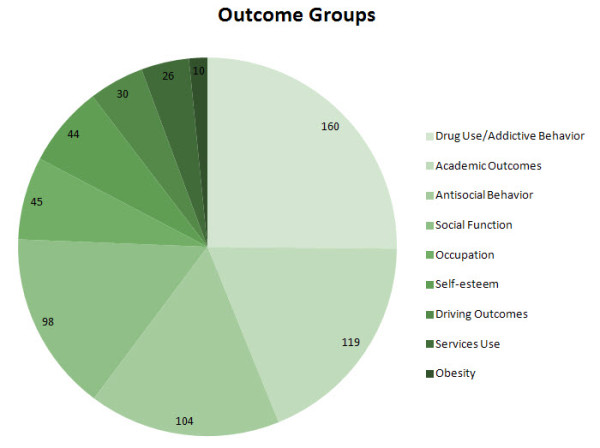
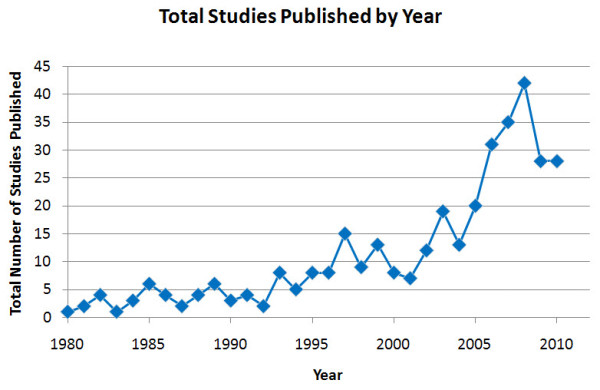
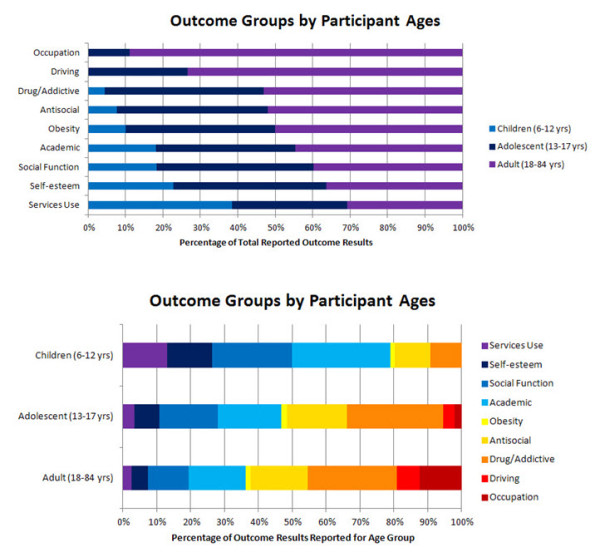
Verification
Claims the paper makes
The claims and statistics of this paper haven’t been checked yet.
Free: it reads the open-access text and checks the first 5 claims that cite a source we can check. Create a free account to check every claim.
Claims other papers make about this one
Each is checked against this paper’s own text: does it say what the citing paper says it does?
The source backs part of the claim, not all of it — or backs it for a different population, condition or comparison.
In the citing paper
“ADHD improved long-term outcomes but generally not to normal levels 147 .”
From Attention-deficit/hyperactivity disorder (2015) · cites this paper as [147]
Experimental — accuracy not yet measured
Self-check
Percentages, sums and reported differences re-computed from the paper’s own numbers.
The self-check needs the paper’s full text.
Citations
Cites
Diagnostic and Statistical Manual of Mental Disorders
Williams, J. B. W., & First, M. (2013) · Encyclopedia of Social Work · doi:10.1093/acrefore/9780199975839.013.104 · Cited by 109,519
Diagnostic and Statistical Manual of Mental Disorders.
Widiger, T. A. (2000) · Encyclopedia of Psychology, Vol. 3. · doi:10.1037/10518-009 · Cited by 19,744
The worldwide prevalence of ADHD: a systematic review and metaregression analysis
Polanczyk, G., de Lima, M. S., Horta, B. L., Biederman, J., & Rohde, L. A. (2007) · American Journal of Psychiatry · doi:10.1176/ajp.2007.164.6.942 · Cited by 5,346 · cited 2×
“29% [3,4] with approximately 4% prevalence in adults [5,6].”
BackgroundKessler, R. C., Adler, L., Barkley, R., Biederman, J., Conners, C. K., Demler, O., Faraone, S. V., Greenhill, L. L., Howes, M. J., Secnik, K., et al. (2006) · American Journal of Psychiatry · doi:10.1176/ajp.2006.163.4.716 · Cited by 3,886 · cited 1×
“29% [3,4] with approximately 4% prevalence in adults [5,6].”
Background(1999) · Archives of General Psychiatry · doi:10.1001/archpsyc.56.12.1073 · Cited by 3,372
International Classification of Diseases
Jones, F. A. (1978) · Gut · doi:10.1136/gut.19.12.1175 · Cited by 2,911
FARAONE, S. V., BIEDERMAN, J., & MICK, E. (2006) · Psychological Medicine · doi:10.1017/s003329170500471x · Cited by 2,267 · cited 1×
“According to one meta-analysis, ADHD persists in about 65% of adults diagnosed as children if ADHD in partial remission is included [7], and in about 50% of * Correspondence: phodgkins@shire.”
MethodPliszka, S. (2007) · Journal of the American Academy of Child & Adolescent Psychiatry · doi:10.1097/chi.0b013e318054e724 · Cited by 1,765 · cited 1×
“ADHD treatment guidelines as well as conclusions drawn by health technology assessment agencies recognize that ADHD is potentially a lifelong condition with a profound effect on quality-of-life [22,25-32].”
BackgroundMannuzza, S. (1993) · Archives of General Psychiatry · doi:10.1001/archpsyc.1993.01820190067007 · Cited by 1,368 · cited 1×
“Persistence of ADHD may be related to ADHD symptom severity, number of symptoms, ADHD symptom subtype, ADHD in relatives, psychosocial adversity, psychiatric comorbidities, and/or parental psychopathology [8-15].”
BackgroundCross-national prevalence and correlates of adult attention-deficit hyperactivity disorder
Fayyad, J., De Graaf, R., Kessler, R., Alonso, J., Angermeyer, M., Demyttenaere, K., De Girolamo, G., Haro, J. M., Karam, E. G., Lara, C., et al. (2007) · British Journal of Psychiatry · doi:10.1192/bjp.bp.106.034389 · Cited by 1,321 · cited 1×
“29% [3,4] with approximately 4% prevalence in adults [5,6].”
Background
Research works printed but not linked: 7
- National Institute for Health and Clinical Excellence: Attention deficit hyperactivity disorder: the NICE guideline on diagnosis and management of adhd in children, young people and adults. 2009, Leicester, UK: The British Psychological Society and The Royal College of Psychiatrists
- Canadian Attention Deficit Hyperactivity Disorder Resource Alliance: Canadian ADHD Practice Guidelines (CAP-Guidelines). 2011, Toronto, Canada: Canadian Attention Deficit Hyperactivity Disorder Resource Alliance (CADDRA)
- National Health and Medical Research Council: Australian Guidelines on Attention Deficit Hyperactivity Disorder (ADHD). 2009, Sydney, Australia: The Royal Australasian College of Physicians
- Scottish Intercollegiate Guidelines Network: Management of attention deficit and hyperkinetic disorders in children and young people: a national clinical guideline. 2009, Edinburgh, UK: Scottish Intercollegiate Guidelines Network
- Canadian Agency for Drugs and Technologies in Health: Quality Assessment of the Canadian Attention Deficit Hyperactivity Disorder Resource Alliance ADHD Practice Guidelines in Adults with ADHD. 2011, Toronto, Canada: Canadian Agency for Drugs and Technologies in Health
- McDonagh M, Christensen V, Peterson K, Thakurta S: Pharmacologic treatments for attention deficit hyperactivity disorder. Drug class review. 2009, Portland, OR: Oregon Health & Science University
- DuPaul GJ, Power TJ, Anastopoulos AD, Reid R: ADHD rating scale-IV: checklists norms and interpretations. 1998, New York, NY: The Guilford Press
Cited by
Items 601–700 of 757
Effects of ADHD Pharmacotherapy on Long-Term Academic Outcomes: An Overview
Namdari, B., & Kollins, S. H. (2013) · Child and Adolescent Psychopharmacology News · doi:10.1521/capn.2013.18.6.6 · Cited by 1
From Fidgeters, Footerers and Flibbertigibbets to the Medicalisation of Childhood Behaviour
Sheppard, M. K. (2015) · The International Journal of Children s Rights · doi:10.1163/15718182-02303009 · Cited by 1
Chang, S. Y. (2014) · Springer eBooks · doi:10.1007/978-88-470-5322-9_125 · Cited by 2
Child Psychotherapy, Child Analysis, and Medication: A Flexible, Integrative Approach
Whitman, L. (2015) · The Psychoanalytic Study of the Child · doi:10.1080/00797308.2016.11785538 · Cited by 1
Pérez, E. B., Beristaín, J. C. G., & Gutiérrez, R. H. (2018) · Salud Mental · doi:10.17711/sm.0185-3325.2018.040 · Cited by 1
“A meta-analysis reported that amphetamines are moderately more effective than methylphenidate for ADHD treatment (Coghill et al., 2013; Faraone & Buitelaar, 2010; Hodgkins et al., 2012).”
BackgroundJeppson-Frandsen, R. (2019) · Digital Commons - USU (Utah State University) · doi:10.26076/dkxn-pd18 · Cited by 1
“Shaw et al. (2012) reviewed studies that examined outcomes of adult participants with untreated ADHD and participants with treated ADHD.”
BackgroundMedikamentöse Therapie der ADHS bei Erwachsenen
Rösler, M., & Retz, W. (2020) · PSYCH up2date · doi:10.1055/a-0891-1940 · Cited by 1
“Eine systematische Übersichtsarbeit über 351 Studien zeigt, dass behandelte Patienten einen günstigeren Verlauf bieten als unbehandelte Personen mit ADHS hinsichtlich: ▪ akademischem Erfolg, ▪ Antisozialität, ▪ Straßenverkehr, ▪ Substanzgebrauch, ▪ Übergewicht, ▪ beruflicher Beschäftigung, ▪ Inanspruchnahme von gesund…”
The Socioeconomic Burden of Adult ADHD
Pallanti, S., & Salerno, L. (2020) · Springer eBooks · doi:10.1007/978-3-030-39051-8_1 · Cited by 3
Pharmacotherapy of ADHD in Adults
Rösler, M., Retz, W., & Turner, D. (2021) · Springer eBooks · doi:10.1007/978-3-319-56015-1_254-1 · Cited by 3
(2019) · Psychiatry and Clinical Psychopharmacology · doi:10.1080/24750573.2019.1606883 · Cited by 1
Aggressive Antisocial Behavior: Risk Factors and Personality Profile
Falk, Ö. (2016) · Gothenburg University Publications Electronic Archive (Gothenburg University) · doi:10.13140/rg.2.2.35707.72483 · Cited by 2
Fernández‐Jaén, A., Fernández-Mayoralas, D. M., Perrone, A. L. F., Pérez, B. C., Bitaubé, J. A., López‐Martín, S., & Arribas, S. L. (2016) · Revista de Neurología · doi:10.33588/rn.62s01.2015527 · Cited by 1
Practice Standards for Initial ADHD Assessment: A Review
Spencer, L. A. (2018) · TopSCHOLAR (Western Kentucky University) · Cited by 1
Sertori, P. (2018) · Digital Library of Theses and Dissertations (Universidade de São Paulo) · doi:10.11606/d.47.2018.tde-04092018-101829 · Cited by 4
Survival Advantages of ADHD Symptoms Based on Evolutionary Mismatch Approaches
Jiaqing, O. (2019) · Springer eBooks · doi:10.1007/978-3-319-16999-6_716-1 · Cited by 1
Children with Behavioral Problems in the First Grade of Russian School: Similarities and DifferencesPreprint
Орел, Е. А., & Александровна, П. А. (2016) · SSRN Electronic Journal · doi:10.2139/ssrn.2881256 · Cited by 2
“There is a bunch of literature that shows that behavioral problems lead to low academic performance, both on clinical (Brooke et al., 2009; Shaw et al., 2012) and large-scale (Polderman et al., 2010; Washbrook et al., 2013; Sayal et al., 2015) studies.”
BackgroundResultInfluential(2018) · Elsevier eBooks · doi:10.1016/b978-0-323-44234-3.00024-5 · Cited by 1
Social paediatric perspective on Attention-Deficit/Hyperactivity Disorder
Levelink, B. (2021) · Research Publications (Maastricht University) · doi:10.26481/dis.20210630bl · Cited by 1
Carvalho, L. R. B. D. A. (2023) · Digital Library of Theses and Dissertations (Universidade de São Paulo) · doi:10.11606/d.5.2023.tde-04082023-161602 · Cited by 1
Heady, N., Watkins, A. J., John, A. M., & Hutchings, H. A. (2023) · Research Square · doi:10.21203/rs.3.rs-3344908/v1 · Cited by 2
Desor, F., Hajj, A. E., Herzine, A., Djelti, F., Bombail, V., Denis, I., Oster, T., Malaplate, C., Lanhers, M., Yen, F. T., et al. (2024) · bioRxiv (Cold Spring Harbor Laboratory) · doi:10.1101/2024.02.27.582228 · Cited by 3
Moyakhe, L. B., Dalvie, S., Chalumbila, T., Stein, D. J., & Koen, N. (2024) · medRxiv · doi:10.1101/2024.05.06.24306916 · Cited by 1
“Mental health disorders – including internalising behaviours (such as anxiety and depression) and externalising behaviours (such as disruptive behaviours and attention deficit hyperactivity disorder (ADHD)) - often emerge during childhood and adolescence (Kessler et al., 2007, Shaw et al., 2012).”
BackgroundLivet med ADHD - konsekvenser och inifrånperspektiv
Brar, A. (2013) · Socialmedicinsk tidskrift · doi:10.62607/smt.v90i3.43301 · Cited by 3
Özdemir, E., ÇIKILI, M., Durmuş, R., & Öztop, D. B. (2013) · InTech eBooks · doi:10.5772/53790 · Cited by 1
“An intermediate proportion of studies of self-esteem, social function, academic, drug use/addictive behavior,antisocial behavior, and services use outcomes reported benefit with treatment [41].”
BackgroundEl TDAH y su relación con la obesidad a lo largo de la vida.
López, C. R. (2013) · RUC (Universidade Da Coruña)
Wagstaff, K. B. (2015) · Saint Mary's University Institutional Repository (Saint Mary's University) · Cited by 1
Coping with ADHD: Experiences of Pregnant Women
Sparrow, J. G. (2015) · Carolina Digital Repository (University of North Carolina at Chapel Hill) · doi:10.17615/m3cp-7s90
Point de vue du neuropédiatre sur le TDA/H
Chaix, Y. (2015) · La Revue de Santé Scolaire et Universitaire · doi:10.1016/j.revssu.2015.02.002
Valter, A. (2016) · KTH Publication Database DiVA (KTH Royal Institute of Technology)
Seals, N. (2013) · OpenSIUC (Southern Illinois University Carbondale)
Geudens, L., Dewitte, I., Lemiere, J., Wampers, M., & Danckaerts, M. (2016) · Kind en adolescent · doi:10.1007/s12453-016-0115-6
Children and young people with ADHD
Ryan, N., & McDougall, T. (2016) · British Journal of Mental Health Nursing · doi:10.12968/bjmh.2016.5.5.204
Duda, T. A. (2016) · Scholarship at UWindsor (University of Windsor)
Managing Adult Attention-Deficit/Hyperactivity Disorder: To Treat or Not To Treat?
Deshpande, S., Ostermeyer, B. K., Lokhande, A. P., Abid, H., & Shah, A. A. (2017) · Psychiatric Annals · doi:10.3928/00485713-20170515-01
Efficacy of Stimulants Beyond Treatment of Core Symptoms of Attention-Deficit/Hyperactivity Disorder
Rohde, L. A. (2017) · JAMA Psychiatry · doi:10.1001/jamapsychiatry.2017.1423
Özbaran, B., Köse, S., Ocakoğlu, F. T., Kayış, H., Satar, A., & Tekin, U. (2017) · Psychiatry and Clinical Psychopharmacology · doi:10.1080/24750573.2017.1358684
Watters, M. (2018) · Digital Commons - USU (Utah State University) · doi:10.26076/7c87-3766
Children and young people with attention deficit hyperactivity disorder: the nurse's role
Ryan, N., & McDougall, T. (2018) · British Journal of Mental Health Nursing · doi:10.12968/bjmh.2018.7.4.164
Introduction to Device-Based Treatments in Pediatric Psychiatric and Neurodevelopmental Disorders
Oberman, L. M., & Enticott, P. G. (2019) · Elsevier eBooks · doi:10.1016/b978-0-12-812777-3.00001-5
Enfants agités ? TDA/H ? Écoutons les enfants et leurs familles
Delile, J. (2019) · Sciences sociales et santé · doi:10.1684/sss.2019.0129
Stapleton, E. J. (2019) · Digital Commons - DU (University of Denver)
Coker, T. R., & Porras-Javier, L. (2021) · doi:10.25302/8.2019.ih.12114168ic
Alvarez‐Fischer, D., Zimmermann, C., Rudolph, F. M., Bubenzer, R. H., & Kis, B. (2019) · Nervenheilkunde · doi:10.1055/a-0928-3217
“[29] Shaw M, Hodgkins P, Caci H, et al.”
BackgroundRostain, A. L., & Culbertson, W. C. (2019) · Springer eBooks · doi:10.1007/978-3-030-14895-9_16 · Cited by 2
Attention‐Deficit/Hyperactivity Disorder in Childhood
Antshel, K. M. (2020) · Wiley eBooks · doi:10.1002/9781119171492.wecad504
Meredith, J. E. (2020) · Otago University Research Archive (University of Otago)
Sierra-Ramírez, J. A., Pérez-Rodríguez, M. Á., Coronado‐Zarco, R., & Jiménez-Pérez, J. A. (2020) · Journal of Hearing Science · doi:10.17430/jhs.2020.10.2.2 · Cited by 1
Bouchez, J., Rahioui, H., Bayle, F., & Caci, H. M. (2021) · EMC - Psychiatrie · doi:10.1016/s0246-1072(20)41282-9 · Cited by 1
Self-citationSingh, A. D. (2021) · TSpace (University of Toronto)
Sehlin, H. (2021) · Gothenburg University Publications Electronic Archive (Gothenburg University) · Cited by 1
Awareness of ADHD in primary carePreprint
French, B. (2019) · PsyArXiv (OSF Preprints) · doi:10.31234/osf.io/waqfd
Wall‐Wieler, E., Bolton, J. M., Detillieux, G. R., & Roos, L. L. (2021) · Child Psychiatry & Human Development · doi:10.1007/s10578-021-01247-x
Nobel, E. (2021) · University of Groningen research database (University of Groningen / Centre for Information Technology) · doi:10.33612/diss.182262024
Social and Labor Stressors Influencing Disability in Adult Attention Deficit/Hyperactivity
Abramov, D. M., Baruzzi, M. M., Alvim, R. J., Peixoto, A. C. M. N., Mannarino, V. D. S., Loureiro, C. B. P., Ferreira, D., Almeida, I., Pinheiro, I., & Valentim, R. M. (2020) · Psychology and Behavioral Science International Journal · doi:10.19080/pbsij.2019.10.555919
Explosion-Induced Implosions of Cylindrical Shell Structures
Ikeda, C., & Duncan, J. H. (2010) · Bulletin of the American Physical Society
Gudjonsson, G. H. (2018) · Wiley eBooks · doi:10.1002/9781119315636.refs
Luş, M. G. (2022) · Haydarpasa Numune Training and Research Hospital Medical Journal · doi:10.14744/hnhj.2021.82957
Editorial: The Enigma of “Real World” Mental Health Care
Narrow, W. E. (2022) · Journal of the American Academy of Child & Adolescent Psychiatry · doi:10.1016/j.jaac.2022.04.003
Gamifying Interventions: Sweetening Mental Health Interventions for Children
Goh, N. K. L., Goh, T. J., Lim, C. G., & Fung, D. S. S. (2022) · Advances in human and social aspects of technology book series · doi:10.4018/978-1-7998-9732-3.ch013 · Cited by 1
(2015) · مجلة دراسات الطفولة · doi:10.21608/jsc.2015.93214
Survival Advantages of ADHD Symptoms Based on Evolutionary Mismatch Approaches
Jiaqing, O. (2021) · Springer eBooks · doi:10.1007/978-3-319-19650-3_716
Young, S., & Smith, J. (2017) · Wiley eBooks · doi:10.1002/9781118903155.ch1
Self-citationTaylor, E. (2021) · Oxford University Press eBooks · doi:10.1093/med/9780198827801.003.0009
ADHD Training for Primary Care Professionals
French, B. (2022) · IntechOpen eBooks · doi:10.5772/intechopen.104998
Manchanda, S., & Forhad, Z. A. (2023) · International Journal of Research Publications · doi:10.47119/ijrp1001171120234440
Nylander, E., Hermansson, J., & Nygren, G. (2023) · Frontiers in Child and Adolescent Psychiatry · doi:10.3389/frcha.2023.1114565
SOCIO-DEMOGRAPHIC CHARACTERISTICS OF INCARCERATED MALE ADULTS WITH ADHD IN SELECTED PRISONS IN KENYA
Waruinge, N., Muaka, C. A., & Tuikong, S. (2023) · European Journal of Social Sciences Studies · doi:10.46827/ejsss.v8i6.1502
Heady, N. (2023) · Cronfa (Swansea University) · doi:10.23889/suthesis.63857
Attention-Deficit/Hyperactivity Disorder
Corcoran, J., & Wolk, C. B. (2023) · Oxford University Press eBooks · doi:10.1093/oso/9780197653562.003.0005
Qualidade de vida em adultos com transtorno déficit de atenção e hiperatividade
Borowski, S. B. V., Rizzatti, L. D. S., & Lopes, F. M. (2023) · Psicologia Argumento · doi:10.7213/psicolargum.41.115.ao03 · Cited by 1
Avşar, P. A., & Kocaman, O. (2024) · Acta Medica Alanya · doi:10.30565/medalanya.1451435
Okonkwo, U. P., Nwose, J. C., Akosile, C. O., Chukwuemeka, U. M., Mbanuzuru, A. V., Igwe, S. E., Okafor, C. N., & Umunnah, J. O. (2024) · Bulletin of Faculty of Physical Therapy · doi:10.1186/s43161-024-00174-x
“Although the diagnosis is made in childhood, ADHD can progress into adolescence and adulthood [5] and may negatively affect functional outcomes [6, 7].”
BackgroundTiruneh, A., Radomislensky, I., Shlaifer, A., Talmy, T., Almog, O., Rotschield, J., ITG, Katorza, E., Benov, A., & Avital, G. (2024) · Journal of Attention Disorders · doi:10.1177/10870547241246482
“…could be attributed to the tendency of individuals with mild ADHD to under-estimate their condition, leading to lower medication adherence and increased vulnerability to injuries, given the effectiveness of proper treatment in improving outcomes (Ruiz-Goikoetxea et al., 2018; Shaw et al., 2012).”
BackgroundOs núcleos de acessibilidade pedagógica nas instituições do ensino superior na cidade de São Paulo
Guerra, G. R., Alves, C. B., & Julio, C. M. (2024) · Revista de Gestão e Secretariado (Management and Administrative Professional Review) · doi:10.7769/gesec.v15i5.3784
Attention-deficit/hyperactivity disorder: the essentials for HCAs and nursing assistants
Steeb, O., & Wallang, P. M. (2024) · British Journal of Healthcare Assistants · doi:10.12968/bjha.2024.18.5.185
Azlan, H. A., Overton, P. G., & Dommett, E. J. (2024) · Advances in Neurodevelopmental Disorders · doi:10.1007/s41252-024-00409-x · Cited by 1
“Evidence indicates that both types of treatment, alone or in combination, can be beneficial, at least in the short term (Coghill et al., 2021; Shaw et al., 2012).”
Chapter 64. Treatment of Attention-Deficit/Hyperactivity Disorder in Adults
Deckler, E., & Coffey, B. J. (2024) · American Psychiatric Association Publishing eBooks · doi:10.1176/appi.books.9781615375523.as64
Yegencik, B., Deniz, E., & Bell, B. T. (2024) · PsyArXiv (OSF Preprints) · doi:10.31234/osf.io/vb42z
Women in Psychiatry 2023: ADHD
(2024) · Frontiers research topics · doi:10.3389/978-2-8325-5361-9
Udal, A. H., Stray, L. L., Pripp, A. H., Stray, T., & Egeland, J. (2024) · Journal of Attention Disorders · doi:10.1177/10870547241273102
“In line with previous studies, we found that a delayed ADHD diagnosis and treatment, was associated with negative long-term outcome (Libutzki et al., 2020; Shaw et al., 2012), in forms of increased comorbidity and not working or studying.”
BackgroundResultLee, K. K., Bilinsky, N., & Kneebusch, J. (2024) · Medical Research Archives · doi:10.18103/mra.v12i10.5906
Halloween, ADHD, and Subjectivity in Medical Diagnosis
Worsham, C. M., Bray, C., & Jena, A. B. (2024) · National Bureau of Economic Research · doi:10.3386/w33232
Does age of ADHD medication initiation predict long-term risk of anxiety? A scoping review
Fletcher, M., Ledbetter, L., Alonso, P., Ansah, O. O., Short, O., & Reuter‐Rice, K. (2025) · PLOS mental health. · doi:10.1371/journal.pmen.0000230
Lee, D., & Espiridion, E. D. (2025) · Journal of Advances in Medicine and Medical Research · doi:10.9734/jammr/2025/v37i15704
Mora, T., Jacobs, R., Cid, J., & Roche, D. (2025) · Health Economics Review · doi:10.1186/s13561-025-00595-x
“A systematic review by Shaw et al. [26] found that without treatment, people with ADHD had poorer long-term outcomes in all categories compared with people without ADHD, where the outcomes included driving and drug use/addictive behaviour.”
Jamnik, M. R., NETHALA, V. S., & DiLalla, L. F. (2024) · Merrill-palmer Quarterly · doi:10.1353/mpq.2024.a954130
“Compared with those with typical development, children and adolescents affected by ADHD generally are more difficult to parent and frequently present with more negative outcomes, such as higher levels of social impairment and lower educational achievement (Shaw et al., 2012).”
Stanton, N., Aziz, A., Jakhra, S., Morganstein, L., Bailey, S., Kramer, T., & Obeng, I. (2025) · BMJ Open Quality · doi:10.1136/bmjoq-2024-003148 · Cited by 1
Drug Treatment of other Psychiatric Conditions
(2025) · Wiley eBooks · doi:10.1002/9781119870203.mpg009.pub2
Neurological Soft Signs in Children with Attention Deficit and Hyperactivity Disorder
Keleş, M., Uçar, H. N., & Çetin, F. H. (2025) · Çocuk ve Gençlik Ruh Sağlığı Dergisi / Turkish Journal of Child and Adolescent Mental Health · doi:10.4274/tjcamh.galenos.2024.53825
Effects Of Environmental Stimulation On Lecture Retention For Students High In ADHD-Related Traits
Worthington, J. (2025) · Open Access Victoria University of Wellington | Te Herenga Waka (Figshare) · doi:10.26686/wgtn.29277992
Hu, X., Chen, G., Yang, X.-F., & Zhang, N. J. (2025) · Medicine · doi:10.1097/md.0000000000042859
“[6] In recent years, numerous scholars posit that its characteristics of high impairment, elevated morbidity, and persistent nature may ultimately result in severe adverse consequences for the human organism.”
Chikkanna, U., Kommu, J. V. S., Shivakumar, V., Holla, B., Mundada, P. S., Gokulakrishnan, K., Debnath, M., Rajendra, K. M., Roopesh, B., Sahoo, S., et al. (2025) · Medicine Case Reports and Study Protocols · doi:10.1097/md9.0000000000000367
İçen, S. (2025) · Child Psychiatry & Human Development · doi:10.1007/s10578-025-01881-9 · Cited by 1
Spencer, A. E., Loubeau, J. K., Sikov, J., Zolli, N., Lejeune, J., Baul, T. D., Kobayashi, I., Pena, K., Vanegas, J., Hansen-Erraziqi, M., et al. (2025) · Journal of Attention Disorders · doi:10.1177/10870547251355696
“Treatment for ADHD, which includes a combination of FDA-approved medication, behavioral therapy, and school accommodations, is effective at reducing symptoms and can improve ADHD outcomes (Arnold et al., 2020; Chang et al., 2020; Shaw et al., 2012; Shoval et al., 2021).”
İçen, S. (2025) · Child Psychiatry & Human Development · doi:10.1007/s10578-025-01895-3
Essieku, R. (2025) · SSRN Electronic Journal · doi:10.2139/ssrn.5452997
Treatment Approaches and Growth Parameters in Pediatric ADHD: Examining Differences Across Race
Saleh, A., Willing, L. M., Ryee, M.-Y., Russo, K., Gestrich-Thompson, W. V., & Andrew, L. M. (2025) · Child Psychiatry & Human Development · doi:10.1007/s10578-025-01913-4
Machine Learning Prediction of ADHD Metrics From Conners' CPT-II Data and Demographics
Satvik, J. S., Raghu, S., & Bakkialakshmi, V. S. (2025) · International Conference on Networks, Multimedia and Information Technology (NMITCON) · doi:10.1109/nmitcon65824.2025.11187621
“ADHD, which is characterized by the core symptoms of impulsivity, hyperactivity, and inattention, frequently lasts a lifetime and affects social relationships, academic performance, professional functioning, and general quality of life [16].”
Metadata
- Authors
- Shaw, M., Hodgkins, P., Caci, H., Young, S., Kahle, J., Woods, A. G., & Arnold, L. E.
- Affiliations
- Shire (United Kingdom) (GB)
- Centre Hospitalier Universitaire de Nice (FR)
- King's College London (GB)
- Clarkson University (US)
- The Ohio State University (US)
- Corresponding author
- Hodgkins, Paul
- Venue
- BMC Medicine
- Published
- 2012-09-04
- Volume
- 10
- Issue
- 1
- Pages
- 99-99
- ISSN
- 1741-7015 (ISSN-L)
- PMC
- PMC3520745
- OpenAlex
- W2058562698
- Cited by
- 759
- References
- 69
- Citations by year
- 2026: 71 · 2025: 64 · 2024: 72 · 2023: 72 · 2022: 67 · 2021: 57 · 2020: 49 · 2019: 47 · 2018: 50 · 2017: 35 · 2016: 53 · 2015: 54 · 2014: 39 · 2013: 27 · 2012: 1
- FWCI
- 5.20
- Type
- journal article
- Language
- en
- Open access
- gold
- doi.org
- Licence
- Locations
- BMC Medicine (publishedVersion, cc-by)
- Europe PMC (PubMed Central) (publishedVersion, cc-by)
- PubMed Central (publishedVersion, cc-by)
- PubMed (publishedVersion)
- DOAJ (DOAJ: Directory of Open Access Journals) (submittedVersion, cc-by-sa)
- Research Portal (King's College London) (submittedVersion)
- Topics
- Health Sciences › Medicine › Psychiatry and Mental health › Attention Deficit Hyperactivity Disorder
- Health Sciences › Medicine › Epidemiology › Substance Abuse Treatment and Outcomes
- Social Sciences › Psychology › Developmental and Educational Psychology › Behavioral and Psychological Studies
- Keywords
- attention deficit hyperactivity disorder, long-term outcomes, ADHD treatment, untreated ADHD, educational outcomes, antisocial behavior, driving, substance use, obesity, occupation, health care utilization, self-esteem, social functioning, pharmacotherapy, non-pharmacological treatment
- MeSH terms
- Adolescent, Adult, Aged, Aged, 80 and over, Attention Deficit Disorder with Hyperactivity, Child, Humans, Middle Aged, Social Behavior, Treatment Outcome, Young Adult
About these checks
Registry, retraction, Cites and statistics results are computed, not judged, with one exception: a printed reference that no index lists is read once by a model before it counts as a citation error. Claims are extracted by a model and kept only when their quote appears verbatim in the text; each cited source is then checked, with a model’s help, for whether it says what the claim relies on. Those verdicts can be wrong — read the claim’s quote and the cited source before relying on one.
Statistics and arithmetic are recomputed, not judged.
Confidence bands are shown only for fields calibrated on our annotated test set. None is calibrated yet, so no band is shown.
What counts as a claim ›How we measure confidence ›How we check this ›
Are you an author, or do you see a problem with this page? Request a review
Data sources
Bibliographic data: Semantic Scholar, OpenAlex, Crossref.
Contains information from the Semantic Scholar Academic Graph Datasets, made available under the ODC Attribution License (ODC-BY 1.0).
Semantic Scholar’s data is described in: Kinney, R., et al. (2023). The Semantic Scholar Open Data Platform. arXiv:2301.10140.
