

A systematic review and analysis of long-term outcomes in attention deficit hyperactivity disorder: effects of treatment and non-treatment
Open accessThe DOI matches its Crossref record; 68 of the 69 references it cites were found in a registry or an index.
Abstract
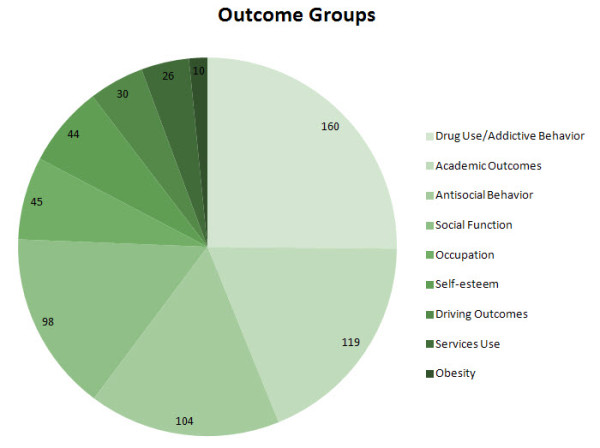
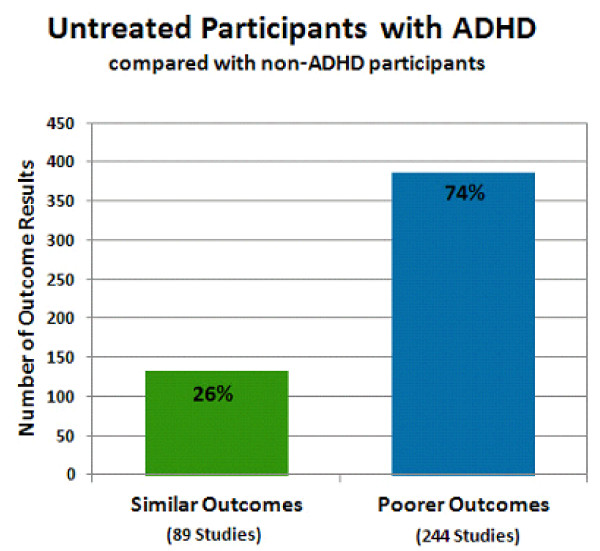
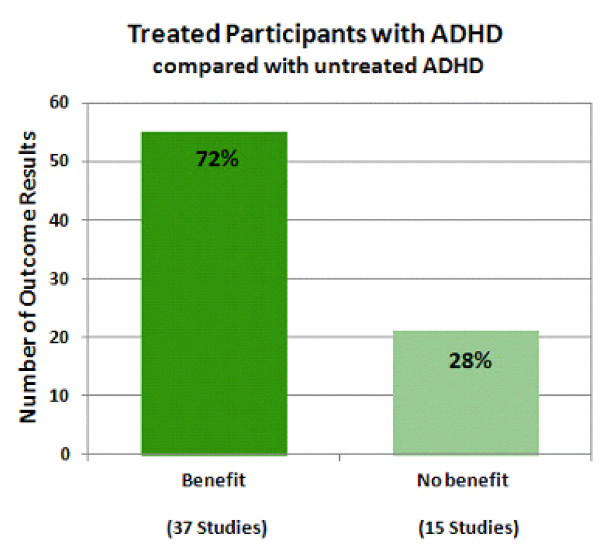
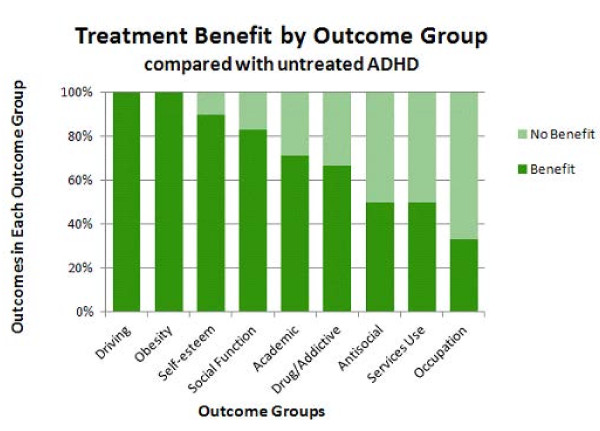
Background: In childhood, attention deficit/hyperactivity disorder (ADHD) is characterized by age-inappropriate levels of inattentiveness/disorganization, hyperactivity/impulsiveness, or a combination thereof. Although the criteria for ADHD are well defined, the long-term consequences in adults and children need to be more comprehensively understood and quantified. We conducted a systematic review evaluating the long-term outcomes (defined as 2 years or more) of ADHD with the goal of identifying long-term outcomes and the impact that any treatment (pharmacological, non-pharmacological, or multimodal) has on ADHD long-term outcomes. Methods: Studies were identified using predefined search criteria and 12 databases. Studies included were peer-reviewed, primary studies of ADHD long-term outcomes published between January 1980 to December 2010. Inclusion was agreed on by two independent researchers on review of abstracts or full text. Published statistical comparison of outcome results were summarized as poorer than, similar to, or improved versus comparators, and quantified as percentage comparisons of these categories. Results: Outcomes from 351 studies were grouped into 9 major categories: academic, antisocial behavior, driving, non-medicinal drug use/addictive behavior, obesity, occupation, services use, self-esteem, and social function outcomes. The following broad trends emerged: (1) without treatment, people with ADHD had poorer long-term outcomes in all categories compared with people without ADHD, and (2) treatment for ADHD improved long-term outcomes compared with untreated ADHD, although not usually to normal levels. Only English-language papers were searched and databases may have omitted relevant studies. Conclusions: This systematic review provides a synthesis of studies of ADHD long-term outcomes. Current treatments may reduce the negative impact that untreated ADHD has on life functioning, but does not usually 'normalize' the recipients.
Overview
The claims and statistics of this paper haven’t been checked yet.
Free: it reads the open-access text and checks the first 5 claims that cite a source we can check. Create a free account to check every claim.
Integrity signals
Registry
Cites
Statistics
Figures
Verification
Claims the paper makes
The claims and statistics of this paper haven’t been checked yet.
Free: it reads the open-access text and checks the first 5 claims that cite a source we can check. Create a free account to check every claim.
Claims other papers make about this one
Each is checked against this paper’s own text: does it say what the citing paper says it does?
The source backs part of the claim, not all of it — or backs it for a different population, condition or comparison.
In the citing paper
“ADHD improved long-term outcomes but generally not to normal levels 147 .”
From Attention-deficit/hyperactivity disorder (2015) · cites this paper as [147]
Experimental — accuracy not yet measured
Self-check
Percentages, sums and reported differences re-computed from the paper’s own numbers.
The self-check needs the paper’s full text.
Citations
Cites
Diagnostic and Statistical Manual of Mental Disorders
Williams, J. B. W., & First, M. (2013) · Encyclopedia of Social Work · doi:10.1093/acrefore/9780199975839.013.104 · Cited by 109,519
Diagnostic and Statistical Manual of Mental Disorders.
Widiger, T. A. (2000) · Encyclopedia of Psychology, Vol. 3. · doi:10.1037/10518-009 · Cited by 19,744
The worldwide prevalence of ADHD: a systematic review and metaregression analysis
Polanczyk, G., de Lima, M. S., Horta, B. L., Biederman, J., & Rohde, L. A. (2007) · American Journal of Psychiatry · doi:10.1176/ajp.2007.164.6.942 · Cited by 5,346 · cited 2×
“29% [3,4] with approximately 4% prevalence in adults [5,6].”
BackgroundKessler, R. C., Adler, L., Barkley, R., Biederman, J., Conners, C. K., Demler, O., Faraone, S. V., Greenhill, L. L., Howes, M. J., Secnik, K., et al. (2006) · American Journal of Psychiatry · doi:10.1176/ajp.2006.163.4.716 · Cited by 3,886 · cited 1×
“29% [3,4] with approximately 4% prevalence in adults [5,6].”
Background(1999) · Archives of General Psychiatry · doi:10.1001/archpsyc.56.12.1073 · Cited by 3,372
International Classification of Diseases
Jones, F. A. (1978) · Gut · doi:10.1136/gut.19.12.1175 · Cited by 2,911
FARAONE, S. V., BIEDERMAN, J., & MICK, E. (2006) · Psychological Medicine · doi:10.1017/s003329170500471x · Cited by 2,267 · cited 1×
“According to one meta-analysis, ADHD persists in about 65% of adults diagnosed as children if ADHD in partial remission is included [7], and in about 50% of * Correspondence: phodgkins@shire.”
MethodPliszka, S. (2007) · Journal of the American Academy of Child & Adolescent Psychiatry · doi:10.1097/chi.0b013e318054e724 · Cited by 1,765 · cited 1×
“ADHD treatment guidelines as well as conclusions drawn by health technology assessment agencies recognize that ADHD is potentially a lifelong condition with a profound effect on quality-of-life [22,25-32].”
BackgroundMannuzza, S. (1993) · Archives of General Psychiatry · doi:10.1001/archpsyc.1993.01820190067007 · Cited by 1,368 · cited 1×
“Persistence of ADHD may be related to ADHD symptom severity, number of symptoms, ADHD symptom subtype, ADHD in relatives, psychosocial adversity, psychiatric comorbidities, and/or parental psychopathology [8-15].”
BackgroundCross-national prevalence and correlates of adult attention-deficit hyperactivity disorder
Fayyad, J., De Graaf, R., Kessler, R., Alonso, J., Angermeyer, M., Demyttenaere, K., De Girolamo, G., Haro, J. M., Karam, E. G., Lara, C., et al. (2007) · British Journal of Psychiatry · doi:10.1192/bjp.bp.106.034389 · Cited by 1,321 · cited 1×
“29% [3,4] with approximately 4% prevalence in adults [5,6].”
Background
Research works printed but not linked: 7
- National Institute for Health and Clinical Excellence: Attention deficit hyperactivity disorder: the NICE guideline on diagnosis and management of adhd in children, young people and adults. 2009, Leicester, UK: The British Psychological Society and The Royal College of Psychiatrists
- Canadian Attention Deficit Hyperactivity Disorder Resource Alliance: Canadian ADHD Practice Guidelines (CAP-Guidelines). 2011, Toronto, Canada: Canadian Attention Deficit Hyperactivity Disorder Resource Alliance (CADDRA)
- National Health and Medical Research Council: Australian Guidelines on Attention Deficit Hyperactivity Disorder (ADHD). 2009, Sydney, Australia: The Royal Australasian College of Physicians
- Scottish Intercollegiate Guidelines Network: Management of attention deficit and hyperkinetic disorders in children and young people: a national clinical guideline. 2009, Edinburgh, UK: Scottish Intercollegiate Guidelines Network
- Canadian Agency for Drugs and Technologies in Health: Quality Assessment of the Canadian Attention Deficit Hyperactivity Disorder Resource Alliance ADHD Practice Guidelines in Adults with ADHD. 2011, Toronto, Canada: Canadian Agency for Drugs and Technologies in Health
- McDonagh M, Christensen V, Peterson K, Thakurta S: Pharmacologic treatments for attention deficit hyperactivity disorder. Drug class review. 2009, Portland, OR: Oregon Health & Science University
- DuPaul GJ, Power TJ, Anastopoulos AD, Reid R: ADHD rating scale-IV: checklists norms and interpretations. 1998, New York, NY: The Guilford Press
Cited by
Items 701–757 of 757
Ntini, I., Nilsson, K. W., Ramklint, M., Aila-Gustafsson, S., & Sonnby, K. (2025) · Nordic Journal of Psychiatry · doi:10.1080/08039488.2025.2588759
“As ADHD symptoms and impairment often persist into adulthood, early recognition, diagnosis, and treat-ment are crucial to prevent poor outcomes [4,10,11].”
Baggio, S., Billieux, J., Dirkzwager, A., Iglesias, K., Moschetti, K., Perroud, N., Schneider, M., Vernaz, N., Wolff, H., & Heller, P. (2024) · Figshare · doi:10.6084/m9.figshare.24946694
Baggio, S., Billieux, J., Dirkzwager, A., Iglesias, K., Moschetti, K., Perroud, N., Schneider, M., Vernaz, N., Wolff, H., & Heller, P. (2024) · Figshare · doi:10.6084/m9.figshare.26660876
Baggio, S., Billieux, J., Dirkzwager, A., Iglesias, K., Moschetti, K., Perroud, N., Schneider, M., Vernaz, N., Wolff, H., & Heller, P. (2024) · Figshare · doi:10.6084/m9.figshare.24946327
Selaskowski, B., Asché, L., Wiebe, A., Kannen, K., Aslan, B., Gerding, T. M., Sanchez, D., Ettinger, U., Kölle, M., Lux, S., et al. (2024) · Figshare · doi:10.6084/m9.figshare.26564472
Price, A., Mitchell, S., Janssens, A. I. W. A., Eke, H., Ford, T. J., & Newlove-Delgado, T. (2022) · Figshare · doi:10.6084/m9.figshare.19572531
Enache, R. G., Sălceanu, C., Matei, R. S., & Miloș, C.-A. (2026) · Frontiers in Psychiatry · doi:10.3389/fpsyt.2025.1717336
van der Plas, N. E., Kaag, A. M., Franke, B., Hartman, C. A., Hoekstra, P. J., Rommelse, N. N. J., Sprooten, E., Oosterlaan, J., Luman, M., & Noordermeer, S. D. S. (2026) · Neurodiversity · doi:10.1177/27546330261480183
Varied presentations of undiagnosed ADHD in adolescents: A case series
Usmani, S. B., Khanna, P., & Timothy, A. (2026) · Industrial Psychiatry Journal · doi:10.4103/ipj.ipj_318_25
Bachmann, C., Mehl, C., Müller, T., Hibbert, P. D., Heinzel-Gutenbrunner, M., Iqbal, F. M., & Geraedts, M. (2026) · Deutsches Ärzteblatt international · doi:10.3238/arztebl.m2026.0031
Wudy, S., Mauche, N., Huang, J., Makiol, C., & Strauß, M. (2026) · Research Square · doi:10.21203/rs.3.rs-8518298/v1
Pulk, K., Schotter, G., Anier, K., & Kalda, A. (2026) · Epigenetics Reports · doi:10.1080/28361512.2026.2650336
Ay, B., & Balatacı, U. (2026) · Frontiers in Psychiatry · doi:10.3389/fpsyt.2026.1704757
“ADHD often co-occurs with disruptive, anxiety, or learning problems and may persist into adolescence, generating a sustained need for monitoring and treatment (2).”
Clinical predictors of stimulant efficacy in adults with ADHD
DiSalvo, M., Biederman, J., O’Connor, H., Iorini, M., Green, A., Woodworth, K. Y., Wozniak, J. R., Joshi, G., Gabrieli, J. D. E., & Uchida, M. (2026) · Therapeutic Advances in Psychopharmacology · doi:10.1177/20451253261428807
Similitudes et différences entre le TDAH et le TSA, illustrées par l’étude du défaut d’inhibition
Septier, M. (2019) · theses.fr (ABES) · doi:10.70675/22fe83c2z678fz4b7ezac95z1af4554dfcbf
Kawasaki, M., Matsumoto, K., 里紗, 坂., Yamamoto, T., Tachibana, M., Mohri, I., Hanafusa, M., Furukawa, K., Miyake, W., Ishii, A., et al. (2026) · Child Psychiatry & Human Development · doi:10.1007/s10578-026-02011-9
Luo, J., Shao, W., Wu, Y., huang, H., Xu, G., Qi, Y., Overton, P. G., Zheng, Y., & He, F. (2026) · Journal of Psychiatric Research · doi:10.1016/j.jpsychires.2026.04.014
ADHD and problem behaviour: A neuropsychological approach
Lalatović, S., Popović-Ćitić, B., Krstić, N. S., & Pavlović, V. (2026) · Psiholoska istrazivanja · doi:10.5937/psistra0-60223
AlQurashi, F. O., Alghamdi, A., Al-Omari, M. A., Alamri, A., Alawami, A. H., AlAmmari, A. M., Abutaki, F. H., AlShawaf, S. H., & Abalkhail, D. S. (2026) · Saudi Journal of Medicine and Medical Sciences · doi:10.4103/sjmms.sjmms_543_25
“[12,13] Teachers in the present study also displayed poor awareness of services available for children with disabilities, with 10% being knowledgeable about the support systems in the Kingdom.”
Nawarathna, G. S., Ariyasinghe, D. I., Balasooriya, N., Fernando, A., & Dassanayake, T. L. (2026) · Nutritional Neuroscience · doi:10.1080/1028415x.2026.2659148
Koutra, K., Mouatsou, C., Margetaki, K., Roumeliotaki, T., Psoma, S., Kampouri, M., & Chatzi, L. (2026) · Social Psychiatry and Psychiatric Epidemiology · doi:10.1007/s00127-026-03103-6
“Among externalizing disorders, ADHD is the most prevalent, characterized by early onset and a strong association with long-term outcomes, including academic difficulties, social challenges, and an increased risk of further psychopathology or comorbid conditions [5 , 6 ].”
PEHLEVAN, Ö. S., Kardaş, B., & Yildiz, K. (2026) · Journal of Paediatrics and Child Health · doi:10.1111/jpc.70444
Abe, T. (2026) · BMJ Case Reports · doi:10.1136/bcr-2025-271679
Gregg, R., Anupindi, V. R., Stuart, J., Weddige, K., Munnangi, S., DeKoven, M., & Sallee, R. (2026) · Clinical Therapeutics · doi:10.1016/j.clinthera.2026.05.002
Yu, A., Smart, R., & Mulcahy, A. W. (2026) · Health Affairs Scholar · doi:10.1093/haschl/qxag136
Landi, P., Olivola, M., Ciechi, A. D., Giacovelli, L., Reibman, Y. L., Venturi, V., Viganò, V., & Dell’Osso, B. M. (2026) · Brain Sciences · doi:10.3390/brainsci16060577
Bryant, E. F., Hallet, D., Nielsen, E. E., Evans, T., Rees-Lee, J. E., Riley, N., Newlove‐Delgado, T., & Price, A. (2026) · JMIR Formative Research · doi:10.2196/85013
“When compared to people without ADHD, those with ADHD face poorer outcomes whether their condition is treated or untreated [3].”
Prevalence of Physical Activity and its Association with Medication Use Among Children With ADHD
Alotaibi, M. M., Alrashdi, N. Z., Alanazi, S. A., Alkhalidi, M. M., ALMUTAIRI, M. K., Alzubaidi, B. Y., & Alqahtani, M. Μ. (2026) · Current Psychology · doi:10.1007/s12144-026-09712-3
“ADHD is manifested by symptoms of inattention, hyper-activity, and impulsivity, leading to impaired academic performance (Shaw et al., 2012 ; Willoughby, 2003 ), job loss/ unemployment (Arnold et al., 2020), impaired professional performance (Arnold et al., 2020 ), and reduced quality of life…”
Dachew, B. A., Damtie, Y., Ayano, G., & Alati, R. (2026) · Child and Adolescent Mental Health · doi:10.1111/camh.70101
The Epidemiology of ADHD Across the Lifespan
Ayano, G., Pollard, C. M., Rooney, R. M., & Alati, R. (2026) · SpringerBriefs in modern perspectives on disability research. · doi:10.1007/978-981-95-8712-4_2
ADHD in Global and National Health Frameworks
Ayano, G., Pollard, C. M., Rooney, R. M., & Alati, R. (2026) · SpringerBriefs in modern perspectives on disability research. · doi:10.1007/978-981-95-8712-4_10
Moskovchenko, D. V., Потанин, С. С., Еричев, А. Н., Buranova, N. M., & Poilova, Y. P. (2026) · V M BEKHTEREV REVIEW OF PSYCHIATRY AND MEDICAL PSYCHOLOGY · doi:10.31363/2313-7053-2026-23-1207
Kelly, T., May, B., Porter, C. N., & Palace, M. (2026) · Journal of Attention Disorders · doi:10.1177/10870547261469625
Iwanami, A., Nakamura, D., Ito, K., Sakayoshi, N., Yamato, K., Kondo, T., Oberdhan, D., Machizawa, S., Busner, J., & Adler, L. A. (2026) · Frontiers in Psychiatry · doi:10.3389/fpsyt.2026.1857145
“However, appropriate treatment interventions can improve these adverse outcomes (21, 22).”
A neuroanatomical basis for co-occurring low attention and low reading ability
Romano, M. F., Nedelec, P., Mandelli, M. L., Yeatman, J. D., Bonham, L. W., Pinheiro‐Chagas, P., Sugrue, L. P., Gorno‐Tempini, M., & Rauschecker, A. M. (2026) · Cerebral Cortex · doi:10.1093/cercor/bhag100
“Additionally, while ADHD is associated with several negative outcomes including poor school performance, poor social function, and drug use, treatment can ameliorate them ( Shaw et al. 2012; Rajaprakash and Leppert 2022).”
Fletcher, M. A., Pan, W., Duquette, P. J., Dew, R. E., & Reuter‐Rice, K. (2026) · PLoS ONE · doi:10.1371/journal.pone.0350337
“Consistent with this hypothesis, numerous studies have reported beneficial effects of medication on functional and health outcomes across childhood, adolescence, and adulthood [20–23].”
Varvas, T., Haan, E., Hegemann, L., Pujol‐Gualdo, N., Babok, S., Pärna, K., Kurvits, S., Kõiv, K., Laisk, T., Havdahl, A., et al. (2026) · Research Square · doi:10.21203/rs.3.rs-10457433/v1
Penning, L., Daseking, M., & Koerner, J. K. A. (2026) · Child Psychiatry & Human Development · doi:10.1007/s10578-026-02074-8
黄, 雪. (2026) · International Journal of Psychiatry and Neurology · doi:10.12677/ijpn.2026.153009
Pietras, P., Świetlicka, G., Chawryło, A., Łupina-Romaniuk, M., Kołodziejczyk, J., Oleksińska, K., Piecuch, D., Stolarczyk, M., Pietrzak, M., & Pracoń, K. (2026) · Quality in Sport · doi:10.12775/qs.2026.69.74348
M-Health Interventions to Support Parents of Children with ADHD: A Systematic Review
Ameri, A., Salmanizadeh, F., & Khajouei, R. (2026) · Clinical Child and Family Psychology Review · doi:10.1007/s10567-026-00583-5
Chronis-Tuscano, A. M., Bounoua, N., Danko, C. M., Almirall, D., Lui, J. H. L., Marschall, D., Taubin, D., Bui, H. N. T., Marsh, N. P., Efron, L. A., et al. (2026) · Journal of Child Psychology and Psychiatry · doi:10.1111/jcpp.70222
van der Meulen, R. T., van Steensel, F. J. A., de Bruin, E. I., Korf, W., & Bögels, S. M. (2026) · Journal of Attention Disorders · doi:10.1177/10870547261469623
“Beyond symptom reduction, ADHD treatment is associated with decreased risk of adverse and costly outcomes, including criminality, traffic accidents, occupational impairment, substance use, and obesity (Shaw et al., 2012).”
Bridging gaps in ADHD care globally: lessons from the NHS England independent taskforce report
Khan, Y. S., Khan, A. W., Sadiq, K. T., Bachlani, A., Farrow, J., & Wadoo, O. (2026) · The British Journal of Psychiatry · doi:10.1192/bjp.2026.10757
Williams, T., Jones, R. B., Livingston, L. A., Agha, S. S., Barclay, I., Ford, T. J., John, A., Sayal, K. S., Thapar, A., & Martin, J. (2026) · Neurodiversity · doi:10.1177/27546330261487214
Machine Learning–Based Classification of Conduct Disorder Comorbidity in Youth With ADHD
Cagir, B., Kurban, R., & ÖZMEN, S. (2026) · Brain and Behavior · doi:10.1002/brb3.71784
“Previous studies have linked prolonged untreated impulsivity and behavioral dysregulation to increased risk of delinquency and substance use (Thapar et al. 2001 ; Shaw et al. 2012 ; Applegate et al. 1997 ; Gómez-Beneyto et al. 1994 ).”
Li, C., Chen, Q., Li, C., & He, W. (2026) · Academic Pediatrics · doi:10.1016/j.acap.2026.103474
Yamaguchi, T., Watanabe, J., ONISHI, K., & Ito, T. (2026) · Brain and Development · doi:10.1016/j.braindev.2026.104608
From childhood to adulthood: an attempt to model long-term outcomes of ADHD using machine learning
van der Plas, N. E., Bennis, F., Franke, B., Hartman, C., Hoekstra, P. J., Nijmeijers, A., Oblong, L., Rommelse, N. N. J., Sprooten, E., Luman, M., et al. (2026) · European Child & Adolescent Psychiatry · doi:10.1007/s00787-026-03204-2
Johansson, M., Dick, A. S., & Graziano, P. A. (2026) · Journal of Clinical Child & Adolescent Psychology · doi:10.1080/15374416.2026.2745071
Chutko, L. S., Surushkina, S. Y., Yakovenko, E. A., & Щеглова, Л. В. (2026) · S S Korsakov Journal of Neurology and Psychiatry · doi:10.17116/jnevro202612609273
Rotschedl, J., & Barák, V. (2026) · Cogent Economics & Finance · doi:10.1080/23322039.2026.2743970
Mahon, D. (2026) · Mental Health and Social Inclusion · doi:10.1108/mhsi-08-2026-0330
Ruffer, H. C., Jones, E. J. H., & Meaburn, E. L. (2026) · European Child & Adolescent Psychiatry · doi:10.1007/s00787-026-03235-9
Victor, M. M. (2014) · Lume (Universidade Federal do Rio Grande do Sul) · Cited by 3
McLeod, K. (2015) · Libraries and Cultural Resources (University of Calgary) · doi:10.5072/prism/26240
Metadata
- Authors
- Shaw, M., Hodgkins, P., Caci, H., Young, S., Kahle, J., Woods, A. G., & Arnold, L. E.
- Affiliations
- Shire (United Kingdom) (GB)
- Centre Hospitalier Universitaire de Nice (FR)
- King's College London (GB)
- Clarkson University (US)
- The Ohio State University (US)
- Corresponding author
- Hodgkins, Paul
- Venue
- BMC Medicine
- Published
- 2012-09-04
- Volume
- 10
- Issue
- 1
- Pages
- 99-99
- ISSN
- 1741-7015 (ISSN-L)
- PMC
- PMC3520745
- OpenAlex
- W2058562698
- Cited by
- 759
- References
- 69
- Citations by year
- 2026: 71 · 2025: 64 · 2024: 72 · 2023: 72 · 2022: 67 · 2021: 57 · 2020: 49 · 2019: 47 · 2018: 50 · 2017: 35 · 2016: 53 · 2015: 54 · 2014: 39 · 2013: 27 · 2012: 1
- FWCI
- 5.20
- Type
- journal article
- Language
- en
- Open access
- gold
- doi.org
- Licence
- Locations
- BMC Medicine (publishedVersion, cc-by)
- Europe PMC (PubMed Central) (publishedVersion, cc-by)
- PubMed Central (publishedVersion, cc-by)
- PubMed (publishedVersion)
- DOAJ (DOAJ: Directory of Open Access Journals) (submittedVersion, cc-by-sa)
- Research Portal (King's College London) (submittedVersion)
- Topics
- Health Sciences › Medicine › Psychiatry and Mental health › Attention Deficit Hyperactivity Disorder
- Health Sciences › Medicine › Epidemiology › Substance Abuse Treatment and Outcomes
- Social Sciences › Psychology › Developmental and Educational Psychology › Behavioral and Psychological Studies
- Keywords
- attention deficit hyperactivity disorder, long-term outcomes, ADHD treatment, untreated ADHD, educational outcomes, antisocial behavior, driving, substance use, obesity, occupation, health care utilization, self-esteem, social functioning, pharmacotherapy, non-pharmacological treatment
- MeSH terms
- Adolescent, Adult, Aged, Aged, 80 and over, Attention Deficit Disorder with Hyperactivity, Child, Humans, Middle Aged, Social Behavior, Treatment Outcome, Young Adult
About these checks
Registry, retraction, Cites and statistics results are computed, not judged, with one exception: a printed reference that no index lists is read once by a model before it counts as a citation error. Claims are extracted by a model and kept only when their quote appears verbatim in the text; each cited source is then checked, with a model’s help, for whether it says what the claim relies on. Those verdicts can be wrong — read the claim’s quote and the cited source before relying on one.
Statistics and arithmetic are recomputed, not judged.
Confidence bands are shown only for fields calibrated on our annotated test set. None is calibrated yet, so no band is shown.
What counts as a claim ›How we measure confidence ›How we check this ›
Are you an author, or do you see a problem with this page? Request a review
Data sources
Bibliographic data: Semantic Scholar, OpenAlex, Crossref.
Contains information from the Semantic Scholar Academic Graph Datasets, made available under the ODC Attribution License (ODC-BY 1.0).
Semantic Scholar’s data is described in: Kinney, R., et al. (2023). The Semantic Scholar Open Data Platform. arXiv:2301.10140.
