

Targeted exercise against osteoporosis: A systematic review and meta-analysis for optimising bone strength throughout life
Open accessThe DOI matches its Crossref record; 75 of the 75 references it cites were found in a registry or an index.
Abstract
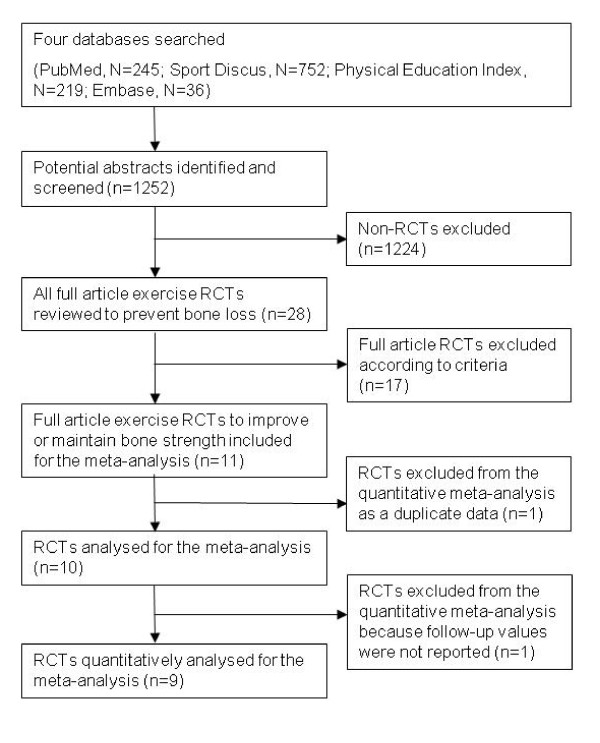
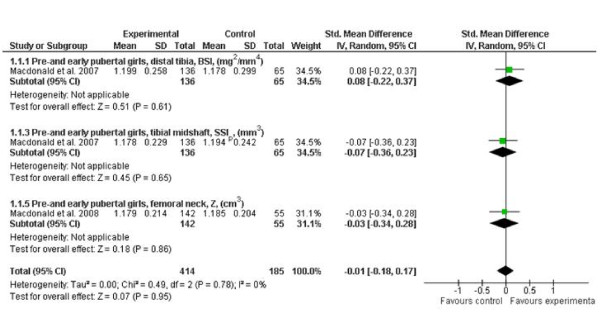
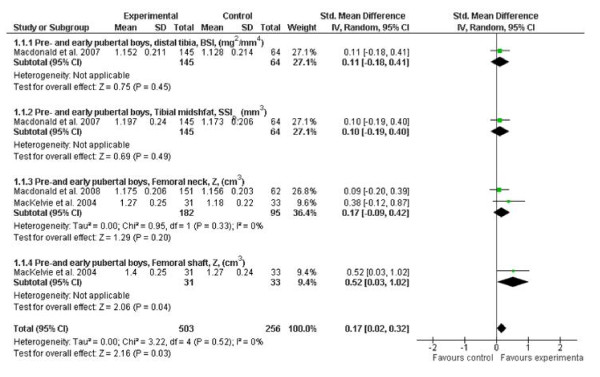
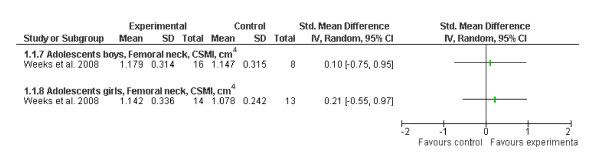
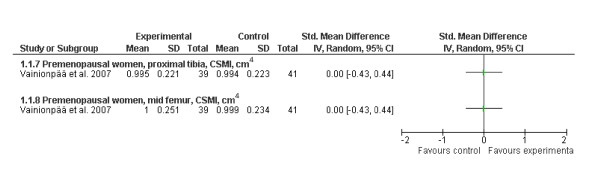
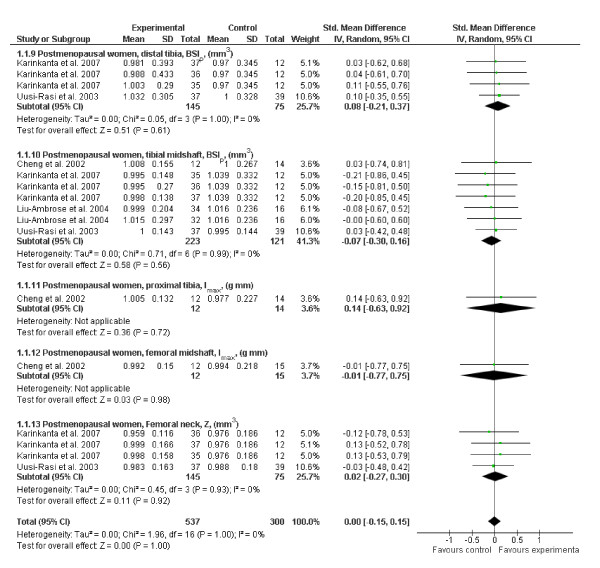
BACKGROUND: Exercise is widely recommended to reduce osteoporosis, falls and related fragility fractures, but its effect on whole bone strength has remained inconclusive. The primary purpose of this systematic review and meta-analysis was to evaluate the effects of long-term supervised exercise (> or =6 months) on estimates of lower-extremity bone strength from childhood to older age. METHODS: We searched four databases (PubMed, Sport Discus, Physical Education Index, and Embase) up to October 2009 and included 10 randomised controlled trials (RCTs) that assessed the effects of exercise training on whole bone strength. We analysed the results by age groups (childhood, adolescence, and young and older adulthood) and compared the changes to habitually active or sedentary controls. To calculate standardized mean differences (SMD; effect size), we used the follow-up values of bone strength measures adjusted for baseline bone values. An inverse variance-weighted random-effects model was used to pool the results across studies. RESULTS: Our quality analysis revealed that exercise regimens were heterogeneous; some trials were short in duration and small in sample size, and the weekly training doses varied considerably between trials. We found a small and significant exercise effect among pre- and early pubertal boys [SMD, effect size, 0.17 (95% CI, 0.02-0.32)], but not among pubertal girls [-0.01 (-0.18 to 0.17)], adolescent boys [0.10 (-0.75 to 0.95)], adolescent girls [0.21 (-0.53 to 0.97)], premenopausal women [0.00 (-0.43 to 0.44)] or postmenopausal women [0.00 (-0.15 to 0.15)]. Evidence based on per-protocol analyses of individual trials in children and adolescents indicated that programmes incorporating regular weight-bearing exercise can result in 1% to 8% improvements in bone strength at the loaded skeletal sites. In premenopausal women with high exercise compliance, improvements ranging from 0.5% to 2.5% have been reported. CONCLUSIONS: The findings from our meta-analysis of RCTs indicate that exercise can significantly enhance bone strength at loaded sites in children but not in adults. Since few RCTs were conducted to investigate exercise effects on bone strength, there is still a need for further well-designed, long-term RCTs with adequate sample sizes to quantify the effects of exercise on whole bone strength and its structural determinants throughout life.
Overview
The claims and statistics of this paper haven’t been checked yet.
Free: it reads the open-access text and checks the first 5 claims that cite a source we can check. Create a free account to check every claim.
Integrity signals
Registry
Cites
Statistics
Figures
Verification
Claims the paper makes
The claims and statistics of this paper haven’t been checked yet.
Free: it reads the open-access text and checks the first 5 claims that cite a source we can check. Create a free account to check every claim.
Claims other papers make about this one
Each is checked against this paper’s own text: does it say what the citing paper says it does?
In the citing paper
“It is also important in musculoskeletal health, maintaining bone and skeletal muscle mass as well as attenuating the major features of ageing.10,11”
From Reduced physical activity in young and older adults: Metabolic and musculoskeletal implications (2019) · cites this paper as [10]
In the citing paper
“The number of trials focusing on bone structure and strength among aging people is, however, limited, and studies have reported conflicting results,( 38 , 39 ) possibly owing to short training periods and/or less‐intensive training regimens.”
From Regular Strength and Sprint Training Counteracts Bone Aging: A 10‐Year Follow‐Up in Male Masters Athletes (2021) · cites this paper as [38]
Self-check
Percentages, sums and reported differences re-computed from the paper’s own numbers.
The self-check needs the paper’s full text.
Citations
Cites
Cochrane Handbook for Systematic Reviews of Interventions: Cochrane Book Series
(2008) · doi:10.1002/9780470712184 · Cited by 25,048
Epidemiology and outcomes of osteoporotic fractures
Cummings, S. R., & Melton, L. J. (2002) · The Lancet · doi:10.1016/s0140-6736(02)08657-9 · Cited by 3,821
Bone Quality — The Material and Structural Basis of Bone Strength and Fragility
Seeman, E., & Delmas, P. D. (2006) · New England Journal of Medicine · doi:10.1056/nejmra053077 · Cited by 2,080 · cited 1×
“Overall, it is clear from this review that further adequately powered and long-term (>2 years) intervention trials are needed, particularly in adults, because changes in bone structural properties are reportedly small throughout adult life [42].”
BackgroundA reference standard for the description of osteoporosis
Kanis, J. A., McCloskey, E. V., Johansson, H., Oden, A., Melton, L. J., & Khaltaev, N. (2008) · Bone · doi:10.1016/j.bone.2007.11.001 · Cited by 1,234 · cited 1×
“Despite reports that BMD is a good predictor of population fracture risk [6], current research indicates that up to 80% of all low-trauma fractures occur in individuals who are not osteoporotic but have normal or somewhat reduced BMD, i.”
BackgroundExercise for preventing and treating osteoporosis in postmenopausal women
Howe, T. E., Shea, B., Dawson, L. J., Downie, F., Murray, A., Ross, C., Harbour, R. T., Caldwell, L. M., & Creed, G. (2011) · Cochrane Database of Systematic Reviews · doi:10.1002/14651858.cd000333.pub2 · Cited by 1,083
Kannus, P., Haapasalo, H., Sankelo, M., Sievanen, H., Pasanen, M., Heinonen, A., Oja, P., & Vuori, I. (1995) · Annals of Internal Medicine · doi:10.7326/0003-4819-123-1-199507010-00003 · Cited by 757 · cited 2×
“We included studies from the prepubertal period (≥6 to 10 years of age) to older age (≥50) and analysed the results by age groups (childhood, adolescence, adulthood and older adulthood) to reduce the clinical heterogeneity since the effects of exercise on bone strength is an age- and maturity- dependent phenomenon [12…”
BackgroundSelf-citationWolff, I., van Croonenborg, J. J., Kemper, H. C. G., Kostense, P. J., & Twisk, J. W. R. (1999) · Osteoporosis International · doi:10.1007/s001980050109 · Cited by 589 · cited 3×
“In postmenopausal women, there are mixed results from several meta-analyses reviewing the effects of aerobic training, weight-bearing impact exercise, resistance training or their combination on BMD [26,28,29,31-36].”
BackgroundResultHind, K., & Burrows, M. (2007) · Bone · doi:10.1016/j.bone.2006.07.006 · Cited by 543
Haapasalo, H., Kontulainen, S., Sievänen, H., Kannus, P., Järvinen, M., & Vuori, I. (2000) · Bone · doi:10.1016/s8756-3282(00)00331-8 · Cited by 502 · cited 2×
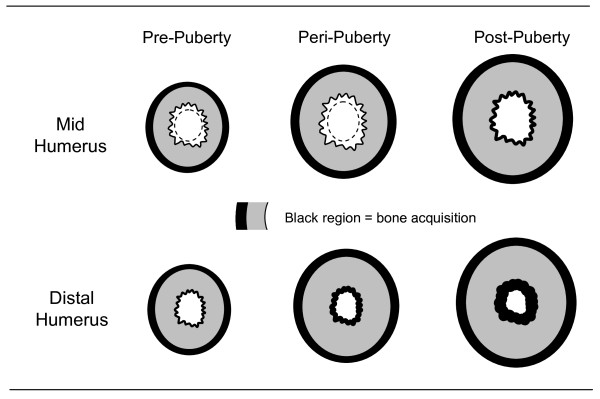
“For example, in the prepubertal players, loading resulted in increased expansion at the midhumerus but no change or endocortical apposition at the distal humerus [44-47].”
BackgroundSelf-citationWalking and Leisure-Time Activity and Risk of Hip Fracture in Postmenopausal Women
Feskanich, D. (2002) · JAMA · doi:10.1001/jama.288.18.2300 · Cited by 501 · cited 1×
“However, epidemiological evidence suggests that moderate to vigorous physical activity performed three to four times per week is associated with considerably lower incidence of fragility fractures in both women and men [70,71].”
Background
Research works printed but not linked: 1
- US Department of Health and Human Services Bone Health and Osteoporosis: A Report of the Surgeon General Rockville, MD, US Department of Health and Human Services, Office of the Surgeon General 2004
Cited by
Items 401–500 of 504
Hazar, S., & Kurt, S. (2016) · Turkish Journal of Sport and Exercise · doi:10.15314/tjse.50308
“Moreover a lot of studies demonstrate exercise and physical activity positively effects bone mineral density (BMD) and body composition (32).”
BackgroundHamdy, R. C. (2016) · Cambridge University Press eBooks · doi:10.1017/cbo9781316084380.045
OLSEN, M. E., & Rizk, B. M. (2016) · Cambridge University Press eBooks · doi:10.1017/cbo9781316084380.035
Huovinen, V. (2015) · European Society of Radiology · doi:10.1594/ecr2015/c-0387
Bone strength, load tolerance and injury risk in elite Australian football
Hart, N. H. (2015) · Research Online (Edith Cowan University)
Lessons Learned from Clinical Research Using QCT, pQCT, and HR-pQCT
MACDONALD, H. M., McKay, H. A., & Leonard, M. B. (2016) · Springer eBooks · doi:10.1007/978-3-319-30412-0_11
Puolakkainen, T., Ma, H., Pasternack, A. H., Kainulainen, H., Ritvos, O., Heikinheimo, K., Hulmi, J. J., & Kiviranta, R. (2013) · Bone Abstracts · doi:10.1530/boneabs.01.oc2.1
LONGITUDINAL FOLLOW-UP OF OSTEOPOROSIS ASSOCIATED WITH PREGNANCY
Серова, Н. С., Drapalyuk, I. B., Abnizov, A. S., & Babkova, A. A. (2017) · Russian Electronic Journal of Radiology · doi:10.21569/2222-7415-2017-7-1-136-144
The effects of the CHANGE! intervention on children's physical activity and health
Mackintosh, K. A. (2012) · Liverpool John Moores University
Exercise for Prevention of Bone Loss: The Role of Sports Medicine
KEMMLER, W. K., & von Stengel, S. (2017) · Springer eBooks · doi:10.1007/978-3-319-54016-0_6 · Cited by 1
Michaëlsson, K., & Melhus, H. (2017) · Journal of Internal Medicine · doi:10.1111/joim.12640
The effects of energy availability on bone metabolism and health
Papageorgiou, M. (2016) · Nottingham Trent University's Institutional Repository (Nottingham Trent Repository)
HIGH-IMPACT DROP EXERCISE ALTERS MECHANICAL PROPERTIES IN OSTEOPENIC BONE
Asano, F. S., Val, F., Serafim, T. T., Falcai, M. J., Okubo, R., & Shimano, A. C. (2017) · Revista Brasileira de Medicina do Esporte · doi:10.1590/1517-869220172304170466
Rodrigues, I. B. (2017) · MacSphere (McMaster University) · doi:10.71548/10830
Hamilton, C. J. (2013) · TSpace (University of Toronto)
The Effect of Exercise on Balance: Emphasis on Women Diagnosed with Parkinson’s Disease
Davis, R. (2017) · Journal of Gynecology and Womens Health · doi:10.19080/jgwh.2017.02.555592
“, pharmacological supplementation), can maintain and even increase BMD in this population [40,41].”
BackgroundBaptista, F., Lopes, E., Matute-Llorente, Á., Teles, J. M. V., & Zymbal, V. (2018) · Journal of Clinical Densitometry · doi:10.1016/j.jocd.2018.07.012
Magee, D. J., Zachazewski, J., Quillen, W. S., & Manske, R. C. (2016) · Elsevier eBooks · doi:10.1016/b978-0-323-31072-7.00031-2
Different Physical Activity Protocols in the Subjects Affected by Osteoporosis
Emerenziani, G. P., Greco, E. A., Guidetti, L., & Baldari, C. (2018) · Springer eBooks · doi:10.1007/978-3-319-75110-8_16
The effects of continuous, intermittent and mode of exercise on mechanical bone remodelling
Montgomery, G. (2017) · Repository@Hull (Worktribe) (University of Hull)
Bridge, A. D. (2019) · Brock University Digital Repository (Brock University)
Siqueira, M. S., Ribeiro, L. C. M., Cruz, C. A. B., Pansini, A. L. D. L., & Iack, P. L. (2019) · Anais do XVI Encontro Nacional de Pesquisadores em Serviço Social
Alshamrani, H. A. (2019) · White Rose eTheses Online (University of Leeds, The University of Sheffield, University of York)
Nutrition et activité physique : une combinaison gagnante pour la santé osseuse
Grégoire‐Pelchat, P., Marcotte‐Chénard, A., Riesco, É., & Mailhot, G. (2019) · Nutrition, science en évolution · doi:10.7202/1062453ar · Cited by 1
Matkovic, V. (2020) · Wiley eBooks · doi:10.1002/9781119171492.wecad021
O padrão da atividade física de brasileiros com osteoporose
de Lima, D. F., da Silva, M. P., Mazzardo, O., Sampaio, A. A., Anguera, M. D. G., Lima, L. A., & Luiz, O. D. C. (2019) · Revista Brasileira de Pesquisa em Saúde/Brazilian Journal of Health Research · doi:10.21722/rbps.v21i3.28205 · Cited by 5
Interacción del tipo de bota y superficie de juego en la salud ósea de niños y niñas futbolistas
Lozano‐Berges, G. (2018) · LA Referencia (Red Federada de Repositorios Institucionales de Publicaciones Científicas)
Morse, A. (2017) · The Sydney eScholarship Repository (The University of Sydney) · Cited by 1
Huuskonen, A. S. (2013) · UEF eRepo (University of Eastern Finland) · Cited by 2
Physical Activity and Psychological Well-Being in Older Adults
Zhang, Z. (2020) · Deep Blue (University of Michigan) · Cited by 1
jan (2010)
Shimano, R. C. (2017) · Digital Library of Theses and Dissertations (Universidade de São Paulo) · doi:10.11606/t.17.2017.tde-02072021-165716
Abdillah, A. A. Z. (2021) · Universiti Sains Malaysia Institutional Repository (Universiti Sains Malaysia)
Harris, T. L. (2021) · Open Scholarship Institutional Repository (Washington University in St. Louis) · doi:10.7936/zdk3-6790
Torró-Ferrero, G., Fernández‐Rego, F. J., Arenas, J. J. A., & Gómez‐Conesa, A. (2021) · Research Square · doi:10.21203/rs.3.rs-1037228/v1
(2011) · Current Opinion in Endocrinology Diabetes and Obesity · doi:10.1097/med.0b013e3283432fa7
(2020) · Elsevier eBooks · doi:10.1016/b978-0-08-101020-4.00018-5
Editorial - A resposta da ciência à pandemia
Tani, G. (2020) · Revista Portuguesa de Ciências do Desporto · doi:10.5628/rpcd.20.01.09
Dirkes, R. K. (2020) · MOspace Institutional Repository (University of Missouri) · doi:10.32469/10355/81560
Osteopenia e mobilidade funcional de membros inferiores em mulheres ativas pós-menopáusicas
de Castro, E. A., Lima, L. M., Cerqueira, M. S., Gobbi, S., & Aoimo, L. (2020) · Revista Portuguesa de Ciências do Desporto · doi:10.5628/rpcd.20.01.11
Effect of interval training exercises on bone mineral density indices in elderly women
Basha, S. A., El-Hady, A. A. A., Ali, Y. S. S., & Ismail, S. M. (2022) · International Journal of Health Sciences · doi:10.53730/ijhs.v6ns1.8195
Rybina, О. S. (2021) · PAIN JOINTS SPINE · doi:10.22141/2224-1507.11.4.2021.248247
“In accordance to the data of meta-analysis [9] as for the influence of regular sports or any type of PA on bone tissue status in different groups of patients, it was established that there is a slight positive effect of PA only in boys in the pre- or early puberty stage (relative risk (RR) – 0.”
ResultExercise and the Female Skeleton
Gabel, L., & MACDONALD, H. M. (2014) · Springer eBooks · doi:10.1007/978-1-4899-7525-6_4
Irisin: The Bony Builder Flexes Its Muscles
Ferron, M. (2022) · Diabetes · doi:10.2337/dbi22-0023
Wang, F. (2021) · Eötvös Loránd Tudományegyetem · doi:10.15476/elte.2021.015
Physical activity, exercise, and bone health
Gabel, L., MACDONALD, H. M., & McKay, H. A. (2023) · Oxford University Press eBooks · doi:10.1093/med/9780192843968.003.0022
Qian, X., Cao, X., Zhu, L., Yao, X., Gu, L., & Yu, X. (2024) · Journal of Orthopaedic Surgery and Research · doi:10.1186/s13018-024-04616-z
“When walking and jogging reach enough high mechanical stress, they will produce reaction force on the bone mass ground to stimulate the increase of bone mass and solve the poor bone density [21].”
BackgroundDetermination of Risk Factors of Osteoporosis in the Community of Post-Menopausal Age
Perveen, R., Shabbir, A., Azad, Z., & Azad, A. (2023) · Pakistan Journal of Health Sciences · doi:10.54393/pjhs.v5i02.1230
Agrawal, D. H., & Pallavi, Y. (2022) · Journal of Population Therapeutics and Clinical Pharmacology · doi:10.53555/jptcp.v29i04.5083
Paramètres de santé osseuse chez des jeunes adultes pratiquant le handball
Maliha, E. (2022) · theses.fr (ABES) · doi:10.70675/ace533f8zbae5z405cza8a3z7d80c580a484
Die Frau im Sport – was ist anders?
Wieloch, N., & Scherr, J. (2025) · Sportphysio · doi:10.1055/a-2468-4423 · Cited by 1
Guo, X., Xu, X., Geng, X., Zhang, Z., Ma, X., & Chen, W. (2025) · Medical & Biological Engineering & Computing · doi:10.1007/s11517-025-03335-9 · Cited by 1
Frauen im Sport – Geschlechtsspezifische Unterschiede
Wieloch, N., & Scherr, J. (2025) · physiopraxis · doi:10.1055/a-2561-7297
Physical Activity Effects on Bone Mass Density in Postmenopausal women” (A Review)
Pano, G., & Hoxholli, B. (2025) · Proceedings of the World Conference on Education · doi:10.33422/worldeduconf.v1i1.782
“While such training influences the functional status of these patients by diminishing fall risk and enhancing bone health, their resolve throughout exercise performance ultimately determines their progress (Varahra et al., 2018; Nikander et al., 2010; Kovács et al., 2013).”
Nos os sont plus fragiles que ceux de nos ancêtres chasseurs-cueilleurs, voici comment y remédier
Hind, K., & Roberts, C. (2018) · The Conversation · doi:10.64628/aak.m945qnd7j
Ružić, L., Rakovac, M., Bilić-Čurčić, I., Jakovac, D., & Berković, M. C. (2025) · Healthcare · doi:10.3390/healthcare13182328 · Cited by 1
“In contrast, non-weight-bearing activities, such as cycling and swimming, which are popular among older adults, do not provide enough stress to increase bone density [12].”
Moudgil, K., Bangalee, V., Alalbila, T. M., & Rekha, M. M. (2025) · International Journal of Research in Orthopaedics · doi:10.18203/issn.2455-4510.intjresorthop20253444
Physical activity, osteoporosis, and fracture risk : long-term associations in a general population
Morseth, B. (2011) · NVA (Nasjonalt vitenarkiv) · Cited by 2
Pinheiro, M., Oliveira, J. S., Bauman, A. E., Fairhall, N., Kwok, W. S., & Sherrington, C. (2020) · Figshare · doi:10.6084/m9.figshare.13290653
Pinheiro, M., Oliveira, J. S., Bauman, A. E., Fairhall, N., Kwok, W. S., & Sherrington, C. (2020) · Figshare · doi:10.6084/m9.figshare.13290656
Pinheiro, M., Oliveira, J. S., Bauman, A. E., Fairhall, N., Kwok, W. S., & Sherrington, C. (2020) · Figshare · doi:10.6084/m9.figshare.13290659
Pinheiro, M., Oliveira, J. S., Bauman, A. E., Fairhall, N., Kwok, W. S., & Sherrington, C. (2020) · Figshare · doi:10.6084/m9.figshare.13290650
Pinheiro, M., Oliveira, J. S., Bauman, A. E., Fairhall, N., Kwok, W. S., & Sherrington, C. (2020) · Figshare · doi:10.6084/m9.figshare.13290647
Junno, J.-A., Keisu, A., Niemelä, M., Modarress Julin, M., Korpelainen, R., Jämsä, T. J., Niinimäki, J. L., Lehenkari, P. P., & Oura, P. (2022) · Figshare · doi:10.6084/m9.figshare.19947717
Riquelme Gallego, B. (2020) · Institutional Repository of the University of Granada (University of Granada)
Varhaiskasvatusikäisten lasten unen määrän yhteys motorisiin taitoihin ja liikkumiseen
Mörsky, E., Mönkkönen, T., Laukkanen, A., Niemistö, D., Soini, A., & Sääkslahti, A. (2021) · Jyväskylä University Digital Archive (University of Jyväskylä) · Cited by 4
Osteoporosis : independent learning material for physiotherapy students
Härmä, M. (2023) · Theseus (Ammattikorkeakoulujen)
Huojunnan yhteys kaatumisen seurauksena syntyneisiin murtumiin ikääntyneillä naisilla
Modarress, M. (2013) · Jyväskylä University Digital Archive (University of Jyväskylä)
Beaulieu, S. (2024) · HARVEST (University of Saskatchewan)
Τασιά, Θ.-Μ. Β., & Φύκας, Γ. (2024) · University of Thessaly Institutional Repository (University of Thessaly)
Martos Arregui, A. (2022) · Deposito de Investigacion Universidad de Sevilla (University of Seville)
da Rocha, P. M. N. G. (2021) · Portuguese National Funding Agency for Science, Research and Technology (RCAAP Project by FCT) · doi:10.34626/t61x-ae29
Pubertal Timing as a Determinant of Lifelong Bone Health in Females: A Longitudinal Evidence Review
Mishra, S., Indracanti, M., Panda, M., Rout, E., Gunturu, C., & Akkiraju, P. C. (2025) · Journal of Carcinogenesis · doi:10.64149/j.carcinog.24.5s.106-117
Bone Health and Development in Children and Adolescents, volume II
(2025) · Frontiers research topics · doi:10.3389/978-2-8325-7103-3
IMPACT OF PHYSICAL ACTIVITY ON HEALTH AND AGING: A SYSTEMATIC REVIEW OF BENEFITS FOR OLDER ADULTS
Stryjecka, J., Rozenberg, K., Niewola, K., & Różańska, M. (2025) · International Journal of Innovative Technologies in Social Science · doi:10.31435/ijitss.4(48).2025.4265 · Cited by 1
Avaliação e prescrição de exercícios físicos para grupos especiais (osteoporose)
de Oliveira, R. V., Martins, M. S., & Miranda, V. P. N. (2025) · Cuadernos de Educación y Desarrollo · doi:10.55905/cuadv17n12-100
Li, C., Gong, H., Cen, H., Wu, X., WANG, L., & Yubo, F. (2026) · BMC Musculoskeletal Disorders · doi:10.1186/s12891-026-09513-6
“Moreover, moderate-intensity physical activity performed 3–4 times weekly significantly reduced fracture risk in both male and female volunteers [12].”
Effect of swimming on bone mass and structure during growth and development
Bezerra, A. B. G. (2022) · Portuguese National Funding Agency for Science, Research and Technology (RCAAP Project by FCT)
L'activité physique, arbitre des relations entre le statut pondéral et la physiologie osseuse ?
Rassy, N. (2018) · theses.fr (ABES) · doi:10.70675/85356319zd8d6z4e65z8ae6za4c843566bd9
Influence de la pratique du sprint sur la densité minérale osseuse chez les hommes
Hawly, W. E. (2024) · theses.fr (ABES) · doi:10.70675/8fceb80dz13a7z48a9zbc39zb65b4cafee4b
Scott, R., Sale, C., James, R. M., Barnett, C. T., & Varley, I. (2026) · Bone · doi:10.1016/j.bone.2026.117903
The movement imperative: reimagining healthcare through the lens of human movement
Mangalam, M., & Fabianiak, J. (2026) · Frontiers in Sports and Active Living · doi:10.3389/fspor.2026.1667847
Ju, Y.-I., & Sone, T. (2026) · Physiological Reports · doi:10.14814/phy2.70941
Jacinto, M., Antunes, R., Santos, D. A., Duarte‐Mendes, P., Diz, S., Monteiro, D., Matos, R. M. N., & Amaro, N. (2026) · Journal for the Study of Sports and Athletes in Education · doi:10.1080/19357397.2026.2674486
Bagińska, M., Morawska-Tota, M., Pałka, T., & Tota, Ł. M. (2026) · Journal of Clinical Medicine · doi:10.3390/jcm15124662
“In this context, lower CTX-I concentrations in the studied athletes can be interpreted as a result of specific adaptation to disciplines characterised by axial and impact loads [58].”
Silva, S. C. B., Saraiva, B. T. C., Mesquita, E. D. D. L., Furuta, D. T., Antunes, E. P., Tebar, W. R., Ferrari, G., de Victo, E. R., & Christófaro, D. G. D. (2026) · BMC Pediatrics · doi:10.1186/s12887-026-07229-z
“One possible explanation for these findings may be that, although horizontal jumping reflects explosive strength, it may involve different muscle groups or generate less mechanical load when compared to vertical jumps, which could influence bone formation [23].”
Sánchez-Trigo, H., Farrahi, V., Gamboa, H. F. S., & Solis‐Martín, D. (2026) · Proceedings of the Institution of Mechanical Engineers Part H Journal of Engineering in Medicine · doi:10.1177/09544119261484225
Effects of Post-Exercise Serum from Healthy Males on the hFOB 1.19 Human Osteoblastic Cell Line
Retsidou, M. I., & Klentrou, P. (2026) · Brock University Digital Repository (Brock University) · doi:10.5281/zenodo.23744916
Puri, M., Deol, N. S., & Singh, H. (2026) · British Journal of Contemporary Research · doi:10.67693/bjcr-enuffvgk
Lu, C., Li, L., Zhang, L., Gao, Q., Meng, J., Xue, Y., Jiang, H., Yuan, T., Qian, H., Bao, N., et al. (2026) · BMJ · doi:10.1136/bmj-2026-100561
Tokarczyk, W., Smędowski, I., Czernecka, K., Kazimierczuk, K., Mordko, N., Góras, M., Mazelanik, Ł., Mordarski, J., Kurzyński, S., & Pawlak, J. (2026) · Quality in Sport · doi:10.12775/qs.2026.74.75377
Metadata
- Authors
- Nikander, R., Sievänen, H., Heinonen, A., Daly, R. M., Uusi-Rasi, K., & Kannus, P.
- Affiliations
- The University of Melbourne (AU)
- Tampere University Hospital (FI)
- University of Jyväskylä (FI)
- Tampere University (FI)
- Corresponding author
- Nikander, Riku
- Venue
- BMC Medicine
- Published
- 2010-07-21
- Volume
- 8
- Issue
- 1
- Pages
- 47-47
- ISSN
- 1741-7015 (ISSN-L)
- PMC
- PMC2918523
- OpenAlex
- W2159262419
- Cited by
- 479
- References
- 74
- Citations by year
- 2026: 19 · 2025: 23 · 2024: 18 · 2023: 29 · 2022: 30 · 2021: 32 · 2020: 40 · 2019: 31 · 2018: 30 · 2017: 43 · 2016: 25 · 2015: 23 · 2014: 29 · 2013: 33 · 2012: 29
- FWCI
- 5.41
- Type
- journal article
- Language
- en
- Open access
- gold
- doi.org
- Licence
- Locations
- BMC Medicine (publishedVersion, cc-by)
- PubMed Central (publishedVersion, cc-by)
- PubMed (publishedVersion)
- Tampere University Institutional Repository (Tampere University) (publishedVersion)
- Jyväskylä University Digital Archive (University of Jyväskylä) (acceptedVersion, cc-by)
- Minerva Access (University of Melbourne) (submittedVersion, cc-by)
- Tampere University Institutional Repository (Tampere University) (submittedVersion)
- DOAJ (DOAJ: Directory of Open Access Journals) (submittedVersion, cc-by-sa)
- Funders
- National Health and Medical Research Council (425849)
- Topics
- Health Sciences › Medicine › Orthopedics and Sports Medicine › Bone health and osteoporosis research
- Health Sciences › Medicine › Public Health, Environmental and Occupational Health › Physical Activity and Health
- Health Sciences › Health Professions › Physical Therapy, Sports Therapy and Rehabilitation › Balance, Gait, and Falls Prevention
- Keywords
- osteoporosis, exercise training, bone strength, weight-bearing exercise, lower extremity bones, children, adolescents, puberty, premenopausal women, postmenopausal women, fragility fractures, fall prevention, bone mineral density, exercise adherence, training dose, sex differences, age differences, sedentary lifestyle
- MeSH terms
- Bone and Bones, Exercise Therapy, Female, Humans, Male, Osteoporosis
About these checks
Registry, retraction, Cites and statistics results are computed, not judged, with one exception: a printed reference that no index lists is read once by a model before it counts as a citation error. Claims are extracted by a model and kept only when their quote appears verbatim in the text; each cited source is then checked, with a model’s help, for whether it says what the claim relies on. Those verdicts can be wrong — read the claim’s quote and the cited source before relying on one.
Statistics and arithmetic are recomputed, not judged.
Confidence bands are shown only for fields calibrated on our annotated test set. None is calibrated yet, so no band is shown.
What counts as a claim ›How we measure confidence ›How we check this ›
Are you an author, or do you see a problem with this page? Request a review
Data sources
Bibliographic data: Semantic Scholar, OpenAlex, Crossref.
Contains information from the Semantic Scholar Academic Graph Datasets, made available under the ODC Attribution License (ODC-BY 1.0).
Semantic Scholar’s data is described in: Kinney, R., et al. (2023). The Semantic Scholar Open Data Platform. arXiv:2301.10140.
