

The DOI matches its Crossref record; 72 of the 72 references it cites were found in a registry or an index.
M-CSF increases proliferation and phagocytosis while modulating receptor and transcription factor expression in adult human microglia
Open accessAbstract
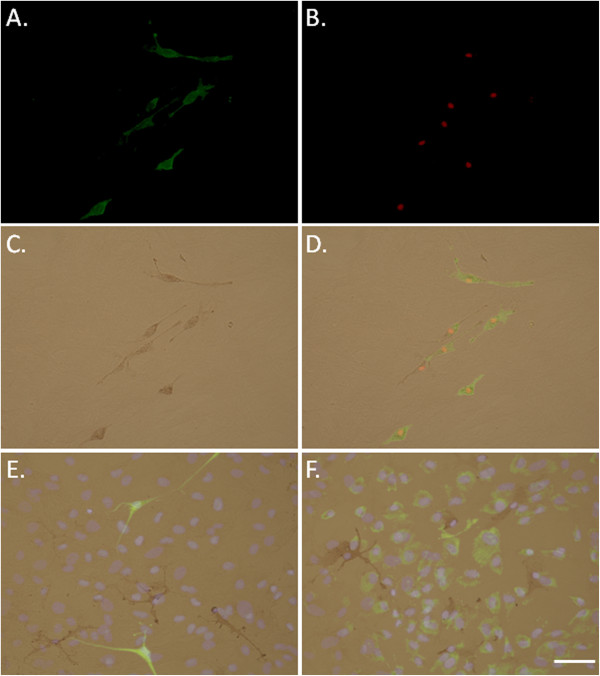
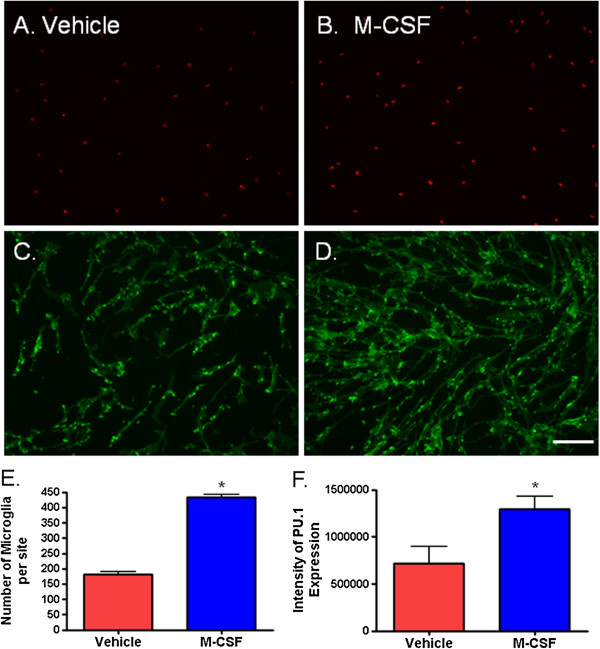
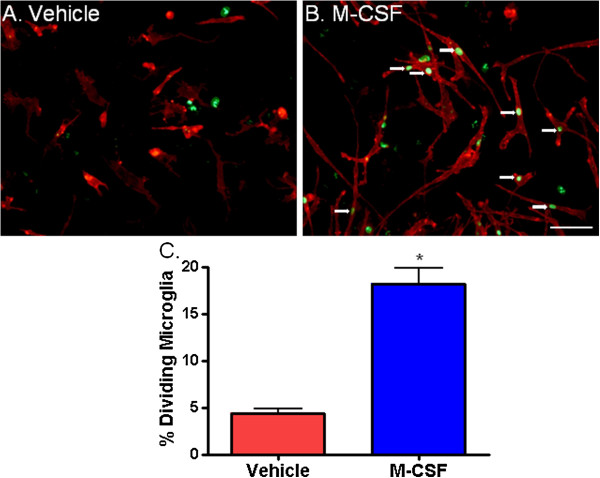
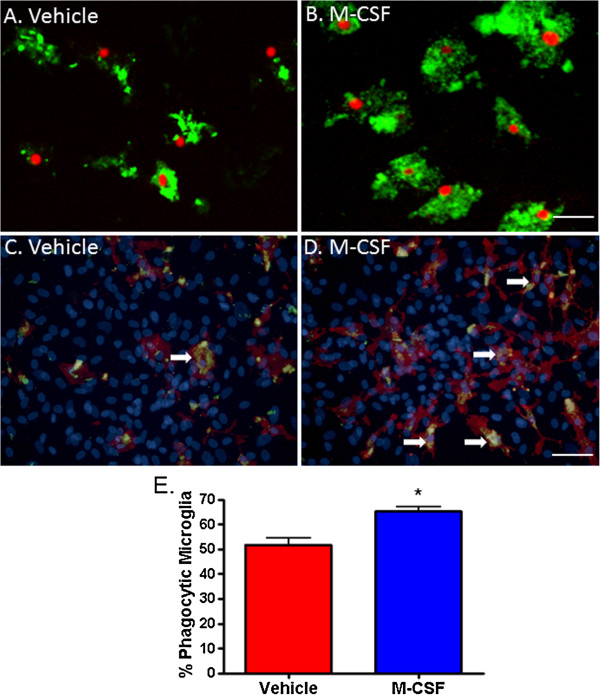
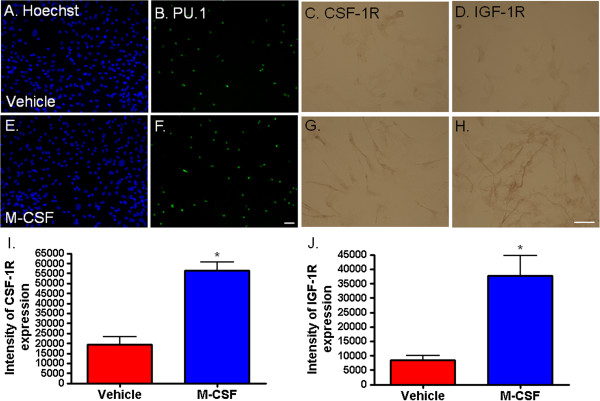
BACKGROUND: Microglia are the primary immune cells of the brain whose phenotype largely depends on their surrounding micro-environment. Microglia respond to a multitude of soluble molecules produced by a variety of brain cells. Macrophage colony-stimulating factor (M-CSF) is a cytokine found in the brain whose receptor is expressed by microglia. Previous studies suggest a critical role for M-CSF in brain development and normal functioning as well as in several disease processes involving neuroinflammation. METHODS: Using biopsy tissue from patients with intractable temporal epilepsy and autopsy tissue, we cultured primary adult human microglia to investigate their response to M-CSF. Mixed glial cultures were treated with 25 ng/ml M-CSF for 96 hours. Proliferation and phagocytosis assays, and high through-put immunocytochemistry, microscopy and image analysis were performed to investigate microglial phenotype and function. RESULTS: We found that the phenotype of primary adult human microglia was markedly changed following exposure to M-CSF. A greater number of microglia were present in the M-CSF- treated cultures as the percentage of proliferating (BrdU and Ki67-positive) microglia was greatly increased. A number of changes in protein expression occurred following M-CSF treatment, including increased transcription factors PU.1 and C/EBPβ, increased DAP12 adaptor protein, increased M-CSF receptor (CSF-1R) and IGF-1 receptor, and reduced HLA-DP, DQ, DR antigen presentation protein. Furthermore, a distinct morphological change was observed with elongation of microglial processes. These changes in phenotype were accompanied by a functional increase in phagocytosis of Aβ1-42 peptide. CONCLUSIONS: We show here that the cytokine M-CSF dramatically influences the phenotype of adult human microglia. These results pave the way for future investigation of M-CSF-related targets for human therapeutic benefit.
Overview
The claims and statistics of this paper haven’t been checked yet.
Run the check — free, no account needed. It reads the open-access text and checks the sources it cites.
Integrity signals
Registry
Cites
Statistics
Figures
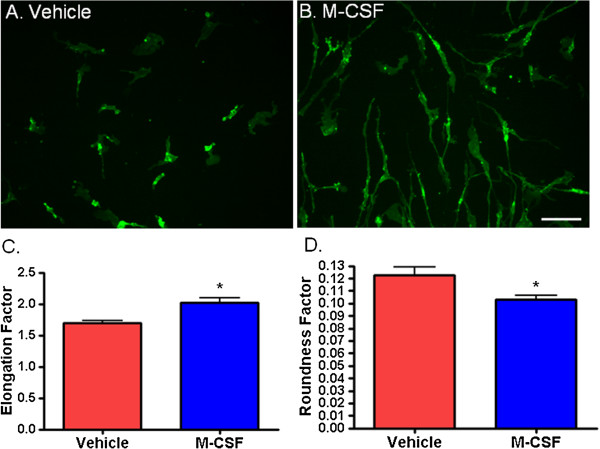
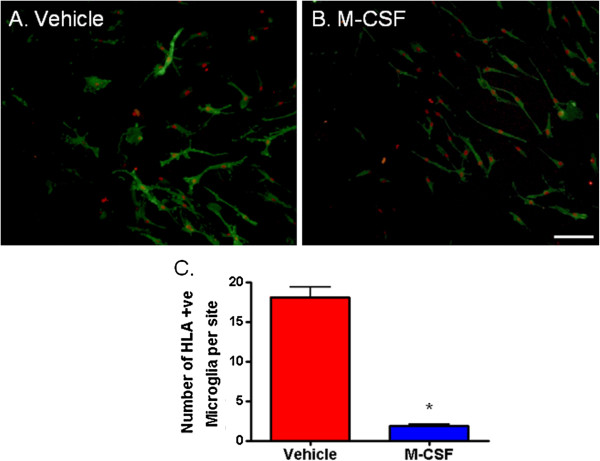
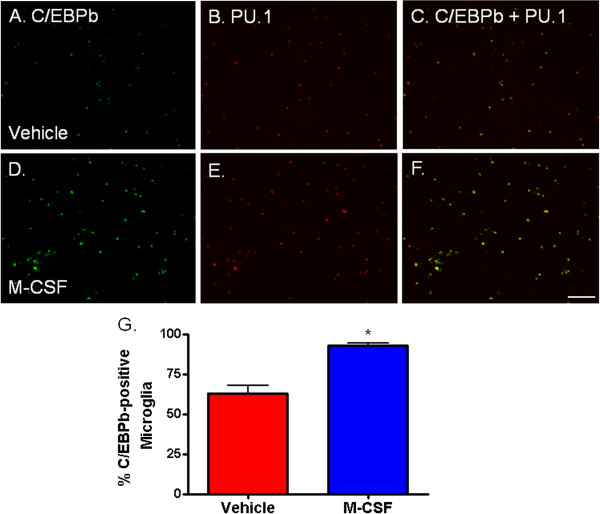
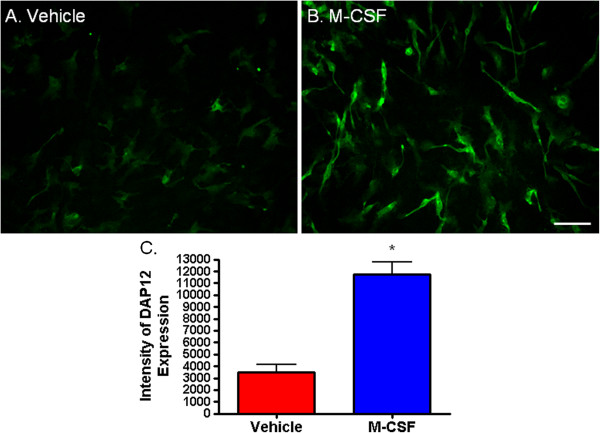
Verification
Claims the paper makes
The claims and statistics of this paper haven’t been checked yet.
Run the check — free, no account needed. It reads the open-access text and checks the sources it cites.
Claims other papers make about this one
Each is checked against this paper’s own text: does it say what the citing paper says it does?
In the citing paper
“However, the addition of key factors for microglial maintenance can hinder the interpretation of In vitro disease models, since factors such as CSF1 can promote microglia viability and increased PU.1 expression that can also influence microglial function in disease states [76].”
From Transcriptional and Epigenetic Regulation of Microglia in Health and Disease (2019) · cites this paper as [76]
In the citing paper
“Several groups have attempted different cell culture conditions to maintain homeostatic microglia signature and ramified morphology In vitro using a variety of cytokines, such as CSF1, GM-CSF, TGFβ, and IL-34 [73-76].”
From Transcriptional and Epigenetic Regulation of Microglia in Health and Disease (2019) · cites this paper as [76]
Self-check
Percentages, sums and reported differences re-computed from the paper’s own numbers.
The self-check needs the paper’s full text.
Citations
Cites
Fate Mapping Analysis Reveals That Adult Microglia Derive from Primitive Macrophages
Ginhoux, F., Greter, M., Leboeuf, M., Nandi, S., See, P., Gokhan, S., Mehler, M. F., Conway, S. J., Ng, L. G., Stanley, E. R., et al. (2010) · Science · doi:10.1126/science.1194637 · Cited by 5,175
Bard, F., Cannon, C., Barbour, R., Burke, R.-L., Games, D., Grajeda, H., Guido, T., Hu, K., Huang, J., Johnson-Wood, K., et al. (2000) · Nature Medicine · doi:10.1038/78682 · Cited by 2,012
CCAAT/enhancer-binding proteins: structure, function and regulation
Ramji, D. P., & Foka, P. (2002) · Biochemical Journal · doi:10.1042/bj20020508 · Cited by 1,404
Takahashi, K., Rochford, C. D. P., & Neumann, H. (2005) · The Journal of Experimental Medicine · doi:10.1084/jem.20041611 · Cited by 1,124
Microglial cell origin and phenotypes in health and disease
Saijo, K., & Glass, C. K. (2011) · Nature Reviews Immunology · doi:10.1038/nri3086 · Cited by 1,100
Tumor-Induced Tolerance and Immune Suppression Depend on the C/EBPβ Transcription Factor
Marigo, I., Bosio, E., Solito, S., Mesa, C., Fernández, A., Dolcetti, L., Ugel, S., Sonda, N., Bicciato, S., Falisi, E., et al. (2010) · Immunity · doi:10.1016/j.immuni.2010.05.010 · Cited by 854
Discovery of a Cytokine and Its Receptor by Functional Screening of the Extracellular Proteome
Lin, H., Lee, E., Hestir, K., Leo, C., Huang, M., Bosch, E., Halenbeck, R., Wu, G., Zhou, A. J., Behrens, D., et al. (2008) · Science · doi:10.1126/science.1154370 · Cited by 849
Ponomarev, E. D., Veremeyko, T., Barteneva, N., Krichevsky, A. M., & Weiner, H. L. (2011) · Nature Medicine · doi:10.1038/nm.2266 · Cited by 787
Graeber, M. B. (2010) · Science · doi:10.1126/science.1190929 · Cited by 608
Early and Progressive Accumulation of Reactive Microglia in the Huntington Disease Brain
Sapp, E., Kegel, K. B., D, N. A. M., Hashikawa, T., Uchiyama, Y., Tohyama, K., Bhide, P. G., Vonsattel, J., & DiFiglia, M. (2001) · Journal of Neuropathology & Experimental Neurology · doi:10.1093/jnen/60.2.161 · Cited by 558
Immune proteins in brain development and synaptic plasticity
Boulanger, L. M. (2009) · Neuron · doi:10.1016/j.neuron.2009.09.001 · Cited by 555
Comparison of polarization properties of human adult microglia and blood‐derived macrophages
Durafourt, B. A., Moore, C. S., Zammit, D., Johnson, T., Zaguia, F., Guiot, M., Bar‐Or, A., & Antel, J. P. (2012) · Glia · doi:10.1002/glia.22298 · Cited by 470
Microglial activation in presymptomatic Huntington's disease gene carriers
Tai, Y. F., Pavese, N., Gerhard, A., Tabrizi, S. J., Barker, R. A., Brooks, D. J., & Piccini, P. (2007) · Brain · doi:10.1093/brain/awm044 · Cited by 440
Yan, S. D., Zhu, H., Fu, J., Yan, S. F., Roher, A. E., Tourtellotte, W. W., Rajavashisth, T. B., Chen, X., Godman, G. C., Stern, D. M., et al. (1997) · Proceedings of the National Academy of Sciences · doi:10.1073/pnas.94.10.5296 · Cited by 429
Zhang, D.-E., Hetherington, C. J., Chen, H.-M., & Tenen, D. G. (1994) · Molecular and Cellular Biology · doi:10.1128/mcb.14.1.373-381.1994 · Cited by 411
Microglial senescence: does the brain's immune system have an expiration date?
Streit, W. J. (2006) · Trends in Neurosciences · doi:10.1016/j.tins.2006.07.001 · Cited by 397
Zhang, D.-E., Hetherington, C. J., Meyers, S., Rhoades, K. L., Larson, C. J., Chen, H.-M., Hiebert, S. W., & Tenen, D. G. (1996) · Molecular and Cellular Biology · doi:10.1128/mcb.16.3.1231 · Cited by 396
Inflammatory repertoire of Alzheimer's disease and nondemented elderly microglia in vitro
Lue, L., Rydel, R. E., Brigham, E. F., Yang, L., Hampel, H. J., Murphy, G. M., Brachova, L., Yan, S., Walker, D. G., Shen, Y., et al. (2001) · Glia · doi:10.1002/glia.1072 · Cited by 392
Butovsky, O., Talpalar, A. E., Ben‐Yaakov, K., & Schwartz, M. (2005) · Molecular and Cellular Neuroscience · doi:10.1016/j.mcn.2005.03.005 · Cited by 372
Intracellular signaling in M‐CSF‐induced microglia activation: Role of Iba1
Imai, Y., & Kohsaka, S. (2002) · Glia · doi:10.1002/glia.10149 · Cited by 359
PU.1 and C/EBPα/β convert fibroblasts into macrophage-like cells
Feng, R., Desbordes, S. C., Xie, H., Tillo, E. S., Pixley, F., Stanley, E. R., & Graf, T. (2008) · Proceedings of the National Academy of Sciences · doi:10.1073/pnas.0711961105 · Cited by 348
Otero, K., Turnbull, I. R., Poliani, P. L., Vermi, W., Cerutti, E., Aoshi, T., Tassi, I., Takai, T., Stanley, S. L., Miller, M., et al. (2009) · Nature Immunology · doi:10.1038/ni.1744 · Cited by 315
Cell Mediators of Inflammation in the Alzheimer Disease Brain
Akiyama, H., Arai, T., Kondo, H., Tanno, E., Haga, C., & Ikeda, K. (2000) · Alzheimer Disease & Associated Disorders · doi:10.1097/00002093-200000001-00008 · Cited by 245
Rogers, J., & Lue, L.-F. (2001) · Neurochemistry International · doi:10.1016/s0197-0186(01)00040-7 · Cited by 236
Chihara, T., Suzu, S., Hassan, R., Chutiwitoonchai, N., Hiyoshi, M., Motoyoshi, K., Kimura, F., & Okada, S. (2010) · Cell Death and Differentiation · doi:10.1038/cdd.2010.60 · Cited by 231
Hart, A. D., Wyttenbach, A., Hugh Perry, V., & Teeling, J. L. (2012) · Brain, Behavior, and Immunity · doi:10.1016/j.bbi.2011.11.006 · Cited by 230
Boissonneault, V., Filali, M., Lessard, M., Relton, J., Wong, G., & Rivest, S. (2008) · Brain · doi:10.1093/brain/awn331 · Cited by 221
Lee, S. C., Liu, W., Roth, P., Dickson, D. W., Berman, J. W., & Brosnan, C. F. (1993) · The Journal of Immunology · doi:10.4049/jimmunol.150.2.594 · Cited by 162
Akiyama, H., Nishimura, T., Kondo, H., Ikeda, K., Hayashi, Y., & McGeer, P. L. (1994) · Brain Research · doi:10.1016/0006-8993(94)91779-5 · Cited by 162
The transcription factor PU.1 is involved in macrophage proliferation.
Celada, A., Borràs, F. E., Soler, C., Lloberas, J., Klemsz, M., van Beveren, C., McKercher, S., & Maki, R. A. (1996) · The Journal of experimental medicine · doi:10.1084/jem.184.1.61 · Cited by 152 · cited 3×
“1 has been shown to be involved in M-CSF -dependent proliferation of mouse bone-marrow macrophages [24] and thus it is likely that PU.”
BackgroundInfluentialPhenotyping primary human microglia: tight regulation of LPS responsiveness
Melief, J., Koning, N., Schuurman, K. G., Van De Garde, M. D. B., Smolders, J., Hoek, R. M., Van Eijk, M., Hamann, J., & Huitinga, I. (2012) · Glia · doi:10.1002/glia.22370 · Cited by 146
The transcription factor PU.1 is critical for viability and function of human brain microglia
Smith, A. M., Gibbons, H. M., Oldfield, R. L., Bergin, P. M., Mee, E. W., Faull, R. L. M., & Dragunow, M. (2013) · Glia · doi:10.1002/glia.22486 · Cited by 141
Self-citationCSF-1 deficiency in mice results in abnormal brain development
Michaelson, M. D., Bieri, P. L., Mehler, M. F., Xu, H., Arezzo, J. C., Pollard, J. W., & Kessler, J. A. (1996) · Development · doi:10.1242/dev.122.9.2661 · Cited by 129
The adult human brain in preclinical drug development
Dragunow, M. (2008) · Nature Reviews Drug Discovery · doi:10.1038/nrd2617 · Cited by 121
Self-citationThe impact of glial activation in the aging brain.
Lynch, A. M., Murphy, K. J., Deighan, B. F., O’Reilly, J.-A., Gun’ko, Y. K., Cowley, T. R., González-Reyes, R. E., & Lynch, M. A. (2010) · Europe PMC (PubMed Central) · Cited by 103
Expression of macrophage colony‐stimulating factor gene in the mouse brain during development
Théry, C., Hetier, E., Evrard, C., & Mallat, M. (1990) · Journal of Neuroscience Research · doi:10.1002/jnr.490260117 · Cited by 96
Straccia, M., Gresa‐Arribas, N., Dentesano, G., Ejarque‐Ortiz, A., Tusell, J. M., Serratosa, J., Solà, C., & Saura, J. (2011) · Journal of Neuroinflammation · doi:10.1186/1742-2094-8-156 · Cited by 95
NF-IL6 (C/EBPβ) Vigorously Activates il1b Gene Expression via a Spi-1 (PU.1) Protein-Protein Tether
Yang, Z., Wara-aswapati, N., Chen, C., Tsukada, J., & Auron, P. E. (2000) · Journal of Biological Chemistry · doi:10.1074/jbc.m000145200 · Cited by 92
Liu, W., Brosnan, C. F., Dickson, D. W., & Lee, S. C. (1994) · PubMed Central · Cited by 91
CSF-1, IGF-1, and the control of postnatal growth and development
Gow, D., Sester, D. P., & Hume, D. A. (2010) · Journal of Leukocyte Biology · doi:10.1189/jlb.0310158 · Cited by 90
High-content analysis in neuroscience
Dragunow, M. (2008) · Nature reviews. Neuroscience · doi:10.1038/nrn2492 · Cited by 87
Self-citationYang, T., Zhou, D., & Stefan, H. (2010) · Journal of the Neurological Sciences · doi:10.1016/j.jns.2010.06.002 · Cited by 83
Weigelt, K., Carvalho, L. A., Drexhage, R. C., Wijkhuijs, A. J. M., de Wit, H., van Beveren, N. J. M., Birkenhäger, T. K., Bergink, V., & Drexhage, H. A. (2011) · Brain Behavior and Immunity · doi:10.1016/j.bbi.2011.03.006 · Cited by 76
Walton, M. R., Gibbons, H., MacGibbon, G. A., Sirimanne, E., Saura, J., Gluckman, P. D., & Dragunow, M. (2000) · Journal of Neuroimmunology · doi:10.1016/s0165-5728(99)00262-3 · Cited by 73
Self-citationColony stimulating factor-1 expression in human glioma
Alterman, R. L., & Stanley, E. R. (1994) · Molecular and Chemical Neuropathology · doi:10.1007/bf02815350 · Cited by 70
Immunohistochemical characterization of microglia in Nasu‐Hakola disease brains
Satoh, J., Tabunoki, H., Ishida, T., Yagishita, S., Jinnai, K., Futamura, N., Kobayashi, M., Toyoshima, I., Yoshioka, T., Enomoto, K., et al. (2010) · Neuropathology · doi:10.1111/j.1440-1789.2010.01174.x · Cited by 67
Zhan, X., Kim, C., & Sharp, F. R. (2008) · Brain Research · doi:10.1016/j.brainres.2008.07.094 · Cited by 64
Cortés‐Canteli, M., Luna‐Medina, R., Sanz-SanCristóbal, M., Alvarez, A. M., Santos, Á., & Pérez‐Castillo, A. (2008) · Journal of Cell Science · doi:10.1242/jcs.025031 · Cited by 60
Cellular composition of human glial cultures from adult biopsy brain tissue
Gibbons, H. M., Hughes, S. M., van Roon‐Mom, W., Greenwood, J. M., Narayan, P. J., Teoh, H. H., Bergin, P., Mee, E. W., Wood, P. C., Faull, R. L. M., et al. (2007) · Journal of Neuroscience Methods · doi:10.1016/j.jneumeth.2007.07.005 · Cited by 55
Self-citationValproic acid enhances microglial phagocytosis of amyloid-β1–42
Smith, A. M., Gibbons, H. M., & Dragunow, M. (2010) · Neuroscience · doi:10.1016/j.neuroscience.2010.04.041 · Cited by 54
Self-citationWierzba‐Bobrowicz, T., Gwiazda, E., Kosno-Kruszewska, E., Lewandowska, E., Lechowicz, W., Bertrand, E., Szpak, G. M., & Schmidt-Sidor, B. (2002) · PubMed · Cited by 53
Komuro, I., Yokota, Y., Yasuda, S., Iwamoto, A., & Kagawa, K. S. (2003) · The Journal of Experimental Medicine · doi:10.1084/jem.20022018 · Cited by 53
Cutting Edge: Activity of Human Adult Microglia in Response to CC Chemokine Ligand 21
Dijkstra, I. M., Hulshof, S. C. J., van der Valk, P., Boddeke, H. W. G. M., & Biber, K. P. H. (2004) · The Journal of Immunology · doi:10.4049/jimmunol.172.5.2744 · Cited by 52
Critical Prosurvival Roles for C/EBPβ and Insulin-Like Growth Factor I in Macrophage Tumor Cells
Wessells, J., Yakar, S., & Johnson, P. F. (2004) · Molecular and Cellular Biology · doi:10.1128/mcb.24.8.3238-3250.2004 · Cited by 52
Valproic acid induces microglial dysfunction, not apoptosis, in human glial cultures
Gibbons, H. M., Smith, A. M., Teoh, H. H., Bergin, P. M., Mee, E. W., Faull, R. L. M., & Dragunow, M. (2011) · Neurobiology of Disease · doi:10.1016/j.nbd.2010.08.024 · Cited by 49
Self-citationYamamoto, S., Nakajima, K., & Kohsaka, S. (2010) · Journal of Neurochemistry · doi:10.1111/j.1471-4159.2010.06996.x · Cited by 44
Distinct migratory and cytokine responses of human microglia and macrophages to ATP
Lambert, C., Ase, A. R., Séguéla, P., & Antel, J. P. (2010) · Brain Behavior and Immunity · doi:10.1016/j.bbi.2010.02.010 · Cited by 43
Lambertsen, K. L., Deierborg, T., Gregersen, R., Clausen, B. H., Wirenfeldt, M., Nielsen, H. H., Dalmau, I., Diemer, N. H., Dagnæs‐Hansen, F., Johansen, F. F., et al. (2011) · Journal of Neuropathology & Experimental Neurology · doi:10.1097/nen.0b013e31821db3aa · Cited by 39
Gutsch, R., Kandemir, J. D., Pietsch, D., Cappello, C., Meyer, J., Simanowski, K., Huber, R., & Brand, K. (2011) · Journal of Biological Chemistry · doi:10.1074/jbc.m110.152538 · Cited by 38
Weigelt, K., Ernst, W., Walczak, Y., Ebert, S., Loenhardt, T., Klug, M., Rehli, M., Weber, B. H. F., & Langmann, T. (2007) · Journal of Leukocyte Biology · doi:10.1189/jlb.0707447 · Cited by 38
Davis, M. M. (2012) · Science Translational Medicine · doi:10.1126/scitranslmed.3003385 · Cited by 35
Identification of three genes up-regulated in PU.1 rescued monocytic precursor cells
Henkel, G. W. (2002) · International Immunology · doi:10.1093/intimm/dxf040 · Cited by 31
C/EBPβ expression in activated microglia in amyotrophic lateral sclerosis
Valente, T., Mancera, P., Tusell, J. M., Serratosa, J., & Saura, J. (2011) · Neurobiology of Aging · doi:10.1016/j.neurobiolaging.2011.09.019 · Cited by 30
Werner, K., Bitsch, A., Bunkowski, S., Hemmerlein, B., & Brück, W. (2002) · Glia · doi:10.1002/glia.10120 · Cited by 26
Liu, W. D., Xu, G. Z., Jiang, C. H., & Tian, J. (2011) · BMC Cell Biology · doi:10.1186/1471-2121-12-5 · Cited by 24
THOC5 couples M-CSF receptor signaling to transcription factor expression
Carney, L., Pierce, A., Rijnen, M., Gonzalez-Sanchez, M.-B., Hamzah, H. G., Zhang, L., Tamura, T., & Whetton, A. D. (2008) · Cellular Signalling · doi:10.1016/j.cellsig.2008.10.018 · Cited by 21
Brummer, E., & Stevens, D. A. (1994) · International Journal of Immunopharmacology · doi:10.1016/0192-0561(94)90073-6 · Cited by 16
Lentz, M. R., Degaonkar, M. N., Mohamed, M. A., Kim, H., Conant, K. E., Halpern, E. F., Sacktor, N. C., Barker, P. B., & Pomper, M. G. (2010) · Journal of NeuroVirology · doi:10.3109/13550284.2010.513029 · Cited by 16
Tissières, P., Araud, T., Ochoda, A., Drifte, G., Dunn-Siegrist, I., & Pugin, J. (2009) · Journal of Biological Chemistry · doi:10.1074/jbc.m109.042580 · Cited by 15
Ling, X. B., Kamangar, S., Boytim, M. L., Kelman, Z., Huie, P., Lyu, S., Sibley, R. K., Hurwitz, J., Clayberger, C., & Krensky, A. M. (2000) · The Journal of Immunology · doi:10.4049/jimmunol.164.12.6188 · Cited by 13
Vidyadaran, S., Ooi, Y. Y., Subramaiam, H., Badiei, A., Abdullah, M., Ramasamy, R., & Seow, H. F. (2009) · Cellular Immunology · doi:10.1016/j.cellimm.2009.06.005 · Cited by 11
Papavasiliou, A. K., Mehler, M. F., Mabie, P. C., Marmur, R., Qingbin, S., Keating, R. F., & Kessler, J. A. (1997) · Neurosurgery · doi:10.1097/00006123-199710000-00028 · Cited by 9
Cited by
Sorted by citations
Emerging Roles for CSF-1 Receptor and its Ligands in the Nervous System
Chiţu, V., Gökhan, Ş., Nandi, S., Mehler, M. F., & Stanley, E. R. (2016) · Trends in Neurosciences · doi:10.1016/j.tins.2016.03.005 · Cited by 363
Microglia in Alzheimer Disease: Well-Known Targets and New Opportunities
Hemonnot, A.-L., Hua, J., Ulmann, L., & Hirbec, H. (2019) · Frontiers in Aging Neuroscience · doi:10.3389/fnagi.2019.00233 · Cited by 298
Smith, A. M., & Dragunow, M. (2014) · Trends in Neurosciences · doi:10.1016/j.tins.2013.12.001 · Cited by 256
Self-citationFunctional polarization of neuroglia: Implications in neuroinflammation and neurological disorders
Jha, M. K., Lee, W., & Suk, K. (2015) · Biochemical Pharmacology · doi:10.1016/j.bcp.2015.11.003 · Cited by 267
Microglial cell loss after ischemic stroke favors brain neutrophil accumulation
Otxoa-de-Amezaga, A., Miró-Mur, F., Pedragosa, J., Gallizioli, M., Justicia, C., Gaja-Capdevila, N., Ruíz-Jaen, F., Salas-Perdomo, A., Bosch, A., Calvo, M., et al. (2019) · Acta Neuropathologica · doi:10.1007/s00401-018-1954-4 · Cited by 258
Metadata
- Authors
- Smith, A. M., Gibbons, H. M., Oldfield, R. L., Bergin, P. M., Mee, E. W., Curtis, M. A., Faull, R. L. M., & Dragunow, M.
- Affiliations
- University of Auckland (NZ)
- Corresponding author
- Dragunow, Mike
- Venue
- Journal of Neuroinflammation
- Published
- 2013-07-17
- Volume
- 10
- Issue
- 1
- Pages
- 85-85
- ISSN
- 1742-2094 (ISSN-L)
- PMC
- PMC3729740
- OpenAlex
- W1973529716
- Cited by
- 107
- References
- 72
- Citations by year
- 2026: 2 · 2025: 14 · 2024: 10 · 2023: 7 · 2022: 7 · 2021: 10 · 2020: 7 · 2019: 8 · 2018: 10 · 2017: 6 · 2016: 7 · 2015: 7 · 2014: 9 · 2013: 3
- FWCI
- 4.86
- Type
- journal article
- Language
- en
- Open access
- gold
- doi.org
- Locations
- Journal of Neuroinflammation (publishedVersion, cc-by)
- Europe PMC (PubMed Central) (publishedVersion, cc-by)
- PubMed Central (publishedVersion, cc-by)
- PubMed (publishedVersion)
- Funders
- Tertiary Education Commission
- Hugh Green Foundation
- Neurological Foundation of New Zealand
- Health Research Council of New Zealand
- Topics
- Life Sciences › Neuroscience › Neurology › Neuroinflammation and Neurodegeneration Mechanisms
- Life Sciences › Neuroscience › Developmental Neuroscience › Neurogenesis and neuroplasticity mechanisms
- Life Sciences › Neuroscience › Cellular and Molecular Neuroscience › Neuroscience and Neuropharmacology Research
- Keywords
- macrophage colony-stimulating factor, microglia, microglial proliferation, phagocytosis, CSF-1 receptor, PU.1, C/EBPβ, DAP12, IGF-1 receptor, HLA antigen expression, microglial morphology, amyloid-beta, temporal lobe epilepsy, neuroinflammation, microglial phenotype
- MeSH terms
- Proto-Oncogene Protein Spi-1, Antimetabolites, Autopsy, Biopsy, Bromodeoxyuridine, Cells, Cultured, HLA Antigens, Humans, Image Processing, Computer-Assisted, Immunohistochemistry, Macrophage Activation, Membrane Proteins, Phagocytosis, Proto-Oncogene Proteins, Transcription Factors, Trans-Activators, Macrophage Colony-Stimulating Factor, Receptor, Macrophage Colony-Stimulating Factor, Microglia, Ki-67 Antigen, CCAAT-Enhancer-Binding Protein-beta, Adaptor Proteins, Signal Transducing, Cell Proliferation
About these checks
Registry, retraction, Cites and statistics results are computed, not judged, with one exception: a printed reference that no index lists is read once by a model before it counts as a citation error. Claims are extracted by a model and kept only when their quote appears verbatim in the text; each cited source is then checked, with a model’s help, for whether it says what the claim relies on. Those verdicts can be wrong — read the claim’s quote and the cited source before relying on one.
Statistics and arithmetic are recomputed, not judged.
Confidence bands are shown only for fields calibrated on our annotated test set. None is calibrated yet, so no band is shown.
What counts as a claim ›How we measure confidence ›How we check this ›
Are you an author, or do you see a problem with this page? Request a review
