

The DOI matches its Crossref record; 66 of the 67 references it cites were found in a registry or an index.
Human APOE4 increases microglia reactivity at Aβ plaques in a mouse model of Aβ deposition
Open accessAbstract
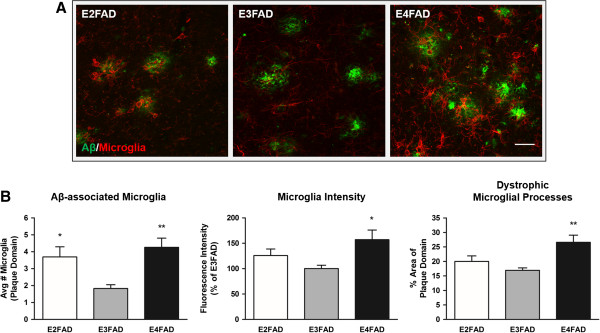
BACKGROUND: Having the apolipoprotein E4 (APOE-ϵ4) allele is the strongest genetic risk factor for the development of Alzheimer's disease (AD). Accumulation of amyloid beta (Aβ) in the brain is influenced by APOE genotype. Transgenic mice co-expressing five familial AD mutations (5xFAD) in the presence of human APOE alleles (ϵ2, ϵ3 or ϵ4) exhibit APOE genotype-specific differences in early Aβ accumulation, suggesting an interaction between APOE and AD pathology. Whether APOE genotype affects Aβ-plaque-associated neuroinflammation remains unclear. In the current study, we address the role of APOE genotype on Aβ-associated microglial reactivity in the EFAD transgenic mouse model. METHODS: We analyzed Aβ-induced glial activation in the brains of 6-month-old EFAD transgenic mice (E2FAD, E3FAD and E4FAD). Region-specific morphological profiles of Aβ plaques in EFAD brain sections were compared using immunofluorescence staining. We then determined the degree of glial activation in sites of Aβ deposition while comparing levels of the inflammatory cytokine Interleukin-1β (IL-1β) by ELISA. Finally, we quantified parameters of Aβ-associated microglial reactivity using double-stained EFAD brain sections. RESULTS: Characterization of Aβ plaques revealed there were larger and more intensely stained plaques in E4FAD mice relative to E2FAD and E3FAD mice. E4FAD mice also had a greater percentage of compact plaques in the subiculum than E3FAD mice. Reactive microglia and dystrophic astrocytes were prominent in EFAD brains, and primarily localized to two sites of significant Aβ deposition: the subiculum and deep layers of the cortex. Cortical levels of IL-1β were nearly twofold greater in E4FAD mice relative to E3FAD mice. To control for differences in levels of Aβ in the different EFAD mice, we analyzed the microglia within domains of specific Aβ deposits. Morphometric analyses revealed increased measures of microglial reactivity in E4FAD mice, including greater dystrophy, increased fluorescence intensity and a higher density of reactive cells surrounding cortical plaques, than in E3FAD mice. CONCLUSIONS: In addition to altering morphological profiles of Aβ deposition, APOE genotype influences Aβ-induced glial activation in the adult EFAD cortex. These data support a role for APOE in modulating Aβ-induced neuroinflammatory responses in AD progression, and support the use of EFAD mice as a suitable model for mechanistic studies of Aβ-associated neuroinflammation.
Overview
The claims and statistics of this paper haven’t been checked yet.
Run the check — free, no account needed. It reads the open-access text and checks the sources it cites.
Integrity signals
Registry
Cites
Statistics
Figures
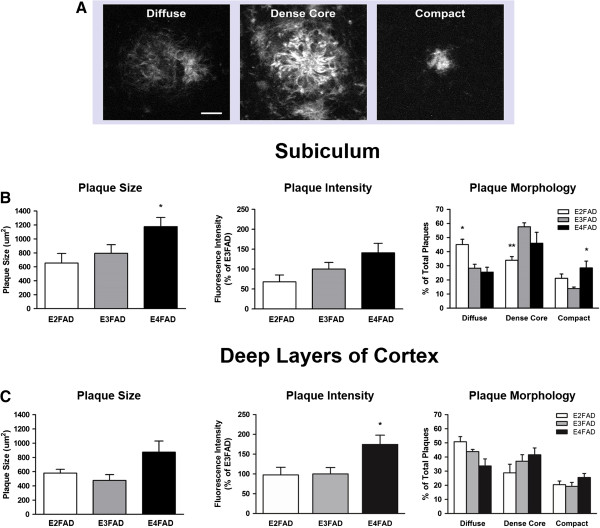
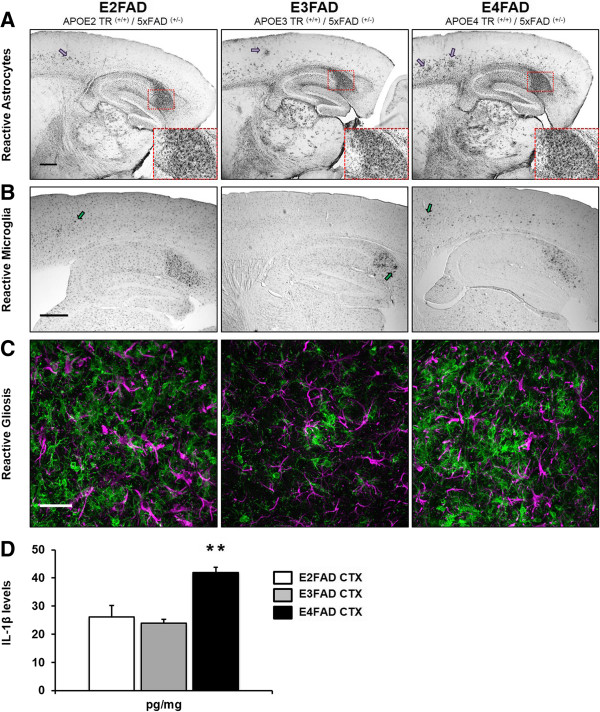
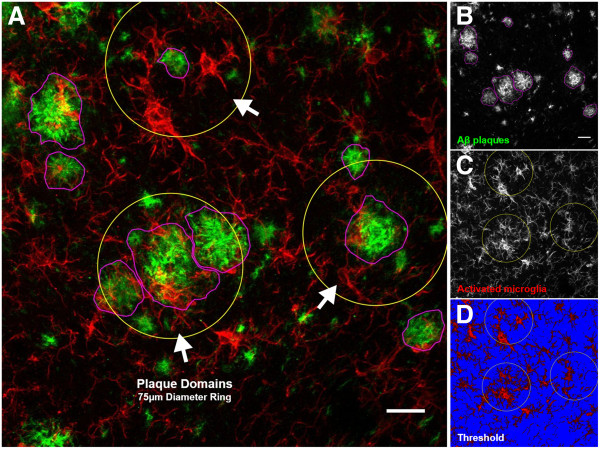
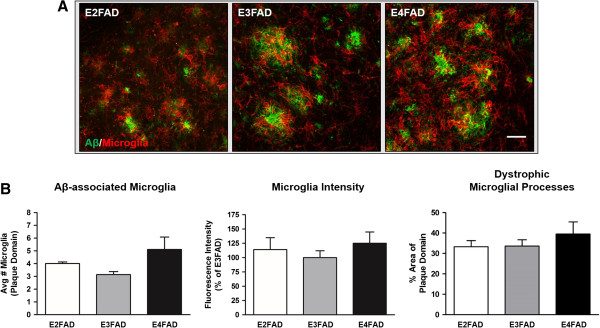
Verification
Claims the paper makes
The claims and statistics of this paper haven’t been checked yet.
Run the check — free, no account needed. It reads the open-access text and checks the sources it cites.
Claims other papers make about this one
Each is checked against this paper’s own text: does it say what the citing paper says it does?
The source backs part of the claim, not all of it — or backs it for a different population, condition or comparison.
In the citing paper
“APOE4 has been associated with altered plaque morphology, greater fi brillar amyloid deposition, and enhanced plaque-associated microglialreactivity”
From APOE2 attenuates APOE4-associated amyloid pathology and related toxicity in a mouse model of Alzheimer’s disease (2026) · cites this paper as [51]
Experimental — accuracy not yet measuredThe source backs part of the claim, not all of it — or backs it for a different population, condition or comparison.
In the citing paper
“Recently, several studies have shown that APOE4 is associated with increased innate immune reactivity and enhanced cytokine secretion in primary microglia and peripheral macrophages in various animal models as well as human subjects [31–42].”
From 25-Hydroxycholesterol amplifies microglial IL-1β production in an apoE isoform-dependent manner (2020) · cites this paper as [34]
Experimental — accuracy not yet measuredThe cited source says what the claim attributes to it.
In the citing paper
“apoE4-expressing 5xFAD mice display higher levels of glial activation and the proinflammatory cytokine interleukin-1β (IL-1β) as well as larger and more intensely stained Aβ plaques than apoE3-expressing 5xFAD mice”
From ApoE4 reduction: An emerging and promising therapeutic strategy for Alzheimer's disease (2022) · cites this paper as Rodriguez et al 2014
The check wasn’t confident either way, so it gives no verdict — never disputed.
In the citing paper
“Nevertheless other studies have also reported that APOE2 expression is associated with similar or even higher plaque load than APOE3 (Rodriguez et al, 2014; Youmans et al, 2012; Bales et al, 2009; Dodart et al, 2005).”
From APOE from astrocytes restores Alzheimer’s Aβ-pathology and DAM-like responses in APOE deficient microglia (2024) · cites this paper as Rodriguez et al, 2014
Experimental — accuracy not yet measured
Self-check
Percentages, sums and reported differences re-computed from the paper’s own numbers.
The self-check needs the paper’s full text.
Citations
Cites
Fiji: an open-source platform for biological-image analysis
Schindelin, J., Arganda-Carreras, I., Frise, E., Kaynig, V., Longair, M., Pietzsch, T., Preibisch, S., Rueden, C., Saalfeld, S., Schmid, B., et al. (2012) · Nature Methods · doi:10.1038/nmeth.2019 · Cited by 66,890
The Amyloid Hypothesis of Alzheimer’s Disease: Progress and Problems on the Road to Therapeutics
Hardy, J., & Selkoe, D. J. (2002) · Science · doi:10.1126/science.1072994 · Cited by 13,864
The Mouse Brain in Stereotaxic Coordinates
Paxinos, G. (2001) · Cited by 12,859
Amyloid oligomers exacerbate tau pathology in a mouse model of tauopathy
Selenica, M.-L. B., Brownlow, M., Jimenez, J. P., Lee, D. C., Pena, G., Dickey, C. A., Gordon, M. N., & Morgan, D. (2013) · Neurodegenerative Diseases · doi:10.1159/000337230 · Cited by 10,359
Corder, E. H., Saunders, A. M., Strittmatter, W. J., Schmechel, D. E., Gaskell, P. C., Small, G. W., Roses, A. D., Haines, J. L., & Pericak-Vance, M. A. (1993) · Science · doi:10.1126/science.8346443 · Cited by 9,429
Strittmatter, W. J., Saunders, A. M., Schmechel, D., Pericak-Vance, M., Enghild, J., Salvesen, G. S., & Roses, A. D. (1993) · Proceedings of the National Academy of Sciences · doi:10.1073/pnas.90.5.1977 · Cited by 4,268
Association of apolipoprotein E allele ϵ4 with late‐onset familial and sporadic Alzheimer's disease
Saunders, A. M., Strittmatter, W. J., Schmechel, D., St. George-Hyslop, P. H., Pericak-Vance, M. A., Joo, S. H., Rosi, B. L., Gusella, J. F., Crapper-MacLachlan, D. R., Alberts, M. J., et al. (1993) · Neurology · doi:10.1212/wnl.43.8.1467 · Cited by 3,786
Oakley, H., Cole, S. L., Logan, S., Maus, E., Shao, P., Craft, J., Guillozet-Bongaarts, A., Ohno, M., Disterhoft, J., Van Eldik, L., et al. (2006) · The Journal of Neuroscience · doi:10.1523/jneurosci.1202-06.2006 · Cited by 3,530 · cited 4×
“Extracellular amyloid can be detected as early as 2 to 4 months of age in the subiculum and deep layers of the cortex [32,33].”
BackgroundInfluentialStaging of alzheimer's disease-related neurofibrillary changes
Braak, H., & Braak, E. (1995) · Neurobiology of Aging · doi:10.1016/0197-4580(95)00021-6 · Cited by 2,357
The role of apolipoprotein E in Alzheimer's disease
Kim, J., Basak, J. M., & Holtzman, D. M. (2009) · Neuron · doi:10.1016/j.neuron.2009.06.026 · Cited by 1,661
Cited by
Sorted by citations
Apolipoprotein E and Alzheimer disease: pathobiology and targeting strategies
Yamazaki, Y., Zhao, N., Caulfield, T. R., Liu, C.-C., & Bu, G. (2019) · Nature Reviews Neurology · doi:10.1038/s41582-019-0228-7 · Cited by 1,425
ApoE in Alzheimer’s disease: pathophysiology and therapeutic strategies
Raulin, A.-C., Doss, S. V., Trottier, Z. A., Ikezu, T. C., Bu, G., & Liu, C.-C. (2022) · Molecular Neurodegeneration · doi:10.1186/s13024-022-00574-4 · Cited by 756
Interplay between innate immunity and Alzheimer disease: APOE and TREM2 in the spotlight
Shi, Y., & Holtzman, D. M. (2018) · Nature Reviews Immunology · doi:10.1038/s41577-018-0051-1 · Cited by 595
Late onset Alzheimer’s disease genetics implicates microglial pathways in disease risk
Efthymiou, A. G., & Goate, A. M. (2017) · Molecular Neurodegeneration · doi:10.1186/s13024-017-0184-x · Cited by 562
Inflammation: the link between comorbidities, genetics, and Alzheimer’s disease
Newcombe, E. A., Camats-Perna, J., Silva, M. L., Valmas, N., Huat, T. J., & Medeiros, R. (2018) · Journal of Neuroinflammation · doi:10.1186/s12974-018-1313-3 · Cited by 532
Melatonin and inflammation-Story of a double-edged blade
Hardeland, R. (2018) · Journal of Pineal Research · doi:10.1111/jpi.12525 · Cited by 455
ApoE4: an emerging therapeutic target for Alzheimer’s disease
Safieh, M., Korczyn, A. D., & Michaelson, D. M. (2019) · BMC Medicine · doi:10.1186/s12916-019-1299-4 · Cited by 449
Beyond the neuron–cellular interactions early in Alzheimer disease pathogenesis
Henstridge, C. M., Hyman, B. T., & Spires-Jones, T. L. (2019) · Nature Reviews Neuroscience · doi:10.1038/s41583-018-0113-1 · Cited by 348
Microglia in Alzheimer Disease: Well-Known Targets and New Opportunities
Hemonnot, A.-L., Hua, J., Ulmann, L., & Hirbec, H. (2019) · Frontiers in Aging Neuroscience · doi:10.3389/fnagi.2019.00233 · Cited by 298
ApoE facilitates the microglial response to amyloid plaque pathology
Ulrich, J. D., Ulland, T. K., Mahan, T. E., Nyström, S., Nilsson, K. P., Song, W. M., Zhou, Y., Reinartz, M., Choi, S., Jiang, H., et al. (2018) · Journal of Experimental Medicine · doi:10.1084/jem.20171265 · Cited by 297
Deciphering the astrocyte reaction in Alzheimer's disease
Perez-Nievas, B. G., & Serrano-Pozo, A. (2018) · Frontiers in Aging Neuroscience · doi:10.3389/fnagi.2018.00114 · Cited by 282
Fernandez, C. G., Hamby, M. E., McReynolds, M. L., & Ray, W. J. (2019) · Frontiers in Aging Neuroscience · doi:10.3389/fnagi.2019.00014 · Cited by 277
Clearance of cerebral Aβ in Alzheimer’s disease: reassessing the role of microglia and monocytes
Zuroff, L. R., Daley, D. A., Black, K. L., & Koronyo‐Hamaoui, M. (2017) · Cellular and Molecular Life Sciences · doi:10.1007/s00018-017-2463-7 · Cited by 287
Immune aging, dysmetabolism, and inflammation in neurological diseases
Deleidi, M., Jäggle, M., & Rubino, G. (2015) · Frontiers in Neuroscience · doi:10.3389/fnins.2015.00172 · Cited by 260
APOE mediated neuroinflammation and neurodegeneration in Alzheimer’s disease
Parhizkar, S., & Holtzman, D. M. (2022) · Seminars in Immunology · doi:10.1016/j.smim.2022.101594 · Cited by 255
The increasing impact of cerebral amyloid angiopathy: essential new insights for clinical practice
Banerjee, G., Carare, R. O., Cordonnier, C., Greenberg, S. M., Schneider, J. A., Smith, E. E., van Buchem, M. A., van der Grond, J., Verbeek, M. M., & Werring, D. J. (2017) · Journal of Neurology Neurosurgery & Psychiatry · doi:10.1136/jnnp-2016-314697 · Cited by 251
Apolipoprotein E and Alzheimer’s disease: Findings, hypotheses, and potential mechanisms
Koutsodendris, N., Nelson, M. R., Rao, A., & Huang, Y. (2022) · Annual Review of Pathology Mechanisms of Disease · doi:10.1146/annurev-pathmechdis-030421-112756 · Cited by 231
Updates in Alzheimer's disease: from basic research to diagnosis and therapies
Liu, E., Zhang, Y., & Wang, J. (2024) · Translational Neurodegeneration · doi:10.1186/s40035-024-00432-x · Cited by 230
Emrani, S., Arain, H. A., DeMarshall, C. A., & Nuriel, T. (2020) · Alzheimer s Research & Therapy · doi:10.1186/s13195-020-00712-4 · Cited by 204
Updates on mouse models of Alzheimer’s disease
Zhong, M. Z., Peng, T., Duarte, M. L., Wang, M., & Cai, D. (2024) · Molecular Neurodegeneration · doi:10.1186/s13024-024-00712-0 · Cited by 189
Wang, C., Xu, Y., Wang, X., Guo, C., Wang, T., & Wang, Z. (2018) · Antioxidants and Redox Signaling · doi:10.1089/ars.2017.7440 · Cited by 190
Melatonin and brain inflammaging
Hardeland, R., Cardinali, D. P., Brown, G. M., & Pandi-Perumal, S. R. (2015) · Progress in Neurobiology · doi:10.1016/j.pneurobio.2015.02.001 · Cited by 187
Wu, L., Zhang, X., & Zhao, L. (2018) · The Journal of Neuroscience · doi:10.1523/jneurosci.2262-17.2018 · Cited by 185
Therapeutic approaches targeting Apolipoprotein E function in Alzheimer’s disease
Williams, T., Borchelt, D., & Chakrabarty, P. (2020) · Molecular Neurodegeneration · doi:10.1186/s13024-020-0358-9 · Cited by 171
Tai, L. M., Ghura, S., Koster, K. P., Liakaite, V., Maienschein‐Cline, M., Kanabar, P., Collins, N., Ben‐Aissa, M., Lei, A. Z., Bahroos, N., et al. (2015) · Journal of Neurochemistry · doi:10.1111/jnc.13072 · Cited by 165
Self-citationGenetics ignite focus on microglial inflammation in Alzheimer’s disease
Malik, M., Parikh, I., Vasquez, J. B., Smith, C., Tai, L., Bu, G., LaDu, M. J., Fardo, D. W., Rebeck, G. W., & Estus, S. (2015) · Molecular Neurodegeneration · doi:10.1186/s13024-015-0048-1 · Cited by 161
Self-citationThe role of APOE on lipid homeostasis and inflammation in normal brains
Rebeck, G. W. (2017) · Journal of Lipid Research · doi:10.1194/jlr.r075408 · Cited by 160
Self-citationThe Important Interface Between Apolipoprotein E and Neuroinflammation in Alzheimer’s Disease
Kloske, C. M., & Wilcock, D. M. (2020) · Frontiers in Immunology · doi:10.3389/fimmu.2020.00754 · Cited by 152
Flowers, S. A., & Rebeck, G. W. (2020) · Neurobiology of Disease · doi:10.1016/j.nbd.2019.104724 · Cited by 149
Self-citationTzioras, M., Davies, C., Newman, A., Jackson, R., & Spires‐Jones, T. (2019) · Neuropathology and Applied Neurobiology · doi:10.1111/nan.12529 · Cited by 147
Katsouri, L., Lim, Y. M., Blondrath, K., Eleftheriadou, I., Lombardero, L., Birch, A. M., Mirzaei, N., Irvine, E. E., Mazarakis, N. D., & Sastre, M. (2016) · Proceedings of the National Academy of Sciences · doi:10.1073/pnas.1606171113 · Cited by 146
Glial Contribution to Excitatory and Inhibitory Synapse Loss in Neurodegeneration
Henstridge, C. M., Tzioras, M., & Paolicelli, R. C. (2019) · Frontiers in Cellular Neuroscience · doi:10.3389/fncel.2019.00063 · Cited by 155
Potential Bidirectional Relationship Between Periodontitis and Alzheimer’s Disease
Liccardo, D., Marzano, F., Carraturo, F., Guida, M., Femminella, G. D., Bencivenga, L., Agrimi, J., Addonizio, A., Melino, I., Valletta, A., et al. (2020) · Frontiers in Physiology · doi:10.3389/fphys.2020.00683 · Cited by 147
APOE-by-sex interactions on brain structure and metabolism in healthy elderly controls
Sampedro, F., Initiative, F. T. A. D. N., Vilaplana, E., de Leon, M. J., Alcolea, D., Pegueroles, J., Montal, V., Carmona-Iragui, M., Sala, I., Sánchez-Saudinos, M.-B., et al. (2015) · Oncotarget · doi:10.18632/oncotarget.5185 · Cited by 135
Microglia-Mediated Neuroprotection, TREM2, and Alzheimer’s Disease: Evidence From Optical Imaging
Condello, C., Yuan, P., & Grutzendler, J. (2018) · Biological Psychiatry · doi:10.1016/j.biopsych.2017.10.007 · Cited by 131
Transgenic Mouse Models of Alzheimer’s Disease: An Integrative Analysis
Sanchez-Varo, R. M., Mejias‐Ortega, M., Fernandez-Valenzuela, J. J., Nuñez‐Diaz, C., Cáceres-Palomo, L., Vegas‐Gomez, L., Sánchez‐Mejías, E., Trujillo‐Estrada, L., García‐León, J. A., Moreno‐González, I., et al. (2022) · International Journal of Molecular Sciences · doi:10.3390/ijms23105404 · Cited by 136
APOE4 drives inflammation in human astrocytes via TAGLN3 repression and NF-κB activation
Arnaud, L., Benech, P., Greetham, L., Stephan, D., Jimenez, A., Jullien, N., García‐González, L., Tsvetkov, P. O., Devred, F., Sancho-Martinez, I., et al. (2022) · Cell Reports · doi:10.1016/j.celrep.2022.111200 · Cited by 130
25-Hydroxycholesterol amplifies microglial IL-1β production in an apoE isoform-dependent manner
Wong, M. Y., Lewis, M., Doherty, J. J., Shi, Y., Cashikar, A. G., Amelianchik, A., Tymchuk, S., Sullivan, P. M., Qian, M., Covey, D. F., et al. (2020) · Journal of Neuroinflammation · doi:10.1186/s12974-020-01869-3 · Cited by 121
APOE genotype and sex affect microglial interactions with plaques in Alzheimer’s disease mice
Stephen, T. L., Cacciottolo, M., Balu, D., Morgan, T. E., LaDu, M. J., Finch, C. E., & Pike, C. J. (2019) · Acta Neuropathologica Communications · doi:10.1186/s40478-019-0729-z · Cited by 115
Self-citationTzioras, M., Daniels, M. J. D., Davies, C., Baxter, P. S., King, D., McKay, S., Varga, B. V., Popovic, K., Hernandez, M., Stevenson, A. J., et al. (2023) · Cell Reports Medicine · doi:10.1016/j.xcrm.2023.101175 · Cited by 114
Innate Immunity Fights Alzheimer's Disease
Guillot‐Sestier, M., Doty, K. R., & Town, T. (2015) · Trends in Neurosciences · doi:10.1016/j.tins.2015.08.008 · Cited by 101
Plaque-associated local toxicity increases over the clinical course of Alzheimer disease
Serrano-Pozo, A., Betensky, R. A., Frosch, M. P., & Hyman, B. T. (2016) · The American Journal of Pathology · doi:10.1016/j.ajpath.2015.10.010 · Cited by 100
Liu, D.-S., Pan, X.-D., Zhang, J., Shen, H., Collins, N. C., Cole, A. M., Koster, K. P., Ben Aissa, M., Dai, X.-M., Zhou, M., et al. (2015) · Molecular Neurodegeneration · doi:10.1186/s13024-015-0002-2 · Cited by 99
Self-citationEFAD transgenic mice as a human APOE relevant preclinical model of Alzheimerʼns disease
Tai, L. M., Balu, D., Avila-Munoz, E., Abdullah, L., Thomas, R., Collins, N., Valencia-Olvera, A. C., & LaDu, M. J. (2017) · Journal of Lipid Research · doi:10.1194/jlr.r076315 · Cited by 93
Self-citationApolipoprotein E in Alzheimer’s disease: molecular insights and therapeutic opportunities
Belaidi, A. A., Bush, A. I., & Ayton, S. (2025) · Molecular Neurodegeneration · doi:10.1186/s13024-025-00843-y · Cited by 91
Obesity and sex interact in the regulation of Alzheimer's disease
Moser, V. A., & Pike, C. J. (2015) · Neuroscience & Biobehavioral Reviews · doi:10.1016/j.neubiorev.2015.08.021 · Cited by 91
Aβ propagation and strains: Implications for the phenotypic diversity in Alzheimer's disease
Condello, C., & Stöhr, J. (2017) · Neurobiology of Disease · doi:10.1016/j.nbd.2017.03.014 · Cited by 92
Obesity Accelerates Alzheimer-Related Pathology inAPOE4but notAPOE3Mice
Moser, V. A., & Pike, C. J. (2017) · eNeuro · doi:10.1523/eneuro.0077-17.2017 · Cited by 85
Wang, N., Wang, M., Jeevaratnam, S., Rosenberg, C., Ikezu, T. C., Shue, F., Doss, S. V., Alnobani, A., Martens, Y. A., Wren, M., et al. (2022) · Molecular Neurodegeneration · doi:10.1186/s13024-022-00577-1 · Cited by 82
APOE ε4 associates with microglial activation independently of Aβ plaques and tau tangles
Ferrari-Souza, J. P., Lussier, F. Z., Leffa, D. T., Therriault, J., Tissot, C., Bellaver, B., Ferreira, P. C. L., Malpetti, M., Wang, Y.-T., Povala, G., et al. (2023) · Science Advances · doi:10.1126/sciadv.ade1474 · Cited by 81
Friedberg, J. S., Aytan, N., Cherry, J. D., Xia, W., Standring, O. J., Alvarez, V. E., Nicks, R., Svirsky, S. E., Meng, G., Jun, G., et al. (2020) · Scientific Reports · doi:10.1038/s41598-020-59869-5 · Cited by 82
Remembering your A, B, C's: Alzheimer's disease and ABCA1
Lewandowski, C. T., Laham, M. S., & Thatcher, G. R. J. (2022) · Acta Pharmaceutica Sinica B · doi:10.1016/j.apsb.2022.01.011 · Cited by 76
Rodriguez, G. A., Barrett, G., Duff, K., & Hussaini, S. A. (2020) · PLoS Biology · doi:10.1371/journal.pbio.3000851 · Cited by 78
Self-citationBester, J., Soma, P., Kell, D. B., & Pretorius, E. (2015) · Oncotarget · doi:10.18632/oncotarget.6074 · Cited by 77
ApoE4 and Connectivity-Mediated Spreading of Tau Pathology at Lower Amyloid Levels
Steward, A., Biel, D., Dewenter, A., Roemer, S., Wagner, F., Dehsarvi, A., Rathore, S., Otero Svaldi, D., Higgins, I., Brendel, M., et al. (2023) · JAMA Neurology · doi:10.1001/jamaneurol.2023.4038 · Cited by 67
Animal Models of Metabolic Disorders in the Study of Neurodegenerative Diseases: An Overview
Bem, A. F. D., Krolow, R., Farias, H. R., de Rezende, V. L., Gelain, D. P., Moreira, J. C. F., Duarte, J. M. N., & de Oliveira, J. (2021) · Frontiers in Neuroscience · doi:10.3389/fnins.2020.604150 · Cited by 69
Kata, D., Földesi, I., Fehér, L. Z., Hackler, L., Puskás, L. G., & Gulya, K. (2015) · Neuroscience · doi:10.1016/j.neuroscience.2015.11.053 · Cited by 64
Murine Gut Microbiome Association With APOE Alleles
Parikh, I. J., Estus, J. L., Zajac, D. J., Malik, M., Weng, J. M., Tai, L. M., Chlipala, G. E., LaDu, M. J., Green, S. J., & Estus, S. (2020) · Frontiers in Immunology · doi:10.3389/fimmu.2020.00200 · Cited by 63
Self-citationFernandez, H. R., Varma, A., Flowers, S. A., & Rebeck, G. W. (2020) · Cancers · doi:10.3390/cancers12123842 · Cited by 65
Self-citationApoE4 reduction: An emerging and promising therapeutic strategy for Alzheimer's disease
Li, Y., Macyczko, J. R., Liu, C.-C., & Bu, G. (2022) · Neurobiology of Aging · doi:10.1016/j.neurobiolaging.2022.03.011 · Cited by 61
Abdullah, L. I., Evans, J. E., Emmerich, T., Crynen, G. C., Shackleton, B., Keegan, A. P., Luis, C. A., Tai, L. M., LaDu, M. J., MULLAN, M. J., et al. (2017) · Aging · doi:10.18632/aging.101203 · Cited by 63
Self-citationHao, R., Song, X., Li, F., Tan, X., Sun‐Waterhouse, D., & Li, D. (2020) · Food and Chemical Toxicology · doi:10.1016/j.fct.2020.111636 · Cited by 55
Li, X., Montine, K. S., Keene, C. D., & Montine, T. J. (2015) · The FASEB Journal · doi:10.1096/fj.14-262683 · Cited by 54
Early- and Late-Onset Alzheimer’s Disease: Two Sides of the Same Coin?
Valdez-Gaxiola, C. A., Rosales-Leycegui, F., Gaxiola-Rubio, A., Moreno-Ortíz, J. M., & Figuera, L. E. (2024) · Diseases · doi:10.3390/diseases12060110 · Cited by 55
Effect of APOE alleles on the glial transcriptome in normal aging and Alzheimer’s disease
Serrano-Pozo, A., Li, Z., Noori, A., Nguyen, H. N., Mezlini, A., Li, L., Hudry, E., Jackson, R. J., Hyman, B. T., & Das, S. (2021) · Nature Aging · doi:10.1038/s43587-021-00123-6 · Cited by 49
Bohnen, J. L. B., Albin, R. L., & Bohnen, N. I. (2023) · Frontiers in Neurology · doi:10.3389/fneur.2023.1123290 · Cited by 47
From beta amyloid to altered proteostasis in Alzheimer’s disease
Bruni, A. C., Bernardi, L., & Gabelli, C. (2020) · Ageing Research Reviews · doi:10.1016/j.arr.2020.101126 · Cited by 47
Xuan, K., Zhao, T., Qu, G., Liu, H., Chen, X., & Sun, Y. (2020) · Neurological Sciences · doi:10.1007/s10072-020-04243-6 · Cited by 46
Cholesterol Dysmetabolism in Alzheimer’s Disease: A Starring Role for Astrocytes?
Staurenghi, E., Giannelli, S., Testa, G., Sottero, B., Leonarduzzi, G., & Gamba, P. (2021) · Antioxidants · doi:10.3390/antiox10121890 · Cited by 44
Neuroimmunometabolism: A New Pathological Nexus Underlying Neurodegenerative Disorders
Mitra, S., Banik, A., Saurabh, S., Maulik, M., & Khatri, S. (2022) · Journal of Neuroscience · doi:10.1523/jneurosci.0998-21.2022 · Cited by 45
Guan, P.-P., Cao, L., Yang, Y., & Wang, P. (2021) · Frontiers in Molecular Neuroscience · doi:10.3389/fnmol.2021.757515 · Cited by 47
Ayton, S., Janelidze, S., Roberts, B. R., Palmqvist, S., Kalinowski, P., Diouf, I., Belaidi, A. A., Stomrud, E., Bush, A. I., & Hansson, O. (2020) · Progress in Neurobiology · doi:10.1016/j.pneurobio.2020.101904 · Cited by 43
Contreras, J. A., Aslanyan, V., Sweeney, M. D., Sanders, L. M. J., Sagare, A. P., Zloković, B. V., Toga, A. W., Han, S. D., Morris, J. C., Fagan, A. M., et al. (2019) · Neurobiology of Aging · doi:10.1016/j.neurobiolaging.2019.10.013 · Cited by 42
APOE genetics influence murine gut microbiome
Zajac, D. J., Green, S. J., Johnson, L. A., & Estus, S. (2022) · Scientific Reports · doi:10.1038/s41598-022-05763-1 · Cited by 41
Henningfield, C. M., Arreola, M. A., Soni, N., Spangenberg, E. E., & Green, K. N. (2022) · Glia · doi:10.1002/glia.24105 · Cited by 40
Zekonyte, J., Sakai, K., Nicoll, J. A. R., Weller, R. O., & Carare, R. O. (2015) · Biochimica et Biophysica Acta (BBA) - Molecular Basis of Disease · doi:10.1016/j.bbadis.2015.08.025 · Cited by 40
Rothman, S. M., Tanis, K. Q., Gandhi, P., Malkov, V. A., Marcus, J., Pearson, M. S., Stevens, R. C., Gilliland, J., Ware, C. M., Mahadomrongkul, V., et al. (2018) · Journal of Neuroinflammation · doi:10.1186/s12974-018-1265-7 · Cited by 40
Synapses, Microglia, and Lipids in Alzheimer’s Disease
Paasila, P. J., Aramideh, J. A., Sutherland, G. T., & Graeber, M. B. (2022) · Frontiers in Neuroscience · doi:10.3389/fnins.2021.778822 · Cited by 40
Inflammation as a Possible Link Between Dyslipidemia and Alzheimer’s Disease
Oliveira, B. C. D. L., Bellozi, P. M. Q., Reis, H. J., & de Oliveira, A. C. P. (2018) · Neuroscience · doi:10.1016/j.neuroscience.2018.02.012 · Cited by 39
Pandey, R. S., Graham, L., Uyar, A., Preuss, C., Howell, G. R., & Carter, G. W. (2019) · Molecular Neurodegeneration · doi:10.1186/s13024-019-0351-3 · Cited by 37
The role of ApoE-mediated microglial lipid metabolism in brain aging and disease
Yen, J.-H. J., & Yu, I.-C. I. (2023) · Immunometabolism · doi:10.1097/in9.0000000000000018 · Cited by 38
Altay, L., Scholz, P., Schick, T., Felsch, M., Hoyng, C. B., den Hollander, A. I., Langmann, T., & Fauser, S. (2016) · Investigative Ophthalmology & Visual Science · doi:10.1167/iovs.15-18855 · Cited by 35
Speidell, A. P., Demby, T. C., Lee, Y., Rodriguez, O. C., Albanese, C., Mandelblatt, J. S., & Rebeck, G. W. (2018) · Neurotoxicity Research · doi:10.1007/s12640-018-9954-7 · Cited by 36
Self-citationRole for apolipoprotein E in neurodegeneration and mercury intoxication
Lopez, M. E. C. (2017) · Frontiers in Bioscience-Elite · doi:10.2741/e819 · Cited by 35
Preman, P., Moechars, D., Fertan, E., Wolfs, L., Serneels, L., Shah, D., Lamote, J., Poovathingal, S., Snellinx, A., Mancuso, R., et al. (2024) · EMBO Molecular Medicine · doi:10.1038/s44321-024-00162-7 · Cited by 32
Relationship between long non-coding RNAs and Alzheimer’s disease: a systematic review
Chen, L., Guo, X., Li, Z., & He, Y. (2018) · Pathology - Research and Practice · doi:10.1016/j.prp.2018.11.012 · Cited by 32
Herr, D., Jew, K., Wong, C., Kennell, A., Gelein, R. M., Chalupa, D., Raab, A., Oberdörster, G., Olschowka, J. A., O’Banion, M. K., et al. (2021) · NeuroToxicology · doi:10.1016/j.neuro.2021.03.010 · Cited by 34
A small-molecule TLR4 antagonist reduced neuroinflammation in female E4FAD mice
Balu, D., Valencia-Olvera, A. C., Nguyen, A., Patnam, M., York, J., Peri, F., Neumann, F., LaDu, M. J., & Tai, L. M. (2023) · Alzheimer's Research & Therapy · doi:10.1186/s13195-023-01330-6 · Cited by 27
Self-citationOnisiforou, A., Charalambous, E. G., & Zanos, P. (2025) · Microorganisms · doi:10.3390/microorganisms13010090 · Cited by 31
Ayers, K. L., Mirshahi, U. L., Wardeh, A. H., Murray, M. F., Hao, K., Glicksberg, B. S., Li, S., Carey, D. J., & Chen, R. (2016) · BMC Genomics · doi:10.1186/s12864-016-2725-z · Cited by 32
An Overview of Astrocyte Responses in Genetically Induced Alzheimer’s Disease Mouse Models
Spanos, F., & Liddelow, S. A. (2020) · Cells · doi:10.3390/cells9112415 · Cited by 32
Werner, C. T., Williams, C. J., Fermelia, M. R., Lin, D., & Li, Y. (2019) · Frontiers in Neuroscience · doi:10.3389/fnins.2019.01174 · Cited by 32
Xu, D. C., Sas‐Nowosielska, H., Donahue, G., Huang, H., Pourshafie, N., Good, C. R., & Berger, S. L. (2024) · Acta Neuropathologica Communications · doi:10.1186/s40478-023-01696-6 · Cited by 33
Caspases orchestrate microglia instrumental functions
Shen, X., Venero, J. L., Joseph, B., & Burguillos, M. Á. (2018) · Progress in Neurobiology · doi:10.1016/j.pneurobio.2018.09.007 · Cited by 30
Zhang, Y., Gao, H., Zheng, W., & Xu, H. J. (2022) · Neurobiology of Disease · doi:10.1016/j.nbd.2022.105824 · Cited by 30
Snellman, A., Ekblad, L. L., Tuisku, J., Koivumäki, M., Ashton, N. J., Lantero‐Rodriguez, J., Karikari, T. K., Helin, S., Bucci, M., Löyttyniemi, E., et al. (2023) · Alzheimer s Research & Therapy · doi:10.1186/s13195-023-01209-6 · Cited by 31
Ojo, J. O., Reed, J. M., Crynen, G. C., Vallabhaneni, P., Evans, J., Shackleton, B., Eisenbaum, M., Ringland, C., Edsell, A., MULLAN, M. J., et al. (2021) · Molecular Brain · doi:10.1186/s13041-021-00803-9 · Cited by 30
Muza, P. M., Bachmeier, C. J., Mouzon, B., Algamal, M., Rafi, N. G., Lungmus, C., Abdullah, L. I., Evans, J. E., Ferguson, S., MULLAN, M. J., et al. (2019) · Neuroscience · doi:10.1016/j.neuroscience.2019.01.049 · Cited by 28
Hollinger, K. R., Zhu, X., Khoury, E. S., Thomas, A. G., Liaw, K., Tallon, C., Wu, Y., Prchalová, E., Kamiya, A., Rojas, C. J., et al. (2020) · Journal of Alzheimer s Disease · doi:10.3233/jad-190588 · Cited by 28
Microglial transcription profiles in mouse and human are driven by APOE4 and sex
Moser, V. A., Workman, M. J., Hurwitz, S. J., Lipman, R. M., Pike, C. J., & Svendsen, C. N. (2021) · iScience · doi:10.1016/j.isci.2021.103238 · Cited by 29
Metadata
- Authors
- Rodriguez, G. A., Tai, L. M., LaDu, M. J., & Rebeck, G. W.
- Affiliations
- Georgetown University Medical Center (US)
- University of Illinois Chicago (US)
- Corresponding author
- Rebeck, G William
- Venue
- Journal of Neuroinflammation
- Published
- 2014-06-19
- Volume
- 11
- Issue
- 1
- Pages
- 111-111
- ISSN
- 1742-2094 (ISSN-L)
- PMC
- PMC4077554
- OpenAlex
- W2107281222
- Cited by
- 193
- References
- 67
- Citations by year
- 2026: 11 · 2025: 15 · 2024: 19 · 2023: 20 · 2022: 28 · 2021: 19 · 2020: 21 · 2019: 13 · 2018: 14 · 2017: 12 · 2016: 5 · 2015: 15 · 2014: 1
- FWCI
- 7.33
- Type
- journal article
- Language
- en
- Open access
- gold
- doi.org
- Licence
- cc-by
- Locations
- Journal of Neuroinflammation (publishedVersion, cc-by)
- PubMed Central (publishedVersion, cc-by)
- PubMed (publishedVersion)
- Funders
- National Institutes of Health (UL1TR000050)
- University of Illinois at Urbana-Champaign (UL1TR000050)
- University of Illinois at Chicago (UL1TR000050)
- National Institute on Aging (P01AG030128, R01AG035379, R01 AG035379-S)
- National Institute of Neurological Disorders and Stroke (T32 NS041218-S1, T32NS041218)
- National Center for Advancing Translational Sciences
- Office of the Vice Chancellor for Research, University of Illinois at Chicago
- Topics
- Life Sciences › Neuroscience › Cellular and Molecular Neuroscience › Alzheimer's disease research and treatments
- Life Sciences › Neuroscience › Neurology › Neuroinflammation and Neurodegeneration Mechanisms
- Life Sciences › Neuroscience › Neurology › Neurological Disease Mechanisms and Treatments
- Keywords
- APOE ε4, apolipoprotein E, Alzheimer's disease, amyloid plaques, microglial activation, neuroinflammation, 5xFAD mice, IL-1β, APOE genotype, plaque morphology, subiculum, glial activation, APOE ε3
- MeSH terms
- Alzheimer Disease, Animals, Cerebral Cortex, Disease Models, Animal, Gene Expression Regulation, Humans, Mice, Transgenic, Mutation, Amyloid beta-Peptides, Amyloid beta-Protein Precursor, Microglia, Microscopy, Confocal, Mice, Apolipoprotein E4, Interleukin-1beta, Presenilin-1, Plaque, Amyloid
About these checks
Registry, retraction, Cites and statistics results are computed, not judged, with one exception: a printed reference that no index lists is read once by a model before it counts as a citation error. Claims are extracted by a model and kept only when their quote appears verbatim in the text; each cited source is then checked, with a model’s help, for whether it says what the claim relies on. Those verdicts can be wrong — read the claim’s quote and the cited source before relying on one.
Statistics and arithmetic are recomputed, not judged.
Confidence bands are shown only for fields calibrated on our annotated test set. None is calibrated yet, so no band is shown.
What counts as a claim ›How we measure confidence ›How we check this ›
Are you an author, or do you see a problem with this page? Request a review
