

The DOI matches its Crossref record; 58 of the 58 references it cites were found in a registry or an index.
Macrophagic and microglial responses after focal traumatic brain injury in the female rat
Open accessAbstract
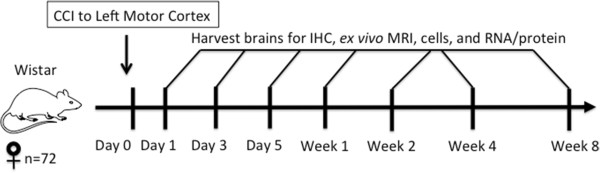
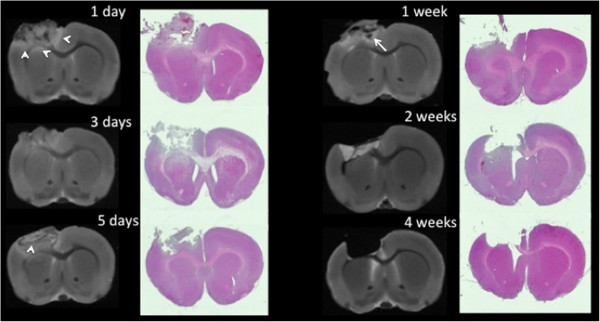
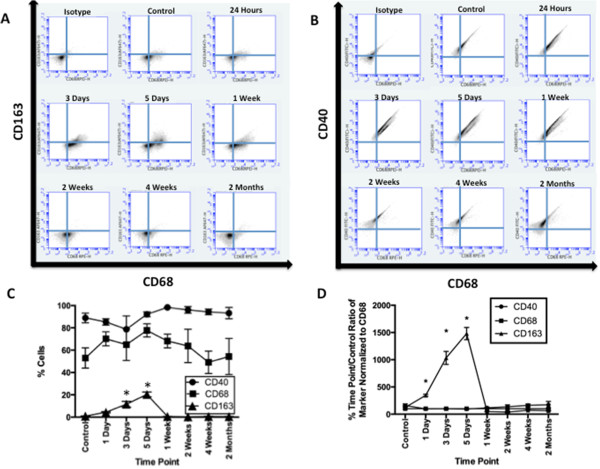
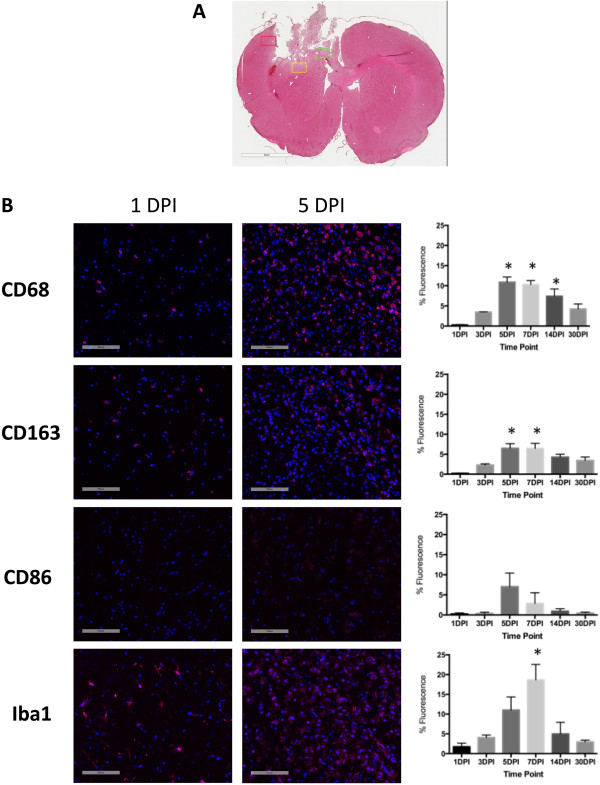
BACKGROUND: After central nervous system injury, inflammatory macrophages (M1) predominate over anti-inflammatory macrophages (M2). The temporal profile of M1/M2 phenotypes in macrophages and microglia after traumatic brain injury (TBI) in rats is unknown. We subjected female rats to severe controlled cortical impact (CCI) and examined the postinjury M1/M2 time course in their brains. METHODS: The motor cortex (2.5 mm left laterally and 1.0 mm anteriorly from the bregma) of anesthetized female Wistar rats (ages 8 to 10 weeks; N = 72) underwent histologically moderate to severe CCI with a 5-mm impactor tip. Separate cohorts of rats had their brains dissociated into cells for flow cytometry, perfusion-fixed for immunohistochemistry (IHC) and ex vivo magnetic resonance imaging or flash-frozen for RNA and protein analysis. For each analytical method used, separate postinjury times were included for 24 hours; 3 or 5 days; or 1, 2, 4 or 8 weeks. RESULTS: By IHC, we found that the macrophagic and microglial responses peaked at 5 to 7 days post-TBI with characteristics of mixed populations of M1 and M2 phenotypes. Upon flow cytometry examination of immunological cells isolated from brain tissue, we observed that peak M2-associated staining occurred at 5 days post-TBI. Chemokine analysis by multiplex assay showed statistically significant increases in macrophage inflammatory protein 1α and keratinocyte chemoattractant/growth-related oncogene on the ipsilateral side within the first 24 hours after injury relative to controls and to the contralateral side. Quantitative RT-PCR analysis demonstrated expression of both M1- and M2-associated markers, which peaked at 5 days post-TBI. CONCLUSIONS: The responses of macrophagic and microglial cells to histologically severe CCI in the female rat are maximal between days 3 and 7 postinjury. The response to injury is a mixture of M1 and M2 phenotypes.
Overview
The claims and statistics of this paper haven’t been checked yet.
Run the check — free, no account needed. It reads the open-access text and checks the sources it cites.
Integrity signals
Registry
Cites
Statistics
Figures
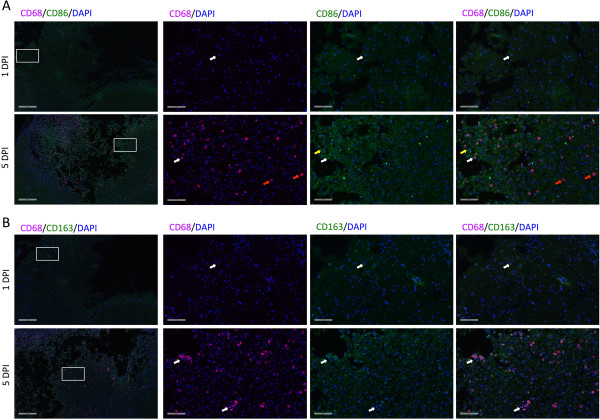
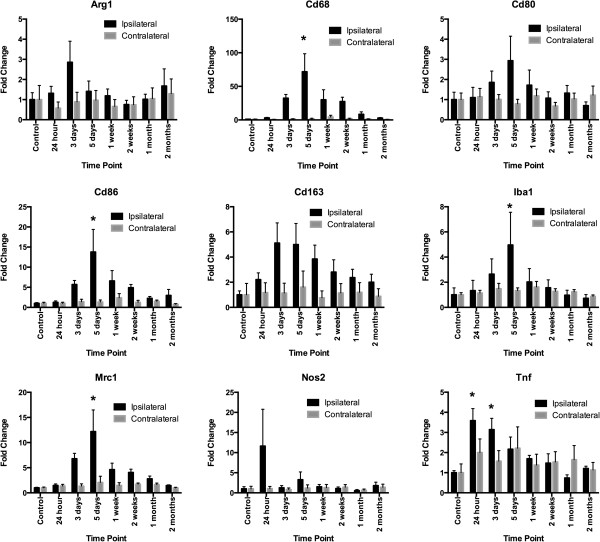
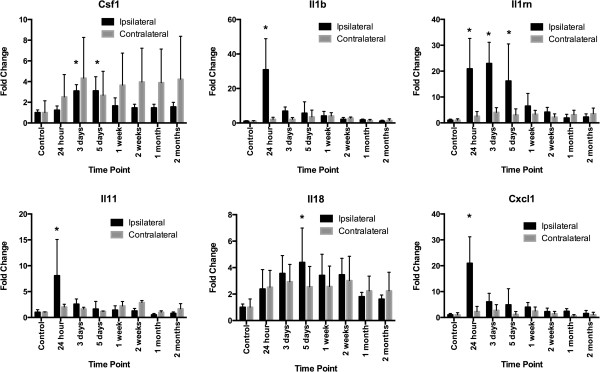
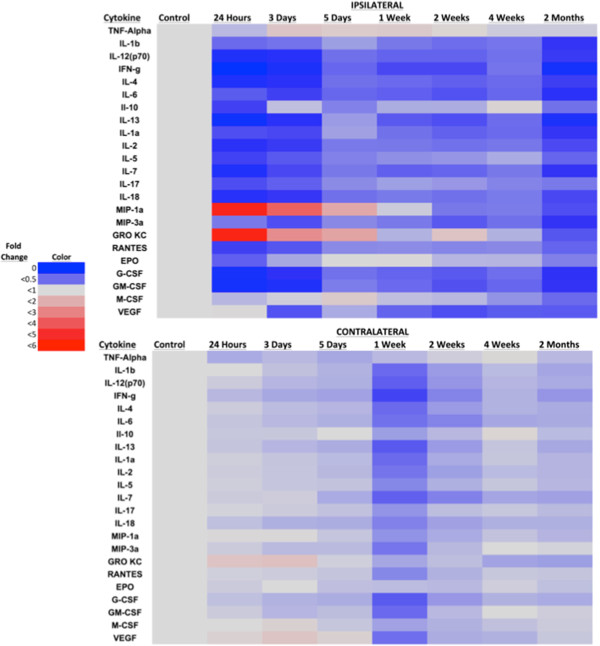
Verification
Claims the paper makes
The claims and statistics of this paper haven’t been checked yet.
Run the check — free, no account needed. It reads the open-access text and checks the sources it cites.
Claims other papers make about this one
Each is checked against this paper’s own text: does it say what the citing paper says it does?
In the citing paper
“In the initial week following injury, the microglia population adopts a balanced distribution between pro- and anti-inflammatory states to promote neurogenesis and enhance the immune response to injury [89,110,111].”
From Untangling senescent and damage‐associated microglia in the aging and diseased brain (2023) · cites this paper as [110]
Self-check
Percentages, sums and reported differences re-computed from the paper’s own numbers.
The self-check needs the paper’s full text.
Citations
Cites
The chemokine system in diverse forms of macrophage activation and polarization
MANTOVANI, A., SICA, A., SOZZANI, S., ALLAVENA, P., VECCHI, A., & LOCATI, M. (2004) · Trends in Immunology · doi:10.1016/j.it.2004.09.015 · Cited by 6,534
MANTOVANI, A., SOZZANI, S., LOCATI, M., ALLAVENA, P., & SICA, A. (2002) · Trends in Immunology · doi:10.1016/s1471-4906(02)02302-5 · Cited by 5,528
National Center for Injury Prevention and Control (U.S.). Division of Injury Response., Faul, M., Wald, M. M., Wu, L., & Coronado, V. G. (2010) · doi:10.15620/cdc.5571 · Cited by 3,494
Ding, A. H., Nathan, C., & Stuehr, D. J. (1988) · The Journal of Immunology · doi:10.4049/jimmunol.141.7.2407 · Cited by 2,840
Kigerl, K. A., Gensel, J. C., Ankeny, D. P., Alexander, J. K., Donnelly, D. J., & Popovich, P. G. (2009) · The Journal of Neuroscience · doi:10.1523/jneurosci.3257-09.2009 · Cited by 2,130
Stein, M., Keshav, S., Harris, N., & Gordon, S. (1992) · The Journal of experimental medicine · doi:10.1084/jem.176.1.287 · Cited by 1,960
Sica, A., Schioppa, T., Mantovani, A., & Allavena, P. (2006) · European Journal of Cancer · doi:10.1016/j.ejca.2006.01.003 · Cited by 1,483
Butcher, R. L., COLLINS, W. E., & FUGO, N. W. (1974) · Endocrinology · doi:10.1210/endo-94-6-1704 · Cited by 1,313
A controlled cortical impact model of traumatic brain injury in the rat
Edward Dixon, C., Clifton, G. L., Lighthall, J. W., Yaghmai, A. A., & Hayes, R. L. (1991) · Journal of Neuroscience Methods · doi:10.1016/0165-0270(91)90104-8 · Cited by 1,141
Donnelly, D. J., & Popovich, P. G. (2008) · Experimental Neurology · doi:10.1016/j.expneurol.2007.06.009 · Cited by 995
Stout, R. D., Jiang, C., Matta, B., Tietzel, I., Watkins, S. K., & Suttles, J. (2005) · The Journal of Immunology · doi:10.4049/jimmunol.175.1.342 · Cited by 968
Heterogeneity of Microglial Activation in the Innate Immune Response in the Brain
Colton, C. A. (2009) · Journal of Neuroimmune Pharmacology · doi:10.1007/s11481-009-9164-4 · Cited by 916
Tumor necrosis factor-alpha expression in ischemic neurons.
Liu, T., Clark, R., Mcdonnell, P., Young, P., White, R. F., Barone, F., & Feuerstein, G. (1994) · Stroke · doi:10.1161/01.str.25.7.1481 · Cited by 782
Functional plasticity of macrophages: reversible adaptation to changing microenvironments
Stout, R. D., & Suttles, J. (2004) · Journal of Leukocyte Biology · doi:10.1189/jlb.0504272 · Cited by 751
Possible involvement of the M2 anti‐inflammatory macrophage phenotype in growth of human gliomas
Komohara, Y., Ohnishi, K., Kuratsu, J., & Takeya, M. (2008) · The Journal of Pathology · doi:10.1002/path.2370 · Cited by 738
Neuroinflammation after traumatic brain injury: Opportunities for therapeutic intervention
Kumar, A., & Loane, D. J. (2012) · Brain, Behavior, and Immunity · doi:10.1016/j.bbi.2012.06.008 · Cited by 710
Beck, K. D., Nguyen, H. X., Galvan, M. D., Salazar, D. L., Woodruff, T. M., & Anderson, A. J. (2010) · Brain · doi:10.1093/brain/awp322 · Cited by 649
Chung, I. Y., & Benveniste, E. N. (1990) · The Journal of Immunology · doi:10.4049/jimmunol.144.8.2999 · Cited by 609
Microglia/Macrophage Polarization Dynamics in White Matter after Traumatic Brain Injury
Wang, G., Zhang, J., Hu, X., Zhang, L., Mao, L., Jiang, X., Liou, A. K.-F., Leak, R. K., Gao, Y., & Chen, J. (2013) · Journal of Cerebral Blood Flow & Metabolism · doi:10.1038/jcbfm.2013.146 · Cited by 473
Gender influences outcome of brain injury: progesterone plays a protective role
Roof, R. L., Duvdevani, R., & Stein, D. G. (1993) · Brain Research · doi:10.1016/0006-8993(93)91526-x · Cited by 327
Roof, R. L., Duvdevani, R., Braswell, L., & Stein, D. G. (1994) · Experimental Neurology · doi:10.1006/exnr.1994.1147 · Cited by 322
Craniotomy: True Sham for Traumatic Brain Injury, or a Sham of a Sham?
Cole, J. T., Yarnell, A. M., Kean, W. S., Gold, E. M., Lewis, B. K., Ren, M., McMullen, D. C., Jacobowitz, D. M., Pollard, H. B., O’Neill, J. T., et al. (2010) · Journal of Neurotrauma · doi:10.1089/neu.2010.1427 · Cited by 300
Self-citationCan the immune system be harnessed to repair the CNS?
Popovich, P. G., & Longbrake, E. E. (2008) · Nature reviews. Neuroscience · doi:10.1038/nrn2398 · Cited by 289
Kumar, A., Stoica, B. A., Sabirzhanov, B., Burns, M. P., Faden, A. I., & Loane, D. J. (2013) · Neurobiology of Aging · doi:10.1016/j.neurobiolaging.2012.11.013 · Cited by 244
Progesterone Rapidly Decreases Brain Edema: Treatment Delayed up to 24 Hours Is Still Effective
Roof, R. L., Duvdevani, R., Heyburn, J. W., & Stein, D. G. (1996) · Experimental Neurology · doi:10.1006/exnr.1996.0063 · Cited by 244
Bramlett, H. M., & Dietrich, W. D. (2001) · Journal of Neurotrauma · doi:10.1089/089771501750451811 · Cited by 213
KOCHANEK, P. M., MARION, D. W., ZHANG, W., SCHIDING, J. K., WHITE, M., PALMER, A. M., CLARK, R. S. B., O'MALLEY, M. E., STYREN, S. D., HO, C., et al. (1995) · Journal of Neurotrauma · doi:10.1089/neu.1995.12.1015 · Cited by 203 · cited 1×
“After the rats were anesthetized by nosecone administration of 2% to 3% isoflurane in 100% oxygen, the rat controlled cortical impact (CCI) model protocol [20-22] was carried out using an electromagnetic device (Impact One Stereotaxic Impactor (Leica Microsystems, Richmond, IL, USA) [23].”
MethodBrody, D. L., Donald, C. M., Kessens, C. C., Yuede, C. M., Parsadanian, M., Spinner, M., Kim, E., Schwetye, K. E., Holtzman, D. M., & Bayly, P. V. (2007) · Journal of Neurotrauma · doi:10.1089/neu.2006.0011 · Cited by 197
Delayed cytokine expression in rat brain following experimental contusion
Holmin, S., Schalling, M., Höjeberg, B., Nordqvist, A. S., Skeftruna, A.-K., & Mathiesen, T. I. (1997) · Journal of neurosurgery · doi:10.3171/jns.1997.86.3.0493 · Cited by 186
Traumatic brain injury induces macrophage subsets in the brain
Hsieh, C. L., Kim, C. C., Ryba, B. E., Niemi, E. C., Bando, J. K., Locksley, R. M., Liu, J., Nakamura, M. C., & Seaman, W. E. (2013) · European Journal of Immunology · doi:10.1002/eji.201243084 · Cited by 185
Bell, R. S., Vo, A. H., Neal, C. J., Tigno, J., Roberts, R., Mossop, C. M., Dunne, J. R., & Armonda, R. A. (2009) · The Journal of Trauma: Injury, Infection, and Critical Care · doi:10.1097/ta.0b013e31819d88c8 · Cited by 184
Clark, R. S. B., Kochanek, P. M., Dixon, C. E., CHEN, M., Marion, D. W., HEINEMAN, S., DeKosky, S. T., & Graham, S. H. (1997) · Journal of Neurotrauma · doi:10.1089/neu.1997.14.179 · Cited by 182
What has inflammation to do with traumatic brain injury?
Cederberg, D., & Siesjö, P. (2009) · Child s Nervous System · doi:10.1007/s00381-009-1029-x · Cited by 179
Roberts, I., Schierhout, G., & Alderson, P. (1998) · Journal of Neurology Neurosurgery & Psychiatry · doi:10.1136/jnnp.65.5.729 · Cited by 172
Acute injury in the peripheral nervous system triggers an alternative macrophage response
Ydens, E., Cauwels, A., Asselbergh, B., Goethals, S., Peeraer, L., Lornet, G., Almeida-Souza, L., Ginderachter, J. A. V., Timmerman, V., & Janssens, S. (2012) · Journal of Neuroinflammation · doi:10.1186/1742-2094-9-176 · Cited by 171
Brown, C. M., Mulcahey, T. A., Filipek, N. C., & Wise, P. M. (2010) · Endocrinology · doi:10.1210/en.2010-0371 · Cited by 166
Progesterone Improves Acute Recovery after Traumatic Brain Injury in the Aged Rat
Cutler, S. M., Cekic, M. M., Miller, D. M., Wali, B., VanLandingham, J. W., & Stein, D. G. (2007) · Journal of Neurotrauma · doi:10.1089/neu.2007.0294 · Cited by 164
Robertson, C. L., Puskar, A., Hoffman, G. E., Murphy, A. Z., Saraswati, M., & Fiskum, G. (2006) · Experimental Neurology · doi:10.1016/j.expneurol.2005.09.014 · Cited by 152
Genetic Influences on Outcome Following Traumatic Brain Injury
Jordan, B. D. (2007) · Neurochemical Research · doi:10.1007/s11064-006-9251-3 · Cited by 142
Wagner, A. K., Willard, L. A., Kline, A. E., Wenger, M. K., Bolinger, B. D., Ren, D., Zafonte, R. D., & Dixon, C. E. (2004) · Brain Research · doi:10.1016/j.brainres.2003.11.027 · Cited by 141
Hormonal state affects recovery from frontal cortex lesions in adult female rats
Attella, M. J., Nattinville, A., & Stein, D. G. (1987) · Behavioral and Neural Biology · doi:10.1016/s0163-1047(87)90918-6 · Cited by 138
Williams, A. J., Wei, H. H., Dave, J. R., & Tortella, F. C. (2007) · Journal of Neuroinflammation · doi:10.1186/1742-2094-4-17 · Cited by 137
Induction of Functional IL-8 Receptors by IL-4 and IL-13 in Human Monocytes
Bonecchi, R., Facchetti, F., Dusi, S., Luini, W., Lissandrini, D., Simmelink, M. J. A., Locati, M., Bernasconi, S., Allavena, P., Brandt, E., et al. (2000) · The Journal of Immunology · doi:10.4049/jimmunol.164.7.3862 · Cited by 132
The cytokine temporal profile in rat cortex after controlled cortical impact
Dalgard, C. L., Cole, J. T., Kean, W. S., Lucky, J. J., Sukumar, G., McMullen, D. C., Pollard, H. B., & Watson, W. D. (2012) · Frontiers in Molecular Neuroscience · doi:10.3389/fnmol.2012.00006 · Cited by 121
Shahrokhi, N., Khaksari, M., Soltani, Z., Mahmoodi, M., & Nakhaee, N. (2010) · Canadian Journal of Physiology and Pharmacology · doi:10.1139/y09-126 · Cited by 119
Liu, L., & Chan, C. (2013) · Neurobiology of Aging · doi:10.1016/j.neurobiolaging.2013.08.016 · Cited by 108
Astrocytes modulate the chemokine network in a pathogen-specific manner
McKimmie, C. S., & Graham, G. J. (2010) · Biochemical and Biophysical Research Communications · doi:10.1016/j.bbrc.2010.03.111 · Cited by 108
Lagraoui, M., Latoche, J. R., Cartwright, N. G., Sukumar, G., Dalgard, C. L., & Schaefer, B. C. (2012) · Frontiers in Neurology · doi:10.3389/fneur.2012.00155 · Cited by 100
Wei, H. H., Lu, X. M., Shear, D. A., Waghray, A., Yao, C., Tortella, F. C., & Dave, J. R. (2009) · Journal of Neuroinflammation · doi:10.1186/1742-2094-6-19 · Cited by 83
Lesional Accumulation of CD163+ Macrophages/microglia in Rat Traumatic Brain Injury
Zhang, Z., Zhang, Z.-Y., Wu, Y., & Schluesener, H. J. (2012) · Brain Research · doi:10.1016/j.brainres.2012.04.038 · Cited by 83
Tumor Necrosis Factor-α Expression in Ischemic Neurons
Liu, K. (2000) · Cited by 69
Nimer, F. A., Lindblom, R. P. F., Ström, M., Guerreiro‐Cacais, A. O., Parsa, R., Aeinehband, S., Mathiesen, T. I., Lidman, O., & Piehl, F. (2012) · Brain Behavior and Immunity · doi:10.1016/j.bbi.2012.10.002 · Cited by 53
Immunomagnetic enrichment and flow cytometric characterization of mouse microglia
Bedi, S. S., Smith, P., Hetz, R. A., Xue, H., & Cox, C. S. (2013) · Journal of Neuroscience Methods · doi:10.1016/j.jneumeth.2013.07.017 · Cited by 52
Wagner, A. K., Brett, C. A., McCullough, E. H., Niyonkuru, C., Loucks, T. L., Dixon, C. E., Ricker, J., Arenth, P., & Berga, S. L. (2012) · Brain Injury · doi:10.3109/02699052.2012.667594 · Cited by 47
Jacobowitz, D. M., Cole, J. T., McDaniel, D. P., Pollard, H. B., & Watson, W. D. (2012) · Brain Research · doi:10.1016/j.brainres.2012.05.008 · Cited by 42
The evolution of traumatic brain injury in a rat focal contusion model
Turtzo, L. C., Budde, M. D., Gold, E. M., Lewis, B. K., Janes, L. E., Yarnell, A. M., Grunberg, N. E., Watson, W., & Frank, J. A. (2012) · NMR in Biomedicine · doi:10.1002/nbm.2886 · Cited by 36
Self-citationKhaksari, M., Keshavarzi, Z., Gholamhoseinian, A., & Bibak, B. (2013) · Canadian Journal of Physiology and Pharmacology · doi:10.1139/cjpp-2012-0359 · Cited by 35
Blood Progesterone Levels in Pseudopregnant Rats: Effects of Partial Removal of Luteal Tissue
GREEF, W. J. D., & Zeilmaker, G. H. (1974) · Endocrinology · doi:10.1210/endo-95-2-565 · Cited by 34
Cited by
Sorted by citations
Neuroinflammation: The Devil Is in the Details
DiSabato, D. J., Quan, N., & Godbout, J. P. (2016) · Journal of Neurochemistry · doi:10.1111/jnc.13607 · Cited by 1,640
The far-reaching scope of neuroinflammation after traumatic brain injury
Simon, D. W., McGeachy, M. J., Bayır, H., Clark, R. S. B., Loane, D. J., & Kochanek, P. M. (2017) · Nature Reviews Neurology · doi:10.1038/nrneurol.2017.13 · Cited by 1,190
Modulators of microglial activation and polarization after intracerebral haemorrhage
Lan, X., Han, X., Li, Q., Yang, Q.-W., & Wang, J. (2017) · Nature Reviews Neurology · doi:10.1038/nrneurol.2017.69 · Cited by 915
Neuroimmunology of Traumatic Brain Injury: Time for a Paradigm Shift
Jassam, Y. N., Izzy, S., Whalen, M., McGavern, D. B., & El Khoury, J. (2017) · Neuron · doi:10.1016/j.neuron.2017.07.010 · Cited by 799
Astrocyte roles in traumatic brain injury
Burda, J. E., Bernstein, A. M., & Sofroniew, M. V. (2015) · Experimental Neurology · doi:10.1016/j.expneurol.2015.03.020 · Cited by 791
Metadata
- Authors
- Turtzo, L., Lescher, J., Janes, L., Dean, D. D., Budde, M. D., & Frank, J. A.
- Affiliations
- Uniformed Services University of the Health Sciences (US)
- National Institutes of Health (US)
- Corresponding author
- Turtzo, L
- Venue
- Journal of Neuroinflammation
- Published
- 2014
- Volume
- 11
- Issue
- 1
- Pages
- 82
- ISSN
- 1742-2094 (ISSN-L)
- PMC
- PMC4022366
- OpenAlex
- W2157968665
- Cited by
- 167
- References
- 58
- Citations by year
- 2026: 5 · 2025: 11 · 2024: 9 · 2023: 6 · 2022: 8 · 2021: 16 · 2020: 16 · 2019: 20 · 2018: 12 · 2017: 24 · 2016: 16 · 2015: 20 · 2014: 3
- FWCI
- 13.69
- Type
- journal article
- Language
- en
- Open access
- gold
- doi.org
- Licence
- cc-by
- Locations
- Journal of Neuroinflammation (publishedVersion, cc-by)
- Europe PMC (PubMed Central) (publishedVersion, cc-by)
- PubMed Central (publishedVersion, cc-by)
- PubMed (publishedVersion)
- Funders
- U.S. Department of Defense
- Henry M. Jackson Foundation
- National Institutes of Health
- U.S. Public Health Service (01-60855)
- Center for Neuroscience and Regenerative Medicine (60855)
- Topics
- Health Sciences › Medicine › Clinical Neurology › Traumatic Brain Injury and Neurovascular Disturbances
- Life Sciences › Neuroscience › Neurology › Neuroinflammation and Neurodegeneration Mechanisms
- Health Sciences › Medicine › Clinical Neurology › Traumatic Brain Injury Research
- Keywords
- traumatic brain injury, macrophage polarization, M1/M2 macrophages, microglia, controlled cortical impact, female rats, neuroinflammation, chemokines, CCL17, CCL22, motor cortex
- MeSH terms
- Analysis of Variance, Animals, Brain, Brain Injuries, Calcium-Binding Proteins, Disease Models, Animal, Female, Flow Cytometry, Gene Expression Regulation, Macrophages, Magnetic Resonance Imaging, Microfilament Proteins, Microscopy, Fluorescence, Time Factors, Cytokines, Rats, Wistar, Microglia, Rats
About these checks
Registry, retraction, Cites and statistics results are computed, not judged, with one exception: a printed reference that no index lists is read once by a model before it counts as a citation error. Claims are extracted by a model and kept only when their quote appears verbatim in the text; each cited source is then checked, with a model’s help, for whether it says what the claim relies on. Those verdicts can be wrong — read the claim’s quote and the cited source before relying on one.
Statistics and arithmetic are recomputed, not judged.
Confidence bands are shown only for fields calibrated on our annotated test set. None is calibrated yet, so no band is shown.
What counts as a claim ›How we measure confidence ›How we check this ›
Are you an author, or do you see a problem with this page? Request a review
