

Poor performance on the Iowa gambling task in children with obsessive-compulsive disorder
Open accessThe DOI matches its Crossref record; 45 of the 45 references it cites were found in a registry or an index.
Abstract
BACKGROUND: Several lines of evidence implicate orbitofrontal cortex dysfunction in the pathophysiology of obsessive-compulsive disorder (OCD). The purpose of this study was to investigate neuropsychological dysfunction of the orbitofrontal cortex in children with OCD. METHODS: The Iowa Gambling Task (IGT), which reflects orbitofrontal cortex function, and the Wisconsin Card Sorting Test (WCST), which is associated with functioning of the dorsolateral prefrontal cortex, were administered to 22 children with OCD and 22 healthy controls matched for gender, age, and intelligence. RESULTS: OCD patients displayed poor performance on the IGT. In contrast, performance on the WCST was not impaired in OCD patients compared to controls. CONCLUSIONS: These findings are in line with previous studies demonstrating that OCD in childhood is associated with a dysfunction of orbitofrontal-striatal-thalamic circuitry.
Overview
The claims and statistics of this paper haven’t been checked yet.
Free: it reads the open-access text and checks the first 5 claims that cite a source we can check. Create a free account to check every claim.
Integrity signals
Registry
Cites
Statistics
Figures
Verification
Claims the paper makes
The claims and statistics of this paper haven’t been checked yet.
Free: it reads the open-access text and checks the first 5 claims that cite a source we can check. Create a free account to check every claim.
Claims other papers make about this one
Each is checked against this paper’s own text: does it say what the citing paper says it does?
The source backs part of the claim, not all of it — or backs it for a different population, condition or comparison.
In the citing paper
“IGT scores in OCD patients under the age of 18 were still significantly lower than in HC.”
From Obsessive-Compulsive Disorder and Decision Making under Ambiguity: A Systematic Review with Meta-Analysis (2021) · cites this paper as [39]
Experimental — accuracy not yet measuredThe cited source says what the claim attributes to it.
In the citing paper
“However three studies found a correlation between symptoms severity as per Y-BOCS and IGT scores [18,39,45].”
From Obsessive-Compulsive Disorder and Decision Making under Ambiguity: A Systematic Review with Meta-Analysis (2021) · cites this paper as [39]
The cited source says what the claim attributes to it.
In the citing paper
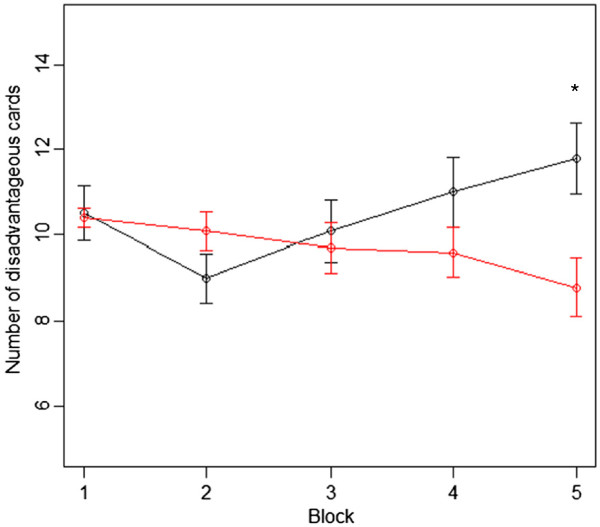
“To the best of our knowledge, only two studies evaluated IGT performance in adolescents with OCD: Kodaira and colleagues [39] found that children with OCD performed similar to controls in the early stages of the IGT, but selected more disadvantageous cards at the very last block; this behaviour has been observed in patients with a deficit of the orbitofrontal cortex.”
From Obsessive-Compulsive Disorder and Decision Making under Ambiguity: A Systematic Review with Meta-Analysis (2021) · cites this paper as [39]
In the citing paper
“However, a recent study based on large groups indicates that impaired decision-making might be a key feature in OCD (da Rocha et al. 2011) and already present in childhood (Kodaira et al. 2012).”
From The neurobiological link between OCD and ADHD (2014) · cites this paper as Kodaira et al. 2012
Self-check
Percentages, sums and reported differences re-computed from the paper’s own numbers.
The self-check needs the paper’s full text.
Citations
Cites
Diagnostic and Statistical Manual of Mental Disorders
Williams, J. B. W., & First, M. (2013) · Encyclopedia of Social Work · doi:10.1093/acrefore/9780199975839.013.104 · Cited by 109,519
Faul, F., Erdfelder, E., Lang, A.-G., & Buchner, A. (2007) · Behavior Research Methods · doi:10.3758/bf03193146 · Cited by 65,971
Insensitivity to future consequences following damage to human prefrontal cortex
Bechara, A., Damasio, A. R., Damasio, H., & Anderson, S. W. (1994) · Cognition · doi:10.1016/0010-0277(94)90018-3 · Cited by 6,128 · cited 11×
“Performance on the Iowa Gambling Task (IGT), which evaluates real-life decision-making abilities under conditions of ambiguity, is particularly sensitive to alterations in OFC function [4,5].”
BackgroundMethodInfluentialDiagnostic and Statistical Manual of Mental Disorders ( DSM ‐ IV ‐ TR )
Segal, D. L. (2010) · The Corsini Encyclopedia of Psychology · doi:10.1002/9780470479216.corpsy0271 · Cited by 4,666
A Modified Card Sorting Test Sensitive to Frontal Lobe Defects
Nelson, H. E. (1976) · Cortex · doi:10.1016/s0010-9452(76)80035-4 · Cited by 2,454 · cited 1×
“It is also a sensitive test of dorsolateral prefrontal cortex function [26].”
BackgroundChildren's Yale-Brown Obsessive Compulsive Scale: Reliability and Validity
SCAHILL, L., RIDDLE, M. A., McSWIGGIN-HARDIN, M., ORT, S. I., KING, R. A., GOODMAN, W. K., CICCHETTI, D., & LECKMAN, J. F. (1997) · Journal of the American Academy of Child & Adolescent Psychiatry · doi:10.1097/00004583-199706000-00023 · Cited by 2,045 · cited 6×
“The present findings that IGT performance correlated significantly with the CY-BOCS score during the period with the most severe symptoms but not with the CYBOCS score at the time of the assessment suggest that IGT performance may be associated with the potential severity of OCD rather than the state of present sympto…”
MethodInfluentialRelative reward preference in primate orbitofrontal cortex
Tremblay, L., & Schultz, W. (1999) · Nature · doi:10.1038/19525 · Cited by 1,314 · cited 1×
“Electrophysiological recordings of the OFC have revealed that orbitofrontal neurons play an important role in processing the motivational value of rewarding outcomes [30-32].”
BackgroundDissociation Of Working Memory from Decision Making within the Human Prefrontal Cortex
Bechara, A., Damasio, H., Tranel, D., & Anderson, S. W. (1998) · The Journal of Neuroscience · doi:10.1523/jneurosci.18-01-00428.1998 · Cited by 1,059 · cited 1×
“Performance on the Iowa Gambling Task (IGT), which evaluates real-life decision-making abilities under conditions of ambiguity, is particularly sensitive to alterations in OFC function [4,5].”
BackgroundAbramowitz, J. S., Taylor, S., & McKay, D. (2009) · The Lancet · doi:10.1016/s0140-6736(09)60240-3 · Cited by 1,002
Toward a neurobiology of obsessive-compulsive disorder
Graybiel, A. M., & Rauch, S. L. (2000) · Neuron · doi:10.1016/s0896-6273(00)00113-6 · Cited by 864 · cited 1×
“The current dominant model of obsessive-compulsive disorder (OCD) focuses on abnormalities in corticostriatal circuitry, with particular emphasis on the orbitofrontal-striatal-thalamic circuit [1,2].”
BackgroundNeuroimaging and frontal–subcortical circuitry in obsessive–compulsive disorder
Saxena, S., Brody, A. L., Schwartz, J. M., & Baxter, L. R. (1998) · British Journal of Psychiatry · doi:10.1192/s0007125000297870 · Cited by 831
Chapman, L. J., & Chapman, J. P. (1987) · Brain and Cognition · doi:10.1016/0278-2626(87)90118-7 · Cited by 641 · cited 1×
“The handedness of each subjects was determined using the Hand Usage Questionnaire [19].”
MethodDrug abusers show impaired performance in a laboratory test of decision making
Grant, S. (2000) · Neuropsychologia · doi:10.1016/s0028-3932(99)00158-x · Cited by 625 · cited 1×
“Performance on the Iowa Gambling Task (IGT), which evaluates real-life decision-making abilities under conditions of ambiguity, is particularly sensitive to alterations in OFC function [4,5].”
BackgroundChamberlain, S. R., Menzies, L., Hampshire, A., Suckling, J., Fineberg, N. A., del Campo, N., Aitken, M., Craig, K., Owen, A. M., Bullmore, E. T., et al. (2008) · Science · doi:10.1126/science.1154433 · Cited by 550 · cited 1×
“For example, neuroimaging studies demonstrated that the activation of the lateral OFC along with several other cortical regions was abnormally reduced during a reversal learning task in OCD patients [3].”
BackgroundBerman, K. (1995) · Neuropsychologia · doi:10.1016/0028-3932(95)00035-2 · Cited by 534 · cited 5×
“In comparison, performance on * Correspondence: masakik15@jcom.home.ne.jp 1Department of Child and Adolescent Psychiatry, National Center for Global Health and Medicine, Kohnodai Hospital, 1-7-1 Kohnodai, Ichikawa, Chiba 272-0836, Japan 3Department of Developmental Psychiatry, Kitasato University Graduate School of Me…”
InfluentialObsessive-Compulsive Disorder: A Double-blind Trial of Clomipramine and Clorgyline
Insel, T. R. (1983) · Archives of General Psychiatry · doi:10.1001/archpsyc.1983.04390010015002 · Cited by 343
Hudak, R., & Gannon, J. M. (2022) · Current Clinical Practice · doi:10.1007/978-3-030-98709-1_5 · Cited by 306
Lawrence, N. S., Wooderson, S., Mataix-Cols, D., David, R., Speckens, A., & Phillips, M. L. (2006) · Neuropsychology · doi:10.1037/0894-4105.20.4.409 · Cited by 291 · cited 1×
“Previous studies have described poor IGT performance in adult OCD patients [8-11] and one study demonstrated impaired IGT performance in patients with prominent hoarding symptoms [28], both of which are in line with our current findings regarding childhoodonset OCD.”
ResultReward-Related Neuronal Activity During Go-Nogo Task Performance in Primate Orbitofrontal Cortex
Tremblay, L., & Schultz, W. (2000) · Journal of Neurophysiology · doi:10.1152/jn.2000.83.4.1864 · Cited by 285 · cited 1×
“Electrophysiological recordings of the OFC have revealed that orbitofrontal neurons play an important role in processing the motivational value of rewarding outcomes [30-32].”
BackgroundNeuropsychological Assessment, 3rd Edition
Rosen, W. G. (1996) · The Journal of Neuropsychiatry and Clinical Neurosciences · doi:10.1176/jnp.8.3.359 · Cited by 277
Executive functioning in obsessive-compulsive disorder, unipolar depression, and schizophrenia
Moritz, S., Birkner, C., Kloss, M., Jahn, H., Hand, I., Haasen, C., & Krausz, M. (2002) · Archives of Clinical Neuropsychology · doi:10.1093/arclin/17.5.477 · Cited by 269
Functional activity related to risk anticipation during performance of the Iowa gambling task
Fukui, H., Murai, T., Fukuyama, H., Hayashi, T., & Hanakawa, T. (2005) · NeuroImage · doi:10.1016/j.neuroimage.2004.08.028 · Cited by 261 · cited 1×
“dollars to Japanese yen [24].”
Cognitive dysfunction in obsessive-compulsive disorder
Okasha, A., Rafaat, M., Mahallawy, N., Nahas, G. E., Dawla, A. S. E., Sayed, M., & Kholi, S. E. (2000) · Acta Psychiatrica Scandinavica · doi:10.1111/j.1600-0447.2000.tb10926.x · Cited by 170
Cavedini, P., Zorzi, C., Piccinni, M., Cavallini, M. C., & Bellodi, L. (2010) · Biological Psychiatry · doi:10.1016/j.biopsych.2010.02.012 · Cited by 167 · cited 3×
“Several groups reported a reduced performance in OCD patients [9,36-38], while others reported no differences compared with healthy controls [39-42].”
ResultZarei, M., Mataix-Cols, D., Heyman, I., Hough, M., Doherty, J., Burge, L., Winmill, L., Nijhawan, S., Matthews, P. M., & James, A. (2011) · Biological Psychiatry · doi:10.1016/j.biopsych.2011.06.032 · Cited by 160 · cited 1×
“Recent findings suggest that gray matter and white matter changes in children and adolescents with OCD are broadly consistent with those identified in adult OCD patients [12,13].”
ResultBasal-corticofrontal circuits in schizophrenia and obsessive-compulsive disorder
Cavallaro, R., Cavedini, P., Mistretta, P., Bassi, T., Angelone, S. M., Ubbiali, A., & Bellodi, L. (2003) · Biological Psychiatry · doi:10.1016/s0006-3223(02)01814-0 · Cited by 140 · cited 1×
“; licensee BioMed Central Commons Attribution License (http://creativec reproduction in any medium, provided the or the Wisconsin Card Sorting Test (WCST), which measures executive function or abstract reasoning abilities, is thought to be associated with functioning of the dorsolateral prefrontal cortex (DLPFC) [6],…”
BackgroundMoritz, S., Birkner, C., Kloss, M., Jacobsen, D., Fricke, S., Böthern, A., & Hand, I. (2001) · Journal of Abnormal Psychology · doi:10.1037/0021-843x.110.4.653 · Cited by 138 · cited 1×
“Several groups reported a reduced performance in OCD patients [9,36-38], while others reported no differences compared with healthy controls [39-42].”
ResultAbbruzzese, M., Ferri, S., & Scarone, S. (1995) · Psychiatry Research · doi:10.1016/0165-1781(95)02670-r · Cited by 138 · cited 1×
“Several groups reported a reduced performance in OCD patients [9,36-38], while others reported no differences compared with healthy controls [39-42].”
ResultExecutive functions in obsessive–compulsive disorder: state or trait deficits?
Bannon, S., Gonsalvez, C. J., Croft, R. J., & Boyce, P. M. (2006) · Australian & New Zealand Journal of Psychiatry · doi:10.1080/j.1440-1614.2006.01928.x · Cited by 131
Garon, N., Moore, C., & Waschbusch, D. A. (2006) · Journal of Attention Disorders · doi:10.1177/1087054705284501 · Cited by 127 · cited 5×
“Previous studies have used the IGT to assess decision making in children and adolescents with ADHD [21], psychopathic tendencies [22], and self-harm tendencies [23].”
MethodInfluentialDecision making and problem solving in adolescents who deliberately self-harm
Oldershaw, A., Grima, E., Jollant, F., Richards, C., Simic, M., Taylor, L., & Schmidt, U. (2009) · Psychological Medicine · doi:10.1017/s0033291708003693 · Cited by 126 · cited 1×
“Previous studies have used the IGT to assess decision making in children and adolescents with ADHD [21], psychopathic tendencies [22], and self-harm tendencies [23].”
MethodAlternation learning in obsessive-compulsive disorder
Gross‐Isseroff, R., Sasson, Y., Voet, H., Hendler, T., Luca-Haimovici, K., Kandel-Sussman, H., & Zohar, J. (1996) · Biological Psychiatry · doi:10.1016/0006-3223(95)00179-4 · Cited by 116 · cited 1×
“Several groups reported a reduced performance in OCD patients [9,36-38], while others reported no differences compared with healthy controls [39-42].”
ResultDissociation of decisions in ambiguous and risky situations in obsessive–compulsive disorder
Starcke, K., Tuschen-Caffier, B., Markowitsch, H. J., & Brand, M. (2010) · Psychiatry Research · doi:10.1016/j.psychres.2008.10.022 · Cited by 105 · cited 2×
“Previous studies have described poor IGT performance in adult OCD patients [8-11] and one study demonstrated impaired IGT performance in patients with prominent hoarding symptoms [28], both of which are in line with our current findings regarding childhoodonset OCD.”
ResultDisturbances of Emotion Regulation After Focal Brain Lesions
Bechara, A. (2004) · International review of neurobiology · doi:10.1016/s0074-7742(04)62006-x · Cited by 96 · cited 1×
“The persistent selection of cards from disadvantageous decks in IGT is a behavior also observed in patients with damage to the OFC [20] [33].”
BackgroundDecision making performance in obsessive compulsive disorder
Nielen, M. M. A., Veltman, D. J., de Jong, R., Mulder, G., & den Boer, J. A. (2002) · Journal of Affective Disorders · doi:10.1016/s0165-0327(00)00381-5 · Cited by 95 · cited 1×
“[29] did not find significant differences in IGT performance between OCD patients and healthy volunteers.”
BackgroundA study of neuropsychological deficit in children with obsessive-compulsive disorder
Shin, M.-S., Choi, H., Kim, H., Hwang, J.-W., Kim, B.-N., & Cho, S.-C. (2008) · European Psychiatry · doi:10.1016/j.eurpsy.2008.03.010 · Cited by 81 · cited 2×
“The only previous study which examined WCST performance in children with OCD [34] reported reduced WCST scores in children with OCD compared to healthy controls, with effect sizes of d = 1.”
ResultTsuchiya, E., Oki, J., Yahara, N., & Fujieda, K. (2005) · Brain and Development · doi:10.1016/j.braindev.2004.06.008 · Cited by 80 · cited 2×
“We excluded OCD patients comorbid with pervasive developmental disorder (PDD) or attention-deficit/hyperactivity disorder (ADHD) because a comorbidity of these disorders is known to affect performance on neuropsychological tests [14,15].”
BackgroundWisconsin card sorting test in children with temporal lobe epilepsy
Igarashi, K., Oguni, H., Ōsawa, M., Awaya, Y., Kato, M., Mimura, M., & Kashima, H. (2002) · Brain and Development · doi:10.1016/s0387-7604(02)00024-4 · Cited by 74 · cited 1×
“Four clinical psychologists individually administered the Wechsler Intelligence Scale for Children-Third Edition (WISC-III) and the Keio version of the Wisconsin Card Sorting Test (WCST) [25].”
MethodSelf-citationLuceya, J. V., Costa, D. C., Busatto, G. F., Pilowsky, L. S., Marks, I. M., Ell, P. J., & Kerwin, R. W. (1997) · Psychiatry Research Neuroimaging · doi:10.1016/s0925-4927(96)03017-x · Cited by 69 · cited 1×
“Several groups reported a reduced performance in OCD patients [9,36-38], while others reported no differences compared with healthy controls [39-42].”
ResultJayarajan, R. N., Venkatasubramanian, G., Viswanath, B., Reddy, Y. C. J., Srinath, S., Vasudev, M. K., & Chandrashekar, C. R. (2012) · Depression and Anxiety · doi:10.1002/da.21890 · Cited by 60
Decision-making impairment in obsessive-compulsive disorder as measured by the Iowa Gambling Task
Rocha, F. F. D., Alvarenga, N. B., Malloy-Diniz, L., & Corrêa, H. (2011) · Arquivos de Neuro-Psiquiatria · doi:10.1590/s0004-282x2011000500013 · Cited by 59
Starcke, K., Tuschen-Caffier, B., Markowitsch, H.-J., & Brand, M. (2009) · Cognitive Neuropsychiatry · doi:10.1080/13546800902996831 · Cited by 59 · cited 2×
“Previous studies have described poor IGT performance in adult OCD patients [8-11] and one study demonstrated impaired IGT performance in patients with prominent hoarding symptoms [28], both of which are in line with our current findings regarding childhoodonset OCD.”
ResultLong‐ and short‐range reward expectancy in the primate orbitofrontal cortex
Hikosaka, K., & Watanabe, M. (2004) · European Journal of Neuroscience · doi:10.1111/j.0953-816x.2004.03120.x · Cited by 53 · cited 1×
“Electrophysiological recordings of the OFC have revealed that orbitofrontal neurons play an important role in processing the motivational value of rewarding outcomes [30-32].”
BackgroundKado, Y., Sanada, S., Yanagihara, M., Ogino, T., Ohno, S., Watanabe, K., Nakano, K., Morooka, T., Oka, M., & Ohtsuka, Y. (2011) · Brain and Development · doi:10.1016/j.braindev.2011.08.008 · Cited by 44 · cited 1×
“We excluded OCD patients comorbid with pervasive developmental disorder (PDD) or attention-deficit/hyperactivity disorder (ADHD) because a comorbidity of these disorders is known to affect performance on neuropsychological tests [14,15].”
BackgroundSelf-citationGao, Y., Baker, L. A., Raine, A., Wu, H. P., & Bezdjian, S. (2008) · Journal of Adolescence · doi:10.1016/j.adolescence.2008.09.001 · Cited by 40 · cited 1×
“Previous studies have used the IGT to assess decision making in children and adolescents with ADHD [21], psychopathic tendencies [22], and self-harm tendencies [23].”
Method
Research works printed but not linked: 1
- 27. Lezak MD. Neuropsychological Assessment. 3. New York: Oxford University Press, USA; 1995.
Cited by
Think twice: Impulsivity and decision making in obsessive–compulsive disorder
Grassi, G., Pallanti, S., Righi, L., Figee, M., Mantione, M., Denys, D., Piccagliani, D., Rossi, A., & Stratta, P. (2015) · Journal of Behavioral Addictions · doi:10.1556/2006.4.2015.039 · Cited by 137
“…al., 2006; Cavedini, Riboldi, D’Annucci et al., 2002; Cavedini, Riboldi, Keller et al., 2002; Cavedini et al., 2012, Cavedini et al., 2010; da Rocha, Alvarenga et al., 2011; da Rocha, Malloy-Diniz et al., 2011; da Rocha et al. 2008; Kashyap et al., 2013; Kodaira et al., 2012; Starcke et al., 2010).”
BackgroundResultInfluentialReward-based decision making in pathological gambling: The roles of risk and delay
Wiehler, A., & Peters, J. (2014) · Neuroscience Research · doi:10.1016/j.neures.2014.09.008 · Cited by 123
The neurobiological link between OCD and ADHD
Brem, S., Grünblatt, E., Drechsler, R., Riederer, P., & Walitza, S. (2014) · ADHD Attention Deficit and Hyperactivity Disorders · doi:10.1007/s12402-014-0146-x · Cited by 109
Abramovitch, A., Abramowitz, J. S., Mittelman, A., Stark, A., Ramsey, K., & Geller, D. A. (2015) · Journal of Child Psychology and Psychiatry · doi:10.1111/jcpp.12414 · Cited by 88
“…Emel, & Oner, 2011; Beers et al., 1999; Behar et al., 1984; Chang, Mccracken, & Piacentini, 2007; Gruner et al., 2012; Huyser, Veltman, Wolters, De Haan, & Boer, 2010; Kodaira et al., 2012; Ornstein et al., 2010; Zandt, Prior, & Kyrios, 2009), the year of publication ranging from 1984 to 2012.”
Impaired cognitive plasticity and goal-directed control in adolescent obsessive–compulsive disorder
Gottwald, J., de Wit, S., Apergis-Schoute, A. M., Morein-Zamir, S., Kaser, M., Cormack, F., Sule, A., Limmer, W., Morris, A. C., Robbins, T. W., et al. (2018) · Psychological Medicine · doi:10.1017/s0033291717003464 · Cited by 64
“For cognitive flexibility and set shifting, some studies have shown impairments in youths with OCD (Andrés et al. 2007; Shin et al. 2008; Isik Taner et al. 2011; Gruner et al. 2012), while others found no deficits (Beers et al. 1999; Ornstein et al. 2010; Kodaira et al. 2012; Hybel et al. 2017).”
Influential
Metadata
- Authors
- Kodaira, M., Iwadare, Y., Ushijima, H., Oiji, A., Kato, M., Sugiyama, N., Sasayama, D., Usami, M., Watanabe, K., & Saito, K.
- Affiliations
- National Center for Global Health and Medicine (JP)
- Kumamoto University (JP)
- Kitasato University (JP)
- Keio University (JP)
- Shinshu University (JP)
- Corresponding author
- Kodaira, Masaki
- Venue
- Annals of General Psychiatry
- Published
- 2012
- Volume
- 11
- Issue
- 1
- Pages
- 25
- ISSN
- 1744-859X (ISSN-L)
- PMC
- PMC3508952
- OpenAlex
- W2112869130
- Cited by
- 28
- References
- 45
- Citations by year
- 2026: 1 · 2023: 3 · 2021: 4 · 2020: 2 · 2019: 1 · 2018: 4 · 2017: 4 · 2016: 2 · 2015: 3 · 2014: 3 · 2013: 1
- FWCI
- 2.55
- Type
- journal article
- Language
- en
- Open access
- gold
- doi.org
- Licence
- cc-by
- Locations
- Annals of General Psychiatry (publishedVersion, cc-by)
- PubMed Central (publishedVersion, cc-by)
- PubMed (publishedVersion)
- Institutional Repositories DataBase (IRDB) (publishedVersion, cc-by)
- DOAJ (DOAJ: Directory of Open Access Journals) (submittedVersion)
- SOAR (Shinshu University) (submittedVersion, cc-by-nc-nd)
- Topics
- Social Sciences › Psychology › Clinical Psychology › Obsessive-Compulsive Spectrum Disorders
- Life Sciences › Neuroscience › Cognitive Neuroscience › Neural and Behavioral Psychology Studies
- Social Sciences › Psychology › Clinical Psychology › Psychoanalysis and Psychopathology Research
- Keywords
- obsessive-compulsive disorder, childhood OCD, Iowa Gambling Task, Wisconsin Card Sorting Test, dorsolateral prefrontal cortex, neuropsychological dysfunction
About these checks
Registry, retraction, Cites and statistics results are computed, not judged, with one exception: a printed reference that no index lists is read once by a model before it counts as a citation error. Claims are extracted by a model and kept only when their quote appears verbatim in the text; each cited source is then checked, with a model’s help, for whether it says what the claim relies on. Those verdicts can be wrong — read the claim’s quote and the cited source before relying on one.
Statistics and arithmetic are recomputed, not judged.
Confidence bands are shown only for fields calibrated on our annotated test set. None is calibrated yet, so no band is shown.
What counts as a claim ›How we measure confidence ›How we check this ›
Are you an author, or do you see a problem with this page? Request a review
Data sources
Bibliographic data: Semantic Scholar, OpenAlex, Crossref.
Contains information from the Semantic Scholar Academic Graph Datasets, made available under the ODC Attribution License (ODC-BY 1.0).
Semantic Scholar’s data is described in: Kinney, R., et al. (2023). The Semantic Scholar Open Data Platform. arXiv:2301.10140.
