

Exceptional error minimization in putative primordial genetic codes
Open accessThe DOI matches its Crossref record; 75 of the 75 references it cites were found in a registry or an index.
Abstract
BACKGROUND: The standard genetic code is redundant and has a highly non-random structure. Codons for the same amino acids typically differ only by the nucleotide in the third position, whereas similar amino acids are encoded, mostly, by codon series that differ by a single base substitution in the third or the first position. As a result, the code is highly albeit not optimally robust to errors of translation, a property that has been interpreted either as a product of selection directed at the minimization of errors or as a non-adaptive by-product of evolution of the code driven by other forces. RESULTS: We investigated the error-minimization properties of putative primordial codes that consisted of 16 supercodons, with the third base being completely redundant, using a previously derived cost function and the error minimization percentage as the measure of a code's robustness to mistranslation. It is shown that, when the 16-supercodon table is populated with 10 putative primordial amino acids, inferred from the results of abiotic synthesis experiments and other evidence independent of the code's evolution, and with minimal assumptions used to assign the remaining supercodons, the resulting 2-letter codes are nearly optimal in terms of the error minimization level. CONCLUSION: The results of the computational experiments with putative primordial genetic codes that contained only two meaningful letters in all codons and encoded 10 to 16 amino acids indicate that such codes are likely to have been nearly optimal with respect to the minimization of translation errors. This near-optimality could be the outcome of extensive early selection during the co-evolution of the code with the primordial, error-prone translation system, or a result of a unique, accidental event. Under this hypothesis, the subsequent expansion of the code resulted in a decrease of the error minimization level that became sustainable owing to the evolution of a high-fidelity translation system. REVIEWERS: This article was reviewed by Paul Higgs (nominated by Arcady Mushegian), Rob Knight, and Sandor Pongor. For the complete reports, go to the Reviewers' Reports section.
Overview
The claims and statistics of this paper haven’t been checked yet.
Free: it reads the open-access text and checks the first 5 claims that cite a source we can check. Create a free account to check every claim.
Integrity signals
Registry
Cites
Statistics
Figures


Verification
Claims the paper makes
The claims and statistics of this paper haven’t been checked yet.
Free: it reads the open-access text and checks the first 5 claims that cite a source we can check. Create a free account to check every claim.
Claims other papers make about this one
Each is checked against this paper’s own text: does it say what the citing paper says it does?
The cited source says what the claim attributes to it.
In the citing paper
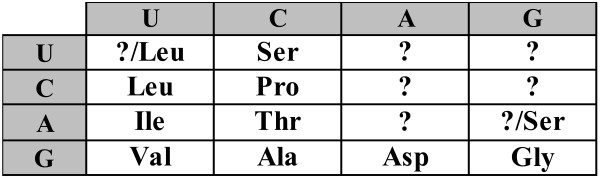
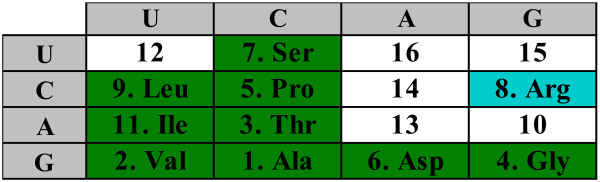
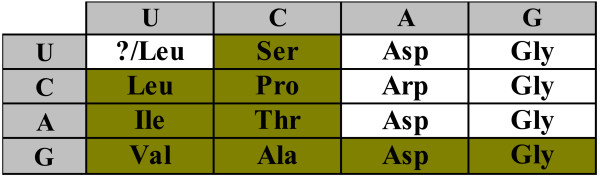
“Postulating that the third letter of the codons was uninformative in the primordial code and reducing the code table to the codons for the 10 early amino acids resulted in the reconstruction of the ancient doublet code, albeit with several codon series remaining ambiguous ( Figure 2 ) (59).”
From Origin and Evolution of the Universal Genetic Code (2017) · cites this paper as [59]
The cited source says what the claim attributes to it.
In the citing paper
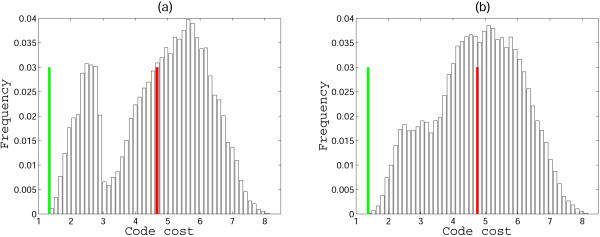
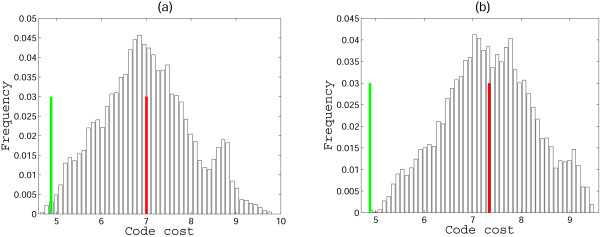
“Notably, this reconstructed primordial code shows an exceptional level of error minimization and is much closer to the global optimum than the SGC.”
From Origin and Evolution of the Universal Genetic Code (2017) · cites this paper as [59]
In the citing paper
“Extensive quantitative analyses that employed cost functions differently derived from physico-chemical properties of amino acids have shown that the code is indeed highly resilient, with the probability to pick an equally robust random code being on the order of 10−7–10−8 [14,15,61,62,63,64,65,66,67,68].”
From Frozen Accident Pushing 50: Stereochemistry, Expansion, and Chance in the Evolution of the Genetic Code (2017) · cites this paper as [65]
Self-check
Percentages, sums and reported differences re-computed from the paper’s own numbers.
The self-check needs the paper’s full text.
Citations
Cites
The Proceedings of the National Academy of Sciences
Richards, J. W. (1915) · Science · doi:10.1126/science.42.1074.161 · Cited by 13,983
Darwin, C., Burndy Library, Darwin, C., Edmonds & Remnants, & Henry Sotheran Ltd. (1859) · J. Murray eBooks · doi:10.5962/bhl.title.59991 · Cited by 6,984
A Production of Amino Acids Under Possible Primitive Earth Conditions
Miller, S. L. (1953) · Science · doi:10.1126/science.117.3046.528 · Cited by 3,522 · cited 12×
“The early ones are taken to be the 10 that are found in Miller and Urey experiments, which have previously been assumed by authors such as Wong [10] and Di Giulio [59].”
InfluentialThe origin of the genetic code
Crick, F. H. C. (1968) · Journal of Molecular Biology · doi:10.1016/0022-2836(68)90392-6 · Cited by 2,320
Miller, S. L., & Urey, H. C. (1959) · Science · doi:10.1126/science.130.3370.245 · Cited by 1,405
Xia, T., SantaLucia, J., Burkard, M. E., Kierzek, R., Schroeder, S. J., Jiao, X., Cox, C., & Turner, D. H. (1998) · Biochemistry · doi:10.1021/bi9809425 · Cited by 1,140 · cited 2×
“1st/2nd base Amino acid DNA melting [30,67] RNA stacking [68] S/W theory [69]”
BackgroundMethodMistranslation-Induced Protein Misfolding as a Dominant Constraint on Coding-Sequence Evolution
Drummond, D. A., & Wilke, C. O. (2008) · Cell · doi:10.1016/j.cell.2008.05.042 · Cited by 1,053 · cited 1×
“This course of evolution was made possible by the evolution of the modern, high-fidelity translation system as well as proteins that are partially optimized for robustness to misfolding [62], and was driven by the selective advantage of the increased diversity of the amino acid repertoire.”
Dueck, G. (1993) · Journal of Computational Physics · doi:10.1006/jcph.1993.1010 · Cited by 765 · cited 1×
“In most cases, a heuristic combinatorial algorithm was used (the Great Deluge Algorithm [ 65 ]), 3 to 5 solutions were identified, and the solution with the lowest cost was taken as the optimal.”
MethodA co-evolution theory of the genetic code
Wong, J. T.-F. (1975) · Proceedings of the National Academy of Sciences · doi:10.1073/pnas.72.5.1909 · Cited by 649
The genetic code is one in a million
Freeland, S. J., & Hurst, L. D. (1998) · Journal of Molecular Evolution · doi:10.1007/pl00006381 · Cited by 563 · cited 3×
“The errorminimization theory holds that the structure of the code is the result of selection for robustness to mistranslation [11,34,39,53,54].”
BackgroundMethodOn the evolution of the genetic code.
Woese, C. R. (1965) · Proceedings of the National Academy of Sciences · doi:10.1073/pnas.54.6.1546 · Cited by 487
Kramer, E. B., & Farabaugh, P. J. (2007) · RNA · doi:10.1261/rna.294907 · Cited by 443 · cited 1×
“It could be argued that recent experimental evidence shows no bias in the second base (Kramer and Farabaugh 2007; Higgs 2009) but more data is needed for reliable conclusions, so we adhered to the traditional scheme that was chosen a priori, before performing any simulations and numerical experiments.”
Rewiring the keyboard: evolvability of the genetic code
Knight, R. D., Freeland, S. J., & Landweber, L. F. (2001) · Nature Reviews Genetics · doi:10.1038/35047500 · Cited by 435 · cited 1×
“Three major conceptual frameworks have been developed to explain the regularities in the code [8,12,52].”
BackgroundOrigin and evolution of the genetic code: The universal enigma
Koonin, E. V., & Novozhilov, A. S. (2009) · IUBMB Life · doi:10.1002/iub.146 · Cited by 392 · cited 3×
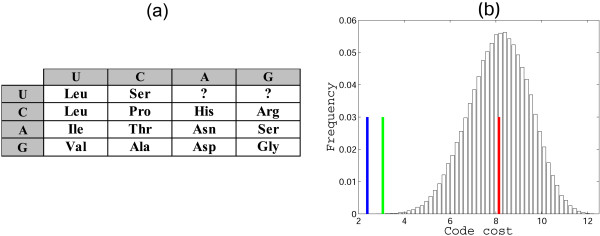
“6), in a sharp contrast to the 78% MP for the standard code [12] (this estimate was obtained using the same cost function as described in the Methods section but for the complete, standard genetic code, and is somewhat higher than the previously reported estimates [41]).”
BackgroundResultSelf-citationA quantitative measure of error minimization in the genetic code
Haig, D., & Hurst, L. D. (1991) · Journal of Molecular Evolution · doi:10.1007/bf02103132 · Cited by 337 · cited 1×
“ucing the cost of possible mistranslations and mutations. Quantitative evidence in support of this error-minimization property comes from the comparison of the standard code with random alternatives (Haig and Hurst 1991; Freeland and Hurst 1998; Gilis, Massar et al. 2001; Novozhilov, Wolf et al. 2007). It is thus nece…”
BackgroundConsensus temporal order of amino acids and evolution of the triplet code
Trifonov, E. N. (2000) · Gene · doi:10.1016/s0378-1119(00)00476-5 · Cited by 327 · cited 1×
“Many attempts have been made to derive a universal order of the recruitment of amino acids during evolution [24,25].”
BackgroundA Reassessment of Prebiotic Organic Synthesis in Neutral Planetary Atmospheres
Cleaves, H. J., Chalmers, J. H., Lazcano, A., Miller, S. L., & Bada, J. L. (2008) · Origins of Life and Evolution of Biospheres · doi:10.1007/s11084-007-9120-3 · Cited by 313 · cited 1×
“The experiments of Miller and similar experiments subsequently performed by other groups under various models of the ancient atmosphere and using different energy sources, such as spark discharges, ultraviolet light, or irradiation with high energy charged particles [ 17-19 ] yielded up to 10 standard amino acids (rev…”
MethodThe genetic code : the molecular basis for genetic expression
Woese, C. R. (1967) · Harper & Row eBooks · Cited by 298
The molecular basis for the genetic code.
Woese, C. R., Dugre, D. H., Saxinger, W. C., & Dugre, S. A. (1966) · Proceedings of the National Academy of Sciences · doi:10.1073/pnas.55.4.966 · Cited by 270 · cited 1×
“[64], which is a measure of amino acid hydrophobicity.”
BackgroundThe Genetic Code. The Molecular Basis for Genetic Expression
Woolf, L. I. (1968) · Journal of Medical Genetics · doi:10.1136/jmg.5.2.159 · Cited by 266
Stacked–Unstacked Equilibrium at the Nick Site of DNA
Protozanova, E., Yakovchuk, P., & Frank-Kamenetskii, M. D. (2004) · Journal of Molecular Biology · doi:10.1016/j.jmb.2004.07.075 · Cited by 259
The Triplet Code From First Principles
Trifonov, E. N. (2004) · Journal of Biomolecular Structure and Dynamics · doi:10.1080/07391102.2004.10506975 · Cited by 246 · cited 6×
“Trifonov EN: Consensus temporal order of amino acids and evolution of the triplet code.”
BackgroundMethodInfluentialEarly Fixation of an Optimal Genetic Code
Freeland, S. J., Knight, R. D., Landweber, L. F., & Hurst, L. D. (2000) · Molecular Biology and Evolution · doi:10.1093/oxfordjournals.molbev.a026331 · Cited by 241 · cited 2×
“The alternative is the error-minimization (adaptive) theory of the code's evolution which posits that the code evolved under the selective pressure to reduce the consequences of mistranslations and/or mutations [39].”
BackgroundWolf, Y. I., & Koonin, E. V. (2007) · Biology Direct · doi:10.1186/1745-6150-2-14 · Cited by 235 · cited 2×
“In conformity with this continuity principle [6,7], it appears almost certain that the genetic code employed by the primordial translation system was substantially simpler than the modern code, which then evolved incrementally.”
BackgroundSelf-citationSelection, history and chemistry: The three faces of the genetic code
Knight, R. D., Freeland, S. J., & Landweber, L. F. (1999) · Trends in Biochemical Sciences · doi:10.1016/s0968-0004(99)01392-4 · Cited by 227 · cited 2×
“The origin and evolution, if any, of the genetic code represent a major puzzle of modern biology; numerous hypotheses have been formulated but to date no generally accepted consensus has been reached [8-13].”
BackgroundEnergetics of Amino Acid Synthesis in Hydrothermal Ecosystems
Amend, J. P., & Shock, E. L. (1998) · Science · doi:10.1126/science.281.5383.1659 · Cited by 225 · cited 1×
“Furthermore, these 10 amino acids have the lowest free energies of formation, an observation that is compatible with abiogenic emergence [20,23].”
BackgroundCoevolution theory of the genetic code at age thirty
Wong, J. T.-F. (2005) · BioEssays · doi:10.1002/bies.20208 · Cited by 219 · cited 9×
“The early ones are taken to be the 10 that are found in Miller and Urey experiments, which have previously been assumed by authors such as Wong [10] and Di Giulio [59].”
BackgroundResultInfluentialA Thermodynamic Basis for Prebiotic Amino Acid Synthesis and the Nature of the First Genetic Code
Higgs, P. G., & Pudritz, R. E. (2009) · Astrobiology · doi:10.1089/ast.2008.0280 · Cited by 218 · cited 4×
“My own recent work [20] has shown that these same amino acids turn up in other non-biological contexts, such as meteorites and other prebiotic chemistry experiments, including those intended to mimic hydrothermal vents.”
BackgroundInfluentialOsawa, S. (1995) · doi:10.1093/oso/9780198547815.001.0001 · Cited by 216
Optimality of the genetic code with respect to protein stability and amino-acid frequencies
Gilis, D., Massar, S., Cerf, N. J., & Rooman, M. (2001) · Genome Biology · doi:10.1186/gb-2001-2-11-research0049 · Cited by 216 · cited 2×
“Quantitative evidence in support of this error-minimization property comes from the comparison of the standard code with random alternatives [11, 34-36 ].”
MethodResultA Quantitative Measure of Error Minimization in the Genetic Code
Haig, D., & Hurst, L. (1999) · Journal of Molecular Evolution · doi:10.1007/pl00006591 · Cited by 201 · cited 1×
“Quantitative evidence in support of this error-minimization property comes from the comparison of the standard code with random alternatives [11,34-36].”
BackgroundOrigins of Life and Evolution of Biosphere
Horneck, G. (1998) · elib (German Aerospace Center) · Cited by 193
Origin of organic compounds on the primitive earth and in meteorites
Miller, S. L., Urey, H. C., & Oro, J. A. (1976) · Journal of Molecular Evolution · doi:10.1007/bf01796123 · Cited by 173 · cited 1×
“The most straightforward indications, conceivably, come from experiments on abiogenic synthesis of organic molecules under supposedly realistic prehistoric atmosphere conditions and external energy sources, a research direction pioneered by Miller and Urey in the 1950s [14-16].”
BackgroundORIGINS OF THE GENETIC CODE: The Escaped Triplet Theory
Yarus, M., Caporaso, J. G., & Knight, R. (2005) · Annual Review of Biochemistry · doi:10.1146/annurev.biochem.74.082803.133119 · Cited by 166
The Case for an Error Minimizing Standard Genetic Code
Freeland, S. J., Wu, T., & Keulmann, N. (2003) · Origins of life and evolution of the biosphere · doi:10.1023/a:1025771327614 · Cited by 164 · cited 1×
“The errorminimization theory holds that the structure of the code is the result of selection for robustness to mistranslation [11,34,39,53, 54 ].”
BackgroundWoese, C. R. (1965) · Proceedings of the National Academy of Sciences · doi:10.1073/pnas.54.1.71 · Cited by 158 · cited 2×
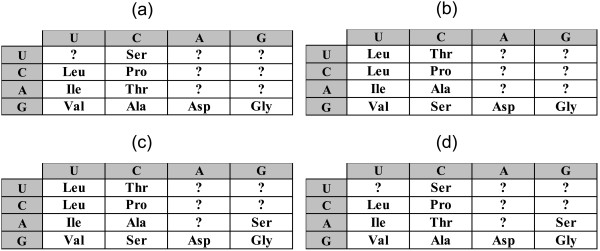
“A possible solution that we consider first, is to fill unassigned cells with the amino acids from the same column, in accordance with the 'four-column' theory of the origin of the genetic code [13,40].”
BackgroundResultAn extension of the coevolution theory of the origin of the genetic code
Di Giulio, M. (2008) · Biology Direct · doi:10.1186/1745-6150-3-37 · Cited by 158 · cited 7×
“The early ones are taken to be the 10 that are found in Miller and Urey experiments, which have previously been assumed by authors such as Wong [10] and Di Giulio [59].”
InfluentialThe origin of the genetic code: Theories and their relationships, a review
Giulio, M. D. (2005) · Biosystems · doi:10.1016/j.biosystems.2004.11.005 · Cited by 157
Higgs, P. G. (2009) · Biology Direct · doi:10.1186/1745-6150-4-16 · Cited by 137 · cited 17×
“This point is central to the coevolution theory [10,59,66], and is also consistent with the view in this paper and in my own work [13], even though I have argued against the details of the way that the precursor-product relationships are used to infer the ancestral code in the coevolution theory.”
BackgroundMethodResultInfluentialA mechanism for the association of amino acids with their codons and the origin of the genetic code
Copley, S. D., Smith, E., & Morowitz, H. J. (2005) · Proceedings of the National Academy of Sciences · doi:10.1073/pnas.0501049102 · Cited by 134 · cited 1×
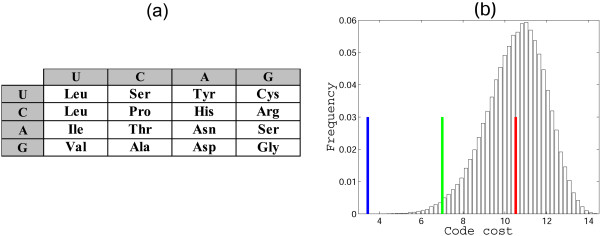
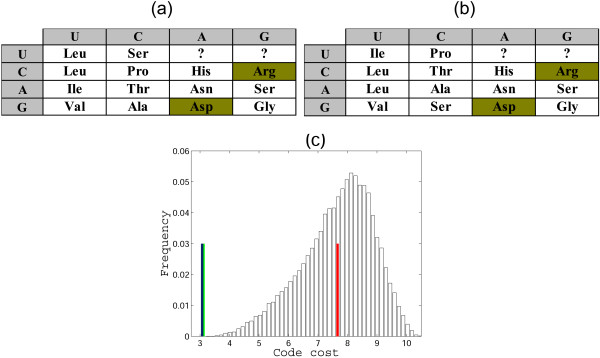
“This version of the 2-letter code was proposed as a possible ancestral code [ 42 ] and was analyzed with respect to error minimization [43].”
MethodPossibilities for the Evolution of the Genetic Code from a Preceding Form
Jukes, T. H. (1973) · Nature · doi:10.1038/246022a0 · Cited by 128 · cited 1×
“From the point of view of the adaptive theory, Arg is the amino acid that brings most non-optimality into the standard code [11,44,45].”
BackgroundNovozhilov, A. S., Wolf, Y. I., & Koonin, E. V. (2007) · Biology Direct · doi:10.1186/1745-6150-2-24 · Cited by 122 · cited 23×
“Indeed, Trphas the value 5.2 on the Polar Requirement scale, Glyhas a value of 7.9, and Arghas a value of 9.1.”
BackgroundMethodInfluentialSelf-citationRNA–ligand chemistry: A testable source for the genetic code
YARUS, M. (2000) · RNA · doi:10.1017/s1355838200002569 · Cited by 113 · cited 1×
“The stereochemical theory posits that the code is determined, mostly, by stereochemical affinities between coding triplets (codons and/or anticodons) and the cognate amino acids [49,55,56].”
Background[Codon systematization in the genetic code].
Rumer, I. B. (1966) · PubMed · Cited by 98
The driving force for molecular evolution of translation
NOLLER, H. F. (2004) · RNA · doi:10.1261/rna.7142404 · Cited by 96 · cited 1×
“We suspect that the high robustness of the primordial code is a pre-requisite for the evolution of the translation system that was, probably, considerably more error-prone at the early stages of evolution than it is in modern organisms [7,60,61].”
Kobayashi, K., Tsuchiya, M., Oshima, T., & Yanagawa, H. (1990) · Origins of Life and Evolution of Biospheres · doi:10.1007/bf01808270 · Cited by 96 · cited 1×
“The experiments of Miller and similar experiments subsequently performed by other groups under various models of the ancient atmosphere and using different energy sources, such as spark discharges, ultraviolet light, or irradiation with high energy charged particles [ 17-19 ] yielded up to 10 standard amino acids (rev…”
MethodOrigin and evolution of the genetic code: The universal enigma
Koonin, E. V., & Novozhilov, A. S. (2009) · IUBMB Life · doi:10.1002/iub.190 · Cited by 96
Self-citationCoevolution of genetic code and amino acid biosynthesis
Tze-Fei Wong, J. (1981) · Trends in Biochemical Sciences · doi:10.1016/0968-0004(81)90013-x · Cited by 95 · cited 1×
“Strikingly, the list of phase 1 amino acids that was derived from the analysis of biosynthetic pathways completely coincides with the above set of 10 amino acids observed in prebiotic amino acid formation experiments (Wong 1981).”
An Interpretive Review of the Origin of Life Research
Penny, D. (2005) · Biology & Philosophy · doi:10.1007/s10539-004-7342-6 · Cited by 94 · cited 1×
“In conformity with this continuity principle [ 6 ,7], it appears almost certain that the genetic code employed by the primordial translation system was substantially simpler than the modern code, which then evolved incrementally.”
BackgroundYcas, M. A. (1969) · Cited by 84
Rhyme or reason: RNA-arginine interactions and the genetic code
Knight, R. D., & Landweber, L. F. (1998) · Chemistry & Biology · doi:10.1016/s1074-5521(98)90001-1 · Cited by 83 · cited 1×
“At the same time, Arg is the amino acid for which the strongest support for a stereochemical affinity with the respective codon is available [46-49].”
BackgroundA Neutral Origin for Error Minimization in the Genetic Code
Massey, S. E. (2008) · Journal of Molecular Evolution · doi:10.1007/s00239-008-9167-4 · Cited by 75 · cited 1×
“This point is central to the coevolution theory [10,59,66], and is also consistent with the view in this paper and in my own work [13], even though I have argued against the details of the way that the precursor-product relationships are used to infer the ancestral code in the coevolution theory.”
ResultGiulio, M. D., Capobianco, M. R., & Medugno, M. (1994) · Journal of Theoretical Biology · doi:10.1006/jtbi.1994.1086 · Cited by 70 · cited 1×
“6), in a sharp contrast to the 78% MP for the standard code [12] (this estimate was obtained using the same cost function as described in the Methods section but for the complete, standard genetic code, and is somewhat higher than the previously reported estimates [41]).”
ResultLehmann, J., & Libchaber, A. (2008) · RNA · doi:10.1261/rna.1029808 · Cited by 69 · cited 3×
“Lehmann and Libchaber [ 69 ] suggest that splitting up a four-codon family is not possible if the anticodon-codon interaction is strong because a single tRNA would be able to interact with all four codons in this case.”
BackgroundInfluentialAn RNA-amino acid complex and the origin of the genetic code.
Yarus, M. (1991) · PubMed · Cited by 55
Evolution of the Genetic Triplet Code via Two Types of Doublet Codons
Wu, H.-L., Bagby, S., Jean, M. H., & den van Elsen (2005) · Journal of Molecular Evolution · doi:10.1007/s00239-004-0224-3 · Cited by 50 · cited 1×
“[ 30-33 ]. That the primordial code would have this particular organization is strongly suggested by the structure of the extant code in which redundancy is concentrated almost entirely in the third base; apparently, it is the first and, especially, the second bases that ensure the stability of the interaction between…”
BackgroundAmino Acid Exchangeability and the Adaptive Code Hypothesis
Stoltzfus, A., & Yampolsky, L. Y. (2007) · Journal of Molecular Evolution · doi:10.1007/s00239-007-9026-8 · Cited by 49 · cited 1×
“Then, the high level of the code optimality is just a byproduct of the evolutionary expansion in the code, and selection for robustness played only a minor role in the evolutionary shaping of the code [38] (although this role is still maintained to be more important than that of stereochemical affinities [58]).”
BackgroundThe triplet genetic code had a doublet predecessor
Patel, A. (2004) · Journal of Theoretical Biology · doi:10.1016/j.jtbi.2004.10.029 · Cited by 47
Guilt by association: The arginine case revisited
KNIGHT, R. D., & LANDWEBER, L. F. (2000) · RNA · doi:10.1017/s1355838200000145 · Cited by 43
The coevolution theory of the origin of the genetic code
Giulio, M. D. (2004) · Physics of Life Reviews · doi:10.1016/j.plrev.2004.05.001 · Cited by 41
Question 6: Coevolution Theory of the Genetic Code: A Proven Theory
Wong, J. T.-F. (2007) · Origins of Life and Evolution of Biospheres · doi:10.1007/s11084-007-9094-1 · Cited by 41
Measuring adaptation within the genetic code
Freeland, S. J., Knight, R. D., & Landweber, L. F. (2000) · Trends in Biochemical Sciences · doi:10.1016/s0968-0004(99)01531-5 · Cited by 40 · cited 1×
“The errorminimization theory holds that the structure of the code is the result of selection for robustness to mistranslation [11,34,39,53,54].”
BackgroundCaporaso, J. G., Yarus, M., & Knight, R. D. (2005) · Journal of Molecular Evolution · doi:10.1007/s00239-004-0314-2 · Cited by 38 · cited 1×
“The stereochemical theory alone cannot account for the high level of error minimization in the standard code; moreover, the affinity between cognate triplets and amino acids appears to be largely independent of the highly optimized amino acid assignments code [57].”
BackgroundTolstrup, N., Toftgård, J., Engelbrecht, J., & Brunak, S. (1994) · Journal of Molecular Biology · doi:10.1006/jmbi.1994.1683 · Cited by 35 · cited 1×
“From the point of view of the adaptive theory, Arg is the amino acid that brings most non-optimality into the standard code [11,44,45].”
BackgroundUniversality in the Genetic Code
Woese, C. R. (1964) · Science · doi:10.1126/science.144.3621.1030 · Cited by 27 · cited 1×
“Background The standard genetic code, which is a mapping of 64 codons to 20 standard amino acids and the translation stop signal, is shared, with minor modifications only, by all life forms on earth [1-4].”
BackgroundThe Evolution of the Genetic Code Revisited
TRAVERS, A. A. (2006) · Origins of Life and Evolution of Biospheres · doi:10.1007/s11084-006-9041-6 · Cited by 24 · cited 9×
“Furthermore, the three-base codon structure of the genetic code is likely to be determined by the physics of the interaction between monomers [28,29] and/or by possibility of simultaneous binding of two RNA adaptors on mRNA [27,30].”
BackgroundMethodInfluentialAldana, M., Cocho, G., Larralde, H., & Martínez‐Mekler, G. (2002) · Journal of Theoretical Biology · doi:10.1006/jtbi.2003.3108 · Cited by 23 · cited 1×
“Furthermore, the three-base codon structure of the genetic code is likely to be determined by the physics of the interaction between monomers [28,29] and/or by possibility of simultaneous binding of two RNA adaptors on mRNA [27,30].”
Background10 Evolution of Ribosomes and Translation from an RNA World
Noller, H. F. (2006) · Cold Spring Harbor Monograph Archive · doi:10.1101/087969739.43.287 · Cited by 20
Primordial synthesis machines and the origin of the genetic code
Aldana, M., Cázarez-Bush, F., Cocho, G., & Martínez‐Mekler, G. (1998) · Physica A Statistical Mechanics and its Applications · doi:10.1016/s0378-4371(98)00133-2 · Cited by 20 · cited 1×
“Furthermore, the three-base codon structure of the genetic code is likely to be determined by the physics of the interaction between monomers [28,29] and/or by possibility of simultaneous binding of two RNA adaptors on mRNA [27,30].”
BackgroundKobayashi, K., Kaneko, T., Hashimoto, H., Kouchi, A., Saito, T., & Yamashita, M. (1998) · Biological Sciences in Space · doi:10.2187/bss.12.102 · Cited by 10 · cited 1×
“The experiments of Miller and similar experiments subsequently performed by other groups under various models of the ancient atmosphere and using different energy sources, such as spark discharges, ultraviolet light, or irradiation with high energy charged particles [ 17-19 ] yielded up to 10 standard amino acids (rev…”
MethodMv, V., & Rumer, I. B. (1967) · PubMed · Cited by 9
Tests of a Stereochemical Genetic Code
Knight, R. D., Landweber, L. F., & Yarus, M. (2013) · Cited by 8
Optimality properties of a proposed precursor to the genetic code
Butler, T., & Goldenfeld, N. D. (2009) · Physical Review E · doi:10.1103/physreve.80.032901 · Cited by 5 · cited 2×
“[43] that were obtained using a different cost function.”
MethodEvolution of the Genetic Triplet Code via Two Types of Doublet Codons
Wu, H.-L., Bagby, S., & van den Elsen, J. M. H. (2005) · Journal of Molecular Evolution · doi:10.1007/s00239-005-6224-0 · Cited by 3
ORIGINS OF THE GENETIC CODE: The Escaped
Yarus, M., Caporaso, J. G., & Knight, R. (2005) · Cited by 2
Cited by
Origin and Evolution of the Universal Genetic Code
Koonin, E. V., & Novozhilov, A. S. (2017) · Annual Review of Genetics · doi:10.1146/annurev-genet-120116-024713 · Cited by 200
Self-citationKoonin, E. (2017) · Life · doi:10.3390/life7020022 · Cited by 85
“Extensive quantitative analyses that employed cost functions differently derived from physico-chemical properties of amino acids have shown that the code is indeed highly resilient, with the probability to pick an equally robust random code being on the order of 10-7-10-8 [14, 15, 61-68].”
MethodSelf-citationKoonin, E. (2017) · doi:10.20944/preprints201705.0121.v1 · Cited by 85
Self-citationExtraordinarily Adaptive Properties of the Genetically Encoded Amino Acids
Ilardo, M., Meringer, M., Freeland, S., Rasulev, B., & Cleaves II, H. J. (2015) · Scientific Reports · doi:10.1038/srep09414 · Cited by 68
Resource conservation manifests in the genetic code
Shenhav, L., & Zeevi, D. (2020) · Science · doi:10.1126/science.aaz9642 · Cited by 75
Metadata
- Authors
- Novozhilov, A. S., & Koonin, E. V.
- Affiliations
- National Institutes of Health (US)
- Corresponding author
- Koonin, Eugene V
- Venue
- Biology Direct
- Published
- 2009
- Volume
- 4
- Issue
- 1
- Pages
- 44
- ISSN
- 1745-6150 (ISSN-L)
- PMC
- PMC2785773
- OpenAlex
- W2172088040
- Cited by
- 37
- References
- 75
- Citations by year
- 2026: 4 · 2025: 1 · 2024: 2 · 2023: 2 · 2022: 1 · 2021: 2 · 2020: 4 · 2019: 1 · 2018: 3 · 2017: 4 · 2016: 1 · 2015: 3 · 2014: 2 · 2013: 2 · 2012: 1
- FWCI
- 0.67
- Type
- journal article
- Language
- en
- Open access
- gold
- doi.org
- Licence
- cc-by
- Locations
- Biology Direct (publishedVersion, cc-by)
- PubMed Central (publishedVersion, cc-by)
- PubMed (publishedVersion)
- arXiv (Cornell University) (submittedVersion)
- DOAJ (DOAJ: Directory of Open Access Journals) (submittedVersion, cc-by-sa)
- arXiv (Cornell University)
- Funders
- U.S. Department of Health and Human Services
- National Institutes of Health
- U.S. National Library of Medicine
- Topics
- Life Sciences › Biochemistry, Genetics and Molecular Biology › Molecular Biology › RNA and protein synthesis mechanisms
- Physical Sciences › Physics and Astronomy › Astronomy and Astrophysics › Origins and Evolution of Life
- Life Sciences › Biochemistry, Genetics and Molecular Biology › Genetics › Evolution and Genetic Dynamics
- Keywords
- error reduction, translation errors, translation robustness, code evolution, abiotic synthesis, early selection, cost function
- MeSH terms
- Amino Acid Sequence, Amino Acids, Codon, Genetic Code, Models, Genetic, Molecular Sequence Data
About these checks
Registry, retraction, Cites and statistics results are computed, not judged, with one exception: a printed reference that no index lists is read once by a model before it counts as a citation error. Claims are extracted by a model and kept only when their quote appears verbatim in the text; each cited source is then checked, with a model’s help, for whether it says what the claim relies on. Those verdicts can be wrong — read the claim’s quote and the cited source before relying on one.
Statistics and arithmetic are recomputed, not judged.
Confidence bands are shown only for fields calibrated on our annotated test set. None is calibrated yet, so no band is shown.
What counts as a claim ›How we measure confidence ›How we check this ›
Are you an author, or do you see a problem with this page? Request a review
Data sources
Bibliographic data: Semantic Scholar, OpenAlex, Crossref.
Contains information from the Semantic Scholar Academic Graph Datasets, made available under the ODC Attribution License (ODC-BY 1.0).
Semantic Scholar’s data is described in: Kinney, R., et al. (2023). The Semantic Scholar Open Data Platform. arXiv:2301.10140.
