

Effectiveness, relapse prevention and mechanisms of change of cognitive therapy vs. interpersonal therapy for depression: Study protocol for a randomised controlled trial
Open accessThe DOI matches its Crossref record; 133 of the 133 references it cites were found in a registry or an index.
Abstract
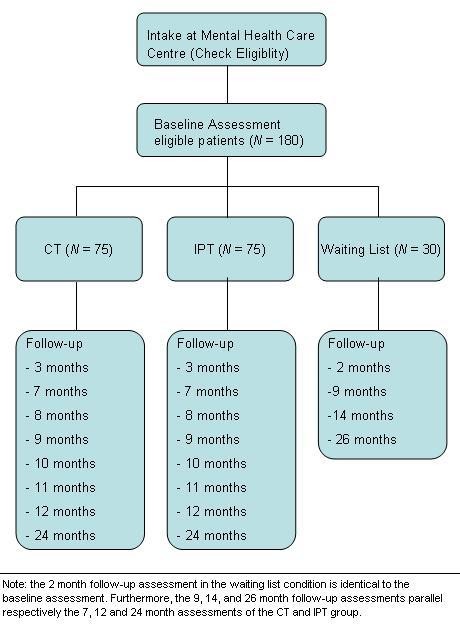
BACKGROUND: Major depression is a common mental disorder that substantially impairs quality of life and has high societal costs. Although psychotherapies have proven to be effective antidepressant treatments, initial response rates are insufficient and the risk of relapse and recurrence is high. Improvement of treatments is badly needed. Studying the mechanisms of change in treatment might be a good investment for improving everyday mental health care. However, the mechanisms underlying therapeutic change remain largely unknown. The objective of the current study is to assess both the effectiveness of two commonly used psychotherapies for depression in terms of reduction of symptoms and prevention of relapse on short and long term, as well as identifying underlying mechanisms of change. METHODS: In a randomised trial we will compare (a) Cognitive Therapy (CT) with (b) Interpersonal therapy (IPT), and (c) an 8-week waiting list condition followed by treatment of choice. One hundred eighty depressed patients (aged 18-65) will be recruited in a mental health care centre in Maastricht (the Netherlands). Eligible patients will be randomly allocated to one of the three intervention groups. The primary outcome measure of the clinical evaluation is depression severity measured by the Beck Depression Intenvory-II (BDI-II). Other outcomes include process variables such as dysfunctional beliefs, negative attributions, and interpersonal problems. All self-report outcome assessments will take place on the internet at baseline, three, seven, eight, nine, ten, eleven, twelve and twenty-four months. At 24 months a retrospective telephone interview will be administered. Furthermore, a rudimentary analysis of the cost-effectiveness will be embedded. The study has been ethically approved and registered. DISCUSSION: By comparing CT and IPT head-to-head and by investigating multiple potential mediators and outcomes at multiple time points during and after therapy, we hope to provide new insights in the effectiveness and mechanisms of change of CT and IPT for depression, and contribute to the improvement of mental health care for adults suffering from depression. TRIAL REGISTRATION: The study has been registered at the Netherlands Trial Register, part of the Dutch Cochrane Centre (ISRCTN67561918).
Overview
The claims and statistics of this paper haven’t been checked yet.
Free: it reads the open-access text and checks the first 5 claims that cite a source we can check. Create a free account to check every claim.
Integrity signals
Registry
Cites
Statistics
Figures
Verification
Claims the paper makes
The claims and statistics of this paper haven’t been checked yet.
Free: it reads the open-access text and checks the first 5 claims that cite a source we can check. Create a free account to check every claim.
Claims other papers make about this one
Each is checked against this paper’s own text: does it say what the citing paper says it does?
The cited source says what the claim attributes to it.
In the citing paper
“Therefore, potential mediators and outcomes must be measured at multiple time-points during and after therapy, across the treatments [63].”
Self-check
Percentages, sums and reported differences re-computed from the paper’s own numbers.
The self-check needs the paper’s full text.
Citations
Cites
Baron, R. M., & Kenny, D. A. (1986) · Journal of Personality and Social Psychology · doi:10.1037/0022-3514.51.6.1173 · Cited by 91,532 · cited 2×
“In identifying mediators, Kazdin has built upon the MacArthur guidelines of Kraemer et al. (2001) [53] which are based on the more traditional guidelines for statistical mediation formulated by Baron and Kenny (1986) [ 54 ].”
MethodEuroQol: a new facility for the measurement of health-related quality of life
(1990) · Health Policy · doi:10.1016/0168-8510(90)90421-9 · Cited by 15,736
Methods for the Economic Evaluation of Health Care Programmes
Drummond, M. E., Sculpher, M. J., Torrance, G. W., O’Brien, B. J., & Stoddart, G. L. (2005) · doi:10.1093/oso/9780198529446.001.0001 · Cited by 13,648
Telling more than we can know: Verbal reports on mental processes.
Nisbett, R. E., & Wilson, T. D. (1977) · Psychological Review · doi:10.1037/0033-295x.84.3.231 · Cited by 11,317 · cited 1×
“Explicit measures depend on introspection, and a disadvantage is that it is known that people do not have access to all of the mechanisms that underlie their behaviour [50].”
BackgroundCognitive Therapy for Depression: (675542012-001)
(2012) · PsycEXTRA Dataset · doi:10.1037/e675542012-001 · Cited by 9,663
Jacobson, N. S., & Truax, P. (1991) · Journal of Consulting and Clinical Psychology · doi:10.1037/0022-006x.59.1.12 · Cited by 7,770 · cited 1×
“Our calculations will be based on the method of Jacobson and Truax [130] which prescribes that Clinical Improvement (CI) is based on both Reliable Change (RC), the extent to which the pre-to-post-difference score is reliable; and on Clinical Significant change (CSC), the extent to which post-treatment scores are clini…”
MethodThe brief symptom inventory: an introductory report.
Derogatis, L. R., & Melisaratos, N. (1983) · Psychological Medicine · doi:10.1017/s0033291700048017 · Cited by 6,650 · cited 1×
“The Brief Symptom Inventory (BSI) [79] is a 53-item self-report instrument that will be used to measure general psychological distress.”
MethodUnderstanding and using the Implicit Association Test: I. An improved scoring algorithm.
Greenwald, A. G., Nosek, B. A., & Banaji, M. R. (2003) · Journal of Personality and Social Psychology · doi:10.1037/0022-3514.85.2.197 · Cited by 5,815
The measurement of pessimism: the hopelessness scale
Beck, A. T., Weissman, A., Lester, D., & Trexler, L. (1974) · Journal of Consulting and Clinical Psychology · doi:10.1037/h0037562 · Cited by 5,494 · cited 2×
“The Beck Hopelessness Scale (BHS) [102] is a self-report instrument that determines the extent of positive and negative beliefs about the future over the previous 7 days using 20 true-false statements.”
MethodHiggins, S. M. F., Macken, A. P., Cullen, W., Saunders, J., Dunne, C. P., & O’Gorman, C. S. (2013) · PubMed · doi:10.34961/9953 · Cited by 4,808
Cognitive Therapy of Depression
HOLLON, S. D., & BECK, A. T. (1979) · Cognitive-Behavioral Interventions · doi:10.1016/b978-0-12-404480-7.50012-5 · Cited by 4,685
Self-citationRush, A. J., Trivedi, M. H., Ibrahim, H. M., Carmody, T. J., Arnow, B., Klein, D. N., Markowitz, J. C., Ninan, P. T., Kornstein, S., Manber, R., et al. (2003) · Biological Psychiatry · doi:10.1016/s0006-3223(02)01866-8 · Cited by 3,829
Development and validation of the working alliance inventory
Horvath, A. O., & Greenberg, L. S. (1989) · Journal of Counseling Psychology · doi:10.1037//0022-0167.36.2.223 · Cited by 3,520 · cited 2×
“All sessions will be videotaped, and a random selection of tapes will be analysed by independent assessors on treatment adherence (content and quality) by using the Collaborative Study Psychotherapy Rating Scale - version 6 (CSPRS-6) [67], and on quality of therapeutic alliance using the Observer version of the Workin…”
MethodRelation of the therapeutic alliance with outcome and other variables: a meta-analytic review
Martin, D. J., Garske, J. P., & Davis, M. K. (2000) · Journal of Consulting and Clinical Psychology · doi:10.1037//0022-006x.68.3.438 · Cited by 3,355 · cited 1×
“Working Alliance The past decades, it has become clear that therapeutic alliance is an essential element of the therapeutic process [ 123 ].”
BackgroundNolen-Hoeksema, S., & Morrow, J. (1991) · Journal of Personality and Social Psychology · doi:10.1037/0022-3514.61.1.115 · Cited by 3,276 · cited 3×
“The Ruminative Response Scale (RRS) [109,110] is a 22item questionnaire that will be used to detect the responses to depressed mood that are focused on self, symptoms, or possible consequences and causes of mood.”
BackgroundInfluentialPrevention of relapse/recurrence in major depression by mindfulness-based cognitive therapy.
Teasdale, J. D., Segal, Z. V., Williams, J. M. G., Ridgeway, V. A., Soulsby, J. M., & Lau, M. A. (2000) · Journal of Consulting and Clinical Psychology · doi:10.1037/0022-006x.68.4.615 · Cited by 3,236 · cited 1×
“The evidence for this is strong and consistent [31,34, 35 ].”
ResultThe empirical status of cognitive-behavioral therapy: A review of meta-analyses
Butler, A. C., Chapman, J. E., Forman, E. M., & Beck, A. T. (2006) · Clinical Psychology Review · doi:10.1016/j.cpr.2005.07.003 · Cited by 3,215 · cited 7×
“In addition to the fact that CT and IPT have shown to be efficacious acute treatments of MDD, they may also reduce the risk of relapse (episode of MDD after remission) and recurrence (episode of MDD after recovery) in the long term.”
BackgroundInfluential(1997) · American Psychiatric Press eBooks · Cited by 3,056
Mediators and Moderators of Treatment Effects in Randomized Clinical Trials
Kraemer, H. C., Wilson, G. T., Fairburn, C. G., & Agras, W. S. (2002) · Archives of General Psychiatry · doi:10.1001/archpsyc.59.10.877 · Cited by 2,562 · cited 1×
“Many researchers agree that knowledge of underlying mechanisms that can explain therapeutic change is a key to improving treatment [8,9].”
BackgroundThe Work and Social Adjustment Scale: a simple measure of impairment in functioning
Mundt, J. C., Marks, I. M., Shear, M. K., & Greist, J. M. (2002) · British Journal of Psychiatry · doi:10.1192/bjp.180.5.461 · Cited by 2,515
Mediators and Mechanisms of Change in Psychotherapy Research
Kazdin, A. E. (2007) · Annual Review of Clinical Psychology · doi:10.1146/annurev.clinpsy.3.022806.091432 · Cited by 2,504 · cited 5×
“Mechanism research has to cope with several methodological and theoretical difficulties [40,41].”
BackgroundMethodInfluentialElkin, I. (1989) · Archives of General Psychiatry · doi:10.1001/archpsyc.1989.01810110013002 · Cited by 2,300 · cited 3×
“However, doubts have arisen about the validity of one of these studies because analysis of treatment adherence showed no contrast between the two intervention groups [24,27].”
BackgroundResultInventory of interpersonal problems: Psychometric properties and clinical applications.
Horowitz, L. M., Rosenberg, S. E., Baer, B. A., Ureño, G., & Villaseñor, V. S. (1988) · Journal of Consulting and Clinical Psychology · doi:10.1037/0022-006x.56.6.885 · Cited by 2,026 · cited 2×
“Psychometric properties of the IIP were found to be good [ 106 ].”
BackgroundMethodPezawas, L., Meyer-Lindenberg, A., Drabant, E. M., Verchinski, B. A., Munoz, K. E., Kolachana, B. S., Egan, M. F., Mattay, V. S., Hariri, A. R., & Weinberger, D. R. (2005) · Nature Neuroscience · doi:10.1038/nn1463 · Cited by 1,980 · cited 1×
“The same polymorphisms are also associated with reactions on aversive stimuli [ 127-129 ].”
BackgroundThe attributional Style Questionnaire
Peterson, C., Semmel, A., von Baeyer, C., Abramson, L. Y., Metalsky, G. I., & Seligman, M. E. P. (1982) · Cognitive Therapy and Research · doi:10.1007/bf01173577 · Cited by 1,806 · cited 1×
“Attributional Style Attributional style will be measured using the Attributional Style Questionnaire (ASQ) [93, 94 ].”
MethodKraemer, H. C., Stice, E., Kazdin, A., Offord, D., & Kupfer, D. (2001) · American Journal of Psychiatry · doi:10.1176/appi.ajp.158.6.848 · Cited by 1,712
Keller, M. B. (1987) · Archives of General Psychiatry · doi:10.1001/archpsyc.1987.01800180050009 · Cited by 1,643 · cited 4×
“The LIFE has shown to be a reliable and valid instrument for characterizing the course of several mental disorders examined retrospectively over the period of one year [84,85].”
MethodInfluentialFactor structure of the working alliance inventory
Tracey, T. J., & Kokotovic, A. M. (1989) · Psychological Assessment: A Journal of Consulting and Clinical Psychology · doi:10.1037/1040-3590.1.3.207 · Cited by 1,501 · cited 2×
“All sessions will be videotaped, and a random selection of tapes will be analysed by independent assessors on treatment adherence (content and quality) by using the Collaborative Study Psychotherapy Rating Scale - version 6 (CSPRS-6) [67], and on quality of therapeutic alliance using the Observer version of the Workin…”
MethodThree-Year Outcomes for Maintenance Therapies in Recurrent Depression
Frank, E. (1990) · Archives of General Psychiatry · doi:10.1001/archpsyc.1990.01810240013002 · Cited by 1,297 · cited 1×
“Research has shown that CT has an enduring effect that extends beyond the end of therapy [12,28-33], thereby reducing the chances of relapse and recurrence.”
BackgroundPsychotherapy relationships that work : therapist contributions and responsiveness to patients
Norcross, J. C. (2002) · Cited by 1,197
Understanding and Using the Implicit Association Test: II. Method Variables and Construct Validity
Nosek, B. A., Greenwald, A. G., & Banaji, M. R. (2005) · Personality and Social Psychology Bulletin · doi:10.1177/0146167204271418 · Cited by 1,158 · cited 1×
“In comparison with implicit measures obtained via other measurement procedures, the Sc-IAT shows good psychometric qualities [98-101].”
ResultPsychotherapy Relationships That Work: Therapist Contributions and Responsiveness to Patients
Weiner, I. B. (2003) · Psychotherapy Research · doi:10.1093/ptr/kpg044 · Cited by 1,154 · cited 1×
“The stronger the collaborative and affective bond between patient and therapist, the larger the therapeutic change [124].”
The Single Category Implicit Association Test as a measure of implicit social cognition.
Karpinski, A., & Steinman, R. B. (2006) · Journal of Personality and Social Psychology · doi:10.1037/0022-3514.91.1.16 · Cited by 1,108 · cited 1×
“A variant of the Single Category Implicit Association Test (Sc-IAT) [96] will be administered to obtain an implicit measure of associations with the self (selfesteem).”
MethodStalking the perfect measure of implicit self-esteem: The blind men and the elephant revisited?
Bosson, J. K., Jr. Swann William, B., & Pennebaker, J. W. (2000) · Journal of Personality and Social Psychology · doi:10.1037//0022-3514.79.4.631 · Cited by 1,086 · cited 1×
“In comparison with implicit measures obtained via other measurement procedures, the Sc-IAT shows good psychometric qualities [98-101].”
ResultPsychotherapy for depression in adults: A meta-analysis of comparative outcome studies.
Cuijpers, P., van Straten, A., Andersson, G., & van Oppen, P. (2008) · Journal of Consulting and Clinical Psychology · doi:10.1037/a0013075 · Cited by 1,050 · cited 2×
“In line with previous research, it is hypothesized that the amount of change in depressive symptoms after therapy will be similar in both the CT and the IPT group, indicating that both treatments are just as effective in treating depression in the acute phase [14,24,56,57].”
BackgroundResultTRIVEDI, M. H., RUSH, A. J., IBRAHIM, H. M., CARMODY, T. J., BIGGS, M. M., SUPPES, T., CRISMON, M. L., SHORES-WILSON, K., TOPRAC, M. G., DENNEHY, E. B., et al. (2004) · Psychological Medicine · doi:10.1017/s0033291703001107 · Cited by 968
Implicit measures: A normative analysis and review.
De Houwer, J., Teige-Mocigemba, S., Spruyt, A., & Moors, A. (2009) · Psychological Bulletin · doi:10.1037/a0014211 · Cited by 878 · cited 1×
“substantial cognitive resources, or substantial time” (p. 350) [ 51 ].”
Derogatis, L. R. (2011) · PsycTESTS Dataset · doi:10.1037/t00789-000 · Cited by 852
Interpersonal Psychotherapy of Depression
RUSH, A. J. (1985) · American Journal of Psychiatry · doi:10.1176/ajp.142.11.1381 · Cited by 827
A meta-analysis of the efficacy of cognitive therapy for depression.
Dobson, K. S. (1989) · Journal of Consulting and Clinical Psychology · doi:10.1037/0022-006x.57.3.414 · Cited by 823 · cited 1×
“A waiting list condition is included to investigate whether the effects of CT and IPT exceed the outcome in patients who do not receive treatment, a finding that has been demonstrated in numerous previous studies [60-63].”
ResultA meta-analysis of the effects of cognitive therapy in depressed patients
Gloaguen, V., Cottraux, J., Cucherat, M., & Blackburn, I.-M. (1998) · Journal of Affective Disorders · doi:10.1016/s0165-0327(97)00199-7 · Cited by 809 · cited 1×
“A waiting list condition is included to investigate whether the effects of CT and IPT exceed the outcome in patients who do not receive treatment, a finding that has been demonstrated in numerous previous studies [60-63].”
ResultKazdin, A. E., & Nock, M. K. (2003) · Journal of Child Psychology and Psychiatry · doi:10.1111/1469-7610.00195 · Cited by 774 · cited 1×
“Many researchers agree that knowledge of underlying mechanisms that can explain therapeutic change is a key to improving treatment [8,9].”
BackgroundPrevention of Relapse following cognitive therapy vs medications in moderate to severe depression.
Hollon, S. D., DeRubeis, R. J., Shelton, R. C., Amsterdam, J. D., Salomon, R. M., O’Reardon, J. P., Lovett, M. L., Young, P. R., Haman, K. L., Freeman, B. B., et al. (2005) · Archives of General Psychiatry · doi:10.1001/archpsyc.62.4.417 · Cited by 735 · cited 2×
“To calculate the sample size of the CT and IPT group, we combined rudimentary findings from previous randomised trials, which resulted in a mean relapse/recurrence rate of 33% after two years of follow-up, compared to 67% following antidepressant medication and/or clinical management [28,29,31-33].”
BackgroundMethodSelf-citationUnderstanding how and why psychotherapy leads to change
Kazdin, A. E. (2009) · Psychotherapy Research · doi:10.1080/10503300802448899 · Cited by 728 · cited 4×
“However, in many studies it is difficult to identify temporal relationships in order to investigate these causal pathways because of the absence of an appropriate time line and assessment on multiple time points [40,41].”
BackgroundMethodInfluentialRobinson, L. A., Berman, J. S., & Neimeyer, R. A. (1990) · Psychological Bulletin · doi:10.1037//0033-2909.108.1.30 · Cited by 671 · cited 1×
“A waiting list condition is included to investigate whether the effects of CT and IPT exceed the outcome in patients who do not receive treatment, a finding that has been demonstrated in numerous previous studies [60-63].”
ResultThe Journal of Personality and Social Psychology.
indicated, N. A. (2002) · Journal of Personality and Social Psychology · doi:10.1037//0022-3514.83.6.c2 · Cited by 635
Two-dimensional self-esteem: Theory and measurement
Tafarodi, R. W., & Swann, W. B. (2001) · Personality and Individual Differences · doi:10.1016/s0191-8869(00)00169-0 · Cited by 606 · cited 2×
“Psychometric properties were found to be good [111].”
BackgroundMethodInterpersonal Psychotherapy for Depression: A Meta-Analysis
Cuijpers, P., Geraedts, A. S., van Oppen, P., Andersson, G., Markowitz, J. C., & van Straten, A. (2011) · American Journal of Psychiatry · doi:10.1176/appi.ajp.2010.10101411 · Cited by 511 · cited 1×
“Of the psychotherapeutic interventions for depression, CT and IPT might be the two best studied and empirically validated [13-15].”
BackgroundTreatment and prevention of depression
Hollon, S. D., Thase, M. E., & Markowitz, J. C. (2002) · Psychological Science in the Public Interest · doi:10.1111/1529-1006.00008 · Cited by 511 · cited 2×
“Insight in the long term effects of IPT furthermore creates the opportunity to compare CT and IPT to assess whether one therapy is superior to the other in preventing relapse and recurrence in the long term [15].”
BackgroundSelf-citationDo we need to challenge thoughts in cognitive behavior therapy?
Longmore, R. J., & Worrell, M. (2007) · Clinical Psychology Review · doi:10.1016/j.cpr.2006.08.001 · Cited by 499 · cited 1×
“Despite several research attempts to identify the mechanisms of change in psychotherapy, no study has identified a model that explains change in CT or IPT completely [38,39].”
BackgroundEmpirically supported individual and group psychological treatments for adult mental disorders
DeRubeis, R. J., & Crits-Christoph, P. (1998) · Journal of Consulting and Clinical Psychology · doi:10.1037/0022-006x.66.1.37 · Cited by 486 · cited 7×
“In addition to the fact that CT and IPT have shown to be efficacious acute treatments of MDD, they may also reduce the risk of relapse (episode of MDD after remission) and recurrence (episode of MDD after recovery) in the long term.”
BackgroundInfluentialEvans, C., Margison, F., & Barkham, M. (1998) · Evidence Based Mental Health · doi:10.1136/ebmh.1.3.70 · Cited by 470 · cited 1×
“Our calculations will be based on the method of Jacobson and Truax [130] which prescribes that Clinical Improvement (CI) is based on both Reliable Change (RC), the extent to which the pre-to-post-difference score is reliable; and on Clinical Significant change (CSC), the extent to which post-treatment scores are clini…”
MethodFactor structure of the Beck Depression Inventory—Second Edition (BDI-ii) in a student sample
Whisman, M. A., Perez, J. E., & Ramel, W. (2000) · Journal of Clinical Psychology · doi:10.1002/(sici)1097-4679(200004)56:4<545::aid-jclp7>3.0.co;2-u · Cited by 442 · cited 1×
“Several studies have shown that the BDI-II is a strong screening measure for depression [73-75].”
BackgroundRush, A. J., Carmody, T., & Reimitz, P. (2000) · International Journal of Methods in Psychiatric Research · doi:10.1002/mpr.79 · Cited by 427 · cited 1×
“The 16 items that measure 9 criterion domains of MDD are derived from the 30-item Inventory of Depressive Symptomatology (IDS) [ 77 ].”
MethodSmolka, M. N., Schumann, G., Wrase, J., Grüsser, S. M., Flor, H., Mann, K., Braus, D. F., Goldman, D., Büchel, C., & Heinz, A. (2005) · The Journal of Neuroscience · doi:10.1523/jneurosci.1792-04.2005 · Cited by 416 · cited 1×
“The same polymorphisms are also associated with reactions on aversive stimuli [ 127-129 ].”
BackgroundSix-Year Outcome of Cognitive Behavior Therapy for Prevention of Recurrent Depression
Fava, G. A., Ruini, C., Rafanelli, C., Finos, L., Conti, S., & Grandi, S. (2004) · American Journal of Psychiatry · doi:10.1176/ajp.161.10.1872 · Cited by 392 · cited 2×
“To calculate the sample size of the CT and IPT group, we combined rudimentary findings from previous randomised trials, which resulted in a mean relapse/recurrence rate of 33% after two years of follow-up, compared to 67% following antidepressant medication and/or clinical management [28,29,31-33].”
BackgroundMethodThe Efficacy of Drugs and Psychotherapy in the Treatment of Acute Depressive Episodes
Weissman, M. M., Prusoff, B. A., Dimascio, A., Neu, C., Goklaney, M., & Klerman, G. L. (1979) · American Journal of Psychiatry · doi:10.1176/ajp.1979.136.4b.555 · Cited by 385 · cited 7×
“In addition to the fact that CT and IPT have shown to be efficacious acute treatments of MDD, they may also reduce the risk of relapse (episode of MDD after remission) and recurrence (episode of MDD after recovery) in the long term.”
BackgroundInfluentialJacobson, N. S., & Truax, P. (1992) · Methodological issues & strategies in clinical research. · doi:10.1037/10109-042 · Cited by 384
Genes and the parsing of cognitive processes
Goldberg, T. E., & Weinberger, D. R. (2004) · Trends in Cognitive Sciences · doi:10.1016/j.tics.2004.05.011 · Cited by 356 · cited 1×
“There is evidence that the same genetic factors that appear to moderate the efficacy of different classes of antidepressants are also involved in aspects of cognitive functioning [126].”
BackgroundDeRubeis, R. J., Evans, M. D., Hollon, S. D., Garvey, M. J., Grove, W. M., & Tuason, V. B. (1990) · Journal of Consulting and Clinical Psychology · doi:10.1037/0022-006x.58.6.862 · Cited by 341 · cited 2×
“Theoretical difficulties arise because there are conflicting hypotheses on the mechanisms and there is no consensus about the most important causes of change [38, 42 ].”
BackgroundSelf-citationGoossens, M. E. J. B., Mölken, M. P. M. H. R.-V., Vlaeyen, J. W. S., & van der Linden, S. M. J. P. (2000) · Journal of Clinical Epidemiology · doi:10.1016/s0895-4356(99)00177-8 · Cited by 338
A comparison of six measures of working alliance.
Tichenor, V., & Hill, C. E. (1989) · Psychotherapy: Theory, Research, Practice, Training · doi:10.1037/h0085419 · Cited by 296
Jarrett, R. B., Kraft, D., Doyle, J., Foster, B. M., Eaves, G. G., & Silver, P. C. (2001) · Archives of General Psychiatry · doi:10.1001/archpsyc.58.4.381 · Cited by 293
Frank, E. (1991) · Archives of General Psychiatry · doi:10.1001/archpsyc.1991.01810360017002 · Cited by 292 · cited 1×
“Up until now it has only been tested as a maintenance treatment [36,37], and the question remains whether IPT also has an enduring effect that remains after therapy is finished.”
BackgroundSix-Year Outcome of Cognitive Behavior Therapy for Prevention of Recurrent Depression
Fava, G. A., Ruini, C., Rafanelli, C., Finos, L., Conti, S., & Grandi, S. (2004) · American Journal of Psychiatry · doi:10.1176/appi.ajp.161.10.1872 · Cited by 289
Keller, M. B., & Boland, R. J. (1998) · Biological Psychiatry · doi:10.1016/s0006-3223(98)00110-3 · Cited by 281 · cited 1×
“Furthermore, depression has an unfavourable prognosis; even when treated effectively in the acute phase, recovery is often incomplete, which increases the chance of relapse and recurrence up to 87% over 15 years [ 4-7 ].”
BackgroundA review of empirically supported psychological therapies for mood disorders in adults
Hollon, S. D., & Ponniah, K. (2010) · Depression and Anxiety · doi:10.1002/da.20741 · Cited by 267 · cited 7×
“In addition to the fact that CT and IPT have shown to be efficacious acute treatments of MDD, they may also reduce the risk of relapse (episode of MDD after remission) and recurrence (episode of MDD after recovery) in the long term.”
BackgroundInfluentialSelf-citationHollon, S. D., Jarrett, R. B., Nierenberg, A. A., Thase, M. E., Trivedi, M., & Rush, A. J. (2005) · The Journal of Clinical Psychiatry · doi:10.4088/jcp.v66n0408 · Cited by 259 · cited 1×
“However, we expect CT to prevent relapse to a greater extent, because it has shown to have an enduring effect that extends beyond the end of therapy, while IPT so far only seems to be effective in treating depression as long as the treatment is continued [58].”
BackgroundSelf-citationHow a return to theory could help alliance research.
Hatcher, R. L., & Barends, A. W. (2006) · Psychotherapy: Theory, Research, Practice, Training · doi:10.1037/0033-3204.43.3.292 · Cited by 257
Bockting, C. L. H., DELTA Study Group, Schene, A. H., Spinhoven, P., Koeter, M. W. J., Wouters, L. F., Huyser, J., & Kamphuis, J. H. (2005) · Journal of Consulting and Clinical Psychology · doi:10.1037/0022-006x.73.4.647 · Cited by 249 · cited 2×
“To calculate the sample size of the CT and IPT group, we combined rudimentary findings from previous randomised trials, which resulted in a mean relapse/recurrence rate of 33% after two years of follow-up, compared to 67% following antidepressant medication and/or clinical management [28,29,31-33].”
BackgroundMethodRelations Between Implicit Measures of Prejudice: What Are We Measuring?
Olson, M. A., & Fazio, R. H. (2003) · Psychological Science · doi:10.1046/j.0956-7976.2003.psci_1477.x · Cited by 237
Implicit measures of association in psychopathology research.
Roefs, A., Huijding, J., Smulders, F. T. Y., MacLeod, C. M., de Jong, P. J., Wiers, R. W., & Jansen, A. T. M. (2011) · Psychological Bulletin · doi:10.1037/a0021729 · Cited by 228 · cited 1×
“To the extent that implicit measures reflect uncontrollable, unaware, fast mechanisms, they could provide information that augments that from explicit measures [52].”
BackgroundSelf-citationOrmel, J. (1993) · Archives of General Psychiatry · doi:10.1001/archpsyc.1993.01820220009001 · Cited by 216
Oliver, J. M., & Baumgart, E. P. (1985) · Cognitive Therapy and Research · doi:10.1007/bf01204847 · Cited by 213
Cognitive reactivity to sad mood: structure and validity of a new measure
Van der Does, W. (2002) · Behaviour Research and Therapy · doi:10.1016/s0005-7967(00)00111-x · Cited by 205 · cited 2×
“Psychometric qualities of this measurement are found to be good [ 108 ].”
MethodFactor analysis of the Dysfunctional Attitude Scale in a clinical population.
Beck, A. T., Brown, G., Steer, R. A., & Weissman, A. N. (1991) · Psychological Assessment · doi:10.1037//1040-3590.3.3.478 · Cited by 203 · cited 1×
“With its good internal consistency and validity, it appears to be a valid measure of dysfunctional cognitions in depressed patients [89-92].”
BackgroundKolko, D. J., Brent, D. A., Baugher, M., Bridge, J., & Birmaher, B. (2000) · Journal of Consulting and Clinical Psychology · doi:10.1037//0022-006x.68.4.603 · Cited by 195 · cited 1×
“explained by change in treatment specific factors [42-45] or non-specific (common) factors [46-48].”
BackgroundThe Dysfunctional Attitude Scale (DAS)
Power, M. J., Katz, R., McGuffin, P., Duggan, C. F., Lam, D., & Beck, A. T. (1994) · Journal of Research in Personality · doi:10.1006/jrpe.1994.1019 · Cited by 192
Ablon, J. S., & Jones, E. E. (1999) · Journal of Consulting and Clinical Psychology · doi:10.1037//0022-006x.67.1.64 · Cited by 192 · cited 1×
“However, doubts have arisen about the validity of one of these studies because analysis of treatment adherence showed no contrast between the two intervention groups [24,27].”
BackgroundWarshaw, M. G., Keller, M. B., & Stout, R. L. (1994) · Journal of Psychiatric Research · doi:10.1016/0022-3956(94)90043-4 · Cited by 192 · cited 1×
“The LIFE has shown to be a reliable and valid instrument for characterizing the course of several mental disorders examined retrospectively over the period of one year [84,85].”
MethodHill, C. E., O'Grady, K. E., & Elkin, I. (1992) · Journal of Consulting and Clinical Psychology · doi:10.1037//0022-006x.60.1.73 · Cited by 190 · cited 1×
“All sessions will be videotaped, and a random selection of tapes will be analysed by independent assessors on treatment adherence (content and quality) by using the Collaborative Study Psychotherapy Rating Scale - version 6 (CSPRS-6) [ 67 ], and on quality of therapeutic alliance using the Observer version of the Work…”
MethodGarratt, G., Ingram, R. E., Rand, K. L., & Sawalani, G. (2007) · Clinical Psychology: Science and Practice · doi:10.1111/j.1468-2850.2007.00081.x · Cited by 188 · cited 2×
“Theoretical difficulties arise because there are conflicting hypotheses on the mechanisms and there is no consensus about the most important causes of change [ 38 ,42].”
Backgroundde Graaf, L. E., Roelofs, J., & Huibers, M. J. H. (2009) · Cognitive Therapy and Research · doi:10.1007/s10608-009-9229-y · Cited by 186
Self-citationHandbook of Psychological Change: Psychotherapy Processes and Practices for the 21st Century
Heatherington, L., & Eyre, S. (2002) · Psychiatric Services · doi:10.1176/appi.ps.53.8.1036 · Cited by 183
Warmerdam, L., van Straten, A., Jongsma, J., Twisk, J. W. R., & Cuijpers, P. J. (2009) · Journal of Behavior Therapy and Experimental Psychiatry · doi:10.1016/j.jbtep.2009.10.003 · Cited by 183 · cited 1×
“Knowing how a therapy works would allow honing its components to make it more efficient and (cost-)effective [10].”
BackgroundLuty, S. E., Carter, J. D., McKenzie, J. M., Rae, A. M., Frampton, C. M. A., Mulder, R. T., & Joyce, P. R. (2007) · British Journal of Psychiatry · doi:10.1192/bjp.bp.106.024729 · Cited by 180 · cited 1×
“Many studies have investigated the effects of CT and IPT separately, but only 2 large studies have compared them head-to-head [24-26].”
BackgroundNew Applications of Interpersonal Psychotherapy
Frank, J. B. (1994) · The Journal of Nervous and Mental Disease · doi:10.1097/00005053-199406000-00016 · Cited by 179
McBride, C., Atkinson, L., Quilty, L. C., & Bagby, R. M. (2006) · Journal of Consulting and Clinical Psychology · doi:10.1037/0022-006x.74.6.1041 · Cited by 172 · cited 1×
“Many studies have investigated the effects of CT and IPT separately, but only 2 large studies have compared them head-to-head [24-26].”
Backgroundvan Asselt, A. D. I., Dirksen, C. D., Arntz, A., Giesen-Bloo, J. H., van Dyck, R., Spinhoven, P., van Tilburg, W., Kreimers, I. P., Nadort, M., & Severens, J. L. (2008) · British Journal of Psychiatry · doi:10.1192/bjp.bp.106.033597 · Cited by 166
Self-citationConceptual and design essentials for evaluating mechanisms of change
Nock, M. K. (2007) · Alcoholism: Clinical and Experimental Research · doi:10.1111/j.1530-0277.2007.00488.x · Cited by 158 · cited 1×
“The used design (RCT) is not only the standard for the evaluation of effectiveness of psychiatric treatments, but is also very valuable in studying mechanisms of therapeutic change [132,133].”
MethodInterpersonal Psychotherapy: Current Status
Weissman, M. M. (1994) · Archives of General Psychiatry · doi:10.1001/archpsyc.1994.03950080011002 · Cited by 145
How do psychological treatments work? Investigating mediators of change
Murphy, R., Cooper, Z., Hollon, S. D., & Fairburn, C. G. (2009) · Behaviour Research and Therapy · doi:10.1016/j.brat.2008.10.001 · Cited by 137 · cited 1×
“The importance of the aspect of temporality is also emphasized by Murphy et al (2009) [55].”
BackgroundSelf-citationPAYKEL, E. S., SCOTT, J., CORNWALL, P. L., ABBOTT, R., CRANE, C., POPE, M., & JOHNSON, A. L. (2005) · Psychological Medicine · doi:10.1017/s003329170400282x · Cited by 136 · cited 2×
“To calculate the sample size of the CT and IPT group, we combined rudimentary findings from previous randomised trials, which resulted in a mean relapse/recurrence rate of 33% after two years of follow-up, compared to 67% following antidepressant medication and/or clinical management [28,29,31-33].”
BackgroundMethodReliability and validity of the Work and Social Adjustment Scale in phobic disorders
Mataix-Cols, D., Cowley, A. J., Hankins, M., Schneider, A., Bachofen, M., Kenwright, M., Gega, L., Cameron, R., & Marks, I. M. (2005) · Comprehensive Psychiatry · doi:10.1016/j.comppsych.2004.08.007 · Cited by 135 · cited 1×
“Psychometric properties of the W&SAS are found to be good [119,120].”
Domschke, K., Braun, M., Ohrmann, P., Suslow, T., Kugel, H., Bauer, J., Hohoff, C., Kersting, A., Engelien, A., Arolt, V., et al. (2006) · The International Journal of Neuropsychopharmacology · doi:10.1017/s1461145705005869 · Cited by 133
New applications of interpersonal psychotherapy
Klerman, G. L., & Weissman, M. M. (1993) · American Psychiatric Press eBooks · Cited by 127
Zimmerman, M., Sheeran, T., & Young, D. (2004) · Journal of Clinical Psychology · doi:10.1002/jclp.10207 · Cited by 127
Three- to 5-year prospective follow-up of outcome in major depression
VAN LONDEN, L., MOLENAAR, R. P. G., GOEKOOP, J. G., ZWINDERMAN, A. H., & ROOIJMANS, H. G. M. (1998) · Psychological Medicine · doi:10.1017/s0033291797006466 · Cited by 126
Warshaw, M. G., DYCK, I. R., Allsworth, J. E., Stout, R. L., & Keller, M. B. (2001) · Journal of Psychiatric Research · doi:10.1016/s0022-3956(01)00030-9 · Cited by 118 · cited 1×
“The LIFE has shown to be a reliable and valid instrument for characterizing the course of several mental disorders examined retrospectively over the period of one year [84,85].”
MethodFrank, E., Kupfer, D. J., Buysse, D. J., Swartz, H. A., Pilkonis, P. A., Houck, P. R., Rucci, P., Novick, D. M., Grochocinski, V. J., & Stapf, D. M. (2007) · American Journal of Psychiatry · doi:10.1176/ajp.2007.164.5.761 · Cited by 118
Greenwald, A. G., Nosek, B. A., & Banaji, M. R. (2003) · Journal of Personality and Social Psychology · doi:10.1037/h0087889 · Cited by 115
Methodological issues & strategies in clinical research.
(1992) · American Psychological Association eBooks · doi:10.1037/10109-000 · Cited by 114
Psychometric properties of the Brief Symptom Inventory-18 in a Spanish breast cancer sample
Garrido, M. J. G., Ferrandis, E. D., Andreu, Y., Ferrando, M., Murgui, S., Pérez, S., & Ibañez, E. (2008) · Journal of Psychosomatic Research · doi:10.1016/j.jpsychores.2008.05.009 · Cited by 105 · cited 1×
“It is derived from the SCL90-R and several studies have demonstrated it to be an acceptable short alternative of its longer version [80,81].”
BackgroundCognitive change process during group cognitive behaviour therapy for depression
Oei, T. P. S., Bullbeck, K., & Campbell, J. M. (2006) · Journal of Affective Disorders · doi:10.1016/j.jad.2006.02.004 · Cited by 102 · cited 2×
“Furthermore, we will use structural equation modelling to test the relative strength of the factors involved (path analysis), an approach already successfully applied by Oei and colleagues [48].”
BackgroundMethodAn item-response theory evaluation of the Beck Hopelessness Scale
Young, M. A., Halper, I. S., Clark, D. C., Scheftner, W. A., & FAWCETT, J. A. (1992) · Cognitive Therapy and Research · doi:10.1007/bf01175143 · Cited by 94 · cited 1×
“The BHS has been shown to have good psychometric properties for application in clinical samples [ 103-105 ].”
MethodThe Dysfunctional Attitude Scale: how well can it measure depressive thinking
Nelson, L. D., Stern, S. L., & Cicchetti, D. V. (1992) · Journal of Psychopathology and Behavioral Assessment · doi:10.1007/bf00962629 · Cited by 87 · cited 1×
“With its good internal consistency and validity, it appears to be a valid measure of dysfunctional cognitions in depressed patients [89-92].”
BackgroundRaes, F., Hermans, D., & Eelen, P. (2003) · Gedragstherapie. · Cited by 84
Cognitive change processes in a group cognitive behavior therapy of depression
Kwon, S., & Oei, T. P. S. (2003) · Journal of Behavior Therapy and Experimental Psychiatry · doi:10.1016/s0005-7916(03)00021-1 · Cited by 83 · cited 1×
“explained by change in treatment specific factors [42-45] or non-specific (common) factors [46-48].”
BackgroundEvidence for the cognitive mediational model of cognitive behavioural therapy for depression
Quilty, L. C., McBride, C., & Bagby, R. M. (2008) · Psychological Medicine · doi:10.1017/s0033291708003772 · Cited by 76 · cited 1×
“explained by change in treatment specific factors [42-45] or non-specific (common) factors [46-48].”
BackgroundChanges to automatic thoughts and dysfunctional attitudes in group CBT for depression
Furlong, M., & Oei, T. P. S. (2002) · Behavioural and Cognitive Psychotherapy · doi:10.1017/s1352465802003107 · Cited by 61 · cited 1×
“For example, it is unclear whether therapeutic change can be better explained by change in treatment specific factors [ 42-45 ] or non-specific (common) factors [46-48].”
BackgroundSpecific and nonspecific factors in psychotherapy: A case of cognitive therapy for depression
Oei, T. P. S., & Shuttlewood, G. J. (1996) · Clinical Psychology Review · doi:10.1016/0272-7358(96)00009-8 · Cited by 52 · cited 1×
“Non-specific factors refer to elements in a therapy that contribute to improvement, but that are common to all psychotherapies, such as expectancy and therapeutic alliance [49].”
BackgroundInterpersonal psychotherapy for depression? The need to define its ecological niche
Parker, G. B., Parker, I., Brotchie, H., & Stuart, S. P. (2006) · Journal of Affective Disorders · doi:10.1016/j.jad.2006.03.019 · Cited by 48 · cited 1×
“A waiting list condition is included to investigate whether the effects of CT and IPT exceed the outcome in patients who do not receive treatment, a finding that has been demonstrated in numerous previous studies [60-63].”
ResultDoes Cognitive Therapy Have an Enduring Effect?
Hollon, S. D. (2003) · Cognitive Therapy and Research · doi:10.1023/a:1022538713914 · Cited by 46
Self-citationCognitive Therapy for Depression: A Review of Its Efficacy
Strunk, D. R., & DeRubeis, R. J. (2001) · Journal of Cognitive Psychotherapy · doi:10.1891/0889-8391.15.4.289 · Cited by 43 · cited 7×
“In addition to the fact that CT and IPT have shown to be efficacious acute treatments of MDD, they may also reduce the risk of relapse (episode of MDD after remission) and recurrence (episode of MDD after recovery) in the long term.”
BackgroundInfluentialRandomized clinical trials in psychotherapy research: Methodology, design, and evaluation.
Haaga, D. A. F., & Stiles, W. B. (2000) · Cited by 40
de Graaf, L. E., Gerhards, S. A., Evers, S. M., Arntz, A., Riper, H., Severens, J. L., Widdershoven, G., Metsemakers, J. F., & Huibers, M. J. (2008) · BMC Public Health · doi:10.1186/1471-2458-8-224 · Cited by 38
Self-citationFrank, E. (2007) · American Journal of Psychiatry · doi:10.1176/appi.ajp.164.5.761 · Cited by 30
NIMH Collaborative Research on Treatment of Depression
Klein, D. F. (1990) · Archives of General Psychiatry · doi:10.1001/archpsyc.1990.01810190082012 · Cited by 25 · cited 1×
“This waiting list condition is included because it has been frequently argued in psychotherapy research that the effect in treatment studies cannot be attributed to the intervention(s) that are studied, unless a placebo or no-treatment group is included [65].”
BackgroundMood Disorders: Clinical Management and Research Issues
Parker, G. B. (2006) · American Journal of Psychiatry · doi:10.1176/ajp.2006.163.7.1304 · Cited by 25
Vandromme, H., Hermans, D., Spruyt, A., & Eelen, P. (2006) · Personality and Individual Differences · doi:10.1016/j.paid.2006.07.001 · Cited by 22 · cited 1×
“The Self Liking and Self Competence Scale Revised (SLCS-R) [111,112] is a self-report questionnaire constructed to measure Self-Competence and Self-Liking, two dimensions of self-esteem.”
MethodSevere weather phobia: An exploratory study
Westefeld, J. S. (1996) · Journal of Clinical Psychology · doi:10.1002/(sici)1097-4679(199609)52:5<543::aid-jclp7>3.0.co;2-o · Cited by 19
Cognitive and psychodynamic mechanisms of change in treated and untreated depression
Coleman, D. K., Cole, D., & Wuest, L. (2009) · Journal of Clinical Psychology · doi:10.1002/jclp.20645 · Cited by 16 · cited 1×
“explained by change in treatment specific factors [42-45] or non-specific (common) factors [46-48].”
BackgroundRaes, F., Hermans, D., & Eelen, P. (2003) · Gedragstherapie. · Cited by 15
Mood Disorders: Clinical Management and Research Issues
Parker, G. B. (2006) · American Journal of Psychiatry · doi:10.1176/appi.ajp.163.7.1304 · Cited by 15
Cohen, L., van den Bout, J., Kramer, W., & van Vliet, T. (1986) · Cognitive Therapy and Research · doi:10.1007/bf01173753 · Cited by 14 · cited 3×
“The ASQ has shown to have good psychometric properties [93].”
Method(2013) · Directieve therapie · doi:10.1007/12433.1875-6824 · Cited by 10
Dorrepaal, E., van Nieuwenhuizen, C., Schene, A. H., & de Haan, R. J. (1998) · Tijdschrift voor psychiatrie · Cited by 9
Willemse, Y., & Trijsburg, R. W. (2005) · UvA-DARE (University of Amsterdam) · Cited by 4
Psychological Treatments of Depression
Roelofs, J., & Muris, P. (2005) · doi:10.1002/0470094281.ch11 · Cited by 3
Glashouwer, K. A., & de Jong, P. J. (2008) · University of Groningen research database (University of Groningen / Centre for Information Technology) · Cited by 3
Osborne, C. A. (2010) · Massey Research Online (Massey University) · Cited by 2
[Introducing the diagnostic inventory for depression in the Netherlands].
de Graaf, L. E., & Huibers, M. J. H. (2009) · PubMed · Cited by 2
Self-citationMood Disorders: Clinical Management and Research Issues
Smith, E. G., & Wogsland, C. S. (2007) · Psychiatric Services · doi:10.1176/appi.ps.58.1.143 · Cited by 1
Research works printed but not linked: 17
- Mathers C Fat DM Boerma JT The global burden of disease: 2004 update 2008 Geneva: World Health Organization
- Beers MH Fletscher AJ Jones TV Porter R Berkwits M Kaplan JL Merck Manual 2005 Houten: Bohn Stafleu van Loghum
- Klerman GL Weissman MM Rounsaville BJ Chevron ES Interpersonal psychotherapy for depression 1984 New York: Basis Books
- Beck AT Rush AJ Shaw BF Emery G Cognitive therapy of depression 1979 New York: Guilford Press
- First MB Spitzer RL Gibbon M Williams JBW Structured Clinical Interview for DSM-IV Axis I Disorders (SCID-I) 1995 New York: Biometrics Research Department, New York State Psychiatric Institute
- Osbourne CA The Role of Alliance and Symptomatic Change Within Cognitive Behaviour Therapy for Depression 2010 Albany: Massey University
- Beck AT Steer R Brown GK Beck Depression Inventory II: Manual 1996 Boston: Hartcourt Brace
- Does van der W BDI-II-NL: Handleiding; De Nederlandse versie van de Beck Depressie Inventory 2002 2 Enschede: Ipskamp
- Graaf de LE Huibers MJH Introductie van de Diagnostic Inventory for Depression in Nederland Tijdschrift voor Psychiatrie 2009 51 675 86 19760567
- Weissman AN Beck AT Development and validation of the Dysfunctional Attitude Scale; paper presented at the annual meeting of the Association for the Advancement of Behavior Therapy 1978
- Weissmann AN Beck AT Development and validation of the Dysfunctional Attitude Scale; a prelimary investigation 1978 Toronto: O. N.19486732
- Molen van der HT Perreijn S Hout van den MA Klinische psychologie: theorieën en psychopathologie 1997 Groningen: Wolters-Noordhoff
- Beck AT Steer RA Manual for the Beck Hopelessness Scale 1988 San Antonio, TX: Psychological Corporation
- Hakkaart-van Roijen L Trimbos/iMTA questionnaire for Costs associated with Psychiatric Illness (TiC-P) 2002 Rotterdam: Institute for medical Technology Assessment, Erasmus University
- Koopmanschap M Meerding W Evers S Severens J Burdorf A Brouwer W Handleiding voor het gebruik van PRODISQ. Een modulaire vragenlijst over de relatie tussen ziekte en productiviteitskosten. Toepasbaar bij economische evaluaties van gezondheidszorgprogramma's voor patiënten en werknemers 2004 Rotterdam/Maastricht: Erasmus Universiteit Rotterdam/Erasmus Medisch Centrum/Universiteit Maastricht
- van der Zee KI Sanderman R Het meten van de algemene gezondheidstoestand met de RAND-36: een handleiding 1993 Groningen: Noordelijk Centrum voor Gezondheidsvraagstukken
- Vervaeke GAC Vertommen H De Werkalliantievragenlijst (wav) Gedragstherapie 1996 2 139 44
Cited by
Revealing the dynamic network structure of the Beck Depression Inventory-II
Bringmann, L. F., Lemmens, L. H. J. M., Huibers, M. J. H., Borsboom, D., & Tuerlinckx, F. (2015) · Psychological Medicine · doi:10.1017/s0033291714001809 · Cited by 371
“…a large randomized clinical trial (RCT), which examined the† The notes appear after the main text. effectiveness, relapse prevention and mechanisms of change of cognitive therapy (CT) v. interpersonal psychotherapy (IPT) for depression (Lemmens et al. 2011; Lemmens et al. unpublished observations).”
BackgroundSelf-citationHuibers, M. J. H., Cohen, Z. D., Lemmens, L. H. J. M., Arntz, A., Peeters, F. P. M. L., Cuijpers, P., & DeRubeis, R. J. (2015) · PLOS ONE · doi:10.1371/journal.pone.0140771 · Cited by 215
“Instruments used to assess these predictors included the Attributional Style Questionnaire (ASQ); the Beck Hopelessness Scale (BHS); the Brief Symptom Inventory (BSI); the Dysfunctional Attitudes Scale-17 (DAS17); the EuroQol; the Inventory of Interpersonal Problems (IIP); the Leiden Index of Cognitive Reactivity (LEI…”
Self-citationRadkovsky, A., McArdle, J. J., Bockting, C. L. H., & Berking, M. (2014) · Journal of Consulting and Clinical Psychology · doi:10.1037/a0035828 · Cited by 115
Lemmens, L. H. J. M., Galindo‐Garre, F., Arntz, A. R., Peeters, F. P. M. L., Hollon, S. D., DeRubeis, R. J., & Huibers, M. J. H. (2017) · Behaviour Research and Therapy · doi:10.1016/j.brat.2017.05.005 · Cited by 97
“Data were collected as part of a large RCT examining the clinical effects and mechanisms of change of individual CT and IPT for depression (Lemmens et al., 2011, 2015).”
InfluentialSelf-citationLemmens, L. H. J. M., Arntz, A., Peeters, F., Hollon, S. D., Roefs, A., & Huibers, M. J. H. (2015) · Psychological Medicine · doi:10.1017/s0033291715000033 · Cited by 74
“For a more detailed description of these instruments and their psychometric properties we refer to our protocol paper (Lemmens et al. 2011).”
BackgroundMethodInfluentialSelf-citation
Metadata
- Authors
- Lemmens, L. H., Arntz, A., Peeters, F. P., Hollon, S. D., Roefs, A., & Huibers, M. J.
- Affiliations
- Maastricht University (NL)
- Maastricht University Medical Centre (NL)
- Vanderbilt University (US)
- Corresponding author
- Lemmens, Lotte HJM
- Venue
- Trials
- Published
- 2011-06-14
- Volume
- 12
- Issue
- 1
- Pages
- 150-150
- ISSN
- 1745-6215 (ISSN-L)
- PMC
- PMC3136406
- OpenAlex
- W2162735280
- Cited by
- 37
- References
- 133
- Citations by year
- 2023: 2 · 2022: 1 · 2021: 5 · 2020: 5 · 2019: 1 · 2018: 4 · 2017: 3 · 2016: 1 · 2015: 5 · 2014: 5 · 2013: 4
- FWCI
- 3.45
- Type
- journal article
- Language
- en
- Open access
- gold
- doi.org
- Licence
- cc-by
- creativecommons.org/licenses/by/2.0 (tdm)
- Locations
- Trials (publishedVersion, cc-by)
- PubMed Central (publishedVersion, cc-by)
- PubMed (publishedVersion)
- Research Publications (Maastricht University) (publishedVersion, cc-by)
- DOAJ (DOAJ: Directory of Open Access Journals) (submittedVersion, cc-by-sa)
- Research Publications (Maastricht University) (submittedVersion, other-oa)
- Topics
- Social Sciences › Psychology › Clinical Psychology › Psychotherapy Techniques and Applications
- Social Sciences › Psychology › Experimental and Cognitive Psychology › Anxiety, Depression, Psychometrics, Treatment, Cognitive Processes
- Health Sciences › Medicine › Pharmacology (medical) › Treatment of Major Depression
- Keywords
- major depressive disorder, cognitive therapy, interpersonal psychotherapy, relapse prevention, mechanisms of change, psychotherapy effectiveness, dysfunctional attitudes, negative attributions, interpersonal problems, cost-effectiveness, waitlist control
- MeSH terms
- Adolescent, Adult, Aged, Cost-Benefit Analysis, Major Depressive Disorder, Depressive Disorder, Major, Humans, Interpersonal Relations, Interviews as Topic, Middle Aged, Netherlands, Psychiatric Status Rating Scales, Surveys and Questionnaires, Research Design, Telephone, Time Factors, Cognitive Behavioral Therapy, Treatment Outcome, Health Care Costs, Secondary Prevention, Young Adult
About these checks
Registry, retraction, Cites and statistics results are computed, not judged, with one exception: a printed reference that no index lists is read once by a model before it counts as a citation error. Claims are extracted by a model and kept only when their quote appears verbatim in the text; each cited source is then checked, with a model’s help, for whether it says what the claim relies on. Those verdicts can be wrong — read the claim’s quote and the cited source before relying on one.
Statistics and arithmetic are recomputed, not judged.
Confidence bands are shown only for fields calibrated on our annotated test set. None is calibrated yet, so no band is shown.
What counts as a claim ›How we measure confidence ›How we check this ›
Are you an author, or do you see a problem with this page? Request a review
Data sources
Bibliographic data: Semantic Scholar, OpenAlex, Crossref.
Contains information from the Semantic Scholar Academic Graph Datasets, made available under the ODC Attribution License (ODC-BY 1.0).
Semantic Scholar’s data is described in: Kinney, R., et al. (2023). The Semantic Scholar Open Data Platform. arXiv:2301.10140.
