

The behaviour change wheel: A new method for characterising and designing behaviour change interventions
Open accessThe DOI matches its Crossref record; 43 of the 44 references it cites were found in a registry or an index; 12 of the 35 sources its claims cite were checked for support.
Abstract
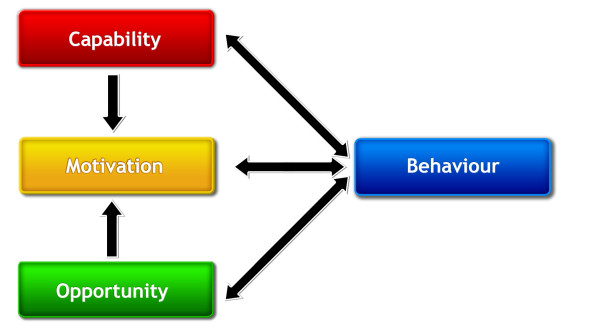
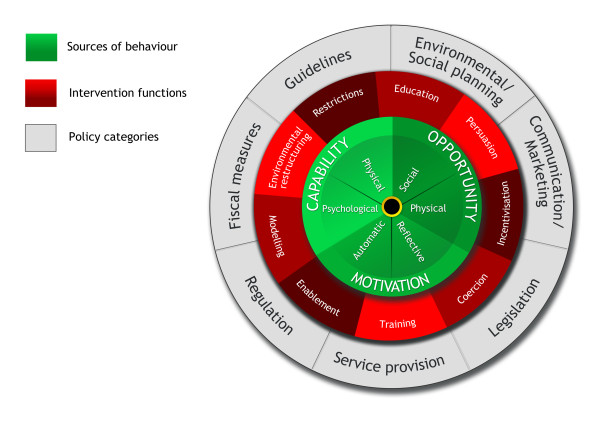
BACKGROUND: Improving the design and implementation of evidence-based practice depends on successful behaviour change interventions. This requires an appropriate method for characterising interventions and linking them to an analysis of the targeted behaviour. There exists a plethora of frameworks of behaviour change interventions, but it is not clear how well they serve this purpose. This paper evaluates these frameworks, and develops and evaluates a new framework aimed at overcoming their limitations. METHODS: A systematic search of electronic databases and consultation with behaviour change experts were used to identify frameworks of behaviour change interventions. These were evaluated according to three criteria: comprehensiveness, coherence, and a clear link to an overarching model of behaviour. A new framework was developed to meet these criteria. The reliability with which it could be applied was examined in two domains of behaviour change: tobacco control and obesity. RESULTS: Nineteen frameworks were identified covering nine intervention functions and seven policy categories that could enable those interventions. None of the frameworks reviewed covered the full range of intervention functions or policies, and only a minority met the criteria of coherence or linkage to a model of behaviour. At the centre of a proposed new framework is a 'behaviour system' involving three essential conditions: capability, opportunity, and motivation (what we term the 'COM-B system'). This forms the hub of a 'behaviour change wheel' (BCW) around which are positioned the nine intervention functions aimed at addressing deficits in one or more of these conditions; around this are placed seven categories of policy that could enable those interventions to occur. The BCW was used reliably to characterise interventions within the English Department of Health's 2010 tobacco control strategy and the National Institute of Health and Clinical Excellence's guidance on reducing obesity. CONCLUSIONS: Interventions and policies to change behaviour can be usefully characterised by means of a BCW comprising: a 'behaviour system' at the hub, encircled by intervention functions and then by policy categories. Research is needed to establish how far the BCW can lead to more efficient design of effective interventions.
Overview
CoChat Summary
TL;DR
The paper reviews 19 existing frameworks for behaviour change interventions, finds none comprehensive, coherent, and linked to an overarching behaviour model, and proposes the Behaviour Change Wheel (BCW). The BCW places a COM-B behaviour system at its hub, surrounded by nine intervention functions and seven policy categories, and was applied reliably to English tobacco control and NICE obesity guidance.
Key findings
- Of 19 identified frameworks, none covered the full range of nine intervention functions and seven policy categories; only three met the criterion of coherence, and seven were explicitly linked to an overarching model of behaviour.
- The proposed BCW comprises a COM-B behaviour system (capability, opportunity, motivation) at the hub, nine intervention functions, and seven policy categories.
- Inter-rater agreement for coding the frameworks by intervention functions and policy categories was 88%.
- Reliability testing of the BCW gave 88% agreement for the 2010 English Tobacco Control Strategy and 79% for the NICE Obesity Guidance; agreement with the gold standard was 85% for the Department of Health implementation lead and 75% for the tobacco researcher.
Methods
- Systematic searches of Web of Science, Pubmed, and PsycInfo plus consultation with eight international behaviour change experts identified 1,267 articles; 8 met inclusion criteria, expert consultation added 11 more, yielding 19 frameworks.
- Frameworks were evaluated against three criteria: comprehensiveness, coherence, and links to an overarching model of behaviour; the new BCW was developed by tabulating intervention categories and linking them to COM-B components.
- Reliability was tested by independent classification of 24 components of the 2010 English tobacco control strategy and 21 components of the 2006 NICE obesity guidance by RW and SM, then by two policy experts against a gold standard.
Limitations
- The paper states that the systematic review may have missed important frameworks and/or intervention functions; judgement was inevitably involved in conceptualising intervention functions and policy categories, with no guarantee the resulting framework is optimal; and the framework may prove difficult to use.
- Evident from the text: reliability was not perfect, with 79% agreement for the NICE obesity guidance and 75% agreement for the tobacco researcher against the gold standard.
- The paper states that research is needed to establish how far the BCW can lead to more efficient design of effective interventions; effectiveness prediction was not tested.
Model-written summary. Check it against the paper before relying on it.
Integrity signals
Registry
Cites
Statistics
Figures
Verification
Claims the paper makes
9 Valid · 1 Not valid · 17 Not checked · 84 Own results and interpretations
The cited sources support only part of this claim — read each source’s verdict below.
In the paper
“In addition, often no analysis is undertaken to guide the choice of theories [8].”
§ The behaviour change wheel: A new method for characterising and designing behaviour change interventions > Background
What the sources say
- Partly supportedcites [8] Davies P Walker AE Grimshaw JM A systematic review of the use of theory in the design of guideline dissemination and implementation strategies and interpretation of the results of rigorous evaluations Implement Sci 2010 5 14 10.1186/1748-5908-5-14 20181130 PMC2832624 sourceExperimental — accuracy not yet measured
The Discussion (page not available in our copy) reports poor documentation of why specific theories and constructs were chosen. That supports a concern about the rationale for theory choice, but it does not establish that researchers often undertook no analysis to guide that choice. (LLM, conf=0.84)
plain- Asserted: passes — The authors put it forward as true.
- Checkable: passes — It can be checked against evidence.
- Load-bearing: passes — The paper’s conclusions depend on it.
- Based: passes — The paper gives a reason why it holds.
- Partly supported
Every source the paper cites for this claim was checked and supports it.
In the paper
“It should also be noted that even when interventions are said to be guided by theory, in practice they are often not or are only minimally [10].”
§ The behaviour change wheel: A new method for characterising and designing behaviour change interventions > Background
What the sources say
- Supportedcites [10] Michie S Prestwich A Are interventions theory-based? Development of a theory coding scheme Health Psychol 2010 29 1 1 8 20063930 source
The Introduction says theory is too often used as a 'loose framework' rather than integrated into intervention design, and that interventions stating a theoretical base seldom explain how theory informed their design. The Results also describe interventions whose techniques are not linked to the theory they claim as a basis. (LLM, conf=0.90)
plain- Asserted: passes — The authors put it forward as true.
- Checkable: passes — It can be checked against evidence.
- Load-bearing: passes — The paper’s conclusions depend on it.
- Based: passes — The paper gives a reason why it holds.
- Supported
The cited sources support only part of this claim — read each source’s verdict below.
In the paper
“In general, insufficient attention appears to be given to analysing the nature of behaviour as the starting point of behaviour change interventions [15], a notable exception being intervention mapping [16].”
§ The behaviour change wheel: A new method for characterising and designing behaviour change interventions > Background
What the sources say
- Supportedcites [15] Johnston M Dixon D Current issues and new directions in psychology and health: What happened to behaviour in the decade of behaviour? Psychology and Health 2008 23 5 509 13 10.1080/08870440701816728 25160717 source
In “Do (health) psychologists recognise the importance of behaviour?”, the authors say that insufficient work has been done to characterise behaviour in ways that guide theory selection. “Classifying behaviour” likewise says remarkably little has been done to categorise behaviours for that purpose. Together with the paper’s discussion of the need for a theoretical basis for interventions, this supports the citing sentence’s broad paraphrase; the citation does not cover its separate intervention-mapping exception. (LLM, conf=0.86)
- Not matchedcites [16] Bartholomew L Parcel G Kok G Gottlieb N Planning Health Promotion Programs: Intervention Mapping 2011 San Francisco Jossey-Bass
We searched by its title and found no matching paper.
hedged- Asserted: passes — The authors put it forward as true.
- Checkable: passes — It can be checked against evidence.
- Load-bearing: passes — The paper’s conclusions depend on it.
- Based: passes — The paper gives a reason why it holds.
- Supported
Every source the paper cites for this claim was checked and supports it.
In the paper
“Interventions are commonly designed without evidence of having gone through this kind of process, with no formal analysis of either the target behaviour or the theoretically predicted mechanisms of action. They are based on implicit commonsense models of behaviour [6].”
§ The behaviour change wheel: A new method for characterising and designing behaviour change interventions > Background
What the sources say
- Supportedcites [6] Michie S Fixsen D Grimshaw JM Eccles MP Specifying and reporting complex behaviour change interventions: the need for a scientific method Implement Sci 2009 4 40 10.1186/1748-5908-4-40 19607700 PMC2717906 source
In “What is the problem? > Interventions aren't described” (page not specified), the paper says intervention development often relies on simple, mostly unstated models of behaviour, or uses theory through intuitive rather than systematic methods. Its discussion of the role of theory also calls for explicit links between intervention techniques and mechanisms of change. Together, these support the citing sentence's paraphrase. (LLM, conf=0.88)
plain- Asserted: passes — The authors put it forward as true.
- Checkable: passes — It can be checked against evidence.
- Load-bearing: passes — The paper’s conclusions depend on it.
- Based: passes — The paper gives a reason why it holds.
- Supported
The sources with a verdict support this claim; the rest weren’t checked yet, have no full text we could read, or their verdicts aren’t rated yet.
In the paper
“there is already evidence that characterising interventions by behaviour change techniques (BCTs) can be helpful in understanding which interventions are more or less effective [6,17]”
§ The behaviour change wheel: A new method for characterising and designing behaviour change interventions > Background
What the sources say
- Supportedcites [6] Michie S Fixsen D Grimshaw JM Eccles MP Specifying and reporting complex behaviour change interventions: the need for a scientific method Implement Sci 2009 4 40 10.1186/1748-5908-4-40 19607700 PMC2717906 source
In “Future developments > An overall framework for describing important elements of an intervention,” the paper reports that coding interventions by behaviour change technique, combined with meta-regression, identified a combination that was significantly more effective than other interventions. It says this difference would have been missed by traditional meta-analyses, directly supporting the claim that such characterisation can help explain relative effectiveness. (LLM, conf=0.94)
- Not checked — no full text of the sourcecites [17] West R Walia A Hyder N Shahab L Michie S Behavior change techniques used by the English Stop Smoking Services and their associations with short-term quit outcomes Nicotine Tob Res 2010 12 7 742 7 10.1093/ntr/ntq074 20478957 source
plainstates an association- Asserted: passes — The authors put it forward as true.
- Checkable: passes — It can be checked against evidence.
- Load-bearing: passes — The paper’s conclusions depend on it.
- Based: passes — The paper gives a reason why it holds.
- Supported
41 more claims · 1 with their cited sources checked
Create a free account to see all 111 claims and to verify the 1 reference still open.
- Probably not a substantial claim. 45
- It may state two separate claims as one. 31
- The quote only partly states this claim. 1
Claims other papers make about this one
Each is checked against this paper’s own text: does it say what the citing paper says it does?
The source backs part of the claim, not all of it — or backs it for a different population, condition or comparison.
In the citing paper
“These divergent findings may reflect the impact of pre-existing severe medical conditions on motivation and ability to exercise 139 140 , alongside potential participation bias for physically healthier populations 141 .”
From Effect of exercise on depression and anxiety symptoms: systematic umbrella review with meta-meta-analysis (2026) · cites this paper as [141]
Experimental — accuracy not yet measuredThe source backs part of the claim, not all of it — or backs it for a different population, condition or comparison.
In the citing paper
“Interventions are often designed without sufficient knowledge about the target group and without a theoretical framework [46].”
From A Mobile Health Intervention for Self-Management and Lifestyle Change for Persons With Type 2 Diabetes, Part 2: One-Year Results From the Norwegian Randomized Controlled Trial RENEWING HEALTH (2014) · cites this paper as [46]
Experimental — accuracy not yet measuredThe source backs part of the claim, not all of it — or backs it for a different population, condition or comparison.
In the citing paper
“we propose that the concept of the individual might incorporate: capability, capacity, motivation (including recognising a need for change), resilience, acceptability, feelings, knowledge and beliefs (including self efficacy) about the intervention/evidence, position and fit within the organization/social system, and approach to decision-making (e.g., experimentation, use of information).”
From The role of evidence, context, and facilitation in an implementation trial: implications for the development of the PARIHS framework (2013) · cites this paper as [7]
Experimental — accuracy not yet measuredThe source backs part of the claim, not all of it — or backs it for a different population, condition or comparison.
In the citing paper
“However, targeting ability of individuals to engage in a behavior is central to achieving long-term behavioral change [30].”
From Just a Fad? Gamification in Health and Fitness Apps (2014) · cites this paper as [30]
Experimental — accuracy not yet measuredThe source backs part of the claim, not all of it — or backs it for a different population, condition or comparison.
In the citing paper
“Although several models have been discussed in dentistry [38–40], limited correlation with periodontal health (PI, bleeding and probing depth) has been provided to date.”
From Concordance and Clinical Outcomes Improvement Following Oral Hygiene Motivation: A Systematic Review and Report of the Workshop of the Italian Societies of Dental Hygiene (2024) · cites this paper as [40]
Experimental — accuracy not yet measured
38 more claims about this paper
Create a free account to see every claim other papers make about this one.
Citations
Cites
Nudge: improving decisions about health, wealth, and happiness
(2008) · Choice Reviews Online · doi:10.5860/choice.46-0977 · Cited by 11,572
Pharmacological interventions for somatoform disorders in adults
Kleinstäuber, M., Witthöft, M., Steffanowski, A., van Marwijk, H., Hiller, W., & Lambert, M. J. (2014) · Cochrane Database of Systematic Reviews · doi:10.1002/14651858.cd010628.pub2 · Cited by 11,335
Bulletin of the World Health Organization
van der Sande, M. A. B., Walraven, G. E. L., Milligan, P. J., BANYA, W. A. S., CEESAY, S. M., Nyan, O. A., & McAdam, K. P. W. J. (2001) · Bulletin of the World Health Organization · Cited by 7,097
Nudge: Improving Decisions About Health, Wealth and Happiness
Adkisson, R. V. (2008) · The Social Science Journal · doi:10.1016/j.soscij.2008.09.003 · Cited by 5,543
Reflective and Impulsive Determinants of Social Behavior
Strack, F., & Deutsch, R. (2004) · Personality and Social Psychology Review · doi:10.1207/s15327957pspr0803_1 · Cited by 3,984 · cited 1×
“With regard to motivation, we distinguished between reflective processes (involving evaluations and plans) and automatic processes (involving emotions and impulses that arise from associative learning and/or innate dispositions) [7,18,20].”
Making psychological theory useful for implementing evidence based practice: a consensus approach
Michie, S. (2005) · Quality and Safety in Health Care · doi:10.1136/qshc.2004.011155 · Cited by 3,440 · cited 3×
“Whilst this framework of 12 theoretical domains has proved useful in assessing and intervening with implementation problems [9], the domain of behaviour has remained under-theorised and therefore underused in its application.”
InfluentialSelf-citationInterventions for preventing obesity in children
Brown, T., Moore, T. H., Hooper, L., Gao, Y., Zayegh, A., Ijaz, S., Elwenspoek, M., Foxen, S. C., Magee, L., O'Malley, C., et al. (2019) · Cochrane Database of Systematic Reviews · doi:10.1002/14651858.cd001871.pub4 · Cited by 2,982
Bulletin of the World Health Organization
Frick, K. D., Lynch, M. C., West, S. K., Muñoz, B., & Mkocha, H. A. (2003) · Bulletin of the World Health Organization · Cited by 2,660
Planning health promotion programs an intervention mapping approach
Bartholomew, L. K., Parcel, G. S., Kok, G., & Gottlieb, N. (2006) · Research Publications (Maastricht University) · Cited by 2,321
Effective techniques in healthy eating and physical activity interventions: A meta-regression.
Michie, S., Abraham, C., Whittington, C., McAteer, J., & Gupta, S. (2009) · Health Psychology · doi:10.1037/a0016136 · Cited by 2,229 · cited 1×
“An examination of BCTs used in selfmanagement approaches to increasing physical activity and healthy eating [46], and in behavioural support for smoking cessation [47,48], shows that these BCTs serve five of the intervention functions: education, persuasion, incentivisation, training, and enablement.”
Self-citation
Research works printed but not linked: 16
- Institute for Government MINDSPACE; Influencing behaviour through public policy 2010 Institute for Government, the Cabinet Office
- Cochrane Effective Practice and Organisation of Care Group EPOC resources for review authors 2010 http://epoc.cochrane.org/epoc-resources-review-authors
- National Institute for Health and Clinical Excellence Behaviour change at population, community and individual levels (Public Health Guidance 6) 2007 London NICE
- Information Centre Statistics on NHS Stop-Smoking Services 2009/10 2010 London: Department of Health
- Bartholomew L Parcel G Kok G Gottlieb N Planning Health Promotion Programs: Intervention Mapping 2011 San Francisco Jossey-Bass
- Anon Prisma: Transparent Reporting of Systematic Reviews and Meta-Analyses 2009 http://www.prisma-statement.org/index.htm
- Department of Health A Smoke-free Future: A comprehensive Tobacco Control Strategy for England 2010 London
- National Institute for Health and Clinical Excellence Obesity: the prevention, identification, assessment and management of overweight and obesity in adults and children National Institute for Health and Clinical Excellence 2006 22497033
- DEFRA A Framework for Pro-Environmental Behaviours: Report 2008 London: Defra
- Knott D Muers S Aldridge S Achieving Culture Change: A Policy Framework Strategy Unit 2008
- Nuffield Council on Bioethics Public Health: ethical issues; a guide to the report 2007 Nuffield Council on Bioethics
- Population Services International PSI Behaviour Change Framework "Bubbles" 2004 Washington DC http://www.psilearning.com
- Walter I Nutley S Davies H Developing a taxonomy of interventions used to increase the impact of research 2003 St Andrews University of St Andrews
- White P PETeR: a universal model for health interventions 2010
- West R Michie S Behaviour change: the importance of seeing the whole picture and a critique of 'Nudge': Submission to the House of Lords Science and Technology Select Committee Call for Evidence: Behaviour Change 2010 London House of Lords
- Featherstone H Reed H Jarvis M Michie S Gilmour A West R APPG Enquiry into the effectiveness and Cost Effectiveness of Tobacco Control: Submission to the Spending Review and Public Health White Paper Consultation Process 2010 London: Action on Smpoking and Health
Cited by
Items 101–200 of 13,595
Wilson, L. M., Avila Tang, E., Chander, G., Hutton, H. E., Odelola, O. A., Elf, J. L., Heckman-Stoddard, B. M., Bass, E. B., Little, E. A., Haberl, E. B., et al. (2012) · Journal of Environmental and Public Health · doi:10.1155/2012/961724 · Cited by 264
Design for Circular Behaviour: Considering Users in a Circular Economy
Wastling, T., Charnley, F., & Moreno, M. (2018) · Sustainability · doi:10.3390/su10061743 · Cited by 264
Meredith, S. J., Cox, N. J., Ibrahim, K., Higson, J., McNiff, J., Mitchell, S., Rutherford, M., Wijayendran, A., Shenkin, S. D., Kilgour, A. H. M., et al. (2023) · Age and Ageing · doi:10.1093/ageing/afad145 · Cited by 267
“According to COM-B, for older adults to engage with PA they need the capability (physical and psychological), opportunity (physical and social) and strength of motivation (automatic and reflective) to participate [17].”
InfluentialRobinson, E., Aveyard, P., Daley, A., Jolly, K., Lewis, A., Lycett, D., & Higgs, S. (2013) · The American Journal of Clinical Nutrition · doi:10.3945/ajcn.112.045245 · Cited by 259
McArthur, C., Bai, Y., Hewston, P., Giangregorio, L., Straus, S., & Papaioannou, A. (2021) · Implementation Science · doi:10.1186/s13012-021-01140-0 · Cited by 260
“Table 1 Definitions of the COM-B constructs and intervention functions as outlined by the Behaviour Change Wheel [7] Definition COM-B construct Physical capability Physical skill, strength, or stamina Psychological capability Knowledge or psychological skills, strength, or stamina to engage in the necessary mental pro…”
BackgroundMethodInfluentialBehaviour change theory and evidence: a presentation to Government
Michie, S., & West, R. (2013) · Health Psychology Review · doi:10.1080/17437199.2011.649445 · Cited by 259
“We describe a classification system developed on the basis of a systematic review of previous frameworks, with a clear goal of being (1) comprehensive, (2) coherent and (3) based on an overarching model of behaviour (Michie, van Stralen, & West, 2011 ).”
BackgroundMethodSelf-citationDeterminants of behaviour and their efficacy as targets of behavioural change interventions
Albarracín, D., Fayaz-Farkhad, B., & Granados Samayoa, J. A. (2024) · Nature Reviews Psychology · doi:10.1038/s44159-024-00305-0 · Cited by 254
What Are the Effects of Teaching Evidence-Based Health Care (EBHC)? Overview of Systematic Reviews
Young, T., Rohwer, A., Volmink, J., & Clarke, M. (2014) · PLoS ONE · doi:10.1371/journal.pone.0086706 · Cited by 254
Bach-Mortensen, A. M., Lange, B. C. L., & Montgomery, P. (2018) · Implementation Science · doi:10.1186/s13012-018-0789-7 · Cited by 253
“needed to conceptualise how intervention functions or mechanisms can be tailored to different implementation settings [98].”
BackgroundPantoja, T., Opiyo, N., Lewin, S., Paulsen, E., Ciapponi, A., Wiysonge, C. S., Herrera, C. A., Rada, G., Peñaloza, B., Dudley, L., et al. (2017) · Cochrane Database of Systematic Reviews · doi:10.1002/14651858.cd011086.pub2 · Cited by 252
Keyworth, C., Epton, T., Goldthorpe, J., Calam, R., & Armitage, C. J. (2020) · British Journal of Health Psychology · doi:10.1111/bjhp.12417 · Cited by 246
Watts, G. F., Gidding, S. S., Hegele, R. A., Raal, F. J., Sturm, A. C., Jones, L. K., Sarkies, M. N., Al-Rasadi, K., Blom, D. J., Daccord, M., et al. (2023) · Nature Reviews Cardiology · doi:10.1038/s41569-023-00892-0 · Cited by 250
The theory of planned behaviour and discrete food choices: a systematic review and meta-analysis
McDermott, M. S., Oliver, M., Svenson, A., Simnadis, T., Beck, E. J., Coltman, T., Iverson, D., Caputi, P., & Sharma, R. (2015) · International Journal of Behavioral Nutrition and Physical Activity · doi:10.1186/s12966-015-0324-z · Cited by 249
Williams, L., Gallant, A. J., Rasmussen, S., Brown Nicholls, L. A., Cogan, N., Deakin, K., Young, D., & Flowers, P. (2020) · British Journal of Health Psychology · doi:10.1111/bjhp.12468 · Cited by 247
Capability, opportunity, and motivation: an across contexts empirical examination of the COM-B model
Willmott, T. J., Pang, B., & Rundle-Thiele, S. (2021) · BMC Public Health · doi:10.1186/s12889-021-11019-w · Cited by 249
“The purpose of this study is to systematically identify enablers and barriers for two weight-related behaviours (eating and physical activity) among young adults using the COM-B model [54].”
BackgroundInfluentialA Theory-Driven System for the Specification of Rehabilitation Treatments
Hart, T., Dijkers, M. P., Whyte, J., Turkstra, L. S., Zanca, J. M., Packel, A., Van Stan, J. H., Ferraro, M., & Chen, C. (2019) · Archives of Physical Medicine and Rehabilitation · doi:10.1016/j.apmr.2018.09.109 · Cited by 243
Power imbalance prevents shared decision making
Joseph-Williams, N., Edwards, A., & Elwyn, G. (2014) · BMJ · doi:10.1136/bmj.g3178 · Cited by 239
A new integrated behavioural intervention for knee osteoarthritis: development and pilot study
Preece, S. J., Brookes, N., Williams, A. E., Jones, R. K., Starbuck, C., Jones, A., & Walsh, N. E. (2021) · BMC Musculoskeletal Disorders · doi:10.1186/s12891-021-04389-0 · Cited by 238
“model [38] which has been recommended for individuallevel behaviour change interventions [39].”
BackgroundDaly-Smith, A., Quarmby, T., Archbold, V. S. J., Corrigan, N., Wilson, D., Resaland, G. K., Bartholomew, J. B., Singh, A., Tjomsland, H. E., Sherar, L. B., et al. (2020) · International Journal of Behavioral Nutrition and Physical Activity · doi:10.1186/s12966-020-0917-z · Cited by 237
Digital Behaviour Change Interventions to Break and Form Habits
Pinder, C., Vermeulen, J., Cowan, B. R., & Beale, R. (2018) · ACM Transactions on Computer-Human Interaction · doi:10.1145/3196830 · Cited by 235
“An important avenue of research is to explore how to use DBCIs to apply COM-B to dynamic contexts and individual preferences (Michie et al. 2013).”
BackgroundInfluentialThe mobile revolution—using smartphone apps to prevent cardiovascular disease
Neubeck, L., Lowres, N., Benjamin, E. J., Freedman, S. B., Coorey, G., & Redfern, J. (2015) · Nature Reviews Cardiology · doi:10.1038/nrcardio.2015.34 · Cited by 232
Kruize, H., van der Vliet, N., Staatsen, B., Bell, R., Chiabai, A., Muiños, G., Higgins, S., Quiroga, S., Martinez-Juarez, P., Aberg Yngwe, M., et al. (2019) · International Journal of Environmental Research and Public Health · doi:10.3390/ijerph16224403 · Cited by 232
Araújo-Soares, V., Hankonen, N., Presseau, J., Rodrigues, A., & Sniehotta, F. F. (2019) · European Psychologist · doi:10.1027/1016-9040/a000330 · Cited by 230
Tackling antimicrobial resistance 2019–2024 – The UK's five-year national action plan
Courtenay, M., Castro-Sanchez, E., Fitzpatrick, M., Gallagher, R., Lim, R., & Morris, G. (2019) · Journal of Hospital Infection · doi:10.1016/j.jhin.2019.02.019 · Cited by 229
“We also know that if interventions are to be effective, they must be tailored to the population and context in which the target behaviours are delivered [9-10].”
BackgroundWeatherburn, P., Hickson, F., Reid, D., Torres-Rueda, S., & Bourne, A. (2017) · Sexually Transmitted Infections · doi:10.1136/sextrans-2016-052695 · Cited by 229
“Michie and colleagues(18) have developed a consensus-based typology of the varying accounts of behaviours and activities to change them, in order to better plan and”
BackgroundHonarvar, B., Lankarani, K. B., Kharmandar, A., Shaygani, F., Zahedroozgar, M., Rahmanian Haghighi, M. R., Ghahramani, S., Honarvar, H., Daryabadi, M. M., Salavati, Z., et al. (2020) · International Journal of Public Health · doi:10.1007/s00038-020-01406-2 · Cited by 225
Sheridan, R., Martin-Kerry, J., Hudson, J., Parker, A., Bower, P., & Knapp, P. (2020) · Trials · doi:10.1186/s13063-020-4197-3 · Cited by 223
“These 14 domains have been shown to cluster into three overarching constructs: capability, opportunity and motivation, which are defined in the behavioural science literature as the COM-B model [15, 17].”
BackgroundMcDonagh, L. K., Saunders, J. M., Cassell, J., Curtis, T., Bastaki, H., Hartney, T., & Rait, G. (2018) · Implementation Science · doi:10.1186/s13012-018-0821-y · Cited by 222
“The application of COM-B to factors associated with the implementation of chlamydia testing in general practice will enable us to develop a coherent framework for understanding chlamydia testing, focussed on identifying appropriate behaviour change techniques to improve implementation and increase chlamydia testing [3…”
MethodBehaviour Centred Design: towards an applied science of behaviour change
Aunger, R., & Curtis, V. (2016) · Health Psychology Review · doi:10.1080/17437199.2016.1219673 · Cited by 221
Macready, A. L., Hieke, S., Klimczuk-Kochańska, M., Szumiał, S., Vranken, L., & Grunert, K. G. (2020) · Food Policy · doi:10.1016/j.foodpol.2020.101880 · Cited by 220
Wakida, E. K., Talib, Z. M., Akena, D., Okello, E. S., Kinengyere, A., Mindra, A., & Obua, C. (2018) · Systematic Reviews · doi:10.1186/s13643-018-0882-7 · Cited by 219
“Motivation is all those brain processes that energize and direct behavior, not just goals and conscious decision-making; it includes habitual processes, emotional responding, and analytical decision-making [33].”
Flannery, C., McHugh, S., Anaba, A. E., Clifford, E., O’Riordan, M., Kenny, L. C., McAuliffe, F. M., Kearney, P. M., & Byrne, M. (2018) · BMC Pregnancy and Childbirth · doi:10.1186/s12884-018-1816-z · Cited by 218
“The COM-B model forms the hub of the Behaviour Change Wheel (BCW) which provides a systematic and transparent way to conduct a behavioural assessment, identify the target behaviour, select intervention functions and to develop theory based intervention strategies [45].”
MethodAn empirical study of ‘green’ workplace behaviours: ability, motivation and opportunity
Rayner, J., & Morgan, D. (2018) · Asia Pacific Journal of Human Resources · doi:10.1111/1744-7941.12151 · Cited by 217
Building Realist Program Theory for Large Complex and Messy Interventions
Shearn, K., Allmark, P., Piercy, H., & Hirst, J. (2017) · International Journal of Qualitative Methods · doi:10.1177/1609406917741796 · Cited by 217
Vis, C., Mol, M., Kleiboer, A., Bührmann, L., Finch, T., Smit, J., & Riper, H. (2018) · JMIR Mental Health · doi:10.2196/mental.9769 · Cited by 183
The Theory and Practice of “Nudging”: Changing Health Behaviors
Vlaev, I., King, D., Dolan, P., & Darzi, A. (2016) · Public Administration Review · doi:10.1111/puar.12564 · Cited by 215
“This is important, because thus we can develop a common language describing the ‘active ingredients’ of complex interventions, which in turn can facilitate theory development (see Michie et al., 2011).”
Backgroundinterventions to improve antibiotic prescribing practices for hospital inpatients (updated protocol)
Davey, P., Scott, C. L., Brown, E., Charani, E., Michie, S., Ramsay, C. R., & Marwick, C. A. (2017) · Cochrane Database of Systematic Reviews · doi:10.1002/14651858.cd011236.pub2 · Cited by 214
Self-citationWestern, M. J., Armstrong, M. E. G., Islam, I., Morgan, K., Jones, U. F., & Kelson, M. J. (2021) · International Journal of Behavioral Nutrition and Physical Activity · doi:10.1186/s12966-021-01218-4 · Cited by 213
Malliaras, P., Merolli, M., Williams, C. M., Caneiro, J. P., Haines, T., & Barton, C. (2021) · Musculoskeletal Science and Practice · doi:10.1016/j.msksp.2021.102340 · Cited by 213
Chauhan, B. F., Jeyaraman, M., Mann, A. S., Lys, J., Skidmore, B., Sibley, K. M., Abou-Setta, A., & Zarychanksi, R. (2017) · Implementation Science · doi:10.1186/s13012-016-0538-8 · Cited by 210
Seven lessons for interdisciplinary research on interactive digital health interventions
Blandford, A., Gibbs, J., Newhouse, N., Perski, O., Singh, A., & Murray, E. (2018) · DIGITAL HEALTH · doi:10.1177/2055207618770325 · Cited by 209
“Although such studies often report ‘implications for design,’ their value in simply documenting practices and experiences, and developing theories of interactions and behaviours, is also recognised 27 it is assumed that requirements are identified by professionals 28 .”
BackgroundBrown, T. J., Todd, A., O'Malley, C., Moore, H. J., Husband, A. K., Bambra, C., Kasim, A., Sniehotta, F. F., Steed, L., Smith, S., et al. (2016) · BMJ Open · doi:10.1136/bmjopen-2015-009828 · Cited by 208
“Using the policy category of the Behaviour Change Wheel, 18 all the interventions were categorised as ‘ service provision ’ .”
InfluentialSpruijt-Metz, D., Hekler, E., Saranummi, N., Intille, S., Korhonen, I., Nilsen, W., Rivera, D. E., Spring, B., Michie, S., Asch, D. A., et al. (2015) · Translational Behavioral Medicine · doi:10.1007/s13142-015-0324-1 · Cited by 205
Self-citationAkpan, M. R., Isemin, N. U., Udoh, A. E., & Ashiru-Oredope, D. (2020) · Journal of Global Antimicrobial Resistance · doi:10.1016/j.jgar.2020.03.009 · Cited by 204
Vargas‐Garcia, E. J., Evans, C. E. L., Prestwich, A., Sykes‐Muskett, B. J., Hooson, J., & Cade, J. E. (2017) · Obesity Reviews · doi:10.1111/obr.12580 · Cited by 201
“Whilst behaviour change interventions are considered as fundamental in public health practice (25), evidence remains scarce around the type of interventions most effective in reducing consumption of SSB and increasing water intakes across all age groups (26,27).”
BackgroundInterventions to prevent maternal obesity before conception, during pregnancy, and post partum
Hanson, M., Barker, M., Dodd, J. M., Kumanyika, S., Norris, S., Steegers, E., Stephenson, J., Thangaratinam, S., & Yang, H. (2017) · The Lancet Diabetes & Endocrinology · doi:10.1016/s2213-8587(16)30108-5 · Cited by 200
Koop, S. H. A., Van Dorssen, A. J., & Brouwer, S. (2019) · Journal of Environmental Management · doi:10.1016/j.jenvman.2019.06.126 · Cited by 200
“Such a framework needs to be comprehensive and coherent, and it should adhere to an overarching model of behaviour (Michie et al., 2011).”
BackgroundWhat Predicts the Physical Activity Intention–Behavior Gap? A Systematic Review
Rhodes, R. E., Cox, A., & Sayar, R. (2022) · Annals of Behavioral Medicine · doi:10.1093/abm/kaab044 · Cited by 197
Staddon, S. C., Cycil, C., Goulden, M., Leygue, C., & Spence, A. (2016) · Energy Research & Social Science · doi:10.1016/j.erss.2016.03.027 · Cited by 196
Bonell, C., Michie, S., Reicher, S., West, R., Bear, L., Yardley, L., Curtis, V., Amlôt, R., & Rubin, G. J. (2020) · Journal of Epidemiology and Community Health · doi:10.1136/jech-2020-214290 · Cited by 195
Self-citationSulaiman, I., Greene, G., MacHale, E., Seheult, J., Mokoka, M., D'Arcy, S., Taylor, T., Murphy, D. M., Hunt, E., Lane, S. J., et al. (2018) · European Respiratory Journal · doi:10.1183/13993003.01126-2017 · Cited by 196
Antibiotic prescribing in UK general dental practice: a cross‐sectional study
Cope, A. L., Francis, N. A., Wood, F., & Chestnutt, I. G. (2016) · Community Dentistry and Oral Epidemiology · doi:10.1111/cdoe.12199 · Cited by 189
Peden, C. J., Stephens, T., Martin, G., Kahan, B. C., Thomson, A., Rivett, K., Wells, D., Richardson, G., Kerry, S., Bion, J., et al. (2019) · The Lancet · doi:10.1016/s0140-6736(18)32521-2 · Cited by 189
Cuffee, Y. L., Hargraves, J. L., Rosal, M., Briesacher, B. A., Schoenthaler, A., Person, S., Hullett, S., & Allison, J. (2013) · American Journal of Public Health · doi:10.2105/ajph.2013.301554 · Cited by 188
“Such a focus on trust fits well within a recent synthesis of conceptual models for behavior change that centers on ability, opportunity, and motivation.(75) For example, focusing on the patient---physician relationship in a culturally competent manner might enhance adherence among African Americans.”
BackgroundSustainable Agriculture and Its Implementation Gap—Overcoming Obstacles to Implementation
Siebrecht, N. (2020) · Sustainability · doi:10.3390/su12093853 · Cited by 188
Desroches, S., Lapointe, A., Ratté, S., Gravel, K., Légaré, F., & Turcotte, S. (2013) · Cochrane Database of Systematic Reviews · doi:10.1002/14651858.cd008722.pub2 · Cited by 187
Addressing overuse of health services in health systems: a critical interpretive synthesis
Synthesis working group, Ellen, M. E., Wilson, M. G., Vélez, M., Shach, R., Lavis, J. N., Grimshaw, J. M., & Moat, K. A. (2018) · Health Research Policy and Systems · doi:10.1186/s12961-018-0325-x · Cited by 187
Modelling Habit Formation and Its Determinants
Gardner, B., & Lally, P. (2018) · The Psychology of Habit · doi:10.1007/978-3-319-97529-0_12 · Cited by 187
Writing implementation research grant proposals: ten key ingredients
Proctor, E. K., Powell, B. J., Baumann, A. A., Hamilton, A. M., & Santens, R. L. (2012) · Implementation Science · doi:10.1186/1748-5908-7-96 · Cited by 169
Scott, A., Docking, S., Vicenzino, B., Alfredson, H., Zwerver, J., Lundgreen, K., Finlay, O., Pollock, N., Cook, J. L., Fearon, A., et al. (2013) · British Journal of Sports Medicine · doi:10.1136/bjsports-2013-092329 · Cited by 186
Brown, C. E. B., Richardson, K., Halil-Pizzirani, B., Atkins, L., Yücel, M., & Segrave, R. A. (2024) · BMC Public Health · doi:10.1186/s12889-023-17621-4 · Cited by 186
Iribarren, S. J., Akande, T. O., Kamp, K. J., Barry, D., Kader, Y. G., & Suelzer, E. (2021) · JMIR mHealth and uHealth · doi:10.2196/21563 · Cited by 185
“A behavior change intervention is broadly defined as a “coordinated set of activities designed to change a specified behavior pattern” [2].”
BackgroundInfluentialA brief introduction to the COM-B Model of behaviour and the PRIME Theory of motivation
West, R., & Michie, S. (2020) · Qeios · doi:10.32388/ww04e6 · Cited by 182
Self-citation(2018) · doi:10.2196/preprints.9769 · Cited by 183
Gramlich, L. M., Sheppard, C. E., Wasylak, T., Gilmour, L. E., Ljungqvist, O., Basualdo-Hammond, C., & Nelson, G. (2017) · Implementation Science · doi:10.1186/s13012-017-0597-5 · Cited by 182
“[29] by emphasizing the importance of focusing on capacity building for providers with training, communication,”
BackgroundSchueller, S. M., Tomasino, K. N., & Mohr, D. C. (2017) · Clinical Psychology: Science and Practice · doi:10.1037/h0101740 · Cited by 70
Li, D., Xu, X., Chen, C.-F., & Menassa, C. (2019) · Energy Research & Social Science · doi:10.1016/j.erss.2019.01.020 · Cited by 181
Colquhoun, H., Leeman, J., Michie, S., Lokker, C., Bragge, P., Hempel, S., McKibbon, K. A., Peters, G.-J. Y., Stevens, K. R., Wilson, M. G., et al. (2014) · Implementation Science · doi:10.1186/1748-5908-9-51 · Cited by 180
“The Behaviour Change Wheel [21], The Cochrane Effective Practice and Organization of Care (EPOC) framework [22], the Leeman Taxomony [23], and the Behaviour Change Technique Taxomony v1 [24] – into a single framework.”
BackgroundMethodInfluentialSelf-citationSmith, C., Vannak, U., Sokhey, L., Ngo, T. D., Gold, J., & Free, C. (2015) · Reproductive Health · doi:10.1186/s12978-015-0112-x · Cited by 179
“Furthermore, existing behaviour or theoretically predicted mechanisms of action are not fully described [8, 17].”
BackgroundThe determinants of handwashing behaviour in domestic settings: An integrative systematic review
White, S., Thorseth, A. H., Dreibelbis, R., & Curtis, V. (2020) · International Journal of Hygiene and Environmental Health · doi:10.1016/j.ijheh.2020.113512 · Cited by 177
Understanding vaccine acceptance and demand—and ways to increase them
Habersaat, K. B., & Jackson, C. (2020) · Bundesgesundheitsblatt - Gesundheitsforschung - Gesundheitsschutz · doi:10.1007/s00103-019-03063-0 · Cited by 177
Titzler, I., Saruhanjan, K., Berking, M., Riper, H., & Ebert, D. D. (2018) · Internet Interventions · doi:10.1016/j.invent.2018.01.002 · Cited by 176
“The COM-B model is linked to the TDF and postulates that behavior can be influenced by the components capability, opportunity, and motivation (Michie et al., 2014; Michie et al., 2011).”
BackgroundHoek, A. C., Malekpour, S., Raven, R., Court, E., & Byrne, E. (2021) · Sustainable Production and Consumption · doi:10.1016/j.spc.2020.12.009 · Cited by 174
Taj, F., Klein, M. C. A., & van Halteren, A. (2019) · JMIR mHealth and uHealth · doi:10.2196/13311 · Cited by 173
“Such frameworks provide guidance on the development of a persuasive system, by suggesting a coordinated set of activities to help translate theory into practice [11].”
BackgroundTHEIS, D. R. Z., & WHITE, M. (2021) · The Milbank Quarterly · doi:10.1111/1468-0009.12498 · Cited by 172
Parry, S. M., Knight, L. D., Connolly, B., Baldwin, C., Puthucheary, Z., Morris, P., Mortimore, J., Hart, N., Denehy, L., & Granger, C. L. (2017) · Intensive Care Medicine · doi:10.1007/s00134-017-4685-4 · Cited by 172
“Behavioural change and translation research models need to be explored to identify potential interventions and policies which can be targeted to increase PA levels in survivors of critical illness [80].”
BackgroundInfluentialBusiness Models for the Circular Economy: Opportunities and Challenges for Policy
OECD (2019) · OECD eBooks · doi:10.1787/g2g9dd62-en · Cited by 171
Newton, J. T., & Asimakopoulou, K. (2015) · Journal of Clinical Periodontology · doi:10.1111/jcpe.12356 · Cited by 170
Osteoarthritis: Models for appropriate care across the disease continuum
Allen, K. D., Choong, P. F., Davis, A. M., Dowsey, M. M., Dziedzic, K. S., Emery, C., Hunter, D. J., Losina, E., Page, A. E., Roos, E. M., et al. (2016) · Best Practice & Research Clinical Rheumatology · doi:10.1016/j.berh.2016.09.003 · Cited by 170
McKay, H., Naylor, P.-J., Lau, E., Gray, S. M., Wolfenden, L., Milat, A., Bauman, A., Race, D., Nettlefold, L., & Sims-Gould, J. (2019) · International Journal of Behavioral Nutrition and Physical Activity · doi:10.1186/s12966-019-0868-4 · Cited by 169
Impacts of the COVID‐19 pandemic on human–nature interactions: Pathways, evidence and implications
Soga, M., Evans, M. J., Cox, D. T. C., & Gaston, K. J. (2021) · People and Nature · doi:10.1002/pan3.10201 · Cited by 163
Band, R., Bradbury, K., Morton, K., May, C., Michie, S., Mair, F. S., Murray, E., McManus, R. J., Little, P., & Yardley, L. (2017) · Implementation Science · doi:10.1186/s13012-017-0553-4 · Cited by 167
“To undertake the behavioural analysis, we coded the intervention content using the Behaviour Change Wheel (BCW) [32] and Normalisation Process Theory (NPT) [48].”
BackgroundMethodInfluentialSelf-citationHorne, R., Cooper, V., Wileman, V., & Chan, A. (2019) · European Psychologist · doi:10.1027/1016-9040/a000353 · Cited by 166
A scoping review of full-spectrum knowledge translation theories, models, and frameworks
Esmail, R., Hanson, H. M., Holroyd-Leduc, J., Brown, S., Strifler, L., Straus, S. E., Niven, D. J., & Clement, F. M. (2020) · Implementation Science · doi:10.1186/s13012-020-0964-5 · Cited by 166
Bullock, H. L., Lavis, J. N., Wilson, M. G., Mulvale, G., & Miatello, A. (2021) · Implementation Science · doi:10.1186/s13012-021-01082-7 · Cited by 166
Trends in guideline implementation: an updated scoping review
Peters, S., Sukumar, K., Blanchard, S., Ramasamy, A., Malinowski, J., Ginex, P., Senerth, E., Corremans, M., Munn, Z., Kredo, T., et al. (2022) · Implementation Science · doi:10.1186/s13012-022-01223-6 · Cited by 163
Williams, N. J. (2016) · Administration and Policy in Mental Health and Mental Health Services Research · doi:10.1007/s10488-015-0693-2 · Cited by 164
Seale, H., Dyer, C. E. F., Abdi, I., Rahman, K. M., Sun, Y., Qureshi, M. O., Dowell-Day, A., Sward, J., & Islam, M. S. (2020) · BMC Infectious Diseases · doi:10.1186/s12879-020-05340-9 · Cited by 162
Room, J., Hannink, E., Dawes, H., & Barker, K. (2017) · BMJ Open · doi:10.1136/bmjopen-2017-019221 · Cited by 163
“Michie et al 64 developed a framework for behaviour change interventions, The Behaviour Change Wheel.”
BackgroundInfluentialExamining the theory‐effectiveness hypothesis: A systematic review of systematic reviews
Dalgetty, R., Miller, C. B., & Dombrowski, S. U. (2019) · British Journal of Health Psychology · doi:10.1111/bjhp.12356 · Cited by 161
Ogden, J. (2016) · Health Psychology Review · doi:10.1080/17437199.2016.1190291 · Cited by 161
Labib, S. M., Browning, M. H. E. M., Rigolon, A., Helbich, M., & James, P. (2022) · Science of The Total Environment · doi:10.1016/j.scitotenv.2022.155095 · Cited by 159
“Soga et al. (2021) summarized three possible interrelated pathways based on a behavioral change model from Michie et al. (2011).”
BackgroundVulnerability to heatwaves and implications for public health interventions – A scoping review
Mayrhuber, E. A.-S., Dückers, M. L. A., Wallner, P., Arnberger, A., Allex, B., Wiesböck, L., Wanka, A., Kolland, F., Eder, R., Hutter, H.-P., et al. (2018) · Environmental Research · doi:10.1016/j.envres.2018.05.021 · Cited by 158
Promoting social capital to alleviate loneliness and improve health among older people in Spain
Coll-Planas, L., del Valle Gómez, G., Bonilla, P., Masat, T., Puig, T., & Monteserin, R. (2017) · Health & Social Care in the Community · doi:10.1111/hsc.12284 · Cited by 157
Moir, T. (2018) · Frontiers in Education · doi:10.3389/feduc.2018.00061 · Cited by 217
Quality of Publicly Available Physical Activity Apps: Review and Content Analysis
Bondaronek, P., Alkhaldi, G., Slee, A., Hamilton, F. L., & Murray, E. (2018) · JMIR mHealth and uHealth · doi:10.2196/mhealth.9069 · Cited by 156
Gardiner, K. M., Singleton, J., Sheridan, J. L., Kyle, G. J., & Nissen, L. M. (2019) · PLoS ONE · doi:10.1371/journal.pone.0216556 · Cited by 165
Preconditions for successful advance care planning in nursing homes: A systematic review.
Gilissen, J., Pivodic, L., Smets, T., Gastmans, C., Vander Stichele, R., Deliens, L., & Van den Block, L. (2017) · International Journal of Nursing Studies · doi:10.1016/j.ijnurstu.2016.12.003 · Cited by 156
Adherence in childhood asthma: the elephant in the room
Morton, R. W., Everard, M. L., & Elphick, H. E. (2014) · Archives of Disease in Childhood · doi:10.1136/archdischild-2014-306243 · Cited by 155
Medication nonadherence: health impact, prevalence, correlates and interventions
Stewart, S.-J., Moon, Z., & Horne, R. (2022) · Psychology and Health · doi:10.1080/08870446.2022.2144923 · Cited by 232
Metadata
- Authors
- Michie, S., van Stralen, M. M., & West, R.
- Affiliations
- University College London (GB)
- Corresponding author
- Michie, Susan
- Venue
- Implementation Science
- Published
- 2011-04-23
- Volume
- 6
- Issue
- 1
- Pages
- 42-42
- ISSN
- 1748-5908 (ISSN-L)
- PMC
- PMC3096582
- OpenAlex
- W2136608905
- Cited by
- 13,697
- References
- 42
- Citations by year
- 2026: 2046 · 2025: 1906 · 2024: 1773 · 2023: 1521 · 2022: 1553 · 2021: 1324 · 2020: 1068 · 2019: 684 · 2018: 554 · 2017: 423 · 2016: 303 · 2015: 255 · 2014: 127 · 2013: 110 · 2012: 33
- FWCI
- 118.28
- Type
- journal article
- Language
- en
- Open access
- gold
- doi.org
- Licence
- Locations
- Implementation Science (publishedVersion, cc-by)
- PubMed Central (publishedVersion, cc-by)
- PubMed (publishedVersion)
- Research Publications (Maastricht University) (publishedVersion, cc-by)
- Amsterdam UMC (VU Amsterdam) - Institutional Repository (publishedVersion, other-oa)
- Pure Amsterdam UMC (submittedVersion, other-oa)
- Digital Academic REpository of VU University Amsterdam (Vrije Universiteit Amsterdam) (submittedVersion)
- DOAJ (DOAJ: Directory of Open Access Journals) (submittedVersion, cc-by-sa)
- UCL Discovery (University College London) (submittedVersion)
- VU Research Portal (submittedVersion, other-oa)
- Research Publications (Maastricht University) (submittedVersion, other-oa)
- Data Archiving and Networked Services (DANS) (submittedVersion, other-oa)
- Funders
- Cancer Research UK
- University College London
- University of Aberdeen
- Universiteit Maastricht
- Topics
- Social Sciences › Psychology › Applied Psychology › Behavioral Health and Interventions
- Health Sciences › Health Professions › General Health Professions › Health Policy Implementation Science
- Health Sciences › Medicine › Public Health, Environmental and Occupational Health › Smoking Behavior and Cessation
- Keywords
- Behaviour Change Wheel, COM-B model, behaviour change interventions, intervention design, intervention functions, enabling policies, capability, opportunity and motivation, tobacco control, obesity prevention
- MeSH terms
- Health Policy, Health Promotion, Health Services Research, Humans, Motivation, Practice Patterns, Physicians', Health Behavior, Public Health Practice, Evidence-Based Medicine, Risk Reduction Behavior, Quality Improvement
About these checks
Registry, retraction, Cites and statistics results are computed, not judged, with one exception: a printed reference that no index lists is read once by a model before it counts as a citation error. Claims are extracted by a model and kept only when their quote appears verbatim in the text; each cited source is then checked, with a model’s help, for whether it says what the claim relies on. Those verdicts can be wrong — read the claim’s quote and the cited source before relying on one.
The claim verdicts this report counts are experimental: their accuracy is not yet measured.
A language model drew the claims from the paper on 2026-10-10, under version 3 of the claim definition (model deepseek-v4.1-flash, prompt extract-v3).
A second model labelled each claim on 2026-10-10 (model jev-1.13-20260917, definition revision gold-guideline-v0.2).
Cited sources are checked with a language model’s help (gpt-6-sol).
Statistics and arithmetic are recomputed, not judged.
Confidence bands are shown only for fields calibrated on our annotated test set. None is calibrated yet, so no band is shown.
What counts as a claim ›How we measure confidence ›How we check this ›
Are you an author, or do you see a problem with this page? Request a review
Data sources
Bibliographic data: Semantic Scholar, OpenAlex, Crossref.
Contains information from the Semantic Scholar Academic Graph Datasets, made available under the ODC Attribution License (ODC-BY 1.0).
Semantic Scholar’s data is described in: Kinney, R., et al. (2023). The Semantic Scholar Open Data Platform. arXiv:2301.10140.
