

The dynamic sustainability framework: addressing the paradox of sustainment amid ongoing change
Open accessThe DOI matches its Crossref record; 64 of the 64 references it cites were found in a registry or an index.
Abstract
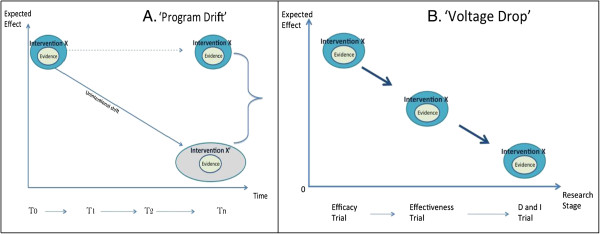
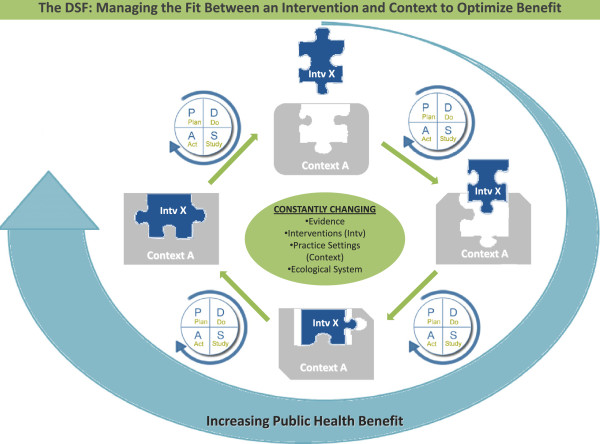
BACKGROUND: Despite growth in implementation research, limited scientific attention has focused on understanding and improving sustainability of health interventions. Models of sustainability have been evolving to reflect challenges in the fit between intervention and context. DISCUSSION: We examine the development of concepts of sustainability, and respond to two frequent assumptions -'voltage drop,' whereby interventions are expected to yield lower benefits as they move from efficacy to effectiveness to implementation and sustainability, and 'program drift,' whereby deviation from manualized protocols is assumed to decrease benefit. We posit that these assumptions limit opportunities to improve care, and instead argue for understanding the changing context of healthcare to continuously refine and improve interventions as they are sustained. Sustainability has evolved from being considered as the endgame of a translational research process to a suggested 'adaptation phase' that integrates and institutionalizes interventions within local organizational and cultural contexts. These recent approaches locate sustainability in the implementation phase of knowledge transfer, but still do not address intervention improvement as a central theme. We propose a Dynamic Sustainability Framework that involves: continued learning and problem solving, ongoing adaptation of interventions with a primary focus on fit between interventions and multi-level contexts, and expectations for ongoing improvement as opposed to diminishing outcomes over time. SUMMARY: A Dynamic Sustainability Framework provides a foundation for research, policy and practice that supports development and testing of falsifiable hypotheses and continued learning to advance the implementation, transportability and impact of health services research.
Overview
The claims and statistics of this paper haven’t been checked yet.
Free: it reads the open-access text and checks the first 5 claims that cite a source we can check. Create a free account to check every claim.
Integrity signals
Registry
Cites
Statistics
Figures
Verification
Claims the paper makes
The claims and statistics of this paper haven’t been checked yet.
Free: it reads the open-access text and checks the first 5 claims that cite a source we can check. Create a free account to check every claim.
Claims other papers make about this one
Each is checked against this paper’s own text: does it say what the citing paper says it does?
The source backs part of the claim, not all of it — or backs it for a different population, condition or comparison.
In the citing paper
“Internal organizational supports include champion roles, leadership, resources, policies and procedures, and expert support (ie, coaching).”
From Successful Organizational Strategies to Sustain Use of A-CHESS: A Mobile Intervention for Individuals With Alcohol Use Disorders (2015) · cites this paper as [32]
Experimental — accuracy not yet measuredThe source backs part of the claim, not all of it — or backs it for a different population, condition or comparison.
In the citing paper
“However, modifications that remove key elements of an intervention, or fail to align with population needs, may be less effective [7, 11–14].”
From The FRAME: an expanded framework for reporting adaptations and modifications to evidence-based interventions (2019) · cites this paper as [7]
Experimental — accuracy not yet measuredThe cited source says what the claim attributes to it.
In the citing paper
“the failure of most implementation processes to incorporate ongoing, iterative intervention development increases the risk that local users will find new technologies to be low on key implementation outcomes such as acceptability, feasibility, and appropriateness (Proctor et al., 2011) and may limit effectiveness (Chambers et al., 2013)”
From User‐centered design for psychosocial intervention development and implementation. (2016) · cites this paper as Chambers et al., 2013
The cited source says what the claim attributes to it.
In the citing paper
“ongoing adjustment and evaluation of EBT to ensure that a program is response to the local context provides an opportunity to increase intervention effectiveness over time (Aarons et al., 2012; Chambers et al., 2013)”
From User‐centered design for psychosocial intervention development and implementation. (2016) · cites this paper as Chambers et al., 2013
The cited source says what the claim attributes to it.
In the citing paper
“EBT are typically disseminated as static tools to be used only as directed by developers, rather than products to be improved over time (Chambers, Glasgow, & Stange, 2013)”
From User‐centered design for psychosocial intervention development and implementation. (2016) · cites this paper as Chambers, Glasgow, & Stange, 2013
25 more claims about this paper
Create a free account to see every claim other papers make about this one.
Self-check
Percentages, sums and reported differences re-computed from the paper’s own numbers.
The self-check needs the paper’s full text.
Citations
Cites
DiMaggio, P. J., & Powell, W. W. (1983) · American Sociological Review · doi:10.2307/2095101 · Cited by 38,435
DiMaggio, P. J., & Powell, W. W. (2004) · Advances in Strategic Management · doi:10.1016/s0742-3322(00)17011-1 · Cited by 25,802
Damschroder, L. J., Aron, D. C., Keith, R. E., Kirsh, S. R., Alexander, J. A., & Lowery, J. C. (2009) · Implementation Science · doi:10.1186/1748-5908-4-50 · Cited by 14,496 · cited 3×
“Brownson RC, Colditz GA, Proctor EK: Dissemination and Implementation Research in Health.”
MethodInfluentialDeveloping and evaluating complex interventions: the new Medical Research Council guidance
Craig, P., Dieppe, P., Macintyre, S., Michie, S., Nazareth, I., & Petticrew, M. (2008) · BMJ · doi:10.1136/bmj.a1655 · Cited by 10,995 · cited 1×
“A linear approach may be particularly challenging to apply to complex, multi-component interventions, psychosocial treatments, treatment of the growing number of people with multimorbid conditions [14,15], and systemic approaches to care [15].”
BackgroundDiMaggio, P. (1983) · American Sociological Review · Cited by 9,078
Diffusion of Innovations in Service Organizations: Systematic Review and Recommendations
GREENHALGH, T., ROBERT, G., MACFARLANE, F., BATE, P., & KYRIAKIDOU, O. (2004) · The Milbank Quarterly · doi:10.1111/j.0887-378x.2004.00325.x · Cited by 7,448 · cited 1×
“As implementation science has grown [1,2], researchers have advanced from study of facilitators and barriers that influence uptake of effective programs and policies to investigations of strategies to improve uptake.”
BackgroundSelf-management education: History, definition, outcomes, and mechanisms
Lorig, K. R., & Holman, H. R. (2003) · Annals of Behavioral Medicine · doi:10.1207/s15324796abm2601_01 · Cited by 4,094 · cited 1×
“The context both within an organization and in the broader ecological system is constantly changing, and requires a ‘learning organization’ [52] to engage in problem-solving capacity at multiple levels [53].”
BackgroundAdvancing a Conceptual Model of Evidence-Based Practice Implementation in Public Service Sectors
Aarons, G. A., Hurlburt, M., & Horwitz, S. M. (2011) · Administration and Policy in Mental Health and Mental Health Services Research · doi:10.1007/s10488-010-0327-7 · Cited by 3,240 · cited 1×
“Sustainment The continued use of an intervention within practice [10].”
BackgroundOrganizing Care for Patients with Chronic Illness
Wagner, E. H., Austin, B. T., & Korff, M. V. (1996) · The Milbank Quarterly · doi:10.2307/3350391 · Cited by 2,877 · cited 1×
“Perhaps an even greater benefit to practice would come through pooling of data across a larger set of sites, practitioners and patients, something done with success for chronic disease [55,56].”
BackgroundThe challenge of complexity in health care
Plsek, P. E., & Greenhalgh, T. (2001) · BMJ · doi:10.1136/bmj.323.7313.625 · Cited by 2,578 · cited 1×
“These include Wandersman’s Getting to Outcomes model [31], Continuous Quality Improvement (CQI) [34], system dynamics [35], complexity theory [36], adaptive management [37], and the Evidence Integration Triangle [30].”
MethodDiffusion of Innovations, 5th Edition
Rogers, E. M., Simon, 。., & Schuster (2003) · Cited by 2,049
Best care at lower cost: the path to continuously learning health care in America
(2014) · Choice Reviews Online · doi:10.5860/choice.51-3277 · Cited by 1,363
Dissemination and Implementation Research in HealthTranslating Science to Practice
Brownson, R. C., Colditz, G. A., & Proctor, E. K. (2012) · doi:10.1093/acprof:oso/9780199751877.001.0001 · Cited by 1,355
Wiltsey Stirman, S., Kimberly, J., Cook, N., Calloway, A., Castro, F., & Charns, M. (2012) · Implementation Science · doi:10.1186/1748-5908-7-17 · Cited by 1,355 · cited 2×
“Recent approaches to sustainability locate key efforts squarely in the implementation phase, arguing that once a practice has been implemented within a care system, those who manage the delivery of that practice should turn their attention to ensuring that the practice can be maintained over time [6,24].”
Soft systems methodology: a thirty year retrospective
Checkland, P. B. (2000) · Systems Research and Behavioral Science · doi:10.1002/1099-1743(200011)17:1+ · Cited by 1,280
Soft systems methodology: a thirty year retrospective
Checkland, P. (2000) · Systems Research and Behavioral Science · doi:10.1002/1099-1743(200011)17:1+<::aid-sres374>3.0.co;2-o · Cited by 1,266 · cited 1×
“In addition, the DSF is consistent with alternative views of organizational development [38] and the principles of system science [39].”
BackgroundShediac-Rizkallah, M. C., & Bone, L. R. (1998) · Health Education Research · doi:10.1093/her/13.1.87 · Cited by 1,129
Evidence‐Based Psychotherapies for Children and Adolescents
Woolgar, M. (2011) · Child and Adolescent Mental Health · doi:10.1111/j.1475-3588.2011.00617_11.x · Cited by 1,095
(2003) · Guilford Press eBooks · Cited by 1,037
System Dynamics Modeling for Public Health: Background and Opportunities
Homer, J. B., & Hirsch, G. B. (2006) · American Journal of Public Health · doi:10.2105/ajph.2005.062059 · Cited by 976
The Dance of Change: The challenges to sustaining momentum in a learning organization
Senge, P. M., Kleiner, A., Roberts, C. M., Ross, R. R., Roth, G. L., Smith, B. C., & Guman, E. C. (1999) · Cited by 947
A stage model of behavioral therapies research: getting started and moving on from stage I.
Rounsaville, B. J., Carroll, K. M., & Onken, L. S. (2001) · Clinical Psychology: Science and Practice · doi:10.1093/clipsy.8.2.133 · Cited by 846 · cited 5×
“Efficacy trials are designed to screen out noise in the system (patient comorbidities, competing demands and skill variance of clinicians, resource limitations, varying motivations of patients) [7], and thus maximize outcomes.”
BackgroundInfluentialA Stage Model of Behavioral Therapies Research: Getting Started and Moving on From Stage I
Rounsaville, B. J., Carroll, K. M., & Onken, L. S. (2001) · Clinical Psychology: Science and Practice · doi:10.1093/clipsy/8.2.133 · Cited by 846
An Agenda for Research on the Sustainability of Public Health Programs
Scheirer, M. A., & Dearing, J. W. (2011) · American Journal of Public Health · doi:10.2105/ajph.2011.300193 · Cited by 775 · cited 4×
“Recent approaches to sustainability locate key efforts squarely in the implementation phase, arguing that once a practice has been implemented within a care system, those who manage the delivery of that practice should turn their attention to ensuring that the practice can be maintained over time [6,24].”
BackgroundInfluentialGlasgow, R. E., Vinson, C., Chambers, D., Khoury, M. J., Kaplan, R. M., & Hunter, C. (2012) · American Journal of Public Health · doi:10.2105/ajph.2012.300755 · Cited by 762 · cited 1×
“While these discoveries have made advances in a number of health domains, they are often difficult to implement in a myriad of practice settings and even harder to sustain over time and in many real world and low-resource settings [8].”
BackgroundSelf-citationFlay, B. R. (1986) · Preventive Medicine · doi:10.1016/0091-7435(86)90024-1 · Cited by 723 · cited 1×
“; licensee BioMed Cen Commons Attribution License (http://creativec reproduction in any medium, provided the or While this is progress, frequently used conceptualizations of sustainability implicitly replicate assumptions and limitations inherent in the traditional research-to-practice pathway [4,5], or in its more re…”
BackgroundIs Sustainability Possible? A Review and Commentary on Empirical Studies of Program Sustainability
Scheirer, M. A. (2005) · American Journal of Evaluation · doi:10.1177/1098214005278752 · Cited by 710 · cited 1×
“Recent articles [22-24] have advanced the idea of an adaptation phase that bridges from the initial implementation effort to a longer-term sustainability phase.”
BackgroundA Glossary for Dissemination and Implementation Research in Health
Rabin, B. A., Brownson, R. C., Haire-Joshu, D., Kreuter, M. W., & Weaver, N. L. (2008) · Journal of Public Health Management and Practice · doi:10.1097/01.phh.0000311888.06252.bb · Cited by 676
Kilbourne, A. M., Neumann, M. S., Pincus, H. A., Bauer, M. S., & Stall, R. (2007) · Implementation Science · doi:10.1186/1748-5908-2-42 · Cited by 653
Making research relevant: if it is an evidence-based practice, where's the practice-based evidence?
Green, L. W. (2008) · Family Practice · doi:10.1093/fampra/cmn055 · Cited by 628 · cited 1×
“The evidence that supports the benefits of health interventions arises from trials that represent a very small slice of the diversity of demographics, preferences, and health status of the population at large [7,40], but we should not expect evidence collected in one set of narrow, relatively optimal circumstances to…”
BackgroundThe dance of change: The challenges to sustaining momentum in learning organizations
Senge, P., Kleiner, A., Roberts, C., Ross, R., Roth, G., Smith, B., & Guman, E. C. (1999) · Performance Improvement · doi:10.1002/pfi.4140380511 · Cited by 585
Bridging the implementation gap between knowledge and action for health.
(2004) · Europe PMC (PubMed Central) · doi:10.1590/s0042-96862004001000005 · Cited by 527 · cited 2×
“Too often, intervention trials focus on markers that are psychometrically valid but of less relevance to patients and clinicians [3,47].”
BackgroundIntegrated Personal Health Records: Transformative Tools for Consumer-Centric Care
Detmer, D., Bloomrosen, M., Raymond, B., & Tang, P. (2008) · BMC Medical Informatics and Decision Making · doi:10.1186/1472-6947-8-45 · Cited by 420
Deconstructing the Drug Development Process: The New Face of Innovation
Kaitin, K. I. (2010) · Clinical Pharmacology & Therapeutics · doi:10.1038/clpt.2009.293 · Cited by 418
A Proposal to Speed Translation of Healthcare Research Into Practice
Kessler, R., & Glasgow, R. E. (2011) · American Journal of Preventive Medicine · doi:10.1016/j.amepre.2011.02.023 · Cited by 376
Self-citationGreenhalgh, J., & Meadows, K. (1999) · Journal of Evaluation in Clinical Practice · doi:10.1046/j.1365-2753.1999.00209.x · Cited by 371 · cited 1×
“Authors have also highlighted the utility of assessing outcomes of those who have received the practice, something infrequently collected in routine practice [24,28].”
BackgroundEtheredge, L. M. (2007) · Health Affairs · doi:10.1377/hlthaff.26.2.w107 · Cited by 346
Revisioning Organization Development: Diagnostic and Dialogic Premises and Patterns of Practice
Bushe, G. R., & Marshak, R. J. (2009) · The Journal of Applied Behavioral Science · doi:10.1177/0021886309335070 · Cited by 309
Forty years of SNOMED: a literature review
Cornet, R., & de Keizer, N. (2008) · BMC Medical Informatics and Decision Making · doi:10.1186/1472-6947-8-s1-s2 · Cited by 299
Developing Robust, Sustainable, Implementation Systems Using Rigorous, Rapid and Relevant Science
Glasgow, R. E., & Chambers, D. (2012) · Clinical and Translational Science · doi:10.1111/j.1752-8062.2011.00383.x · Cited by 278
Self-citationCohen, D. J., Crabtree, B. F., Etz, R. S., Balasubramanian, B. A., Donahue, K. E., Leviton, L. C., Clark, E. C., Isaacson, N. F., Stange, K. C., & Green, L. W. (2008) · American Journal of Preventive Medicine · doi:10.1016/j.amepre.2008.08.005 · Cited by 248 · cited 1×
“’ Rather, we suggest that the most compelling evidence on the maximal benefit of any intervention can only be realized through ongoing development, evaluation and refinement in diverse populations and systems [18].”
BackgroundSelf-citationRandomized trial of MST and ARC in a two-level evidence-based treatment implementation strategy.
Glisson, C., Schoenwald, S. K., Hemmelgarn, A., Green, P., Dukes, D., Armstrong, K. S., & Chapman, J. E. (2010) · Journal of Consulting and Clinical Psychology · doi:10.1037/a0019160 · Cited by 243 · cited 1×
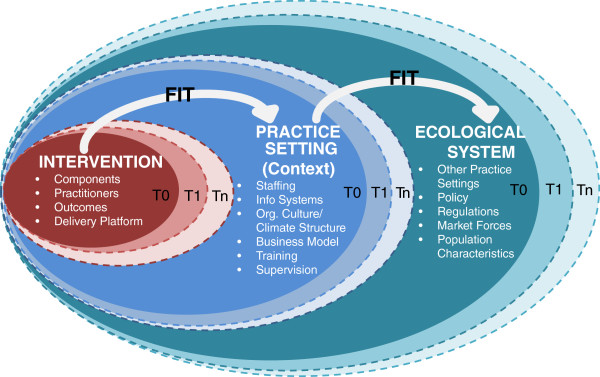
“, culture, climate, structure) to enable improved fit between the intervention and the setting [19]; harnessing the understanding of context can enable beneficial adaptation of the intervention and improve sustainability.”
BackgroundDissemination and Implementation Research in Health: Translating Science to Practice
Chambers, D. (2023) · doi:10.1093/oso/9780197660690.001.0001 · Cited by 243
Self-citationThe sustainability of health promotion interventions for different levels of social organization
Swerissen, H. (2004) · Health Promotion International · doi:10.1093/heapro/dah113 · Cited by 205 · cited 1×
“Authors typically suggest that this entails attention to issues of long-term financing, training of the workforce, supervision, and organizational support for the practice [26,27].”
BackgroundAn Evidence Integration Triangle for Aligning Science with Policy and Practice
Glasgow, R. E., Green, L. W., Taylor, M. V., & Stange, K. C. (2012) · American Journal of Preventive Medicine · doi:10.1016/j.amepre.2012.02.016 · Cited by 190 · cited 2×
“Measurement of outcomes over time to determine continued benefit has been shown to support sustainability of the practice [29,30].”
BackgroundMethodSelf-citationPhysical Activity Promotion Through Primary Care
Estabrooks, P. A. (2003) · JAMA · doi:10.1001/jama.289.22.2913 · Cited by 184 · cited 2×
“, Estabrooks, Glasgow, Dzewaltowski), [50] and goes back at least as far as Rogers’ Diffusion of Innovations [51], where the concept of reinvention evoked the notion of departing from the original intervention concept to ‘create’ a new version suited to the preferences and constraints of the local context.”
BackgroundA Population Approach to Precision Medicine
Khoury, M. J., Gwinn, M. L., Glasgow, R. E., & Kramer, B. S. (2012) · American Journal of Preventive Medicine · doi:10.1016/j.amepre.2012.02.012 · Cited by 163
Self-citationEvidence-Based Practice As Mental Health Policy: Three Controversies And A Caveat
Tanenbaum, S. J. (2005) · Health Affairs · doi:10.1377/hlthaff.24.1.163 · Cited by 158 · cited 1×
“For example, very specific, interventionrelated symptomatic scales may be most sensitive to change, but there is little guarantee that the measured change translates into a tangible, functional benefit for the patient [48].”
BackgroundThe new emphasis in cancer control
(1985) · JNCI: Journal of the National Cancer Institute · doi:10.1093/jnci/74.3.543 · Cited by 134
The Science of Sustaining Health Behavior Change: The Health Maintenance Consortium
Ory, M. (2010) · American Journal of Health Behavior · doi:10.5993/ajhb.34.6.2 · Cited by 127 · cited 2×
“There has also been an emphasis on planning for sustainability much earlier in the intervention process [26].”
BackgroundContinuous quality improvement in health care.
Bisognano, M. A. (1993) · PubMed · Cited by 119
Glasgow, R. E., Kaplan, R. M., Ockene, J. K., Fisher, E. B., & Emmons, K. M. (2012) · Health Affairs · doi:10.1377/hlthaff.2010.1295 · Cited by 110
Self-citationAdvancing the application, quality and harmonization of implementation science measures
Rabin, B. A., Purcell, P., Naveed, S., Moser, R. P., Henton, M. D., Proctor, E. K., Brownson, R. C., & Glasgow, R. E. (2012) · Implementation Science · doi:10.1186/1748-5908-7-119 · Cited by 106 · cited 1×
“The DSF thus suggests the use of measures such as checklists that are relevant to desired outcomes of patients, as well as sensitive to the ‘fit’ between interventions and context, and can be feasibly implemented [49].”
BackgroundSelf-citationCommunity Intervention Trial for Smoking Cessation (COMMIT): Summary of Design and Intervention
COMMIT Research Group (1991) · JNCI Journal of the National Cancer Institute · doi:10.1093/jnci/83.22.1620 · Cited by 105 · cited 1×
“For example, the COMMIT stop smoking national project had expert researchers design the complex, lengthy intervention protocol based on research evidence, and then gave a several hundred page manual of operations to local staff to implement in their communities [17].”
MethodClimate Change And Health Risks: Assessing And Responding To Them Through ‘Adaptive Management’
Ebi, K. (2011) · Health Affairs · doi:10.1377/hlthaff.2011.0071 · Cited by 96 · cited 2×
“Interventions benefit from ongoing optimization as they are applied in different contexts [37].”
BackgroundMethodStange, K. C., Breslau, E. S., Dietrich, A. J., & Glasgow, R. E. (2012) · JNCI Monographs · doi:10.1093/jncimonographs/lgs006 · Cited by 86 · cited 1×
“The evidence that supports the benefits of health interventions arises from trials that represent a very small slice of the diversity of demographics, preferences, and health status of the population at large [7,40], but we should not expect evidence collected in one set of narrow, relatively optimal circumstances to…”
BackgroundSelf-citationEstabrooks, P. A., Smith-Ray, R. L., Dzewaltowski, D. A., Dowdy, D., Lattimore, D., Rheaume, C., Ory, M. G., Bazzarre, T., Griffin, S. F., & Wilcox, S. (2011) · Translational Behavioral Medicine · doi:10.1007/s13142-011-0039-x · Cited by 59 · cited 1×
“Recent implementation projects have created new tools and scales to study sustainability, including needs assessments, long-term action plans, tracking of program adaptation, financial planning, mapping of community networks, and measurement of the degree to which practices are integrated and institutionalized into se…”
BackgroundDückers, M. L., Wagner, C., Vos, L., & Groenewegen, P. P. (2011) · Implementation Science · doi:10.1186/1748-5908-6-18 · Cited by 54 · cited 1×
“Measurement of outcomes over time to determine continued benefit has been shown to support sustainability of the practice [29,30].”
BackgroundUnützer, J., Powers, D., Katon, W. J., & Langston, C. A. (2005) · Psychiatric Clinics of North America · doi:10.1016/j.psc.2005.09.001 · Cited by 53 · cited 1×
“Perhaps an even greater benefit to practice would come through pooling of data across a larger set of sites, practitioners and patients, something done with success for chronic disease [55,56].”
BackgroundWilson, K. D., & Kurz, R. S. (2008) · Journal of Public Health Management and Practice · doi:10.1097/01.phh.0000311887.06252.5f · Cited by 39 · cited 2×
“A culture of improvement is central to ongoing intervention use and treats improvement of the intervention as central to the sustainability process [33].”
BackgroundEfficacy and Effectiveness Trials: Examples from Smoking Cessation and Bullying Prevention
Prochaska, J. O., Evers, K. E., Prochaska, J. M., Van Marter, D., & Johnson, J. L. (2007) · Journal of Health Psychology · doi:10.1177/1359105307071751 · Cited by 36
The future of research that promotes cancer screening
Meissner, H. I., Vernon, S. W., Rimer, B. K., Wilson, K. M., Rakowski, W., Briss, P. A., & Smith, R. A. (2004) · Cancer · doi:10.1002/cncr.20510 · Cited by 28
Continuous Quality Improvement in Health Care
&NA; (2001) · Quality Management in Health Care · doi:10.1097/00019514-200109020-00010 · Cited by 19
Advancing sustainability research: challenging existing paradigms
Chambers, D. (2011) · Journal of Public Health Dentistry · doi:10.1111/j.1752-7325.2011.00238.x · Cited by 14 · cited 1×
“As the field of implementation science has matured [20,21], more emphasis has been placed on understanding sustainability.”
BackgroundSelf-citation
Research works printed but not linked: 5
- Brownson RC Colditz GA Proctor EK Dissemination and Implementation Research in Health 2012 New York: OUP
- Wandersman A Imm P Chinman M Getting to Outcomes: Methods and tools for planning, evaluation and accountability 1999 Rockville, MD: Center for Substance Abuse Prevention
- Bughlin J Chui M Johnson B The next step in open innovation The McKinsey Quarterly 2012 http://www.mckinseyquarterly.com/next_step_in_open_innovation_2155. Accessed
- Institute of Medicine A foundation for evidence-driven practice: A rapid learning system for cancer care 2010 Workshop Summary. Washington, D.C: NAS Press 25032381
- PatientsLikeMe PatientsLikeMe website 2012 http://patientslikeme.com. Accessed March 15, 2012
Cited by
Greenhalgh, T., Wherton, J., Papoutsi, C., Lynch, J., Hughes, G., A'Court, C., Hinder, S., Fahy, N., Procter, R., & Shaw, S. (2017) · Journal of Medical Internet Research · doi:10.2196/jmir.8775 · Cited by 2,887
“Chambers et al’s dynamic sustainability framework recognizes that, in order to be sustained, an innovation must adapt to its unique local environment and evolve over time [115], echoing Hawe et al’s conceptualization of interventions as “events in [complex] systems” [116].”
How to use and assess qualitative research methods
Busetto, L., Wick, W., & Gumbinger, C. (2020) · Neurological Research and Practice · doi:10.1186/s42466-020-00059-z · Cited by 1,429
An introduction to implementation science for the non-specialist
Bauer, M. S., Damschroder, L., Hagedorn, H., Smith, J., & Kilbourne, A. M. (2015) · BMC Psychology · doi:10.1186/s40359-015-0089-9 · Cited by 1,611
“Moreover, it is important to know the degree to which an EBP, when utilized in general clinical practice, retains the active mechanisms while adapting to local site needs and priorities [61, 62].”
BackgroundWiltsey Stirman, S., Baumann, A. A., & Miller, C. J. (2019) · Implementation Science · doi:10.1186/s13012-019-0898-y · Cited by 1,329
Systematic review of the Exploration, Preparation, Implementation, Sustainment (EPIS) framework
Moullin, J. C., Dickson, K. S., Stadnick, N. A., Rabin, B., & Aarons, G. A. (2019) · Implementation Science · doi:10.1186/s13012-018-0842-6 · Cited by 1,223
Metadata
- Authors
- Chambers, D. A., Glasgow, R. E., & Stange, K. C.
- Affiliations
- National Institute of Mental Health (US)
- University of Colorado Anschutz (US)
- Case Western Reserve University (US)
- Corresponding author
- Chambers, David A
- Venue
- Implementation Science
- Published
- 2013-10-02
- Volume
- 8
- Issue
- 1
- Pages
- 117-117
- ISSN
- 1748-5908 (ISSN-L)
- PMC
- PMC3852739
- OpenAlex
- W2111534125
- Cited by
- 1,724
- References
- 62
- Citations by year
- 2026: 150 · 2025: 164 · 2024: 205 · 2023: 221 · 2022: 188 · 2021: 214 · 2020: 165 · 2019: 114 · 2018: 90 · 2017: 79 · 2016: 46 · 2015: 64 · 2014: 20
- FWCI
- 77.44
- Type
- journal article
- Language
- en
- Open access
- gold
- doi.org
- Licence
- Locations
- Implementation Science (publishedVersion, cc-by)
- Europe PMC (PubMed Central) (publishedVersion, cc-by)
- PubMed Central (publishedVersion, cc-by)
- PubMed (publishedVersion)
- Scholarly Commons @ Case Western Reserve University (submittedVersion, cc-by)
- Topics
- Health Sciences › Health Professions › General Health Professions › Health Policy Implementation Science
- Health Sciences › Health Professions › General Health Professions › Health Sciences Research and Education
- Social Sciences › Public Administration › Evaluation and Performance Assessment
- Keywords
- intervention sustainability, voltage drop, intervention adaptation, knowledge transfer, implementation research, health services research
- MeSH terms
- Concept Formation, Diffusion of Innovation, Organizational Innovation, United States, Program Evaluation, Program Development, Evidence-Based Practice
About these checks
Registry, retraction, Cites and statistics results are computed, not judged, with one exception: a printed reference that no index lists is read once by a model before it counts as a citation error. Claims are extracted by a model and kept only when their quote appears verbatim in the text; each cited source is then checked, with a model’s help, for whether it says what the claim relies on. Those verdicts can be wrong — read the claim’s quote and the cited source before relying on one.
Statistics and arithmetic are recomputed, not judged.
Confidence bands are shown only for fields calibrated on our annotated test set. None is calibrated yet, so no band is shown.
What counts as a claim ›How we measure confidence ›How we check this ›
Are you an author, or do you see a problem with this page? Request a review
Data sources
Bibliographic data: Semantic Scholar, OpenAlex, Crossref.
Contains information from the Semantic Scholar Academic Graph Datasets, made available under the ODC Attribution License (ODC-BY 1.0).
Semantic Scholar’s data is described in: Kinney, R., et al. (2023). The Semantic Scholar Open Data Platform. arXiv:2301.10140.
