

The dynamic sustainability framework: addressing the paradox of sustainment amid ongoing change
Open accessThe DOI matches its Crossref record; 64 of the 64 references it cites were found in a registry or an index.
Abstract
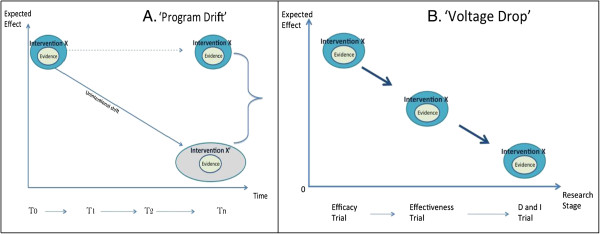
BACKGROUND: Despite growth in implementation research, limited scientific attention has focused on understanding and improving sustainability of health interventions. Models of sustainability have been evolving to reflect challenges in the fit between intervention and context. DISCUSSION: We examine the development of concepts of sustainability, and respond to two frequent assumptions -'voltage drop,' whereby interventions are expected to yield lower benefits as they move from efficacy to effectiveness to implementation and sustainability, and 'program drift,' whereby deviation from manualized protocols is assumed to decrease benefit. We posit that these assumptions limit opportunities to improve care, and instead argue for understanding the changing context of healthcare to continuously refine and improve interventions as they are sustained. Sustainability has evolved from being considered as the endgame of a translational research process to a suggested 'adaptation phase' that integrates and institutionalizes interventions within local organizational and cultural contexts. These recent approaches locate sustainability in the implementation phase of knowledge transfer, but still do not address intervention improvement as a central theme. We propose a Dynamic Sustainability Framework that involves: continued learning and problem solving, ongoing adaptation of interventions with a primary focus on fit between interventions and multi-level contexts, and expectations for ongoing improvement as opposed to diminishing outcomes over time. SUMMARY: A Dynamic Sustainability Framework provides a foundation for research, policy and practice that supports development and testing of falsifiable hypotheses and continued learning to advance the implementation, transportability and impact of health services research.
Overview
The claims and statistics of this paper haven’t been checked yet.
Free: it reads the open-access text and checks the first 5 claims that cite a source we can check. Create a free account to check every claim.
Integrity signals
Registry
Cites
Statistics
Figures
Verification
Claims the paper makes
The claims and statistics of this paper haven’t been checked yet.
Free: it reads the open-access text and checks the first 5 claims that cite a source we can check. Create a free account to check every claim.
Claims other papers make about this one
Each is checked against this paper’s own text: does it say what the citing paper says it does?
The source backs part of the claim, not all of it — or backs it for a different population, condition or comparison.
In the citing paper
“Internal organizational supports include champion roles, leadership, resources, policies and procedures, and expert support (ie, coaching).”
From Successful Organizational Strategies to Sustain Use of A-CHESS: A Mobile Intervention for Individuals With Alcohol Use Disorders (2015) · cites this paper as [32]
Experimental — accuracy not yet measuredThe source backs part of the claim, not all of it — or backs it for a different population, condition or comparison.
In the citing paper
“However, modifications that remove key elements of an intervention, or fail to align with population needs, may be less effective [7, 11–14].”
From The FRAME: an expanded framework for reporting adaptations and modifications to evidence-based interventions (2019) · cites this paper as [7]
Experimental — accuracy not yet measuredThe cited source says what the claim attributes to it.
In the citing paper
“the failure of most implementation processes to incorporate ongoing, iterative intervention development increases the risk that local users will find new technologies to be low on key implementation outcomes such as acceptability, feasibility, and appropriateness (Proctor et al., 2011) and may limit effectiveness (Chambers et al., 2013)”
From User‐centered design for psychosocial intervention development and implementation. (2016) · cites this paper as Chambers et al., 2013
The cited source says what the claim attributes to it.
In the citing paper
“ongoing adjustment and evaluation of EBT to ensure that a program is response to the local context provides an opportunity to increase intervention effectiveness over time (Aarons et al., 2012; Chambers et al., 2013)”
From User‐centered design for psychosocial intervention development and implementation. (2016) · cites this paper as Chambers et al., 2013
The cited source says what the claim attributes to it.
In the citing paper
“EBT are typically disseminated as static tools to be used only as directed by developers, rather than products to be improved over time (Chambers, Glasgow, & Stange, 2013)”
From User‐centered design for psychosocial intervention development and implementation. (2016) · cites this paper as Chambers, Glasgow, & Stange, 2013
25 more claims about this paper
Create a free account to see every claim other papers make about this one.
Self-check
Percentages, sums and reported differences re-computed from the paper’s own numbers.
The self-check needs the paper’s full text.
Citations
Cites
DiMaggio, P. J., & Powell, W. W. (1983) · American Sociological Review · doi:10.2307/2095101 · Cited by 38,435
DiMaggio, P. J., & Powell, W. W. (2004) · Advances in Strategic Management · doi:10.1016/s0742-3322(00)17011-1 · Cited by 25,802
Damschroder, L. J., Aron, D. C., Keith, R. E., Kirsh, S. R., Alexander, J. A., & Lowery, J. C. (2009) · Implementation Science · doi:10.1186/1748-5908-4-50 · Cited by 14,496 · cited 3×
“Brownson RC, Colditz GA, Proctor EK: Dissemination and Implementation Research in Health.”
MethodInfluentialDeveloping and evaluating complex interventions: the new Medical Research Council guidance
Craig, P., Dieppe, P., Macintyre, S., Michie, S., Nazareth, I., & Petticrew, M. (2008) · BMJ · doi:10.1136/bmj.a1655 · Cited by 10,995 · cited 1×
“A linear approach may be particularly challenging to apply to complex, multi-component interventions, psychosocial treatments, treatment of the growing number of people with multimorbid conditions [14,15], and systemic approaches to care [15].”
BackgroundDiMaggio, P. (1983) · American Sociological Review · Cited by 9,078
Diffusion of Innovations in Service Organizations: Systematic Review and Recommendations
GREENHALGH, T., ROBERT, G., MACFARLANE, F., BATE, P., & KYRIAKIDOU, O. (2004) · The Milbank Quarterly · doi:10.1111/j.0887-378x.2004.00325.x · Cited by 7,448 · cited 1×
“As implementation science has grown [1,2], researchers have advanced from study of facilitators and barriers that influence uptake of effective programs and policies to investigations of strategies to improve uptake.”
BackgroundSelf-management education: History, definition, outcomes, and mechanisms
Lorig, K. R., & Holman, H. R. (2003) · Annals of Behavioral Medicine · doi:10.1207/s15324796abm2601_01 · Cited by 4,094 · cited 1×
“The context both within an organization and in the broader ecological system is constantly changing, and requires a ‘learning organization’ [52] to engage in problem-solving capacity at multiple levels [53].”
BackgroundAdvancing a Conceptual Model of Evidence-Based Practice Implementation in Public Service Sectors
Aarons, G. A., Hurlburt, M., & Horwitz, S. M. (2011) · Administration and Policy in Mental Health and Mental Health Services Research · doi:10.1007/s10488-010-0327-7 · Cited by 3,240 · cited 1×
“Sustainment The continued use of an intervention within practice [10].”
BackgroundOrganizing Care for Patients with Chronic Illness
Wagner, E. H., Austin, B. T., & Korff, M. V. (1996) · The Milbank Quarterly · doi:10.2307/3350391 · Cited by 2,877 · cited 1×
“Perhaps an even greater benefit to practice would come through pooling of data across a larger set of sites, practitioners and patients, something done with success for chronic disease [55,56].”
BackgroundThe challenge of complexity in health care
Plsek, P. E., & Greenhalgh, T. (2001) · BMJ · doi:10.1136/bmj.323.7313.625 · Cited by 2,578 · cited 1×
“These include Wandersman’s Getting to Outcomes model [31], Continuous Quality Improvement (CQI) [34], system dynamics [35], complexity theory [36], adaptive management [37], and the Evidence Integration Triangle [30].”
Method
Research works printed but not linked: 5
- Brownson RC Colditz GA Proctor EK Dissemination and Implementation Research in Health 2012 New York: OUP
- Wandersman A Imm P Chinman M Getting to Outcomes: Methods and tools for planning, evaluation and accountability 1999 Rockville, MD: Center for Substance Abuse Prevention
- Bughlin J Chui M Johnson B The next step in open innovation The McKinsey Quarterly 2012 http://www.mckinseyquarterly.com/next_step_in_open_innovation_2155. Accessed
- Institute of Medicine A foundation for evidence-driven practice: A rapid learning system for cancer care 2010 Workshop Summary. Washington, D.C: NAS Press 25032381
- PatientsLikeMe PatientsLikeMe website 2012 http://patientslikeme.com. Accessed March 15, 2012
Cited by
Greenhalgh, T., Wherton, J., Papoutsi, C., Lynch, J., Hughes, G., A'Court, C., Hinder, S., Fahy, N., Procter, R., & Shaw, S. (2017) · Journal of Medical Internet Research · doi:10.2196/jmir.8775 · Cited by 2,887
“Chambers et al’s dynamic sustainability framework recognizes that, in order to be sustained, an innovation must adapt to its unique local environment and evolve over time [115], echoing Hawe et al’s conceptualization of interventions as “events in [complex] systems” [116].”
How to use and assess qualitative research methods
Busetto, L., Wick, W., & Gumbinger, C. (2020) · Neurological Research and Practice · doi:10.1186/s42466-020-00059-z · Cited by 1,429
An introduction to implementation science for the non-specialist
Bauer, M. S., Damschroder, L., Hagedorn, H., Smith, J., & Kilbourne, A. M. (2015) · BMC Psychology · doi:10.1186/s40359-015-0089-9 · Cited by 1,611
“Moreover, it is important to know the degree to which an EBP, when utilized in general clinical practice, retains the active mechanisms while adapting to local site needs and priorities [61, 62].”
BackgroundWiltsey Stirman, S., Baumann, A. A., & Miller, C. J. (2019) · Implementation Science · doi:10.1186/s13012-019-0898-y · Cited by 1,329
Systematic review of the Exploration, Preparation, Implementation, Sustainment (EPIS) framework
Moullin, J. C., Dickson, K. S., Stadnick, N. A., Rabin, B., & Aarons, G. A. (2019) · Implementation Science · doi:10.1186/s13012-018-0842-6 · Cited by 1,223
Implementation, context and complexity
May, C. R., Johnson, M., & Finch, T. (2016) · Implementation Science · doi:10.1186/s13012-016-0506-3 · Cited by 978
“Elasticity The extent to which contexts can be stretched or compressed in ways that make space for intervention components and allow them to fit [89].”
BackgroundBuilding State Capability: Evidence, Analysis, Action
Andrews, M., Pritchett, L., & Woolcock, M. (2017) · BiblioBoard Library Catalog (Open Research Library) · doi:10.1093/acprof:oso/9780198747482.001.0001 · Cited by 541
Braithwaite, J., Churruca, K., Long, J. C., Ellis, L. A., & Herkes, J. (2018) · BMC Medicine · doi:10.1186/s12916-018-1057-z · Cited by 845
“[41] suggest that a further consideration is the sustainability of an intervention.”
BackgroundThe Sustainability of Evidence-Based Interventions and Practices in Public Health and Health Care
Shelton, R. C., Cooper, B. R., & Stirman, S. W. (2018) · Annual Review of Public Health · doi:10.1146/annurev-publhealth-040617-014731 · Cited by 806
Damschroder, L. J., Reardon, C. M., Opra Widerquist, M. A., & Lowery, J. (2022) · Implementation Science · doi:10.1186/s13012-021-01181-5 · Cited by 784
“In addition, left facing arrows across the bottom of the figure illustrate the reinforcing loop that can emerge when the positive impact of an innovation inspires continued commitment to implementation and sustainment [43].”
BackgroundDeveloping a comprehensive definition of sustainability
Moore, J. E., Mascarenhas, A., Bain, J., & Straus, S. E. (2017) · Implementation Science · doi:10.1186/s13012-017-0637-1 · Cited by 630
“Definitions referring to evidence-based programs primarily focused on continuing program delivery at the organizational level, using descriptions such as “the continued use of an intervention” [22], “program or policy becomes institutionalized or part of the routine organizational practices and policies” [23], “progra…”
BackgroundInfluentialGottfredson, D. C., Cook, T. D., Gardner, F. E. M., Gorman-Smith, D., Howe, G. W., Sandler, I. N., & Zafft, K. M. (2015) · Prevention Science · doi:10.1007/s11121-015-0555-x · Cited by 627
Chambers, D. A., & Norton, W. E. (2016) · American Journal of Preventive Medicine · doi:10.1016/j.amepre.2016.05.011 · Cited by 581
“, program drift) will result in lower impact on patient- or client-level outcomes.(9) This arises from an assumption that an evidence-based prevention intervention is sufficiently understood and codified after efficacy and effectiveness trials that it has reached its optimal level of impact.”
BackgroundInfluentialSelf-citationUnderstanding and applying the RE-AIM framework: Clarifications and resources
Holtrop, J. S., Estabrooks, P. A., Gaglio, B., Harden, S. M., Kessler, R. S., King, D. K., Kwan, B. M., Ory, M. G., Rabin, B. A., Shelton, R. C., et al. (2021) · Journal of Clinical and Translational Science · doi:10.1017/cts.2021.789 · Cited by 549
“Although systematic reviews of RE-AIM application have found that “ maintenance ” data are often not reported [14], there has been growing recognition of the importance of understanding of longer term sustainment in a dynamic context [32,33].”
Self-citationImplementation research: new imperatives and opportunities in global health
Theobald, S., Brandes, N., Gyapong, M., El-Saharty, S., Proctor, E., Diaz, T., Wanji, S., Elloker, S., Raven, J., Elsey, H., et al. (2018) · The Lancet · doi:10.1016/s0140-6736(18)32205-0 · Cited by 514
An introduction to effectiveness-implementation hybrid designs
Landes, S. J., McBain, S. A., & Curran, G. M. (2019) · Psychiatry Research · doi:10.1016/j.psychres.2019.112513 · Cited by 516
“Indeed, many others have supported the notion of blurring across efficacy-effectiveness-implementation silos and/or bridging the practice-based/research-based divide (Brownson et al., 2013; Chambers et al., 2013; Chambers and Norton, 2016; Curran et al., 2012a; Glasgow et al., 2003; Green, 2006; Owen et al., 2012; Wel…”
BackgroundThe FRAME-IS: a framework for documenting modifications to implementation strategies in healthcare
Miller, C. J., Barnett, M. L., Baumann, A. A., Gutner, C. A., & Wiltsey-Stirman, S. (2021) · Implementation Science · doi:10.1186/s13012-021-01105-3 · Cited by 490
“It is crucially important to develop a more nuanced understanding of modifications to implementation strategies because of the inherent dynamism and complexity of implementation itself [5].”
BackgroundPrevention and Management of Childhood Obesity and Its Psychological and Health Comorbidities
Smith, J. D., Fu, E., & Kobayashi, M. A. (2020) · Annual Review of Clinical Psychology · doi:10.1146/annurev-clinpsy-100219-060201 · Cited by 446
“…widely disseminated and adopted—has been shown in the childhood obesity literature to be about 75% of efficacy studies (McCrabb et al 2019), but implementation scientists have argued for dynamic adaptation that retains effectiveness while also increasing sustainability (e.g., Chambers et al 2013).”
BackgroundUser‐centered design for psychosocial intervention development and implementation.
Lyon, A. R., & Koerner, K. (2016) · Clinical Psychology: Science and Practice · doi:10.1111/cpsp.12154 · Cited by 478
“, 2011) and may limit effectiveness (Chambers et al., 2013).”
InfluentialThe sustainability of public health interventions in schools: a systematic review
Herlitz, L., MacIntyre, H., Osborn, T., & Bonell, C. (2020) · Implementation Science · doi:10.1186/s13012-019-0961-8 · Cited by 434
Shelton, R. C., Chambers, D. A., & Glasgow, R. E. (2020) · Frontiers in Public Health · doi:10.3389/fpubh.2020.00134 · Cited by 448
“As we consider the life cycle of an intervention (18), it may be less useful to think about “sustainability” of the original EBIs as an “end goal” (17), and instead consider “evolvability” across the dynamic life cycle of the EBI within a broader context or system, with the goal of sustainable and equitable health imp…”
BackgroundMethodSelf-citationMohr, D. C., Lyon, A. R., Lattie, E. G., Reddy, M., & Schueller, S. M. (2017) · Journal of Medical Internet Research · doi:10.2196/jmir.7725 · Cited by 432
“of learning health care systems that mirror our evaluation and redesign functions, using data inputs to continuously monitor and dynamically correct and adapt the intervention [35,46,82].”
BackgroundProctor, E., Luke, D., Calhoun, A., McMillen, C., Brownson, R., McCrary, S., & Padek, M. (2015) · Implementation Science · doi:10.1186/s13012-015-0274-5 · Cited by 429
Lennox, L., Maher, L., & Reed, J. (2018) · Implementation Science · doi:10.1186/s13012-017-0707-4 · Cited by 421
“In the current climate of rising demands, shifting priorities and competition for resources, there is a need to understand how sustainability of implemented initiatives can be influenced as health planners and other stakeholders want to ensure the long-term impact of their investments [1, 11].”
BackgroundInfluentialKlaic, M., Kapp, S., Hudson, P., Chapman, W., Denehy, L., Story, D., & Francis, J. J. (2022) · Implementation Science · doi:10.1186/s13012-021-01171-7 · Cited by 394
“This argument is consistent with other frameworks on scalability and sustainability, including the Intervention Scalability Assessment Tool [82] and the Dynamic Sustainability Framework [98], both of which suggest that feasibility, acceptability and fidelity must be considered in the planning for scaling up and sustai…”
Result“Scaling-out” evidence-based interventions to new populations or new health care delivery systems
Aarons, G. A., Sklar, M., Mustanski, B., Benbow, N., & Brown, C. H. (2017) · Implementation Science · doi:10.1186/s13012-017-0640-6 · Cited by 399
“To further describe the adaptations that need to occur during scaling-out, we build on commonalities that are present in three implementation frameworks, the Exploration, Preparation, Implementation, Sustainment (EPIS) framework [47], the Dynamic Sustainability Framework [40], and the Consolidated Framework for Implem…”
MethodEvidence-based intervention sustainability strategies: a systematic review
Hailemariam, M., Bustos, T., Montgomery, B., Barajas, R., Evans, L. B., & Drahota, A. (2019) · Implementation Science · doi:10.1186/s13012-019-0910-6 · Cited by 398
A PRACTICAL IMPLEMENTATION SCIENCE HEURISTIC FOR ORGANIZATIONAL READINESS: R = MC2
Scaccia, J. P., Cook, B. S., Lamont, A., Wandersman, A., Castellow, J., Katz, J., & Beidas, R. S. (2015) · Journal of Community Psychology · doi:10.1002/jcop.21698 · Cited by 375
Moullin, J. C., Sabater-Hernández, D., Fernandez-Llimos, F., & Benrimoj, S. I. (2015) · Health Research Policy and Systems · doi:10.1186/s12961-015-0005-z · Cited by 392
“Recently, a further sustainability framework has been published, which expands on the idea of adaptation and innovation improvement as being central [78].”
Qualitative approaches to use of the RE-AIM framework: rationale and methods
Holtrop, J. S., Rabin, B. A., & Glasgow, R. E. (2018) · BMC Health Services Research · doi:10.1186/s12913-018-2938-8 · Cited by 375
“[38] Normalization Process Theory could help make these deficits clear.”
BackgroundSelf-citationSocial Network Analysis for Program Implementation
Valente, T. W., Palinkas, L. A., Czaja, S., Chu, K.-H., & Brown, C. H. (2015) · PLOS ONE · doi:10.1371/journal.pone.0131712 · Cited by 332
“Chambers and others [74] write (p. 118) “ As a consequence, assessment of organizational characteristics (e.g., structure, climate, culture, resources) is seen as an essential component of sustainability, and indeed, the fit between context and the intervention is at the center of a sustainability…”
BackgroundMethodAdvancing the Science and Practice of Social and Emotional Learning: Looking Back and Moving Forward
Osher, D., Kidron, Y., Brackett, M., Dymnicki, A., Jones, S., & Weissberg, R. P. (2016) · Review of Research in Education · doi:10.3102/0091732x16673595 · Cited by 304
McCreight, M. S., Rabin, B. A., Glasgow, R. E., Ayele, R. A., Leonard, C. A., Gilmartin, H. M., Frank, J. W., Hess, P. L., Burke, R. E., & Battaglia, C. T. (2019) · Translational Behavioral Medicine · doi:10.1093/tbm/ibz085 · Cited by 274
“We conducted PRISM assessments multiple times during all program phases but especially during the planning and implementation phases, as context changes and long-term implementation success and sustainability are dependent on adapting to the changing context [3,4,25,27].”
BackgroundMethodSelf-citationA glossary of user-centered design strategies for implementation experts
Dopp, A. R., Parisi, K. E., Munson, S. A., & Lyon, A. R. (2019) · Translational Behavioral Medicine · doi:10.1093/tbm/iby119 · Cited by 271
Baumann, A. A., Powell, B. J., Kohl, P. L., Tabak, R. G., Penalba, V., Proctor, E. K., Domenech-Rodriguez, M. M., & Cabassa, L. J. (2015) · Children and Youth Services Review · doi:10.1016/j.childyouth.2015.03.025 · Cited by 267
Cowie, J., Nicoll, A., Dimova, E. D., Campbell, P., & Duncan, E. A. (2020) · BMC Health Services Research · doi:10.1186/s12913-020-05434-9 · Cited by 231
Implementation Research: Finding Common Ground on What, How, Why, Where, and Who
Century, J., & Cassata, A. (2016) · Review of Research in Education · doi:10.3102/0091732x16665332 · Cited by 220
“The reasoning in favor of enacting innovations with fidelity is that once there is evidence that an innovation works, we must try to replicate the effects (Chambers et al., 2013).”
BackgroundDesigning for Dissemination and Sustainability to Promote Equitable Impacts on Health
Kwan, B. M., Brownson, R. C., Glasgow, R. E., Morrato, E. H., & Luke, D. A. (2022) · Annual Review of Public Health · doi:10.1146/annurev-publhealth-052220-112457 · Cited by 234
“Fortunately, new work has started making the case for more systematic study of sustainability, including conceptual development (35, 148), method development (94, 100, 128), and applications to various health disciplines, such as public health, mental health, and health care delivery systems (19).”
BackgroundInfluentialSelf-citationGreenhalgh, T., Wherton, J., Papoutsi, C., Lynch, J., Hughes, G., A’Court, C., Hinder, S., Procter, R., & Shaw, S. (2018) · BMC Medicine · doi:10.1186/s12916-018-1050-6 · Cited by 232
Implementing research results in clinical practice- the experiences of healthcare professionals
Kristensen, N., Nymann, C., & Konradsen, H. (2015) · BMC Health Services Research · doi:10.1186/s12913-016-1292-y · Cited by 226
“Instead, the applicability of research results must be locally evaluated, and new results must eventually be made actionable and utilizable, and adapted to local practice, in order to produce the desired outcome over time [22, 23, 27-29].”
BackgroundKaboré, S. S., Ngangue, P., Soubeiga, D., Barro, A., Pilabré, A. H., Bationo, N., Pafadnam, Y., Drabo, K. M., Hien, H., & Savadogo, G. B. L. (2022) · Frontiers in Digital Health · doi:10.3389/fdgth.2022.1014375 · Cited by 203
“Recently, there has been interest in understanding and in fl uencing the sustainability of implemented interventions (11).”
BackgroundMethodInfluentialHarvey, A. G., & Gumport, N. B. (2015) · Behaviour Research and Therapy · doi:10.1016/j.brat.2015.02.004 · Cited by 221
Iwelunmor, J., Blackstone, S., Veira, D., Nwaozuru, U., Airhihenbuwa, C., Munodawafa, D., Kalipeni, E., Jutal, A., Shelley, D., & Ogedegbe, G. (2015) · Implementation Science · doi:10.1186/s13012-016-0392-8 · Cited by 219
“ing that intervention implementations which require substantial resources, are meaningless without successful long-term use [16, 17].”
BackgroundMethodInfluentialMohr, D. C., Schueller, S. M., Riley, W. T., Brown, C. H., Cuijpers, P., Duan, N., Kwasny, M. J., Stiles-Shields, C., & Cheung, K. (2015) · Journal of Medical Internet Research · doi:10.2196/jmir.4391 · Cited by 216
“And once moved to real-world clinical practice, they are rarely implemented in the same manner as in the RCT [9,10].”
Revisiting concepts of evidence in implementation science
Brownson, R. C., Shelton, R. C., Geng, E. H., & Glasgow, R. E. (2022) · Implementation Science · doi:10.1186/s13012-022-01201-y · Cited by 201
“Too often, dynamic contexts are not fully understood or assessed [30].”
BackgroundSelf-citationAgile science: creating useful products for behavior change in the real world
Hekler, E. B., Klasnja, P., Riley, W. T., Buman, M. P., Huberty, J., Rivera, D. E., & Martin, C. A. (2016) · Translational Behavioral Medicine · doi:10.1007/s13142-016-0395-7 · Cited by 208
“…B ongoing optimization ^ that carefully studies the B fit ^ between individuals, context, and interventions for producing a desired outcome [21]; (2) while complex interventions might be desired in practice, modules of complex interventions are plausi-bly more valuable for science; and (3)…”
BackgroundSustainability of public health interventions: where are the gaps?
Walugembe, D. R., Sibbald, S., Le Ber, M. J., & Kothari, A. (2019) · Health Research Policy and Systems · doi:10.1186/s12961-018-0405-y · Cited by 204
“Therefore, to improve sustainability of public health interventions we recommend the increased use of theoretically informed approaches such as NPT and DSF to design, develop, implement, evaluate and sustain interventions.”
BackgroundInfluentialA Framework for Enhancing the Value of Research for Dissemination and Implementation
Neta, G., Glasgow, R. E., Carpenter, C. R., Grimshaw, J. M., Rabin, B. A., Fernandez, M. E., & Brownson, R. C. (2015) · American Journal of Public Health · doi:10.2105/ajph.2014.302206 · Cited by 205
Self-citationBarrera, M., Berkel, C., & Castro, F. G. (2017) · Prevention Science · doi:10.1007/s11121-016-0705-9 · Cited by 203
“A contrasting perspective is that local adaptations provide windows into understanding (a) the limitations of an intervention’s uniform implementation as well as (b) ways for improving an interventions’ effectiveness and fit to local conditions (Chambers et al. 2013; Leviton 2013).”
Hogue, A., Henderson, C. E., Becker, S. J., & Knight, D. K. (2018) · Journal of Clinical Child & Adolescent Psychology · doi:10.1080/15374416.2018.1466307 · Cited by 197
Psychology's Replication Crisis and Clinical Psychological Science
Tackett, J. L., Brandes, C. M., King, K. M., & Markon, K. E. (2019) · Annual Review of Clinical Psychology · doi:10.1146/annurev-clinpsy-050718-095710 · Cited by 198
“The notion of a gap between typical practice and optimal practice has been widely studied in other fields, perhaps most notably in the area of health care (Chambers et al. 2013).”
BackgroundReprint of: An introduction to effectiveness-implementation hybrid designs
Landes, S. J., McBain, S. A., & Curran, G. M. (2020) · Psychiatry Research · doi:10.1016/j.psychres.2019.112630 · Cited by 190
Wiltsey Stirman, S., A Gutner, C., Crits-Christoph, P., Edmunds, J., Evans, A. C., & Beidas, R. S. (2015) · Implementation Science · doi:10.1186/s13012-015-0308-z · Cited by 188
“considerable debate in the literature [6, 35].”
BackgroundInfluentialPeriodic reflections: a method of guided discussions for documenting implementation phenomena
Finley, E. P., Huynh, A. K., Farmer, M. M., Bean-Mayberry, B., Moin, T., Oishi, S. M., Moreau, J. L., Dyer, K. E., Lanham, H. J., Leykum, L., et al. (2018) · BMC Medical Research Methodology · doi:10.1186/s12874-018-0610-y · Cited by 177
“Innovative theoretical models within implementation science, including the Context and Implementation of Complex Interventions framework [13] and Dynamic Sustainability Framework [10], urge an appreciation for how both an intervention and the plan for its implementation may evolve over the course of implementation, an…”
BackgroundMethodAtkins, D., Kilbourne, A. M., & Shulkin, D. (2017) · Annual Review of Public Health · doi:10.1146/annurev-publhealth-031816-044255 · Cited by 181
Enhancing the role of rural agricultural extension programs in poverty alleviation: A review
Maulu, S., Hasimuna, O. J., Mutale, B., Mphande, J., & Siankwilimba, E. (2021) · Cogent Food & Agriculture · doi:10.1080/23311932.2021.1886663 · Cited by 181
“Its weaknesses had been its top-down nature, unbending, and non-sustainable (Chambers et al., 2013).”
BackgroundSundell, K., Beelmann, A., Hasson, H., & von Thiele Schwarz, U. (2016) · Journal of Clinical Child & Adolescent Psychology · doi:10.1080/15374416.2015.1020540 · Cited by 179
Lyon, A. R., & Bruns, E. J. (2019) · JAMA Psychiatry · doi:10.1001/jamapsychiatry.2018.3060 · Cited by 178
Ament, S. M. C., de Groot, J. J. A., Maessen, J. M. C., Dirksen, C. D., van der Weijden, T., & Kleijnen, J. (2015) · BMJ Open · doi:10.1136/bmjopen-2015-008073 · Cited by 177
McKay, V. R., Morshed, A. B., Brownson, R. C., Proctor, E. K., & Prusaczyk, B. (2018) · American Journal of Community Psychology · doi:10.1002/ajcp.12258 · Cited by 169
“Considering the long-term sustainment of interventions when first implementing is desirable to enhance integration and embeddedness of interventions, thus increasing the likelihood that an intervention will be sustained over time (Chambers et al., 2013; Scheirer & Dearing, 2011).”
BackgroundSimple rules for evidence translation in complex systems: A qualitative study
Reed, J. E., Howe, C., Doyle, C., & Bell, D. (2018) · BMC Medicine · doi:10.1186/s12916-018-1076-9 · Cited by 165
“Translation cannot be seen as a one-off activity and on-going monitoring and review needs to guide actions to adapt to system dynamics and support long-term success [58].”
BackgroundDopp, A. R., Parisi, K. E., Munson, S. A., & Lyon, A. R. (2020) · Implementation Science Communications · doi:10.1186/s43058-020-00020-w · Cited by 169
“Unfortunately, even when implementation occurs, EBPs typically show reduced impacts in community settings and are rarely sustained once implementation support ends [1, 2].”
BackgroundBruner, M. W., McLaren, C. D., Sutcliffe, J. T., Gardner, L. A., Lubans, D. R., Smith, J. J., & Vella, S. A. (2023) · International Review of Sport and Exercise Psychology · doi:10.1080/1750984x.2021.1875496 · Cited by 158
“…it has been reported that poor implementation is a major challenge in other physical activity interventions (e.g. McCrabb et al., 2019), leading to phenomena like program drift (i.e. a decrease in intervention e ff ectiveness due to a deviation from manualized protocols; Chambers et al., 2013).”
BackgroundMcKay, H., Naylor, P.-J., Lau, E., Gray, S. M., Wolfenden, L., Milat, A., Bauman, A., Race, D., Nettlefold, L., & Sims-Gould, J. (2019) · International Journal of Behavioral Nutrition and Physical Activity · doi:10.1186/s12966-019-0868-4 · Cited by 169
Kilbourne, A. M., Goodrich, D. E., Miake-Lye, I., Braganza, M. Z., & Bowersox, N. W. (2019) · Medical Care · doi:10.1097/mlr.0000000000001144 · Cited by 167
Harnessing Implementation Science to Increase the Impact of Health Equity Research
Chinman, M., Woodward, E. N., Curran, G. M., & Hausmann, L. R. M. (2017) · Medical Care · doi:10.1097/mlr.0000000000000769 · Cited by 163
von Thiele Schwarz, U., Nielsen, K., Edwards, K., Hasson, H., Ipsen, C., Savage, C., Simonsen Abildgaard, J., Richter, A., Lornudd, C., Mazzocato, P., et al. (2021) · European Journal of Work and Organizational Psychology · doi:10.1080/1359432x.2020.1803960 · Cited by 161
The sustainability of healthcare innovations: a concept analysis
Fleiszer, A. R., Semenic, S. E., Ritchie, J. A., Richer, M., & Denis, J. (2015) · Journal of Advanced Nursing · doi:10.1111/jan.12633 · Cited by 166
James, H. M., Papoutsi, C., Wherton, J., Greenhalgh, T., & Shaw, S. E. (2021) · Journal of Medical Internet Research · doi:10.2196/23775 · Cited by 164
“Another two articles employed frameworks to support spread and scale-up efforts, although they did not draw on relevant approaches such as the Going to Full Scale framework, 3S infrastructure, or the Dynamic Sustainability framework [58-60].”
BackgroundAl‐Ubaydli, O., List, J. A., & Suskind, D. L. (2017) · American Economic Review · doi:10.1257/aer.p20171115 · Cited by 210
Malone, S., Prewitt, K., Hackett, R., Lin, J. C., McKay, V., Walsh-Bailey, C., & Luke, D. A. (2021) · Implementation Science Communications · doi:10.1186/s43058-021-00181-2 · Cited by 148
Precision Health: The Role of the Social and Behavioral Sciences in Advancing the Vision
Hekler, E., Tiro, J. A., Hunter, C. M., & Nebeker, C. (2020) · Annals of Behavioral Medicine · doi:10.1093/abm/kaaa018 · Cited by 150
“Indeed, the entire field of dissemination and implementation science is a response to this problem as it investigates intervention adaptations to context to explain why real-world results vary [78].”
BackgroundMethodShelton, R. C., Lee, M., Brotzman, L., Wolfenden, L., Nathan, N., & Wainberg, M. L. (2020) · International Journal of Behavioral Medicine · doi:10.1007/s12529-020-09848-x · Cited by 163
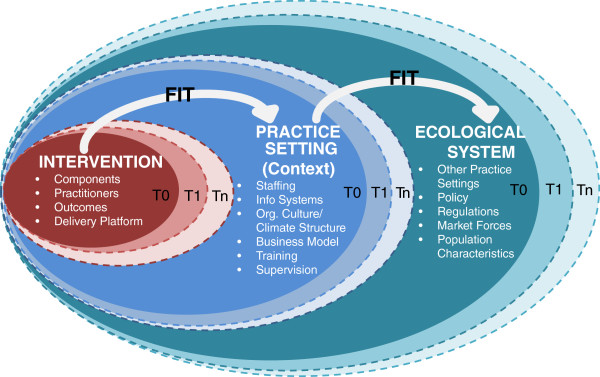
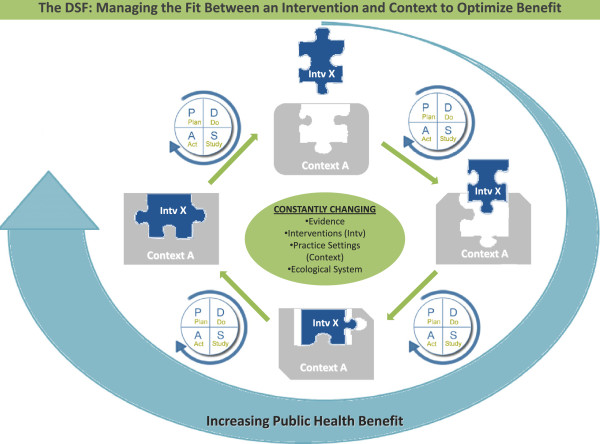
“Sustainability Dynamic Sustainability Framework (DSF) [128] The DSF depicts a dynamic view of sustainability, which allows for the evolution of an intervention within a changing delivery system with the goal of maximizing fit between interventions, practice settings, and broader ecological system over time.”
BackgroundWakschlag, L. S., Roberts, M. Y., Flynn, R. M., Smith, J. D., Krogh-Jespersen, S., Kaat, A. J., Gray, L., Walkup, J., Marino, B. S., Norton, E. S., et al. (2019) · Journal of Clinical Child & Adolescent Psychology · doi:10.1080/15374416.2018.1561296 · Cited by 137
“This could prompt reimbursement by payers and other facilitators of uptake (Chambers et al., 2013).”
BackgroundBeets, M. W., Weaver, R. G., Ioannidis, J. P. A., Geraci, M., Brazendale, K., Decker, L., Okely, A. D., Lubans, D., van Sluijs, E., Jago, R., et al. (2020) · International Journal of Behavioral Nutrition and Physical Activity · doi:10.1186/s12966-020-0918-y · Cited by 138
Rosen, C. S., Matthieu, M. M., Stirman, S. W., Cook, J. M., Landes, S. J., Bernardy, N. C., Chard, K. M., Crowley, J. J., Eftekhari, A., Finley, E. P., et al. (2016) · Administration and Policy in Mental Health and Mental Health Services Research · doi:10.1007/s10488-016-0755-0 · Cited by 153
Wiltsey Stirman, S., Gamarra, J. M., Bartlett, B. A., Calloway, A., & Gutner, C. A. (2017) · Clinical Psychology: Science and Practice · doi:10.1111/cpsp.12218 · Cited by 138
“Although some have argued that adaptation is to be expected and may improve treatment effectiveness and sustainability in routine care settings (Chambers et al., 2013), others have cautioned that changes to evidencebased interventions, particularly unplanned or less systematically derived…”
Miller, C. J., Wiltsey‐Stirman, S., & Baumann, A. A. (2020) · Journal of Community Psychology · doi:10.1002/jcop.22279 · Cited by 138
“Given these complexities, a linear, phased approach to adaptation may not be feasible due to the dynamic contexts into which EBPs are implemented (Chambers et al., 2013).”
BackgroundTricco, A. C., Ashoor, H. M., Cardoso, R., MacDonald, H., Cogo, E., Kastner, M., Perrier, L., McKibbon, A., Grimshaw, J. M., & Straus, S. E. (2015) · Implementation Science · doi:10.1186/s13012-016-0421-7 · Cited by 139
“Chambers and colleagues developed a “Dynamic Sustainability Framework” for sustainability involving “continued learning and problem solving, ongoing adaptation of interventions with a primary focus on fit between interventions and multi-level contexts, and expectations for ongoing improvement as opposed to diminishing…”
BackgroundWang, D. Y., Wong, E. L., Nilsén, P., Chung, V. C., Tian, Y., & Yeoh, E. (2023) · Implementation Science · doi:10.1186/s13012-023-01296-x · Cited by 175
Martín-Borràs, C., Giné‐Garriga, M., Puig-Ribera, A. M., Martín-Cantera, C., Solà-Gonfaus, M., & Vargas, A. I. C. (2018) · BMJ Open · doi:10.1136/bmjopen-2017-017211 · Cited by 150
Advancing sustainable development goals through immunization: a literature review
Decouttere, C. J., Boeck, K. D., & Vandaele, N. J. (2021) · Globalization and Health · doi:10.1186/s12992-021-00745-w · Cited by 159
“Foster resilience and adaptation, long term effects, implementation science Long term effects, secondary effects following adaptation [58, 59]”
BackgroundThe Importance of Context in Implementation Research
Edwards, N., & Barker, P. M. (2014) · JAIDS Journal of Acquired Immune Deficiency Syndromes · doi:10.1097/qai.0000000000000322 · Cited by 137
“In contrast, adaptive interventions adjust, purposefully or otherwise, through contextual interactions with interventions and systems feedback processes to replicate the desired outcomes of the intervention in a more heterogeneous set of external influences.(4) Contextualized interventions are guided by a theory of ch…”
Backgroundvon Thiele Schwarz, U., Aarons, G. A., & Hasson, H. (2019) · BMC Health Services Research · doi:10.1186/s12913-019-4668-y · Cited by 134
“This includes questioning the assumption that fidelity automatically maximizes effectiveness [28].”
BackgroundShoveller, J., Viehbeck, S., Di Ruggiero, E., Greyson, D., Thomson, K., & Knight, R. (2016) · Critical Public Health · doi:10.1080/09581596.2015.1117577 · Cited by 130
Eisman, A. B., Quanbeck, A., Bounthavong, M., Panattoni, L., & Glasgow, R. E. (2021) · Implementation Science · doi:10.1186/s13012-021-01143-x · Cited by 126
“And, even if adopted, they are frequently not sustained [7, 8].”
BackgroundSelf-citationThe Role of Work Environment in Training Sustainment: A Meta-Analysis
Hughes, A. M., Zajac, S. A., Woods, A. L., & Salas, E. (2019) · Human Factors The Journal of the Human Factors and Ergonomics Society · doi:10.1177/0018720819845988 · Cited by 175
“According to best practices of implementation science, training sustainment efforts should seek to gradually incorporate demonstration of trained behaviors as an organizational norm (Chambers et al., 2013; Salas, Tannenbaum, Kraiger, & Smith-Jentsch, 2012).”
BackgroundGlasgow, R. E., Battaglia, C., McCreight, M., Ayele, R. A., & Rabin, B. A. (2020) · Frontiers in Public Health · doi:10.3389/fpubh.2020.00194 · Cited by 121
“It is also well-documented that context also changes over time (28, 29), that adaptations occur with or without guidance and in ways that are either intervention congruent or not (27, 30), and that sustainment of outcomes almost always requires adaptations (31).”
BackgroundResultSelf-citationBirken, S. A., Haines, E. R., Hwang, S., Chambers, D. A., Bunger, A. C., & Nilsen, P. (2020) · Implementation Science · doi:10.1186/s13012-020-01040-9 · Cited by 122
Self-citationZimmerman, L., Lounsbury, D. W., Rosen, C. S., Kimerling, R. E., Trafton, J. A., & Lindley, S. E. (2016) · Administration and Policy in Mental Health and Mental Health Services Research · doi:10.1007/s10488-016-0754-1 · Cited by 134
“After implementation, modeling to explore how best to adapt or make ongoing improvements (PSD phases 4–6), may also serve to increase the sustainability of EBP implementation efforts amid ongoing system change (Chambers et al. 2013).”
BackgroundMethodDopp, A. R., Parisi, K. E., Munson, S. A., & Lyon, A. R. (2019) · Health Research Policy and Systems · doi:10.1186/s12961-018-0403-0 · Cited by 123
Lengnick-Hall, R., Stadnick, N. A., Dickson, K. S., Moullin, J. C., & Aarons, G. A. (2021) · Implementation Science · doi:10.1186/s13012-021-01099-y · Cited by 119
“For example, the Dynamic Sustainability Framework states that further specification of the levels within a system and the interrelationships between them is an important area for future research [13].”
BackgroundHodge, L. M., & Turner, K. M. T. (2016) · American Journal of Community Psychology · doi:10.1002/ajcp.12082 · Cited by 120
“…needed that spans the ecological context (systems, policies and practice setting) and considers individual service provider and program differences (Chambers et al., 2013; Estabrooks et al., 2011; Pluye, Potvin & Denis, 2004; Spoth et al., 2011) with a focus on monitoring the key factors that…”
BackgroundMethodRabin, B. A., Cakici, J. A., Golden, C. A., Estabrooks, P. A., Glasgow, R. E., & Gaglio, B. (2022) · Implementation Science · doi:10.1186/s13012-022-01234-3 · Cited by 129
Self-citationEmmons, K. M., & Chambers, D. (2021) · Ethnicity & Disease · doi:10.18865/ed.31.1.133 · Cited by 127
Self-citationLewis, C. C., Scott, K., & Marriott, B. R. (2018) · Implementation Science · doi:10.1186/s13012-018-0761-6 · Cited by 123
“highlighted in the Dynamic Sustainability Framework [26].”
BackgroundInfluentialThe Tailored Implementation in Chronic Diseases (TICD) project: introduction and main findings
Wensing, M. (2017) · Implementation Science · doi:10.1186/s13012-016-0536-x · Cited by 111
Beets, M. W., von Klinggraeff, L., Weaver, R. G., Armstrong, B., & Burkart, S. A. (2021) · Pilot and Feasibility Studies · doi:10.1186/s40814-021-00909-w · Cited by 130
“Intentional design and the removal of these features should also reduce the widely observed voltage drop [25] of the intervention from the initial evaluation through the large-scale trial (see Fig.”
Aligning implementation science with improvement practice: a call to action
Leeman, J., Rohweder, C. L., Lee, M., Brenner, A. T., Dwyer, A. J., Ko, L. K., O’Leary, M. C., Ryan, G. W., Vu, T. T., & Ramanadhan, S. (2021) · Implementation Science Communications · doi:10.1186/s43058-021-00201-1 · Cited by 123
Metadata
- Authors
- Chambers, D. A., Glasgow, R. E., & Stange, K. C.
- Affiliations
- National Institute of Mental Health (US)
- University of Colorado Anschutz (US)
- Case Western Reserve University (US)
- Corresponding author
- Chambers, David A
- Venue
- Implementation Science
- Published
- 2013-10-02
- Volume
- 8
- Issue
- 1
- Pages
- 117-117
- ISSN
- 1748-5908 (ISSN-L)
- PMC
- PMC3852739
- OpenAlex
- W2111534125
- Cited by
- 1,724
- References
- 62
- Citations by year
- 2026: 150 · 2025: 164 · 2024: 205 · 2023: 221 · 2022: 188 · 2021: 214 · 2020: 165 · 2019: 114 · 2018: 90 · 2017: 79 · 2016: 46 · 2015: 64 · 2014: 20
- FWCI
- 77.44
- Type
- journal article
- Language
- en
- Open access
- gold
- doi.org
- Licence
- Locations
- Implementation Science (publishedVersion, cc-by)
- Europe PMC (PubMed Central) (publishedVersion, cc-by)
- PubMed Central (publishedVersion, cc-by)
- PubMed (publishedVersion)
- Scholarly Commons @ Case Western Reserve University (submittedVersion, cc-by)
- Topics
- Health Sciences › Health Professions › General Health Professions › Health Policy Implementation Science
- Health Sciences › Health Professions › General Health Professions › Health Sciences Research and Education
- Social Sciences › Public Administration › Evaluation and Performance Assessment
- Keywords
- intervention sustainability, voltage drop, intervention adaptation, knowledge transfer, implementation research, health services research
- MeSH terms
- Concept Formation, Diffusion of Innovation, Organizational Innovation, United States, Program Evaluation, Program Development, Evidence-Based Practice
About these checks
Registry, retraction, Cites and statistics results are computed, not judged, with one exception: a printed reference that no index lists is read once by a model before it counts as a citation error. Claims are extracted by a model and kept only when their quote appears verbatim in the text; each cited source is then checked, with a model’s help, for whether it says what the claim relies on. Those verdicts can be wrong — read the claim’s quote and the cited source before relying on one.
Statistics and arithmetic are recomputed, not judged.
Confidence bands are shown only for fields calibrated on our annotated test set. None is calibrated yet, so no band is shown.
What counts as a claim ›How we measure confidence ›How we check this ›
Are you an author, or do you see a problem with this page? Request a review
Data sources
Bibliographic data: Semantic Scholar, OpenAlex, Crossref.
Contains information from the Semantic Scholar Academic Graph Datasets, made available under the ODC Attribution License (ODC-BY 1.0).
Semantic Scholar’s data is described in: Kinney, R., et al. (2023). The Semantic Scholar Open Data Platform. arXiv:2301.10140.
