

The implementation leadership scale (ILS): development of a brief measure of unit level implementation leadership
Open accessThe DOI matches its Crossref record; 56 of the 56 references it cites were found in a registry or an index.
Abstract
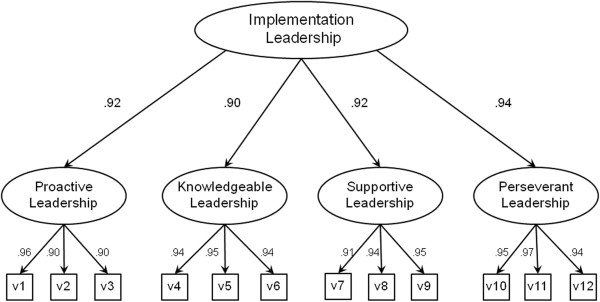
BACKGROUND: In healthcare and allied healthcare settings, leadership that supports effective implementation of evidenced-based practices (EBPs) is a critical concern. However, there are no empirically validated measures to assess implementation leadership. This paper describes the development, factor structure, and initial reliability and convergent and discriminant validity of a very brief measure of implementation leadership: the Implementation Leadership Scale (ILS). METHODS: Participants were 459 mental health clinicians working in 93 different outpatient mental health programs in Southern California, USA. Initial item development was supported as part of a two United States National Institutes of Health (NIH) studies focused on developing implementation leadership training and implementation measure development. Clinician work group/team-level data were randomly assigned to be utilized for an exploratory factor analysis (n = 229; k = 46 teams) or for a confirmatory factor analysis (n = 230; k = 47 teams). The confirmatory factor analysis controlled for the multilevel, nested data structure. Reliability and validity analyses were then conducted with the full sample. RESULTS: The exploratory factor analysis resulted in a 12-item scale with four subscales representing proactive leadership, knowledgeable leadership, supportive leadership, and perseverant leadership. Confirmatory factor analysis supported an a priori higher order factor structure with subscales contributing to a single higher order implementation leadership factor. The scale demonstrated excellent internal consistency reliability as well as convergent and discriminant validity. CONCLUSIONS: The ILS is a brief and efficient measure of unit level leadership for EBP implementation. The availability of the ILS will allow researchers to assess strategic leadership for implementation in order to advance understanding of leadership as a predictor of organizational context for implementation. The ILS also holds promise as a tool for leader and organizational development to improve EBP implementation.
Overview
The claims and statistics of this paper haven’t been checked yet.
Free: it reads the open-access text and checks the first 5 claims that cite a source we can check. Create a free account to check every claim.
Integrity signals
Registry
Cites
Statistics
Figures
Verification
Claims the paper makes
The claims and statistics of this paper haven’t been checked yet.
Free: it reads the open-access text and checks the first 5 claims that cite a source we can check. Create a free account to check every claim.
Claims other papers make about this one
Each is checked against this paper’s own text: does it say what the citing paper says it does?
The source backs part of the claim, not all of it — or backs it for a different population, condition or comparison.
In the citing paper
“Subscale internal consistencies ranged from 0.95 to 0.98.”
From Leading the charge in the education sector: development and validation of the School Implementation Leadership Scale (SILS) (2022) · cites this paper as [9]
Experimental — accuracy not yet measuredThe source backs part of the claim, not all of it — or backs it for a different population, condition or comparison.
In the citing paper
“Our preliminary results also signal a need for new instrumentation targeting non-provider stakeholders such as leaders and external change agents (e.g., implementation practitioners or intermediaries), particularly in light of research identifying the role they play in implementation success (e.g., [25]).”
From The Society for Implementation Research Collaboration Instrument Review Project: A methodology to promote rigorous evaluation (2016) · cites this paper as [25]
Experimental — accuracy not yet measuredThe cited source says what the claim attributes to it.
In the citing paper
“Designed to be brief and pragmatic [29], the original ILS contained 12 items loading onto 4 subscales: Proactive Leadership (anticipating and addressing implementation challenges), Knowledgeable Leadership (deep understanding of EBP and implementation issues), Supportive Leadership (support for EBP adoption/use), and Perseverant Leadership (consistent and responsive to challenges).”
From Leading the charge in the education sector: development and validation of the School Implementation Leadership Scale (SILS) (2022) · cites this paper as [9]
The cited source says what the claim attributes to it.
In the citing paper
“The original ILS [9] and original SILS adaptation [66] are 12-item instruments developed to assess strategic leadership for EBP implementation.”
From Leading the charge in the education sector: development and validation of the School Implementation Leadership Scale (SILS) (2022) · cites this paper as [9]
Self-check
Percentages, sums and reported differences re-computed from the paper’s own numbers.
The self-check needs the paper’s full text.
Citations
Cites
Hu, L., & Bentler, P. M. (1999) · Structural Equation Modeling A Multidisciplinary Journal · doi:10.1080/10705519909540118 · Cited by 108,788 · cited 1×
“08 indicate acceptable model fit [41-44].”
Intraclass correlations: Uses in assessing rater reliability.
Shrout, P. E., & Fleiss, J. L. (1979) · Psychological Bulletin · doi:10.1037/0033-2909.86.2.420 · Cited by 24,532 · cited 1×
“We first examined the amount of dependency among observations within groups using intraclass correlations (ICC, type 1) [46].”
MethodHu, L.-T., & Bentler, P. M. (1998) · Psychological Methods · doi:10.1037/1082-989x.3.4.424 · Cited by 12,298 · cited 1×
“08 indicate acceptable model fit [41-44].”
Organizational Culture and Leadership
Tierney, W. G., & Schein, E. H. (1986) · The Academy of Management Review · doi:10.2307/258322 · Cited by 9,601
Evaluating the use of exploratory factor analysis in psychological research.
Fabrigar, L. R., Wegener, D. T., MacCallum, R. C., & Strahan, E. J. (1999) · Psychological Methods · doi:10.1037/1082-989x.4.3.272 · Cited by 9,587 · cited 1×
“Principal axis factoring was selected for factor extraction because it allows for consideration of both systematic and random error [37] and Promax oblique rotation was utilized for factor rotation as we assumed that derived factors would be correlated.”
MethodProctor, E., Silmere, H., Raghavan, R., Hovmand, P., Aarons, G., Bunger, A., Griffey, R., & Hensley, M. (2011) · Administration and Policy in Mental Health and Mental Health Services Research · doi:10.1007/s10488-010-0319-7 · Cited by 8,721
Self-citationA Rationale and Test for the Number of Factors in Factor Analysis
Horn, J. L. (1965) · Psychometrika · doi:10.1007/bf02289447 · Cited by 8,714 · cited 1×
“Parallel analysis was based on estimation of 1,000 random data matrices with values that correspond to the 95 percentile of the distribution of random data eigenvalues [39,40].”
MethodDETERMINANTS OF INNOVATIVE BEHAVIOR: A PATH MODEL OF INDIVIDUAL INNOVATION IN THE WORKPLACE.
Scott, S. G., & Bruce, R. A. (1994) · Academy of Management Journal · doi:10.2307/256701 · Cited by 6,068 · cited 1×
“Leaders can positively or negatively impact the capacity to foster change and innovation [7-10] and therefore are instrumental in facilitating a positive climate for innovation and positive attitudes toward EBP during implementation”
BackgroundEstimating within-group interrater reliability with and without response bias
James, L. R., Demaree, R. G., & Wolf, G. (1984) · Journal of Applied Psychology · doi:10.1037/0021-9010.69.1.85 · Cited by 4,774 · cited 3×
“We next examined the average agreement within clinical work group for individual items and scales using awg(1) and awg(J), respectively [48-50].”
BackgroundMethodOrganizational culture and leadership
Tohidi, H., & Jabbari, M. M. (2012) · Procedia - Social and Behavioral Sciences · doi:10.1016/j.sbspro.2011.12.156 · Cited by 4,303 · cited 2×
“First, as part of a study focused on developing an intervention to improve leadership for evidencebased practice implementation [18], the investigative team developed items based on review of literature relating leader behaviors to implementation and organizational climate and culture change [32,33].”
Background
Research works printed but not linked: 4
- Massoud M, Nielsen G, Nolan K, Nolan TW, Schall MW, Sevin C: A Framework for Spread: From Local Improvements to System-wide Change. 2006, Cambridge, MA: Institute for Healthcare Improvement
- Dunn G, Everitt B, Pickles A: Modeling Covariances and Latent Variables Using EQS. 1993, London: Chapman & Hall/CRC Press
- Cochran WG: Sampling Techniques. 1977, New York: Wiley and Sons, 3
- Kouzes JM, Posner BZ: The Leadership Challenge. 2007, San Francisco, CA: Jossey-Bass
Cited by
Items 101–200 of 568
Carcone, A. I., Coyle, K. K., Gurung, S., Cain, D. N., Dilones, R. E., Jadwin-Cakmak, L. A., Parsons, J. T., & Naar, S. (2019) · JMIR Research Protocols · doi:10.2196/11202 · Cited by 32
“Key stakeholders and Site PIs will also evaluate the role of leadership in the implementation of EBPs using 2 scales: the Director Leadership Scale , (DLS; Broome et al) [25] and the Implementation Leadership Scale (ILS; Aarons et al) [26].”
Schriger, S. H., Becker‐Haimes, E. M., Skriner, L. C., & Beidas, R. S. (2020) · Community Mental Health Journal · doi:10.1007/s10597-020-00681-w · Cited by 33
Braathu, N., Laukvik, E. H., Egeland, K. M., & Skar, A. S. (2022) · BMC Psychology · doi:10.1186/s40359-022-00725-8 · Cited by 46
“The ILS contains four subscales, including proactive leadership, knowledgeable leadership, supportive leadership and perseverant leadership, and the suggested four-factor structure has been confirmed in all studies [5, 11, 37, 39].”
BackgroundMethodResultInfluentialLaur, C., Bell, J., Valaitis, R., Ray, S., & Keller, H. (2018) · BMC Health Services Research · doi:10.1186/s12913-018-3748-8 · Cited by 30
From pilot project to system solution: innovation, spread and scale for health system leaders
Shaw, J., Tepper, J. D., & Martin, D. (2018) · BMJ Leader · doi:10.1136/leader-2017-000055 · Cited by 38
A Quantitative Test of an Implementation Framework in 38 VA Residential PTSD Programs
Cook, J. M., Dinnen, S., Thompson, R., Ruzek, J., Coyne, J. C., & Schnurr, P. P. (2015) · Administration and Policy in Mental Health and Mental Health Services Research · doi:10.1007/s10488-014-0590-0 · Cited by 30
“…years ago and that there are over 61 other dissemination and implementation models in the literature (for review, see Tabak et al. 2012) as well as other efforts in implementation measure development related to additional frameworks (e.g., Aarons et al. 2014; Jacobs et al. 2014; Shea et al. 2014).”
BackgroundKnight, D. K., Joe, G. W., Morse, D. T., Smith, C. N., Knudsen, H. K., Johnson, I. D., Wasserman, G. A., Arrigona, N., McReynolds, L. S., Becan, J. E., et al. (2018) · The Journal of Behavioral Health Services & Research · doi:10.1007/s11414-018-9618-7 · Cited by 35
Bunger, A. C., Chuang, E., Girth, A. M., Lancaster, K. E., Gadel, F., Himmeger, M., Saldana, L., Powell, B. J., & Aarons, G. A. (2020) · Implementation Science · doi:10.1186/s13012-020-01016-9 · Cited by 33
Self-citationNooraie, R. Y., Shelton, R. C., Fiscella, K. A., Kwan, B. M., & McMahon, J. M. (2021) · Health Research Policy and Systems · doi:10.1186/s12961-021-00764-4 · Cited by 28
Cella, D. F., Garcia, S. F., Cahue, S., Smith, J. D., Yanez, B. R., Scholtens, D. M., Lancki, N., Bass, M., Kircher, S. M., Flores, A. M., et al. (2023) · Contemporary Clinical Trials · doi:10.1016/j.cct.2023.107171 · Cited by 28
Dopp, A. R., Hunter, S. B., Godley, M. D., Pham, C., Han, B., Smart, R., Cantor, J., Kilmer, B., Hindmarch, G., González, I. E., et al. (2022) · Implementation Science Communications · doi:10.1186/s43058-022-00298-y · Cited by 28
“Leadership support (ILS [66]) Clinicians”
BackgroundMethodInfluentialSelf-citationValidation of the Implementation Leadership Scale (ILS) with Supervisors’ Self-Ratings
Torres, E. M., Ehrhart, M. G., Beidas, R. S., Farahnak, L. R., Finn, N. K., & Aarons, G. A. (2017) · Community Mental Health Journal · doi:10.1007/s10597-017-0114-y · Cited by 31
Self-citationWillging, C. E., Gunderson, L. M., Green, A. E., Jaramillo, E. T., Garrison, L., Ehrhart, M. G., & Aarons, G. A. (2018) · Human Services Organizations Management Leadership & Governance · doi:10.1080/23303131.2018.1495673 · Cited by 34
“Owing to their knowledge and influence over EBI sustainment, greater understanding of how the managers of implementing organizations, such as CBOs, approach implementation and sustainment of EBIs can yield valuable insight into enhancing EBI provision in the child welfare sector.”
BackgroundInfluentialSelf-citationExploring Associations Between Inner-Context Factors and Implementation Outcomes
Suhrheinrich, J., Rieth, S. R., Dickson, K. S., & Stahmer, A. C. (2019) · Exceptional Children · doi:10.1177/0014402919881354 · Cited by 30
“Future implementation studies will need to include more systematic, validated measures of cross-level inner- and outer-contextual factors, including leadership (e.g., Implementation Leadership Scale; Aarons et al., 2014).”
BackgroundLyon, A. R., Pullmann, M. D., Dorsey, S., Levin, C., Gaias, L. M., Brewer, S. K., Larson, M. F., Corbin, C. M., Davis, C. J., Muse, I., et al. (2021) · Implementation Science · doi:10.1186/s13012-020-01064-1 · Cited by 27
“Implementation leadership The Implementation Leadership Scale (ILS) [91, 92] Q C T6, T10”
BackgroundAarons, G. A., Ehrhart, M. G., Farahnak, L. R., & Sklar, M. (2014) · Frontiers in Public Health · doi:10.13023/fphssr.0304.03 · Cited by 33
Self-citationLeading for the long haul: a mixed-method evaluation of the Sustainment Leadership Scale (SLS)
Ehrhart, M. G., Torres, E. M., Green, A. E., Trott, E. M., Willging, C. E., Moullin, J. C., & Aarons, G. A. (2018) · Implementation Science · doi:10.1186/s13012-018-0710-4 · Cited by 29
“Consistent with the ILS development study [20] from which this measure was adapted, the higher-order model was tested to evaluate the four-factor model with each subscale as an indicator of the overall sustainment leadership latent construct.”
BackgroundMethodInfluentialSelf-citationPreaching to the Choir? Predictors of Engagement in a Community-Based Learning Collaborative
Jensen‐Doss, A., Smith, A. M., Walsh, L., Ringle, V. A. M., Casline, E. P., Patel, Z. S., Shaw, A. M., Maxwell, C. A., Hanson, R. F., & Webster, R. (2019) · Administration and Policy in Mental Health and Mental Health Services Research · doi:10.1007/s10488-019-00985-4 · Cited by 26
Validation of the Implementation Climate Scale in Nursing
Ehrhart, M. G., Shuman, C. J., Torres, E. M., Kath, L. M., Prentiss, A. S., Butler, E., & Aarons, G. A. (2021) · Worldviews on Evidence-Based Nursing · doi:10.1111/wvn.12500 · Cited by 26
Self-citationGrüne, E., Popp, J., Carl, J., Semrau, J., & Pfeifer, K. (2022) · BMC Public Health · doi:10.1186/s12889-022-13133-9 · Cited by 30
Crable, E. L., Grogan, C. M., Purtle, J., Roesch, S. C., & Aarons, G. A. (2023) · Implementation Science Communications · doi:10.1186/s43058-023-00396-5 · Cited by 27
“Survey items draw from existing reliable scales like the Implementation Leadership Scale [72], Purtle et al.’s Research Dissemination Barriers survey items [37], and the Six Factor Model of Evidence-based Decision-making Tool [73] to assess policymakers’ behaviors seeking, receiving, and using research.”
MethodSelf-citationAdvancing Implementation Science Measurement
Lewis, C. C., & Dorsey, C. N. (2020) · Springer eBooks · doi:10.1007/978-3-030-03874-8_9 · Cited by 27
Hu, J., Gifford, W., Ruan, H., Harrison, D. M., Li, Q., Ehrhart, M. G., & Aarons, G. A. (2019) · Journal of Nursing Management · doi:10.1111/jonm.12768 · Cited by 27
Self-citationRosen, C. S., Kaplan, A. N., Nelson, D. B., Bash, H. A. J. L., Chard, K. M., Eftekhari, A., Kehle‐Forbes, S., Stirman, S. W., & Sayer, N. A. (2022) · Journal of Affective Disorders · doi:10.1016/j.jad.2022.09.141 · Cited by 31
The role of school leaders in cultivating a trauma-informed school climate
Garcia, A. R., Sprang, G., & Clemans, T. A. (2023) · Children and Youth Services Review · doi:10.1016/j.childyouth.2023.106816 · Cited by 34
Aarons, G. A., Sklar, M., Ehrhart, M. G., Roesch, S., Moullin, J. C., & Carandang, K. M. (2024) · Journal of Substance Use and Addiction Treatment · doi:10.1016/j.josat.2024.209437 · Cited by 28
Self-citationHorvat, A. I., & Filipović, J. (2017) · Journal of Evaluation in Clinical Practice · doi:10.1111/jep.12789 · Cited by 38
Bonafide, C. P., Xiao, R., Schondelmeyer, A. C., Pettit, A. R., Brady, P. W., Landrigan, C. P., Wolk, C. B., Cidav, Z., Ruppel, H., Muthu, N., et al. (2022) · Implementation Science · doi:10.1186/s13012-022-01246-z · Cited by 22
Hunter, S. B., Ayer, L. A., Han, B., Garner, B. R., & Godley, S. H. (2014) · Implementation Science · doi:10.1186/s13012-014-0104-1 · Cited by 24
“, 2013 [54]; Survey & Interview Clinician”
BackgroundGifford, W., Lewis, K. B., Eldh, A. C., Fiset, V., Abdul-Fatah, T., Åberg, A. C., Thavorn, K., Graham, I. D., & Wallin, L. (2019) · Pilot and Feasibility Studies · doi:10.1186/s40814-019-0485-7 · Cited by 25
“, proactive, knowledgeable, supportive, and perseverant leadership) [35].”
BackgroundMethodInfluentialSpoelstra, S. L., Schueller, M., & Sikorskii, A. (2019) · Implementation Science · doi:10.1186/s13012-019-0907-1 · Cited by 21
Egeland, K. M., Borge, R. H., Peters, N., Bækkelund, H., Braathu, N., Sklar, M., Aarons, G. A., & Skar, A. S. (2023) · Implementation Science Communications · doi:10.1186/s43058-023-00459-7 · Cited by 26
“Other theories emphasize behaviors leaders can take to develop a strategic climate for implementation by being supportive, knowledgeable, proactive, and perseverant about implementing specific EBPs [10].”
BackgroundMethodInfluentialSelf-citationLee, J., Shapiro, V. B., Kim, B. E., & Yoo, J. P. (2018) · Journal of the Society for Social Work and Research · doi:10.1086/701526 · Cited by 22
Aalsma, M. C., Dir, A. L., Zapolski, T. C. B., Hulvershorn, L. A., Monahan, P. O., Saldana, L., & Adams, Z. W. (2019) · Addiction Science & Clinical Practice · doi:10.1186/s13722-019-0161-5 · Cited by 23
Padek, M. M., Mazzucca, S., Allen, P. M., Weno, E. R., Tsai, E., Luke, D. A., & Brownson, R. C. (2021) · BMC Public Health · doi:10.1186/s12889-020-10101-z · Cited by 28
Organization-level variation in therapists’ attitudes toward and use of measurement-based care
Williams, N. J., Vega, N. R., Esp, S. M., Watts, A., & Marcus, S. C. (2022) · Administration and Policy in Mental Health and Mental Health Services Research · doi:10.1007/s10488-022-01206-1 · Cited by 23
“Future research may fruitfully explore tools (such as MBC); and, aligning resources and reward systems to support high-fidelity delivery of evidence-based practices (including MBC; Aarons et al., 2014; Stetler et al., 2014).”
BackgroundInfluentialLunsky, Y., Lake, J. K., Durbin, J., Perry, A., Bullock, H. L., Morris, S., & Lee, J. S. (2014) · International review of research in developmental disabilities · doi:10.1016/b978-0-12-800278-0.00001-4 · Cited by 24
Hamilton, A. B., Brown, A. F., Loeb, T. B., Chin, D., Grills, C. T., Cooley-Strickland, M., Liu, H. H., & Wyatt, G. E. (2020) · Progress in Cardiovascular Diseases · doi:10.1016/j.pcad.2020.02.014 · Cited by 22
Precision Implementation: An Approach to Mechanism Testing in Implementation Research
Frank, H. E., Kemp, J. J., Benito, K., & Freeman, J. B. (2022) · Administration and Policy in Mental Health and Mental Health Services Research · doi:10.1007/s10488-022-01218-x · Cited by 21
“Using the example of an organizational intervention, benchmark scores on the Implementation Leadership Scale (ILS; Aarons et al., 2014) could be used to assess what “dose” of the organizational intervention is needed for implementation leadership levels to reach these benchmarks.”
MethodDubowitz, H., Saldana, L., Magder, L., Palinkas, L. A., Landsverk, J. A., Belanger, R., & Nwosu, U. S. (2020) · Implementation Science Communications · doi:10.1186/s43058-020-00059-9 · Cited by 21
“Participants will be asked to complete the SEEK Adoption Survey and the following four measures: (1) Practice Demographics Form, (2) the Evidence-Based Practice Attitude Scales measuring attitudes toward adopting EBPs [68], (3) the Implementation Leadership Scale assessing leader support for EBPs within an organizatio…”
MethodNguyen, M. X. B., Chu, A. V., Powell, B. J., Tran, H. V., Nguyen, L. H., Dao, A. T. M., Pham, M. D., Vo, S. H., Bui, N. H., Dowdy, D. W., et al. (2020) · Implementation Science · doi:10.1186/s13012-020-01020-z · Cited by 19
“Consistent with our guiding determinant framework (CFIR), we will assess inner setting factors that may influence implementation processes, including organizational readiness to change [54], implementation leadership [58], implementation climate [59], and available resources.”
MethodImplementing Person-Centered Care Planning: A Randomized Controlled Trial
Stanhope, V., Choy-Brown, M., Williams, N. J., & Marcus, S. C. (2021) · Psychiatric Services · doi:10.1176/appi.ps.202000361 · Cited by 19
Granberg, A., Matérne, M., Lundqvist, L., & Duberg, A. (2021) · BMC Health Services Research · doi:10.1186/s12913-021-06570-6 · Cited by 24
“in the implementation process despite problems and challenges (fourth aspect) [4, 60, 61].”
BackgroundDannapfel, P., Thomas, K., Chakhunashvili, A., Melin, J., & Lagerros, Y. T. (2021) · JMIR Formative Research · doi:10.2196/17568 · Cited by 20
“Theories on organizational change, implementation, and behavior change were reviewed, for instance, organizational readiness to change [14], determinants of implementation [20-23], and individual behavior change [24,25].”
BackgroundMoreno, A., Díez, F., & Ferreira-Lopes, L. (2021) · International Journal of Environmental Research and Public Health · doi:10.3390/ijerph19010030 · Cited by 28
Adrian, M. C., Coifman, J., Pullmann, M. D., Blossom, J. B., Chandler, C., Coppersmith, G., Thompson, P., & Lyon, A. R. (2020) · JMIR Mental Health · doi:10.2196/16338 · Cited by 22
“Determinants include aspects of the innovation (eg, evidence strength and relative advantage), outer context (eg, external policies and incentives), the inner organizational context (eg, implementation climate and tension for change ), characteristics of the individuals operating within target settings (eg, attitudes…”
BackgroundNeumer, S., Patras, J., Holen, S., Lisøy, C., Askeland, A. L., Haug, I. M., Jeneson, A., Wentzel‐Larsen, T., Adolfsen, F., Rasmussen, L. P., et al. (2021) · BMC Psychology · doi:10.1186/s40359-021-00581-y · Cited by 19
“The Implementation Leadership Scale (ILS) The ILS [51] will be used to assess to what extent the leaders in the services support and promote implementation of evidence‐based interventions.”
MethodInfluentialSmith, J. D., Fu, E. S., Rado, J. T., Rosenthal, L. J., Carroll, A. J., Atlas, J. A., Carlo, A. D., Burnett‐Zeigler, I., Jordan, N., Brown, C. H., et al. (2021) · Contemporary Clinical Trials Communications · doi:10.1016/j.conctc.2021.100823 · Cited by 18
“List of Abbreviations AAF-CoCM Acceptability, Appropriateness, Feasibility of Collaborative Care Model BCM Behavioral care manager CBHP Collaborative Behavioral Health Program CoCM Collaborative Care Model EBPAS Evidence-Based Practice Attitudes Scale EBPQ Evidence-Based Practice Questionnaire EHR Electronic health re…”
MethodInfluentialLewis, C. C., Marti, C. N., Scott, K., Walker, M. R., Boyd, M. R., Puspitasari, A. J., Mendel, P. J., & Kroenke, K. (2022) · Psychiatric Services · doi:10.1176/appi.ps.202100284 · Cited by 21
Gyamfi, J., Iwelunmor, J., Patel, S. A., Irazola, V. E., Aifah, A. A., Rakhra, A., Butler, M. J., Vedanthan, R., Hoang, G. N., Nyambura, M., et al. (2023) · PLoS ONE · doi:10.1371/journal.pone.0286204 · Cited by 20
Organizational Capabilities for Integrating Care: A Review of Measurement Tools
Evans, J. M., Grudniewicz, A., Baker, G. R., & Wodchis, W. P. (2016) · Evaluation & the Health Professions · doi:10.1177/0163278716665882 · Cited by 18
Basinska, K., Zúñiga, F., Simon, M., Geest, S. D., Guerbaaï, R.-A., Wellens, N. I. H., Nicca, D., & Brunkert, T. (2022) · BMC Geriatrics · doi:10.1186/s12877-022-02878-y · Cited by 22
“A considerable amount of literature has shown that middle managers’ willingness to act as role models, fill information gaps, solve problems on their units, and “sell” interventions, directly contributes to the intervention’s uptake [45, 46].”
BackgroundGinsburg, L. R., Easterbrook, A., Geerts, A., Berta, W. B., van Dreumel, L., Estabrooks, C. A., Norton, P., & Wagg, A. (2024) · BMJ Quality & Safety · doi:10.1136/bmjqs-2024-017795 · Cited by 27
“While many studies 24 26 45 48 49 suggest that leader roles in the implementation process are predominantly communication based, we found they used a primarily transformational (ie, deeply motivational and relational) process, where they achieved implementation using a goal-oriented process infused…”
Implementing collaborative practices in healthcare settings using champions: a scoping review
Lüchinger, R., Audétat, M., Blondon, K., & Perron, N. J. (2025) · Implementation Science · doi:10.1186/s13012-025-01463-2 · Cited by 20
“Their leadership is often linked with institutional structure and embedded in the development of their professional identity [68].”
Leadership behaviours play a significant role in implementing evidence‐based practice
Hu, J., & Gifford, W. (2018) · Journal of Clinical Nursing · doi:10.1111/jocn.14280 · Cited by 17
Zhang, Y., Cook, C., Fallon, L. M., Corbin, C. M., Ehrhart, M. G., Brown, E. C., Locke, J. J., & Lyon, A. R. (2022) · Administration and Policy in Mental Health and Mental Health Services Research · doi:10.1007/s10488-022-01248-5 · Cited by 20
Self-citationPellecchia, M., Mandell, D. S., Tomczuk, L., Marcus, S. C., Stewart, R. E., Stahmer, A. C., Beidas, R. S., Rieth, S. R., & Lawson, G. M. (2024) · Implementation Science Communications · doi:10.1186/s43058-024-00552-5 · Cited by 21
“” We modified the item stems to probe about leadership support related to caregiver coaching, to improve the specificity of the responses [37].”
BackgroundLocke, J. J., Corbin, C. M., Collins, V. K., Ehrhart, M. G., Goosey, R., Hatch, K., Espeland, C., Cook, C. R., & Lyon, A. R. (2024) · Implementation Research and Practice · doi:10.1177/26334895241242523 · Cited by 20
“…use is expected, supported, and rewarded within the organization; Ehrhart et al., 2014) are malleable organizational factors that predict EBP use (Aarons, Ehrhart, et al., 2014, 2015, 2017; Beidas & Kendall, 2010; Brookman-Frazee & Stahmer, 2018; Damschroder et al., 2009; Locke et al., 2019;…”
BackgroundInfluentialSelf-citationSharkey, J. D., Mullin, A. C., Felix, E. D., Maier, D., & Fedders, A. (2024) · School Mental Health · doi:10.1007/s12310-024-09667-5 · Cited by 20
“The scale has demonstrated both convergent and divergent validity and internal consistencies in the initial validation study were high, ranging from 0.95 to 0.98 (Aarons et al., 2014).”
InfluentialSmith, M. J., Smith, J. D., Fleming, M. F., Jordan, N., Oulvey, E. A., Bell, M. D., Mueser, K. T., McGurk, S. R., Spencer, E., Mailey, K., et al. (2018) · Contemporary Clinical Trials · doi:10.1016/j.cct.2018.12.008 · Cited by 20
“’s implementation outcomes taxonomy [26]; 2) we will use the Implementation Leadership Scale to assess pre-study levels of potential for implementing evidence-based practice [86]; 3) we will use a postdelivery survey of outcomes called the Annual Survey of Evidence-Based Programs (ASEBP) from EPISCenter (2005); and 4)…”
MethodGuerrero, E. G., Ober, A. J., Howard, D. L., Khachikian, T., Kong, Y., van Deen, W. K., Valdez, A., Trotzky‐Sirr, R., & Menchine, M. D. (2019) · Addictive Behaviors · doi:10.1016/j.addbeh.2019.106197 · Cited by 17
Freund, J., Titzler, I., Thielecke, J., Braun, L., Baumeister, H., Berking, M., & Ebert, D. D. (2020) · BMC Psychiatry · doi:10.1186/s12888-020-02800-z · Cited by 17
“Leadership of the implementation team as well as of the supervisors of field workers and call centre agents at SVLFG will be captured by using the Implementation Leadership Scale (ILS) based on 12 items [102].”
MethodAalsma, M. C., Aarons, G. A., Adams, Z. W., Alton, M., Boustani, M. A., Dir, A. L., Embí, P. J., Grannis, S. J., Hulvershorn, L. A., Huntsinger, D., et al. (2021) · Journal of Substance Abuse Treatment · doi:10.1016/j.jsat.2021.108368 · Cited by 18
“…& Farahnak, 2014] 18-items; assesses the degree to which the climate is supportive of EBPs and adopting new innovations), and an assessment of how their organization’s leadership supports implementation of EBPs (ILS; [G.A. Aarons et al., 2014] 12-items; assesses leadership within organizations).”
BackgroundSelf-citationGotham, H. J., Cummings, J. R., Dolce, J. N., Druss, B. G., Gill, K. J., Kopelovich, S. L., Molfenter, T. D., Olson, J. R., Benson, F., & Chwastiak, L. (2022) · General Hospital Psychiatry · doi:10.1016/j.genhosppsych.2022.01.004 · Cited by 22
Smith, S. N., Almirall, D., Prenovost, K. M., Goodrich, D. E., Abraham, K. M., Liebrecht, C., & Kilbourne, A. M. (2018) · Implementation Science · doi:10.1186/s13012-018-0787-9 · Cited by 23
“Program- or implementation-specific measures of climate, such as implementation leadership or climate measures [43, 84, 85], may have revealed different associations.”
BackgroundKopelovich, S. L., Hughes, M., Monroe‐DeVita, M., Peterson, R. S., Cather, C., & Gottlieb, J. D. (2018) · Cognitive and Behavioral Practice · doi:10.1016/j.cbpra.2018.08.004 · Cited by 19
Strategic Leadership: A Bibliometric Analysis on Current Status and Emerging Trends
Tao, Y., He, J., Wang, Y., & Ke, H. (2021) · International Journal of Organizational Leadership · doi:10.33844/ijol.2021.60608 · Cited by 28
Kolko, D. J., McGuier, E. A., Turchi, R. M., Thompson, E., Iyengar, S., Smith, S. N., Hoagwood, K., Liebrecht, C., Bennett, I. M., Powell, B. J., et al. (2022) · Implementation Science · doi:10.1186/s13012-022-01195-7 · Cited by 17
“LEAD aims to improve implementation outcomes by targeting implementation climate [77, 103, 104] and implementation leadership [105, 106].”
BackgroundMethodValidity and reliability of the Greek version of Implementation Leadership Scale (ILS)
Mandrou, E., Tsounis, A., & Sarafis, P. (2020) · BMC Psychology · doi:10.1186/s40359-020-00413-5 · Cited by 23
Validating the Implementation Leadership Scale in Chinese nursing context: A cross‐sectional study
Hu, J., Gifford, W., Ruan, H., Harrison, D. M., Li, Q., Ehrhart, M. G., Harrison, M., Barrowman, N., & Aarons, G. A. (2021) · Nursing Open · doi:10.1002/nop2.888 · Cited by 19
“The ILS includes 12 items scored on a scale of 0 (not at all) to 4 (a very great extent) (Aarons et al., 2014).”
BackgroundMethodSelf-citationthe Hopkinton Conference Working Group on Workplace Disability Prevention, Main, C. J., Nicholas, M. K., Shaw, W. S., Tetrick, L. E., Ehrhart, M. G., & Pransky, G. (2016) · Journal of Occupational Rehabilitation · doi:10.1007/s10926-016-9677-7 · Cited by 20
“Along these lines, researchers in the health services literature have recently developed a specific measure of implementation leadership [97].”
BackgroundSelf-citationEvidence-based practice in primary healthcare from the managerial point of view – a national survey
Abelsson, T., Morténius, H., Karlsson, A., Bergman, S., & Baigi, A. (2021) · BMC Health Services Research · doi:10.1186/s12913-021-07023-w · Cited by 20
Obesity prevention practices in early care and education settings: an adaptive implementation trial
Swindle, T., Rutledge, J. M., Selig, J. P., Painter, J. T., Zhang, D., Martin, J., Johnson, S. L., Whiteside-Mansell, L., Almirall, D., McElwee, T. M. B., et al. (2022) · Implementation Science · doi:10.1186/s13012-021-01185-1 · Cited by 21
Mosson, R., Schwarz, U. V. T., Hasson, H., Lundmark, R., & Richter, A. (2018) · BMJ Open · doi:10.1136/bmjopen-2018-021992 · Cited by 20
“This also means that although there is a variety of theory-based scales that measure general leadership,21 these may not effectively predict the outcomes of an implementation process.58 59 To date, there is one implementation-specific leadership scale: the Implementation Leadership Scale (ILS)60 measures strategic lea…”
En Route to Implementation Science 3.0
Albers, B., Shlonsky, A., & Mildon, R. L. (2020) · Springer eBooks · doi:10.1007/978-3-030-03874-8_1 · Cited by 30
Asante, K. P., Iwelunmor, J., Apusiga, K., Gyamfi, J., Nyame, S., Adjei, K. G. A., Aifah, A. A., Adjei, K. K., Onakomaiya, D. O., Chaplin, W. F., et al. (2020) · Trials · doi:10.1186/s13063-020-04667-7 · Cited by 16
“The implementation leadership scale (ILS): development of a brief measure of unit level implementation leadership.”
MethodInfluentialGrove, A., Clarke, A., Currie, G., Metcalfe, A. J., Pope, C. J., & Seers, K. (2020) · Implementation Science · doi:10.1186/s13012-020-01063-2 · Cited by 18
Schoenthaler, A., Calle, F. D. L., Soto, A., Barrett, D., Cruz, J., Payano, L., Rosado, M., Adhikari, S., Ogedegbe, G. G., & Rosal, M. C. (2021) · Implementation Science Communications · doi:10.1186/s43058-021-00111-2 · Cited by 20
Locke, J. J., Hugh, M. L., Pullmann, M. D., Cook, H., Coifman, J., McRee, E., Joshi, M., Lyon, A. R., & Schwartz, I. S. (2021) · International Journal of Educational Research · doi:10.1016/j.ijer.2021.101779 · Cited by 18
Jagadeeswari, I. U., & Swetha, M. (2021) · The TQM Journal · doi:10.1108/tqm-03-2021-0093 · Cited by 18
Identifying competencies for integrated knowledge translation: a Delphi study
Yeung, E., Scodras, S., Salbach, N. M., Kothari, A. R., & Graham, I. D. (2021) · BMC Health Services Research · doi:10.1186/s12913-021-07107-7 · Cited by 22
Development and psychometric appraisal of Head Nurse Research Leadership Scale
Guo, Y., Ma, K., Guo, L., Dong, X., Yang, C., Wang, M., Gao, H., & Lv, P. (2023) · Nursing Open · doi:10.1002/nop2.1592 · Cited by 17
“Significant differences were observed between the HNRLS and previous tools, which assessed the leadership in patient care or evidence- based practice (Aarons et al., 2014; Hui et al., 2020; Quan et al., 2021), emphasizing the necessity of this scale.”
BackgroundChung, F. R., Turecamo, S. E., Cuthel, A. M., Grudzen, C. R., PRIM-ER Investigators, Abella, B. S., Abraham, G., Reid, E. A., Cridge, T., Asselta, R., et al. (2020) · Journal of General Internal Medicine · doi:10.1007/s11606-020-06302-2 · Cited by 14
Borge, R. H., Egeland, K. M., Aarons, G. A., Ehrhart, M. G., Sklar, M., & Skar, A. S. (2022) · Administration and Policy in Mental Health and Mental Health Services Research · doi:10.1007/s10488-022-01199-x · Cited by 22
Self-citationFord, J. H., Cheng, H. L., Gassman, M., Fontaine, H., Garneau, H. C., Keith, R., Michael, E., & McGovern, M. P. (2022) · Implementation Science · doi:10.1186/s13012-022-01239-y · Cited by 15
“The Implementation Leadership Scale (ILS) is composed of 12 items divided into four subscales [63, 64].”
MethodImplementation science in plain language: The use of nonjargon terms to facilitate collaboration
Dorsey, S., Johnson, C. M., Soi, C., Meza, R. D., Whetten, K., & Mbwayo, A. (2023) · Implementation Research and Practice · doi:10.1177/26334895231177474 · Cited by 14
“…implementation leadership describes leadership that is strategically focused on achieving successful implementation and encompasses leadership behaviors that indicate knowledge of the intervention and support for the implementation process and the intervention implementers (Aarons et al., 2014).”
BackgroundPurvis, R., Forrest, L. E., Young, M., Limb, S., James, P. A., & Taylor, N. (2025) · Genetics in Medicine · doi:10.1016/j.gim.2025.101414 · Cited by 15
Healthcare system quality indicators: the complexity perspective
Horvat, A. I., & Filipović, J. (2018) · Total Quality Management & Business Excellence · doi:10.1080/14783363.2017.1421062 · Cited by 27
Peters, N., Borge, R. H., Skar, A. S., & Egeland, K. M. (2022) · BMC Health Services Research · doi:10.1186/s12913-021-07441-w · Cited by 15
Garcia, S. F., Smith, J. D., Kallen, M. A., Webster, K., Lyleroehr, M., Kircher, S. M., Bass, M., Cella, D. F., & Penedo, F. J. (2022) · BMJ Open · doi:10.1136/bmjopen-2021-059563 · Cited by 14
Terminology for Dissemination and Implementation Research
Rabin, B. A., Viglione, C., & Brownson, R. C. (2023) · Oxford University Press eBooks · doi:10.1093/oso/9780197660690.003.0002 · Cited by 18
Beames, J. R., Lingam, R., Boydell, K., Calear, A. L., Torok, M. H., Maston, K., Zbukvic, I., Huckvale, K., Batterham, P. J., Christensen, H. M., et al. (2021) · BMJ Open · doi:10.1136/bmjopen-2020-042133 · Cited by 18
on behalf of the PREDIAPS Group, Sánchez, Á., Grandes, G., Pablo, S., Espinosa, M., Torres, A., & García-Álvarez, A. (2018) · Implementation Science · doi:10.1186/s13012-018-0783-0 · Cited by 16
Perceptual differences in nursing implementation leadership and climate: a cross-sectional study
Shuman, C. J., Ehrhart, M. G., Veliz, P. T., & Titler, M. G. (2023) · Implementation Science Communications · doi:10.1186/s43058-023-00392-9 · Cited by 21
“, identifying solutions to implementation barriers) [15, 16].”
MethodSelf-citationBjörne, P., McGill, P., Deveau, R., & Hofvander, B. (2023) · Journal of Applied Research in Intellectual Disabilities · doi:10.1111/jar.13112 · Cited by 13
Wingood, G. M., Lambert, D. N., Renfro, T. L., Ali, M. K., & DiClemente, R. J. (2019) · American Journal of Public Health · doi:10.2105/ajph.2019.304990 · Cited by 13
Heinemann, A. W., Nitsch, K. P., Ehrlich‐Jones, L., Malamut, L., Semik, P. E., Srdanovic, N., Kocherginsky, M., & Hobbs, S. (2019) · Journal of Continuing Education in the Health Professions · doi:10.1097/ceh.0000000000000249 · Cited by 15
“Newer staff members are more likely to have been exposed to EBP concepts during their graduate education, while longer-serving staff members are influential in defining a team’s culture and attitudes toward EBP.”
BackgroundInfluentialBowen, D. J., Wang, C., Cole, A., Norquist, B. M., Knerr, S. A., Devine, B., Shirts, B. H., Cain, K. C., Harris, H. M., Haile, H. G., et al. (2020) · Contemporary Clinical Trials · doi:10.1016/j.cct.2020.106257 · Cited by 16
Larson, M. F., Cook, C. R., Sullivan, M. M., Lyon, A. R., & Lewis, C. C. (2022) · School Mental Health · doi:10.1007/s12310-022-09499-1 · Cited by 13
“Additionally, implementation leadership characterized by proactivity, perseverance, availability, and support has been associated with provider behavior change following training (Aarons et al., 2014).”
BackgroundExpanding school wellness policies to encompass the Whole School, Whole Community, Whole Child model
Schwartz, M. B., Chafouleas, S. M., & Koslouski, J. B. (2023) · Frontiers in Public Health · doi:10.3389/fpubh.2023.1143474 · Cited by 17
“Implementation leadership theory suggests that leaders achieve more positive outcomes when they are proactive, supportive, knowledgeable, and perseverant in their implementation efforts (33).”
Background
Metadata
- Authors
- Aarons, G. A., Ehrhart, M. G., & Farahnak, L. R.
- Affiliations
- University of California San Diego (US)
- San Diego State University (US)
- Corresponding author
- Aarons, Gregory A
- Venue
- Implementation Science
- Published
- 2014-04-14
- Volume
- 9
- Issue
- 1
- Pages
- 45-45
- ISSN
- 1748-5908 (ISSN-L)
- PMC
- PMC4022333
- OpenAlex
- W2120503228
- Cited by
- 559
- References
- 56
- Citations by year
- 2026: 40 · 2025: 54 · 2024: 72 · 2023: 72 · 2022: 59 · 2021: 66 · 2020: 40 · 2019: 48 · 2018: 36 · 2017: 23 · 2016: 20 · 2015: 18 · 2014: 10
- FWCI
- 42.75
- Type
- journal article
- Language
- en
- Open access
- gold
- doi.org
- Licence
- Locations
- Implementation Science (publishedVersion, cc-by)
- Europe PMC (PubMed Central) (publishedVersion, cc-by)
- PubMed Central (publishedVersion, cc-by)
- PubMed (publishedVersion)
- Open Scholarship Institutional Repository (Washington University in St. Louis) (submittedVersion)
- eScholarship (California Digital Library) (submittedVersion)
- eScholarship (California Digital Library) (submittedVersion, cc-by)
- Funders
- National Institute of Mental Health (R21MH098124, P30MH074678, R21MH082731, R01MH072961, R25MH080916)
- Topics
- Health Sciences › Health Professions › General Health Professions › Health Policy Implementation Science
- Health Sciences › Health Professions › General Health Professions › Health Sciences Research and Education
- Social Sciences › Education › Innovations in Medical Education
- Keywords
- implementation leadership, scale development, evidence-based practice implementation, mental health professionals, proactive leadership, supportive leadership, organizational context, leader development, organizational development
- MeSH terms
- Adult, Aged, Attitude of Health Personnel, California, Cooperative Behavior, Factor Analysis, Statistical, Female, Humans, Leadership, Male, Middle Aged, Organizational Innovation, Psychometrics, Reproducibility of Results, Young Adult, Translational Research, Biomedical
About these checks
Registry, retraction, Cites and statistics results are computed, not judged, with one exception: a printed reference that no index lists is read once by a model before it counts as a citation error. Claims are extracted by a model and kept only when their quote appears verbatim in the text; each cited source is then checked, with a model’s help, for whether it says what the claim relies on. Those verdicts can be wrong — read the claim’s quote and the cited source before relying on one.
Statistics and arithmetic are recomputed, not judged.
Confidence bands are shown only for fields calibrated on our annotated test set. None is calibrated yet, so no band is shown.
What counts as a claim ›How we measure confidence ›How we check this ›
Are you an author, or do you see a problem with this page? Request a review
Data sources
Bibliographic data: Semantic Scholar, OpenAlex, Crossref.
Contains information from the Semantic Scholar Academic Graph Datasets, made available under the ODC Attribution License (ODC-BY 1.0).
Semantic Scholar’s data is described in: Kinney, R., et al. (2023). The Semantic Scholar Open Data Platform. arXiv:2301.10140.
