

The implementation leadership scale (ILS): development of a brief measure of unit level implementation leadership
Open accessThe DOI matches its Crossref record; 56 of the 56 references it cites were found in a registry or an index.
Abstract
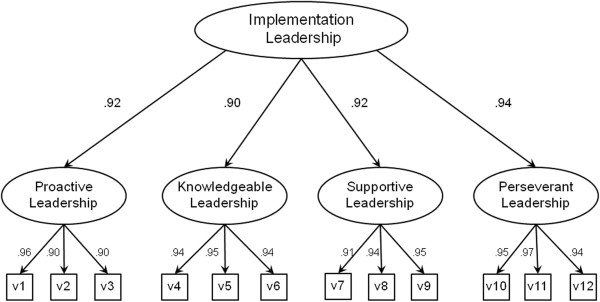
BACKGROUND: In healthcare and allied healthcare settings, leadership that supports effective implementation of evidenced-based practices (EBPs) is a critical concern. However, there are no empirically validated measures to assess implementation leadership. This paper describes the development, factor structure, and initial reliability and convergent and discriminant validity of a very brief measure of implementation leadership: the Implementation Leadership Scale (ILS). METHODS: Participants were 459 mental health clinicians working in 93 different outpatient mental health programs in Southern California, USA. Initial item development was supported as part of a two United States National Institutes of Health (NIH) studies focused on developing implementation leadership training and implementation measure development. Clinician work group/team-level data were randomly assigned to be utilized for an exploratory factor analysis (n = 229; k = 46 teams) or for a confirmatory factor analysis (n = 230; k = 47 teams). The confirmatory factor analysis controlled for the multilevel, nested data structure. Reliability and validity analyses were then conducted with the full sample. RESULTS: The exploratory factor analysis resulted in a 12-item scale with four subscales representing proactive leadership, knowledgeable leadership, supportive leadership, and perseverant leadership. Confirmatory factor analysis supported an a priori higher order factor structure with subscales contributing to a single higher order implementation leadership factor. The scale demonstrated excellent internal consistency reliability as well as convergent and discriminant validity. CONCLUSIONS: The ILS is a brief and efficient measure of unit level leadership for EBP implementation. The availability of the ILS will allow researchers to assess strategic leadership for implementation in order to advance understanding of leadership as a predictor of organizational context for implementation. The ILS also holds promise as a tool for leader and organizational development to improve EBP implementation.
Overview
The claims and statistics of this paper haven’t been checked yet.
Free: it reads the open-access text and checks the first 5 claims that cite a source we can check. Create a free account to check every claim.
Integrity signals
Registry
Cites
Statistics
Figures
Verification
Claims the paper makes
The claims and statistics of this paper haven’t been checked yet.
Free: it reads the open-access text and checks the first 5 claims that cite a source we can check. Create a free account to check every claim.
Claims other papers make about this one
Each is checked against this paper’s own text: does it say what the citing paper says it does?
The source backs part of the claim, not all of it — or backs it for a different population, condition or comparison.
In the citing paper
“Subscale internal consistencies ranged from 0.95 to 0.98.”
From Leading the charge in the education sector: development and validation of the School Implementation Leadership Scale (SILS) (2022) · cites this paper as [9]
Experimental — accuracy not yet measuredThe source backs part of the claim, not all of it — or backs it for a different population, condition or comparison.
In the citing paper
“Our preliminary results also signal a need for new instrumentation targeting non-provider stakeholders such as leaders and external change agents (e.g., implementation practitioners or intermediaries), particularly in light of research identifying the role they play in implementation success (e.g., [25]).”
From The Society for Implementation Research Collaboration Instrument Review Project: A methodology to promote rigorous evaluation (2016) · cites this paper as [25]
Experimental — accuracy not yet measuredThe cited source says what the claim attributes to it.
In the citing paper
“Designed to be brief and pragmatic [29], the original ILS contained 12 items loading onto 4 subscales: Proactive Leadership (anticipating and addressing implementation challenges), Knowledgeable Leadership (deep understanding of EBP and implementation issues), Supportive Leadership (support for EBP adoption/use), and Perseverant Leadership (consistent and responsive to challenges).”
From Leading the charge in the education sector: development and validation of the School Implementation Leadership Scale (SILS) (2022) · cites this paper as [9]
The cited source says what the claim attributes to it.
In the citing paper
“The original ILS [9] and original SILS adaptation [66] are 12-item instruments developed to assess strategic leadership for EBP implementation.”
From Leading the charge in the education sector: development and validation of the School Implementation Leadership Scale (SILS) (2022) · cites this paper as [9]
Self-check
Percentages, sums and reported differences re-computed from the paper’s own numbers.
The self-check needs the paper’s full text.
Citations
Cites
Hu, L., & Bentler, P. M. (1999) · Structural Equation Modeling A Multidisciplinary Journal · doi:10.1080/10705519909540118 · Cited by 108,788 · cited 1×
“08 indicate acceptable model fit [41-44].”
Intraclass correlations: Uses in assessing rater reliability.
Shrout, P. E., & Fleiss, J. L. (1979) · Psychological Bulletin · doi:10.1037/0033-2909.86.2.420 · Cited by 24,532 · cited 1×
“We first examined the amount of dependency among observations within groups using intraclass correlations (ICC, type 1) [46].”
MethodHu, L.-T., & Bentler, P. M. (1998) · Psychological Methods · doi:10.1037/1082-989x.3.4.424 · Cited by 12,298 · cited 1×
“08 indicate acceptable model fit [41-44].”
Organizational Culture and Leadership
Tierney, W. G., & Schein, E. H. (1986) · The Academy of Management Review · doi:10.2307/258322 · Cited by 9,601
Evaluating the use of exploratory factor analysis in psychological research.
Fabrigar, L. R., Wegener, D. T., MacCallum, R. C., & Strahan, E. J. (1999) · Psychological Methods · doi:10.1037/1082-989x.4.3.272 · Cited by 9,587 · cited 1×
“Principal axis factoring was selected for factor extraction because it allows for consideration of both systematic and random error [37] and Promax oblique rotation was utilized for factor rotation as we assumed that derived factors would be correlated.”
MethodProctor, E., Silmere, H., Raghavan, R., Hovmand, P., Aarons, G., Bunger, A., Griffey, R., & Hensley, M. (2011) · Administration and Policy in Mental Health and Mental Health Services Research · doi:10.1007/s10488-010-0319-7 · Cited by 8,721
Self-citationA Rationale and Test for the Number of Factors in Factor Analysis
Horn, J. L. (1965) · Psychometrika · doi:10.1007/bf02289447 · Cited by 8,714 · cited 1×
“Parallel analysis was based on estimation of 1,000 random data matrices with values that correspond to the 95 percentile of the distribution of random data eigenvalues [39,40].”
MethodDETERMINANTS OF INNOVATIVE BEHAVIOR: A PATH MODEL OF INDIVIDUAL INNOVATION IN THE WORKPLACE.
Scott, S. G., & Bruce, R. A. (1994) · Academy of Management Journal · doi:10.2307/256701 · Cited by 6,068 · cited 1×
“Leaders can positively or negatively impact the capacity to foster change and innovation [7-10] and therefore are instrumental in facilitating a positive climate for innovation and positive attitudes toward EBP during implementation”
BackgroundEstimating within-group interrater reliability with and without response bias
James, L. R., Demaree, R. G., & Wolf, G. (1984) · Journal of Applied Psychology · doi:10.1037/0021-9010.69.1.85 · Cited by 4,774 · cited 3×
“We next examined the average agreement within clinical work group for individual items and scales using awg(1) and awg(J), respectively [48-50].”
BackgroundMethodOrganizational culture and leadership
Tohidi, H., & Jabbari, M. M. (2012) · Procedia - Social and Behavioral Sciences · doi:10.1016/j.sbspro.2011.12.156 · Cited by 4,303 · cited 2×
“First, as part of a study focused on developing an intervention to improve leadership for evidencebased practice implementation [18], the investigative team developed items based on review of literature relating leader behaviors to implementation and organizational climate and culture change [32,33].”
Background
Research works printed but not linked: 4
- Massoud M, Nielsen G, Nolan K, Nolan TW, Schall MW, Sevin C: A Framework for Spread: From Local Improvements to System-wide Change. 2006, Cambridge, MA: Institute for Healthcare Improvement
- Dunn G, Everitt B, Pickles A: Modeling Covariances and Latent Variables Using EQS. 1993, London: Chapman & Hall/CRC Press
- Cochran WG: Sampling Techniques. 1977, New York: Wiley and Sons, 3
- Kouzes JM, Posner BZ: The Leadership Challenge. 2007, San Francisco, CA: Jossey-Bass
Cited by
Items 201–300 of 568
Evidence-Based Physiotherapy Culture—The Influence of Health Care Leaders in Sweden
Dannapfel, P., & Nilsen, P. (2016) · Open Journal of Leadership · doi:10.4236/ojl.2016.53006 · Cited by 17
“Alternatively, the embedding mechanisms might signify that EBP issues are not important for the profession and/or the health care organization (Aarons et al., 2014).”
BackgroundKarlberg-Traav, M., Forsman, H., Eriksson, M. H., & Cronqvist, A. (2018) · Nursing Open · doi:10.1002/nop2.172 · Cited by 20
Shapiro, V. B., Ziemer, K. L., Accomazzo, S., & Kim, B. E. (2019) · Contemporary School Psychology · doi:10.1007/s40688-019-00230-7 · Cited by 16
“Data from clinicians completing the ILS in mental health clinics (Aarons et al. 2014) generated bigger ICCs (.22–.29), indicating greater variation across groups relative to within groups.”
BackgroundMethodResultInfluentialSmith, J. D., Rafferty, M. R., Heinemann, A. W., Meachum, M. K., Villamar, J. A., Lieber, R. L., & Brown, C. H. (2020) · BMC Health Services Research · doi:10.1186/s12913-020-05118-4 · Cited by 16
Söling, S., Pfaff, H., Karbach, U., Ansmann, L., Köberlein–Neu, J., AdAM-Study Group, Kellermann-Mühlhoff, P., Düvel, L., Beckmann, T., Hammerschmidt, R., et al. (2022) · BMC Health Services Research · doi:10.1186/s12913-022-08434-z · Cited by 15
“In addition, as suggested in other studies, we examined the influence of the ILS on multiple organizational factors [23].”
BackgroundMethodInfluentialYeh, I.-L., Wong, S. Y. X., Safaruan, L. S. B., Kang, Y. Q., Wong, M. S. T., & Wilson, I. M. (2022) · Social Sciences · doi:10.3390/socsci11120557 · Cited by 13
“The leadership of this organisation demonstrated transformational leadership and implementation leadership that supports implementation of new ideas (Aarons et al. 2014).”
BackgroundMathew, D., Cesario, S. K., Malecha, A. T., & Toms, R. (2024) · Worldviews on Evidence-Based Nursing · doi:10.1111/wvn.12693 · Cited by 12
Hower, K. I., Pfaff, H., Kowalski, C., Wensing, M., & Ansmann, L. (2019) · Journal of Health Organization and Management · doi:10.1108/jhom-06-2018-0177 · Cited by 22
Bahraini, N. H., Matarazzo, B. B., Barry, C. N., Post, E. P., Forster, J. E., Dollar, K. M., Dobscha, S. K., & Brenner, L. A. (2020) · Implementation Science · doi:10.1186/s13012-020-01019-6 · Cited by 13
“Aarons GA, Ehrhart MG, Torres EM, Finn NK, Roesch SC. Validation of the Implementation Leadership Scale (ILS) in substance use disorder treatment organizations.”
BackgroundInfluentialLewis, C., Buchanan, J. P., Clarke, A. J., Clement, E. M., Friedrich, B., Ward, J. H., Hill, M. K., Horn, R., Lucassen, A., Patch, C., et al. (2021) · NIHR Open Research · doi:10.3310/nihropenres.13236.1 · Cited by 13
Jolles, M. P., Mack, W. J., Reaves, C. M., Saldana, L., Stadnick, N. A., Fernández, M. E., & Aarons, G. A. (2021) · Implementation Science Communications · doi:10.1186/s43058-021-00244-4 · Cited by 16
Self-citationGold, R. B., Hollombe, C., Bunce, A., Nelson, C. A., Davis, J. V., Cowburn, S., Perrin, N., DeVoe, J. E., Mossman, N., Boles, B., et al. (2015) · Implementation Science · doi:10.1186/s13012-015-0333-y · Cited by 14
“Survey item selection was informed by the literature on practices’ “readiness to change” [81–93] and input from CHC staff from our prior trial; surveys were piloted prior to finalizing.”
MethodRashid, S., Moore, J. E., Timmings, C., Vogel, J. P., Ganatra, B., Khan, D. N., Sayal, R., Gülmezoglu, A. M., & Straus, S. E. (2017) · Reproductive Health · doi:10.1186/s12978-017-0405-3 · Cited by 15
“When establishing a central coordinating body, countries can consider assessing leadership buy-in [23] or using coordinated leadership and organizational development strategies [24] to improve leadership and organizational supports for implementing and sustaining SA interventions.”
BackgroundRitchie, L. M. P., Mundeva, H., van Lettow, M., Straus, S. E., Kip, E., & Makwakwa, A. (2020) · BMC Health Services Research · doi:10.1186/s12913-020-05386-0 · Cited by 15
Alias, N., Awang, Z., & Muda, H. B. (2020) · IIUM Journal of Educational Studies · doi:10.31436/ijes.v7i2.222 · Cited by 20
“The four factors that made up the implementation leadership as specified by Aarons et al. (2014) were based on the degree to which a leader is proactive to policy implementation, the leader’s knowledge of policy and implementation, his/her support for policy implementation, and perseverance in the…”
BackgroundMethodTanner, A. E., Dowshen, N., Philbin, M. M., Rulison, K. L., Camacho-González, A., Lee, S., Moore, S. J., Fortenberry, J. D., & Hussen, S. A. (2021) · JMIR Research Protocols · doi:10.2196/24565 · Cited by 12
Aminihajibashi, S., Jensen, T. K., & Skar, A. S. (2024) · Frontiers in Public Health · doi:10.3389/fpubh.2024.1304345 · Cited by 16
Implementing the teen marijuana check-up in schools—a study protocol
Hartzler, B. J., Lyon, A. R., Walker, D. D., Matthews, L., King, K. M., & McCollister, K. E. (2017) · Implementation Science · doi:10.1186/s13012-017-0633-5 · Cited by 15
“Interested school staff will review and sign a consent form and complete a web-based survey tapping perceptions of strategic leadership [55] and implementation climate [56].”
BackgroundJohnson-Kwochka, A. V., Dir, A. L., Salyers, M. P., & Aalsma, M. C. (2020) · BMC Health Services Research · doi:10.1186/s12913-020-05777-3 · Cited by 16
“96 in our sample) as well as convergent and discriminant validity [31].”
BackgroundByeon, Y. V., Lau, A. S., Lind, T., Hamilton, A. B., & Brookman-Frazee, L. I. (2022) · Implementation Research and Practice · doi:10.1177/26334895221110263 · Cited by 16
“Sustainment Leadership was measured using an adapted 9-item version of the psychometrically validated Implementation Leadership Scale (ILS) (Aarons et al., 2014).”
BackgroundMethodInfluentialJaramillo, E. T., Willging, C. E., Saldana, L., Self‐Brown, S., Weeks, E. A., & Whitaker, D. J. (2023) · BMC Health Services Research · doi:10.1186/s12913-023-09079-2 · Cited by 16
Egeland, K. M., Hauge, M., Ruud, T., Ogden, T., & Heiervang, K. S. (2019) · Community Mental Health Journal · doi:10.1007/s10597-019-00430-8 · Cited by 12
Curran, G. M., Woo, S. M., Hepner, K. A., Lai, W. P., Kramer, T. L., Drummond, K. L., & Weingardt, K. (2015) · Journal of Substance Abuse Treatment · doi:10.1016/j.jsat.2015.05.008 · Cited by 13
Implementing Effective Policy in a National Mental Health Reengagement Program for Veterans
Smith, S. N., Lai, Z., Almirall, D., Goodrich, D. E., Abraham, K. M., Nord, K. M., & Kilbourne, A. M. (2016) · The Journal of Nervous and Mental Disease · doi:10.1097/nmd.0000000000000592 · Cited by 12
“…however, can be attributed to organizational characteristics that facilitate or hinder successful implementation, including leadership priorities (Aarons et al., 2011, 2014), staff capacity and power to facilitate change (Helfrich et al., 2009;Weiner, 2009), size and maturity (Damschroder et…”
BackgroundMa, X., Shen, J., & Reeves, P. L. (2023) · Evaluation and Program Planning · doi:10.1016/j.evalprogplan.2023.102341 · Cited by 12
Shramko, M., Beckman, K. J., Gadea, A., Goodhue, E., Davison, M., McCammon, B., & McMorris, B. J. (2023) · School Psychology Review · doi:10.1080/2372966x.2023.2224054 · Cited by 14
“Research on leadership in implementation (e.g., Aarons et al., 2014; Lyon et al., 2018) examines different dimensions such as whether leadership is proactive, knowledgeable, supportive, and perseverant.”
Sayer, N. A., Stirman, S. W., Rosen, C. S., Kehle‐Forbes, S., Spoont, M. R., Eftekhari, A., Chard, K. M., Kaplan, A. N., & Nelson, D. B. (2023) · Journal of Consulting and Clinical Psychology · doi:10.1037/ccp0000832 · Cited by 11
Sagatun, Å., Engell, T., Brekke, M., Sjølie, H., Ekornes, S. M., Waldum-Grevbo, K. S., Pape, K., Kvaløy, K., Jeneson, A., Trøan, A. S., et al. (2023) · BMC Health Services Research · doi:10.1186/s12913-023-10179-2 · Cited by 10
A Leadership Competence Framework to Support the Development of Conservation Professionals
Black, S. A. (2021) · Open Journal of Leadership · doi:10.4236/ojl.2021.104019 · Cited by 11
Ngo, V. K., Vu, T. T., Vu, Q. A., McBain, R. K., Yu, G., Nguyen, N. B., Nguyen, H. M. T., Ho, H. T., & Hoang, M. V. (2023) · BMC Public Health · doi:10.1186/s12889-023-16312-4 · Cited by 11
“The implementation leadership scale (ILS): Development of a brief measure of unit level implementation leadership.”
MethodA theory of change for community-initiated mental health care in the United States
Breuer, E., Morris, A., Blanke, L., Pearsall, M., Rodriguez, R., Miller, B. F., Naslund, J. A., Saxena, S., Balsari, S., & Patel, V. (2023) · Cambridge Prisms Global Mental Health · doi:10.1017/gmh.2023.49 · Cited by 13
Sickle cell disease and implementation science: A partnership to accelerate advances
King, A. A., & Baumann, A. A. (2017) · Pediatric Blood & Cancer · doi:10.1002/pbc.26649 · Cited by 11
Burnett-Zeigler, I., Zhou, E., Martinez, J. H., Zumpf, K., Lartey, L., Moskowitz, J. T., Wisner, K. L., McDade, T., Brown, C. H., Gollan, J., et al. (2023) · Trials · doi:10.1186/s13063-022-07012-2 · Cited by 9
Pickard, K. E., Maddox, B. B., Boles, R. E., & Reaven, J. (2024) · BMC Psychiatry · doi:10.1186/s12888-023-05441-0 · Cited by 12
“” Past research has demonstrated that the ILS has excellent internal consistency, as well as convergent and discriminant validity (Aarons et al., 2014).”
BackgroundMethodMurea, M., Raimann, J. G., Divers, J., Maute, H., Kovach, C., Abdel‐Rahman, E. M., Awad, A. S., Flythe, J. E., Gautam, S. C., Niyyar, V. D., et al. (2024) · Trials · doi:10.1186/s13063-024-08281-9 · Cited by 13
Corbin, C. M., Zhang, Y., Ehrhart, M. G., Locke, J. J., & Lyon, A. R. (2024) · Prevention Science · doi:10.1007/s11121-024-01722-6 · Cited by 9
“Implementation leadership supports effective EBP implementation through behaviors (e.g., persevering through implementation challenges) that signal the importance of EBPs and directly support their use (Aarons et al., 2014; Lyon et al., 2018, 2022).”
Self-citationMcCarthy, S., & Griffiths, L. J. (2021) · Human Services Organizations Management Leadership & Governance · doi:10.1080/23303131.2021.1929626 · Cited by 10
“The influential role of leader–follower relationships in enhancing staff buy-in and willingness to perform their work duties was both a qualitative (Aarons et al., 2014; Akin et al., 2016; Plath, 2013; Rocque et al., 2014; Willging et al., 2015) and quantitative finding (Aarons & Sommerfeld, 2012; Ehrhart et al.”
BackgroundResultInfluentialCollins, V. K., Corbin, C. M., Locke, J. J., Cook, C. R., Ehrhart, M. G., Hatch, K., & Lyon, A. R. (2024) · School Mental Health · doi:10.1007/s12310-024-09635-z · Cited by 12
“Implementation leadership and climate, more specified versions of broader constructs in schools (Lyon et al., 2022; Thayer et al., 2022), strategically focus on supporting effective EBP implementation (Aarons et al., 2014; Ehrhart et al., 2014), which is frequently a goal among educators.”
Self-citationValidation and Dimensionality of the Integration of Health Protection and Health Promotion Score
Williams, J. A. R., Schult, T. M., Nelson, C. C., Caban-Martinez, A. J., Katz, J. N., Wagner, G. R., Pronk, N. P., Sorensen, G., & McLellan, D. L. (2016) · Journal of Occupational and Environmental Medicine · doi:10.1097/jom.0000000000000732 · Cited by 9
Meza, R. D., Beidas, R. S., Ehrhart, M. G., Mandell, D. S., Dorsey, S., Frederick, L., Oh, C., & Locke, J. J. (2019) · Administration and Policy in Mental Health and Mental Health Services Research · doi:10.1007/s10488-019-00932-3 · Cited by 9
Self-citationLushin, V., Mandell, D. S., Beidas, R. S., Marcus, S. C., Nuske, H. J., Kaploun, V., Seidman, M., Gaston, D., & Locke, J. J. (2019) · Journal of Autism and Developmental Disorders · doi:10.1007/s10803-019-04304-6 · Cited by 11
“Teachers completed the Implementation Leadership Scale (ILS; Aarons et al. 2014), which measures various dimensions of implementation leadership in a respondents’ organization, with response anchors ranging from 0= not at all to 4= to a very great extent.”
MethodImplementation in Residential Youth Care: Providers Perspectives on Effective Leadership Behavior
Vaskinn, L., Mellblom, A. V., Waaler, P. M., Skagseth, O., Bjørkli, C. A., & Kjøbli, J. (2020) · Residential Treatment for Children & Youth · doi:10.1080/0886571x.2020.1774464 · Cited by 14
Baffsky, R., Ivers, R., Cullen, P., Batterham, P. J., Toumbourou, J. W., Calear, A. L., Werner‐Seidler, A., McGillivray, L., & Torok, M. H. (2022) · Contemporary Clinical Trials Communications · doi:10.1016/j.conctc.2022.100923 · Cited by 12
“The measure has excellent convergent and discriminant validity and internal consistency reliability [41].”
BackgroundMethodRole conflict and ambivalence in the aged-parent-adult-child relationship
Yu, X., Miao, C., Leung, C., & Salmon, C. T. (2017) · International Journal of Crowd Science · doi:10.1108/ijcs-08-2017-0012 · Cited by 9
“IJCS 1,2 166 The questions related to role conflict are developed based on Implementation Leadership Scale (ILS) (Aarons et al., 2014) and Parent–Child Relations Dimension Scale (Aquilino, 1997).”
MethodLocke, J. J., Corbin, C. M., Goosey, R., Collins, V. K., Ehrhart, M. G., Hatch, K., Espeland, C., & Lyon, A. R. (2025) · Implementation Research and Practice · doi:10.1177/26334895241312405 · Cited by 8
Self-citationCombining MAMBA and Attention-Based Neural Network for Electric Ground-Handling Vehicles Scheduling
Li, J., Fu, W., Huang, G., Liu, K., Zhang, J., & Fu, Y. (2025) · Systems · doi:10.3390/systems13030155 · Cited by 8
“Iterated Local Search (ILS) is a heuristic search algorithm that escapes local optima by perturbing solutions obtained from local searches and then re-applying local search to find the global optimum [38].”
Implementation Leadership in School Nutrition: A Qualitative Study
Machado, S. S., Brewster, A. L., Shapiro, V. B., Ritchie, L. D., Magee, K., & Madsen, K. A. (2021) · Journal of Nutrition Education and Behavior · doi:10.1016/j.jneb.2021.08.011 · Cited by 9
McHugh, S., Sheard, L., O'Hara, J. K., & Lawton, R. (2022) · BMC Health Services Research · doi:10.1186/s12913-022-08713-9 · Cited by 9
“Leadership buy-in was important and has been identified as key to the success of improvement approaches within the wider healthcare implementation literature [32].”
BackgroundLion, K. C., Zhou, C., Fishman, P. A., Senturia, K., Cole, A., Sherr, K., Opel, D. J., Stout, J. W., Hazim, C., Warren, L., et al. (2023) · Implementation Science · doi:10.1186/s13012-023-01263-6 · Cited by 9
“The Implementation Leadership Scale (ILS): development of a brief measure of unit level implementation leadership.”
MethodRonquillo, C., Dahinten, V. S., Bungay, V., & Currie, L. M. (2023) · JMIR Nursing · doi:10.2196/44435 · Cited by 11
“%) or were missing ILS responses (65/388, 16.7%), the final sample out of 388 participants consisted of 288 (74.2”
BackgroundMethodInfluentialDy, S. M., Hamayel, N. A. A., Hannum, S. M., Sharma, R., Isenberg, S. R., Kuchinad, K. E., Zhu, J., Smith, K. C., Lorenz, K., Kamal, A. H., et al. (2017) · Journal of Pain and Symptom Management · doi:10.1016/j.jpainsymman.2017.06.008 · Cited by 11
Romney, W. M., Salbach, N. M., Parrott, J. S., Ward, I., & Deutsch, J. E. (2021) · Clinical Rehabilitation · doi:10.1177/02692155211046460 · Cited by 8
“Assessment should have included staff rotation to other clinical areas, census changes, patient case mix, organizational structure for decision making, and external policy changes.(32,33) Several key findings about the methodological design and need for tailored interventions versus randomization and control were high…”
BackgroundWard, C. S., Ihlo, T., Jackson, K. R., & Farmer, S. (2022) · Journal of Disability Policy Studies · doi:10.1177/10442073221096392 · Cited by 15
“…with stakeholders to build a shared understanding of need for selected practices and implementation work, and (c) using implementation data (e.g., fidelity, capacity, reach) in conjunction with outcome data for continuous improvement efforts (Aarons et al., 2014; Moullin et al., 2018).”
BackgroundMethodHull, L., Arora, S., Stefanidis, D., & Sevdalis, N. (2015) · The American Journal of Surgery · doi:10.1016/j.amjsurg.2015.01.022 · Cited by 8
Cardoso, D., Santos, E. J. F., Cardoso, M., Oliveira, C. R., Rodrígues, M. A., & Apóstolo, J. (2017) · The JBI Database of Systematic Reviews and Implementation Reports · doi:10.11124/jbisrir-2016-003218 · Cited by 13
Torres, E. M., Seijo, C., Ehrhart, M. G., & Aarons, G. A. (2020) · Journal of Substance Abuse Treatment · doi:10.1016/j.jsat.2020.01.002 · Cited by 9
Self-citationChoy-Brown, M. (2021) · Community Mental Health Journal · doi:10.1007/s10597-021-00783-z · Cited by 10
“Of supervisors who met these criteria (N = 44), a targeted sampling strategy was employed to facilitate a final participant pool representing maximum variation in the alignment between supervisors’ self-assessments and their supervisees’ ratings of the supervisors’ implementation leadership, as measured by a mean tota…”
MethodThe role of clinical supervision in implementing evidence-based practice for managing comorbidity
Giannopoulos, V., Morley, K. C., Guajardo, M. G. U., Louie, E., Wood, K., Teesson, M., Baillie, A., & Haber, P. (2021) · The Clinical Supervisor · doi:10.1080/07325223.2021.1909517 · Cited by 13
“Supervision is essential following any training in new skills to ensure fidelity (Tober et al., 2005) through encouraging the use of EBP (Aarons et al., 2014).”
BackgroundLau, A. S., Lind, T., Motamedi, M., Lui, J. H. L., Kuckertz, M., Innes-Gomberg, D., Pesanti, K., & Brookman-Frazee, L. I. (2021) · Implementation Research and Practice · doi:10.1177/26334895211057884 · Cited by 9
“Data indicate the importance of leadership behaviors in promoting EBP sustainment, such as being knowledgeable about EBPs, supporting staff in the implementation process, proactive problem-solving, and perseverance through the difficulties of implementation (Aarons et al., 2014, 2016).”
BackgroundMoore, S. A., Landa, R. J., & Azad, G. F. (2021) · Global Implementation Research and Applications · doi:10.1007/s43477-021-00023-2 · Cited by 13
Smith, J. D., Carroll, A. J., Tedla, Y. G., Sanuade, O. A., Merle, J. L., Heinrich, J., Bannon, J., Abramsohn, E., Ahmad, F. S., Lazar, D., et al. (2025) · Implementation Science · doi:10.1186/s13012-025-01431-w · Cited by 8
“We will also administer the Change Process Capability Questionnaire [51] at baseline, and short forms validated by Smith et al. [52]of the Organizational Change Recipients’ Beliefs Scale [53] and Implementation Leadership Scale [54].”
Molle, J., Agnel, J., Colson, S., & Chays‐Amania, A. (2025) · International Journal of Nursing Studies Advances · doi:10.1016/j.ijnsa.2025.100414 · Cited by 14
“The Implementation Leadership Model clarifies how these roles exercise their influence.”
Estrada, Y. A., Lozano, A., Boga, D. J., Tapia, M. I., Perrino, T., Velázquez, M. R., Forster, L., Torres, N. S., Morales, C. V., Gwynn, L. A., et al. (2023) · PLoS ONE · doi:10.1371/journal.pone.0283987 · Cited by 10
Uncovering determinants of perceived feasibility of TF-CBT through coincidence analysis
Johnson, C. M., AlRasheed, R., Gray, C. L., Triplett, N. S., Mbwayo, A., Weinhold, A., Whetten, K., & Dorsey, S. (2024) · Implementation Research and Practice · doi:10.1177/26334895231220277 · Cited by 9
“Implementation leadership , which is operationalized as leadership behaviors that support the implementation of an EBT (Aarons et al., 2014), is an important determinant of implementation success (Meza et al., 2021).”
BackgroundBrown, G. K., Wolk, C. B., Green, K. L., Nezir, F., Mowery, D. L., Gallop, R., Reilly, M. E., Stanley, B., Mandell, D. S., Oquendo, M. A., et al. (2024) · Contemporary Clinical Trials · doi:10.1016/j.cct.2024.107492 · Cited by 11
Patton, L. J., Sajwani‐Merchant, Z., Moore, S., Chen, P., Six-Means, A., & Markey, L. (2024) · Nurse Leader · doi:10.1016/j.mnl.2024.04.001 · Cited by 12
Gaias, L. M., Duong, M. T., Corbin, C. M., Cook, C. R., Deveau, M., Kyoyetera, P., & Wood, O. (2024) · Psychology in the Schools · doi:10.1002/pits.23251 · Cited by 9
Facilitators and Challenges to Health Promotion in Black and Latino Churches
Maxwell, A. E., Vargas, C., Santifer, R. H., Chang, L. C., Crespi, C. M., & Lucas‐Wright, A. (2020) · Journal of Racial and Ethnic Health Disparities · doi:10.1007/s40615-020-00929-x · Cited by 9
“able instruments [15, 23] or modified existing items for our assessment.”
BackgroundMaurer, C., Gattinger, H., & Mayer, H. (2020) · Pflege · doi:10.1024/1012-5302/a000780 · Cited by 7
Borge, R. H., Skar, A. S., Endsjø, M., & Egeland, K. M. (2021) · Implementation Science Communications · doi:10.1186/s43058-021-00240-8 · Cited by 9
“The implementation leadership scale (ILS) measures unit-level leadership for EBP implementation [15].”
BackgroundInfluentialBoehm, L. M., Mart, M. F., Dietrich, M. S., Work, B. D., Wilson, W. T., Walker, G., & Piras, S. E. (2022) · BMJ Open Quality · doi:10.1136/bmjoq-2022-001885 · Cited by 8
Barnes, L. A. J., Longman, J. M., Adams, C., Paul, C. L., Atkins, L., Bonevski, B., Cashmore, A. W., Twyman, L., Bailie, R. S., Pearce, A. M., et al. (2022) · Implementation Science · doi:10.1186/s13012-022-01250-3 · Cited by 8
Implementation Science: Foundations and Applied Practice in Educational Settings
Farmer, S., Ward, C. S., & Cusumano, D. L. (2023) · Springer eBooks · doi:10.1007/978-3-031-21381-6_2 · Cited by 8
Franz, L., Viljoen, M., Askew, S., Brown, M., Dawson, G., Martino, J. M. D., Sapiro, G., Sebolai, K., Seris, N., Shabalala, N., et al. (2024) · PLoS ONE · doi:10.1371/journal.pone.0291883 · Cited by 8
Fiechtner, L. G., Velez, D. S., Ayala, S. G., Castro, I., Lindros, J., Perkins, M. E., Baker, A. E., Salmon, J., Biggs, V., Cannon-Smith, G., et al. (2021) · Childhood Obesity · doi:10.1089/chi.2021.0178 · Cited by 7
Patient empowerment: Its implementation and systems within hospitals in England and Greece
Boudioni, M., McLaren, S., & Lister, G. (2018) · Health Services Management Research · doi:10.1177/0951484817752628 · Cited by 12
“‘implementation leadership’.(26,27,29,55) The development of approaches to the assessment of implementation leadership together with advanced skills training could enhance future implementation of PE.”
Black, C. J., Placencio‐Castro, M., Phend, G., Havugimana, J. M. V., Umulisa, G., Uwamahoro, P., Nyirahabimana, M. G., Bond, L., Hernandez, K., Jensen, S. K. G., et al. (2025) · Journal of Child Psychology and Psychiatry · doi:10.1111/jcpp.14160 · Cited by 9
“%) or congenital heart defects (1%).”
Freund, J., Ebert, D. D., Thielecke, J., Braun, L., Baumeister, H., Berking, M., & Titzler, I. (2023) · Frontiers in Digital Health · doi:10.3389/fdgth.2022.1083143 · Cited by 7
A Systematic Review of the Transforming Leadership Literature and Future Outlook
Dong, B. (2023) · Journal of innovation and development · doi:10.54097/jid.v3i1.8420 · Cited by 9
Institutional factors and curriculum fidelity in vocational training centres in Kampala City, Uganda
Ochwo, R., Mugizi, W., & Kasule, G. W. (2023) · Interdisciplinary Journal of Education Research · doi:10.38140/ijer-2023.vol5.04 · Cited by 6
“The independent variable was measured in terms of instructors’ teaching self-efficacy (Bülent & Güven, 2022), institutional support (Razak et al., 2016) and leadership effectiveness (Aarons et al., 2014).”
MethodSklar, M., Ehrhart, M. G., Ramirez, N., Carandang, K. M., Kuhn, N., Day, A., Aarons, G. A., & Williams, N. J. (2024) · Implementation Research and Practice · doi:10.1177/26334895241236680 · Cited by 13
“This case study also provides a rich example of alignment across leadership levels, which prior research has described as potentially important for implementation success (Aarons et al., 2014b; Ehrhart & Aarons, 2022; Lundmark et al., 2021).”
BackgroundResultInfluentialSelf-citationGago, C. M., León, E. D., Mandal, S., Calle, F. D. L., Garcia, M., Colella, D., Dapkins, I. P., & Schoenthaler, A. (2024) · Implementation Science Communications · doi:10.1186/s43058-024-00587-8 · Cited by 7
“Three abbreviated scales were administered among staff and leadership, including the Adaptive Reserve Scale [35], Evidence-Based Practice Scale [36], and Implementation Leadership Scale [37] (Table 1), measuring constructs hypothesized to influence implementation fidelity [26].”
MethodHenderson, A. J., Takashima, M., Burmeister, E. A., Strube, P., & Winch, S. (2022) · Journal of Advanced Nursing · doi:10.1111/jan.15264 · Cited by 7
Balderson, B. H. K., Gray, S. L., Fujii, M., Nakata, K. G., Williamson, B. D., Cook, A. J., Wellman, R., Theis, M. K., Lewis, C. C., Key, D. L., et al. (2023) · Trials · doi:10.1186/s13063-023-07336-7 · Cited by 8
“Consistent with emerging literature [49], we will classify the degree to which clinic leaders demonstrate proactive, knowledgeable, supportive, and perseverant leadership for the STOP-FALLS intervention.”
BackgroundSaiki, M., Tomotaki, A., Fukahori, H., Yamamoto, T., Nishigaki, M., Matsuoka, C., Yasuda, E., & Sakai, I. (2023) · Journal of Nursing Management · doi:10.1155/2023/4080434 · Cited by 8
“Tis study assumed four-factor structure as the original study [11].”
InfluentialImplementation Science: Translating Research into Practice for Sustained Impact
Aarons, G. A., Sklar, M., & Sevdalis, N. (2017) · Springer eBooks · doi:10.1007/978-3-319-44010-1_18 · Cited by 7
Self-citationDo implementation contexts for the Positive Parenting Program improve child and parental well-being?
Garcia, A. R., Kim, M., Myers, C., & Trinh, X. (2020) · Journal of Social Work · doi:10.1177/1468017320957497 · Cited by 8
“Aarons et al. (2014) concluded the measure has high internal consistency (a¼ .98) and strong discriminant and convergent validity.”
BackgroundInfluentialPérez-Escamilla, B., Benrimoj, S. I., Martínez‐Martínez, F., Gastelurrutia, M. Á., Doval, R. V., Musial-Gabrys, K., & García‐Cárdenas, V. (2020) · Research in Social and Administrative Pharmacy · doi:10.1016/j.sapharm.2020.12.007 · Cited by 9
Choi, S. Y., Rusch, A., Lane, A., Liebrecht, C., Bilek, E. L., Eisenberg, D., Andrews, C. M., Perry, M., & Smith, S. N. (2023) · Implementation Research and Practice · doi:10.1177/26334895231159429 · Cited by 5
“It is often measured using the Implementation Leadership Scale (ILS), which was originally developed and validated in the clinical setting (Aarons et al., 2014), and showed its applicability in schools with minor changes (Lyon et al., 2018).”
BackgroundMethodInfluentialFadem, S. J., Crabtree, B. F., O’Malley, D. M., Mikesell, L., Ferrante, J. M., Toppmeyer, D., Ohman‐Strickland, P., Hemler, J. R., Howard, J., Bator, A., et al. (2023) · BMC Family Practice · doi:10.1186/s12875-023-02186-3 · Cited by 8
“Leadership style will be measured by qualitative interviews and the Implementation Leadership Scale (ILS), a brief psycho-metrically strong measure that contains 12-items with four subscales of proactive, knowledgeable, supportive, and perseverant leadership [87].”
MethodFjordkvist, E., Nyman, M. H., Winberg, M., Joelsson‐Alm, E., & Eldh, A. C. (2024) · BMC Health Services Research · doi:10.1186/s12913-024-11353-w · Cited by 9
“The Implementation Leadership Scale (ILS) [40] incorporates many, if not all, aspects identified in this study, but further development would be helpful.”
MethodYount, K. M., Whitaker, D. J., Fang, X., Trang, Q. T., Macaulay, M. K., & Minh, T. (2024) · Trials · doi:10.1186/s13063-024-08401-5 · Cited by 6
Chuang, E., Bunger, A. C., Smith, R., Girth, A. M., Phillips, R., Miech, E. J., Lancaster, K. E., Martin, J. K., Gadel, F., Himmeger, M., et al. (2024) · Implementation Science Communications · doi:10.1186/s43058-024-00666-w · Cited by 8
“Implementation climate was assessed using the 6-item Implementation Climate Measure [47], and implementation leadership was assessed using the 12-item Implementation Leadership Scale [48].”
MethodSelf-citationKartal, D., Jaeger, T., Lamblin, M., Richards, H., Witt, K., Occhipinti, J., Mihalopoulos, C., Chatterton, M. L., Chanen, A. M., McGorry, P. D., et al. (2024) · BMC Health Services Research · doi:10.1186/s12913-024-11795-2 · Cited by 5
“Implementation leadership will be measured using the 12-item Implementation Leadership Scale (ILS) [50] supervisor and staff versions.”
Katomski, A.-S., Pachicano, A. M., Zamantakis, A., Benbow, N., Willging, C. E., Rosen, J. G., Rosenberg-Carlson, E. P., Gomez, W., Hamilton, A. B., Kassanits, J. E., et al. (2025) · JAIDS Journal of Acquired Immune Deficiency Syndromes · doi:10.1097/qai.0000000000003619 · Cited by 7
Mharapara, T. L., Cooper-Thomas, H. D., Hutchison, A., & Callahan, J. L. (2019) · Human Resource Development Quarterly · doi:10.1002/hrdq.21339 · Cited by 8
Mostafa, H. A., & Mahfouz, H. H. E.-S. (2021) · Egyptian Journal of Health Care · doi:10.21608/ejhc.2021.167098 · Cited by 5
“…were used to collect the data for this study as the following: 1) The Head Nurses' Leadership Effectiveness Questionnaire: A structured questionnaire was developed by the researchers through review of recent related literature (Avolio and Bass, 2004; Avolio et al., 2007; Farahnak et al., 2014).”
MethodLlarena, M., Rogers, H. L., Macía, P., Pablo, S., González, M., Montejo, M., Paniagua, N., Benito, J., Rueda-Etxebarria, M., Santos, B., et al. (2023) · Implementation Science Communications · doi:10.1186/s43058-023-00495-3 · Cited by 8
Castiglione, S. A., Fréchette, J., & Agnihotram, V. R. (2023) · SAGE Open Nursing · doi:10.1177/23779608231216161 · Cited by 8
“Item generation was based on a literature review of leader behaviors related to performance, organizational climate, and culture change, yet the results of the review were not explicitly detailed or cited in the report (Aarons et al., 2014).”
BackgroundMethodInfluentialCrable, E. L., Sklar, M., Kandah, A., Samuels, H. C., Ehrhart, M. G., Aalsma, M. C., Hulvershorn, L. A., Willging, C. E., & Aarons, G. A. (2024) · Journal of Substance Use and Addiction Treatment · doi:10.1016/j.josat.2024.209433 · Cited by 7
“These meetings provided opportunities to review implementation data and propose multi-level strategies to develop system and organizational implementation climates support MET/CBT and other EBP efforts (Aarons, Ehrhart, & Farahnak, 2014; Aarons, Ehrhart, Farahnak, & Sklar, 2014).”
Self-citation
Metadata
- Authors
- Aarons, G. A., Ehrhart, M. G., & Farahnak, L. R.
- Affiliations
- University of California San Diego (US)
- San Diego State University (US)
- Corresponding author
- Aarons, Gregory A
- Venue
- Implementation Science
- Published
- 2014-04-14
- Volume
- 9
- Issue
- 1
- Pages
- 45-45
- ISSN
- 1748-5908 (ISSN-L)
- PMC
- PMC4022333
- OpenAlex
- W2120503228
- Cited by
- 559
- References
- 56
- Citations by year
- 2026: 40 · 2025: 54 · 2024: 72 · 2023: 72 · 2022: 59 · 2021: 66 · 2020: 40 · 2019: 48 · 2018: 36 · 2017: 23 · 2016: 20 · 2015: 18 · 2014: 10
- FWCI
- 42.75
- Type
- journal article
- Language
- en
- Open access
- gold
- doi.org
- Licence
- Locations
- Implementation Science (publishedVersion, cc-by)
- Europe PMC (PubMed Central) (publishedVersion, cc-by)
- PubMed Central (publishedVersion, cc-by)
- PubMed (publishedVersion)
- Open Scholarship Institutional Repository (Washington University in St. Louis) (submittedVersion)
- eScholarship (California Digital Library) (submittedVersion)
- eScholarship (California Digital Library) (submittedVersion, cc-by)
- Funders
- National Institute of Mental Health (R21MH098124, P30MH074678, R21MH082731, R01MH072961, R25MH080916)
- Topics
- Health Sciences › Health Professions › General Health Professions › Health Policy Implementation Science
- Health Sciences › Health Professions › General Health Professions › Health Sciences Research and Education
- Social Sciences › Education › Innovations in Medical Education
- Keywords
- implementation leadership, scale development, evidence-based practice implementation, mental health professionals, proactive leadership, supportive leadership, organizational context, leader development, organizational development
- MeSH terms
- Adult, Aged, Attitude of Health Personnel, California, Cooperative Behavior, Factor Analysis, Statistical, Female, Humans, Leadership, Male, Middle Aged, Organizational Innovation, Psychometrics, Reproducibility of Results, Young Adult, Translational Research, Biomedical
About these checks
Registry, retraction, Cites and statistics results are computed, not judged, with one exception: a printed reference that no index lists is read once by a model before it counts as a citation error. Claims are extracted by a model and kept only when their quote appears verbatim in the text; each cited source is then checked, with a model’s help, for whether it says what the claim relies on. Those verdicts can be wrong — read the claim’s quote and the cited source before relying on one.
Statistics and arithmetic are recomputed, not judged.
Confidence bands are shown only for fields calibrated on our annotated test set. None is calibrated yet, so no band is shown.
What counts as a claim ›How we measure confidence ›How we check this ›
Are you an author, or do you see a problem with this page? Request a review
Data sources
Bibliographic data: Semantic Scholar, OpenAlex, Crossref.
Contains information from the Semantic Scholar Academic Graph Datasets, made available under the ODC Attribution License (ODC-BY 1.0).
Semantic Scholar’s data is described in: Kinney, R., et al. (2023). The Semantic Scholar Open Data Platform. arXiv:2301.10140.
