

The implementation leadership scale (ILS): development of a brief measure of unit level implementation leadership
Open accessThe DOI matches its Crossref record; 56 of the 56 references it cites were found in a registry or an index.
Abstract
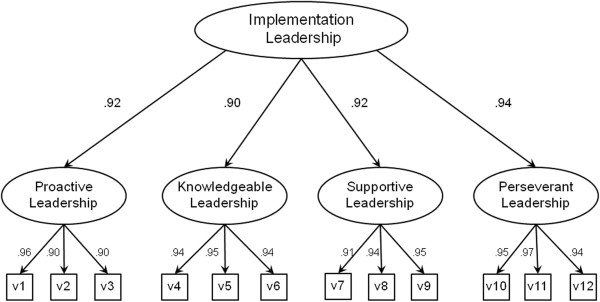
BACKGROUND: In healthcare and allied healthcare settings, leadership that supports effective implementation of evidenced-based practices (EBPs) is a critical concern. However, there are no empirically validated measures to assess implementation leadership. This paper describes the development, factor structure, and initial reliability and convergent and discriminant validity of a very brief measure of implementation leadership: the Implementation Leadership Scale (ILS). METHODS: Participants were 459 mental health clinicians working in 93 different outpatient mental health programs in Southern California, USA. Initial item development was supported as part of a two United States National Institutes of Health (NIH) studies focused on developing implementation leadership training and implementation measure development. Clinician work group/team-level data were randomly assigned to be utilized for an exploratory factor analysis (n = 229; k = 46 teams) or for a confirmatory factor analysis (n = 230; k = 47 teams). The confirmatory factor analysis controlled for the multilevel, nested data structure. Reliability and validity analyses were then conducted with the full sample. RESULTS: The exploratory factor analysis resulted in a 12-item scale with four subscales representing proactive leadership, knowledgeable leadership, supportive leadership, and perseverant leadership. Confirmatory factor analysis supported an a priori higher order factor structure with subscales contributing to a single higher order implementation leadership factor. The scale demonstrated excellent internal consistency reliability as well as convergent and discriminant validity. CONCLUSIONS: The ILS is a brief and efficient measure of unit level leadership for EBP implementation. The availability of the ILS will allow researchers to assess strategic leadership for implementation in order to advance understanding of leadership as a predictor of organizational context for implementation. The ILS also holds promise as a tool for leader and organizational development to improve EBP implementation.
Overview
The claims and statistics of this paper haven’t been checked yet.
Free: it reads the open-access text and checks the first 5 claims that cite a source we can check. Create a free account to check every claim.
Integrity signals
Registry
Cites
Statistics
Figures
Verification
Claims the paper makes
The claims and statistics of this paper haven’t been checked yet.
Free: it reads the open-access text and checks the first 5 claims that cite a source we can check. Create a free account to check every claim.
Claims other papers make about this one
Each is checked against this paper’s own text: does it say what the citing paper says it does?
The source backs part of the claim, not all of it — or backs it for a different population, condition or comparison.
In the citing paper
“Subscale internal consistencies ranged from 0.95 to 0.98.”
From Leading the charge in the education sector: development and validation of the School Implementation Leadership Scale (SILS) (2022) · cites this paper as [9]
Experimental — accuracy not yet measuredThe source backs part of the claim, not all of it — or backs it for a different population, condition or comparison.
In the citing paper
“Our preliminary results also signal a need for new instrumentation targeting non-provider stakeholders such as leaders and external change agents (e.g., implementation practitioners or intermediaries), particularly in light of research identifying the role they play in implementation success (e.g., [25]).”
From The Society for Implementation Research Collaboration Instrument Review Project: A methodology to promote rigorous evaluation (2016) · cites this paper as [25]
Experimental — accuracy not yet measuredThe cited source says what the claim attributes to it.
In the citing paper
“Designed to be brief and pragmatic [29], the original ILS contained 12 items loading onto 4 subscales: Proactive Leadership (anticipating and addressing implementation challenges), Knowledgeable Leadership (deep understanding of EBP and implementation issues), Supportive Leadership (support for EBP adoption/use), and Perseverant Leadership (consistent and responsive to challenges).”
From Leading the charge in the education sector: development and validation of the School Implementation Leadership Scale (SILS) (2022) · cites this paper as [9]
The cited source says what the claim attributes to it.
In the citing paper
“The original ILS [9] and original SILS adaptation [66] are 12-item instruments developed to assess strategic leadership for EBP implementation.”
From Leading the charge in the education sector: development and validation of the School Implementation Leadership Scale (SILS) (2022) · cites this paper as [9]
Self-check
Percentages, sums and reported differences re-computed from the paper’s own numbers.
The self-check needs the paper’s full text.
Citations
Cites
Hu, L., & Bentler, P. M. (1999) · Structural Equation Modeling A Multidisciplinary Journal · doi:10.1080/10705519909540118 · Cited by 108,788 · cited 1×
“08 indicate acceptable model fit [41-44].”
Intraclass correlations: Uses in assessing rater reliability.
Shrout, P. E., & Fleiss, J. L. (1979) · Psychological Bulletin · doi:10.1037/0033-2909.86.2.420 · Cited by 24,532 · cited 1×
“We first examined the amount of dependency among observations within groups using intraclass correlations (ICC, type 1) [46].”
MethodHu, L.-T., & Bentler, P. M. (1998) · Psychological Methods · doi:10.1037/1082-989x.3.4.424 · Cited by 12,298 · cited 1×
“08 indicate acceptable model fit [41-44].”
Organizational Culture and Leadership
Tierney, W. G., & Schein, E. H. (1986) · The Academy of Management Review · doi:10.2307/258322 · Cited by 9,601
Evaluating the use of exploratory factor analysis in psychological research.
Fabrigar, L. R., Wegener, D. T., MacCallum, R. C., & Strahan, E. J. (1999) · Psychological Methods · doi:10.1037/1082-989x.4.3.272 · Cited by 9,587 · cited 1×
“Principal axis factoring was selected for factor extraction because it allows for consideration of both systematic and random error [37] and Promax oblique rotation was utilized for factor rotation as we assumed that derived factors would be correlated.”
MethodProctor, E., Silmere, H., Raghavan, R., Hovmand, P., Aarons, G., Bunger, A., Griffey, R., & Hensley, M. (2011) · Administration and Policy in Mental Health and Mental Health Services Research · doi:10.1007/s10488-010-0319-7 · Cited by 8,721
Self-citationA Rationale and Test for the Number of Factors in Factor Analysis
Horn, J. L. (1965) · Psychometrika · doi:10.1007/bf02289447 · Cited by 8,714 · cited 1×
“Parallel analysis was based on estimation of 1,000 random data matrices with values that correspond to the 95 percentile of the distribution of random data eigenvalues [39,40].”
MethodDETERMINANTS OF INNOVATIVE BEHAVIOR: A PATH MODEL OF INDIVIDUAL INNOVATION IN THE WORKPLACE.
Scott, S. G., & Bruce, R. A. (1994) · Academy of Management Journal · doi:10.2307/256701 · Cited by 6,068 · cited 1×
“Leaders can positively or negatively impact the capacity to foster change and innovation [7-10] and therefore are instrumental in facilitating a positive climate for innovation and positive attitudes toward EBP during implementation”
BackgroundEstimating within-group interrater reliability with and without response bias
James, L. R., Demaree, R. G., & Wolf, G. (1984) · Journal of Applied Psychology · doi:10.1037/0021-9010.69.1.85 · Cited by 4,774 · cited 3×
“We next examined the average agreement within clinical work group for individual items and scales using awg(1) and awg(J), respectively [48-50].”
BackgroundMethodOrganizational culture and leadership
Tohidi, H., & Jabbari, M. M. (2012) · Procedia - Social and Behavioral Sciences · doi:10.1016/j.sbspro.2011.12.156 · Cited by 4,303 · cited 2×
“First, as part of a study focused on developing an intervention to improve leadership for evidencebased practice implementation [18], the investigative team developed items based on review of literature relating leader behaviors to implementation and organizational climate and culture change [32,33].”
Background
Research works printed but not linked: 4
- Massoud M, Nielsen G, Nolan K, Nolan TW, Schall MW, Sevin C: A Framework for Spread: From Local Improvements to System-wide Change. 2006, Cambridge, MA: Institute for Healthcare Improvement
- Dunn G, Everitt B, Pickles A: Modeling Covariances and Latent Variables Using EQS. 1993, London: Chapman & Hall/CRC Press
- Cochran WG: Sampling Techniques. 1977, New York: Wiley and Sons, 3
- Kouzes JM, Posner BZ: The Leadership Challenge. 2007, San Francisco, CA: Jossey-Bass
Cited by
Psychometric assessment of three newly developed implementation outcome measures
Weiner, B. J., Lewis, C. C., Stanick, C., Powell, B. J., Dorsey, C. N., Clary, A. S., Boynton, M. H., & Halko, H. (2017) · Implementation Science · doi:10.1186/s13012-017-0635-3 · Cited by 2,819
“There are several examples of recent efforts to develop pragmatic measures for implementation constructs such as organizational readiness for change [36], implementation leadership [37], and implementation climate [38, 39].”
BackgroundAn introduction to implementation science for the non-specialist
Bauer, M. S., Damschroder, L., Hagedorn, H., Smith, J., & Kilbourne, A. M. (2015) · BMC Psychology · doi:10.1186/s40359-015-0089-9 · Cited by 1,611
“Explicit operationalization of theoretical constructs can also guide development of robust quantitative measures [50, 51].”
BackgroundSystematic review of the Exploration, Preparation, Implementation, Sustainment (EPIS) framework
Moullin, J. C., Dickson, K. S., Stadnick, N. A., Rabin, B., & Aarons, G. A. (2019) · Implementation Science · doi:10.1186/s13012-018-0842-6 · Cited by 1,223
“The Implementation Leadership Scale (ILS): development of a brief measure of unit level implementation leadership.”
Self-citationEhrhart, M. G., Aarons, G. A., & Farahnak, L. R. (2014) · Implementation Science · doi:10.1186/s13012-014-0157-1 · Cited by 502
“We also focused the items in this measure on the work group level, as we have argued in our other research [43-45] for the critical role of the first-level supervisor for implementation success.”
ResultSelf-citationTen recommendations for using implementation frameworks in research and practice
Moullin, J. C., Dickson, K. S., Stadnick, N. A., Albers, B., Nilsen, P., Broder-Fingert, S., Mukasa, B., & Aarons, G. A. (2020) · Implementation Science Communications · doi:10.1186/s43058-020-00023-7 · Cited by 488
“, implementation leadership [76], implementation climate [77, 78], or implementation intentions [79]).”
BackgroundSelf-citationAarons, G. A., Ehrhart, M. G., Farahnak, L. R., & Sklar, M. (2014) · Annual Review of Public Health · doi:10.1146/annurev-publhealth-032013-182447 · Cited by 474
Self-citationAarons, G. A., Ehrhart, M. G., Farahnak, L. R., & Hurlburt, M. S. (2015) · Implementation Science · doi:10.1186/s13012-014-0192-y · Cited by 435
“Refinement of the construct of “implementation leadership” continued after the present study and a new brief measure of implementation leadership holds promise to advance future research [38].”
BackgroundMethodResultInfluentialSelf-citationClarity out of chaos: Use of theory in implementation research
Damschroder, L. J. (2020) · Psychiatry Research · doi:10.1016/j.psychres.2019.06.036 · Cited by 422
Cook, C. R., Lyon, A. R., Locke, J., Waltz, T., & Powell, B. J. (2019) · Prevention Science · doi:10.1007/s11121-019-01017-1 · Cited by 336
“…inner organizational context (i.e., the microsystem in which implementation happens) that are most proximal to providers ’ implementation behaviors (Aarons et al. 2014; Ehrhart et al. 2014, 2015), and these measures have been adapted for use in the context of school-based implementation research…”
MethodFinch, T. L., Girling, M., May, C. R., Mair, F. S., Murray, E., Treweek, S., McColl, E., Steen, I. N., Cook, C., Vernazza, C. R., et al. (2018) · BMC Medical Research Methodology · doi:10.1186/s12874-018-0591-x · Cited by 337
Farahnak, L. R., Ehrhart, M. G., Torres, E. M., & Aarons, G. A. (2020) · Journal of Leadership & Organizational Studies · doi:10.1177/1548051818824529 · Cited by 261
Self-citationGetting a clinical innovation into practice: An introduction to implementation strategies
Kirchner, J. E., Smith, J. L., Powell, B. J., Waltz, T. J., & Proctor, E. K. (2020) · Psychiatry Research · doi:10.1016/j.psychres.2019.06.042 · Cited by 258
Aarons, G. A., Green, A. E., Trott, E., Willging, C. E., Torres, E. M., Ehrhart, M. G., & Roesch, S. C. (2016) · Administration and Policy in Mental Health and Mental Health Services Research · doi:10.1007/s10488-016-0751-4 · Cited by 251
“Consistent with emerging work on implementation leadership, qualitative data identified the importance of leaders being knowledgeable about the EBI, proactive in problem solving, and preserving through the ups-and-downs of sustainment (Aarons et al. 2014).”
BackgroundSelf-citationWilliams, N. J., & Beidas, R. S. (2019) · Journal of Child Psychology and Psychiatry · doi:10.1111/jcpp.12960 · Cited by 233
“, 2014) it is measured with the Implementation Leadership Scale (Aarons et al., 2014).”
MethodInfluentialRapley, T., Girling, M., Mair, F. S., Murray, E., Treweek, S., McColl, E., Steen, I. N., May, C. R., & Finch, T. L. (2018) · BMC Medical Research Methodology · doi:10.1186/s12874-018-0590-y · Cited by 193
Predictors of Community Therapists’ Use of Therapy Techniques in a Large Public Mental Health System
Beidas, R. S., Marcus, S., Aarons, G. A., Hoagwood, K. E., Schoenwald, S., Evans, A. C., Hurford, M. O., Hadley, T., Barg, F. K., Walsh, L. M., et al. (2015) · JAMA Pediatrics · doi:10.1001/jamapediatrics.2014.3736 · Cited by 177
Self-citationAarons, G. A., Ehrhart, M. G., Moullin, J. C., Torres, E. M., & Green, A. E. (2017) · Implementation Science · doi:10.1186/s13012-017-0562-3 · Cited by 159
“In addition, this proposed study utilizes new reliable and valid measures of implementation leadership [23], implementation climate [30], and implementation citizenship [69] and will apply the Stages of Implementation Aarons et al.”
BackgroundMethodInfluentialSelf-citationGifford, W. A., Squires, J. E., Angus, D. E., Ashley, L. A., Brosseau, L., Craik, J. M., Domecq, M.-C., Egan, M., Holyoke, P., Juergensen, L., et al. (2018) · Implementation Science · doi:10.1186/s13012-018-0817-7 · Cited by 148
Lewis, C. C., Stanick, C. F., Martinez, R. G., Weiner, B. J., Kim, M., Barwick, M., & Comtois, K. A. (2016) · Implementation Science · doi:10.1186/s13012-014-0193-x · Cited by 155
“, [25]).”
Elwy, A. R., Wasan, A. D., Gillman, A. G., Johnston, K. L., Dodds, N. E., McFarland, C. E., & Greco, C. M. (2019) · Psychiatry Research · doi:10.1016/j.psychres.2019.112532 · Cited by 182
Williams, N. J., Wolk, C. B., Becker-Haimes, E. M., & Beidas, R. S. (2020) · Implementation Science · doi:10.1186/s13012-020-0970-7 · Cited by 144
“Torres EM, Ehrhart MG, Beidas RS, Farahnak LR, Finn NK, Aarons GA. Validation of the implementation leadership scale (ILS) with supervisors' self-ratings.”
BackgroundMethodInfluentialMalone, S., Prewitt, K., Hackett, R., Lin, J. C., McKay, V., Walsh-Bailey, C., & Luke, D. A. (2021) · Implementation Science Communications · doi:10.1186/s43058-021-00181-2 · Cited by 148
Locke, J., Lawson, G. M., Beidas, R. S., Aarons, G. A., Xie, M., Lyon, A. R., Stahmer, A., Seidman, M., Frederick, L., Oh, C., et al. (2019) · Implementation Science · doi:10.1186/s13012-019-0877-3 · Cited by 126
Self-citationCook, C. R., Lyon, A. R., Kubergovic, D., Browning Wright, D., & Zhang, Y. (2015) · School Mental Health · doi:10.1007/s12310-014-9139-3 · Cited by 131
Kilbourne, A. M., Almirall, D., Eisenberg, D., Waxmonsky, J., Goodrich, D. E., Fortney, J. C., Kirchner, J. E., Solberg, L. I., Main, D., Bauer, M. S., et al. (2014) · Implementation Science · doi:10.1186/s13012-014-0132-x · Cited by 130
“The Implementation Leadership Scale (ILS) assesses the degree of organizational support for EBPs, and the Implementation Climate Scale (ICS) assesses staff ’s impressions on expectations and support for effective EBP implementation through their policies, procedure, and behaviors [93].”
BackgroundLeadership in evidence-based practice: a systematic review
Reichenpfader, U., Carlfjord, S., & Nilsen, P. (2015) · Leadership in Health Services · doi:10.1108/lhs-08-2014-0061 · Cited by 122
“Thus, the role of leadership in the implementation of EBP and the processes through which leaders can affect implementation success are largely unknown (Long et al., 2013, Rycroft- Malone et al., 2011, Wallin et al., 2006, Wong et al., 2013, Aarons et al., 2014).”
BackgroundZimmerman, L., Lounsbury, D. W., Rosen, C. S., Kimerling, R. E., Trafton, J. A., & Lindley, S. E. (2016) · Administration and Policy in Mental Health and Mental Health Services Research · doi:10.1007/s10488-016-0754-1 · Cited by 134
“PSD may also have been received differently in a setting with a lower readiness to change and less support from leadership (Weiner 2009; Aarons et al. 2014).”
BackgroundHodge, L. M., & Turner, K. M. T. (2016) · American Journal of Community Psychology · doi:10.1002/ajcp.12082 · Cited by 120
Quantitative approaches for the evaluation of implementation research studies
Smith, J. D., & Hasan, M. M. (2019) · Psychiatry Research · doi:10.1016/j.psychres.2019.112521 · Cited by 170
Aarons, G. A., Ehrhart, M. G., Farahnak, L. R., Sklar, M., & Horowitz, J. (2017) · Administration and Policy in Mental Health and Mental Health Services Research · doi:10.1007/s10488-015-0672-7 · Cited by 110
“For example, the newly developed Implementation Leadership Scale assess four dimensions of leader characteristics including the degree to which the leader is knowledgeable, proactive, supportive, and perseverant in regard to a strategic initiative (Aarons et al. 2014).”
MethodSelf-citationAarons, G. A., Green, A. E., Willging, C. E., Ehrhart, M. G., Roesch, S. C., Hecht, D. B., & Chaffin, M. J. (2014) · Implementation Science · doi:10.1186/s13012-014-0183-z · Cited by 107
“2) Leadership will be assessed with the Multifactor Leadership Questionnaire [85] and the Implementation Leadership Scale [86].”
MethodSelf-citationPowell, B. J., Mandell, D. S., Hadley, T. R., Rubin, R. M., Evans, A. C., Hurford, M. O., & Beidas, R. S. (2017) · Implementation Science · doi:10.1186/s13012-017-0593-9 · Cited by 102
“Descriptive statistics (medians, interquartile ranges) for the organizational variables (i.e., cumulative years participating in EBP initiatives, program size [number of therapists], proportion of staff employed as independent contractors, OSC subscales, ICS subscales, transformational leadership subscales, and ILS su…”
BackgroundMethodInfluentialA conceptual model to guide research on the activities and effects of innovation champions
Shea, C. M. (2021) · Implementation Research and Practice · doi:10.1177/2633489521990443 · Cited by 112
“Experience with the innovation is important because it reflects a richer understanding of how to use it and challenges that may be encountered with its use (Aarons et al., 2014).”
Beidas, R. S., Williams, N. J., Becker-Haimes, E. M., Aarons, G. A., Barg, F. K., Evans, A. C., Jackson, K., Jones, D., Hadley, T., Hoagwood, K., et al. (2019) · Implementation Science · doi:10.1186/s13012-019-0912-4 · Cited by 86
“98) only, which is supported by psychometric work [57].”
BackgroundMethodInfluentialSelf-citationKilbourne, A. M., Smith, S. N., Choi, S. Y., Koschmann, E., Liebrecht, C., Rusch, A., Abelson, J. L., Eisenberg, D., Himle, J. A., Fitzgerald, K. D., et al. (2018) · Implementation Science · doi:10.1186/s13012-018-0808-8 · Cited by 92
Gifford, W., Graham, I. D., Ehrhart, M. G., Davies, B., & Aarons, G. A. (2017) · Journal of Healthcare Leadership · doi:10.2147/jhl.s125558 · Cited by 99
“With knowledge and skills considered an essential “ingredient” of an intervention for leadership development, all three items of the knowledgeable leadership subscale of the ILS corresponded to the O-MILe concept “develops knowledge of EBP”.”
InfluentialSelf-citationLattie, E. G., Nicholas, J., Knapp, A. A., Skerl, J. J., Kaiser, S. M., & Mohr, D. C. (2020) · Administration and Policy in Mental Health and Mental Health Services Research · doi:10.1007/s10488-019-00979-2 · Cited by 80
Ruiz‐Palomino, P., Yáñez‐Araque, B., Estévez, P. J., & Gutiérrez-Broncano, S. (2021) · Technological Forecasting and Social Change · doi:10.1016/j.techfore.2021.121192 · Cited by 94
Bruns, E. J., Duong, M. T., Lyon, A. R., Pullmann, M. D., Cook, C. R., Cheney, D., & McCauley, E. (2016) · American Journal of Orthopsychiatry · doi:10.1037/ort0000083 · Cited by 77
Meza, R. D., Triplett, N. S., Woodard, G. S., Martin, P., Khairuzzaman, A. N., Jamora, G., & Dorsey, S. (2021) · Implementation Science · doi:10.1186/s13012-021-01104-4 · Cited by 76
“Leadership that is strategically focused on EBP implementation is theorized to promote a positive climate for implementation and, in turn, foster positive attitudes toward EBPs that support implementation [45].”
BackgroundInfluentialRichter, A., von Thiele Schwarz, U., Lornudd, C., Lundmark, R., Mosson, R., & Hasson, H. (2015) · Implementation Science · doi:10.1186/s13012-016-0475-6 · Cited by 75
“The previous measure for implementation leadership [24] focuses more on the implementation-specific leadership to implement evidence-based practice; hence, it is not possible to use it for measuring generic implementation leadership.”
BackgroundInfluentialThe psychometric and pragmatic evidence rating scale (PAPERS) for measure development and evaluation
Lewis, C. C., Mettert, K. D., Stanick, C. F., Halko, H. M., Nolen, E. A., Powell, B. J., & Weiner, B. J. (2021) · Implementation Research and Practice · doi:10.1177/26334895211037391 · Cited by 76
“For example, mounting evidence suggests that implementation leadership can drive effective implementation (Aarons et al., 2014; Aarons et al., 2016; Farahnak et al., 2020).”
BackgroundEhrhart, M. G., Aarons, G. A., & Farahnak, L. R. (2015) · Implementation Science · doi:10.1186/s13012-015-0255-8 · Cited by 69
Self-citationHaroz, E. E., Bolton, P., Nguyen, A. J., Lee, C., Bogdanov, S., Bass, J., Singh, N. S., Doty, B., & Murray, L. (2019) · BMC Health Services Research · doi:10.1186/s12913-019-4097-y · Cited by 70
“leadership, [27] organizational readiness for change [28], and compendiums of implementation measures [24, 25].”
BackgroundDorsey, S., Gray, C. L., Wasonga, A. I., Amanya, C., Weiner, B. J., Belden, C. M., Martin, P., Meza, R. D., Weinhold, A., Soi, C., et al. (2020) · BMC Psychiatry · doi:10.1186/s12888-019-2364-4 · Cited by 76
“At the leadershiplevel, we assess general leadership [49] and implementationspecific leadership [50], also using standardized measures for which we followed similar procedures as the organizational measures.”
MethodAarons, G. A., Ehrhart, M. G., Torres, E. M., Finn, N. K., & Beidas, R. S. (2017) · Psychiatric Services · doi:10.1176/appi.ps.201600062 · Cited by 68
“Keywords leadership; implementation; discrepancy; organizational climate; evidence-based practice Introduction There is increasing demand for the use of public health interventions supported by rigorous scientific research, but frequently the promise of such evidence-based practices (EBPs) fails to translate into thei…”
BackgroundSelf-citationShuman, C. J., Liu, X., Aebersold, M. L., Tschannen, D., Banaszak-Holl, J., & Titler, M. G. (2018) · Implementation Science · doi:10.1186/s13012-018-0753-6 · Cited by 67
“In addition to their unique position as leaders in healthcare organizations to provide support for EBP implementation, nurse managers adopt leadership styles and exhibit leadership behaviors and strategies that directly impact implementation [12, 13].”
BackgroundMethodInfluentialWillging, C. E., Green, A. E., Gunderson, L., Chaffin, M., & Aarons, G. A. (2015) · Child Maltreatment · doi:10.1177/1077559514547384 · Cited by 66
“Other research suggests that communication is vital to implementation and sustainment of EBPs in the outer and inner contexts (Aarons et al., 2014; Hurlburt et al., 2014).”
BackgroundSelf-citationBrookman-Frazee, L., & Stahmer, A. C. (2018) · Implementation Science · doi:10.1186/s13012-018-0757-2 · Cited by 66
“Assessment: The Implementation Leadership Scale (ILS) [98] and Implementation Climate Scale (ICS) [99] will be completed by first-level leaders participating in the intervention, his/ her subordinates (i.e., providers), and executive leaders.”
BackgroundMethodInfluentialKitson, A. A., Harvey, G., Gifford, W., Hunter, S. C., Kelly, J., Cummings, G. G., Ehrenberg, A., Kislov, R., Pettersson, L., Wallin, L., et al. (2021) · Journal of Advanced Nursing · doi:10.1111/jan.14773 · Cited by 83
“Aarons et al (2014) generated and tested a measure linked to leadership within mental health EBPI projects across multiple primary care settings.”
BackgroundMethodInfluentialLocke, J. J., Lee, K., Cook, C. R., Frederick, L., Vázquez-Colón, C. A., Ehrhart, M. G., Aarons, G. A., Davis, C. J., & Lyon, A. R. (2018) · School Mental Health · doi:10.1007/s12310-018-9292-1 · Cited by 80
“…such as specialty mental health and child welfare (e.g., Aarons et al., 2012; Beidas et al., 2013, 2014, 2016a; Bonham, Willging, Sommerfeld, & Aarons, 2014; Ehrhart, Aarons, & Farahnak, 2015; Powell et al., 2017), which also have relevance to schools (Forman et al., 2013; Hoagwood & Johnson,…”
BackgroundSelf-citationLocke, J., Beidas, R. S., Marcus, S., Stahmer, A., Aarons, G. A., Lyon, A. R., Cannuscio, C., Barg, F., Dorsey, S., & Mandell, D. S. (2016) · Implementation Science · doi:10.1186/s13012-016-0501-8 · Cited by 62
“) [9, 60]; or we may improve implementation leadership by ensuring principals are knowledgeable (well versed in autism EBIs), supportive (recognize and support classroom staff ’s use of autism EBIs), proactive (have a plan to implement autism EBIs), and perseverant in implementing autism EBIs (sustain use despite chal…”
BackgroundMethodSelf-citationKnudsen, H. K., Drainoni, M., Gilbert, L., Huerta, T. R., Oser, C. B., Aldrich, A. M., Campbell, A. N. C., Crable, E. L., Garner, B. R., Glasgow, L., et al. (2020) · Drug and Alcohol Dependence · doi:10.1016/j.drugalcdep.2020.108330 · Cited by 65
Harvey, G., Gifford, W., Cummings, G. G., Kelly, J., Kislov, R., Kitson, A. A., Pettersson, L., Wallin, L., Wilson, P. M., & Ehrenberg, A. (2018) · International Journal of Nursing Studies · doi:10.1016/j.ijnurstu.2018.09.017 · Cited by 76
“Aarons and colleagues developed a measure of unit level leadership 99 for implementation that identifies four types of required leadership activity, termed 100 proactive, knowledgeable, supportive and perseverant leadership (18).”
BackgroundGuerrero, E. G., Padwa, H., Fenwick, K. M., Harris, L. M., & Aarons, G. A. (2015) · Implementation Science · doi:10.1186/s13012-016-0438-y · Cited by 75
“leadership, whereby leaders rely on rewards to promote performance [41, 53], and also reflect supportive leadership approaches [39].”
BackgroundInfluentialSelf-citationWeiner, B. J., Mettert, K. D., Dorsey, C. N., Nolen, E. A., Stanick, C., Powell, B. J., & Lewis, C. C. (2020) · Implementation Research and Practice · doi:10.1177/2633489520933896 · Cited by 58
“” Note the median rating of “2— adequate” for discriminant validity was based on the rating of just one measure: the Implementation Leadership Scale (Aarons et al., 2014).”
BackgroundMethodInfluentialAarons, G. A., Ehrhart, M. G., Torres, E. M., Finn, N. K., & Roesch, S. C. (2016) · Journal of Substance Abuse Treatment · doi:10.1016/j.jsat.2016.05.004 · Cited by 57
Self-citationHunter, S. B., Han, B., Slaughter, M. E., Godley, S. H., & Garner, B. R. (2017) · Implementation Science · doi:10.1186/s13012-017-0606-8 · Cited by 56
Egeland, K. M., Skar, A. S., Endsjø, M., Laukvik, E. H., Bækkelund, H., Babaii, A., Granly, L., Husebø, G. K., Borge, R. H., Ehrhart, M. G., et al. (2019) · Implementation Science · doi:10.1186/s13012-019-0873-7 · Cited by 59
Self-citationGuerin, R. J., Glasgow, R. E., Tyler, A. N., Rabin, B. A., & Huebschmann, A. G. (2022) · Safety Science · doi:10.1016/j.ssci.2022.105763 · Cited by 63
“• An 18-item, pragmatic measure by Ehrhart et al. (2014) As demonstrated by these examples, progress has been made in developing pragmatic rating criteria for D & I science to inform measure development and evaluation (Lewis et al., 2015; Stanick et al., 2021).”
MethodRodriguez, A., Lau, A. S., Wright, B., Regan, J., & Brookman-Frazee, L. (2018) · Implementation Science · doi:10.1186/s13012-018-0737-6 · Cited by 50
“Yet, a leader’s ability to make change is arguably constrained by the infrastructure of the organization [15, 16].”
BackgroundPowell, B. J., Haley, A. D., Patel, S. V., Amaya-Jackson, L., Glienke, B., Blythe, M., Lengnick-Hall, R., McCrary, S., Beidas, R. S., Lewis, C. C., et al. (2020) · Implementation Science Communications · doi:10.1186/s43058-020-00009-5 · Cited by 51
“At the organizational level, readiness for implementing change [70], psychological safety [71], prior experiences with innovation implementation [72], organizational culture (overall) [73], organizational culture (stress) [73], organizational culture (effort) [73], learning climate [73], available resources [73], impl…”
Self-citationWilliams, N. J., Hugh, M. L., Cooney, D., Worley, J. A., & Locke, J. J. (2022) · Behavior Therapy · doi:10.1016/j.beth.2022.03.001 · Cited by 56
Skar, A. S., Braathu, N., Peters, N., Bækkelund, H., Endsjø, M., Babaii, A., Borge, R. H., Wentzel‐Larsen, T., Ehrhart, M. G., Sklar, M., et al. (2022) · BMC Health Services Research · doi:10.1186/s12913-022-07539-9 · Cited by 62
“Implementation leadership theory hypothesizes that leaders will achieve better implementation outcomes when they are proactive, knowledgeable, supportive, and perseverant about implementing specific EBPs [21].”
BackgroundMethodSelf-citationAldridge, L. R., Kemp, C. G., Bass, J., Danforth, K., Kane, J. C., Hamdani, S. U., Marsch, L. A., Uribe-Restrepo, J. M., Nguyen, A. J., Bolton, P. A., et al. (2022) · Implementation Science Communications · doi:10.1186/s43058-022-00301-6 · Cited by 51
“Also included in the Provider mhIST is the Implementation Leadership Scale (12 items) [19], which was slightly modi ed (e.g., removal of some items, slight rewording of items) during formative work with stakeholders.”
MethodInfluentialLyon, A. R., Cook, C. R., Duong, M. T., Nicodimos, S., Pullmann, M. D., Brewer, S. K., Gaias, L. M., & Cox, S. (2019) · Implementation Science · doi:10.1186/s13012-019-0905-3 · Cited by 54
Brooke-Sumner, C., Petersen-Williams, P., Kruger, J., Mahomed, H., & Myers, B. (2019) · Health Policy and Planning · doi:10.1093/heapol/czz017 · Cited by 46
“These are compounded by ‘change fatigue’ (Aarons et al. 2014a; Scott et al. 2014; Okello and Gilson, 2015) from multiple policy directives.”
BackgroundValidating the Implementation Climate Scale (ICS) in child welfare organizations
Ehrhart, M. G., Torres, E. M., Wright, L. A., Martinez, S., & Aarons, G. A. (2015) · Child Abuse & Neglect · doi:10.1016/j.chiabu.2015.10.017 · Cited by 50
Self-citationShuman, C. J., Ehrhart, M. G., Torres, E. M., Veliz, P., Kath, L. M., VanAntwerp, K., Banaszak‐Holl, J., Titler, M. G., & Aarons, G. A. (2020) · Worldviews on Evidence-Based Nursing · doi:10.1111/wvn.12402 · Cited by 46
“Our results contribute to the strong record of the scale’s validity and reliability in other contexts (Aarons et al., 2014; Aarons et al., 2016; Finn et al., 2016; Lyon et al., 2018; Torres et al., 2018).”
ResultSelf-citationCross-Validation of the Implementation Leadership Scale (ILS) in Child Welfare Service Organizations
Finn, N. K., Torres, E. M., Ehrhart, M. G., Roesch, S. C., & Aarons, G. A. (2016) · Child Maltreatment · doi:10.1177/1077559516638768 · Cited by 45
“The full items and scoring for the ILS can be found in the ‘‘additional files’’ accompanying the original measurement development study (Aarons et al., 2014) which is freely available online at http://www.”
BackgroundMethodSelf-citationProctor, E. K., Ramsey, A. T., Brown, M. T., Malone, S. M., Hooley, C., & McKay, V. (2019) · Implementation Science · doi:10.1186/s13012-019-0906-2 · Cited by 52
“96), as well as strong convergent and discriminant validity [18, 19].”
BackgroundAssessing strategic leadership in organizations: Using bibliometric data to develop a holistic model
Fernandes, C., Veiga, P. M., Ferreira, J. J., Rammal, H. G., & Pereira, V. E. (2021) · Journal of Business Research · doi:10.1016/j.jbusres.2021.11.067 · Cited by 66
Stahmer, A. C., Suhrheinrich, J., Schetter, P. L., & Hassrick, E. M. (2018) · Implementation Science · doi:10.1186/s13012-017-0698-1 · Cited by 52
“The Implementation Leadership Scale (ILS; [49] as adapted by Lyon, Cook, Locke, Ehrhart, and Aarons) includes four subscales that assess the degree to which a leader is knowledgeable, supportive, proactive, and perseverant in implementing EBP.”
MethodLi, Y., Kendziora, K. T., Berg, J., Greenberg, M. T., & Domitrovich, C. E. (2023) · Journal of School Psychology · doi:10.1016/j.jsp.2023.01.006 · Cited by 64
Lewis, C. C., Darnell, D. A., Kerns, S. E. U., Monroe‐DeVita, M., Landes, S. J., Lyon, A. R., Stanick, C., Dorsey, S., Locke, J. J., Marriott, B. R., et al. (2016) · Implementation Science · doi:10.1186/s13012-016-0428-0 · Cited by 49
Self-citationBeidas, R. S., Skriner, L. C., Adams, D. R., Wolk, C. B., Stewart, R. E., Becker‐Haimes, E. M., Williams, N. J., Maddox, B. B., Rubin, R. M., Weaver, S., et al. (2017) · Behaviour Research and Therapy · doi:10.1016/j.brat.2017.08.011 · Cited by 46
Hamilton, A. B., Farmer, M. M., Moin, T., Finley, E. P., Lang, A. J., Oishi, S., Huynh, A. K., Zuchowski, J. L., Haskell, S. G., & Bean‐Mayberry, B. (2017) · Implementation Science · doi:10.1186/s13012-017-0658-9 · Cited by 46
“The implementation leadership scale (ILS): development of a brief measure of unit level implementation leadership.”
Implementation leadership: A concept analysis
Castiglione, S. A. (2019) · Journal of Nursing Management · doi:10.1111/jonm.12899 · Cited by 49
Kim, S. C., Stichler, J. F., Ecoff, L., Brown, C. E., Gallo, A., & Davidson, J. E. (2016) · Worldviews on Evidence-Based Nursing · doi:10.1111/wvn.12171 · Cited by 49
Leadership for evidence-based practice—Enforcing or enabling implementation?
Harvey, G., Kelly, J., Kitson, A. A., Thornton, K., & Owen, V. (2019) · Collegian Journal of the Royal College of Nursing Australia · doi:10.1016/j.colegn.2019.04.004 · Cited by 59
Lyon, A. R., Corbin, C. M., Brown, E. C., Ehrhart, M. G., Locke, J., Davis, C., Picozzi, E., Aarons, G. A., & Cook, C. R. (2022) · Implementation Science · doi:10.1186/s13012-022-01222-7 · Cited by 41
Self-citationBarth, R. P., Rozeff, L. J., Kerns, S. E. U., & Baldwin, M. J. (2019) · Children and Youth Services Review · doi:10.1016/j.childyouth.2019.104663 · Cited by 39
Saluja, S., Silverstein, A., Mukhopadhyay, S., Lin, Y., Raykar, N., Keshavjee, S., Samad, L., & Meara, J. G. (2017) · BMJ Global Health · doi:10.1136/bmjgh-2016-000269 · Cited by 39
Guerrero, E. G., Fenwick, K. M., & Kong, Y. (2017) · Implementation Science · doi:10.1186/s13012-017-0666-9 · Cited by 54
“In addition, they may persevere in the face of challenges to implementation and reward employees based on provision of culturally competent services [27, 28, 57].”
BackgroundComparative case studies in integrated care implementation from across the globe: a quest for action
Stadnick, N. A., Sadler, E., Sandall, J., Turienzo, C. F., Bennett, I. M., Borkan, J., Oladeji, B. D., Gureje, O., Aarons, G. A., & Sklar, M. (2019) · BMC Health Services Research · doi:10.1186/s12913-019-4661-5 · Cited by 43
Self-citationShuman, C. J., Powers, K., Banaszak‐Holl, J., & Titler, M. G. (2018) · Journal of Nursing Scholarship · doi:10.1111/jnu.12452 · Cited by 51
Staton, M., Webster, J. M., Leukefeld, C. G., Tillson, M. D., Marks, K. R., Oser, C. B., Bush, H., Fanucchi, L. C., Fallin‐Bennett, A., Garner, B. R., et al. (2021) · Journal of Substance Abuse Treatment · doi:10.1016/j.jsat.2021.108284 · Cited by 41
Psychometric properties of leadership scales for health professionals: a systematic review
Carlson, M. A., Morris, S., Day, F. L., Dadich, A., Ryan, A., Fradgley, E. A., & Paul, C. L. (2021) · Implementation Science · doi:10.1186/s13012-021-01141-z · Cited by 44
“It is these champions who have the responsibility to facilitate healthcare organisation climates being implementationfriendly through gaining support from senior management, formal leaders, as well as their peers [19].”
BackgroundInfluentialLeading for change: line managers’ influence on the outcomes of an occupational health intervention
Lundmark, R., Hasson, H., Schwarz, U. V. T., Hasson, D., & Tafvelin, S. (2017) · Work & Stress · doi:10.1080/02678373.2017.1308446 · Cited by 42
Leading top-down implementation processes: a qualitative study on the role of managers
Uvhagen, H., Hasson, H., Hansson, J., & von Knorring, M. (2018) · BMC Health Services Research · doi:10.1186/s12913-018-3360-y · Cited by 38
“Fourth, they need to be perseverant and reactive, and continuously address various challenges as they arise throughout the implementation process [15].”
BackgroundStanhope, V., Ross, A. M., Choy-Brown, M., & Jessell, L. (2019) · Administration and Policy in Mental Health and Mental Health Services Research · doi:10.1007/s10488-019-00946-x · Cited by 38
Wiltsey Stirman, S., Finley, E. P., Shields, N., Cook, J., Haine-Schlagel, R., Burgess, J. F., Dimeff, L., Koerner, K., Suvak, M., Gutner, C. A., et al. (2017) · Implementation Science · doi:10.1186/s13012-017-0544-5 · Cited by 35
The Role of Leadership in Organizational Implementation and Sustainment in Service Agencies
Moullin, J. C., Ehrhart, M. G., & Aarons, G. A. (2017) · Research on Social Work Practice · doi:10.1177/1049731517718361 · Cited by 48
Self-citation“Creative Financing”: Funding Evidence-Based Interventions in Human Service Systems
Jaramillo, E. T., Willging, C. E., Green, A. E., Gunderson, L. M., Fettes, D. L., & Aarons, G. A. (2019) · The Journal of Behavioral Health Services & Research · doi:10.1007/s11414-018-9644-5 · Cited by 33
Self-citationWilliams, N. J., Ehrhart, M. G., Aarons, G. A., Esp, S. M., Sklar, M., Carandang, K. M., Vega, N. R., Brookman-Frazee, L. I., & Marcus, S. C. (2024) · Implementation Science · doi:10.1186/s13012-024-01356-w · Cited by 41
“Clinicians assessed the extent to which their first-level leaders exhibited implementation leadership behaviors with regard to the OQ-A using the 12-item Implementation Leadership Scale (ILS) [40].”
BackgroundMethodResultInfluentialSelf-citationPrado, G. J., Estrada, Y. A., Rojas, L. M., Bahamón, M., Pantin, H. M., Nagarsheth, M., Gwynn, L. A., Ofir, A. Y., Forster, L., Torres, N. S., et al. (2018) · Contemporary Clinical Trials · doi:10.1016/j.cct.2018.11.005 · Cited by 38
“The ILS assesses the degree to which organizational leaders support their staff in the implementation of evidence-based interventions through four subscales that measure level of proactiveness, knowledge, support, and perseverance (Aarons et al., 2014).”
BackgroundImplementation Science and Nutrition Education and Behavior: Opportunities for Integration
Swindle, T., Curran, G. M., & Johnson, S. L. (2019) · Journal of Nutrition Education and Behavior · doi:10.1016/j.jneb.2019.03.001 · Cited by 41
Hu, S., Liu, S., Xian-feng, L., Zhao, J., Chen, J., Chen, W., & Hu, J. (2024) · International Nursing Review · doi:10.1111/inr.13054 · Cited by 42
“Implementation leadership of head nurses: The perception of head nurses’ implementation leadership by clinical nurses is measured by the 12-item Implementation Leadership Scale (ILS) (Aarons et al., 2014).”
Gunderson, L. M., Willging, C. E., Jaramillo, E. T., Green, A. E., Fettes, D. L., Hecht, D. B., & Aarons, G. A. (2018) · Journal of Children s Services · doi:10.1108/jcs-09-2017-0043 · Cited by 35
Self-citationTurner, K. L., Trogdon, J. G., Weinberger, M., Stover, A. M., Ferreri, S. P., Farley, J. F., Ray, N., Patti, M., Renfro, C. P., & Shea, C. M. (2018) · Implementation Science · doi:10.1186/s13012-018-0799-5 · Cited by 38
Metadata
- Authors
- Aarons, G. A., Ehrhart, M. G., & Farahnak, L. R.
- Affiliations
- University of California San Diego (US)
- San Diego State University (US)
- Corresponding author
- Aarons, Gregory A
- Venue
- Implementation Science
- Published
- 2014-04-14
- Volume
- 9
- Issue
- 1
- Pages
- 45-45
- ISSN
- 1748-5908 (ISSN-L)
- PMC
- PMC4022333
- OpenAlex
- W2120503228
- Cited by
- 559
- References
- 56
- Citations by year
- 2026: 40 · 2025: 54 · 2024: 72 · 2023: 72 · 2022: 59 · 2021: 66 · 2020: 40 · 2019: 48 · 2018: 36 · 2017: 23 · 2016: 20 · 2015: 18 · 2014: 10
- FWCI
- 42.75
- Type
- journal article
- Language
- en
- Open access
- gold
- doi.org
- Licence
- Locations
- Implementation Science (publishedVersion, cc-by)
- Europe PMC (PubMed Central) (publishedVersion, cc-by)
- PubMed Central (publishedVersion, cc-by)
- PubMed (publishedVersion)
- Open Scholarship Institutional Repository (Washington University in St. Louis) (submittedVersion)
- eScholarship (California Digital Library) (submittedVersion)
- eScholarship (California Digital Library) (submittedVersion, cc-by)
- Funders
- National Institute of Mental Health (R21MH098124, P30MH074678, R21MH082731, R01MH072961, R25MH080916)
- Topics
- Health Sciences › Health Professions › General Health Professions › Health Policy Implementation Science
- Health Sciences › Health Professions › General Health Professions › Health Sciences Research and Education
- Social Sciences › Education › Innovations in Medical Education
- Keywords
- implementation leadership, scale development, evidence-based practice implementation, mental health professionals, proactive leadership, supportive leadership, organizational context, leader development, organizational development
- MeSH terms
- Adult, Aged, Attitude of Health Personnel, California, Cooperative Behavior, Factor Analysis, Statistical, Female, Humans, Leadership, Male, Middle Aged, Organizational Innovation, Psychometrics, Reproducibility of Results, Young Adult, Translational Research, Biomedical
About these checks
Registry, retraction, Cites and statistics results are computed, not judged, with one exception: a printed reference that no index lists is read once by a model before it counts as a citation error. Claims are extracted by a model and kept only when their quote appears verbatim in the text; each cited source is then checked, with a model’s help, for whether it says what the claim relies on. Those verdicts can be wrong — read the claim’s quote and the cited source before relying on one.
Statistics and arithmetic are recomputed, not judged.
Confidence bands are shown only for fields calibrated on our annotated test set. None is calibrated yet, so no band is shown.
What counts as a claim ›How we measure confidence ›How we check this ›
Are you an author, or do you see a problem with this page? Request a review
Data sources
Bibliographic data: Semantic Scholar, OpenAlex, Crossref.
Contains information from the Semantic Scholar Academic Graph Datasets, made available under the ODC Attribution License (ODC-BY 1.0).
Semantic Scholar’s data is described in: Kinney, R., et al. (2023). The Semantic Scholar Open Data Platform. arXiv:2301.10140.
