

The DOI matches its Crossref record; 28 of the 28 references it cites were found in a registry or an index.
Fibril specific, conformation dependent antibodies recognize a generic epitope common to amyloid fibrils and fibrillar oligomers that is absent in prefibrillar oligomers
Open accessAbstract
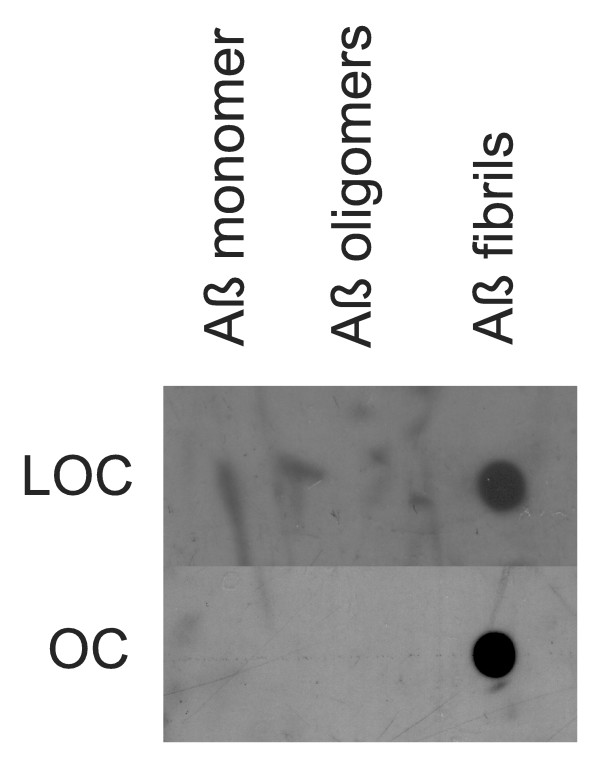
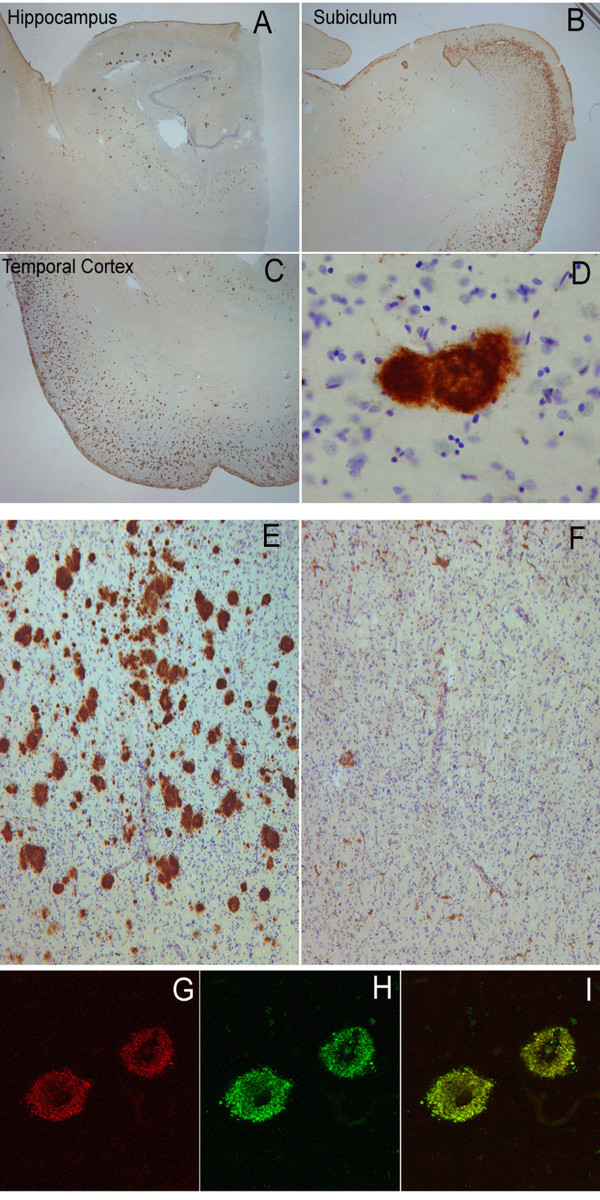
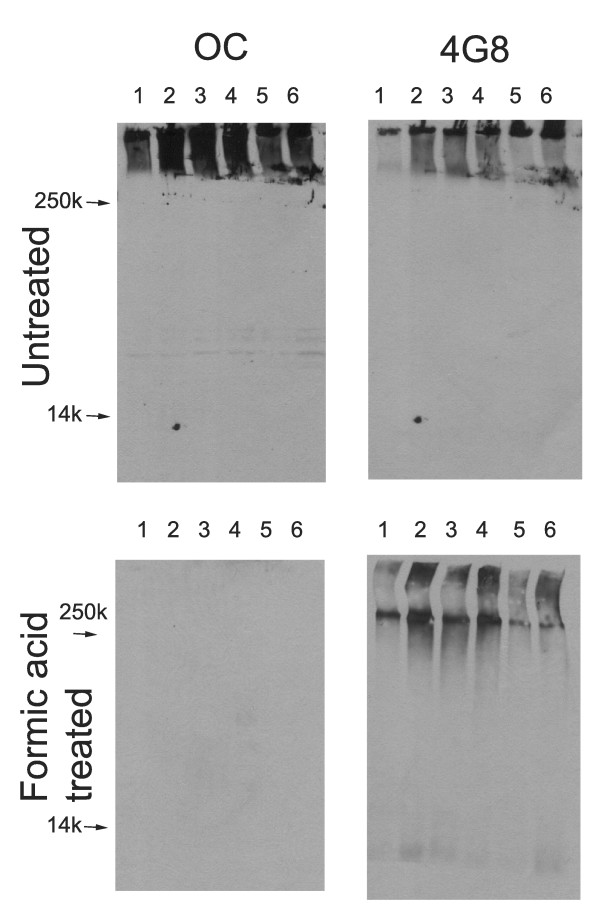
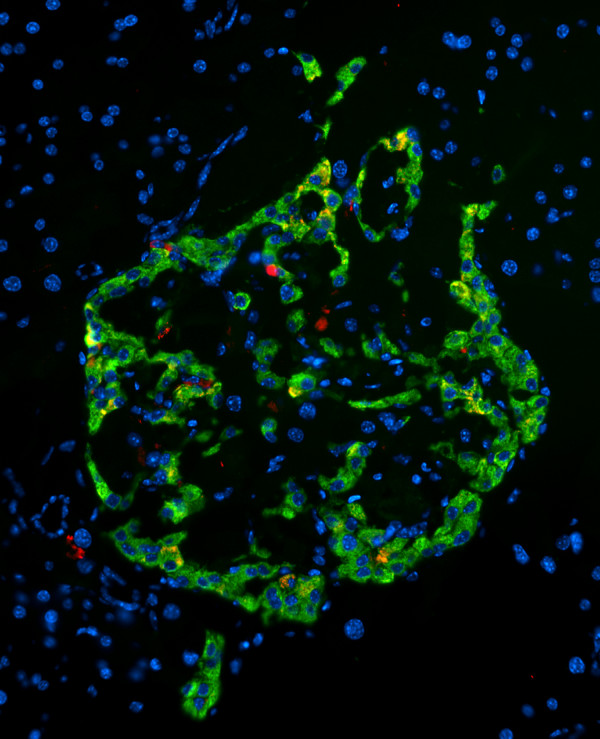
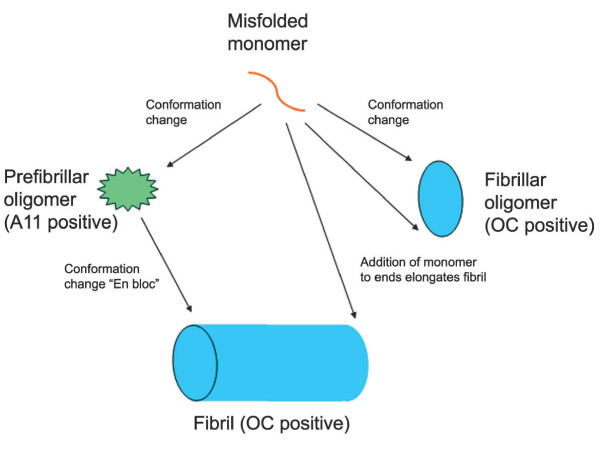
Background: Amyloid-related degenerative diseases are associated with the accumulation of misfolded proteins as amyloid fibrils in tissue. In Alzheimer disease (AD), amyloid accumulates in several distinct types of insoluble plaque deposits, intracellular Aβ and as soluble oligomers and the relationships between these deposits and their pathological significance remains unclear. Conformation dependent antibodies have been reported that specifically recognize distinct assembly states of amyloids, including prefibrillar oligomers and fibrils. Results: We immunized rabbits with a morphologically homogeneous population of Aβ42 fibrils. The resulting immune serum (OC) specifically recognizes fibrils, but not random coil monomer or prefibrillar oligomers, indicating fibrils display a distinct conformation dependent epitope that is absent in prefibrillar oligomers. The fibril epitope is also displayed by fibrils of other types of amyloids, indicating that the epitope is a generic feature of the polypeptide backbone. The fibril specific antibody also recognizes 100,000 × G soluble fibrillar oligomers ranging in size from dimer to greater than 250 kDa on western blots. The fibrillar oligomers recognized by OC are immunologically distinct from prefibrillar oligomers recognized by A11, even though their sizes overlap broadly, indicating that size is not a reliable indicator of oligomer conformation. The immune response to prefibrillar oligomers and fibrils is not sequence specific and antisera of the same specificity are produced in response to immunization with islet amyloid polypeptide prefibrillar oligomer mimics and fibrils. The fibril specific antibodies stain all types of amyloid deposits in human AD brain. Diffuse amyloid deposits stain intensely with anti-fibril antibody although they are thioflavin S negative, suggesting that they are indeed fibrillar in conformation. OC also stains islet amyloid deposits in transgenic mouse models of type II diabetes, demonstrating its generic specificity for amyloid fibrils. Conclusion: Since the fibril specific antibodies are conformation dependent, sequence-independent, and recognize epitopes that are distinct from those present in prefibrillar oligomers, they may have broad utility for detecting and characterizing the accumulation of amyloid fibrils and fibrillar type oligomers in degenerative diseases.
Overview
The claims and statistics of this paper haven’t been checked yet.
Run the check — free, no account needed. It reads the open-access text and checks the sources it cites.
Integrity signals
Registry
Cites
Statistics
Figures
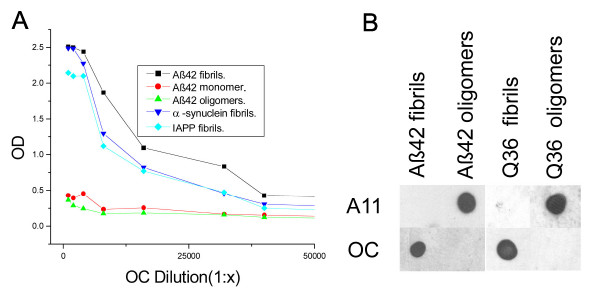
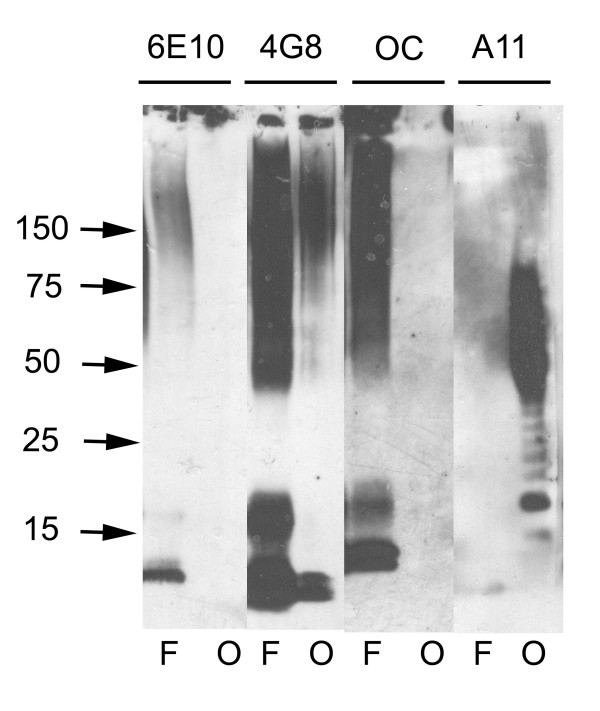
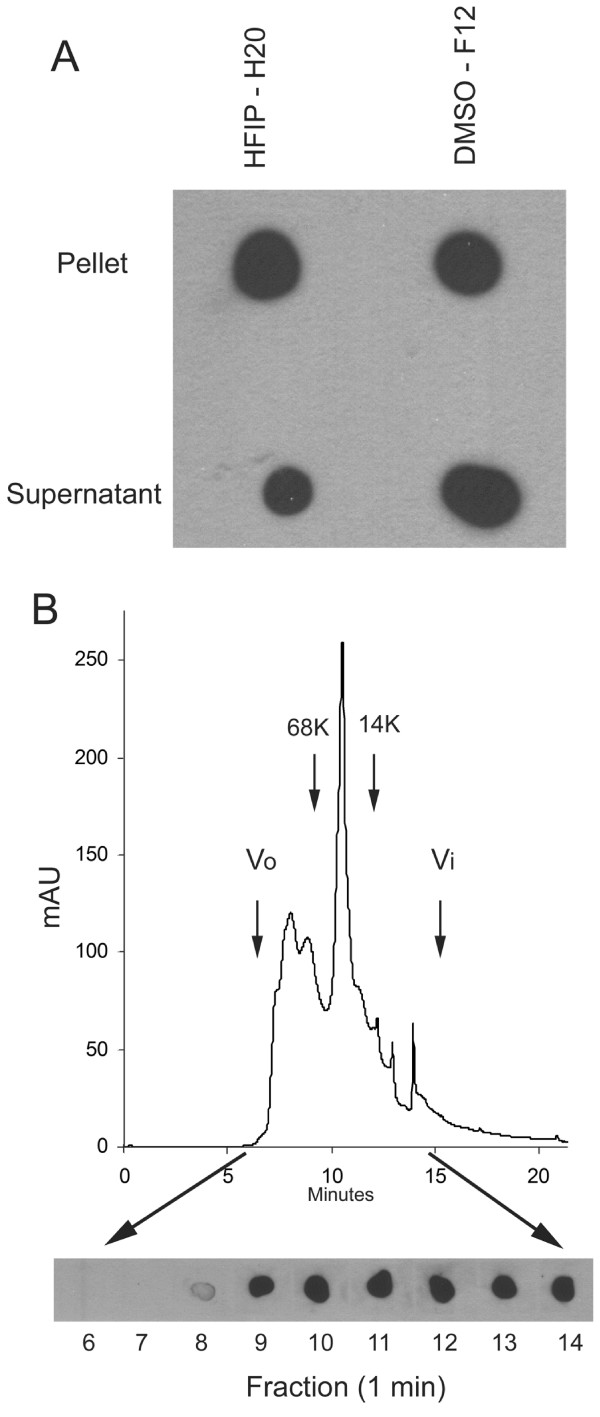
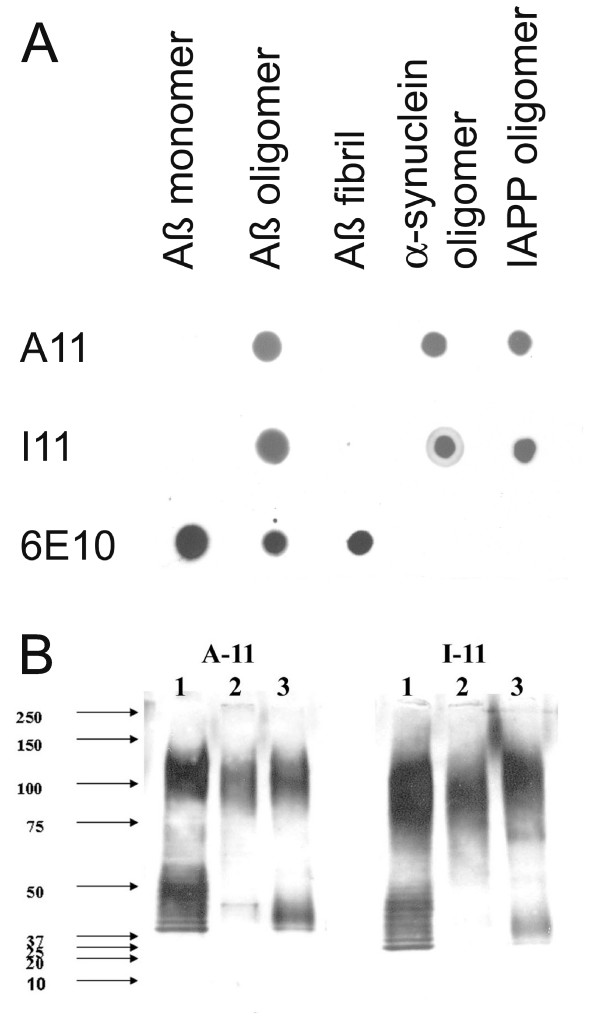
Verification
Claims the paper makes
The claims and statistics of this paper haven’t been checked yet.
Run the check — free, no account needed. It reads the open-access text and checks the sources it cites.
Claims other papers make about this one
Each is checked against this paper’s own text: does it say what the citing paper says it does?
The source backs part of the claim, not all of it — or backs it for a different population, condition or comparison.
In the citing paper
“We obtained high resolution confocal images of brain slices from CRND8 mice stained with A11 and 4G8 antibodies, which detect oligomeric and other protofibrillar conformations respectively (Lesné et al., 2006; Kayed et al., 2007).”
From CX3CR1 in Microglia Regulates Brain Amyloid Deposition through Selective Protofibrillar Amyloid-β Phagocytosis (2010) · cites this paper as Kayed et al., 2007
Experimental — accuracy not yet measuredIn the citing paper
“As Aβ aggregates from monomers to oligomers and then fibrils, the conformation and antibody accessibility of peptide epitopes within Aβ can change.”
From Intraneuronal β-amyloid accumulation and synapse pathology in Alzheimer’s disease (2010) · cites this paper as [87]
Self-check
Percentages, sums and reported differences re-computed from the paper’s own numbers.
The self-check needs the paper’s full text.
Citations
Cites
Soluble protein oligomers in neurodegeneration: lessons from the Alzheimer's amyloid β-peptide
Haass, C., & Selkoe, D. J. (2007) · Nature Reviews Molecular Cell Biology · doi:10.1038/nrm2101 · Cited by 4,744
Common structure of soluble amyloid oligomers implies common mechanism of pathogenesis
Kayed, R., Head, E., Thompson, J. L., McIntire, T. M., Milton, S. C., Cotman, C. W., & Glabe, C. G. (2003) · Science · doi:10.1126/science.1079469 · Cited by 4,064
Self-citationDiffusible, nonfibrillar ligands derived from Aβ 1–42 are potent central nervous system neurotoxins
Lambert, M. P., Barlow, A. K., Chromy, B. A., Edwards, C., Freed, R., Liosatos, M., Morgan, T. E., Rozovsky, I., Trommer, B., Viola, K. L., et al. (1998) · Proceedings of the National Academy of Sciences · doi:10.1073/pnas.95.11.6448 · Cited by 3,506
Iwatsubo, T., Odaka, A., Suzuki, N., Mizusawa, H., Nukina, N., & Ihara, Y. (1994) · Neuron · doi:10.1016/0896-6273(94)90458-8 · Cited by 1,774
Soluble Amyloid β Peptide Concentration as a Predictor of Synaptic Change in Alzheimer's Disease
Lue, L.-F., Kuo, Y.-M., Roher, A. E., Brachova, L., Shen, Y., Sue, L., Beach, T., Kurth, J. H., Rydel, R. E., & Rogers, J. (1999) · The American Journal of Pathology · doi:10.1016/s0002-9440(10)65184-x · Cited by 1,530
von Bergen, M., Friedhoff, P., Biernat, J., Heberle, J., Mandelkow, E.-M., & Mandelkow, E. (2000) · Proceedings of the National Academy of Sciences · doi:10.1073/pnas.97.10.5129 · Cited by 1,021
Intraneuronal Aβ42 Accumulation in Human Brain
Gouras, G. K., Tsai, J., Naslund, J., Vincent, B., Edgar, M., Checler, F., Greenfield, J. P., Haroutunian, V., Buxbaum, J. D., Xu, H., et al. (2000) · The American Journal of Pathology · doi:10.1016/s0002-9440(10)64700-1 · Cited by 991
Some morphometric aspects of the brain in senile dementia of the alzheimer type
Terry, R. D., Peck, A., DeTeresa, R., Schechter, R., & Horoupian, D. S. (1981) · Annals of Neurology · doi:10.1002/ana.410100209 · Cited by 801
The Pathogenesis of Senile Plaques
DICKSON, D. W. (1997) · Journal of Neuropathology and Experimental Neurology · doi:10.1097/00005072-199704000-00001 · Cited by 753
Observation of metastable Aβ amyloid protofibrils by atomic force microscopy
Harper, J. D., Wong, S. S., Lieber, C. M., & Lansbury, P. T. (1997) · Chemistry & Biology · doi:10.1016/s1074-5521(97)90255-6 · Cited by 699
Research works printed but not linked: 1
- Wisniewski HM, Terry RD: Reexamination of the pathogenesis of the senile plaque. Prog Neuropathol. 1973, 333 , 2: 1-26.
Cited by
Sorted by citations
Items 201–300 of 778
Functional Amyloids in the Mouse Sperm Acrosome
Guyonnet, B., Egge, N., & Cornwall, G. A. (2014) · Molecular and Cellular Biology · doi:10.1128/mcb.00073-14 · Cited by 77
Potential mechanisms and implications for the formation of tau oligomeric strains
Gerson, J. E., Mudher, A. K., & Kayed, R. (2016) · Critical Reviews in Biochemistry and Molecular Biology · doi:10.1080/10409238.2016.1226251 · Cited by 78
Self-citationAho, L., Pikkarainen, M., Hiltunen, M., Leinonen, V., & Alafuzoff, I. (2010) · Journal of Alzheimer s Disease · doi:10.3233/jad-2010-091681 · Cited by 71
Prion-like seeding and nucleation of intracellular amyloid-β
Olsson, T. T., Klementieva, O. L., & Gouras, G. K. (2018) · Neurobiology of Disease · doi:10.1016/j.nbd.2018.01.015 · Cited by 74
Beck, M. W., Oh, S. B., Kerr, R. A., Lee, H. J., Kim, S., Kim, S., Jang, M., Ruotolo, B. T., Lee, J., & Lim, M. H. (2015) · Chemical Science · doi:10.1039/c4sc03239j · Cited by 71
Jarosz-Griffiths, H., Whitehouse, I. J., Baybutt, H. N., Brown, D., Kellett, K. A. B., Jackson, C. D., Turner, A. J., Piccardo, P., Manson, J. C., & Hooper, N. M. (2011) · Journal of Biological Chemistry · doi:10.1074/jbc.m111.278556 · Cited by 72
Cremades, N., & Dobson, C. M. (2017) · Neurobiology of Disease · doi:10.1016/j.nbd.2017.07.009 · Cited by 72
Chang, Y., & Chen, Y. (2014) · FEBS Journal · doi:10.1111/febs.12813 · Cited by 68
Goodman, J. R., Adham, Z. O., Woltjer, R. L., Lund, A. W., & Iliff, J. J. (2018) · Brain Behavior and Immunity · doi:10.1016/j.bbi.2018.07.020 · Cited by 70
Hybrid Multifunctional Modulators Inhibit Multifaceted Aβ Toxicity and Prevent Mitochondrial Damage
Rajasekhar, K., Mehta, K., & Govindaraju, T. (2018) · ACS Chemical Neuroscience · doi:10.1021/acschemneuro.8b00033 · Cited by 69
Antibodies and protein misfolding: From structural research tools to therapeutic strategies
Genst, E. D., Messer, A. C., & Dobson, C. M. (2014) · Biochimica et Biophysica Acta (BBA) - Proteins and Proteomics · doi:10.1016/j.bbapap.2014.08.016 · Cited by 70
Kuznetsova, I. М., Sulatskaya, A. I., Uversky, V. N., & Константинович, Т. К. (2012) · Molecular Neurobiology · doi:10.1007/s12035-012-8272-y · Cited by 69
Accumulation and clearance of α‐synuclein aggregates demonstrated by time‐lapse imaging
Opazo, F., Krenz, A., Heermann, S., Schulz, J. B., & Falkenburger, B. H. (2008) · Journal of Neurochemistry · doi:10.1111/j.1471-4159.2008.05407.x · Cited by 71
Trem2 deficiency differentially affects phenotype and transcriptome of human APOE3 and APOE4 mice
Fitz, N. F., Wolfe, C. M., Playso, B. E., Biedrzycki, R. J., Lu, Y., Nam, K. N., Lefterov, I., & Koldamova, R. (2020) · Molecular Neurodegeneration · doi:10.1186/s13024-020-00394-4 · Cited by 68
α-Synuclein oligomers form by secondary nucleation
Xu, C. K., Meisl, G., Andrzejewska, E. A., Krainer, G., Dear, A. J., Castellana-Cruz, M., Turi, S., Edu, I. A., Vivacqua, G., Jacquat, R. P. B., et al. (2024) · Nature Communications · doi:10.1038/s41467-024-50692-4 · Cited by 74
Cao, L., Wang, H., Wang, F., Xu, D., Liu, F., & Liu, C. (2013) · Investigative Ophthalmology & Visual Science · doi:10.1167/iovs.13-11612 · Cited by 68
Techniques for monitoring protein misfolding and aggregation in vitro and in living cells
Gregoire, S., Irwin, J. A., & Kwon, I. (2012) · Korean Journal of Chemical Engineering · doi:10.1007/s11814-012-0060-x · Cited by 69
Amyloid-β oligomers as a template for secondary amyloidosis in Alzheimer's disease
Guerrero‐Munoz, M. J., Castillo‐Carranza, D. L., Krishnamurthy, S., Paulucci-Holthauzen, A. A., Sengupta, U., Lasagna‐Reeves, C. A., Ahmad, Y., Jackson, G. R., & Kayed, R. (2014) · Neurobiology of Disease · doi:10.1016/j.nbd.2014.08.008 · Cited by 68
Self-citationShin, T. M., Isas, J. M., Hsieh, C.-L., Kayed, R., Glabe, C. G., Langen, R., & Chen, J. (2008) · Molecular Neurodegeneration · doi:10.1186/1750-1326-3-16 · Cited by 69
Self-citationFunctional Amyloids Signal Their Arrival
Badtke, M. P., Hammer, N. D., & Chapman, M. R. (2009) · Science Signaling · doi:10.1126/scisignal.280pe43 · Cited by 68
Investigating the Intrinsic Aggregation Potential of Evolutionarily Conserved Segments in p53
Ghosh, S., Ghosh, D., Ranganathan, S., Arunagiri, A., Palanirajan, S. K., Jha, N. N., Padinhateeri, R., & Maji, S. K. (2014) · Biochemistry · doi:10.1021/bi500825d · Cited by 69
Antibody-Based Drugs and Approaches Against Amyloid-β Species for Alzheimer’s Disease Immunotherapy
Liu, J., Yang, B., Ke, J., Li, W., & Suen, W.-C. (2016) · Drugs & Aging · doi:10.1007/s40266-016-0406-x · Cited by 67
Wang, S.-W., Yang, S., Liu, W., Zhang, Y., Xu, P., Wang, T., Ling, T.-J., & Liu, R. (2015) · Behavioural Brain Research · doi:10.1016/j.bbr.2015.09.003 · Cited by 65
Nonpathological Extracellular Amyloid Is Present during Normal Epididymal Sperm Maturation
Whelly, S., Johnson, S., Powell, J., Borchardt, C., Hastert, M. C., & Cornwall, G. A. (2012) · PLoS ONE · doi:10.1371/journal.pone.0036394 · Cited by 65
Microbial manipulation of the amyloid fold
DePas, W. H., & Chapman, M. R. (2012) · Research in Microbiology · doi:10.1016/j.resmic.2012.10.009 · Cited by 64
Krishnan, R., Tsubery, H., Proschitsky, M., Asp, E., Lulu, M., Gilead, S., Gartner, M., Waltho, J. P., Davis, P. J., Hounslow, A. M., et al. (2014) · Journal of Molecular Biology · doi:10.1016/j.jmb.2014.04.015 · Cited by 65
Rahimi, F., Murakami, K., Summers, J. L., Chen, C. B., & Bitan, G. (2009) · PLoS ONE · doi:10.1371/journal.pone.0007694 · Cited by 68
Memory Deficits in APP23/ Abca1 +/− Mice Correlate with the Level of A β Oligomers
Lefterov, I. M., Fitz, N. F., Cronican, A. A., Lefterov, P., Staufenbiel, M., & Koldamova, R. P. (2009) · ASN NEURO · doi:10.1042/an20090015 · Cited by 63
Amyloid-β Protofibrils: Size, Morphology and Synaptotoxicity of an Engineered Mimic
Dubnovitsky, A. P., Sandberg, A., Rahman, M. M., Benilova, I., Lendel, C., & Härd, T. (2013) · PLoS ONE · doi:10.1371/journal.pone.0066101 · Cited by 65
Teng, E., Taylor, K. M., Bilousova, T. V., Weiland, D. A., Pham, T., Zuo, X., Yang, F., Chen, P., Glabe, C. G., Takacs, A., et al. (2015) · Neurobiology of Disease · doi:10.1016/j.nbd.2015.09.002 · Cited by 65
Self-citationLee, M.-H., Lin, S.-R., Chang, J.-Y., Schultz, L., Heath, J., Hsu, L.-J., Kuo, Y.-M., Hong, Q., Chiang, M.-F., Gong, C.-X., et al. (2010) · Cell Death and Disease · doi:10.1038/cddis.2010.83 · Cited by 62
Wong, H. E., Qi, W., Choi, H., Fernández, E., & Kwon, I. (2011) · ACS Chemical Neuroscience · doi:10.1021/cn200056g · Cited by 64
Endocytic pathways mediating oligomeric Aβ42 neurotoxicity
Yu, C., Nwabuisi‐Heath, E., Laxton, K., & LaDu, M. J. (2010) · Molecular Neurodegeneration · doi:10.1186/1750-1326-5-19 · Cited by 63
Inhibition effects of tanshinone on the aggregation of α-synuclein
Ji, K., Zhao, Y., Yu, T., Wang, Z., Gong, H., Yang, X., Liu, Y., & Huang, K. (2015) · Food & Function · doi:10.1039/c5fo00664c · Cited by 62
Formation of highly toxic soluble amyloid beta oligomers by the molecular chaperone prefoldin
Sakono, M., Zako, T., Ueda, H., Yohda, M., & Maeda, M. (2008) · FEBS Journal · doi:10.1111/j.1742-4658.2008.06727.x · Cited by 64
Selective lowering of synapsins induced by oligomeric α-synuclein exacerbates memory deficits
Larson, M. E., Greimel, S. J., Amar, F., LaCroix, M., Boyle, G., Sherman, M. A., Schley, H., Miel, C., Schneider, J. A., Kayed, R., et al. (2017) · Proceedings of the National Academy of Sciences · doi:10.1073/pnas.1704698114 · Cited by 61
Self-citationMeli, G., Visintin, M., Cannistraci, I., & Cattaneo, A. (2009) · Journal of Molecular Biology · doi:10.1016/j.jmb.2009.01.061 · Cited by 64
Kim, J., Park, K., Kim, M. J., Lim, H. J., Kim, K. H., Kim, S., Lee, E., Kim, S., Kim, S. J., Hur, K. Y., et al. (2021) · Nature Communications · doi:10.1038/s41467-020-20454-z · Cited by 62
Liu, X., Lü, S., Liu, D., Zhang, L., Zhang, L. L., Yu, X., & Liu, R. (2018) · Brain Research · doi:10.1016/j.brainres.2018.11.034 · Cited by 59
AD synapses contain abundant Aβ monomer and multiple soluble oligomers, including a 56-kDa assembly
Sokolow, S., Henkins, K. M., Bilousova, T. V., Miller, C. A., Vinters, H. V., Poon, W. W., Cole, G. M., & Gylys, K. H. (2011) · Neurobiology of Aging · doi:10.1016/j.neurobiolaging.2011.05.011 · Cited by 61
Iron Redox Chemistry Promotes Antiparallel Oligomerization of α-Synuclein
Abeyawardhane, D. L., Fernández, R. D., Murgas, C. J., Heitger, D. R., Forney, A. K., Crozier, M. K., & Lucas, H. R. (2018) · Journal of the American Chemical Society · doi:10.1021/jacs.8b02013 · Cited by 58
The biofilm adhesion protein Aap from Staphylococcus epidermidis forms zinc-dependent amyloid fibers
Yarawsky, A. E., Johns, S. L., Schuck, P., & Herr, A. B. (2020) · Journal of Biological Chemistry · doi:10.1074/jbc.ra119.010874 · Cited by 56
Calcium Ions Promote Superoxide Dismutase 1 (SOD1) Aggregation into Non-fibrillar Amyloid
Leal, S. S., Cardoso, I., Valentine, J. S., & Gomes, C. M. (2013) · Journal of Biological Chemistry · doi:10.1074/jbc.m113.470740 · Cited by 60
Kvam, E., Nannenga, B. L., Wang, M. S., Jia, Z., Sierks, M. R., & Messer, A. C. (2009) · PLoS ONE · doi:10.1371/journal.pone.0005727 · Cited by 60
Mannini, B., Habchi, J., Chia, S., Ruggeri, F. S., Perni, M., Knowles, T. P. J., Dobson, C. M., & Vendruscolo, M. (2018) · ACS Chemical Neuroscience · doi:10.1021/acschemneuro.8b00141 · Cited by 58
Ni, R., Villois, A., Deán‐Ben, X. L., Chen, Z., Vaas, M., Stavrakis, S., Shi, G., deMello, A. J., Ran, C., Razansky, D., et al. (2021) · Photoacoustics · doi:10.1016/j.pacs.2021.100285 · Cited by 55
Pain, C., Dumont, J., & Dumoulin, M. (2015) · Biochimie · doi:10.1016/j.biochi.2015.01.012 · Cited by 60
Transthyretin as both a Sensor and a Scavenger of β-Amyloid Oligomers
Yang, D. T., Gururaj Joshi, A., Cho, P. Y., Johnson, J. A., & Murphy, R. M. (2013) · Biochemistry · doi:10.1021/bi4001613 · Cited by 57
Soluble Oligomers Require a Ganglioside to Trigger Neuronal Calcium Overload
Cascella, R., Evangelisti, E., Bigi, A., Becatti, M., Fiorillo, C., Stefani, M., Chiti, F., & Cecchi, C. (2017) · Journal of Alzheimer s Disease · doi:10.3233/jad-170340 · Cited by 57
Cyclic Peptides as Inhibitors of Amyloid Fibrillation
Luo, J., & Abrahams, J. P. (2014) · Chemistry - A European Journal · doi:10.1002/chem.201304253 · Cited by 56
Rationally Designed Peptoids Modulate Aggregation of Amyloid-Beta 40
Turner, J. P., Lutz-Rechtin, T. M., Moore, K. A., Rogers, L., Bhave, O., Moss, M. A., & Servoss, S. L. (2014) · ACS Chemical Neuroscience · doi:10.1021/cn400221u · Cited by 55
Ladiwala, A. R. A., Mora‐Pale, M., Lin, J. C., Bale, S. S., Fishman, Z. S., Dordick, J. S., & Tessier, P. M. (2011) · ChemBioChem · doi:10.1002/cbic.201100123 · Cited by 54
Ribeiro, C. A., Saraiva, M. J., & Cardoso, I. (2012) · PLoS ONE · doi:10.1371/journal.pone.0045368 · Cited by 54
Srinivasan, S., Patke, S., Wang, Y., Ye, Z., Litt, J., Srivastava, S. K., López, M. M., Kurouski, D., Lednev, I. K., Kane, R. S., et al. (2012) · Journal of Biological Chemistry · doi:10.1074/jbc.m112.394155 · Cited by 54
Design principles and fundamental understanding of biosensors for amyloid-β detection
Zhang, Y., Ren, B., Zhang, D., Liu, Y., Zhang, M., Zhao, C., & Zheng, J. (2020) · Journal of Materials Chemistry B · doi:10.1039/d0tb00344a · Cited by 55
Murakami, K. (2014) · Bioscience Biotechnology and Biochemistry · doi:10.1080/09168451.2014.940275 · Cited by 53
A scFv antibody targeting common oligomeric epitope has potential for treating several amyloidoses
Zha, J., Liu, X., Zhu, J., Liu, S., Lü, S., Xu, P., Yu, X., & Liu, R. (2016) · Scientific Reports · doi:10.1038/srep36631 · Cited by 53
Xu, W., Xu, F., Anderson, M. E., Kotarba, A. E., Davis, J., Robinson, J. K., & Nostrand, W. E. V. (2013) · Journal of Alzheimer s Disease · doi:10.3233/jad-130758 · Cited by 52
Mechanisms by which autophagy regulates memory capacity in ageing
Risi, M. D., Torromino, G., Tufano, M., Moriceau, S., Pignataro, A., Rivagorda, M., Carrano, N., Middei, S., Settembre, C., Ammassari‐Teule, M., et al. (2020) · Aging Cell · doi:10.1111/acel.13189 · Cited by 54
Molecular polymorphism of Aβ in Alzheimer's disease
LeVine, H., & Walker, L. C. (2008) · Neurobiology of Aging · doi:10.1016/j.neurobiolaging.2008.05.026 · Cited by 54
Vadukul, D. M., Maina, M. B., Franklin, H., Nardecchia, A., Serpell, L. C., & Marshall, K. E. (2020) · FEBS Letters · doi:10.1002/1873-3468.13919 · Cited by 51
VEGF counteracts amyloid-β-induced synaptic dysfunction
Martin, L., Bouvet, P., Chounlamountri, N., Watrin, C., Besançon, R., Pinatel, D., Meyronet, D., Honnorat, J., Buisson, A., Salin, P. A., et al. (2021) · Cell Reports · doi:10.1016/j.celrep.2021.109121 · Cited by 52
Cellular Prion Protein as a Therapeutic Target in Alzheimer's Disease
Laurén, J. (2013) · Journal of Alzheimer s Disease · doi:10.3233/jad-130950 · Cited by 55
Ohmi, K., Zhao, H., & Neufeld, E. F. (2011) · PLoS ONE · doi:10.1371/journal.pone.0027461 · Cited by 51
Kulic, L., McAfoose, J., Welt, T., Tackenberg, C., Späni, C. B., Wirth, F., Finder, V. H., Konietzko, U., Giese, M., Eckert, A., et al. (2012) · Translational Psychiatry · doi:10.1038/tp.2012.109 · Cited by 51
Self-citationCao, Y., Jiang, X., & Han, W. (2017) · Journal of Chemical Theory and Computation · doi:10.1021/acs.jctc.7b00803 · Cited by 51
Fibrillar and Nonfibrillar Amyloid Beta Structures Drive Two Modes of Membrane-Mediated Toxicity
Zanden, C. M. V., Wampler, L., Bowers, I., Watkins, E. B., Majewski, J. P., & Chi, E. Y. (2019) · Langmuir · doi:10.1021/acs.langmuir.9b02484 · Cited by 50
Current understanding of metal-dependent amyloid-β aggregation and toxicity
Yi, Y., & Lim, M. H. (2022) · RSC Chemical Biology · doi:10.1039/d2cb00208f · Cited by 50
Alzheimer's Therapeutics: Translation of Preclinical Science to Clinical Drug Development
Savonenko, A. V., Melnikova, T., Hiatt, A., Li, T., Worley, P. F., Troncoso, J. C., Wong, P. C., & Price, D. L. (2011) · Neuropsychopharmacology · doi:10.1038/npp.2011.211 · Cited by 52
Neuronal spreading and plaque induction of intracellular Aβ and its disruption of Aβ homeostasis
Roos, T. T., Garcia, M. G., Martinsson, I., Mabrouk, R., Israelsson, B., Deierborg, T., Kobro‐Flatmoen, A., Tanila, H., & Gouras, G. K. (2021) · Acta Neuropathologica · doi:10.1007/s00401-021-02345-9 · Cited by 48
Reversible Pathologic and Cognitive Phenotypes in an Inducible Model of Alzheimer-Amyloidosis
Melnikova, T., Fromholt, S., Kim, H.-S., Lee, D., Xu, G. M., Price, A. R., Moore, B. D., Golde, T. E., Felsenstein, K. M., Savonenko, A. V., et al. (2013) · Journal of Neuroscience · doi:10.1523/jneurosci.4251-12.2013 · Cited by 51
Activation of innate immunity by lysozyme fibrils is critically dependent on cross-β sheet structure
Gustot, A., Raussens, V., Dehousse, M., Dumoulin, M., Bryant, C., Ruysschaert, J., & Lonez, C. (2013) · Cellular and Molecular Life Sciences · doi:10.1007/s00018-012-1245-5 · Cited by 48
Samson, A. L., Knaupp, A. S., Sashindranath, M., Borg, R. J., Au, A. E., Cops, E. J., Saunders, H. M., Cody, S. H., McLean, C., Nowell, C. J., et al. (2012) · Cell Reports · doi:10.1016/j.celrep.2012.08.026 · Cited by 49
Epitope‐based DNA vaccine for Alzheimer's disease: Translational study in macaques
Evans, C. F., Davtyan, H., Petrushina, I., Hovakimyan, A., Davtyan, A., Hannaman, D., Cribbs, D. H., Agadjanyan, M. G., & Ghochikyan, A. (2013) · Alzheimer s & Dementia · doi:10.1016/j.jalz.2013.04.505 · Cited by 47
Klaver, A. C., Finke, J. M., Digambaranath, J. L., Balasubramaniam, M., & Loeffler, D. A. (2009) · International Immunopharmacology · doi:10.1016/j.intimp.2009.10.005 · Cited by 49
Protein Misfolding during Pregnancy: New Approaches to Preeclampsia Diagnostics
Gerasimova, E. M., Fedotov, S. A., Kachkin, D. V., Vashukova, E. S., Glotov, A. S., Chernoff, Y. O., & Rubel, A. A. (2019) · International Journal of Molecular Sciences · doi:10.3390/ijms20246183 · Cited by 48
High-Throughput Screening at the Membrane Interface Reveals Inhibitors of Amyloid-β
Cox, S. J., Lam, B., Prasad, A., Marietta, H. A., Stander, N. V., Joel, J. G., Sahoo, B. R., Guo, F., Stoddard, A. K., Ivanova, M. I., et al. (2020) · Biochemistry · doi:10.1021/acs.biochem.0c00328 · Cited by 49
Measurement of anti-beta amyloid antibodies in human blood
Szabo, P., Mujalli, D. M., Rotondi, M. L., Sharma, R., Weber, A., Schwarz, H., Weksler, M. E., & Relkin, N. R. (2010) · Journal of Neuroimmunology · doi:10.1016/j.jneuroim.2010.06.010 · Cited by 49
A Foldamer-Dendrimer Conjugate Neutralizes Synaptotoxic β-Amyloid Oligomers
Fülöp, L., Mándity, I. M., Juhász, G., Szegedi, V., Hetényi, A., Wéber, E., Bozsó, Z., Simon, D., Benkő, M., Király, Z., et al. (2012) · PLoS ONE · doi:10.1371/journal.pone.0039485 · Cited by 48
Inhaled Insulin Forms Toxic Pulmonary Amyloid Aggregates
Lasagna‐Reeves, C. A., Clos, A. L., Midoro‐Horiuti, T., Goldblum, R. M., Jackson, G. R., & Kayed, R. (2010) · Endocrinology · doi:10.1210/en.2010-0457 · Cited by 48
Self-citationYi, X., Feng, C., Hu, S., Li, H., & Wang, J. (2015) · The Analyst · doi:10.1039/c5an01864a · Cited by 52
Unraveling Prion Protein Interactions with Aptamers and Other PrP-Binding Nucleic Acids
Macedo, B., & Cordeiro, Y. (2017) · International Journal of Molecular Sciences · doi:10.3390/ijms18051023 · Cited by 48
Nucleolar Sequestration: Remodeling Nucleoli Into Amyloid Bodies
Wang, M., Bokros, M., Theodoridis, P. R., & Lee, S. B. (2019) · Frontiers in Genetics · doi:10.3389/fgene.2019.01179 · Cited by 51
Madhu, P., & Mukhopadhyay, S. (2021) · Journal of Cellular Biochemistry · doi:10.1002/jcb.30141 · Cited by 53
Therapeutic Strategies to Reduce the Toxicity of Misfolded Protein Oligomers
Kreiser, R. P., Wright, A. K., Block, N. R., Hollows, J. E., Nguyen, L. T., LeForte, K., Mannini, B., Vendruscolo, M., & Limbocker, R. (2020) · International Journal of Molecular Sciences · doi:10.3390/ijms21228651 · Cited by 48
Alpha Synuclein in Parkinson’s Disease
Kragh, C. L., Romero‐Ramos, M., Halliday, G. M., & Jensen, P. H. (2014) · Springer eBooks · doi:10.1007/978-1-4614-5836-4_14 · Cited by 48
Deora, G. S., Kantham, S., Chan, S., Dighe, S. N., Veliyath, S. K., McColl, G., Parat, M., McGeary, R. P., & Ross, B. P. (2017) · ACS Chemical Neuroscience · doi:10.1021/acschemneuro.7b00229 · Cited by 46
Alcendor, D. J. (2020) · Journal of Clinical Medicine · doi:10.3390/jcm9051490 · Cited by 47
Lioudyno, M., Broccio, M., Sokolov, Y., Rasool, S., Wu, J., Alkire, M. T., Liu, V., Kozak, J. A., Dennison, P. R., Glabe, C. G., et al. (2012) · PLoS ONE · doi:10.1371/journal.pone.0035090 · Cited by 46
Self-citationA Generic Method for Design of Oligomer-Specific Antibodies
Brännström, K., Lindhagen‐Persson, M., Gharibyan, A. L., Iakovleva, I., Vestling, M., Sellin, M. E., Brännström, T., Morozova‐Roche, L. A., Forsgren, L., & Olofsson, A. (2014) · PLoS ONE · doi:10.1371/journal.pone.0090857 · Cited by 45
Progressive neuropathology and cognitive decline in a single Arctic APP transgenic mouse model
Rönnbäck, A., Zhu, S., Dillner, K., Aoki, M., Lilius, L., Näslund, J., Winblad, B. G., & Graff, C. (2009) · Neurobiology of Aging · doi:10.1016/j.neurobiolaging.2009.02.021 · Cited by 47
Functional amyloids of eukaryotes: criteria, classification, and biological significance
Sergeeva, A. V., & Galkin, A. P. (2020) · Current Genetics · doi:10.1007/s00294-020-01079-7 · Cited by 45
The biogenesis and biology of amyloid β oligomers in the brain
Ashe, K. H. (2020) · Alzheimer s & Dementia · doi:10.1002/alz.12084 · Cited by 50
Chan, G. K. L., Witkowski, A., Gantz, D., Zhang, T. O., Zanni, M. T., Jayaraman, S., & Cavigiolio, G. (2015) · Journal of Biological Chemistry · doi:10.1074/jbc.m114.630442 · Cited by 44
Botelho, H. M., Leal, S. S., Cardoso, I., Yanamandra, K., Morozova‐Roche, L. A., Fritz, G., & Gomes, C. M. (2012) · Journal of Biological Chemistry · doi:10.1074/jbc.m112.396416 · Cited by 46
Sarsoza, F. M., Saing, T., Kayed, R., Dahlin, R., Dick, M. B., Broadwater-Hollifield, C., Mobley, S., Lott, I. T., Doran, E. W., Gillen, D. L., et al. (2009) · Acta Neuropathologica · doi:10.1007/s00401-009-0530-3 · Cited by 44
Self-citationRönnbäck, A., Sagelius, H., Bergstedt, K. D., Näslund, J., Westermark, G. T., Winblad, B., & Graff, C. (2012) · Neurobiology of Aging · doi:10.1016/j.neurobiolaging.2011.07.012 · Cited by 43
Ali, F., Baringer, S. L., Neal, A., Choi, E. Y., & Kwan, A. C. (2019) · Journal of Alzheimer s Disease · doi:10.3233/jad-181190 · Cited by 43
Morphological and Molecular Profiling of Amyloid-β Species in Alzheimer’s Pathogenesis
Almeida, Z. L., Vaz, D. C., & Brito, R. M. M. (2024) · Molecular Neurobiology · doi:10.1007/s12035-024-04543-4 · Cited by 49
A native interactor scaffolds and stabilizes toxic ATAXIN-1 oligomers in SCA1
Lasagna‐Reeves, C. A., Rousseaux, M. W. C., Guerrero‐Munoz, M. J., Park, J., Jafar‐Nejad, P., Richman, R., Lü, N., Sengupta, U., Litvinchuk, A., Orr, H. T., et al. (2015) · eLife · doi:10.7554/elife.07558 · Cited by 43
Self-citation
Metadata
- Authors
- Kayed, R., Head, E., Sarsoza, F., Saing, T., Cotman, C. W., Necula, M., Margol, L., Wu, J., Breydo, L., Thompson, J. L., Rasool, S., Gurlo, T., Butler, P., & Glabe, C. G.
- Affiliations
- University of California, Irvine (US)
- University of California, Los Angeles (US)
- Corresponding author
- Glabe, Charles G
- ORCID
- Venue
- Molecular Neurodegeneration
- Published
- 2007-09-26
- Volume
- 2
- Issue
- 1
- Pages
- 18-18
- ISSN
- 1750-1326 (ISSN-L)
- PMC
- PMC2100048
- OpenAlex
- W2156193029
- Cited by
- 773
- References
- 28
- Citations by year
- 2026: 21 · 2025: 35 · 2024: 36 · 2023: 42 · 2022: 32 · 2021: 41 · 2020: 57 · 2019: 35 · 2018: 44 · 2017: 40 · 2016: 43 · 2015: 52 · 2014: 45 · 2013: 65 · 2012: 59
- FWCI
- 18.92
- Type
- journal article
- Language
- en
- Open access
- gold
- doi.org
- Licence
- cc-by
- Locations
- Molecular Neurodegeneration (publishedVersion, cc-by)
- PubMed Central (publishedVersion, cc-by)
- PubMed (publishedVersion)
- DOAJ (DOAJ: Directory of Open Access Journals) (submittedVersion, cc-by-sa)
- eScholarship (California Digital Library) (submittedVersion)
- Funders
- Larry L. Hillblom Foundation
- Cure Alzheimer's Fund
- National Institutes of Health (AG16573, AG000538)
- National Institute on Aging (P01AG000538, P50 AG 16573, AG 16573, AG-000538, P50AG016573)
- National Institute of Neurological Disorders and Stroke (R01NS031230)
- Topics
- Life Sciences › Neuroscience › Cellular and Molecular Neuroscience › Alzheimer's disease research and treatments
- Life Sciences › Biochemistry, Genetics and Molecular Biology › Molecular Biology › Prion Diseases and Protein Misfolding
- Health Sciences › Medicine › Psychiatry and Mental health › Dementia and Cognitive Impairment Research
- Keywords
- amyloid fibrils, prefibrillar oligomers, epitope mapping, amyloid-beta 42, Alzheimer's disease, amylin, type 2 diabetes, amyloid deposits, immunization, thioflavin S, degenerative diseases
About these checks
Registry, retraction, Cites and statistics results are computed, not judged, with one exception: a printed reference that no index lists is read once by a model before it counts as a citation error. Claims are extracted by a model and kept only when their quote appears verbatim in the text; each cited source is then checked, with a model’s help, for whether it says what the claim relies on. Those verdicts can be wrong — read the claim’s quote and the cited source before relying on one.
Statistics and arithmetic are recomputed, not judged.
Confidence bands are shown only for fields calibrated on our annotated test set. None is calibrated yet, so no band is shown.
What counts as a claim ›How we measure confidence ›How we check this ›
Are you an author, or do you see a problem with this page? Request a review
