

The DOI matches its Crossref record; 28 of the 28 references it cites were found in a registry or an index.
Fibril specific, conformation dependent antibodies recognize a generic epitope common to amyloid fibrils and fibrillar oligomers that is absent in prefibrillar oligomers
Open accessAbstract
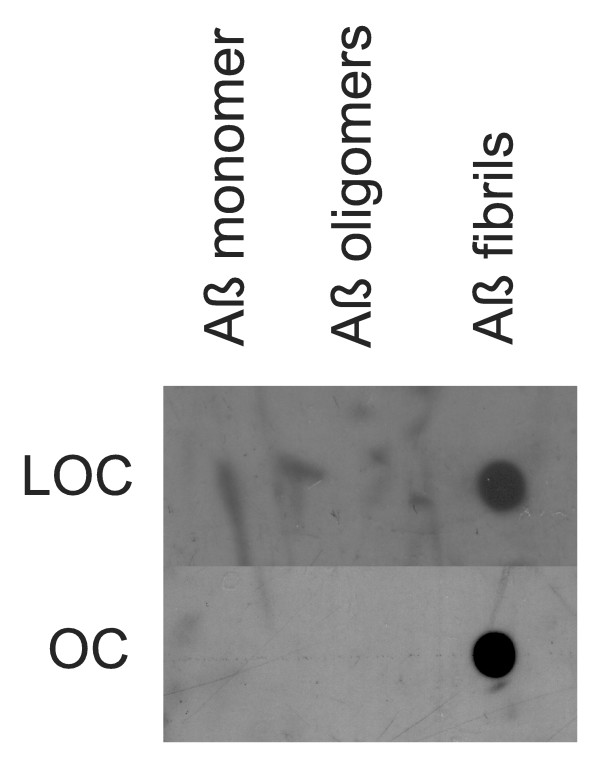
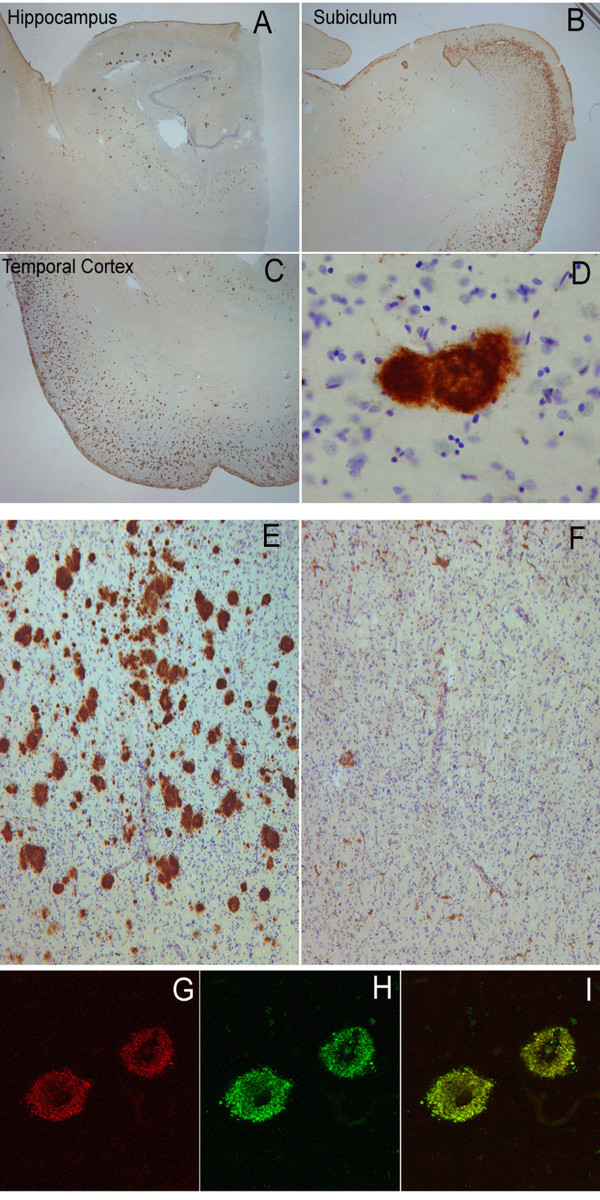
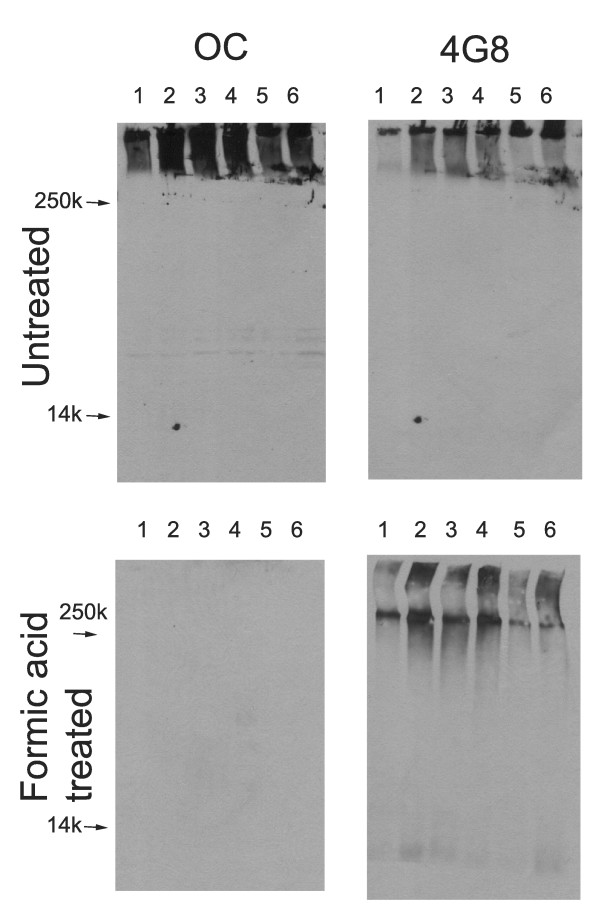
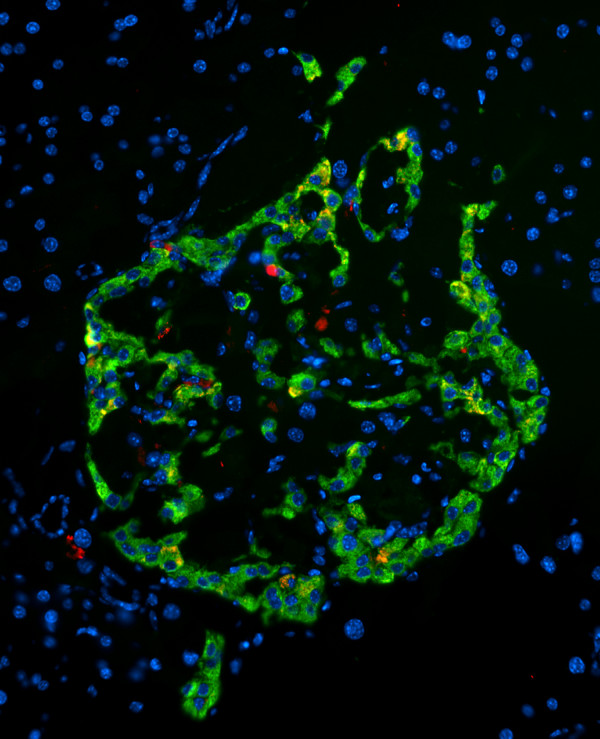
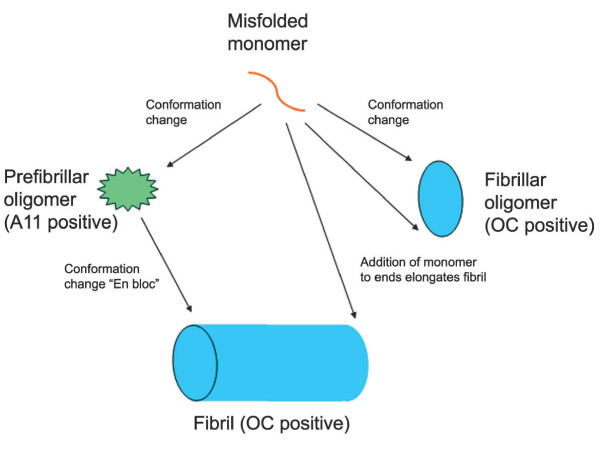
Background: Amyloid-related degenerative diseases are associated with the accumulation of misfolded proteins as amyloid fibrils in tissue. In Alzheimer disease (AD), amyloid accumulates in several distinct types of insoluble plaque deposits, intracellular Aβ and as soluble oligomers and the relationships between these deposits and their pathological significance remains unclear. Conformation dependent antibodies have been reported that specifically recognize distinct assembly states of amyloids, including prefibrillar oligomers and fibrils. Results: We immunized rabbits with a morphologically homogeneous population of Aβ42 fibrils. The resulting immune serum (OC) specifically recognizes fibrils, but not random coil monomer or prefibrillar oligomers, indicating fibrils display a distinct conformation dependent epitope that is absent in prefibrillar oligomers. The fibril epitope is also displayed by fibrils of other types of amyloids, indicating that the epitope is a generic feature of the polypeptide backbone. The fibril specific antibody also recognizes 100,000 × G soluble fibrillar oligomers ranging in size from dimer to greater than 250 kDa on western blots. The fibrillar oligomers recognized by OC are immunologically distinct from prefibrillar oligomers recognized by A11, even though their sizes overlap broadly, indicating that size is not a reliable indicator of oligomer conformation. The immune response to prefibrillar oligomers and fibrils is not sequence specific and antisera of the same specificity are produced in response to immunization with islet amyloid polypeptide prefibrillar oligomer mimics and fibrils. The fibril specific antibodies stain all types of amyloid deposits in human AD brain. Diffuse amyloid deposits stain intensely with anti-fibril antibody although they are thioflavin S negative, suggesting that they are indeed fibrillar in conformation. OC also stains islet amyloid deposits in transgenic mouse models of type II diabetes, demonstrating its generic specificity for amyloid fibrils. Conclusion: Since the fibril specific antibodies are conformation dependent, sequence-independent, and recognize epitopes that are distinct from those present in prefibrillar oligomers, they may have broad utility for detecting and characterizing the accumulation of amyloid fibrils and fibrillar type oligomers in degenerative diseases.
Overview
The claims and statistics of this paper haven’t been checked yet.
Run the check — free, no account needed. It reads the open-access text and checks the sources it cites.
Integrity signals
Registry
Cites
Statistics
Figures
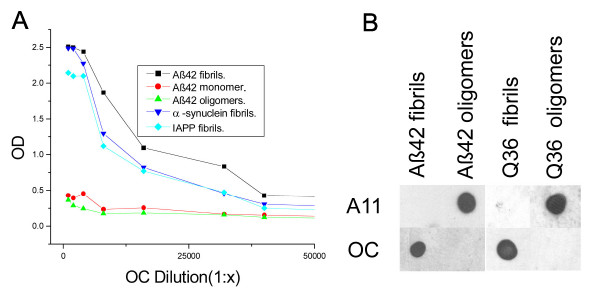
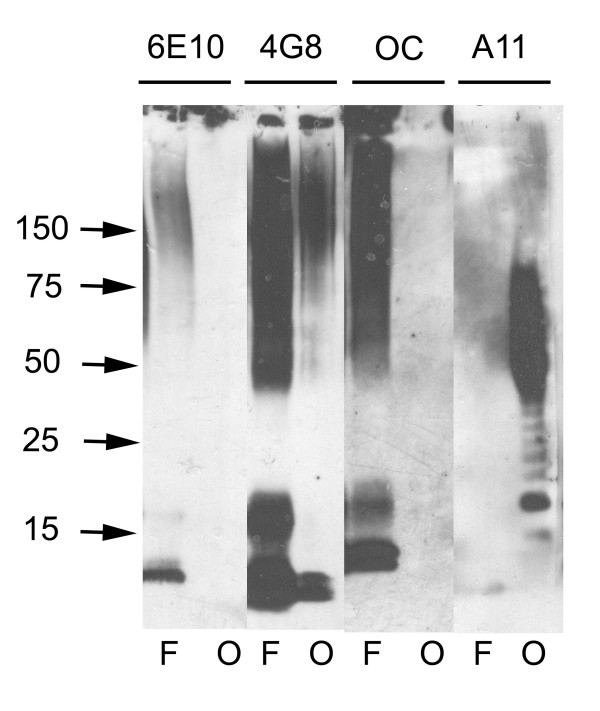
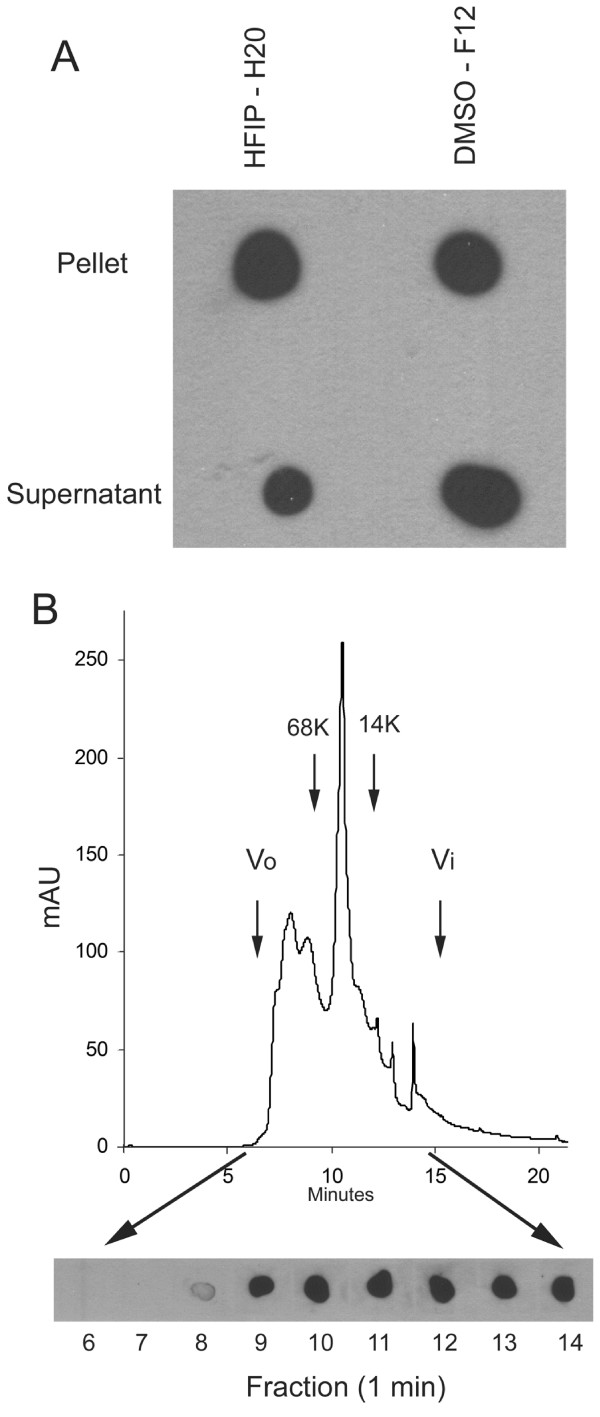
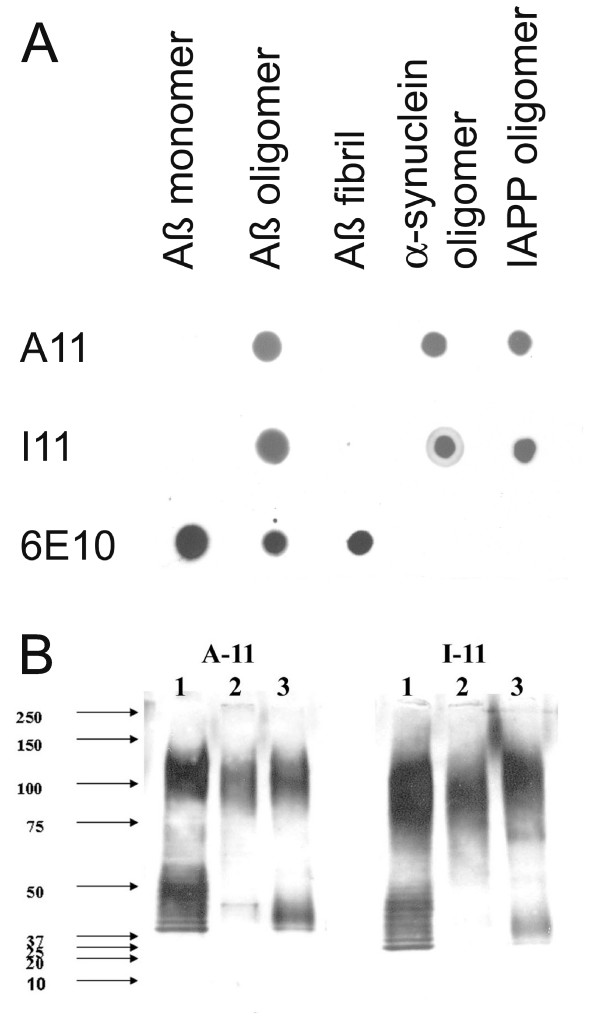
Verification
Claims the paper makes
The claims and statistics of this paper haven’t been checked yet.
Run the check — free, no account needed. It reads the open-access text and checks the sources it cites.
Claims other papers make about this one
Each is checked against this paper’s own text: does it say what the citing paper says it does?
The source backs part of the claim, not all of it — or backs it for a different population, condition or comparison.
In the citing paper
“We obtained high resolution confocal images of brain slices from CRND8 mice stained with A11 and 4G8 antibodies, which detect oligomeric and other protofibrillar conformations respectively (Lesné et al., 2006; Kayed et al., 2007).”
From CX3CR1 in Microglia Regulates Brain Amyloid Deposition through Selective Protofibrillar Amyloid-β Phagocytosis (2010) · cites this paper as Kayed et al., 2007
Experimental — accuracy not yet measuredIn the citing paper
“As Aβ aggregates from monomers to oligomers and then fibrils, the conformation and antibody accessibility of peptide epitopes within Aβ can change.”
From Intraneuronal β-amyloid accumulation and synapse pathology in Alzheimer’s disease (2010) · cites this paper as [87]
Self-check
Percentages, sums and reported differences re-computed from the paper’s own numbers.
The self-check needs the paper’s full text.
Citations
Cites
Soluble protein oligomers in neurodegeneration: lessons from the Alzheimer's amyloid β-peptide
Haass, C., & Selkoe, D. J. (2007) · Nature Reviews Molecular Cell Biology · doi:10.1038/nrm2101 · Cited by 4,744
Common structure of soluble amyloid oligomers implies common mechanism of pathogenesis
Kayed, R., Head, E., Thompson, J. L., McIntire, T. M., Milton, S. C., Cotman, C. W., & Glabe, C. G. (2003) · Science · doi:10.1126/science.1079469 · Cited by 4,064
Self-citationDiffusible, nonfibrillar ligands derived from Aβ 1–42 are potent central nervous system neurotoxins
Lambert, M. P., Barlow, A. K., Chromy, B. A., Edwards, C., Freed, R., Liosatos, M., Morgan, T. E., Rozovsky, I., Trommer, B., Viola, K. L., et al. (1998) · Proceedings of the National Academy of Sciences · doi:10.1073/pnas.95.11.6448 · Cited by 3,506
Iwatsubo, T., Odaka, A., Suzuki, N., Mizusawa, H., Nukina, N., & Ihara, Y. (1994) · Neuron · doi:10.1016/0896-6273(94)90458-8 · Cited by 1,774
Soluble Amyloid β Peptide Concentration as a Predictor of Synaptic Change in Alzheimer's Disease
Lue, L.-F., Kuo, Y.-M., Roher, A. E., Brachova, L., Shen, Y., Sue, L., Beach, T., Kurth, J. H., Rydel, R. E., & Rogers, J. (1999) · The American Journal of Pathology · doi:10.1016/s0002-9440(10)65184-x · Cited by 1,530
von Bergen, M., Friedhoff, P., Biernat, J., Heberle, J., Mandelkow, E.-M., & Mandelkow, E. (2000) · Proceedings of the National Academy of Sciences · doi:10.1073/pnas.97.10.5129 · Cited by 1,021
Intraneuronal Aβ42 Accumulation in Human Brain
Gouras, G. K., Tsai, J., Naslund, J., Vincent, B., Edgar, M., Checler, F., Greenfield, J. P., Haroutunian, V., Buxbaum, J. D., Xu, H., et al. (2000) · The American Journal of Pathology · doi:10.1016/s0002-9440(10)64700-1 · Cited by 991
Some morphometric aspects of the brain in senile dementia of the alzheimer type
Terry, R. D., Peck, A., DeTeresa, R., Schechter, R., & Horoupian, D. S. (1981) · Annals of Neurology · doi:10.1002/ana.410100209 · Cited by 801
The Pathogenesis of Senile Plaques
DICKSON, D. W. (1997) · Journal of Neuropathology and Experimental Neurology · doi:10.1097/00005072-199704000-00001 · Cited by 753
Observation of metastable Aβ amyloid protofibrils by atomic force microscopy
Harper, J. D., Wong, S. S., Lieber, C. M., & Lansbury, P. T. (1997) · Chemistry & Biology · doi:10.1016/s1074-5521(97)90255-6 · Cited by 699
Research works printed but not linked: 1
- Wisniewski HM, Terry RD: Reexamination of the pathogenesis of the senile plaque. Prog Neuropathol. 1973, 333 , 2: 1-26.
Cited by
Sorted by citations
Items 301–400 of 778
Hydrogen Sulfide Inhibits Amyloid Formation
Rosario-Alomar, M. F., Quiñones-Ruíz, T., Kurouski, D., Sereda, V., Ferreira, E. B., Jesús-Kim, L. D., Hernández‐Rivera, S. P., Zagorevski, D. V., Lopez-Garriga, J. J., & Lednev, I. K. (2014) · The Journal of Physical Chemistry B · doi:10.1021/jp508471v · Cited by 43
Examination of potential mechanisms of amyloid-induced defects in neuronal transport
Shah, S. B., Nolan, R. L., Davis, E., Stokin, G. B., Niesman, I. R., Canto, I., Glabe, C. G., & Goldstein, L. S. B. (2009) · Neurobiology of Disease · doi:10.1016/j.nbd.2009.05.016 · Cited by 45
Self-citationJaved, I., He, J., Käkinen, A., Faridi, A., Yang, W. L., Davis, T. P., Ke, P. C., & Chen, P. (2019) · ACS Applied Materials & Interfaces · doi:10.1021/acsami.8b19506 · Cited by 44
Mechanisms Associated with Type 2 Diabetes as a Risk Factor for Alzheimer-Related Pathology
Su, M., Nadéri, K., Samson-Desvignes, N., Youssef, I., Fülöp, L., Bozsó, Z., Laroche, S., Delatour, B., & Davis, S. (2019) · Molecular Neurobiology · doi:10.1007/s12035-019-1475-8 · Cited by 42
RNA Aptamer Probes as Optical Imaging Agents for the Detection of Amyloid Plaques
Farrar, C. T., William, C. M., Hudry, E., Hashimoto, T., & Hyman, B. T. (2014) · PLoS ONE · doi:10.1371/journal.pone.0089901 · Cited by 46
Alzheimer’s Disease “Non-amyloidogenic” p3 Peptide Revisited: A Case for Amyloid-α
Kuhn, A. J., Abrams, B. S., Knowlton, S., & Raskatov, J. A. (2020) · ACS Chemical Neuroscience · doi:10.1021/acschemneuro.0c00160 · Cited by 43
Sagare, A. P., Bell, R. D., Srivastava, A., Sengillo, J. D., Singh, I., Nishida, Y., Chow, N., & Zloković, B. V. (2013) · Journal of Biological Chemistry · doi:10.1074/jbc.m112.439570 · Cited by 42
A Universal Method for Detection of Amyloidogenic Misfolded Proteins
Yam, A. Y.-W., Wang, X., Gao, C. M., Connolly, M. D., Zuckermann, R. N., Bleu, T., Hall, J., Fedynyshyn, J. P., Allauzen, S., Peretz, D., et al. (2011) · Biochemistry · doi:10.1021/bi200215j · Cited by 39
The peripheral blood of Aβ binding RBC as a biomarker for diagnosis of Alzheimer's disease
Lan, J., Liu, J., Zhao, Z., Xue, R., Zhang, N., Zhang, P., Zhao, P., Zheng, F., & Sun, X. (2015) · Age and Ageing · doi:10.1093/ageing/afv009 · Cited by 40
Kumar, A., Paslay, L. C., Lyons, D. F., Morgan, S. E., Correia, J. J., & Rangachari, V. (2012) · Journal of Biological Chemistry · doi:10.1074/jbc.m112.355156 · Cited by 43
Lee, C. C., Julian, M. C., Tiller, K. E., Meng, F., DuConge, S. E., Akter, R., Raleigh, D. P., & Tessier, P. M. (2015) · Journal of Biological Chemistry · doi:10.1074/jbc.m115.682336 · Cited by 41
A cullin-RING ubiquitin ligase targets exogenous α-synuclein and inhibits Lewy body–like pathology
Gerez, J., Prymaczok, N. C., Rockenstein, E. M., Herrmann, U., Schwarz, P., Adame, A., Enchev, R. I., Courthéoux, T., Boersema, P. J., Riek, R., et al. (2019) · Science Translational Medicine · doi:10.1126/scitranslmed.aau6722 · Cited by 39
Differential recognition of vascular and parenchymal beta amyloid deposition
Rutgers, K. S., van Remoortere, A., van Buchem, M. A., Verrips, C. T., Greenberg, S. M., Bacskai, B. J., Frosch, M. P., van Duinen, S. G., Maat–Schieman, M. L. C., & van der Maarel, S. M. (2009) · Neurobiology of Aging · doi:10.1016/j.neurobiolaging.2009.11.012 · Cited by 40
Partitioning and confinement of GM1 ganglioside induced by amyloid aggregates
Calamai, M., & Pavone, F. S. (2013) · FEBS Letters · doi:10.1016/j.febslet.2013.03.014 · Cited by 39
Rasool, S., Albay, R., Martínez‐Coria, H., Breydo, L., Wu, J., Milton, S. C. F., Misra, S., Tran, A. T., Pensalfini, A., LaFerla, F. M., et al. (2012) · Molecular Neurodegeneration · doi:10.1186/1750-1326-7-37 · Cited by 38
Self-citationÅslund, A., Nilsson, K. P. R., & Konradsson, P. (2009) · Journal of Chemical Biology · doi:10.1007/s12154-009-0024-8 · Cited by 39
Thorwald, M. A., Godoy-Lugo, J. A., Garcia, G., Silva, J. A., Kim, M., Christensen, A., Mack, W. J., Head, E., O’Day, P. A., Benayoun, B. A., et al. (2025) · Alzheimer s & Dementia · doi:10.1002/alz.14541 · Cited by 40
Self-citationZooming into protein oligomerization in neurodegeneration using BiFC
Gonçalves, S. A., Matos, J., & Outeiro, T. F. (2010) · Trends in Biochemical Sciences · doi:10.1016/j.tibs.2010.05.007 · Cited by 38
Redox-Dependent Copper Ion Modulation of Amyloid-β (1-42) Aggregation In Vitro
Sasanian, N., Bernson, D., Horváth, I., Wittung-Stafshede, P. E., & Esbjörner, E. K. (2020) · Biomolecules · doi:10.3390/biom10060924 · Cited by 38
Assessing amyloid fibrils and amorphous aggregates: A review
Basha, S., Mukunda, D. C., Pai, A. R., & Mahato, K. K. (2025) · International Journal of Biological Macromolecules · doi:10.1016/j.ijbiomac.2025.143725 · Cited by 40
Bleem, A. C., & Daggett, V. (2016) · Biotechnology and Bioengineering · doi:10.1002/bit.26059 · Cited by 39
Two Novel Amyloid Proteins, RopA and RopB, from the Root Nodule Bacterium Rhizobium leguminosarum
Kosolapova, A. O., Belousov, M., Sulatskaya, A. I., Belousova, M. E., Sulatsky, M., Antonets, K., Volkov, K., Lykholay, A. N., Shtark, O., Vasileva, E., et al. (2019) · Biomolecules · doi:10.3390/biom9110694 · Cited by 34
Han, J., Lee, H. J., Kim, K. Y., Nam, G., Chae, J., & Lim, M. H. (2020) · Proceedings of the National Academy of Sciences · doi:10.1073/pnas.1916944117 · Cited by 37
Calamai, M., & Pavone, F. S. (2011) · Journal of the American Chemical Society · doi:10.1021/ja200951f · Cited by 38
Mohite, G. M., Dwivedi, S., Das, S., Kumar, R., Paluri, S., Mehra, S., Ruhela, N., Sakunthala, A., Jha, N. N., & Maji, S. K. (2018) · ACS Chemical Neuroscience · doi:10.1021/acschemneuro.8b00107 · Cited by 36
The development of ADAM10 endocytosis inhibitors for the treatment of Alzheimer’s disease
Musardo, S., Therin, S., Pelucchi, S., D’Andrea, L., Stringhi, R., Ribeiro, A., Manca, A., Balducci, C., Pagano, J., Sala, C., et al. (2022) · Molecular Therapy · doi:10.1016/j.ymthe.2022.03.024 · Cited by 36
Yang, S., Liu, W., Lü, S., Tian, Y., Wang, W., Ling, T.-J., & Liu, R. (2016) · ACS Chemical Neuroscience · doi:10.1021/acschemneuro.6b00091 · Cited by 36
Estrada, L. D., Chamorro, D., Yañez, M. J., González, M., Leal, N. R., Rommy von Bernhardi, M., Dulcey, A. E., Marugán, J., Ferrer, M., Soto, C. A., et al. (2016) · Journal of Alzheimer s Disease · doi:10.3233/jad-151087 · Cited by 35
Amyloid and Amyloid-Like Aggregates: Diversity and the Term Crisis
Matiiv, A. B., Trubitsina, N. P., Matveenko, A. G., Barbitoff, Y. A., Zhouravleva, G. A., & Bondarev, S. A. (2020) · Biochemistry (Moscow) · doi:10.1134/s0006297920090035 · Cited by 33
Sulfated glycosaminoglycans mediate prion-like behavior of p53 aggregates
Iwahashi, N., Ikezaki, M., Nishikawa, T., Namba, N., Ohgita, T., Saito, H., Ihara, Y., Shimanouchi, T., Ino, K., Uchimura, K., et al. (2020) · Proceedings of the National Academy of Sciences · doi:10.1073/pnas.2009931117 · Cited by 37
Characterization of the Oligomerization and Aggregation of Human Serum Amyloid A
Patke, S., Srinivasan, S., Maheshwari, R., Srivastava, S. K., Aguilera, J. J., Colón, W., & Kane, R. S. (2013) · PLoS ONE · doi:10.1371/journal.pone.0064974 · Cited by 35
Sontag, E. M., Lotz, G. P., Yang, G., Sontag, C. J., Cummings, B. J., Glabe, C. G., Muchowski, P. J., & Thompson, L. M. (2012) · Journal of Huntington s Disease · doi:10.3233/jhd-2012-129004 · Cited by 34
Self-citationMisfolding of Amyloidogenic Proteins and Their Interactions with Membranes
Relini, A., Marano, N., & Gliozzi, A. (2013) · Biomolecules · doi:10.3390/biom4010020 · Cited by 34
Takamura, A., Okamoto, Y., Kawarabayashi, T., Yokoseki, T., Shibata, M. S., Mouri, A., Nabeshima, T., Sun, H., Abe, K., Urisu, T., et al. (2011) · Molecular Neurodegeneration · doi:10.1186/1750-1326-6-20 · Cited by 34
The amyloid fold of Gad m 1 epitopes governs IgE binding
Sánchez, R., Martínez, J., Castro, A., Pedrosa, M., Quirce, S., Rodríguez‐Pérez, R., & Gasset, M. (2016) · Scientific Reports · doi:10.1038/srep32801 · Cited by 35
Chemerovski‐Glikman, M., Frenkel‐Pinter, M., Mdah, R., Abu‐Mokh, A., Gazit, E., & Segal, D. (2017) · Chemistry - A European Journal · doi:10.1002/chem.201701218 · Cited by 35
HSF1 physically neutralizes amyloid oligomers to empower overgrowth and bestow neuroprotection
Tang, Z., Su, K., Xu, M., & Dai, C. (2020) · Science Advances · doi:10.1126/sciadv.abc6871 · Cited by 34
Wong, H. E., & Kwon, I. (2011) · PLoS ONE · doi:10.1371/journal.pone.0025752 · Cited by 34
Wang, Y., Song, M., Hou, L., Yu, Z., & Chen, H. (2012) · Neuroscience Letters · doi:10.1016/j.neulet.2012.04.067 · Cited by 34
Wang, T., Xie, X.-X., Ji, M., Wang, S., Zha, J., Zhou, W.-W., Yu, X., Chen, W., Ma, S., Xi, Z.-Y., et al. (2016) · Neuropharmacology · doi:10.1016/j.neuropharm.2016.02.015 · Cited by 34
Copper Induced Radical Dimerization of α-Synuclein Requires Histidine
Abeyawardhane, D. L., Fernández, R. D., Heitger, D. R., Crozier, M. K., Wolver, J. C., & Lucas, H. R. (2018) · Journal of the American Chemical Society · doi:10.1021/jacs.8b08947 · Cited by 33
Presynaptic APP levels and synaptic homeostasis are regulated by Akt phosphorylation of huntingtin
Bruyère, J., Abada, Y.-S. K., Vitet, H., Fontaine, G., Deloulme, J., Cès, A., Denarier, É., Pernet‐Gallay, K., Andrieux, A., Humbert, S., et al. (2020) · eLife · doi:10.7554/elife.56371 · Cited by 38
Plasmonic nanoparticle amyloid corona for screening Aβ oligomeric aggregate-degrading drugs
Lee, D., Park, D., Kim, I., Lee, S. W., Lee, W., Hwang, K. S., Lee, J. H., Lee, G., & Yoon, D. S. (2021) · Nature Communications · doi:10.1038/s41467-020-20611-4 · Cited by 33
Divergent effect of glycosaminoglycans on the in vitro aggregation of serum amyloid A
Aguilera, J. J., Zhang, F., Beaudet, J. M., Linhardt, R. J., & Colón, W. (2014) · Biochimie · doi:10.1016/j.biochi.2014.05.007 · Cited by 34
Takeda, K., Uda, A., Mitsubori, M., Nagashima, S., Iwasaki, H., Ito, N., Shiiba, I., Ishido, S., Matsuoka, M., Inatome, R., et al. (2021) · Communications Biology · doi:10.1038/s42003-021-01720-2 · Cited by 32
Kumar, S., Mitchell, M. A., Rup, B., & Singh, S. K. (2012) · Journal of Pharmaceutical Sciences · doi:10.1002/jps.23169 · Cited by 33
Hervás, R., Fernández‐Ramírez, M. D. C., Galera‐Prat, A., Suzuki, M., Nagai, Y., Bruix, M., Menéndez, M., Laurents, D. V., & Carrión‐Vázquez, M. (2021) · BMC Biology · doi:10.1186/s12915-021-00967-9 · Cited by 32
Frottin, F., Pérez‐Berlanga, M., Hartl, F. U., & Hipp, M. S. (2021) · eLife · doi:10.7554/elife.62718 · Cited by 33
Sulatskaya, A. I., Rychkov, G., Sulatsky, M., Mikhailova, E., Melnikova, N., Andozhskaya, V. S., Kuznetsova, I., & Turoverov, K. K. (2022) · International Journal of Molecular Sciences · doi:10.3390/ijms23105513 · Cited by 31
High-Resolution 3D Reconstruction Reveals Intra-Synaptic Amyloid Fibrils
Capetillo‐Zarate, E., Gracia, L., Yu, F., Banfelder, J. R., Lin, M. T. S., Tampellini, D., & Gouras, G. K. (2011) · American Journal Of Pathology · doi:10.1016/j.ajpath.2011.07.045 · Cited by 31
Insights into Mechanisms of Chronic Neurodegeneration
Diack, A. B., Alibhai, J. D., Barron, R. M., Bradford, B. M., Piccardo, P., & Manson, J. C. (2016) · International Journal of Molecular Sciences · doi:10.3390/ijms17010082 · Cited by 31
Xiao, Q., Yu, W., Tian, Q., Fu, X. L., Wang, X., Gu, M., & Lü, Y. (2017) · Neuroscience · doi:10.1016/j.neuroscience.2017.04.050 · Cited by 30
Abskharon, R. N. N., Seidler, P. M., Sawaya, M. R., Cascio, D., Yang, T. P., Philipp, S., Williams, C. K., Newell, K. L., Ghetti, B. F., Deture, M. A., et al. (2020) · Journal of Biological Chemistry · doi:10.1074/jbc.ra120.013638 · Cited by 30
Self-citationDesai, A. A., Smith, M. D., Zhang, Y., Makowski, E. K., Gerson, J. E., Ionescu, E., Starr, C. G., Zupancic, J. M., Moore, S. J., Sutter, A. B., et al. (2021) · Journal of Biological Chemistry · doi:10.1016/j.jbc.2021.100508 · Cited by 31
Hatami, A., Monjazeb, S., & Glabe, C. G. (2016) · Journal of Alzheimer s Disease · doi:10.3233/jad-150696 · Cited by 31
Self-citationOverexpression of serum amyloid a 1 induces depressive-like behavior in mice
Jang, W. Y., Lee, B.-R., Jeong, J., Sung, Y., Choi, M., Park, S., Kim, H., Jang, S., Kim, H., Joo, K.-I., et al. (2016) · Brain Research · doi:10.1016/j.brainres.2016.09.003 · Cited by 33
Ou-Yang, M.-H., & Van Nostrand, W. E. (2013) · Journal of Neuroinflammation · doi:10.1186/1742-2094-10-134 · Cited by 30
Rönnbäck, A., Pavlov, P. F., Mansory, M., Gonze, P., Marlière, N., Winblad, B. G., Graff, C., & Behbahani, H. (2015) · Journal of Neurochemistry · doi:10.1111/jnc.13410 · Cited by 32
Refinement of a DNA based Alzheimer disease epitope vaccine in rabbits
Ghochikyan, A., Davtyan, H., Petrushina, I., Hovakimyan, A., Movsesyan, N., Davtyan, A., Kiyatkin, A. B., Cribbs, D. H., & Agadjanyan, M. G. (2013) · Human Vaccines & Immunotherapeutics · doi:10.4161/hv.23875 · Cited by 30
Huang, Y., Xie, X.-X., Ji, M., Yu, X., Zhu, J., Zhang, L. L., Liu, X., Chen, W., Li, G., & Liu, R. (2018) · Neurobiology of Disease · doi:10.1016/j.nbd.2018.11.024 · Cited by 30
Herrmann, F., Heßmann, M., Schaertl, S., Berg-Rosseburg, K., Brown, C. J., Bursow, G., Chiki, A., Ebneth, A., Gehrmann, M., Hoeschen, N., et al. (2021) · Scientific Reports · doi:10.1038/s41598-021-97334-z · Cited by 30
Foley, J., Hill, S. E., Miti, T., Mulaj, M., Ciesla, M. R., Robeel, R., Persichilli, C., Raynes, R., Westerheide, S. D., & Muschol, M. (2013) · The Journal of Chemical Physics · doi:10.1063/1.4811343 · Cited by 30
Hydralazine Modifies Aβ Fibril Formation and Prevents Modification by Lipids in Vitro
Maheshwari, M., Roberts, J. K., DeSutter, B., Duong, K. T., Tingling, J. D., Fawver, J. N., Schall, H. E., Kahle, M., & Murray, I. V. J. (2010) · Biochemistry · doi:10.1021/bi101249p · Cited by 32
Lambert, M., Velasco, P., Viola, K., & Klein, W. (2009) · CNS & Neurological Disorders - Drug Targets · doi:10.2174/187152709787601876 · Cited by 29
Operational dissection of β‐amyloid cytopathic effects on cultured neurons
Callizot, N., Combes, M., Steinschneider, R., & Poindron, P. (2013) · Journal of Neuroscience Research · doi:10.1002/jnr.23193 · Cited by 30
Mosley, R. L., & Gendelman, H. E. (2010) · Experimental Neurology · doi:10.1016/j.expneurol.2009.12.018 · Cited by 29
The amyloid state of proteins: A boon or bane?
Hassan, M. N., Nabi, F., Khan, A. N., Hussain, M. S., Siddiqui, W. A., Uversky, V. N., & Khan, R. H. (2022) · International Journal of Biological Macromolecules · doi:10.1016/j.ijbiomac.2022.01.115 · Cited by 30
Cytoplasmic p53 aggregates accumulated in p53-mutated cancer correlate with poor prognosis
Iwahashi, N., Ikezaki, M., Komohara, Y., Fujiwara, Y., Noguchi, T., Nishioka, K., Sakai, K., Nishio, K., Ueda, M., Ihara, Y., et al. (2022) · PNAS Nexus · doi:10.1093/pnasnexus/pgac128 · Cited by 29
Liu, P., Paulson, J. B., Forster, C. L., Shapiro, S. L., Ashe, K. H., & Zahs, K. R. (2015) · PLoS ONE · doi:10.1371/journal.pone.0126317 · Cited by 28
Froestl, W., Pfeifer, A., & Muhs, A. (2013) · Journal of Alzheimer s Disease · doi:10.3233/jad-121729 · Cited by 27
Different Fates of Alzheimer’s Disease Amyloid-β Fibrils Remodeled by Biocompatible Small Molecules
Irwin, J. A., Wong, H. E., & Kwon, I. (2012) · Biomacromolecules · doi:10.1021/bm3016994 · Cited by 29
Infection‐induced endothelial amyloids impair memory
Balczon, R., Pittet, J., Wagener, B. M., Moser, S. A., Voth, S. B., Vorhees, C. V., Williams, M. T., Bridges, J. P., Alvarez, D. F., Koloteva, A., et al. (2019) · The FASEB Journal · doi:10.1096/fj.201900322r · Cited by 28
Targeting Pathological Amyloid Aggregates with Conformation-Sensitive Antibodies
Bigi, A., Loffredo, G., Cascella, R., & Cecchi, C. (2020) · Current Alzheimer Research · doi:10.2174/1567205017666201109093848 · Cited by 29
Zhao, M., Wang, S., Wang, Y., Zhang, R., Li, Y., Su, Y.-J., Zhou, W.-W., Yu, X., & Liu, R. (2014) · Current Alzheimer Research · doi:10.2174/15672050113106660176 · Cited by 28
Neutral lipids as early biomarkers of cellular fate: the case of α-synuclein overexpression
Alza, N. P., Conde, M. A., Bilbao, P., & Salvador, G. A. (2021) · Cell Death and Disease · doi:10.1038/s41419-020-03254-7 · Cited by 28
Bigi, A., Ermini, E., Chen, S. W., Cascella, R., & Cecchi, C. (2021) · Life · doi:10.3390/life11050431 · Cited by 28
Nguyen, P. T., Zottig, X., Sebastiao, M., Arnold, A. A., Marcotte, I., & Bourgault, S. (2021) · Communications Biology · doi:10.1038/s42003-021-02466-7 · Cited by 30
Ren, W., Li, L., Zhang, J., Vaas, M., Klohs, J., Ripoll, J., Wolf, M., Ni, R., & Rudin, M. (2022) · Biomedical Optics Express · doi:10.1364/boe.458290 · Cited by 27
The elusive nature and diagnostics of misfolded Aβ oligomers
Cerasoli, E., Ryadnov, M. G., & Austen, B. (2015) · Frontiers in Chemistry · doi:10.3389/fchem.2015.00017 · Cited by 30
Zhou, S.-F., Zhang, L., Zhou, Z.-W., Wang, Z., Du, Y.-H., He, Z., & Cao, C. (2014) · Drug Design Development and Therapy · doi:10.2147/dddt.s71106 · Cited by 28
RetractedEpelbaum, S., Youssef, I., Lacor, P. N., Chaurand, P., Duplus, E., Brugg, B., Duyckaerts, C. J., & Delatour, B. (2015) · Neurobiology of Aging · doi:10.1016/j.neurobiolaging.2015.03.005 · Cited by 30
Kurouski, D., Sorci, M., Postiglione, T., Belfort, G., & Lednev, I. K. (2013) · Biotechnology Progress · doi:10.1002/btpr.1852 · Cited by 27
Humanin Specifically Interacts with Amyloid-β Oligomers and Counteracts Their in vivo Toxicity
Romeo, M., Stravalaci, M., Beeg, M., Rossi, A., Fiordaliso, F., Corbelli, A., Salmona, M., Gobbi, M., Cagnotto, A., & Diomede, L. (2017) · Journal of Alzheimer s Disease · doi:10.3233/jad-160951 · Cited by 28
Xu, F., Kotarba, A. E., Ou-Yang, M.-H., Fu, Z., Davis, J., Smith, S. O., & Nostrand, W. E. V. (2014) · Journal of Biological Chemistry · doi:10.1074/jbc.m113.536565 · Cited by 26
Zhang, X., Sun, X., Xue, D., Liu, D., Hu, X.-Y., Zhao, M., Yang, S., Yang, Y., Xia, Y., Wang, Y., et al. (2011) · Biochimica et Biophysica Acta (BBA) - Proteins and Proteomics · doi:10.1016/j.bbapap.2011.09.005 · Cited by 27
Christensen, D. Z., Hüttenrauch, M., Mitkovski, M., Pradier, L., & Wirths, O. (2014) · Frontiers in Aging Neuroscience · doi:10.3389/fnagi.2014.00139 · Cited by 29
Wang, Y., Zheng, T., Huo, Y., & Du, W. (2022) · ACS Chemical Neuroscience · doi:10.1021/acschemneuro.2c00206 · Cited by 27
Park, J., Karsten, S. L., Nishida, S., Kawakatsu, H., & Fujita, H. (2012) · Lab on a Chip · doi:10.1039/c2lc40232g · Cited by 27
AβPP Accumulation and/or Intraneuronal Amyloid-β Accumulation? The 3xTg-AD Mouse Model Revisited
Wirths, O., Dins, A., & Bayer, T. A. (2012) · Journal of Alzheimer s Disease · doi:10.3233/jad-2011-111529 · Cited by 26
Fish β-parvalbumin acquires allergenic properties by amyloid assembly
Martínez, J., Sánchez, R., Castellanos, M., Fernández‐Escamilla, A. M., Vázquez‐Cortés, S., Fernández‐Rivas, M., & Gasset, M. (2015) · Swiss Medical Weekly · doi:10.4414/smw.2015.14128 · Cited by 26
Huang, Y., Guo, B., Shi, B., Gao, Q., & Zhou, Q. (2018) · Journal of Alzheimer s Disease · doi:10.3233/jad-170763 · Cited by 26
Rizzello, E., Pimpinella, D., Pignataro, A., Titta, G., Merenda, E., Saviana, M., Porcheddu, G. F., Paolantoni, C., Malerba, F., Giorgi, C., et al. (2023) · Neurobiology of Disease · doi:10.1016/j.nbd.2023.106106 · Cited by 26
Arai, H., Glabe, C. C., & Luecke, H. (2012) · Biochimica et Biophysica Acta (BBA) - General Subjects · doi:10.1016/j.bbagen.2012.08.016 · Cited by 28
Self-citationDetection of p53 Protein Aggregation in Cancer Cell Lines and Tumor Samples
Yang‐Hartwich, Y., Goodner-Bingham, J., Garofalo, F., Alvero, A. B., & Mor, G. (2014) · Methods in molecular biology · doi:10.1007/978-1-4939-1661-0_7 · Cited by 26
Kumar, A., Pate, K. M., Moss, M. A., Dean, D. N., & Rangachari, V. (2014) · PLoS ONE · doi:10.1371/journal.pone.0111492 · Cited by 26
Monitoring Insulin Aggregation via Capillary Electrophoresis
Pryor, E. N., Kotarek, J. A., Moss, M. A., & Hestekin, C. N. (2011) · International Journal of Molecular Sciences · doi:10.3390/ijms12129369 · Cited by 28
Алексеевна, Г. М., Davydova, T. V., Wang, C., Narkevich, V. B., Fomina, V. G., Кудрин, В. С., Morozova‐Roche, L. A., & Sewell, R. D. E. (2016) · Behavioural Brain Research · doi:10.1016/j.bbr.2016.03.016 · Cited by 26
Han, F., Zhuang, T.-T., Chen, J., Zhu, X.-L., Cai, Y., & Lu, Y.-P. (2017) · PLoS ONE · doi:10.1371/journal.pone.0185102 · Cited by 26
Mohite, G. M., Navalkar, A., Kumar, R., Mehra, S., Das, S., Gadhe, L. G., Ghosh, D., Alias, B., Chandrawanshi, V., Ramakrishnan, A., et al. (2018) · Biochemistry · doi:10.1021/acs.biochem.8b00321 · Cited by 25
Pignataro, A., Meli, G., Pagano, R., Fontebasso, V., Battistella, R., Conforto, G., Ammassari‐Teule, M., & Middei, S. (2018) · Biological Psychiatry · doi:10.1016/j.biopsych.2018.10.018 · Cited by 27
Metadata
- Authors
- Kayed, R., Head, E., Sarsoza, F., Saing, T., Cotman, C. W., Necula, M., Margol, L., Wu, J., Breydo, L., Thompson, J. L., Rasool, S., Gurlo, T., Butler, P., & Glabe, C. G.
- Affiliations
- University of California, Irvine (US)
- University of California, Los Angeles (US)
- Corresponding author
- Glabe, Charles G
- ORCID
- Venue
- Molecular Neurodegeneration
- Published
- 2007-09-26
- Volume
- 2
- Issue
- 1
- Pages
- 18-18
- ISSN
- 1750-1326 (ISSN-L)
- PMC
- PMC2100048
- OpenAlex
- W2156193029
- Cited by
- 773
- References
- 28
- Citations by year
- 2026: 21 · 2025: 35 · 2024: 36 · 2023: 42 · 2022: 32 · 2021: 41 · 2020: 57 · 2019: 35 · 2018: 44 · 2017: 40 · 2016: 43 · 2015: 52 · 2014: 45 · 2013: 65 · 2012: 59
- FWCI
- 18.92
- Type
- journal article
- Language
- en
- Open access
- gold
- doi.org
- Licence
- cc-by
- Locations
- Molecular Neurodegeneration (publishedVersion, cc-by)
- PubMed Central (publishedVersion, cc-by)
- PubMed (publishedVersion)
- DOAJ (DOAJ: Directory of Open Access Journals) (submittedVersion, cc-by-sa)
- eScholarship (California Digital Library) (submittedVersion)
- Funders
- Larry L. Hillblom Foundation
- Cure Alzheimer's Fund
- National Institutes of Health (AG16573, AG000538)
- National Institute on Aging (P01AG000538, P50 AG 16573, AG 16573, AG-000538, P50AG016573)
- National Institute of Neurological Disorders and Stroke (R01NS031230)
- Topics
- Life Sciences › Neuroscience › Cellular and Molecular Neuroscience › Alzheimer's disease research and treatments
- Life Sciences › Biochemistry, Genetics and Molecular Biology › Molecular Biology › Prion Diseases and Protein Misfolding
- Health Sciences › Medicine › Psychiatry and Mental health › Dementia and Cognitive Impairment Research
- Keywords
- amyloid fibrils, prefibrillar oligomers, epitope mapping, amyloid-beta 42, Alzheimer's disease, amylin, type 2 diabetes, amyloid deposits, immunization, thioflavin S, degenerative diseases
About these checks
Registry, retraction, Cites and statistics results are computed, not judged, with one exception: a printed reference that no index lists is read once by a model before it counts as a citation error. Claims are extracted by a model and kept only when their quote appears verbatim in the text; each cited source is then checked, with a model’s help, for whether it says what the claim relies on. Those verdicts can be wrong — read the claim’s quote and the cited source before relying on one.
Statistics and arithmetic are recomputed, not judged.
Confidence bands are shown only for fields calibrated on our annotated test set. None is calibrated yet, so no band is shown.
What counts as a claim ›How we measure confidence ›How we check this ›
Are you an author, or do you see a problem with this page? Request a review
