

In vivo measurement of apolipoprotein E from the brain interstitial fluid using microdialysis
Open accessThe DOI matches its Crossref record; 27 of the 28 references it cites were found in a registry or an index.
Abstract
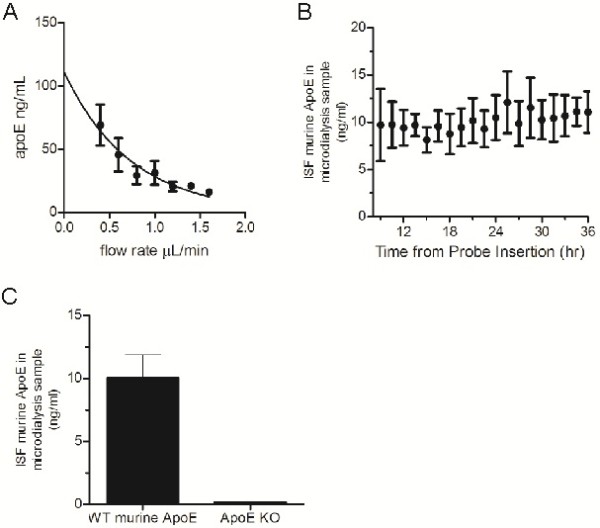
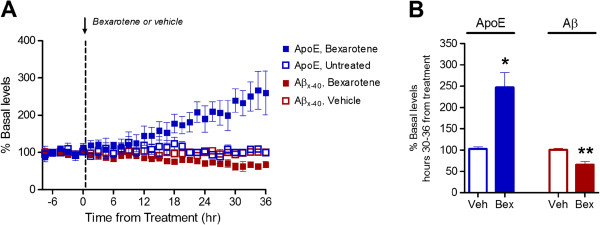
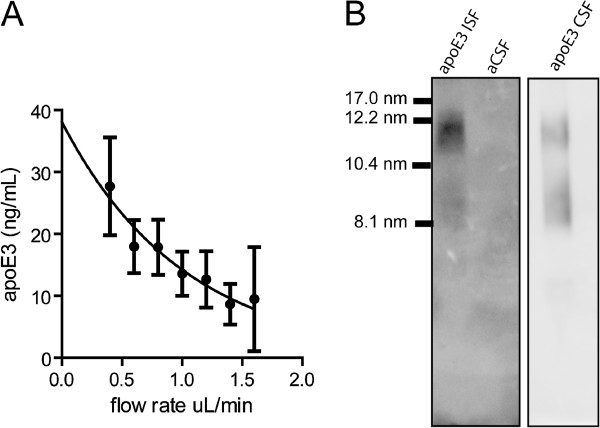
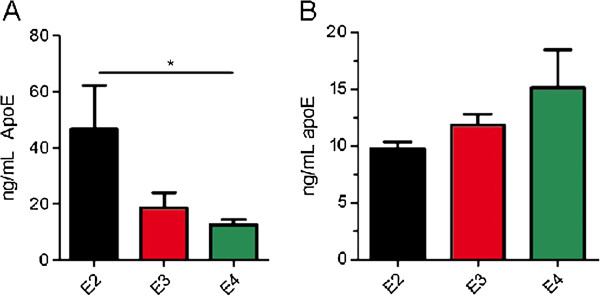
Background: The APOE4 allele variant is the strongest known genetic risk factor for developing late-onset Alzheimer’s disease. The link between apolipoprotein E (apoE) and Alzheimer’s disease is likely due in large part to the impact of apoE on the metabolism of amyloid β (Aβ) within the brain. Manipulation of apoE levels and lipidation within the brain has been proposed as a therapeutic target for the treatment of Alzheimer’s disease. However, we know little about the dynamic regulation of apoE levels and lipidation within the central nervous system. We have developed an assay to measure apoE levels in the brain interstitial fluid of awake and freely moving mice using large molecular weight cut-off microdialysis probes. Results: We were able to recover apoE using microdialysis from human cerebrospinal fluid (CSF) in vitro and mouse brain parenchyma in vivo . Microdialysis probes were inserted into the hippocampus of wild-type mice and interstitial fluid was collected for 36 hours. Levels of apoE within the microdialysis samples were determined by ELISA. The levels of apoE were found to be relatively stable over 36 hours. No apoE was detected in microdialysis samples from apoE KO mice. Administration of the RXR agonist bexarotene increased ISF apoE levels while ISF Aβ levels were decreased. Extrapolation to zero-flow analysis allowed us to determine the absolute recoverable concentration of apoE3 in the brain ISF of apoE3 KI mice. Furthermore, analysis of microdialysis samples by non-denaturing gel electrophoresis determined lipidated apoE particles in microdialysis samples were consistent in size with apoE particles from CSF. Finally, we found that the concentration of apoE in the brain ISF was dependent upon apoE isoform in human apoE KI mice, following the pattern apoE2>apoE3>apoE4. Conclusions: We are able to collect lipidated apoE from the brain of awake and freely moving mice and monitor apoE levels over the course of several hours from a single mouse. Our technique enables assessment of brain apoE dynamics under physiological and pathophysiological conditions and in response to therapeutic interventions designed to affect apoE levels and lipidation within the brain.
Overview
The claims and statistics of this paper haven’t been checked yet.
Free: it reads the open-access text and checks the first 5 claims that cite a source we can check. Create a free account to check every claim.
Integrity signals
Registry
Cites
Statistics
Figures
Verification
Claims the paper makes
The claims and statistics of this paper haven’t been checked yet.
Free: it reads the open-access text and checks the first 5 claims that cite a source we can check. Create a free account to check every claim.
Claims other papers make about this one
Each is checked against this paper’s own text: does it say what the citing paper says it does?
The source backs part of the claim, not all of it — or backs it for a different population, condition or comparison.
In the citing paper
“However, levels of apoE in human cerebrospinal fluid do display genotype-dependent pattern similar to the pattern in plasma, further murine interstitial fluid was observed to have genotype-dependent apoE levels similar to the pattern in cerebrospinal fluid [105,112,113].”
From Plasma levels of apolipoprotein E, APOE genotype and risk of dementia and ischemic heart disease: A review (2016) · cites this paper as [112]
Experimental — accuracy not yet measuredThe cited source says what the claim attributes to it.
In the citing paper
“However, levels of apoE in human cerebrospinal fluid do display genotype-dependent pattern similar to the pattern in plasma, further murine interstitial fluid was observed to have genotype-dependent apoE levels similar to the pattern in cerebrospinal fluid [105,112,113].”
From Plasma levels of apolipoprotein E, APOE genotype and risk of dementia and ischemic heart disease: A review (2016) · cites this paper as [112]
The cited source says what the claim attributes to it.
In the citing paper
“and in murine interstitial fluid a similar genotype-dependent pattern as in cerebrospinal fluid was observed.65”
From Plasma levels of apolipoprotein E, APOE genotype, and all-cause and cause-specific mortality in 105 949 individuals from a white general population cohort (2019) · cites this paper as [65]
The cited source says what the claim attributes to it.
In the citing paper
“ApoE level in the hippocampal interstitial fluid of mice has been shown to be dependent upon the APOE 2/3/4 polymorphism [51].”
From Genome-wide analysis identifies novel loci influencing plasma apolipoprotein E concentration and Alzheimer’s disease risk (2023) · cites this paper as [51]
The cited source says what the claim attributes to it.
In the citing paper
“Several research groups have tried to reproduce Cramer's initial study in various different AD models, with disparate results [18][19][20][21][22][23].”
4 more claims about this paper
Create a free account to see every claim other papers make about this one.
Self-check
Percentages, sums and reported differences re-computed from the paper’s own numbers.
The self-check needs the paper’s full text.
Citations
Cites
Apolipoprotein E and Alzheimer disease: risk, mechanisms and therapy
Liu, C.-C., Kanekiyo, T., Xu, H., & Bu, G. (2013) · Nature Reviews Neurology · doi:10.1038/nrneurol.2012.263 · Cited by 3,459 · cited 1×
“Previous studies indicate that apoE affects the metabolism and oligomerization of Aβ within the brain [3,4,24] as well as influences a variety of other biological processes [2].”
BackgroundSynaptic Activity Regulates Interstitial Fluid Amyloid-β Levels In Vivo
Cirrito, J. R., Yamada, K. A., Finn, M. B., Sloviter, R. S., Bales, K. R., May, P. C., Schoepp, D. D., Paul, S. M., Mennerick, S., & Holtzman, D. M. (2005) · Neuron · doi:10.1016/j.neuron.2005.10.028 · Cited by 1,265 · cited 1×
“In AD, microdialysis has been instrumental in studying the dynamics of Aβ production and clearance in vivo [3,11-14].”
BackgroundSelf-citationHuman ApoE isoforms differentially regulate brain amyloid-β peptide clearance
Castellano, J. M., Kim, J., Stewart, F. R., Jiang, H., DeMattos, R. B., Patterson, B. W., Fagan, A. M., Morris, J. C., Mawuenyega, K. G., Cruchaga, C., et al. (2011) · Science Translational Medicine · doi:10.1126/scitranslmed.3002156 · Cited by 1,242 · cited 3×
“Previous studies indicate that apoE affects the metabolism and oligomerization of Aβ within the brain [3,4,24] as well as influences a variety of other biological processes [2].”
BackgroundSelf-citationApoE-Directed Therapeutics Rapidly Clear β-Amyloid and Reverse Deficits in AD Mouse Models
Cramer, P. E., Cirrito, J. R., Wesson, D. W., Lee, C. Y. D., Karlo, J. C., Zinn, A. E., Casali, B. T., Restivo, J. L., Goebel, W. D., James, M. J., et al. (2012) · Science · doi:10.1126/science.1217697 · Cited by 1,050 · cited 4×
“Recent studies have therapeutically targeted the levels and lipidation of apoE to enhance clearance of Aβ from the brain [8].”
BackgroundInfluentialSelf-citationNeuronal activity regulates the regional vulnerability to amyloid-β deposition
Bero, A. W., Yan, P., Roh, J. H., Cirrito, J. R., Stewart, F. R., Raichle, M. E., Lee, J.-M., & Holtzman, D. M. (2011) · Nature Neuroscience · doi:10.1038/nn.2801 · Cited by 880 · cited 1×
“In AD, microdialysis has been instrumental in studying the dynamics of Aβ production and clearance in vivo [3,11-14].”
BackgroundSelf-citationApolipoprotein E and Apolipoprotein E Receptors: Normal Biology and Roles in Alzheimer Disease
Holtzman, D. M., Herz, J., & Bu, G. (2012) · Cold Spring Harbor Perspectives in Medicine · doi:10.1101/cshperspect.a006312 · Cited by 782 · cited 4×
“Previous studies indicate that apoE affects the metabolism and oligomerization of Aβ within the brain [3,4,24] as well as influences a variety of other biological processes [2].”
BackgroundInfluentialSelf-citationRoh, J. H., Huang, Y., Bero, A. W., Kasten, T., Stewart, F. R., Bateman, R. J., & Holtzman, D. M. (2012) · Science Translational Medicine · doi:10.1126/scitranslmed.3004291 · Cited by 563 · cited 1×
“In AD, microdialysis has been instrumental in studying the dynamics of Aβ production and clearance in vivo [3,11-14].”
BackgroundSelf-citationOverexpression of ABCA1 reduces amyloid deposition in the PDAPP mouse model of Alzheimer disease
Wahrle, S. E., Jiang, H., Parsadanian, M., Kim, J., Li, A., Knoten, A., Jain, S., Hirsch-Reinshagen, V., Wellington, C. L., Bales, K. R., et al. (2008) · Journal of Clinical Investigation · doi:10.1172/jci33622 · Cited by 407 · cited 2×
“ApoE particles in the CSF or secreted by cultured astrocytes are a heterogeneous mixture that vary in size depending upon the degree of lipidation [5,18-20].”
BackgroundSelf-citationMandrekar-Colucci, S., Karlo, J. C., & Landreth, G. E. (2012) · The Journal of Neuroscience · doi:10.1523/jneurosci.5268-11.2012 · Cited by 394 · cited 1×
“receptor agonists may be an effective therapeutic target for AD [8,17].”
BackgroundSelf-citationCirrito, J. R., May, P. C., O'Dell, M. A., Taylor, J. W., Parsadanian, M., Cramer, J. W., Audia, J. E., Nissen, J. S., Bales, K. R., Paul, S. M., et al. (2003) · The Journal of Neuroscience · doi:10.1523/jneurosci.23-26-08844.2003 · Cited by 394 · cited 2×
“In AD, microdialysis has been instrumental in studying the dynamics of Aβ production and clearance in vivo [3,11-14].”
BackgroundResultSelf-citationDeficiency of ABCA1 Impairs Apolipoprotein E Metabolism in Brain
Hirsch-Reinshagen, V., Zhou, S., Burgess, B. L., Bernier, L., McIsaac, S. A., Chan, J. Y., Tansley, G. H., Cohn, J. S., Hayden, M. R., & Wellington, C. L. (2004) · Journal of Biological Chemistry · doi:10.1074/jbc.m407962200 · Cited by 385 · cited 1×
“plaque deposition and Aβ clearance [5-8].”
Impact of Apolipoprotein E (ApoE) Polymorphism on Brain ApoE Levels
Riddell, D. R., Zhou, H., Atchison, K., Warwick, H. K., Atkinson, P. J., Jefferson, J., Xu, L., Aschmies, S., Kirksey, Y., Hu, Y., et al. (2008) · The Journal of Neuroscience · doi:10.1523/jneurosci.1972-08.2008 · Cited by 346 · cited 1×
“levels of apoE and apoE4 expressing mice the lowest [22,23].”
BackgroundOverview of Brain Microdialysis
Chefer, V. I., Thompson, A. C., Zapata, A., & Shippenberg, T. S. (2009) · Current Protocols in Neuroscience · doi:10.1002/0471142301.ns0701s47 · Cited by 330 · cited 2×
“Microdialysis is a widely used and powerful technique that has been employed to study neurotransmitters and other small molecules or peptides within the brain [10].”
MethodDeletion of Abca1 Increases Aβ Deposition in the PDAPP Transgenic Mouse Model of Alzheimer Disease
Wahrle, S. E., Jiang, H., Parsadanian, M., Hartman, R. E., Bales, K. R., Paul, S. M., & Holtzman, D. M. (2005) · Journal of Biological Chemistry · doi:10.1074/jbc.m508780200 · Cited by 325 · cited 1×
“ApoE particles in the CSF or secreted by cultured astrocytes are a heterogeneous mixture that vary in size depending upon the degree of lipidation [5,18-20].”
BackgroundSelf-citationApolipoprotein E, Especially Apolipoprotein E4, Increases the Oligomerization of Amyloid β Peptide
Hashimoto, T., Serrano-Pozo, A., Hori, Y., Adams, K. W., Takeda, S., Banerji, A. O., Mitani, A., Joyner, D., Thyssen, D. H., Bacskai, B. J., et al. (2012) · The Journal of Neuroscience · doi:10.1523/jneurosci.1542-12.2012 · Cited by 294 · cited 1×
“Previous studies indicate that apoE affects the metabolism and oligomerization of Aβ within the brain [3,4,24] as well as influences a variety of other biological processes [2].”
BackgroundSelf-citationHuman APOE Isoform-Dependent Effects on Brain β-Amyloid Levels in PDAPP Transgenic Mice
Bales, K. R., Liu, F., Wu, S., Lin, S., Koger, D., DeLong, C., Hansen, J. C., Sullivan, P. M., & Paul, S. M. (2009) · The Journal of Neuroscience · doi:10.1523/jneurosci.0887-09.2009 · Cited by 274 · cited 1×
“levels of apoE and apoE4 expressing mice the lowest [22,23].”
BackgroundNiemann‐Pick type C disease: molecular mechanisms and potential therapeutic approaches
Rosenbaum, A. I., & Maxfield, F. R. (2011) · Journal of Neurochemistry · doi:10.1111/j.1471-4159.2010.06976.x · Cited by 232 · cited 1×
“as potentially play a role in neurodegenerative diseases such as Niemann-Pick disease [25].”
BackgroundFagan, A. M., Holtzman, D. M., Munson, G., Mathur, T., Schneider, D., Chang, L. K., Getz, G. S., Reardon, C. A., Lukens, J., Shah, J. A., et al. (1999) · Journal of Biological Chemistry · doi:10.1074/jbc.274.42.30001 · Cited by 222
Self-citationKim, J., Jiang, H., Park, S., Eltorai, A. E. M., Stewart, F. R., Yoon, H., Basak, J. M., Finn, M. B., & Holtzman, D. M. (2011) · The Journal of Neuroscience · doi:10.1523/jneurosci.3773-11.2011 · Cited by 204 · cited 1×
“plaque deposition and Aβ clearance [5-8].”
Self-citationDeMattos, R. B., Brendza, R. P., Heuser, J. E., Kierson, M., Cirrito, J. R., Fryer, J., Sullivan, P. M., Fagan, A. M., Han, X., & Holtzman, D. M. (2001) · Neurochemistry International · doi:10.1016/s0197-0186(01)00049-3 · Cited by 180 · cited 1×
“ApoE particles in the CSF or secreted by cultured astrocytes are a heterogeneous mixture that vary in size depending upon the degree of lipidation [5,18-20].”
BackgroundSelf-citationAnti-apoE immunotherapy inhibits amyloid accumulation in a transgenic mouse model of Aβ amyloidosis
Kim, J., Eltorai, A. E. M., Jiang, H., Liao, F., Verghese, P. B., Kim, J., Stewart, F. R., Basak, J. M., & Holtzman, D. M. (2012) · Journal of Experimental Medicine · doi:10.1084/jem.20121274 · Cited by 163 · cited 2×
“Given recent interest in apoE as a therapeutic target for AD, there is a critical need to develop methods to dynamically assess the levels, lipidation, and effects of apoE within the brain in vivo [8,9].”
BackgroundMethodSelf-citationFormation and function of apolipoprotein E-containing lipoproteins in the nervous system
Vance, J. E., & Hayashi, H. (2010) · Biochimica et Biophysica Acta (BBA) - Molecular and Cell Biology of Lipids · doi:10.1016/j.bbalip.2010.02.007 · Cited by 155 · cited 1×
“Background Intercellular lipid transport in the central nervous system (CNS) is predominantly mediated by high-density lipoprotein (HDL)-like particles containing the lipidbinding protein apolipoprotein E (apoE) [1].”
BackgroundMarked regional differences of brain human apolipoprotein e expression in targeted replacement mice
Sullivan, P. M., Mace, B. E., Maeda, N., & Schmechel, D. E. (2004) · Neuroscience · doi:10.1016/j.neuroscience.2003.10.011 · Cited by 113 · cited 1×
“Sullivan (Duke University) and have been previously described [26].”
MethodOpposing Synaptic Regulation of Amyloid-β Metabolism by NMDA Receptors In Vivo
Verges, D. K., Restivo, J. L., Goebel, W. D., Holtzman, D. M., & Cirrito, J. R. (2011) · The Journal of Neuroscience · doi:10.1523/jneurosci.0607-11.2011 · Cited by 74 · cited 1×
“Similar to previous studies, we observed only minimal astrogliosis in the cortex proximal to the site of cannula insertion and no evidence of substantial inflammation following microdialysis (data not shown)[14,16].”
ResultSelf-citationNovel microdialysis method to assess neuropeptides and large molecules in free-moving mouse
Takeda, S., Sato, N., Ikimura, K., Nishino, H., Rakugi, H., & Morishita, R. (2011) · Neuroscience · doi:10.1016/j.neuroscience.2011.04.035 · Cited by 70 · cited 1×
“A recent report demonstrated that a high molecular weight cut-off (MWCO) microdialysis probe was capable of collecting small (<30 kDa) proteins from the brain ISF[15].”
BackgroundFan, J., Stukas, S., Wong, C., Chan, J., May, S., DeValle, N., Hirsch-Reinshagen, V., Wilkinson, A., Oda, M. N., & Wellington, C. L. (2011) · Journal of Lipid Research · doi:10.1194/jlr.m014365 · Cited by 21 · cited 1×
“ApoE particles in the CSF or secreted by cultured astrocytes are a heterogeneous mixture that vary in size depending upon the degree of lipidation [5,18-20].”
BackgroundKhan (2000) · doi:10.1002/1531-8249(200008)48:2
Self-citation
Cited by
Apolipoprotein E and Alzheimer disease: pathobiology and targeting strategies
Yamazaki, Y., Zhao, N., Caulfield, T. R., Liu, C.-C., & Bu, G. (2019) · Nature Reviews Neurology · doi:10.1038/s41582-019-0228-7 · Cited by 1,425
ARUK Consortium, Sims, R., GERAD/PERADES, C., van der Lee, S. J., Naj, A. C., Bellenguez, C., Badarinarayan, N., Jakobsdottir, J., Kunkle, B. W., Boland, A., et al. (2017) · Nature Genetics · doi:10.1038/ng.3916 · Cited by 1,012
Biomarkers of traumatic injury are transported from brain to blood via the glymphatic system.
Plog, B. A., Dashnaw, M. L., Hitomi, E., Peng, W., Liao, Y., Lou, N., Deane, R., & Nedergaard, M. (2015) · The Journal of Neuroscience · doi:10.1523/jneurosci.3742-14.2015 · Cited by 525
“…recovery rates due to slow diffusion of large molecular weight proteins, and pressures can still fluctuate across the membrane in free-moving animals (Takeda et al., 2011; Yamada et al., 2011; Ulrich et al., 2013), thus raising concerns that edema will be induced in the post-traumatic brain.”
BackgroundCentral Nervous System Lipoproteins: ApoE and Regulation of Cholesterol Metabolism
Mahley, R. W. (2016) · Arteriosclerosis, Thrombosis, and Vascular Biology · doi:10.1161/atvbaha.116.307023 · Cited by 516
“An additional study of targeted replacement mice confirmed these findings, showing a 3- to 4-fold difference between apoE2 and apoE4 levels in CSF,(45) which was demonstrated by microdialysis probes in the hippocampus of targeted replacement mice.(46) The gradient of apoE levels also occurs in frontal cortex and hippo…”
ApoE4: an emerging therapeutic target for Alzheimer’s disease
Safieh, M., Korczyn, A. D., & Michaelson, D. M. (2019) · BMC Medicine · doi:10.1186/s12916-019-1299-4 · Cited by 449
Metadata
- Authors
- Ulrich, J. D., Burchett, J. M., Restivo, J. L., Schuler, D. R., Verghese, P. B., Mahan, T. E., Landreth, G. E., Castellano, J. M., Jiang, H., Cirrito, J. R., & Holtzman, D. M.
- Affiliations
- Washington University in St. Louis (US)
- Case Western Reserve University (US)
- Corresponding author
- Holtzman, David M
- ORCID
- Venue
- Molecular Neurodegeneration
- Published
- 2013-04-19
- Volume
- 8
- Issue
- 1
- Pages
- 13-13
- ISSN
- 1750-1326 (ISSN-L)
- PMC
- PMC3640999
- OpenAlex
- W2111289935
- Cited by
- 128
- References
- 28
- Citations by year
- 2026: 8 · 2025: 6 · 2024: 7 · 2023: 9 · 2022: 18 · 2021: 7 · 2020: 6 · 2019: 10 · 2018: 8 · 2017: 11 · 2016: 13 · 2015: 11 · 2014: 13 · 2013: 1
- FWCI
- 8.80
- Type
- journal article
- Language
- en
- Open access
- gold
- doi.org
- Licence
- cc-by
- Locations
- Molecular Neurodegeneration (publishedVersion, cc-by)
- Europe PMC (PubMed Central) (publishedVersion, cc-by)
- PubMed Central (publishedVersion, cc-by)
- PubMed (publishedVersion)
- Digital Commons@Becker (Washington University School of Medicine) (submittedVersion)
- Funders
- Ellison Medical Foundation
- Cure Alzheimer's Fund
- National Institute on Aging (K01 AG029254, R37AG13956, R01AG042513, R37AG013956)
- National Institute of Neurological Disorders and Stroke (P01 NS07496901, P01NS074969)
- Topics
- Life Sciences › Neuroscience › Cellular and Molecular Neuroscience › Alzheimer's disease research and treatments
- Life Sciences › Neuroscience › Neurology › Neuroinflammation and Neurodegeneration Mechanisms
- Health Sciences › Medicine › Clinical Neurology › Cerebrospinal fluid and hydrocephalus
- Keywords
- apolipoprotein E, brain interstitial fluid, microdialysis, APOE ε4, Alzheimer's disease, amyloid-beta, APOE isoforms, ApoE-deficient mice, bexarotene, RXR agonists, hippocampus, cerebrospinal fluid, in vivo measurement
- MeSH terms
- Alzheimer Disease, Animals, Apolipoproteins E, Brain, Brain Chemistry, Cerebrospinal Fluid, Enzyme-Linked Immunosorbent Assay, Humans, Mice, Inbred C57BL, Blotting, Western, Microdialysis, Protein Isoforms, Extracellular Fluid, Mice, Gene Knock-In Techniques
About these checks
Registry, retraction, Cites and statistics results are computed, not judged, with one exception: a printed reference that no index lists is read once by a model before it counts as a citation error. Claims are extracted by a model and kept only when their quote appears verbatim in the text; each cited source is then checked, with a model’s help, for whether it says what the claim relies on. Those verdicts can be wrong — read the claim’s quote and the cited source before relying on one.
Statistics and arithmetic are recomputed, not judged.
Confidence bands are shown only for fields calibrated on our annotated test set. None is calibrated yet, so no band is shown.
What counts as a claim ›How we measure confidence ›How we check this ›
Are you an author, or do you see a problem with this page? Request a review
Data sources
Bibliographic data: Semantic Scholar, OpenAlex, Crossref.
Contains information from the Semantic Scholar Academic Graph Datasets, made available under the ODC Attribution License (ODC-BY 1.0).
Semantic Scholar’s data is described in: Kinney, R., et al. (2023). The Semantic Scholar Open Data Platform. arXiv:2301.10140.
