

In vivo measurement of apolipoprotein E from the brain interstitial fluid using microdialysis
Open accessThe DOI matches its Crossref record; 27 of the 28 references it cites were found in a registry or an index.
Abstract
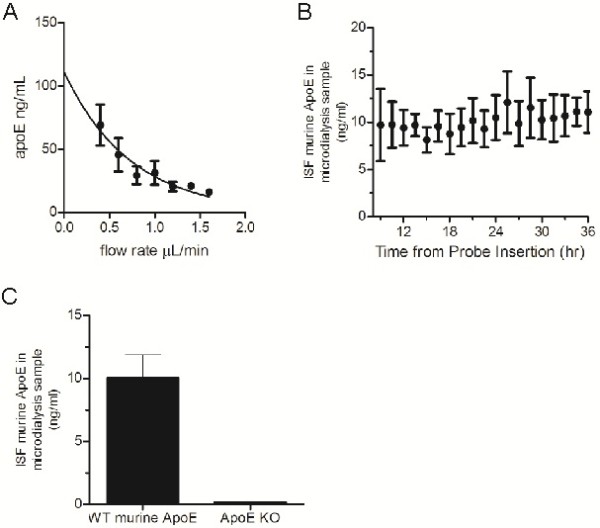
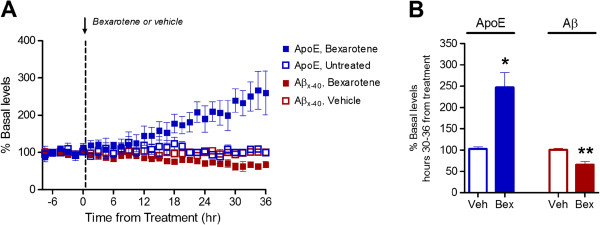
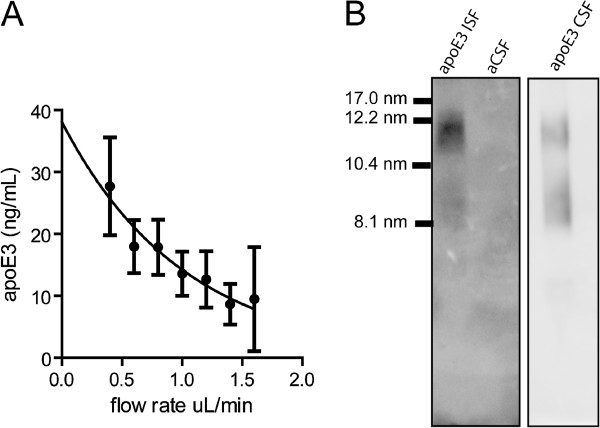
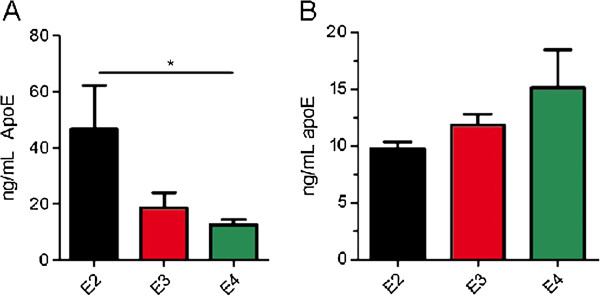
Background: The APOE4 allele variant is the strongest known genetic risk factor for developing late-onset Alzheimer’s disease. The link between apolipoprotein E (apoE) and Alzheimer’s disease is likely due in large part to the impact of apoE on the metabolism of amyloid β (Aβ) within the brain. Manipulation of apoE levels and lipidation within the brain has been proposed as a therapeutic target for the treatment of Alzheimer’s disease. However, we know little about the dynamic regulation of apoE levels and lipidation within the central nervous system. We have developed an assay to measure apoE levels in the brain interstitial fluid of awake and freely moving mice using large molecular weight cut-off microdialysis probes. Results: We were able to recover apoE using microdialysis from human cerebrospinal fluid (CSF) in vitro and mouse brain parenchyma in vivo . Microdialysis probes were inserted into the hippocampus of wild-type mice and interstitial fluid was collected for 36 hours. Levels of apoE within the microdialysis samples were determined by ELISA. The levels of apoE were found to be relatively stable over 36 hours. No apoE was detected in microdialysis samples from apoE KO mice. Administration of the RXR agonist bexarotene increased ISF apoE levels while ISF Aβ levels were decreased. Extrapolation to zero-flow analysis allowed us to determine the absolute recoverable concentration of apoE3 in the brain ISF of apoE3 KI mice. Furthermore, analysis of microdialysis samples by non-denaturing gel electrophoresis determined lipidated apoE particles in microdialysis samples were consistent in size with apoE particles from CSF. Finally, we found that the concentration of apoE in the brain ISF was dependent upon apoE isoform in human apoE KI mice, following the pattern apoE2>apoE3>apoE4. Conclusions: We are able to collect lipidated apoE from the brain of awake and freely moving mice and monitor apoE levels over the course of several hours from a single mouse. Our technique enables assessment of brain apoE dynamics under physiological and pathophysiological conditions and in response to therapeutic interventions designed to affect apoE levels and lipidation within the brain.
Overview
The claims and statistics of this paper haven’t been checked yet.
Free: it reads the open-access text and checks the first 5 claims that cite a source we can check. Create a free account to check every claim.
Integrity signals
Registry
Cites
Statistics
Figures
Verification
Claims the paper makes
The claims and statistics of this paper haven’t been checked yet.
Free: it reads the open-access text and checks the first 5 claims that cite a source we can check. Create a free account to check every claim.
Claims other papers make about this one
Each is checked against this paper’s own text: does it say what the citing paper says it does?
The source backs part of the claim, not all of it — or backs it for a different population, condition or comparison.
In the citing paper
“However, levels of apoE in human cerebrospinal fluid do display genotype-dependent pattern similar to the pattern in plasma, further murine interstitial fluid was observed to have genotype-dependent apoE levels similar to the pattern in cerebrospinal fluid [105,112,113].”
From Plasma levels of apolipoprotein E, APOE genotype and risk of dementia and ischemic heart disease: A review (2016) · cites this paper as [112]
Experimental — accuracy not yet measuredThe cited source says what the claim attributes to it.
In the citing paper
“However, levels of apoE in human cerebrospinal fluid do display genotype-dependent pattern similar to the pattern in plasma, further murine interstitial fluid was observed to have genotype-dependent apoE levels similar to the pattern in cerebrospinal fluid [105,112,113].”
From Plasma levels of apolipoprotein E, APOE genotype and risk of dementia and ischemic heart disease: A review (2016) · cites this paper as [112]
The cited source says what the claim attributes to it.
In the citing paper
“and in murine interstitial fluid a similar genotype-dependent pattern as in cerebrospinal fluid was observed.65”
From Plasma levels of apolipoprotein E, APOE genotype, and all-cause and cause-specific mortality in 105 949 individuals from a white general population cohort (2019) · cites this paper as [65]
The cited source says what the claim attributes to it.
In the citing paper
“ApoE level in the hippocampal interstitial fluid of mice has been shown to be dependent upon the APOE 2/3/4 polymorphism [51].”
From Genome-wide analysis identifies novel loci influencing plasma apolipoprotein E concentration and Alzheimer’s disease risk (2023) · cites this paper as [51]
The cited source says what the claim attributes to it.
In the citing paper
“Several research groups have tried to reproduce Cramer's initial study in various different AD models, with disparate results [18][19][20][21][22][23].”
4 more claims about this paper
Create a free account to see every claim other papers make about this one.
Self-check
Percentages, sums and reported differences re-computed from the paper’s own numbers.
The self-check needs the paper’s full text.
Citations
Cites
Apolipoprotein E and Alzheimer disease: risk, mechanisms and therapy
Liu, C.-C., Kanekiyo, T., Xu, H., & Bu, G. (2013) · Nature Reviews Neurology · doi:10.1038/nrneurol.2012.263 · Cited by 3,459 · cited 1×
“Previous studies indicate that apoE affects the metabolism and oligomerization of Aβ within the brain [3,4,24] as well as influences a variety of other biological processes [2].”
BackgroundSynaptic Activity Regulates Interstitial Fluid Amyloid-β Levels In Vivo
Cirrito, J. R., Yamada, K. A., Finn, M. B., Sloviter, R. S., Bales, K. R., May, P. C., Schoepp, D. D., Paul, S. M., Mennerick, S., & Holtzman, D. M. (2005) · Neuron · doi:10.1016/j.neuron.2005.10.028 · Cited by 1,265 · cited 1×
“In AD, microdialysis has been instrumental in studying the dynamics of Aβ production and clearance in vivo [3,11-14].”
BackgroundSelf-citationHuman ApoE isoforms differentially regulate brain amyloid-β peptide clearance
Castellano, J. M., Kim, J., Stewart, F. R., Jiang, H., DeMattos, R. B., Patterson, B. W., Fagan, A. M., Morris, J. C., Mawuenyega, K. G., Cruchaga, C., et al. (2011) · Science Translational Medicine · doi:10.1126/scitranslmed.3002156 · Cited by 1,242 · cited 3×
“Previous studies indicate that apoE affects the metabolism and oligomerization of Aβ within the brain [3,4,24] as well as influences a variety of other biological processes [2].”
BackgroundSelf-citationApoE-Directed Therapeutics Rapidly Clear β-Amyloid and Reverse Deficits in AD Mouse Models
Cramer, P. E., Cirrito, J. R., Wesson, D. W., Lee, C. Y. D., Karlo, J. C., Zinn, A. E., Casali, B. T., Restivo, J. L., Goebel, W. D., James, M. J., et al. (2012) · Science · doi:10.1126/science.1217697 · Cited by 1,050 · cited 4×
“Recent studies have therapeutically targeted the levels and lipidation of apoE to enhance clearance of Aβ from the brain [8].”
BackgroundInfluentialSelf-citationNeuronal activity regulates the regional vulnerability to amyloid-β deposition
Bero, A. W., Yan, P., Roh, J. H., Cirrito, J. R., Stewart, F. R., Raichle, M. E., Lee, J.-M., & Holtzman, D. M. (2011) · Nature Neuroscience · doi:10.1038/nn.2801 · Cited by 880 · cited 1×
“In AD, microdialysis has been instrumental in studying the dynamics of Aβ production and clearance in vivo [3,11-14].”
BackgroundSelf-citationApolipoprotein E and Apolipoprotein E Receptors: Normal Biology and Roles in Alzheimer Disease
Holtzman, D. M., Herz, J., & Bu, G. (2012) · Cold Spring Harbor Perspectives in Medicine · doi:10.1101/cshperspect.a006312 · Cited by 782 · cited 4×
“Previous studies indicate that apoE affects the metabolism and oligomerization of Aβ within the brain [3,4,24] as well as influences a variety of other biological processes [2].”
BackgroundInfluentialSelf-citationRoh, J. H., Huang, Y., Bero, A. W., Kasten, T., Stewart, F. R., Bateman, R. J., & Holtzman, D. M. (2012) · Science Translational Medicine · doi:10.1126/scitranslmed.3004291 · Cited by 563 · cited 1×
“In AD, microdialysis has been instrumental in studying the dynamics of Aβ production and clearance in vivo [3,11-14].”
BackgroundSelf-citationOverexpression of ABCA1 reduces amyloid deposition in the PDAPP mouse model of Alzheimer disease
Wahrle, S. E., Jiang, H., Parsadanian, M., Kim, J., Li, A., Knoten, A., Jain, S., Hirsch-Reinshagen, V., Wellington, C. L., Bales, K. R., et al. (2008) · Journal of Clinical Investigation · doi:10.1172/jci33622 · Cited by 407 · cited 2×
“ApoE particles in the CSF or secreted by cultured astrocytes are a heterogeneous mixture that vary in size depending upon the degree of lipidation [5,18-20].”
BackgroundSelf-citationMandrekar-Colucci, S., Karlo, J. C., & Landreth, G. E. (2012) · The Journal of Neuroscience · doi:10.1523/jneurosci.5268-11.2012 · Cited by 394 · cited 1×
“receptor agonists may be an effective therapeutic target for AD [8,17].”
BackgroundSelf-citationCirrito, J. R., May, P. C., O'Dell, M. A., Taylor, J. W., Parsadanian, M., Cramer, J. W., Audia, J. E., Nissen, J. S., Bales, K. R., Paul, S. M., et al. (2003) · The Journal of Neuroscience · doi:10.1523/jneurosci.23-26-08844.2003 · Cited by 394 · cited 2×
“In AD, microdialysis has been instrumental in studying the dynamics of Aβ production and clearance in vivo [3,11-14].”
BackgroundResultSelf-citation
Cited by
Apolipoprotein E and Alzheimer disease: pathobiology and targeting strategies
Yamazaki, Y., Zhao, N., Caulfield, T. R., Liu, C.-C., & Bu, G. (2019) · Nature Reviews Neurology · doi:10.1038/s41582-019-0228-7 · Cited by 1,425
ARUK Consortium, Sims, R., GERAD/PERADES, C., van der Lee, S. J., Naj, A. C., Bellenguez, C., Badarinarayan, N., Jakobsdottir, J., Kunkle, B. W., Boland, A., et al. (2017) · Nature Genetics · doi:10.1038/ng.3916 · Cited by 1,012
Biomarkers of traumatic injury are transported from brain to blood via the glymphatic system.
Plog, B. A., Dashnaw, M. L., Hitomi, E., Peng, W., Liao, Y., Lou, N., Deane, R., & Nedergaard, M. (2015) · The Journal of Neuroscience · doi:10.1523/jneurosci.3742-14.2015 · Cited by 525
“…recovery rates due to slow diffusion of large molecular weight proteins, and pressures can still fluctuate across the membrane in free-moving animals (Takeda et al., 2011; Yamada et al., 2011; Ulrich et al., 2013), thus raising concerns that edema will be induced in the post-traumatic brain.”
BackgroundCentral Nervous System Lipoproteins: ApoE and Regulation of Cholesterol Metabolism
Mahley, R. W. (2016) · Arteriosclerosis, Thrombosis, and Vascular Biology · doi:10.1161/atvbaha.116.307023 · Cited by 516
“An additional study of targeted replacement mice confirmed these findings, showing a 3- to 4-fold difference between apoE2 and apoE4 levels in CSF,(45) which was demonstrated by microdialysis probes in the hippocampus of targeted replacement mice.(46) The gradient of apoE levels also occurs in frontal cortex and hippo…”
ApoE4: an emerging therapeutic target for Alzheimer’s disease
Safieh, M., Korczyn, A. D., & Michaelson, D. M. (2019) · BMC Medicine · doi:10.1186/s12916-019-1299-4 · Cited by 449
Wang, C., Najm, R., Xu, Q., Jeong, D.-E., Walker, D., Balestra, M. E., Yoon, S. Y., Yuan, H., Li, G., Miller, Z. A., et al. (2018) · Nature Medicine · doi:10.1038/s41591-018-0004-z · Cited by 428
“This apoE concentration is >800-folds higher than the physiological concentrations of apoE (~0.35 nM) in mouse brain ISF 34 .”
InfluentialApolipoprotein E, Receptors, and Modulation of Alzheimer’s Disease
Zhao, N., Liu, C.-C., Qiao, W., & Bu, G. (2018) · Biological Psychiatry · doi:10.1016/j.biopsych.2017.03.003 · Cited by 370
“Viral-mediated expression of apoE4 in APP/PS1 mouse brain increases oligomeric Aβ within the ISF and exacerbates plaque deposition, whereas expression of apoE2 leads to an opposite effect (40, 41).”
BackgroundInfluentialAPOE and Alzheimer’s Disease: From Lipid Transport to Physiopathology and Therapeutics
Husain, M. A., Laurent, B., & Plourde, M. (2021) · Frontiers in Neuroscience · doi:10.3389/fnins.2021.630502 · Cited by 353
“ApoE is a component of lipoprotein particles in the plasma at the periphery, as well as in the cerebrospinal fluid (CSF) and in the interstitial fluid (ISF) of brain parenchyma in the central nervous system (CNS).”
BackgroundInfluentialApoE Cascade Hypothesis in the pathogenesis of Alzheimer’s disease and related dementias
Martens, Y. A., Zhao, N., Liu, C.-C., Kanekiyo, T., Yang, A. J., Goate, A. M., Holtzman, D. M., & Bu, G. (2022) · Neuron · doi:10.1016/j.neuron.2022.03.004 · Cited by 316
Self-citationAPOE2: protective mechanism and therapeutic implications for Alzheimer’s disease
Li, Z., Shue, F., Zhao, N., Shinohara, M., & Bu, G. (2020) · Molecular Neurodegeneration · doi:10.1186/s13024-020-00413-4 · Cited by 306
Fernández-Calle, R., Konings, S. C., Frontiñán-Rubio, J., García-Revilla, J., Camprubí-Ferrer, L., Svensson, M., Martinson, I., Boza-Serrano, A., Venero, J. L., Nielsen, H. M., et al. (2022) · Molecular Neurodegeneration · doi:10.1186/s13024-022-00566-4 · Cited by 278
Achariyar, T. M., Li, B., Peng, W., Verghese, P. B., Shi, Y., McConnell, E., Benraiss, A., Kasper, T., Song, W., Takano, T., et al. (2016) · Molecular Neurodegeneration · doi:10.1186/s13024-016-0138-8 · Cited by 252
Self-citationNovel allele-dependent role for APOE in controlling the rate of synapse pruning by astrocytes
Chung, W.-S., Verghese, P. B., Chakraborty, C., Joung, J., Hyman, B. T., Ulrich, J. D., Holtzman, D. M., & Barres, B. A. (2016) · Proceedings of the National Academy of Sciences · doi:10.1073/pnas.1609896113 · Cited by 242
“Although we could not detect differences in the amount of total proteins in each APOE2/3/4 ACM, APOE2, 3, or 4 KI astrocytes could potentially produce different amount of APOE particles (23), as well as different sets of secreted proteins, affecting astrocyte-mediated phagocytosis.”
BackgroundSelf-citationHuynh, T.-P. V., Davis, A. A., Ulrich, J. D., & Holtzman, D. M. (2017) · Journal of Lipid Research · doi:10.1194/jlr.r075481 · Cited by 210
“apoE is found in a class of HDL-like lipoprotein in the cerebrospinal fluid (CSF) and interstitial fluid (ISF) of the brain (12, 13).”
BackgroundSelf-citationAge-Dependent Effects of apoE Reduction Using Antisense Oligonucleotides in a Model of β-amyloidosis
Huynh, T.-P. V., Liao, F., Francis, C. M., Robinson, G. O., Serrano, J. R., Jiang, H., Roh, J., Finn, M. B., Sullivan, P. M., Esparza, T. J., et al. (2017) · Neuron · doi:10.1016/j.neuron.2017.11.014 · Cited by 209
“Cerebrospinal fluid (CSF) collected from APPE4 and APPE3 mice across all treatment groups were subjected to native gel analysis for apoE lipidated particles (Ulrich et al., 2013).”
MethodSelf-citationApoE Lipidation as a therapeutic target in Alzheimer’s disease
Lanfranco, M. F., Ng, C. A., & Rebeck, G. W. (2020) · International Journal of Molecular Sciences · doi:10.3390/ijms21176336 · Cited by 189
“Peripheral apoE is incorporated into lipoprotein particles in the plasma, and CNS apoE is incorporated into lipoprotein particles in the CSF and in the interstitial fluid of brain parenchyma [30,63].”
BackgroundTherapeutic approaches targeting Apolipoprotein E function in Alzheimer’s disease
Williams, T., Borchelt, D. R., & Chakrabarty, P. (2020) · Molecular Neurodegeneration · doi:10.1186/s13024-020-0358-9 · Cited by 171
“true in primary rat neuron cultures and human iPS cellderived astrocytes [71, 72] as well as APOE TR mice [73, 74].”
BackgroundApoE4 upregulates the activity of mitochondria‐associated ER membranes
Tambini, M. D., Pera, M., Kanter, E., Yang, H., Guardia‐Laguarta, C., Holtzman, D., Sulzer, D., Area‐Gomez, E., & Schon, E. A. (2016) · The EMBO Reports · doi:10.15252/embr.201540614 · Cited by 166
“Prior to all experiments, we measured the amount of ApoE present in the ACM, which typically contained more ApoE3 than ApoE4, as expected [23,24] (Fig EV1), and then applied the ACM’s on an “equal ApoE” basis.”
Self-citationAstrocytic ApoE reprograms neuronal cholesterol metabolism and histone-acetylation-mediated memory
Li, X., Zhang, J., Li, D., He, C., He, K., Xue, T., Wan, L., Zhang, C., & Liu, Q. (2021) · Neuron · doi:10.1016/j.neuron.2021.01.005 · Cited by 165
Lipocalin-2 protects the brain during inflammatory conditions
Kang, S. S., Ren, Y., Liu, C.-C., Kurti, A., Baker, K. E., Bu, G., Asmann, Y., & Fryer, J. D. (2018) · Molecular Psychiatry · doi:10.1038/mp.2016.243 · Cited by 162
Plasma levels of apolipoprotein Eand risk of dementia in the general population
Rasmussen, K. L., Tybjærg‐Hansen, A., Nordestgaard, B. G., & Frikke‐Schmidt, R. (2015) · Annals of Neurology · doi:10.1002/ana.24326 · Cited by 156
APOE4 exacerbates α-synuclein pathology and related toxicity independent of amyloid
Zhao, N., Attrebi, O. N., Ren, Y., Qiao, W., Sonustun, B., Martens, Y. A., Meneses, A. D., Li, F., Shue, F., Zheng, J., et al. (2020) · Science Translational Medicine · doi:10.1126/scitranslmed.aay1809 · Cited by 156
Flowers, S. A., & Rebeck, G. W. (2020) · Neurobiology of Disease · doi:10.1016/j.nbd.2019.104724 · Cited by 149
APOE ε2 is associated with increased tau pathology in primary tauopathy
Zhao, N., Liu, C.-C., Van Ingelgom, A. J., Linares, C., Kurti, A., Knight, J. A., Heckman, M. G., Diehl, N. N., Shinohara, M., Martens, Y. A., et al. (2018) · Nature Communications · doi:10.1038/s41467-018-06783-0 · Cited by 139
Huynh, T.-P. V., Wang, C., Tran, A. C., Tabor, G. T., Mahan, T. E., Francis, C. M., Finn, M. B., Spellman, R., Manis, M., Tanzi, R. E., et al. (2019) · Molecular Neurodegeneration · doi:10.1186/s13024-019-0337-1 · Cited by 139
Self-citationReversal of apoE4-driven brain pathology and behavioral deficits by bexarotene
Boehm-Cagan, A., & Michaelson, D. M. (2014) · The Journal of Neuroscience · doi:10.1523/jneurosci.5198-13.2014 · Cited by 134
“The majority of studies were performed on APP/PS1 transgenic mouse models and show a bexarotene-driven decrease in the levels of soluble A 40 or A 42 in the interstitial fluid (Cramer et al., 2012; Ulrich et al., 2013).”
BackgroundRasmussen, K. L. (2016) · Atherosclerosis · doi:10.1016/j.atherosclerosis.2016.10.037 · Cited by 125
“[112] JD Ulrich, Burchett JM, Restivo JL et al.”
Microneedle Arrays for Sampling and Sensing Skin Interstitial Fluid
Kashaninejad, N., Munaz, A., Moghadas, H., Yadav, S., Umer, M., & Nguyen, N. (2021) · Chemosensors · doi:10.3390/chemosensors9040083 · Cited by 116
“Microdialysis uses an implantable probe normally made of semipermeable hollow fibre [61].”
BackgroundMicroglial efferocytosis: Diving into the Alzheimer’s disease gene pool
Romero-Molina, C., Garretti, F., Andrews, S. J., Marcora, E., & Goate, A. M. (2022) · Neuron · doi:10.1016/j.neuron.2022.10.015 · Cited by 111
High-Density Lipoproteins and Cerebrovascular Integrity in Alzheimer’s Disease
Stukas, S. K., Robert, J., & Wellington, C. L. (2014) · Cell Metabolism · doi:10.1016/j.cmet.2014.01.003 · Cited by 115
Stukas, S., Robert, J., Lee, M., Kulic, I., Carr, M., Tourigny, K., Fan, J., Namjoshi, D., Lemke, K., DeValle, N., et al. (2014) · Journal of the American Heart Association · doi:10.1161/jaha.114.001156 · Cited by 88
“152 lg/mL.(18) The reported value of apoA-I in hippocampal ISF microdialysis samples measured in this study, 0.”
BackgroundMethodInfluentialSelf-citationThe cell biology of APOE in the brain
Windham, I. A., & Cohen, S. (2024) · Trends in Cell Biology · doi:10.1016/j.tcb.2023.09.004 · Cited by 103
Ma, S., Li, J., Pei, L., Feng, N., & Zhang, Y. (2023) · Journal of Pharmaceutical Analysis · doi:10.1016/j.jpha.2022.12.004 · Cited by 104
Nuclear receptors in neurodegenerative diseases
Skerrett, R., Malm, T., & Landreth, G. (2014) · Neurobiology of Disease · doi:10.1016/j.nbd.2014.05.019 · Cited by 94
Self-citationA Review on Microdialysis Calibration Methods: the Theory and Current Related Efforts
Min, K. C., Rahim, S. K. E. A., Ahmad, Z. A., & Abdullah, N. S. (2016) · Molecular Neurobiology · doi:10.1007/s12035-016-9929-8 · Cited by 94
“In addition to neurointensive care purposes, microdialysis is also exploited as treatment for neurodegeneration disorder, such as Parkinson’s and Alzheimer’s diseases [101, 104, 105].”
BackgroundThe benefit of docosahexaenoic acid for the adult brain in aging and dementia
Salem, N., Vandal, M., & Calon, F. (2015) · Prostaglandins, Leukotrienes and Essential Fatty Acids · doi:10.1016/j.plefa.2014.10.003 · Cited by 85
“Such a loss of ApoE has been replicated in human ApoE4targeted replacement mice when compared to ApoE2 or ApoE3, as measured in brain tissue, plasma and CSF [51,80–84].”
BackgroundLipoproteins in the Central Nervous System: From Biology to Pathobiology
Raulin, A.-C., Martens, Y. A., & Bu, G. (2022) · Annual Review of Biochemistry · doi:10.1146/annurev-biochem-032620-104801 · Cited by 89
Rasmussen, K. L., Tybjærg-Hansen, A., Nordestgaard, B. G., & Frikke-Schmidt, R. (2019) · European Heart Journal · doi:10.1093/eurheartj/ehz402 · Cited by 86
“Levels of apoE in human cerebrospinal fluid display a similar genotypedependent pattern as in plasma,(64) and in murine interstitial fluid a similar genotype-dependent pattern as in cerebrospinal fluid was observed.(65) Hence, we suggest that plasma levels of apoE mirror levels in cerebrospinal fluid and brain, despit…”
ResultMartín-Maestro, P., Sproul, A. A., Martínez, H., Paquet, D., Gerges, M., Noggle, S., & Starkov, A. A. (2019) · Molecular Neurobiology · doi:10.1007/s12035-019-01665-y · Cited by 79
Rasmussen, K. L., Tybjærg‐Hansen, A., Nordestgaard, B. G., & Frikke‐Schmidt, R. (2018) · Alzheimer's & Dementia · doi:10.1016/j.jalz.2017.05.006 · Cited by 75
“Also, in murine interstitial fluid a similar genotype-dependent pattern as in cerebrospinal fluid was observed [35].”
BackgroundGupta, V., Gupta, V. B., Chitranshi, N., Gangoda, S. V. S., Wall, R. V., Abbasi, M., Golzan, M., Dheer, Y., Shah, T. M., Avolio, A. P., et al. (2016) · Cellular and Molecular Life Sciences · doi:10.1007/s00018-016-2295-x · Cited by 75
“Independent follow-up studies, however, failed to confirm the protective effects of the drug or establish any beneficial effects on memory and cognition in animal models, with only few groups being able to confirm lowering of soluble Ab levels [155, 156].”
Apolipoprotein E Genotype Affects Size of ApoE Complexes in Cerebrospinal Fluid
Heinsinger, N. M., Gachechiladze, M. A., & Rebeck, G. W. (2016) · Journal of Neuropathology & Experimental Neurology · doi:10.1093/jnen/nlw067 · Cited by 74
“This approach has previously been used to study apoE complexes in brain samples (8, 13, 18).”
MethodTherapeutic potential of nuclear receptor agonists in Alzheimer's disease
Moutinho, M., & Landreth, G. E. (2017) · Journal of Lipid Research · doi:10.1194/jlr.r075556 · Cited by 74
Self-citationAPOE4 confers transcriptomic and functional alterations to primary mouse microglia
Machlovi, S. I., Neuner, S. M., Hemmer, B. M., Khan, R., Liu, Y., Huang, M., Zhu, J. D., Castellano, J. M., Cai, D., Marcora, E., et al. (2022) · Neurobiology of Disease · doi:10.1016/j.nbd.2022.105615 · Cited by 73
“APOE is a secreted glycoprotein that binds cholesterol and other lipids to form lipoproteins, facilitating lipid transport in plasma and brain interstitial fluid (Ulrich et al., 2013).”
BackgroundSelf-citationGhosal, K., Haag, M., Verghese, P. B., West, T., Veenstra, T., Braunstein, J. B., Bateman, R. J., Holtzman, D. M., & Landreth, G. E. (2016) · Alzheimer's & Dementia: Translational Research & Clinical Interventions · doi:10.1016/j.trci.2016.06.001 · Cited by 73
“200%) [17], or interstitial fluid (250%) [22] of bexarotene-treated mice.”
BackgroundSelf-citationYamada, K., & Iwatsubo, T. (2024) · Cellular and Molecular Life Sciences · doi:10.1007/s00018-024-05225-z · Cited by 70
Sleep and circadian rhythm disruption and stress intersect in Alzheimer's disease
Phan, T. X., & Malkani, R. G. (2019) · Neurobiology of Stress · doi:10.1016/j.ynstr.2018.10.001 · Cited by 60
Bexarotene reduces network excitability in models of Alzheimer's disease and epilepsy
Bomben, V., Holth, J., Reed, J., Cramer, P., Landreth, G., & Noebels, J. (2014) · Neurobiology of Aging · doi:10.1016/j.neurobiolaging.2014.03.029 · Cited by 63
“oligomers, in response to bexarotene treatment (Bachmeier et al., 2013; Fitz et al., 2013; Price et al., 2013; Tesseur et al., 2013; Ulrich et al., 2013; Veeraraghavalu et al., 2013) and improved cognition and memory (Fitz et al.”
BackgroundSelf-citationBales, K. R., O’Neill, S. M., Pozdnyakov, N., Pan, F., Caouette, D., Pi, Y., Wood, K. M., Volfson, D., Cirrito, J. R., Han, B.-H., et al. (2016) · Brain · doi:10.1093/brain/awv313 · Cited by 68
“In vivo amyloid-b interstitial fluid measurements The microdialysis procedure to measure the interstitial fluid levels of amyloid-b 40 was performed as previously described (Ulrich et al., 2013).”
Self-citationDheer, Y., Chitranshi, N., Gupta, V., Abbasi, M., Mirzaei, M., You, Y., Chung, R., Graham, S. L., & Gupta, V. (2018) · Molecular Neurobiology · doi:10.1007/s12035-018-1041-9 · Cited by 63
Behavioral and transcriptomic analysis of Trem2-null mice: not all knockout mice are created equal
Kang, S. S., Kurti, A., Baker, K. E., Liu, C.-C., Colonna, M., Ulrich, J. D., Holtzman, D. M., Bu, G., & Fryer, J. D. (2018) · Human Molecular Genetics · doi:10.1093/hmg/ddx366 · Cited by 62
“In vivo microdialysis of freely moving, awake mice was performed as described (63).”
MethodSelf-citationLi, X., Lv, J., Zhao, J., Ling, G., & Zhang, P. (2023) · Analytica Chimica Acta · doi:10.1016/j.aca.2023.342152 · Cited by 63
Akita, H., Tamaru, M., Kajimoto, K., Sato, Y., Hatakeyama, H., Harashima, H., & Nakatani, T. (2014) · International Journal of Nanomedicine · doi:10.2147/ijn.s65402 · Cited by 55
“18 Ulrich et al reported that ApoE was also found in interstitial fluid at a concentration of 2 µ g/mL. 19 Thus, it is plausible that neutral liposomal particles, including YSK-MEND, might be inherently recognized by endogenous ApoE, and thereby gradually accumulated in brain cells.”
Rescuing effects of RXR agonist bexarotene on aging-related synapse loss depend on neuronal LRP1
Tachibana, M., Shinohara, M., Yamazaki, Y., Liu, C.-C., Rogers, J., Bu, G., & Kanekiyo, T. (2016) · Experimental Neurology · doi:10.1016/j.expneurol.2015.12.003 · Cited by 57
“3 was used as a detection antibody (Ulrich et al., 2013).”
MethodKuntz, M., Candela, P., Saint-Pol, J., Lamartinière, Y., Boucau, M.-C., Sevin, E., Fenart, L., & Gosselet, F. (2015) · Journal of Alzheimer's Disease · doi:10.3233/jad-150469 · Cited by 55
“Several research groups have tried to reproduce Cramer's initial study in various different AD models, with disparate results [18] [19] [20] [21] [22] [23].”
Apolipoprotein E Isoform-Specific Effects on Lipoprotein Receptor Processing
Bachmeier, C., Shackleton, B., Ojo, J., Paris, D., Mullan, M., & Crawford, F. (2014) · NeuroMolecular Medicine · doi:10.1007/s12017-014-8318-6 · Cited by 50
“It was recently determined that the average concentration of apoE found in the brain interstitial fluid (ISF) of the same apoE transgenic animals used in the current study is 25 ng/ml (Ulrich et al. 2013).”
Rush, T., & Buisson, A. (2014) · Cell and Tissue Research · doi:10.1007/s00441-013-1789-1 · Cited by 54
“Interestingly, Aβ is found in the CSF of healthy individuals throughout life and fluctuates with circadian rhythmicity (Roh et al. 2012; Ulrich et al. 2013).”
BackgroundFitz, N. F., Nam, K. N., Koldamova, R., & Lefterov, I. (2019) · British Journal of Pharmacology · doi:10.1111/bph.14668 · Cited by 49
“In agreement, other studies have shown that RXR agonists are able to increase Aβ clearance across the BBB (Bachmeier, Beaulieu‐ Abdelahad, Crawford, Mullan, & Paris, 2013) and diminish the levels of interstitial Aβ (Ulrich et al., 2013) with both processes reliant on APOE expression or levels.”
ResultCudaback, E., Yang, Y., Montine, T. J., & Keene, C. D. (2015) · Glia · doi:10.1002/glia.22732 · Cited by 47
“4A), corroborating previously published in vivo data (Riddell et al., 2008; Ulrich et al., 2013).”
BackgroundA multi‐hit hypothesis for an APOE4 ‐dependent pathophysiological state
Steele, O. G., Stuart, A. C., Minkley, L., Shaw, K., Bonnar, O., Anderle, S., Penn, A. C., Rusted, J., Serpell, L., Hall, C., et al. (2022) · European Journal of Neuroscience · doi:10.1111/ejn.15685 · Cited by 44
“Furthermore, circulating levels of ApoE4 in the CNS are the lowest of the three main isoforms (Riddell et al., 2008; Ulrich et al., 2013), likely as a consequence of increased endosomal accumulation (Chen et al., 2010; Morrow et al., 2002; Xian et al., 2018) and proteolytic degradation (Brecht et…”
BackgroundThe role of ApoE-mediated microglial lipid metabolism in brain aging and disease
Yen, J.-H. J., & Yu, I.-C. I. (2023) · Immunometabolism · doi:10.1097/in9.0000000000000018 · Cited by 36
Tissue Distribution of a Therapeutic Monoclonal Antibody Determined by Large Pore Microdialysis
Jadhav, S. B., Khaowroongrueng, V., Fueth, M., Otteneder, M. B., Richter, W., & Derendorf, H. (2017) · Journal of Pharmaceutical Sciences · doi:10.1016/j.xphs.2017.03.033 · Cited by 43
Rao, L. T., Mandal, C. K., & Patolsky, F. (2025) · Advanced Healthcare Materials · doi:10.1002/adhm.202503096 · Cited by 45
Fitz, N. F., Castranio, E. L., Carter, A. Y., Kodali, R., Lefterov, I., & Koldamova, R. (2014) · Journal of Alzheimer's Disease · doi:10.3233/jad-132789 · Cited by 35
Aslam, M. M., Fan, K.-H., Lawrence, E., Bedison, M. A., Snitz, B. E., DeKosky, S. T., Lopez, O. L., Feingold, E., & Kamboh, M. I. (2023) · Molecular Psychiatry · doi:10.1038/s41380-023-02170-4 · Cited by 39
Ramakrishna, S., Jhaveri, V., Konings, S. C., Nawalpuri, B., Chakraborty, S., Holst, B., Schmid, B., Gouras, G. K., Freude, K., & Muddashetty, R. S. (2021) · Journal of Neuroscience · doi:10.1523/jneurosci.0435-21.2021 · Cited by 37
Pait, M. C., Kaye, S. D., Su, Y., Kumar, A., Singh, S., Gironda, S. C., Vincent, S., Anwar, M., Carroll, C. M., Snipes, J. A., et al. (2024) · Journal of Extracellular Vesicles · doi:10.1002/jev2.12398 · Cited by 34
Zhang, Y., Gao, H., Zheng, W., & Xu, H. J. (2022) · Neurobiology of Disease · doi:10.1016/j.nbd.2022.105824 · Cited by 32
The novel function of bexarotene for neurological diseases
Liu, Y., Wang, P., Jin, G., Shi, P., Zhao, Y., Guo, J., Yin, Y., Shao, Q.-H., Li, P., & Yang, P. (2023) · Ageing Research Reviews · doi:10.1016/j.arr.2023.102021 · Cited by 32
Neuronal TIMP2 regulates hippocampus-dependent plasticity and extracellular matrix complexity
Ferreira, A. C., Hemmer, B. M., Philippi, S. M., Grau-Perales, A. B., Rosenstadt, J. L., Liu, H., Zhu, J. D., Kareva, T., Ahfeldt, T., Varghese, M., et al. (2023) · Molecular Psychiatry · doi:10.1038/s41380-023-02296-5 · Cited by 32
Self-citationDifferential effects of apoE4 and activation of ABCA1 on brain and plasma lipoproteins
Boehm-Cagan, A., Bar, R., Harats, D., Shaish, A., Levkovitz, H., Bielicki, J. K., Johansson, J. O., & Michaelson, D. M. (2016) · PLOS ONE · doi:10.1371/journal.pone.0166195 · Cited by 29
Johnson, N. R., Wang, A. C.-J., Coughlan, C. M., Sillau, S., Lucero, E., Viltz, L., Markham, N. E., Allen, C., Dhanasekaran, A. R., Chial, H. J., et al. (2022) · Alzheimer s Research & Therapy · doi:10.1186/s13195-022-01020-9 · Cited by 29
“37 nM for human APOE4 knock-in mice, as measured by in vivo microdialysis [50].”
MethodAcidifying Endolysosomes Prevented Low-Density Lipoprotein-Induced Amyloidogenesis
Liang, H., Soliman, M. L., Geiger, N. H., Miller, N., Afghah, Z., Lakpa, K. L., Chen, X., & Geiger, J. D. (2018) · Journal of Alzheimer s Disease · doi:10.3233/jad-180941 · Cited by 29
Apolipoprotein ε in Brain and Retinal Neurodegenerative Diseases
Abyadeh, M., Gupta, V., Paulo, J. A., Sheriff, S., Shadfar, S., Fitzhenry, M. J., Amirkhani, A., Gupta, V. B., Salekdeh, G. H., Haynes, P. A., et al. (2024) · Aging and Disease · doi:10.14336/ad.2023.0312-1 · Cited by 29
“generate six genotypes (ε2/ε2, ε2/ε3, ε2/ε4, ε3/ε3, ε3/ε4 and ε4/ε4)[33, 34].”
Bexarotene Reduces Blood-Brain Barrier Permeability in Cerebral Ischemia-Reperfusion Injured Rats
Xu, L., Cao, F., Xu, F., He, B., & Dong, Z. (2015) · PLOS ONE · doi:10.1371/journal.pone.0122744 · Cited by 24
“48 Da) is small enough to cross the BBB, and as a RXR agonist, is able to upregulate apoE expression [5,27].”
BackgroundFinan, G. M., Realubit, R. B., Chung, S., Lütjohann, D., Wang, N., Cirrito, J. R., Karan, C., & Kim, T. (2016) · Cell chemical biology · doi:10.1016/j.chembiol.2016.10.015 · Cited by 22
“Since apoE secretion in vivo is difficult to assess using analysis of steady-state apoE levels in the brain, we employed in vivo microdialysis via a 1,000-kDa large-molecular-weight cutoff membrane to measure the apoE and Ab levels in the brain ISF in the PS1/APP double transgenic mouse model of AD, awake and freely m…”
MethodSelf-citationGórska, A. M., Santos‐García, I., Eiriz, I., Brüning, T., Nyman, T. A., & Pahnke, J. (2024) · Journal of Neuroscience Methods · doi:10.1016/j.jneumeth.2024.110239 · Cited by 22
“The flow rate used for microdialysis in mice varies from 0.5 – 2.0 µ l/min (Boschi et al., 1995; Gorska et al., 2018; Nair et al., 2021; Sumbria et al., 2011; Ulrich et al., 2013).”
BackgroundInfluentialAre the Effects ofAPOEɛ4 on Cognitive Function in Nonclinical Populations Age- and Gender-Dependent?
Rusted, J. M., & Carare, R. O. (2015) · Neurodegenerative Disease Management · doi:10.2217/nmt.14.43 · Cited by 22
Zinc affects the proteolytic stability of Apolipoprotein E in an isoform-dependent way
Xu, H. J., Gupta, V. B., Martins, I. J., Martins, R. N., Fowler, C. J., Bush, A. I., Finkelstein, D. I., & Adlard, P. A. (2015) · Neurobiology of Disease · doi:10.1016/j.nbd.2015.06.016 · Cited by 22
Microdialysis: an emerging technique for pharmacokinetic–pharmacodynamic profiling
Tambe, V., Pande, S., Gadeval, A., Rajpoot, K., Raval, N., & Tekade, R. K. (2021) · Elsevier eBooks · doi:10.1016/b978-0-12-814425-1.00018-8 · Cited by 20
Combination anti-Aβ treatment maximizes cognitive recovery and rebalances mTOR signaling in APP mice
Chiang, A. C. A., Fowler, S. W., Savjani, R. R., Hilsenbeck, S. G., Wallace, C. E., Cirrito, J. R., Das, P., & Jankowsky, J. L. (2018) · Journal of Experimental Medicine · doi:10.1084/jem.20171484 · Cited by 20
“Microdialysis Microdialysis was performed as described previously (Cirrito et al., 2003; Ulrich et al., 2013) using a 1-MDa molecular weight cutoff microdialysis probe.”
MethodSelf-citationWhen the dust settles: what did we learn from the bexarotene discussion?
Tesseur, I. C., & Strooper, B. D. (2013) · Alzheimer s Research & Therapy · doi:10.1186/alzrt218 · Cited by 18
“For instance, three groups found lowering of soluble Aβ levels in interstitial fluid [11,12] or in brain extracts [7], whereas three groups found no effects [8,9,11].”
BackgroundCurrent Approaches to Monitor Macromolecules Directly from the Cerebral Interstitial Fluid
Custers, M., Nestor, L., Bundel, D. D., Eeckhaut, A. V., & Smolders, I. J. (2022) · Pharmaceutics · doi:10.3390/pharmaceutics14051051 · Cited by 18
Apolipoprotein E isoform dependently affects Tat-mediated HIV-1 LTR transactivation
Khan, N., Datta, G., Geiger, J. D., & Chen, X. (2018) · Journal of Neuroinflammation · doi:10.1186/s12974-018-1129-1 · Cited by 17
“ApoE3) in mouse brain interstitial fluid [39], but much lower than reported human CSF ApoE concentrations (2.”
Laslo, A., Laslo, L., Arbănași, E. M., Ujlaki-Nagi, A.-A., Chinezu, L., Ivănescu, A. D., Arbănași, E. M., Carare, R. O., Cordoș, B. A., Popa, I. A., et al. (2024) · Pathophysiology · doi:10.3390/pathophysiology31040040 · Cited by 15
“Further studies based on the APOE-targeted replacement mice showed that APOE4 had lower CSF APOE levels compared to mice expressing the other isoforms [115,116].”
BackgroundDeveloping Trojan horses to induce, diagnose and suppress Alzheimer’s pathology
Aziz, A. A., & Amtul, Z. (2019) · Pharmacological Research · doi:10.1016/j.phrs.2019.104471 · Cited by 17
Fleeman, R. M., Snyder, A. M., Kuhn, M. K., Chan, D. C., Smith, G. C., Crowley, N. A., Arnold, A. C., & Proctor, E. A. (2022) · Neurobiology of Aging · doi:10.1016/j.neurobiolaging.2022.11.015 · Cited by 14
Erdö, F. (2015) · Clinical and Experimental Pharmacology · doi:10.4172/2161-1459.1000180 · Cited by 14
“Alzheimer’s disease Mouse apolipoprotein E [93]”
Potier, B., Lallemant, L., Parrot, S., Huguet-Lachon, A., Gourdon, G., Dutar, P., & Gomes-Pereira, M. (2022) · International Journal of Molecular Sciences · doi:10.3390/ijms23020592 · Cited by 14
“The cconcentrations of glutamate and GABA in the dialysate samples (Cout) obtained during perfusion under various flow rates (FR) were used to construct an exponential regression plot of Cout = Cext × exp-K*FR with Cext as the true extracellular concentration when the FR is zero and K as a constant value as previously…”
MethodIn Vivo Microdialysis of Brain Interstitial Fluid for the Determination of Extracellular Tau Levels
Yamada, K. (2016) · Methods in molecular biology · doi:10.1007/978-1-4939-6598-4_17 · Cited by 13
Achariyar, T. M., Li, B., Peng, W., Verghese, P. B., Shi, Y., McConnell, E., Benraiss, A., Kasper, T., Song, W., Takano, T., et al. (2017) · Molecular Neurodegeneration · doi:10.1186/s13024-016-0147-7 · Cited by 13
Self-citationYamada, K. (2018) · Journal of Visualized Experiments · doi:10.3791/57869 · Cited by 12
Diaz, J. R., Martá-Ariza, M., Khodadadi‐Jamayran, A., Heguy, A., Tsirigos, A., Pankiewicz, J. E., Sullivan, P. M., & Sadowski, M. J. (2022) · Frontiers in Aging Neuroscience · doi:10.3389/fnagi.2022.845291 · Cited by 12
“0 ng/mL using in vivo microdialysis zeroflow method (Ulrich et al., 2013).”
MethodSavignac, C., Villeneuve, S., Badhwar, A., Saltoun, K., Shafighi, K., Zajner, C., Sharma, V., Taliun, S. A. G., Farhan, S. M. K., Poirier, J., et al. (2022) · PLoS Biology · doi:10.1371/journal.pbio.3001863 · Cited by 12
Neuroinflammation drives APOE genotype-dependent differential expression of neprilysin
Graykowski, D. R., Kasparian, K., Caniglia, J. L., Gritsaeva, Y., & Cudaback, E. (2020) · Journal of Neuroimmunology · doi:10.1016/j.jneuroim.2020.577315 · Cited by 12
Nona, C. N., & Nóbrega, J. N. (2017) · Behavioural Brain Research · doi:10.1016/j.bbr.2017.09.024 · Cited by 12
“19 using sample sizes similar to those employed in the present study [106-108].”
In Vivo Detection of Fluctuating Brain Steroid Levels in Zebra Finches
Ikeda, M. Z., Rensel, M. A., Schlinger, B. A., & Remage‐Healey, L. (2014) · Cold Spring Harbor Protocols · doi:10.1101/pdb.prot084616 · Cited by 11
“When selecting candidate retrodialysis compounds, it is important to consider molecular mass. Proteins and other large molecules >6 kDa are likely to be bound up in the microdialysis tubing, but see Ulrich et al. (2013) for further discussion.”
Cui, Z., & Smith, A. S. (2019) · Journal of Biological Methods · doi:10.14440/jbm.2019.288 · Cited by 10
“, apolipoprotein E [26]; tau protein [27]; amyloid β [28]).”
BackgroundAlzheimer's disease: Current concept and a new hope with siRNA-liposomal system
Abla, K. K., & Zahwi, M. K. (2024) · Journal of Drug Delivery Science and Technology · doi:10.1016/j.jddst.2024.106409 · Cited by 10
Lipids and Lipoproteins in Alzheimer’s Disease
Stukas, S. K., Kulić, I., Zareyan, S., & Wellington, C. L. (2015) · InTech eBooks · doi:10.5772/59808 · Cited by 6
“ApoE is present at 2-10 μg/ml in human and mouse CSF [8, 13, 15, 16] and at 10-50 ng/ml in interstitial fluid (ISF) from both wild-type mice as well as in targeted replacement mice that express human apoE [17].”
Background
Metadata
- Authors
- Ulrich, J. D., Burchett, J. M., Restivo, J. L., Schuler, D. R., Verghese, P. B., Mahan, T. E., Landreth, G. E., Castellano, J. M., Jiang, H., Cirrito, J. R., & Holtzman, D. M.
- Affiliations
- Washington University in St. Louis (US)
- Case Western Reserve University (US)
- Corresponding author
- Holtzman, David M
- ORCID
- Venue
- Molecular Neurodegeneration
- Published
- 2013-04-19
- Volume
- 8
- Issue
- 1
- Pages
- 13-13
- ISSN
- 1750-1326 (ISSN-L)
- PMC
- PMC3640999
- OpenAlex
- W2111289935
- Cited by
- 128
- References
- 28
- Citations by year
- 2026: 8 · 2025: 6 · 2024: 7 · 2023: 9 · 2022: 18 · 2021: 7 · 2020: 6 · 2019: 10 · 2018: 8 · 2017: 11 · 2016: 13 · 2015: 11 · 2014: 13 · 2013: 1
- FWCI
- 8.80
- Type
- journal article
- Language
- en
- Open access
- gold
- doi.org
- Licence
- cc-by
- Locations
- Molecular Neurodegeneration (publishedVersion, cc-by)
- Europe PMC (PubMed Central) (publishedVersion, cc-by)
- PubMed Central (publishedVersion, cc-by)
- PubMed (publishedVersion)
- Digital Commons@Becker (Washington University School of Medicine) (submittedVersion)
- Funders
- Ellison Medical Foundation
- Cure Alzheimer's Fund
- National Institute on Aging (K01 AG029254, R37AG13956, R01AG042513, R37AG013956)
- National Institute of Neurological Disorders and Stroke (P01 NS07496901, P01NS074969)
- Topics
- Life Sciences › Neuroscience › Cellular and Molecular Neuroscience › Alzheimer's disease research and treatments
- Life Sciences › Neuroscience › Neurology › Neuroinflammation and Neurodegeneration Mechanisms
- Health Sciences › Medicine › Clinical Neurology › Cerebrospinal fluid and hydrocephalus
- Keywords
- apolipoprotein E, brain interstitial fluid, microdialysis, APOE ε4, Alzheimer's disease, amyloid-beta, APOE isoforms, ApoE-deficient mice, bexarotene, RXR agonists, hippocampus, cerebrospinal fluid, in vivo measurement
- MeSH terms
- Alzheimer Disease, Animals, Apolipoproteins E, Brain, Brain Chemistry, Cerebrospinal Fluid, Enzyme-Linked Immunosorbent Assay, Humans, Mice, Inbred C57BL, Blotting, Western, Microdialysis, Protein Isoforms, Extracellular Fluid, Mice, Gene Knock-In Techniques
About these checks
Registry, retraction, Cites and statistics results are computed, not judged, with one exception: a printed reference that no index lists is read once by a model before it counts as a citation error. Claims are extracted by a model and kept only when their quote appears verbatim in the text; each cited source is then checked, with a model’s help, for whether it says what the claim relies on. Those verdicts can be wrong — read the claim’s quote and the cited source before relying on one.
Statistics and arithmetic are recomputed, not judged.
Confidence bands are shown only for fields calibrated on our annotated test set. None is calibrated yet, so no band is shown.
What counts as a claim ›How we measure confidence ›How we check this ›
Are you an author, or do you see a problem with this page? Request a review
Data sources
Bibliographic data: Semantic Scholar, OpenAlex, Crossref.
Contains information from the Semantic Scholar Academic Graph Datasets, made available under the ODC Attribution License (ODC-BY 1.0).
Semantic Scholar’s data is described in: Kinney, R., et al. (2023). The Semantic Scholar Open Data Platform. arXiv:2301.10140.
