

The DOI matches its Crossref record; 68 of the 68 references it cites were found in a registry or an index.
Childhood abuse is associated with methylation of multiple loci in adult DNA
Open accessAbstract
Background: Childhood abuse is associated with increased adult disease risk, suggesting that processes acting over the long-term, such as epigenetic regulation of gene activity, may be involved. DNA methylation is a critical mechanism in epigenetic regulation. We aimed to establish whether childhood abuse was associated with adult DNA methylation profiles. Methods: In 40 males from the 1958 British Birth Cohort we compared genome-wide promoter DNA methylation in blood taken at 45y for those with, versus those without, childhood abuse (n = 12 vs 28). We analysed the promoter methylation of over 20,000 genes and 489 microRNAs, using MeDIP (methylated DNA immunoprecipitation) in triplicate. Results: We found 997 differentially methylated gene promoters (311 hypermethylated and 686 hypomethylated) in association with childhood abuse and these promoters were enriched for genes involved in key cell signaling pathways related to transcriptional regulation and development. Using bisulfite-pyrosequencing, abuse-associated methylation (MeDIP) at the metalloproteinase gene,PM20D1, was validated and then replicated in an additional 27 males. Abuse-associated methylation was observed in 39 microRNAs; in 6 of these, the hypermethylated state was consistent with the hypomethylation of their downstream gene targets. Although distributed across the genome, the differentially methylated promoters associated with child abuse clustered in genome regions of at least one megabase. The observations for child abuse showed little overlap with methylation patterns associated with socioeconomic position. Conclusions: Our observed genome-wide methylation profiles in adult DNA associated with childhood abuse justify the further exploration of epigenetic regulation as a mediating mechanism for long-term health outcomes.
Overview
The claims and statistics of this paper haven’t been checked yet.
Run the check — free, no account needed. It reads the open-access text and checks the sources it cites.
Integrity signals
Registry
Cites
Statistics
Figures
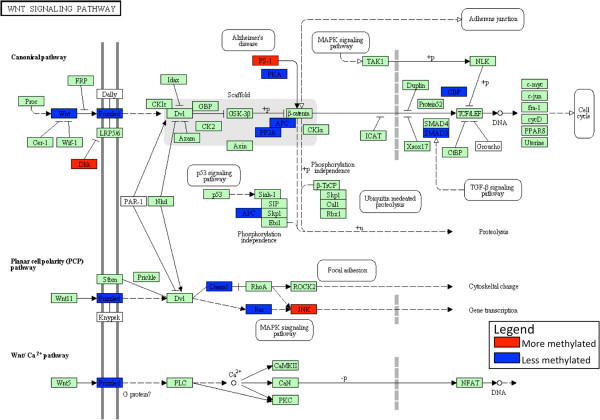
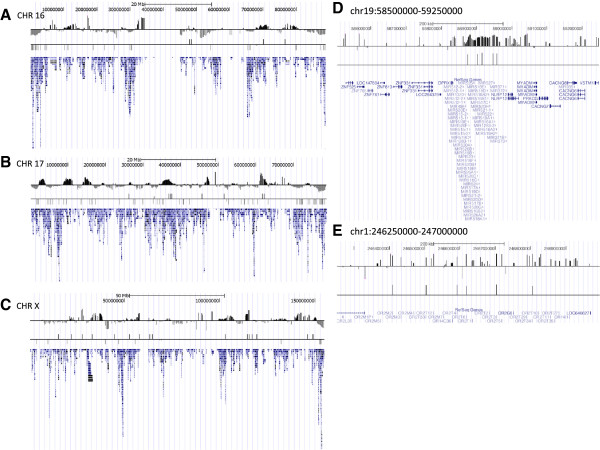
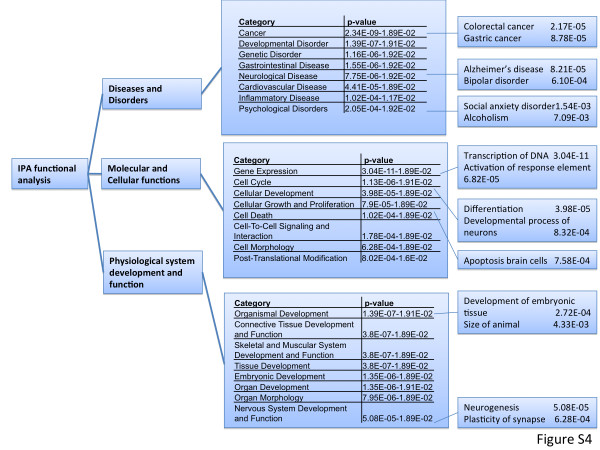
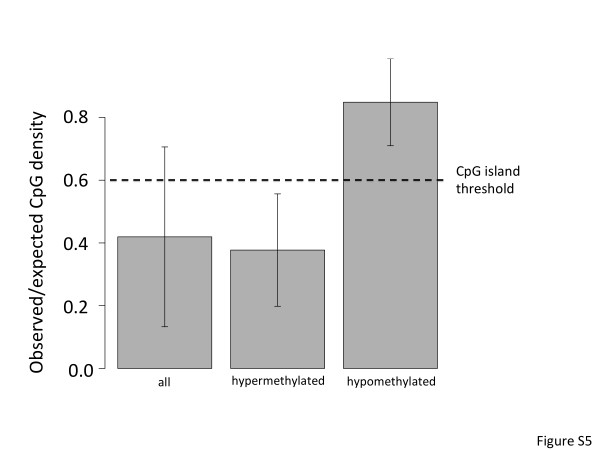
Verification
Claims the paper makes
The claims and statistics of this paper haven’t been checked yet.
Run the check — free, no account needed. It reads the open-access text and checks the sources it cites.
Claims other papers make about this one
Each is checked against this paper’s own text: does it say what the citing paper says it does?
The cited source says what the claim attributes to it.
In the citing paper
“For example, it was shown that adults subjected to childhood abuse had differential methylation in 997 genes, many of which were involved in developmental cell signaling pathways [49].”
The cited source says what the claim attributes to it.
In the citing paper
“Other studies have also observed associations between childhood maltreatment and differences in DNAm in the brain, 58 blood, 59 , 60 and even gametes. 61”
From Epigenetics and depression (2019) · cites this paper as [59]
Self-check
Percentages, sums and reported differences re-computed from the paper’s own numbers.
The self-check needs the paper’s full text.
Citations
Cites
Controlling the False Discovery Rate: A Practical and Powerful Approach to Multiple Testing
Benjamini, Y., & Hochberg, Y. (1995) · Journal of the Royal Statistical Society Series B: Statistical Methodology · doi:10.1111/j.2517-6161.1995.tb02031.x · Cited by 109,482
Subramanian, A., Tamayo, P., Mootha, V. K., Mukherjee, S., Ebert, B. L., Gillette, M. A., Paulovich, A., Pomeroy, S. L., Golub, T. R., Lander, E. S., et al. (2005) · Proceedings of the National Academy of Sciences · doi:10.1073/pnas.0506580102 · Cited by 53,625
Gene Ontology: tool for the unification of biology
Ashburner, M., Ball, C. A., Blake, J. A., Botstein, D., Butler, H., Cherry, J. M., Davis, A. P., Dolinski, K., Dwight, S. S., Eppig, J. T., et al. (2000) · Nature Genetics · doi:10.1038/75556 · Cited by 43,206
KEGG: Kyoto Encyclopedia of Genes and Genomes
Kanehisa, M. (2000) · Nucleic Acids Research · doi:10.1093/nar/28.1.27 · Cited by 37,077
KEGG: Kyoto Encyclopedia of Genes and Genomes
Ogata, H., Goto, S., Sato, K., Fujibuchi, W., Bono, H., & Kanehisa, M. (1999) · Nucleic Acids Research · doi:10.1093/nar/27.1.29 · Cited by 31,232
Felitti, V. J., Anda, R. F., Nordenberg, D., Williamson, D. F., Spitz, A. M., Edwards, V., Koss, M. P., & Marks, J. S. (1998) · American Journal of Preventive Medicine · doi:10.1016/s0749-3797(98)00017-8 · Cited by 18,943
Bioconductor: open software development for computational biology and bioinformatics
Gentleman, R. C., Carey, V. J., Bates, D. M., Bolstad, B., Dettling, M., Dudoit, S., Ellis, B., Gautier, L., Ge, Y., Gentry, J., et al. (2004) · Genome biology · doi:10.1186/gb-2004-5-10-r80 · Cited by 12,082
Lewis, B. P., Burge, C. B., & Bartel, D. P. (2005) · Cell · doi:10.1016/j.cell.2004.12.035 · Cited by 11,855
Genome-wide association study of 14,000 cases of seven common diseases and 3,000 shared controls
The Wellcome Trust Case Control Consortium, Management Committee, Burton, P. R., Clayton, D. G., Cardon, L. R., Craddock, N., Deloukas, P., Duncanson, A., Kwiatkowski, D. P., McCarthy, M. I., et al. (2007) · Nature · doi:10.1038/nature05911 · Cited by 9,442
Self-citationJaenisch, R., & Bird, A. (2003) · Nature Genetics · doi:10.1038/ng1089 · Cited by 6,325
Cited by
Sorted by citations
Suglia, S. F., Koenen, K. C., Boynton-Jarrett, R., Chan, P. S., Clark, C. J., Danese, A., Faith, M. S., Goldstein, B. I., Hayman, L. L., Isasi, C. R., et al. (2018) · Circulation · doi:10.1161/cir.0000000000000536 · Cited by 518
Epigenetics of Stress-Related Psychiatric Disorders and Gene × Environment Interactions
Klengel, T., & Binder, E. B. (2015) · Neuron · doi:10.1016/j.neuron.2015.05.036 · Cited by 353
Early-life experience, epigenetics, and the developing brain
Kundakovic, M., & Champagne, F. A. (2015) · Neuropsychopharmacology · doi:10.1038/npp.2014.140 · Cited by 304
Penner-Goeke, S., & Binder, E. B. (2019) · Dialogues in Clinical Neuroscience · doi:10.31887/dcns.2019.21.4/ebinder · Cited by 254
The effects of early life stress on the epigenome: From the womb to adulthood and even before
Provençal, N., & Binder, E. B. (2015) · Experimental Neurology · doi:10.1016/j.expneurol.2014.09.001 · Cited by 255
Metadata
- Authors
- Suderman, M., Borghol, N., Pappas, J. J., Pinto Pereira, S. M., Pembrey, M., Hertzman, C., Power, C., & Szyf, M.
- Affiliations
- McGill University (CA)
- University College London (GB)
- University of British Columbia (CA)
- Venue
- BMC Medical Genomics
- Published
- 2014-03-11
- Volume
- 7
- Issue
- 1
- Pages
- 13-13
- ISSN
- 1755-8794 (ISSN-L)
- PMC
- PMC4007631
- OpenAlex
- W1987261032
- Cited by
- 193
- References
- 68
- Citations by year
- 2026: 6 · 2025: 5 · 2024: 9 · 2023: 8 · 2022: 12 · 2021: 22 · 2020: 18 · 2019: 23 · 2018: 16 · 2017: 24 · 2016: 20 · 2015: 21 · 2014: 9
- FWCI
- 10.12
- Type
- journal article
- Language
- en
- Open access
- gold
- doi.org
- Licence
- Locations
- BMC Medical Genomics (publishedVersion, cc-by)
- Europe PMC (PubMed Central) (publishedVersion, cc-by)
- PubMed Central (publishedVersion, cc-by)
- PubMed (publishedVersion)
- UCL Discovery (University College London) (submittedVersion)
- Funders
- McGill University
- Wellcome Trust
- University College London
- University of Bristol
- Canadian Institutes of Health Research (MOP42411)
- Medical Research Council (G0400546, G0000934)
- Topics
- Life Sciences › Biochemistry, Genetics and Molecular Biology › Molecular Biology › Epigenetics and DNA Methylation
- Social Sciences › Psychology › Clinical Psychology › Child Abuse and Trauma
- Health Sciences › Medicine › Pediatrics, Perinatology and Child Health › Birth, Development, and Health
- Keywords
- childhood abuse, DNA methylation, epigenetic regulation, promoter methylation, differentially methylated genes, microRNA methylation, PM20D1, 1958 British birth cohort, adult health outcomes, socioeconomic position, gene expression regulation
- MeSH terms
- Adult, Child, Child Abuse, Humans, Male, Promoter Regions, Genetic, Socioeconomic Factors, Reproducibility of Results, Genome, Human, Cluster Analysis, CpG Islands, DNA Methylation, Base Pairing, MicroRNAs, Genetic Loci, Genetic Association Studies, Wnt Signaling Pathway
About these checks
Registry, retraction, Cites and statistics results are computed, not judged, with one exception: a printed reference that no index lists is read once by a model before it counts as a citation error. Claims are extracted by a model and kept only when their quote appears verbatim in the text; each cited source is then checked, with a model’s help, for whether it says what the claim relies on. Those verdicts can be wrong — read the claim’s quote and the cited source before relying on one.
Statistics and arithmetic are recomputed, not judged.
Confidence bands are shown only for fields calibrated on our annotated test set. None is calibrated yet, so no band is shown.
What counts as a claim ›How we measure confidence ›How we check this ›
Are you an author, or do you see a problem with this page? Request a review
