

Reward circuitry dysfunction in psychiatric and neurodevelopmental disorders and genetic syndromes: animal models and clinical findings
Open accessThe DOI matches its Crossref record; 778 of the 780 references it cites were found in a registry or an index; 71 of the 669 sources its claims cite were checked for support.
Abstract
This review summarizes evidence of dysregulated reward circuitry function in a range of neurodevelopmental and psychiatric disorders and genetic syndromes. First, the contribution of identifying a core mechanistic process across disparate disorders to disease classification is discussed, followed by a review of the neurobiology of reward circuitry. We next consider preclinical animal models and clinical evidence of reward-pathway dysfunction in a range of disorders, including psychiatric disorders (i.e., substance-use disorders, affective disorders, eating disorders, and obsessive compulsive disorders), neurodevelopmental disorders (i.e., schizophrenia, attention-deficit/hyperactivity disorder, autism spectrum disorders, Tourette's syndrome, conduct disorder/oppositional defiant disorder), and genetic syndromes (i.e., Fragile X syndrome, Prader-Willi syndrome, Williams syndrome, Angelman syndrome, and Rett syndrome). We also provide brief overviews of effective psychopharmacologic agents that have an effect on the dopamine system in these disorders. This review concludes with methodological considerations for future research designed to more clearly probe reward-circuitry dysfunction, with the ultimate goal of improved intervention strategies.
Overview
CoChat Summary
TL;DR
This narrative review argues that altered striatal dopamine reward-circuitry function is a shared neurobiological feature across substance-use, affective, eating, obsessive-compulsive, neurodevelopmental, and genetic syndromes, drawing on animal models and clinical functional/molecular imaging. It concludes that dopaminergic treatments may target this common dysfunction, but cross-sectional, standardized-reward studies and a DA-only focus limit etiologic and developmental inferences.
Key findings
- In substance-use disorders, drug cues are associated with relative mesolimbic hyperactivation, while non-drug rewards often show reduced motivation; molecular imaging reports decreased D2 receptor binding in cocaine, heroin, alcohol, and methamphetamine abuse.
- In major depressive disorder, behavioral and neuroimaging evidence indicates blunted reward response and hypoactivation in dorsal/ventral striatum and other reward regions; anhedonia may represent a trait marker in remitted MDD.
- In ADHD, fMRI studies show decreased ventral striatum activation during monetary-reward anticipation, and DAT knockout and spontaneously hypertensive rat models implicate altered mesolimbic/mesostriatal DA transmission.
- In ASD and genetic syndromes, findings are mixed or limited: ASD shows diminished ventral striatal response to social and monetary reward outcomes in some studies but unimpaired ERP reward markers in another; PWS shows hyperactivation to food cues; FXS, AS, RS, and WS lack direct reward fMRI or have only indirect/preclinical evidence.
Methods
- Narrative review, not a systematic review or meta-analysis; it summarizes preclinical animal models and clinical studies, with emphasis on functional neuroimaging and molecular imaging of striatal DA transmission.
- Disorders covered include psychiatric disorders (substance-use, affective, eating, OCD), neurodevelopmental disorders (schizophrenia, ADHD, ASD, TS, CD/ODD), and genetic syndromes (FXS, PWS, WS, AS, RS), plus brief overviews of dopaminergic treatments.
- No new primary data are reported.
Limitations
- The authors state that most clinical research is cross-sectional and adult-focused, limiting developmental and etiologic inferences; standardized rewards may not capture individual-specific or disorder-specific stimuli; and linking mesolimbic DA one-to-one with reward is overly simplistic because non-DA systems and other brain regions also contribute.
- Evident from the text: the review is narrative without a systematic search or quantitative synthesis, and the evidence base is uneven—some conditions have very few or no direct reward neuroimaging studies (e.g., bipolar disorder had only three published functional neuroimaging studies of reward, TS had no published functional neuroimaging studies of response to rewards, AS had no functional brain-imaging data on rewards, and FXS had no functional brain-imaging studies of rewarding stimuli).
Model-written summary. Check it against the paper before relying on it.
Integrity signals
Registry
Cites
Statistics
Figures
Verification
Claims the paper makes
49 Valid · 3 Not valid · 329 Not checked · 60 Own results and interpretations
The cited sources support only part of this claim — read each source’s verdict below.
In the paper
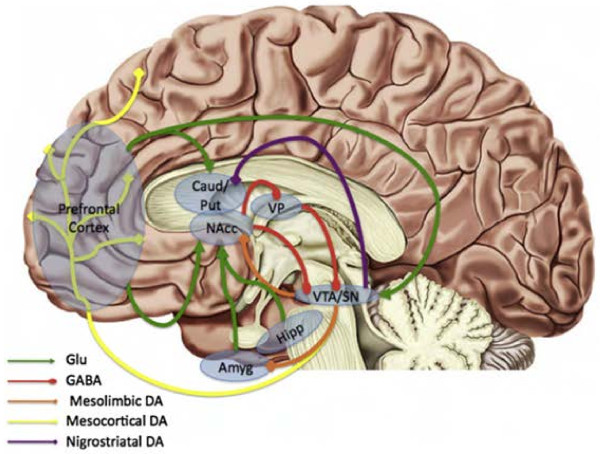
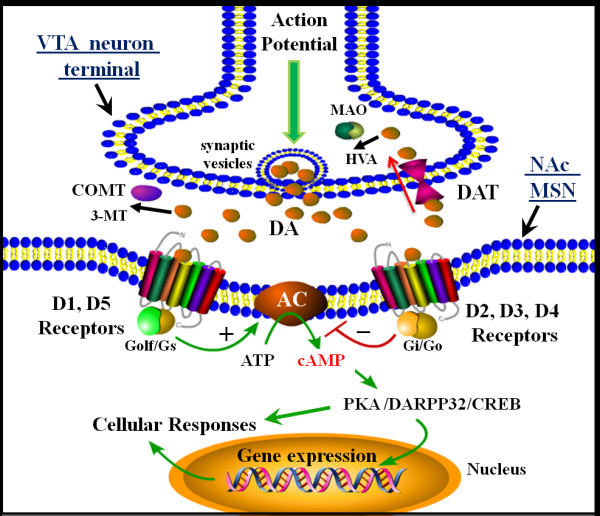
“in numerous experimental systems, increased CREB activity in the NAc is negatively related to behavioral responses to cocaine, opiates, and alcohol [86,88-90].”
§ Reward circuitry dysfunction in psychiatric and neurodevelopmental disorders and genetic syndromes: animal models and clinical findings > Review > Brain reward circuitry
What the sources say
- Not checked yetcites [86] Nestler EJ Is there a common molecular pathway for addiction? Nat Neurosci 2005 8 11 1445 1449 16251986 source
- Not checked yetcites [88] McClung CA Nestler EJ Regulation of gene expression and cocaine reward by CREB and DeltaFosB Nat Neurosci 2003 6 11 1208 1215 14566342 source
- Partly supportedcites [89] Barrot M Olivier JD Perrotti LI DiLeone RJ Berton O Eisch AJ Impey S Storm DR Neve RL Yin JC Zachariou V Nestler EJ CREB activity in the nucleus accumbens shell controls gating of behavioral responses to emotional stimuli Proc Natl Acad Sci 2002 99 17 11435 11440 12165570 PMC123274 sourceExperimental — accuracy not yet measured
Our copy supports two of the three drugs: the Results (Response to Rewarding Stimuli) report that CREB overexpression in the NAc shell reduced morphine place preference (with mCREB the opposite), and the Introduction/Discussion state that CREB overexpression or PKA stimulation in the NAc reduces the rewarding effects of cocaine, citing the group's earlier work (refs 13, 14) rather than new cocaine data. The alcohol/ethanol component is absent: searched 'ethanol', 'alcohol', 'drinking', 'self-administration' and only sucrose fluid intake and place-conditioning procedures appear, so no part of this paper tests behavioral responses to alcohol. The claim's framing 'in numerous experimental systems' also overstates this single viral-vector/reporter-mouse study, which itself notes it is one system with temporal and anatomical specificity (Discussion). (LLM, conf=0.82)
- Not checked yetcites [90] Walters CL Godfrey M Li X Blendy JA Alterations in morphine-induced reward, locomotor activity, and thermoregulation in CREB-deficient mice Brain Res 2005 1032 1–2 193 199 15680959 source
plainstates an association- Asserted: passes — The authors put it forward as true.
- Checkable: passes — It can be checked against evidence.
- Load-bearing: unclear — It is unclear whether the paper’s conclusions depend on it.
- Based: passes — The paper gives a reason why it holds.
Every source the paper cites for this claim was checked and supports it.
In the paper
“All of these processes are believed to contribute to the intense motivation to attain drugs of abuse [120].”
§ Reward circuitry dysfunction in psychiatric and neurodevelopmental disorders and genetic syndromes: animal models and clinical findings > Review > Psychiatric disorders
What the sources say
- Supportedcites [120] Volkow ND Fowler JS Wang GJ Baler R Telang F Imaging dopamine's role in drug abuse and addiction Neuropharmacology 2009 56 Suppl 1 3 8 18617195 PMC2696819 source
The Introduction says dopamine-related reinforcement processes make drugs salient stimuli that motivate the procurement of more drug. Section 2 also describes adaptations in motivation, reward, inhibitory-control, and memory circuits as contributing to compulsive drug taking. (LLM, conf=0.90)
hedgedstates a possible cause- Asserted: passes — The authors put it forward as true.
- Checkable: passes — It can be checked against evidence.
- Load-bearing: unclear — It is unclear whether the paper’s conclusions depend on it.
- Based: passes — The paper gives a reason why it holds.
- Supported
Every source the paper cites for this claim was checked and supports it.
In the paper
“Notably, Andrews and colleagues [155] found this effect in family members of those with substance abuse, suggesting that this pattern may be evident even in the absence of the direct effects of repeated drug use on the brain.”
§ Reward circuitry dysfunction in psychiatric and neurodevelopmental disorders and genetic syndromes: animal models and clinical findings > Review > Psychiatric disorders
What the sources say
- Supportedcites [155] Andrews MM Meda SA Thomas AD Potenza MN Krystal JH Worhunsky P Stevens MC O'Malley S Book GA Reynolds B Pearlson GD Individuals family history positive for alcoholism show functional magnetic resonance imaging differences in reward sensitivity that are related to impulsivity factors Biol Psychiatr 2011 69 8 675 683 PMC3677031 21126735 source
The Abstract Methods describe participants with a family history of alcoholism who had no past or current alcohol or substance abuse history. The Abstract Results report blunted nucleus accumbens activation during reward anticipation in those participants, and the Overview of Findings says altered reward sensitivity may reflect vulnerability rather than only the consequences of alcohol abuse. This supports the citing sentence’s hedged inference, though the measured effect was brain activation rather than motivation directly. (LLM, conf=0.91)
hedgedstates a possible cause- Asserted: passes — The authors put it forward as true.
- Checkable: passes — It can be checked against evidence.
- Load-bearing: passes — The paper’s conclusions depend on it.
- Based: passes — The paper gives a reason why it holds.
- Supported
The cited sources support only part of this claim — read each source’s verdict below.
In the paper
“Gilman and Hommer [153] reported subjective hypoarousal to normative positive images in alcohol-dependent participants.”
§ Reward circuitry dysfunction in psychiatric and neurodevelopmental disorders and genetic syndromes: animal models and clinical findings > Review > Psychiatric disorders
What the sources say
- Partly supportedcites [153] Gilman JM Hommer DW Modulation of brain response to emotional images by alcohol cues in alcohol-dependent patients Addiction Biol 2008 13 3–4 423 434 18507736 sourceExperimental — accuracy not yet measured
Our copy supports reduced neural response to normative (IAPS) positive images in alcohol-dependent participants: the Results sections 'Positive image with neutral beverage cue' and 'Positive image with alcoholic beverage cue' report that alcoholics showed less activation than controls (eight clusters, and the right hippocampus respectively), with no areas of greater activation, and the Methods ('Visual stimulation and task') confirm the stimuli were 55 high-arousal positive IAPS pictures. However, the paper attributes this to BOLD signal, not subjective experience — its 'Self-report affect ratings' section reports no significant group differences in positive affect before or after the scan, and no per-image arousal ratings were collected. The 'subjective' qualifier in the citing sentence is therefore not supported by this source. (LLM, conf=0.72)
plain- Asserted: passes — The authors put it forward as true.
- Checkable: passes — It can be checked against evidence.
- Load-bearing: unclear — It is unclear whether the paper’s conclusions depend on it.
- Based: passes — The paper gives a reason why it holds.
- Partly supported
The sources with a verdict support this claim; the rest weren’t checked yet, have no full text we could read, or their verdicts aren’t rated yet.
In the paper
“Behavioral studies have reliably found that individuals with MDD show a blunted response to a range of rewarding stimuli [203-205].”
§ Reward circuitry dysfunction in psychiatric and neurodevelopmental disorders and genetic syndromes: animal models and clinical findings > Review > Psychiatric disorders
What the sources say
- Not checked yetcites [203] Henriques JB Davidson RJ Decreased responsiveness to reward in depression Cognit Emot 2000 14 5 711 724 source
- Supportedcites [204] McFarland BR Klein DN Emotional reactivity in depression: diminished responsiveness to anticipated reward but not to anticipated punishment or to nonreward or avoidance Depress Anxiety 2009 26 2 117 122 18972567 source
The Introduction describes studies finding diminished responses to pleasant stimuli and rewards in depressed participants. The Discussion reports diminished responsiveness to anticipated reward in the paper's own study and places it alongside those earlier findings, supporting the broader claim. (LLM, conf=0.88)
- Not checked yetcites [205] Pizzagalli DA Iosifescu D Hallett LA Ratner KG Fava M Reduced hedonic capacity in major depressive disorder: evidence from a probabilistic reward task J Psychiatr Res 2008 43 1 76 87 18433774 PMC2637997 source
boosted- Asserted: passes — The authors put it forward as true.
- Checkable: passes — It can be checked against evidence.
- Load-bearing: passes — The paper’s conclusions depend on it.
- Based: passes — The paper gives a reason why it holds.
223 more claims · 21 with their cited sources checked
Create a free account to see all 441 claims and to verify the 598 references still open.
- It may state two separate claims as one. 191
- Probably not a substantial claim. 43
Claims other papers make about this one
Each is checked against this paper’s own text: does it say what the citing paper says it does?
The source backs part of the claim, not all of it — or backs it for a different population, condition or comparison.
In the citing paper
“A brain imaging study has demonstrated strong links between substance use disorder and dysfunction in reward circuitry, and in particular dopamine function within cortico-striatal circuitry.14”
From Ventral striatum dysfunction in children and adolescents with reactive attachment disorder: functional MRI study (2015) · cites this paper as [14]
Experimental — accuracy not yet measuredIn the citing paper
“For example, substance use disorder has been strongly linked to dysfunction in reward networks, particularly in dopamine function within cortico-striatal circuitry.14”
From Ventral striatum dysfunction in children and adolescents with reactive attachment disorder: functional MRI study (2015) · cites this paper as [14]
In the citing paper
“Conversely, functional alterations associated with reward processing were not observed in other brain regions linked with the reward-related dopaminergic system, such as the prefrontal cortex, the cingulate cortex and the limbic system, which have been implicated as important for reward processing.14,16”
From Ventral striatum dysfunction in children and adolescents with reactive attachment disorder: functional MRI study (2015) · cites this paper as [14]
Self-check
Percentages, sums and reported differences re-computed from the paper’s own numbers.
Each contradiction between two passages listed here was confirmed by an independent check.
Rated minor: it would not touch a result — a value no result rests on, a p-value that stays on the same side of the significance level, or a conflict that is clerical, resolved elsewhere in the paper, or outside its own findings.
In the paper
§ Reward circuitry dysfunction in psychiatric and neurodevelopmental disorders and genetic syndromes: animal models and clinical findings > Review > Psychiatric disorders
“Joos and colleagues [321] found reduced activation of the ACC in individuals with concurrent BN during the presentation of visual food cues”
§ Reward circuitry dysfunction in psychiatric and neurodevelopmental disorders and genetic syndromes: animal models and clinical findings > References
“321. Joos AAB Saum B van Elst LT Perlov E Glauche V Hartmann A Freyer T Tüscher O Zeeck A Amygdala hyperreactivity in restrictive anorexia nervosa”
Rated minor: it would not touch a result — a value no result rests on, a p-value that stays on the same side of the significance level, or a conflict that is clerical, resolved elsewhere in the paper, or outside its own findings.
In the paper
§ Reward circuitry dysfunction in psychiatric and neurodevelopmental disorders and genetic syndromes: animal models and clinical findings > Review > Psychiatric disorders
“Molecular-imaging studies of striatal DAT availability in bipolar disorder generally suggest increased functional DA throughput (but Suhara et al. reported an exception [282]).”
§ Reward circuitry dysfunction in psychiatric and neurodevelopmental disorders and genetic syndromes: animal models and clinical findings > References
“282. Suhara T Nakayama K Inoue O Fukuda H Shimizu M Mori A Tateno Y D1 dopamine receptor binding in mood disorders measured by positron emission tomography”
Rated minor: it would not touch a result — a value no result rests on, a p-value that stays on the same side of the significance level, or a conflict that is clerical, resolved elsewhere in the paper, or outside its own findings.
In the paper
§ Reward circuitry dysfunction in psychiatric and neurodevelopmental disorders and genetic syndromes: animal models and clinical findings > Review > Psychiatric disorders
“Joos and colleagues [340] also reported hyper-reactive reward-outcome responses in anorexia during the processing of food-reward images.”
§ Reward circuitry dysfunction in psychiatric and neurodevelopmental disorders and genetic syndromes: animal models and clinical findings > References
“340. Joos AAB Saum B Zeeck A Perlov E Glauche V Hartmann A Freyer T Sandholz A Unterbrink T van Elst LT Tüscher O Frontocingular dysfunction in Bulimia Nervosa when confronted with disease-specific stimuli”
Rated minor: it would not touch a result — a value no result rests on, a p-value that stays on the same side of the significance level, or a conflict that is clerical, resolved elsewhere in the paper, or outside its own findings.
In the paper
§ Reward circuitry dysfunction in psychiatric and neurodevelopmental disorders and genetic syndromes: animal models and clinical findings > Review > Psychiatric disorders
“Dextroamphetamine causes release of DA (as well as norepinephrine and serotonin) and is an effective treatment for amphetamine abuse [181].”
§ Reward circuitry dysfunction in psychiatric and neurodevelopmental disorders and genetic syndromes: animal models and clinical findings > References
“181. Grabowski J Rhoades H Schmitz J Stotts A Daruzska LA Creson D Moeller FG Dextroamphetamine for cocaine-dependence treatment: a double-blind randomized clinical trial”
Rated minor: it would not touch a result — a value no result rests on, a p-value that stays on the same side of the significance level, or a conflict that is clerical, resolved elsewhere in the paper, or outside its own findings.
In the paper
§ Reward circuitry dysfunction in psychiatric and neurodevelopmental disorders and genetic syndromes: animal models and clinical findings > Review > Genetic syndromes
“Another study found that individuals with WS show reduced amygdala activity in response to sad faces and comparable activity in the orbitofrontal cortex for happy and sad faces”
§ Reward circuitry dysfunction in psychiatric and neurodevelopmental disorders and genetic syndromes: animal models and clinical findings > Review > Genetic syndromes
“However, both of these studies did not report responses to the happy-face conditions.”
Citations
Cites
Diagnostic and Statistical Manual of Mental Disorders
Williams, J. B. W., & First, M. (2013) · Encyclopedia of Social Work · doi:10.1093/acrefore/9780199975839.013.104 · Cited by 109,519
Kessler, R. C., Chiu, W. T., Demler, O., & Walters, E. E. (2005) · Archives of General Psychiatry · doi:10.1001/archpsyc.62.6.617 · Cited by 12,052
Philosophical transactions of the Royal Society of London. B
Press, H. (1886) · Cited by 10,081
Carver, C. S., & White, T. L. (1994) · Journal of Personality and Social Psychology · doi:10.1037/0022-3514.67.2.319 · Cited by 7,306
The Endophenotype Concept in Psychiatry: Etymology and Strategic Intentions
Gottesman, I. I., & Gould, T. D. (2003) · American Journal of Psychiatry · doi:10.1176/appi.ajp.160.4.636 · Cited by 5,615
Handbook of Affective Sciences
(2002) · doi:10.1093/oso/9780195126013.001.0001 · Cited by 5,073
Di Chiara, G., & Imperato, A. (1988) · Proceedings of the National Academy of Sciences · doi:10.1073/pnas.85.14.5274 · Cited by 4,733 · cited 1×
“use [113,114].”
Affective Neuroscience: The Foundations of Human and Animal Emotions
Panksepp, J. (1998) · doi:10.1093/oso/9780195096736.001.0001 · Cited by 4,428
International Statistical Classification of Diseases and Related Health Problems
(2011) · Encyclopedia of Clinical Neuropsychology · doi:10.1007/978-0-387-79948-3_3055 · Cited by 4,151
(1998) · Cited by 4,012
Research works printed but not linked: 5
- Bühler M Vollstadt-Klein S Kobiella A Budde H Reed LJ Braus DF Buchel C Smolka MN Nicotine dependence is characterized by disordered reward processing in a network driving motivation Biol Psychiatr 2010 67 8 745 752 20044075 · DOI · Paper page
- Keedwell PA Andrew C Williams SCR Brammer MJ Zelaya F Phillips ML The neural correlates of depression Biol Psychiatr 2003 53 171S
- Dichter GS Tomarken AJ Shelton RC Freid C Addington S Effects of Bupropion SR on dimensions of mood 2001 Poster presented at the annual meeting of The American Psychiatric Association, New Orleans, Louisiana
- Alexander W Prozac wins new indication for bulimia nervosa Drug Topics 1997 141 6 34
- Rado S Psychoanalysis of Behavior: The Collected Papers of Sandor Rado (Vol. 2) 1962 Grune & Stratton, New York
Cited by
Items 101–200 of 344
Reward processing in autism: a thematic series
Dichter, G., & Adolphs, R. (2012) · Journal of Neurodevelopmental Disorders · doi:10.1186/1866-1955-4-20 · Cited by 39
Self-citationMariggiò, M. A., Palumbi, R., Vinella, A., Laterza, R., Petruzzelli, M. G., Peschechera, A., Gabellone, A., Gentile, O., Vincenti, A., & Margari, L. (2021) · Frontiers in Neuroscience · doi:10.3389/fnins.2021.705890 · Cited by 43
Tzanoulinou, S., Musardo, S., Contestabile, A., Bariselli, S., Casarotto, G., Magrinelli, E., Jiang, Y., Jabaudon, D., & Bellone, C. (2022) · Molecular Psychiatry · doi:10.1038/s41380-021-01427-0 · Cited by 43
Garman, H. D., Spaulding, C. J., Webb, S. J., Mikami, A. Y., Morris, J. P., & Lerner, M. D. (2016) · Child Psychiatry & Human Development · doi:10.1007/s10578-015-0620-5 · Cited by 42
Possible role of a dysregulation of the endogenous opioid system in antisocial personality disorder
Bandelow, B., & Wedekind, D. (2015) · Human Psychopharmacology Clinical and Experimental · doi:10.1002/hup.2497 · Cited by 41
Limited Access to a High Fat Diet Alters Endocannabinoid Tone in Female Rats
Satta, V., Scherma, M., Piscitelli, F., Usai, P., Castelli, M. P., Bisogno, T., Fratta, W., & Fadda, P. (2018) · Frontiers in Neuroscience · doi:10.3389/fnins.2018.00040 · Cited by 41
Tracking Social Motivation Systems Deficits: The Affective Neuroscience View of Autism
Carré, A., Chevallier, C., Robel, L., Barry, C., Maria, A., Pouga, L., Philippe, A., Pinabel, F., & Berthoz, S. (2015) · Journal of Autism and Developmental Disorders · doi:10.1007/s10803-015-2498-2 · Cited by 43
Lole, L., Gonsalvez, C. J., Barry, R. J., & Blaszczynski, A. P. (2014) · Psychophysiology · doi:10.1111/psyp.12198 · Cited by 44
A novel operant task to assess social reward and motivation in rodents
Borland, J. M., Frantz, K. J., Aiani, L. M., Grantham, K. N., Song, Z., & Albers, H. E. (2017) · Journal of Neuroscience Methods · doi:10.1016/j.jneumeth.2017.06.003 · Cited by 40
Larval Zebrafish as a Model for Mechanistic Discovery in Mental Health
Tan, J. X. M., Ang, R. J. W., & Wee, C. L. (2022) · Frontiers in Molecular Neuroscience · doi:10.3389/fnmol.2022.900213 · Cited by 41
Interaction of Heavy Metal Lead with Gut Microbiota: Implications for Autism Spectrum Disorder
Tizabi, Y., Bennani, S., Kouhen, N. E., Getachew, B., & Aschner, M. (2023) · Biomolecules · doi:10.3390/biom13101549 · Cited by 40
Kenkel, W. M., Yee, J. R., Moore, K., Madularu, D., Kulkarni, P., Gamber, K., Nedelman, M., & Ferris, C. F. (2016) · Translational Psychiatry · doi:10.1038/tp.2016.15 · Cited by 39
Sexual congruency in the connectome and translatome of VTA dopamine neurons
Chung, A. S., Miller, S. M., Sun, Y., Xu, X., & Zweifel, L. S. (2017) · Scientific Reports · doi:10.1038/s41598-017-11478-5 · Cited by 39
Lee, J., Lee, S.-B., Kim, D. W., Shin, N., Jeong, S.-J., Yang, C. H., & Son, C. (2021) · Science Advances · doi:10.1126/sciadv.abj3400 · Cited by 39
Damiano, C. R., Cockrell, D. C., Dunlap, K., Hanna, E. K., Miller, S., Bizzell, J., Kovac, M., Turner‐Brown, L., Sideris, J. H., Kinard, J. L., et al. (2015) · Journal of Neurodevelopmental Disorders · doi:10.1186/s11689-015-9107-8 · Cited by 39
Self-citationBomba, M., Riva, A., Morzenti, S., Grimaldi, M., Neri, F., & Nacinovich, R. (2015) · Neuropsychiatric Disease and Treatment · doi:10.2147/ndt.s73239 · Cited by 37
Rebelo, C., Reis, T., Guedes, J. R., Saraiva, C., Rodrigues, A. F., Simões, S. M. N., Bernardino, L. I., Peça, J., Pinho, S. L. C., & Ferreira, L. (2022) · Nature Communications · doi:10.1038/s41467-022-31791-6 · Cited by 37
Prevalence of attention deficit hyperactivity disorder symptoms in patients with schizophrenia
Arican, I., Bass, N. J., Neelam, K., Wolfe, K., McQuillin, A., & Giaroli, G. (2018) · Acta Psychiatrica Scandinavica · doi:10.1111/acps.12948 · Cited by 37
Electrodermal Response to Reward and Non‐Reward Among Children With Autism
Neuhaus, E., Bernier, R., & Beauchaine, T. P. (2015) · Autism Research · doi:10.1002/aur.1451 · Cited by 35
Rose, E. J., Picci, G., & Fishbein, D. H. (2019) · Frontiers in Psychiatry · doi:10.3389/fpsyt.2019.00399 · Cited by 35
(2020) · International review of neurobiology · doi:10.1016/bs.irn.2020.03.012 · Cited by 34
Murayama, C., Iwabuchi, T., Kato, Y., Yokokura, M., Harada, T., Goto, T., Tamayama, T., Kameno, Y., Wakuda, T., Kuwabara, H., et al. (2022) · Molecular Psychiatry · doi:10.1038/s41380-022-01464-3 · Cited by 34
Responsivity to familiar versus unfamiliar social reward in children with autism
Pankert, A., Pankert, K., Herpertz‐Dahlmann, B., Konrad, K., & Kohls, G. (2014) · Journal of Neural Transmission · doi:10.1007/s00702-014-1210-6 · Cited by 34
Niarchou, M., Chawner, S. J. R. A., Fiksinski, A., Vorstman, J. A. S., Maeder, J., Schneider, M., Eliez, S., Armando, M., Pontillo, M., Vicari, S., et al. (2018) · Schizophrenia Research · doi:10.1016/j.schres.2018.07.044 · Cited by 34
Ambrasė, A., Lewis, C. A., Barth, C., & Derntl, B. (2020) · Frontiers in Neuroendocrinology · doi:10.1016/j.yfrne.2020.100873 · Cited by 33
Therapeutic Effects of a Novel Form of Biotin on Propionic Acid-Induced Autistic Features in Rats
Şahin, K., Orhan, C., Karatoprak, S., Tuzcu, M., Deeh, P. B. D., Özercan, İ. H., Şahin, N., Bozoğlan, M. Y., Sylla, S., Ojalvo, S. P., et al. (2022) · Nutrients · doi:10.3390/nu14061280 · Cited by 33
Koevoet, D., Deschamps, P. K. H., & Kenemans, J. L. (2023) · Frontiers in Neuroscience · doi:10.3389/fnins.2022.1078586 · Cited by 33
Wang, X., Zhang, Y., Huang, J., Wang, Y., Niu, Y., Lui, S. S. Y., Hui, L., & Chan, R. C. K. (2023) · Psychological Medicine · doi:10.1017/s0033291723000703 · Cited by 32
Intact hedonic responses to sweet tastes in autism spectrum disorder
Damiano, C. R., Aloi, J., Burrus, C., Garbutt, J. C., Kampov-Polevoy, A. B., & Dichter, G. S. (2014) · Research in Autism Spectrum Disorders · doi:10.1016/j.rasd.2013.12.003 · Cited by 31
Self-citationSchiller, C. E., Walsh, E. C., Eisenlohr-Moul, T. A., Prim, J., Dichter, G. S., Schiff, L. D., Bizzell, J., Slightom, S. L., Richardson, E., Belger, A., et al. (2022) · Journal of Affective Disorders · doi:10.1016/j.jad.2022.06.078 · Cited by 32
Self-citationDiscovery of Potent and Brain-Penetrant GPR52 Agonist that Suppresses Psychostimulant Behavior
Wang, P., Felsing, D. E., Chen, H., Stutz, S. J., Murphy, R. E., Cunningham, K. A., Allen, J., & Zhou, J. (2020) · Journal of Medicinal Chemistry · doi:10.1021/acs.jmedchem.0c01498 · Cited by 30
Self-citationAttention Deficit Hyperactivity Disorder Symptoms and Psychosis in 22q11.2 Deletion Syndrome
Niarchou, M., Calkins, M. E., Moore, T. M., Tang, S. X., McDonald‐McGinn, D. M., Zackai, E. H., Emanuel, B. S., Gur, R. C., & Gur, R. E. (2017) · Schizophrenia Bulletin · doi:10.1093/schbul/sbx113 · Cited by 30
Greene, R. K., Walsh, E. C., Mosner, M. G., & Dichter, G. S. (2018) · Biological Psychology · doi:10.1016/j.biopsycho.2018.12.008 · Cited by 30
Self-citationDelDonno, S. R., Mickey, B. J., Pruitt, P. J., Stange, J. P., Hsu, D. T., Weldon, A. L., Zubieta, J.-K., & Langenecker, S. A. (2019) · Biological Psychology · doi:10.1016/j.biopsycho.2019.05.009 · Cited by 32
van Dongen, E. V., von Rhein, D. T., O’Dwyer, L., Franke, B., Hartman, C. A., Heslenfeld, D. J., Hoekstra, P. J., Oosterlaan, J., Rommelse, N. N. J., & Buitelaar, J. K. (2015) · Molecular Autism · doi:10.1186/s13229-015-0043-y · Cited by 30
A Systematic Review of the Positive Valence System in Autism Spectrum Disorder
Tschida, J. E., & Yerys, B. E. (2020) · Neuropsychology Review · doi:10.1007/s11065-020-09459-z · Cited by 30
Schönherz-Pine, Y., Davidov, M., Knafo‐Noam, A., Zilkha, H., Shoval, G., Zalsman, G., Frisch, A., Weizman, A., & Gothelf, D. (2014) · Journal of Neurodevelopmental Disorders · doi:10.1186/1866-1955-6-3 · Cited by 29
de Laat, B., Weerasekera, A., Leurquin‐Sterk, G., Bormans, G. M., Himmelreich, U., Casteels, C., & Laere, K. V. (2018) · Journal of Nuclear Medicine · doi:10.2967/jnumed.117.202614 · Cited by 29
A novel multidimensional reinforcement task in mice elucidates sex-specific behavioral strategies
Kutlu, M. G., Zachry, J. E., Brady, L. J., Melugin, P. R., Kelly, S. J., Sanders, C., Tat, J., Johnson, A. R., Thibeault, K. C., López, A. J., et al. (2020) · Neuropsychopharmacology · doi:10.1038/s41386-020-0692-1 · Cited by 28
Perdikaris, P., & Dermon, C. R. (2021) · Progress in Neuro-Psychopharmacology and Biological Psychiatry · doi:10.1016/j.pnpbp.2021.110494 · Cited by 27
Advances in Dopamine D1 Receptor Ligands for Neurotherapeutics
Felsing, D. E., Jain, M. K., & Allen, J. (2019) · Current Topics in Medicinal Chemistry · doi:10.2174/1568026619666190712210903 · Cited by 27
Self-citationHuang, Y.-Y. (2019) · IntechOpen eBooks · doi:10.5772/intechopen.79227 · Cited by 26
Eser, H. Y., Appadurai, V., Eren, C. Y., Yazıcı, D., Chen, C., Öngür, D., Pizzagalli, D. A., Werge, T. M., & Hall, M. (2020) · Acta Neuropsychiatrica · doi:10.1017/neu.2020.14 · Cited by 27
Meteran, H., Vindbjerg, E., Uldall, S. W., Glenthoj, B. Y., Carlsson, J. M., & Oranje, B. (2018) · Psychological Medicine · doi:10.1017/s003329171800123x · Cited by 26
Adorján, I., Sun, B., Feher, V., Tyler, T., Veres, D. S., Chance, S. A., & Szele, F. G. (2020) · Frontiers in Neuroanatomy · doi:10.3389/fnana.2020.581685 · Cited by 25
The dopamine hypothesis of autism spectrum disorder: A comprehensive analysis of the evidence
Pavăl, D. (2023) · International review of neurobiology · doi:10.1016/bs.irn.2023.08.009 · Cited by 25
Kwiatkowski, M. A., Hellemann, G. S., Sugar, C. A., Cope, Z. A., Minassian, A., Perry, W., Geyer, M. A., & Young, J. W. (2017) · Pharmacology Biochemistry and Behavior · doi:10.1016/j.pbb.2017.12.007 · Cited by 24
From valence encoding to motivated behavior: A focus on the nucleus accumbens circuitry
Vieitas‐Gaspar, N., Soares‐Cunha, C., & Rodrigues, A. J. (2025) · Neuroscience & Biobehavioral Reviews · doi:10.1016/j.neubiorev.2025.106125 · Cited by 23
Translating depression biomarkers for improved targeted therapies
Bredt, D. S., Furey, M. L., Chen, G., Lovenberg, T., Drevets, W. C., & Manji, H. K. (2015) · Neuroscience & Biobehavioral Reviews · doi:10.1016/j.neubiorev.2015.09.013 · Cited by 23
de Laat, B., Weerasekera, A., Leurquin‐Sterk, G., Gsell, W., Bormans, G. M., Himmelreich, U., Casteels, C., & Laere, K. V. (2018) · Addiction Biology · doi:10.1111/adb.12635 · Cited by 22
Smith, A. E., Kasper, J. M., Ara, Anastasio, N. C., & Hommel, J. D. (2019) · Nutrients · doi:10.3390/nu11020327 · Cited by 22
Disruption of Nrxn1α within excitatory forebrain circuits drives value-based dysfunction
Alabi, O. O., Davatolhagh, M. F., Robinson, M., Fortunato, M. P., Cifuentes, L. V., Kable, J. W., & Fuccillo, M. V. (2020) · eLife · doi:10.7554/elife.54838 · Cited by 22
Pujol, C., Pellissier, L. P., Clément, C., Becker, J. A. J., & Merrer, J. L. (2018) · Translational Psychiatry · doi:10.1038/s41398-018-0247-y · Cited by 23
Macatee, R. J., Allan, N. P., Gajewska, A., Norr, A. M., Raines, A. M., Albanese, B. J., Boffa, J. W., Schmidt, N. B., & Cougle, J. R. (2015) · Cognitive Therapy and Research · doi:10.1007/s10608-015-9714-4 · Cited by 21
Kumar, S., Parkash, O., & Kumar, D. (2015) · Indian Journal of Pharmaceutical Sciences · doi:10.4103/0250-474x.169039 · Cited by 20
Aberrant striatal tracking of reward magnitude in youth with current or past-year depression.
Insel, C., Glenn, C. R., Nock, M. K., & Somerville, L. H. (2019) · Journal of Abnormal Psychology · doi:10.1037/abn0000389 · Cited by 20
Selective deletion of Caspase-3 gene in the dopaminergic system exhibits autistic-like behaviour
García-Domínguez, I., Suárez‐Pereira, I., Santiago, M., Pérez-Villegas, E. M., Bravo, L., López‐Martín, C., Roca-Ceballos, M. A., García‐Revilla, J., Espinosa‐Oliva, A. M., Rodríguez‐Gómez, J. A., et al. (2020) · Progress in Neuro-Psychopharmacology and Biological Psychiatry · doi:10.1016/j.pnpbp.2020.110030 · Cited by 21
Autism and Williams syndrome: truly mirror conditions in the socio-cognitive domain?
Niego, A., & Benítez‐Burraco, A. (2020) · International Journal of Developmental Disabilities · doi:10.1080/20473869.2020.1817717 · Cited by 19
Herborg, F., Jensen, K. L., Tolstoy, S., Arends, N. V., Posselt, L. P., Shekar, A., Aguilar, J. I., Lund, V. K., Erreger, K., Rickhag, M., et al. (2021) · JCI Insight · doi:10.1172/jci.insight.151496 · Cited by 19
Felder, J. N., Smoski, M. J., Kozink, R. V., Froeliger, B., McClernon, F. J., Bizzell, J., Petty, C., & Dichter, G. S. (2012) · BMC Psychiatry · doi:10.1186/1471-244x-12-152 · Cited by 19
Self-citationWang, P., Felsing, D. E., Chen, H., Raval, S. R., Allen, J., & Zhou, J. (2019) · ACS Medicinal Chemistry Letters · doi:10.1021/acsmedchemlett.9b00050 · Cited by 19
Self-citationRetractedDown-regulation of MeCP2 in Hirschsprung's disease
Zhou, Z., Qin, J., Tang, J., Li, B., Geng, Q., Jiang, W., Wu, W., Rehan, V. K., Tang, W., Xu, X., et al. (2013) · Journal of Pediatric Surgery · doi:10.1016/j.jpedsurg.2013.07.011 · Cited by 19
Valproate-Induced Model of Autism in Adult Zebrafish: A Systematic Review
Camussi, D., Marchese, M., Nicoletti, F., Santorelli, F. M., & Ogi, A. (2025) · Cells · doi:10.3390/cells14020109 · Cited by 18
Feldmann, L., Landes, I., Kohls, G., Bakos, S., Bartling, J., Schulte‐Körne, G., & Greimel, E. (2020) · Developmental Cognitive Neuroscience · doi:10.1016/j.dcn.2020.100896 · Cited by 18
Anhedonia and Hyperhedonia in Autism and Related Neurodevelopmental Disorders
Dichter, G. S., & Rodríguez-Romaguera, J. (2022) · Current topics in behavioral neurosciences · doi:10.1007/7854_2022_312 · Cited by 18
Self-citationKaratayev, O., Collier, A. D., Targoff, S. R., & LEIBOWITZ, S. F. (2024) · International Journal of Molecular Sciences · doi:10.3390/ijms25158341 · Cited by 17
Mpoulimari, I., & Zintzaras, E. (2022) · Psychiatric Genetics · doi:10.1097/ypg.0000000000000316 · Cited by 18
Brain-on-a-Chip Device for Modeling Multiregional Networks
Ndyabawe, K., Cipriano, M. J., Zhao, W., Haidekker, M. A., Yao, K., Mao, L., & Kisaalita, W. S. (2020) · ACS Biomaterials Science & Engineering · doi:10.1021/acsbiomaterials.0c00895 · Cited by 17
An update on the neurobiology of repetitive behaviors in autism
Yerys, B. E. (2015) · International review of research in developmental disabilities · doi:10.1016/bs.irrdd.2015.06.006 · Cited by 16
Rotaru, D. C., Wallaard, I., de Vries, M., van der Bie, J., & Elgersma, Y. (2023) · JCI Insight · doi:10.1172/jci.insight.166073 · Cited by 16
Dopamine D2 receptor gene polymorphisms and externalizing behaviors in children and adolescents
Torre, O. H. D., Paes, L. A., Henriques, T. B., de Mello, M. P., Celeri, E. H. R. V., Dalgalarrondo, P., Guerra‐Júnior, G., & Júnior, A. D. S. (2018) · BMC Medical Genetics · doi:10.1186/s12881-018-0586-9 · Cited by 17
Target identification and validation in brain reward dysfunction
Alguacil, L. F., & González‐Martín, C. (2014) · Drug Discovery Today · doi:10.1016/j.drudis.2014.10.014 · Cited by 16
Avramescu, R. G., Hernández, G., & Flores, C. (2023) · Journal of Neural Transmission · doi:10.1007/s00702-023-02722-6 · Cited by 15
Ishiwari, K., King, C. P., Martin, C. D., Tripi, J. A., George, A. M., Lamparelli, A. C., Chitre, A. S., Polesskaya, O., Richards, J. B., Woods, L. C. S., et al. (2024) · Scientific Reports · doi:10.1038/s41598-024-53943-y · Cited by 16
Why psychosis is frequently associated with Parkinson's disease?
Zhong, J., Wu, S., Zhao, Y. H., Chen, H., Zhao, N.-W., Zheng, K.-W., Zhao, Z., Chen, W. K., Wang, B., & Wu, K. (2013) · PubMed Central · doi:10.3969/j.issn.1673-5374.2013.27.006 · Cited by 15
Yang, M., Lu, D., Chen, J.-C., & Fu, W. (2015) · Psychopharmacology · doi:10.1007/s00213-015-4036-5 · Cited by 15
Tapia, C. M., Folorunso, O. O., Singh, A. K., McDonough, K. E., & Laezza, F. (2020) · Toxicology · doi:10.1016/j.tox.2020.152488 · Cited by 15
Lenferink, L. I. M., & O’Connor, M. (2023) · Psychological Medicine · doi:10.1017/s0033291723001101 · Cited by 14
Francesconi, M., Flouri, E., & Harrison, A. (2020) · European Psychiatry · doi:10.1192/j.eurpsy.2020.92 · Cited by 14
Acupuncture and oxytocinergic system: The promising treatment for autism
Su, T., & Pei, L. (2021) · Translational Neuroscience · doi:10.1515/tnsci-2021-0011 · Cited by 14
Fluoxetine Affects Differentiation of Midbrain Dopaminergic Neurons In Vitro
Lupu, D., Varshney, M., Mucs, D., Inzunza, J., Norinder, U., Loghin, F., Nalvarte, I., & Rüegg, J. (2018) · Molecular Pharmacology · doi:10.1124/mol.118.112342 · Cited by 14
Effect of DLPFC rTMS on anhedonia and alpha asymmetry in depressed patients
Kazemi, R., Rostami, R., Hadipour, A. L., Zandbagleh, A., Khomami, S., Kiaee, N., Coetzee, J. P., Philips, A., & Adamson, M. M. (2025) · Scientific Reports · doi:10.1038/s41598-024-85057-w · Cited by 13
Souza, A. J., Freitas, I. D. S., Sharmin, D., Cook, J. M., Guimarães, F. S., & Gomes, F. V. (2024) · Autism Research · doi:10.1002/aur.3178 · Cited by 13
DiCriscio, A. S., & Troiani, V. (2020) · Journal of Autism and Developmental Disorders · doi:10.1007/s10803-020-04721-y · Cited by 13
The Absence of Caspase-8 in the Dopaminergic System Leads to Mild Autism-like Behavior
Suárez‐Pereira, I., García-Domínguez, I., Bravo, L., Santiago, M., García‐Revilla, J., Espinosa‐Oliva, A. M., Alonso-Bellido, I. M., López‐Martín, C., Pérez-Villegas, E. M., Armengol, J. A., et al. (2022) · Frontiers in Cell and Developmental Biology · doi:10.3389/fcell.2022.839715 · Cited by 13
Role of GIRK Channels in Addictive Substance Effects
Sugaya, N., Kobayashi, T., & Ikeda, K. (2013) · Journal of Drug and Alcohol Research · doi:10.4303/jdar/235823 · Cited by 13
Wingo, T., Nesil, T., Chang, S. L., & Li, M. D. (2016) · Alcoholism Clinical and Experimental Research · doi:10.1111/acer.13206 · Cited by 12
Marconi, S., Scarlatti, F., Rizzo, G., Antelmi, E., Innamorati, M., Pompili, M., Brugnoli, R., Murri, M. B., Amore, M., & Provini, F. (2015) · Journal of Neural Transmission · doi:10.1007/s00702-015-1435-z · Cited by 12
Trujillo-Villarreal, L. A., Cárdenas‐Tueme, M., Maldonado‐Ruiz, R., Reséndez‐Pérez, D., & Camacho‐Morales, A. (2020) · Journal of Neurochemistry · doi:10.1111/jnc.15141 · Cited by 12
Behavioral, neurotransmitter and transcriptomic analyses in male and female Fmr1 KO mice
McCarthy, D. M., Vied, C., Trupiano, M. X., Canekeratne, A. J., Wang, Y., Schatschneider, C. W., & Bhide, P. G. (2024) · Frontiers in Behavioral Neuroscience · doi:10.3389/fnbeh.2024.1458502 · Cited by 11
Friuli, M., Eramo, B., Sepe, C., Kiani, M., Casolini, P., & Zuena, A. R. (2025) · Physiology & Behavior · doi:10.1016/j.physbeh.2025.114929 · Cited by 11
Orexins/Hypocretins: Gatekeepers of Social Interaction and Motivation
Ouaidat, S., Amaral, I. M., Monteiro, D. G., Harati, H., Hofer, A., & Rawas, R. E. (2024) · International Journal of Molecular Sciences · doi:10.3390/ijms25052609 · Cited by 11
Neural mechanisms of reward processing in attention-deficit/hyperactivity disorder
Rhein, D. S. (2015) · Radboud Repository (Radboud University) · Cited by 13
Kemp, E. T., Zandberg, L., Harvey, B. H., Smuts, C. M., & Baumgartner, J. (2023) · Nutritional Neuroscience · doi:10.1080/1028415x.2023.2245615 · Cited by 10
Margedari, P., Goudarzi, I., & Sepehri, H. (2023) · IBRO Neuroscience Reports · doi:10.1016/j.ibneur.2023.11.002 · Cited by 10
Gut-Brain Axis: Role of Microbiota in Parkinson’s Disease and Multiple Sclerosis
Ortíz, G. G., de, L. H., Serrano, J. A. C., Torres-Sánchez, E. D., Mora-Navarro, M. A., Delgado-Lara, D. L. C., Ortiz-Velázquez, I. G., González-Usigli, H., Bitzer-Quintero, O. K., & Mireles-Ramírez, M. A. (2019) · IntechOpen eBooks · doi:10.5772/intechopen.79493 · Cited by 10
Trace Amines in Neuropsychiatric Disorders
Sherwani, S. I., & Khan, H. A. (2016) · Elsevier eBooks · doi:10.1016/b978-0-12-803603-7.00018-5 · Cited by 10
Liu, H., Zakiniaeiz, Y., Cosgrove, K., & Morris, E. D. (2017) · Brain Imaging and Behavior · doi:10.1007/s11682-017-9779-7 · Cited by 10
Yavas, E., & Young, A. M. J. (2020) · Neurochemistry International · doi:10.1016/j.neuint.2020.104836 · Cited by 10
Therapeutic targeting of membrane-associated proteins in central nervous system tumors
Roy, P., Rajesh, Y., & Mandal, M. (2021) · Experimental Cell Research · doi:10.1016/j.yexcr.2021.112760 · Cited by 10
Metadata
- Authors
- Dichter, G. S., Damiano, C. A., & Allen, J. A.
- Affiliations
- University of North Carolina at Chapel Hill (US)
- Pfizer (United States) (US)
- Corresponding author
- Dichter, Gabriel S
- Venue
- Journal of Neurodevelopmental Disorders
- Published
- 2012-07-06
- Volume
- 4
- Issue
- 1
- Pages
- 19-19
- ISSN
- 1866-1947 (ISSN-L)
- 1866-1955
- PMC
- PMC3464940
- OpenAlex
- W2108366837
- Semantic Scholar
- 5048199e92af51a5b691f84e844c7ce520e4a487
- Cited by
- 299
- References
- 780
- Citations by year
- 2026: 10 · 2025: 14 · 2024: 12 · 2023: 23 · 2022: 21 · 2021: 20 · 2020: 32 · 2019: 18 · 2018: 30 · 2017: 24 · 2016: 18 · 2015: 30 · 2014: 25 · 2013: 17 · 2012: 4
- FWCI
- 10.02
- Type
- journal article
- Language
- en
- Open access
- gold
- doi.org
- Licence
- cc-by
- creativecommons.org/licenses/by/2.0 (tdm)
- Locations
- Journal of Neurodevelopmental Disorders (publishedVersion, cc-by)
- Europe PMC (PubMed Central) (publishedVersion, cc-by)
- PubMed Central (publishedVersion, cc-by)
- PubMed (publishedVersion)
- Carolina Digital Repository (University of North Carolina at Chapel Hill) (submittedVersion)
- Carolina Digital Repository (University of North Carolina at Chapel Hill) (submittedVersion, cc-by)
- DOAJ (DOAJ: Directory of Open Access Journals) (submittedVersion)
- DukeSpace (Duke University) (submittedVersion, cc-by-nc-nd)
- UNC Libraries
- Funders
- Autism Speaks
- Topics
- Life Sciences › Neuroscience › Cellular and Molecular Neuroscience › Neurotransmitter Receptor Influence on Behavior
- Life Sciences › Neuroscience › Cognitive Neuroscience › Neural and Behavioral Psychology Studies
- Health Sciences › Medicine › Psychiatry and Mental health › Schizophrenia research and treatment
- Keywords
- reward systems, dopaminergic system, mental illness, neurodevelopmental disorders, genetic syndromes, substance use disorders, mood disorders, eating disorders, obsessive-compulsive disorder, schizophrenia, attention deficit hyperactivity disorder, autism spectrum disorder, Tourette syndrome, conduct disorder, fragile X syndrome, Prader-Willi syndrome, Williams syndrome, Angelman syndrome, Rett syndrome, animal models, psychopharmacology
About these checks
Registry, retraction, Cites and statistics results are computed, not judged, with one exception: a printed reference that no index lists is read once by a model before it counts as a citation error. Claims are extracted by a model and kept only when their quote appears verbatim in the text; each cited source is then checked, with a model’s help, for whether it says what the claim relies on. Those verdicts can be wrong — read the claim’s quote and the cited source before relying on one.
The claim verdicts this report counts are experimental: their accuracy is not yet measured.
A language model drew the claims from the paper on 2026-10-05, under version 3 of the claim definition (model deepseek-v4.1-flash, prompt extract-v3).
A second model labelled each claim on 2026-10-05 (model jev-1.13-20260917, definition revision gold-guideline-v0.2).
Cited sources are checked with a language model’s help (qwen3.8-omni-flash and gpt-6-sol).
Statistics and arithmetic are recomputed, not judged.
Confidence bands are shown only for fields calibrated on our annotated test set. None is calibrated yet, so no band is shown.
What counts as a claim ›How we measure confidence ›How we check this ›
Are you an author, or do you see a problem with this page? Request a review
Data sources
Bibliographic data: Semantic Scholar, OpenAlex, Crossref.
Contains information from the Semantic Scholar Academic Graph Datasets, made available under the ODC Attribution License (ODC-BY 1.0).
Semantic Scholar’s data is described in: Kinney, R., et al. (2023). The Semantic Scholar Open Data Platform. arXiv:2301.10140.
