

Reward circuitry dysfunction in psychiatric and neurodevelopmental disorders and genetic syndromes: animal models and clinical findings
Open accessThe DOI matches its Crossref record; 778 of the 780 references it cites were found in a registry or an index; 71 of the 669 sources its claims cite were checked for support.
Abstract
This review summarizes evidence of dysregulated reward circuitry function in a range of neurodevelopmental and psychiatric disorders and genetic syndromes. First, the contribution of identifying a core mechanistic process across disparate disorders to disease classification is discussed, followed by a review of the neurobiology of reward circuitry. We next consider preclinical animal models and clinical evidence of reward-pathway dysfunction in a range of disorders, including psychiatric disorders (i.e., substance-use disorders, affective disorders, eating disorders, and obsessive compulsive disorders), neurodevelopmental disorders (i.e., schizophrenia, attention-deficit/hyperactivity disorder, autism spectrum disorders, Tourette's syndrome, conduct disorder/oppositional defiant disorder), and genetic syndromes (i.e., Fragile X syndrome, Prader-Willi syndrome, Williams syndrome, Angelman syndrome, and Rett syndrome). We also provide brief overviews of effective psychopharmacologic agents that have an effect on the dopamine system in these disorders. This review concludes with methodological considerations for future research designed to more clearly probe reward-circuitry dysfunction, with the ultimate goal of improved intervention strategies.
Overview
CoChat Summary
TL;DR
This narrative review argues that altered striatal dopamine reward-circuitry function is a shared neurobiological feature across substance-use, affective, eating, obsessive-compulsive, neurodevelopmental, and genetic syndromes, drawing on animal models and clinical functional/molecular imaging. It concludes that dopaminergic treatments may target this common dysfunction, but cross-sectional, standardized-reward studies and a DA-only focus limit etiologic and developmental inferences.
Key findings
- In substance-use disorders, drug cues are associated with relative mesolimbic hyperactivation, while non-drug rewards often show reduced motivation; molecular imaging reports decreased D2 receptor binding in cocaine, heroin, alcohol, and methamphetamine abuse.
- In major depressive disorder, behavioral and neuroimaging evidence indicates blunted reward response and hypoactivation in dorsal/ventral striatum and other reward regions; anhedonia may represent a trait marker in remitted MDD.
- In ADHD, fMRI studies show decreased ventral striatum activation during monetary-reward anticipation, and DAT knockout and spontaneously hypertensive rat models implicate altered mesolimbic/mesostriatal DA transmission.
- In ASD and genetic syndromes, findings are mixed or limited: ASD shows diminished ventral striatal response to social and monetary reward outcomes in some studies but unimpaired ERP reward markers in another; PWS shows hyperactivation to food cues; FXS, AS, RS, and WS lack direct reward fMRI or have only indirect/preclinical evidence.
Methods
- Narrative review, not a systematic review or meta-analysis; it summarizes preclinical animal models and clinical studies, with emphasis on functional neuroimaging and molecular imaging of striatal DA transmission.
- Disorders covered include psychiatric disorders (substance-use, affective, eating, OCD), neurodevelopmental disorders (schizophrenia, ADHD, ASD, TS, CD/ODD), and genetic syndromes (FXS, PWS, WS, AS, RS), plus brief overviews of dopaminergic treatments.
- No new primary data are reported.
Limitations
- The authors state that most clinical research is cross-sectional and adult-focused, limiting developmental and etiologic inferences; standardized rewards may not capture individual-specific or disorder-specific stimuli; and linking mesolimbic DA one-to-one with reward is overly simplistic because non-DA systems and other brain regions also contribute.
- Evident from the text: the review is narrative without a systematic search or quantitative synthesis, and the evidence base is uneven—some conditions have very few or no direct reward neuroimaging studies (e.g., bipolar disorder had only three published functional neuroimaging studies of reward, TS had no published functional neuroimaging studies of response to rewards, AS had no functional brain-imaging data on rewards, and FXS had no functional brain-imaging studies of rewarding stimuli).
Model-written summary. Check it against the paper before relying on it.
Integrity signals
Registry
Cites
Statistics
Figures
Verification
Claims the paper makes
49 Valid · 3 Not valid · 329 Not checked · 60 Own results and interpretations
The cited sources support only part of this claim — read each source’s verdict below.
In the paper
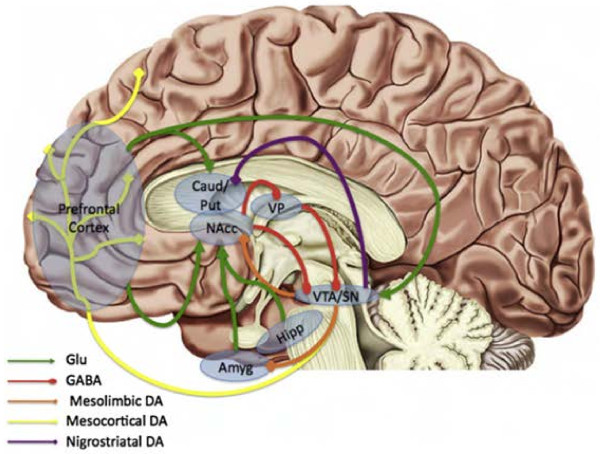
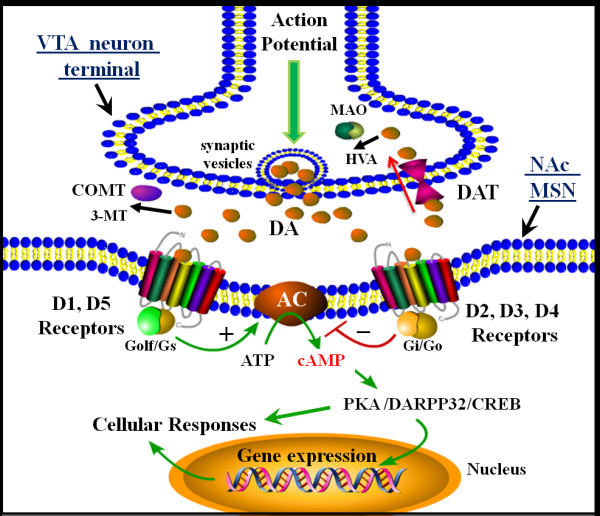
“in numerous experimental systems, increased CREB activity in the NAc is negatively related to behavioral responses to cocaine, opiates, and alcohol [86,88-90].”
§ Reward circuitry dysfunction in psychiatric and neurodevelopmental disorders and genetic syndromes: animal models and clinical findings > Review > Brain reward circuitry
What the sources say
- Not checked yetcites [86] Nestler EJ Is there a common molecular pathway for addiction? Nat Neurosci 2005 8 11 1445 1449 16251986 source
- Not checked yetcites [88] McClung CA Nestler EJ Regulation of gene expression and cocaine reward by CREB and DeltaFosB Nat Neurosci 2003 6 11 1208 1215 14566342 source
- Partly supportedcites [89] Barrot M Olivier JD Perrotti LI DiLeone RJ Berton O Eisch AJ Impey S Storm DR Neve RL Yin JC Zachariou V Nestler EJ CREB activity in the nucleus accumbens shell controls gating of behavioral responses to emotional stimuli Proc Natl Acad Sci 2002 99 17 11435 11440 12165570 PMC123274 sourceExperimental — accuracy not yet measured
Our copy supports two of the three drugs: the Results (Response to Rewarding Stimuli) report that CREB overexpression in the NAc shell reduced morphine place preference (with mCREB the opposite), and the Introduction/Discussion state that CREB overexpression or PKA stimulation in the NAc reduces the rewarding effects of cocaine, citing the group's earlier work (refs 13, 14) rather than new cocaine data. The alcohol/ethanol component is absent: searched 'ethanol', 'alcohol', 'drinking', 'self-administration' and only sucrose fluid intake and place-conditioning procedures appear, so no part of this paper tests behavioral responses to alcohol. The claim's framing 'in numerous experimental systems' also overstates this single viral-vector/reporter-mouse study, which itself notes it is one system with temporal and anatomical specificity (Discussion). (LLM, conf=0.82)
- Not checked yetcites [90] Walters CL Godfrey M Li X Blendy JA Alterations in morphine-induced reward, locomotor activity, and thermoregulation in CREB-deficient mice Brain Res 2005 1032 1–2 193 199 15680959 source
plainstates an association- Asserted: passes — The authors put it forward as true.
- Checkable: passes — It can be checked against evidence.
- Load-bearing: unclear — It is unclear whether the paper’s conclusions depend on it.
- Based: passes — The paper gives a reason why it holds.
Every source the paper cites for this claim was checked and supports it.
In the paper
“All of these processes are believed to contribute to the intense motivation to attain drugs of abuse [120].”
§ Reward circuitry dysfunction in psychiatric and neurodevelopmental disorders and genetic syndromes: animal models and clinical findings > Review > Psychiatric disorders
What the sources say
- Supportedcites [120] Volkow ND Fowler JS Wang GJ Baler R Telang F Imaging dopamine's role in drug abuse and addiction Neuropharmacology 2009 56 Suppl 1 3 8 18617195 PMC2696819 source
The Introduction says dopamine-related reinforcement processes make drugs salient stimuli that motivate the procurement of more drug. Section 2 also describes adaptations in motivation, reward, inhibitory-control, and memory circuits as contributing to compulsive drug taking. (LLM, conf=0.90)
hedgedstates a possible cause- Asserted: passes — The authors put it forward as true.
- Checkable: passes — It can be checked against evidence.
- Load-bearing: unclear — It is unclear whether the paper’s conclusions depend on it.
- Based: passes — The paper gives a reason why it holds.
- Supported
Every source the paper cites for this claim was checked and supports it.
In the paper
“Notably, Andrews and colleagues [155] found this effect in family members of those with substance abuse, suggesting that this pattern may be evident even in the absence of the direct effects of repeated drug use on the brain.”
§ Reward circuitry dysfunction in psychiatric and neurodevelopmental disorders and genetic syndromes: animal models and clinical findings > Review > Psychiatric disorders
What the sources say
- Supportedcites [155] Andrews MM Meda SA Thomas AD Potenza MN Krystal JH Worhunsky P Stevens MC O'Malley S Book GA Reynolds B Pearlson GD Individuals family history positive for alcoholism show functional magnetic resonance imaging differences in reward sensitivity that are related to impulsivity factors Biol Psychiatr 2011 69 8 675 683 PMC3677031 21126735 source
The Abstract Methods describe participants with a family history of alcoholism who had no past or current alcohol or substance abuse history. The Abstract Results report blunted nucleus accumbens activation during reward anticipation in those participants, and the Overview of Findings says altered reward sensitivity may reflect vulnerability rather than only the consequences of alcohol abuse. This supports the citing sentence’s hedged inference, though the measured effect was brain activation rather than motivation directly. (LLM, conf=0.91)
hedgedstates a possible cause- Asserted: passes — The authors put it forward as true.
- Checkable: passes — It can be checked against evidence.
- Load-bearing: passes — The paper’s conclusions depend on it.
- Based: passes — The paper gives a reason why it holds.
- Supported
The cited sources support only part of this claim — read each source’s verdict below.
In the paper
“Gilman and Hommer [153] reported subjective hypoarousal to normative positive images in alcohol-dependent participants.”
§ Reward circuitry dysfunction in psychiatric and neurodevelopmental disorders and genetic syndromes: animal models and clinical findings > Review > Psychiatric disorders
What the sources say
- Partly supportedcites [153] Gilman JM Hommer DW Modulation of brain response to emotional images by alcohol cues in alcohol-dependent patients Addiction Biol 2008 13 3–4 423 434 18507736 sourceExperimental — accuracy not yet measured
Our copy supports reduced neural response to normative (IAPS) positive images in alcohol-dependent participants: the Results sections 'Positive image with neutral beverage cue' and 'Positive image with alcoholic beverage cue' report that alcoholics showed less activation than controls (eight clusters, and the right hippocampus respectively), with no areas of greater activation, and the Methods ('Visual stimulation and task') confirm the stimuli were 55 high-arousal positive IAPS pictures. However, the paper attributes this to BOLD signal, not subjective experience — its 'Self-report affect ratings' section reports no significant group differences in positive affect before or after the scan, and no per-image arousal ratings were collected. The 'subjective' qualifier in the citing sentence is therefore not supported by this source. (LLM, conf=0.72)
plain- Asserted: passes — The authors put it forward as true.
- Checkable: passes — It can be checked against evidence.
- Load-bearing: unclear — It is unclear whether the paper’s conclusions depend on it.
- Based: passes — The paper gives a reason why it holds.
- Partly supported
The sources with a verdict support this claim; the rest weren’t checked yet, have no full text we could read, or their verdicts aren’t rated yet.
In the paper
“Behavioral studies have reliably found that individuals with MDD show a blunted response to a range of rewarding stimuli [203-205].”
§ Reward circuitry dysfunction in psychiatric and neurodevelopmental disorders and genetic syndromes: animal models and clinical findings > Review > Psychiatric disorders
What the sources say
- Not checked yetcites [203] Henriques JB Davidson RJ Decreased responsiveness to reward in depression Cognit Emot 2000 14 5 711 724 source
- Supportedcites [204] McFarland BR Klein DN Emotional reactivity in depression: diminished responsiveness to anticipated reward but not to anticipated punishment or to nonreward or avoidance Depress Anxiety 2009 26 2 117 122 18972567 source
The Introduction describes studies finding diminished responses to pleasant stimuli and rewards in depressed participants. The Discussion reports diminished responsiveness to anticipated reward in the paper's own study and places it alongside those earlier findings, supporting the broader claim. (LLM, conf=0.88)
- Not checked yetcites [205] Pizzagalli DA Iosifescu D Hallett LA Ratner KG Fava M Reduced hedonic capacity in major depressive disorder: evidence from a probabilistic reward task J Psychiatr Res 2008 43 1 76 87 18433774 PMC2637997 source
boosted- Asserted: passes — The authors put it forward as true.
- Checkable: passes — It can be checked against evidence.
- Load-bearing: passes — The paper’s conclusions depend on it.
- Based: passes — The paper gives a reason why it holds.
223 more claims · 21 with their cited sources checked
Create a free account to see all 441 claims and to verify the 598 references still open.
- It may state two separate claims as one. 191
- Probably not a substantial claim. 43
Claims other papers make about this one
Each is checked against this paper’s own text: does it say what the citing paper says it does?
The source backs part of the claim, not all of it — or backs it for a different population, condition or comparison.
In the citing paper
“A brain imaging study has demonstrated strong links between substance use disorder and dysfunction in reward circuitry, and in particular dopamine function within cortico-striatal circuitry.14”
From Ventral striatum dysfunction in children and adolescents with reactive attachment disorder: functional MRI study (2015) · cites this paper as [14]
Experimental — accuracy not yet measuredIn the citing paper
“For example, substance use disorder has been strongly linked to dysfunction in reward networks, particularly in dopamine function within cortico-striatal circuitry.14”
From Ventral striatum dysfunction in children and adolescents with reactive attachment disorder: functional MRI study (2015) · cites this paper as [14]
In the citing paper
“Conversely, functional alterations associated with reward processing were not observed in other brain regions linked with the reward-related dopaminergic system, such as the prefrontal cortex, the cingulate cortex and the limbic system, which have been implicated as important for reward processing.14,16”
From Ventral striatum dysfunction in children and adolescents with reactive attachment disorder: functional MRI study (2015) · cites this paper as [14]
Self-check
Percentages, sums and reported differences re-computed from the paper’s own numbers.
Each contradiction between two passages listed here was confirmed by an independent check.
Rated minor: it would not touch a result — a value no result rests on, a p-value that stays on the same side of the significance level, or a conflict that is clerical, resolved elsewhere in the paper, or outside its own findings.
In the paper
§ Reward circuitry dysfunction in psychiatric and neurodevelopmental disorders and genetic syndromes: animal models and clinical findings > Review > Psychiatric disorders
“Joos and colleagues [321] found reduced activation of the ACC in individuals with concurrent BN during the presentation of visual food cues”
§ Reward circuitry dysfunction in psychiatric and neurodevelopmental disorders and genetic syndromes: animal models and clinical findings > References
“321. Joos AAB Saum B van Elst LT Perlov E Glauche V Hartmann A Freyer T Tüscher O Zeeck A Amygdala hyperreactivity in restrictive anorexia nervosa”
Rated minor: it would not touch a result — a value no result rests on, a p-value that stays on the same side of the significance level, or a conflict that is clerical, resolved elsewhere in the paper, or outside its own findings.
In the paper
§ Reward circuitry dysfunction in psychiatric and neurodevelopmental disorders and genetic syndromes: animal models and clinical findings > Review > Psychiatric disorders
“Molecular-imaging studies of striatal DAT availability in bipolar disorder generally suggest increased functional DA throughput (but Suhara et al. reported an exception [282]).”
§ Reward circuitry dysfunction in psychiatric and neurodevelopmental disorders and genetic syndromes: animal models and clinical findings > References
“282. Suhara T Nakayama K Inoue O Fukuda H Shimizu M Mori A Tateno Y D1 dopamine receptor binding in mood disorders measured by positron emission tomography”
Rated minor: it would not touch a result — a value no result rests on, a p-value that stays on the same side of the significance level, or a conflict that is clerical, resolved elsewhere in the paper, or outside its own findings.
In the paper
§ Reward circuitry dysfunction in psychiatric and neurodevelopmental disorders and genetic syndromes: animal models and clinical findings > Review > Psychiatric disorders
“Joos and colleagues [340] also reported hyper-reactive reward-outcome responses in anorexia during the processing of food-reward images.”
§ Reward circuitry dysfunction in psychiatric and neurodevelopmental disorders and genetic syndromes: animal models and clinical findings > References
“340. Joos AAB Saum B Zeeck A Perlov E Glauche V Hartmann A Freyer T Sandholz A Unterbrink T van Elst LT Tüscher O Frontocingular dysfunction in Bulimia Nervosa when confronted with disease-specific stimuli”
Rated minor: it would not touch a result — a value no result rests on, a p-value that stays on the same side of the significance level, or a conflict that is clerical, resolved elsewhere in the paper, or outside its own findings.
In the paper
§ Reward circuitry dysfunction in psychiatric and neurodevelopmental disorders and genetic syndromes: animal models and clinical findings > Review > Psychiatric disorders
“Dextroamphetamine causes release of DA (as well as norepinephrine and serotonin) and is an effective treatment for amphetamine abuse [181].”
§ Reward circuitry dysfunction in psychiatric and neurodevelopmental disorders and genetic syndromes: animal models and clinical findings > References
“181. Grabowski J Rhoades H Schmitz J Stotts A Daruzska LA Creson D Moeller FG Dextroamphetamine for cocaine-dependence treatment: a double-blind randomized clinical trial”
Rated minor: it would not touch a result — a value no result rests on, a p-value that stays on the same side of the significance level, or a conflict that is clerical, resolved elsewhere in the paper, or outside its own findings.
In the paper
§ Reward circuitry dysfunction in psychiatric and neurodevelopmental disorders and genetic syndromes: animal models and clinical findings > Review > Genetic syndromes
“Another study found that individuals with WS show reduced amygdala activity in response to sad faces and comparable activity in the orbitofrontal cortex for happy and sad faces”
§ Reward circuitry dysfunction in psychiatric and neurodevelopmental disorders and genetic syndromes: animal models and clinical findings > Review > Genetic syndromes
“However, both of these studies did not report responses to the happy-face conditions.”
Citations
Cites
Diagnostic and Statistical Manual of Mental Disorders
Williams, J. B. W., & First, M. (2013) · Encyclopedia of Social Work · doi:10.1093/acrefore/9780199975839.013.104 · Cited by 109,519
Kessler, R. C., Chiu, W. T., Demler, O., & Walters, E. E. (2005) · Archives of General Psychiatry · doi:10.1001/archpsyc.62.6.617 · Cited by 12,052
Philosophical transactions of the Royal Society of London. B
Press, H. (1886) · Cited by 10,081
Carver, C. S., & White, T. L. (1994) · Journal of Personality and Social Psychology · doi:10.1037/0022-3514.67.2.319 · Cited by 7,306
The Endophenotype Concept in Psychiatry: Etymology and Strategic Intentions
Gottesman, I. I., & Gould, T. D. (2003) · American Journal of Psychiatry · doi:10.1176/appi.ajp.160.4.636 · Cited by 5,615
Handbook of Affective Sciences
(2002) · doi:10.1093/oso/9780195126013.001.0001 · Cited by 5,073
Di Chiara, G., & Imperato, A. (1988) · Proceedings of the National Academy of Sciences · doi:10.1073/pnas.85.14.5274 · Cited by 4,733 · cited 1×
“use [113,114].”
Affective Neuroscience: The Foundations of Human and Animal Emotions
Panksepp, J. (1998) · doi:10.1093/oso/9780195096736.001.0001 · Cited by 4,428
International Statistical Classification of Diseases and Related Health Problems
(2011) · Encyclopedia of Clinical Neuropsychology · doi:10.1007/978-0-387-79948-3_3055 · Cited by 4,151
(1998) · Cited by 4,012
Research works printed but not linked: 5
- Bühler M Vollstadt-Klein S Kobiella A Budde H Reed LJ Braus DF Buchel C Smolka MN Nicotine dependence is characterized by disordered reward processing in a network driving motivation Biol Psychiatr 2010 67 8 745 752 20044075 · DOI · Paper page
- Keedwell PA Andrew C Williams SCR Brammer MJ Zelaya F Phillips ML The neural correlates of depression Biol Psychiatr 2003 53 171S
- Dichter GS Tomarken AJ Shelton RC Freid C Addington S Effects of Bupropion SR on dimensions of mood 2001 Poster presented at the annual meeting of The American Psychiatric Association, New Orleans, Louisiana
- Alexander W Prozac wins new indication for bulimia nervosa Drug Topics 1997 141 6 34
- Rado S Psychoanalysis of Behavior: The Collected Papers of Sandor Rado (Vol. 2) 1962 Grune & Stratton, New York
Cited by
Insel, T. R., & Cuthbert, B. N. (2015) · Science · doi:10.1126/science.aab2358 · Cited by 840
Linked dimensions of psychopathology and connectivity in functional brain networks
Xia, C. H., Ma, Z., Ciric, R., Gu, S., Betzel, R. F., Kaczkurkin, A. N., Calkins, M. E., Cook, P. A., García de la Garza, A., Vandekar, S. N., et al. (2018) · Nature Communications · doi:10.1038/s41467-018-05317-y · Cited by 437
Mechanisms of dopamine transporter regulation in normal and disease states
Vaughan, R. A., & Foster, J. D. (2013) · Trends in Pharmacological Sciences · doi:10.1016/j.tips.2013.07.005 · Cited by 419
“Angelman syndrome is a neurological disorder characterized by tremor and Parkinson’s Disease (PD)-like symptoms, suggesting a link to DA [93].”
Evaluation of the Social Motivation Hypothesis of Autism: A Systematic Review and Meta-analysis
Clements, C. C., Zoltowski, A. R., Yankowitz, L. D., Yerys, B. E., Schultz, R. T., & Herrington, J. D. (2018) · JAMA Psychiatry · doi:10.1001/jamapsychiatry.2018.1100 · Cited by 316
Nankova, B. B., Agarwal, R., MacFabe, D. F., & La Gamma, E. F. (2014) · PLoS ONE · doi:10.1371/journal.pone.0103740 · Cited by 294
“Many of the affected genomic pathways are involved in catecholamine synthesis, which have been implicated in ASD [65,66].”
BackgroundA Dopamine Hypothesis of Autism Spectrum Disorder
Pavăl, D. (2017) · Developmental Neuroscience · doi:10.1159/000478725 · Cited by 294
Bolea-Alamañac, B., Nutt, D. J., Adamou, M., Asherson, P., Bazire, S., Coghill, D., Heal, D., Müller, U., Nash, J., Santosh, P., et al. (2014) · Journal of Psychopharmacology · doi:10.1177/0269881113519509 · Cited by 287
Marotta, R., Risoleo, M. C., Messina, G., Parisi, L., Carotenuto, M., Vetri, L., & Roccella, M. (2020) · Brain Sciences · doi:10.3390/brainsci10030163 · Cited by 279
MacFabe, D. F. (2015) · Microbial Ecology in Health & Disease · doi:10.3402/mehd.v26.28177 · Cited by 259
Khazanov, G. K., & Ruscio, A. M. (2016) · Psychological Bulletin · doi:10.1037/bul0000059 · Cited by 240
The Potential Role of Gut Microbiota in Alzheimer’s Disease: From Diagnosis to Treatment
Varesi, A., Pierella, E., Romeo, M., Piccini, G. B., Alfano, C., Bjørklund, G., Oppong, A., Ricevuti, G., Esposito, C., Chirumbolo, S., et al. (2022) · Nutrients · doi:10.3390/nu14030668 · Cited by 225
Functional magnetic resonance imaging of autism spectrum disorders
Dichter, G. S. (2012) · Dialogues in Clinical Neuroscience · doi:10.31887/dcns.2012.14.3/gdichter · Cited by 215
Self-citationSecondary negative symptoms — A review of mechanisms, assessment and treatment
Kirschner, M., Aleman, A., & Kaiser, S. (2017) · Schizophrenia Research · doi:10.1016/j.schres.2016.05.003 · Cited by 215
Hamilton, P. J., Campbell, N. G., Sharma, S., Erreger, K., Herborg Hansen, F., Saunders, C., Belovich, A. N., NIH ARRA Autism Sequencing Consortium, Daly, M. J., Gibbs, R. A., et al. (2013) · Molecular Psychiatry · doi:10.1038/mp.2013.102 · Cited by 212
Mental health: On the spectrum
Adam, D. (2013) · Nature · doi:10.1038/496416a · Cited by 208
Attention as an effect not a cause
Krauzlis, R. J., Bollimunta, A., Arcizet, F., & Wang, L. (2014) · Trends in Cognitive Sciences · doi:10.1016/j.tics.2014.05.008 · Cited by 193
New and emerging approaches to treat psychiatric disorders
Scangos, K. W., State, M. W., Miller, A. H., Baker, J. T., & Williams, L. M. (2023) · Nature Medicine · doi:10.1038/s41591-022-02197-0 · Cited by 180
Cao, B., Zhu, J., Zuckerman, H., Rosenblat, J. D., Brietzke, E., Pan, Z., Subramanieapillai, M., Park, C., Lee, Y., & McIntyre, R. S. (2019) · Progress in Neuro-Psychopharmacology and Biological Psychiatry · doi:10.1016/j.pnpbp.2019.01.002 · Cited by 175
“, psychotherapy and neuromodulation) in treating anhedonia have been evaluated (De Berardis et al., 2017; Di Giannantonio et al., 2011; Dichter et al., 2012; Hatzigiakoumis et al., 2011).”
MethodIs autism a disease of the cerebellum? An integration of clinical and pre-clinical research
Rogers, T. D., McKimm, E., Dickson, P. E., Goldowitz, D., Blaha, C. D., & Mittleman, G. (2013) · Frontiers in Systems Neuroscience · doi:10.3389/fnsys.2013.00015 · Cited by 139
Richey, J. A., Rittenberg, A., Hughes, L., Damiano, C. R., Sabatino, A., Miller, S., Hanna, E., Bodfish, J. W., & Dichter, G. S. (2014) · Social Cognitive and Affective Neuroscience · doi:10.1093/scan/nss146 · Cited by 138
Self-citationRhythm and timing as vulnerabilities in neurodevelopmental disorders
Lense, M., Ladányi, E., Rabinowitch, T.-C., Trainor, L. J., & Gordon, R. L. (2021) · Philosophical Transactions of the Royal Society B Biological Sciences · doi:10.1098/rstb.2020.0327 · Cited by 156
Tooley, J., Marconi, L., Alipio, J. B., Matikainen-Ankney, B., Georgiou, P., Kravitz, A. V., & Creed, M. C. (2018) · Biological Psychiatry · doi:10.1016/j.biopsych.2018.01.003 · Cited by 141
Re-evaluating the link between neuropsychiatric disorders and dysregulated adult neurogenesis
Yun, S., Reynolds, R. P., Masiulis, I., & Eisch, A. J. (2016) · Nature Medicine · doi:10.1038/nm.4218 · Cited by 128
Depression in Youth with Autism Spectrum Disorder
Pezzimenti, F., Han, G. T., Vasa, R. A., & Gotham, K. (2019) · Child and Adolescent Psychiatric Clinics of North America · doi:10.1016/j.chc.2019.02.009 · Cited by 144
Dalsgaard, S., Mortensen, P. B., Frydenberg, M., & Thomsen, P. H. (2014) · Addictive Behaviors · doi:10.1016/j.addbeh.2013.09.002 · Cited by 144
Tian, J., Gao, X., & Yang, L. (2022) · Frontiers in Neuroscience · doi:10.3389/fnins.2022.780407 · Cited by 146
Krolick, K. N., Zhu, Q., & Shi, H. (2018) · Progress in molecular biology and translational science · doi:10.1016/bs.pmbts.2018.07.008 · Cited by 139
Oxytocin, vasopressin, and the motivational forces that drive social behaviors
Caldwell, H. K., & Albers, H. E. (2015) · Current Topics in Behavioral Neurosciences · doi:10.1007/7854_2015_390 · Cited by 129
McClelland, J., Bozhilova, N., Campbell, I., & Schmidt, U. (2013) · European Eating Disorders Review · doi:10.1002/erv.2256 · Cited by 114
Altered reward system reactivity for personalized circumscribed interests in autism
Kohls, G., Antezana, L., Mosner, M. G., Schultz, R. T., & Yerys, B. E. (2018) · Molecular Autism · doi:10.1186/s13229-018-0195-7 · Cited by 113
Factor, R. S., Ryan, S. M., Farley, J. P., Ollendick, T. H., & Scarpa, A. (2017) · Journal of Autism and Developmental Disorders · doi:10.1007/s10803-016-3025-9 · Cited by 130
Shan, Q., Ge, M., Christie, M. J., & Balleine, B. W. (2014) · Journal of Neuroscience · doi:10.1523/jneurosci.0313-14.2014 · Cited by 122
“Such differences also have clear implications for disorders associated with striatal function; these disorders often induce region-specific changes in activity in the striatum (Dichter et al., 2012), and the possibility that distinct functions and plasticity processes are mediated by those regions suggests that both b…”
BackgroundDalsgaard, S., Mortensen, P. B., Frydenberg, M., Maibing, C. M., Nordentoft, M., & Thomsen, P. H. (2014) · European Psychiatry · doi:10.1016/j.eurpsy.2013.06.004 · Cited by 121
“However, in schizophrenia it is hypothesized that the neurodevelopmental abnormality is caused by hyperactivity in the dopaminergic system in parts of the brain, whereas hypoactivity in the same system is the most likely cause of ADHD [16].”
BackgroundBast, N., Poustka, L., & Freitag, C. M. (2018) · European Journal of Neuroscience · doi:10.1111/ejn.13795 · Cited by 121
“…low social motivation theory delivers much face validity and was investigated in questionnaire studies (Carr e et al., 2015; Chevallier et al., 2016), deviations of the orbitofrontal–striatum–amygdala functional network of reward are not specific to ASD (Eshel & Roiser, 2010; Dichter et al., 2012).”
BackgroundSex-dependent regulation of social reward by oxytocin: an inverted U hypothesis
Borland, J. M., Rilling, J. K., Frantz, K. J., & Albers, H. E. (2019) · Neuropsychopharmacology · doi:10.1038/s41386-018-0129-2 · Cited by 116
Boness, C. L., Watts, A. L., Moeller, K. N., & Sher, K. J. (2021) · Psychological Bulletin · doi:10.1037/bul0000333 · Cited by 112
Shen, M. D., Li, D. D., Keown, C. L., Lee, A., Johnson, R. T., Angkustsiri, K., Rogers, S. J., Müller, R.-A., Amaral, D. G., & Nordahl, C. W. (2016) · Journal of the American Academy of Child & Adolescent Psychiatry · doi:10.1016/j.jaac.2016.05.020 · Cited by 99
Vandegrift, B. J., You, C., Satta, R., Brodie, M. S., & Lasek, A. W. (2017) · PLoS ONE · doi:10.1371/journal.pone.0187698 · Cited by 108
Reward Network Modulation as a Mechanism of Change in Behavioral Activation
Nagy, G. A., Cernasov, P., Pisoni, A., Walsh, E. C., Dichter, G. S., & Smoski, M. J. (2018) · Behavior Modification · doi:10.1177/0145445518805682 · Cited by 107
Self-citationAldridge‐Waddon, L., Vanova, M., Munneke, J., Puzzo, I., & Kumari, V. (2020) · Clinical Psychology Review · doi:10.1016/j.cpr.2020.101942 · Cited by 105
Carl, H., Walsh, E., Eisenlohr-Moul, T., Minkel, J., Crowther, A., Moore, T., Gibbs, D., Petty, C., Bizzell, J., Dichter, G. S., et al. (2016) · Journal of Affective Disorders · doi:10.1016/j.jad.2016.06.005 · Cited by 95
Self-citationPhosphorylation mechanisms in dopamine transporter regulation
Foster, J. D., & Vaughan, R. A. (2016) · Journal of Chemical Neuroanatomy · doi:10.1016/j.jchemneu.2016.10.004 · Cited by 104
Psychometric properties of neural responses to monetary and social rewards across development
Ethridge, P., & Weinberg, A. (2018) · International Journal of Psychophysiology · doi:10.1016/j.ijpsycho.2018.01.011 · Cited by 102
Neural responses to social and monetary reward in early adolescence and emerging adulthood
Ethridge, P., Kujawa, A., Dirks, M. A., Arfer, K. B., Kessel, E. M., Klein, D. N., & Weinberg, A. (2017) · Psychophysiology · doi:10.1111/psyp.12957 · Cited by 96
Neurodevelopmental disorders in young violent offenders: Overlap and background characteristics
Billstedt, E., Anckarsäter, H. S., Wallinius, M., & Hofvander, B. (2017) · Psychiatry Research · doi:10.1016/j.psychres.2017.03.004 · Cited by 98
The first mecp2-null zebrafish model shows altered motor behaviors
Pietri, T., Roman, A.-C., Guyon, N., Romano, S. A., Washbourne, P., Moens, C. B., de Polavieja, G. G., & Sumbre, G. (2013) · Frontiers in Neural Circuits · doi:10.3389/fncir.2013.00118 · Cited by 93
Shen, M. D., Swanson, M. R., Wolff, J. J., Elison, J. T., Girault, J. B., Kim, S. H., Smith, R. G., Graves, M. M., Weisenfeld, L. A. H., Flake, L., et al. (2022) · American Journal of Psychiatry · doi:10.1176/appi.ajp.21090896 · Cited by 89
Cox, A., Kohls, G., Naples, A. J., Mukerji, C. E., Coffman, M. C., Rutherford, H. J. V., Mayes, L. C., & McPartland, J. C. (2015) · Social Cognitive and Affective Neuroscience · doi:10.1093/scan/nsv024 · Cited by 67
Factor, R. S., Condy, E. E., Farley, J. P., & Scarpa, A. (2016) · Journal of Autism and Developmental Disorders · doi:10.1007/s10803-016-2781-x · Cited by 89
RNA‐binding proteins, neural development and the addictions
Bryant, C. D., & Yazdani, N. (2016) · Genes, Brain and Behavior · doi:10.1111/gbb.12273 · Cited by 81
Mandić-Maravić, V., Grujičić, R., Milutinovic, L., Munjiza, A., & Pejovic-Milovancevic, M. M. (2022) · Frontiers in Psychiatry · doi:10.3389/fpsyt.2021.787097 · Cited by 85
Implications of the Hierarchical Structure of Psychopathology for Psychiatric Neuroimaging
Zald, D. H., & Lahey, B. B. (2017) · Biological Psychiatry: Cognitive Neuroscience and Neuroimaging · doi:10.1016/j.bpsc.2017.02.003 · Cited by 77
Oxytocin functions as a spatiotemporal filter for excitatory synaptic inputs to VTA dopamine neurons
Xiao, L., Priest, M. F., & Kozorovitskiy, Y. (2018) · eLife · doi:10.7554/elife.33892 · Cited by 83
“…in reward-based behavior (Howe and Dombeck, 2016; Russo and Nestler, 2013; Schultz, 1998), drug abuse and addiction (Jones and Bonci, 2005; Kauer and Malenka, 2007; Niehaus et al., 2009; Stelly et al., 2016), as well as neurodevelopmental and neurodegenerative disorders (Dichter et al., 2012).”
BackgroundReward for food odors: an fMRI study of liking and wanting as a function of metabolic state and BMI
Jiang, T., Soussignan, R., Schaal, B., & Royet, J.-P. (2015) · Social Cognitive and Affective Neuroscience · doi:10.1093/scan/nsu086 · Cited by 71
Demographic Change Across the Lifespan of Pet Dogs and Their Impact on Health Status
Wallis, L., Szabó, D., Erdélyi‐Belle, B., & Kubinyi, E. (2018) · Frontiers in Veterinary Science · doi:10.3389/fvets.2018.00200 · Cited by 84
Uzunova, G., Hollander, E., & Shepherd, J. D. (2014) · Current Neuropharmacology · doi:10.2174/1570159x113116660046 · Cited by 79
Blum, K. (2013) · Journal of Addiction Research & Therapy · doi:10.4172/2155-6105.1000139 · Cited by 73
Whittaker, J. R., Foley, S. F., Ackling, E., Murphy, K., & Caseras, X. (2018) · Biological Psychiatry · doi:10.1016/j.biopsych.2018.07.023 · Cited by 73
The dopamine system and alcohol dependence.
Ma, H., & Zhu, G. (2014) · PubMed Central · doi:10.3969/j.issn.1002-0829.2014.02.002 · Cited by 74
A Neural Marker of Obsessive-Compulsive Disorder from Whole-Brain Functional Connectivity
Takagi, Y., Sakai, Y., Lisi, G., Yahata, N., Abe, Y., Nishida, S., Nakamae, T., Morimoto, J., Kawato, M., Narumoto, J., et al. (2017) · Scientific Reports · doi:10.1038/s41598-017-07792-7 · Cited by 71
Cytoplasmic FMR1-Interacting Protein 2 Is a Major Genetic Factor Underlying Binge Eating
Kirkpatrick, S. L., Goldberg, L. R., Yazdani, N., Babbs, R. K., Wu, J., Reed, E. R., Jenkins, D. F., Bolgioni, A. F., Landaverde, K. I., Luttik, K. P., et al. (2017) · Biological Psychiatry · doi:10.1016/j.biopsych.2016.10.021 · Cited by 71
“It is worth noting that CYFIP1 (homolog of CYFIP2 ; 88% similarity in amino acid sequence) is deleted or imprinted in patients with type I Prader-Willi syndrome, a neurodevelopmental disorder de fi ned by extreme hyperphagia (68) and a hyperres-ponsive reward system to food-associated cues (69).”
BackgroundSettell, M. L., Testini, P., Cho, S., Lee, J. H., Blaha, C. D., Jo, H. J., Lee, K. H., & Min, H.-K. P. (2017) · Frontiers in Neuroscience · doi:10.3389/fnins.2017.00104 · Cited by 72
Psychedelic therapy's transdiagnostic effects: A research domain criteria (RDoC) perspective
Kelly, J. R., Gillan, C. M., Prenderville, J., Kelly, C., Harkin, A., Clarke, G., & O'Keane, V. (2021) · Frontiers in Psychiatry · doi:10.3389/fpsyt.2021.800072 · Cited by 69
“Reward System Reward-pathway dysfunction is associated with a range of disorders (190, 191), including but not limited to mood (192, 193), anxiety (194, 195), addiction disorders (196, 197) and eating disorders (198, 199).”
BackgroundOphir, A. G. (2017) · Frontiers in Neuroscience · doi:10.3389/fnins.2017.00397 · Cited by 62
Zürcher, N. R., Walsh, E. C., Phillips, R., Cernasov, P., Tseng, C.-E. J., Dharanikota, A., Smith, E. P., Li, Z., Kinard, J. L., Bizzell, J., et al. (2021) · Translational Psychiatry · doi:10.1038/s41398-020-01170-0 · Cited by 70
Self-citationOverview of the structure and function of the dopamine transporter and its protein interactions
Nepal, B., Das, S. K., Reith, M. E. A., & Kortagere, S. (2023) · Frontiers in Physiology · doi:10.3389/fphys.2023.1150355 · Cited by 69
Anhedonia in obsessive-compulsive disorder: Beyond comorbid depression
Abramovitch, A., Pizzagalli, D. A., Reuman, L., & Wilhelm, S. (2014) · Psychiatry Research · doi:10.1016/j.psychres.2014.02.002 · Cited by 64
“Second, current assessment procedures and CBT/ERP protocols for OCD treatment do not target anhedonia, which may improve significantly when treated with behavioral activation therapy (Dichter et al., 2012).”
Biological principles for music and mental health
Bowling, D. L. (2023) · Translational Psychiatry · doi:10.1038/s41398-023-02671-4 · Cited by 64
Esmaiel, N. N., Ashaat, E. A., Mosaad, R. M., Fayez, A. G., Ibrahim, M. M., Abdallah, Z. Y., Issa, M. Y., Salem, S. M., Ramadan, A., Wakeel, M. A. E., et al. (2019) · Behavioural Brain Research · doi:10.1016/j.bbr.2019.112272 · Cited by 64
Association between the oxytocin receptor (OXTR) gene and mesolimbic responses to rewards
Damiano, C. R., Aloi, J., Dunlap, K., Burrus, C. J., Mosner, M. G., Kozink, R. V., McLaurin, R., Mullette-Gillman, O. A., Carter, R., Huettel, S. A., et al. (2014) · Molecular Autism · doi:10.1186/2040-2392-5-7 · Cited by 53
Self-citationTakiguchi, S., Fujisawa, T. X., Mizushima, S., Saito, D. N., Okamoto, Y., Shimada, K., Koizumi, M., Kumazaki, H., Jung, M., Kosaka, H., et al. (2015) · BJPsych Open · doi:10.1192/bjpo.bp.115.001586 · Cited by 63
RetractedStriatal Development in Autism: Repetitive Behaviors and the Reward Circuitry
Kohls, G., Yerys, B. E., & Schultz, R. T. (2014) · Biological Psychiatry · doi:10.1016/j.biopsych.2014.07.010 · Cited by 56
Mechanisms of Reward Circuit Dysfunction in Psychiatric Illness: Prefrontal–Striatal Interactions
Pujara, M., & Koenigs, M. (2014) · The Neuroscientist · doi:10.1177/1073858413499407 · Cited by 52
Kaur, G., Behl, T., BUNGAU, S. G., Kumar, A., Uddin, M. S., Mehta, V., Zengin, G., Mathew, B., Shah, M. A., & Arora, S. (2020) · Current Neuropharmacology · doi:10.2174/1570159x18666200606233050 · Cited by 64
Luikinga, S. J., Kim, J. H., & Perry, C. J. (2018) · Progress in Neuro-Psychopharmacology and Biological Psychiatry · doi:10.1016/j.pnpbp.2017.11.010 · Cited by 59
“Furthermore, they all form part of the primary rewardassociated pathway (Kauer and Malenka, 2007), and SUD is associated with deregulation of this pathway (Dichter et al., 2012).”
BackgroundChen, W.-Y., Zhang, H., Gatta, E., Glover, E. J., Pandey, S. C., & Lasek, A. W. (2019) · Alcohol · doi:10.1016/j.alcohol.2019.02.005 · Cited by 59
Carlier, N., Marshe, V. S., Cmorejova, J., Davis, C. A., & Müller, D. J. (2015) · Current Psychiatry Reports · doi:10.1007/s11920-015-0634-5 · Cited by 62
Herborg, F., Andreassen, T. F., Berlin, F., Loland, C. J., & Gether, U. (2018) · Journal of Biological Chemistry · doi:10.1074/jbc.ra118.001753 · Cited by 57
The Sociopharmacology of Tobacco Addiction: Implications for Understanding Health Disparities
Leventhal, A. M. (2015) · Nicotine & Tobacco Research · doi:10.1093/ntr/ntv084 · Cited by 56
Kuo, H., & Liu, F. (2022) · Biomedicines · doi:10.3390/biomedicines10030560 · Cited by 55
Stegmayer, K., Horn, H., Federspiel, A., Razavi, N., Bracht, T., Laimböck, K., Strik, W. K., Dierks, T., Wiest, R., Müller, T., et al. (2014) · NeuroImage Clinical · doi:10.1016/j.nicl.2013.12.007 · Cited by 57
Kuo, H., & Liu, F. (2018) · Frontiers in Cellular Neuroscience · doi:10.3389/fncel.2018.00422 · Cited by 54
Using Effort to Measure Reward Value of Faces in Children with Autism
Ewing, L., Pellicano, E., & Rhodes, G. (2013) · PLoS ONE · doi:10.1371/journal.pone.0079493 · Cited by 49
The functional neural architecture of dysfunctional reward processing in autism
Janouschek, H., Chase, H. W., Sharkey, R. J., Peterson, Z. J., Camilleri, J. A., Abel, T. G., Eickhoff, S. B., & Nickl‐Jockschat, T. (2021) · NeuroImage Clinical · doi:10.1016/j.nicl.2021.102700 · Cited by 53
Epigenetics in ENS development and Hirschsprung disease
Torroglosa, A., Alves, M. M., Fernández, R. M., Antiñolo, G., Hofstra, R. M. W., & Borrego, S. (2016) · Developmental Biology · doi:10.1016/j.ydbio.2016.06.017 · Cited by 52
Kinard, J. L., Mosner, M. G., Greene, R. K., Addicott, M., Bizzell, J., Petty, C., Cernasov, P., Walsh, E., Eisenlohr‐Moul, T., Carter, R. M., et al. (2020) · Autism Research · doi:10.1002/aur.2273 · Cited by 43
Self-citationNeurobehavioral changes arising from early life dopamine signaling perturbations
Areal, L. B., & Blakely, R. (2020) · Neurochemistry International · doi:10.1016/j.neuint.2020.104747 · Cited by 51
Differentiating neural reward responsiveness in autism versus ADHD
Kohls, G., Thönessen, H., Bartley, G. K., Grossheinrich, N., Fink, G. R., Herpertz-Dahlmann, B., & Konrad, K. (2014) · Developmental Cognitive Neuroscience · doi:10.1016/j.dcn.2014.08.003 · Cited by 50
Kirschner, M., Hager, O. M., Muff, L., Bischof, M., Hartmann-Riemer, M. N., Kluge, A., Habermeyer, B., Seifritz, E., Tobler, P. N., & Kaiser, S. (2016) · Schizophrenia Bulletin · doi:10.1093/schbul/sbw142 · Cited by 49
Carlisi, C. O., Norman, L., Murphy, C. M., Christakou, A., Chantiluke, K., Giampietro, V., Simmons, A., Brammer, M., Murphy, D. G., Mataix-Cols, D., et al. (2017) · Cerebral Cortex · doi:10.1093/cercor/bhx265 · Cited by 40
Medical Therapies for Children With Autism Spectrum Disorder—An Update
Edwin Williamson, M. D., Sathe, N. A., & Andrews, J. C. (2017) · doi:10.23970/ahrqepccer189 · Cited by 50
Pre-clinical models of reward deficiency syndrome: A behavioral octopus
Gondré-Lewis, M. C., Bassey, R., & Blum, K. (2020) · Neuroscience & Biobehavioral Reviews · doi:10.1016/j.neubiorev.2020.04.021 · Cited by 42
Neural responsivity to social rewards in autistic female youth
Lawrence, K. E., Hernandez, L. M., Eilbott, J., Jack, A., Aylward, E., Gaab, N., Van Horn, J. D., Bernier, R. A., Geschwind, D. H., McPartland, J. C., et al. (2020) · Translational Psychiatry · doi:10.1038/s41398-020-0824-8 · Cited by 39
Puścian, A., ÅÄTMski, S., Górkiewicz, T., Meyza, K. Z., Lipp, H., & Knapska, E. (2014) · Frontiers in Behavioral Neuroscience · doi:10.3389/fnbeh.2014.00140 · Cited by 46
A Conserved Role for p48 Homologs in Protecting Dopaminergic Neurons from Oxidative Stress
Dib, P. B., Gnägi, B., Daly, F., Sabado, V., Tas, D., Glauser, D. A., Meister, P., & Nagoshi, E. (2014) · PLoS Genetics · doi:10.1371/journal.pgen.1004718 · Cited by 45
NAKAI, T., Nagai, T., Wang, R., Yamada, S., Kuroda, K., Kaibuchi, K., & Yamada, K. (2014) · Neurochemistry International · doi:10.1016/j.neuint.2014.06.009 · Cited by 46
The projection-specific signals that establish functionally segregated dopaminergic synapses
Terauchi, A., Yee, P., Johnson‐Venkatesh, E., Seiglie, M. P., Kim, L., Pitino, J. C., Kritzer, E., Zhang, Q., Zhou, J., Li, Y., et al. (2023) · Cell · doi:10.1016/j.cell.2023.07.023 · Cited by 44
Antidepressant drug development: Focus on triple monoamine reuptake inhibition
Lane, R. M. (2014) · Journal of Psychopharmacology · doi:10.1177/0269881114553252 · Cited by 44
Keel, P. K., Bodell, L. P., Forney, K. J., Appelbaum, J., & Williams, D. L. (2019) · Physiology & Behavior · doi:10.1016/j.physbeh.2019.112565 · Cited by 45
Phillips, J. M., Uljarević, M., Schuck, R. K., Schapp, S., Solomon, E. M., Salzman, E., Allerhand, L., Libove, R. A., Frazier, T. W., & Hardan, A. Y. (2019) · Molecular Autism · doi:10.1186/s13229-019-0298-9 · Cited by 45
Metadata
- Authors
- Dichter, G. S., Damiano, C. A., & Allen, J. A.
- Affiliations
- University of North Carolina at Chapel Hill (US)
- Pfizer (United States) (US)
- Corresponding author
- Dichter, Gabriel S
- Venue
- Journal of Neurodevelopmental Disorders
- Published
- 2012-07-06
- Volume
- 4
- Issue
- 1
- Pages
- 19-19
- ISSN
- 1866-1947 (ISSN-L)
- 1866-1955
- PMC
- PMC3464940
- OpenAlex
- W2108366837
- Semantic Scholar
- 5048199e92af51a5b691f84e844c7ce520e4a487
- Cited by
- 299
- References
- 780
- Citations by year
- 2026: 10 · 2025: 14 · 2024: 12 · 2023: 23 · 2022: 21 · 2021: 20 · 2020: 32 · 2019: 18 · 2018: 30 · 2017: 24 · 2016: 18 · 2015: 30 · 2014: 25 · 2013: 17 · 2012: 4
- FWCI
- 10.02
- Type
- journal article
- Language
- en
- Open access
- gold
- doi.org
- Licence
- cc-by
- creativecommons.org/licenses/by/2.0 (tdm)
- Locations
- Journal of Neurodevelopmental Disorders (publishedVersion, cc-by)
- Europe PMC (PubMed Central) (publishedVersion, cc-by)
- PubMed Central (publishedVersion, cc-by)
- PubMed (publishedVersion)
- Carolina Digital Repository (University of North Carolina at Chapel Hill) (submittedVersion)
- Carolina Digital Repository (University of North Carolina at Chapel Hill) (submittedVersion, cc-by)
- DOAJ (DOAJ: Directory of Open Access Journals) (submittedVersion)
- DukeSpace (Duke University) (submittedVersion, cc-by-nc-nd)
- UNC Libraries
- Funders
- Autism Speaks
- Topics
- Life Sciences › Neuroscience › Cellular and Molecular Neuroscience › Neurotransmitter Receptor Influence on Behavior
- Life Sciences › Neuroscience › Cognitive Neuroscience › Neural and Behavioral Psychology Studies
- Health Sciences › Medicine › Psychiatry and Mental health › Schizophrenia research and treatment
- Keywords
- reward systems, dopaminergic system, mental illness, neurodevelopmental disorders, genetic syndromes, substance use disorders, mood disorders, eating disorders, obsessive-compulsive disorder, schizophrenia, attention deficit hyperactivity disorder, autism spectrum disorder, Tourette syndrome, conduct disorder, fragile X syndrome, Prader-Willi syndrome, Williams syndrome, Angelman syndrome, Rett syndrome, animal models, psychopharmacology
About these checks
Registry, retraction, Cites and statistics results are computed, not judged, with one exception: a printed reference that no index lists is read once by a model before it counts as a citation error. Claims are extracted by a model and kept only when their quote appears verbatim in the text; each cited source is then checked, with a model’s help, for whether it says what the claim relies on. Those verdicts can be wrong — read the claim’s quote and the cited source before relying on one.
The claim verdicts this report counts are experimental: their accuracy is not yet measured.
A language model drew the claims from the paper on 2026-10-05, under version 3 of the claim definition (model deepseek-v4.1-flash, prompt extract-v3).
A second model labelled each claim on 2026-10-05 (model jev-1.13-20260917, definition revision gold-guideline-v0.2).
Cited sources are checked with a language model’s help (qwen3.8-omni-flash and gpt-6-sol).
Statistics and arithmetic are recomputed, not judged.
Confidence bands are shown only for fields calibrated on our annotated test set. None is calibrated yet, so no band is shown.
What counts as a claim ›How we measure confidence ›How we check this ›
Are you an author, or do you see a problem with this page? Request a review
Data sources
Bibliographic data: Semantic Scholar, OpenAlex, Crossref.
Contains information from the Semantic Scholar Academic Graph Datasets, made available under the ODC Attribution License (ODC-BY 1.0).
Semantic Scholar’s data is described in: Kinney, R., et al. (2023). The Semantic Scholar Open Data Platform. arXiv:2301.10140.
