

Haploinsufficiency of the autism-associated Shank3 gene leads to deficits in synaptic function, social interaction, and social communication
Open accessThe DOI matches its Crossref record; 64 of the 64 references it cites were found in a registry or an index; 11 of the 40 sources its claims cite were checked for support.
Abstract
Background: SHANK3 is a protein in the core of the postsynaptic density (PSD) and has a critical role in recruiting many key functional elements to the PSD and to the synapse, including components of α-amino-3-hydroxyl-5-methyl-4-isoxazole-propionic acid (AMPA), metabotropic glutamate (mGlu) and N -methyl-D-aspartic acid (NMDA) glutamate receptors, as well as cytoskeletal elements. Loss of a functional copy of the SHANK3 gene leads to the neurobehavioral manifestations of 22q13 deletion syndrome and/or to autism spectrum disorders. The goal of this study was to examine the effects of haploinsufficiency of full-length Shank3 in mice, focusing on synaptic development, transmission and plasticity, as well as on social behaviors, as a model for understanding SHANK3 haploinsufficiency in humans. Methods: We used mice with a targeted disruption of Shank3 in which exons coding for the ankyrin repeat domain were deleted and expression of full-length Shank3 was disrupted. We studied synaptic transmission and plasticity by multiple methods, including patch-clamp whole cell recording, two-photon time-lapse imaging and extracellular recordings of field excitatory postsynaptic potentials. We also studied the density of GluR1-immunoreactive puncta in the CA1 stratum radiatum and carried out assessments of social behaviors. Results: In Shank3 heterozygous mice, there was reduced amplitude of miniature excitatory postsynaptic currents from hippocampal CA1 pyramidal neurons and the input-output (I/O) relationship at Schaffer collateral-CA1 synapses in acute hippocampal slices was significantly depressed; both of these findings indicate a reduction in basal neurotransmission. Studies with specific inhibitors demonstrated that the decrease in basal transmission reflected reduced AMPA receptor-mediated transmission. This was further supported by the observation of reduced numbers of GluR1-immunoreactive puncta in the stratum radiatum. Long-term potentiation (LTP), induced either with θ-burst pairing (TBP) or high-frequency stimulation, was impaired in Shank3 heterozygous mice, with no significant change in long-term depression (LTD). In concordance with the LTP results, persistent expansion of spines was observed in control mice after TBP-induced LTP; however, only transient spine expansion was observed in Shank3 heterozygous mice. Male Shank3 heterozygotes displayed less social sniffing and emitted fewer ultrasonic vocalizations during interactions with estrus female mice, as compared to wild-type littermate controls. Conclusions: We documented specific deficits in synaptic function and plasticity, along with reduced reciprocal social interactions in Shank3 heterozygous mice. Our results are consistent with altered synaptic development and function in Shank3 haploinsufficiency, highlighting the importance of Shank3 in synaptic function and supporting a link between deficits in synapse function and neurodevelopmental disorders. The reduced glutamatergic transmission that we observed in the Shank3 heterozygous mice represents an interesting therapeutic target in Shank3 -haploinsufficiency syndromes.
Overview
CoChat Summary
TL;DR
Shank3 heterozygous mice show reduced AMPA receptor-mediated basal synaptic transmission, impaired LTP and spine stabilization, and fewer GluR1-immunoreactive puncta, alongside reduced male–female social sniffing and ultrasonic vocalizations. The findings support Shank3 haploinsufficiency as a model for synaptic and social deficits relevant to SHANK3-associated neurodevelopmental disorders.
Key findings
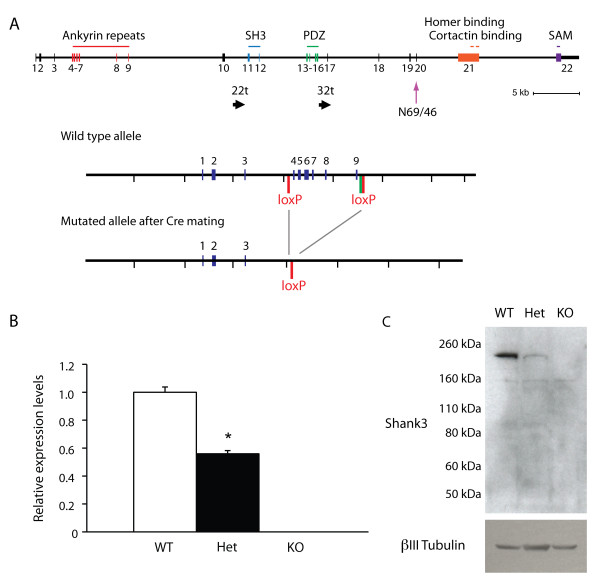
- Shank3 heterozygotes had a 50% reduction in full-length Shank3 mRNA, with reduced full-length Shank3 protein in PSD fractions; knockout mice showed no full-length protein.
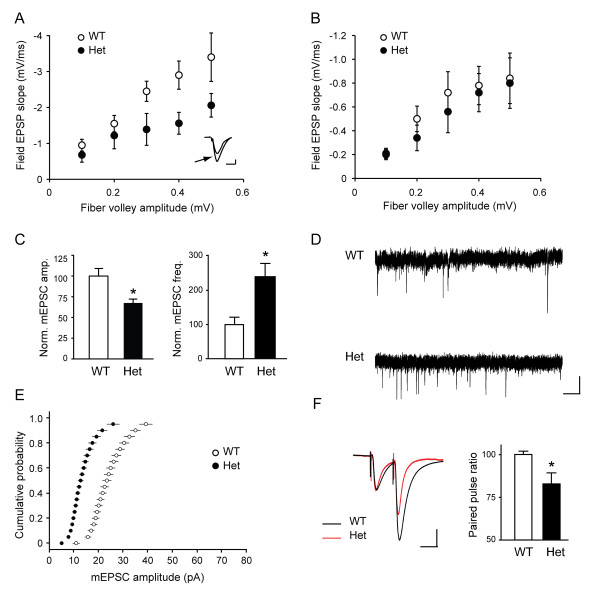
- AMPA receptor-mediated field potentials were reduced, reflected as a 50% decrease in average I/O slope versus wild-type (n = 4 mice/genotype, 2–3 slices/mouse; P = 0.001), while NMDA receptor-mediated responses did not differ (P = 0.1).
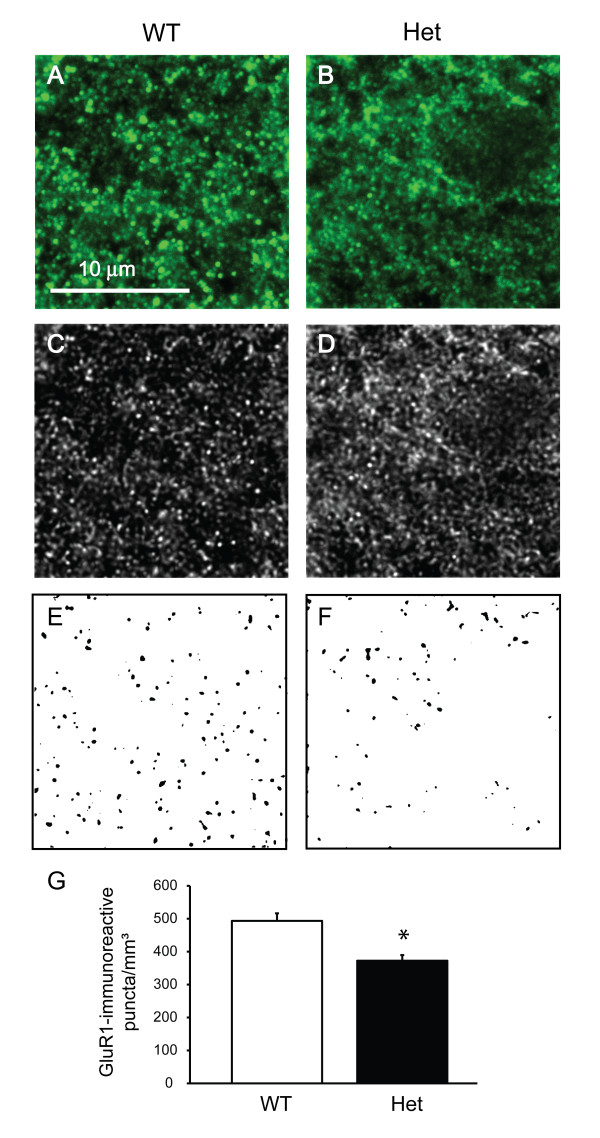
- mEPSC amplitude was smaller (n = 7 WT, n = 8 Het; P < 0.01), mEPSC frequency was higher (P < 0.03), paired-pulse ratio was decreased (n = 6 WT, n = 7 Het; P < 0.05), and GluR1-immunoreactive puncta were fewer (P < 0.005).
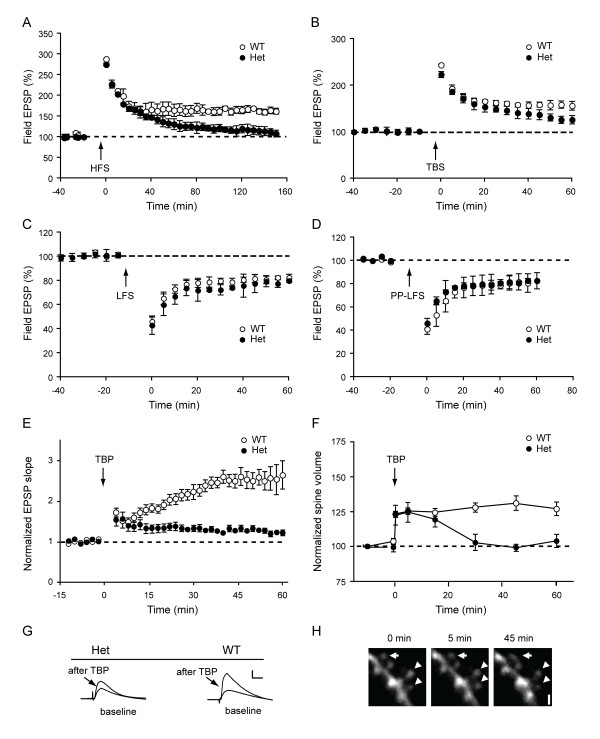
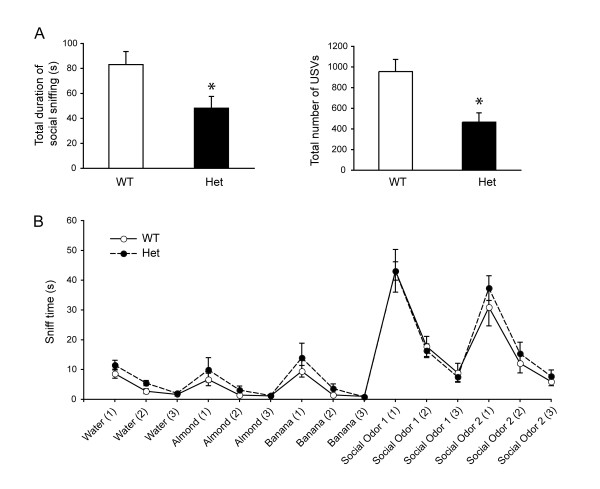
- LTP was impaired after high-frequency stimulation (120 min: 165.1 ± 8.8% WT vs 117.1 ± 9.5% Het, P = 0.004) and after TBS (60 min: 156.3 ± 9.2% WT vs 126.0 ± 8.9% Het, P = 0.007); LTD was not significantly changed. Male heterozygotes showed less social sniffing (P = 0.02) and fewer ultrasonic vocalizations (P = 0.003) than wild-type littermates (n = 12 WT, n = 14 Het).
Methods
- Generated a Shank3-deficient mouse line by gene targeting in Bruce4 C57BL/6 ES cells, inserting loxP sites before exon 4 and after exon 9 and excising exons 4–9 with CMV-Cre; studies focused on Shank3 heterozygotes versus wild-type littermates.
- Used qPCR and immunoblotting of PSD fractions; extracellular fEPSP recordings at Schaffer collateral–CA1 synapses; whole-cell patch-clamp mEPSC recordings; two-photon time-lapse imaging of spine volume; LTP/LTD induction protocols; and confocal quantification of GluR1-immunoreactive puncta.
- Behavioral testing included a 5-min male–female social interaction with an estrus female, ultrasonic vocalization recording, a three-chamber social approach task, olfactory habituation/dishabituation, and developmental milestone assessments.
Limitations
- Stated: the model targets full-length Shank3, but shorter 22t and 32t forms may still be expressed, so deficits seen with deletion of the entire SHANK3 gene may not be fully recapitulated; comprehensive study of knockout mice from heterozygote–heterozygote matings was still in progress.
- Stated: social deficits were not observed in the three-chamber social approach task, implying specificity of the social alterations; systems outside the hippocampus involved in social behavior were not examined, and additional brain regions and larger behavioral studies were underway.
- Evident from the text: most experiments used heterozygotes only, some electrophysiology samples were small (for example, n = 4 mice/genotype for I/O), and the ultrasonic vocalization equipment could not distinguish calls emitted by the male subject from those of the female partner.
Model-written summary. Check it against the paper before relying on it.
Integrity signals
Registry
Cites
Statistics
Figures
Verification
Claims the paper makes
6 Valid · 0 Not valid · 16 Not checked · 66 Own results and interpretations
Every source the paper cites for this claim was checked and supports it.
In the paper
“Furthermore, inhibition of Shank3 expression has been shown to reduce numbers of spines in hippocampal neurons in culture”
§ Haploinsufficiency of the autism-associated Shank3 gene leads to deficits in synaptic function, social interaction, and social communication > Background > Shank proteins in synaptic biology
What the sources say
- Supportedcites [19] 19. Roussignol G Ango F Romorini S Tu JC Sala C Worley PF Bockaert J Fagni L Shank expression is sufficient to induce functional dendritic spine synapses in aspiny neurons J Neurosci 2005 25 3560 3570 10.1523/JNEUROSCI.4354-04.2005 15814786 PMC6725374 source
In the section “Involvement of Shank3 in dendritic spine induction and maintenance,” the paper reports that siRNA inhibition of Shank3 decreased the number of dendritic spines in cultured hippocampal neurons. The same section reports that a siRNA-resistant Shank3 plasmid rescued the spine phenotype. (LLM, conf=0.94)
plainstates a cause- Asserted: passes — The authors put it forward as true.
- Checkable: passes — It can be checked against evidence.
- Load-bearing: passes — The paper’s conclusions depend on it.
- Based: passes — The paper gives a reason why it holds.
- Supported
Every source the paper cites for this claim was checked and supports it.
In the paper
“Transfection of Shank3 into aspiny cerebellar granule cells has been shown to induce an increase in the AMPA component of mEPSCs [19], and Shank3 is colocalized with GluR1-containing AMPA receptor in typical spines [53].”
§ Haploinsufficiency of the autism-associated Shank3 gene leads to deficits in synaptic function, social interaction, and social communication > Discussion > Synaptic development and function in Shank3 heterozygotes
What the sources say
- Supportedcites [19] 19. Roussignol G Ango F Romorini S Tu JC Sala C Worley PF Bockaert J Fagni L Shank expression is sufficient to induce functional dendritic spine synapses in aspiny neurons J Neurosci 2005 25 3560 3570 10.1523/JNEUROSCI.4354-04.2005 15814786 PMC6725374 source
In “Shank3 induces formation of new functional synapses,” the paper reports that Shank3-transfected cerebellar granule cells had an increased fast AMPAR component of mEPSCs, while the slow NMDAR component did not increase. This directly supports the part of the citing sentence attributed to this source; the separate colocalization claim is attributed to another citation. (LLM, conf=0.94)
boostedstates a cause- Asserted: passes — The authors put it forward as true.
- Checkable: passes — It can be checked against evidence.
- Load-bearing: unclear — It is unclear whether the paper’s conclusions depend on it.
- Based: passes — The paper gives a reason why it holds.
- Supported
The cited sources support only part of this claim — read each source’s verdict below.
In the paper
“We first established that spines from wild-type mice were capable of structural modification by simultaneously monitoring spine size and synaptic responses in CA1 neurons before and after TBP [34,35].”
§ Haploinsufficiency of the autism-associated Shank3 gene leads to deficits in synaptic function, social interaction, and social communication > Results > Long-term potentiation is impaired in Shank3 heterozygous mice
What the sources say
- Partly supportedcites [34] 34. Yang Y Wang XB Frerking M Zhou Q Spine expansion and stabilization associated with long-term potentiation J Neurosci 2008 28 5740 5751 10.1523/JNEUROSCI.3998-07.2008 18509035 PMC2561912 sourceExperimental — accuracy not yet measured
Our copy confirms the methodological core: the Abstract and Results describe simultaneous monitoring of EPSPs and dendritic spines by combined patch-clamp and two-photon time-lapse imaging in CA1 pyramidal neurons of acute hippocampal slices before and after theta-burst pairing (TBP), and Figure 1 (p. Results) shows TBP-induced, NMDAR-dependent spine expansion. However, the Materials and Methods state that slices were taken from postnatal day 13–18 Sprague Dawley rat pups, not wild-type mice, so the species/genotype qualifier attributed to this source is unsupported by our copy (the companion citation [35] may be the mouse study, but that is outside what this source says). (LLM, conf=0.85)
- Supportedcites [35] 35. Bozdagi O Wang XB Nikitczuk JS Anderson TR Bloss EB Radice GL Zhou Q Benson DL Huntley GW Persistence of coordinated long-term potentiation and dendritic spine enlargement at mature hippocampal CA1 synapses requires N-cadherin J Neurosci 2010 30 9984 9989 10.1523/JNEUROSCI.1223-10.2010 20668183 PMC2921177 source
The Results section 'N-cadherin is required for persistence of synaptic structural and functional plasticity' states almost verbatim that the authors 'first established that mature control spines are capable of LTP-associated structural modification by simultaneously monitoring spine size and synaptic responses in CA1 neurons before and after applying TBP', with persistent spine volume increase concurrent with EPSP slope increase (Fig. 2A-C). The only divergence is the genotype label: our copy's control animals are floxed littermates/Cre mice (Methods, 'Whole-cell recording, two-photon image acquisition and analysis'), described as 'control', not literally 'wild-type', and the claim drops the 'mature/LTP-associated' specification that the adult CA1/TBP design carries. Substance — establishing structural plasticity in non-knockout spines under paired TBP recording/imaging — is what this source reports. (LLM, conf=0.85)
plainstates a cause- Asserted: passes — The authors put it forward as true.
- Checkable: passes — It can be checked against evidence.
- Load-bearing: passes — The paper’s conclusions depend on it.
- Based: passes — The paper gives a reason why it holds.
- Partly supported
A result the paper reports from its own data — it cites no other source for it, so there is none to check. The quote shows it is in the paper.
In the paper
“the maintenance of LTP was clearly impaired in the heterozygous mice (average percentage of baseline 120 min after tetanus: 165.1 ± 8.8% in wild-type and 117.1 ± 9.5% in heterozygous mice, P = 0.004; Figure 3A).”
§ Haploinsufficiency of the autism-associated Shank3 gene leads to deficits in synaptic function, social interaction, and social communication > Results > Long-term potentiation is impaired in Shank3 heterozygous mice
boostedstates a cause- Asserted: passes — The authors put it forward as true.
- Checkable: passes — It can be checked against evidence.
- Load-bearing: passes — The paper’s conclusions depend on it.
- Based: passes — The paper gives a reason why it holds.
A result the paper reports from its own data — it cites no other source for it, so there is none to check. The quote shows it is in the paper.
In the paper
“however, only transient spine expansion was observed in Shank3 heterozygous mice”
§ Haploinsufficiency of the autism-associated Shank3 gene leads to deficits in synaptic function, social interaction, and social communication > Abstract > Results
plain- Asserted: passes — The authors put it forward as true.
- Checkable: passes — It can be checked against evidence.
- Load-bearing: passes — The paper’s conclusions depend on it.
- Based: passes — The paper gives a reason why it holds.
53 more claims
Create a free account to see all 88 claims and to verify the 29 references still open.
- It may state two separate claims as one. 20
- Probably not a substantial claim. 13
- The quote only partly states this claim. 1
Claims other papers make about this one
Each is checked against this paper’s own text: does it say what the citing paper says it does?
The source backs part of the claim, not all of it — or backs it for a different population, condition or comparison.
In the citing paper
“emerging animal models of ASD, with mutations in ASD-relevant neural cell adhesion molecules, have shown deficits in both the development of social affiliative behaviors and in glutamatergic synaptic structure in various brain regions, including circuits that may involve reward pathways [83,84]”
From The social motivation theory of autism (2012) · cites this paper as [84]
Experimental — accuracy not yet measuredThe source backs part of the claim, not all of it — or backs it for a different population, condition or comparison.
In the citing paper
“The AMPA receptor subunit GluA1 was reduced in hippocampal neurons examined in culture and hippocampal tissues from Δex4-9J−/− (Wang et al., 2011) and Δex4-9B+/− mice (Bozdagi et al., 2010)”
From Modeling Autism by SHANK Gene Mutations in Mice (2013) · cites this paper as Bozdagi et al., 2010
Experimental — accuracy not yet measuredThe source backs part of the claim, not all of it — or backs it for a different population, condition or comparison.
In the citing paper
“Hippocampal LTP was reduced at CA1 synapses of Δex4-9J−/− and Δex4-9B but not examined in Δex11−/− and Δex13-16−/− animals”
From Modeling Autism by SHANK Gene Mutations in Mice (2013) · cites this paper as Bozdagi et al., 2010
Experimental — accuracy not yet measuredThe cited source says what the claim attributes to it.
In the citing paper
“The mutations in these mice include deletions of exons 4-9 by two groups with slightly different design [(Δex4-9Buxbaum(B)) (Bozdagi et al., 2010) and Δex4-9Jiang (J) (Wang et al., 2011)], deletion of exons 4-7(Δex4-7) (Peca et al., 2011) encoding the ANK repeat domain, deletion of exon 11(Δex11) encoding the SH3 domain (Schmeisser et al., 2012), and deletion of exons 13-16 (Δex13-16) encoding the”
From Modeling Autism by SHANK Gene Mutations in Mice (2013) · cites this paper as Bozdagi et al., 2010
The cited source says what the claim attributes to it.
In the citing paper
“Five lines of Shank3 mutant mice carrying different mutations in Shank3 have been reported (Bozdagi et al., 2010; Peca et al., 2011; Schmeisser et al., 2012; Wang et al., 2011)”
From Modeling Autism by SHANK Gene Mutations in Mice (2013) · cites this paper as Bozdagi et al., 2010
15 more claims about this paper
Create a free account to see every claim other papers make about this one.
Self-check
Percentages, sums and reported differences re-computed from the paper’s own numbers.
Each contradiction between two passages listed here was confirmed by an independent check.
Rated major: it would touch a result — a value a result rests on, reported and recomputed p-values on opposite sides of the significance level, two passages that conflict with no sign which is right, or a cited work retracted before this paper was published.
In the paper
§ Haploinsufficiency of the autism-associated Shank3 gene leads to deficits in synaptic function, social interaction, and social communication > Methods > Hippocampal slice electrophysiology
“LTP was induced by either a high-frequency stimulus (four trains of 100-Hz, 1-s stimulations separated by 5 min) or TBS (15 bursts of four pulses at 100 Hz separated by 200 ms).”
§ Haploinsufficiency of the autism-associated Shank3 gene leads to deficits in synaptic function, social interaction, and social communication > Results > Long-term potentiation is impaired in Shank3 heterozygous mice
“TBS LTP (10 bursts of four pulses at 100 Hz separated by 200 ms)”
Rated minor: it would not touch a result — a value no result rests on, a p-value that stays on the same side of the significance level, or a conflict that is clerical, resolved elsewhere in the paper, or outside its own findings.
In the paper
§ Haploinsufficiency of the autism-associated Shank3 gene leads to deficits in synaptic function, social interaction, and social communication > Results > Long-term potentiation is impaired in Shank3 heterozygous mice
“P > 0.1; Figure 3G) or paired-pulse LFS (PP-LFS) stimulation (81.6 ± 6% of baseline in wild-type and 82.7 ± 1.9% in heterozygous mice, P > 0.1; Figure 3H)”
§ Haploinsufficiency of the autism-associated Shank3 gene leads to deficits in synaptic function, social interaction, and social communication > Results > Long-term potentiation is impaired in Shank3 heterozygous mice
“(C) Long-term depression (LTD) following low-frequency stimulation (LFS), an NMDA receptor-dependent form of LTD. (D) LTD following paired-pulse low-frequency stimulation (PP-LFS), a protein synthesis-dependent form of LTD.”
Citations
Cites
Hellemans, J., Mortier, G., De Paepe, A., Speleman, F., & Vandesompele, J. (2007) · Genome Biology · doi:10.1186/gb-2007-8-2-r19 · Cited by 4,023
AMPA Receptor Trafficking and Synaptic Plasticity
Malinow, R., & Malenka, R. C. (2002) · Annual Review of Neuroscience · doi:10.1146/annurev.neuro.25.112701.142758 · Cited by 2,588 · cited 2×
“AMPA receptor trafficking is involved in activity-induced changes in synaptic strength associated with learning and memory [54], and synaptic insertion of GluR1-containing AMPA receptors is required [55,56].”
BackgroundStructural basis of long-term potentiation in single dendritic spines
Matsuzaki, M., Honkura, N., Ellis-Davies, G. C. R., & Kasai, H. (2004) · Nature · doi:10.1038/nature02617 · Cited by 2,483 · cited 1×
“Previous studies have shown that LTP is accompanied by spine enlargement [35, 48 ].”
ResultMcDonald-McGinn, D. M., Sullivan, K. E., Marino, B., Philip, N., Swillen, A., Vorstman, J. A. S., Zackai, E. H., Emanuel, B. S., Vermeesch, J. R., Morrow, B. E., et al. (2015) · Nature Reviews Disease Primers · doi:10.1038/nrdp.2015.71 · Cited by 2,236
Functional impact of global rare copy number variation in autism spectrum disorders
Pinto, D., Pagnamenta, A. T., Klei, L., Anney, R., Merico, D., Regan, R., Conroy, J., Magalhaes, T. R., Correia, C., Abrahams, B. S., et al. (2010) · Nature · doi:10.1038/nature09146 · Cited by 2,013 · cited 1×
“recently been associated with ASDs and/or intellectual disability [29-31].”
BackgroundConserved role of intragenic DNA methylation in regulating alternative promoters
Maunakea, A. K., Nagarajan, R. P., Bilenky, M., Ballinger, T. J., D’Souza, C., Fouse, S. D., Johnson, B. E., Hong, C., Nielsen, C., Zhao, Y., et al. (2010) · Nature · doi:10.1038/nature09165 · Cited by 1,743 · cited 1×
“A recent report has indicated that there are additional start sites in the human and mouse SHANK3 gene that may lead to shorter products, truncated at the N terminus (termed 22t and 32t in that report [51]).”
BackgroundDurand, C. M., Betancur, C., Boeckers, T. M., Bockmann, J., Chaste, P., Fauchereau, F., Nygren, G., Rastam, M., Gillberg, I. C., Anckarsäter, H., et al. (2007) · Nature Genetics · doi:10.1038/ng1933 · Cited by 1,602 · cited 6×
“Neurobehavioral phenotypes associated with mutation or deletion of SHANK3 are here referred to as SHANK3-haploinsufficiency syndromes and, as noted above, can be associated with ASDs.”
BackgroundInfluentialThe mGluR theory of fragile X mental retardation
Bear, M. F., Huber, K. M., & Warren, S. T. (2004) · Trends in Neurosciences · doi:10.1016/j.tins.2004.04.009 · Cited by 1,580 · cited 1×
“Recently, the field has begun to see the evaluation of therapies targeted to etiology (that is, “personalized medicine”) using models of neurodevelopmental disorders including fragile X, tuberous sclerosis, and Rett syndromes (see, for example, [61-64]).”
BackgroundBehavioural phenotyping assays for mouse models of autism
Silverman, J. L., Yang, M., Lord, C., & Crawley, J. N. (2010) · Nature Reviews Neuroscience · doi:10.1038/nrn2851 · Cited by 1,462 · cited 1×
“5-4 months using methods previously described [44,46,47].”
Self-citationPSD-95 Involvement in Maturation of Excitatory Synapses
El-Husseini, A. E.-D., Schnell, E., Chetkovich, D. M., Nicoll, R. A., & Bredt, D. S. (2000) · Science · doi:10.1126/science.290.5495.1364 · Cited by 1,303 · cited 1×
“The quantity of surface receptors controls synaptic strength [57-59]; therefore, reduction of both synaptic transmission and plasticity in the Shank3 heterozygotes would support a mechanism involving altered AMPA receptor trafficking.”
Background
Research works printed but not linked: 1
- 42. Dumutriu D Hara Y Berger S Wadsworth S Morrison J Volume assisted measurement of puncta in 2 dimensions (VAMP2D): A new tool for accurate size quantification in fluorescent imaging Society for Neurosience Annual Meeting 2009 Chicago, IL: Society for Neuroscience Abstracts
Cited by
Items 501–600 of 606
Bolivar, V. J. (2014) · Cambridge University Press eBooks · doi:10.1017/cbo9781107360556.012 · Cited by 1
Khairullin, A. E., Mukhamedyarov, M. A., Grishin, S. N., Teplov, A. Y., Nagiev, K. K., & Зиганшин, А. У. (2023) · Биофизика · doi:10.31857/s0006302923010192 · Cited by 1
Pathological Synaptic Plasticity in Neurological Disorders
Jin, C., & Karlstedt, K. (2025) · Synaptic Plasticity - Neurobiology, Neuroanatomy, and Clinical Neuroscience · doi:10.5772/intechopen.1007753 · Cited by 1
Inducible Pluripotent Stem Cells In Autism Spectrum Disorders
Muotri, A. R. (2012) · Elsevier eBooks · doi:10.1016/b978-0-12-391924-3.00028-4 · Cited by 1
Structural and Functional Organization of the Postsynaptic Density☆
Verpelli, C., Heise, C., & Sala, C. (2016) · Elsevier eBooks · doi:10.1016/b978-0-12-809324-5.02403-2 · Cited by 1
Estudos de comorbidades e dos aspectos genéticos de pacientes com transtorno do espectro autista
Moreira, D. D. P. (2012) · Digital Library of Theses and Dissertations (Universidade de São Paulo) · doi:10.11606/d.41.2012.tde-15102012-101307 · Cited by 4
Characterization of NP22 and its Potential Role in NMDA Receptor-mediated Transmission
Gulersen, M. (2011) · TSpace (University of Toronto) · Cited by 1
Genetic Screen to Characterize Shank Interactors at the Drosophila Neuromuscular Junction
Hogg, A. (2018) · TSpace (University of Toronto) · Cited by 1
Wideman, C. E. (2019) · The Atrium (University of Guelph) · Cited by 3
Liu, Z., & Huang, Y.-F. (2023) · bioRxiv (Cold Spring Harbor Laboratory) · doi:10.1101/2023.08.29.555384 · Cited by 1
Qiao, S.-N., & Jiang, Y.-H. (2025) · bioRxiv (Cold Spring Harbor Laboratory) · doi:10.1101/2025.11.14.688290 · Cited by 1
Scaffold protein SHANK3 regulates endothelial cell motility and tissue mechanicsPreprint
Chastney, M. R., Pink, A., Härkönen, J., Follain, G., Stuve, V., Pylvänäinen, J. W., Haapanen-Saaristo, A.-M., Villman, J., Vaitkevičiūtė, M., Scita, G., et al. (2026) · bioRxiv (Cold Spring Harbor Laboratory) · doi:10.64898/2026.04.12.717721 · Cited by 1
“1Bux/J, Jackson Laboratory, stock no 017889) (Bozdagi et al., 2010), Rosa26-tdTomato lox/STOP/lox (The Jackson Laboratory) and the previously published Cdh5-CreER T2 (Tg(Cdh5-cre/ERT2)Ykub) (Okabe et al., 2014) all maintained in pure C57BL/6 background (>10 backcrosses).”
Regulation of synaptic function and plasticity by cyclin-dependent kinase 5
Su, S. C. (2012) · DSpace@MIT (Massachusetts Institute of Technology) · Cited by 1
The biological background of autism
Papandreou, A. D. (2014)
Molecular Pathways in Autistic Spectrum Disorders
Gallagher, L., Shen, S., & Anney, R. (2015) · Key issues in mental health (Online)/Key issues in mental health (Print) · doi:10.1159/000363593
The synaptic mechanisms underlying binaural interactions in rat auditory cortex
Kyweriga, M. (2014) · Scholars' Bank (University of Oregon)
Modeling SHANK2 Related Neuropsychiatric Disorders in Mice
Pappas, A. L. (2015) · DukeSpace (Duke University)
Identificação de genes e vias associadas aos transtornos do espectro autista
Oliveira, K. G. (2011) · Digital Library of Theses and Dissertations (Universidade de São Paulo) · doi:10.11606/t.41.2011.tde-23092011-162004 · Cited by 3
Navigating the new road in psychiatry
Fishburn, C. S., & Osherovich, L. Z. (2014) · Science-Business eXchange · doi:10.1038/scibx.2014.913 · Cited by 1
Drug development targeting synaptic molecules ^|^mdash; autism mouse models as an example
Sakurai, T. (2013) · Folia Pharmacologica Japonica · doi:10.1254/fpj.142.116 · Cited by 1
Self-citationSocial dysfunction and mental retardation
Pietropaolo, S., Sluyter, F., & Crusio, W. E. (2014) · Cambridge University Press eBooks · doi:10.1017/cbo9781107360556.010 · Cited by 1
Effects on the fetal cholinergic basal forebrain followingmaternal immune activation
Pratt, L. (2013) · Rutgers University Community Repository (Rutgers University) · doi:10.7282/t34q7sq5
“Also, addition of Shank3 to aspiny cerebellar neurons in culture results in spine development and synapses with functional glutamate receptors (Bozdagi et al., 2010).”
BackgroundMethodInfluentialStem Cells to Understand the Pathophysiology of Autism Spectrum Disorders
Passos‐Bueno, M. R., Griesi‐Oliveira, K., Sertie, A. L., & Kobayashi, G. S. (2015) · Stem cell biology and regenerative medicine · doi:10.1007/978-3-319-18314-5_8
The Development of Excitatory Synapses and Complex Behavior
Hoy, J. L. (2011) · Scholars' Bank (University of Oregon)
The iPSC Technology to Study Neurodevelopmental Disorders
Muotri, A. R. (2016) · Elsevier eBooks · doi:10.1016/b978-0-12-800109-7.00018-2
Mouse Behavioral Models for Autism Spectrum Disorders
Wetsel, W. C., Moy, S. S., & Jiang, Y.-H. (2012) · Elsevier eBooks · doi:10.1016/b978-0-12-391924-3.00026-0
Behavioral Phenotyping in Genetic Mouse Models of Autism Spectrum Disorders: A Translational Outlook
Scattoni, M. L., Michetti, C., Caruso, A., & Ricceri, L. (2017) · Wiley eBooks · doi:10.1002/9781118540770.ch11
Self-citationUsing Shank3 Model Mice to Probe the Neuroanatomic Basis of Autism
Bey, A. L. (2017) · DukeSpace (Duke University)
Ferhat, A.-T. L. S. (2018) · theses.fr (ABES) · doi:10.70675/55407f0fz70a6z40f9z915bz6cc3e54a33dd
Rendall, A. R. (2017) · OpenCommons at University of Connecticut (University of Connecticut)
Characterization of Ambra1 heterozygous mice as genetic mouse model of female-specific autism
Ju, A. (2017) · eDiss (Georg-August-Universität Göttingen) · doi:10.53846/goediss-6476
Social Encoding in the Medial Prefrontal Cortex
Friedman, G. N. (2018) · Digital Access to Scholarship at Harvard (DASH) (Harvard University)
Generation of mouse models of neurodevelopmental disorders using the CRISPR/Cas9 system
Ko, Y. K. (2019) · ERA
Role of Copy-Number Variations in Non-Coding Regions of Autism Spectrum Disorders
Wang, J. (2017) · Digital Access to Scholarship at Harvard (DASH) (Harvard University)
DeMayo, M. M. (2020) · The Sydney eScholarship Repository (The University of Sydney)
Crosstalk between cell adhesion and the actin cytoskeleton
Salomaa, S. I. (2020) · UTUPub (University of Turku)
Healey, R. (2019) · UTAS Research Repository · doi:10.25959/23238062
Dissecting hormonal and transient effects in Shankopathies associated with autism spectrum disorder
Eltokhi, A. (2020) · heiDOK (Heidelberg University) · doi:10.11588/heidok.00027223
Modeling Autism Spectrum Disorders Using Human Neurons
Muotri, A. R. (2013) · Research and perspectives in neurosciences · doi:10.1007/978-3-642-36648-2_10
Excessive Cap-dependent Translation as a Molecular Mechanism Underlying ASD
Klann, E. (2014) · Defense Technical Information Center (DTIC) · doi:10.21236/ada612864
Ben‐Ari, Y. (2019) · Faculty Opinions – Post-Publication Peer Review of the Biomedical Literature · doi:10.3410/f.733499087.793568939
Crawley, J. N., & Brielmaier, J. M. (2021) · Springer eBooks · doi:10.1007/978-3-319-91280-6_546
Self-citationNeurobiology of Autism Spectrum Disorder and Intellectual Disability: Animal and Human Studies
Costales, J. L., Rubeis, S. D., Foss‐Feig, J. H., Hof, P. R., Buxbaum, J. D., & Kolezvon, A. (2017) · Oxford University Press eBooks · doi:10.1093/med/9780190681425.003.0063
Self-citationNovel Approaches for Treating Pediatric Psychiatric Disorders
Prasad, S., & Cook, E. H. (2017) · Oxford University Press eBooks · doi:10.1093/med/9780190681425.003.0067
The Progress of Different Pathways for Shank3 to Cause Autism Spectrum Disorder
Stephanie, L., Song, X., & Lin, Z. (2022) · Highlights in Science Engineering and Technology · doi:10.54097/hset.v2i.584
“Furthermore, the mechanism remains to be determined for the increase in the excitation/inhibition ratio of the Shank3‐deficient VB neuron but the close to the normal behaviour of RTN neuron, which should provide new insights at ci3rcuitry level into the Shank3 mutation‐related diseases [15].”
BackgroundScheefhals, N. (2022) · Utrecht University Repository (Utrecht University) · doi:10.33540/1224
Synaptic dysfunctions caused by SHANK3 mutation in relation to autism-like behaviors
Jing, Y. (2024) · International Conference on Biological Engineering and Medical Science (ICBioMed) · doi:10.1117/12.3012908
“Notably, some social approach tests also failed to determine any social deficits in Shank3 heterozygous mice, suggesting that social behaviors in ASD might also be processed and altered in circuits outside the hippocampus [9].”
BackgroundGrimaldi, P., Francisco, C., Bertini, E., Willoughby Colin, E., Nevado, J., Morabito, A., & Michele, C. (2024) · Wiley eBooks · doi:10.1002/9780470015902.a0029491
Genetic stratification based on biological networks in autism spectrum disorders
Kim, Y.-M. (2020) · theses.fr (ABES) · doi:10.70675/1403a354za2d4z4124zbbefz968fa3d238f4
Analyses phénotypiques in vitro et in vivo de mutations de novo tronquantes dans le gène SHANK3
Vitrac, A. (2020) · theses.fr (ABES) · doi:10.70675/49ade836zc9baz4a38zb08fz51b291137c65 · Cited by 2
Kim, K.-R., Kim, T.-K., & Cho, J. (2024) · Exercise Science · doi:10.15857/ksep.2024.00087
Automated phenotyping of social behaviour in mice : applications to autism spectrum disorders
Bauer, O. (2021) · theses.fr (ABES) · doi:10.70675/dd00b5d2z096fz4057z8d31z0bbb4ab6f9ee
Maïsterrena, A. (2022) · theses.fr (ABES) · doi:10.70675/0797381dz3cd5z4da7zbd7dz38ec691334b7
Raso, M., Guarino, M., Chiarelli, F., Matricardi, S., & Prezioso, G. (2025) · Acta Neurologica Belgica · doi:10.1007/s13760-025-02725-y
Synaptic Plasticity - Neurobiology, Neuroanatomy, and Clinical Neuroscience
Mavroudis, I. A. (2025) · IntechOpen eBooks · doi:10.5772/intechopen.1003581 · Cited by 1
Learning-associated flexibility of cortical taste coding is impaired in Shank3 knockout mice
Wu, C.-H., & Turrigiano, G. G. (2026) · eLife · doi:10.1101/2025.08.21.671527
Kshetri, R., Aameri, R. F. H. A., & Richardson, B. D. (2025) · Neurobiology of Disease · doi:10.1016/j.nbd.2025.107191 · Cited by 1
“This is mediated through the interaction of Shank3 with Glutamate Receptor Interacting Proteins (GRIPs) through its SH3 domain (Bozdagi et al., 2010; Manning et al., 2024; Sala et al., 2015; Sheng and Kim, 2000).”
Learning-associated flexibility of cortical taste coding is impaired in Shank3 knockout micePreprint
Wu, C.-H., & Turrigiano, G. G. (2026) · eLife · doi:10.7554/elife.108988
Learning-Associated Flexibility of Cortical Taste Coding Is Impaired in Shank3 Knockout MicePreprint
Wu, C.-H., & Turrigiano, G. G. (2025) · eLife · doi:10.7554/elife.108988.1
Knowledge, support, and networking for Phelan-McDermid syndrome: a study protocol
Colnaghi, L., Villa, G., Marcomini, I., Poliani, A., Fedeli, M., Losi, C., Rosa, D., & Manara, D. F. (2025) · MethodsX · doi:10.1016/j.mex.2025.103771
“In adulthood, intellectual disability usually persists, while behavioral and psychiatric challenges, chronic medical complications, and the loss of pediatric specialist follow-up create additional complexities [2,8,9].”
Wu, S., Wang, J., Zhang, Z., Jin, X., Xu, Y., Si, Y., Liang, Y., Ge, Y., Zhan, H., peng, L., et al. (2024) · Figshare · doi:10.6084/m9.figshare.25538536
Copping, N. A., & Silverman, J. L. (2021) · Figshare · doi:10.6084/m9.figshare.13727617
Self-citationLopez-Rodriguez, A. B., Murray, C., Kealy, J., Towns, C., Roche, A., Nazmi, A., Doran, M. M., Lowry, J. P., & Cunningham, C. M. (2024) · Figshare · doi:10.6084/m9.figshare.26640700
Wu, S., Wang, J., Zhang, Z., Jin, X., Xu, Y., Si, Y., Liang, Y., Ge, Y., Zhan, H., peng, L., et al. (2024) · Figshare · doi:10.6084/m9.figshare.25538631
Lee, Y.-S., Yu, N.-K., Chun, J., Yang, J.-E., Lim, C.-S., Kim, H., Park, G., Lee, J.-A., Lee, K., Kaang, B., et al. (2020) · Figshare · doi:10.6084/m9.figshare.12096162
Lord, J. S., Gay, S. M., Harper, K. M., Nikolova, V. D., Smith, K. M., Moy, S. S., & Diering, G. H. (2022) · Figshare · doi:10.6084/m9.figshare.20727811
Lord, J. S., Gay, S. M., Harper, K. M., Nikolova, V. D., Smith, K. M., Moy, S. S., & Diering, G. H. (2022) · Figshare · doi:10.6084/m9.figshare.20727817
Copping, N. A., & Silverman, J. L. (2021) · Figshare · doi:10.6084/m9.figshare.13727614
Self-citationLord, J. S., Gay, S. M., Harper, K. M., Nikolova, V. D., Smith, K. M., Moy, S. S., & Diering, G. H. (2022) · Figshare · doi:10.6084/m9.figshare.20727814
Wu, S., Wang, J., Zhang, Z., Jin, X., Xu, Y., Si, Y., Liang, Y., Ge, Y., Zhan, H., peng, L., et al. (2024) · Figshare · doi:10.6084/m9.figshare.26701855
Lord, J. S., Gay, S. M., Harper, K. M., Nikolova, V. D., Smith, K. M., Moy, S. S., & Diering, G. H. (2022) · Figshare · doi:10.6084/m9.figshare.20727808
Abdul Rahiman, A. (2023) · YorkSpace (York University)
Markopoulos, A. (2023) · eScholarship@McGill (McGill) · doi:10.82308/15996
新井, 貴., & アライ, タ. (2025) · Institutional Repositories DataBase (IRDB)
Yin, H., Sun, K., Wang, C., Fan, S., Wang, J., He, S., Lei, H. M., Pang, S., Chen, J., & Zhang, G. G. (2026) · Molecular Brain · doi:10.1186/s13041-026-01289-z · Cited by 1
“For example, striatal medium spiny neurons and hippocampal CA1 PNs also exhibit reduced AP thresholds and increased firing rates [21, 22].”
Rôle des variants d’épissage de la géphyrine dans la diversité synaptique
Reis, R. D. (2021) · theses.fr (ABES) · doi:10.70675/68262ae7z2347z4296zbaa1zb4fe4ec67901
Ribeiro, S. (2024) · theses.fr (ABES) · doi:10.70675/1453a13fz37faz4864z919fz37f22064406f
Kuś, J., Białowąs, P. A., Zięba, N., Czapiński, O., Brodowska, A., Tomicka, E., Knapik, A., Stadnicka, O., Ciesielski, M., & Pysiewicz, M. M. (2026) · Quality in Sport · doi:10.12775/qs.2026.56.72377
Yang, D., Liu, Q., Ran, H., Xue, T., Lu, Y., Yang, X., Wang, J., Liu, L., Wang, W., Nie, B., et al. (2026) · Neuroscience Bulletin · doi:10.1007/s12264-026-01648-9
Huang, W. Q., Wang, S., Zhang, Y., Gao, M., Zhong, N., Hao, C., Pathak, J. L., Lijing, W., Meng, S., Zhao, W., et al. (2026) · Journal of Oral Microbiology · doi:10.1080/20002297.2026.2681259
“SHANK3 plays essential roles in synaptic organisation, dendritic spine maturation, and the regulation of glutamatergic signalling, thereby maintaining excitatory-inhibitory balance and supporting normal cognitive and social behaviours [36,37].”
Morris, B. (2026) · Molecular Neurobiology · doi:10.1007/s12035-026-05954-1 · Cited by 1
“Shank3 is a substrate for protein phosphatase 1 (PP1) [415], and both PP1 and Shank3 are necessary for synaptic AMPA R localization and the full expression of LTP [413, 435].”
Bouguiyoud, N. (2026) · Le dépôt institutionnel (Université du Québec à Trois-Rivières) · doi:10.71781/36047
Li, R., Wang, B., Ren, H., An, Y., Li, X. Z., Zhang, J., Xue, Q., & Cao, X. (2026) · Neuropharmacology · doi:10.1016/j.neuropharm.2026.111107
Chudasama, Y., Pearson, A., Drazan, T., Bradley, S., Thurm, A., Buxbaum, J. D., & Silverman, J. L. (2026) · Research Square · doi:10.21203/rs.3.rs-10821151/v1
Self-citationChan, A., Yu, Z., Ma, Y., Zahacy, R., & Winship, I. R. (2026) · Research Square · doi:10.21203/rs.3.rs-10732790/v1
Roldán-Anzures, E., Flores-Prieto, B., Pineda, L. A. O., Manzo, J., Coria‐Ávila, G. A., Herrera‐Covarrubias, D., Cañedo, L. F., Aranda-Abreu, G. E., Rojas-Durán, F., Maldonado, E., et al. (2026) · NeuroSci · doi:10.3390/neurosci7050095
“…environmental stimulation might engage activity-dependent plasticity mechanisms or neuroendocrine pathways, such as the hypothalamo–pituitary–interrenal (HPI) axis, which could partially offset teratogen-induced disruptions in synaptic scaffolding or neurotransmitter systems [22,23,53,54].”
Ge, Y.-S., Li, Z., Yu, C.-Y., Guo, W.-T., Fan, G.-Y., Lin, G.-Y., Yu, H., & Wang, Y. (2026) · Microorganisms · doi:10.3390/microorganisms14091925
“For instance, SHANK3 is an essential scaffolding protein of the postsynaptic density, and SHANK3 haploinsufficiency has been thoroughly investigated in human ASD patient cohorts and animal models [13,14].”
Palacios-Muñoz, A. (2026) · International Journal of Molecular Sciences · doi:10.3390/ijms27188129
“…disrupts AMPA and NMDA receptor organization, compromises long-term synaptic plasticity and dendritic spine maturation, and alters corticostriatal circuitry, resulting in deficits in social behavior and increased repetitive behaviors in both ASD patients and experimental models [60,61,91–94].”
Wada, M., Shinoda, Y., & Uchino, S. (2026) · Oxford Open Neuroscience · doi:10.1093/oons/kvag014
“Mutations in the Shank3 gene have been identified in some individuals with ASD, Shank3 -KO mice also show ASD-like behaviours, including impairments in social interaction and repetitive behaviours ( Bozdagi et al. 2010, Uchino and Waga 2013, Wang et al. 2011).”
Metadata
- Authors
- Bozdagi, O., Sakurai, T., Papapetrou, D., Wang, X., Dickstein, D. L., Takahashi, N., Kajiwara, Y., Yang, M., Katz, A. M., Scattoni, M. L., Harris, M. J., Saxena, R., Silverman, J. L., Crawley, J. N., Zhou, Q., Hof, P. R., & Buxbaum, J. D.
- Affiliations
- Icahn School of Medicine at Mount Sinai (US)
- National Institute of Mental Health (US)
- Genentech (US)
- Corresponding author
- Buxbaum, Joseph D
- ORCID
- Venue
- Molecular Autism
- Published
- 2010-12
- Volume
- 1
- Issue
- 1
- Pages
- 15-15
- ISSN
- 2040-2392 (ISSN-L)
- PMC
- PMC3019144
- OpenAlex
- W2146727059
- Cited by
- 584
- References
- 64
- Citations by year
- 2026: 26 · 2025: 26 · 2024: 29 · 2023: 27 · 2022: 46 · 2021: 49 · 2020: 30 · 2019: 43 · 2018: 42 · 2017: 34 · 2016: 50 · 2015: 46 · 2014: 36 · 2013: 40 · 2012: 38
- FWCI
- 18.01
- Type
- journal article
- Language
- en
- Open access
- gold
- doi.org
- Licence
- cc-by
- Locations
- Molecular Autism (publishedVersion, cc-by)
- PubMed Central (publishedVersion, cc-by)
- PubMed (publishedVersion)
- DOAJ (DOAJ: Directory of Open Access Journals) (submittedVersion)
- Funders
- Simons Foundation
- National Institute of Mental Health (R01MH093725)
- Topics
- Life Sciences › Biochemistry, Genetics and Molecular Biology › Genetics › Genetics and Neurodevelopmental Disorders
- Life Sciences › Neuroscience › Cellular and Molecular Neuroscience › Neuroscience and Neuropharmacology Research
- Life Sciences › Neuroscience › Cognitive Neuroscience › Autism Spectrum Disorder Research
- Keywords
- SHANK3, haploinsufficiency, autism spectrum disorder, 22q13 deletion syndrome, postsynaptic density, AMPA receptors, GluR1, synaptic transmission, long-term potentiation, long-term depression, dendritic spine morphology, social behavior, social communication, social interaction, Schaffer collateral-CA1 synapses, hippocampus, ankyrin repeat domain
About these checks
Registry, retraction, Cites and statistics results are computed, not judged, with one exception: a printed reference that no index lists is read once by a model before it counts as a citation error. Claims are extracted by a model and kept only when their quote appears verbatim in the text; each cited source is then checked, with a model’s help, for whether it says what the claim relies on. Those verdicts can be wrong — read the claim’s quote and the cited source before relying on one.
The claim verdicts this report counts are experimental: their accuracy is not yet measured.
A language model drew the claims from the paper on 2026-10-05, under version 3 of the claim definition (model deepseek-v4.1-flash, prompt extract-v3).
A second model labelled each claim on 2026-10-05 (model jev-1.13-20260917, definition revision gold-guideline-v0.2).
Cited sources are checked with a language model’s help (gpt-6-sol and qwen3.8-omni-flash).
Statistics and arithmetic are recomputed, not judged.
Confidence bands are shown only for fields calibrated on our annotated test set. None is calibrated yet, so no band is shown.
What counts as a claim ›How we measure confidence ›How we check this ›
Are you an author, or do you see a problem with this page? Request a review
Data sources
Bibliographic data: Semantic Scholar, OpenAlex, Crossref.
Contains information from the Semantic Scholar Academic Graph Datasets, made available under the ODC Attribution License (ODC-BY 1.0).
Semantic Scholar’s data is described in: Kinney, R., et al. (2023). The Semantic Scholar Open Data Platform. arXiv:2301.10140.
