

Haploinsufficiency of the autism-associated Shank3 gene leads to deficits in synaptic function, social interaction, and social communication
Open accessThe DOI matches its Crossref record; 64 of the 64 references it cites were found in a registry or an index; 11 of the 40 sources its claims cite were checked for support.
Abstract
Background: SHANK3 is a protein in the core of the postsynaptic density (PSD) and has a critical role in recruiting many key functional elements to the PSD and to the synapse, including components of α-amino-3-hydroxyl-5-methyl-4-isoxazole-propionic acid (AMPA), metabotropic glutamate (mGlu) and N -methyl-D-aspartic acid (NMDA) glutamate receptors, as well as cytoskeletal elements. Loss of a functional copy of the SHANK3 gene leads to the neurobehavioral manifestations of 22q13 deletion syndrome and/or to autism spectrum disorders. The goal of this study was to examine the effects of haploinsufficiency of full-length Shank3 in mice, focusing on synaptic development, transmission and plasticity, as well as on social behaviors, as a model for understanding SHANK3 haploinsufficiency in humans. Methods: We used mice with a targeted disruption of Shank3 in which exons coding for the ankyrin repeat domain were deleted and expression of full-length Shank3 was disrupted. We studied synaptic transmission and plasticity by multiple methods, including patch-clamp whole cell recording, two-photon time-lapse imaging and extracellular recordings of field excitatory postsynaptic potentials. We also studied the density of GluR1-immunoreactive puncta in the CA1 stratum radiatum and carried out assessments of social behaviors. Results: In Shank3 heterozygous mice, there was reduced amplitude of miniature excitatory postsynaptic currents from hippocampal CA1 pyramidal neurons and the input-output (I/O) relationship at Schaffer collateral-CA1 synapses in acute hippocampal slices was significantly depressed; both of these findings indicate a reduction in basal neurotransmission. Studies with specific inhibitors demonstrated that the decrease in basal transmission reflected reduced AMPA receptor-mediated transmission. This was further supported by the observation of reduced numbers of GluR1-immunoreactive puncta in the stratum radiatum. Long-term potentiation (LTP), induced either with θ-burst pairing (TBP) or high-frequency stimulation, was impaired in Shank3 heterozygous mice, with no significant change in long-term depression (LTD). In concordance with the LTP results, persistent expansion of spines was observed in control mice after TBP-induced LTP; however, only transient spine expansion was observed in Shank3 heterozygous mice. Male Shank3 heterozygotes displayed less social sniffing and emitted fewer ultrasonic vocalizations during interactions with estrus female mice, as compared to wild-type littermate controls. Conclusions: We documented specific deficits in synaptic function and plasticity, along with reduced reciprocal social interactions in Shank3 heterozygous mice. Our results are consistent with altered synaptic development and function in Shank3 haploinsufficiency, highlighting the importance of Shank3 in synaptic function and supporting a link between deficits in synapse function and neurodevelopmental disorders. The reduced glutamatergic transmission that we observed in the Shank3 heterozygous mice represents an interesting therapeutic target in Shank3 -haploinsufficiency syndromes.
Overview
CoChat Summary
TL;DR
Shank3 heterozygous mice show reduced AMPA receptor-mediated basal synaptic transmission, impaired LTP and spine stabilization, and fewer GluR1-immunoreactive puncta, alongside reduced male–female social sniffing and ultrasonic vocalizations. The findings support Shank3 haploinsufficiency as a model for synaptic and social deficits relevant to SHANK3-associated neurodevelopmental disorders.
Key findings
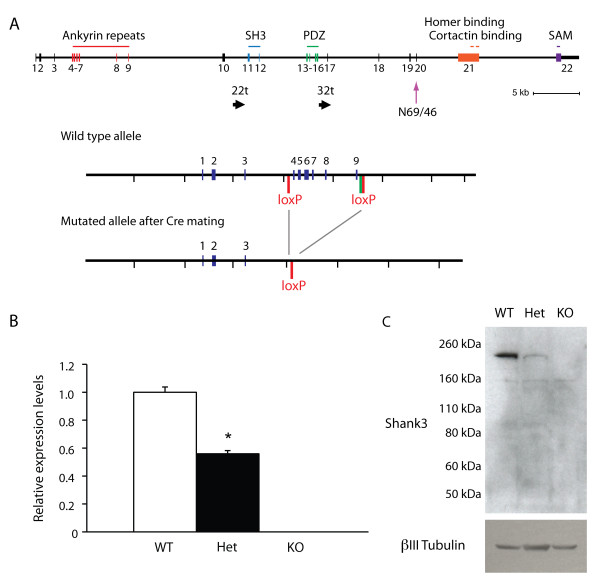
- Shank3 heterozygotes had a 50% reduction in full-length Shank3 mRNA, with reduced full-length Shank3 protein in PSD fractions; knockout mice showed no full-length protein.
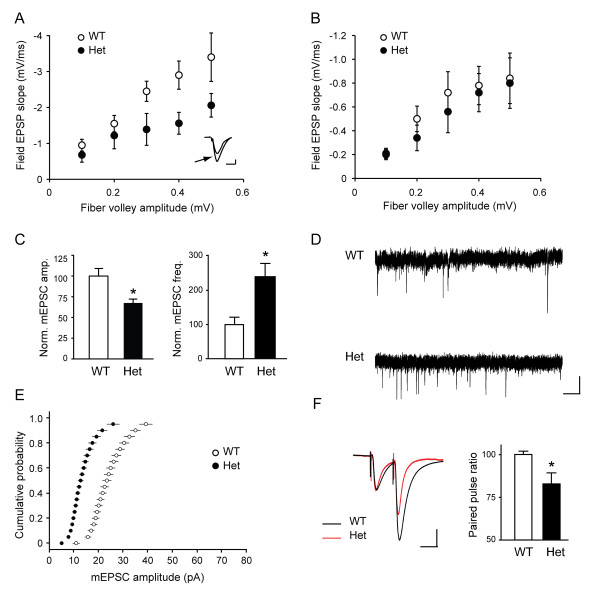
- AMPA receptor-mediated field potentials were reduced, reflected as a 50% decrease in average I/O slope versus wild-type (n = 4 mice/genotype, 2–3 slices/mouse; P = 0.001), while NMDA receptor-mediated responses did not differ (P = 0.1).
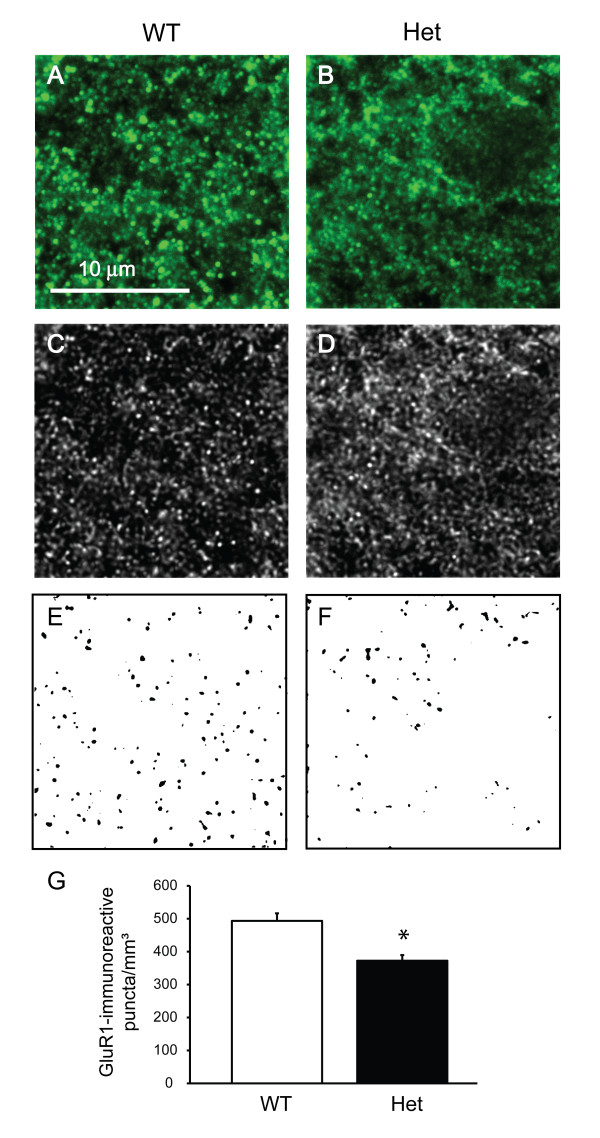
- mEPSC amplitude was smaller (n = 7 WT, n = 8 Het; P < 0.01), mEPSC frequency was higher (P < 0.03), paired-pulse ratio was decreased (n = 6 WT, n = 7 Het; P < 0.05), and GluR1-immunoreactive puncta were fewer (P < 0.005).
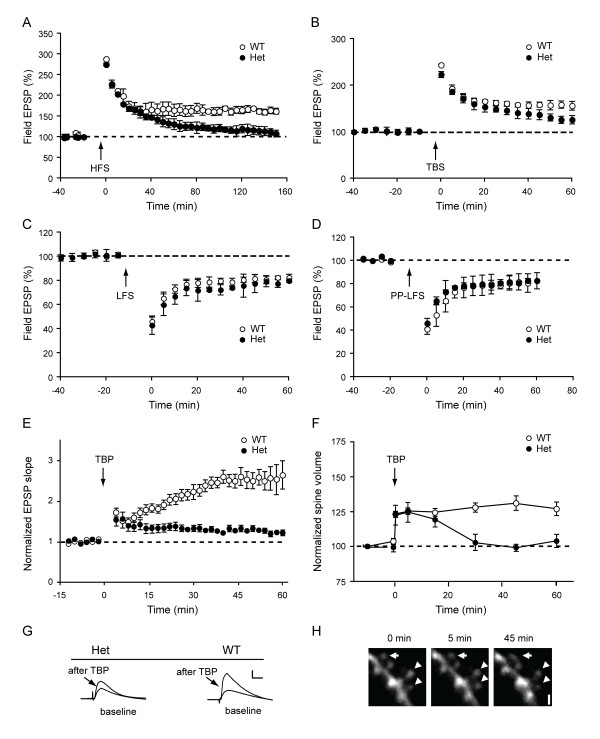
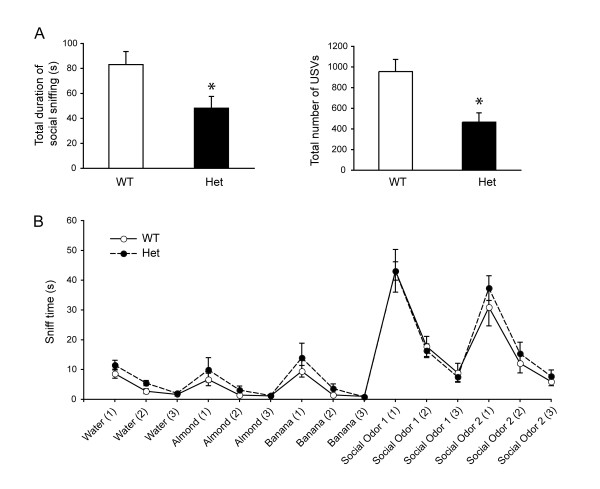
- LTP was impaired after high-frequency stimulation (120 min: 165.1 ± 8.8% WT vs 117.1 ± 9.5% Het, P = 0.004) and after TBS (60 min: 156.3 ± 9.2% WT vs 126.0 ± 8.9% Het, P = 0.007); LTD was not significantly changed. Male heterozygotes showed less social sniffing (P = 0.02) and fewer ultrasonic vocalizations (P = 0.003) than wild-type littermates (n = 12 WT, n = 14 Het).
Methods
- Generated a Shank3-deficient mouse line by gene targeting in Bruce4 C57BL/6 ES cells, inserting loxP sites before exon 4 and after exon 9 and excising exons 4–9 with CMV-Cre; studies focused on Shank3 heterozygotes versus wild-type littermates.
- Used qPCR and immunoblotting of PSD fractions; extracellular fEPSP recordings at Schaffer collateral–CA1 synapses; whole-cell patch-clamp mEPSC recordings; two-photon time-lapse imaging of spine volume; LTP/LTD induction protocols; and confocal quantification of GluR1-immunoreactive puncta.
- Behavioral testing included a 5-min male–female social interaction with an estrus female, ultrasonic vocalization recording, a three-chamber social approach task, olfactory habituation/dishabituation, and developmental milestone assessments.
Limitations
- Stated: the model targets full-length Shank3, but shorter 22t and 32t forms may still be expressed, so deficits seen with deletion of the entire SHANK3 gene may not be fully recapitulated; comprehensive study of knockout mice from heterozygote–heterozygote matings was still in progress.
- Stated: social deficits were not observed in the three-chamber social approach task, implying specificity of the social alterations; systems outside the hippocampus involved in social behavior were not examined, and additional brain regions and larger behavioral studies were underway.
- Evident from the text: most experiments used heterozygotes only, some electrophysiology samples were small (for example, n = 4 mice/genotype for I/O), and the ultrasonic vocalization equipment could not distinguish calls emitted by the male subject from those of the female partner.
Model-written summary. Check it against the paper before relying on it.
Integrity signals
Registry
Cites
Statistics
Figures
Verification
Claims the paper makes
6 Valid · 0 Not valid · 16 Not checked · 66 Own results and interpretations
Every source the paper cites for this claim was checked and supports it.
In the paper
“Furthermore, inhibition of Shank3 expression has been shown to reduce numbers of spines in hippocampal neurons in culture”
§ Haploinsufficiency of the autism-associated Shank3 gene leads to deficits in synaptic function, social interaction, and social communication > Background > Shank proteins in synaptic biology
What the sources say
- Supportedcites [19] 19. Roussignol G Ango F Romorini S Tu JC Sala C Worley PF Bockaert J Fagni L Shank expression is sufficient to induce functional dendritic spine synapses in aspiny neurons J Neurosci 2005 25 3560 3570 10.1523/JNEUROSCI.4354-04.2005 15814786 PMC6725374 source
In the section “Involvement of Shank3 in dendritic spine induction and maintenance,” the paper reports that siRNA inhibition of Shank3 decreased the number of dendritic spines in cultured hippocampal neurons. The same section reports that a siRNA-resistant Shank3 plasmid rescued the spine phenotype. (LLM, conf=0.94)
plainstates a cause- Asserted: passes — The authors put it forward as true.
- Checkable: passes — It can be checked against evidence.
- Load-bearing: passes — The paper’s conclusions depend on it.
- Based: passes — The paper gives a reason why it holds.
- Supported
Every source the paper cites for this claim was checked and supports it.
In the paper
“Transfection of Shank3 into aspiny cerebellar granule cells has been shown to induce an increase in the AMPA component of mEPSCs [19], and Shank3 is colocalized with GluR1-containing AMPA receptor in typical spines [53].”
§ Haploinsufficiency of the autism-associated Shank3 gene leads to deficits in synaptic function, social interaction, and social communication > Discussion > Synaptic development and function in Shank3 heterozygotes
What the sources say
- Supportedcites [19] 19. Roussignol G Ango F Romorini S Tu JC Sala C Worley PF Bockaert J Fagni L Shank expression is sufficient to induce functional dendritic spine synapses in aspiny neurons J Neurosci 2005 25 3560 3570 10.1523/JNEUROSCI.4354-04.2005 15814786 PMC6725374 source
In “Shank3 induces formation of new functional synapses,” the paper reports that Shank3-transfected cerebellar granule cells had an increased fast AMPAR component of mEPSCs, while the slow NMDAR component did not increase. This directly supports the part of the citing sentence attributed to this source; the separate colocalization claim is attributed to another citation. (LLM, conf=0.94)
boostedstates a cause- Asserted: passes — The authors put it forward as true.
- Checkable: passes — It can be checked against evidence.
- Load-bearing: unclear — It is unclear whether the paper’s conclusions depend on it.
- Based: passes — The paper gives a reason why it holds.
- Supported
The cited sources support only part of this claim — read each source’s verdict below.
In the paper
“We first established that spines from wild-type mice were capable of structural modification by simultaneously monitoring spine size and synaptic responses in CA1 neurons before and after TBP [34,35].”
§ Haploinsufficiency of the autism-associated Shank3 gene leads to deficits in synaptic function, social interaction, and social communication > Results > Long-term potentiation is impaired in Shank3 heterozygous mice
What the sources say
- Partly supportedcites [34] 34. Yang Y Wang XB Frerking M Zhou Q Spine expansion and stabilization associated with long-term potentiation J Neurosci 2008 28 5740 5751 10.1523/JNEUROSCI.3998-07.2008 18509035 PMC2561912 sourceExperimental — accuracy not yet measured
Our copy confirms the methodological core: the Abstract and Results describe simultaneous monitoring of EPSPs and dendritic spines by combined patch-clamp and two-photon time-lapse imaging in CA1 pyramidal neurons of acute hippocampal slices before and after theta-burst pairing (TBP), and Figure 1 (p. Results) shows TBP-induced, NMDAR-dependent spine expansion. However, the Materials and Methods state that slices were taken from postnatal day 13–18 Sprague Dawley rat pups, not wild-type mice, so the species/genotype qualifier attributed to this source is unsupported by our copy (the companion citation [35] may be the mouse study, but that is outside what this source says). (LLM, conf=0.85)
- Supportedcites [35] 35. Bozdagi O Wang XB Nikitczuk JS Anderson TR Bloss EB Radice GL Zhou Q Benson DL Huntley GW Persistence of coordinated long-term potentiation and dendritic spine enlargement at mature hippocampal CA1 synapses requires N-cadherin J Neurosci 2010 30 9984 9989 10.1523/JNEUROSCI.1223-10.2010 20668183 PMC2921177 source
The Results section 'N-cadherin is required for persistence of synaptic structural and functional plasticity' states almost verbatim that the authors 'first established that mature control spines are capable of LTP-associated structural modification by simultaneously monitoring spine size and synaptic responses in CA1 neurons before and after applying TBP', with persistent spine volume increase concurrent with EPSP slope increase (Fig. 2A-C). The only divergence is the genotype label: our copy's control animals are floxed littermates/Cre mice (Methods, 'Whole-cell recording, two-photon image acquisition and analysis'), described as 'control', not literally 'wild-type', and the claim drops the 'mature/LTP-associated' specification that the adult CA1/TBP design carries. Substance — establishing structural plasticity in non-knockout spines under paired TBP recording/imaging — is what this source reports. (LLM, conf=0.85)
plainstates a cause- Asserted: passes — The authors put it forward as true.
- Checkable: passes — It can be checked against evidence.
- Load-bearing: passes — The paper’s conclusions depend on it.
- Based: passes — The paper gives a reason why it holds.
- Partly supported
A result the paper reports from its own data — it cites no other source for it, so there is none to check. The quote shows it is in the paper.
In the paper
“the maintenance of LTP was clearly impaired in the heterozygous mice (average percentage of baseline 120 min after tetanus: 165.1 ± 8.8% in wild-type and 117.1 ± 9.5% in heterozygous mice, P = 0.004; Figure 3A).”
§ Haploinsufficiency of the autism-associated Shank3 gene leads to deficits in synaptic function, social interaction, and social communication > Results > Long-term potentiation is impaired in Shank3 heterozygous mice
boostedstates a cause- Asserted: passes — The authors put it forward as true.
- Checkable: passes — It can be checked against evidence.
- Load-bearing: passes — The paper’s conclusions depend on it.
- Based: passes — The paper gives a reason why it holds.
A result the paper reports from its own data — it cites no other source for it, so there is none to check. The quote shows it is in the paper.
In the paper
“however, only transient spine expansion was observed in Shank3 heterozygous mice”
§ Haploinsufficiency of the autism-associated Shank3 gene leads to deficits in synaptic function, social interaction, and social communication > Abstract > Results
plain- Asserted: passes — The authors put it forward as true.
- Checkable: passes — It can be checked against evidence.
- Load-bearing: passes — The paper’s conclusions depend on it.
- Based: passes — The paper gives a reason why it holds.
53 more claims
Create a free account to see all 88 claims and to verify the 29 references still open.
- It may state two separate claims as one. 20
- Probably not a substantial claim. 13
- The quote only partly states this claim. 1
Claims other papers make about this one
Each is checked against this paper’s own text: does it say what the citing paper says it does?
The source backs part of the claim, not all of it — or backs it for a different population, condition or comparison.
In the citing paper
“emerging animal models of ASD, with mutations in ASD-relevant neural cell adhesion molecules, have shown deficits in both the development of social affiliative behaviors and in glutamatergic synaptic structure in various brain regions, including circuits that may involve reward pathways [83,84]”
From The social motivation theory of autism (2012) · cites this paper as [84]
Experimental — accuracy not yet measuredThe source backs part of the claim, not all of it — or backs it for a different population, condition or comparison.
In the citing paper
“The AMPA receptor subunit GluA1 was reduced in hippocampal neurons examined in culture and hippocampal tissues from Δex4-9J−/− (Wang et al., 2011) and Δex4-9B+/− mice (Bozdagi et al., 2010)”
From Modeling Autism by SHANK Gene Mutations in Mice (2013) · cites this paper as Bozdagi et al., 2010
Experimental — accuracy not yet measuredThe source backs part of the claim, not all of it — or backs it for a different population, condition or comparison.
In the citing paper
“Hippocampal LTP was reduced at CA1 synapses of Δex4-9J−/− and Δex4-9B but not examined in Δex11−/− and Δex13-16−/− animals”
From Modeling Autism by SHANK Gene Mutations in Mice (2013) · cites this paper as Bozdagi et al., 2010
Experimental — accuracy not yet measuredThe cited source says what the claim attributes to it.
In the citing paper
“The mutations in these mice include deletions of exons 4-9 by two groups with slightly different design [(Δex4-9Buxbaum(B)) (Bozdagi et al., 2010) and Δex4-9Jiang (J) (Wang et al., 2011)], deletion of exons 4-7(Δex4-7) (Peca et al., 2011) encoding the ANK repeat domain, deletion of exon 11(Δex11) encoding the SH3 domain (Schmeisser et al., 2012), and deletion of exons 13-16 (Δex13-16) encoding the”
From Modeling Autism by SHANK Gene Mutations in Mice (2013) · cites this paper as Bozdagi et al., 2010
The cited source says what the claim attributes to it.
In the citing paper
“Five lines of Shank3 mutant mice carrying different mutations in Shank3 have been reported (Bozdagi et al., 2010; Peca et al., 2011; Schmeisser et al., 2012; Wang et al., 2011)”
From Modeling Autism by SHANK Gene Mutations in Mice (2013) · cites this paper as Bozdagi et al., 2010
15 more claims about this paper
Create a free account to see every claim other papers make about this one.
Self-check
Percentages, sums and reported differences re-computed from the paper’s own numbers.
Each contradiction between two passages listed here was confirmed by an independent check.
Rated major: it would touch a result — a value a result rests on, reported and recomputed p-values on opposite sides of the significance level, two passages that conflict with no sign which is right, or a cited work retracted before this paper was published.
In the paper
§ Haploinsufficiency of the autism-associated Shank3 gene leads to deficits in synaptic function, social interaction, and social communication > Methods > Hippocampal slice electrophysiology
“LTP was induced by either a high-frequency stimulus (four trains of 100-Hz, 1-s stimulations separated by 5 min) or TBS (15 bursts of four pulses at 100 Hz separated by 200 ms).”
§ Haploinsufficiency of the autism-associated Shank3 gene leads to deficits in synaptic function, social interaction, and social communication > Results > Long-term potentiation is impaired in Shank3 heterozygous mice
“TBS LTP (10 bursts of four pulses at 100 Hz separated by 200 ms)”
Rated minor: it would not touch a result — a value no result rests on, a p-value that stays on the same side of the significance level, or a conflict that is clerical, resolved elsewhere in the paper, or outside its own findings.
In the paper
§ Haploinsufficiency of the autism-associated Shank3 gene leads to deficits in synaptic function, social interaction, and social communication > Results > Long-term potentiation is impaired in Shank3 heterozygous mice
“P > 0.1; Figure 3G) or paired-pulse LFS (PP-LFS) stimulation (81.6 ± 6% of baseline in wild-type and 82.7 ± 1.9% in heterozygous mice, P > 0.1; Figure 3H)”
§ Haploinsufficiency of the autism-associated Shank3 gene leads to deficits in synaptic function, social interaction, and social communication > Results > Long-term potentiation is impaired in Shank3 heterozygous mice
“(C) Long-term depression (LTD) following low-frequency stimulation (LFS), an NMDA receptor-dependent form of LTD. (D) LTD following paired-pulse low-frequency stimulation (PP-LFS), a protein synthesis-dependent form of LTD.”
Citations
Cites
Hellemans, J., Mortier, G., De Paepe, A., Speleman, F., & Vandesompele, J. (2007) · Genome Biology · doi:10.1186/gb-2007-8-2-r19 · Cited by 4,023
AMPA Receptor Trafficking and Synaptic Plasticity
Malinow, R., & Malenka, R. C. (2002) · Annual Review of Neuroscience · doi:10.1146/annurev.neuro.25.112701.142758 · Cited by 2,588 · cited 2×
“AMPA receptor trafficking is involved in activity-induced changes in synaptic strength associated with learning and memory [54], and synaptic insertion of GluR1-containing AMPA receptors is required [55,56].”
BackgroundStructural basis of long-term potentiation in single dendritic spines
Matsuzaki, M., Honkura, N., Ellis-Davies, G. C. R., & Kasai, H. (2004) · Nature · doi:10.1038/nature02617 · Cited by 2,483 · cited 1×
“Previous studies have shown that LTP is accompanied by spine enlargement [35, 48 ].”
ResultMcDonald-McGinn, D. M., Sullivan, K. E., Marino, B., Philip, N., Swillen, A., Vorstman, J. A. S., Zackai, E. H., Emanuel, B. S., Vermeesch, J. R., Morrow, B. E., et al. (2015) · Nature Reviews Disease Primers · doi:10.1038/nrdp.2015.71 · Cited by 2,236
Functional impact of global rare copy number variation in autism spectrum disorders
Pinto, D., Pagnamenta, A. T., Klei, L., Anney, R., Merico, D., Regan, R., Conroy, J., Magalhaes, T. R., Correia, C., Abrahams, B. S., et al. (2010) · Nature · doi:10.1038/nature09146 · Cited by 2,013 · cited 1×
“recently been associated with ASDs and/or intellectual disability [29-31].”
BackgroundConserved role of intragenic DNA methylation in regulating alternative promoters
Maunakea, A. K., Nagarajan, R. P., Bilenky, M., Ballinger, T. J., D’Souza, C., Fouse, S. D., Johnson, B. E., Hong, C., Nielsen, C., Zhao, Y., et al. (2010) · Nature · doi:10.1038/nature09165 · Cited by 1,743 · cited 1×
“A recent report has indicated that there are additional start sites in the human and mouse SHANK3 gene that may lead to shorter products, truncated at the N terminus (termed 22t and 32t in that report [51]).”
BackgroundDurand, C. M., Betancur, C., Boeckers, T. M., Bockmann, J., Chaste, P., Fauchereau, F., Nygren, G., Rastam, M., Gillberg, I. C., Anckarsäter, H., et al. (2007) · Nature Genetics · doi:10.1038/ng1933 · Cited by 1,602 · cited 6×
“Neurobehavioral phenotypes associated with mutation or deletion of SHANK3 are here referred to as SHANK3-haploinsufficiency syndromes and, as noted above, can be associated with ASDs.”
BackgroundInfluentialThe mGluR theory of fragile X mental retardation
Bear, M. F., Huber, K. M., & Warren, S. T. (2004) · Trends in Neurosciences · doi:10.1016/j.tins.2004.04.009 · Cited by 1,580 · cited 1×
“Recently, the field has begun to see the evaluation of therapies targeted to etiology (that is, “personalized medicine”) using models of neurodevelopmental disorders including fragile X, tuberous sclerosis, and Rett syndromes (see, for example, [61-64]).”
BackgroundBehavioural phenotyping assays for mouse models of autism
Silverman, J. L., Yang, M., Lord, C., & Crawley, J. N. (2010) · Nature Reviews Neuroscience · doi:10.1038/nrn2851 · Cited by 1,462 · cited 1×
“5-4 months using methods previously described [44,46,47].”
Self-citationPSD-95 Involvement in Maturation of Excitatory Synapses
El-Husseini, A. E.-D., Schnell, E., Chetkovich, D. M., Nicoll, R. A., & Bredt, D. S. (2000) · Science · doi:10.1126/science.290.5495.1364 · Cited by 1,303 · cited 1×
“The quantity of surface receptors controls synaptic strength [57-59]; therefore, reduction of both synaptic transmission and plasticity in the Shank3 heterozygotes would support a mechanism involving altered AMPA receptor trafficking.”
Background
Research works printed but not linked: 1
- 42. Dumutriu D Hara Y Berger S Wadsworth S Morrison J Volume assisted measurement of puncta in 2 dimensions (VAMP2D): A new tool for accurate size quantification in fluorescent imaging Society for Neurosience Annual Meeting 2009 Chicago, IL: Society for Neuroscience Abstracts
Cited by
Items 101–200 of 606
Drapeau, E., Riad, M., Kajiwara, Y., & Buxbaum, J. D. (2018) · eNeuro · doi:10.1523/eneuro.0046-18.2018 · Cited by 117
“37 Similarly, motor learning in accelerating rotarod was found to be impaired in ∆4-9, ∆11, ∆13, ∆13-16 and ∆21 models (Bozdagi et al., 2010; Jaramillo et al., 2017; Kouser et al., 2013; Mei et al., 2016; Speed et al., 2015; Vicidomini et al., 2016; Wang et al., 2011; Yang et al., 2012; Zhu et al., 2014) although not…”
BackgroundInfluentialSelf-citationTing, J. T., Peça, J., & Feng, G. (2012) · Annual Review of Neuroscience · doi:10.1146/annurev-neuro-062111-150442 · Cited by 108
“Four different groups have independently generated and virtually simultaneously characterized a total of five Shank3 mutant mouse lines (Bangash et al. 2011, Bozdagi et al. 2010, Peca et al. 2011, Wang et al. 2011).”
BackgroundLee, E.-J., Lee, H., Huang, T.-N., Chung, C., Shin, W., Kim, K., Koh, J.-Y., Hsueh, Y.-P., & Kim, E. (2015) · Nature Communications · doi:10.1038/ncomms8168 · Cited by 110
Darville, H., Poulet, A., Amsellem, F., Chatrousse, L., Pernelle, J., Boissart, C., Héron, D., Nava, C., Perrier, A. L., Jarrige, M., et al. (2016) · EBioMedicine · doi:10.1016/j.ebiom.2016.05.032 · Cited by 115
“Unfortunately, these mice develop only very specific and discrete phenotypes (Bozdagi et al., 2010), the robustness of which limiting their use asmodel for testing efficiency of pharmacological approaches.”
BackgroundThe autism puzzle: Diffuse but not pervasive neuroanatomical abnormalities in children with ASD
Sussman, D., Leung, R. C., Vogan, V. M., Lee, W., Trelle, S., Lin, S., Cassel, D. B., Chakravarty, M. M., Lerch, J. P., Anagnostou, E., et al. (2015) · NeuroImage: Clinical · doi:10.1016/j.nicl.2015.04.008 · Cited by 102
“…could be due to a decline in the number of synaptic receptors (Nagy et al., 2004), a structural abnormality that was found to occur in the stratum radiatum of a mouse model of ASD (Bozdagi et al., 2010) that relies on the SHANK3-gene deficiency associated with this disorder (Boccuto et al., 2013).”
Bar, E., & Barak, B. (2019) · Glia · doi:10.1002/glia.23637 · Cited by 107
“SHANK proteins encode a family of postsynaptic scaffolding pro- teins present at glutamatergic synapses in the CNS (Amal et al., 2018; Barak & Feng, 2016; Bozdagi et al., 2010; Monteiro & Feng, 2017; Peca et al., 2011; Zhou et al., 2016).”
BackgroundWöhr, M. (2014) · Neuroscience & Biobehavioral Reviews · doi:10.1016/j.neubiorev.2014.03.021 · Cited by 107
AMPA Receptors as Therapeutic Targets for Neurological Disorders
Lee, K., Goodman, L., Fourie, C., Schenk, S., Leitch, B., & Montgomery, J. M. (2015) · Advances in protein chemistry and structural biology · doi:10.1016/bs.apcsb.2015.10.004 · Cited by 123
A role for synaptic zinc in ProSAP/Shank PSD scaffold malformation in autism spectrum disorders
Grabrucker, A. M. (2014) · Developmental Neurobiology · doi:10.1002/dneu.22089 · Cited by 103
“The availability for additional binding sites for exocytosed AMPAR might thus be dependent on activity- and Zn21-dependent increases in ProSAP2/ Shank3 scaffold proteins at the PSD. Conversely, a decrease in AMPA receptor levels was shown in ProSAP2/Shank3ab–/– mice (Bozdagi et al., 2011).”
BackgroundThe Genetics of Autism Spectrum Disorders
Huguet, G., Benabou, M., & Bourgeron, T. (2016) · Research and perspectives in endocrine interactions · doi:10.1007/978-3-319-27069-2_11 · Cited by 126
Sperow, M., Berry, R. B., Bayazitov, I. T., Zhu, G., Baker, S. J., & Zakharenko, S. S. (2012) · The Journal of Physiology · doi:10.1113/jphysiol.2011.220236 · Cited by 103
Autism Spectrum Disorders: Translating human deficits into mouse behavior
Pasciuto, E., Borrie, S. C., Kanellopoulos, A. K., Santos, A. R., Cappuyns, E., D’Andrea, L., Pacini, L., & Bagni, C. (2015) · Neurobiology of Learning and Memory · doi:10.1016/j.nlm.2015.07.013 · Cited by 91
Glutamate receptor dysfunction and drug targets across models of autism spectrum disorders
Carlson, G. C. (2012) · Pharmacology Biochemistry and Behavior · doi:10.1016/j.pbb.2011.02.003 · Cited by 102
Delling, J. P., & Boeckers, T. M. (2021) · Journal of Neurodevelopmental Disorders · doi:10.1186/s11689-021-09397-8 · Cited by 109
Amal, H., Barak, B., Bhat, V., Gong, G., Joughin, B. A., Wang, X., Wishnok, J. S., Feng, G., & Tannenbaum, S. R. (2020) · Molecular Psychiatry · doi:10.1038/s41380-018-0113-6 · Cited by 101
Self-citationBasal ganglia and autism – a translational perspective
Subramanian, K., Brandenburg, C., Orsati, F., Soghomonian, J., Hussman, J. P., & Blatt, G. J. (2017) · Autism Research · doi:10.1002/aur.1837 · Cited by 88
“Increased stereotypies/compulsive behavior and altered cognitive flexibility have been documented [Bozdagi et al., 2010; Peça et al., 2011; Schmeisser et al., 2012; Wang et al., 2011; W€ ohr, Roullet, Hung, Sheng, & Crawley, 2011; Won et al., 2012; Yang et al., 2012].”
BackgroundDecoding the contribution of dopaminergic genes and pathways to autism spectrum disorder (ASD)
Nguyen, M., Roth, A., Kyzar, E. J., Poudel, M. K., Wong, K., Stewart, A., & Kalueff, A. V. (2014) · Neurochemistry International · doi:10.1016/j.neuint.2014.01.002 · Cited by 104
“3 deletion syndrome (Bozdagi et al., 2010; Jonas et al., 2013).”
The therapeutic potential of insulin-like growth factor-1 in central nervous system disorders
Costales, J., & Kolevzon, A. (2016) · Neuroscience & Biobehavioral Reviews · doi:10.1016/j.neubiorev.2016.01.001 · Cited by 93
“Electrophysiological studies of hippocampal neurons in Fmr1 knockout mice not only confirmed aberrant activation of PI3K/mTOR and MAPK/ERK pathways (Deacon et al., 2015), but also revealed reduced response to excitatory synaptic currents and enhanced glutamate receptor dependent LTD, suggesting the importance of FMRP,…”
BackgroundAutism‐Related Neuroligin‐3 Mutation Alters Social Behavior and Spatial Learning
Jaramillo, T. C., Liu, S., Pettersen, A., Birnbaum, S. G., & Powell, C. M. (2014) · Autism Research · doi:10.1002/aur.1362 · Cited by 94
“These differences could be accounted for by the different genetic background, differences in behavioral protocol sensitivity among laboratories, a lack of robustness in the behavioral deficits [Bozdagi et al., 2010], or other factors.”
BackgroundLachance, V., Wang, Q., Sweet, E., Choi, I., Cai, C.-Z., Zhuang, X.-X., Zhang, Y., Jiang, J. L., Blitzer, R. D., Bozdagi-Gunal, O., et al. (2019) · Molecular Neurodegeneration · doi:10.1186/s13024-019-0342-4 · Cited by 96
“Slices were maintained for 1–2 h prior to establishment of a baseline of field excitatory postsynaptic potentials (fEPSPs) recorded from stratum radiatum in area CA1, evoked by stimulation of the Schaffer collateral-commissural afferents (100 μs pulses every 30 s) with bipolar tungsten electrodes placed into area CA3…”
MethodCellular and synaptic network defects in autism
Peça, J., & Feng, G. (2012) · Current Opinion in Neurobiology · doi:10.1016/j.conb.2012.02.015 · Cited by 96
Berg, E. L., Copping, N. A., Rivera, J. K., Pride, M. C., Careaga, M., Bauman, M. D., Berman, R. F., Lein, P. J., Harony‐Nicolas, H., Buxbaum, J. D., et al. (2018) · Autism Research · doi:10.1002/aur.1925 · Cited by 98
“…numerous mutant mouse models were generated by targeting different biochemical domains and resulted in various degrees of reduction of Shank3 isoforms [Bozdagi et al., 2010; Peca et al., 2011; Yang et al., 2012; Kouser et al., 2013; Jaramillo et al., 2016; Mei et al., 2016; Jaramillo et al., 2017].”
BackgroundSelf-citationNeural Mechanisms Underlying Repetitive Behaviors in Rodent Models of Autism Spectrum Disorders
Gandhi, T., & Lee, C. C. (2021) · Frontiers in Cellular Neuroscience · doi:10.3389/fncel.2020.592710 · Cited by 88
Kozol, R. A., Cukier, H. N., Zou, B., Mayo, V., De Rubeis, S., Cai, G., Griswold, A. J., Whitehead, P. L., Haines, J. L., Gilbert, J. R., et al. (2015) · Human Molecular Genetics · doi:10.1093/hmg/ddv138 · Cited by 86
Self-citationScaffold Proteins at the Postsynaptic Density
Verpelli, C., Schmeisser, M. J., Sala, C., & Boeckers, T. M. (2012) · Advances in Experimental Medicine and Biology · doi:10.1007/978-3-7091-0932-8_2 · Cited by 92
“…(Hung et al. 2008), and reduced motor functions (Silverman et al. 2011), or the ProSAP2/Shank3 haploinsufficiency mouse that shows delayed syn- aptic development, a decrease in synaptic transmission and reduced social sniffing and ultrasonic vocalizations (Bozdagi et al. 2010).”
BackgroundShank3 modulates sleep and expression of circadian transcription factors
Ingiosi, A. M., Schoch, H., Wintler, T., Singletary, K. G., Righelli, D., Roser, L. G., Medina, E., Risso, D., Frank, M. G., & Peixoto, L. (2019) · eLife · doi:10.7554/elife.42819 · Cited by 95
Ultrasonic vocalizations in mice: relevance for ethologic and neurodevelopmental disorders studies
Premoli, M., Memo, M., & Bonini, S. A. (2020) · Neural Regeneration Research · doi:10.4103/1673-5374.300340 · Cited by 94
“…social test Schmeisser et al. (2012); Ey et al. (2013) Shank2 KO (exon 6–7) Adults ↓ Number Won et al. (2012) Shank3 heterozygous Adults ↓ Number and ↑ latency to call Bozdagi et al. (2010) Shank3 KO Pups No differences in number and duration Yang et al. (2012); Balaan et al. (2019) Adults ↓…”
BackgroundCaruso, A., Ricceri, L., & Scattoni, M. L. (2020) · Neuroscience & Biobehavioral Reviews · doi:10.1016/j.neubiorev.2020.06.011 · Cited by 93
Self-citationReim, D., Distler, U., Halbedl, S., Verpelli, C., Sala, C., Bockmann, J., Tenzer, S., Boeckers, T. M., & Schmeisser, M. J. (2017) · Frontiers in Molecular Neuroscience · doi:10.3389/fnmol.2017.00026 · Cited by 80
“…the respective circuits and the underlying molecular pathomechanisms, several Shank3 mutant mouse lines have been engineered up to this date (Bozdagi et al., 2010; Peca et al., 2011; Wang et al., 2011, 2016; Schmeisser et al., 2012; Han et al., 2013; Kouser et al., 2013; Lee J. et al.,…”
BackgroundHomberg, J. R., Kyzar, E. J., Nguyen, M., Norton, W. H., Pittman, J., Poudel, M. K., Gaikwad, S., Nakamura, S., Koshiba, M., Yamanouchi, H., et al. (2016) · Neuroscience & Biobehavioral Reviews · doi:10.1016/j.neubiorev.2016.03.013 · Cited by 82
Self-citationBraun, A. E., Carpentier, P. A., Babineau, B. A., Narayan, A. R., Kielhold, M. L., Moon, H. M., Shankar, A., Su, J., Saravanapandian, V., Haditsch, U., et al. (2019) · eNeuro · doi:10.1523/eneuro.0358-19.2019 · Cited by 99
“An experimenter blind to mouse treatment scored the videos to determine the amount of time to initiate contact with the stimulus mouse and the total amount of time spent sniffing empty pencil cups or the stimulus mice using JWatcher software (Bozdagi et al., 2010; Silverman et al., 2013).”
MethodEy, E., Yang, M., Katz, A. M., Woldeyohannes, L., Silverman, J. L., Leblond, C. S., Faure, P., Torquet, N., Le Sourd, A. ‐., Bourgeron, T., et al. (2012) · Genes, Brain and Behavior · doi:10.1111/j.1601-183x.2012.00849.x · Cited by 84
“Deficits in male–female social interactions were found in heterozygous male Shank3 mice in an early generation (Bozdagi et al. 2010) but not in later generations (Yang et al. 2012).”
BackgroundSelf-citationOverview of Mouse Models of Autism Spectrum Disorders
Bey, A. L., & Jiang, Y. (2014) · Current Protocols in Pharmacology · doi:10.1002/0471141755.ph0566s66 · Cited by 96
Insights on the Functional Impact of MicroRNAs Present in Autism-Associated Copy Number Variants
Vaishnavi, V., Manikandan, M., Tiwary, B. K., & Munirajan, A. K. (2013) · PLoS ONE · doi:10.1371/journal.pone.0056781 · Cited by 92
“For example, haploinsufficiency of Shank3, CMIP, FOXP2 and Tsc2 has already been linked to the etiology and phenotypic characteristics of autism [39,40,41,42].”
BackgroundPhelan McDermid Syndrome: From Genetic Discoveries to Animal Models and Treatment
Harony-Nicolas, H., De Rubeis, S., Kolevzon, A., & Buxbaum, J. D. (2015) · Journal of Child Neurology · doi:10.1177/0883073815600872 · Cited by 81
“4-9 deletion have a significant reduction in basal glutamatergic synaptic transmission in the hippocampus, specifically in the component mediated by the AMPA receptors (AMPAR), as compared with wild-type littermates.(42) Such effect is likely due to a decrease in synaptic AMPARs, because neurons from Shank3 heterozygo…”
BackgroundMethodSelf-citationJiang-Xie, L.-F., Liao, H.-M., Chen, C.-H., Chen, Y.-T., Ho, S.-Y., Lu, D.-H., Lee, L.-J., Liou, H.-H., Fu, W.-M., & Gau, S. S.-F. (2014) · Molecular Autism · doi:10.1186/2040-2392-5-32 · Cited by 79
Intestinal dysmotility in a zebrafish (Danio rerio) shank3a;shank3b mutant model of autism
James, D. M., Kozol, R. A., Kajiwara, Y., Wahl, A. L., Storrs, E. C., Buxbaum, J. D., Klein, M., Moshiree, B., & Dallman, J. E. (2019) · Molecular Autism · doi:10.1186/s13229-018-0250-4 · Cited by 95
“One hundred milligrams of whole fish brains dissected and pooled from adult shank3ab +/+ (n = 8) and shank3abΔC −/− mutants (n = 8) were used to prepare the postsynaptic density (PSD) fractions following the previously published method [16].”
MethodSelf-citationLi, K., Li, L., Cui, B., Gai, Z., Li, Q., Wang, S., Yan, J., Lin, B., Tian, L., Liu, H., et al. (2018) · Toxicological Sciences · doi:10.1093/toxsci/kfx240 · Cited by 80
Zwanenburg, R. J., Bocca, G., Ruiter, S., Dillingh, J. H., Flapper, B. C. T., van den Heuvel, E. R., & van Ravenswaaij‐Arts, C. M. A. (2016) · European Journal of Human Genetics · doi:10.1038/ejhg.2016.109 · Cited by 83
Iyer, J. S., Singh, M. D., Jensen, M., Patel, P. T., Pizzo, L., Huber, E., Koerselman, H., Weiner, A. T., Lepanto, P., Vadodaria, K., et al. (2018) · Nature Communications · doi:10.1038/s41467-018-04882-6 · Cited by 98
Neurobiology of autism gene products: towards pathogenesis and drug targets
Kleijer, K. T. E., Schmeisser, M. J., Krueger, D. D., Boeckers, T. M., Scheiffele, P., Bourgeron, T., Brose, N., & Burbach, J. P. H. (2014) · Psychopharmacology · doi:10.1007/s00213-013-3403-3 · Cited by 75
Gąssowska-Dobrowolska, M., Cieślik, M., Czapski, G. A., Jęśko, H. M., Frontczak‐Baniewicz, M., Gewartowska, M., Dominiak, A., Polowy, R., Filipkowski, R. K., Babiec, L., et al. (2020) · International Journal of Molecular Sciences · doi:10.3390/ijms21103576 · Cited by 86
“Deletion of the Shank3 gene in mice leads to an abnormal postsynaptic structure and dysfunction of synaptic transmission, behaviour, and development [17,63].”
BackgroundEarly-life seizures result in deficits in social behavior and learning
Lugo, J. N., Swann, J. W., & Anderson, A. E. (2014) · Experimental Neurology · doi:10.1016/j.expneurol.2014.03.014 · Cited by 85
Fourie, C., Vyas, Y., Lee, K., Jung, Y., Garner, C. C., & Montgomery, J. M. (2018) · Frontiers in Cellular Neuroscience · doi:10.3389/fncel.2018.00374 · Cited by 82
“Mouse models expressing ASD mutations in Shank1–3 exhibit impaired glutamatergic synaptic function, decreased synaptic plasticity, increased anxiety and repetitive behaviors and impaired social interactions (Hung et al., 2008; Bozdagi et al., 2010; Peca et al., 2011; Schmeisser et al., 2012; Duffney et al., 2013; Lee…”
BackgroundVahdatpour, C., Dyer, A. H., & Tropea, D. (2016) · Frontiers in Neuroscience · doi:10.3389/fnins.2016.00450 · Cited by 76
“Using mice deficient in Shank3, Bozdagi et al. found reduced amplitude of miniature excitatory postsynaptic currents (mEPSCs) in the hippocampus and impaired Long Term Potentiation (LTP), with only transient spine expansion present (Bozdagi et al., 2010).”
BackgroundModeling autism-relevant behavioral phenotypes in rats and mice: Do ‘autistic’ rodents exist?
Servadio, M., Vanderschuren, L. J. M. J., & Trezza, V. (2015) · Behavioural Pharmacology · doi:10.1097/fbp.0000000000000163 · Cited by 76
“…behavioral changes are associated with several neuro-chemical alterations, such as reduced corticostriatal excitatory transmission, longer dendritic spines, and a lower density of dendritic spines, as compared with wild-type controls (Bozdagi et al. , 2010; Peça et al. , 2011; Yang et al. , 2012).”
InfluentialTao, K., Chung, M., Watarai, A., Huang, Z., Wang, M.-Y., & Okuyama, T. (2022) · Molecular Psychiatry · doi:10.1038/s41380-021-01430-5 · Cited by 73
“Several in vitro electrophysiological studies have reported that LTP is impaired in the hippocampal CA1 synapses of Shank3-KO mice, whereas long-term depression (LTD) remains unaffected [58].”
BackgroundDougnon, G., & Matsui, H. (2022) · International Journal of Molecular Sciences · doi:10.3390/ijms23147550 · Cited by 70
Monogenic mouse models of autism spectrum disorders: Common mechanisms and missing links
Hulbert, S. W., & Jiang, Y. (2015) · Neuroscience · doi:10.1016/j.neuroscience.2015.12.040 · Cited by 87
“Still, deletion of exons 4–7 (Peça et al., 2011), exons 4–9 (Bozdagi et al., 2010; Wang et al., 2011; Jaramillo et al., 2015), exon 9 (Lee et al., 2015), exon 11 (Schmeisser et al., 2012), exons 13–16 (Peça et al., 2011), or exon 21 (Kouser et al., 2013; Duffney et al., 2015), and an insertion…”
BackgroundInfluentialCopping, N. A., Berg, E. L., Foley, G. M., Schaffler, M. D., Onaga, B., Buscher, N., Silverman, J. L., & Yang, M. (2016) · Neuroscience · doi:10.1016/j.neuroscience.2016.05.016 · Cited by 79
“Four independent groups have generated mouse models of Shank3 deficiency or ablation (Bozdagi et al., 2010; Peca et al., 2011; Wang et al., 2011; Kouser et al., 2013), and impaired learning and memory have been reported in all models.”
BackgroundSelf-citationChung, C., Ha, S., Kang, H., Lee, J., Um, S. M., Yan, H., Yoo, Y.-E., Yoo, T., Jung, H., Lee, D., et al. (2019) · Biological Psychiatry · doi:10.1016/j.biopsych.2018.09.025 · Cited by 73
Shank mutant mice as an animal model of autism
Yoo, J., Bakes, J., Bradley, C. A., Collingridge, G. L., & Kaang, B. (2014) · Philosophical Transactions of the Royal Society B Biological Sciences · doi:10.1098/rstb.2013.0143 · Cited by 80
Aldinger, K. A., Kogan, J., Kimonis, V., Fernandez, B., Horn, D., Klopocki, E., Chung, B., Toutain, A., Weksberg, R., Millen, K. J., et al. (2013) · American Journal of Medical Genetics Part A · doi:10.1002/ajmg.a.35700 · Cited by 72
Uzunova, G., Hollander, E., & Shepherd, J. D. (2014) · Current Neuropharmacology · doi:10.2174/1570159x113116660046 · Cited by 79
Choi, S.-Y., Pang, K., Kim, J. Y., Ryu, J. R., Kang, H., Liu, Z., Kim, W.-K., Sun, W., Kim, H., & Han, K. (2015) · Molecular Brain · doi:10.1186/s13041-015-0165-3 · Cited by 69
“[12–19].”
Ma, K., Qin, L., Matas, E., Duffney, L. J., Liu, A., & Yan, Z. (2018) · Neuropsychopharmacology · doi:10.1038/s41386-018-0073-1 · Cited by 71
Gouder, L., Vitrac, A., Goubran-Botros, H., Danckaert, A., Tinevez, J.-Y., André-Leroux, G., Atanasova, E., Lemière, N., Biton, A., Leblond, C. S., et al. (2019) · Scientific Reports · doi:10.1038/s41598-018-36993-x · Cited by 65
Shank3-Rich2 Interaction Regulates AMPA Receptor Recycling and Synaptic Long-Term Potentiation
Raynaud, F., Janossy, A., Dahl, J., Bertaso, F., Perroy, J., Varrault, A., Vidal, M., Worley, P. F., Boeckers, T. M., Bockaert, J., et al. (2013) · Journal of Neuroscience · doi:10.1523/jneurosci.2725-12.2013 · Cited by 68
“Recent papers reported that deletion of Shank3 induced loss of LTP and decreased surface expression of the AMPA receptor GluA1 subunit in mouse (Bozdagi et al., 2010; Peça et al., 2011; Wang et al., 2011).”
BackgroundSynapse Assembly and Neurodevelopmental Disorders
Washbourne, P. (2014) · Neuropsychopharmacology · doi:10.1038/npp.2014.163 · Cited by 81
“…that reduced levels of these SHANK proteins result in synaptic deficits (Bozdagi et al, 2010; Sala et al, 2001; Wang et al, 2011) with consequences for cognitive and social behavior (Bozdagi et al, 2010; Peca et al, 2011a; Silverman et al, 2011; Wang et al, 2011; Wohr et al, 2011; Won et al, 2012).”
Shank3 Is Part of a Zinc-Sensitive Signaling System That Regulates Excitatory Synaptic Strength
Arons, M. H., Lee, K. C., Thynne, C. J., Kim, S. A., Schob, C., Kindler, S., Montgomery, J. M., & Garner, C. C. (2016) · Journal of Neuroscience · doi:10.1523/jneurosci.0116-16.2016 · Cited by 73
“Shank3 is known to play a critical role in maintaining postsynaptic pools of both AMPARs and NMDARs (Bozdagi et al., 2010; Peça et al., 2011; Arons et al., 2012; Kouser et al., 2013; Duffney et al., 2015; Lee et al., 2015; Speed et al., 2015), as well as trans-synaptic increases in presynaptic…”
BackgroundInfluentialThomas, M. S. C., Knowland, V. C. P., & Karmiloff-Smith, A. (2011) · Psychological Review · doi:10.1037/a0025234 · Cited by 70
An autism-linked missense mutation in SHANK3 reveals the modularity of Shank3 function
Wang, L., Pang, K., Han, K., Adamski, C. J., Wang, W., He, L., Lai, J. K., Bondar, V. V., Duman, J. G., Richman, R., et al. (2020) · Molecular Psychiatry · doi:10.1038/s41380-018-0324-x · Cited by 65
“Knock down or knockout (KO) of Shank3 reduces dendritic spine density and maturation 12–16 , whereas overexpression of Shank3 enhances spine development 12,17–19 .”
Shank and Zinc Mediate an AMPA Receptor Subunit Switch in Developing Neurons
Ha, H., Leal‐Ortiz, S., Lalwani, K., Kiyonaka, S., Hamachi, I., Mysore, S. P., Montgomery, J. M., Garner, C. C., Huguenard, J. R., & Kim, S. A. (2018) · Frontiers in Molecular Neuroscience · doi:10.3389/fnmol.2018.00405 · Cited by 76
“Both Shank2 and Shank3 knockout mice show impairments of synaptic plasticity and learning (Bozdagi et al., 2010; Peça et al., 2011; Won et al., 2012; Lee E. J. et al., 2015).”
BackgroundPostsynaptic autism spectrum disorder genes and synaptic dysfunction
Bonsi, P., Jaco, A. D., Fasano, L., & Gubellini, P. (2021) · Neurobiology of Disease · doi:10.1016/j.nbd.2021.105564 · Cited by 72
Verma, V., Paul, A., Vishwanath, A. A., Vaidya, B., & Clement, J. P. (2019) · Open Biology · doi:10.1098/rsob.180265 · Cited by 72
Bawari, S., Tewari, D., Argüelles, S., Sah, A. N., Nabavi, S. F., Xu, S., Vacca, R. A., Nabavi, S. M., & Shirooie, S. (2019) · Pharmacological Research · doi:10.1016/j.phrs.2019.104458 · Cited by 74
Daimon, C. M., Jasien, J. M., Wood, W. H., Zhang, Y., Becker, K. G., Silverman, J. L., Crawley, J. N., Martin, B., & Maudsley, S. (2015) · Frontiers in Physiology · doi:10.3389/fphys.2015.00324 · Cited by 66
Self-citationStoppel, L. J., Auerbach, B. D., Senter, R. K., Preza, A. R., Lefkowitz, R. J., & Bear, M. F. (2017) · Cell Reports · doi:10.1016/j.celrep.2017.02.075 · Cited by 73
Song, T.-J., Lan, X.-Y., Wei, M.-P., Zhai, F.-J., Boeckers, T. M., Wang, J.-N., Yuan, S., Jin, M.-Y., Xie, Y.-F., Dang, W.-W., et al. (2019) · Frontiers in Cellular Neuroscience · doi:10.3389/fncel.2019.00111 · Cited by 64
“…with Shank3 deletions of different exons (∆e4–7, ∆e4–9, ∆e13–16, ∆e9, ∆e11, and ∆e21) and a Shank3 complete knockout mouse model have been established (Bozdagi et al., 2010; Bangash et al., 2011; Peca et al., 2011; Wang et al., 2011, 2016; Schmeisser et al., 2012; Yang et al., 2012; Kouser…”
BackgroundDwivedi, S., Medishetti, R., Rani, R., Sevilimedu, A., Kulkarni, P., & Yogeeswari, P. (2018) · Journal of Pharmacological and Toxicological Methods · doi:10.1016/j.vascn.2018.11.006 · Cited by 73
Prenatal and early-life diesel exhaust exposure causes autism-like behavioral changes in mice
Chang, Y.-C., Cole, T. B., & Costa, L. G. (2018) · Particle and Fibre Toxicology · doi:10.1186/s12989-018-0254-4 · Cited by 65
Mouse Genetic Models of Human Brain Disorders
Leung, C., & Jia, Z. (2016) · Frontiers in Genetics · doi:10.3389/fgene.2016.00040 · Cited by 69
“One of the first studies used the Cre/loxP system to disrupt the exons coding for the ANK of Shank3 thereby allowing regional-specific targeting of the gene (Bozdagi et al., 2010).”
BackgroundEltokhi, A., Rappold, G., & Sprengel, R. (2018) · Frontiers in Molecular Neuroscience · doi:10.3389/fnmol.2018.00240 · Cited by 61
Scaffold proteins as dynamic integrators of biological processes
DiRusso, C. J., Dashtiahangar, M., & Gilmore, T. D. (2022) · Journal of Biological Chemistry · doi:10.1016/j.jbc.2022.102628 · Cited by 68
“integrin signaling, an SH3 domain that binds to AMPA receptor (AMPAR) complexes, and an ANK domain that binds cytoskeletal elements such as α-fodrin (48-51).”
BackgroundSoler, J., Fañanás, L., Parellada, M., Krebs, M., Rouleau, G. A., & Fatjó‐Vilas, M. (2018) · Journal of Psychiatry and Neuroscience · doi:10.1503/jpn.170066 · Cited by 71
The p21-activated kinases in neural cytoskeletal remodeling and related neurological disorders
Zhang, K., Wang, Y., Fan, T., Zeng, C., & Sun, Z. S. (2020) · Protein & Cell · doi:10.1007/s13238-020-00812-9 · Cited by 63
What we can learn from a genetic rodent model about autism
Möhrle, D., Fernández, M., Peñagarikano, O., Frick, A., Allman, B., & Schmid, S. (2020) · Neuroscience & Biobehavioral Reviews · doi:10.1016/j.neubiorev.2019.12.015 · Cited by 58
Major motor and gait deficits with sexual dimorphism in a Shank3 mutant mouse model
Matas, E., Maïsterrena, A., Thabault, M., Balado, É., Francheteau, M., Balbous, A., Galvan, L., & Jaber, M. (2021) · Molecular Autism · doi:10.1186/s13229-020-00412-8 · Cited by 63
“Shank3 mutations in ASD patients are either point mutations in one copy of the Shank3 gene or haploinsufficiencies where a single functional Shank3 allele is insufficient to maintain a normal behavior [14, 61].”
BackgroundHuang, G., Chen, S., Chen, X., Zheng, J., Xu, Z., Torshizi, A. D., Gong, S., Chen, Q., Ma, X., Yu, J., et al. (2019) · Frontiers in Neuroanatomy · doi:10.3389/fnana.2019.00023 · Cited by 64
“Abnormal cortico-striatal circuits, disrupted excitability and inhibitory (E/I) balance, and synaptic dysfunction have been identified to be associated with the mechanism of ASD-like behavior (Bozdagi et al., 2010; Peca et al., 2011; Wang et al., 2011; Mei et al., 2016; Vicidomini et al., 2017; Bey et al., 2018).”
BackgroundCerebral organoids as tools to identify the developmental roots of autism
Chan, W. K., Griffiths, R., Price, D. J., & Mason, J. O. (2020) · Molecular Autism · doi:10.1186/s13229-020-00360-3 · Cited by 62
“Mice heterozygous for Shank3 showed reduced basal synaptic transmission in hippocampal CA1 neurons and decreased long-term potentiation, an important mechanism in retaining nascent synapses [11].”
BackgroundChuang, H.-C., Huang, T.-N., & Hsueh, Y.-P. (2014) · Frontiers in Cellular Neuroscience · doi:10.3389/fncel.2014.00280 · Cited by 56
T‐Brain‐1 – A Potential Master Regulator in Autism Spectrum Disorders
Chuang, H., Huang, T., & Hsueh, Y. (2015) · Autism Research · doi:10.1002/aur.1456 · Cited by 52
“Shank1, Shank2 and Shank3 knockout mice have been generated and subjected to electrophysiological and behavioral analyses [Bozdagi et al., 2010; Hung et al., 2008; Jiang & Ehlers, 2013; O’Connor et al., 2014; Peca et al., 2011; Schmeisser et al., 2012; Silverman et al., 2011; Wang et al., 2011;…”
MethodWei, H., Dobkin, C., Sheikh, A. M., Malik, M., Brown, W. T., & Li, X. (2012) · PLoS ONE · doi:10.1371/journal.pone.0036981 · Cited by 55
Absence of strong strain effects in behavioral analyses of Shank3-deficient mice
Drapeau, E., Dorr, N. P., Elder, G. A., & Buxbaum, J. D. (2014) · Disease Models & Mechanisms · doi:10.1242/dmm.013821 · Cited by 50
“A decrease in interactions between males and females (social sniffing and ultrasonic vocalization) has been observed in Shank3deficient mice (Bozdagi et al., 2010), whereas no difference, or a trend towards a decrease in the interactions, have been reported in two different cohorts of the same…”
BackgroundMethodInfluentialSelf-citationMolecular and synaptic defects in intellectual disability syndromes
Verpelli, C., & Sala, C. (2011) · Current Opinion in Neurobiology · doi:10.1016/j.conb.2011.09.007 · Cited by 65
Shank Modulates Postsynaptic Wnt Signaling to Regulate Synaptic Development
Harris, K. P., Akbergenova, Y., Cho, R. W., Baas-Thomas, M. S., & Littleton, J. T. (2016) · Journal of Neuroscience · doi:10.1523/jneurosci.4279-15.2016 · Cited by 66
“Several studies have reported changes in the levels of AMPA or NMDA receptor subunits in Shank mutant mice (Bozdagi et al., 2010; Peça et al., 2011; Wang et al., 2011; Verpelli et al., 2012), although others have also observed no changes (Verpelli et al., 2011; Kouser et al., 2013; Speed et al.,…”
BackgroundNeuronal L-Type Calcium Channel Signaling to the Nucleus Requires a Novel CaMKIIα-Shank3 Interaction
Perfitt, T. L., Wang, X., Dickerson, M. T., Stephenson, J. R., Nakagawa, T., Jacobson, D. A., & Colbran, R. J. (2020) · The Journal of Neuroscience · doi:10.1523/jneurosci.0893-19.2020 · Cited by 54
Self-citationMichetti, C., Falace, A., Benfenati, F., & Fassio, A. (2022) · Neurobiology of Disease · doi:10.1016/j.nbd.2022.105856 · Cited by 58
“…(Shank3e4-9 mice) have been largely characterized, showing impaired learning and memory, motor defects together with repetitive behaviors and social deficits under both heterozygous and homozygous conditions (Bozdagi et al., 2010; Jaramillo et al., 2016; Wang et al., 2011b; Yang et al., 2012).”
BackgroundMameza, M. G., Dvoretskova, E., Bamann, M., Hönck, H.-H., Güler, T., Boeckers, T. M., Schoen, M., Verpelli, C., Sala, C., Barsukov, I., et al. (2013) · Journal of Biological Chemistry · doi:10.1074/jbc.m112.424747 · Cited by 52
Circuits for social learning: a unified model and application to autism spectrum disorder
DeMayo, M. M., Young, L. J., Hickie, I. B., Song, Y. J. C., & Guastella, A. J. (2019) · Neuroscience & Biobehavioral Reviews · doi:10.1016/j.neubiorev.2019.09.034 · Cited by 52
“Alterations in neurodevelopment in ASD Many of the genes and pathways found to be involved in ASD are related to neural wiring and synaptic function (Bozdagi et al., 2010; De Rubeis et al., 2014; Gilman et al., 2011) and these may alter the normal progression and timing of amygdala development and…”
BackgroundDendritic Integration Dysfunction in Neurodevelopmental Disorders
Nelson, A. D., & Bender, K. J. (2021) · Developmental Neuroscience · doi:10.1159/000516657 · Cited by 63
Balasco, L., Pagani, M., Pangrazzi, L., Chelini, G., Chama, A. G. C., Shlosman, E., Mattioni, L., Galbusera, A., Iurilli, G., Provenzano, G., et al. (2021) · Cerebral Cortex · doi:10.1093/cercor/bhab399 · Cited by 60
“…mRNA upregulation observed in Shank3b−/− S1 and hippocampus following repetitive whisker stimulation is consistent with synaptic impairment previously shown in Shank3 mutants (Bozdagi et al. 2010; Yang et al. 2012), and might reflect a diminished neuronal response to repetitive whisker stimulation.”
Neural circuit pathology driven by Shank3 mutation disrupts social behaviors
Kim, S., Kim, Y.-E., Song, I., Ujihara, Y., Kim, N., Jiang, Y., Yin, H. H., Lee, T., & Kim, I. H. (2022) · Cell Reports · doi:10.1016/j.celrep.2022.110906 · Cited by 59
“Various Shank3 mutant animal models display cellular and behavioral deficiencies relevant to symptoms of human ASD patients, including altered neuronal morphology, disrupted neuronal physiology, and abnormal behaviors including social interaction, repetitive behaviors, and cognitive- and motor-performance disturbances…”
BackgroundResultBipolar affective disorder and early dementia onset in a male patient with SHANK3 deletion
Vucurovic, K., Landais, E., Delahaigue, C., Eutrope, J., Schneider, A., Leroy, C., Kabbaj, H., Motte, J. E., Gaillard, D. A., Rolland, A.-C., et al. (2012) · European Journal of Medical Genetics · doi:10.1016/j.ejmg.2012.07.009 · Cited by 52
Studying Autism in Rodent Models: Reconciling Endophenotypes with Comorbidities
Argyropoulos, A., Gilby, K. L., & Hill‐Yardin, E. L. (2013) · Frontiers in Human Neuroscience · doi:10.3389/fnhum.2013.00417 · Cited by 55
“A third model in which one full length copy of Shank3 is deleted shows core ASD endophenotypes; however the expression of secondary/comorbid features outlined has not investigated in these mice (Bozdagi et al., 2010).”
BackgroundVyas, Y., Lee, K., Jung, Y., & Montgomery, J. M. (2020) · Molecular Brain · doi:10.1186/s13041-020-00650-0 · Cited by 52
“Formerly, ASDassociated behavioural tests in Shank3 mice have been conducted from 5 weeks of age up to 8 months [10, 21, 33, 36, 40, 50, 57, 59, 65, 66, 73].”
BackgroundMethodInfluentialCarpentier, P. A., Haditsch, U., Braun, A. E., Cantu, A. V., Moon, H. M., Price, R. O., Anderson, M. P., Saravanapandian, V., Ismail, K., Rivera, M., et al. (2013) · The Journal of Neuroscience · doi:10.1523/jneurosci.4654-12.2013 · Cited by 48
“An experimenter blind to mouse treatment scored the videos to determine the amount time to initiate contact with the stimulus mouse and the total amount of time spent sniffing empty pencil cups or the stimulus mice using JWatcher software (Bozdagi et al., 2010; Silverman et al. 2013).”
MethodIntergenerational Metabolic Syndrome and Neuronal Network Hyperexcitability in Autism
Rivell, A., & Mattson, M. P. (2019) · Trends in Neurosciences · doi:10.1016/j.tins.2019.08.006 · Cited by 50
Yoo, T., Cho, H., Lee, J., Park, H., Yoo, Y.-E., Yang, E., Kim, J. Y., Kim, H., & Kim, E. (2018) · Frontiers in Cellular Neuroscience · doi:10.3389/fncel.2018.00341 · Cited by 46
“A number of Shank3-mutantmouse lines have been generated and characterized in an effort to understand the in vivo functions of Shank3 and identify important mechanisms underlying Shank3-related brain disorders (Bozdagi et al., 2010; Peca et al., 2011; Wang et al., 2011; Schmeisser et al., 2012; Yang et al., 2012; Han…”
BackgroundNeural Circuits for Social Interactions: From Microcircuits to Input-Output Circuits
Xu, S., Jiang, M., Liu, X., Sun, Y., Yang, L., Yang, Q., & Bai, Z. (2021) · Frontiers in Neural Circuits · doi:10.3389/fncir.2021.768294 · Cited by 55
“…resembling autism spectrum disorders (ASDs), it was observed that the amplitude of the miniature excitatory postsynaptic currents (mEPSC) of the pyramidal neurons in CA1 were reduced, and the input-output (I/O) relationship of CA1 synapses were also significantly reduced (Bozdagi et al., 2010).”
Background
Metadata
- Authors
- Bozdagi, O., Sakurai, T., Papapetrou, D., Wang, X., Dickstein, D. L., Takahashi, N., Kajiwara, Y., Yang, M., Katz, A. M., Scattoni, M. L., Harris, M. J., Saxena, R., Silverman, J. L., Crawley, J. N., Zhou, Q., Hof, P. R., & Buxbaum, J. D.
- Affiliations
- Icahn School of Medicine at Mount Sinai (US)
- National Institute of Mental Health (US)
- Genentech (US)
- Corresponding author
- Buxbaum, Joseph D
- ORCID
- Venue
- Molecular Autism
- Published
- 2010-12
- Volume
- 1
- Issue
- 1
- Pages
- 15-15
- ISSN
- 2040-2392 (ISSN-L)
- PMC
- PMC3019144
- OpenAlex
- W2146727059
- Cited by
- 584
- References
- 64
- Citations by year
- 2026: 26 · 2025: 26 · 2024: 29 · 2023: 27 · 2022: 46 · 2021: 49 · 2020: 30 · 2019: 43 · 2018: 42 · 2017: 34 · 2016: 50 · 2015: 46 · 2014: 36 · 2013: 40 · 2012: 38
- FWCI
- 18.01
- Type
- journal article
- Language
- en
- Open access
- gold
- doi.org
- Licence
- cc-by
- Locations
- Molecular Autism (publishedVersion, cc-by)
- PubMed Central (publishedVersion, cc-by)
- PubMed (publishedVersion)
- DOAJ (DOAJ: Directory of Open Access Journals) (submittedVersion)
- Funders
- Simons Foundation
- National Institute of Mental Health (R01MH093725)
- Topics
- Life Sciences › Biochemistry, Genetics and Molecular Biology › Genetics › Genetics and Neurodevelopmental Disorders
- Life Sciences › Neuroscience › Cellular and Molecular Neuroscience › Neuroscience and Neuropharmacology Research
- Life Sciences › Neuroscience › Cognitive Neuroscience › Autism Spectrum Disorder Research
- Keywords
- SHANK3, haploinsufficiency, autism spectrum disorder, 22q13 deletion syndrome, postsynaptic density, AMPA receptors, GluR1, synaptic transmission, long-term potentiation, long-term depression, dendritic spine morphology, social behavior, social communication, social interaction, Schaffer collateral-CA1 synapses, hippocampus, ankyrin repeat domain
About these checks
Registry, retraction, Cites and statistics results are computed, not judged, with one exception: a printed reference that no index lists is read once by a model before it counts as a citation error. Claims are extracted by a model and kept only when their quote appears verbatim in the text; each cited source is then checked, with a model’s help, for whether it says what the claim relies on. Those verdicts can be wrong — read the claim’s quote and the cited source before relying on one.
The claim verdicts this report counts are experimental: their accuracy is not yet measured.
A language model drew the claims from the paper on 2026-10-05, under version 3 of the claim definition (model deepseek-v4.1-flash, prompt extract-v3).
A second model labelled each claim on 2026-10-05 (model jev-1.13-20260917, definition revision gold-guideline-v0.2).
Cited sources are checked with a language model’s help (gpt-6-sol and qwen3.8-omni-flash).
Statistics and arithmetic are recomputed, not judged.
Confidence bands are shown only for fields calibrated on our annotated test set. None is calibrated yet, so no band is shown.
What counts as a claim ›How we measure confidence ›How we check this ›
Are you an author, or do you see a problem with this page? Request a review
Data sources
Bibliographic data: Semantic Scholar, OpenAlex, Crossref.
Contains information from the Semantic Scholar Academic Graph Datasets, made available under the ODC Attribution License (ODC-BY 1.0).
Semantic Scholar’s data is described in: Kinney, R., et al. (2023). The Semantic Scholar Open Data Platform. arXiv:2301.10140.
